
Workers Nationwide Continue Efforts to Oust Steelworkers Officials
The following article is from the National Right to Work Legal Defense Foundation’s bi-monthly Foundation Action Newsletter, January/February 2023 edition. To view other editions of Foundation Action or to sign up for a free subscription, click here.
Successful ousters in Louisiana and New Jersey emphasize importance of protecting worker votes
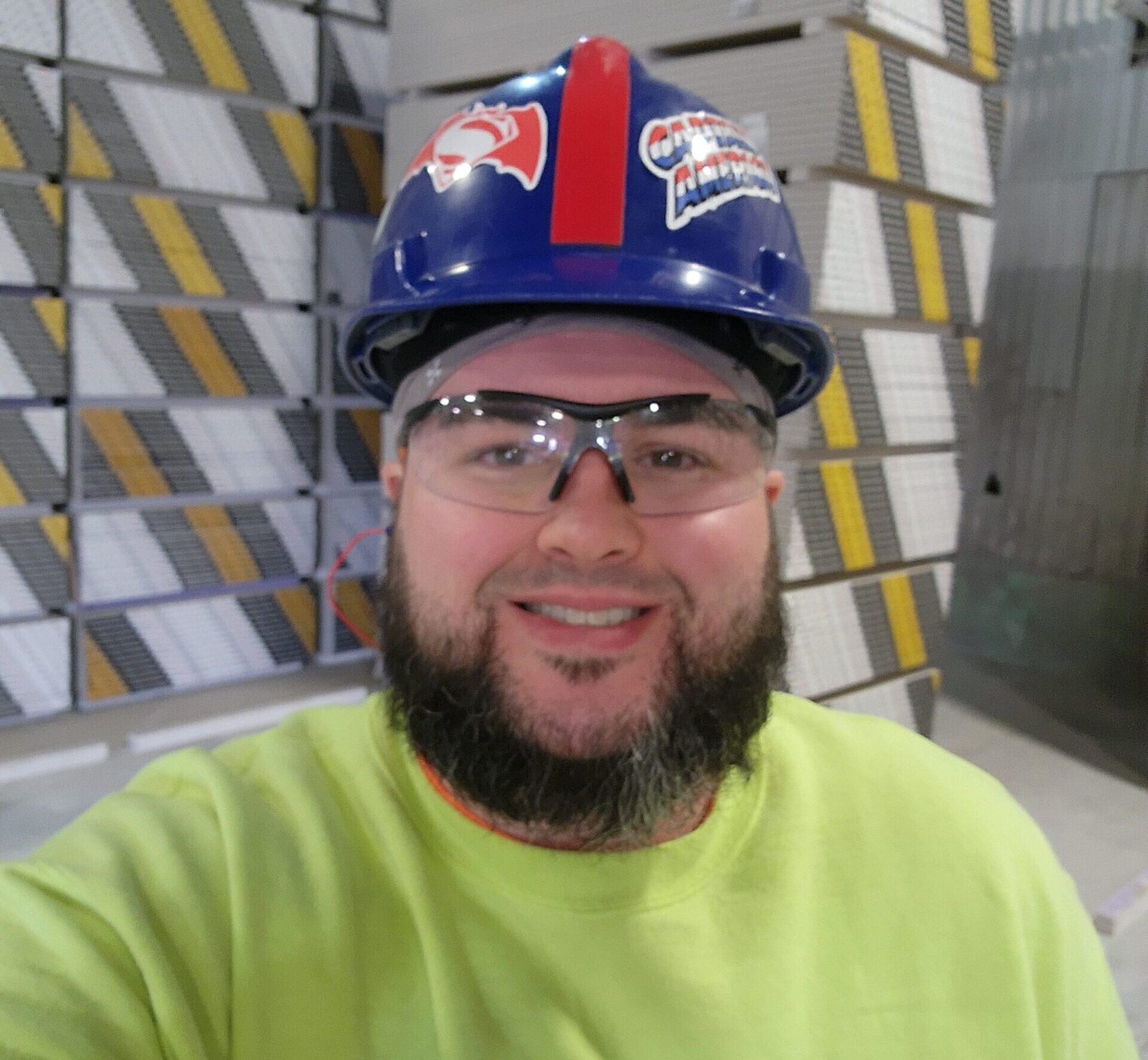
Michael Cobourn and his coworkers were forced to pay union dues while USW union bosses seemed to be loafing it at their workplace. With Foundation aid, they ousted the union.
WASHINGTON, DC – In the space of just a month, National Right to Work Legal Defense Foundation staff attorneys successfully aided groups of workers in New Jersey and Louisiana in voting out United Steelworkers (USW) union officials they opposed. The National Labor Relations Board (NLRB) certified both votes.
In Louisiana, Ryne Fox led his coworkers at GEO Specialty Chemicals to a decisive victory over USW officials, while Michael Cobourn did the same with his fellow workers at Gold Bond Building Products in New Jersey.
Both cases demonstrated the struggles workers face when seeking to “decertify” union officials whom they no longer want in power. In Louisiana, Fox had to time the filing of his coworkers’ petition seeking a decertification vote to fall within a tiny window of days imposed by the “contract bar,” a union boss-friendly NLRB policy that protects union officials from being voted out of a workplace for up to three years after union bosses and management finalize a contract.
Cobourn and his colleagues, in addition to having to deal with the “contract bar,” work in the non-Right to Work state of New Jersey — meaning they were forced to pay money to the union just to keep their jobs during the entire time they were forbidden by the “contract bar” from ejecting the union. In contrast, Right to Work states protect private sector workers from being fired merely for refusal to pay dues or fees to union officials of whom they disapprove. “My coworkers and I were paying money to the Steelworkers union constantly, yet the union didn’t seem to be doing anything for us,” commented Mr. Cobourn.
Although the efforts in Cobourn’s and Fox’s workplaces are evidence that Steelworkers union officials nationwide place their own interests above the workers they claim to “represent,” the most heinous example of such behavior is ongoing in Franklin, Pennsylvania.
There, Foundation-assisted metal workers at Latrobe Specialty Metals/Carpenter Technology are holding their own in defending their decertification petition against Steelworkers officials’ claims that the “contract bar” should invalidate the petition.
PA Workers Score Victory in Fight Against Election-Blocking Steelworkers Chiefs
While invoking the “contract bar” alone is anti-worker, Steelworkers officials in Pennsylvania claimed that a contract they unilaterally “ratified” this past summer after workers had voted against it twice should trigger the “contract bar.” Steelworkers officials had even told workers that the contract would only be “activated” if workers voted for it. But once they got wind of the workers’ decertification push, the officials “ratified” the unpopular contract secretly so they could, as one union official outrageously said during a hearing, “protect the integrity of the union.
Foundation staff attorneys representing the employee who submitted the petition, Kerry Hunsberger, have so far beaten back union officials’ attack on worker free choice. On November 18, 2021, an NLRB Regional Director rejected union bosses’ attempt to block the vote and ordered that an election proceed.
‘Contract Bar’ Encourages Union Officials to Impose Unpopular Contracts
“Workers across the country are increasingly exercising their right to vote out union officials they oppose, and we at the Foundation are happy to aid them,” commented National Right to Work Foundation President Mark Mix. “However, we’re also acutely aware of the obstacles that stand in the way of this freedom, and one of those, which Steelworkers officials seem to have no reservations about exploiting, is the ‘contract bar.’”
“The unjustified ‘contract bar’ is always wrong because it prevents workers from voting out unions they oppose when they want. But even worse, this NLRB-invented doctrine actually incentivizes union officials to rush and impose unpopular, self-serving contracts for the very purpose of insulating the union’s forced representation powers from a vote of the workers union officials claim to ‘represent,’” Mix added.
Foundation to High Court: Time to End Union Boss Vandalism Exemptions
The following article is from the National Right to Work Legal Defense Foundation’s bi-monthly Foundation Action Newsletter, January/February 2023 edition. To view other editions of Foundation Action or to sign up for a free subscription, click here.
Case asks if Teamsters are immune from liability for property destruction during strike
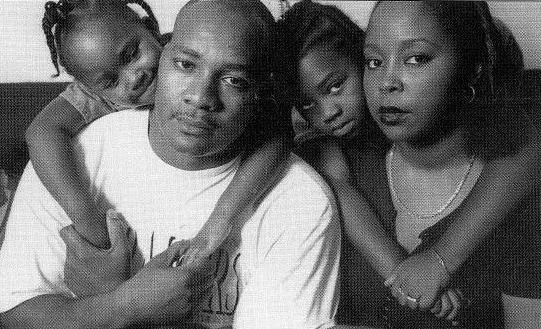
Rod Carter sought Foundation help after he was stabbed and beaten by Teamsters militants in 1997. The Foundation still fights union violence and opposes union bosses’ attempts to dodge property damage lawsuits.
WASHINGTON, DC – Unions and union officials already have an enormous number of special privileges under the law enjoyed by no other private organization or individual. Yet those special powers — including forcing workers under monopoly “representation” and union dues payments they oppose — haven’t stopped union lawyers from arguing for even more special exemptions.
In a case now before the U.S. Supreme Court, the Justices are set to decide whether the Washington State Supreme Court was correct when it granted Teamsters union officials immunity from lawsuits filed under state law. The lawsuit in this case concerned vandalism and property damage against an employer that occurred during a union boss-ordered strike.
Union Chiefs Want Blank Check to Target Workers with Property Damage
In Glacier Northwest Inc. v. International Brotherhood of Teamsters Local 174, a construction company sued the Teamsters union over property damage deliberately caused as part of a strike, only to see the Washington Supreme Court overturn the lower court and agree with union bosses’ argument that unions were exempt from such lawsuits.
With the issue now before the nation’s highest court, the National Right to Work Foundation filed a brief in the case arguing that creating such a carve-out is wrong under the law. The Foundation brief says this exemption is dangerous not only to businesses but first and foremost to independent-minded workers, and that union officials’ abundance of government-granted powers should be pared back, not extended. Oral arguments are set for January 10, 2023.
The Foundation explains in the amicus brief that “states’ interest in protecting life, limb, and private property must be respected under principles of federalism” because federal courts usually don’t offer relief for crimes like vandalism and property damage, making state courts the only place where lawsuits can be filed for such behavior. Far from being a concern only for employers who face union strike efforts, the Foundation argues, employees are often targeted by hostile or violent strike behavior and state courts often are the only forum in which they can receive justice.
“For example, in Clegg v. Powers, employees sought damages in state court for union violence and property damage during a strike,” the brief says. “Cases like Clegg demonstrate that the Court should limit” unions’ ability to dodge being sued in state court, it continues.
Foundation: Union Officials’ Special Legal Privileges Shouldn’t Be Expanded
The Foundation’s brief then points out that the Teamsters bosses’ attempt to gain this new legal privilege should be shut down given “the extraordinary privileges and exemptions already granted to unions” by Congress and courts all over the country.
These include, but are not limited to, an exemption from federal law prohibiting extortionate violence, the power to force employees in non-Right to Work states to pay union dues or fees just to stay employed, and the privilege to foist monopoly “representation” over workers against their will — powers no other private entity or individual has.
“This Court should treat unions like all other citizens or entities, clarifying that they can be liable for damages in state courts under ‘the common law rule that a man is held to intend the foreseeable consequences of his conduct,’” the brief concludes.
Unions Shouldn’t Get More Rights Than Regular Citizens
“Union officials’ theory that they should be off the hook in state court for damaging or vandalizing property is outrageous on its face. The law already has plenty of carve-outs and privileges for union hierarchies that no other private organization or citizen gets to enjoy, least of all the workers union bosses claim to ‘represent,'”” commented National Right to Work Foundation Vice President Patrick Semmens.
“Union officials regularly force millions of workers to pay union fees or be fired, and force their ‘representation’ on millions of workers who bitterly oppose it. The Supreme Court should reject this new ploy seeking another union-only exemption to regular laws, and begin to scrutinize and ultimately roll back the many existing union boss special powers.”
Another Janus Victory: South Jersey Bus Drivers Win Back Illegally Seized Dues
The following article is from the National Right to Work Legal Defense Foundation’s bi-monthly Foundation Action Newsletter, January/February 2023 edition. To view other editions of Foundation Action or to sign up for a free subscription, click here.
New Foundation-backed challenges to Janus restrictions also pending at U.S. Supreme Court
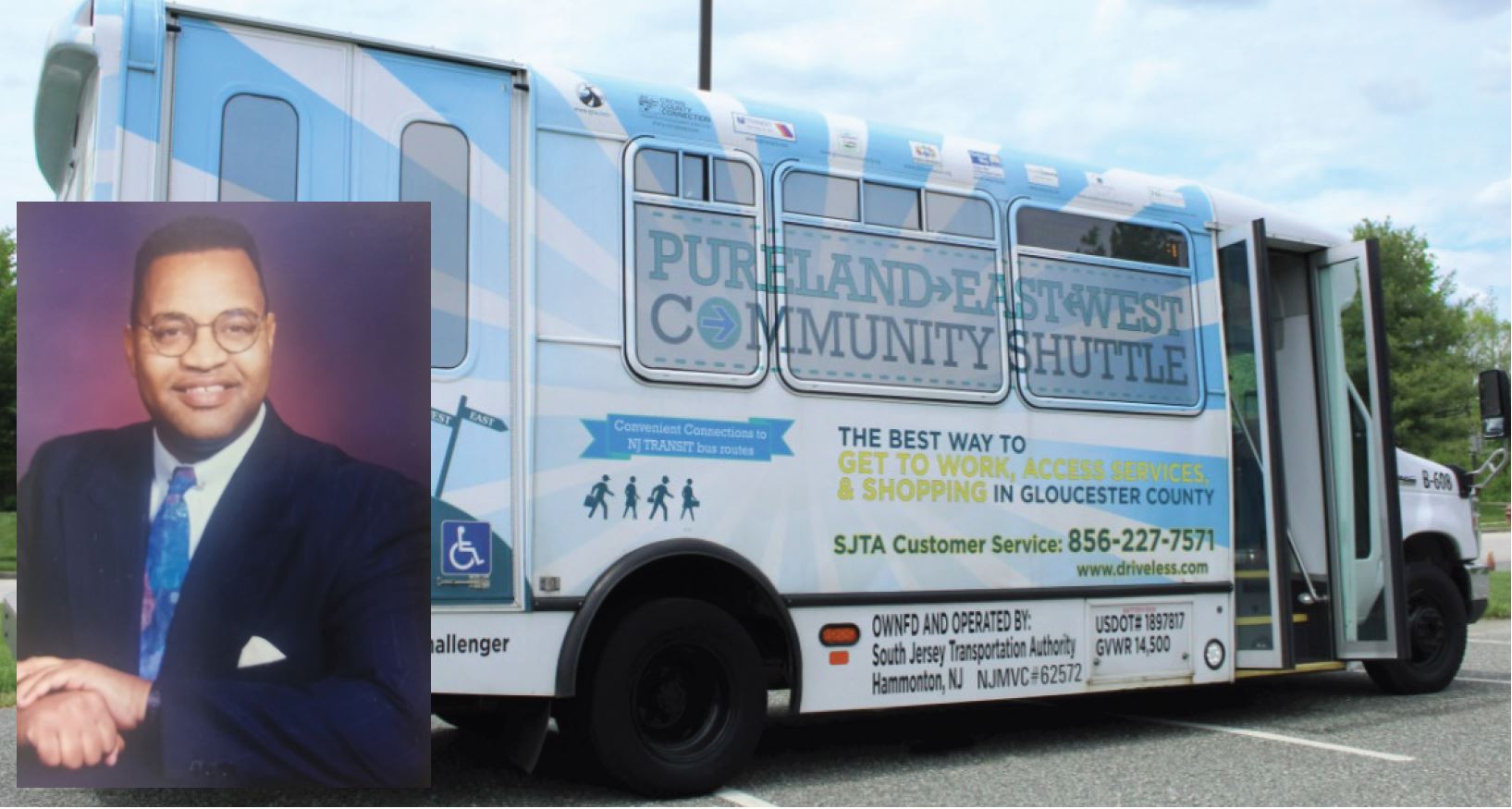
Stop Requested: Tyron Foxworth and his fellow South Jersey Transportation Authority bus drivers told union officials to cease union dues to no avail, until Foundation staff attorneys’ lawsuit forced union bosses to back down.
CAMDEN, NJ – Toward the end of 2021, South Jersey Transportation Authority (SJTA) bus driver Tyron Foxworth and his colleagues Doris Hamilton, Karen Burdett, Karen Hairston, Ted Lively, Arlene Gibson, and Stanley Burke decided they had had enough of International Federation of Professional and Technical Engineers (IFPTE) union bosses’ so-called “representation” and opted out of union membership. Union cards they had signed indicated that the union would cease taking money from their paychecks in January 2022.
But, January 2022 came and went, and neither Foxworth nor his fellow independent-minded colleagues saw dues deductions stop. As a result, with free legal representation from National Right to Work Foundation staff attorneys, they filed a First Amendment federal civil rights lawsuit against the IFPTE union. They argued that union officials violated their First Amendment rights under the Foundation-won 2018 Janus v. AFSCME Supreme Court precedent by continuing to seize dues despite their objections.
IFPTE Officials Subjected Drivers to Restrictions They Never Knew About
In Janus, the Court declared it a First Amendment violation to force public sector workers to pay union dues as a condition of employment. It also ruled that union officials can only deduct dues from the paycheck of a public sector employee who has voluntarily waived his or her Janus rights.
Rather than face Foundation staff attorneys in federal court, IFPTE union lawyers backed down and settled the case. As the settlement ordered, union bosses have now given back all money they seized unconstitutionally from Foxworth and his objecting coworkers, plus interest. The settlement also bars the IFPTE union from demanding or seizing any dues from the drivers going forward.
According to Foxworth and his colleagues, IFPTE dues deductions cards led them to believe that dues opt-outs would become effective on either the January or July following a request. However, the union’s monopoly bargaining contract with SJTA recognized dues revocations only in July. The drivers never consented to this greater restriction.
Foundation attorneys argued in the lawsuit that IFPTE union officials, by taking union dues after January 1, 2022, without the workers’ consent, “violate[d] Plaintiffs’ First Amendment right to free speech and association.”
Foxworth and his coworkers’ victory is the latest of numerous Foundation-won cases to vindicate American public workers’ First Amendment Janus rights. In the past few years, class action lawsuits brought by Foundation staff attorneys have led to settlements freeing tens of thousands of Ohio public employees from American Federation of State, County, and Municipal Employees (AFSCME) union schemes illegally restricting the exercise of their Janus rights.
Courageous public workers from California and Nevada are also asking the Supreme Court to take the next step and declare such Janus restrictions clearly violative of the First Amendment.
Lifeguards, Police Officer Battle Blatantly Unconstitutional Restrictions
Foundation attorneys just filed a petition asking the Supreme Court to hear several Southern California lifeguards’ suit against a so-called “maintenance of membership” scheme that California Statewide Law Enforcement Agency (CSLEA) union officials are using to trap the lifeguards in membership and full dues payments years after they resigned, in direct opposition to Janus.
Also awaiting Supreme Court review of her case is Las Vegas police officer Melodie DePierro, who with Foundation aid is battling an arrangement imposed by Las Vegas Police Protective Association (PPA) union officials that forbids the exercise of her Janus rights for over 90 percent of the year.
“Union officials across the country continue to enforce schemes that give them — not the workers they claim to ‘represent– control over the exercise of Janus rights, meaning more money in union coffers while employees’ constitutional rights are squashed,” commented National Right to Work Foundation President Mark Mix. “While many union bosses, aware of the indefensibility of their actions, run screaming from facing Foundation attorneys on Janus issues and settle quickly, American public workers should also know that Foundation attorneys will fight all the way up to the Supreme Court to ensure their First Amendment rights are protected.”
Workers Win Cash Back in Case Challenging Illegal Discrimination for Non-Union Status
The following article is from the National Right to Work Legal Defense Foundation’s bi-monthly Foundation Action Newsletter, November/December 2022 edition. To view other editions of Foundation Action or to sign up for a free subscription, click here.
Machinists union scheme sought to deny non-union workers’ bonuses because they opposed union association
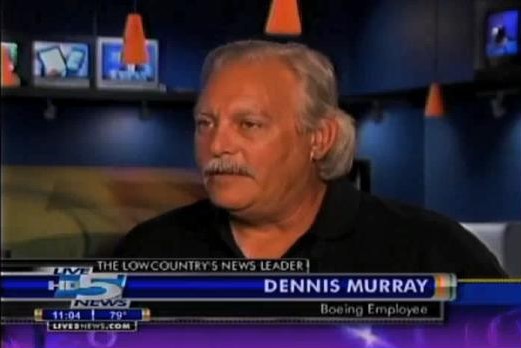
IAM bosses regularly discriminate against dissident workers. In 2011, Foundation-assisted South Carolina Boeing employee Dennis Murray recounted how IAM officials tried to shutter his plant because workers there had voted the IAM out.
RIDGWAY, PA – Twelve nonunion factory employees at Clarion Sintered Metals, Inc., have each received $1,000 in back pay bonuses after being illegally discriminated against by International Association of Machinists and Aerospace Workers (IAM) Local 2448 and their employer. With free legal aid from the National Right to Work Foundation, factory worker James Cobaugh filed federal charges against Clarion and IAM as he sought justice for himself and other non-member workers subject to unlawful discrimination.
Mr. Cobaugh’s charges against the union and his employer were filed on April 22, 2022, with the National Labor Relations Board (NLRB). The charges came after the union and Clarion Sintered Metals gave $1,000 bonuses to union members, but denied them to workers who exercised their legal right not to join the union. Rather than face prosecution by the NLRB, both the union and employer have now agreed to settle the case.
In addition to the non-union employees receiving the bonuses they were previously denied as a result of the illegal discrimination, both the IAM and Clarion Sintered Metals are required to post notices that inform workers of their right to refrain from joining a union. The notices also state union officials will not maintain or enforce such discriminatory agreements going forward.
Machinists Union Bosses Already Forced Non-Union Workers to Pay Dues
Because Pennsylvania lacks Right to Work protections for private sector employees, unions can force workers to pay up to 100% of union dues as a condition of keeping their jobs. This means that Mr. Cobaugh, although not a formal IAM union member, can be forced to pay up to 100% of IAM’s union dues to keep his job at Clarion Sintered Metals.
Even in Right to Work states, under federal law union bosses are granted the power to impose “representation” on individual workers against their will, including forcing non-member workers under union monopoly contracts they oppose. By stripping workers of their right to bargain for their own terms and conditions of employment, individual workers by law are prohibited from negotiating for themselves with their employers for better conditions.
Forced Union Monopoly ‘Representation’ Long Used to Discriminate
Union officials frequently use these government-granted powers to harm certain workers, for example those workers who, based on their productivity, would otherwise earn performance bonuses or higher compensation. Although union officials can impose one-size-fits-all monopoly contracts that favor some workers over others, there are some limits on how union monopoly powers can be used to discriminate.
The U.S. Supreme Court imposed these limits after union officials wielded their powers to negotiate and enforce racially discriminatory contracts (Steele v. Louisville & N.R. Co. et al.). Explicitly discriminating against workers who exercise their legally protected right to not formally join a union and not be subject to internal union rules, as the IAM officials did in this case, has also long been illegal.
“This situation highlights how workers less knowledgeable of their legal rights are susceptible to blatantly illegal tactics of power-hungry union bosses,” commented National Right to Work Foundation Vice President Patrick Semmens. “Mr. Cobaugh courageously stood up to the union’s unlawful actions, not only for himself, but also for the other non-member workers subjected to this illegal discrimination.”
Foundation Attorneys & PA Metal Workers Fight Steelworkers Union Contract Deception
The following article is from the National Right to Work Legal Defense Foundation’s bi-monthly Foundation Action Newsletter, November/December 2022 edition. To view other editions of Foundation Action or to sign up for a free subscription, click here.
Union bosses lied to metal workers and covertly signed forced-dues contract to keep grip on power
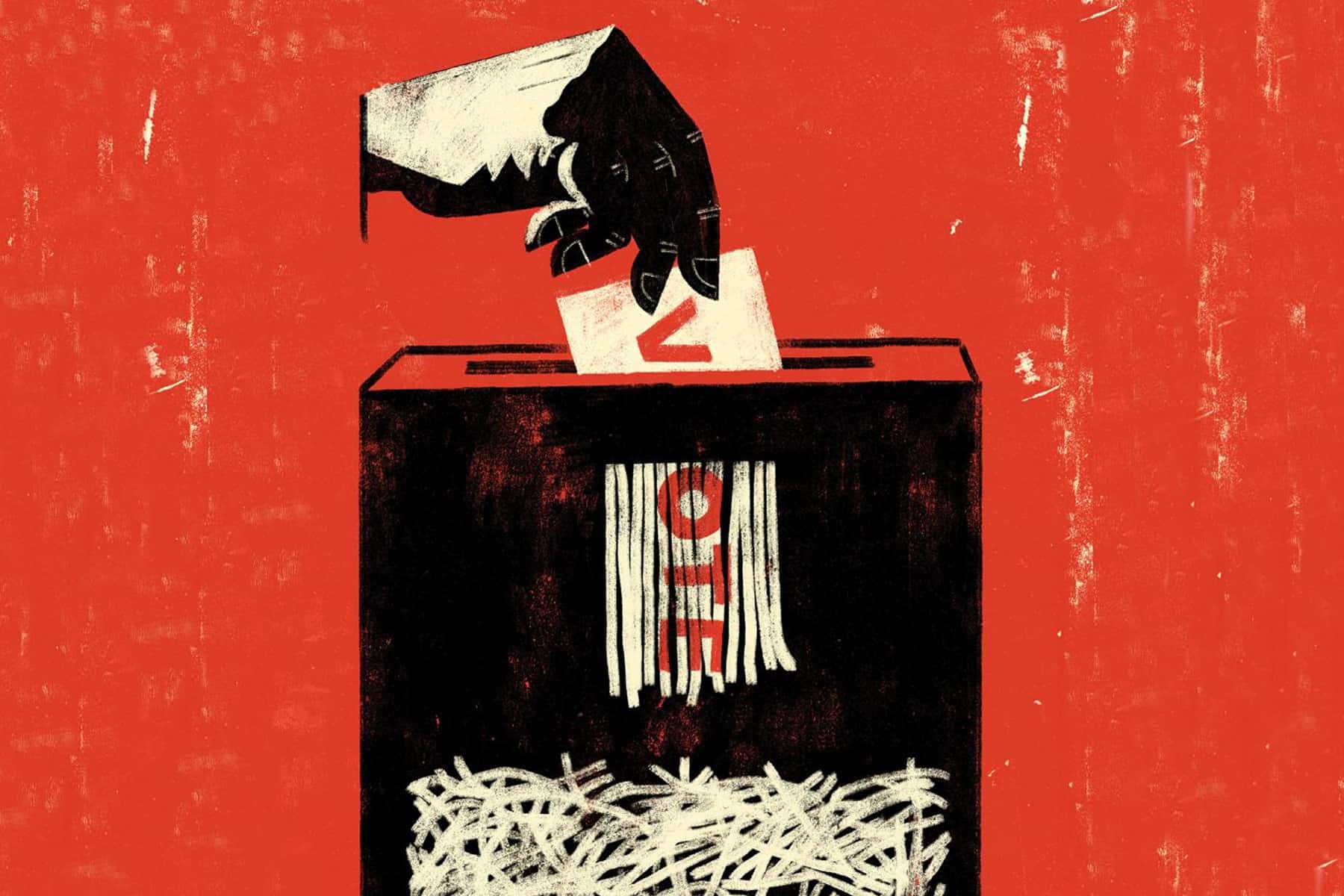
In NLRB documents, Steelworkers union officials openly defended their deception of employees, calling such behavior “irrelevant” to whether they should remain in power.
FRANKLIN, PA – Workers under the thumb of union bosses have many reasons to oppose the union’s “representation.” It could be they oppose a bad contract the union negotiated, or maybe it is the union’s divisive political activity for candidates they oppose. Whatever the reason, workers have a right under federal labor law to vote to free themselves of such unwanted union “representation.”
But federal labor law also has no shortage of workarounds for union bosses bent on clinging to their monopoly bargaining power over workers. Kerry Hunsberger and her coworkers at Latrobe Specialty Steel’s Franklin, PA, facility are currently defending their right to throw out unpopular Steelworkers union officials, after the union chiefs secretly signed a contract workers had voted down twice.
Steelworkers Officials Tried to Dodge Employee Accountability
Steelworkers chiefs did so to activate a so-called “contract bar” and remain in power at the plant when they knew a decertification election was coming. Steelworkers officials held two ratification votes to make workers think they had control over whether the contract went into effect. But in reality, union officials have no legal obligation under the National Labor Relations Act (NLRA), the federal statute that governs private sector labor relations, to even conduct such a ratification vote, much less heed the workers’ actual vote tally.
The pro-union boss National Labor Relations Board (NLRB) created out of whole cloth the “contract bar” policy. It immunizes union officials from employee-backed attempts to vote out a union for up to three years after union bosses and management finalize a contract — even a contract that isn’t supported by a majority of workers.
Hunsberger’s petition asking the NLRB to hold a vote to remove the union contains the requisite number of signatures under NLRB rules, but union officials argue the “contract bar” should block the election anyway.
Union Bosses Ignored Two Votes by Workers Rejecting Forced-Dues Contract
The Latrobe Specialty Steel workers first voted July 25 on the contract drawn up by Steelworkers union officials. The workers soundly rejected the contract, and Hunsberger began collecting employee signatures for a decertification petition shortly afterwards.
According to documents and transcripts filed with the NLRB, when Steelworkers union officials discovered a decertification petition was circulating, they secretly and hurriedly signed the unpopular contract on July 28, without telling the employees or the employer, in an attempt to activate the “contract bar” rule and avoid being voted out.
The slapdash contract lacked basic In NLRB documents, Steelworkers union officials openly defended their deception of employees, calling such behavior “irrelevant” to whether they should remain in power. elements, like start and end dates. Even though the union now claims this contract was immediately in effect on July 28, union officials held a new employee ratification vote on August 1, encouraging workers to “ratify” the contract. But the union bosses never told the workers their “vote” was a meaningless sham because union officials had already signed the forced-dues contract in secret.
Hunsberger’s decertification petition was filed at 2:00 PM on August 1, just hours before the sham contract vote occurred. As with the previous vote, the workers rejected the contract by a lopsided margin. But later that night, at around 9:00 PM, union officials suddenly announced to the employer that the contract was already in effect and the employee ratification “vote” was irrelevant because of the union bosses’ covert signing on July 28.
In sworn testimony, one union boss admitted that Steelworkers union bosses execute contracts despite employees voting them down, and that union officials deceived the Latrobe workers and ignored their votes in this case “to protect the integrity of the union.” Apparently the Steelworkers bosses’ lust for monopoly bargaining power and compulsory union payments takes precedence over the actual wishes of the rank-and-file workers union officials purport to “represent.”
‘Contract Bar’ Encourages Unions to Force Through Unpopular Contracts
“Steelworkers union bosses drew up a contract that my coworkers and I hated, so naturally we wanted them out of our workplace and out of our pocketbooks. But to add insult to injury, they apparently didn’t even think they owed us a duty of honesty,” said Hunsberger.
“This entire ordeal has been incredibly frustrating and we are grateful for the help of the National Right to Work Foundation in defending our right to vote the union out.”
Kerry Hunsberger’s Foundationbacked brief defending her and her coworkers’ rights states that the Steelworkers’ contract ploy is “nothing more than a smokescreen, concocted by a desperate and unpopular union to entrench itself and bar employee free choice” under federal law.
“The ‘contract bar’ arbitrarily blocks, often for years, workers’ statutory right under federal law to vote out union officials they oppose. Worse, it encourages union officials to cynically impose a contract at all costs, especially when union bosses know rank-and-file workers would see such a contract as a reason to get rid of so-called union ‘representation,’” commented National Right to Work Foundation Vice President Patrick Semmens. “This case presents an easy choice for the NLRB: defend the rights of rank-and-file workers, or side with Steelworkers union officials, who repeatedly misled those workers and disregarded their votes simply to protect union power. The case also demonstrates that there is no such thing as ‘union democracy’ in America.”
Foundation Defends Grocery Employees Against Illegal Union Strike Fine Threats
The following article is from the National Right to Work Legal Defense Foundation’s bi-monthly Foundation Action Newsletter, November/December 2022 edition. To view other editions of Foundation Action or to sign up for a free subscription, click here.
Facing Foundation attorneys, UFCW union officials are dropping illegal fines

UFCW union officials threatened to fine King Soopers employee Nick Hall almost $1,000 just because he kept at his job during a strike. Foundation litigation ended the demands.
DENVER, CO – Grocery store workers at King Soopers are continuing to win their legal battles against United Food and Commercial Workers (UFCW) Local 7 union officials’ illegal attempts to fine workers for exercising their right to work during a January UFCW strike action. While the union remains under investigation by the National Labor Relations Board (NLRB) for a series of charges filed by workers with free legal aid from the National Right to Work Legal Defense Foundation, several workers have already successfully challenged thousands of dollars in union fines.
Workers Slam Union With Federal Charges After Threats
Two King Soopers workers, Nick Hall and Marcelo Ruybal, filed federal charges against UFCW in response to union officials illegally threatening to fine workers who chose to exercise their right to work during a strike. UFCW union bosses ordered an estimated 8,000 King Soopers workers out of work in January, but as a Foundation legal notice informed workers at the time, employees have the legal right to rebuff union boss strike orders, and non-member employees cannot be legally fined by the union.
Union bosses threatened Hall and Ruybal with fines of $812 and $3,800 respectively. This happened despite the fact that, as the workers noted in their NLRB charges, the fines were illegal because the workers were not voluntary union members, and therefore not legally subject to internal union fines for working during the UFCW boss-ordered 10-day strike. Some 30 NLRB charges are still being investigated by NLRB Region 27, based in Denver.
Foundation Legal Aid Prompts UFCW Bosses to Drop Fine Threats
In Hall’s case, the union backed down, rescinding the union’s illegal fine threat in a letter dated July 27, essentially acknowledging that it broke federal law. Other workers have also successfully challenged union boss fine threats following the January strike.
With free legal representation from Foundation staff attorneys, worker Yen Chan challenged the union’s authority to issue a $3,552.48 fine, with union officials backing down rather than pursuing the fine and facing further legal action. Other King Soopers workers also successfully challenged thousands of dollars in UFCW strike fines using information provided by National Right to Work Legal Defense Foundation staff attorneys.
“Union officials backed down quickly after being caught blatantly disregarding the law in Nick Hall’s case. But it shouldn’t take the support of National Right to Work Foundation staff attorneys just to force union bullies to abide by federal law,” commented National Right to Work Foundation President Mark Mix. “King Soopers workers are continuing to beat back illegal fines levied by UFCW union officials, even as union officials are still under investigation by the NLRB for unfair labor practice charges.”
California Lifeguards Ask Supreme Court to Blow Whistle on Dues-Trap Scheme
The following article is from the National Right to Work Legal Defense Foundation’s bi-monthly Foundation Action Newsletter, November/December 2022 edition. To view other editions of Foundation Action or to sign up for a free subscription, click here.
Union bosses’ ‘maintenance of membership’ scheme drowns California lifeguards’ Janus rights for four years
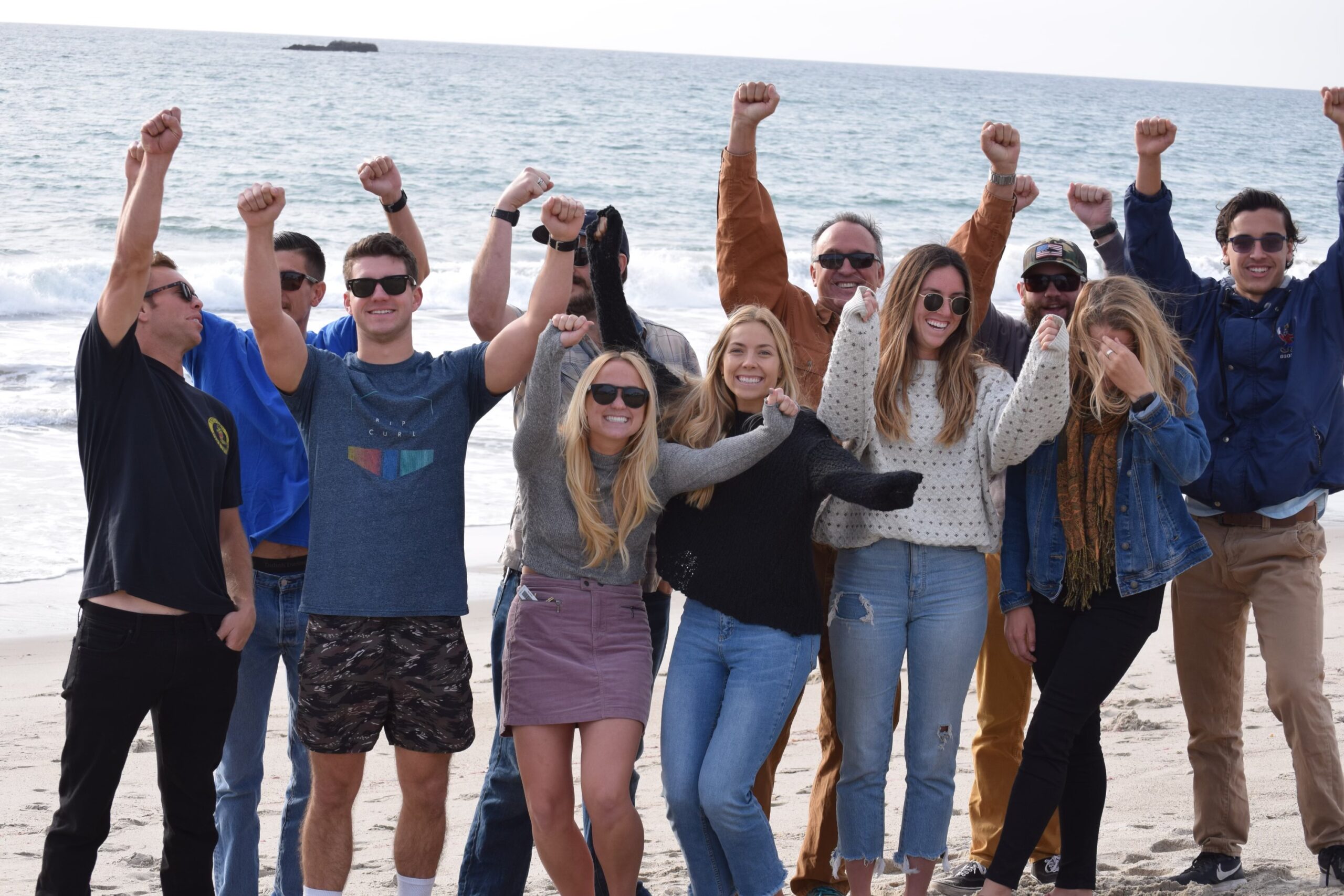
These California lifeguards can ride the waves, but they certainly didn’t “waive” their Janus rights. In their Supreme Court bid, they hope to stop union bosses from locking them out of their First Amendment rights for years.
LOS ANGELES, CA – National Right to Work Foundation client Jennifer Marshall, an Orange County, CA, lifeguard, told the Los Angeles Times in May how hard California Statewide Law Enforcement Agency (CSLEA) union officials pushed union membership on her and her colleagues.
“They really pushed us to sign up for the union without a lot of information behind it,” said Marshall. “It was kind of a sign-the-papers-and-we’ll-talk-about-it-later kind of thing.” After she signed up, she hardly ever saw or heard from union officials again but full union dues were coming out of her paycheck.
What she and many of her colleagues, whom union bosses had cajoled into signing up, didn’t expect was how hard it would be to exit a union that didn’t seem to be doing anything for them. When she and her colleagues tried to resign, CSLEA officials told them that they were stuck in both full union dues payments and full union membership until 2023, pursuant to a so-called “maintenance of membership” requirement.
Marshall, along with lead plaintiff Jonathan Savas and 21 other colleagues, sued CSLEA bosses in federal court in 2020 for violating their constitutional rights. They argued the “maintenance of membership” requirement blatantly infringes on their First Amendment rights under the Foundation-won Janus v. AFSCME Supreme Court decision. In Janus, the Court declared that public sector workers cannot be forced to bankroll a union without voluntarily waiving their First Amendment right to abstain from union payments. The lifeguards also sued the state of California for its role in enforcing the unconstitutional dues deductions.
Secret Union Dues Scheme Has Been Illegal for 45 Years
Marshall, Savas, and their fellow lifeguards are now petitioning the Supreme Court of the United States to hear their case, arguing CSLEA bosses’ restrictive arrangement even violates Supreme Court precedent that predates Janus.
The lifeguards’ Foundation provided attorneys argue in the petition that “maintenance of membership” requirements not only flout Janus’ ban on all forced dues in the public sector, but even violate the Supreme Court’s now-overturned 1977 decision in Abood v. Detroit Board of Education. Abood let union officials force dissenting public sector employees to pay a portion of union dues as a condition of employment.
“Maintenance of membership” requirements – which force public employees to pay full union dues often for years after they try to resign from the union – are worse than anything permitted by Abood, Foundation staff attorneys argue.
The petition also takes to task CSLEA union bosses’ paltry defense that the lifeguards somehow voluntarily agreed to the “maintenance of membership” scheme. In Janus, the Supreme Court ruled that union officials can only take dues from a public employee’s paycheck if that employee gives a “clear and compelling” waiver of Janus rights. Foundation attorneys point out that the CSLEA union’s dues deduction forms contained only a “vague reference” to an unexplained limit on when withdrawal from membership is permitted, which is not even close to satisfying Janus’ waiver requirement.
“A vague reference to unspecified limitations in ‘the Unit 7 contract and State law’ does not establish the Lifeguards contractually consented” to union membership for four years, the petition says.
Supreme Court Must Intervene to Stop Spread of Unconstitutional Restrictions
The petition for Savas and his fellow lifeguards emphasizes how crucial it is for the Supreme Court to strike down cumbersome “maintenance of membership” restrictions, pointing out that California unions and legislators will continue to force public employees to remain formal union members and pay full dues as a condition of employment if the schemes are left unchecked.
“Other states likely will follow suit, such as Pennsylvania, whose laws also authorize maintenance of membership requirements,” the brief states.
Challenged Scheme Gives Union Bosses Control of Workers’ Janus Rights
“‘Maintenance of membership’ restrictions give union officials complete control over when public employees can exercise their rights to end union membership and cut off union dues deductions,” observed National Right to Work Foundation Vice President and Legal Director Raymond LaJeunesse.
“The Supreme Court must intervene in these lifeguards’ case to protect the First Amendment rights of all American public sector employees, and prevent union bosses and their political allies from replicating across the country these patently unconstitutional restrictions.
NYC University Professors Take Aim at Forced Union ‘Representation’
The following article is from the National Right to Work Legal Defense Foundation’s bi-monthly Foundation Action Newsletter, March/April 2022 edition. To view other editions of Foundation Action or to sign up for a free subscription, click here.
CUNY professors’ lawsuit argues NY law forces them under power of anti-Semitic union
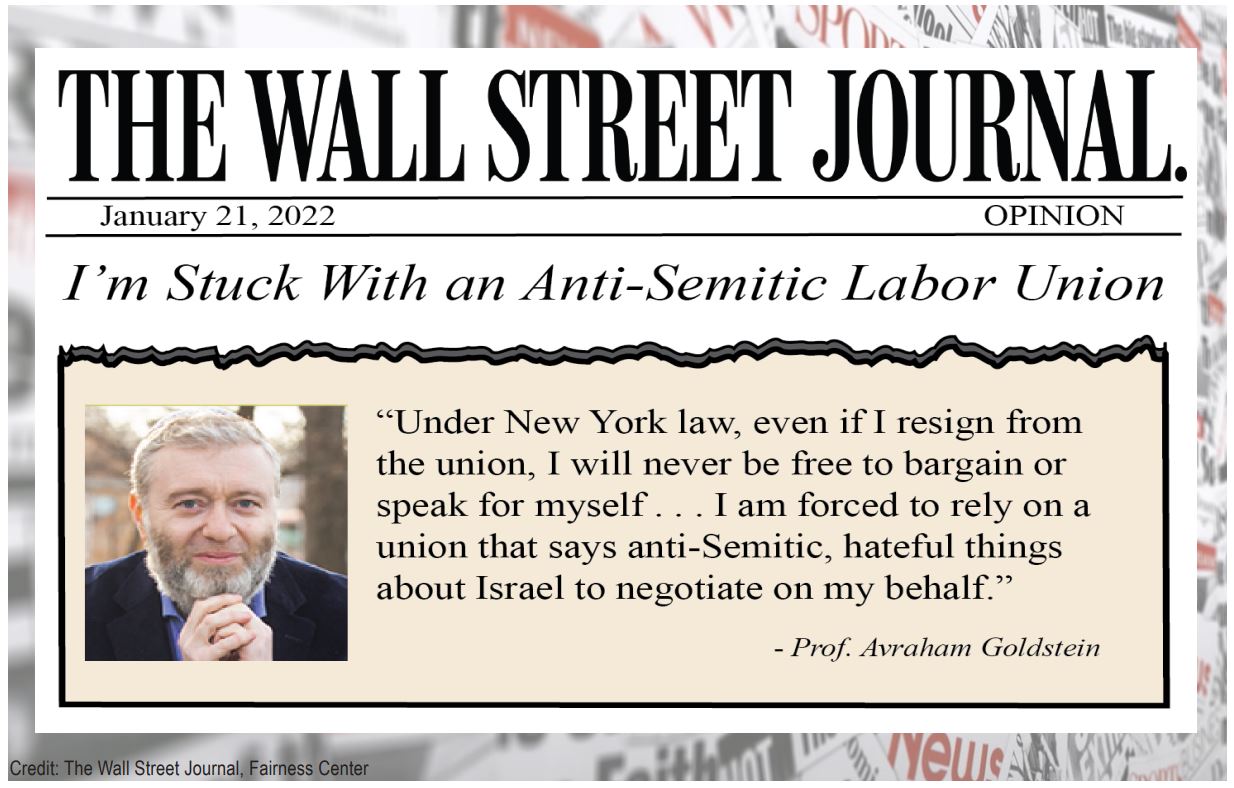
Prof. Avraham Goldstein recalled in a Wall Street Journal piece the anti-Semitism his family faced in the Soviet Union. He and other plaintiffs argue they shouldn’t be forced to associate with a union that subjects them to similar hostility.
NEW YORK, NY – For decades, government sector union bosses have relied on two pillars of coercion — forced dues and forced representation — to maintain their grip on power over America’s public servants and the public services citizens rely on.
While the Supreme Court in the 2018 National Right to Work Foundation-won Janus v. AFSCME Supreme Court case recognized that forcing government employees to pay dues to stay employed violates the First Amendment, a new Foundation-assisted civil rights lawsuit from six City University of New York (CUNY) system professors may finally defeat union bosses’ privilege to impose union representation over the objections of public workers.
CUNY professors Jeffrey Lax, Michael Goldstein, Avraham Goldstein, Frimette Kass-Shraibman, Mitchell Langbert, and Maria Pagano sued the AFL-CIO-affiliated Professional Staff Congress (PSC) union, CUNY executives, and New York State officials in January, challenging New York State’s “Taylor Law” that gives unions monopoly bargaining privileges in public sector workplaces like CUNY.
The plaintiffs, most of whom are Jewish, oppose the union’s “representation” on the grounds that union officials and adherents have relentlessly denigrated their religious and cultural identity. Several of the plaintiffs exercised their Janus right to cut off dues after PSC officials rammed through a resolution in June 2021 that they found “anti-Semitic, anti-Jewish, and anti-Israel,” according to the lawsuit.
Discrimination Cited in Groundbreaking First Amendment Case
The lawsuit, which was filed with legal aid from both the National Right to Work Foundation and Pennsylvania-based Fairness Center, says: “Despite Plaintiffs’ resignations from membership in PSC, Defendants . . . acting in concert and under color of state law, force all Plaintiffs to continue to utilize PSC as their exclusive bargaining representative.”
The resolution is not nearly the worst example of PSC officials’ anti-Semitism, according to the lawsuit. Prof. Michael Goldstein asserts that adherents of PSC are waging a campaign to get him fired and have targeted him with harassment and threats such that he must have an armed guard accompany him on campus. Prof. Lax cites in the lawsuit a determination he has already received from the Equal Employment Opportunity Commission (EEOC) that “PSC leaders discriminated against him, retaliated against him, and subjected him to a hostile work environment on the basis of religion.”
While all of the professors take issue with PSC bosses’ radicalism, they also want to break free from internal conflicts within the large and disparate unit, which consists of full-time, part-time, and adjunct teaching employees and others. Prof. Kass-Shraibman states in the lawsuit that “instead of prioritizing the pay of full-time faculty, PSC expended resources advocating on behalf of teachers in Peru, graduate students at various other universities and the so-called ‘Occupy Wall Street’ movement.”
On top of all that, Profs. Avraham Goldstein, Kass-Shraibman, and Langbert contend that PSC officials aren’t even respecting their First Amendment Janus rights. Although all three professors clearly indicated they wanted to cut off financial support to the union, the lawsuit explains that “Defendants PSC and the City . . . have taken and continue to take and/or have accepted and continue to accept union dues from [their] wages as a condition of employment . . .” in violation of Janus.
“I had paid thousands of dollars in union dues for workplace representation, not for political statements or attacks on my beliefs and identity,” Prof. Avraham Goldstein wrote in a piece for The Wall Street Journal. “I decided to resign my union membership and naively thought I could leave the union and its politics behind for good.”
“I was wrong,” recounted Prof. Goldstein. “Union officials refused my resignation and continued taking union dues out of my paycheck.”
Suit Seeks Damages and to Overturn NY Law Authorizing Union Control
The lawsuit seeks a declaration from the U.S. District Court for the Southern District of New York that the Taylor Law’s imposition of monopoly union control is unconstitutional, and that the defendants cease “certifying or recognizing PSC, or any other union, as Plaintiffs’ exclusive representative without their consent.” The lawsuit also demands the union and university return dues seized in violation of Janus to Profs. Avraham Goldstein, Kass-Shraibman, and Langbert.
“By forcing these professors into a monopoly union collective against their will, the state of New York mandates that they associate with union officials and other union members who take positions that are deeply offensive to these professors’ most fundamental beliefs,” observed National Right to Work Foundation President Mark Mix. “New York State’s Taylor Law authorizes such unconscionable compulsion. It is time federal courts fully protect the rights of government employees to exercise their freedom to disassociate from an unwanted union, whether their objections are religious, cultural, financial, or otherwise.”
IAM Union ‘Becks’ Down in Boeing Technician’s Case Over Unlawful Dues Deductions
The following article is from the National Right to Work Legal Defense Foundation’s bi-monthly Foundation Action Newsletter, September/October 2022 edition. To view other editions of Foundation Action or to sign up for a free subscription, click here.
IAM bosses charged arbitrary higher amount in violation of Foundation-won Beck precedent

IAM union bosses’ illegal fee scheme faced headwinds when Boeing technician Don Zueger defended his rights with Foundation legal aid – and won.
SEATTLE, WA – Boeing technician Don Zueger didn’t want to sacrifice a cent from his paycheck to subsidize the activities of International Association of Machinists (IAM) union bosses who currently maintain monopoly bargaining power in his workplace. But, because he works in non-Right to Work Washington State, he can be forced to pay some union fees just to keep his job.
When Zueger found out union officials were calculating his forced fees amount based on financial data from nine other IAM affiliates – not just data from his own district union – he knew something was amiss.
Zueger sought free legal representation from the National Right to Work Legal Defense Foundation and filed a federal lawsuit against the IAM union for violating his rights under the 1988 Foundation-won CWA v. Beck U.S. Supreme Court decision. In Beck, the Court ruled that union officials cannot charge full union dues to objecting private sector workers who have abstained from formal union membership, and can only charge them “fees” which exclude expenses for things like union political activities.
IAM Bosses Use Baseless ‘Formula’ to Seize Excessive Forced Union Fees
Zueger’s lawsuit pointed out that IAM officials’ puzzling scheme imposed a dues amount on him that exceeds the limit that Beck established. Now he has won a settlement that requires union officials to decrease his dues payments and return money illegally taken from his wages.
Washington State’s lack of Right to Work protections mean that union officials can legally demand Zueger pay the reduced Beck amount as a condition of staying employed. In Right to Work states, in contrast, union membership and all union financial support are strictly voluntary.
According to Zueger’s lawsuit, filed in the U.S. District Court for the Western District of Washington, he submitted a request to IAM union officials in February resigning his union membership and asking for his dues payments to be reduced as Beck requires.
Zueger’s lawsuit noted that IAM officials’ response to his Beck request claimed that, under IAM’s nationwide policy, the portion of union dues he must pay is based on averages of selected audits that in each case include nine other district IAM affiliates and nine other locals. Unsurprisingly, this policy resulted in IAM officials claiming Zueger is required to pay a greater sum than what would be required if union officials only used the audits for the district and local unions Zueger is forced to fund.
His lawsuit sought to force IAM union bosses to return all money demanded in violation of Beck and to properly reduce his future union payments in accordance with Beck.
Rather than attempt to defend their scheme to increase Zueger’s forced fee amount, IAM union chiefs quickly backed down and settled the case.
IAM union officials have now, as the settlement mandates, returned to Zueger the difference between the proper Beck dues amount and the illegal amount the union imposed on him. IAM bosses are also forbidden from demanding any money above the correctly calculated reduced Beck portion in the future, making the settlement a full vindication of Zueger’s Beck rights.
IAM Must Return Dues That Could Have Gone to Union Boss Political Agenda
Zueger’s settlement comes after union bosses spent near-record sums on politics during the 2020 election cycle, and as Foundation attorneys deal with a flurry of worker requests concerning illegal forced dues for politics. According to a report by the National Institute for Labor Relations Research (NILRR) released in 2021, public data on union expenses shows about $2 billion in political spending during the 2020 election cycle. Other estimates suggest the actual union spending on political and lobbying activities topped $12 billion during this cycle.
“It’s shameful that union officials continue to invent new ways to violate the decades-old Beck Supreme Court precedent and overcharge workers who clearly want nothing to do with union bosses and their agenda – a big concern as union politicking heats up in advance of midterm elections,” commented National Right to Work Foundation Vice President Patrick Semmens. “This scheme to artificially manipulate forced dues calculations is part of the IAM’s nationwide policy, and the Foundation stands ready to assist other workers around the country who are being subjected to this anti-Beck IAM scheme.”
Full Foundation Action September/October 2022 Newsletter Now Online
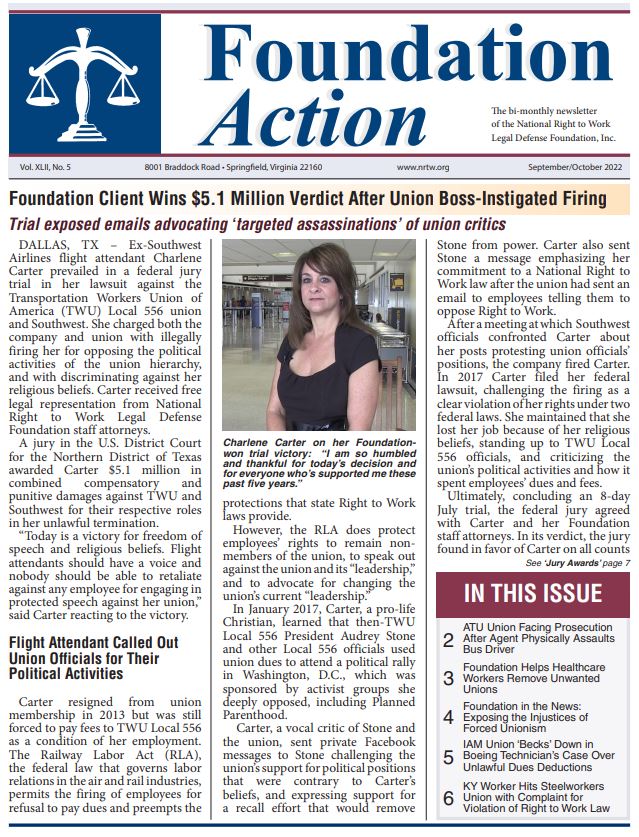
All articles from the September/October issue of Foundation Action are now on the website.
In this issue:
- Foundation Client Wins $5.1 Million Verdict After Union Boss-Instigated Firing
- ATU Union Facing Prosecution After Agent Physically Assaults Bus Driver
- Foundation Helps Healthcare Workers Remove Unwanted Unions
- Foundation in the News: Exposing the Injustices of Forced Unionism
- IAM Union ‘Becks’ Down in Boeing Technician’s Case Over Unlawful Dues Deductions
- Kentucky Worker Hits Steelworkers Union with Complaint for Violation of Right to Work Law
Recent articles can be found here. To sign up for a free copy of the newsletter via mail please see the form at the bottom of this page.





