
Airline Workers Ask Appeals Courts to Invalidate Union Dues Opt-Out Schemes
The following article is from the National Right to Work Legal Defense Foundation’s bi-monthly Foundation Action Newsletter, November/December 2020 edition. To view other editions or to sign up for a free subscription, click here.
Cases challenge requirement that workers opt out of union political spending or else pay full dues

Just “plane” wrong: United Airlines fleet service employee Arthur Baisley (left) and JetBlue Airways pilot Christian Popp (right) are fighting to end schemes that deduct union political expenses out of workers’ paychecks without their consent.
NEW ORLEANS, LA – With free legal representation from National Right to Work Legal Defense Foundation staff attorneys, two airline workers have filed cases challenging union boss policies that require workers to opt out in order to exercise their First Amendment right not to fund union political activities, as recognized in the Foundation-argued 2018 Janus v. AFSCME Supreme Court decision.
The two federal class-action lawsuits were brought for United Airlines fleet service employee Arthur Baisley and JetBlue Airways pilot Christian Popp. They are currently pending in the U.S. Courts of Appeals for the Fifth and Eleventh Circuits respectively.
Workers Challenge Compelled Political Speech
Baisley’s case against the International Association of Machinists (IAM) union has been fully briefed and is tentatively set for oral argument the week of November 30. Meanwhile, the opening brief for Popp’s case against the Air Line Pilots Association (ALPA) union was filed in early October.
The lawsuits contend that under Janus and the 2012 Knox v. SEIU Supreme Court cases — both argued and won by Foundation staff attorneys — no union dues or fees can be charged for union political activities without a worker’s affirmative consent.
Despite this, union officials at the IAM and ALPA enforce complicated opt-out policies that require workers to object to funding union political activities or else pay full union dues. Foundation staff attorneys argue that the Janus decision’s opt-in requirement applies to airline and railroad employees covered by the Railway Labor Act (RLA), taken together with longstanding precedent protecting private sector workers from being required to pay for union political and ideological activities.
Mr. Baisley and Mr. Popp both work in Right to Work states (Texas and Florida, respectively), but the RLA preempts state law. Consequently, they can be forced to pay union dues or fees or be fired. Even under the RLA, however, union bosses cannot legally force workers to pay for political activities.
Cases Could Expand Janus Protections to Private Sector
The lawsuits argue IAM and ALPA’s opt-out policies are designed to trap unwilling participants into full dues in violation of their First Amendment rights. This forces workers to subsidize union political activities against their will, including the part of full dues that union officials use to support their radical political agenda and handpicked candidates for office.
“IAM and ALPA union officials have demonstrated a blatant disregard for the rights of the very workers they claim to represent by creating complicated obstacles for independent-minded workers who want to exercise their right not to fund union ideological activities,” said National Right to Work Foundation Vice President Patrick Semmens. “Although Janus’ biggest impact was to secure the First Amendment rights of all public employees across the nation not to be required to fund Big Labor, these cases demonstrate that Janus’ implications can also protect the rights of private sector workers.”
Cases Seeking Millions in Refunds of Forced Fees under Janus Move Forward
The following article is from the National Right to Work Legal Defense Foundation’s bi-monthly Foundation Action Newsletter, November/December 2020 edition. To view other editions or to sign up for a free subscription, click here.
Split Appeals Court decision bolsters petition for Supreme Court to take up issue
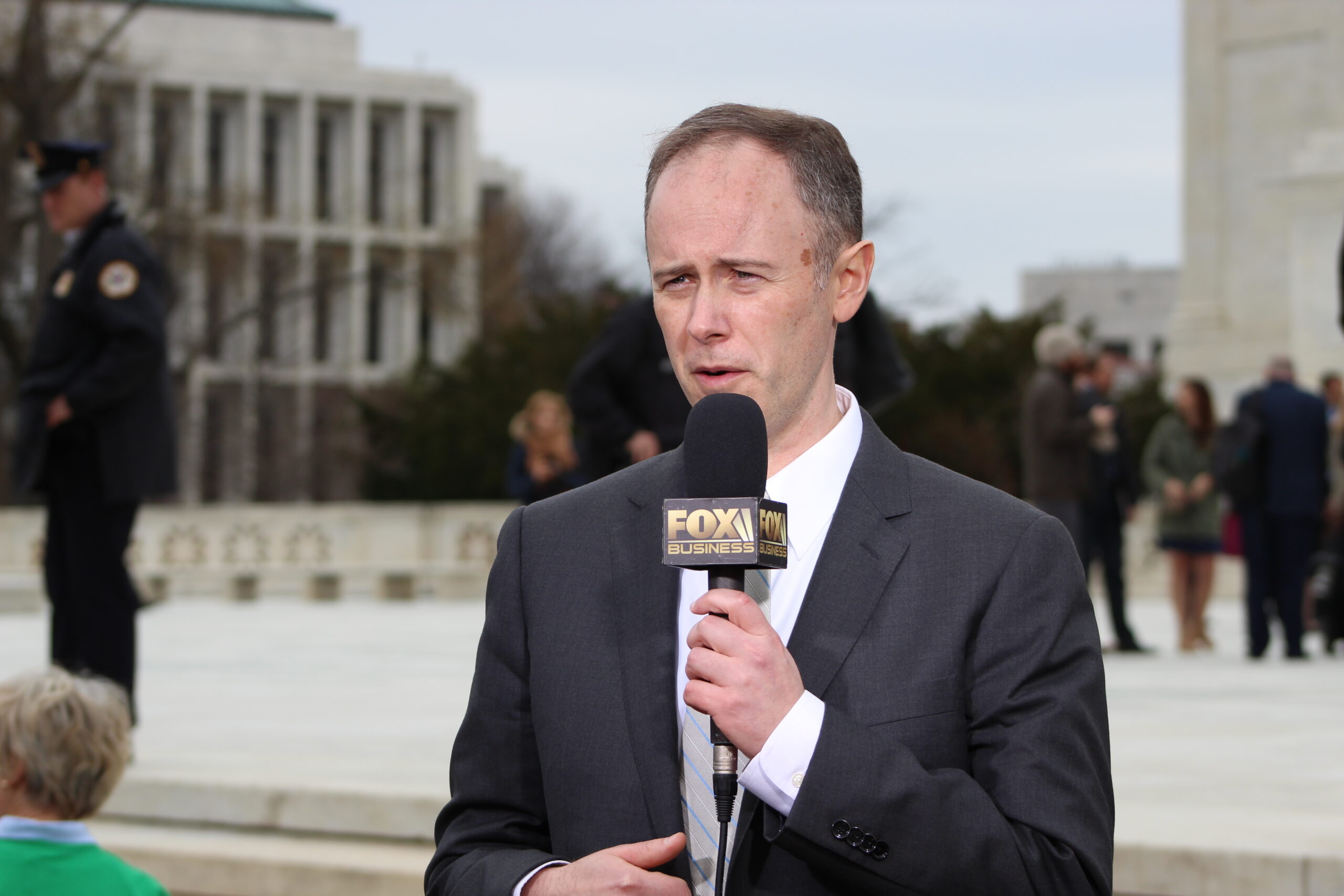
Veteran Foundation staff attorney William Messenger made history when he argued and won the Janus case before the High Court in 2018. He still represents Janus and others demanding forced-fee refunds.
PHILADELPHIA, PA – A National Right to Work Foundation-backed class-action lawsuit for Pennsylvania state employees seeking refunds of unconstitutionally seized union fees resulted in a split decision from the U.S. Third Circuit Court of Appeals in August. This ruling cast serious doubt on a favorite union boss argument used to avoid refunding dues seized in violation of workers’ First Amendment rights.
The employees were defending their rights under the landmark 2018 Foundation-won Janus v. AFSCME Supreme Court ruling. In Janus, the Court sided with former Illinois child support specialist Mark Janus and agreed with Foundation staff attorneys that requiring any public sector worker to pay union dues or fees as a condition of employment is a First Amendment violation. The Court also ruled that union dues can only be taken from public servants with their affirmative and knowing consent.
The plaintiffs in Wenzig v. Service Employees International Union (SEIU) Local 668 are seeking a ruling that SEIU officials must refund dues taken from employee paychecks in contravention of this standard before the Janus ruling came down. Union bosses used, as they have done in almost all similar cases, a dubious “good faith” argument to justify not refunding the dues to the victimized workers. In the split decision, two of the three judges rejected the so-called “good faith” theory.
Supreme Court Asked to End Lower Court Confusion on Janus Refunds
Foundation staff attorneys cited the growing confusion among federal judges on forced-union-fee refunds as a vital reason the Supreme Court should hear the continuation of Janus v. AFSCME. In a supplemental brief, Foundation attorneys wrote that Wenzig “supports granting review here because a majority of the Third Circuit panel rejected the good faith defense recognized by the Seventh Circuit here and by the Second, Sixth, and Ninth Circuits.”
“The Court should finally resolve this important issue and hold there is no good faith defense to Section 1983,” the brief adds. Section 1983 is the federal law requiring that those who deprive people of their constitutional rights “under color of any statute . . . shall be liable to the party injured.”
This September, Foundation staff attorneys also filed the final reply brief supporting the Supreme Court petition in Casanova v. International Association of Machinists (IAM), Local 701, another case seeking review from the High Court. It also cites the Third Circuit’s split decision. Plaintiff Benito Casanova, a Chicago Transit Authority employee, seeks to get back money that IAM bosses took from his paycheck and the paychecks of his colleagues in violation of their First Amendment rights prior to the Janus decision.
Foundation Leading Worker Efforts to Reclaim Fees Seized Against Janus
The workers in these cases and many others are collectively fighting for millions of dollars in pilfered money to be returned to them. Foundation attorneys currently represent these public servants in nearly 20 similar cases, together pursuing about $130 million in refunds to workers.
“Given the clarity of the Janus First Amendment standard, it’s bewildering that federal judges have not yet widely discredited union boss arguments that serve only to deny public sector workers refunds of money that the High Court itself ruled should have never been taken from them in the first place,” observed National Right to Work Foundation President Mark Mix. “The High Court must swiftly disabuse lower courts of their misunderstandings and provide justice to workers who have been waiting years for their hard-earned money to be returned.”
Push to Remove UFCW Union Could End Pro-Union Boss “Contract Bar” Policy
The following article is from the National Right to Work Legal Defense Foundation’s bi-monthly Foundation Action Newsletter, September/October 2020 edition. To view other editions or to sign up for a free subscription, click here.
Non-statutory NLRB policy hinders workers’ right to vote out an unwanted union
 Employees at the Selbyville, DE, Mountaire Farms plant rally to vote out unpopular UFCW honchos from their workplace, as union lawyers scramble to block the workers’ votes from being counted.
WASHINGTON, DC – The National Labor Relations Board (NLRB) has announced that it will review the so-called “contract bar” doctrine, which prevents employees from exercising their right to vote an unpopular union out of their workplace for up to three years if union officials and their employer have finalized a monopoly bargaining contract.
This is the latest development in a case by a Selbyville, Delaware-based Mountaire Farms poultry employee, Oscar Cruz Sosa, against the United Food and Commercial Workers (UFCW) Local 27 union. Cruz Sosa submitted a petition in February for a vote on whether Local 27 should be removed as monopoly bargaining agent in his workplace. The petition was signed by hundreds of his coworkers, more than the percentage required to trigger such a vote.
Worker Obtains Foundation Help after Union Attempts to Block Vote
After he submitted the petition, UFCW bosses immediately claimed that the “contract bar” should block Cruz Sosa and his coworkers from even having an election, because the monopoly bargaining agreement between Mountaire and the union had been signed less than three years earlier.
Cruz Sosa then obtained free legal assistance from National Right to Work Foundation staff attorneys in defending his and his coworkers’ right to vote. With Foundation aid, he also hit UFCW agents with federal unfair labor practice charges for imposing an illegal forced-dues clause on the workplace and threatening him after he submitted the petition.
When the NLRB Regional Director in Baltimore heard the election case, he ruled that the union contract contains an unlawful forced-dues clause that mandates workers immediately pay union dues upon hiring or be fired. Under NLRB precedent, an illegal forced-dues clause means the “contract bar” cannot apply, allowing the vote to proceed.
UFCW’s Desperate Attempt to Block Vote Triggers NLRB Review of “Contract Bar”
Despite the longstanding precedent supporting the Regional Director’s ruling, UFCW union lawyers filed a Request for Review, asking the full NLRB to reverse the Regional Director and halt the election.
In response, Cruz Sosa’s Foundation staff attorneys opposed the union’s efforts to block the vote. They also argued that, if the Board were to grant the union’s Request for Review, it should also reconsider the entire “contract bar” policy, which has no statutory basis in the NLRA. The Foundation’s legal brief noted that the “contract bar” runs counter to the rights of workers under the NLRA, which explicitly include the right to vote out a union a majority of workers oppose.
Just hours after the voting process in the decertification election had begun, the NLRB issued its order granting the union’s Request for Review, while also accepting the Foundation’s request to reconsider the entire “contract bar” doctrine. The order noted “that it is appropriate for the Board to undertake in this case a general review of its ‘contract bar’ doctrine.”
Given the precedential import of this case, the NLRB solicited amicus briefs on whether the “contract bar” should be allowed to stand. UFCW officials, still desperate to throw a wrench in Cruz Sosa and his coworkers’ effort to vote them out, demanded that the NLRB rescind its request for amicus briefs in the case, but that effort was quickly rebuffed.
“We urge the NLRB to swiftly overturn this outrageous non-statutory policy, which lets union bosses undermine for up to three years the free choice of workers that is supposed to be at the center of federal labor law,” commented National Right to Work Foundation Vice President and Legal Director Raymond LaJeunesse. “The very premise of the NLRB-created ‘contract bar,’ that union bosses should be insulated from worker decertification efforts, is completely backwards.”
LaJeunesse added: “Union officials across the country use all types of tactics to get workers into unions but rely on government power and legal tricks to prevent them from getting out.”
Foundation Defends New Rules Protecting Right to Remove Unwanted Unions
The following article is from the National Right to Work Legal Defense Foundation’s bi-monthly Foundation Action Newsletter, September/October 2020 edition. To view other editions or to sign up for a free subscription, click here.
AFL-CIO kingpins suing to overturn NLRB rules slashing barriers to decertification votes

Over the past few years, the Foundation has provided free legal aid to workers
across the country who were blocked by pro-union boss NLRB rules from voting
out an unwanted union. Above are just a handful of them.
WASHINGTON, DC – The National Labor Relations Board’s (NLRB) new rules, designed to safeguard the right of workers to remove an unwanted union hierarchy in their workplace, went into effect on July 31. The policies, which were finalized in April, closely followed comments submitted by National Right to Work Foundation staff attorneys and petitions sent by thousands of Foundation supporters.
The policies specifically curtailed the non-statutory “blocking charge” and “voluntary recognition bar” policies used to trap workers in unions they oppose, and also eliminated a scheme used by union bosses in the construction industry to impose unionization without any evidence of worker support.
Less than a month before the reforms went into effect, union lawyers with the AFL-CIO filed a lawsuit against the NLRB in an attempt to reimpose these coercive restrictions on workers. Foundation attorneys are primed to defend the reforms and counter the wild claims AFL-CIO legal operatives make in the lawsuit.
New Rules Designed to Shield Workers from Unwanted Unions
The new rules are meant to eliminate virtually all union “blocking charges,” which are filed by union bosses to prevent rank-and-file employees from exercising their right to vote to remove a union.
Under the NLRB’s new policy, union charges cannot indefinitely stall the employees’ vote from taking place, and in most instances the vote will occur without delay. Additionally, as the Foundation advocated in comments, the NLRB modified its original proposed rule so that after employees vote, the ballots will be tallied and the vote announced in most cases instead of being impounded for months or even years while “blocking charges” are resolved.
The NLRB also reversed an Obama-era ruling imposing the so-called “voluntary recognition bar” policy. Under that policy, workers were blocked for up to a year from requesting a secret-ballot election to challenge a union which was installed as their monopoly bargaining agent through an abuse-prone “Card Check” drive, which bypasses the NLRB-supervised secret-ballot election process. In reversing the Obama NLRB, the current Labor Board reinstated a precedent won by Foundation staff attorneys for workers in the 2007 Dana Corp NLRB decision.
Under the Dana Corp. system, employees subject to “Card Check” drives and so-called “voluntary recognition” can promptly file for a secret-ballot election to contest the installation of a monopoly representative at their workplace.
Foundation Prepares to Counter Dubious Claims of AFL-CIO Suit Against NLRB
Unwilling to lose their power to block workers’ efforts to vote them out, the AFL-CIO filed suit against the rules even before they went into effect. The union boss lawsuit alleges, among other things, that the NLRB was misusing the rulemaking process by advancing these protections for independent-minded workers, even though union bosses widely cheered Obama NLRB efforts to use rulemaking to expand union boss power.
Foundation staff attorneys quickly began preparing to counter the AFL-CIO’s lawsuit aiming to reverse these reforms.
“Anyone who is familiar with the tactics of union bosses knows that they will fight tooth and nail to keep government-granted privileges in place that allow them to force their one-size-fits-all ‘representation’ on workers, even when a majority oppose their presence,” observed National Right to Work Foundation Vice President Patrick Semmens. “Foundation supporters should be proud that their advocacy helped obtain these new protections for workers opposed to unionization, but as the union boss lawsuit shows, the Foundation’s litigation program will continue to be critical to defending the rights of independent-minded workers.”
Workers Win Over $30K After Challenging Teamsters Forced-Dues Scheme
The following article is from the National Right to Work Legal Defense Foundation’s bi-monthly Foundation Action Newsletter, July/August 2020 edition. To view other editions or to sign up for a free subscription, click here.
Cases demonstrate Teamsters union bosses’ widespread use of illegal coercive tactics
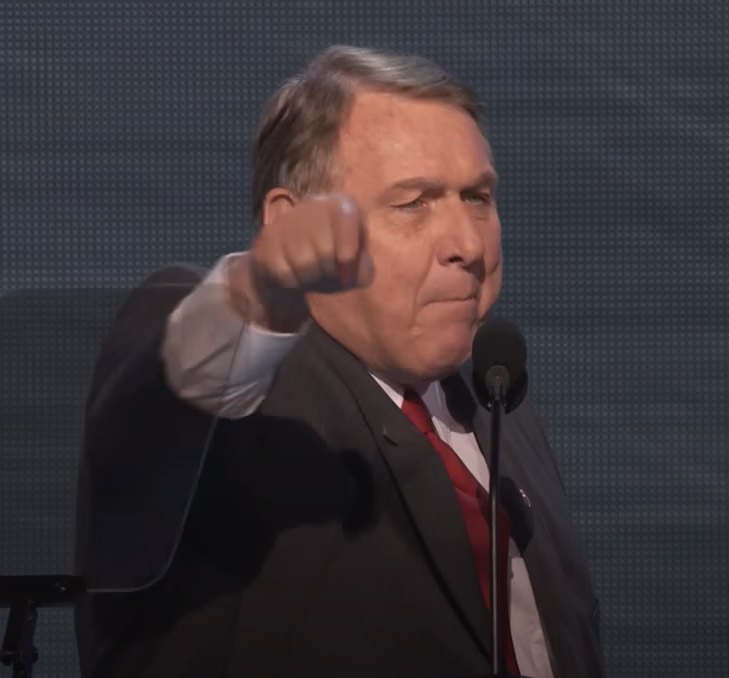
Notorious union boss James Hoffa heads the Teamsters union, which is subjecting workers nationwide and across industries to illegal schemes.
MINNEAPOLIS, MN – With free legal aid from National Right to Work Foundation staff attorneys, workers have won multiple settlements after Teamsters union bosses refused to respect their legal rights not to support a union as a condition of employment.
In one settlement, Minnesota employees James Connolly and Charles Winter won $30,000 in back pay from their former employer after they were illegally fired for choosing not to formally join the Teamsters Local 120 union.
Meanwhile, Milwaukee factory employee Tyler Lewis secured a settlement with Teamsters “General” Local Union No. 200. Union officials had denied his right under Wisconsin’s Right to Work Law and the National Labor Relations Act (NLRA) to not financially subsidize a union.
Two Minnesota Employees Obtain $30,000 in Back Pay
Connolly and Winter each filed unfair labor practice charges against both the Teamsters and their former employer, building materials company OMG Midwest, after they were unlawfully fired.
The two workers charged that company and union officials falsely told them several times that union membership was required as a condition of employment. Both men charged that the misinformation about membership and their firings violated Section 7 of the NLRA, which protects the “right to refrain from any or all” union activities.
In addition to winning $30,000 in back pay from their former employer, the settlement stipulates that OMG Midwest take additional action. The company must “remove all references to the termination” from the two employees’ personnel files, post notices at OMG’s facility in Belle Plaine, Minnesota, and distribute those notices individually to all employees. The notices will explain that workers cannot be forced to join a union as a condition of employment.
In a later settlement, Teamsters bosses were ordered to refrain from telling “employees or applicants that union membership is a condition of employment” and to inform employees “of their right to be non-members.” Additionally, the Teamsters will reimburse any employee who worked at OMG Midwest who chooses to become a non-member for the difference between full union dues and the portion payable by non-member objectors under the Foundation-won Supreme Court decision in CWA v. Beck.
“It is good news that Mr. Connolly and Mr. Winter have won these settlements which require their former employer and Teamsters union bosses to make reparations for violating longstanding worker protections. But such instances of abuse will continue unless Minnesota legislators pass Right to Work protections for their state’s private sector employees,” commented National Right to Work Foundation Vice President and Legal Director Raymond LaJeunesse. “This case demonstrates, yet again, why Teamsters bosses have a well-earned reputation for using coercive tactics against workers who refuse to toe the union line.”
Milwaukee Worker Receives Refund of Union Dues in Foundation-Won Settlement
Under the terms of the settlement for Lewis, Teamsters Local 200 officials agreed to repay union dues, plus interest, seized from Lewis’ paycheck after he resigned his union membership and revoked his dues deduction authorization.
After he was hired to work at Snap-on Logistics Company, a union official told Lewis that he must become a union member and authorize the deduction of union dues from his paycheck. That union demand violated longstanding law dating back to 1963.
In September 2019, Lewis resigned from the union and revoked his authorization of dues deductions. But union bosses refused to honor Lewis’ request to stop union dues deductions and continued to seize dues from his paycheck.
In response, Lewis filed an unfair labor practice charge with the NLRB with the assistance of Foundation staff attorneys. The favorable settlement secured for Lewis resolves his charge. Lewis’ charge against the Teamsters pointed out that the monopoly bargaining contract was signed after the effective date of Wisconsin’s Right to Work Law. Therefore, the so-called “union security” clause in the contract was illegal and he should never have been forced to pay any amount to the union.
“This settlement for Mr. Lewis is yet another victory for the rights of all Wisconsin workers. However, it should not take federal labor charges for union bosses to acknowledge the basic rights of employees in the Badger State,” said LaJeunesse.
NLRB Cases Challenge Coercive ‘Neutrality Agreements’ Used to Impose Forced Unionism
The following article is from the National Right to Work Legal Defense Foundation’s bi-monthly Foundation Action Newsletter, March/April 2020 edition. To view other editions or to sign up for a free subscription, click here.
Housekeepers demand NLRB block unionization resulting from back-room “Card Check” deals
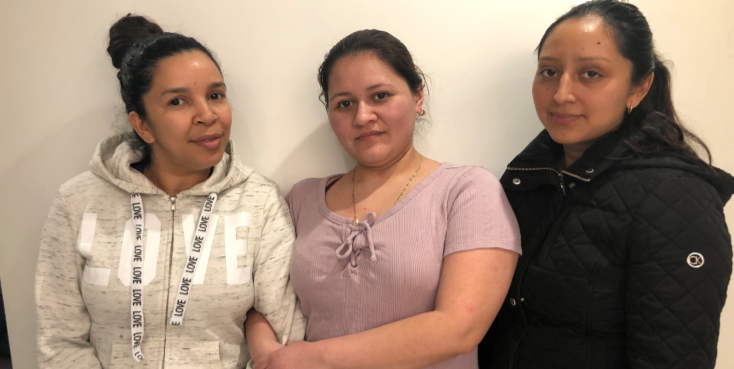
From left, housekeepers Lady Laura Javier, Cindy J. Alarcon Vasquez, and Yesica Perez Barrios are charging hotel officials and union bosses with illegally corralling workers into union ranks with a corrupted “Card Check” recognition.
SEATTLE, WA – Housekeeper Gladys Bryant was granted an appeal by the National Labor Relations Board (NLRB) General Counsel in her case challenging the use of a so-called “neutrality agreement” between UNITE HERE union officials and her employer to impose a union on the hotel’s workers.
Meanwhile, four Boston housekeepers have filed similar NLRB charges against their employer Yotel Boston and UNITE HERE Local 26, alleging that union officials violated federal law by imposing union representation on workers through a coercive “Card Check” drive with their employer’s assistance.
General Counsel Finds That UNITE HERE “Card Check” Unionization Was Tainted
Bryant filed the unfair labor practice charges after the UNITE HERE Local 8 union was installed at the Embassy Suites hotel in May 2018 through an oft-abused “Card Check” drive which bypassed the NLRB’s secret ballot election process.
As part of its so-called “neutrality agreement,” Embassy Suites agreed to give union organizers access to the hotel to meet and solicit employees. The agreement also provided union officials with a list of all employees’ names, jobs, and contact information to assist the union in collecting authorization cards from employees.
After NLRB Region 19 officials declined to prosecute the union or employer for violations of the National Labor Relations Act (NLRA), Bryant appealed the case to the NLRB General Counsel in January 2019. The NLRB General Counsel agreed with Bryant’s Foundation attorneys that Embassy Suites provided UNITE HERE’s organizing campaign with more than “ministerial aid” and thus violated the NLRA.
The NLRB has long held that an employer taints employees’ efforts to remove a union if it gives the employees support such as providing a list of bargaining unit employees or use of company resources. Bryant’s appeal successfully argued that the “ministerial aid” standard must also apply when an employer aids union officials’ efforts to gain monopoly bargaining power over workers.
Boston Housekeepers Argue Union “Card Check” Must Be Overturned
Faced with a similar situation, Boston-area housekeepers Cindy J. Alarcon Vasquez, Lady Laura Javier, Yesica Perez Barrios, and Danela Guzman filed unfair labor practice charges with the NLRB. With free legal aid from the National Right to Work Foundation, the housekeepers argue that UNITE HERE union officials violated federal law by imposing union representation on workers through a coercive “Card Check” drive with the assistance of their employer, Yotel Boston.
As in the Seattle case, they charge that Yotel Boston company officials provided UNITE HERE’s organizing campaign with more than “ministerial aid” and therefore illegally tainted the union’s installation as the employees’ exclusive representative in the workplace. The housekeepers charge union officials with violating the NLRA by requesting and accepting the illegal assistance, and the hotel for providing it.
“It is long past time that the NLRB put an end to this biased double standard that allows union bosses to abuse workers’ rights,” said National Right to Work Foundation Vice President and Legal Director Ray LaJeunesse. “The General Counsel is correct to finally recognize that what qualifies as more than ‘ministerial assistance and support,’ and thus violates the National Labor Relations Act, cannot depend on whether the employer is helping outside union organizers impose unionization on workers or assisting workers in exercising their right to remove an unwanted union.”
“These cases represent another breakthrough in the Foundation’s challenges to the pro-forced unionism skew at the NLRB,” added LaJeunesse.
Delaware Poultry Worker Charges UFCW Brass with Illegal Dues Deductions, Threats
The following article is from the National Right to Work Legal Defense Foundation’s bi-monthly Foundation Action Newsletter, July/August 2020 edition. To view other editions or to sign up for a free subscription, click here.
Foundation attorneys assist worker leading effort to oust unpopular union

Employees at the Selbyville, DE, Mountaire Farms plant were subjected to an illegal forced-dues clause by UFCW union bosses, who for months have also tried to block their right to vote on whether union officials deserve to stay.
SELBYVILLE, DE – With free legal aid from National Right to Work Foundation staff attorneys, Mountaire Farms employee Oscar Cruz Sosa hit United Food and Commercial Workers (UFCW) Local 27 union bosses with federal unfair labor practice charges. The charges assert that union officials violated his and his coworkers’ rights by enforcing an illegal forced-dues provision in the monopoly bargaining contract, and that union bosses threatened him for spearheading a petition for a vote to remove the union.
Cruz Sosa’s charges come after the National Labor Relations Board (NLRB) Region 5 Director in Baltimore rejected union arguments that the decertification election Cruz Sosa and his coworkers requested should be blocked. Under a controversial NLRB-created policy known as the “contract bar,” employees’ statutory right to hold a decertification vote to remove a union can be blocked for up to three years when a union contract is in place.
However, under longstanding precedent the “contract bar” to decertification does not apply when the monopoly bargaining contract in place contains an unlawful forced-dues clause.
Worker Deflects Union Legal Attack by Exposing Illegal Forced-Dues Clause
Prior to this charge, the NLRB Region 5 Director found that the contract between Mountaire Farms and UFCW union officials illegally required workers to immediately pay union dues upon being hired, instead of providing new hires a 30-day grace period the federal labor statute and longstanding precedent require. Because Delaware lacks Right to Work protections for its employees, Cruz Sosa and his coworkers can be required to pay union fees to keep their jobs.
The NLRB Region 5 Director thus ruled that the vote Cruz Sosa and his coworkers requested should proceed, and scheduled the vote to decertify the union. Cruz Sosa’s unfair labor practice charge, citing that decision’s finding that the forced-dues clause is unlawful, asks the NLRB to order union officials to refund all dues and fees seized from him and his coworkers under the auspices of that illegal clause.
Even after they were unable to block the election with the “contract bar,” UFCW union officials did not give up. In fact, union lawyers have initiated at least three other “blocking charges” against the employer in a last-ditch effort to block the vote, another common tactic used by union bosses to halt or delay workers’ attempts to vote them out.
UFCW union officials’ attempts to stifle the decertification effort didn’t end there. They also asked that any vote be delayed and changed to a“mail-in” vote, even though it had already been scheduled to take place in person on the premises where the workers work every day. In the responses to the union attempts to scuttle the planned vote, Cruz Sosa’s Foundation-provided attorneys argued that the vote should go forward as scheduled, because on-site elections are the NLRB’s preferred method for conducting elections, and the on-site vote was announced to workers weeks ago.
Cruz Sosa also alleged that a UFCW agent came to his house uninvited back in March. The agent warned him “that the decertification process being undertaken was ‘illegal’” and that a court battle was coming, according to his charge filed at NLRB Region 5.
Union Agents Threaten Worker after He Attempts to Exercise Rights
Cruz Sosa’s charge states that this was “threatening” and “coercive behavior” and a clear attempt to restrain him and his coworkers in the exercise of their right under the National Labor Relations Act to vote out an unwanted union.
“The threats and dues deductions in this case show how union bosses regularly trample workers’ rights in order to keep forced dues rolling into their coffers,” observed National Right to Work Foundation Vice President Patrick Semmens. “We hope that NLRB Region 5 will immediately prosecute the union for these violations, and ultimately order the union to refund all dues and fees collected from Mountaire Farms workers under the unlawful forced-dues clause.”
Semmens continued: “While UFCW officials were caught red-handed in this case, these types of forced union dues abuses will continue until Delaware workers have the protection of a Right to Work law, which ensures that all union membership and financial support are strictly voluntary.”
Rhode Island Officers Win Over $110,000 in Lawsuits Ending Forced-Dues Scheme
The following article is from the National Right to Work Legal Defense Foundation’s bi-monthly Foundation Action Newsletter, May/June 2020 edition. To view other editions or to sign up for a free subscription, click here.
Foundation-won settlements also reinstate officers fired after challenging outrageous dues deductions
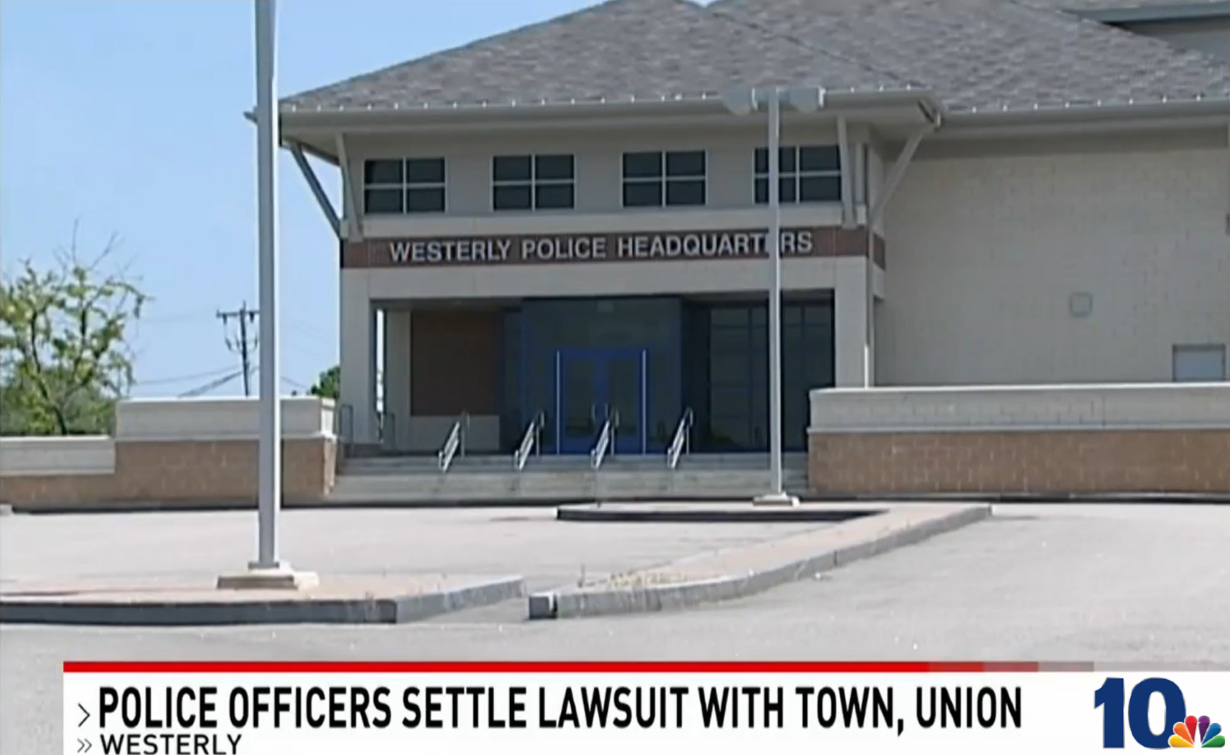
IBPO union bosses and Town of Westerly officials thought they could get away with seizing $5 per hour illegally from five non-union officers. As the result of Foundation-won settlements, all five officers have now had their rights vindicated.
WESTERLY, RI – Reserve Officers Scott Ferrigno, Darrell Koza, Raymond Morrone, Anthony Falcone and Thomas Cimalore have won favorable settlements in their cases challenging a forced union dues scheme between International Brotherhood of Police Officers (IBPO) Local 503 union bosses and Town of Westerly officials. The officers also won favorable settlements for retaliation claims they brought after publicly challenging the unlawful arrangement.
The lawsuits were filed with free legal aid from the National Right to Work Legal Defense Foundation and the Rhode Island-based Stephen Hopkins Center for Civil Rights. Under the settlements, IBPO and the Town of Westerly agreed to pay almost $65,000 in refunds of union fees seized from the officers through the illegal scheme and compensation for the officers’ other claims. Officers Koza and Ferrigno will also be reinstated as police officers and receive nearly $48,000 in back pay from the Town for the period after they were terminated.
“The Foundation is proud to stand with Officers Ferrigno, Koza, Morrone, Falcone, Cimalore, and all public servants who are targeted with intimidation, misinformation, threats of firing, and other illegal tactics simply to keep dues money flowing into the bank accounts of self-interested union officials,” commented National Right to Work President Mark Mix.
According to the lawsuits, IBPO bosses and the Town of Westerly began seizing $5 per hour from each of the five officers’ hourly pay without authorization in April 2014. IBPO and the Town perpetrated this scheme against the officers even though they were classified as “nonpermanent police officers” outside the so-called “representation” of union bosses.
Lawsuit: IBPO Union Bosses and Town Officials Violated First Amendment Rights
Over the next six months, in an attempt to stop the flow of illegal fees in this “backroom deal,” the officers repeatedly sought meetings with Town officials, including the Town of Westerly’s payroll department, the Westerly Chief of Police, the Town Manager and the Town Council, only to be rebuffed. According to the lawsuit, the Chief of Police warned the officers they could be “easily replaced” if they sought publicity for their cause.
The Reserve Officers finally managed to present their objections to the Town Council, but it refused to stop the compulsory fees. On October 20, 2014, within a week of hearing that the Reserve Officers arranged a meeting with the Town Council to argue their objections to the forced-fee scheme, the chief emailed the Town Manager informing her of his plan to terminate Koza and downgrade reserve officers’ priority level for taking on new traffic detail assignments. The five officers contended that this limited the hours they could work and the pay they could earn.
Town Official Assumed Officers Wouldn’t Have Money to Pursue Cases
Records disclosed during the litigation revealed that during a November 2014 meeting between the Town Council and other town and union officials to discuss the potential of litigation in this situation, one official opined, “It’s going to cost thousands and thousands of dollars . . . They’d have to take this money out of their pockets. I don’t think [their attorney] is going to represent them for free.” Another official at the time asserted, “If we say no, they’re probably going to back down.” When the officials considered whether the Reserve Officers would keep working for the Town, one council member commented, “They can always go to McDonald’s.”
In December 2014, the Town fired Koza, who had never been disciplined by the Town before these events. According to Koza’s lawsuit, the Town attempted to justify his termination on the grounds that he had not immediately left his position directing traffic in a busy intersection to move his police cruiser for an officer attempting to drive through a restricted lane. The Town also cited Koza’s calling himself a “police officer” rather than a “reserve police officer” in his application for a handgun carry permit. Koza’s lawsuit points out that the Town’s charter then gave “nonpermanent police officers” like Koza the powers of regular police officers while on duty, and all of Koza’s references in his application called him a “reserve officer,” “reserve police officer,” and “reserve officer with the Westerly Police Department.”
The Town fired Ferrigno in May 2016. According to Ferrigno’s lawsuit, the Town alleged that he left a bicycle race detail assignment early. But Ferrigno contended that he actually stayed five minutes later than he was instructed to by his supervisor while waiting for his replacement to arrive. As further evidence that his firing was unconstitutional retaliation, Ferrigno’s lawsuit also noted that the officer who arrived late to relieve him was a union official, who was never even disciplined for his lateness.
The five filed a lawsuit in the United States District Court for the District of Rhode Island, arguing that IBPO and Town of Westerly officials had violated their First Amendment rights by forcing them to financially support the union when they were outside its contract. The officers’ lawsuit also alleged that Town officials seized union dues without their individual written authorization in violation of Rhode Island’s wage deduction laws. The lawsuit additionally charged that the town retaliated against them when they spoke out publicly about the malfeasance.
Reserve Officers Win Refunds of Seized Dues and Reinstatement
Officers Koza and Ferrigno filed their own complaints in the same court, charging the Town with firing them for exercising their First Amendment rights. All the lawsuits also sought punitive damages. Ultimately, rather than face the officers and their attorneys at trial, Town and Union officials agreed to settle the cases. The settlements order union officials to compensate the officers almost $20,000 and Town officials to pay $45,000 for dues that were seized illegally under the “$5 per hour” policy and for other damages and claims. The settlements in Koza’s and Ferrigno’s cases, on top of requiring the Town to reinstate the two officers and pay back wages, require that all references related to the discipline forming the basis of their lawsuits be removed from their personnel records.
The U.S. District Court for the District of Rhode Island later entered a consent judgment in the case which forbids IBPO Local 503 from forcing any constable or reserve officer to pay union dues or fees without his or her affirmative consent.
“The Town and the IBPO could have avoided the years and expense of litigation if they had only listened in 2014 when we first tried to tell them that they cannot just take $5 per hour from our pay and give it to the Union without our permission,” Officer Cimalore said. “After unsuccessfully trying more than a year to resolve the matter, we were forced to go to federal court.”
Foundation Asks Supreme Court to Hear Janus Case Again, Seeking Return of Forced Fees
The following article is from the National Right to Work Legal Defense Foundation’s bi-monthly Foundation Action Newsletter, May/June 2020 edition. To view other editions or to sign up for a free subscription, click here.
Case could set precedent for hundreds of millions of dollars in refunds to Big Labor’s victims
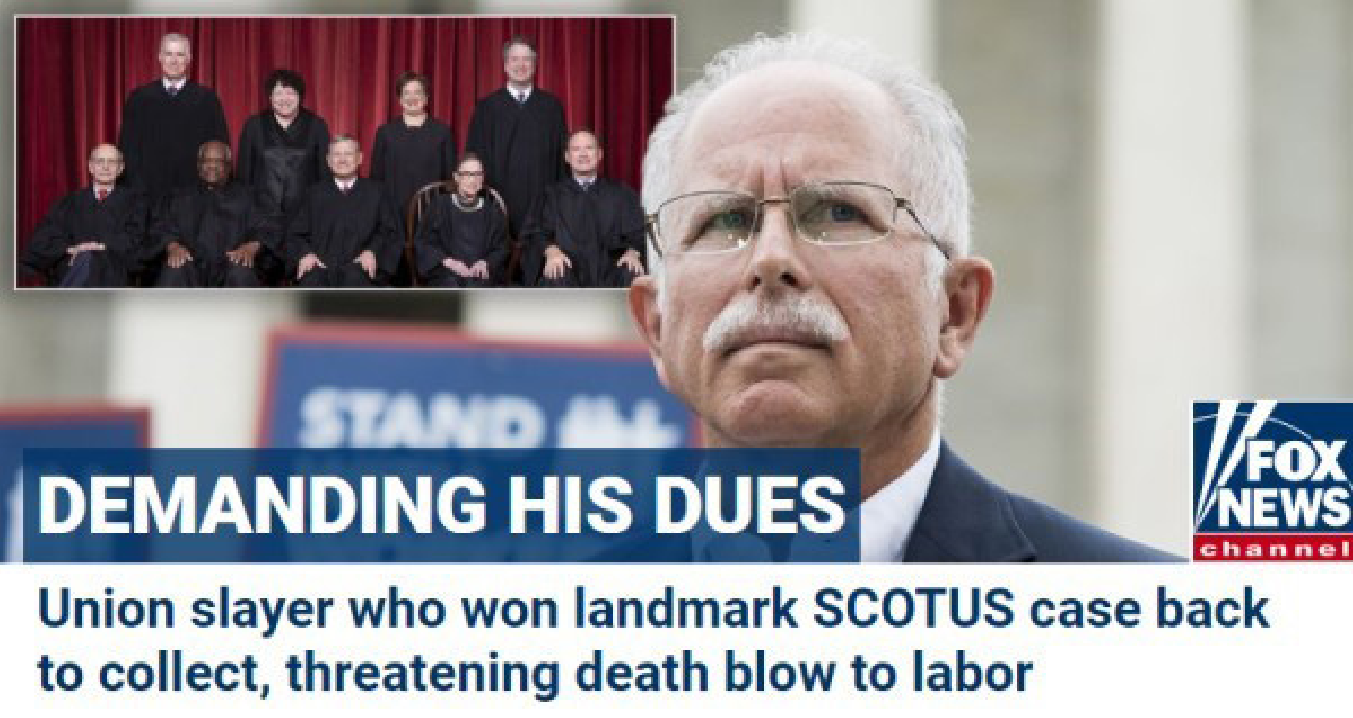
Mark Janus’ second Foundation-backed appeal to the Supreme Court landed the top spot on Fox News’ website. If Janus prevails again, hundreds of millions of dollars in unconstitutional union dues could be returned to public sector employees.
WASHINGTON, DC – Mark Janus is returning to the U.S. Supreme Court, this time asking the Justices to hear the continuation of Janus v. American Federation of State, County, and Municipal Employees (AFSCME), Council 31. Janus seeks repayment of the thousands of dollars in fees the union took from his paycheck in violation of his First Amendment rights. Another Supreme Court victory for Janus could set a precedent resulting in the return of hundreds of millions of dollars seized by union officials in violation of workers’ constitutional rights.
The original Janus v. AFSCME was argued successfully before the Supreme Court by veteran National Right to Work Foundation staff attorney William Messenger. In a landmark victory, the Court sided with Janus on June 27, 2018, and declared it illegal to force public employees to subsidize a union as a condition of employment. The Court recognized that compelling public workers to pay fees to a union violates their First Amendment rights.
Illinois Child Support Public Servant Intervenes in Lawsuit with Foundation Aid
As a result of Janus, more than five million public sector employees across the country are no longer required to pay union dues or fees to keep their jobs. However, Janus’ case continues as he seeks the return of the fees that AFSCME seized from his paycheck without his permission from June 27, 2018, to March 23, 2013, representing the two-year statute of limitations from the date his case started in March 2015 through the Supreme Court’s 2018 decision in his favor.
The Janus case began in February 2015, when then-newly elected Illinois Governor Bruce Rauner issued an executive order prohibiting state agencies from requiring employees who had abstained from formal union membership to pay union fees, based on a Right to Work Foundation U.S. Supreme Court victory in 2014 in another Illinois case. Rauner also filed a federal lawsuit seeking a declaratory judgment that forced union fees violate the First Amendment rights of public workers.
Staff attorneys from the Foundation, in partnership with the Illinois-based Liberty Justice Center, filed a motion for Mark Janus and two other plaintiffs to intervene in the case in March 2015, and have represented Janus ever since. The U.S. District Court for the Northern District of Illinois granted Janus’ motion to file a complaint in intervention, which allowed the suit to move forward even after the court ruled that Rauner lacked standing to pursue the lawsuit.
The Supreme Court permitted union bosses to impose forced union fees on public workers in the 1977 Abood v. Detroit Board of Education decision. However, before the Janus victory, Foundation staff attorneys secured several victories for workers which called the constitutionality of forced fees into question. In 2012, the court ruled in Knox v. SEIU that union officials must obtain affirmative consent from workers before using workers’ forced union fees for special assessments or risk infringing on their First Amendment rights. In 2014, the court ruled in Harris v. Quinn that requiring home healthcare providers who receive a subsidy from the government to pay union dues is a First Amendment violation.
Following Janus’ groundbreaking win at the Supreme Court in June 2018, Foundation attorneys continued his case in Illinois federal courts, arguing that the Supreme Court’s ruling is retroactive and that AFSCME should be required to return dues they seized unconstitutionally before the decision. In this and similar cases, union bosses have made a so-called “good faith” argument to defend their seizing of dues before Janus was issued. The U.S. Seventh Circuit Court of Appeals in Chicago ruled in 2019 that AFSCME could keep the unconstitutional dues, prompting Janus’ petition to the Supreme Court.
Hundreds of Millions of Dollars Potentially At Stake
“The Supreme Court agreed that the union taking money from non-members was wrong but the union still has the money it illegally garnished from my paycheck,” commented Janus. “It’s time for AFSCME to give me back the money they wrongfully took.”
Foundation staff attorneys are currently fighting for thousands of workers in about 20 cases which seek refunds of dues seized unconstitutionally before Janus was decided. While Janus is seeking the return of $3,000 of his own money, a favorable decision for him would set a precedent that could result in the return of over $120 million to public servants just in Foundation-backed cases. Other cases brought by workers could bring that total to hundreds of millions of dollars.
Workers Already Winning Refunds of Illegal Dues with Foundation Legal Aid
“The Supreme Court has already sided with the Foundation arguments for Mark Janus and ruled that forcing public employees to fund union activities violates the First Amendment,” said National Right to Work Foundation Vice President and Legal Director Raymond LaJeunesse. “The Supreme Court should take this case again to ensure that public sector union bosses are not permitted to profit from their widespread violation of workers’ First Amendment rights.”
Foundation staff attorneys in July 2018 secured the nation’s first-ever refund of dues seized unconstitutionally before Janus for Debora Nearman, an Oregon state wildlife employee. SEIU bosses were forced to settle and give back to Nearman over $3,000 in illegal fees they had seized from her over two years, during which they had sponsored an aggressive political campaign against her own husband, who ran successfully for the Oregon Legislature in 2016.
Foundation Victories Stop Illegal Forced Union Dues for Public Employees
The following article is from the National Right to Work Legal Defense Foundation’s bi-monthly Foundation Action Newsletter, January/February 2020 edition. To view other editions or to sign up for a free subscription, click here.
Settlements end Big Labor restrictions on workers exercising Janus rights in New Mexico, Ohio

Shopping for a refund: Ohio school bus driver Donna Fizer won a refund of illegally seized dues after fighting schemes meant to block public employees from exercising their rights under the Foundation-won Janus decision.
CINCINNATI, OH – National Right to Work Legal Defense Foundation staff attorneys continue to win settlements for workers who have been trapped by arbitrary union-created “escape periods” or “window periods,” which violate workers’ rights by preventing them from stopping dues deductions.
In the 2018 Foundation-won Janus v. AFSCME decision, the U.S. Supreme Court held that requiring public sector employees to pay union bosses is unconstitutional. Yet, union bosses continue to tell workers they can only stop dues deductions during limited periods. After Foundation-backed lawsuits, however, they often choose to settle with workers rather than face Foundation staff attorneys in court.
In November, Ohio bus driver Donna Fizer won a settlement against Ohio Association of Public School Employees (OAPSE). With Foundation legal aid, Fizer sued OAPSE for continuing to take money from her paycheck after she resigned her union membership, which violates the Janus ruling’s protection of her First Amendment rights.
Workers Win Battles Coast to Coast Stopping Unconstitutional Dues
Fizer’s victory came when Foundation staff attorneys filed a federal lawsuit for her, contending the dues seizures OAPSE made from her paycheck after she resigned her union membership infringed her rights under Janus.
OAPSE bosses had told Fizer that she couldn’t leave the union except during a union-created “escape period” and continued to take a portion of her paycheck. As a result of the settlement, union bosses refunded her the money they seized under the illegal policy.
After the 2018 Janus ruling, Fizer notified school board officials she was “immediately withdrawing [her union] membership” and exercising her First Amendment Janus right to cut off union dues deductions.
The school district treasurer quickly complied and stopped the deductions from her paycheck, but OAPSE bosses responded by filing a grievance which alleged that Fizer could not revoke except within a tiny, union-created “escape period” that occurs only 10 days every few years. They demanded that the school district continue to illegally take money from Fizer.
Faced with a federal lawsuit union officials quickly settled the case, vindicating her rights. As part of the settlement, OAPSE bosses returned to Fizer all the dues they took from her paycheck since the date of her membership revocation, and further notified the district to cease any further deduction of union dues from her paycheck.
In October, Foundation attorneys won a settlement for New Mexico information technology worker David McCutcheon and 67 of his coworkers, who collectively received over $15,000 in refunds of dues seized by Communications Workers of America (CWA) bosses in violation of their Janus rights.
Foundation Wins Class Action Janus Lawsuit in New Mexico
McCutcheon works as an IT technician at New Mexico’s Department of Information Technology and was forced to pay union dues as a member before the 2018 Janus decision. After the Foundation-won victory, McCutcheon attempted to end the dues payments only to be told he could only do so during a brief two-week period in December, a violation of his rights under Janus.
Again, instead of fighting the lawsuit in court, CWA officials opted to settle the case. As part of the settlement agreement, CWA officials removed the union-created “escape period.” The union also paid back fully, plus interest, all dues taken from McCutcheon and others who had attempted to exercise their First Amendment rights under Janus but were blocked from doing so because of the “escape period” restrictions.
“Local 7076 and CWA will not enter into any [union contract] with the State of New Mexico that restricts to a yearly window period the time when a bargaining unit member may revoke a previously authorized dues deduction authorization,” the settlement reads.
“Union officials have no legal right to hold workers hostage in forced-dues ranks because of brief, arbitrary union-created window periods,” said National Right to Work Foundation Vice President and Legal Director Ray LaJeunesse. “It’s telling that these union bosses are settling in court rather than continuing to litigate these cases. It shows that the law, because of the Janus ruling, favors workers, not the interests of union bosses who want to trap them.”
Since the Janus decision in 2018, Foundation attorneys have litigated more than 30 cases seeking to enforce and expand the Janus victory, with others being filed all the time.





