
National Right to Work Foundation Issues Notice to VW Chattanooga Employees Impacted By UAW Boss-Ordered Strike
Notice informs VW Team Members of their rights in light of a potential strike at Tennessee production plant
Chattanooga, TN (November 4, 2025) – The National Right to Work Legal Defense Foundation has released a special legal notice to thousands of autoworkers at Volkswagen’s production plant in Chattanooga, TN. The notice comes as officials of the United Auto Workers (UAW) have just announced that they could order a strike at the facility at any time.
The full notice is available at https://www.nrtw.org/vw/.
The Foundation’s legal notice informs autoworkers of their rights that union officials often hide, including the right to continue working to support their families. The notice gives workers who want to return to work information on how to avoid fines and punishment that could be imposed by union officials. When union bosses call strikes, they will often fine workers who don’t abide by the strike. In many cases, the fines far exceed a day’s wage. The most foolproof way for workers to avoid union discipline is to resign their union membership before returning to work.
“The situation presents serious concerns for employees who believe there is much to lose from a union-ordered strike,” the legal notice reads. “That is why workers confronted with strike demands frequently contact the National Right to Work Legal Defense Foundation to learn how they can avoid fines and union discipline for continuing to work during a strike to support themselves and their families.”
The Foundation’s special legal notice highlights workers’ right to resign union membership, and provides guidance on best practices for doing so. Because Tennessee enjoys right-to-work protections, the notice also highlights employees’ right to not pay union dues.
Finally, the notice provides helpful information for removing the union by using a decertification petition to obtain a secret ballot election. Such an NLRB-supervised election would be like ones previously held in 2014, 2019, and 2024 at the facility, and would give workers the opportunity to vote in private on UAW affiliation.
Workers Can Receive Free Legal Aid and Avoid Illegal Union Retaliation
The National Right to Work Foundation is the nation’s premier organization exclusively dedicated to providing free legal assistance to employees victimized by forced-unionism abuses. The full notice can be found at https://www.nrtw.org/vw/.
The Foundation has a long history of assisting workers in cases against the UAW. In fact, Foundation staff attorneys have helped workers at the VW production plant in Chattanooga before, challenging union organizers’ attempts to bypass a secret ballot election and impose the union through an unreliable and abuse-prone Card Check. Recently, Foundation attorneys successfully defended auto accessory manufacturing employees against illegal strike fine threats by UAW officials in Pennsylvania.
“Despite fearmongering, pressure tactics, and misleading statements from union officials, workers always have the right to continue to work during a strike, providing for their families,” commented National Right to Work Foundation President Mark Mix. “This legal notice reflects the Foundation’s longstanding commitment to helping independent-minded workers who want to exercise their rights, protecting them from union bosses’ coercive tactics that regularly go hand-in-hand with strike demands from union officials.”
Vanderbilt Grad Students Free From Aggressive UAW Campaign
The following article is from the National Right to Work Legal Defense Foundation’s bi-monthly Foundation Action Newsletter, March/April 2025 edition. To view other editions of Foundation Action or to sign up for a free subscription, click here.
Foundation-assisted students challenged union-backed NLRB demand for private info

Notorious UAW President Shawn Fain saw his union rebuffed by many Vanderbilt students concerned about the union’s intrusive organizing methods. Facing legal and political headwinds, UAW bosses dropped their campaign.
NASHVILLE, TN – Union monopoly bargaining creates barriers to freedom for people across the country. It requires workers to accept self-motivated union bosses as their sole “voice” on issues in their workplace. But, in the private sector, it’s unfortunately the law of the land.
That’s not as clear when it comes to colleges and universities. Although the National Labor Relations Board (NLRB) under President Obama upended existing precedent to dubiously let union officials impose monopoly arrangements on graduate students — a ruling continued by the Biden NLRB — the Family Educational Rights and Privacy Act (FERPA) generally bans universities from sharing student information without student permission. This puts FERPA and federal labor law at odds, as such information is something employers are required by the NLRB to produce during a unionization campaign.
After the United Auto Workers (UAW) union launched a campaign in late 2024 to sweep Vanderbilt University’s graduate students under their monopoly power, NLRB officials required the college to fork over the info of thousands of students. But three courageous students stood up with free legal aid from the National Right to Work Legal Defense Foundation, arguing that disclosure without any procedure violated their privacy rights under FERPA.
Now, union officials have backed down and withdrawn the entire union campaign at the college. The three students and others are free from being forced into UAW union monopoly ranks and from the disclosure of their FERPA-protected information.
“The withdrawal of UAW organizers’ petition seeking a vote to unionize us against our will is a welcome victory for us in our defense of our rights and the rights of our fellow graduate students,” commented one of the Foundation-assisted Vanderbilt graduate students, identified as Jane Doe 1 in legal filings to protect her identity.
Students: FERPA Lets Us Protect Private Info From Unionization Scheme
The students’ effort to protect their privacy began in October 2024, when two students identified in filings as John Doe 1 and John Doe 2 moved to intervene in the NLRB case. They argued that FERPA’s language permits students to seek “protective action” if a university receives a subpoena seeking their personal information, as Vanderbilt had from the NLRB. A regional NLRB official denied their motion to intervene. Foundation attorneys submitted an emergency appeal for John Doe 1 and John Doe 2 to the NLRB in Washington, DC, emphasizing that the students needed an opportunity to “address the serious privacy issues raised by the Region’s subpoena.”
Foundation attorneys additionally filed an updated motion to intervene that included Jane Doe 1 as another student seeking to intervene in the case. Several other graduate students also submitted less-formal objections urging the agency not to enforce a subpoena divulging their private information. The District Court for the Middle District of Tennessee issued a ruling on November 22, 2024, temporarily releasing Vanderbilt from its obligation to comply with the NLRB subpoenas. A few weeks later, UAW union officials announced they were withdrawing their petition to unionize Vanderbilt graduate students, meaning the subpoenas seeking student information are effectively null and void.
Foundation Fights Union Malfeasance at Colleges Nationwide
Meanwhile, Foundation attorneys are assisting graduate students at Dartmouth and MIT with fighting attempts by United Electrical (UE)- affiliated unions to demand dues payments from students against their will and in violation of their rights. Kara Rzasa, a Dartmouth graduate student, and Michael Fernandez, an MIT graduate student, have each hit UE local and national affiliates with charges for illegal polices UE officials are utilizing nationwide when demanding forced dues payments.
“While we’re happy that the private information of Vanderbilt grad students is now secure, it’s clearer than ever that the biased NLRB decisions granting union bosses the ability to foist union monopolies over graduate students were wrong,” commented National Right to Work Foundation Vice President and Legal Director William Messenger. “In Foundation cases, we’ve seen union bosses put students’ academic freedom, religious freedom, and privacy protections all at risk, which is why the new appointees to the NLRB need to clarify that students are off-limits to union monopoly power schemes.”
Dartmouth, MIT, Vanderbilt Graduate Students Challenge Forced Unionism
The following article is from the National Right to Work Legal Defense Foundation’s bi-monthly Foundation Action Newsletter, January/February 2025 edition. To view other editions of Foundation Action or to sign up for a free subscription, click here.
Foundation-backed students defend rights as union bosses seek more power at universities

Ben Logsdon is a Ph.D. student in mathematics at Dartmouth College. But it doesn’t take a genius to realize that union officials’ refusals to accommodate his religious objections just don’t add up.
HANOVER, NH – Just weeks after National Right to Work Foundation staff attorneys triumphed in anti-discrimination cases for Jewish Massachusetts Institute of Technology (MIT) graduate students who sought to stop forced dues payments to a radically anti-Israel union, union officials began creating other problems for university students.
In nearby New Hampshire, Dartmouth graduate student Benjamin Logsdon sought free Foundation legal aid against Graduate Organized Laborers of Dartmouth (GOLD-UE) union officials. The GOLD union — which is an affiliate of the same United Electrical (UE) union involved in the Foundation’s MIT cases — is forcing Logsdon to accept the union’s monopoly “representation” powers against his will, even after he voiced his religious objections to the union’s radical stances on the conflict against Israel.
Grad Students Exposed to Union Coercion & Privacy Violations
Meanwhile, several graduate students at Vanderbilt University in Nashville, TN, are pushing back against an attempt by Vanderbilt Graduate Workers United (VGWU, an affiliate of United Auto Workers) union bosses to impose union control over them and their colleagues. Specifically, three students are seeking to intervene in a federal case in which VGWU union officials are illegally demanding the university hand over the students’ private information to aid in their unionization campaign. Foundation staff attorneys filed motions for intervention for these students in October 2024.
Foundation attorneys are arguing that union officials severely violate students’ rights in both of these cases. However, the reason that union officials are in power on college campuses at all traces back to flawed rulings from the National Labor Relations Board (NLRB) under both the Obama Administration and Biden Administration. These rulings subject graduate students to pro-Big Labor provisions of the National Labor Relations Act (NLRA), which create issues for students’ freedom both inside and outside the classroom.
Logsdon, a Christian Ph.D. student in mathematics at Dartmouth, slammed the GOLD union with federal anti-discrimination charges in September 2024 at the Equal Employment Opportunity Commission (EEOC). According to those charges, shortly after the GOLD union finalized its first monopoly bargaining contract with the Dartmouth administration, he sent a letter to United Electrical General Secretary-Treasurer Andrew Dinkelaker explaining that he objected to being affiliated with GOLD on religious grounds and needed an accommodation.
“I sought to be removed from the UE and GOLD-UE bargaining unit as a reasonable accommodation,” Logsdon’s Foundation-backed charges say.
Dinkelaker refused to offer Logsdon an accommodation that “satisf[ied] [his] religious conscience or beliefs,” according to the charges, which violated his rights under Title VII of the Civil Rights Act of 1964.
Courts have recognized a variety of Title VII religious accommodations over the years for men and women who have religious objections to union affiliation, including paying an amount equivalent to union dues to a charity instead of union bosses. However, Logsdon seeks a different accommodation: to remove himself from union bosses’ control entirely.
At Vanderbilt, three students who identify themselves in legal documents as “John Doe 1,” “John Doe 2,” and “Jane Doe 1” are contending in their Foundation-backed motions for intervention that the Family Educational Rights and Privacy Act (FERPA) forbids the Vanderbilt administration from disclosing their personal information to any third parties without their permission, including the VGWU union.
At the union’s behest, NLRB Region 10 has already hit the Vanderbilt administration with a pair of subpoenas demanding personal student info, while ignoring objections from several students expressing concern at the disclosure.
So far Vanderbilt has resisted the NLRB’s subpoenas, and fortunately a federal court has temporarily allowed the university to refuse to comply with them.
The Foundation-backed students’ motions to intervene argue that the subpoenas “are an attempt to violate FERPA’s protections, privileging union interests over the graduate students[’] privacy rights.” It also points out that FERPA allows students to seek “protective action” if a university receives a subpoena seeking their personal information, as in this case.
The Vanderbilt students and their Foundation attorneys are demanding an opportunity to properly defend their privacy interests under FERPA. Foundation attorneys have already filed Requests for Review asking the NLRB in Washington, DC, to weigh in on the matter.
Union Monopoly Power Has No Place at Universities
“Graduate students around the country are discovering that union bosses don’t respect their individual rights and would rather use students as pawns to force their demands on a university administration, or advance an extreme political agenda,” commented National Right to Work Foundation Vice President and Legal Director William Messenger.
“Union monopoly bargaining is a system particularly ill-suited to an academic environment. Indeed, it is wrong for anyone to have a union monopoly imposed on them against their will and then be forced to pay union dues under threat of termination.”
Tennessee AT&T Workers Avert ‘Card Check’ Catastrophe with Foundation Aid
The following article is from the National Right to Work Legal Defense Foundation’s bi-monthly Foundation Action Newsletter, May/June 2024 edition. To view other editions of Foundation Action or to sign up for a free subscription, click here.
CWA union officials tried to lock workers in inescapable unit without vote

President Biden, a longtime ally of radical CWA union officials, has stocked the National Labor Relations Board with ex-union lawyers who are manipulating labor law to give union bosses more options to trap workers in unions without a vote.
TENNESSEE – Over the years, National Right to Work Foundation staff attorneys have successfully represented countless workers across the country who have opposed union officials’ attempts to force them under monopoly bargaining via the coercive “card check” process. Unsurprisingly, workers prefer to cast ballots in secret, as opposed to having that right snatched in favor of a scheme where union bosses can intimidate workers into signing a card “authorizing” union control.
Fortunately, workers can turn to the Foundation for free legal aid in fighting coercive card check unionization. For example, in March, Denis Hodzic and his fellow In-Home Experts from AT&T Mobility locations across Tennessee successfully challenged a card check campaign by Communications Workers of America (CWA) union bosses that would have almost certainly confined them in the union for the rest of their careers with the company.
Union Bosses Tried to Trap Workers, Then Fled When Faced with Actual Vote
CWA agents installed themselves over Hodzic’s work unit — which was comprised of over 100 AT&T In-Home Experts — by card check. Shortly after, however, Hodzic filed a petition asking the National Labor Relations Board (NLRB) to hold a “decertification vote” to remove the union. Roughly two-thirds of his work unit signed the petition demanding a secret-ballot vote on the union’s presence.
CWA union officials filed objections in an attempt to stop the election, but an NLRB Regional Director rejected these and ruled that a decertification election should go forward. Before the vote could occur, CWA union officials filed paperwork disclaiming interest in continuing their control over the workers — likely to avoid an embarrassing rejection by employees at the ballot box.
Had Hodzic and his coworkers’ effort not succeeded, NLRB documents indicate that they would have been integrated into a nationwide bargaining unit comprised of thousands of employees, which would have made petitioning for a vote to kick out the union virtually impossible.
Biden NLRB Boosting Card Check Despite Unreliability
Cases like Hodzic’s serve as potent reminders that card check doesn’t represent the true will of workers vis-à-vis bringing in a union. Even AFL-CIO organizing guidelines admit that employees often sign cards during a card check to “get the union off my back.”
Despite this, the Biden NLRB is rapidly increasing union bosses’ ability to corral workers into a union via card check while cutting down workers’ ability to vote in secret-ballot union elections. In the August 2023 Cemex decision, the agency greatly expanded union bosses’ power to overturn elections that don’t go in their favor if an employer requests such an election to challenge a card check.
The Biden NLRB is also conducting rulemaking to overturn the Election Protection Rule (EPR), a set of Foundation-backed reforms that the NLRB adopted in 2020. The EPR permits employees to submit decertification petitions within a 45-day window after the finalization of a card check. This process was originally established by Foundation attorneys in the 2007 Dana Corp. NLRB case. Though this decision was later overturned by the Obama NLRB, “Dana elections” were codified in the EPR.
Hodzic and his colleagues were able to request their election under the auspices of this policy.
“The NLRB Election Protection Rule was essential for us to rely on as we went through the process of seeking resolution to our tricky situation,” Hodzic commented. “The 45-day petition window needs to remain regardless of which group holds the majority position in Washington . . . . [W]e hope that lawmakers see the necessity of having this rule in place, and that both unions and employers abide by the laid-out NLRB processes to ensure fair representation and protection of workers.”
“While Mr. Hodzic’s story had a happy ending, his situation illustrates just how dire things will get once the Biden NLRB’s anti-freedom agenda is fully realized,” commented National Right to Work Foundation Vice President and Legal Director William Messenger. “While American union bosses may desire a world in which they can force employees into inescapable work units without even a vote, Foundation attorneys will continue to fight for workers’ right to choose freely whether they want union control or not.”
Tennessee AT&T Workers Force Unwanted CWA Union Bosses Out of Workplace Following Union ‘Card Check’
After union lawyers’ attempt to get the NLRB to block the vote failed, union bosses backed down and departed workplace rather than face workers’ vote
Tennessee (March 5, 2024) – Denis Hodzic, an In Home Sales Expert of AT&T Mobility Tennessee, and his coworkers have successfully pushed unwanted Communications Workers of America (CWA) union officials out of power.
The union ouster follows Hodzic’s submission of a “decertification petition” backed by his fellow employees, which asked the National Labor Relations Board (NLRB) to hold a vote to remove (or decertify) the union for AT&T Mobility In Home Sales Experts throughout Tennessee. Hodzic received free legal aid from National Right to Work Legal Defense Foundation staff attorneys.
The NLRB is the federal agency responsible for enforcing federal labor law, which includes administering votes to certify and decertify unions. Hodzic, who collected signatures from a majority of his coworkers (more than enough to trigger a decertification vote under NLRB rules), filed his decertification petition in December 2023 to challenge a so-called “card check” unionization scheme by CWA union bosses.
Last month, an NLRB Regional Director rejected union officials’ objections to the petition and ruled that a decertification election should go forward. However, before the vote could occur, CWA union officials filed paperwork disclaiming interest in continuing their control over the workers – likely to avoid an embarrassing rejection by employees at the ballot box.
Had Hodzic and his coworkers’ effort not succeeded, NLRB documents indicate that they would have been integrated into a nationwide bargaining unit comprised of thousands of employees, which would have made decertifying the union virtually impossible.
Because Tennessee is a Right to Work state, CWA union officials never had the power to force Hodzic and his colleagues to pay union dues or join the union as a condition of employment. However, even in Right to Work states, union officials can still force their one-size-fits-all contracts on all employees in a work unit, even those who oppose the union. A successful decertification election ends this monopoly bargaining power.
Biden NLRB Cracking Down on Employees’ Right to Vote in Secret on Union ‘Representation’
Under a card check, union officials can bypass the secret-ballot election process, which is the most secure and reliable way to determine if employees want to unionize. During a card check drive, union officials can engage in face-to-face interactions with employees and demand they sign union authorization cards, making the process a breeding ground for coercive and intimidating tactics. Even AFL-CIO organizing guidelines admit that employees often sign cards during a card check to “get the union off my back.”
Though union officials successfully gained control via card check, Hodzic was able to petition for a decertification vote to overturn the result thanks to the Right to Work Foundation-backed 2020 reforms to NLRB rules.
Collectively referred to as the “Election Protection Rule,” the reforms permit employees to submit decertification petitions within a 45-day window after the finalization of a card check. The Election Protection Rule also prevents union officials from manipulating charges they file alleging employer misconduct to block workers from casting ballots in a decertification election, among other things.
Unfortunately, the NLRB in Washington, DC, has begun rulemaking to undo the Election Protection Rule, which will make it much harder for employees to challenge card check drives. This is just one of several aggressive moves by the Biden NLRB to give union officials greater power to corral workers into unions, while limiting workers’ rights to get rid of unpopular unions.
Recently, the NLRB issued the Cemex decision, which gives union officials greatly expanded power to overturn elections that don’t go in their favor if an employer requests such an election to challenge a card check.
“Despite claiming to speak for workers, union bosses and their allies in the Biden NLRB seem to be intent on further constricting workers’ ability to have secure, private votes on whether union bosses deserve to have control over their working lives,” commented National Right to Work Foundation President Mark Mix. “Mr. Hodzic and his coworkers’ victory should serve as a reminder that ‘card check’ is not a reliable indicator of employee support for a union, and that giving this process priority over secret ballot elections will trap more workers under union boss control against their will.”
Full Foundation Action May/June 2022 Newsletter Now Online
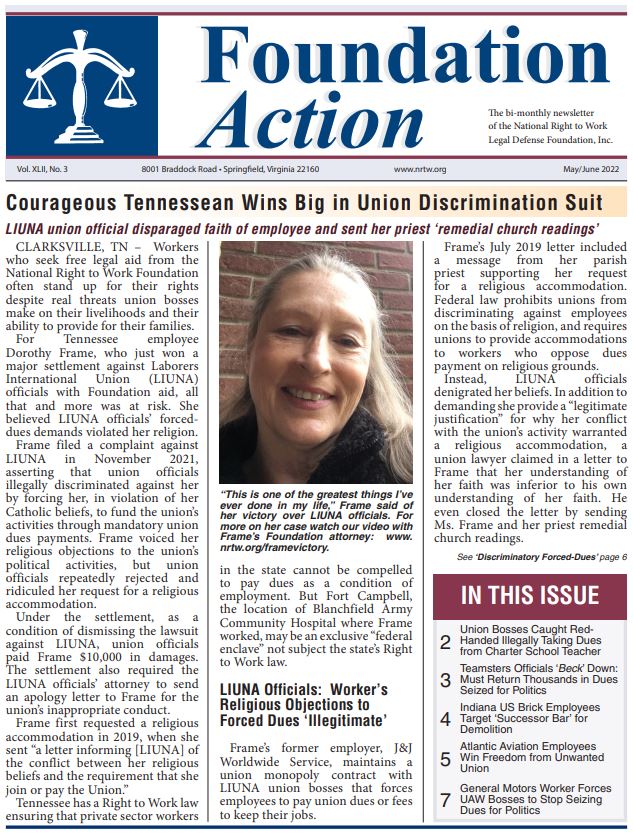
All articles from the May/June issue of Foundation Action are available on the website.
In this issue:
- Courageous Tennessean Wins Big in Union Discrimination Suit
- Union Bosses Caught Red-Handed Illegally Taking Dues from Charter School Teacher
- Teamsters Officials ‘Beck’ Down: Must Return Thousands in Dues Seized for Politics
- Indiana US Brick Employees Target ‘Successor Bar’ for Demolition
- Atlantic Aviation Employees Win Freedom from Unwanted Union
- General Motors Worker Forces UAW Bosses to Stop Seizing Dues for Politics
Recent articles can be found here. To sign up for a free copy of the newsletter via mail please see the form at the bottom of this page.
Courageous Tennessean Wins Big in Union Discrimination Suit
The following article is from the National Right to Work Legal Defense Foundation’s bi-monthly Foundation Action Newsletter, May/June 2022 edition. To view other editions of Foundation Action or to sign up for a free subscription, click here.
LIUNA union official disparaged faith of employee and sent her priest ‘remedial church readings’

“This is one of the greatest things I’ve ever done in my life,” Frame said of her victory over LIUNA officials. For more on her case watch our video with Frame’s Foundation attorney at the bottom of this page.
CLARKSVILLE, TN – Workers who seek free legal aid from the National Right to Work Foundation often stand up for their rights despite real threats union bosses make on their livelihoods and their ability to provide for their families. For Tennessee employee Dorothy Frame, who just won a major settlement against Laborers International Union (LIUNA) officials with Foundation aid, all that and more was at risk. She believed LIUNA officials’ forced-dues demands violated her religion.
Frame filed a complaint against LIUNA in November 2021, asserting that union officials illegally discriminated against her by forcing her, in violation of her Catholic beliefs, to fund the union’s activities through mandatory union dues payments. Frame voiced her religious objections to the union’s political activities, but union officials repeatedly rejected and ridiculed her request for a religious accommodation.
Under the settlement, as a condition of dismissing the lawsuit against LIUNA, union officials paid Frame $10,000 in damages. The settlement also required the LIUNA officials’ attorney to send an apology letter to Frame for the union’s inappropriate conduct.
Frame first requested a religious accommodation in 2019, when she sent “a letter informing [LIUNA] of the conflict between her religious beliefs and the requirement that she join or pay the Union.”
Tennessee has a Right to Work law ensuring that private sector workers in the state cannot be compelled to pay dues as a condition of employment. But Fort Campbell, the location of Blanchfield Army Community Hospital where Frame worked, may be an exclusive “federal enclave” not subject the state’s Right to Work law.
LIUNA Officials: Worker’s Religious Objections to Forced Dues ‘Illegitimate’
Frame’s former employer, J&J Worldwide Service, maintains a union monopoly contract with LIUNA union bosses that forces employees to pay union dues or fees to keep their jobs.
Frame’s July 2019 letter included a message from her parish priest supporting her request for a religious accommodation. Federal law prohibits unions from discriminating against employees on the basis of religion, and requires unions to provide accommodations to workers who oppose dues payment on religious grounds.
Instead, LIUNA officials denigrated her beliefs. In addition to demanding she provide a “legitimate justification” for why her conflict with the union’s activity warranted a religious accommodation, a union lawyer claimed in a letter to Frame that her understanding of her faith was inferior to his own understanding of her faith. He even closed the letter by sending Ms. Frame and her priest remedial church readings.
Frame subsequently filed a discrimination charge against LIUNA with the Equal Employment Opportunity Commission (EEOC) in December 2019. Even after EEOC proceedings continued and Frame’s attorneys sent letters showing the conflict between the union’s stance and her religious views, union officials still refused to accommodate her beliefs and refused to return money they took from her paycheck after she requested an accommodation.
Ultimately, the EEOC issued Frame a “right to sue” letter leading to her federal anti-discrimination lawsuit, filed by Foundation staff attorneys, resulting in her victory.
“Despite being targeted with years of bullying and discrimination by LIUNA officials, Ms. Frame refused to forsake her religious beliefs and stood firm for her rights,” commented National Right to Work Foundation President Mark Mix. “She has now prevailed decisively against LIUNA’s illegal attempt to force her to choose between remaining true to her beliefs and staying employed.”
Forced-Dues Privileges Open Door for Union Discrimination against Workers
“The National Right to Work Foundation is proud to stand with principled workers like Ms. Frame. Big Labor’s government-granted privilege to force rank-and-file workers to support union boss activities creates a breeding ground for malfeasance and anti-worker abuse,” Mix continued. “No American worker should have to pay tribute to a union they oppose just to keep their job, whether their objections are religious or otherwise.”
Tennessee Worker Takes LIUNA Bosses to Federal Court for Religious Discrimination
The following article is from the National Right to Work Legal Defense Foundation’s bi-monthly Foundation Action Newsletter, January/February 2022 edition. To view other editions of Foundation Action or to sign up for a free subscription, click here.
To justify forced dues union official sent ‘remedial church readings’ to employee, her priest
Instead of just granting Dorothy Frame a religious accommodation as federal law requires, LIUNA union bosses disparaged her faith.
CLARKSVILLE, TN – Dorothy Frame, who works at a hospital at Tennessee’s Fort Campbell, asked for a federally required religious accommodation over two years ago so she didn’t have to pay dues to Laborers International Union of North America (LIUNA) bosses in her workplace. Since then, LIUNA union bosses have ridiculed her faith, seized dues from her wages even after she requested an accommodation, and refused to give back funds they took from her in violation of her rights.
Now, with free legal representation from National Right to Work Foundation staff attorneys, Frame has hit LIUNA bosses with a federal lawsuit for violating her rights. Her lawsuit charges the union with religious discrimination for siphoning dues from her paycheck when union officials knew doing so violated her religious beliefs. The lawsuit also charges the union with religious harassment for threatening to fire her if she didn’t submit union dues in contradiction to her beliefs.
LIUNA Officials Brazenly Ridiculed Beliefs of Employee and Her Priest
Frame gave the union a letter in July 2019 requesting a religious accommodation, her lawsuit says. It included a message from her parish priest backing her position. Federal law prohibits union officials from discriminating against employees on the basis of religion. Accommodations of religious objections to dues payment often consist of permitting a dissenting worker to instead contribute the dues amount to a mutually agreed upon charity.
Even though Tennessee is a Right to Work state, union officials claim that Fort Campbell is a “federal enclave” not subject to state law. Frame’s employer (J & J Worldwide Service) and LIUNA maintain a contract that forces workers to pay union dues to stay employed.
A response to Frame’s letter from a LIUNA lawyer came the following month, her lawsuit notes, attacking her accommodation request and demanding that she “prove that her beliefs ‘[]meet the standard for a “legitimate justification.”’” The union lawyer also claimed that Ms. Frame’s understanding of her faith was inferior to his own understanding of her faith and even closed the letter by “sending Ms. Frame — and her priest — remedial church readings.”
One of Frame’s attorneys sent a letter in reply demonstrating how the accommodation request conformed to various church teachings. Nonetheless, LIUNA bosses continued to take dues from Frame’s paycheck.
Frame then filed a discrimination charge against LIUNA with the Equal Employment Opportunity Commission (EEOC). Even after EEOC proceedings and additional letters from her attorney demonstrating the union’s various forms of support for causes and ideas she objected to, Frame’s lawsuit explains, union officials still refused to accommodate her. LIUNA bosses also “refuse to return any money they collected from Ms. Frame” since she sought an accommodation.
Employee Seeks Damages for Emotional Pain Caused by Union Discrimination
Frame’s lawsuit asks that the court declare “she has the right to a religious accommodation that alleviates her obligation to join or support the Unions” and order that LIUNA return all money seized from her wages in violation of her religious beliefs, plus pay “damages for emotional pain, suffering, and mental anguish that she suffered because the Unions repeatedly challenged and disparaged her religious beliefs.”
Frame is a Catholic who staunchly opposes LIUNA union officials’ position on abortion. “Ms. Frame believes that abortion is a grave sin,” her lawsuit details. “She believes joining or financially supporting the Unions would make her complicit in that sin because she believes that the Unions support and promote abortion. Thus, she believes that any money the Unions collect from her makes her complicit in sin and violates her religious beliefs.”
“LIUNA officials have put their arrogance and callousness on full display by forcing Ms. Frame to choose between losing her job and severely compromising her religious beliefs,” commented National Right to Work Foundation President Mark Mix. “Denying an individual a simple religious accommodation clearly violates federal law, and Foundation attorneys will fight for Ms. Frame until she is accommodated.”
“Big Labor’s government-granted privilege to force fees out of workers as a job condition allowed this kind of abuse to happen — no American worker should be forced to subsidize unwanted union activities just to keep his or her job,” Mix added.
Sixteen States Back Foundation’s Petition to High Court in Chicago Educator Case
The following article is from the National Right to Work Legal Defense Foundation’s bi-monthly Foundation Action Newsletter, September/October 2021 edition. To view other editions of Foundation Action or to sign up for a free subscription, click here.
Amicus brief: Unions “refuse to stop collecting dues despite unequivocal employee demands”
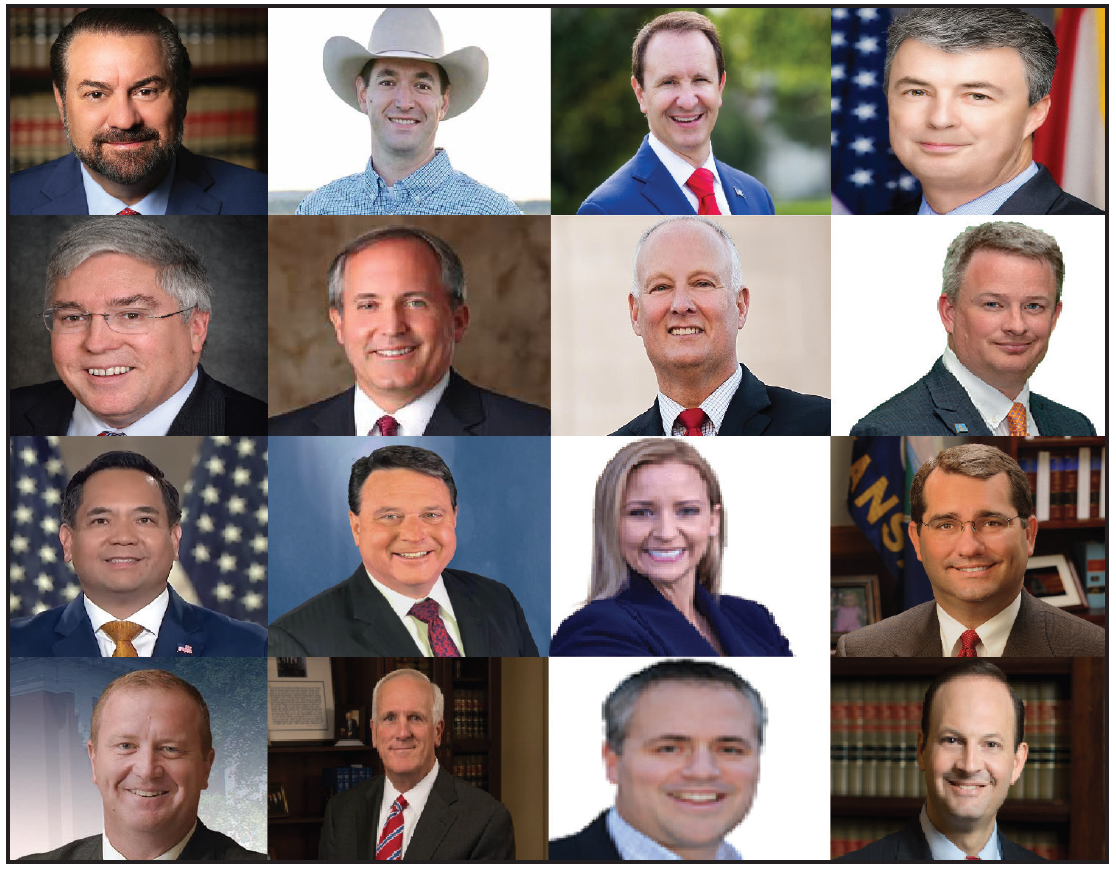
“Janus has been ignored,” wrote sixteen attorneys general in their amicus brief supporting Ifeoma Nkemdi and Joanne Troesch’s petition pressing the Supreme Court to hear their case and declare “escape periods” a First Amendment violation.
WASHINGTON, DC – In July, sixteen attorneys general threw the support of their states behind Chicago Public Schools educators Ifeoma Nkemdi and Joanne Troesch, who are urging the U.S. Supreme Court to hear their case defending their First Amendment right to cut off union financial support as recognized in the Foundation-won Janus v. AFSCME decision.
In an amicus brief encouraging the High Court to hear the case, attorneys general from Alaska, Alabama, Arizona, Arkansas, Indiana, Kansas, Louisiana, Missouri, Montana, Nebraska, South Carolina, South Dakota, Tennessee, Texas, Utah, and West Virginia argue that “escape period” restrictions like the one that Chicago Teachers Union (CTU) bosses foisted on Troesch and Nkemdi are a widespread threat to public employees’ rights under the Janus Supreme Court decision.
In 2018, the Supreme Court ruled in Janus v. AFSCME that public employees’ First Amendment rights are violated when they are forced to fund a union as a condition of employment. The Court also held that union dues can only be taken from a public employee with an affirmative and knowing waiver of that employee’s First Amendment right not to pay.
Unions Are Seizing Money from ‘Tens of Thousands’ Unconstitutionally, Brief Says
The CTU-concocted “escape period” Nkemdi and Troesch are challenging blocks employees from exercising their First Amendment Janus right to end union financial support except during one month per year. The educators’ petition for writ of certiorari presses the High Court to hear their case to affirm that Janus does not permit union bosses to profit from schemes that constrict workers’ constitutional right to refrain from subsidizing a union.
The states’ amicus brief emphasizes how glaringly union officials have flouted Janus with restrictions, as well as how widespread the schemes are: “Janus has been ignored. Across the country public-sector unions have resisted Janus’s instructions and devised new ways to compel state employees to subsidize union speech. Unions place onerous terms on dues forms that prohibit state employees from opting out of paying dues except during narrow (and undisclosed) windows during the year.”
The brief continues: “Unions refuse to inform state employees that they have a First Amendment right not to pay union dues. And unions refuse to stop collecting dues despite unequivocal employee demands. The result is that tens of thousands of state employees across the country are having dues deducted to subsidize union speech without any evidence that they waived their First Amendment rights . . . .”
Nkemdi and Troesch’s case “implicates these precise concerns” and the Court must hear it, the brief maintains.
In addition to the states’ brief, policy groups Goldwater Institute, Cato Institute, Freedom Foundation, and Liberty Justice Center filed amicus briefs backing the case.
Justices May Already Be Showing Interest in Foundation-Backed Case
In late July, the Supreme Court ordered lawyers for CTU and the Chicago Board of Education to file a response brief to Troesch and Nkemdi’s petition, a signal that some Justices may be interested in taking up the case.
Also pending at the High Court is Foundation attorneys’ anti- “escape-period” case for Susan Fischer and Jeanette Speck, two New Jersey teachers. Both that case and Troesch and Nkemdi’s case are expected to be fully briefed in October, after which the Justices will decide whether to take them.
“As union bosses continue to use deceptive ‘escape period’ arrangements to keep worker money flowing unconstitutionally into their coffers, support continues to roll in from across the country for Troesch and Nkemdi, who are sticking up for independent-minded public servants who simply want to serve their communities without being forced to fund union activities,” observed National Right to Work Foundation President Mark Mix. “The High Court must weigh in to affirm that public workers’ First Amendment rights cannot be confined to union officials’ arbitrary schedules.”
Military Base Employee Charges Union Bosses with Religious Discrimination
Union officials interrogated employee about her beliefs instead of providing federally-mandated exemption

Dorothy Frame opposes funding the LIUNA union due to its stance on abortion. Instead of providing her an accommodation, union bosses questioned her religious beliefs.
CLARKSVILLE, TN – Dorothy Frame, a J&J Worldwide Service Employee, works at Fort Campbell, a military installation on the Kentucky-Tennessee border. In July 2019, she sent Laborers Local Union 576 (LIUNA) bosses at her workplace a letter requesting a “religious accommodation of her objection to joining or financially supporting the union.”
In her letter requesting the exemption in accordance with federal law regarding workplace discrimination, Frame explained that, as a Catholic, she opposes the union’s stance on abortion. Instead of providing her with an accommodation in accordance with federal law, LIUNA bosses rejected her request and demanded in a letter the following month that she “provide a theological defense.”
Now, with free legal aid from National Right to Work Legal Defense Foundation staff attorneys, she has filed a charge with the Equal Employment Opportunity Commission (EEOC) on the grounds that LIUNA officials illegally discriminated against her because of her religious beliefs.
EEOC Asked to Investigate Union Boss Religious Discrimination
Frame’s charge notes that under her Catholic faith she believes abortion is “the unjustified destruction of a human life,” a belief that is rooted in “her understanding of Catholic teaching, scripture, and God’s will.” Because of those sincere beliefs and her knowledge that the union “funds and supports abortion,” her charge states that for her “it would be sinful to join or financially support the union.”
Frame had been a LIUNA member for four years before requesting an accommodation. According to the charge, she converted to Catholicism in 2017 and discovered the conflict between her sincerely held religious beliefs and union officials’ position on abortion “shortly before she wrote her accommodation request.”
Although Kentucky and Tennessee both have Right to Work laws which ensure that union membership and financial support are strictly voluntary, Fort Campbell’s status as an “exclusive federal enclave” overrides those state laws. Thus, the monopoly bargaining contract between J&J Worldwide Service and the LIUNA union requires Frame to pay union dues or fees as a condition of employment.
Union Boss Questions Priest’s Letter Supporting Religious Accommodation Request
LIUNA bosses rebuffed Frame’s request in August 2019, sending her a letter in which a union lawyer told Frame she would need to “provide a theological defense” of her beliefs to meet LIUNA union officials’ supposed standard for a “legitimate justification” for her accommodation request. Frame then provided a letter from her parish priest supporting her religious opposition to abortion, but, according to her charge, “the Union lawyer rejected this evidence based on his supposedly superior religious views.”
Frame’s Foundation-provided attorney also provided evidence to LIUNA officials that abortion violates the teachings of the Catholic Church. But her charge notes that union officials never responded to this additional evidence and continued to take money from her paycheck in violation of her sincere religious beliefs. Her charge alleges this violates her rights under Title VII of the Civil Rights Act of 1964, which prohibits discriminating against an individual based on his or her religious beliefs. If the EEOC finds merit in her charges, Frame could be given a “right to sue” letter, which authorizes her to file a federal lawsuit against LIUNA officials to vindicate her rights.
Foundation staff attorneys regularly aid workers who have a religious objection to supporting a labor union. They recently helped Boston College electrician Ardeshir Ansari secure such an accommodation from his employer and the union, Service Employees’ International Union 32BJ.
“It is outrageous that LIUNA bosses are forcing Ms. Frame to choose between keeping her job and violating her sincere religious beliefs,” commented Raymond LaJeunesse, Vice President and Legal Director of the National Right to Work Foundation. “Although such religious discrimination is a blatant violation of federal law, union boss demands in this case serve as a reminder why no worker in America should be forced to subsidize union activities they oppose, no matter whether their opposition is religious-based or for any other reason.”





