
WV, TX Employees Defend Rights as Biden NLRB Appointee Attempts to Block Cases
The following article is from the National Right to Work Legal Defense Foundation’s bi-monthly Foundation Action Newsletter, May/June 2021 edition. To view other editions or to sign up for a free subscription, click here.
‘Acting’ GC tries to stop prosecution of union bosses for illegal dues, secret-organizing deal

Marissa Zamora is challenging the authority of NLRB “Acting” General Counsel Peter Ohr, who was installed by Pres. Biden in an unprecedented power grab and began attacking the rights of workers opposed to associating with union officials.
WASHINGTON, DC – President Biden’s unprecedented removal of National Labor Relations Board (NLRB) General Counsel Peter Robb, and subsequent installation of forced-unionism zealot Peter S. Ohr as Robb’s “Acting” replacement, quickly threatened workers’ individual rights. It also threatened the independence of the Board itself, including in multiple ongoing cases brought with National Right to Work Foundation legal aid.
In two cases brought by Foundation staff attorneys that are already before the NLRB, Ohr is attempting to stop the Board from ruling against union officials. One is a case for Texas-based nurse Marissa Zamora, which challenges union officials’ ability to hide secret “neutrality agreements” that limit workers’ rights. The other, brought for West Virginia Kroger employee Shelby Krocker, seeks to prosecute union officials for coercing workers into signing dues checkoff authorizations that are supposed to be voluntary.
Former NLRB General Counsel Peter Robb, who supported the workers in both of these cases, was removed by President Biden just minutes after his inauguration, despite the fact that Robb still had nearly 11 months remaining in his Senate-confirmed four-year term.
This unprecedented and possibly illegal maneuver flies in the face of the law creating the NLRB, which envisioned an independent General Counsel. Since the office of NLRB General Counsel was established in 1947, no sitting General Counsel of the NLRB has ever been fired by a president before the end of their term, even when the White House changed hands.
Zamora’s case progressed to the full NLRB in Washington, D.C., after an NLRB Administrative Law Judge (ALJ) dismissed a complaint that former NLRB General Counsel Peter Robb had issued, prosecuting the National Nurses Organizing Committee (NNOC) for refusing to disclose to represented employees its secret “neutrality agreement.”
TX Nurse Fights Biden Appointee Move to Shield Union’s Secret Deal
Though Zamora’s Foundation-provided attorneys and Robb had both filed exceptions urging the full Board to reverse the ALJ’s decision, NLRB Acting General Counsel Peter Ohr filed a motion on February 23, 2021, seeking unilaterally to send the complaint back to the NLRB Fort Worth regional office to be dismissed.
So-called “neutrality agreements” are organizing deals struck between union officials and employers, usually without the knowledge of employees in a workplace. They frequently contain provisions that require employers to silence opposition to unionization. In Zamora’s situation, the neutrality agreement was used to limit her ability to inform her coworkers about their right to vote out the union.
Zamora’s opposition brief challenges Ohr’s attempt to kill the case. It argues that the case is already before the full Board, and she “is a full party with a right to have her pending exceptions decided by the Board.” It notes that letting Ohr shut her out at this stage would “infringe on the Board’s exclusive power to adjudicate violations of” federal labor law.
Further, the brief contends that because of Robb’s unlawful removal, Ohr lacks the legal authority to even ask the NLRB to end the case. Allowing “the President to fire the General Counsel at will would do irreparable damage to the NLRB’s function as an independent agency,” the brief says.
In Krocker’s case, NLRB Region 6 in Pittsburgh initially dismissed Krocker’s charge challenging United Food and Commercial Workers Union (UFCW) checkoff cards which falsely stated that they “MUST BE SIGNED.”
West Virginia Kroger Employee Stands Up to Union-Allied Ohr
Foundation attorneys successfully appealed this dismissal to General Counsel Peter Robb, who sustained the charge and ordered NLRB Region 6 to issue a complaint prosecuting UFCW Local 400 for the violation.
In fact, Robb ordered Region 6 to issue the complaint on several additional grounds, including maintenance of a checkoff that prohibited employees from ending dues deductions after the expiration of a contract.
After an ALJ declined to rule that UFCW Local 400 officials violated the law with their “MUST BE SIGNED” demands and other unlawful provisions, Krocker’s Foundation staff attorneys and General Counsel Robb both appealed the case to the NLRB. Their appeals have been fully briefed before the Board since September.
After Ohr’s appointment, Region 6 entered into an inadequate informal settlement over Krocker’s objection and filed a motion to send the case back to Region 6.
Biden Appointee Shielding Union Boss Privileges
Krocker’s opposition to that motion argues, as does Zamora’s, that her case is already pending before the full NLRB and that Ohr lacks the authority to divert it away from the Board’s judgment.
“‘Acting’ NLRB General Counsel Peter Ohr’s unabated attacks on Foundation cases seeking to defend workers’ individual rights clearly show how imminent a threat our cases are to union bosses’ coercive and greedy behavior,” commented National Right to Work Foundation Vice President Patrick Semmens. “Ohr demonstrates repeatedly that he has no problem with turning the NLRB into the Biden Administration’s tool for stifling the rights of independent-minded workers who dare to stand up to Biden’s union boss allies.”
Oregon ABC Cameraman Wins Ruling Against Illegal Dues-Seizing NABET Bosses
The following article is from the National Right to Work Legal Defense Foundation’s bi-monthly Foundation Action Newsletter, March/April 2021 edition. To view other editions or to sign up for a free subscription, click here.
Administrative Law Judge orders union boss to refund all illegally taken money
He’s done playing games: After cameraman Jeremy Brown sought free legal aid from the Foundation, an NLRB Administrative Law Judge ruled against NABET bosses for violating his Beck rights for years.
PORTLAND, OR – Jeremy Brown, a “daily hire” cameraman for ABC who had worked on and off for the company since 1999, would not have thought that a new president taking over the National Association of Broadcast Employees and Technicians (NABET) Local 51 union would mean anything for him when he resumed work in 2016. After all, he had worked for ABC for nearly three years, and the union had never even contacted him and he had never joined the union.
Then, in 2019, he received a series of letters from the new union honcho, demanding he pay nearly $10,000 in initiation fees and so-called “back-agency dues.” Brown quickly obtained free legal aid from National Right to Work Legal Defense Foundation staff attorneys and asserted his rights under the Foundation-won CWA v. Beck Supreme Court decision.
Beck prevents private sector union bosses from forcing employees who have abstained from formal union membership to pay for anything unrelated to the union’s bargaining functions, such as political expenses. Moreover, it requires union officials to provide information on the union’s fee calculation and expenditures to non-members.
New NABET Chief Demanded Thousands, Then Snubbed Cameraman’s Beck Rights
Because Brown works primarily in non-Right to Work states, he can be legally forced as a condition of employment to pay some fees to union bosses.
After receiving the baffling, belated dues demands, Brown emailed the new union president, Carrie Biggs-Adams, asking for clarification. He also exercised his Beck rights by objecting “to the collection and expenditure by the union of a fee for any purpose other than” certain bargaining activities. Believing that he would be fired if he did not agree to pay union dues, he filled out a form authorizing NABET to take full dues from his paycheck, but did so under duress.
Biggs-Adams ignored several follow-ups by Brown. According to legal documents, she “believed Local 51 had no obligation to [reply to Brown] because Beck objections” are handled only by the union’s national headquarters under NABET rules. Even so, she never apprised Brown of NABET’s national mailing address, or provided him the dues reduction or any of the information mandated by Beck.
In December, Brown won a decision from a National Labor Relations Board (NLRB) Administrative Law Judge (ALJ) about the union’s Beck rights violations. The ALJ’s decision holds the NABET union violated Brown’s rights under the National Labor Relations Act (NLRA) through its officials’ omissions and the failure to reduce his dues.
The ALJ ordered NABET Local 51 to provide Brown with “a good faith determination of the reduced dues and fees objectors must pay,” and “reimburse Brown for all dues and fees collected” beyond what is required under Beck, with interest.
“While this decision vindicated Mr. Brown’s legal rights, it also demonstrates why every American worker deserves the protection of a Right to Work law to shield them from union boss threats to pay up or be fired,” commented National Right to Work Foundation Vice President Patrick Semmens.
Workers Nationwide Press NLRB to Scrap Policy Blocking Right to Vote Out Unions
The following article is from the National Right to Work Legal Defense Foundation’s bi-monthly Foundation Action Newsletter, March/April 2021 edition. To view other editions or to sign up for a free subscription, click here.
Foundation cases contend ‘contract bar’ must be eliminated to protect employee freedom
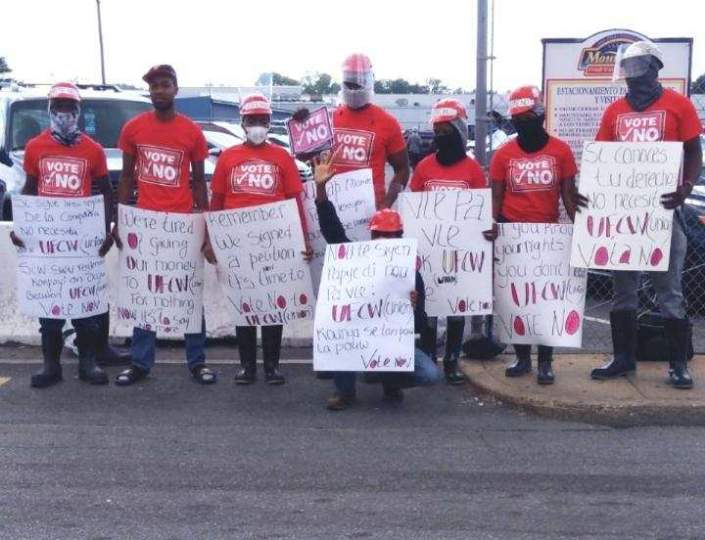
Foundation staff attorneys are assisting Delaware poultry workers in challenging UFCW bosses’ attempts to use the “contract bar” to trap them in union ranks.
WASHINGTON, DC – Foundation attorneys in January filed a Request for Review to the full National Labor Relations Board (NLRB) in Washington, D.C. The Request defends the right of Virginia Transdev workers to have a vote to remove unpopular Office and Professional Employees International Union (OPEIU) Local 2 bosses from power at their workplace.
The Transdev employees, who work at the Fairfax Connector bus service in Northern Virginia, now join Foundation-backed workers in Delaware and Puerto Rico, all of whom are urging the NLRB to eliminate the “contract bar.” That is a non-statutory NLRB policy which forbids employees from exercising their right to vote out an unpopular union in an NLRB-supervised “decertification election” for up to three years after their employer and union finalize a monopoly bargaining contract.
Foundation attorneys point out in each of these cases that the “contract bar” appears nowhere in the National Labor Relations Act (NLRA), the federal law the NLRB is charged with enforcing, and is merely the result of past union boss-friendly decisions by the Board. They also argue that the bar undermines workers’ basic right under the NLRA to remove unions that lack majority support.
“The ‘contract bar’ undermines the fundamental objective of federal labor law: Employee free choice. It makes rank-and-file employees prisoners of an unpopular union, with no way out for up to three years,” commented National Right Work Foundation President Mark Mix. “This inevitably creates an environment in which, as these employees can certainly attest, it’s impossible to hold self-serving union bosses accountable because workers are denied the right to vote them out.”
Unpopular OPEIU Bosses Went Behind Workers’ Backs to Sign Contract
The petitioner in the Transdev workers’ case, Amir Daoud, submitted a petition on November 10, 2020, signed by the necessary number of his coworkers to trigger a “decertification election” in his workplace. This was after news had gotten around that an OPEIU union agent had told some employees in October he had “negotiated a new agreement” with Transdev management and “‘intended’ to sign it without a ratification vote.” Workers had already voted down an earlier union boss-promoted monopoly bargaining contract in June.
Foundation attorneys filed a Request for Review, which notes that the union agent didn’t inform Daoud and his coworkers of when he planned to approve the new contract — until after Daoud filed the petition. The new contract was signed by union agents on October 30 and Transdev representatives on October 31.
NLRB Region 5 in Baltimore dismissed Daoud and his coworkers’ decertification petition on December 22, ruling that the “contract bar” applied because the employees’ petition was submitted just after the new contract was signed, even though the employees had no way of knowing whether or when that signing would occur.
This prompted Daoud to ask the NLRB in Washington to review the case. Because Daoud recently accepted a job with Transdev outside the OPEIU’s monopoly bargaining control, the Request for Review asks the NLRB to recognize his coworker Sheila Currie as the new petitioner to represent the interests of the workers who signed the decertification petition.
The Request exposes the arbitrariness of the “contract bar,” pointing out that the NLRB Regional Director applied it “merely because the Union ‘won the race’ and signed the contract ten days” before Daoud submitted the petition, even though the petition clearly demonstrated the employees’ interest in voting the union out.
VA and Puerto Rico Cases Follow Groundbreaking Effort by DE Poultry Workers
The Virginia Transdev employees, and a Puerto Rico armored transit guard who submitted a similar Request for Review on behalf of his coworkers with Foundation aid in January, are now battling the “contract bar” like Delaware Mountaire Farms poultry worker Oscar Cruz Sosa and his coworkers. For almost a year now, Cruz Sosa and his fellow employees have been fighting United Food and Commercial Workers (UFCW) union bosses’ attempts to use the “contract bar” to block their valid petition for a decertification vote. The Mountaire employees are now waiting for the NLRB to issue a ruling on their case.
In that case, UFCW officials claim that the “contract bar” should apply to bar any elections at Mountaire, despite an NLRB Regional Director’s decision allowing the vote because the union contract contains an invalid forced-dues clause.
When the UFCW bosses asked the full NLRB to review the Region’s order allowing the election, Cruz Sosa’s attorneys filed a brief urging that, if the Board granted review, it should use the opportunity to review the entire non-statutory “contract bar” policy. The Board is now doing just that. The UFCW union bosses are even arguing that the impounded ballots already cast by Mountaire workers should be destroyed, claiming the election should never have been held.
The Requests for Review submitted by Foundation staff attorneys for the Puerto Rico guard and Virginia Transdev employees each request that the NLRB should either grant review or least hold the case until a decision is issued in Cruz Sosa’s case.
NLRB to Prosecute Boston Hotel, UNITE HERE Union for Coercive “Card Check” Deal
The following article is from the National Right to Work Legal Defense Foundation’s bi-monthly Foundation Action Newsletter, January/February 2021 edition. To view other editions or to sign up for a free subscription, click here.
Housekeepers say employer illegally assisted union organizers during unionization push
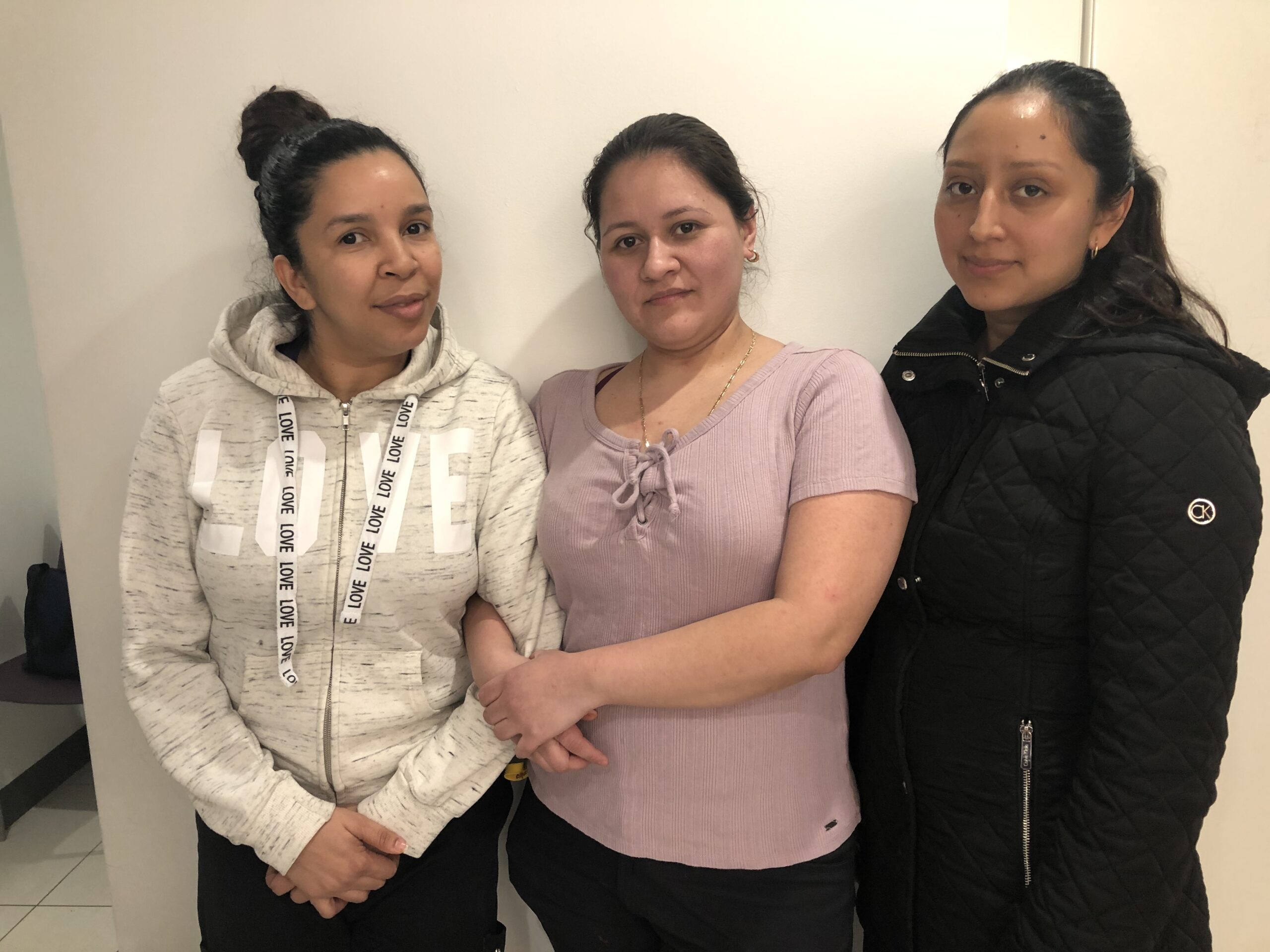
Yotel housekeepers (from left) Lady Laura Javier, Cindy J. Alarcon Vasquez and Yesica Perez Barrios got the NLRB to prosecute union and hotel officials for using a coercive “Card Check” drive to force them under union control.
BOSTON, MA – With free legal aid from National Right to Work Legal Defense Foundation staff attorneys, in December 2019 four housekeepers at the Yotel hotel in Boston filed charges against their employer and UNITE HERE Local 26, after the hotel illegally assisted union officials with foisting their “representation” on workers during a “Card Check” organizing drive.
Now, in response to the charges filed for Cindy J. Alarcon Vasquez, Lady Laura Javier, Yesica Perez Barrios and Danela Guzman, the National Labor Relations Board (NLRB) Regional Director has issued a complaint to prosecute the hotel and UNITE HERE for violating the housekeepers’ rights under federal law.
Agreeing with the workers’ Foundation staff attorneys, the complaint charges the hotel with illegally assisting union organizers by providing the kind of assistance the Board has long held to be illegal when it benefits workers’ decertification efforts, and charges the union with illegally accepting the unlawful assistance.
NLRB: Employer Illegally Aided Union Campaign
The NLRB has long held that an employer taints employees’ efforts to remove a union if it gives those workers support that amounts to more than “ministerial aid.” Under that standard, the Board has held that an employer can’t provide a list of bargaining unit employees or allow use of company resources when employees are trying to remove a union, because this assistance would tarnish the results of the election.
Foundation attorneys in this case argue that, under the same standard, Yotel Boston similarly tainted the union’s organizing campaign by providing assistance to UNITE HERE union organizers.
The charges, which resulted in the NLRB complaint, say the hotel illegally assisted the union’s coercive “Card Check” drive, during which employees were pressured by union operatives into signing union cards. These cards were later counted as “votes,” and were used to bypass a secret-ballot election that would have determined whether the workers actually support union representation.
Foundation Cases Challenge Unequal Standard
The case is not the first in which the NLRB has addressed this double standard. In July, NLRB Region 19 issued a similar complaint in another case involving a hotel worker whose employer illegally assisted UNITE HERE Local 8 union officials in its “Card Check” drive at Embassy Suites in Seattle. There the NLRB also agreed that the employer had provided more than “ministerial aid,” and therefore UNITE HERE officials “did not represent an uncoerced majority of the unit.”
“The NLRB is finally addressing the double standard that for too long has favored union bosses in their coercive “Card Check” unionization drives,” said National Right to Work Foundation President Mark Mix. “Union bosses pressure workers and get illegal assistance from employers to impose their so-called representation on workers, but they cry foul when that same assistance is given to workers attempting to remove unwanted forced representation.
“With these two complaints against UNITE HERE union bosses, the Board is correctly finding that what qualifies as more than ‘ministerial assistance and support,’ and violates the National Labor Relations Act, cannot depend on whether the employer is helping outside union organizers impose unionization on workers or is assisting workers in exercising their right to remove an unwanted union,” Mix added
Las Vegas Security Guards Win $4,200 in Case Challenging Illegal Dues Seizures
The following article is from the National Right to Work Legal Defense Foundation’s bi-monthly Foundation Action Newsletter, January/February 2021 edition. To view other editions or to sign up for a free subscription, click here.
SPFPA officials rushed monopoly bargaining contract in attempt to trap workers in forced dues

“You can stand up to the union and not fail and not have fear of retaliation,” security guard Justin Stephens told the Las Vegas Review-Journal about his and his coworkers’ victory.
LAS VEGAS, NV – Dozens of Las Vegas security guards employed by North American Security won a settlement last October against the Security, Police & Fire Professionals of America (SPFPA) union, which they had charged in April with illegally seizing dues from their paychecks. The guards received free legal aid from the National Right to Work Foundation.
SPFPA union officials must now refund more than $4,200 to the security guards, whose timely requests to resign from union membership and cease dues deductions were wrongfully rejected by union officials who hastily extended their monopoly bargaining agreement with the guards’ employer.
Union Officials Secretly Struck Contract after Guards Voiced Dissatisfaction
According to guard Justin Stephens’ April 2020 charge filed at Region 28 of the National Labor Relations Board (NLRB) in Phoenix, SPFPA officials extended the bargaining contract with North American Security on January 31, 2020. The extension occurred one day after Stephens and the vast majority of his fellow employees at the federal courthouse in Las Vegas sent letters to the union stating that they no longer wanted it as the monopoly bargaining agent in their workplace.
The charge explained that Stephens later submitted a batch of letters to SPFPA officials in which he and his fellow employees tried to exercise their rights to resign union membership and stop dues deductions from their paychecks. These letters were sent within what the employees believed to be the contract’s window for exercising their right to cut off dues payments.
However, the charge asserted, the union “did not acknowledge the timely revocation the employees made on the anniversary” of the contract, ostensibly because the union officials’ hurried contract extension eliminated any opportunity for employees to cut off union dues before the existing contract’s March 31 expiration.
SPFPA bosses kept collecting full union dues “from all non-member bargaining unit employees” in violation of their right under the National Labor Relations Act to refrain from union activities and support, according to the charge. Stephens’ charge also asserted that the union’s sudden extension of the monopoly bargaining contract after the workers notified the union about their opposition amounted to “an apparent attempt to avoid a decertification” vote to remove the union.
Because Nevada has enacted Right to Work protections for employees, union bosses are additionally forbidden by state law from requiring any employee to join or pay dues or fees to a union as a condition of employment.
The settlement requires SPFPA officials to process any timely resignations by security guards and notify North American Security to cease dues deductions from those whose resignations they have already processed.
Foundation Wins Refunds of Unlawful Dues Seized from Dozens of Guards
SPFPA bosses must also return all dues seized from Stephens’ and his coworkers’ paychecks in violation of their rights. In the future, the settlement stipulates, union officials must always “accept and timely process” resignations and requests to cut off dues.
“I want people to see this and see that it’s possible,” Stephens told the Las Vegas Review-Journal in a story about his case. “You can stand up to the union and not fail and not have fear of retaliation.”
“It’s good news that Mr. Stephens and his hardworking colleagues have gotten back dues that were illegally taken from them by SPFPA union bosses who have demonstrated they are more interested in stuffing their coffers with union dues than respecting the wishes of the rank-and-file workers they claim to ‘represent,’” commented National Right to Work Foundation Vice President and Legal Director Raymond LeJeunesse. “This type of legal trickery used by union bosses to stay in power despite the objections of most workers shows why the NLRB should eliminate its numerous policies that block workers from removing an unwanted union.”
“Ultimately, the root of this problem is the federal labor law which grants union bosses monopoly bargaining powers, allowing them to force their so-called ‘representation’ on workers who don’t want it and believe they would be better off without it,” added LaJeunesse.
“You can stand up to the union and not fail and not have fear of retaliation,” security guard Justin Stephens told the Las Vegas Review-Journal about his and his coworkers’ victory.
Push to Remove UFCW Union Could End Pro-Union Boss “Contract Bar” Policy
The following article is from the National Right to Work Legal Defense Foundation’s bi-monthly Foundation Action Newsletter, September/October 2020 edition. To view other editions or to sign up for a free subscription, click here.
Non-statutory NLRB policy hinders workers’ right to vote out an unwanted union
 Employees at the Selbyville, DE, Mountaire Farms plant rally to vote out unpopular UFCW honchos from their workplace, as union lawyers scramble to block the workers’ votes from being counted.
WASHINGTON, DC – The National Labor Relations Board (NLRB) has announced that it will review the so-called “contract bar” doctrine, which prevents employees from exercising their right to vote an unpopular union out of their workplace for up to three years if union officials and their employer have finalized a monopoly bargaining contract.
This is the latest development in a case by a Selbyville, Delaware-based Mountaire Farms poultry employee, Oscar Cruz Sosa, against the United Food and Commercial Workers (UFCW) Local 27 union. Cruz Sosa submitted a petition in February for a vote on whether Local 27 should be removed as monopoly bargaining agent in his workplace. The petition was signed by hundreds of his coworkers, more than the percentage required to trigger such a vote.
Worker Obtains Foundation Help after Union Attempts to Block Vote
After he submitted the petition, UFCW bosses immediately claimed that the “contract bar” should block Cruz Sosa and his coworkers from even having an election, because the monopoly bargaining agreement between Mountaire and the union had been signed less than three years earlier.
Cruz Sosa then obtained free legal assistance from National Right to Work Foundation staff attorneys in defending his and his coworkers’ right to vote. With Foundation aid, he also hit UFCW agents with federal unfair labor practice charges for imposing an illegal forced-dues clause on the workplace and threatening him after he submitted the petition.
When the NLRB Regional Director in Baltimore heard the election case, he ruled that the union contract contains an unlawful forced-dues clause that mandates workers immediately pay union dues upon hiring or be fired. Under NLRB precedent, an illegal forced-dues clause means the “contract bar” cannot apply, allowing the vote to proceed.
UFCW’s Desperate Attempt to Block Vote Triggers NLRB Review of “Contract Bar”
Despite the longstanding precedent supporting the Regional Director’s ruling, UFCW union lawyers filed a Request for Review, asking the full NLRB to reverse the Regional Director and halt the election.
In response, Cruz Sosa’s Foundation staff attorneys opposed the union’s efforts to block the vote. They also argued that, if the Board were to grant the union’s Request for Review, it should also reconsider the entire “contract bar” policy, which has no statutory basis in the NLRA. The Foundation’s legal brief noted that the “contract bar” runs counter to the rights of workers under the NLRA, which explicitly include the right to vote out a union a majority of workers oppose.
Just hours after the voting process in the decertification election had begun, the NLRB issued its order granting the union’s Request for Review, while also accepting the Foundation’s request to reconsider the entire “contract bar” doctrine. The order noted “that it is appropriate for the Board to undertake in this case a general review of its ‘contract bar’ doctrine.”
Given the precedential import of this case, the NLRB solicited amicus briefs on whether the “contract bar” should be allowed to stand. UFCW officials, still desperate to throw a wrench in Cruz Sosa and his coworkers’ effort to vote them out, demanded that the NLRB rescind its request for amicus briefs in the case, but that effort was quickly rebuffed.
“We urge the NLRB to swiftly overturn this outrageous non-statutory policy, which lets union bosses undermine for up to three years the free choice of workers that is supposed to be at the center of federal labor law,” commented National Right to Work Foundation Vice President and Legal Director Raymond LaJeunesse. “The very premise of the NLRB-created ‘contract bar,’ that union bosses should be insulated from worker decertification efforts, is completely backwards.”
LaJeunesse added: “Union officials across the country use all types of tactics to get workers into unions but rely on government power and legal tricks to prevent them from getting out.”
At Foundation’s Urging, NLRB Eliminates Barriers to Removing Unpopular Unions
The following article is from the National Right to Work Legal Defense Foundation’s bi-monthly Foundation Action Newsletter, July/August 2020 edition. To view other editions or to sign up for a free subscription, click here.
New rule curtails union boss tactics used to block employees’ right to vote out unions they oppose

The Foundation’s comments helped the NLRB scrap its policy allowing “blocking charges,” which IUOE bosses used to stymie Rieth-Riley worker Rayalan Kent and his coworkers’ right to vote them out.
WASHINGTON, DC – Following two rounds of comments from the National Right to Work Legal Defense Foundation and over 8,000 petitions from Right to Work supporters, the National Labor Relations Board (NLRB) has issued final rules substantially eliminating two pernicious tactics used by union bosses to stop workers from exercising their right to hold a vote to remove an unwanted union.
The NLRB’s new rules, finalized in April, dealt blows to the non-statutory “blocking charge” and “voluntary recognition bar” policies and to forced unionism schemes in the construction industry. All three reforms were encouraged by the Foundation’s initial January comments to the federal agency, which pressed the agency to get rid of all restrictions on decertification elections that are not mandated by the National Labor Relations Act (NLRA).
New Rule Knocks Down Three Rights Restrictions Targeted by Foundation
The new rule essentially eliminates union “blocking charges,” which union bosses file to prevent rank-and-file employees from exercising their right to vote to remove a union. Under the old rule, unions could block workers’ requested votes from taking place for months or even years by making one or multiple allegations against the employer, which were often unrelated to the employees’ decertification petition and frequently unsubstantiated.
Under the new rule, union charges cannot indefinitely stall the employees’ vote from taking place and in most instances the vote will occur without delay. Additionally, as the Foundation advocated, the NLRB modified its proposed rule so that after the employees vote, the ballots will be tallied and released in the vast majority of cases instead of being impounded and not counted.
This is a vast improvement on the NLRB’s original proposal to utilize a “vote and impound” system regarding employees’ decertification votes. Although such a system would have permitted employees to vote despite “blocking charges,” the results could have been withheld for months or years until the underlying “blocking charges” were resolved. Foundation staff attorneys argued against such a system in their January comments, pointing out that it would “frustrate and confuse employees who may have to wait years to see the election’s results,” while leaving the union in power the entire time.
The NLRB also substantially eliminated the so-called “voluntary recognition bar” policy. In the past, union officials had used this policy to block workers from requesting a secret-ballot election after the union had been installed as their monopoly bargaining agent through abuse-prone “Card Check” drives that bypass the NLRB-supervised secret-ballot election process. The Trump NLRB’s new rule reinstates a system secured by Foundation staff attorneys for workers in the 2007 Dana Corp. NLRB decision.
Under the Dana Corp. system, employees subject to “Card Check” drives and so-called “voluntary recognition” can promptly file for a secret-ballot election to contest the installation of a monopoly representative at their workplace. Despite thousands of workers using this process to secure secret-ballot votes after being unionized through “Card Checks,” the Obama NLRB overturned Dana in 2010 over the objections of Foundation staff attorneys in a case called Lamons Gasket.
Additionally, the NLRB made changes advocated by the Foundation’s January comments to crack down on schemes in the construction industry where employers and union bosses are allowed to unilaterally install a union in a workplace without first providing any proof of majority union support among the workers.
Foundation Fights to Enforce Workers’ Right to Remove Unwanted Unions
Foundation staff attorneys are currently providing free legal aid to several workers who are challenging union boss attempts to stymie their right to vote out an unwanted union, even in light of the new NLRB protections.
In Michigan, NLRB Region 7 officials stifled Rieth-Riley Construction Company employee Rayalan Kent’s decertification petition that he submitted for his coworkers. Region 7 officials told him that the election would be held up “pending the investigation” of charges filed by Operating Engineers (IUOE) union bosses against Rieth- Riley, but never explained to him why IUOE bosses’ allegations were significant enough to affect their right to vote.
Foundation staff attorneys in April submitted a request for review for Kent and his coworkers to the NLRB in Washington, D.C., asking that the Board immediately permit them to exercise their right to vote to remove the unpopular IUOE union.
“While this NLRB still has much more to do, the long-awaited new rules represent significant steps towards fully protecting the statutory right of employees under the NLRA to remove a union opposed by a majority of workers,” observed National Right to Work Foundation Vice President Patrick Semmens. “The ‘blocking charge’ policy that is finally being modified has always been particularly odious in its treatment of employee rights, for it allows union allegations against an employer to be grounds for blocking the statutory rights of employees who are not accused of any wrongdoing.”
“Foundation supporters, who deluged the NLRB with demands to safeguard the right of rank-and-file employees to vote, free of coercion, on whether or not union bosses are worthy to speak for them in the workplace, should be proud that their voices helped spur these important reforms,” Semmens added.
NLRB Cases Challenge Coercive ‘Neutrality Agreements’ Used to Impose Forced Unionism
The following article is from the National Right to Work Legal Defense Foundation’s bi-monthly Foundation Action Newsletter, March/April 2020 edition. To view other editions or to sign up for a free subscription, click here.
Housekeepers demand NLRB block unionization resulting from back-room “Card Check” deals
From left, housekeepers Lady Laura Javier, Cindy J. Alarcon Vasquez, and Yesica Perez Barrios are charging hotel officials and union bosses with illegally corralling workers into union ranks with a corrupted “Card Check” recognition.
SEATTLE, WA – Housekeeper Gladys Bryant was granted an appeal by the National Labor Relations Board (NLRB) General Counsel in her case challenging the use of a so-called “neutrality agreement” between UNITE HERE union officials and her employer to impose a union on the hotel’s workers.
Meanwhile, four Boston housekeepers have filed similar NLRB charges against their employer Yotel Boston and UNITE HERE Local 26, alleging that union officials violated federal law by imposing union representation on workers through a coercive “Card Check” drive with their employer’s assistance.
General Counsel Finds That UNITE HERE “Card Check” Unionization Was Tainted
Bryant filed the unfair labor practice charges after the UNITE HERE Local 8 union was installed at the Embassy Suites hotel in May 2018 through an oft-abused “Card Check” drive which bypassed the NLRB’s secret ballot election process.
As part of its so-called “neutrality agreement,” Embassy Suites agreed to give union organizers access to the hotel to meet and solicit employees. The agreement also provided union officials with a list of all employees’ names, jobs, and contact information to assist the union in collecting authorization cards from employees.
After NLRB Region 19 officials declined to prosecute the union or employer for violations of the National Labor Relations Act (NLRA), Bryant appealed the case to the NLRB General Counsel in January 2019. The NLRB General Counsel agreed with Bryant’s Foundation attorneys that Embassy Suites provided UNITE HERE’s organizing campaign with more than “ministerial aid” and thus violated the NLRA.
The NLRB has long held that an employer taints employees’ efforts to remove a union if it gives the employees support such as providing a list of bargaining unit employees or use of company resources. Bryant’s appeal successfully argued that the “ministerial aid” standard must also apply when an employer aids union officials’ efforts to gain monopoly bargaining power over workers.
Boston Housekeepers Argue Union “Card Check” Must Be Overturned
Faced with a similar situation, Boston-area housekeepers Cindy J. Alarcon Vasquez, Lady Laura Javier, Yesica Perez Barrios, and Danela Guzman filed unfair labor practice charges with the NLRB. With free legal aid from the National Right to Work Foundation, the housekeepers argue that UNITE HERE union officials violated federal law by imposing union representation on workers through a coercive “Card Check” drive with the assistance of their employer, Yotel Boston.
As in the Seattle case, they charge that Yotel Boston company officials provided UNITE HERE’s organizing campaign with more than “ministerial aid” and therefore illegally tainted the union’s installation as the employees’ exclusive representative in the workplace. The housekeepers charge union officials with violating the NLRA by requesting and accepting the illegal assistance, and the hotel for providing it.
“It is long past time that the NLRB put an end to this biased double standard that allows union bosses to abuse workers’ rights,” said National Right to Work Foundation Vice President and Legal Director Ray LaJeunesse. “The General Counsel is correct to finally recognize that what qualifies as more than ‘ministerial assistance and support,’ and thus violates the National Labor Relations Act, cannot depend on whether the employer is helping outside union organizers impose unionization on workers or assisting workers in exercising their right to remove an unwanted union.”
“These cases represent another breakthrough in the Foundation’s challenges to the pro-forced unionism skew at the NLRB,” added LaJeunesse.
Delaware Poultry Worker Charges UFCW Brass with Illegal Dues Deductions, Threats
The following article is from the National Right to Work Legal Defense Foundation’s bi-monthly Foundation Action Newsletter, July/August 2020 edition. To view other editions or to sign up for a free subscription, click here.
Foundation attorneys assist worker leading effort to oust unpopular union

Employees at the Selbyville, DE, Mountaire Farms plant were subjected to an illegal forced-dues clause by UFCW union bosses, who for months have also tried to block their right to vote on whether union officials deserve to stay.
SELBYVILLE, DE – With free legal aid from National Right to Work Foundation staff attorneys, Mountaire Farms employee Oscar Cruz Sosa hit United Food and Commercial Workers (UFCW) Local 27 union bosses with federal unfair labor practice charges. The charges assert that union officials violated his and his coworkers’ rights by enforcing an illegal forced-dues provision in the monopoly bargaining contract, and that union bosses threatened him for spearheading a petition for a vote to remove the union.
Cruz Sosa’s charges come after the National Labor Relations Board (NLRB) Region 5 Director in Baltimore rejected union arguments that the decertification election Cruz Sosa and his coworkers requested should be blocked. Under a controversial NLRB-created policy known as the “contract bar,” employees’ statutory right to hold a decertification vote to remove a union can be blocked for up to three years when a union contract is in place.
However, under longstanding precedent the “contract bar” to decertification does not apply when the monopoly bargaining contract in place contains an unlawful forced-dues clause.
Worker Deflects Union Legal Attack by Exposing Illegal Forced-Dues Clause
Prior to this charge, the NLRB Region 5 Director found that the contract between Mountaire Farms and UFCW union officials illegally required workers to immediately pay union dues upon being hired, instead of providing new hires a 30-day grace period the federal labor statute and longstanding precedent require. Because Delaware lacks Right to Work protections for its employees, Cruz Sosa and his coworkers can be required to pay union fees to keep their jobs.
The NLRB Region 5 Director thus ruled that the vote Cruz Sosa and his coworkers requested should proceed, and scheduled the vote to decertify the union. Cruz Sosa’s unfair labor practice charge, citing that decision’s finding that the forced-dues clause is unlawful, asks the NLRB to order union officials to refund all dues and fees seized from him and his coworkers under the auspices of that illegal clause.
Even after they were unable to block the election with the “contract bar,” UFCW union officials did not give up. In fact, union lawyers have initiated at least three other “blocking charges” against the employer in a last-ditch effort to block the vote, another common tactic used by union bosses to halt or delay workers’ attempts to vote them out.
UFCW union officials’ attempts to stifle the decertification effort didn’t end there. They also asked that any vote be delayed and changed to a“mail-in” vote, even though it had already been scheduled to take place in person on the premises where the workers work every day. In the responses to the union attempts to scuttle the planned vote, Cruz Sosa’s Foundation-provided attorneys argued that the vote should go forward as scheduled, because on-site elections are the NLRB’s preferred method for conducting elections, and the on-site vote was announced to workers weeks ago.
Cruz Sosa also alleged that a UFCW agent came to his house uninvited back in March. The agent warned him “that the decertification process being undertaken was ‘illegal’” and that a court battle was coming, according to his charge filed at NLRB Region 5.
Union Agents Threaten Worker after He Attempts to Exercise Rights
Cruz Sosa’s charge states that this was “threatening” and “coercive behavior” and a clear attempt to restrain him and his coworkers in the exercise of their right under the National Labor Relations Act to vote out an unwanted union.
“The threats and dues deductions in this case show how union bosses regularly trample workers’ rights in order to keep forced dues rolling into their coffers,” observed National Right to Work Foundation Vice President Patrick Semmens. “We hope that NLRB Region 5 will immediately prosecute the union for these violations, and ultimately order the union to refund all dues and fees collected from Mountaire Farms workers under the unlawful forced-dues clause.”
Semmens continued: “While UFCW officials were caught red-handed in this case, these types of forced union dues abuses will continue until Delaware workers have the protection of a Right to Work law, which ensures that all union membership and financial support are strictly voluntary.”





