
Paramedic Files Appeal after NLRB Disregards Illegal Union Retaliation
The following article is from the National Right to Work Legal Defense Foundation’s bi-monthly Foundation Action Newsletter, January/February 2020 edition. To view other editions or to sign up for a free subscription, click here.
Appeal to NLRB General Counsel comes just months after Region 14 was reversed in similar case

Paramedic Jarod Aubuchon is appealing his case against Teamsters officials after they punished him for informing his coworkers of their rights to resign union membership and pay reduced dues.
St. LOUIS, MO – Jarod Aubuchon, a St. Louis-area paramedic who charged Teamsters Local 610 union officials with illegal retaliation after he tried to inform his coworkers of their right to pay reduced union dues, is filing an appeal in his case to the National Labor Relations Board (NLRB) General Counsel in Washington, D.C. He is represented free of charge by National Right to Work Legal Defense Foundation staff attorneys.
Aubuchon’s appeal comes after the October 2019 dismissal of his case by NLRB Region 14 officials in St. Louis. Region 14 was reversed by the NLRB General Counsel in a similar union retaliation case this summer, which was also brought by Foundation staff attorneys.
Union Officials Vow Punishments after Worker Posted Rights Notices
Aubuchon discovered the right of private sector workers under the Foundation-won CWA v. Beck Supreme Court decision to resign union membership and pay a reduced portion of union dues. Because Missouri is not a Right to Work state, private sector workers can still be compelled to pay part of union dues as a condition of employment.
Beck, won by Foundation staff attorneys in 1988, guarantees that employees who are not union members can only be required to pay fees to a union for expenses that are directly germane to bargaining, such as contract administration.
Armed with this new knowledge, Aubuchon posted flyers in common areas of his workplace informing his coworkers of their Beck rights. According to his charge, Teamsters agents responded by tearing down these notices and later demanding that his employer, Medic One, discipline him for the postings. Actions by union officials that cause an employer to discriminate against workers on such grounds are prohibited by the National Labor Relations Act (NLRA).
Aubuchon resigned his own union membership and asserted his Beck rights. Aubuchon’s charge states that neither his resignation nor his Beck rights have been acknowledged by Teamsters bosses, and full dues are still being seized from his paychecks.
Employee Appeals to NLRB General Counsel with Free Foundation Legal Aid
After NLRB Region 14 officials rejected his case, Aubuchon petitioned the NLRB General Counsel to overturn the decision and order remedies for the retaliation he experienced from Teamsters officials.
“They spend union money on political activism without consideration of its members,” Aubuchon said of Teamsters officials to the St. Louis Record after his appeal was filed. “We have a right to not have our money used in that manner and in the end I hope employees are better educated on their rights and how to exercise them.”
In July 2019, the General Counsel reversed Region 14 officials’ dismissal of a similar case brought by Foundation staff attorneys for Kansas City-area hospital worker Kacy Warner. Warner charged officials of the National Nurses Organizing Committee (NNOC) union with illegally interfering with a petition she was circulating for a vote to remove the union. That included tearing down flyers she had hung in bathrooms and other common areas in her workplace informing employees of the petition. In her case the NLRB General Counsel reversed Region 14’s dismissal and ordered region officials to prosecute the charge.
Region 14 officials were also overturned by the full Labor Board in October 2019 after the Region dismissed a petition for a vote to remove the union from St. Elmo, Illinois-based ConAgra Foods worker Robert Gentry’s workplace. United Food and Commercial Workers (UFCW) union bosses had attempted multiple times to stop workers at the plant from exercising the right to vote out the union.
“The NLRB is charged with enforcing workers’ rights under the National Labor Relations Act, yet there is a disturbing pattern of Region 14 failing to enforce the rights of rank-and-file workers when doing so advances the interests of union bosses,” commented National Right to Work Foundation Vice President Patrick Semmens. “It should not take an appeal to Washington, D.C., for workers to have their rights fully protected against union boss abuses.”
West Virginia Supreme Court Hears Right to Work Case
The following article is from the National Right to Work Legal Defense Foundation’s bi-monthly Foundation Action Newsletter, January/February 2020 edition. The West Virginia Supreme Court heard arguments in this case on January 15 and a decision is expected in the coming months. To view other editions or to sign up for a free subscription, click here.
Foundation continues to defend all Right to Work laws against Big Labor attack
Forced-dues-hungry union bosses have been waging a legal battle to overturn West Virginia’s Right to Work Law since it was enacted in 2016. Foundation staff attorneys have been fighting back by filing amicus briefs in court.
CHARLESTON, WV – The West Virginia Supreme Court will hear arguments on January 15 in union bosses’ long-running case seeking to dismantle West Virginia’s Right to Work Law and restore their forced-dues powers over workers across the Mountain State. National Right to Work Foundation staff attorneys have already filed multiple legal briefs in this case for West Virginia workers in defense of West Virginia’s Right to Work Law.
After Passage, Union Bosses Immediately Target West Virginia Right to Work Law
Last year, union lawyers relied on discredited legal arguments to convince Kanawha County Circuit Court Judge Jennifer Bailey to declare West Virginia’s entire Right to Work Law invalid. Union lawyers dubiously claim that West Virginia union bosses have a “right” to forced dues. Judge Bailey issued a similar ruling blocking the Right to Work law after the legislation was signed into law in 2016. The West Virginia Supreme Court overturned that decision, citing arguments made in briefs by Foundation staff attorneys. “Of course, union partisans never willingly accept the loss of forced dues,” said National Right to Work Foundation President Mark Mix. “So now the issue is back at the state’s highest court.” If Big Labor’s lawsuit to overturn
West Virginia’s Right to Work Law succeeds, union bosses could have thousands of independent-minded workers across the state fired solely for refusing to subsidize union activities.
Foundation Files 10 Briefs to Protect Rights of West Virginia Workers
Foundation staff attorneys have filed 10 legal briefs in the multi-year case. The Foundation’s latest amicus brief was filed for West Virginia nursing home employee Donna Harper. Harper, like many other workers in West Virginia, chose not to pay dues or fees to union bosses, which is her legal right in a Right to Work state.
“Union bosses in West Virginia are intent on reclaiming their forced-dues power,” Mix said. “Big Labor is waging this protracted legal battle to return the Mountain State to a time when millions and millions of dollars in workers’ money were seized by union bosses to fill Big Labor’s coffers with forced dues.”
This case is the latest legal battle in the Foundation’s long history of effectively defending Right to Work laws in state and federal court from spurious attacks by Big Labor. Although federal law specifically authorizes states to pass Right to Work laws to protect workers from union boss coercion, union lawyers have repeatedly challenged these laws in an attempt to keep siphoning union dues and fees from workers’ paychecks.
Foundation Has Successfully Defended State Right to Work Laws Nationwide
In addition to West Virginia, Foundation staff attorneys have successfully pursued legal action in recent years to defend and enforce new Right to Work laws in Indiana, Michigan, Wisconsin and Kentucky, all of which have passed Right to Work protections for employees in just the last seven years. In Michigan alone, Foundation staff attorneys have assisted employees in over 100 cases since Right to Work went into effect in early 2013.
Electrician Files Discrimination Lawsuit Challenging Forced Union Fees
The following article is from the National Right to Work Legal Defense Foundation’s bi-monthly Foundation Action Newsletter, January/February 2020 edition. To view other editions or to sign up for a free subscription, click here.
Boston College and SEIU officials ignored reasonable request to accommodate religious beliefs
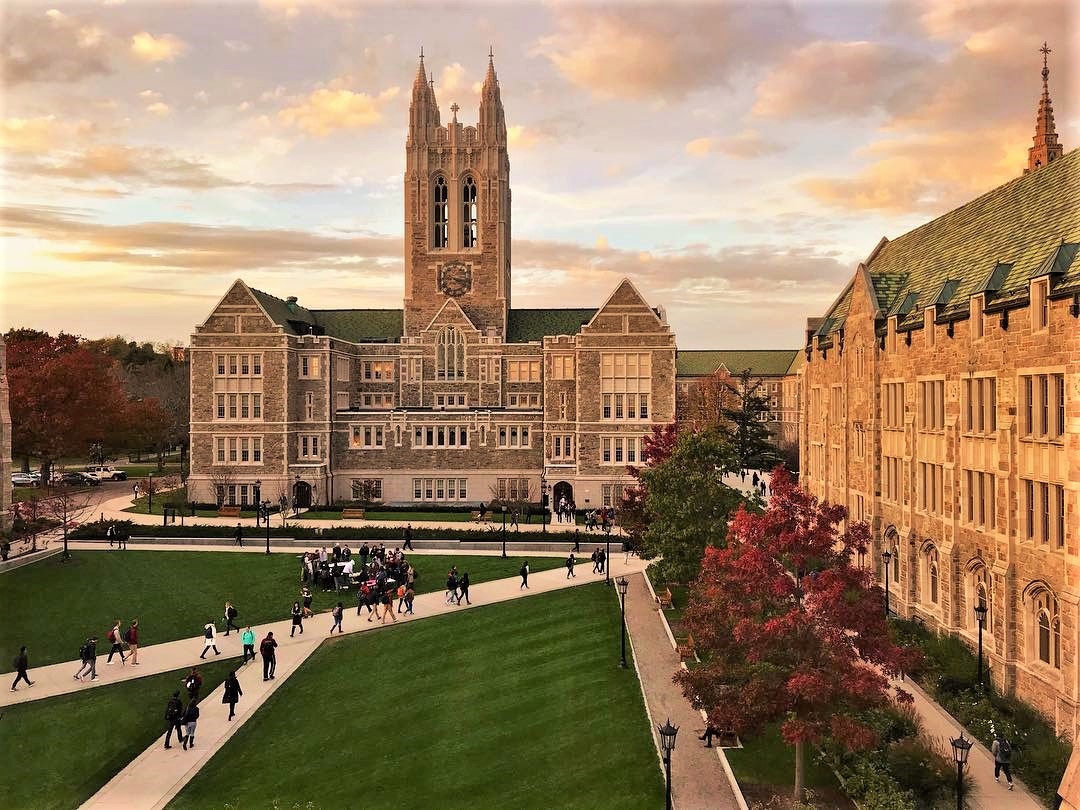 Boston College officials seized union fees from electrician Ardeshir Ansari’s paycheck at the behest of SEIU bosses, even after he had informed them that such fees violate his religious beliefs.
BOSTON, MA – In November, National Right to Work Foundation staff attorneys filed a federal Title VII religious discrimination lawsuit for a Boston College electrician whose rights were violated by the Service Employees International Union (SEIU) in illegally demanding union fees. The lawsuit also names his employer, Boston College, for its role in the discrimination.
Ardeshir Ansari objects to supporting the union based on deeply held religious beliefs. Under the local SEIU’s monopoly bargaining agreement at Boston College, however, he was told that he must join or financially support the SEIU or be fired. To avoid being fired, Ansari unwillingly paid fees to the union in violation of his sincere religious beliefs.
On October 1, 2018, Ansari sent a letter to Boston College and the SEIU, informing them his religious beliefs conflict with joining or financially supporting the union. He asked that his union fees be diverted to charity instead of being sent to the union, an established remedy for such a conflict.
Instead of responding, the college continued to take a cut of his paycheck and send it to SEIU officials in violation of his sincerely held religious beliefs.
In response, Ansari filed charges with the Equal Employment Opportunity Commission (EEOC) against college and union officials. The EEOC then determined that both Boston College and the SEIU had violated Title VII.
Last September, the EEOC gave Ansari a right-to-sue letter, which authorized him to file a lawsuit under Title VII of the Civil Rights Act of 1964. That federal law prohibits employers and unions from discriminating against an individual based on his or her religious beliefs.
In November, Foundation staff attorneys filed a lawsuit for Ansari against Boston College and the SEIU for illegally discriminating against him by failing to reasonably accommodate his religious beliefs, violating his rights under Title VII.
The lawsuit demands that college and SEIU local officials pay all fees deducted from Ansari’s paycheck to a charity mutually agreed upon and seeks damages for the emotional distress he suffered while his rights were violated for more than a year.
EEOC Found Religious Discrimination by SEIU
Moreover, the Title VII lawsuit asks the court to prevent the college from continuing to discriminate against his religious beliefs and that the union be required to inform workers that those with religious objections to the payment of union fees are entitled by law to pay those fees to a charity instead.
“Workers with sincere religious objections to joining or funding a union are legally protected from being forced to violate their conscience,” said National Right to Work Foundation Vice President and Legal Director Ray LaJeunesse. “No one should ever be forced to choose between keeping a job to provide for their family and violating their deeply held religious beliefs by supporting a union.”
“Right to Work laws protect workers like Mr. Ansari from this kind of discrimination. Under those laws, workers can stop paying union fees and resign union membership for any reason and thus avoid illegal religious discrimination,” added LaJeunesse.
Foundation Assists Workers During UAW Union Boss-Ordered GM Strike
The following article is from the National Right to Work Legal Defense Foundation’s bi-monthly Foundation Action Newsletter, November/December 2019 edition. To view other editions or to sign up for a free subscription, click here.
Strike order comes during growing UAW boss corruption and embezzlement investigation
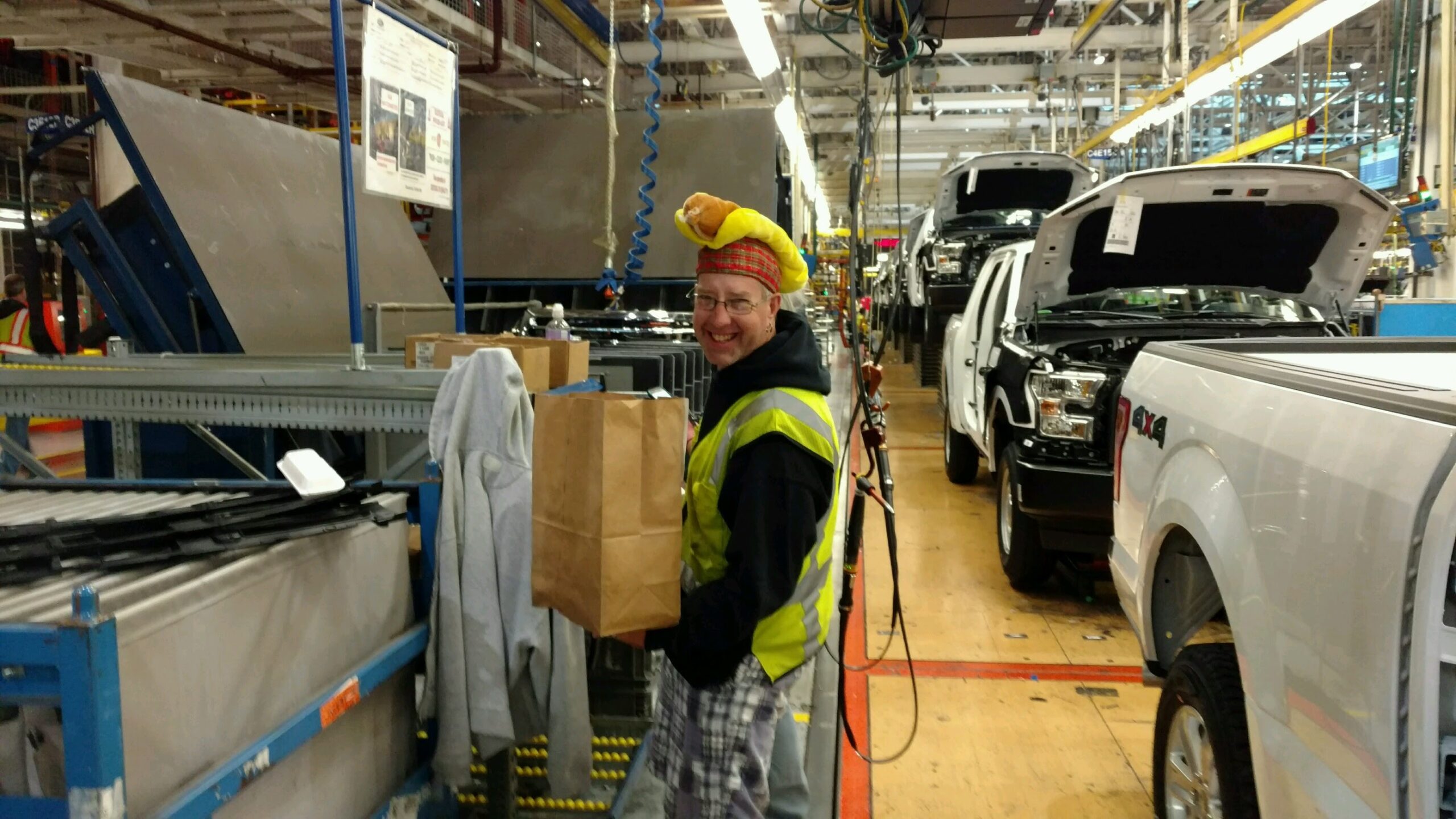
With free aid from the Foundation, Ford employee Lloyd Stoner won a unanimous ruling from the NLRB which ordered UAW bosses to refund illegally seized dues.
DETROIT, MI – In September, United Auto Workers (UAW) union bosses ordered tens of thousands of General Motors workers on strike. The strike came as federal prosecutors were intensifying their investigation into embezzlement and corruption within the UAW hierarchy. Just days before the strike, the probe had reached the top levels of the UAW when FBI agents raided the homes of the union’s current president and his predecessor.
Amid the scandal and union boss-instigated strike, National Right to Work Legal Defense Foundation staff attorneys were assisting several Michigan workers in legal challenges to the coercive practices of UAW officials. Additionally, Foundation Legal Information staff publicized a “special legal notice” directed at workers affected by the strike to ensure they knew their legal rights despite persistent union misinformation and threats.
GM Worker Stands Up to UAW Discrimination
Joseph Small, a stamping metal repair worker at a Lansing, Michigan, GM plant, filed a federal charge with the National Labor Relations Board (NLRB) right before the strike unfolded with free aid from Foundation staff attorneys. Small, who is not a UAW member and is not required to pay fees to the union because of Michigan’s Right to Work Law, asserted in his charge that UAW officials “heavily involved [themselves] in the interview process” for a promotion for which he was being considered.
Small was passed over for the position, which went to a union member. Small’s charge notes that a union representative later “stated that [Small] did not get the position because [he] was not paying union dues,” a clear violation of federal labor law.
According to the National Labor Relations Act, workers have the right to refrain from union activities and neither union officials nor management can discriminate against employees based on their union membership status.
Ford Worker Wins Unanimous NLRB Ruling
Ford Motor Company worker Lloyd Stoner, who works at the company’s facility in Dearborn, Michigan, won a second victory in defense of his rights this August with free legal aid from the Foundation.
Stoner, who had originally charged UAW officials and Ford with illegally seizing dues from his paycheck despite his previously resigning his union membership and revoking his dues deduction authorization, received a unanimous ruling from a three-member panel of the NLRB in Washington, D.C. The labor board directed UAW officials to make Stoner whole for the dues they illegally took.
The NLRB also ordered UAW officials to immediately honor any other employees’ membership resignations. Stoner had earlier won a favorable settlement from Ford for its role in blocking him from exercising his rights.
“UAW union officials continue to show a willingness to break the law, even violating the rights of the very workers they claim to represent,” observed National Right to Work Foundation Vice President Patrick Semmens. “Whether it be federal corruption prosecutions or unfair labor practice charges at the NLRB, UAW bosses must be held accountable when they break the law.”
Foundation Urges Federal and State Governments to Protect First Amendment Rights
The following article is from the National Right to Work Legal Defense Foundation’s bi-monthly Foundation Action Newsletter, November/December 2019 edition. To view other editions or to sign up for a free subscription, click here.
Alaska first state to require First Amendment Janus rights waiver before deducting union dues
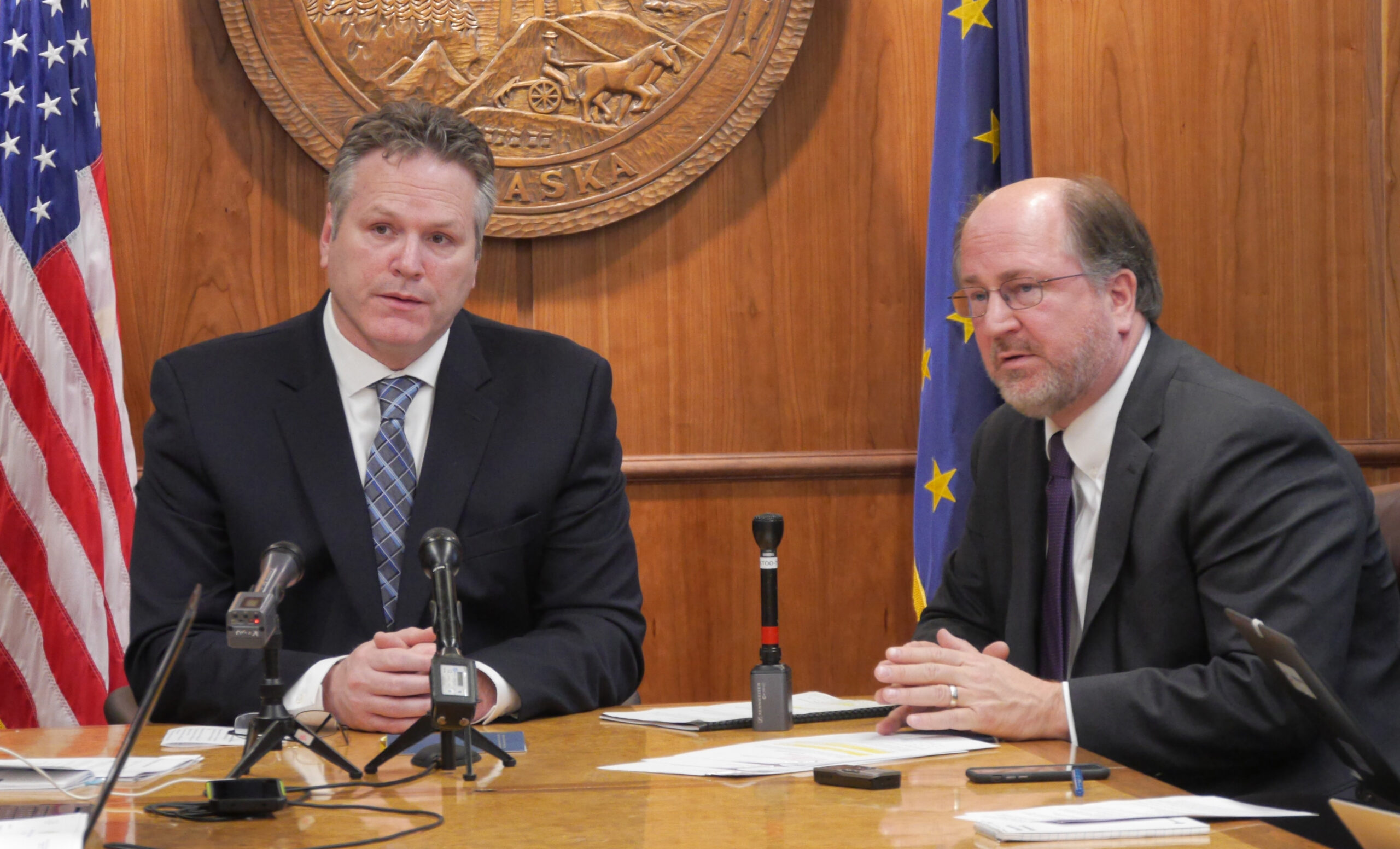 Alaska Gov. Mike Dunleavy (left), following an opinion from Attorney General Kevin Clarkson, ordered all Alaska state agencies to protect state employees’ First Amendment rights under Janus.
ANCHORAGE, AK – In late September, Alaska Governor Mike Dunleavy signed an executive order to protect the First Amendment rights of state employees established in last year’s Janus v. AFSCME Supreme Court decision. The order calls for the State of Alaska to stop deducting union dues from the paycheck of any worker who hasn’t filed a form with the state affirmatively waiving his or her First Amendment right under Janus not to fund any union activities.
The move follows a letter last year sent by National Right to Work Foundation Legal Director Raymond LaJeunesse to state comptrollers in Alaska and other states, urging them to modify dues deduction policies to comply with the Janus decision.
Foundation Comments Detail Need to End Dues Deductions Uncompliant with Janus
The Foundation also recently filed comments with the Federal Labor Relations Authority (FLRA) regarding the need for the federal government to take steps to protect the First Amendment rights of employees recognized in the Foundation-won Janus decision. The Foundation’s comments were submitted after the U.S. Office of Personnel Management (OPM) asked the FLRA to solicit public comments on how to proceed with union dues deductions in light of the Supreme Court’s Janus decision last year.
In that case, the High Court held that requiring public employees to pay union dues or fees without their consent violates the employees’ First Amendment rights “by compelling them to subsidize private speech on matters of substantial public concern.” Justice Samuel Alito’s opinion for the court further ruled that no union dues or fees could be taken from a public employee “unless the employee affirmatively consents to pay” using a “freely given” waiver of his or her First Amendment rights.
Consistent with that standard, the Foundation’s comments urge the FLRA to issue guidance to agencies that they “must cease deducting union dues from the wages of employees who signed a dues deduction form that does not satisfy the [Janus] standard.” According to Department of Labor statistics, nearly one million federal employees — 26.4% of all federal workers — are union members, many of them likely having dues deducted from their paychecks despite never having knowingly waived their First Amendment right not to subsidize union activities.
The Foundation comments make clear that these dues deductions should cease in the wake of Janus. To comply with Janus, workers wanting to voluntarily pay union dues can either provide the government with a valid waiver of their rights or pay dues on their own without using taxpayer-funded payroll systems to forward the money to union officials.
The Foundation’s comments to the FLRA further argue that, even where workers provide a valid authorization for dues deductions that meets the Janus standard, the government shouldn’t block them from revoking that authorization if the request is submitted at any time at least a year after the Janus-compliant authorization was obtained.
Foundation Comments Push to End Union-Created “Window Period” Scheme
Unfortunately, agencies and union officials often prohibit federal employees from stopping the seizure of union dues from their wages except during short annual escape periods. The comments filed by the National Right to Work Foundation say that this practice does not comply with Janus either.
“The Janus precedent is very clear about this: Without affirmative and knowing waivers from public workers, government entities cannot collect union dues without violating a worker’s First Amendment rights,” commented National Right to Work Foundation President Mark Mix.
“Currently, the government seizes union dues from almost one million federal employees in violation of the Janus decision’s First Amendment standard. Federal agencies are obligated to protect workers’ constitutional rights in this rulemaking process.”
Since the Janus decision last year, Foundation staff attorneys have been fighting to ensure public workers’ First Amendment rights are protected, litigating more than 30 cases in federal courts across the country to enforce the landmark ruling.
Full Foundation Action September/October 2019 Newsletter Now Online
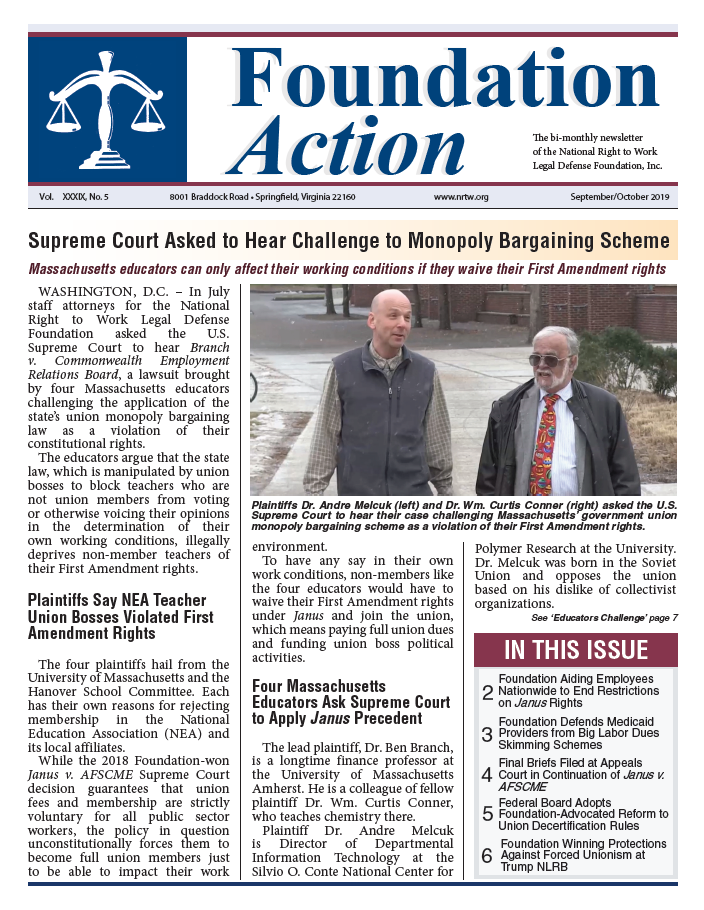
All articles from the September/October 2019 issue of Foundation Action are now on the website.
In this issue:
- Supreme Court Asked to Hear Challenge to Monopoly Bargaining Scheme
- Foundation Aiding Employees Nationwide to End Restrictions on Janus Rights
- Foundation Defends Medicaid Providers from Big Labor Dues Skimming Schemes
- Final Briefs Filed at Appeals Court in Continuation of Janus v. AFSCME
- Federal Board Adopts Foundation-Advocated Reform to Union Decertification Rules
- Foundation Winning Protections Against Forced Unionism at Trump NLRB
To view other editions or sign up for a free copy of the newsletter via mail, click here.
Federal Board Adopts Foundation-Advocated Reform to Union Decertification Rules
The following article is from the National Right to Work Legal Defense Foundation’s bi-monthly Foundation Action Newsletter, September/October 2019 edition. To view other editions or to sign up for a free subscription, click here.
National Mediation Board simplifies process for workers under Railway Labor Act to remove a union they oppose
At the Foundation’s urging, the NMB removed unnecessary hurdles and simplified the process for rail and airline employees to remove unpopular unions from their workplaces.
WASHINGTON, D.C. – In late July the National Mediation Board (NMB) issued its final rule simplifying decertification procedures under the Railway Labor Act (RLA). The change enables workers in the airline and railway industries to more easily vote to remove a union that lacks the support of a majority of workers.
Before the decision to simplify the process, the NMB used a confusing process that required individual employees to create a fake “straw man” union to replace the incumbent union as the monopoly representative. The decertification process is particularly important because under federal law RLA unions can force workers to pay union dues or fees as a condition of employment even where state Right to Work laws protect other employees from forced union dues.
New Straightforward Rule Vindicates Foundation Campaign for Reform
“The Foundation has long advocated this type of change in the union decertification process and we are pleased the NMB has – as we called upon it to do in comments filed earlier this year – finally made this commonsense reform,” National Right to Work Foundation Vice President Patrick Semmens said at the time.
The NMB’s final decision provides a straightforward procedure for the decertification of a union, meaning workers who do not want union representation won’t have to jump through the hoops of creating and voting for a “straw man” union just to decertify the union that currently has monopoly bargaining power over their workplace.
The NMB’s final rulemaking notice reads: “The Board believes this change is necessary to fulfill the statutory mission of the Railway Labor Act by protecting employees’ right to complete independence in the decision to become represented, to remain represented, or to become unrepresented.”
“This change will ensure that each employee has a say in their representative and eliminate unnecessary hurdles for employees who no longer wish to be represented,” the NMB continued.
The National Right to Work Foundation has long called for these rules to be updated. Foundation attorneys participated in the formal comment period process and appeared at a public hearing to address the NMB and deliver the Foundation’s position. The final rule specifically references the Foundation’s comments, vindicating its efforts in the rulemaking process.
Board Eliminates Confusing ‘Straw Man’ Election Rules
“The National Right to Work Legal Foundation (Right to Work) stated that the proposed change is ‘long overdue,’ and the [Notice of Proposed Rulemaking] is ‘needed to ensure that all employees have an equal and fair choice regarding union representation. The Board has statutory authority to adopt the proposed rules, and should do so as soon as possible,’” the NMB final rule reads.
The confusing rules previously forced individual employees to concoct a “straw man” union to replace the incumbent union as the monopoly representative. Once elected by a majority of the workers, the new “straw man” representative could disclaim collective representation, but was not legally required to do so.
“At long last the National Mediation Board is providing airline and railroad workers covered by the Railway Labor Act a straightforward way to remove unwanted union ‘representation’ through a direct decertification vote,” Semmens said.
“The previous system – in which workers had to create a ‘straw man’ union just to challenge an incumbent union – only served to stymie workers’ rights and demonstrated the historic bias of the NMB in favor of compulsory unionism,” said Semmens. “It wasn’t until the Foundation-won case of Russell v. NMB in 1983 that workers even had an established legal right to throw off their union ‘representative,’ albeit only through the unnecessarily complicated “straw man” system which is finally being replaced with a simplified process to allow workers to exercise that right.”
In addition to submitting the formal comments in May, veteran Foundation staff attorney Glenn Taubman testified in favor of the rule change at the NMB hearing in late March.
Final Briefs Filed at Appeals Court in Continuation of Janus v. AFSCME
The following article is from the National Right to Work Legal Defense Foundation’s bi-monthly Foundation Action Newsletter, September/October 2019 edition. To view other editions or to sign up for a free subscription, click here.
Foundation seeks first-in-nation appellate court ruling to order non-member dues refunded
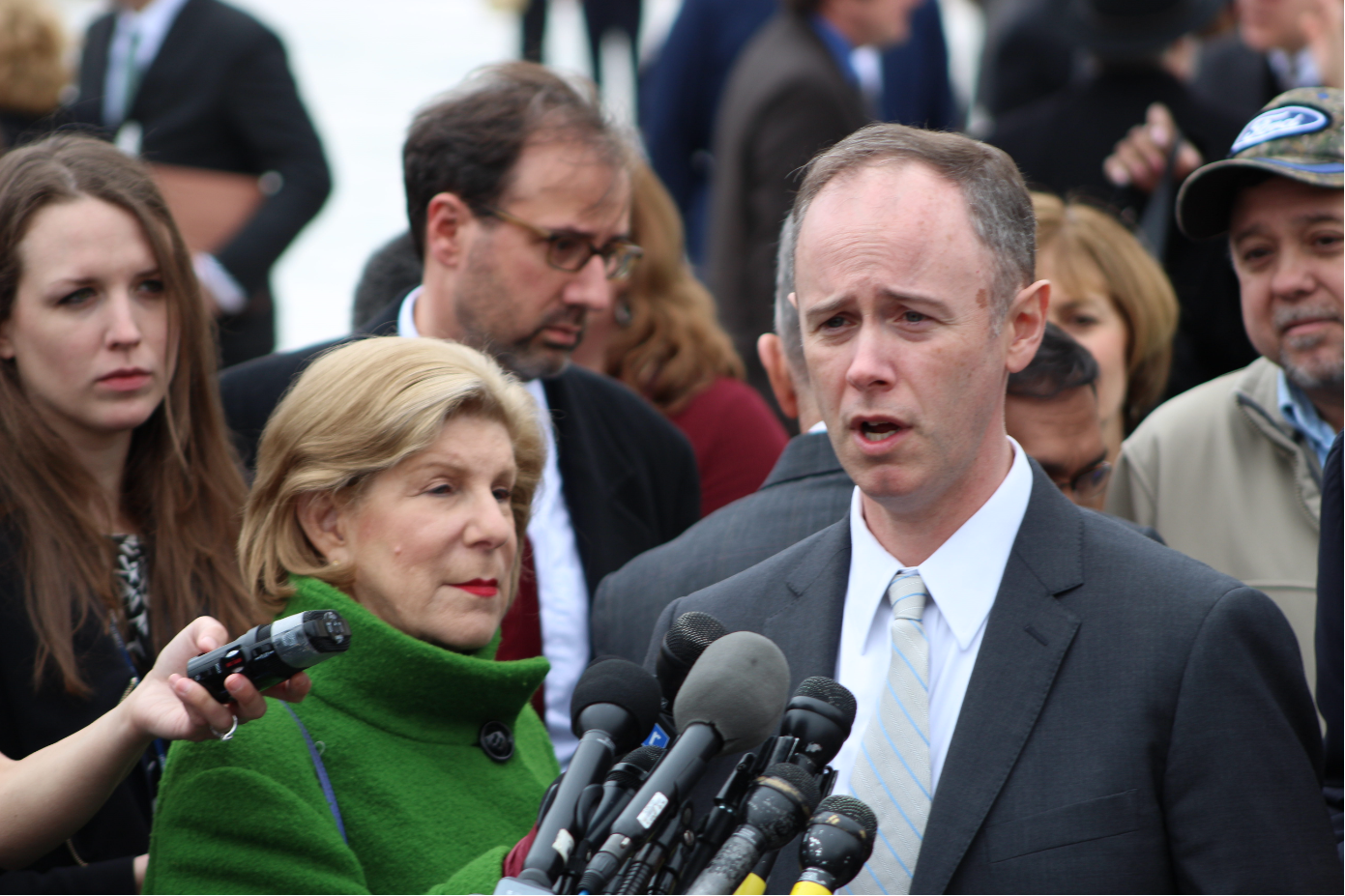
Veteran Foundation staff attorney William Messenger, seen here speaking to reporters after Supreme Court oral arguments in Janus, leads the Foundation’s Janus enforcement task force.
CHICAGO, IL – Although Janus v. AFSCME secured a landmark victory at the U.S. Supreme Court for government employees’ First Amendment rights, Mark Janus’ case is not over because AFSCME union bosses have refused to return the funds taken from him in violation of the First Amendment.
Janus’ attorneys from National Right to Work Foundation and Illinois-based Liberty Justice Center have completed briefing with the Seventh Circuit Court of Appeals on the issue of whether union officials can keep money they seized from non-members in violation of their constitutional rights. The case is likely to mark the first time an appellate court will rule on the issue, potentially establishing a precedent that could result in the return of hundreds of millions of dollars seized by union bosses in violation of the Janus precedent.
Janus Secured Workers’ First Amendment Rights
Mark Janus was an Illinois child support specialist whose case was successfully argued at the Supreme Court by National Right to Work Foundation staff attorney William Messenger.
The Supreme Court’s June 27, 2018, decision in Janus’ favor found that any union fees taken from workers like Mark Janus – who was not a member of AFSCME – without the workers’ affirmative and knowing consent violate the First Amendment. Justice Samuel Alito wrote for the majority that compulsory fees “[violate] the free speech rights of non-members by compelling them to subsidize private speech on matters of substantial public concern.”
The Supreme Court sent the case back to the lower courts to determine, among other things, whether Janus is entitled to all the union fees he was forced to pay since March 23, 2013.
Janus’ appeal comes after a district court judge ruled that union officials are not required to refund forced fees seized from non-member workers prior to the Janus decision.
“Just like a thief would not be allowed to keep the money he stole, union bosses must be forced to return funds unlawfully seized from workers,” said National Right to Work Foundation Vice President and Legal Director Ray LaJeunesse. “It would be a massive injustice to deny workers victimized by Big Labor the refunds to which the Supreme Court made clear they are entitled.”
Seventh Circuit Likely First Appeals Court to Rule on Non-member Refunds
Janus will likely be the first case in which an appellate court will evaluate the so-called “good faith” defense that union lawyers have asserted in response to worker lawsuits seeking refunds, arguing that union officials should be allowed to keep funds seized prior to the Janus decision.
This contention has generally succeeded in lower courts despite the Supreme Court asserting that union bosses have been “on notice” for years that mandatory fees likely would not comply with the heightened level of First Amendment scrutiny articulated in the Supreme Court’s earlier Knox v. SEIU decision, also won by Foundation staff attorneys.
Mark Janus is asking the Seventh Circuit to rule that he is entitled to refunds of approximately $3,000 in fees he was forced to pay since March 23, 2013, as the statute of limitations permits. In addition, the case has significant implications for dozens of other cases being litigated around the country for hundreds of thousands of other workers seeking the return of forced fees seized unlawfully by union officials.
Janus Refund Efforts Continue Nationwide
Foundation staff attorneys are currently litigating over a dozen such cases that collectively seek over $120 million in refunds for non-members forced to pay union fees before Janus. Other ongoing lawsuits and potential cases could result in half a billion dollars or more returned to government workers from union treasuries.
“The Janus case is a milestone of worker freedom, but union bosses continue to block workers from exercising their rights and deny workers refunds for dues and fees seized against their wishes,” said LaJeunesse. “We hope the Seventh Circuit Court of Appeals will follow the clear logic of the Supreme Court’s decision in Janus and establish that union bosses cannot profit from violating workers’ First Amendment rights.”
UConn Professor Receives Over $5,000 in Post-Janus Settlement
The following article is from the National Right to Work Legal Defense Foundation’s bi-monthly Foundation Action Newsletter, July/August 2019 edition. To view other editions or to sign up for a free subscription, click here.
Foundation-backed rule clarification takes aim at SEIU’s illicit $100 million per year money grab

Rather than face Foundation staff attorneys in court, union bosses refunded the forced dues seized from UConn professor Steven Utke in violation of his First Amendment rights.
STORRS, CT – Steven Utke, an accounting professor at the University of Connecticut, has received a settlement for $5,251.48 from American Association of University Professors (AAUP) union officials in his action, claiming the AAUP seized union dues in violation of his First Amendment rights. National Right to Work Foundation staff attorneys forced AAUP to settle after filing a federal lawsuit for Utke.
The case joins other Foundation-won settlements for workers who were forced to pay union fees in violation of their First Amendment rights. Despite those victories, Foundation staff attorneys continue to litigate about 30 other cases, seeking to enforce various aspects of the Foundation’s 2018 Janus v. AFSCME U.S. Supreme Court victory, with more being added every month as workers contact the Foundation seeking to exercise their Janus rights.
Utke started teaching at the University of Connecticut in 2015, and exercised his right to refrain from membership in the AAUP from the beginning of his employment. However, because Connecticut lacks a Right to Work law making union financial support strictly voluntary, AAUP officials began deducting union fees immediately from Utke’s paycheck despite the fact he was not a member.
When the Supreme Court ruled in Janus that requiring public sector workers to pay any union dues or fees as a condition of employment is a breach of the First Amendment, AAUP stopped the compulsory fee deductions. However, AAUP officials did not return the forced fees seized in violation of the First Amendment from the professor prior to the June 2018 Supreme Court decision.
Utke reached out to the National Right to Work Foundation for free legal aid, and on January 14, 2019 Foundation staff attorneys filed a lawsuit for Utke in federal court to force the union officials to refund the money they seized from him without his consent.
In April, rather than face Foundation staff attorneys in federal court, AAUP backed down and settled the case. Now, as stipulated by the terms of the settlement, AAUP officials have paid Utke more than the union fees seized in violation of his rights from 2015 to 2018.
Also as part of the settlement, they are required not to collect any dues or fees from Utke’s future wages, unless he affirmatively chooses to become a member of AAUP and authorizes such deductions.
“Steven Utke’s victory represents yet another landmark in the fight to enforce the Janus decision, but with dozens of additional Janus enforcement cases still pending, much work remains to force Big Labor to comply with the Supreme Court’s decision,” observed National Right to Work Foundation Vice President and Legal Director Ray LaJeunesse. “Foundation staff attorneys will not rest until every worker in America is free to exercise the right to decide whether or not to fund union activities.”
Airline Workers Contest Union ‘Opt-Out’ Requirement for Political Dues
The following article is from the National Right to Work Legal Defense Foundation’s bi-monthly Foundation Action Newsletter, July/August 2019 edition. To view other editions or to sign up for a free subscription, click here.
Union bosses bullied and illegally threatened to discipline employee who defied strike demands

United Airlines fleet service employee Arthur Baisley (left) and JetBlue pilot Christian Popp (right) are challenging union boss “opt-out” rules that make nonmembers pay for union political spending without their consent.
AUSTIN, TX – United Airlines fleet service employee Arthur Baisley and JetBlue Airlines pilot Christian Popp have filed federal lawsuits against the International Association of Machinists (IAM) and Air Line Pilots Association (ALPA) unions, respectively, challenging union officials’ “opt-out” requirements designed to make non-members pay for union political activities without their consent.
Austin, TX-based Baisley and Fort Lauderdale, FL-based Popp filed their lawsuits with free legal aid from the National Right to Work Foundation. Their Foundation staff attorneys argue that the “opt-out” schemes perpetrated by IAM and ALPA bosses violate workers’ rights under the Railway Labor Act (RLA) and the First Amendment under the standard laid out in the landmark 2018 Supreme Court decision Janus v. AFSCME.
“No employee or private citizen should be trapped in a deliberately-complex system that funnels their money into political speech of which they disapprove. Unfortunately, that is exactly what IAM and ALPA union officials are doing to non-member workers across America,” commented National Right to Work Foundation Vice President and Legal Director Ray LaJeunesse.
The lawsuits contend that under Janus and the 2012 Knox v. SEIU Supreme Court case – both of which were argued and won by Foundation staff attorneys – no union dues or fees can be charged for union political activities without a worker’s affirmative consent.
Popp and Baisley, despite working in the Right to Work states of Florida and Texas, must still pay fees to their respective unions as the RLA preempts state law and permits forced dues. But, even in the absence of Right to Work protections, established Supreme Court precedent forbids unions from putting those compulsory fees towards ideological activities like lobbying or politics.
According to the lawsuits, the processes that IAM and ALPA union bosses require independent-minded workers to go through simply to exercise their constitutional right not to fund “nonchargable” activities are convoluted and typically involve having to “decipher” the opt-out requirements of the union.
Even worse, after Baisley submitted a letter to IAM agents in November 2018 objecting to funding all union political activities, the union officials only accepted his objection for 2019, and told Baisley he would be required to renew his objection to full dues and fees the next year or else be charged for full union dues.
The two complaints challenge these union boss-created policies on the grounds that they “require employees to opt-out of paying union fees that they have no legal obligation to pay” and thus violate workers’ First Amendment rights.
The complaints also allege that the “opt-out” requirements violate the RLA, which governs labor in the air and rail industries and “protects the right of employees to ‘join, organize, or assist in organizing’ a union of their choice as well as the right to refrain from any of those activities.”
Both suits are class-action, and seek court orders requiring union officials to ask for affirmative employee consent for any dues charged for political or ideological purposes in the future.
“These lawsuits show that although Janus’ most direct impact was to secure the First Amendment rights of public employees not to be required to fund Big Labor, the implications don’t stop there,” observed LaJeunesse. “Because the Janus decision made clear workers must opt-in to all political and ideological activity, Foundation staff attorneys are able to cite it in defense of airline workers covered by the Railway Labor Act.”





