
After 18 Months, Mountaire Farms Workers Finally Oust Union
The following article is from the National Right to Work Legal Defense Foundation’s bi-monthly Foundation Action Newsletter, March/April 2022 edition. To view other editions of Foundation Action or to sign up for a free subscription, click here.
Overwhelming vote against UFCW follows NLRB shredding of first ballots
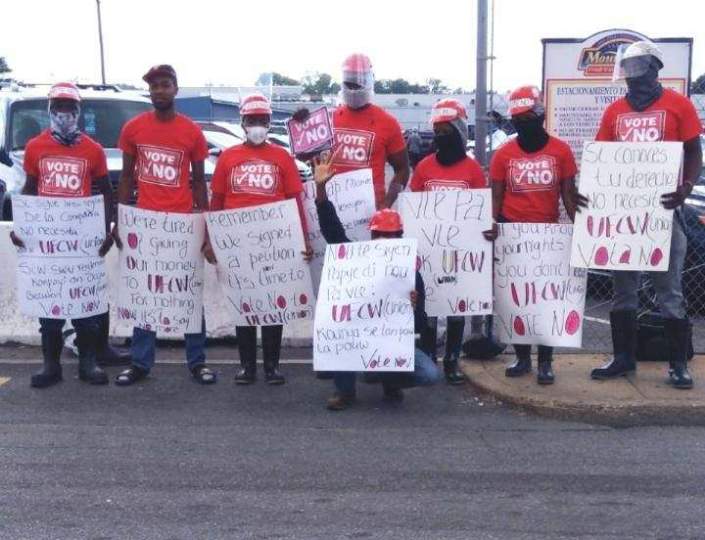
Employees at Mountaire Farms in Delaware fought “contract bar” delays from tyrannical UFCW union officials for almost two years. Finally, they’ve overwhelmingly voted out the union.
SELBYVILLE, DE – Almost two years after their initial attempt, Mountaire Farms poultry employees in Delaware have decisively voted to remove United Food and Commercial Workers (UFCW) union officials from their workplace. The drawn-out ordeal demonstrates how the “contract bar,” a controversial National Labor Relations Board (NLRB) policy, unjustly traps workers in union ranks they oppose.
Under the National Labor Relations Act (NLRA), the federal statute the NLRB implements, workers possess an enumerated statutory right to remove an unwanted union through a decertification election. However, the NLRB has invented out of whole cloth a “contract bar.” The “contract bar” halts workers’ right to hold a decertification election to remove a union they oppose for up to three years after union officials and a company finalize a monopoly bargaining contract.
NLRB Chucks Workers’ Votes Citing ‘Contract Bar’
Mountaire Farms workers voted in an NLRB-supervised decertification election in June 2020, but UFCW lawyers appealed the case to the full Labor Board in Washington, D.C., and were able to get the ballots impounded. After a divided NLRB ruled for the union bosses in April 2021, hundreds of cast ballots were destroyed without being counted.
The June 2020 vote was requested by Mountaire employee Oscar Cruz Sosa, who received free legal representation from National Right to Work Legal Defense Foundation staff attorneys. Cruz Sosa had the support of hundreds of his coworkers when he submitted his petition to the NLRB requesting a vote.
Initially, an NLRB regional official rejected union arguments that the decertification effort was blocked due to the “contract bar,” and the election was held. However, UFCW union lawyers appealed that decision to the full Board, which impounded the ballots while the appeal was considered.
Cruz Sosa’s Foundation attorneys urged the Board to reject the UFCW’s attempt to impose the “contract bar.” More importantly, they urged the Board to eliminate the bar completely because it is not found in the text of the NLRA, and serves only to protect unpopular union bosses from worker accountability. As the brief filed by Foundation staff attorneys pointed out, the only “bar” in the text of the NLRA states that workers must wait one year after an election before holding another vote, making the threeyear “contract bar” particularly egregious.
Nevertheless, in an April 2021 ruling, a divided Board sided with union lawyers, upheld the “contract bar,” and threw out the ballots cast by workers at the 800-employee facility. As a result, the employees were forced to wait almost another year, all the while subjected to forced union dues, for the “contract bar” to expire so they could restart the process for a decertification election.
Finally, without the barrier of the NLRB’s “contract bar” policy the workers submitted another petition to hold a vote to remove the UFCW in October 2021.
Landslide Vote Against Union Highlights Injustice of Anti-Worker ‘Contract Bar’ Policy
In the subsequent vote that concluded in December 2021, the workers overwhelmingly rejected the union with 356 of 436 votes counted for removing the union. The workers are finally free of unwanted union “representation,” nearly two full years after they started their effort to remove the union, which was highly unpopular among rank-and-file Mountaire Farms employees.
“The overwhelming final vote tally emphasizes the injustice of the decision to continue the Board-invented ‘contract bar,’ which resulted in the destruction of hundreds of ballots. From the outset it was clear how little support UFCW officials really had,” observed National Right to Work Foundation Vice President and Legal Director Raymond LaJeunesse. “This case is yet another example of how the NLRB has twisted the law to protect union boss power at the expense of the statutory rights of rank-and-file employees.”
“We’re under no illusions that the Biden NLRB, stacked with former union officials, will end this longstanding impediment to workers’ right to free themselves of an unwanted union. But this saga demonstrates why the injustice that is the non-statutory ‘contract bar’ must be ended by a future Board,” LaJeunesse added.
Kentucky Worker Hits Teamsters Union Bosses with Federal Charges for Illegally Seizing Union Dues
Georgia Pacific worker sent multiple letters to stop all payments as allowed by Right to Work law, but Teamsters continued dues collections
Lexington, KY (April 7, 2022) – Pam Ankeny, an employee in the printing department for Georgia Pacific, has filed federal unfair labor practice charges against the International Brotherhood of Teamsters Local 651 union. Ankeny’s charges, which were filed with free legal aid from the National Right to Work Foundation, say that Teamsters union bosses illegally collected union dues after she submitted two letters of revocation.
In July of 2021, Ankeny submitted a resignation and dues check-off revocation letter to union officials. The union responded two weeks later by claiming that Ankeny had missed her “window period” for dues check-off revocation.
In response, Ankeny submitted a second letter in August again reiterating her resignation and check-off revocation. She further requested a copy of the authorization union officials were using to block her request. The union acknowledged that Ankeny’s letter constituted a valid check-off revocation and indicated it would stop dues deductions. However, it failed to provide Ankeny with the requested authorization.
Despite the union acknowledging her valid August 2021 check-off revocation, beginning in January 2022 dues deductions resumed without Ankeny’s authorization and have continued as of the filing of her charges. In addition to the charge against the union, a charge was filed against Georgia Pacific for making the illegal dues deductions.
The charges allege that both practices are unlawful under Section 7 of the National Labor Relations Act (NLRA), which safeguards private sector employees’ right to abstain from any or all union activities. Further, in the 27 states with Right to Work protections, including Kentucky, union membership and dues payments are strictly voluntary.
“While Kentucky’s Right to Work law protects workers from being fired for refusing to pay union dues or fees, unless workers are vigilant, unscrupulous union bosses will still attempt to stuff their pockets with illegal forced dues,” commented National Right to Work Foundation President Mark Mix. “Any worker subjected to illegal union dues seizures should not hesitate to reach out to the National Right to Work Foundation for free assistance in exercising their legal rights to cut off dues payments.”
Foundation Assists Workers in Kicking Out Unwanted Union Bosses
The following article is from the National Right to Work Legal Defense Foundation’s bi-monthly Foundation Action Newsletter, September/October 2021 edition. To view other editions of Foundation Action or to sign up for a free subscription, click here.
Worker decertification efforts target SEIU, Teamsters union officials
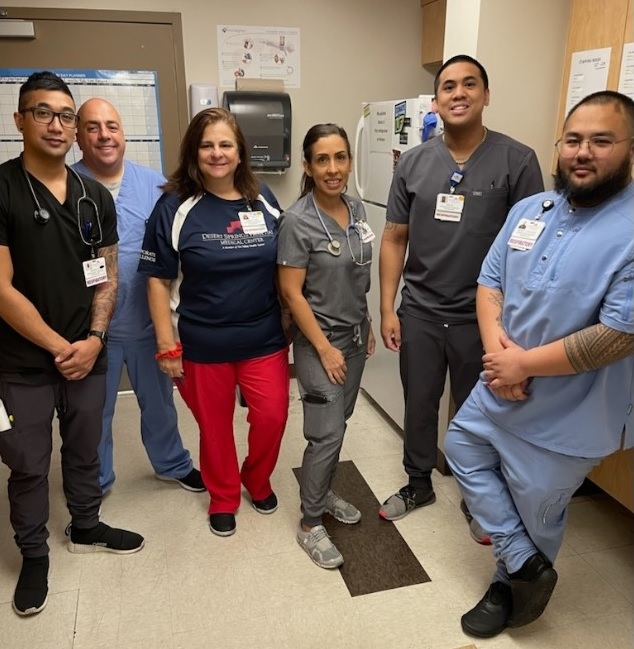
Desert Springs “Decert”: Tammy Tarantino (third from left) and her fellow healthcare workers at Desert Springs Medical Center booted SEIU union bosses from their workplace with Foundation aid, voting by a 3-1 margin for decertification.
CHICAGO, IL – Workers in three different states recently waged successful campaigns to remove the union bosses who controlled their workplaces. In each instance workers utilized free legal assistance from National Right to Work Legal Defense Foundation staff attorneys to navigate the overly-complicated process for getting a vote to remove an unwanted union.
The National Labor Relations Act (NLRA) — which is enforced by the National Labor Relations Board (NLRB) — gives workers the right to hold a decertification vote to end union officials’ monopoly bargaining power over workers. In theory, under the NLRA, workers who collect signatures from 30 percent of a workplace can hold a decertification vote at any time, provided there has not been a unionization vote there in the previous 12 months.
However, because of complicated NLRB doctrines compounded by union legal tactics, obtaining a vote to decertify a union can often be a challenge. That’s why workers in workplaces across the country turn to the Foundation for free legal aid as they seek to hold such a vote.
Workers’ ability to exercise their right to vote out an unwanted union is especially important in states without Right to Work protections, where union bosses can use their monopoly bargaining powers to force every worker to pay union dues or fees or else be fired.
But workers’ right to decertify a union is still critical in Right to Work states, because even without forced union payments, federal law gives union bosses the power to impose their so-called “representation” and resulting union monopoly contracts on members and non-members alike at unionized workplaces. Only once a union is decertified are workers free to represent themselves and communicate with their employer directly.
Foundation Helps Workers Navigate Tricky Legal Process
Highlighting recent activity, three separate workplaces have waged successful decertification efforts.
Petitioner Tim Mangia led the charge at Chicago’s Rush University Medical Center, where he and his fellow maintenance workers voted to remove Teamsters union bosses by a better than 3-1 margin. Separately, in Del Rio and Eagle Pass, Texas, salesmen for Frito-Lay also voted to free themselves from unwanted Teamsters union “representation” following free assistance from Foundation legal staff.
Meanwhile, Tammy Tarantino and her fellow technical employees at the Desert Springs Hospital Medical Center in Las Vegas successfully removed a Service Employees International Union (SEIU) local from their workplace with Foundation help.
Reforms: Union Bosses Can’t Use Bogus Charges to Block Decertification Elections
These cases proceeded without significant delays from union “blocking charges,” the often spurious charges against employers filed by union lawyers seeking to delay a decertification vote. Under old NLRB rules, such charges would have to be resolved before workers’ decertification votes could proceed, delaying the vote for months or even years.
Thanks to NLRB rulemaking advocated by the Foundation and backed by thousands of Foundation supporters, votes now virtually always proceed first with the results quickly announced, so that elections cannot be delayed nearly indefinitely by unsubstantiated union boss claims.
In the Las Vegas medical workers’ case, the new “blocking charge” rules allowed Tammy Tarantino continued from page 2 to have a vote, despite attempts by union lawyers to use charges against the hospital to delay the election. Without being able to rely on the “blocking charge” policy to maintain their power over the workplace, SEIU officials soon found themselves voted out with just 13 of 64 eligible voters voting for the union.
“While we look forward to the day when every individual worker has the freedom to decide whether to pay union dues or be represented by a union, it is especially egregious when union bosses are in power without even the support of a bare majority of rank-and-file workers,” said National Right to Work Foundation Vice President Patrick Semmens. “The National Right to Work Foundation is proud to help workers exercise their right to throw off the yoke of unwanted union so-called ‘representation.’”
Push to Remove UFCW Union Could End Pro-Union Boss “Contract Bar” Policy
The following article is from the National Right to Work Legal Defense Foundation’s bi-monthly Foundation Action Newsletter, September/October 2020 edition. To view other editions or to sign up for a free subscription, click here.
Non-statutory NLRB policy hinders workers’ right to vote out an unwanted union
 Employees at the Selbyville, DE, Mountaire Farms plant rally to vote out unpopular UFCW honchos from their workplace, as union lawyers scramble to block the workers’ votes from being counted.
WASHINGTON, DC – The National Labor Relations Board (NLRB) has announced that it will review the so-called “contract bar” doctrine, which prevents employees from exercising their right to vote an unpopular union out of their workplace for up to three years if union officials and their employer have finalized a monopoly bargaining contract.
This is the latest development in a case by a Selbyville, Delaware-based Mountaire Farms poultry employee, Oscar Cruz Sosa, against the United Food and Commercial Workers (UFCW) Local 27 union. Cruz Sosa submitted a petition in February for a vote on whether Local 27 should be removed as monopoly bargaining agent in his workplace. The petition was signed by hundreds of his coworkers, more than the percentage required to trigger such a vote.
Worker Obtains Foundation Help after Union Attempts to Block Vote
After he submitted the petition, UFCW bosses immediately claimed that the “contract bar” should block Cruz Sosa and his coworkers from even having an election, because the monopoly bargaining agreement between Mountaire and the union had been signed less than three years earlier.
Cruz Sosa then obtained free legal assistance from National Right to Work Foundation staff attorneys in defending his and his coworkers’ right to vote. With Foundation aid, he also hit UFCW agents with federal unfair labor practice charges for imposing an illegal forced-dues clause on the workplace and threatening him after he submitted the petition.
When the NLRB Regional Director in Baltimore heard the election case, he ruled that the union contract contains an unlawful forced-dues clause that mandates workers immediately pay union dues upon hiring or be fired. Under NLRB precedent, an illegal forced-dues clause means the “contract bar” cannot apply, allowing the vote to proceed.
UFCW’s Desperate Attempt to Block Vote Triggers NLRB Review of “Contract Bar”
Despite the longstanding precedent supporting the Regional Director’s ruling, UFCW union lawyers filed a Request for Review, asking the full NLRB to reverse the Regional Director and halt the election.
In response, Cruz Sosa’s Foundation staff attorneys opposed the union’s efforts to block the vote. They also argued that, if the Board were to grant the union’s Request for Review, it should also reconsider the entire “contract bar” policy, which has no statutory basis in the NLRA. The Foundation’s legal brief noted that the “contract bar” runs counter to the rights of workers under the NLRA, which explicitly include the right to vote out a union a majority of workers oppose.
Just hours after the voting process in the decertification election had begun, the NLRB issued its order granting the union’s Request for Review, while also accepting the Foundation’s request to reconsider the entire “contract bar” doctrine. The order noted “that it is appropriate for the Board to undertake in this case a general review of its ‘contract bar’ doctrine.”
Given the precedential import of this case, the NLRB solicited amicus briefs on whether the “contract bar” should be allowed to stand. UFCW officials, still desperate to throw a wrench in Cruz Sosa and his coworkers’ effort to vote them out, demanded that the NLRB rescind its request for amicus briefs in the case, but that effort was quickly rebuffed.
“We urge the NLRB to swiftly overturn this outrageous non-statutory policy, which lets union bosses undermine for up to three years the free choice of workers that is supposed to be at the center of federal labor law,” commented National Right to Work Foundation Vice President and Legal Director Raymond LaJeunesse. “The very premise of the NLRB-created ‘contract bar,’ that union bosses should be insulated from worker decertification efforts, is completely backwards.”
LaJeunesse added: “Union officials across the country use all types of tactics to get workers into unions but rely on government power and legal tricks to prevent them from getting out.”
At Foundation’s Urging, NLRB Eliminates Barriers to Removing Unpopular Unions
The following article is from the National Right to Work Legal Defense Foundation’s bi-monthly Foundation Action Newsletter, July/August 2020 edition. To view other editions or to sign up for a free subscription, click here.
New rule curtails union boss tactics used to block employees’ right to vote out unions they oppose

The Foundation’s comments helped the NLRB scrap its policy allowing “blocking charges,” which IUOE bosses used to stymie Rieth-Riley worker Rayalan Kent and his coworkers’ right to vote them out.
WASHINGTON, DC – Following two rounds of comments from the National Right to Work Legal Defense Foundation and over 8,000 petitions from Right to Work supporters, the National Labor Relations Board (NLRB) has issued final rules substantially eliminating two pernicious tactics used by union bosses to stop workers from exercising their right to hold a vote to remove an unwanted union.
The NLRB’s new rules, finalized in April, dealt blows to the non-statutory “blocking charge” and “voluntary recognition bar” policies and to forced unionism schemes in the construction industry. All three reforms were encouraged by the Foundation’s initial January comments to the federal agency, which pressed the agency to get rid of all restrictions on decertification elections that are not mandated by the National Labor Relations Act (NLRA).
New Rule Knocks Down Three Rights Restrictions Targeted by Foundation
The new rule essentially eliminates union “blocking charges,” which union bosses file to prevent rank-and-file employees from exercising their right to vote to remove a union. Under the old rule, unions could block workers’ requested votes from taking place for months or even years by making one or multiple allegations against the employer, which were often unrelated to the employees’ decertification petition and frequently unsubstantiated.
Under the new rule, union charges cannot indefinitely stall the employees’ vote from taking place and in most instances the vote will occur without delay. Additionally, as the Foundation advocated, the NLRB modified its proposed rule so that after the employees vote, the ballots will be tallied and released in the vast majority of cases instead of being impounded and not counted.
This is a vast improvement on the NLRB’s original proposal to utilize a “vote and impound” system regarding employees’ decertification votes. Although such a system would have permitted employees to vote despite “blocking charges,” the results could have been withheld for months or years until the underlying “blocking charges” were resolved. Foundation staff attorneys argued against such a system in their January comments, pointing out that it would “frustrate and confuse employees who may have to wait years to see the election’s results,” while leaving the union in power the entire time.
The NLRB also substantially eliminated the so-called “voluntary recognition bar” policy. In the past, union officials had used this policy to block workers from requesting a secret-ballot election after the union had been installed as their monopoly bargaining agent through abuse-prone “Card Check” drives that bypass the NLRB-supervised secret-ballot election process. The Trump NLRB’s new rule reinstates a system secured by Foundation staff attorneys for workers in the 2007 Dana Corp. NLRB decision.
Under the Dana Corp. system, employees subject to “Card Check” drives and so-called “voluntary recognition” can promptly file for a secret-ballot election to contest the installation of a monopoly representative at their workplace. Despite thousands of workers using this process to secure secret-ballot votes after being unionized through “Card Checks,” the Obama NLRB overturned Dana in 2010 over the objections of Foundation staff attorneys in a case called Lamons Gasket.
Additionally, the NLRB made changes advocated by the Foundation’s January comments to crack down on schemes in the construction industry where employers and union bosses are allowed to unilaterally install a union in a workplace without first providing any proof of majority union support among the workers.
Foundation Fights to Enforce Workers’ Right to Remove Unwanted Unions
Foundation staff attorneys are currently providing free legal aid to several workers who are challenging union boss attempts to stymie their right to vote out an unwanted union, even in light of the new NLRB protections.
In Michigan, NLRB Region 7 officials stifled Rieth-Riley Construction Company employee Rayalan Kent’s decertification petition that he submitted for his coworkers. Region 7 officials told him that the election would be held up “pending the investigation” of charges filed by Operating Engineers (IUOE) union bosses against Rieth- Riley, but never explained to him why IUOE bosses’ allegations were significant enough to affect their right to vote.
Foundation staff attorneys in April submitted a request for review for Kent and his coworkers to the NLRB in Washington, D.C., asking that the Board immediately permit them to exercise their right to vote to remove the unpopular IUOE union.
“While this NLRB still has much more to do, the long-awaited new rules represent significant steps towards fully protecting the statutory right of employees under the NLRA to remove a union opposed by a majority of workers,” observed National Right to Work Foundation Vice President Patrick Semmens. “The ‘blocking charge’ policy that is finally being modified has always been particularly odious in its treatment of employee rights, for it allows union allegations against an employer to be grounds for blocking the statutory rights of employees who are not accused of any wrongdoing.”
“Foundation supporters, who deluged the NLRB with demands to safeguard the right of rank-and-file employees to vote, free of coercion, on whether or not union bosses are worthy to speak for them in the workplace, should be proud that their voices helped spur these important reforms,” Semmens added.
Workers Win Over $30K After Challenging Teamsters Forced-Dues Scheme
The following article is from the National Right to Work Legal Defense Foundation’s bi-monthly Foundation Action Newsletter, July/August 2020 edition. To view other editions or to sign up for a free subscription, click here.
Cases demonstrate Teamsters union bosses’ widespread use of illegal coercive tactics
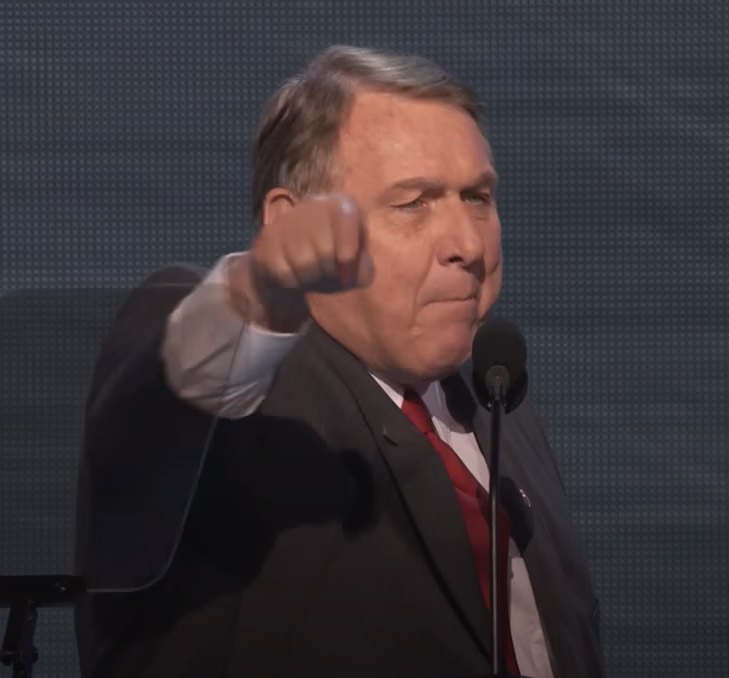
Notorious union boss James Hoffa heads the Teamsters union, which is subjecting workers nationwide and across industries to illegal schemes.
MINNEAPOLIS, MN – With free legal aid from National Right to Work Foundation staff attorneys, workers have won multiple settlements after Teamsters union bosses refused to respect their legal rights not to support a union as a condition of employment.
In one settlement, Minnesota employees James Connolly and Charles Winter won $30,000 in back pay from their former employer after they were illegally fired for choosing not to formally join the Teamsters Local 120 union.
Meanwhile, Milwaukee factory employee Tyler Lewis secured a settlement with Teamsters “General” Local Union No. 200. Union officials had denied his right under Wisconsin’s Right to Work Law and the National Labor Relations Act (NLRA) to not financially subsidize a union.
Two Minnesota Employees Obtain $30,000 in Back Pay
Connolly and Winter each filed unfair labor practice charges against both the Teamsters and their former employer, building materials company OMG Midwest, after they were unlawfully fired.
The two workers charged that company and union officials falsely told them several times that union membership was required as a condition of employment. Both men charged that the misinformation about membership and their firings violated Section 7 of the NLRA, which protects the “right to refrain from any or all” union activities.
In addition to winning $30,000 in back pay from their former employer, the settlement stipulates that OMG Midwest take additional action. The company must “remove all references to the termination” from the two employees’ personnel files, post notices at OMG’s facility in Belle Plaine, Minnesota, and distribute those notices individually to all employees. The notices will explain that workers cannot be forced to join a union as a condition of employment.
In a later settlement, Teamsters bosses were ordered to refrain from telling “employees or applicants that union membership is a condition of employment” and to inform employees “of their right to be non-members.” Additionally, the Teamsters will reimburse any employee who worked at OMG Midwest who chooses to become a non-member for the difference between full union dues and the portion payable by non-member objectors under the Foundation-won Supreme Court decision in CWA v. Beck.
“It is good news that Mr. Connolly and Mr. Winter have won these settlements which require their former employer and Teamsters union bosses to make reparations for violating longstanding worker protections. But such instances of abuse will continue unless Minnesota legislators pass Right to Work protections for their state’s private sector employees,” commented National Right to Work Foundation Vice President and Legal Director Raymond LaJeunesse. “This case demonstrates, yet again, why Teamsters bosses have a well-earned reputation for using coercive tactics against workers who refuse to toe the union line.”
Milwaukee Worker Receives Refund of Union Dues in Foundation-Won Settlement
Under the terms of the settlement for Lewis, Teamsters Local 200 officials agreed to repay union dues, plus interest, seized from Lewis’ paycheck after he resigned his union membership and revoked his dues deduction authorization.
After he was hired to work at Snap-on Logistics Company, a union official told Lewis that he must become a union member and authorize the deduction of union dues from his paycheck. That union demand violated longstanding law dating back to 1963.
In September 2019, Lewis resigned from the union and revoked his authorization of dues deductions. But union bosses refused to honor Lewis’ request to stop union dues deductions and continued to seize dues from his paycheck.
In response, Lewis filed an unfair labor practice charge with the NLRB with the assistance of Foundation staff attorneys. The favorable settlement secured for Lewis resolves his charge. Lewis’ charge against the Teamsters pointed out that the monopoly bargaining contract was signed after the effective date of Wisconsin’s Right to Work Law. Therefore, the so-called “union security” clause in the contract was illegal and he should never have been forced to pay any amount to the union.
“This settlement for Mr. Lewis is yet another victory for the rights of all Wisconsin workers. However, it should not take federal labor charges for union bosses to acknowledge the basic rights of employees in the Badger State,” said LaJeunesse.
NLRB Cases Challenge Coercive ‘Neutrality Agreements’ Used to Impose Forced Unionism
The following article is from the National Right to Work Legal Defense Foundation’s bi-monthly Foundation Action Newsletter, March/April 2020 edition. To view other editions or to sign up for a free subscription, click here.
Housekeepers demand NLRB block unionization resulting from back-room “Card Check” deals
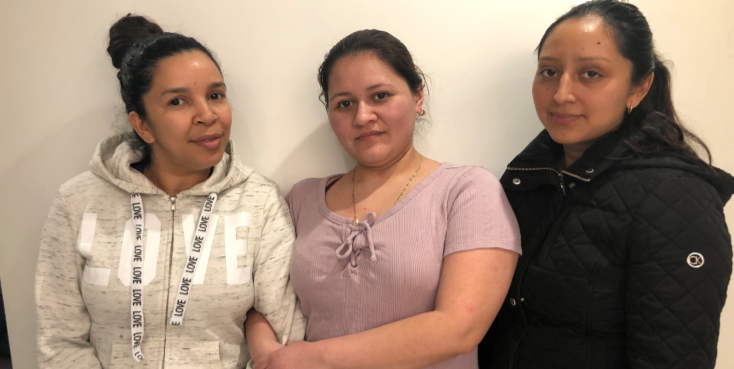
From left, housekeepers Lady Laura Javier, Cindy J. Alarcon Vasquez, and Yesica Perez Barrios are charging hotel officials and union bosses with illegally corralling workers into union ranks with a corrupted “Card Check” recognition.
SEATTLE, WA – Housekeeper Gladys Bryant was granted an appeal by the National Labor Relations Board (NLRB) General Counsel in her case challenging the use of a so-called “neutrality agreement” between UNITE HERE union officials and her employer to impose a union on the hotel’s workers.
Meanwhile, four Boston housekeepers have filed similar NLRB charges against their employer Yotel Boston and UNITE HERE Local 26, alleging that union officials violated federal law by imposing union representation on workers through a coercive “Card Check” drive with their employer’s assistance.
General Counsel Finds That UNITE HERE “Card Check” Unionization Was Tainted
Bryant filed the unfair labor practice charges after the UNITE HERE Local 8 union was installed at the Embassy Suites hotel in May 2018 through an oft-abused “Card Check” drive which bypassed the NLRB’s secret ballot election process.
As part of its so-called “neutrality agreement,” Embassy Suites agreed to give union organizers access to the hotel to meet and solicit employees. The agreement also provided union officials with a list of all employees’ names, jobs, and contact information to assist the union in collecting authorization cards from employees.
After NLRB Region 19 officials declined to prosecute the union or employer for violations of the National Labor Relations Act (NLRA), Bryant appealed the case to the NLRB General Counsel in January 2019. The NLRB General Counsel agreed with Bryant’s Foundation attorneys that Embassy Suites provided UNITE HERE’s organizing campaign with more than “ministerial aid” and thus violated the NLRA.
The NLRB has long held that an employer taints employees’ efforts to remove a union if it gives the employees support such as providing a list of bargaining unit employees or use of company resources. Bryant’s appeal successfully argued that the “ministerial aid” standard must also apply when an employer aids union officials’ efforts to gain monopoly bargaining power over workers.
Boston Housekeepers Argue Union “Card Check” Must Be Overturned
Faced with a similar situation, Boston-area housekeepers Cindy J. Alarcon Vasquez, Lady Laura Javier, Yesica Perez Barrios, and Danela Guzman filed unfair labor practice charges with the NLRB. With free legal aid from the National Right to Work Foundation, the housekeepers argue that UNITE HERE union officials violated federal law by imposing union representation on workers through a coercive “Card Check” drive with the assistance of their employer, Yotel Boston.
As in the Seattle case, they charge that Yotel Boston company officials provided UNITE HERE’s organizing campaign with more than “ministerial aid” and therefore illegally tainted the union’s installation as the employees’ exclusive representative in the workplace. The housekeepers charge union officials with violating the NLRA by requesting and accepting the illegal assistance, and the hotel for providing it.
“It is long past time that the NLRB put an end to this biased double standard that allows union bosses to abuse workers’ rights,” said National Right to Work Foundation Vice President and Legal Director Ray LaJeunesse. “The General Counsel is correct to finally recognize that what qualifies as more than ‘ministerial assistance and support,’ and thus violates the National Labor Relations Act, cannot depend on whether the employer is helping outside union organizers impose unionization on workers or assisting workers in exercising their right to remove an unwanted union.”
“These cases represent another breakthrough in the Foundation’s challenges to the pro-forced unionism skew at the NLRB,” added LaJeunesse.
Milwaukee Worker Wins Refund of Union Dues in Settlement of Case Against Teamsters Union
Teamsters Local 200 union officials agree to repay money siphoned from factory workers’ pay after he exercised rights under Wisconsin Right to Work law
Milwaukee, WI (April 27, 2020) – With free legal aid from the National Right to Work Legal Defense Foundation, an employee at a Milwaukee factory has secured a settlement with Teamsters “General” Local Union No. 200. Union officials denied his right under Wisconsin’s Right to Work law and the National Labor Relations Act to cut off union financial support.
Under the terms of the settlement, Teamsters Local 200 officials will repay Tyler Lewis union dues, plus interest, seized from his paycheck after he resigned his union membership and revoked his dues deduction authorization (“checkoff”).
Lewis works for Snap-on Logistics Company. After he was hired, a union official told him that he must become a union member and sign a checkoff authorizing the deduction of union dues from his paycheck. That union demand violated longstanding law going back to 1963.
In September 2019, Lewis resigned from the union and revoked his checkoff. Local 200 union officials refused to honor Lewis’s request to stop union dues deductions and continued to deduct them from his paycheck, despite Wisconsin’s Right to Work law making union payments strictly voluntary.
Consequently, Lewis filed an unfair labor charge with the National Labor Relations Board with the help of National Right to Work Foundation staff attorneys. The favorable settlement for Lewis resolves his charge.
“This settlement for Mr. Lewis is yet another victory for the rights of all Wisconsin workers, although it should not take federal labor charges for union bosses to acknowledge the basic rights of employees in the Badger State,” said National Right to Work Foundation President Mark Mix. “Clearly Wisconsin’s Right to Work law mandates that union membership and dues payment must be strictly voluntary, but union bosses regularly attempt to trap workers in forced fee ‘agreements,’ rather than respect workers’ rights and vie to win their uncoerced support.”
“This case demonstrates, yet again, why Teamsters union bosses have a well-earned reputation for using coercive tactics against workers who refuse to toe the union line,” Mix added.
Paramedic Files Appeal after NLRB Disregards Illegal Union Retaliation
The following article is from the National Right to Work Legal Defense Foundation’s bi-monthly Foundation Action Newsletter, January/February 2020 edition. To view other editions or to sign up for a free subscription, click here.
Appeal to NLRB General Counsel comes just months after Region 14 was reversed in similar case

Paramedic Jarod Aubuchon is appealing his case against Teamsters officials after they punished him for informing his coworkers of their rights to resign union membership and pay reduced dues.
St. LOUIS, MO – Jarod Aubuchon, a St. Louis-area paramedic who charged Teamsters Local 610 union officials with illegal retaliation after he tried to inform his coworkers of their right to pay reduced union dues, is filing an appeal in his case to the National Labor Relations Board (NLRB) General Counsel in Washington, D.C. He is represented free of charge by National Right to Work Legal Defense Foundation staff attorneys.
Aubuchon’s appeal comes after the October 2019 dismissal of his case by NLRB Region 14 officials in St. Louis. Region 14 was reversed by the NLRB General Counsel in a similar union retaliation case this summer, which was also brought by Foundation staff attorneys.
Union Officials Vow Punishments after Worker Posted Rights Notices
Aubuchon discovered the right of private sector workers under the Foundation-won CWA v. Beck Supreme Court decision to resign union membership and pay a reduced portion of union dues. Because Missouri is not a Right to Work state, private sector workers can still be compelled to pay part of union dues as a condition of employment.
Beck, won by Foundation staff attorneys in 1988, guarantees that employees who are not union members can only be required to pay fees to a union for expenses that are directly germane to bargaining, such as contract administration.
Armed with this new knowledge, Aubuchon posted flyers in common areas of his workplace informing his coworkers of their Beck rights. According to his charge, Teamsters agents responded by tearing down these notices and later demanding that his employer, Medic One, discipline him for the postings. Actions by union officials that cause an employer to discriminate against workers on such grounds are prohibited by the National Labor Relations Act (NLRA).
Aubuchon resigned his own union membership and asserted his Beck rights. Aubuchon’s charge states that neither his resignation nor his Beck rights have been acknowledged by Teamsters bosses, and full dues are still being seized from his paychecks.
Employee Appeals to NLRB General Counsel with Free Foundation Legal Aid
After NLRB Region 14 officials rejected his case, Aubuchon petitioned the NLRB General Counsel to overturn the decision and order remedies for the retaliation he experienced from Teamsters officials.
“They spend union money on political activism without consideration of its members,” Aubuchon said of Teamsters officials to the St. Louis Record after his appeal was filed. “We have a right to not have our money used in that manner and in the end I hope employees are better educated on their rights and how to exercise them.”
In July 2019, the General Counsel reversed Region 14 officials’ dismissal of a similar case brought by Foundation staff attorneys for Kansas City-area hospital worker Kacy Warner. Warner charged officials of the National Nurses Organizing Committee (NNOC) union with illegally interfering with a petition she was circulating for a vote to remove the union. That included tearing down flyers she had hung in bathrooms and other common areas in her workplace informing employees of the petition. In her case the NLRB General Counsel reversed Region 14’s dismissal and ordered region officials to prosecute the charge.
Region 14 officials were also overturned by the full Labor Board in October 2019 after the Region dismissed a petition for a vote to remove the union from St. Elmo, Illinois-based ConAgra Foods worker Robert Gentry’s workplace. United Food and Commercial Workers (UFCW) union bosses had attempted multiple times to stop workers at the plant from exercising the right to vote out the union.
“The NLRB is charged with enforcing workers’ rights under the National Labor Relations Act, yet there is a disturbing pattern of Region 14 failing to enforce the rights of rank-and-file workers when doing so advances the interests of union bosses,” commented National Right to Work Foundation Vice President Patrick Semmens. “It should not take an appeal to Washington, D.C., for workers to have their rights fully protected against union boss abuses.”
Right to Work Foundation Asks NLRB to Enforce Cannabis Industry Workers’ Rights against State Schemes to Force them into Union Ranks
Several states are attempting to use industry licensing as a pretense to impose forced union dues on workers in violation of federal labor law
Washington, DC (March 19, 2020) – Today the National Right to Work Legal Defense Foundation called on National Labor Relations Board (NLRB) General Counsel Peter Robb to take action to protect workers subjected to forced unionism schemes interfering with workers’ rights under the National Labor Relations Act (NLRA) through state licensing requirements showing up in states.
A letter from Foundation Vice President and Legal Director Raymond LaJeunesse, Jr. seeks to bring the General Counsel’s attention to a “disturbing trend in state licensing regulation that, if left unchecked, will cause permanent damage to employees’ fundamental Section 7 rights under the National Labor Relations Act.”
The letter highlights how several states have already enacted schemes that infringe on the rights of employees in the medicinal cannabis industry. In New Jersey, for example, the law requires “a private sector employer to enter into a union bargaining agreement within 200 days of commencing operations” or forfeit their license to do business. Such a requirement does not allow employees to decide whether or not they would like to be represented by a union, a clear violation of their rights under the NLRA.
Other states like California and New York require cannabis employers to enter into so-called “labor peace agreements” (LPAs) as a condition of maintaining their license. These agreements violate workers’ privacy and also threaten their right to freely choose whether or not to join a union. In other states, including Pennsylvania and Illinois, state officials will give more “points” to cannabis license applicants who have LPAs, which is effectively preferential treatment for those businesses which have already chosen a union for their employees to work under. The states enacting these schemes have acted at the behest of several national labor unions, with the United Food and Commercial Workers being on the forefront of these forced unionism efforts.
The letter calls on the NLRB to act against these state and local governments whose regulations infringe on the rights of employees to join or not join labor organizations, and lays out the clear legal arguments that support challenging laws that violate the limited employee rights under the NLRA. It points out that such schemes are “directly contrary to the NLRA’s core principle that ‘under Section 9(a), the rule is that the employees pick the union; the union does not pick the employees.’”
In 2019, New Jersey amended its medicinal cannabis laws, requiring license applicants to sign “labor peace agreements.” According to the amended law, applicants must maintain and comply with an LPA as a condition of keeping their license. In addition, these private sector employers are forced to sign monopoly bargaining agreements within 200 days of opening, and if they do not, they lose the right to do business in the state. Essentially, the letter points out, “the state pressures employees to sign up for unionization solely to keep their employers afloat.”
Furthermore, the Foundation points out how New Jersey indirectly imposes monopoly representation on workers by giving priority to license applicants that already have agreements with union officials or who promise to use their “best efforts to utilize union labor in the construction or retrofit of the facilities associated with the permitted entity.”
The letter also points out that the NLRB has the clear authority to take action against such state activity that threatens the rights guaranteed to workers by the NLRA.
“The NLRB is tasked with protecting the rights of workers across the nation, including their right not to be coerced into union ranks. Our letter to NLRB General Counsel Peter Robb shows the pressing need for the agency to step in and take action against states and local governments who have passed laws that infringe on the rights of workers by mandating these businesses hand over their workers to union forced dues ranks,” said National Right to Work Foundation President Mark Mix.
“Absent swift action from the NLRB to challenge these state laws that fly in the face of the National Labor Relations Act, you can be certain that Big Labor allied politicians across the country will soon seek to force workers in other states or industries into union forced dues ranks under the auspices of occupational licensing.”





