
NLRB to Prosecute Boston Hotel, UNITE HERE Union for Coercive “Card Check” Deal
The following article is from the National Right to Work Legal Defense Foundation’s bi-monthly Foundation Action Newsletter, January/February 2021 edition. To view other editions or to sign up for a free subscription, click here.
Housekeepers say employer illegally assisted union organizers during unionization push
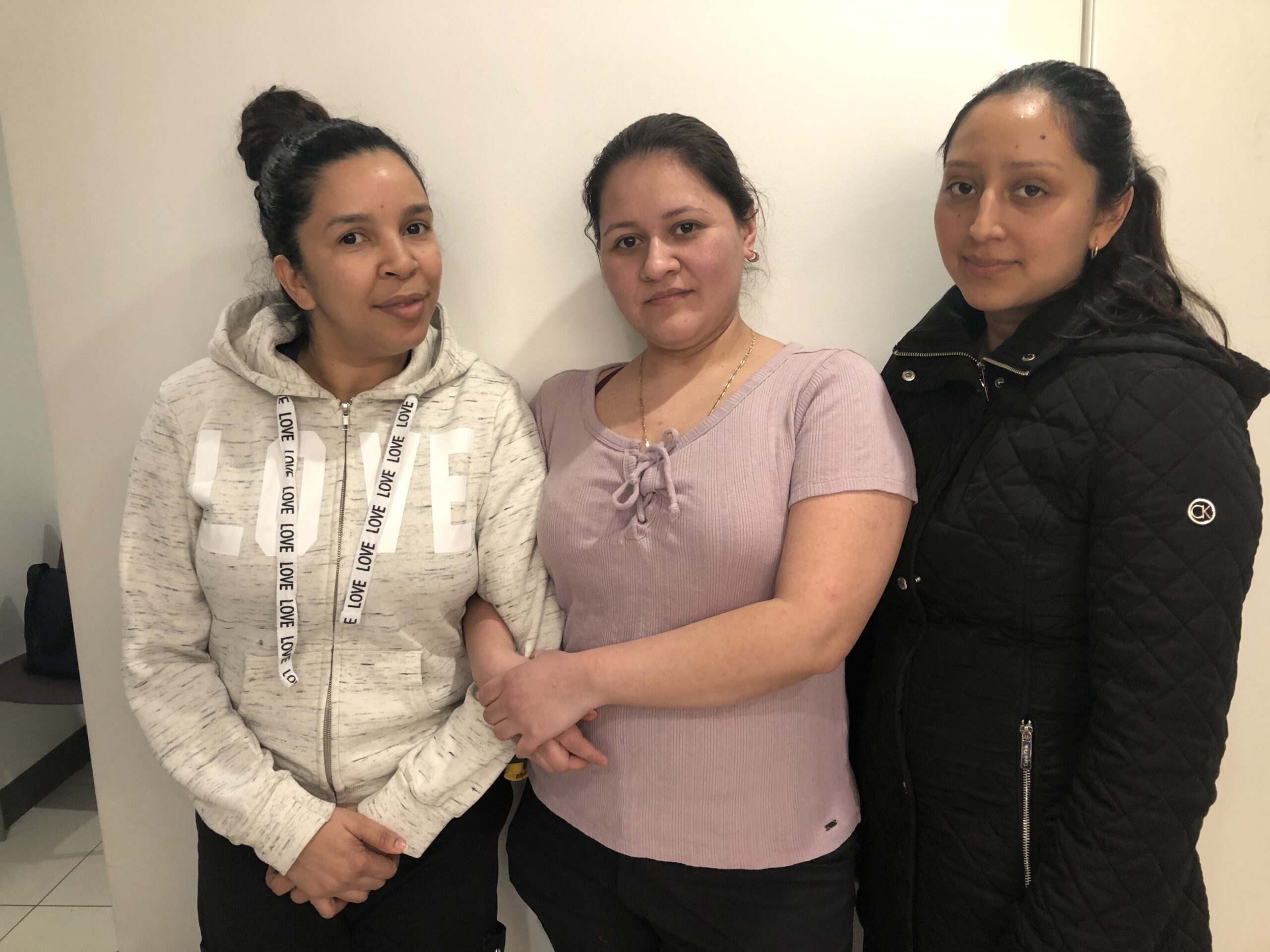
Yotel housekeepers (from left) Lady Laura Javier, Cindy J. Alarcon Vasquez and Yesica Perez Barrios got the NLRB to prosecute union and hotel officials for using a coercive “Card Check” drive to force them under union control.
BOSTON, MA – With free legal aid from National Right to Work Legal Defense Foundation staff attorneys, in December 2019 four housekeepers at the Yotel hotel in Boston filed charges against their employer and UNITE HERE Local 26, after the hotel illegally assisted union officials with foisting their “representation” on workers during a “Card Check” organizing drive.
Now, in response to the charges filed for Cindy J. Alarcon Vasquez, Lady Laura Javier, Yesica Perez Barrios and Danela Guzman, the National Labor Relations Board (NLRB) Regional Director has issued a complaint to prosecute the hotel and UNITE HERE for violating the housekeepers’ rights under federal law.
Agreeing with the workers’ Foundation staff attorneys, the complaint charges the hotel with illegally assisting union organizers by providing the kind of assistance the Board has long held to be illegal when it benefits workers’ decertification efforts, and charges the union with illegally accepting the unlawful assistance.
NLRB: Employer Illegally Aided Union Campaign
The NLRB has long held that an employer taints employees’ efforts to remove a union if it gives those workers support that amounts to more than “ministerial aid.” Under that standard, the Board has held that an employer can’t provide a list of bargaining unit employees or allow use of company resources when employees are trying to remove a union, because this assistance would tarnish the results of the election.
Foundation attorneys in this case argue that, under the same standard, Yotel Boston similarly tainted the union’s organizing campaign by providing assistance to UNITE HERE union organizers.
The charges, which resulted in the NLRB complaint, say the hotel illegally assisted the union’s coercive “Card Check” drive, during which employees were pressured by union operatives into signing union cards. These cards were later counted as “votes,” and were used to bypass a secret-ballot election that would have determined whether the workers actually support union representation.
Foundation Cases Challenge Unequal Standard
The case is not the first in which the NLRB has addressed this double standard. In July, NLRB Region 19 issued a similar complaint in another case involving a hotel worker whose employer illegally assisted UNITE HERE Local 8 union officials in its “Card Check” drive at Embassy Suites in Seattle. There the NLRB also agreed that the employer had provided more than “ministerial aid,” and therefore UNITE HERE officials “did not represent an uncoerced majority of the unit.”
“The NLRB is finally addressing the double standard that for too long has favored union bosses in their coercive “Card Check” unionization drives,” said National Right to Work Foundation President Mark Mix. “Union bosses pressure workers and get illegal assistance from employers to impose their so-called representation on workers, but they cry foul when that same assistance is given to workers attempting to remove unwanted forced representation.
“With these two complaints against UNITE HERE union bosses, the Board is correctly finding that what qualifies as more than ‘ministerial assistance and support,’ and violates the National Labor Relations Act, cannot depend on whether the employer is helping outside union organizers impose unionization on workers or is assisting workers in exercising their right to remove an unwanted union,” Mix added
Ohio Public Workers Axe Illegal Restrictions on Janus Rights for Almost 30,000
The following article is from the National Right to Work Legal Defense Foundation’s bi-monthly Foundation Action Newsletter, September/October 2020 edition. To view other editions or to sign up for a free subscription, click here.
Foundation-backed lawsuit ends AFSCME bosses unlawful “escape period” scheme
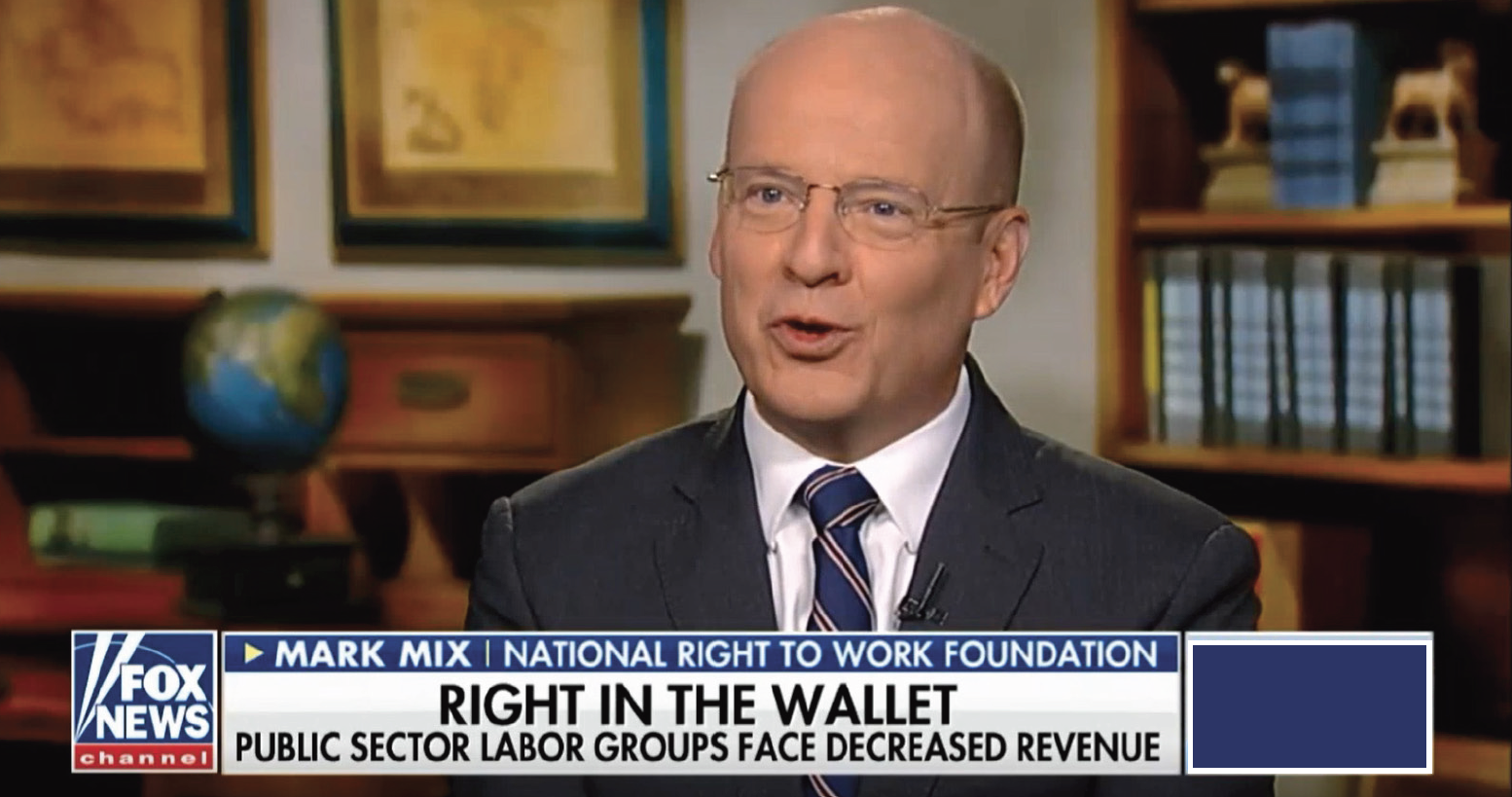
Two years after Foundation staff attorneys won Janus, public sector workers continue to cast off the shackles of forced union dues. In Allen, the plaintiffs successfully defended the Janus rights of thousands of Ohio public workers.
COLUMBUS, OH – A lawsuit by four Ohio public employees has secured the end of an illegal dues deduction scheme used by Ohio Civil Service Employees’ Association (OCSEA/AFSCME Council 11) union bosses to block an estimated 28,000 workers from exercising their First Amendment right to stop union dues payments. The workers obtained free legal representation from National Right to Work Foundation staff attorneys in challenging the policy.
The class-action suit, Allen v. AFSCME, challenged OCSEA’s so-called “maintenance of membership” policy, which trapped workers in forced-dues payments except for a brief “escape period” once every three years at the expiration of the union monopoly contract. The workers argued this policy violated their First Amendment rights under the Janus v. AFSCME Supreme Court decision.
In Janus, the High Court struck down mandatory union fees for public sector workers as an infringement of their First Amendment rights, and ruled that the government can only deduct union dues or fees with an individual’s affirmative consent.
After Freeing Workers, Foundation Attorneys Warn of Future Union Boss Tricks
As a result of the lawsuit, OCSEA officials and the State of Ohio have rescinded the “maintenance of membership” restriction on when state workers can exercise their First Amendment right to cut off union dues deductions.
They must also honor requests to stop dues deductions from any employees who signed the AFSCME dues authorization form at issue in the lawsuit. Finally, AFSCME bosses repaid dues seized illegally under the scheme to the plaintiffs and more than 150 other employees who tried to cut off union dues deductions after Janus was decided.
Knowing that union bosses don’t easily give up in their crusades to coerce workers into paying dues, however, Foundation staff attorneys issued a legal notice shortly after the case wrapped up, warning workers that OCSEA union bosses may soon solicit them to sign new dues deduction forms which are not covered by the litigation. The new forms will “purport to restrict” when employees can stop dues, it warns.
In light of that, the notice reminds workers that under Janus, no Ohio public employee can be forced to sign a union dues deduction form as a condition of employment, no matter what union agents may tell them.
Just Latest in String of Ohio Worker Victories over “Escape Periods”
Allen is not the only case in which Ohio public employees have, with National Right to Work Foundation legal aid, successfully challenged union boss attempts to limit their rights.
Seven other Ohio public employees won the first-in-the-nation victory against unconstitutional “escape periods” with Foundation aid in January 2019, after they filed a class-action federal lawsuit challenging a similar policy created by AFSCME Council 8 bosses. They won a settlement ending the restrictions for themselves and their coworkers. That win was followed by two other Ohio public workers, Connie Pennington and Donna Fizer, successfully ending “escape period” restrictions with Foundation assistance later in 2019.
“Although this chain of victories for Buckeye State public employees is certainly encouraging, the widespread nature of these schemes shows there remains much work to do to force union bosses to end their unconstitutional restrictions on public employees’ First Amendment Janus rights,” observed National Right to Work Foundation President Mark Mix. “Foundation litigation has already freed hundreds of thousands of public employees from forced union dues, but likely millions more remain trapped and unable to exercise their rights. That is why Foundation litigators will continue to file these cases.”
In the News: “Foundation Sues to Give Public Employees Their Right Not to Pay Union Dues”
The National Right to Work Foundation-won Janus v. AFSCME U.S. Supreme Court decision allows public employees to stop paying dues or fees to a union at any time they choose. Janus affirmed that the First Amendment protects government workers from supporting a union against their wishes.
But ever since the Janus decision in June 2018, many union bosses have refused to comply with the High Court’s decision. So Foundation staff attorneys have filed dozens of cases across the country to enforce the Janus decision and compel union bosses to respect the First Amendment rights of the workers they claim to “represent.”
Journalist Mark Tapscott recently reported on a number of these cases for The Epoch Times, including a newly filed case for a police officer serving on the front lines in Las Vegas:
Las Vegas Police Officer Melodie DePierro is the latest in a growing line of public sector employees suing in federal court to demand recognition of their rights under a 2018 Supreme Court decision.
DePierro’s action was filed in the U.S. District Court for Nevada against the Las Vegas Metropolitan Police Department (LVMPD) and the local Police Protective Association (PPA) union.
In Janus v American Federation of State, County and Municipal Employees (AFSCME) decided by a 5-4 vote in June 2018, the high court ruled that public sector employees cannot be forced to pay union dues in the form of agency fees without being given a chance to consent or refuse the deduction.
DePierro noted in her suit that the department’s monopoly bargaining agreement with the union only allowed a 20-day window of opportunity to request agency fee refunds and that she had never agreed to the deduction in the first place.
Right-to-Work advocates cheered Janus as a landmark decision that would prompt millions of employees at all levels of government to demand an end to hundreds of millions of dollars in agency fees that helped fund partisan union political activities with which they disagreed.
…
“Instead of respecting her First Amendment Janus rights, PPA union bosses have decided to keep imposing an unconstitutional policy on her just to keep her hard-earned money rolling into their coffers,” NRTWLDF President Mark Mix said in a statement announcing the suit.
“The High Court made perfectly clear in Janus that affirmative consent from employees is required for any dues deductions to occur. Yet PPA union bosses are clearly violating that standard here,” Mix said.
…
A week before the DePierro filing, NRTWLDF attorneys issued a special notice to more than 28,000 Ohio state employees advising them of their right not to pay agency fees. The notice was part of a settlement of the foundation’s suit against the state government and the Ohio Civil Service Employees Association, AFSCME Local 11 (OCSEA).
Other Janus suits currently working their way through the courts include NRTWLDF actions against the Chicago Teachers Union, the Alaska State Employees Association (ASEA), the United Teachers of Los Angeles (UTLA), California Service Employees International Union (SEIU), the University Professional and Technical Employees (UPTE) union and the University of California, and the Township of Ocean Education Association (TOEA), New Jersey Education Association (NJEA) and the National Education Association (NEA) unions. The latter suit has reached a federal appeals court.
Read the entire article online at The Epoch Times here.
Wall Street Journal: Texas AG Seeks to Enforce Government Employees’ First Amendment Rights Under Janus v AFSCME
The Editorial Board at The Wall Street Journal published a column on May 31, 2020, detailing efforts in Texas to enforce the landmark Janus v AFSCME U.S. Supreme Court decision argued and won by National Right to Work Foundation staff attorneys:
The Attorney General of Texas, Ken Paxton, plans to release an advisory opinion soon that could help free public employees who are fed up with their union. In 2018 in Janus v. Afscme, the Supreme Court said that union fees couldn’t be deducted from the paycheck of a government worker who didn’t ‘affirmatively consent.’
“The question is what flows from this logic. Last fall Alaska Governor Michael Dunleavy, citing Janus, signed an order to let state workers quit the union anytime, instead of only during 10 enchanted days once each year. Union members also would have to refresh their consent forms periodically.
The move by Attorney General Paxton came after Foundation President Mark Mix and staff attorney William Messenger — who argued the Janus case at the Supreme Court — called on states like Texas to emulate Alaska. They wrote that “state officials, along with federal agencies, should follow Alaska’s example” in an op-ed for The Wall Street Journal last August.
In addition, Mix and Messenger highlighted how Janus requires that government workers must voluntarily waive their First Amendment rights before union dues or fees can be deducted from their paycheck through a voluntary waiver:
Fourteen months ago the Supreme Court held that the First Amendment protects government employees from being forced to subsidize unions. Janus v. Afscme affirmed that some five million state and local workers have the legal right to stop such payments.
Another aspect of Janus, however, has been overshadowed. The decision requires that the government obtain proof that workers voluntarily, knowingly and intelligently waived their First Amendment rights not to subsidize union speech before deducting union dues or fees from their paychecks. “To be effective, the waiver must be freely given and shown by ‘clear and compelling’ evidence,” Justice Samuel Alito wrote. “Unless employees clearly and affirmatively consent before any money is taken from them, this standard cannot be met.”
Yet the federal government and many states and localities continue to deduct union dues without evidence that workers waived their speech rights, usually based on pre-Janus authorization forms that come nowhere close to demonstrating a waiver. Labor Department figures suggest unconstitutional deductions could be coming out of the paychecks of as many as 7.2 million government employees nationwide. The fix is simple: Governments must cease transferring wages to unions until they amend their dues-deduction policies to comply with Janus.
Milwaukee Worker Wins Refund of Union Dues in Settlement of Case Against Teamsters Union
Teamsters Local 200 union officials agree to repay money siphoned from factory workers’ pay after he exercised rights under Wisconsin Right to Work law
Milwaukee, WI (April 27, 2020) – With free legal aid from the National Right to Work Legal Defense Foundation, an employee at a Milwaukee factory has secured a settlement with Teamsters “General” Local Union No. 200. Union officials denied his right under Wisconsin’s Right to Work law and the National Labor Relations Act to cut off union financial support.
Under the terms of the settlement, Teamsters Local 200 officials will repay Tyler Lewis union dues, plus interest, seized from his paycheck after he resigned his union membership and revoked his dues deduction authorization (“checkoff”).
Lewis works for Snap-on Logistics Company. After he was hired, a union official told him that he must become a union member and sign a checkoff authorizing the deduction of union dues from his paycheck. That union demand violated longstanding law going back to 1963.
In September 2019, Lewis resigned from the union and revoked his checkoff. Local 200 union officials refused to honor Lewis’s request to stop union dues deductions and continued to deduct them from his paycheck, despite Wisconsin’s Right to Work law making union payments strictly voluntary.
Consequently, Lewis filed an unfair labor charge with the National Labor Relations Board with the help of National Right to Work Foundation staff attorneys. The favorable settlement for Lewis resolves his charge.
“This settlement for Mr. Lewis is yet another victory for the rights of all Wisconsin workers, although it should not take federal labor charges for union bosses to acknowledge the basic rights of employees in the Badger State,” said National Right to Work Foundation President Mark Mix. “Clearly Wisconsin’s Right to Work law mandates that union membership and dues payment must be strictly voluntary, but union bosses regularly attempt to trap workers in forced fee ‘agreements,’ rather than respect workers’ rights and vie to win their uncoerced support.”
“This case demonstrates, yet again, why Teamsters union bosses have a well-earned reputation for using coercive tactics against workers who refuse to toe the union line,” Mix added.
Milwaukee Worker Files Federal Charges Against Teamsters Union for Violating His Rights under State and Federal Law
NLRB Charge: Despite Right to Work law, union bosses coerced worker into becoming a union member and then blocked attempts to cut off dues payments
Milwaukee, WI (March 3, 2020) – With free legal aid from National Right to Work Legal Defense Foundation staff attorneys, an employee at a Milwaukee factory has filed federal charges against Teamsters “General” Local Union No. 200 for violating his rights under the National Labor Relations Act (NLRA) and Wisconsin’s Right to Work law.
Tyler Lewis, employed by Snap-on Logistics Company, filed an unfair labor practice charge with the National Labor Relations Board (NLRB) after union officials told him that he must become a union member and pay membership dues as a condition of employment in violation of longstanding federal law.
Teamsters union officials further refused to allow Lewis to stop union dues from being seized from his paycheck even after he learned of his rights and resigned his union membership in September 2019. Moreover, union officials continue to deduct dues from his paycheck and refuse to refund Lewis any of the dues unlawfully seized from him.
Forcing workers to pay union dues or fees as a condition of employment is prohibited under Wisconsin’s Right to Work law, which went into effect in March 2015. However, union officials continued to accept and retain union dues seized from Lewis because they claimed he could only cut off union dues deductions during a narrow union-created “window period.” Even as they made that claim, they failed to provide Lewis with specific dates when his request would be accepted under their rules.
As his charge details, the union monopoly bargaining agreement in Lewis’ workplace, which was signed after the state Right to Work law went into effect, contained language prohibited by the Right to Work law that workers must pay union dues or fees as a condition of employment. Moreover, even if the agreement was actually in place prior to the law’s effective date, Lewis’ Foundation-provided attorneys state in the filing that the passage of the Right to Work law invalidated the union’s claim that Lewis’ right to stop dues payments was limited to a brief union window period.
“Once again, Teamsters union bosses are using coercive tactics to force workers they claim to ‘represent’ to pay union dues and fees against their wishes,” said National Right to Work Foundation President Mark Mix. “Wisconsin’s Right to Work law should mean union membership and dues payment are strictly voluntary, but rather than respect workers’ rights and work to win their uncoerced support, union bosses are again attempting to trap workers in forced dues in violation of federal law.”
West Virginia Supreme Court Hears Right to Work Case
The following article is from the National Right to Work Legal Defense Foundation’s bi-monthly Foundation Action Newsletter, January/February 2020 edition. The West Virginia Supreme Court heard arguments in this case on January 15 and a decision is expected in the coming months. To view other editions or to sign up for a free subscription, click here.
Foundation continues to defend all Right to Work laws against Big Labor attack
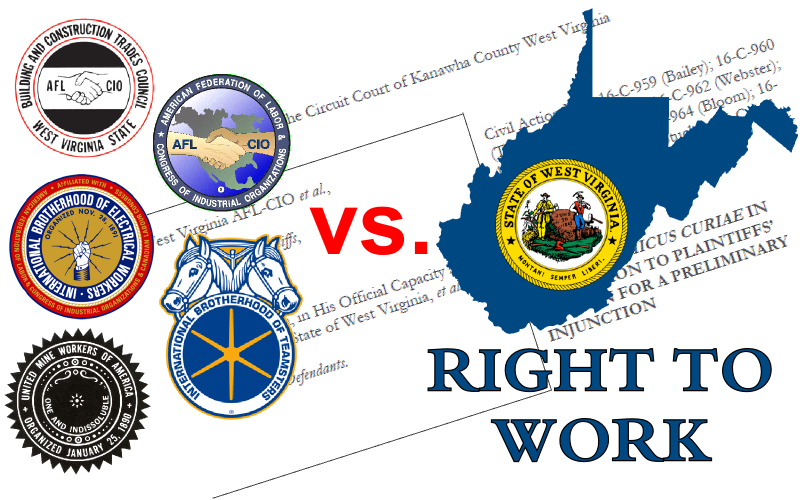
Forced-dues-hungry union bosses have been waging a legal battle to overturn West Virginia’s Right to Work Law since it was enacted in 2016. Foundation staff attorneys have been fighting back by filing amicus briefs in court.
CHARLESTON, WV – The West Virginia Supreme Court will hear arguments on January 15 in union bosses’ long-running case seeking to dismantle West Virginia’s Right to Work Law and restore their forced-dues powers over workers across the Mountain State. National Right to Work Foundation staff attorneys have already filed multiple legal briefs in this case for West Virginia workers in defense of West Virginia’s Right to Work Law.
After Passage, Union Bosses Immediately Target West Virginia Right to Work Law
Last year, union lawyers relied on discredited legal arguments to convince Kanawha County Circuit Court Judge Jennifer Bailey to declare West Virginia’s entire Right to Work Law invalid. Union lawyers dubiously claim that West Virginia union bosses have a “right” to forced dues. Judge Bailey issued a similar ruling blocking the Right to Work law after the legislation was signed into law in 2016. The West Virginia Supreme Court overturned that decision, citing arguments made in briefs by Foundation staff attorneys. “Of course, union partisans never willingly accept the loss of forced dues,” said National Right to Work Foundation President Mark Mix. “So now the issue is back at the state’s highest court.” If Big Labor’s lawsuit to overturn
West Virginia’s Right to Work Law succeeds, union bosses could have thousands of independent-minded workers across the state fired solely for refusing to subsidize union activities.
Foundation Files 10 Briefs to Protect Rights of West Virginia Workers
Foundation staff attorneys have filed 10 legal briefs in the multi-year case. The Foundation’s latest amicus brief was filed for West Virginia nursing home employee Donna Harper. Harper, like many other workers in West Virginia, chose not to pay dues or fees to union bosses, which is her legal right in a Right to Work state.
“Union bosses in West Virginia are intent on reclaiming their forced-dues power,” Mix said. “Big Labor is waging this protracted legal battle to return the Mountain State to a time when millions and millions of dollars in workers’ money were seized by union bosses to fill Big Labor’s coffers with forced dues.”
This case is the latest legal battle in the Foundation’s long history of effectively defending Right to Work laws in state and federal court from spurious attacks by Big Labor. Although federal law specifically authorizes states to pass Right to Work laws to protect workers from union boss coercion, union lawyers have repeatedly challenged these laws in an attempt to keep siphoning union dues and fees from workers’ paychecks.
Foundation Has Successfully Defended State Right to Work Laws Nationwide
In addition to West Virginia, Foundation staff attorneys have successfully pursued legal action in recent years to defend and enforce new Right to Work laws in Indiana, Michigan, Wisconsin and Kentucky, all of which have passed Right to Work protections for employees in just the last seven years. In Michigan alone, Foundation staff attorneys have assisted employees in over 100 cases since Right to Work went into effect in early 2013.
SAG-AFTRA Union Officials Slammed with Federal Labor Charges After Threatening Unlawful Union ‘Discipline’ against 12-Year-Old Girl
Union officials violate girl’s legal rights by initiating proceedings against her for filming a nonunion commercial, even though she was not a union member
Los Angeles, CA (January 28, 2020) – With free legal aid from National Right to Work Legal Defense Foundation staff attorneys, 12-year-old actress Aundrea Smith filed unfair labor practice charges against the Screen Actors Guild – American Federation of Television and Radio Artists (SAG-AFTRA) union for violating her legal rights under federal labor law.
Smith filed charges with the National Labor Relations Board (NLRB) after union officials initiated internal union proceedings and threatened to impose union “discipline” – likely a fine – on Smith for filming a nonunion commercial, even though she was not a union member at the time. The National Labor Relations Act (NLRA) prohibits union officials from imposing union “discipline” on nonmembers.
Smith did join SAG-AFTRA in April 2019, one month after filming the commercial, but subsequently resigned her union membership upon learning of her rights under the NLRA in August 2019. The NLRA provides that an individual cannot be forced to join a union just to get or keep a job and guarantees individuals the absolute right to resign their union membership whenever they choose.
Earlier this month, Communication Workers of America (CWA) union officials were forced to settle a similar case with Florida worker Jared Brewer, who is employed by AT&T. Union officials refused to acknowledge Brewer’s union membership resignation while on military leave. Then union officials unlawfully attempted to impose union “discipline” on Brewer for returning to work during a work stoppage, even though he had already resigned as a union member.
“The NLRB must intervene to halt this blatant and unlawful abuse of power by SAG-AFTRA union officials against this young actress,” said National Right to Work Foundation President Mark Mix. “We’re proud to stand with Aundrea who is standing up for her rights against this shameful bullying by union bosses.”
AT&T Employee Wins Settlement from CWA Union after Facing Union Retaliation for Exercising Legal Rights
Union officials refused to allow worker to resign his union membership while on military leave and attempted to fine him in violation of federal labor law
Jacksonville, FL (January 24, 2020) – AT&T employee Jared Brewer has won a favorable settlement from Communication Workers of America (CWA) Local 3106 union with free legal aid from the National Right to Work Legal Defense Foundation after union officials violated his legal rights under federal law.
To end the case, union officials rescinded their threat to subject Brewer to internal union “discipline” and fine him for exercising his legal rights under the National Labor Relations Act (NLRA). They also were required to notify other workers of their legal rights by posting notices on the union’s bulletin boards at 22 AT&T Jacksonville facilities.
Brewer was on military leave when union officials called a strike in August 2019. He sent an email to them in which he resigned his union membership. Even though the NLRA guarantees employees the right to resign their union membership at any time, union officials refused to honor Brewer’s request. One union representative falsely claimed that his resignation letter was “untimely.”
After sending a certified letter containing the same resignation language, Brewer returned to work. Despite his resignation, union officials told Brewer in an October letter that they were bringing charges against him in an internal union “trial” for working during the union-initiated work stoppage. Brewer did not attend the November 7 “trial” because he had already resigned his union membership and, therefore, could not legally be subject to union disciplinary procedures.
Union officials notified Brewer on November 15 that the union found him guilty at its “trial” and imposed a monetary fine of more. They threatened him with legal action if he did not pay the fine within 21 days.
In response, Brewer filed an unfair labor practice charge with the National Labor Relations Board with free legal aid from Foundation staff attorneys. Brewer charged that union officials violated his legal rights under the NLRA by disciplining and fining him as a nonmember, and by denying his resignation. Union officials are prohibited from requiring formal union membership as a condition of employment by both Florida’s Right to Work law and the NLRA, and under the NLRA workers are free to resign their union membership at any time.
Brewer’s unfair labor practice charges drove union officials to settle. This requires union officials to honor Brewer’s resignation and rescind the fine and union “discipline” against him. Union officials also must post for 60 days in its union hall and numerous AT&T facilities a notice in which the union promises not to “restrain or coerce” workers from exercising their legal rights to resign and work during strikes.
“Faced with legal action from National Right to Work Foundation staff attorneys, CWA union officials backed down from their blatant violations of longstanding labor law and were forced to settle with Mr. Brewer,” said National Right to Work Foundation President Mark Mix. “Federal labor law is crystal clear: Workers have an absolute right to resign their union membership if they choose, and once a worker has exercised that right they cannot be subject to fines levied by any internal union boss kangaroo court.”
Cases Seeking Millions in Refunds of Forced Fees under Janus Move Forward
The following article is from the National Right to Work Legal Defense Foundation’s bi-monthly Foundation Action Newsletter, November/December 2020 edition. To view other editions or to sign up for a free subscription, click here.
Split Appeals Court decision bolsters petition for Supreme Court to take up issue
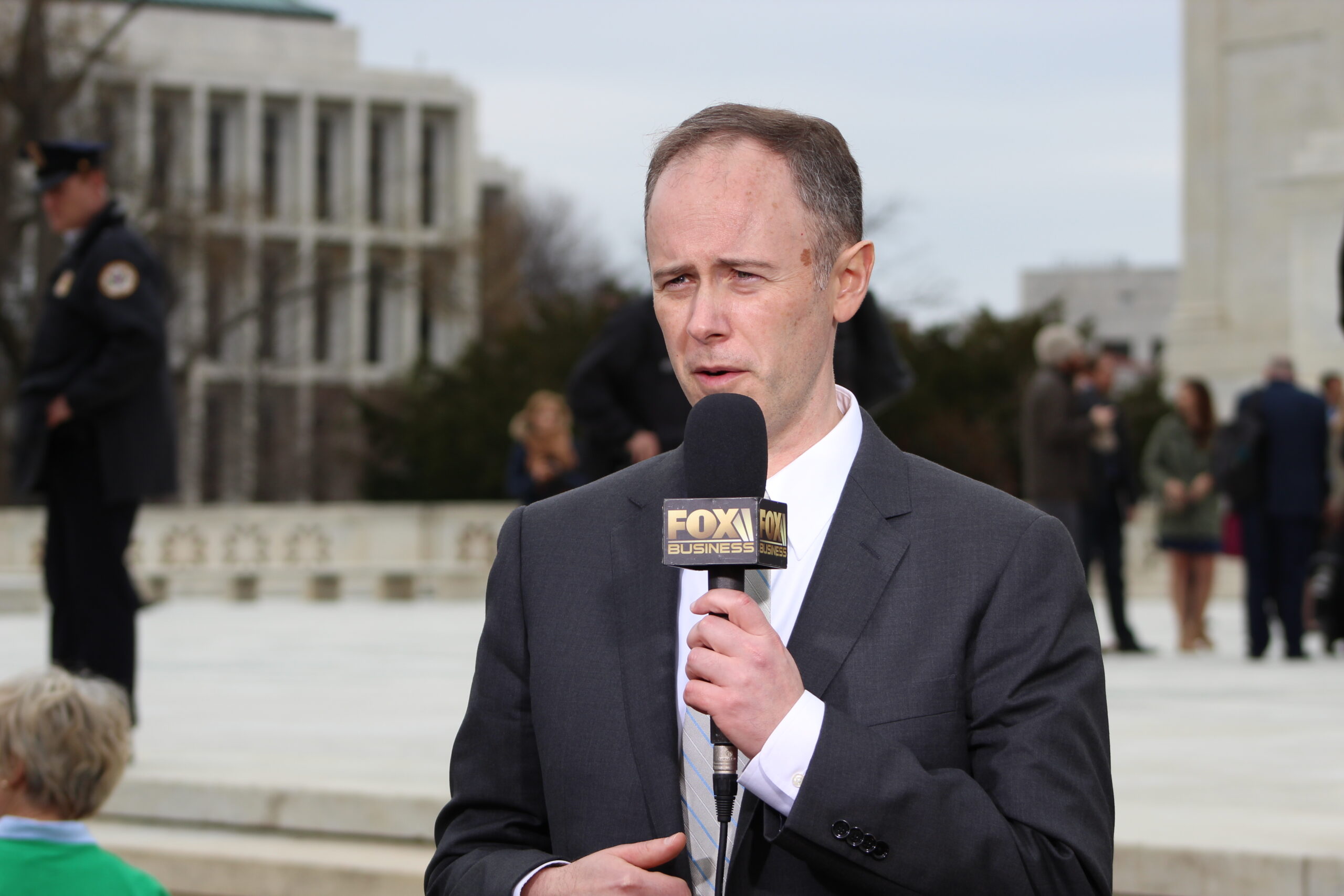
Veteran Foundation staff attorney William Messenger made history when he argued and won the Janus case before the High Court in 2018. He still represents Janus and others demanding forced-fee refunds.
PHILADELPHIA, PA – A National Right to Work Foundation-backed class-action lawsuit for Pennsylvania state employees seeking refunds of unconstitutionally seized union fees resulted in a split decision from the U.S. Third Circuit Court of Appeals in August. This ruling cast serious doubt on a favorite union boss argument used to avoid refunding dues seized in violation of workers’ First Amendment rights.
The employees were defending their rights under the landmark 2018 Foundation-won Janus v. AFSCME Supreme Court ruling. In Janus, the Court sided with former Illinois child support specialist Mark Janus and agreed with Foundation staff attorneys that requiring any public sector worker to pay union dues or fees as a condition of employment is a First Amendment violation. The Court also ruled that union dues can only be taken from public servants with their affirmative and knowing consent.
The plaintiffs in Wenzig v. Service Employees International Union (SEIU) Local 668 are seeking a ruling that SEIU officials must refund dues taken from employee paychecks in contravention of this standard before the Janus ruling came down. Union bosses used, as they have done in almost all similar cases, a dubious “good faith” argument to justify not refunding the dues to the victimized workers. In the split decision, two of the three judges rejected the so-called “good faith” theory.
Supreme Court Asked to End Lower Court Confusion on Janus Refunds
Foundation staff attorneys cited the growing confusion among federal judges on forced-union-fee refunds as a vital reason the Supreme Court should hear the continuation of Janus v. AFSCME. In a supplemental brief, Foundation attorneys wrote that Wenzig “supports granting review here because a majority of the Third Circuit panel rejected the good faith defense recognized by the Seventh Circuit here and by the Second, Sixth, and Ninth Circuits.”
“The Court should finally resolve this important issue and hold there is no good faith defense to Section 1983,” the brief adds. Section 1983 is the federal law requiring that those who deprive people of their constitutional rights “under color of any statute . . . shall be liable to the party injured.”
This September, Foundation staff attorneys also filed the final reply brief supporting the Supreme Court petition in Casanova v. International Association of Machinists (IAM), Local 701, another case seeking review from the High Court. It also cites the Third Circuit’s split decision. Plaintiff Benito Casanova, a Chicago Transit Authority employee, seeks to get back money that IAM bosses took from his paycheck and the paychecks of his colleagues in violation of their First Amendment rights prior to the Janus decision.
Foundation Leading Worker Efforts to Reclaim Fees Seized Against Janus
The workers in these cases and many others are collectively fighting for millions of dollars in pilfered money to be returned to them. Foundation attorneys currently represent these public servants in nearly 20 similar cases, together pursuing about $130 million in refunds to workers.
“Given the clarity of the Janus First Amendment standard, it’s bewildering that federal judges have not yet widely discredited union boss arguments that serve only to deny public sector workers refunds of money that the High Court itself ruled should have never been taken from them in the first place,” observed National Right to Work Foundation President Mark Mix. “The High Court must swiftly disabuse lower courts of their misunderstandings and provide justice to workers who have been waiting years for their hard-earned money to be returned.”





