
Michigan Security Guard Slams Union with Federal Charges for Illegal Dues Seizures, Transparency Issues
Union officials fail to provide required information on how dues money is spent, already face vote which could stop forced-dues spigot
Grand Rapids, MI (May 8, 2024) – James Reamsma, a security guard whose posts include the Gerald R. Ford Federal Building and other government sites in the Grand Rapids area, has hit the United Government Security Officers of America (UGSOA) union with federal unfair labor practice charges maintaining that UGSOA union officials are seizing dues money from his paycheck without providing required disclosures on how the union spends worker cash. Reamsma filed the charges at Region 7 of the National Labor Relations Board (NLRB) in Detroit.
Reamsma is also leading his fellow security guards at Triple Canopy Inc. in an effort to vote away the UGSOA’s power to compel guards to pay dues or fees to the union in what is known as a “deauthorization election.” He is receiving free legal aid in both actions from the National Right to Work Legal Defense Foundation.
Reamsma’s charges seek to enforce his rights under the Communications Workers of America v. Beck Supreme Court decision, which was won by Right to Work Foundation attorneys. The Court held in Beck that union officials cannot force workers who have abstained from union membership to pay union dues or fees for expenses not directly germane to contract negotiations, such as union political activities. Workers who exercise their Beck rights are also entitled to an independent audit of the union’s finances, a breakdown of how union officials spend forced contributions, and an opportunity to challenge how the union calculates its reduced “Beck fee.”
Beck rights are only relevant in non-Right to Work jurisdictions like Michigan, where union officials have the legal privilege to force private sector workers to pay dues or fees as a condition of getting or keeping a job. In contrast, in Right to Work states like neighboring Indiana and Wisconsin, union membership and all union financial support are strictly voluntary. Michigan had Right to Work protections until a 2023 repeal rammed through by union partisans on the Michigan Legislature became effective earlier this year.
Union Dubiously Claims No Dues Money Goes to Politics
According to Reamsma’s charge, he submitted a notice to UGSOA union agents in March that requested the union reduce his dues payments in accordance with Beck and provide him with the required financial information. In response, union officials claimed that the amount of dues chargeable to nonmembers was equal to 100% of full union dues. Reamsma’s charge states that UGSOA “failed to provide the required financial disclosures for itself and its affiliated unions, and a chance to object to its alleged reduced fee.”
The charge also notes that, despite Reamsma notifying union officials in April that he prefers to pay union dues by check, UGSOA ignored this request and has continued to take money directly from his paycheck by payroll deduction. Federal labor law forbids union officials from using direct deduction to collect union dues or fees without worker consent.
Foundation attorneys argue in the charge that the union’s continued seizing of dues money from Reamsma’s paycheck “restrain[s] and coerce[s] Charging Party in the exercise of his Section 7 rights” under the National Labor Relations Act (NLRA). The NLRA protects the right of workers to refrain from union activities.
Guards May Vote to End Forced Dues
The NLRB has scheduled May 17 to count the votes in Reamsma’s deauthorization election, which is currently taking place by mail. If a majority of his colleagues vote to deauthorize the union, it will no longer have the legal power to coerce Reamsma and his colleagues to pay dues or fees as a condition of employment. Michigan’s non-Right to Work environment forces workers to either deauthorize a union or vote it out of a workplace completely (via a similar process known as “decertification”) if they want to end union officials’ forced-dues power.
“UGSOA union officials appear to be withholding vital information about how they spend worker money from the very security guards they claim to ‘represent,’” commented National Right to Work Foundation President Mark Mix. “If union bosses won’t respect basic worker rights regarding the collection and spending of dues money, Triple Canopy security guards should rightly be skeptical of whether UGSOA deserves the privilege to force them to pay dues or fees at all.
“While it’s illegal everywhere to force workers to pay for union political expenditures they oppose, the choice to financially back a union at all should rest solely with each individual worker, which is why Right to Work protections are so important,” Mix added.
IUOE Union Bosses Hit With Federal Charge for Illegal Termination
The following article is from the National Right to Work Legal Defense Foundation’s bi-monthly Foundation Action Newsletter, January/February 2024 edition. To view other editions of Foundation Action or to sign up for a free subscription, click here.
Longstanding law protects against mandatory dues deductions, formal union membership

Firestop inspector Alexandra Le isn’t going to let IUOE union bosses snuff out her livelihood over her refusal to join or support the union. She’s filed federal charges with Foundation aid.
PLEASANTON, CA – Sometimes, even the extraordinary power to demand payments from workers under threat of termination isn’t enough for union bosses, who frequently go beyond what is legal to coerce workers into membership and dues payment.
Alexandra Le, an employee of Construction Testing Services (CTS), found herself on the receiving end of such illegal demands from International Union of Operating Engineers (IUOE) officials in October. But Le is now fighting back, hitting IUOE bosses and her employer with federal charges at National Labor Relations Board (NLRB) Region 32 with free legal aid from the National Right to Work Foundation.
Union Misinformed Worker About Rights
Le’s charges state that IUOE bosses got her fired after she rebuffed their demands to formally join the union. Additionally, Le’s charges maintain that union officials unlawfully deducted union dues from her paycheck without her permission and failed to inform her of her right to pay reduced union dues as a non-member — a right secured by the Foundation-won CWA v. Beck Supreme Court victory.
Because California lacks Right to Work protections for its private sector workers, Le and her coworkers can be forced to pay some fees to the union to keep their jobs, even if they’ve abstained from formal union membership. However, as per Beck, in non-Right to Work states, union officials can’t force nonmember employees to pay for union expenses (such as union politics) that go beyond what the union claims goes to bargaining.
Other Supreme Court precedents require union bosses to seek workers’ express consent before deducting dues directly from their paychecks.
In Right to Work states, all union financial support is voluntary and the choice of each individual worker.
Employee Demands Federal Injunction to Reverse Illegal Union-Ordered Firing
“It’s outrageous that IUOE union officials believe they can get me fired simply because I don’t agree with their organization and don’t want to support or affiliate with them,” Le said. “IUOE union officials have been far more concerned with consolidating power in the workplace and collecting dues than caring about me and my coworkers, and I hope the NLRB will hold them responsible for their illegal actions.”
Le’s charge against the IUOE union states that, after she refused to affiliate with the union, IUOE bosses “caused Charging Party to be removed from the work schedule by her Employer as of October 2nd.” The NLRB v. General Motors Corp. U.S. Supreme Court decision protects the right of workers to refuse formal union membership, even in a non-Right to Work state.
As a remedy, the charge asks the NLRB Regional Director in Oakland to “invoke its authority under Section 10(j)” of the National Labor Relations Act (NLRA), which empowers the Board to seek an injunction from a federal court to stop IUOE and CTS management from committing the unfair labor practices.
Workers Need More Protections Against Union Boss Coercion
“Ms. Le’s case shows why Right to Work protections are important,” commented National Right to Work Foundation Vice President and Legal Director William Messenger.
“Even if IUOE union officials had followed federal labor law in this case, Ms. Le would still be forced to contribute to the activities of an organization she clearly doesn’t want to be part of.
“As Ms. Le’s case demonstrates, union bosses often value workers merely as sources of dues revenue and will go to extraordinary lengths to keep the money flowing,” Messenger added. “Workers deserve more protections against union boss coercion, not fewer.”
Another MIT Grad Student Hits GSU Union with Federal Labor Charges for Illegally Seizing Money for Radical Union Agenda
Charges: Union officials imposing so-called ‘window period’ restriction to forbid civil engineering grad student from cutting off dues for politics
Boston, MA (April 26, 2024) – Following five Jewish students filing federal religious discrimination charges against the union, the MIT Graduate Student Union (GSU-UE) is now facing new federal unfair labor practice charges from civil engineering graduate student Katerina Boukin. Boukin’s charges, filed at the National Labor Relations Board (NLRB) with free legal aid from the National Right to Work Legal Defense Foundation, maintain that union officials are unlawfully seizing money from her research compensation to support union political activities she abhors.
Boukin seeks to enforce her rights under the 1988 Right to Work Foundation-won CWA v. Beck Supreme Court decision. The Court held in Beck that union officials cannot force those under their control to pay dues or fees for union expenses not directly related to collective bargaining, such as political expenses. Nonmembers who exercise their Beck rights are entitled to an independent audit of the union’s finances and a breakdown of how union officials spend forced contributions.
Beck rights are only relevant in non-Right to Work jurisdictions like Massachusetts, where union officials have the legal power to compel the payment of some union fees in a unionized environment. Because of controversial rulings by the Obama and Biden NLRBs, graduate students at private educational institutions like MIT are treated as “employees” who can be subjected to forced union representation and mandatory payments. In jurisdictions that have Right to Work protections, in contrast, union membership and all union financial support are strictly voluntary.
“GSU union officials are going above and beyond what is legal and are forcing me to pay for their political activities, including their opposition to Israel and promotion of Leninist-Marxist global revolution, that I find deeply offensive,” commented Boukin. “The GSU’s political agenda has nothing to do with my research as a graduate student at MIT, or the relationships I have with my professors and the university administration, yet outrageously they demand I fund their radical ideology.”
Union Still Seizing Dues for Politics Under Guise of ‘Window Period’ Restriction
According to Boukin’s charges, she and other graduate students resigned their memberships in the GSU union, revoked their dues “checkoff” authorizations, and objected under Beck to paying anything going toward GSU’s “political and non-representational agenda and expenditures.”
Despite these requests, the charges note, union bosses have “refused to process those Beck objections, refused to immediately reduce the amount of dues and fees collected from Charging Party’s and other graduate students’ [compensation], refused to stop the dues checkoff, and refused to provide Charging Party” with an independent audit explaining the union’s expenses and reduced fee calculation.
Instead, a GSU vice president told Boukin that she had missed an annual “window period” in which to exercise her Beck rights and that her objections would not be considered until November 2024. “In fact, the UE union has adopted an unlawfully restrictive Beck objection policy, precisely to diminish and destroy [the students’]…rights,” says the charge.
The charges note that the union’s unlawful dues scheme restrains and coerces the graduate students from exercising their right under the National Labor Relations Act (NLRA) to refrain from union activity. MIT is also charged for its role in enforcing the union scheme and continuing to collect dues.
Previously, another MIT graduate student, Will Sussman, filed NLRB charges against the UE union for violating his rights under Beck. Sussman filed the charges on his own but later obtained free legal representation from the National Right to Work Foundation.
GSU Also Faces Religious Discrimination Charges, May Be Violating Past Beck-Related Settlement
Sussman’s case concluded because UE settled with the NLRB. As part of that settlement, GSU union officials are required to “notify [all graduate students] of your rights under…Communications Workers v. Beck” and email notices informing students of those rights and post a notice for 60 days. Despite still being within the 60-day notice-posting period, as Boukin’s case shows, GSU officials appear to be violating the spirit if not the letter of that settlement.
Boukin’s unfair labor practice charges come as federal discrimination charges are pending at the Equal Employment Opportunity Commission (EEOC) for five Jewish graduate students who requested religious accommodations to paying money to the GSU union. Among other things, these students oppose the union’s advocacy for the anti-Israel “Boycott, Divestment, and Sanctions” (BDS) movement.
“Freedom of association is apparently a foreign concept to GSU union officials, who are flouting layers upon layers of federal law to compel students to fund their radical political agenda,” commented National Right to Work Foundation President Mark Mix. “However, both this case and Foundation attorneys’ case for the five Jewish MIT graduate students show on a deeper level that the choice to provide support to a union should rest solely with workers, who may have sincere religious, political, or other objections to funding any or all of a union’s activities.”
Federal Charge: East Bay-Area Construction Materials Worker Illegally Fired for Refusing to Join Union
NLRB investigating IUOE union bosses for retaliatory termination and seizing dues from employee’s paycheck in violation of longstanding law
Pleasanton, CA (October 17, 2023) – Alexandra Le, an employee of Pleasanton-based materials testing company Construction Testing Services (CTS), has hit International Union of Operating Engineers (IUOE) officials and CTS with federal charges. The charges state IUOE bosses illegally demanded she join the union as a condition of keeping her job and instigated her firing by CTS when she refused to join. Additionally, Le’s charges maintain that company and union officials violated the law by deducting union dues directly from her paycheck without her permission.
Le, a firestop inspector, filed the charges at National Labor Relations Board (NLRB) Region 32 in Oakland, CA, with free legal aid from the National Right to Work Legal Defense Foundation. She notes in her charges that IUOE officials not only failed to inform her of her right to abstain from union membership, but also never notified her of her right to pay a reduced amount of union dues as a nonmember.
Because California lacks Right to Work protections for its private sector workers, Le and her coworkers can be forced to pay some dues to the union as a condition of keeping their jobs, even if they’ve abstained from formal union membership. However, as per the Foundation-won CWA v. Beck Supreme Court decision, even in non-Right to Work states union officials can’t force nonmember employees to pay for union expenses beyond what the union claims goes to bargaining, such as union politics. Other Supreme Court precedents and federal labor laws protect workers’ right to refrain from formal union membership and require union bosses to seek workers’ express consent before deducting dues directly from their paychecks.
In Right to Work states, union membership and all union financial support are fully voluntary.
“It’s outrageous that IUOE union officials believe they can get me fired simply because I don’t agree with their organization and don’t want to support or affiliate with them,” Le said. “IUOE union officials have been far more concerned with consolidating power in the workplace and collecting dues than caring about me and my coworkers, and I hope the NLRB will hold them responsible for their illegal actions.”
Worker Demands NLRB Step in to Reverse Union-Instigated Firing, Illegal Demands
Le’s charge against the IUOE union states that, after she refused to affiliate with the union, IUOE bosses “caused Charging Party to be removed from the work schedule by her Employer as of October 2nd.” The NLRB v. General Motors Corp. U.S. Supreme Court decision protects the right of workers to refuse formal union membership, even in a non-Right to Work state.
As a remedy, the charge asks the NLRB Regional Director in Oakland to “invoke its authority under Section 10(j)” of the National Labor Relations Act (NLRA), which empowers the Board to seek an injunction from a federal court to stop IUOE and CTS management from committing the unfair labor practices.
“Le’s charges show that IUOE union officials, in their apparent greed for forced dues, have ignored numerous longstanding legal protections for workers opposed to union affiliation,” commented National Right to Work Foundation President Mark Mix. “While the union’s anti-worker actions would be wildly unlawful in any state in the country, they reveal the importance of state Right to Work protections: No worker should be forced to give any amount of their hard-earned paycheck to union officials who threaten and misinform the employees they claim to ‘represent,’ or simply haven’t earned workers’ support.”
IAM Union ‘Becks’ Down in Boeing Technician’s Case Over Unlawful Dues Deductions
The following article is from the National Right to Work Legal Defense Foundation’s bi-monthly Foundation Action Newsletter, September/October 2022 edition. To view other editions of Foundation Action or to sign up for a free subscription, click here.
IAM bosses charged arbitrary higher amount in violation of Foundation-won Beck precedent

IAM union bosses’ illegal fee scheme faced headwinds when Boeing technician Don Zueger defended his rights with Foundation legal aid – and won.
SEATTLE, WA – Boeing technician Don Zueger didn’t want to sacrifice a cent from his paycheck to subsidize the activities of International Association of Machinists (IAM) union bosses who currently maintain monopoly bargaining power in his workplace. But, because he works in non-Right to Work Washington State, he can be forced to pay some union fees just to keep his job.
When Zueger found out union officials were calculating his forced fees amount based on financial data from nine other IAM affiliates – not just data from his own district union – he knew something was amiss.
Zueger sought free legal representation from the National Right to Work Legal Defense Foundation and filed a federal lawsuit against the IAM union for violating his rights under the 1988 Foundation-won CWA v. Beck U.S. Supreme Court decision. In Beck, the Court ruled that union officials cannot charge full union dues to objecting private sector workers who have abstained from formal union membership, and can only charge them “fees” which exclude expenses for things like union political activities.
IAM Bosses Use Baseless ‘Formula’ to Seize Excessive Forced Union Fees
Zueger’s lawsuit pointed out that IAM officials’ puzzling scheme imposed a dues amount on him that exceeds the limit that Beck established. Now he has won a settlement that requires union officials to decrease his dues payments and return money illegally taken from his wages.
Washington State’s lack of Right to Work protections mean that union officials can legally demand Zueger pay the reduced Beck amount as a condition of staying employed. In Right to Work states, in contrast, union membership and all union financial support are strictly voluntary.
According to Zueger’s lawsuit, filed in the U.S. District Court for the Western District of Washington, he submitted a request to IAM union officials in February resigning his union membership and asking for his dues payments to be reduced as Beck requires.
Zueger’s lawsuit noted that IAM officials’ response to his Beck request claimed that, under IAM’s nationwide policy, the portion of union dues he must pay is based on averages of selected audits that in each case include nine other district IAM affiliates and nine other locals. Unsurprisingly, this policy resulted in IAM officials claiming Zueger is required to pay a greater sum than what would be required if union officials only used the audits for the district and local unions Zueger is forced to fund.
His lawsuit sought to force IAM union bosses to return all money demanded in violation of Beck and to properly reduce his future union payments in accordance with Beck.
Rather than attempt to defend their scheme to increase Zueger’s forced fee amount, IAM union chiefs quickly backed down and settled the case.
IAM union officials have now, as the settlement mandates, returned to Zueger the difference between the proper Beck dues amount and the illegal amount the union imposed on him. IAM bosses are also forbidden from demanding any money above the correctly calculated reduced Beck portion in the future, making the settlement a full vindication of Zueger’s Beck rights.
IAM Must Return Dues That Could Have Gone to Union Boss Political Agenda
Zueger’s settlement comes after union bosses spent near-record sums on politics during the 2020 election cycle, and as Foundation attorneys deal with a flurry of worker requests concerning illegal forced dues for politics. According to a report by the National Institute for Labor Relations Research (NILRR) released in 2021, public data on union expenses shows about $2 billion in political spending during the 2020 election cycle. Other estimates suggest the actual union spending on political and lobbying activities topped $12 billion during this cycle.
“It’s shameful that union officials continue to invent new ways to violate the decades-old Beck Supreme Court precedent and overcharge workers who clearly want nothing to do with union bosses and their agenda – a big concern as union politicking heats up in advance of midterm elections,” commented National Right to Work Foundation Vice President Patrick Semmens. “This scheme to artificially manipulate forced dues calculations is part of the IAM’s nationwide policy, and the Foundation stands ready to assist other workers around the country who are being subjected to this anti-Beck IAM scheme.”
Forced Dues For Politics: CWA Union Hit with Federal Charge by Pennsylvania Metal Worker
The following article is from the National Right to Work Legal Defense Foundation’s bi-monthly Foundation Action Newsletter, July/August 2022 edition. To view other editions of Foundation Action or to sign up for a free subscription, click here.
CWA officials defied decades of law by rejecting worker’s resignation
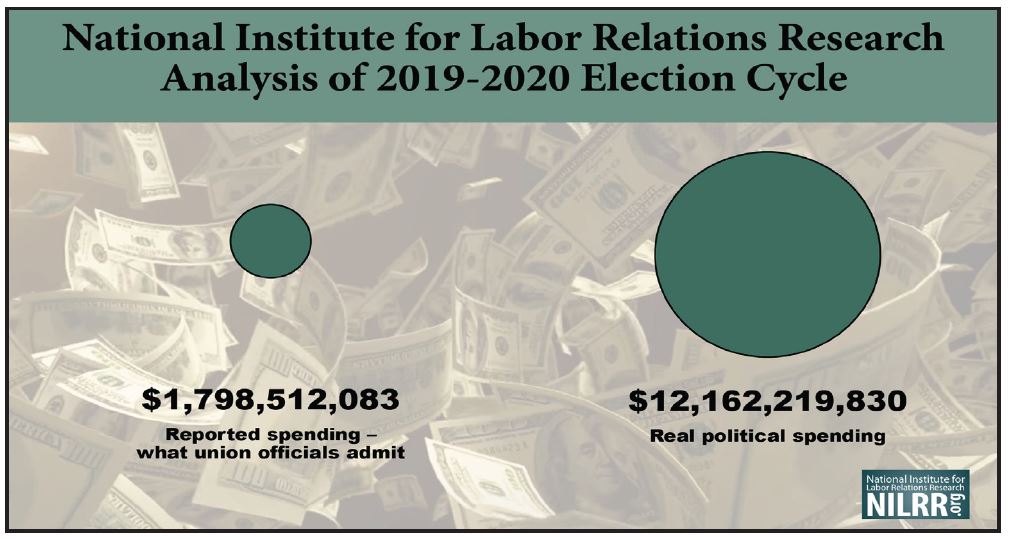
Coates’ case challenging illegal seizure of forced dues for politics comes after one analysis found that union officials likely spent over $12 billion on political activities during the 2019-2020 election cycle, far more than union officials publicly admit.
GALETON, PA – An employee of metal corporation Catalus hit a Communications Workers of America (CWA) union local this May with federal charges for illegally seizing full union dues from his paycheck, including dues for politics. Curtis Coates, a metal worker for Catalus, is receiving free legal aid from the National Right to Work Legal Defense Foundation.
Foundation attorneys filed Mr. Coates’ charges with National Labor Relations Board (NLRB) Region 6 in Pittsburgh, Pennsylvania. The Region is now investigating the charges.
CWA Union Officials Continue to Collect Dues from Worker, Despite Lack of Authorization
On October 20, 2021, Mr. Coates sent a message to CWA union officials declaring that he was resigning from his position as shop steward and terminating his union membership.
Because no union monopoly contract was in effect, under longstanding law, Coates should have been able to immediately cut all financial support for the CWA union which he no longer supports. The charges say a union official rebuffed both of Mr. Coates’ requests the next day, insisting that he had to remain both a union member and a shop steward.
From December 2021 to February 2022, Mr. Coates followed up with union officials several times via email and mail. He repeatedly asked when union officials would cease taking dues money from his paychecks and what process he had to follow to revoke his dues deduction authorization to stop money from being seized from his paychecks.
“To date, the Union has not responded . . . and dues and contributions continue to be deducted from his wages,” the charge reads. Because Pennsylvania currently lacks a Right to Work law, union officials can legally force employees to pay some union fees just to keep their jobs. However, those forced fees cannot be demanded when no union contract is in effect.
Further, even in states without Right to Work protections full union membership cannot be required. Additionally, under the U.S. Supreme Court’s decision in CWA v. Beck (1988), won by Foundation attorneys, forced fees are limited to only the part of union dues that union officials claim goes toward a union’s core “representational” functions and cannot be collected for other activities like union politics and lobbying.
Conflict of Interest: NLRB General Counsel is a Former CWA Union Official
Currently, the NLRB General Counsel is former CWA attorney Jennifer Abruzzo, who has expressed support for a number of policies which give union officials greater power to force workers into dues-paying union ranks, even without a vote. Foundation attorneys requested last year that Abruzzo recuse herself from a case involving an Oregon ABC cameraman who accused another CWA local of demanding illegal dues from him, including dues for politics.
Coates’ case represents another potential conflict of interest for Abruzzo, who has repeatedly sided with union officials against the rights of workers opposed to union affiliation.
“Mr. Coates’ right to refrain from funding union activities is being ignored by CWA union officials as they continue to unlawfully seize full union dues, which includes money used for union political activities,” commented National Right to Work Foundation Vice President Patrick Semmens. “This case shows why Pennsylvania workers need the protection of a Right to Work law to make all union payments strictly voluntary: So union bosses cannot so brazenly collect money to which they are not entitled under longstanding federal law.”
“Further, Mr. Coates’ case demonstrates the obvious conflict of interest that exists as Abruzzo, a former CWA lawyer, is charged with enforcing workers’ rights violated by her former CWA union colleagues,” Semmens added.
General Motors Worker Forces UAW Bosses to Stop Seizing Dues for Politics
Illegal seizures came after multi-billion-dollar Big Labor political spending
A massive UAW embezzlement scandal didn’t stop UAW officials from ignoring at least two attempts by Roger Clemons to exercise his right to stop subsidizing union political activity.
ROCHESTER, NY – Even after a sweeping federal corruption probe that has resulted in jail sentences for at least 12 union executives, it seems some United Auto Workers (UAW) officials haven’t learned their lesson regarding misuse of worker funds.
Rochester General Motors employee Roger Clemons this January won a settlement forcing UAW officials at his plant to stop illegally funneling money from his paycheck into union politics. Clemons filed federal charges in September 2021 against UAW Local 1097 and the UAW’s international branch, after union agents ignored his requests to opt-out of funding the union’s political agenda. He received free legal representation from National Right to Work Foundation staff attorneys.
A Foundation-won settlement required UAW international and local officials to give back to Clemons all money that was deducted from his paycheck in violation of the Foundation-won CWA v. Beck Supreme Court decision. Beck forbids union officials from forcing workers under their control to fund union politics.
Because New York State lacks Right to Work protections for its private sector workers, union officials can legally force workers to pay a reduced amount of union dues under threat of termination. In Right to Work states, union membership and all union financial support are strictly voluntary.
UAW Chiefs Repeatedly Violated Worker’s Beck Rights
Clemons stated in his September 2021 charge against UAW Local 1097 officials that UAW officials had a history of flouting his Beck rights, failing to reduce his union dues even after he ended his union membership and became a “Beck objector” in October 2019. “Only after Mr. Clemons filed an [earlier] unfair labor practice charge . . . did the union comply with the requirements of the law,” the charge noted, detailing that union officials finally sent him rebate checks in June and July 2020 for excess dues they took from his paycheck.
However, UAW officials continued to create obstacles for Mr. Clemons’ Beck rights. The September 2021 charge asserted that despite Clemons renewing his Beck objection in October 2020, he then did not receive “a single rebate check or a reduction in the dues deducted from his wages” for almost a year.
Clemons also charged General Motors for its role in enforcing the illegal dues deductions.
The settlement now forbids UAW officials from “accept[ing] dues or fees which have been deducted from the paycheck of Roger Clemons, or any other Beck objector, which are in excess of the amount we can lawfully charge to Beck objectors.” UAW officials also have returned dues that they seized from Clemons above the reduced Beck amount.
Union officials devote enormous sums to political activity. A report the National Institute for Labor Relations Research (NILRR) released in 2021 revealed that union officials’ own Department of Labor filings show over $2 billion in political spending during the 2020 election cycle, primarily from dues-stocked union general treasuries. Another study found that actual union spending on political and lobbying activities likely topped $12 billion during the 2020 cycle.
Union Bosses Likely to Splash Cash on 2022 Midterm Elections and Beyond
“Rank-and-file workers should know they have a right to refuse to fund union politics, especially with union political spending in 2020 having approached record numbers and midterm elections coming up,” commented National Right to Work Foundation Vice President and Legal Director Raymond LaJeunesse. “Workers under UAW control, like Mr. Clemons, have special reason to be on guard, given the UAW’s perennial interest in politics, and because several UAW officials now find themselves behind bars for embezzlement and corruption.”
Full Foundation Action May/June 2022 Newsletter Now Online
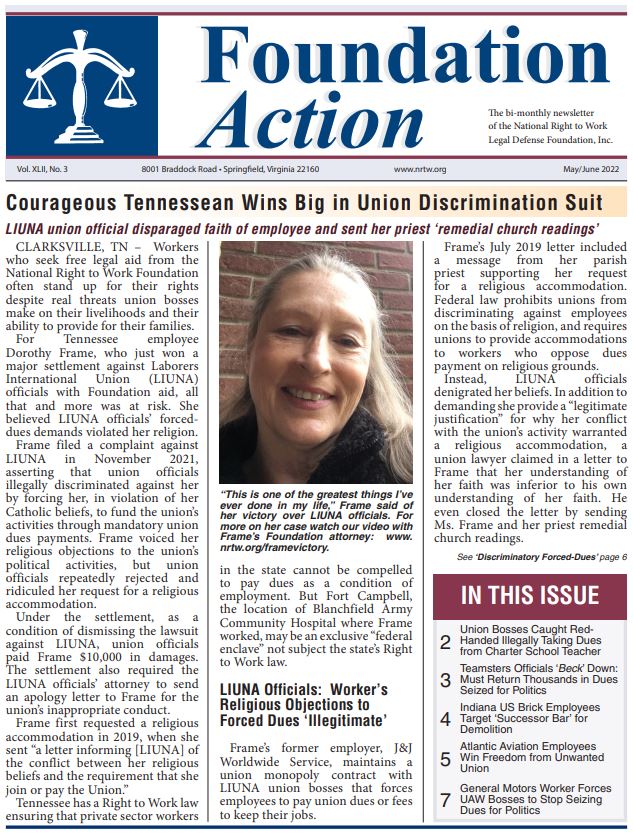
All articles from the May/June issue of Foundation Action are available on the website.
In this issue:
- Courageous Tennessean Wins Big in Union Discrimination Suit
- Union Bosses Caught Red-Handed Illegally Taking Dues from Charter School Teacher
- Teamsters Officials ‘Beck’ Down: Must Return Thousands in Dues Seized for Politics
- Indiana US Brick Employees Target ‘Successor Bar’ for Demolition
- Atlantic Aviation Employees Win Freedom from Unwanted Union
- General Motors Worker Forces UAW Bosses to Stop Seizing Dues for Politics
Recent articles can be found here. To sign up for a free copy of the newsletter via mail please see the form at the bottom of this page.
Boeing Technician Files Federal Lawsuit Against Machinists Union Over Illegal Forced Dues Demands
Instead of reducing nonmember worker’s payments in accordance with Supreme Court precedent, union bosses charged him arbitrary higher amount
Seattle, WA (May 24, 2022) – With free legal aid from the National Right to Work Legal Defense Foundation, Seattle Boeing technician Don Zueger is suing International Association of Machinists (IAM) union officials in federal court for violating his right to refrain from paying for unwanted union activities.
Zueger, who is not a member of the IAM union, is defending his right under the Foundation-won 1988 CWA v. Beck U.S. Supreme Court decision, in which the Court ruled that union officials cannot charge full union dues to objecting private sector workers who have abstained from formal union membership. Under Beck, union officials can only charge union nonmembers “fees” which exclude expenses for things like union political activities.
Because Washington State lacks Right to Work protections for its private sector workers, nonmembers like Zueger can be forced to pay the reduced amount under Beck as a condition of keeping their jobs. In Right to Work states, in contrast, union membership and all union financial support are strictly voluntary.
IAM Officials Continue to Overcharge Worker in Violation of His Rights
According to Zueger’s lawsuit, filed in the U.S. District Court for the Western District of Washington, he submitted a request to IAM union officials in February resigning his union membership and asking for his dues payments to be reduced under Beck.
Zueger’s lawsuit reports that IAM officials’ response to his Beck request claimed that, under IAM’s nationwide policy, the portion of union dues he is required to pay is based on averages of selected audits that in each case include nine other local and district IAM affiliates. This means the forced union fee amount is not calculated using the actual amounts determined in the audits of the local and district IAM affiliates that Zueger is required to fund as a condition of employment. Unsurprisingly, this resulted in Zueger’s dues reduction being significantly less than it would have been had union officials only used the audits for the district and local affiliates Zueger is forced to fund.
According to his lawsuit, union officials are still demanding from Zueger dues in excess of the amount Beck permits. The lawsuit seeks to force IAM union bosses to return all money demanded in violation of Beck and to properly reduce his future union payments in accordance with Beck.
Workers Should Be Wary of Illegal Union Dues Schemes as Union Political Activity Increases
Zueger’s lawsuit comes after union bosses spent near-record sums on politics during the 2020 election cycle. A report by the National Institute for Labor Relations Research (NILRR) released in 2021 revealed that union officials’ own Department of Labor filings show about $2 billion in political spending during the 2020 cycle, primarily from dues-stocked union general treasuries. Moreover, other estimates strongly suggest that actual union spending on political and lobbying activities actually topped $12 billion in 2019-2020.
“It doesn’t take a rocket scientist to figure out when union officials are trying to strong-arm employees into subsidizing union activities, including politics, against their will. IAM officials’ nonmember dues scheme doesn’t pass the smell test,” commented National Right to Work Foundation President Mark Mix. “While we’re proud to help Mr. Zueger defend his Beck rights, ultimately no American worker should be forced to pay fees determined by the whims of union officials simply in order to keep their jobs.”
“This case shows why Right to Work laws are needed nationwide to ensure that the decision to join or financially support a union is strictly a matter of each individual worker’s own conscience. Workers should be especially aware of attempts by union officials to force them to fund union activities as union political activity heats up in advance of this year’s elections,” Mix added.
Case Closed: Nurse Prevails in 11-Year Legal Fight Over Forced Dues
The following article is from the National Right to Work Legal Defense Foundation’s bi-monthly Foundation Action Newsletter, January/February 2022 edition. To view other editions of Foundation Action or to sign up for a free subscription, click here.
100 Rhode Island hospital employees win refund of dues illegally seized for union lobbying

After over a decade of battling power-hungry UNAP union bosses in court, Jeanette Geary has secured not only refunds of dues seized for union politics, but a First Circuit decision clarifying non-members can never be charged for union lobbying.
WARWICK, RI – Jeanette Geary finally achieved a total victory in her 11-year legal battle against union bosses. She and 99 other current and former nurses at Kent Hospital in Rhode Island received refunds of forced dues that were illegally used to support union lobbying in state legislatures. Foundation attorneys represented Geary throughout her fight.
Geary’s journey began when she grew frustrated with United Nurses and Allied Professionals (UNAP) union bosses in her workplace. “I realized what the union was doing,” Geary explained. “The union leadership had no interest in nurses or our professional work. Their only interest was collection of dues and fees.”
Geary resigned her union membership, but union dues were still extracted from her paycheck because Rhode Island is a forced unionism state that lacks Right to Work protections. However, thanks to the Foundation-won CWA v. Beck Supreme Court decision, nonmember workers can only be forced to pay fees for union activities “germane” to union monopoly bargaining. They cannot be forced to pay the portion of dues that funds activities like union lobbying.
Nurse Harassed for Standing Up to Union Bosses
Geary demanded a breakdown of the union’s expenditures, but union bosses refused to give her a legally required independent auditor’s verification of how they calculated non-members’ reduced forced fees. Like many who speak up against union bosses, Geary became a target for union harassment. “They laughed at me. They had their workplace reps ridicule me on the job and tell me I could file grievances that would be thrown away and said so with a big smile,” Geary recalled.
In 2009, Geary filed federal charges against union officials. The trial revealed UNAP officials were charging non-member nurses for lobbying in state legislatures. Despite the Supreme Court’s clear mandate in Beck that non-members’ money could not be used to fund political causes, union lawyers argued the lobbying was “germane” to the union’s monopoly bargaining.
Thanks to delays caused by President Obama’s illegal recess appointments to the National Labor Relations Board (NLRB), Geary had to file two petitions with the U.S.
Court of Appeals in Washington, D.C., and didn’t get a final NLRB ruling for nearly a decade. Finally, in March 2019, the NLRB ruled 3-1 that union officials cannot charge non-members for lobbying of any kind. It also ruled that union officials must provide independent verification that the union expenses they force non-members to pay have been audited.
Union Bosses Ridiculously Claimed Some Union Lobbying Wasn’t Political
Union officials still wouldn’t abandon their argument that nonmembers could be forced to pay for some union lobbying as a condition of employment. Union lawyers appealed the NLRB’s decision to the U.S. Court of Appeals for the First Circuit. A three-judge panel that included retired Supreme Court Justice David Souter ruled unanimously in Geary’s favor, saying “we see no convincing argument that legislative lobbying is not a ‘political’ activity.”
Union officials made a last-ditch attempt to overturn the decision, requesting an en banc hearing by the entire Court of Appeals, but that request was denied. In September 2021, union bosses finally paid back, with interest, thousands of dollars taken from Geary and 99 other current and former Kent Hospital nurses who were not union members but were charged for the union’s lobbying, bringing the decade-long case to a close.
“Jeanette Geary faced workplace ridicule for her decision to stand up to union bosses, yet she persevered for eleven years,” said National Right to Work Foundation Vice President and Legal Director Raymond LaJeunesse. “In the process, she won important legal precedents that will protect thousands of other workers from having their money illegally used to fund union politics.”





