
Northwest Ohio Employees File Suit to Knock Down Another Janus Restriction
The following article is from the National Right to Work Legal Defense Foundation’s bi-monthly Foundation Action Newsletter, March/April 2023 edition. To view other editions of Foundation Action or to sign up for a free subscription, click here.
Foundation-aided Ohio workers have already won string of victories over union-imposed ‘escape periods’

From left: Penny Wilson, Theresa Fannin, and Kozait Elkhatib aren’t taking AFSCME union officials’ onerous First Amendment restrictions sitting down. With free Foundation legal aid, they will continue the fight to protect Janus in Ohio.
TOLEDO, OH – American Federation of State, County, and Municipal Employees (AFSCME) union bosses seem to have a knack for violating Ohio public workers’ First Amendment right to refrain from paying union dues.
Fortunately, National Right to Work Foundation staff attorneys are even more adept at forcing Ohio AFSCME bosses to back down from their unconstitutional dues schemes, and have led Ohio government workers to victory in several such cases.
The latest case in this saga comes from three Lucas County Job and Family Services (JFS) employees, who in December filed a federal civil rights lawsuit against the AFSCME Ohio Council 8 union and their employer for violating their constitutional rights.
Penny Wilson, Theresa Fannin, and Kozait Elkhatib’s lawsuit says AFSCME union officials illegally seized money from their paychecks in violation of their First Amendment rights as recognized in the landmark 2018 Foundation-won Janus v. AFSCME U.S. Supreme Court decision. The Ohio public employees are receiving free legal aid from the National Right to Work Foundation and the Ohio-based Buckeye Institute.
Union Officials Kept Employees in the Dark About Janus Freedoms
In Janus, the Court declared it a First Amendment violation to force public sector workers to pay union dues or fees as a condition of employment. The Court also ruled that union officials can only deduct money from the paycheck of a public sector employee who has voluntarily waived his or her Janus rights.
“Plaintiffs . . . file this suit to stop Lucas County JFS and AFSCME from seizing union payments from them without their consent and to receive compensation for violations of their First Amendment rights,” reads the workers’ complaint.
Officials from AFSCME Council 8 and Lucas County JFS enforce a policy which permits the direct deduction of union dues from employees’ paychecks. According to the policy, employees who wish to stop subsidizing the union have only a few days per year in which to do so — an “escape period” that effectively forbids the exercise of their First Amendment Janus rights for more than 90 percent of the year.
AFSCME union officials never informed Wilson, Fannin, and Elkhatib of this restriction. Union officials also never told the women that they had a First Amendment right under Janus to abstain from dues deductions, or that union dues could only be taken from them if they waived that right.
The employees discovered their Janus rights and attempted to exercise those rights twice by sending letters to AFSCME union officials stating that they were ending their union memberships and terminating dues deductions. AFSCME union officials denied all three women’s requests, stating that union dues deductions would continue because the letters missed the narrow “escape period” imposed by the union.
Wilson, Fannin, and Elkhatib’s lawsuit seeks to stop Lucas County JFS and AFSCME union officials from seizing dues from their paychecks. It also seeks a refund of all union dues taken from their wages without their consent.
Foundation Janus Victories Continue to Stack Up in Ohio
Independent-minded Ohio public employees are on a winning streak against AFSCME officials’ “escape period” arrangements. Foundation attorneys scored a significant victory for Ohio public servants’ Janus rights in a 2020 lawsuit against another Ohio AFSCME local (Council 11). Rather than face off against Foundation attorneys, those AFSCME union officials backed down and settled the case. As a result, Foundation attorneys freed almost 30,000 Ohio public employees from a “maintenance of membership” scheme that limited the exercise of Janus rights to roughly once every three years.
In fact, Wilson, Fannin, and Elkhatib’s suit isn’t the first time that Foundation attorneys have faced off against AFSCME Council 8 officials. In 2019, Foundation attorneys brought a similar First Amendment suit for seven Ohio employees that brought down another restrictive “escape period” enforced by Council 8 chiefs.
AFSCME Council 8 Officials Caught Red-Handed Again Violating First Amendment
“Even after abandoning other ‘escape period’ schemes to avoid facing Foundation staff attorneys in court, shameless AFSCME union officials continue to violate the Janus rights of the very employees they claim to ‘represent,’” commented National Right to Work Foundation Vice President Patrick Semmens.
“America’s public workers should not have to file federal lawsuits to protect their money and their First Amendment rights from the predations of public sector union officials.”
Lucas County Employees Win Back Unconstitutionally Seized Money from AFSCME Union
Employees exercised constitutional right to stop funding union activities, but union-imposed restriction blocked exercise of right for over 90 percent of year
Toledo, OH (April 4, 2023) – Three Lucas County Job and Family Services (JFS) employees have emerged victorious in their federal civil rights lawsuit against the American Federation of State, County, and Municipal Employees (AFSCME) Ohio Council 8 union. The employees, Penny Wilson, Theresa Fannin, and Kozait Elkhatib, charged AFSCME union bosses in December 2022 with seizing money from their paychecks in violation of the First Amendment.
Wilson, Fannin, and Elkhatib received free legal assistance from the National Right to Work Legal Defense Foundation and The Buckeye Institute. They asserted their constitutional rights recognized in the landmark 2018 Foundation-won Janus v. AFSCME U.S. Supreme Court decision. In Janus, the Court declared it a First Amendment violation to force public sector workers to pay union dues or fees as a condition of employment. The Court also ruled that union officials can only deduct money from the paycheck of a public sector employee who has voluntarily waived his or her Janus rights.
Now, as part of a settlement, AFSCME Ohio Council 8 must return illegally seized money to each woman, and the union bosses are forbidden from having Lucas County deduct union dues from any of their paychecks going forward. The settlement fully vindicates the employees’ First Amendment Janus rights.
Lucas County Employees Weren’t Informed of First Amendment Right to Abstain from Union Dues
Officials from AFSCME Council 8 and Lucas County JFS enforced a policy against the women which permitted the taking of union dues directly from their wages. According to the policy, employees who wish to stop subsidizing the union have only a handful of days per year in which to do so – an “escape period” that effectively forbids the exercise of their First Amendment Janus rights for more than 90 percent of the year.
AFSCME union officials never informed Wilson, Fannin, and Elkhatib of this restriction. Union officials also never told the women that they had a First Amendment right under Janus to abstain from dues deductions, or that union dues could only be taken from them if they waived that right.
The employees discovered their Janus rights independently. Each attempted to exercise those rights twice by sending letters to AFSCME union officials stating that they were ending their union memberships and terminating dues deductions. AFSCME union officials denied all three women’s requests, stating that union dues deductions would continue because the letters missed the narrow “escape period” the union imposed.
“Plaintiffs did not knowingly, intelligently, or voluntarily waive their First Amendment rights…The restrictions on stopping government dues deductions…are unenforceable as against public policy because the restriction significantly impinges on employees’ First Amendment rights,” read the federal complaint.
Employees Often Must Seek Return of Dues Seized Without Consent
Wilson, Fannin, and Elkhatib’s win is the latest in a chain of successful Foundation-backed lawsuits defending Ohio public servants’ Janus rights. In 2020, for example, Foundation attorneys challenged a so-called “maintenance of membership” requirement that AFSCME Ohio Council 11 used to lock public employees out of their Janus rights for three years at a time. Rather than face off against Foundation attorneys, Council 11’s union officials backed down and settled the case. As a result, Foundation attorneys freed almost 30,000 Ohio public employees from the onerous arrangement.
“Once again Foundation-backed Ohio public employees have successfully defended their Janus rights against the schemes of AFSCME union officials, who were more concerned with accumulating dues money than respecting the First Amendment,” commented National Right to Work Foundation President Mark Mix. “America’s public workers should not have to file federal lawsuits to defend their Janus rights. Instead, before taking dues, union officials should inform workers about their Janus rights and honor those rights.”
“It’s heartening that the union has agreed to resolve this dispute by honoring their former members’ wishes; it’s disappointing that a lawsuit was required to reach that common-sense result,” said Jay R. Carson, senior litigator at The Buckeye Institute.
Union Bosses Caught Red-Handed Illegally Taking Dues from Charter School Teacher
California union officials backed off anti-Janus deductions after Foundation action
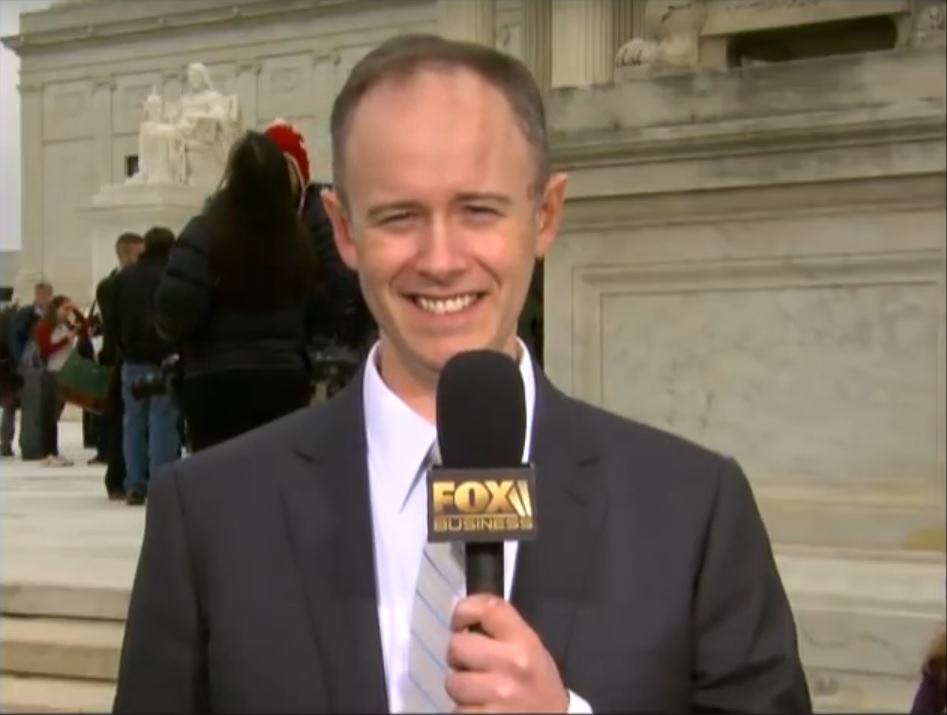
Foundation staff attorney Bill Messenger successfully argued Janus at the Supreme Court. But enforcing the landmark First Amendment victory is an ongoing battle.
LOS ANGELES, CA – A former teacher at Camino Nuevo Charter Academy in Los Angeles, California, is getting a refund of illegally seized union dues with free legal aid from the National Right to Work Legal Defense Foundation. The refund came after Foundation staff attorneys sent a letter to officials with the Camino Nuevo Teachers Association, an affiliate of California Teachers Association, threatening legal action for violating the teacher’s First Amendment rights.
Natalie Bahl, who was a teacher at Camino Nuevo Charter Academy up until recently, attempted to exercise her right as a public employee not to pay any union fees. Ms. Bahl notified the union of her decision in a mass email to several union officials, which reportedly also prompted other teachers to make similar requests. Her email was sent before the union-designated “window period” closed for teachers to revoke their authorization for deducting union dues.
Despite the timely request, Ms. Bahl realized a few months later that union dues were still being deducted from her paycheck. When she asked union officials about it, they suddenly claimed she missed her window period for dues revocation.
At that point, Ms. Bahl reached out to National Right to Work Legal Defense Foundation staff attorneys, who sent a letter demanding a refund of union dues collected in violation of Bahl’s First Amendment rights. Rather than face a potential federal civil rights lawsuit, CNTA union officials refunded all dues taken from Bahl from the time of her request until she left the school’s employment to further pursue her own education.
Union Officials Refuse to Learn Their Janus Lesson
In the Foundation-argued Janus v. AFSCME U.S. Supreme Court case, the Court recognized that forcing public sector workers to pay union dues or fees as a condition of employment violates the First Amendment. The Justices also ruled that public employees must opt in with affirmative consent to any union payments before money can be taken from their paychecks.
Since winning the 2018 Janus Supreme Court decision, Foundation staff attorneys have scored victories across the country for public employees seeking to enforce their First Amendment rights under the Janus decision. For example, Foundation staff attorneys recently successfully defended a public school teacher in Harford County, Maryland, from whom union bosses illegally seized dues for months despite two letters to the local AFSCME affiliate exercising her right to resign union membership and end all dues deductions from her pay.
“Teachers and other public sector workers have Janus rights under the First Amendment and should immediately contact the Foundation for free legal assistance if they believe their rights have been violated,” said National Right to Work Foundation Vice President Patrick Semmens. “Unfortunately we continue to see that even when public employees comply with arbitrary union-created policies designed to stifle their First Amendment rights, union officials still brazenly ignore Janus in order to fill their coffers with union dues seized from employees.
St. James Mayo Clinic Nurses Overwhelmingly Vote to Remove AFSCME Union; Certified by Labor Board
Certification of result follows similar vote by hundreds of nurses at Mankato Mayo Clinic location to remove Minnesota Nurses Association union
St. James, MN (August 1, 2022) – Healthcare workers at the Mayo Clinic Health System in St. James, Minnesota have formally removed the American Federation of State, County and Municipal Employees (AFSCME) Council 65 from their hospital. The National Labor Relations Board (NLRB) made the 15-2 vote official after the 7-day deadline for union election objections passed without any objections filed.
The workers’ decertification petition was filed by registered nurse Heather Youngwirth with the NLRB Region 18 office in Minneapolis, MN with free legal representation from National Right to Work Legal Defense Foundation staff attorneys. The vote on whether to end AFSCME union officials’ monopoly bargaining powers at the Mayo Clinic was 15-2 in favor of decertification of AFSCME, with the Labor Board’s official tally happening last week.
Minnesota is not a Right to Work state, meaning workers can be forced to pay dues or fees to union officials as a condition of keeping their jobs. Because the workers’ decertification vote was successful, AFSCME union officials are stripped of their monopoly “representation” powers, including the ability to impose a forced dues requirement on the nurses in the bargaining unit.
National Right to Work Foundation legal aid has recently assisted workers in several decertification efforts in Minnesota. In addition to the St. James Mayo Clinic, hundreds of nurses at Mayo Clinic in Mankato, Minnesota recently voted to remove the Minnesota Nurses Association. Meanwhile, two groups of employees at four Cuyuna Regional Medical Center locations recently filed petitions seeking decertification votes seeking to remove SEIU union officials.
Because the NLRB has made the decertification process unnecessarily complicated, workers often need to turn to Foundation attorneys for free legal aid in navigating the process. The Foundation recently aided metalworkers at Minneapolis Washer and Stamping, who endured a year and a half of litigation, but have finally voted out Communications Workers of America (CWA) union officials.
“While these nurses have successfully removed a union they oppose, we should not lose sight that thousands of Minnesota workers are forced to pay union dues, not because they voluntarily choose to, but because they would be fired if they don’t pay up,” commented National Right to Work Legal Defense Foundation President Mark Mix. “It is past time Minnesota joins all of its neighboring states and ensure Minnesota workers have Right to Work protections so all workers can decide for themselves whether to financially support union activities.”
Wesley Manor Workers Vote Overwhelmingly to Remove Unwanted AFSCME Union Officials from their Workplace
Workers free from unwanted union “representation” as Labor Board certifies decertification vote to toss union bosses
Frankfort, IN (April 19, 2022) – Healthcare workers at the Wesley Manor BHI retirement community in Frankfort, Indiana have won a decertification vote, and successfully removed the American Federation of State, County and Municipal Employees (AFSCME) Local 962 union from their workplace. The workers’ decertification petition was filed with the National Labor Relations Board (NLRB) Region 25 office in Indianapolis, IN with free legal representation from National Right to Work Legal Defense Foundation staff attorneys.
The petition was filed by Robin Davis, an employee of Wesley Manor BHI. The request seeking to end AFSCME union officials’ monopoly bargaining powers at BHI was signed by about 50% of the workers in the bargaining unit, well over the legally required 30% needed to trigger an NLRB-conducted secret ballot vote whether to remove the union. The final decertification vote was 27-16 in favor of removing AFSCME union officials from the workplace. The vote was then certified by the NLRB after union officials’ time for filing objections to the election expired.
Indiana is a Right to Work state, meaning workers cannot legally be required to join or pay dues or fees to a union as a condition of keeping their jobs. However, even in Right to Work states, union officials who have obtained monopoly bargaining control in a workplace are granted the power impose one-size-fits-all union contracts on all workers, including those who opt out of union membership and would prefer to negotiate their own terms of employment.
National Right to Work Foundation staff attorneys have recently assisted workers in numerous successful decertification efforts across the nation, including for workers in Illinois, Oklahoma, and Delaware. Foundation-backed reforms to the rules for decertification elections that the NLRB adopted in 2020 have curtailed union officials’ abuse of so-called “blocking charges” used to delay or block workers from exercising their right to decertify a union. Such charges are often based on unproven allegations made against an employer, completely unrelated to workers’ desire to free themselves of the union.
“The Foundation is happy to have helped the workers at Wesley Manor to exercise their right to free themselves of a union they oppose,” commented National Right to Work Foundation President Mark Mix. “No worker anywhere should be forced under the so-called ‘representation’ of a union they oppose, and Foundation staff attorneys stand ready to assist other workers wanting to hold a decertification election to oust a union they oppose and believe they would be better off without.”
Ohio Public Workers Axe Illegal Restrictions on Janus Rights for Almost 30,000
The following article is from the National Right to Work Legal Defense Foundation’s bi-monthly Foundation Action Newsletter, September/October 2020 edition. To view other editions or to sign up for a free subscription, click here.
Foundation-backed lawsuit ends AFSCME bosses unlawful “escape period” scheme
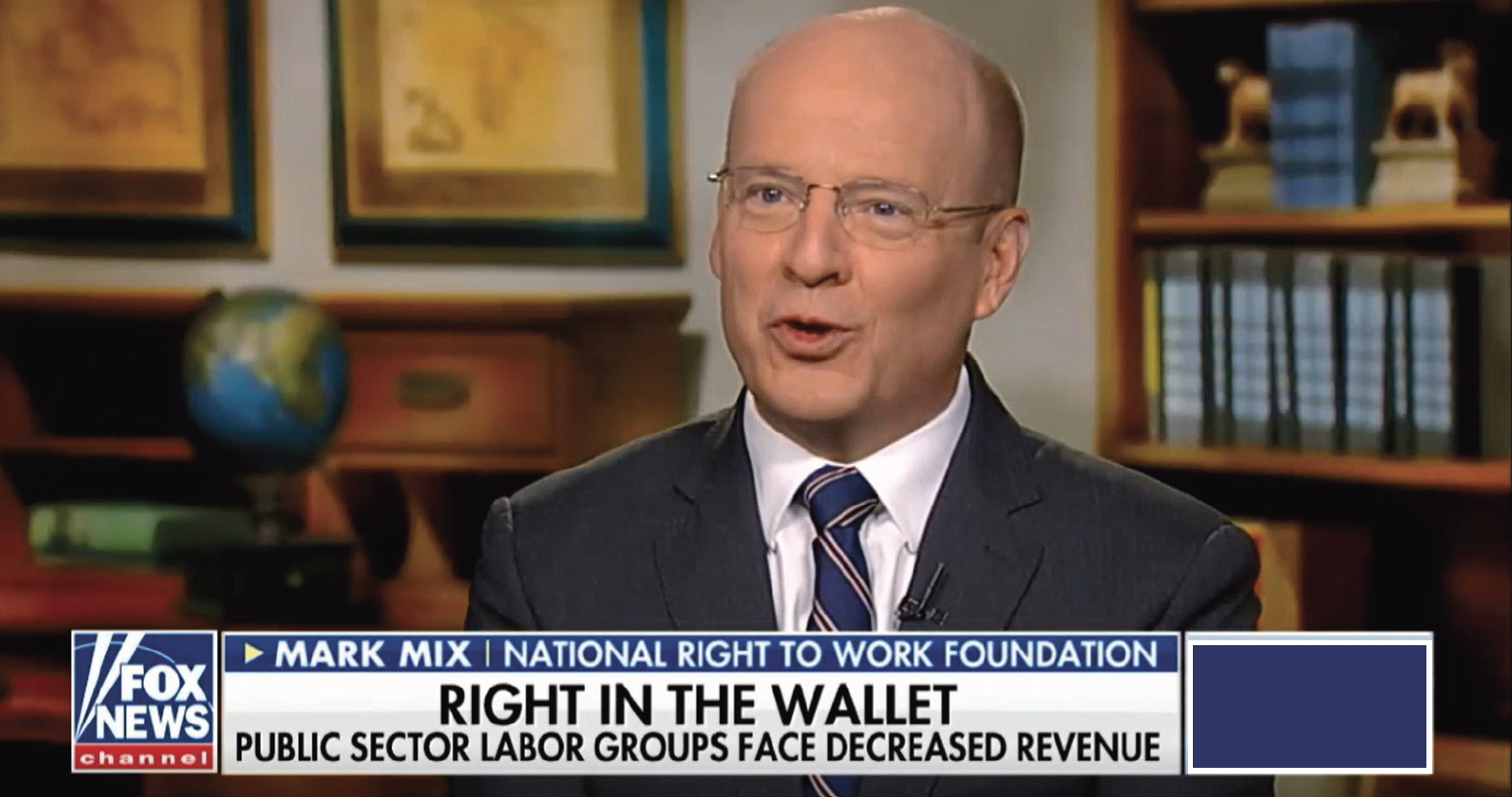
Two years after Foundation staff attorneys won Janus, public sector workers continue to cast off the shackles of forced union dues. In Allen, the plaintiffs successfully defended the Janus rights of thousands of Ohio public workers.
COLUMBUS, OH – A lawsuit by four Ohio public employees has secured the end of an illegal dues deduction scheme used by Ohio Civil Service Employees’ Association (OCSEA/AFSCME Council 11) union bosses to block an estimated 28,000 workers from exercising their First Amendment right to stop union dues payments. The workers obtained free legal representation from National Right to Work Foundation staff attorneys in challenging the policy.
The class-action suit, Allen v. AFSCME, challenged OCSEA’s so-called “maintenance of membership” policy, which trapped workers in forced-dues payments except for a brief “escape period” once every three years at the expiration of the union monopoly contract. The workers argued this policy violated their First Amendment rights under the Janus v. AFSCME Supreme Court decision.
In Janus, the High Court struck down mandatory union fees for public sector workers as an infringement of their First Amendment rights, and ruled that the government can only deduct union dues or fees with an individual’s affirmative consent.
After Freeing Workers, Foundation Attorneys Warn of Future Union Boss Tricks
As a result of the lawsuit, OCSEA officials and the State of Ohio have rescinded the “maintenance of membership” restriction on when state workers can exercise their First Amendment right to cut off union dues deductions.
They must also honor requests to stop dues deductions from any employees who signed the AFSCME dues authorization form at issue in the lawsuit. Finally, AFSCME bosses repaid dues seized illegally under the scheme to the plaintiffs and more than 150 other employees who tried to cut off union dues deductions after Janus was decided.
Knowing that union bosses don’t easily give up in their crusades to coerce workers into paying dues, however, Foundation staff attorneys issued a legal notice shortly after the case wrapped up, warning workers that OCSEA union bosses may soon solicit them to sign new dues deduction forms which are not covered by the litigation. The new forms will “purport to restrict” when employees can stop dues, it warns.
In light of that, the notice reminds workers that under Janus, no Ohio public employee can be forced to sign a union dues deduction form as a condition of employment, no matter what union agents may tell them.
Just Latest in String of Ohio Worker Victories over “Escape Periods”
Allen is not the only case in which Ohio public employees have, with National Right to Work Foundation legal aid, successfully challenged union boss attempts to limit their rights.
Seven other Ohio public employees won the first-in-the-nation victory against unconstitutional “escape periods” with Foundation aid in January 2019, after they filed a class-action federal lawsuit challenging a similar policy created by AFSCME Council 8 bosses. They won a settlement ending the restrictions for themselves and their coworkers. That win was followed by two other Ohio public workers, Connie Pennington and Donna Fizer, successfully ending “escape period” restrictions with Foundation assistance later in 2019.
“Although this chain of victories for Buckeye State public employees is certainly encouraging, the widespread nature of these schemes shows there remains much work to do to force union bosses to end their unconstitutional restrictions on public employees’ First Amendment Janus rights,” observed National Right to Work Foundation President Mark Mix. “Foundation litigation has already freed hundreds of thousands of public employees from forced union dues, but likely millions more remain trapped and unable to exercise their rights. That is why Foundation litigators will continue to file these cases.”
Foundation Asks Supreme Court to Hear Janus Case Again, Seeking Return of Forced Fees
The following article is from the National Right to Work Legal Defense Foundation’s bi-monthly Foundation Action Newsletter, May/June 2020 edition. To view other editions or to sign up for a free subscription, click here.
Case could set precedent for hundreds of millions of dollars in refunds to Big Labor’s victims
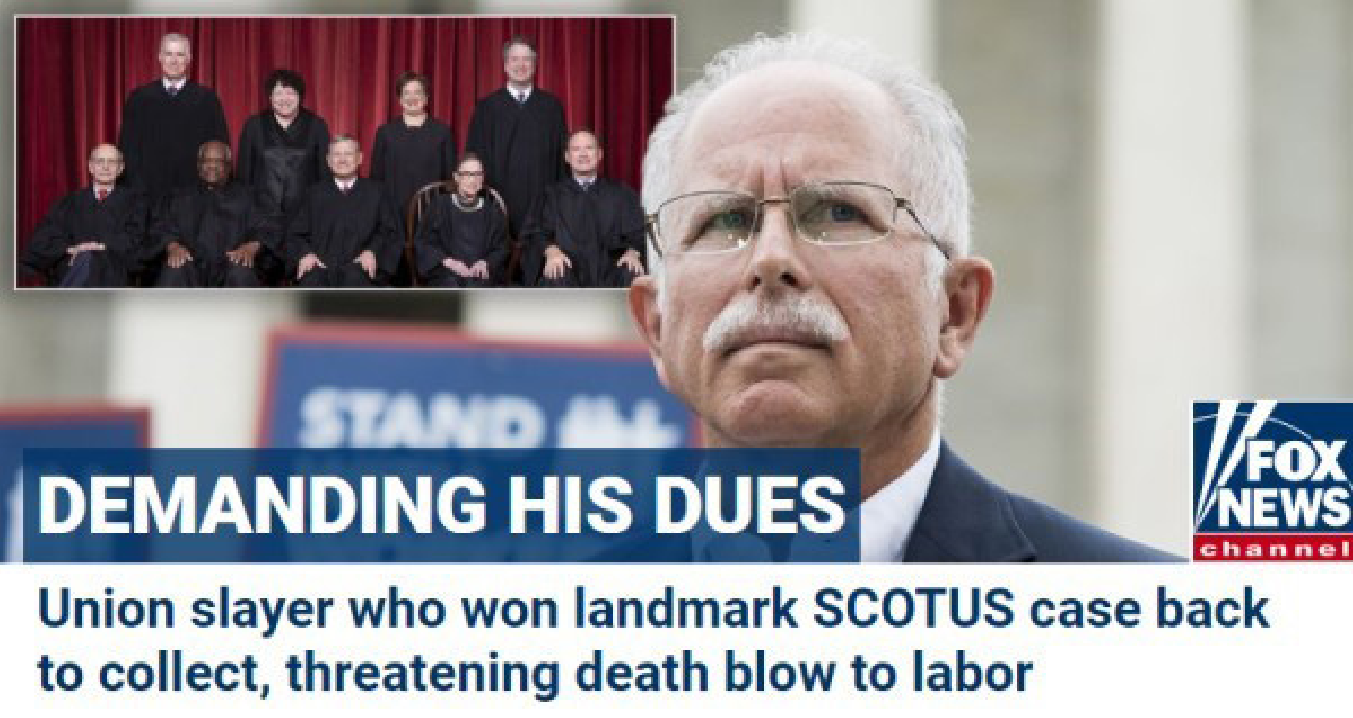
Mark Janus’ second Foundation-backed appeal to the Supreme Court landed the top spot on Fox News’ website. If Janus prevails again, hundreds of millions of dollars in unconstitutional union dues could be returned to public sector employees.
WASHINGTON, DC – Mark Janus is returning to the U.S. Supreme Court, this time asking the Justices to hear the continuation of Janus v. American Federation of State, County, and Municipal Employees (AFSCME), Council 31. Janus seeks repayment of the thousands of dollars in fees the union took from his paycheck in violation of his First Amendment rights. Another Supreme Court victory for Janus could set a precedent resulting in the return of hundreds of millions of dollars seized by union officials in violation of workers’ constitutional rights.
The original Janus v. AFSCME was argued successfully before the Supreme Court by veteran National Right to Work Foundation staff attorney William Messenger. In a landmark victory, the Court sided with Janus on June 27, 2018, and declared it illegal to force public employees to subsidize a union as a condition of employment. The Court recognized that compelling public workers to pay fees to a union violates their First Amendment rights.
Illinois Child Support Public Servant Intervenes in Lawsuit with Foundation Aid
As a result of Janus, more than five million public sector employees across the country are no longer required to pay union dues or fees to keep their jobs. However, Janus’ case continues as he seeks the return of the fees that AFSCME seized from his paycheck without his permission from June 27, 2018, to March 23, 2013, representing the two-year statute of limitations from the date his case started in March 2015 through the Supreme Court’s 2018 decision in his favor.
The Janus case began in February 2015, when then-newly elected Illinois Governor Bruce Rauner issued an executive order prohibiting state agencies from requiring employees who had abstained from formal union membership to pay union fees, based on a Right to Work Foundation U.S. Supreme Court victory in 2014 in another Illinois case. Rauner also filed a federal lawsuit seeking a declaratory judgment that forced union fees violate the First Amendment rights of public workers.
Staff attorneys from the Foundation, in partnership with the Illinois-based Liberty Justice Center, filed a motion for Mark Janus and two other plaintiffs to intervene in the case in March 2015, and have represented Janus ever since. The U.S. District Court for the Northern District of Illinois granted Janus’ motion to file a complaint in intervention, which allowed the suit to move forward even after the court ruled that Rauner lacked standing to pursue the lawsuit.
The Supreme Court permitted union bosses to impose forced union fees on public workers in the 1977 Abood v. Detroit Board of Education decision. However, before the Janus victory, Foundation staff attorneys secured several victories for workers which called the constitutionality of forced fees into question. In 2012, the court ruled in Knox v. SEIU that union officials must obtain affirmative consent from workers before using workers’ forced union fees for special assessments or risk infringing on their First Amendment rights. In 2014, the court ruled in Harris v. Quinn that requiring home healthcare providers who receive a subsidy from the government to pay union dues is a First Amendment violation.
Following Janus’ groundbreaking win at the Supreme Court in June 2018, Foundation attorneys continued his case in Illinois federal courts, arguing that the Supreme Court’s ruling is retroactive and that AFSCME should be required to return dues they seized unconstitutionally before the decision. In this and similar cases, union bosses have made a so-called “good faith” argument to defend their seizing of dues before Janus was issued. The U.S. Seventh Circuit Court of Appeals in Chicago ruled in 2019 that AFSCME could keep the unconstitutional dues, prompting Janus’ petition to the Supreme Court.
Hundreds of Millions of Dollars Potentially At Stake
“The Supreme Court agreed that the union taking money from non-members was wrong but the union still has the money it illegally garnished from my paycheck,” commented Janus. “It’s time for AFSCME to give me back the money they wrongfully took.”
Foundation staff attorneys are currently fighting for thousands of workers in about 20 cases which seek refunds of dues seized unconstitutionally before Janus was decided. While Janus is seeking the return of $3,000 of his own money, a favorable decision for him would set a precedent that could result in the return of over $120 million to public servants just in Foundation-backed cases. Other cases brought by workers could bring that total to hundreds of millions of dollars.
Workers Already Winning Refunds of Illegal Dues with Foundation Legal Aid
“The Supreme Court has already sided with the Foundation arguments for Mark Janus and ruled that forcing public employees to fund union activities violates the First Amendment,” said National Right to Work Foundation Vice President and Legal Director Raymond LaJeunesse. “The Supreme Court should take this case again to ensure that public sector union bosses are not permitted to profit from their widespread violation of workers’ First Amendment rights.”
Foundation staff attorneys in July 2018 secured the nation’s first-ever refund of dues seized unconstitutionally before Janus for Debora Nearman, an Oregon state wildlife employee. SEIU bosses were forced to settle and give back to Nearman over $3,000 in illegal fees they had seized from her over two years, during which they had sponsored an aggressive political campaign against her own husband, who ran successfully for the Oregon Legislature in 2016.
Final Briefs Filed at Appeals Court in Continuation of Janus v. AFSCME
The following article is from the National Right to Work Legal Defense Foundation’s bi-monthly Foundation Action Newsletter, September/October 2019 edition. To view other editions or to sign up for a free subscription, click here.
Foundation seeks first-in-nation appellate court ruling to order non-member dues refunded
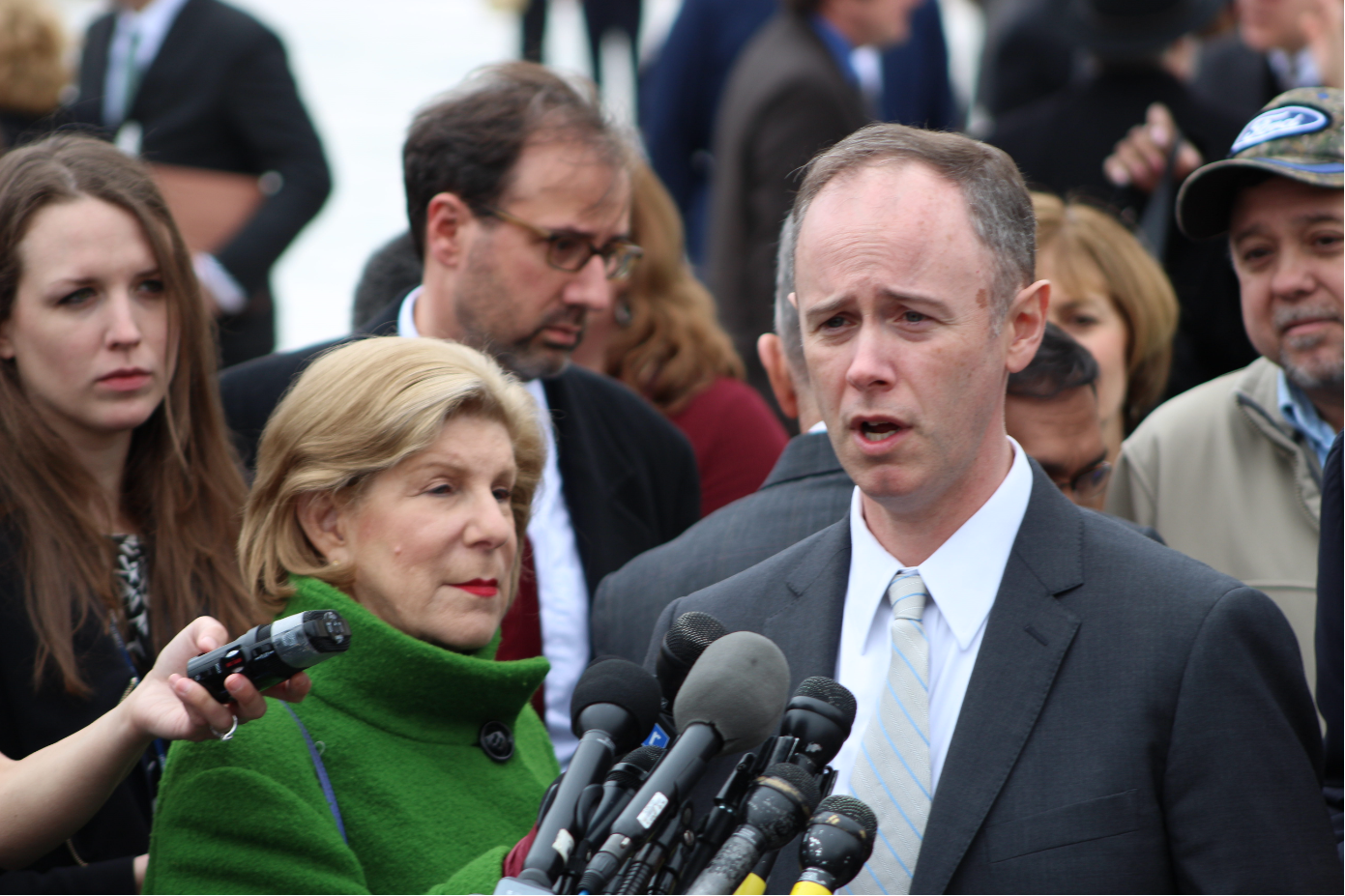
Veteran Foundation staff attorney William Messenger, seen here speaking to reporters after Supreme Court oral arguments in Janus, leads the Foundation’s Janus enforcement task force.
CHICAGO, IL – Although Janus v. AFSCME secured a landmark victory at the U.S. Supreme Court for government employees’ First Amendment rights, Mark Janus’ case is not over because AFSCME union bosses have refused to return the funds taken from him in violation of the First Amendment.
Janus’ attorneys from National Right to Work Foundation and Illinois-based Liberty Justice Center have completed briefing with the Seventh Circuit Court of Appeals on the issue of whether union officials can keep money they seized from non-members in violation of their constitutional rights. The case is likely to mark the first time an appellate court will rule on the issue, potentially establishing a precedent that could result in the return of hundreds of millions of dollars seized by union bosses in violation of the Janus precedent.
Janus Secured Workers’ First Amendment Rights
Mark Janus was an Illinois child support specialist whose case was successfully argued at the Supreme Court by National Right to Work Foundation staff attorney William Messenger.
The Supreme Court’s June 27, 2018, decision in Janus’ favor found that any union fees taken from workers like Mark Janus – who was not a member of AFSCME – without the workers’ affirmative and knowing consent violate the First Amendment. Justice Samuel Alito wrote for the majority that compulsory fees “[violate] the free speech rights of non-members by compelling them to subsidize private speech on matters of substantial public concern.”
The Supreme Court sent the case back to the lower courts to determine, among other things, whether Janus is entitled to all the union fees he was forced to pay since March 23, 2013.
Janus’ appeal comes after a district court judge ruled that union officials are not required to refund forced fees seized from non-member workers prior to the Janus decision.
“Just like a thief would not be allowed to keep the money he stole, union bosses must be forced to return funds unlawfully seized from workers,” said National Right to Work Foundation Vice President and Legal Director Ray LaJeunesse. “It would be a massive injustice to deny workers victimized by Big Labor the refunds to which the Supreme Court made clear they are entitled.”
Seventh Circuit Likely First Appeals Court to Rule on Non-member Refunds
Janus will likely be the first case in which an appellate court will evaluate the so-called “good faith” defense that union lawyers have asserted in response to worker lawsuits seeking refunds, arguing that union officials should be allowed to keep funds seized prior to the Janus decision.
This contention has generally succeeded in lower courts despite the Supreme Court asserting that union bosses have been “on notice” for years that mandatory fees likely would not comply with the heightened level of First Amendment scrutiny articulated in the Supreme Court’s earlier Knox v. SEIU decision, also won by Foundation staff attorneys.
Mark Janus is asking the Seventh Circuit to rule that he is entitled to refunds of approximately $3,000 in fees he was forced to pay since March 23, 2013, as the statute of limitations permits. In addition, the case has significant implications for dozens of other cases being litigated around the country for hundreds of thousands of other workers seeking the return of forced fees seized unlawfully by union officials.
Janus Refund Efforts Continue Nationwide
Foundation staff attorneys are currently litigating over a dozen such cases that collectively seek over $120 million in refunds for non-members forced to pay union fees before Janus. Other ongoing lawsuits and potential cases could result in half a billion dollars or more returned to government workers from union treasuries.
“The Janus case is a milestone of worker freedom, but union bosses continue to block workers from exercising their rights and deny workers refunds for dues and fees seized against their wishes,” said LaJeunesse. “We hope the Seventh Circuit Court of Appeals will follow the clear logic of the Supreme Court’s decision in Janus and establish that union bosses cannot profit from violating workers’ First Amendment rights.”
Check out the lead article in the January/February 2017 Foundation Action Newsletter “Foundation Cases Poised to Challenge Forced Dues at Supreme Court”
Foundation Cases Poised to Challenge Forced Dues at Supreme Court
Cases to overturn forced dues could quickly reach Supreme Court with new Trump Justice
To read the rest of the January/February 2017 issue, please click here.
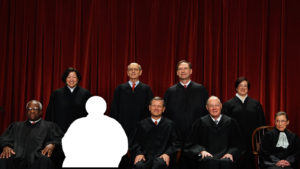
Washington, D.C. – Over the past few months, Foundation staff attorneys have been busy litigating hundreds of cases on the behalf of independent-minded workers across the country. Two of those cases have the potential to reach the Supreme Court this year and answer the unresolved questions left in the wake of the 4-4 split in the Fredrichs v. California Teachers Association.
One of those cases, Janus v. AFSCME, stems from an executive order from Illinois Governor Bruce Rauner that placed any union fees that nonunion members were forced to pay into an escrow account until the constitutionality of those fees was resolved. Governor Rauner subsequently filed a lawsuit in U.S. District Court for the Northern District of Illinois and argued that collecting forced dues or fees from state employees as a condition of employment violated the First Amendment of the Constitution.
Foundation staff attorneys then filed a motion to intervene as plaintiffs for Mark Janus and other state employees who are forced to pay union fees as a condition of employment. A Judge eventually ruled that Governor Rauner did not have standing in court but let the Foundation-represented employees continue to challenge the constitutionality of forced fees.
After the Supreme Court reached a 4-4 deadlock in a similar case earlier this year, Friedrichs v. CTA, a District Judge ruled against Janus and the other state employees. Foundation attorneys immediately filed an appeal to the Seventh Circuit Court of Appeals and are awaiting a decision. It is possible that a petition for a writ of certiorari could be filed with the Supreme Court later this year.
The second case, Serna v. Transportation Workers Union (TWA), is a class-action lawsuit brought by several American Eagle Airlines and Southwest Airlines employees U.S. District Court for the Northern District of Texas was pending with the Supreme Court as this issue of Foundation Action went to press. That suit challenges the constitutionality of the Railway Labor Act’s sanction of agreements that require compulsory union fees as a condition of employment.
Even though these employees work in the private sector, the Supreme Court has previously ruled that because the Railway Labor Act (RLA) effectively mandates forced fees for railway and airline workers, it effectively fosters the same Constitutional issues as were raised for government employees in Friedrichs. Therefore, success in Serna on the First Amendment claims against forced dues would effectively overturn forced dues for public sector workers.
After the Fifth Circuit Court of Appeals ruled against the airline employees citing the Friedrichs deadlock, Foundation staff attorneys filed a petition for a writ of certiorari with the Supreme Court. The Court was scheduled to consider the petition on January 6 and a decision whether to take the case or not could follow shortly after, or the Justices may decide to hold the case in light of the potential for a 4-4 tie until a ninth Justice is seated.
“Both of these cases have the potential to answer the ultimate question that was left unresolved by Friedrichs and that is whether or not it is constitutional to force workers to pay union bosses tribute to get or keep a job,” National Right to Work Foundation President Mark Mix said.
In addition to Serna and Janus, National Right to Work Foundation staff attorneys have two additional cases working their way through the courts – one on behalf of university professors in Massachusetts and one for school employees in Kentucky – that directly challenge the constitutionality of mandatory union dues. More cases directly challenging the constitutionality of government-mandated forced union dues are expected to be filed by Foundation staff attorneys in 2017.
National Right to Work Foundation Staff Attorney Argues Case Before 7th Circuit Court of Appeals Challenging Forced Union Dues
Janus v. AFSCME could be next U.S. Supreme Court case to decide constitutionality of mandatory union fees for public employees
Chicago, IL (March 1, 2017) – On Wednesday, the U.S. Court of Appeals for the Seventh Circuit will hear oral arguments in Janus v. AFSCME, a case challenging mandatory union fees paid by government workers in Illinois. This case builds on recent Supreme Court decisions Knox v. SEIU (2012) and Harris v. Quinn (2014), both of which were won by National Right to Work Legal Defense Foundation staff attorneys.
In Janus, the plaintiffs are two Illinois government employees who are represented by staff attorneys from the National Right to Work Legal Defense Foundation and the Liberty Justice Center.
Under Illinois law, union officials are empowered to require government employees to pay money to a union as a condition of employment. Although state employees aren’t forced to be full-fledged union members, they are required to pay mandatory dues or fees to a union or be fired. This lawsuit seeks to end that practice on the grounds that these fees violate the plaintiffs’ First Amendment rights.
A victory for the Janus plaintiffs would impact millions of government employees who currently can be fired for refusing to pay dues or fees to union officials. The National Right to Work Foundation currently has seven cases across the country on behalf of public employees seeking a ruling that mandatory union fees violate the First Amendment, with Janus most likely to reach the U.S. Supreme Court first.
In 2016, because of the untimely death of Justice Antonin Scalia, the High Court split 4-4 in Friedrichs v. California Teachers Association, a case that would have also ended forced dues for public employees. A new justice will be the deciding vote should Janus or another case presenting the issue be taken up by the Supreme Court.
National Right to Work Foundation President Mark Mix commented, “Hopefully the Seventh Circuit will rule quickly so the case can go to the Supreme Court, which should uphold the First Amendment by ending the injustice of forcing public employees to pay tribute to union bosses as a condition of working for their own government.”





