
California Trucking Company Workers Win Freedom from Unwanted Teamsters Local 665 Union Officials
Rather than face vote to strip union officials of their forced representation powers, Teamsters officials concede defeat
Santa Rosa, CA (March 9, 2023) – Valdivia Trucking Co. workers in California are finally free of unwanted Teamsters Local 665 union officials after three months of delays created by the union officials. The workers’ bid to remove the union recently became official when, rather than face a decertification vote of Valdivia workers whether to strip the union of its power, the union preemptively “disclaimed” interest in representation and walked away from the workers.
Valdivia Trucking worker John Murdick received free legal aid from the National Right to Work Legal Defense Foundation while filing for a decertification vote. His decertification petition filed with the National Labor Relations Board (NLRB) included the signatures of a significant majority of the workers at the facility.
The workers’ petition was filed on December 16, 2022, and quickly resulted in a stipulated election agreement for a decertification vote on January 6. However, the vote was delayed by preexisting “blocking charges” the union filed with the NLRB. This is a union tactic often used to delay workers’ decertification elections, because union officials fear if the vote goes forward the union may lose.
As a result of these blocking charges against the employer the vote was delayed three months, until March, when the blocking charges were finally closed. This permitted the vote to proceed. It was at that point the union officials notified the company’s lawyers and the NLRB that it disclaimed interest in “representing” the Valdivia Trucking employees. That gave the workers the outcome they sought, albeit delayed by nearly three months.
The NLRB’s union decertification process is prone to union boss-created roadblocks. Foundation-backed reforms the NLRB adopted in 2020 made it somewhat easier for workers to remove unwanted union officials. However, the Biden NLRB is attempting to roll back these protections and make it much harder to decertify a union.
For example, the 2020 reforms blocked union officials from resubmitting overlapping charges, which often contain unverified and unrelated allegations of employer actions, designed to delay the process further. Had these reforms not been in place, the three-month delay for these workers could have been extended indefinitely.
Worker interest in removing unwanted unions is growing nationwide, with National Right to Work Legal Defense Foundation staff attorneys fielding numerous requests for free legal assistance in decertification cases, like the one brought by Murdick and his coworkers.
The process to decertify a union should be simple. Federal law provides that workers can hold decertification votes in most instances as long as they have a petition with the signatures of at least 30% of workers in a bargaining unit. However, rules created by NLRB bureaucrats combined with legal tactics deployed by union lawyers often mean workers face legal hurdles in just getting the opportunity to hold a vote whether to remove an unwanted union.
The NLRB’s own data show that, currently, a unionized private sector worker is more than twice as likely to be involved in a decertification effort as a nonunion worker is to be involved in a unionization campaign.
“The Valdivia Trucking decertification situation shows how union officials often use underhanded tactics to remain in power and collect dues from hard-working people as long as possible, even though they know a majority of workers oppose their so-called representation,” observed Mark Mix, President of the National Right to Work Foundation.
“Although we are extremely satisfied that the Valdivia workers have exercised their legal right to be union-free, we cannot neglect the importance the 2020 Foundation-backed reforms played in this case,” Mix continues. “If the Biden-appointed NLRB is able to roll back these reforms, as they are attempting to do, workers like those at Valdivia may be trapped in union ranks they oppose for many months and even years.”
Fort Bliss-Based Grounds Management Inc. Workers Unanimously Vote to Oust IUOE Local 351 Union
Workers officially free of unwanted union boss “representation” after every worker votes against union in National Labor Relations Board (NLRB) Decertification Election
Fort Bliss, TX (March 6, 2023) – Following a unanimous employee decertification vote, Grounds Management Incorporated (also known as GMI National) employees are now officially free of unwanted monopoly bargaining “representation” by Operating Engineers (IUOE) Local 351 union bosses. Grounds Management worker Antonio Eduardo Reza, who united every one of his fellow coworkers in opposing the union, received free legal aid from the National Right to Work Legal Defense Foundation in exercising the employees’ right to hold the decertification vote.
The union decertification election was administered by the National Labor Relations Board (NLRB) on February 15. Because a full week has now passed since the 17-0 unanimous vote without any objections made by union officials, the result is final and the workers are officially union-free.
Although the NLRB’s union decertification process is still prone to union boss-created roadblocks, Foundation-backed reforms the NLRB adopted in 2020 have made it somewhat easier for workers to remove unwanted union officials.
Before the reforms, for example, union officials could stop workers who requested a decertification vote from casting ballots by filing so-called “blocking charges,” which often contain unverified and unrelated allegations of employer actions. The 2020 rule changes improved the process so employees can at least have a chance to vote before any allegations surrounding the election are resolved.
Worker interest in removing unwanted unions is up nationwide, with National Right to Work Legal Defense Foundation staff attorneys fielding numerous requests for free legal assistance in decertification cases, like the one brought by Reza and his coworkers. The process should be simple, with federal law stating that workers can hold decertification votes in most instances as long as they have a petition with the signatures of at least 30% of workers in a bargaining unit. However, rules created by NLRB bureaucrats combined with legal tactics deployed by union lawyers often mean workers face legal hurdles in just getting the opportunity to hold a vote whether to remove an unwanted union.
The NLRB’s own data show that, currently, a unionized private sector worker is more than twice as likely to be involved in a decertification effort as a nonunion worker is to be involved in a unionization campaign, with one analysis finding decertification petitions up 42% last year.
“Although we’re glad Antonio Reza and his coworkers were able to free themselves of a union that they all opposed, this case only demonstrates just how outrageous it is that the Biden NLRB is moving to roll back reforms that make it easier for workers to exercise their right under federal law to vote out a union they oppose,” observed Mark Mix, President of the National Right to Work Foundation. “If the Biden-appointed majority on the NLRB has its way, just one unfounded allegation by union bosses will be enough to block a vote like this for months or more, even though every single worker wanted nothing to do with the union’s so-called ‘representation.’”
Another Janus Victory: South Jersey Bus Drivers Win Back Illegally Seized Dues
The following article is from the National Right to Work Legal Defense Foundation’s bi-monthly Foundation Action Newsletter, January/February 2023 edition. To view other editions of Foundation Action or to sign up for a free subscription, click here.
New Foundation-backed challenges to Janus restrictions also pending at U.S. Supreme Court
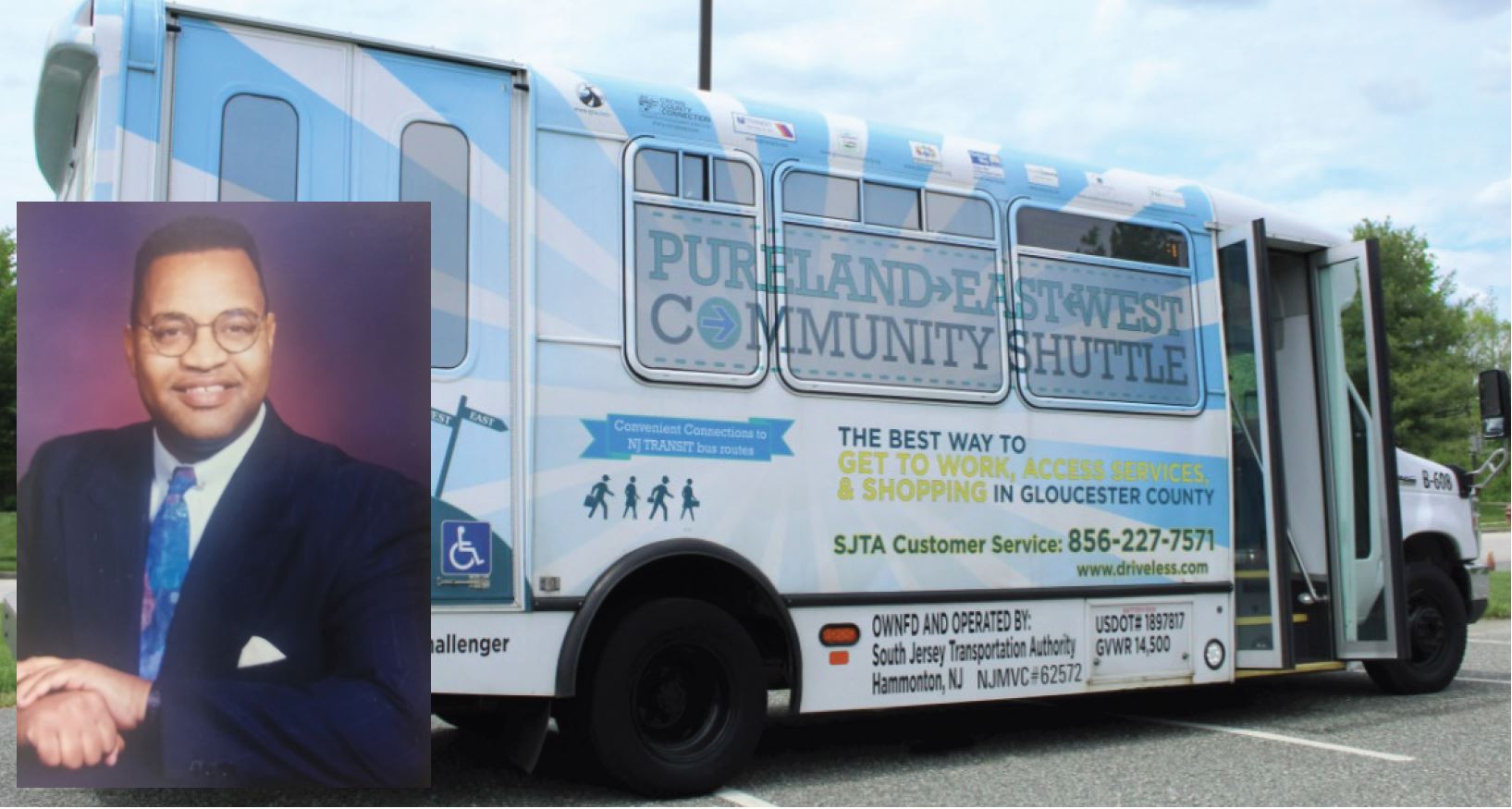
Stop Requested: Tyron Foxworth and his fellow South Jersey Transportation Authority bus drivers told union officials to cease union dues to no avail, until Foundation staff attorneys’ lawsuit forced union bosses to back down.
CAMDEN, NJ – Toward the end of 2021, South Jersey Transportation Authority (SJTA) bus driver Tyron Foxworth and his colleagues Doris Hamilton, Karen Burdett, Karen Hairston, Ted Lively, Arlene Gibson, and Stanley Burke decided they had had enough of International Federation of Professional and Technical Engineers (IFPTE) union bosses’ so-called “representation” and opted out of union membership. Union cards they had signed indicated that the union would cease taking money from their paychecks in January 2022.
But, January 2022 came and went, and neither Foxworth nor his fellow independent-minded colleagues saw dues deductions stop. As a result, with free legal representation from National Right to Work Foundation staff attorneys, they filed a First Amendment federal civil rights lawsuit against the IFPTE union. They argued that union officials violated their First Amendment rights under the Foundation-won 2018 Janus v. AFSCME Supreme Court precedent by continuing to seize dues despite their objections.
IFPTE Officials Subjected Drivers to Restrictions They Never Knew About
In Janus, the Court declared it a First Amendment violation to force public sector workers to pay union dues as a condition of employment. It also ruled that union officials can only deduct dues from the paycheck of a public sector employee who has voluntarily waived his or her Janus rights.
Rather than face Foundation staff attorneys in federal court, IFPTE union lawyers backed down and settled the case. As the settlement ordered, union bosses have now given back all money they seized unconstitutionally from Foxworth and his objecting coworkers, plus interest. The settlement also bars the IFPTE union from demanding or seizing any dues from the drivers going forward.
According to Foxworth and his colleagues, IFPTE dues deductions cards led them to believe that dues opt-outs would become effective on either the January or July following a request. However, the union’s monopoly bargaining contract with SJTA recognized dues revocations only in July. The drivers never consented to this greater restriction.
Foundation attorneys argued in the lawsuit that IFPTE union officials, by taking union dues after January 1, 2022, without the workers’ consent, “violate[d] Plaintiffs’ First Amendment right to free speech and association.”
Foxworth and his coworkers’ victory is the latest of numerous Foundation-won cases to vindicate American public workers’ First Amendment Janus rights. In the past few years, class action lawsuits brought by Foundation staff attorneys have led to settlements freeing tens of thousands of Ohio public employees from American Federation of State, County, and Municipal Employees (AFSCME) union schemes illegally restricting the exercise of their Janus rights.
Courageous public workers from California and Nevada are also asking the Supreme Court to take the next step and declare such Janus restrictions clearly violative of the First Amendment.
Lifeguards, Police Officer Battle Blatantly Unconstitutional Restrictions
Foundation attorneys just filed a petition asking the Supreme Court to hear several Southern California lifeguards’ suit against a so-called “maintenance of membership” scheme that California Statewide Law Enforcement Agency (CSLEA) union officials are using to trap the lifeguards in membership and full dues payments years after they resigned, in direct opposition to Janus.
Also awaiting Supreme Court review of her case is Las Vegas police officer Melodie DePierro, who with Foundation aid is battling an arrangement imposed by Las Vegas Police Protective Association (PPA) union officials that forbids the exercise of her Janus rights for over 90 percent of the year.
“Union officials across the country continue to enforce schemes that give them — not the workers they claim to ‘represent– control over the exercise of Janus rights, meaning more money in union coffers while employees’ constitutional rights are squashed,” commented National Right to Work Foundation President Mark Mix. “While many union bosses, aware of the indefensibility of their actions, run screaming from facing Foundation attorneys on Janus issues and settle quickly, American public workers should also know that Foundation attorneys will fight all the way up to the Supreme Court to ensure their First Amendment rights are protected.”
Northern PA Metal Worker Prevails in Federal Case Charging CWA Union with Illegal Dues Deductions
CWA officials also refused worker’s membership resignation and sought to force him to remain union steward
Galeton, PA (March 3, 2023) – Curtis Coates, an employee of metal corporation Catalus, has successfully forced Communications Workers of America (CWA) union officials to stop illegally seizing money from his paycheck for union politics and ideological causes. National Right to Work Legal Defense Foundation staff attorneys represented Coates for free before the National Labor Relations Board (NLRB).
Coates charged CWA union officials in May 2022 with unlawfully snubbing both his request to resign from his position as a union shop steward and his request to formally end his union membership. Full union dues deductions also continued to flow out of his paycheck even after his requests. Coates argued that CWA bosses violated his rights under the National Labor Relations Act (NLRA).
Because Pennsylvania lacks Right to Work protections for its private sector workers, unions can legally coerce workers into paying union fees just to keep their jobs even if they choose not to become union members. However, under the U.S. Supreme Court’s decision in CWA v. Beck, won by Foundation attorneys, this is limited to only the part of union dues that union officials claim goes toward a union’s core “representational” functions, and excludes deductions for union political or ideological activities. In contrast, in states with Right to Work protections, union membership and all union financial support are both strictly voluntary.
A Foundation-won settlement now requires CWA union officials to post a notice at Coates’ workplace declaring that they “will not fail and refuse to honor your request to resign your union membership,” and “will not fail and refuse to honor your request to resign your role as a union steward.” CWA union officials have also stopped siphoning money for union politics and ideological activities from Coates’ wages.
CWA Forced Dissenting Worker to Remain Shop Steward, Took Full Dues Illegally from Paycheck
According to his charge, Coates sent a message to CWA union officials on October 20, 2021, declaring that he was resigning from his position as shop steward and terminating his union membership. A union official rebuffed both of Coates’ requests the next day, insisting that he had to remain both a union member and a shop steward.
In December 2021, January 2022, and February 2022, Coates followed up with union officials several times via email and mail. He asked when union officials would cease taking dues money from his wages and what process he had to follow to revoke his dues deduction authorization.
Coates’ charge asserted that CWA union officials, by refusing his repeated requests to resign his union membership, violated his rights under Section 7 of the NLRA, which recognizes workers’ right to “refrain from any or all” union activities.
Foundation President: No Place for Compulsory Union Support in Federal Law
“CWA officials summarily denied Mr. Coates’ valid exercise of his right to refrain from union membership, unlawfully seized money for union politics, and even forced him to remain a union shop steward,” commented National Right to Work Foundation President Mark Mix. “The extreme aversion CWA union officials seem to have to any kind of dissociation with the union shows where their focus lies: maintaining forced worker subsidization of union activities and not on respecting workers’ individual rights.”
“Such union malfeasance is only buoyed by federal labor law, which permits states to deny Right to Work protections to private sector workers,” Mix added. “No American worker should be forced to fund any kind of unwanted union purpose as a condition of keeping his or her job, which is why securing Right to Work protections for all Americans is absolutely vital.”
National Right to Work Foundation Urges TX Supreme Court to Nix Scheme Directing Taxpayer Funds to Union Boss Activities
Legal brief: SCOTUS ruled that public sector union activities are political in nature, “official time” arrangement mandates taxpayer support for union politics
Austin, TX (March 2, 2023) – The National Right to Work Legal Defense Foundation has just submitted an amicus brief in Roger Borgelt v. City of Austin, a case before the Texas Supreme Court. The case challenges a scheme in which the City of Austin directs taxpayer dollars to Austin Firefighters Association (IAFF) union officials to conduct union business on so-called “official time.”
The petitioners, including the State of Texas, maintain that this arrangement violates the Texas Constitution’s Gift Clauses, which forbid payouts of taxpayer funds that do not serve a legitimate public purpose. The case is currently on appeal from the Texas Third Court of Appeals.
The Foundation’s brief argues that the U.S. Supreme Court’s ruling in the Foundation-won 2018 Janus v. AFSCME case shows why the “official time” scheme runs afoul of the Gift Clauses. The High Court ruled in Janus that forcing public sector workers to fund any union activities as a condition of employment violates the First Amendment, and that union dues can only be deducted from a public sector worker’s paycheck with his or her freely given consent.
Requiring taxpayers to fund union activities “conflicts with the Supreme Court’s reasons for holding in Janus that it violates the First Amendment to require public employees to subsidize union activities,” the brief says.
Landmark Janus Decision Shows How Union Bosses Use “Official Time” to Prop Up Union Politics
The Foundation points out in its amicus brief the Janus Court’s holding that union monopoly bargaining activities “constitute speech and petitioning on matters of political…concern,” and that by funneling taxpayer money into such speech “the City is effectively paying individuals to lobby the City for a private advocacy organization and its members.”
“The notion that this political advocacy predominantly serves a public purpose, as opposed to predominantly benefiting the private organization, is untenable,” the brief reads.
The brief also refutes an assertion by the Third Court that “official time” payments made by the city are actually part of union officials’ compensation for their normal job duties. This defies Janus’ reasoning that public employees who are also union officials “do not act as government agents pursuing their official job duties when they act as union officials.”
“For example, in granting paid leave to employee Bob Nicks to act as the Union’s president, the City is not paying Mr. Nicks for his services as a firefighter or as a public servant,” the brief explains. “The City is paying Mr. Nicks for his services as an agent of a private organization—the Union—in violation of the Gifts Clauses.”
The brief also counters the lower court’s finding that taxpayer subsidies for “official time” are needed to maintain harmonious relations with the union. Just as the Supreme Court’s Janus decision rejected that argument as a permissible reason for forcing workers to subsidize union activities related to monopoly bargaining, here similarly union officials can also “exercise their powers as exclusive representatives without the taxpayer subsidy of [official time],” says the brief.
Moreover, the Foundation’s brief explains that this union argument is troubling on a much deeper level: “If respondents contend that Union officials would disrupt City services if they did not receive association business leave, that would make the benefit akin to the City paying protection money” to union officials, reads the brief.
Union Bosses Are Not Entitled to Public Funds to Pursue Union Interests
“The Texas Supreme Court must recognize that union officials are not entitled to a slice of taxpayer funds to ‘bargain’ against public interests,” commented National Right to Work Foundation President Mark Mix. “Texas’ Gift Clauses forbid the payout of public funds for activities that don’t have a tangible public benefit, and it’s hard to think of an arrangement that violates the Clauses more plainly than letting union bosses pursue private union business on the taxpayer dime.”
“While Janus now protects public employees around the country from being forced to fund union activities and speech against their will, unfortunately many states and municipalities across the country permit union bosses to subsidize those same inherently political activities using direct payment of tax dollars,” Mix added. “If union bosses cannot convince rank-and-file workers to voluntarily fund such activities as Janus requires, they should re-examine their priorities, not seek to force taxpayers to pay for what public employees won’t.”
Southern IL Aluminum Worker Forces IBEW Union Bosses to Abandon Illegal Dues Demands, Termination Threat
Settlements require union officials to immediately recognize workers who refuse to pay for union politics, Penn Aluminum officials must attend mandatory training
Murphysboro, IL (February 28, 2023) – Penn Aluminum International employee Mary Beck has successfully forced International Brotherhood of Electrical Workers (IBEW) Local 702 union officials to stop illegally demanding money from her paycheck. National Right to Work Foundation staff attorneys represented her for free before the National Labor Relations Board (NLRB).
Beck hit both the IBEW union and her employer with federal charges in June 2022, maintaining that union dues were coming out of her paycheck under a defective contract, and that union officials had ignored her resignation of union membership and her request to pay only the amount of dues necessary to keep her job under federal law. She added additional charges in August 2022, stating that union officials had acknowledged her demand, but threatened to get her fired if she didn’t pay an unspecified amount of money to the union.
Beck filed charges to defend her rights under the Foundation-won CWA v. Beck Supreme Court decision, which forbids union officials from having employees in non-Right to Work states like Illinois fired for refusal to pay for union politics and other expenses outside the union’s “representation” functions.
Because Illinois lacks Right to Work protections for its private sector employees, union officials can compel workers in facilities under union control to pay only the reduced amount of union fees under CWA v. Beck as a condition of employment. In contrast, in Right to Work states, union membership and all union financial support are strictly voluntary.
Beck’s Foundation-provided attorneys have now won settlements requiring IBEW union officials going forward to immediately recognize both membership resignations and employee requests to pay reduced union fees under CWA v. Beck. IBEW bosses must also pay back to Beck all money seized illegally from her paycheck. The settlements also stipulate that Penn Aluminum management attend mandatory training on how to properly respond to employee requests to end union membership and refrain from full dues deductions.
IBEW Union Bosses Blew Off Worker Requests for Months, Then Threatened Her Termination
Beck’s charges stated that IBEW union officials didn’t acknowledge her January 2022 and March 2022 requests to end union membership and stop full dues deductions until July 2022, when they finally sent her a copy of the union contract and ended dues deductions. However, they still demanded she pay an indefinite amount of union fees to keep her job. Beck’s August 2022 charge also pointed out that the union contract did not contain language allowing IBEW bosses to take advantage of their legal privilege to force all employees to pay an amount of union fees as a condition of employment.
Union officials in an August 9 letter threatened to terminate Beck by August 15 if she didn’t pay union fees. “The letter failed to provide Charging Party with the exact amount the Union claims she owes or a reasonable opportunity for her to pay those alleged fees,” Beck’s amended charge says. Both are required by longstanding precedents.
Beck’s charges argued that the union’s continued deduction of dues after her March letter and demands for union fees without a valid contract in place violated her rights under the National Labor Relations Act (NLRA).
Illinois Case Shows That Federal Labor Law Doesn’t Respect Worker Free Choice
“We’re pleased that Ms. Beck has successfully vindicated her right to opt out of paying for union politics and other activities she doesn’t support,” commented National Right to Work Foundation President Mark Mix. “However, as her case demonstrates, federal law still lets union officials stifle full freedom of association for Ms. Beck and millions of employees across the country who work in non-Right to Work states.”
“The Foundation-won CWA v. Beck decision gives workers in non-Right to Work states at least the opportunity to stop paying for the ideological activities of a union they oppose. But no American worker should be forced to sacrifice a part of their pay for any unwanted union activities, including union bosses’ so-called ‘representation’ which may actually work against employee interests,” Mix added. “Every American worker deserves the protection of a Right to Work law.”
Full Foundation Action November/December 2022 Newsletter Now Online
All articles from the November/December issue of Foundation Action are now on the website.
In this issue:
- South Jersey Bus Drivers Challenge Dues Trap Scheme in New Janus Lawsuit
- Slot Machine Technicians Appeal Outrageous Decision Denying Decertification Vote
- Worker Wins $18,000+ for Illegal Firing at IAM Union Bosses’ Behest
- Mark Mix in The Wall Street Journal: Jennifer Abruzzo’s Plan to Abolish Union Elections
- Flight Attendant Battling Religious Discrimination Beats Union Attempt to End Case
- Forced Dues For Politics: CWA Union Hit with Federal Charge by Pennsylvania Metal Worker
Recent articles can be found here. To sign up for a free copy of the newsletter via mail please see the form at the bottom of this page.
Disney Worker Hits UNITE HERE Union Bosses with Federal Charge for Illegal Dues Seizures
Labor Board charge: Union violated federal law by ignoring worker’s request to stop dues payments without any explanation
Orlando, FL (February 24, 2023) – Jose Alejandro Class Robles, a Disney Parks and Resorts employee in Orlando, Florida has filed federal charges with the National Labor Relations Board (NLRB) against UNITE HERE Local 362 for illegally deducting dues from his paycheck. The unfair labor practice charges were filed with the NLRB Region 12 office with free legal aid from the National Right to Work Legal Defense Foundation.
Since 1943, Florida’s Right to Work protections make union membership and financial support strictly voluntary. However, rather than respect workers’ ability to decide individually whether or not to voluntary financially support the union, UNITE HERE union officials are blocking Class from exercising his rights under the law and stonewalling his request for required information regarding the dues deductions.
According to his charge, in December 2022, Class resigned his union membership and revoked the union’s authorization to deduct dues from his paycheck. That December letter also requested that, if union officials did not immediately accept his dues checkoff revocation, that the union provide him with a copy of any checkoff he may have signed within 14 days of receipt.
To date, the union has not stopped collecting dues from his wages, nor has it provided him with the requested copy of a signed checkoff authorization, which might specify when revocation is allowed. “In an all too common situation, union officials are blatantly ignoring a worker’s right to end financial support to a union just so they can fill their coffers by seizing union dues from unwilling employees,” said National Right to Work Foundation President Mark Mix. “Workers everywhere, especially in Right to Work states, should know they can turn to the National Right to Work Foundation for free legal aid to help enforce their rights.”
Houston-Area Kroger Employee Slams UFCW Union with Federal Charges for Seizing Union Dues Using Altered Union Card
Employee objected to union membership and financial support during orientation meeting; union taking dues under guise of altered form
Houston, TX (February 21, 2023) – Cypress-area Kroger employee Jessica Haefner has just hit the United Food and Commercial Workers (UFCW) union at her workplace and her employer with federal charges. Haefner maintains that union and Kroger officials are unlawfully seizing union dues from her paycheck based on an altered union membership form that ostensibly indicates her consent to union dues deductions, even though she followed instructions on how to exercise her right to refrain from union membership and support. Haefner filed the charges at the National Labor Relations Board (NLRB) with free legal representation from National Right to Work Foundation staff attorneys.
Haefner’s charges state that UFCW Local 455 union officials’ actions violate her and her coworkers’ rights under Section 7 of the National Labor Relations Act (NLRA), which guarantees American private sector workers’ right to abstain from any and all union activities. The NLRB is the federal agency responsible for enforcing the NLRA.
Texas’ Right to Work protections also prohibit union officials from forcing private sector workers like Haefner to join or pay dues to a union as a condition of getting or keeping a job. In contrast, states lacking Right to Work laws permit the firing of private sector workers for refusal to pay money to a union hierarchy.
Union Form Was Altered
On August 22, 2022, Haefner attended a mandatory orientation meeting during which she was required to listen to a UFCW agent, her charges state. The UFCW agent passed out a union membership application and a dues checkoff on a single form that he claimed was mandatory for attendees to complete. Another piece of onboarding literature stated that Kroger management had the “opinion that you should participate and be active in the Union.”
When Haefner asked about how she could exercise her right to refrain from joining the union or paying union dues, the union agent instructed Haefner to write “$0” in the field marked “union dues” on the form. Texas’ Right to Work law protects Haefner’s right to abstain from union membership and dues payment.
Haefner followed these instructions, but later found out that union dues were coming out of her wages, her charges say. Haefner quickly obtained a copy of the form that Kroger and UFCW officials based their dues deductions on, and discovered that the “$0” she had written in the union dues field had been replaced with an amount of several dollars to induce dues deductions from her paycheck.
UFCW Bosses Across Country Illegally Snubbing Worker Requests to Abstain from Union Activity
UFCW’s violation of Haefner’s rights is not an isolated incident. In Pennsylvania, Foundation staff attorneys are also representing Giant Eagle supermarket cashier Josiah Leonatti, who charges UFCW Local 1776KS union officials with refusing to accommodate his religious objections to union membership. His charges say union officials tried to subject him to an illegal “religion test” before they considered granting him an accommodation.
“UFCW union officials seem to adhere to a nationwide policy of prioritizing dues revenue over employees’ free association rights,” commented National Right to Work Foundation President Mark Mix. “Foundation attorneys have already witnessed that UFCW bosses are willing to discriminate against religious employees in the pursuit of more dues deductions, and in Ms. Haefner’s case their malfeasance may be as bad as flat out altering employee forms to deduct dues.”
“As cases brought for workers with free Foundation legal aid show, UFCW bosses have a long and documented history of violating workers’ rights, whether through thousands of dollars in illegal strike fines, illegal religious discrimination, threatening teenagers’ jobs, and now by altering a worker’s dues authorization,” Mix added.
Workers Win Cash Back in Case Challenging Illegal Discrimination for Non-Union Status
The following article is from the National Right to Work Legal Defense Foundation’s bi-monthly Foundation Action Newsletter, November/December 2022 edition. To view other editions of Foundation Action or to sign up for a free subscription, click here.
Machinists union scheme sought to deny non-union workers’ bonuses because they opposed union association
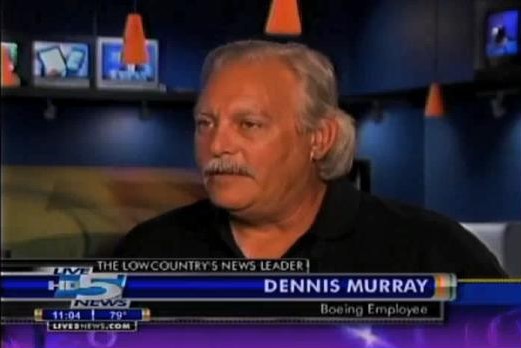
IAM bosses regularly discriminate against dissident workers. In 2011, Foundation-assisted South Carolina Boeing employee Dennis Murray recounted how IAM officials tried to shutter his plant because workers there had voted the IAM out.
RIDGWAY, PA – Twelve nonunion factory employees at Clarion Sintered Metals, Inc., have each received $1,000 in back pay bonuses after being illegally discriminated against by International Association of Machinists and Aerospace Workers (IAM) Local 2448 and their employer. With free legal aid from the National Right to Work Foundation, factory worker James Cobaugh filed federal charges against Clarion and IAM as he sought justice for himself and other non-member workers subject to unlawful discrimination.
Mr. Cobaugh’s charges against the union and his employer were filed on April 22, 2022, with the National Labor Relations Board (NLRB). The charges came after the union and Clarion Sintered Metals gave $1,000 bonuses to union members, but denied them to workers who exercised their legal right not to join the union. Rather than face prosecution by the NLRB, both the union and employer have now agreed to settle the case.
In addition to the non-union employees receiving the bonuses they were previously denied as a result of the illegal discrimination, both the IAM and Clarion Sintered Metals are required to post notices that inform workers of their right to refrain from joining a union. The notices also state union officials will not maintain or enforce such discriminatory agreements going forward.
Machinists Union Bosses Already Forced Non-Union Workers to Pay Dues
Because Pennsylvania lacks Right to Work protections for private sector employees, unions can force workers to pay up to 100% of union dues as a condition of keeping their jobs. This means that Mr. Cobaugh, although not a formal IAM union member, can be forced to pay up to 100% of IAM’s union dues to keep his job at Clarion Sintered Metals.
Even in Right to Work states, under federal law union bosses are granted the power to impose “representation” on individual workers against their will, including forcing non-member workers under union monopoly contracts they oppose. By stripping workers of their right to bargain for their own terms and conditions of employment, individual workers by law are prohibited from negotiating for themselves with their employers for better conditions.
Forced Union Monopoly ‘Representation’ Long Used to Discriminate
Union officials frequently use these government-granted powers to harm certain workers, for example those workers who, based on their productivity, would otherwise earn performance bonuses or higher compensation. Although union officials can impose one-size-fits-all monopoly contracts that favor some workers over others, there are some limits on how union monopoly powers can be used to discriminate.
The U.S. Supreme Court imposed these limits after union officials wielded their powers to negotiate and enforce racially discriminatory contracts (Steele v. Louisville & N.R. Co. et al.). Explicitly discriminating against workers who exercise their legally protected right to not formally join a union and not be subject to internal union rules, as the IAM officials did in this case, has also long been illegal.
“This situation highlights how workers less knowledgeable of their legal rights are susceptible to blatantly illegal tactics of power-hungry union bosses,” commented National Right to Work Foundation Vice President Patrick Semmens. “Mr. Cobaugh courageously stood up to the union’s unlawful actions, not only for himself, but also for the other non-member workers subjected to this illegal discrimination.”





