
WV Quarry Workers Win Freedom from Unwanted Boilermakers Union
National Labor Board revokes union’s monopoly status after union officials disclaim interest due to overwhelming worker support for decertification
Harpers Ferry, WV (December 5, 2025) – Holcim Millville Quarry employees are officially free from International Brotherhood of Boilermakers (IBB) Local DNCL union officials after the National Labor Relations Board (NLRB) Regional Director of Region 5 revoked the certification of the IBB as the workers monopoly “representative.”
The NLRB’s decision comes after IBB bosses “disclaimed interest” in the work unit, which followed a majority of workers signing a petition last month, asking the NLRB to hold a secret ballot election to “decertify” IBB union bosses as the workers exclusive representative. That petition was filed by quarry employee Curtis Mills with free legal representation from National Right to Work Legal Defense Foundation staff attorneys.
The NLRB is the federal agency tasked with enforcing federal labor law and with adjudicating disputes between employers, unions, and individual workers.
Mills petition was signed by a majority of the approximately 36 workers in the bargaining unit. The election, close to being scheduled, would have taken place among all the drivers, loaders, maintenance, and laborers at the Millville Quarry Harpers Ferry, WV, facility.
IBB officials faced with the reality that most workers wanted nothing to do with the union, decided to avoid the embarrassment of a formal vote by a majority of workers against the union, and disclaimed their status as the workers’ so-called representative.
“For the first time in a long time we are thrilled with the union’s decision,” commented Mills. “We are glad to have been able to reclaim our workplace.”
West Virginia is one of 26 states with Right to Work protections that ensure union affiliation and dues payment are fully voluntary. However, even in Right to Work states, union officials can impose exclusive bargaining control upon all workers within a workplace, even those who oppose the union.
“The Foundation is pleased to have played a part in helping Mills and his colleagues achieve their desired outcome in so short a time,” commented National Right to Work Foundation President Mark Mix. “Unfortunately, the experience of many other independent-minded workers is less streamlined, as the combination of union legal tactics and an NLRB that has created numerous non-statutory rules to undermine decertification efforts makes it frequently difficult to even get an election scheduled.
“Workers facing such circumstances should know the Foundation is here to assist them, because no worker should be trapped in union boss ‘representation’ they oppose,” added Mix.
After Year-Long Effort, McDowell County Commission on Aging Employees Free Themselves From SEIU Union Bosses
Majority of employees signed petition demanding Commission stop bargaining with SEIU; success follows months of union stonewalling
Welch, WV (November 14, 2025) – Following an effort lasting more than a year, employees of senior homecare nonprofit McDowell County Commission on Aging have successfully freed themselves from the control of Service Employees International Union (SEIU) 1199 officials. Commission employee John Reeves spearheaded the union removal effort with free legal aid from National Right to Work Foundation staff attorneys.
The success follows Reeves’ submission of a petition in which the majority of his fellow employees demanded that their employer stop recognizing the SEIU as their exclusive “representative.” Reeves submitted the petition to Commission management in late October. Under the National Labor Relations Act (NLRA), an employer may not engage in bargaining with union officials that lack majority support in a workplace. Commission management announced on November 4 that they had withdrawn recognition from the SEIU union.
West Virginia is a Right to Work state, meaning that union officials cannot enforce contracts that require workers to pay dues or be fired. In contrast, in states like neighboring Pennsylvania and Ohio that lack Right to Work protections, union officials can mandate dues or fees as a condition of getting or keeping a job. However, in both Right to Work and non-Right to Work states, union bosses have exclusive representation power over every worker in a unionized workplace, even those who voted against or otherwise oppose the union.
SEIU Officials Used Litigation to Block Workers From Voting
The effort by Commission employees to oust SEIU union bosses started back in June 2024, when Reeves submitted a union decertification petition to the National Labor Relations Board (NLRB). The NLRB is the federal agency responsible for enforcing federal labor law, a task that includes administering votes to install (or “certify”) and remove (or “decertify”) unions.
Commission management and SEIU chiefs agreed to the terms of a union decertification vote, which Reeves and his coworkers participated in on July 9, 2024. However, NLRB officials held up the ballot count, claiming that SEIU officials had unfair labor practice charges pending against Commission management.
After six months of delays, Commission officials and SEIU union bosses announced they had reached a settlement in the unfair labor practice case – but a provision of that settlement stipulated that they would “not entertain a new decertification for a…period of four months.” A regional NLRB official approved this settlement in its entirety, effectively tossing out Reeves’ and his coworkers’ ballots. Reeves urged the NLRB in Washington, DC, to reverse this decision, as the regional NLRB had never proven the alleged unfair labor practices, nor had the Commission admitted to them in the settlement.
As of November 2025, Reeves’ appeal was still pending, but he and his coworkers have now successfully removed the union through a different process.
“Mr. Reeves’ and his coworkers’ situation shows that, in practice, NLRB bureaucrats will frequently stifle workers’ rights simply to advance the interests of union officials or management,” commented National Right to Work Foundation President Mark Mix. “That is antithetical to the overarching purpose of federal labor law, which is to protect workers’ free choice, not protect incumbent union bosses’ power.
“Currently, the union decertification process is overly complex and prone to legal manipulation, delays, and derailment,” Mix added. “It is in dire need of reform, and both the NLRB and federal legislators have a role to play to prevent workers from being trapped under union so-called ‘representation’ opposed by a majority of employees.”
WV Millville Quarry Workers File Petition to Oust International Brotherhood of Boilermakers Local DNCL Union Bosses
Majority of Harpers Ferry quarry workers support petition seeking end of union monopoly “representation”
Harpers Ferry, WV (November 10, 2025) – With the support of a majority of his coworkers, Holcim Millville Quarry employee Curtis Mills has filed a petition with the National Labor Relations Board (NLRB) seeking a “decertification” election to end International Brotherhood of Boilermakers (IBB) Local DNCL union officials’ monopoly “representation” powers. The petition was filed with free legal aid from the National Right to Work Foundation.
The NLRB is the federal agency responsible for enforcing the National Labor Relations Act, a task that includes administering elections to install (or “certify”) and remove (or “decertify”) unions.
Mills’ petition, which was signed by a majority of approximately 36 workers in the bargaining unit, is requesting that the NLRB hold a secret ballot election for all the drivers, loaders, maintenance, and laborers at the Millville Quarry Harpers Ferry, WV, facility to oust IBB Local DNCL union officials from their workplace.
“Many of us are not happy with the union and feel it is time for a change to reclaim our voices,” commented Mills. “Though the NLRB is currently closed, we hope they will open soon so we can exercise our right to vote out this unwanted union.”
West Virginia is one of the 26 states with a Right to Work law that guarantees workers cannot be fired for refusing to pay union dues or fees. However, even under Right to Work, union bosses can still impose monopoly bargaining control over all employees in a workplace, even those who are opposed to the union’s representation. A successful decertification would end the union’s monopoly bargaining powers.
The decertification petition is just the latest example in a long history of the Foundation defending the rights of West Virginia workers. For example, Foundation staff attorneys filed 10 briefs in a long-running, but ultimately unsuccessful, union boss lawsuit seeking to overturn West Virginia’s popular Right to Work law.
In the West Virginia Supreme Court’s unanimous ruling in the case upholding the Right to Work law, the justices relied heavily upon the Foundation-won Janus v. AFSCME U.S. Supreme Court decision, which established that all public employees in America enjoy Right to Work protections under the First Amendment.
“Mills and his coworkers have filed a majority-backed petition to free themselves from union officials’ so-called ‘representation,’ but ejecting an unwanted union is often far harder than it should be,” commented National Right to Work Foundation President Mark Mix. “Overly complex rules, including NLRB-invented ‘bars’ to decertification, contribute to the fact that a recent study found that just one in 20 employees has ever voted for the union that purports to represent them.
“The Foundation is proud to assist a growing number of workers seeking to throw off the chains of unions they oppose,” added Mix. “Ultimately, though, full worker freedom will only be accomplished when no worker anywhere can be forced under a union monopoly against their will.”
Case Closed: Nurse Prevails in 11-Year Legal Fight Over Forced Dues
The following article is from the National Right to Work Legal Defense Foundation’s bi-monthly Foundation Action Newsletter, January/February 2022 edition. To view other editions of Foundation Action or to sign up for a free subscription, click here.
100 Rhode Island hospital employees win refund of dues illegally seized for union lobbying

After over a decade of battling power-hungry UNAP union bosses in court, Jeanette Geary has secured not only refunds of dues seized for union politics, but a First Circuit decision clarifying non-members can never be charged for union lobbying.
WARWICK, RI – Jeanette Geary finally achieved a total victory in her 11-year legal battle against union bosses. She and 99 other current and former nurses at Kent Hospital in Rhode Island received refunds of forced dues that were illegally used to support union lobbying in state legislatures. Foundation attorneys represented Geary throughout her fight.
Geary’s journey began when she grew frustrated with United Nurses and Allied Professionals (UNAP) union bosses in her workplace. “I realized what the union was doing,” Geary explained. “The union leadership had no interest in nurses or our professional work. Their only interest was collection of dues and fees.”
Geary resigned her union membership, but union dues were still extracted from her paycheck because Rhode Island is a forced unionism state that lacks Right to Work protections. However, thanks to the Foundation-won CWA v. Beck Supreme Court decision, nonmember workers can only be forced to pay fees for union activities “germane” to union monopoly bargaining. They cannot be forced to pay the portion of dues that funds activities like union lobbying.
Nurse Harassed for Standing Up to Union Bosses
Geary demanded a breakdown of the union’s expenditures, but union bosses refused to give her a legally required independent auditor’s verification of how they calculated non-members’ reduced forced fees. Like many who speak up against union bosses, Geary became a target for union harassment. “They laughed at me. They had their workplace reps ridicule me on the job and tell me I could file grievances that would be thrown away and said so with a big smile,” Geary recalled.
In 2009, Geary filed federal charges against union officials. The trial revealed UNAP officials were charging non-member nurses for lobbying in state legislatures. Despite the Supreme Court’s clear mandate in Beck that non-members’ money could not be used to fund political causes, union lawyers argued the lobbying was “germane” to the union’s monopoly bargaining.
Thanks to delays caused by President Obama’s illegal recess appointments to the National Labor Relations Board (NLRB), Geary had to file two petitions with the U.S.
Court of Appeals in Washington, D.C., and didn’t get a final NLRB ruling for nearly a decade. Finally, in March 2019, the NLRB ruled 3-1 that union officials cannot charge non-members for lobbying of any kind. It also ruled that union officials must provide independent verification that the union expenses they force non-members to pay have been audited.
Union Bosses Ridiculously Claimed Some Union Lobbying Wasn’t Political
Union officials still wouldn’t abandon their argument that nonmembers could be forced to pay for some union lobbying as a condition of employment. Union lawyers appealed the NLRB’s decision to the U.S. Court of Appeals for the First Circuit. A three-judge panel that included retired Supreme Court Justice David Souter ruled unanimously in Geary’s favor, saying “we see no convincing argument that legislative lobbying is not a ‘political’ activity.”
Union officials made a last-ditch attempt to overturn the decision, requesting an en banc hearing by the entire Court of Appeals, but that request was denied. In September 2021, union bosses finally paid back, with interest, thousands of dollars taken from Geary and 99 other current and former Kent Hospital nurses who were not union members but were charged for the union’s lobbying, bringing the decade-long case to a close.
“Jeanette Geary faced workplace ridicule for her decision to stand up to union bosses, yet she persevered for eleven years,” said National Right to Work Foundation Vice President and Legal Director Raymond LaJeunesse. “In the process, she won important legal precedents that will protect thousands of other workers from having their money illegally used to fund union politics.”
Sixteen States Back Foundation’s Petition to High Court in Chicago Educator Case
The following article is from the National Right to Work Legal Defense Foundation’s bi-monthly Foundation Action Newsletter, September/October 2021 edition. To view other editions of Foundation Action or to sign up for a free subscription, click here.
Amicus brief: Unions “refuse to stop collecting dues despite unequivocal employee demands”
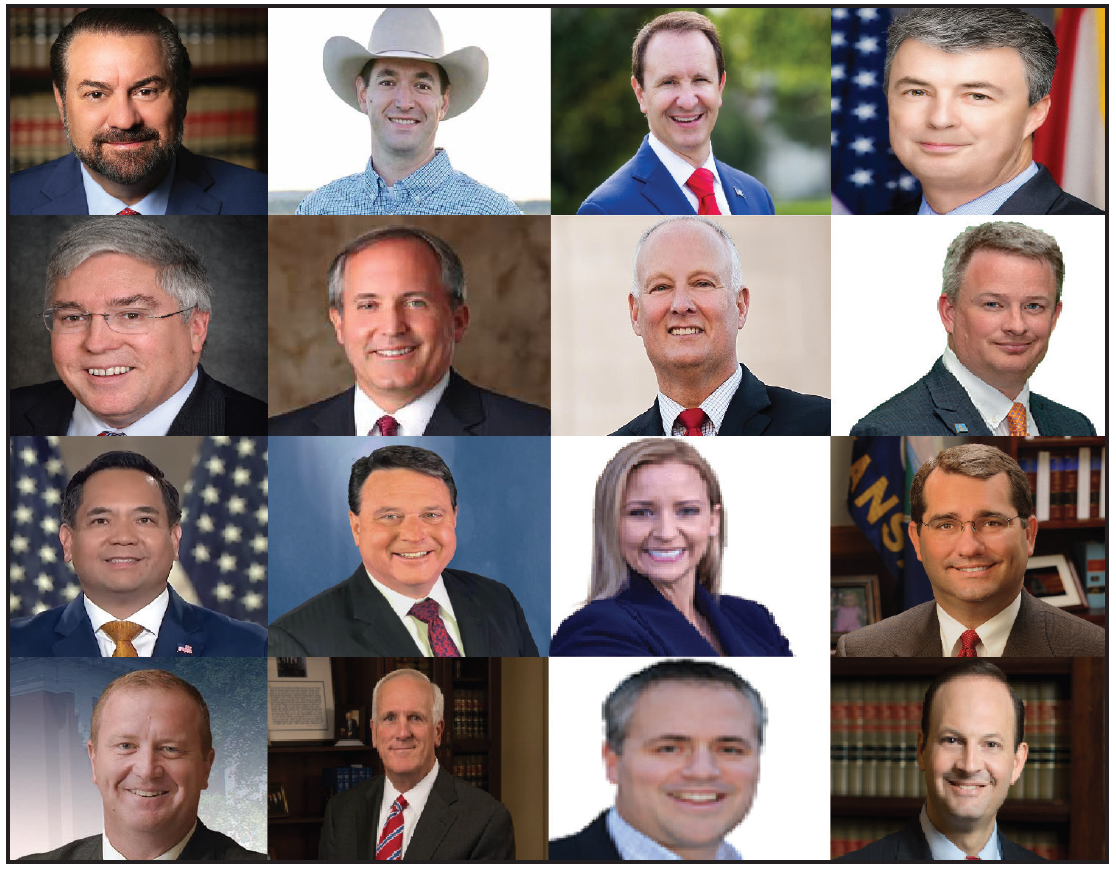
“Janus has been ignored,” wrote sixteen attorneys general in their amicus brief supporting Ifeoma Nkemdi and Joanne Troesch’s petition pressing the Supreme Court to hear their case and declare “escape periods” a First Amendment violation.
WASHINGTON, DC – In July, sixteen attorneys general threw the support of their states behind Chicago Public Schools educators Ifeoma Nkemdi and Joanne Troesch, who are urging the U.S. Supreme Court to hear their case defending their First Amendment right to cut off union financial support as recognized in the Foundation-won Janus v. AFSCME decision.
In an amicus brief encouraging the High Court to hear the case, attorneys general from Alaska, Alabama, Arizona, Arkansas, Indiana, Kansas, Louisiana, Missouri, Montana, Nebraska, South Carolina, South Dakota, Tennessee, Texas, Utah, and West Virginia argue that “escape period” restrictions like the one that Chicago Teachers Union (CTU) bosses foisted on Troesch and Nkemdi are a widespread threat to public employees’ rights under the Janus Supreme Court decision.
In 2018, the Supreme Court ruled in Janus v. AFSCME that public employees’ First Amendment rights are violated when they are forced to fund a union as a condition of employment. The Court also held that union dues can only be taken from a public employee with an affirmative and knowing waiver of that employee’s First Amendment right not to pay.
Unions Are Seizing Money from ‘Tens of Thousands’ Unconstitutionally, Brief Says
The CTU-concocted “escape period” Nkemdi and Troesch are challenging blocks employees from exercising their First Amendment Janus right to end union financial support except during one month per year. The educators’ petition for writ of certiorari presses the High Court to hear their case to affirm that Janus does not permit union bosses to profit from schemes that constrict workers’ constitutional right to refrain from subsidizing a union.
The states’ amicus brief emphasizes how glaringly union officials have flouted Janus with restrictions, as well as how widespread the schemes are: “Janus has been ignored. Across the country public-sector unions have resisted Janus’s instructions and devised new ways to compel state employees to subsidize union speech. Unions place onerous terms on dues forms that prohibit state employees from opting out of paying dues except during narrow (and undisclosed) windows during the year.”
The brief continues: “Unions refuse to inform state employees that they have a First Amendment right not to pay union dues. And unions refuse to stop collecting dues despite unequivocal employee demands. The result is that tens of thousands of state employees across the country are having dues deducted to subsidize union speech without any evidence that they waived their First Amendment rights . . . .”
Nkemdi and Troesch’s case “implicates these precise concerns” and the Court must hear it, the brief maintains.
In addition to the states’ brief, policy groups Goldwater Institute, Cato Institute, Freedom Foundation, and Liberty Justice Center filed amicus briefs backing the case.
Justices May Already Be Showing Interest in Foundation-Backed Case
In late July, the Supreme Court ordered lawyers for CTU and the Chicago Board of Education to file a response brief to Troesch and Nkemdi’s petition, a signal that some Justices may be interested in taking up the case.
Also pending at the High Court is Foundation attorneys’ anti- “escape-period” case for Susan Fischer and Jeanette Speck, two New Jersey teachers. Both that case and Troesch and Nkemdi’s case are expected to be fully briefed in October, after which the Justices will decide whether to take them.
“As union bosses continue to use deceptive ‘escape period’ arrangements to keep worker money flowing unconstitutionally into their coffers, support continues to roll in from across the country for Troesch and Nkemdi, who are sticking up for independent-minded public servants who simply want to serve their communities without being forced to fund union activities,” observed National Right to Work Foundation President Mark Mix. “The High Court must weigh in to affirm that public workers’ First Amendment rights cannot be confined to union officials’ arbitrary schedules.”
WV, TX Employees Defend Rights as Biden NLRB Appointee Attempts to Block Cases
The following article is from the National Right to Work Legal Defense Foundation’s bi-monthly Foundation Action Newsletter, May/June 2021 edition. To view other editions or to sign up for a free subscription, click here.
‘Acting’ GC tries to stop prosecution of union bosses for illegal dues, secret-organizing deal
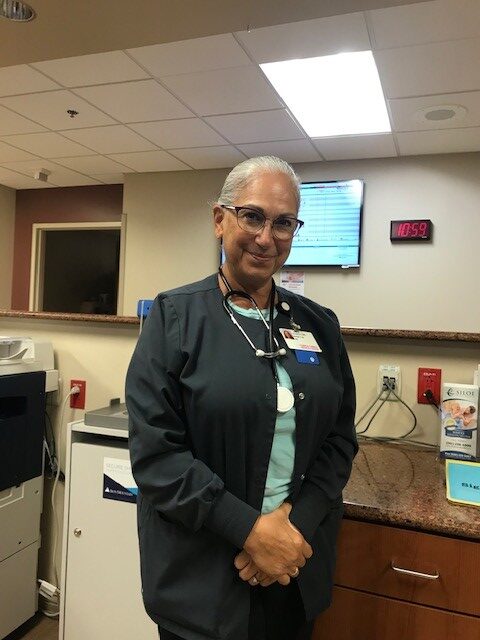
Marissa Zamora is challenging the authority of NLRB “Acting” General Counsel Peter Ohr, who was installed by Pres. Biden in an unprecedented power grab and began attacking the rights of workers opposed to associating with union officials.
WASHINGTON, DC – President Biden’s unprecedented removal of National Labor Relations Board (NLRB) General Counsel Peter Robb, and subsequent installation of forced-unionism zealot Peter S. Ohr as Robb’s “Acting” replacement, quickly threatened workers’ individual rights. It also threatened the independence of the Board itself, including in multiple ongoing cases brought with National Right to Work Foundation legal aid.
In two cases brought by Foundation staff attorneys that are already before the NLRB, Ohr is attempting to stop the Board from ruling against union officials. One is a case for Texas-based nurse Marissa Zamora, which challenges union officials’ ability to hide secret “neutrality agreements” that limit workers’ rights. The other, brought for West Virginia Kroger employee Shelby Krocker, seeks to prosecute union officials for coercing workers into signing dues checkoff authorizations that are supposed to be voluntary.
Former NLRB General Counsel Peter Robb, who supported the workers in both of these cases, was removed by President Biden just minutes after his inauguration, despite the fact that Robb still had nearly 11 months remaining in his Senate-confirmed four-year term.
This unprecedented and possibly illegal maneuver flies in the face of the law creating the NLRB, which envisioned an independent General Counsel. Since the office of NLRB General Counsel was established in 1947, no sitting General Counsel of the NLRB has ever been fired by a president before the end of their term, even when the White House changed hands.
Zamora’s case progressed to the full NLRB in Washington, D.C., after an NLRB Administrative Law Judge (ALJ) dismissed a complaint that former NLRB General Counsel Peter Robb had issued, prosecuting the National Nurses Organizing Committee (NNOC) for refusing to disclose to represented employees its secret “neutrality agreement.”
TX Nurse Fights Biden Appointee Move to Shield Union’s Secret Deal
Though Zamora’s Foundation-provided attorneys and Robb had both filed exceptions urging the full Board to reverse the ALJ’s decision, NLRB Acting General Counsel Peter Ohr filed a motion on February 23, 2021, seeking unilaterally to send the complaint back to the NLRB Fort Worth regional office to be dismissed.
So-called “neutrality agreements” are organizing deals struck between union officials and employers, usually without the knowledge of employees in a workplace. They frequently contain provisions that require employers to silence opposition to unionization. In Zamora’s situation, the neutrality agreement was used to limit her ability to inform her coworkers about their right to vote out the union.
Zamora’s opposition brief challenges Ohr’s attempt to kill the case. It argues that the case is already before the full Board, and she “is a full party with a right to have her pending exceptions decided by the Board.” It notes that letting Ohr shut her out at this stage would “infringe on the Board’s exclusive power to adjudicate violations of” federal labor law.
Further, the brief contends that because of Robb’s unlawful removal, Ohr lacks the legal authority to even ask the NLRB to end the case. Allowing “the President to fire the General Counsel at will would do irreparable damage to the NLRB’s function as an independent agency,” the brief says.
In Krocker’s case, NLRB Region 6 in Pittsburgh initially dismissed Krocker’s charge challenging United Food and Commercial Workers Union (UFCW) checkoff cards which falsely stated that they “MUST BE SIGNED.”
West Virginia Kroger Employee Stands Up to Union-Allied Ohr
Foundation attorneys successfully appealed this dismissal to General Counsel Peter Robb, who sustained the charge and ordered NLRB Region 6 to issue a complaint prosecuting UFCW Local 400 for the violation.
In fact, Robb ordered Region 6 to issue the complaint on several additional grounds, including maintenance of a checkoff that prohibited employees from ending dues deductions after the expiration of a contract.
After an ALJ declined to rule that UFCW Local 400 officials violated the law with their “MUST BE SIGNED” demands and other unlawful provisions, Krocker’s Foundation staff attorneys and General Counsel Robb both appealed the case to the NLRB. Their appeals have been fully briefed before the Board since September.
After Ohr’s appointment, Region 6 entered into an inadequate informal settlement over Krocker’s objection and filed a motion to send the case back to Region 6.
Biden Appointee Shielding Union Boss Privileges
Krocker’s opposition to that motion argues, as does Zamora’s, that her case is already pending before the full NLRB and that Ohr lacks the authority to divert it away from the Board’s judgment.
“‘Acting’ NLRB General Counsel Peter Ohr’s unabated attacks on Foundation cases seeking to defend workers’ individual rights clearly show how imminent a threat our cases are to union bosses’ coercive and greedy behavior,” commented National Right to Work Foundation Vice President Patrick Semmens. “Ohr demonstrates repeatedly that he has no problem with turning the NLRB into the Biden Administration’s tool for stifling the rights of independent-minded workers who dare to stand up to Biden’s union boss allies.”
Legal Victory: West Virginia Supreme Court Unanimously Upholds Right to Work
The following article is from the National Right to Work Legal Defense Foundation’s bi-monthly Foundation Action Newsletter, July/August 2020 edition. To view other editions or to sign up for a free subscription, click here.
Foundation attorneys filed 10 legal briefs defending Right to Work from union boss legal attack
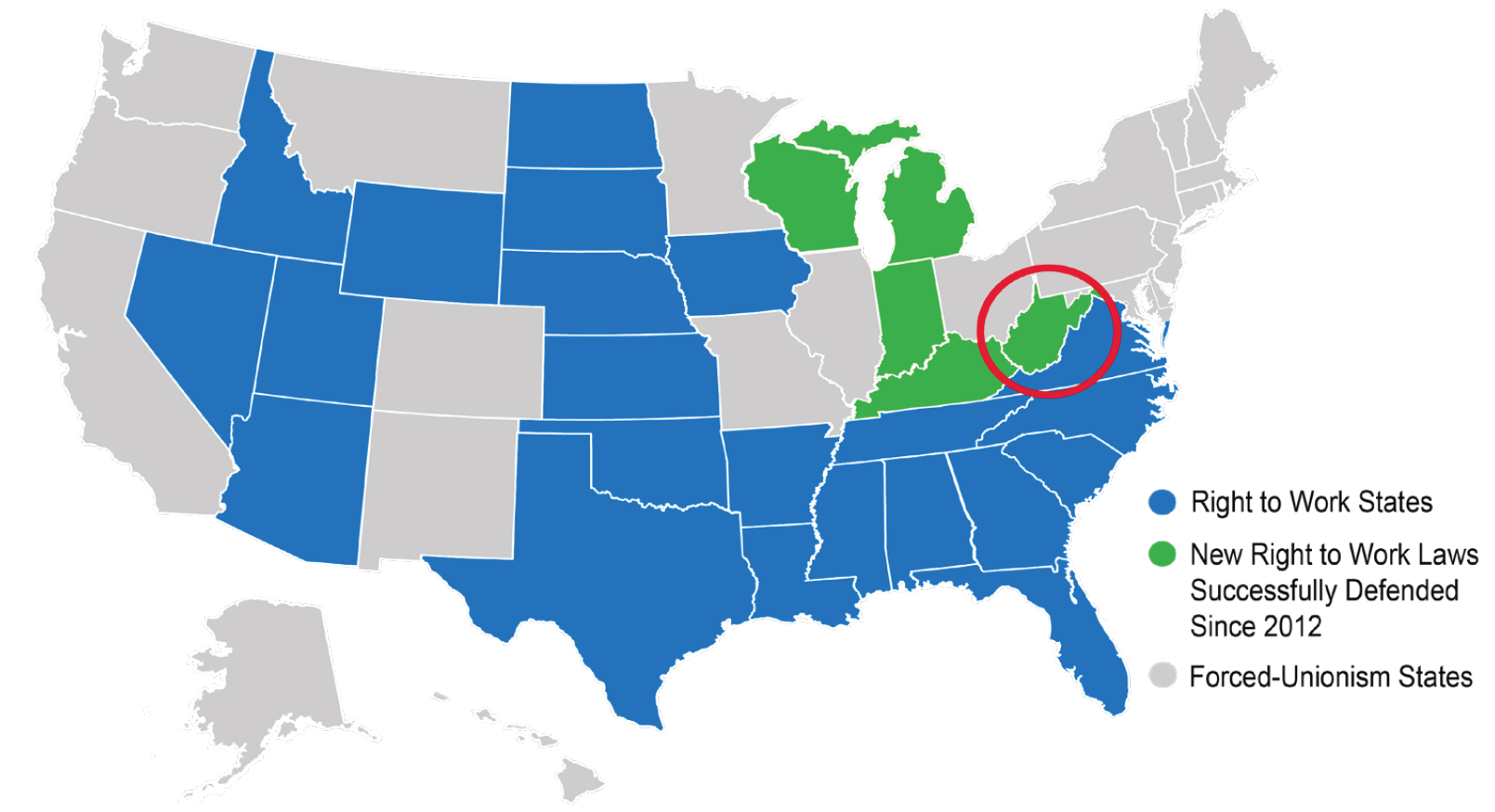
The Foundation added West Virginia to the list of states where it has successfully helped defend Right to Work since 2012. Now the state’s motto, “Montani Semper Liberi” (“Mountaineers are Always Free”) applies to the state’s workers.
CHARLESTON, WV – The West Virginia Supreme Court closed the book on a case brought by union lawyers seeking to overturn the state’s popular Right to Work Law, which protects Mountain State workers from being forced to pay dues or fees to a union as a condition of employment. Foundation staff attorneys filed 10 briefs in defense of Right to Work, including briefs submitted for pro-Right to Work employees who wanted the freedom to cut off financial support for unions in their workplace.
Ultimately, the West Virginia Supreme Court rejected outrageous arguments from union lawyers that union hierarchies have a legal “right” to a portion of a worker’s paycheck because that worker is also forced to accept their so-called “representation.” In their ruling, the justices repeatedly cited the landmark 2018 Foundation-won Janus v. AFSCME decision in which the U.S. Supreme Court ruled that requiring public sector employees to pay union dues as a condition of employment is a First Amendment violation.
In the decision, Justice Evan Jenkins wrote for the majority that West Virginia’s Right to Work Law “does not violate constitutional rights of association, property, or liberty” and that states are “expressly authorized under federal law” to prohibit union bosses from requiring dues or fees as a condition of employment. Justice Jenkins also maintained that Janus provides strong support for the law.
The West Virginia Legislature passed Right to Work over then-Governor Earl Ray Tomblin’s veto in February 2016, making West Virginia the 26th Right to Work state. The Foundation immediately offered free legal assistance to employees who had questions about exercising their rights.
Foundation Attorneys Spring into Action as Soon as Protections Enacted
The Foundation also created a special task force to defend the West Virginia law, which began applying to collective bargaining agreements that were entered into, modified, renewed or extended after July 1, 2016.
On June 27, 2016, lawyers for several state unions brought a case (later renamed West Virginia AFL-CIO, et al. v. Governor James C. Justice, et al.) in an attempt to overturn the popular law. Polling consistently shows that Americans overwhelmingly back Right to Work laws. A poll of union households even found that 80 percent of union members supported the Right to Work principle that union membership and dues payment should be voluntary and not required as a condition of employment.
Despite decades of precedent upholding such laws, Judge Jennifer Bailey of the Kanawha County Circuit Court issued a February 2017 order at the behest of union lawyers, granting a preliminary injunction that purported to block the law. The union lawyers’ primary arguments in this case for why the Right to Work protections for workers should be overturned had already been rejected by a Federal Court of Appeals and the Indiana Supreme Court. They also ran counter to nearly 70 years of legal precedent, including U.S. Supreme Court decisions, upholding the constitutionality of state Right to Work laws.
Foundation staff attorneys filed legal briefs for Reginald Gibbs, who worked as a lead slot machine technician with the Greenbrier Hotel in White Sulphur Springs, West Virginia, and Donna Harper, who worked as a laundry aide and nursing assistant at the Genesis HealthCare Tygart Center in Fairmont, West Virginia. Harper’s brief explained that because she had exercised her right under the Right to Work protections to refrain from subsidizing the Teamsters union at her workplace, killing those protections would result in her being fired.
Union Boss Attacks on Right to Work in Other States Successfully Turned Back
“The West Virginia Supreme Court’s unanimous decision to safeguard the right to freely choose whether or not one will financially support a union marks a great victory for Mountain State employees,” observed National Right to Work Foundation President Mark Mix. “Workers who disapprove of union boss activities can rest assured that they cannot be terminated for refusing to tender dues to a union, and those who want to support union activities may do so uninhibited.”
In addition to West Virginia, Foundation staff attorneys have successfully pursued legal action in recent years to defend and enforce new Right to Work laws in Indiana, Michigan, Wisconsin and Kentucky, all of which have passed Right to Work protections for employees since 2012.
West Virginia Supreme Court Cites Foundation-Won Janus Case in Decision to Uphold Right to Work Law
In April the West Virginia Supreme Court upheld West Virginia’s Right to Work law, ending a multi-year union boss legal challenge.
National Right to Work Foundation Vice President and Legal Director Raymond LaJeunesse wrote an article for The Federalist Society analyzing the decision in the case: Morrisey v. West Virginia AFL-CIO. LaJeunesse just published piece highlights how the justices relied heavily on the Foundation-won Janus v. AFSCME U.S. Supreme Court decision to uphold the law protecting workers against being forced to subsidize union activities:
“Four of the five Justices concluded in Morrisey that the United States Supreme Court’s decision in Janus v. AFSCME, 138 S. Ct. 2448 (2018), required that result. Janus held that forcing nonmembers to pay union fees as a condition of public employment violates the First Amendment. As Justice Workman put it, concurring in the judgment of the Court in Morrisey, ‘there is no principled basis on which to conclude that under the legal analysis upon which Janus is based, a prohibition on the collection of agency fees is constitutional for public employees’ unions but unconstitutional for private employees’ unions.'”
Foundation staff attorneys filed 10 legal briefs in Morrisey in defense of West Virginia’s Right to Work law. Foundation President Mark Mix hailed the decision as a “a great victory for Mountain State employees.”
Since 2012, Foundation staff attorneys have defended and enforced five newly passed Right to Work in states including West Virginia.
Foundation Staff Attorneys Appeal NLRB Settlement that Fails to Compensate Victims of Union Discrimination Scheme
Tygart Center settlement failed to provide a complete remedy to employees for its discriminatory practice of paying more per hour to union stewards
Fairmont, WV (May 26, 2020) – National Right to Work Legal Defense Foundation staff attorneys have appealed a forced settlement agreement between the National Labor Relations Board (NLRB) and Tygart Center imposed on healthcare worker Donna Harper. Harper objects to the imposed settlement because it fails to provide a complete remedy for her and other workers who were discriminated against under the union bargaining agreement between Tygart Center and Teamsters Local 175.
In the settlement, Tygart Center agrees to stop enforcing an unlawful contract provision under which Teamsters union stewards have been paid more per hour than other employees. However, as Foundation attorneys argue in their appeal to NLRB General Counsel Peter Robb, the settlement does not require Tygart Center to compensate the employees who were denied the additional pay per hour as a result of the discrimination.
“The Employer and Union unlawfully discriminated in favor of Union stewards, granting them an increased wage in the [union contract] while denying that wage to all others,” one portion of the appeal reads. “This action denied a benefit to every employee who was not a Union steward.”
Foundation staff attorneys also filed an amicus brief for Harper with the West Virginia Supreme Court to defend the state’s Right to Work law against a protracted lawsuit brought by several unions attempting to overturn the law and restore union officials’ power to have workers fired for refusing to pay union dues or fees.
The West Virginia Supreme Court on April 21 of this year unanimously upheld the constitutionality of West Virginia’s Right to Work law, which has been in effect during that litigation due to earlier orders issued by that court.
“Union bosses in West Virginia want nothing more than to coerce workers into paying dues either by misleading workers by wrongly telling them they must pay union dues or by trying unsuccessfully to overturn the state’s Right to Work law in court,” commented National Right to Work Foundation President Mark Mix. “Foundation staff attorneys are ensuring that employers and union bosses in the Mountain State do not get away with illegal deals to fill union coffers or unlawfully discriminate against employees who choose to exercise their rights to not engage in union activity.”





