
Foundation Defends Michigan Workers with Forced Dues Looming
The following article is from the National Right to Work Legal Defense Foundation’s bi-monthly Foundation Action Newsletter, July/August 2023 edition. To view other editions of Foundation Action or to sign up for a free subscription, click here.
With Right to Work repeal law passed, workers seek to escape mandatory payments
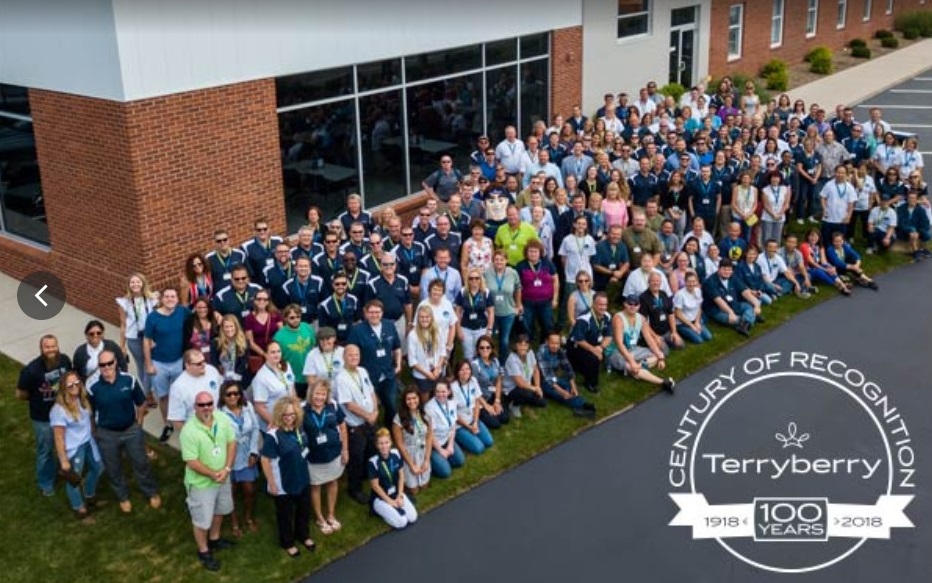
Michigan legislators’ unpopular decision to repeal the state’s Right to Work law helped prompt Mary Soltysiak and her coworkers’ move to vote out the IAM union.
LANSING, MI – Despite poll after poll showing 70 percent of Michiganders wanted Michigan’s decade-old Right to Work law left in place, Gov. Gretchen Whitmer and union cronies in the Michigan Legislature voted to strip Wolverine State workers of their right to refrain from funding unwanted union bosses in March. In response, the Foundation sprang into action, issuing a Special Legal Notice to Michigan workers advising them of their legal options as the state transitions to a forced-dues regime. The notice reminded workers that, despite what union bosses may claim, the state’s Right to Work law remains in effect until 90 days after the legislative session ends later this year — and also what they can do in advance of forced dues being legal again. Unsurprisingly, given Right to Work’s popularity even among union households, Michigan workers are stepping up and taking action to defend their rights against coercive unionism.
Michigan Workers Battle Forced-Dues Schemes Ahead of Repeal
For example, Foundation attorneys are currently assisting Grand Rapids-area Kroger employee Roger Cornett’s challenge to an illegal dues scheme perpetrated by United Food and Commercial Workers (UFCW) union officials. Cornett hit UFCW bosses with federal charges this May, accusing them of ignoring a letter in which he exercised his right to cut off dues deductions from his paycheck. Cornett’s charges also maintained that UFCW bosses sought to seize money from him using a form that blatantly violates existing federal law. Cornett’s charge says the form is illegal because of its “dual purpose” nature, meaning just one signature confusingly locks a worker into both membership and dues deductions. Federal law requires any authorization for union dues deductions to be voluntary and separate from a union membership application. UFCW bosses’ contempt for longstanding federal protections in Cornett’s case likely indicates how aggressively union officials will pursue forced dues under a non-Right to Work regime. The Foundation’s legal notice also counsels workers that they can avoid forced-dues arrangements entirely by petitioning the NLRB to hold “decertification elections” at their workplaces, in which workers can vote unpopular unions out.
Legal Notice Counsels Workers of Right to Vote Out Unwanted Unions
Mary Soltysiak, who opposes forced dues, heard news of the upcoming repeal and filed a petition to decertify the International Association of Machinists and Aerospace Workers (IAM) District Lodge 60/Local Lodge 475 union with free legal aid from Foundation staff attorneys. Soltysiak and her colleagues work at Terryberry, a manufacturing firm in Grand Rapids, MI.
Soltysiak stated that she and some of her colleagues “contacted [a Foundation attorney] and filled out paperwork to get out of paying union dues around the year 2018 because of the Right to Work . . . law.”
“The union has done nothing but hurt my paycheck and my vacation hours,” Soltysiak added.
Soltysiak and her coworkers achieved victory this May, when the NLRB certified their majority vote ousting the IAM union. Hopefully, their success portends the future success of the growing number of workers in Michigan and across the country looking to decertify the unions in their workplaces.
Foundation Also Defending Public Sector Right to Work Protections
As noted in the Foundation’s legal notice, the Michigan Right to Work repeal does not affect public sector Michigan employees. Under the Foundation-won Janus v. AFSCME Supreme Court decision, no public worker in America can be forced to subsidize a union as a condition of employment. But, as the repeal is looming, Michigan public sector union officials are nonetheless seeking to undermine public employees’ freedom to refrain from union support through so-called “fee-for-grievance” schemes.
This April, the Foundation submitted a brief in the Michigan Supreme Court case Technical, Professional and Officeworkers Association of Michigan (TPOAM) v. Renner, in which TPOAM officials are trying to enforce a “fee-for-grievance” policy against Saginaw County employee Daniel Renner. Under it, union bosses strip nonmember public employees of any power to file grievances themselves, and instead mandate that they pay fees sometimes exceeding yearly union dues to use the union’s grievance system.
Michigan legislators’ unpopular decision to repeal the state’s Right to Work law helped prompt Mary Soltysiak and her coworkers’ move to vote out the IAM union.
In the brief, Foundation staff attorneys refute the union’s claims for this newfound power, stating that “fee-for-grievance” schemes were never authorized by the Michigan Legislature and are inconsistent with federal law.
Foundation Attorneys Will Defend Worker Freedom in Michigan
“Michigan union officials and their allies in the state legislature have contempt for workers’ individual rights that knows no bounds,” commented National Right to Work Foundation Vice President and Legal Director William Messenger. “That was made clear by the repeal of the popular Right to Work law, and the attempt to undermine Right to Work protections for public sector employees which are safeguarded by the First Amendment under the Foundation’s Janus U.S. Supreme Court victory.”
“Michigan workers have a long road ahead to restore their rights against union coercion, but Foundation attorneys are fighting alongside these workers, and will continue to fight until no Michigan worker can be forced to pay union bosses they disapprove of just to keep a job,” Messenger added.
Foundation: Texas Taxpayers Shouldn’t Be Forced to Fund Union Activities
The following article is from the National Right to Work Legal Defense Foundation’s bi-monthly Foundation Action Newsletter, May/June 2023 edition. To view other editions of Foundation Action or to sign up for a free subscription, click here.
Brief says Janus explains why Texas Supreme Court must invalidate ‘official time’ scam
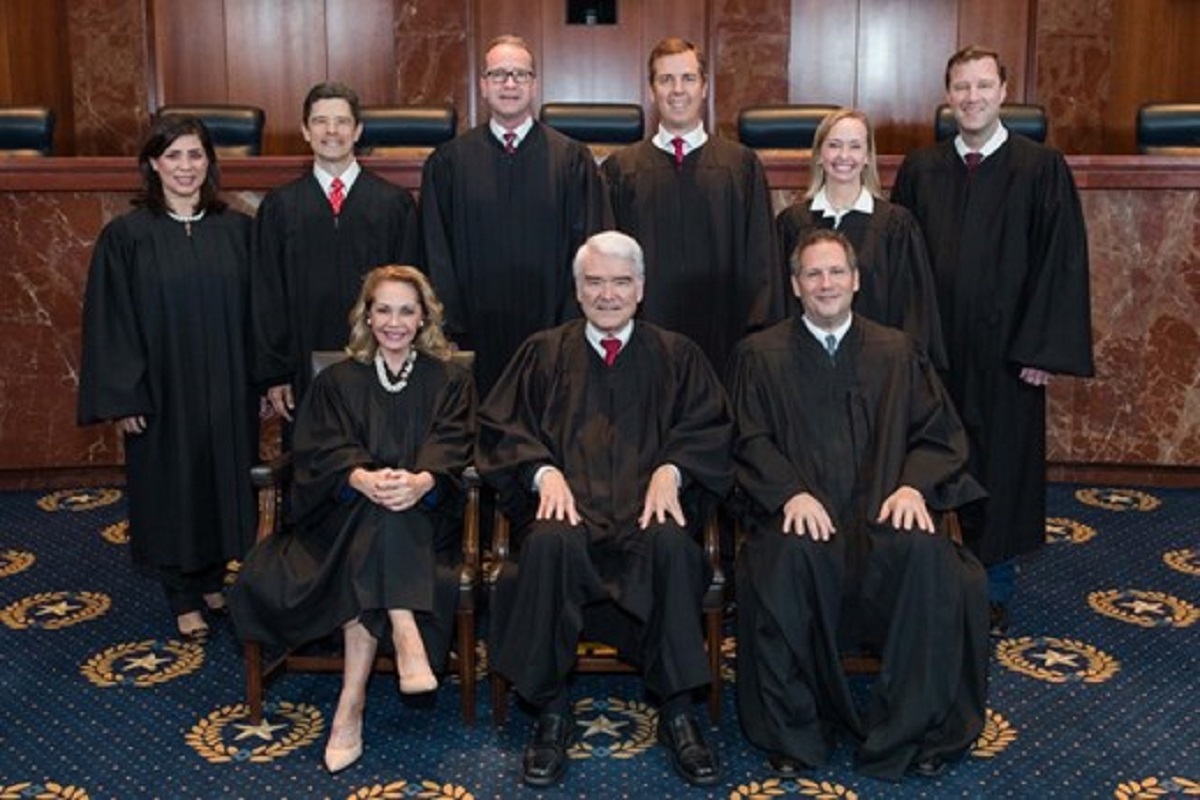
Don’t Mess with Taxes: The Foundation urged the Texas Supreme Court (above) in recent legal briefs to quash the City of Austin’s scheme funneling taxpayer money to union ideological activities.
AUSTIN, TX – Union officials spend billions of dollars to influence the political system every election cycle. This is why they are so desperate for forced-dues power — it gives them a guaranteed stream of revenue to sustain their agendas, regardless of whether workers support the union hierarchy’s aims.
But workers are increasingly taking advantage of their rights under Right to Work laws and the landmark National Right to Work Foundation-won Janus v. AFSCME U.S. Supreme Court decision to refrain from financially supporting union bosses of whom they do not approve.
Union bosses in Austin, TX, have apparently worked around this dilemma by shifting the burden for funding the union agenda to taxpayers. Through a so-called “official time” scheme, City of Austin employees who are union officials receive compensation from the public purse for conducting union business on the clock.
‘Official Time’ Boosts Inherently Political Government Union Agenda
Foundation attorneys recently filed a brief in the Texas Supreme Court case Roger Borgelt v. City of Austin, arguing that the Foundation-won Janus decision definitively shows why Austin’s scheme violates the Texas Constitution’s prohibitions against payouts of public funds to serve private interests (known as the “Gift Clauses”). The High Court ruled in Janus that forcing public sector workers to fund any union activities as a condition of employment violates the First Amendment, and that union dues can only be deducted from a public sector worker’s paycheck with his or her freely given consent.
An “official time” scheme, which instead forces taxpayers into funding those same union activities, “conflicts with the Supreme Court’s reasons for holding in Janus that it violates the First Amendment to require public employees to subsidize union activities,” says the Foundation’s brief.
The Foundation points out in its brief the Court’s Janus holding that all public sector union undertakings “constitute speech and petitioning on matters of political…concern,” and that by funneling taxpayer money into such speech “the City is effectively paying individuals to lobby the City for a private advocacy organization and its members.”
“The notion that this political advocacy predominantly serves a public purpose, as opposed to predominantly benefiting the private organization, is untenable,” the brief reads.
The brief also refutes an assertion from a lower Texas court that “official time” payments made by the city are actually part of union officials’ compensation for their normal job duties. This defies Janus’ reasoning that public employees who are also union officials “do not act as government agents pursuing their official job duties when they act as union officials.”
“For example, in granting paid leave to employee Bob Nicks to act as the Union’s president, the City is not paying Mr. Nicks for his services as a firefighter or as a public servant,” the brief explains. “The City is paying Mr. Nicks for his services as an agent of a private organization.”
The brief also reveals the disturbing implications of the union-backed argument that taxpayer subsidies for “official time” are needed to maintain harmonious relations between the city and the union: “If respondents contend that Union officials would disrupt City services if they did not receive [‘official time’], that would make the benefit akin to the City paying protection money” to union officials, reads the brief.
Union Bosses Should Not Get Public Funds to Pursue Union Interests
“The Texas Supreme Court should recognize that union officials are not entitled to a slice of taxpayer funds to ‘bargain’ against public interests,” commented National Right to Work Foundation Vice President and Legal Director Raymond LaJeunesse. “Texas’ Gift Clauses forbid the payout of public funds for activities that don’t have a tangible public benefit, and it’s hard to think of an arrangement that violates the Clauses more plainly than letting union bosses pursue private union business on the taxpayer dime.”
“Although Janus now protects public employees around the country from being forced to fund union activities and speech against their will, unfortunately many states and municipalities across the country permit union bosses to subsidize those same inherently political activities using direct payment of tax dollars,” LaJeunesse added.
“If union bosses cannot convince rank-and-file workers to voluntarily fund such activities as Janus requires, they should re-examine their priorities, not seek to force taxpayers to pay for what public employees will not.”
Illinois Security Officer Defends Janus Rights Amidst Union Discrimination
The following article is from the National Right to Work Legal Defense Foundation’s bi-monthly Foundation Action Newsletter, March/April 2023 edition. To view other editions of Foundation Action or to sign up for a free subscription, click here.
Union officials sought to coerce membership by preventing non-members from defending their jobs
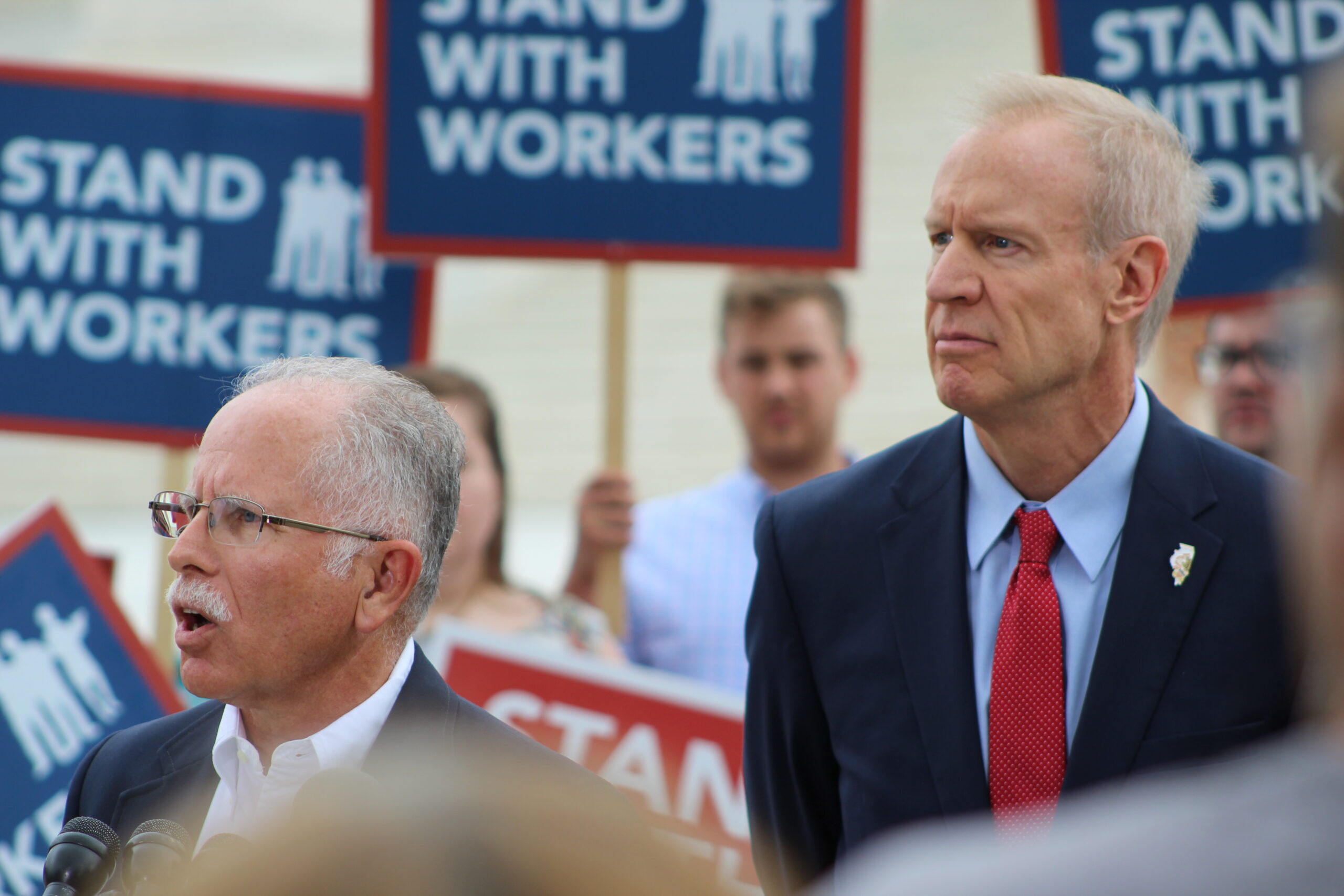
Foundation attorneys aided Illinois public employee Mark Janus with former Illinois Governor Bruce Rauner (right) in his landmark First Amendment victory. But Foundation attorneys often must fight to enforce Janus rights, as in Chris Logan’s case.
CHICAGO, IL – The National Right to Work Foundation’s landmark Supreme Court victory in Janus v. AFSCME was a milestone for public sector workers. For the first time, the Court recognized that every American public sector worker had the constitutional right to cut off dues to a union they oppose.
Even with this important First Amendment protection, however, union bosses unfortunately still wield an enormous amount of power over workers who have ended their affiliation with the union. Because of laws that authorize monopoly union “representation” in the public sector, union officials still have significant control over independent-minded employees’ working conditions, pay, benefits, and more.
City of Chicago aviation security officer Chris Logan discovered just how painful Illinois Council of Police (ICOP) union bosses could make life for him after he exercised his Janus rights. In 2020, following a dispute about his job performance, Logan took action to protect his job under the terms of his employment contract, only to have union bosses exploit the opportunity to attack Logan. The union would not allow Logan to file a grievance to protect his job unless he joined the union.
Officer Challenges Discriminatory Grievance Scheme with Foundation Aid
“ICOP union officials basically tried to force me to join and pay dues to the union by making it impossible for me to defend my job otherwise,” commented Logan. “I exercised my Janus rights and left the union because I didn’t think that ICOP officials were good ‘representatives’ of me or my coworkers.”
“Instead of trying to win back my support voluntarily, union bosses used their power to deprive me of all options when I tried to defend my job — I couldn’t even file or arbitrate a grievance myself,” Logan added. “In my mind, that simply confirms I made the right decision when I left this union.”
However, with free legal representation from National Right to Work Legal Defense Foundation staff attorneys, Logan won a decision from the Illinois Labor Relations Board (ILRB) in late 2022 that decisively declared ICOP officials’ “members only” grievance scheme illegally discriminatory against non-members.
Logan first exercised his Janus rights in October 2019, telling the union by letter that he no longer wished to pay union dues. Throughout 2020, Logan faced allegations about his job — possibly instigated by union militants. Per the union monopoly agreement he was subjected to, he tried to get union officials to fulfill their role, as monopoly “representatives” of the workplace, to file grievances challenging the City of Chicago’s disciplinary actions against him.
Union officials who maintain “monopoly bargaining power” in a workplace can legally impose their control over every worker, even those who have disaffiliated with the union. Because of this privilege, however, they are also legally obligated not to discriminate against non-members when it comes to grievances or other matters. However, as Logan discovered, union officials regularly ignore this “duty of fair representation.”
Union Officials Completely Ignored ‘Fair Representation’ Legal Obligation
ICOP union officials summarily rejected all of Logan’s requests to file grievances, and even told him that he could not file grievances himself. At one point, after an ICOP union official sent Logan an email falsely claiming the union had no legal obligation to participate because Logan had exercised his Janus rights, the ICOP lawyer chimed in to tell Logan, “I concur. Good luck.” The union stated it would not file grievances for Logan simply because he was a non-member.
Logan filed unfair labor practice charges against ICOP and the City of Chicago in August 2020, maintaining that the union’s actions were illegal. An ILRB Administrative Law Judge agreed with Logan’s charges in May 2022, declaring that ICOP “violated [Illinois labor law] when its agents restrained or coerced the Charging Party in the exercise of rights . . . by threatening to deny the Charging Party equal representation in the disciplinary and grievance matters.” The ILRB later adopted this ruling, leading to Logan’s Foundation-won victory when union officials did not attempt to appeal the decision to Illinois state court.
Monopoly Bargaining Powers Open Door to Corruption
“Union bosses maintain unilateral control over workers under a ‘monopoly bargaining’ regime,” commented National Right to Work Foundation Vice President and Legal Director Raymond LaJeunesse. “For public sector workers across the country, Janus is the only check they can use against this power, and even then they could face retaliation for doing so.”
“Cases like Mr. Logan’s, where union bosses used their bargaining powers to discriminate against a worker who exercised Janus rights, ought to make our elected leaders reconsider how much privilege our laws grant unions,” LaJeunesse added.
Northwest Ohio Employees File Suit to Knock Down Another Janus Restriction
The following article is from the National Right to Work Legal Defense Foundation’s bi-monthly Foundation Action Newsletter, March/April 2023 edition. To view other editions of Foundation Action or to sign up for a free subscription, click here.
Foundation-aided Ohio workers have already won string of victories over union-imposed ‘escape periods’

From left: Penny Wilson, Theresa Fannin, and Kozait Elkhatib aren’t taking AFSCME union officials’ onerous First Amendment restrictions sitting down. With free Foundation legal aid, they will continue the fight to protect Janus in Ohio.
TOLEDO, OH – American Federation of State, County, and Municipal Employees (AFSCME) union bosses seem to have a knack for violating Ohio public workers’ First Amendment right to refrain from paying union dues.
Fortunately, National Right to Work Foundation staff attorneys are even more adept at forcing Ohio AFSCME bosses to back down from their unconstitutional dues schemes, and have led Ohio government workers to victory in several such cases.
The latest case in this saga comes from three Lucas County Job and Family Services (JFS) employees, who in December filed a federal civil rights lawsuit against the AFSCME Ohio Council 8 union and their employer for violating their constitutional rights.
Penny Wilson, Theresa Fannin, and Kozait Elkhatib’s lawsuit says AFSCME union officials illegally seized money from their paychecks in violation of their First Amendment rights as recognized in the landmark 2018 Foundation-won Janus v. AFSCME U.S. Supreme Court decision. The Ohio public employees are receiving free legal aid from the National Right to Work Foundation and the Ohio-based Buckeye Institute.
Union Officials Kept Employees in the Dark About Janus Freedoms
In Janus, the Court declared it a First Amendment violation to force public sector workers to pay union dues or fees as a condition of employment. The Court also ruled that union officials can only deduct money from the paycheck of a public sector employee who has voluntarily waived his or her Janus rights.
“Plaintiffs . . . file this suit to stop Lucas County JFS and AFSCME from seizing union payments from them without their consent and to receive compensation for violations of their First Amendment rights,” reads the workers’ complaint.
Officials from AFSCME Council 8 and Lucas County JFS enforce a policy which permits the direct deduction of union dues from employees’ paychecks. According to the policy, employees who wish to stop subsidizing the union have only a few days per year in which to do so — an “escape period” that effectively forbids the exercise of their First Amendment Janus rights for more than 90 percent of the year.
AFSCME union officials never informed Wilson, Fannin, and Elkhatib of this restriction. Union officials also never told the women that they had a First Amendment right under Janus to abstain from dues deductions, or that union dues could only be taken from them if they waived that right.
The employees discovered their Janus rights and attempted to exercise those rights twice by sending letters to AFSCME union officials stating that they were ending their union memberships and terminating dues deductions. AFSCME union officials denied all three women’s requests, stating that union dues deductions would continue because the letters missed the narrow “escape period” imposed by the union.
Wilson, Fannin, and Elkhatib’s lawsuit seeks to stop Lucas County JFS and AFSCME union officials from seizing dues from their paychecks. It also seeks a refund of all union dues taken from their wages without their consent.
Foundation Janus Victories Continue to Stack Up in Ohio
Independent-minded Ohio public employees are on a winning streak against AFSCME officials’ “escape period” arrangements. Foundation attorneys scored a significant victory for Ohio public servants’ Janus rights in a 2020 lawsuit against another Ohio AFSCME local (Council 11). Rather than face off against Foundation attorneys, those AFSCME union officials backed down and settled the case. As a result, Foundation attorneys freed almost 30,000 Ohio public employees from a “maintenance of membership” scheme that limited the exercise of Janus rights to roughly once every three years.
In fact, Wilson, Fannin, and Elkhatib’s suit isn’t the first time that Foundation attorneys have faced off against AFSCME Council 8 officials. In 2019, Foundation attorneys brought a similar First Amendment suit for seven Ohio employees that brought down another restrictive “escape period” enforced by Council 8 chiefs.
AFSCME Council 8 Officials Caught Red-Handed Again Violating First Amendment
“Even after abandoning other ‘escape period’ schemes to avoid facing Foundation staff attorneys in court, shameless AFSCME union officials continue to violate the Janus rights of the very employees they claim to ‘represent,’” commented National Right to Work Foundation Vice President Patrick Semmens.
“America’s public workers should not have to file federal lawsuits to protect their money and their First Amendment rights from the predations of public sector union officials.”
Foundation to High Court: Time to End Union Boss Vandalism Exemptions
The following article is from the National Right to Work Legal Defense Foundation’s bi-monthly Foundation Action Newsletter, January/February 2023 edition. To view other editions of Foundation Action or to sign up for a free subscription, click here.
Case asks if Teamsters are immune from liability for property destruction during strike
Rod Carter sought Foundation help after he was stabbed and beaten by Teamsters militants in 1997. The Foundation still fights union violence and opposes union bosses’ attempts to dodge property damage lawsuits.
WASHINGTON, DC – Unions and union officials already have an enormous number of special privileges under the law enjoyed by no other private organization or individual. Yet those special powers — including forcing workers under monopoly “representation” and union dues payments they oppose — haven’t stopped union lawyers from arguing for even more special exemptions.
In a case now before the U.S. Supreme Court, the Justices are set to decide whether the Washington State Supreme Court was correct when it granted Teamsters union officials immunity from lawsuits filed under state law. The lawsuit in this case concerned vandalism and property damage against an employer that occurred during a union boss-ordered strike.
Union Chiefs Want Blank Check to Target Workers with Property Damage
In Glacier Northwest Inc. v. International Brotherhood of Teamsters Local 174, a construction company sued the Teamsters union over property damage deliberately caused as part of a strike, only to see the Washington Supreme Court overturn the lower court and agree with union bosses’ argument that unions were exempt from such lawsuits.
With the issue now before the nation’s highest court, the National Right to Work Foundation filed a brief in the case arguing that creating such a carve-out is wrong under the law. The Foundation brief says this exemption is dangerous not only to businesses but first and foremost to independent-minded workers, and that union officials’ abundance of government-granted powers should be pared back, not extended. Oral arguments are set for January 10, 2023.
The Foundation explains in the amicus brief that “states’ interest in protecting life, limb, and private property must be respected under principles of federalism” because federal courts usually don’t offer relief for crimes like vandalism and property damage, making state courts the only place where lawsuits can be filed for such behavior. Far from being a concern only for employers who face union strike efforts, the Foundation argues, employees are often targeted by hostile or violent strike behavior and state courts often are the only forum in which they can receive justice.
“For example, in Clegg v. Powers, employees sought damages in state court for union violence and property damage during a strike,” the brief says. “Cases like Clegg demonstrate that the Court should limit” unions’ ability to dodge being sued in state court, it continues.
Foundation: Union Officials’ Special Legal Privileges Shouldn’t Be Expanded
The Foundation’s brief then points out that the Teamsters bosses’ attempt to gain this new legal privilege should be shut down given “the extraordinary privileges and exemptions already granted to unions” by Congress and courts all over the country.
These include, but are not limited to, an exemption from federal law prohibiting extortionate violence, the power to force employees in non-Right to Work states to pay union dues or fees just to stay employed, and the privilege to foist monopoly “representation” over workers against their will — powers no other private entity or individual has.
“This Court should treat unions like all other citizens or entities, clarifying that they can be liable for damages in state courts under ‘the common law rule that a man is held to intend the foreseeable consequences of his conduct,’” the brief concludes.
Unions Shouldn’t Get More Rights Than Regular Citizens
“Union officials’ theory that they should be off the hook in state court for damaging or vandalizing property is outrageous on its face. The law already has plenty of carve-outs and privileges for union hierarchies that no other private organization or citizen gets to enjoy, least of all the workers union bosses claim to ‘represent,'”” commented National Right to Work Foundation Vice President Patrick Semmens.
“Union officials regularly force millions of workers to pay union fees or be fired, and force their ‘representation’ on millions of workers who bitterly oppose it. The Supreme Court should reject this new ploy seeking another union-only exemption to regular laws, and begin to scrutinize and ultimately roll back the many existing union boss special powers.”
Another Janus Victory: South Jersey Bus Drivers Win Back Illegally Seized Dues
The following article is from the National Right to Work Legal Defense Foundation’s bi-monthly Foundation Action Newsletter, January/February 2023 edition. To view other editions of Foundation Action or to sign up for a free subscription, click here.
New Foundation-backed challenges to Janus restrictions also pending at U.S. Supreme Court
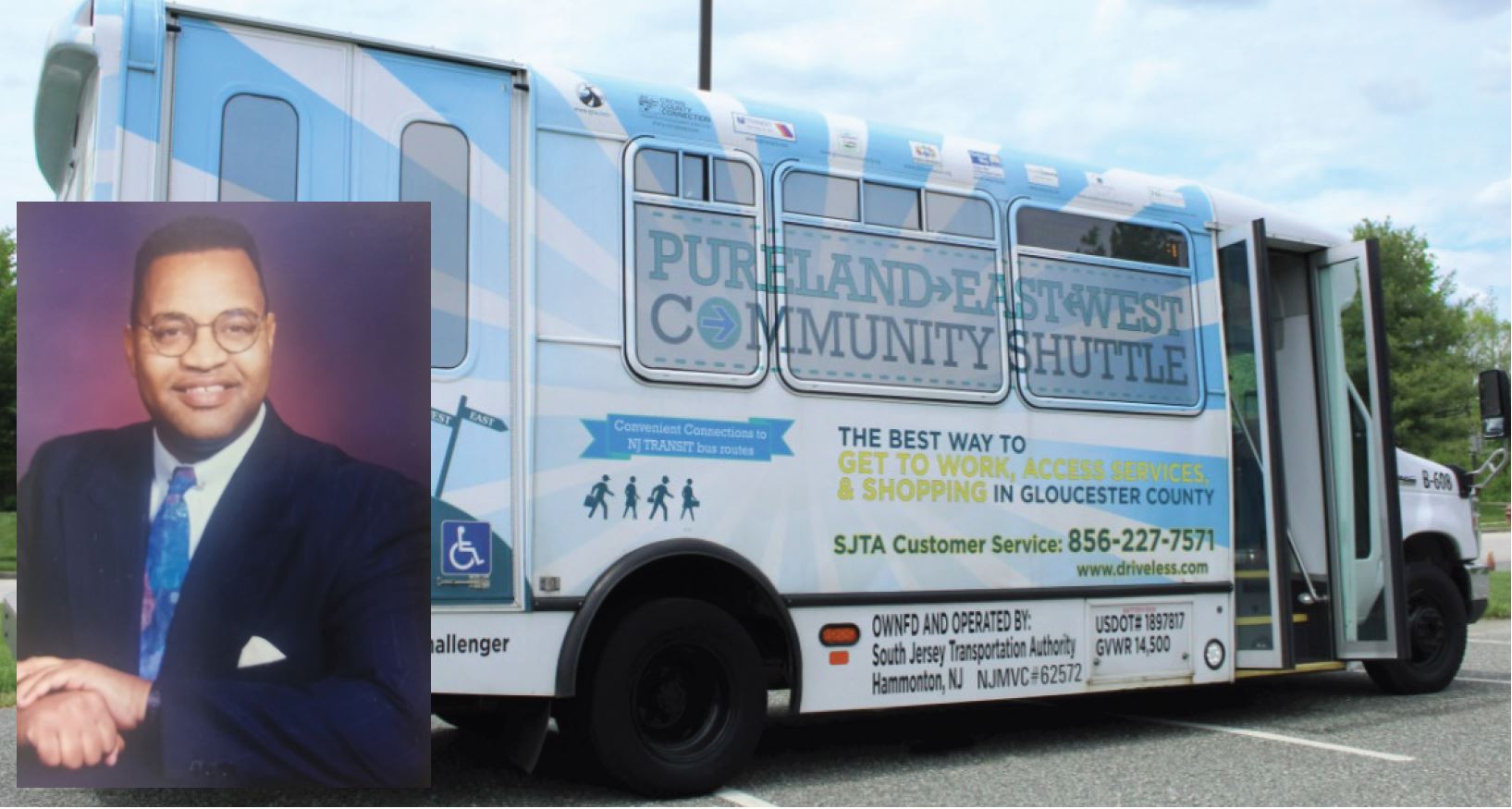
Stop Requested: Tyron Foxworth and his fellow South Jersey Transportation Authority bus drivers told union officials to cease union dues to no avail, until Foundation staff attorneys’ lawsuit forced union bosses to back down.
CAMDEN, NJ – Toward the end of 2021, South Jersey Transportation Authority (SJTA) bus driver Tyron Foxworth and his colleagues Doris Hamilton, Karen Burdett, Karen Hairston, Ted Lively, Arlene Gibson, and Stanley Burke decided they had had enough of International Federation of Professional and Technical Engineers (IFPTE) union bosses’ so-called “representation” and opted out of union membership. Union cards they had signed indicated that the union would cease taking money from their paychecks in January 2022.
But, January 2022 came and went, and neither Foxworth nor his fellow independent-minded colleagues saw dues deductions stop. As a result, with free legal representation from National Right to Work Foundation staff attorneys, they filed a First Amendment federal civil rights lawsuit against the IFPTE union. They argued that union officials violated their First Amendment rights under the Foundation-won 2018 Janus v. AFSCME Supreme Court precedent by continuing to seize dues despite their objections.
IFPTE Officials Subjected Drivers to Restrictions They Never Knew About
In Janus, the Court declared it a First Amendment violation to force public sector workers to pay union dues as a condition of employment. It also ruled that union officials can only deduct dues from the paycheck of a public sector employee who has voluntarily waived his or her Janus rights.
Rather than face Foundation staff attorneys in federal court, IFPTE union lawyers backed down and settled the case. As the settlement ordered, union bosses have now given back all money they seized unconstitutionally from Foxworth and his objecting coworkers, plus interest. The settlement also bars the IFPTE union from demanding or seizing any dues from the drivers going forward.
According to Foxworth and his colleagues, IFPTE dues deductions cards led them to believe that dues opt-outs would become effective on either the January or July following a request. However, the union’s monopoly bargaining contract with SJTA recognized dues revocations only in July. The drivers never consented to this greater restriction.
Foundation attorneys argued in the lawsuit that IFPTE union officials, by taking union dues after January 1, 2022, without the workers’ consent, “violate[d] Plaintiffs’ First Amendment right to free speech and association.”
Foxworth and his coworkers’ victory is the latest of numerous Foundation-won cases to vindicate American public workers’ First Amendment Janus rights. In the past few years, class action lawsuits brought by Foundation staff attorneys have led to settlements freeing tens of thousands of Ohio public employees from American Federation of State, County, and Municipal Employees (AFSCME) union schemes illegally restricting the exercise of their Janus rights.
Courageous public workers from California and Nevada are also asking the Supreme Court to take the next step and declare such Janus restrictions clearly violative of the First Amendment.
Lifeguards, Police Officer Battle Blatantly Unconstitutional Restrictions
Foundation attorneys just filed a petition asking the Supreme Court to hear several Southern California lifeguards’ suit against a so-called “maintenance of membership” scheme that California Statewide Law Enforcement Agency (CSLEA) union officials are using to trap the lifeguards in membership and full dues payments years after they resigned, in direct opposition to Janus.
Also awaiting Supreme Court review of her case is Las Vegas police officer Melodie DePierro, who with Foundation aid is battling an arrangement imposed by Las Vegas Police Protective Association (PPA) union officials that forbids the exercise of her Janus rights for over 90 percent of the year.
“Union officials across the country continue to enforce schemes that give them — not the workers they claim to ‘represent– control over the exercise of Janus rights, meaning more money in union coffers while employees’ constitutional rights are squashed,” commented National Right to Work Foundation President Mark Mix. “While many union bosses, aware of the indefensibility of their actions, run screaming from facing Foundation attorneys on Janus issues and settle quickly, American public workers should also know that Foundation attorneys will fight all the way up to the Supreme Court to ensure their First Amendment rights are protected.”
Workers Win Cash Back in Case Challenging Illegal Discrimination for Non-Union Status
The following article is from the National Right to Work Legal Defense Foundation’s bi-monthly Foundation Action Newsletter, November/December 2022 edition. To view other editions of Foundation Action or to sign up for a free subscription, click here.
Machinists union scheme sought to deny non-union workers’ bonuses because they opposed union association

IAM bosses regularly discriminate against dissident workers. In 2011, Foundation-assisted South Carolina Boeing employee Dennis Murray recounted how IAM officials tried to shutter his plant because workers there had voted the IAM out.
RIDGWAY, PA – Twelve nonunion factory employees at Clarion Sintered Metals, Inc., have each received $1,000 in back pay bonuses after being illegally discriminated against by International Association of Machinists and Aerospace Workers (IAM) Local 2448 and their employer. With free legal aid from the National Right to Work Foundation, factory worker James Cobaugh filed federal charges against Clarion and IAM as he sought justice for himself and other non-member workers subject to unlawful discrimination.
Mr. Cobaugh’s charges against the union and his employer were filed on April 22, 2022, with the National Labor Relations Board (NLRB). The charges came after the union and Clarion Sintered Metals gave $1,000 bonuses to union members, but denied them to workers who exercised their legal right not to join the union. Rather than face prosecution by the NLRB, both the union and employer have now agreed to settle the case.
In addition to the non-union employees receiving the bonuses they were previously denied as a result of the illegal discrimination, both the IAM and Clarion Sintered Metals are required to post notices that inform workers of their right to refrain from joining a union. The notices also state union officials will not maintain or enforce such discriminatory agreements going forward.
Machinists Union Bosses Already Forced Non-Union Workers to Pay Dues
Because Pennsylvania lacks Right to Work protections for private sector employees, unions can force workers to pay up to 100% of union dues as a condition of keeping their jobs. This means that Mr. Cobaugh, although not a formal IAM union member, can be forced to pay up to 100% of IAM’s union dues to keep his job at Clarion Sintered Metals.
Even in Right to Work states, under federal law union bosses are granted the power to impose “representation” on individual workers against their will, including forcing non-member workers under union monopoly contracts they oppose. By stripping workers of their right to bargain for their own terms and conditions of employment, individual workers by law are prohibited from negotiating for themselves with their employers for better conditions.
Forced Union Monopoly ‘Representation’ Long Used to Discriminate
Union officials frequently use these government-granted powers to harm certain workers, for example those workers who, based on their productivity, would otherwise earn performance bonuses or higher compensation. Although union officials can impose one-size-fits-all monopoly contracts that favor some workers over others, there are some limits on how union monopoly powers can be used to discriminate.
The U.S. Supreme Court imposed these limits after union officials wielded their powers to negotiate and enforce racially discriminatory contracts (Steele v. Louisville & N.R. Co. et al.). Explicitly discriminating against workers who exercise their legally protected right to not formally join a union and not be subject to internal union rules, as the IAM officials did in this case, has also long been illegal.
“This situation highlights how workers less knowledgeable of their legal rights are susceptible to blatantly illegal tactics of power-hungry union bosses,” commented National Right to Work Foundation Vice President Patrick Semmens. “Mr. Cobaugh courageously stood up to the union’s unlawful actions, not only for himself, but also for the other non-member workers subjected to this illegal discrimination.”
Las Vegas Police Officer Urges Supreme Court to Hear Case Battling Union’s Unconstitutional Dues Scheme
LVMPD officer argues union officials seized her money in violation of First Amendment through restrictive arrangement to which she never consented
Washington, DC (November 21, 2022) – Las Vegas police officer Melodie DePierro has submitted a petition asking the United States Supreme Court to hear her lawsuit defending her First Amendment right to abstain from paying dues to a union she does not support. DePierro is receiving free legal representation from National Right to Work Legal Defense Foundation staff attorneys.
DePierro, a Las Vegas Metropolitan Police Department (LVMPD) officer, contends in the lawsuit that officials of the Las Vegas Police Protective Association (PPA) union seized dues money from her paycheck in violation of her First Amendment rights pursuant to a so-called “window period” specified in the union contract. PPA officials’ “window period” scheme prohibits police officers from opting out of union financial support for over 90% of the year. DePierro never consented to – nor was ever informed of – this limitation.
DePierro seeks to enforce her First Amendment rights recognized by the Supreme Court in the landmark 2018 Janus v. AFSCME case, which was argued and won by Foundation attorneys. The Justices ruled in Janus that forcing public sector workers to subsidize an unwanted union as a condition of employment violates the First Amendment. They also held that union officials can only deduct dues from a public sector employee who has affirmatively waived his or her Janus rights.
“[I]f employee consent is not required, governments and unions can, and will…devise and enforce onerous restrictions on when employees can stop subsidizing union speech,” reads the brief.
PPA Union Officials Imposed on Officer Contract Provision She Never Knew About
According to DePierro’s original complaint, she began working for LVMPD in 2006 and voluntarily joined the PPA union at that time. However, in 2006 the union monopoly bargaining contract permitted employees to terminate dues deductions at any time.
In January 2020, she first tried to exercise her Janus rights, sending letters to both union officials and the LVMPD stating that she was resigning her membership. The letters demanded a stop to union dues being taken from her paycheck.
Her complaint reported that union and police department agents rejected that request because of the union-imposed “window period” restriction previously unknown to DePierro that purportedly limits when employees can exercise their Janus rights. As her brief notes, that “window period” restriction was added in the 2019 monopoly bargaining contract between union officials and the police department, despite the fact Janus had already been decided by then.
DePierro never agreed to such a restriction on the exercise of her First Amendment rights, but union agents nonetheless rebuffed her again when she renewed her demand to stop dues deductions in February 2020. When she filed her lawsuit, full union dues were still coming out of her paycheck.
DePierro’s Supreme Court petition argues that, because union officials kept seizing money from her wages under the guise of the “window period,” and never sought her consent to the restriction, they violated the First Amendment. As per Janus, union officials must obtain a worker’s waiver of their Janus rights before deducting dues or fees from their pay. DePierro asks the High Court to declare the “window period” scheme unconstitutional, forbid PPA and LVMPD from further enforcing it, and order PPA and LVMPD to refund with interest all dues unlawfully withheld from her pay since she tried to stop the deductions.
“This Court’s review is urgently needed because the Ninth Circuit’s decision is allowing governments and unions to unilaterally decide when and how to restrict employees’ right to refrain from subsidizing union speech—without the need to secure their affirmative consent to the restriction,” asserts the brief.
Officer Joins California Lifeguards in Asking Justices to Uphold Janus Ruling
DePierro’s petition comes as 21 Foundation-represented Southern California lifeguards are also urging the Supreme Court to hear their case challenging an anti-Janus dues scheme concocted by California Statewide Law Enforcement Agency (CSLEA) union officials. That scheme has trapped the lifeguards in union membership and full dues deductions until 2023, despite each of the lifeguards exercising his or her Janus right to abstain from union membership and union financial support.
As in DePierro’s case, the lifeguards were not explicitly informed of the so-called “maintenance of membership” restriction which now confines them in membership and full dues payment. Moreover, union officials never obtained voluntary waivers of Janus rights from any of the lifeguards before subjecting them to this scheme.
“Janus’ First Amendment protections are meant to ensure that workers are not being forced to subsidize union bosses of whom they disapprove, whether based on union officials’ ineffectiveness, political activities, divisive conduct in the workplace, or any other reason,” commented National Right to Work Foundation President Mark Mix. “Union officials’ defense of schemes that siphon money out of unwilling workers’ paychecks sends a clear message that they value dues revenue over the constitutional rights of the workers they claim to ‘represent.’”
“Two parties, here the union and police department, cannot enter into an agreement to restrict the First Amendment rights of an American citizen, yet that is exactly what has happened here to Officer DePierro,” Mix added. “The Supreme Court must defend Janus rights against such obvious violations, and ensure that these unconstitutional schemes are not allowed to stand.”
Worker Advocate Files Supreme Court Brief Opposing Union Boss Attempt to Evade Liability for Property Damage
Amicus brief in Glacier Northwest argues “Unions need no further exemptions and special legal privileges” and SCOTUS should “scrutinize” existing ones
Washington, DC (November 7, 2022) – The National Right to Work Legal Defense Foundation today filed an amicus brief at the United States Supreme Court. The brief argues that the High Court should overturn a Washington Supreme Court decision that created a special exemption for union officials and their “more aggressive” members from liability under state tort law when property destruction and vandalism result from union boss-ordered actions.
The Foundation’s brief was filed in Glacier Northwest Inc. v. International Brotherhood of Teamsters Local 174, which deals with a union boss-ordered strike against construction company Glacier Northwest. Glacier Northwest’s attempt to sue the union over property damage caused by strike activities was denied by the Washington Supreme Court. Washington’s highest court accepted Teamsters lawyers’ argument that the National Labor Relations Act’s (NLRA) allowance for union strikes somehow also immunizes unions from liability when strike activities destroy and vandalize property.
The Supreme Court announced last month it would hear arguments in the case. Those arguments haven’t been scheduled yet but are expected to occur in early 2023.
The Foundation provides free legal aid to hundreds of workers every year whose rights have been violated by compulsory unionism abuses, including those that occur during strikes. It contends in the brief that the Washington Supreme Court’s creation of a new “carve-out” in state law for vandalism and property destruction organized by union officials will leave not only employers, but also employees, with no recourse when harmed by such strike violence and mayhem. The Foundation points out that union officials already enjoy a slew of privileges and immunities under state and federal law enjoyed by no other private organization or citizen, and that this power should be pared back instead of expanded.
Foundation: Union Officials’ Enormous Special Legal Privileges Should Not Be Expanded
The Foundation explains in the amicus brief that “states’ interest in protecting life, limb, and private property must be respected under principles of federalism” because federal remedies generally don’t exist for violations of these interests. Far from being a concern only for employers who face union strike efforts, the Foundation argues, employees are often targeted by hostile or violent strike behavior and state courts often are the only forum in which they can receive justice.
“For example, in Clegg v. Powers, employees sought damages in state court for union violence and property damage during a strike,” the brief says. “Cases like Clegg demonstrate that the Court should limit” unions’ ability to dodge liability in state courts, not extend it, says the brief.
The Foundation’s brief then points out that the exemption from liability for torts that Teamsters bosses seek should also be restricted given “the extraordinary privileges and exemptions already granted to unions” by Congress and courts all over the country.
These include, but are not limited to, the ability to perform acts that would be considered extortion if committed by any other private party, pursuant to the controversial 1973 United States v. Enmons Supreme Court decision. Union officials also have the privilege to foist monopoly “representation” over all workers in a workplace regardless of whether they are union members or voted for the union in power. Probably the most abusive union boss privilege of all is the power to force employees in non-Right to Work states to pay union dues or fees just to stay employed, while maintaining monopoly bargaining control in a workplace with no effective term limits.
“This Court should treat unions like all other citizens or entities, clarifying that they can be liable for damages in state courts under ‘the common law rule that a man is held to intend the foreseeable consequences of his conduct,’” the brief concludes.
“Union officials’ theory that they should be off the hook in state court for damaging or vandalizing property is outrageous on its face. The law already has plenty of carve-outs and privileges for union hierarchies that no other private organization or citizen gets to enjoy – least of all the workers union bosses claim to ‘represent,’” commented National Right to Work Foundation President Mark Mix. “Union officials regularly force millions of workers to pay union fees or be fired, and force their ‘representation’ on millions of workers who bitterly oppose it. The Supreme Court must reject this shocking union ploy for even more coercive powers, and hold the existing set of union boss privileges to much more scrutiny.”
Forced Dues For Politics: CWA Union Hit with Federal Charge by Pennsylvania Metal Worker
The following article is from the National Right to Work Legal Defense Foundation’s bi-monthly Foundation Action Newsletter, July/August 2022 edition. To view other editions of Foundation Action or to sign up for a free subscription, click here.
CWA officials defied decades of law by rejecting worker’s resignation
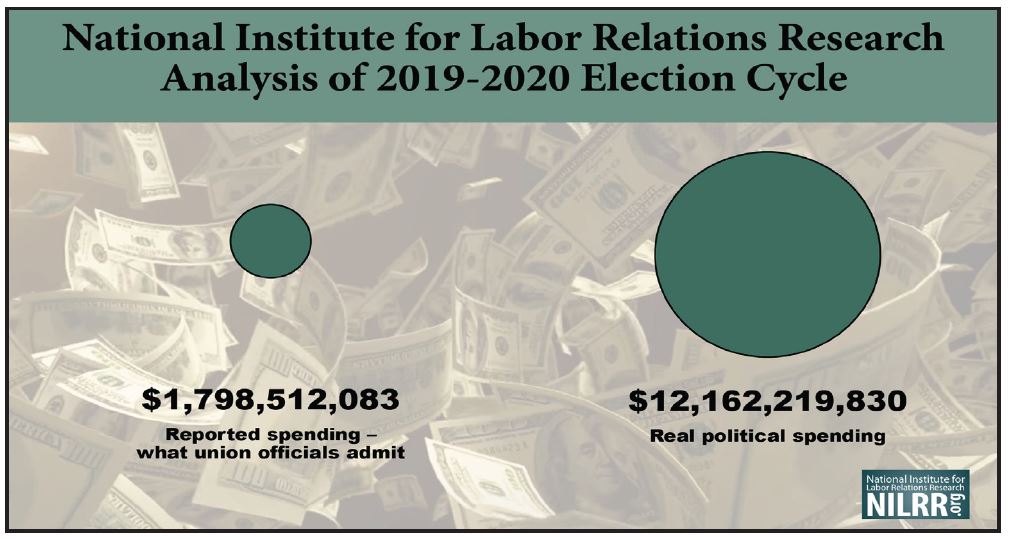
Coates’ case challenging illegal seizure of forced dues for politics comes after one analysis found that union officials likely spent over $12 billion on political activities during the 2019-2020 election cycle, far more than union officials publicly admit.
GALETON, PA – An employee of metal corporation Catalus hit a Communications Workers of America (CWA) union local this May with federal charges for illegally seizing full union dues from his paycheck, including dues for politics. Curtis Coates, a metal worker for Catalus, is receiving free legal aid from the National Right to Work Legal Defense Foundation.
Foundation attorneys filed Mr. Coates’ charges with National Labor Relations Board (NLRB) Region 6 in Pittsburgh, Pennsylvania. The Region is now investigating the charges.
CWA Union Officials Continue to Collect Dues from Worker, Despite Lack of Authorization
On October 20, 2021, Mr. Coates sent a message to CWA union officials declaring that he was resigning from his position as shop steward and terminating his union membership.
Because no union monopoly contract was in effect, under longstanding law, Coates should have been able to immediately cut all financial support for the CWA union which he no longer supports. The charges say a union official rebuffed both of Mr. Coates’ requests the next day, insisting that he had to remain both a union member and a shop steward.
From December 2021 to February 2022, Mr. Coates followed up with union officials several times via email and mail. He repeatedly asked when union officials would cease taking dues money from his paychecks and what process he had to follow to revoke his dues deduction authorization to stop money from being seized from his paychecks.
“To date, the Union has not responded . . . and dues and contributions continue to be deducted from his wages,” the charge reads. Because Pennsylvania currently lacks a Right to Work law, union officials can legally force employees to pay some union fees just to keep their jobs. However, those forced fees cannot be demanded when no union contract is in effect.
Further, even in states without Right to Work protections full union membership cannot be required. Additionally, under the U.S. Supreme Court’s decision in CWA v. Beck (1988), won by Foundation attorneys, forced fees are limited to only the part of union dues that union officials claim goes toward a union’s core “representational” functions and cannot be collected for other activities like union politics and lobbying.
Conflict of Interest: NLRB General Counsel is a Former CWA Union Official
Currently, the NLRB General Counsel is former CWA attorney Jennifer Abruzzo, who has expressed support for a number of policies which give union officials greater power to force workers into dues-paying union ranks, even without a vote. Foundation attorneys requested last year that Abruzzo recuse herself from a case involving an Oregon ABC cameraman who accused another CWA local of demanding illegal dues from him, including dues for politics.
Coates’ case represents another potential conflict of interest for Abruzzo, who has repeatedly sided with union officials against the rights of workers opposed to union affiliation.
“Mr. Coates’ right to refrain from funding union activities is being ignored by CWA union officials as they continue to unlawfully seize full union dues, which includes money used for union political activities,” commented National Right to Work Foundation Vice President Patrick Semmens. “This case shows why Pennsylvania workers need the protection of a Right to Work law to make all union payments strictly voluntary: So union bosses cannot so brazenly collect money to which they are not entitled under longstanding federal law.”
“Further, Mr. Coates’ case demonstrates the obvious conflict of interest that exists as Abruzzo, a former CWA lawyer, is charged with enforcing workers’ rights violated by her former CWA union colleagues,” Semmens added.





