
Milwaukee Worker Files Federal Charges Against Teamsters Union for Violating His Rights under State and Federal Law
NLRB Charge: Despite Right to Work law, union bosses coerced worker into becoming a union member and then blocked attempts to cut off dues payments
Milwaukee, WI (March 3, 2020) – With free legal aid from National Right to Work Legal Defense Foundation staff attorneys, an employee at a Milwaukee factory has filed federal charges against Teamsters “General” Local Union No. 200 for violating his rights under the National Labor Relations Act (NLRA) and Wisconsin’s Right to Work law.
Tyler Lewis, employed by Snap-on Logistics Company, filed an unfair labor practice charge with the National Labor Relations Board (NLRB) after union officials told him that he must become a union member and pay membership dues as a condition of employment in violation of longstanding federal law.
Teamsters union officials further refused to allow Lewis to stop union dues from being seized from his paycheck even after he learned of his rights and resigned his union membership in September 2019. Moreover, union officials continue to deduct dues from his paycheck and refuse to refund Lewis any of the dues unlawfully seized from him.
Forcing workers to pay union dues or fees as a condition of employment is prohibited under Wisconsin’s Right to Work law, which went into effect in March 2015. However, union officials continued to accept and retain union dues seized from Lewis because they claimed he could only cut off union dues deductions during a narrow union-created “window period.” Even as they made that claim, they failed to provide Lewis with specific dates when his request would be accepted under their rules.
As his charge details, the union monopoly bargaining agreement in Lewis’ workplace, which was signed after the state Right to Work law went into effect, contained language prohibited by the Right to Work law that workers must pay union dues or fees as a condition of employment. Moreover, even if the agreement was actually in place prior to the law’s effective date, Lewis’ Foundation-provided attorneys state in the filing that the passage of the Right to Work law invalidated the union’s claim that Lewis’ right to stop dues payments was limited to a brief union window period.
“Once again, Teamsters union bosses are using coercive tactics to force workers they claim to ‘represent’ to pay union dues and fees against their wishes,” said National Right to Work Foundation President Mark Mix. “Wisconsin’s Right to Work law should mean union membership and dues payment are strictly voluntary, but rather than respect workers’ rights and work to win their uncoerced support, union bosses are again attempting to trap workers in forced dues in violation of federal law.”
West Virginia Supreme Court Hears Right to Work Case
The following article is from the National Right to Work Legal Defense Foundation’s bi-monthly Foundation Action Newsletter, January/February 2020 edition. The West Virginia Supreme Court heard arguments in this case on January 15 and a decision is expected in the coming months. To view other editions or to sign up for a free subscription, click here.
Foundation continues to defend all Right to Work laws against Big Labor attack
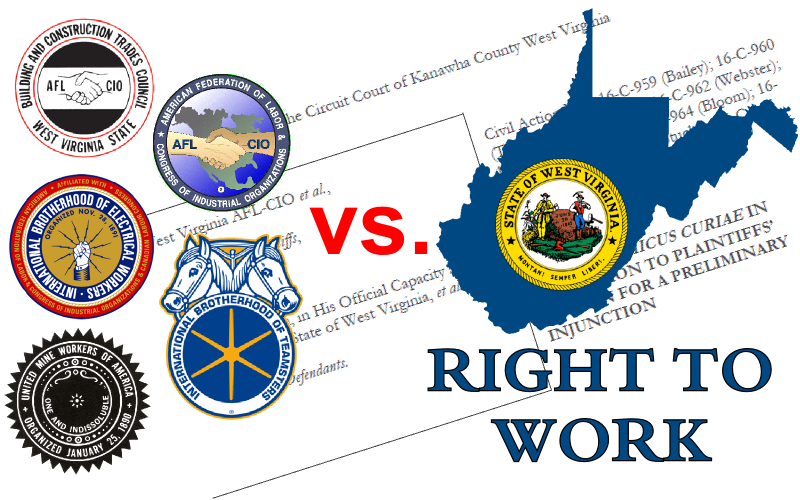
Forced-dues-hungry union bosses have been waging a legal battle to overturn West Virginia’s Right to Work Law since it was enacted in 2016. Foundation staff attorneys have been fighting back by filing amicus briefs in court.
CHARLESTON, WV – The West Virginia Supreme Court will hear arguments on January 15 in union bosses’ long-running case seeking to dismantle West Virginia’s Right to Work Law and restore their forced-dues powers over workers across the Mountain State. National Right to Work Foundation staff attorneys have already filed multiple legal briefs in this case for West Virginia workers in defense of West Virginia’s Right to Work Law.
After Passage, Union Bosses Immediately Target West Virginia Right to Work Law
Last year, union lawyers relied on discredited legal arguments to convince Kanawha County Circuit Court Judge Jennifer Bailey to declare West Virginia’s entire Right to Work Law invalid. Union lawyers dubiously claim that West Virginia union bosses have a “right” to forced dues. Judge Bailey issued a similar ruling blocking the Right to Work law after the legislation was signed into law in 2016. The West Virginia Supreme Court overturned that decision, citing arguments made in briefs by Foundation staff attorneys. “Of course, union partisans never willingly accept the loss of forced dues,” said National Right to Work Foundation President Mark Mix. “So now the issue is back at the state’s highest court.” If Big Labor’s lawsuit to overturn
West Virginia’s Right to Work Law succeeds, union bosses could have thousands of independent-minded workers across the state fired solely for refusing to subsidize union activities.
Foundation Files 10 Briefs to Protect Rights of West Virginia Workers
Foundation staff attorneys have filed 10 legal briefs in the multi-year case. The Foundation’s latest amicus brief was filed for West Virginia nursing home employee Donna Harper. Harper, like many other workers in West Virginia, chose not to pay dues or fees to union bosses, which is her legal right in a Right to Work state.
“Union bosses in West Virginia are intent on reclaiming their forced-dues power,” Mix said. “Big Labor is waging this protracted legal battle to return the Mountain State to a time when millions and millions of dollars in workers’ money were seized by union bosses to fill Big Labor’s coffers with forced dues.”
This case is the latest legal battle in the Foundation’s long history of effectively defending Right to Work laws in state and federal court from spurious attacks by Big Labor. Although federal law specifically authorizes states to pass Right to Work laws to protect workers from union boss coercion, union lawyers have repeatedly challenged these laws in an attempt to keep siphoning union dues and fees from workers’ paychecks.
Foundation Has Successfully Defended State Right to Work Laws Nationwide
In addition to West Virginia, Foundation staff attorneys have successfully pursued legal action in recent years to defend and enforce new Right to Work laws in Indiana, Michigan, Wisconsin and Kentucky, all of which have passed Right to Work protections for employees in just the last seven years. In Michigan alone, Foundation staff attorneys have assisted employees in over 100 cases since Right to Work went into effect in early 2013.
Electrician Files Discrimination Lawsuit Challenging Forced Union Fees
The following article is from the National Right to Work Legal Defense Foundation’s bi-monthly Foundation Action Newsletter, January/February 2020 edition. To view other editions or to sign up for a free subscription, click here.
Boston College and SEIU officials ignored reasonable request to accommodate religious beliefs
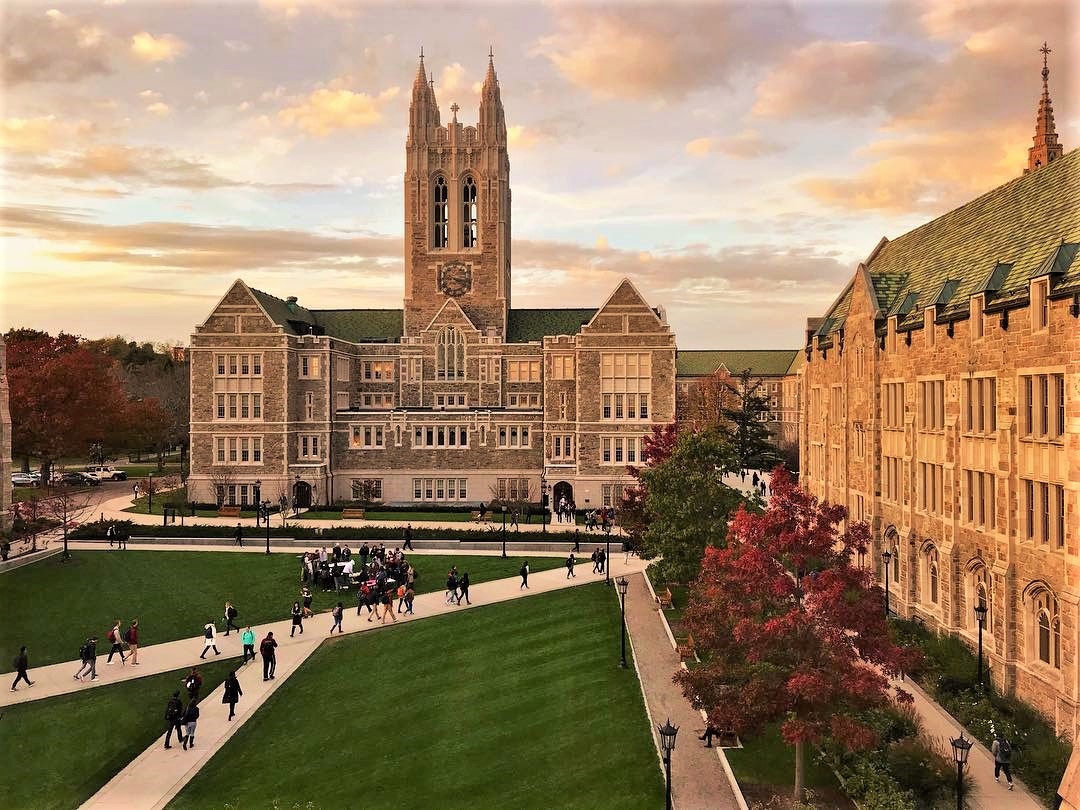 Boston College officials seized union fees from electrician Ardeshir Ansari’s paycheck at the behest of SEIU bosses, even after he had informed them that such fees violate his religious beliefs.
BOSTON, MA – In November, National Right to Work Foundation staff attorneys filed a federal Title VII religious discrimination lawsuit for a Boston College electrician whose rights were violated by the Service Employees International Union (SEIU) in illegally demanding union fees. The lawsuit also names his employer, Boston College, for its role in the discrimination.
Ardeshir Ansari objects to supporting the union based on deeply held religious beliefs. Under the local SEIU’s monopoly bargaining agreement at Boston College, however, he was told that he must join or financially support the SEIU or be fired. To avoid being fired, Ansari unwillingly paid fees to the union in violation of his sincere religious beliefs.
On October 1, 2018, Ansari sent a letter to Boston College and the SEIU, informing them his religious beliefs conflict with joining or financially supporting the union. He asked that his union fees be diverted to charity instead of being sent to the union, an established remedy for such a conflict.
Instead of responding, the college continued to take a cut of his paycheck and send it to SEIU officials in violation of his sincerely held religious beliefs.
In response, Ansari filed charges with the Equal Employment Opportunity Commission (EEOC) against college and union officials. The EEOC then determined that both Boston College and the SEIU had violated Title VII.
Last September, the EEOC gave Ansari a right-to-sue letter, which authorized him to file a lawsuit under Title VII of the Civil Rights Act of 1964. That federal law prohibits employers and unions from discriminating against an individual based on his or her religious beliefs.
In November, Foundation staff attorneys filed a lawsuit for Ansari against Boston College and the SEIU for illegally discriminating against him by failing to reasonably accommodate his religious beliefs, violating his rights under Title VII.
The lawsuit demands that college and SEIU local officials pay all fees deducted from Ansari’s paycheck to a charity mutually agreed upon and seeks damages for the emotional distress he suffered while his rights were violated for more than a year.
EEOC Found Religious Discrimination by SEIU
Moreover, the Title VII lawsuit asks the court to prevent the college from continuing to discriminate against his religious beliefs and that the union be required to inform workers that those with religious objections to the payment of union fees are entitled by law to pay those fees to a charity instead.
“Workers with sincere religious objections to joining or funding a union are legally protected from being forced to violate their conscience,” said National Right to Work Foundation Vice President and Legal Director Ray LaJeunesse. “No one should ever be forced to choose between keeping a job to provide for their family and violating their deeply held religious beliefs by supporting a union.”
“Right to Work laws protect workers like Mr. Ansari from this kind of discrimination. Under those laws, workers can stop paying union fees and resign union membership for any reason and thus avoid illegal religious discrimination,” added LaJeunesse.
AT&T Employee Wins Settlement from CWA Union after Facing Union Retaliation for Exercising Legal Rights
Union officials refused to allow worker to resign his union membership while on military leave and attempted to fine him in violation of federal labor law
Jacksonville, FL (January 24, 2020) – AT&T employee Jared Brewer has won a favorable settlement from Communication Workers of America (CWA) Local 3106 union with free legal aid from the National Right to Work Legal Defense Foundation after union officials violated his legal rights under federal law.
To end the case, union officials rescinded their threat to subject Brewer to internal union “discipline” and fine him for exercising his legal rights under the National Labor Relations Act (NLRA). They also were required to notify other workers of their legal rights by posting notices on the union’s bulletin boards at 22 AT&T Jacksonville facilities.
Brewer was on military leave when union officials called a strike in August 2019. He sent an email to them in which he resigned his union membership. Even though the NLRA guarantees employees the right to resign their union membership at any time, union officials refused to honor Brewer’s request. One union representative falsely claimed that his resignation letter was “untimely.”
After sending a certified letter containing the same resignation language, Brewer returned to work. Despite his resignation, union officials told Brewer in an October letter that they were bringing charges against him in an internal union “trial” for working during the union-initiated work stoppage. Brewer did not attend the November 7 “trial” because he had already resigned his union membership and, therefore, could not legally be subject to union disciplinary procedures.
Union officials notified Brewer on November 15 that the union found him guilty at its “trial” and imposed a monetary fine of more. They threatened him with legal action if he did not pay the fine within 21 days.
In response, Brewer filed an unfair labor practice charge with the National Labor Relations Board with free legal aid from Foundation staff attorneys. Brewer charged that union officials violated his legal rights under the NLRA by disciplining and fining him as a nonmember, and by denying his resignation. Union officials are prohibited from requiring formal union membership as a condition of employment by both Florida’s Right to Work law and the NLRA, and under the NLRA workers are free to resign their union membership at any time.
Brewer’s unfair labor practice charges drove union officials to settle. This requires union officials to honor Brewer’s resignation and rescind the fine and union “discipline” against him. Union officials also must post for 60 days in its union hall and numerous AT&T facilities a notice in which the union promises not to “restrain or coerce” workers from exercising their legal rights to resign and work during strikes.
“Faced with legal action from National Right to Work Foundation staff attorneys, CWA union officials backed down from their blatant violations of longstanding labor law and were forced to settle with Mr. Brewer,” said National Right to Work Foundation President Mark Mix. “Federal labor law is crystal clear: Workers have an absolute right to resign their union membership if they choose, and once a worker has exercised that right they cannot be subject to fines levied by any internal union boss kangaroo court.”
Featured Article: “The Future Looks Bright for the Right to Work Movement”
The Regulatory Review has ranked the essay entitled “The Future Looks Bright for the Right to Work Movement” by National Right to Work Foundation Vice President and Legal Director Raymond J. LaJeunesse, Jr. as one of the publication’s top essays in 2019.
The essay highlights successes in the ongoing fight against forced unionism through legal and legislative reform:
Thomas Jefferson famously said that it is “sinful and tyrannical” for government “to compel a man to furnish contributions of money for the propagation of opinions which he disbelieves and abhors.” That principle is consistent with the guarantees of freedom of speech and association enshrined in the U.S. Constitution’s First Amendment. Yet, some federal and state labor laws in this country have long authorized requirements that workers pay union dues as a condition of employment, requirements known as the “union shop” or “agency shop.” Increasingly, however, legislatures and courts are recognizing that workers have a constitutional right to work without being forced to subsidize a union.
Among recent achievements for the Right to Work movement are five new state Right to Work laws passed since 2012 and the landmark Foundation-won Janus v. AFSCME Supreme Court decision in June 2018.
The complete essay is available to read online here.
Healthcare Worker Sues Teamsters Union and Healthcare Facility for Violating West Virginia Right to Work Law
Former Tygart Center employee says union officials and employer violated her legal rights by demanding she join the union and pay union dues and fees to keep her job
Fairmont, WV (December 24, 2019) – With free legal aid from the National Right to Work Legal Defense Foundation, healthcare worker Donna Harper filed a lawsuit against Teamsters Local 175 and the Tygart Center for violating her rights under the State of West Virginia’s Right to Work law.
West Virginia’s Right to Work law prohibits requiring workers to pay union dues or fees just to get or keep a job. In defiance of West Virginia’s Right to Work law, Tygart Center and Teamsters union officials entered into a collective bargaining agreement that required employees to pay union dues and fees as a condition of employment.
When Harper was hired, Tygart Center officials informed Harper that she must become a union member and pay union dues as a condition of employment in violation of her legal rights. Tygart Center officials deducted full union membership dues and fees from Harper’s paycheck and remitted this money to Teamsters union officials.
In March 2019, Harper successfully exercised her legal rights by resigning her union membership. Even then union officials continued taking union dues from her paycheck. Union officials also never fully refunded the union dues unlawfully seized from her wages.
Foundation staff attorneys filed the suit against the Tygart Center and the Teamsters union for Harper in Marion County Circuit Court. Harper worked at the Tygart Center from February 2018 until September 2019 as a Laundry Aide and as a Certified Nursing Assistant.
Foundation staff attorneys also filed an amicus brief for Harper with the West Virginia Supreme Court defending the state Right to Work law against a protracted lawsuit brought by several unions seeking to overturn the law and restore union officials’ power to have workers fired for refusing to pay union dues or fees. That case is scheduled for oral arguments in the Supreme Court on January 15. That court has already rejected the unions’ arguments once, overturning a preliminary injunction against the Right to Work law.
“Teamsters union bosses demonstrated a blatant disregard for the law by illegally demanding Ms. Harper and her coworkers pay union dues and fees just to get or keep their jobs,” said National Right to Work Foundation President Mark Mix. “Contrary to Big Labor’s wishes, West Virginia’s Right to Work law is in full effect, meaning all union dues for workers covered by the law must be completely voluntary.”
Foundation Assists Workers During UAW Union Boss-Ordered GM Strike
The following article is from the National Right to Work Legal Defense Foundation’s bi-monthly Foundation Action Newsletter, November/December 2019 edition. To view other editions or to sign up for a free subscription, click here.
Strike order comes during growing UAW boss corruption and embezzlement investigation
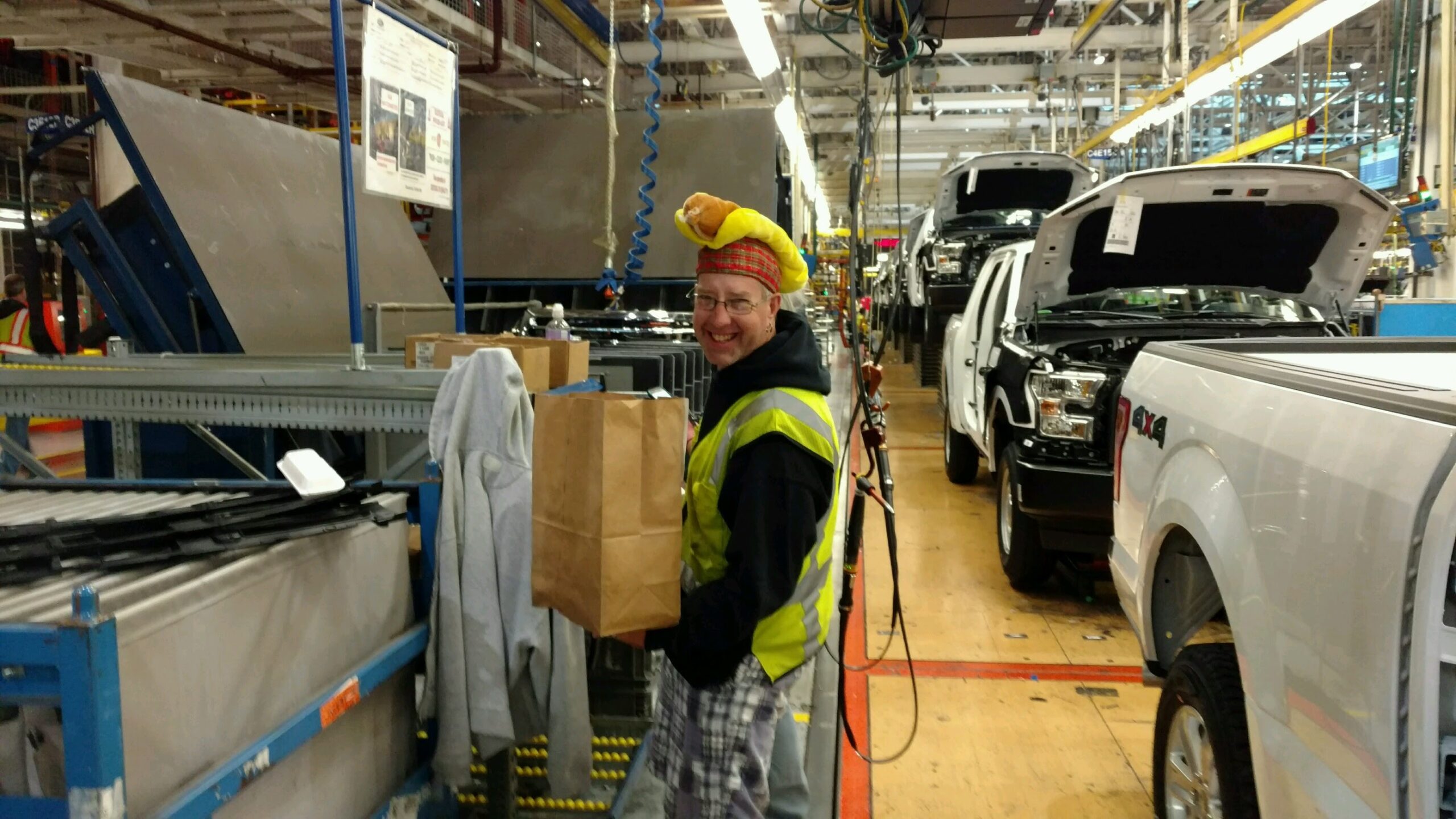
With free aid from the Foundation, Ford employee Lloyd Stoner won a unanimous ruling from the NLRB which ordered UAW bosses to refund illegally seized dues.
DETROIT, MI – In September, United Auto Workers (UAW) union bosses ordered tens of thousands of General Motors workers on strike. The strike came as federal prosecutors were intensifying their investigation into embezzlement and corruption within the UAW hierarchy. Just days before the strike, the probe had reached the top levels of the UAW when FBI agents raided the homes of the union’s current president and his predecessor.
Amid the scandal and union boss-instigated strike, National Right to Work Legal Defense Foundation staff attorneys were assisting several Michigan workers in legal challenges to the coercive practices of UAW officials. Additionally, Foundation Legal Information staff publicized a “special legal notice” directed at workers affected by the strike to ensure they knew their legal rights despite persistent union misinformation and threats.
GM Worker Stands Up to UAW Discrimination
Joseph Small, a stamping metal repair worker at a Lansing, Michigan, GM plant, filed a federal charge with the National Labor Relations Board (NLRB) right before the strike unfolded with free aid from Foundation staff attorneys. Small, who is not a UAW member and is not required to pay fees to the union because of Michigan’s Right to Work Law, asserted in his charge that UAW officials “heavily involved [themselves] in the interview process” for a promotion for which he was being considered.
Small was passed over for the position, which went to a union member. Small’s charge notes that a union representative later “stated that [Small] did not get the position because [he] was not paying union dues,” a clear violation of federal labor law.
According to the National Labor Relations Act, workers have the right to refrain from union activities and neither union officials nor management can discriminate against employees based on their union membership status.
Ford Worker Wins Unanimous NLRB Ruling
Ford Motor Company worker Lloyd Stoner, who works at the company’s facility in Dearborn, Michigan, won a second victory in defense of his rights this August with free legal aid from the Foundation.
Stoner, who had originally charged UAW officials and Ford with illegally seizing dues from his paycheck despite his previously resigning his union membership and revoking his dues deduction authorization, received a unanimous ruling from a three-member panel of the NLRB in Washington, D.C. The labor board directed UAW officials to make Stoner whole for the dues they illegally took.
The NLRB also ordered UAW officials to immediately honor any other employees’ membership resignations. Stoner had earlier won a favorable settlement from Ford for its role in blocking him from exercising his rights.
“UAW union officials continue to show a willingness to break the law, even violating the rights of the very workers they claim to represent,” observed National Right to Work Foundation Vice President Patrick Semmens. “Whether it be federal corruption prosecutions or unfair labor practice charges at the NLRB, UAW bosses must be held accountable when they break the law.”
Federal Board Adopts Foundation-Advocated Reform to Union Decertification Rules
The following article is from the National Right to Work Legal Defense Foundation’s bi-monthly Foundation Action Newsletter, September/October 2019 edition. To view other editions or to sign up for a free subscription, click here.
National Mediation Board simplifies process for workers under Railway Labor Act to remove a union they oppose
At the Foundation’s urging, the NMB removed unnecessary hurdles and simplified the process for rail and airline employees to remove unpopular unions from their workplaces.
WASHINGTON, D.C. – In late July the National Mediation Board (NMB) issued its final rule simplifying decertification procedures under the Railway Labor Act (RLA). The change enables workers in the airline and railway industries to more easily vote to remove a union that lacks the support of a majority of workers.
Before the decision to simplify the process, the NMB used a confusing process that required individual employees to create a fake “straw man” union to replace the incumbent union as the monopoly representative. The decertification process is particularly important because under federal law RLA unions can force workers to pay union dues or fees as a condition of employment even where state Right to Work laws protect other employees from forced union dues.
New Straightforward Rule Vindicates Foundation Campaign for Reform
“The Foundation has long advocated this type of change in the union decertification process and we are pleased the NMB has – as we called upon it to do in comments filed earlier this year – finally made this commonsense reform,” National Right to Work Foundation Vice President Patrick Semmens said at the time.
The NMB’s final decision provides a straightforward procedure for the decertification of a union, meaning workers who do not want union representation won’t have to jump through the hoops of creating and voting for a “straw man” union just to decertify the union that currently has monopoly bargaining power over their workplace.
The NMB’s final rulemaking notice reads: “The Board believes this change is necessary to fulfill the statutory mission of the Railway Labor Act by protecting employees’ right to complete independence in the decision to become represented, to remain represented, or to become unrepresented.”
“This change will ensure that each employee has a say in their representative and eliminate unnecessary hurdles for employees who no longer wish to be represented,” the NMB continued.
The National Right to Work Foundation has long called for these rules to be updated. Foundation attorneys participated in the formal comment period process and appeared at a public hearing to address the NMB and deliver the Foundation’s position. The final rule specifically references the Foundation’s comments, vindicating its efforts in the rulemaking process.
Board Eliminates Confusing ‘Straw Man’ Election Rules
“The National Right to Work Legal Foundation (Right to Work) stated that the proposed change is ‘long overdue,’ and the [Notice of Proposed Rulemaking] is ‘needed to ensure that all employees have an equal and fair choice regarding union representation. The Board has statutory authority to adopt the proposed rules, and should do so as soon as possible,’” the NMB final rule reads.
The confusing rules previously forced individual employees to concoct a “straw man” union to replace the incumbent union as the monopoly representative. Once elected by a majority of the workers, the new “straw man” representative could disclaim collective representation, but was not legally required to do so.
“At long last the National Mediation Board is providing airline and railroad workers covered by the Railway Labor Act a straightforward way to remove unwanted union ‘representation’ through a direct decertification vote,” Semmens said.
“The previous system – in which workers had to create a ‘straw man’ union just to challenge an incumbent union – only served to stymie workers’ rights and demonstrated the historic bias of the NMB in favor of compulsory unionism,” said Semmens. “It wasn’t until the Foundation-won case of Russell v. NMB in 1983 that workers even had an established legal right to throw off their union ‘representative,’ albeit only through the unnecessarily complicated “straw man” system which is finally being replaced with a simplified process to allow workers to exercise that right.”
In addition to submitting the formal comments in May, veteran Foundation staff attorney Glenn Taubman testified in favor of the rule change at the NMB hearing in late March.
General Motors Employee Hits UAW Union Bosses with Federal Unfair Labor Practice Charge for Illegal Discrimination
Charge: UAW officials illegally discriminated against nonmember worker causing GM to block possible promotion
Lansing, MI (September 18, 2019) – General Motors (GM) employee Joseph Small has filed an unfair labor practice charge against the United Auto Worker (UAW) Local 652 union with free legal aid from the National Right to Work Legal Defense Foundation.
According to the charge filed with the National Labor Relations Board (NLRB) by National Right to Work Foundation staff attorneys, union officials interfered in the interview and hiring process for an opening at GM for which Small had applied. Union officials later admitted the position went to a union member instead of Small because Small had exercised his legal right to refrain from union membership and from paying union dues.
This discrimination against Small by UAW union officials violates his legal rights under the National Labor Relations Act (NLRA). The NLRA outlaws discrimination by union officials against workers who elect to refrain from union activity. Small exercised his rights under Michigan’s Right to Work law, which not only allows workers to decline union membership but allows workers to stop any payment of union dues or fees as a condition of employment.
The unfair labor practice charge by Small comes as UAW officials have ordered a nationwide strike against GM affecting over 40,000 workers. The Foundation has issued a special notice to GM employees informing them about how to exercise their legal rights to refrain from participating in the strike and return to work.
The notice can be found here: www.nrtw.org/UAW-GM
Meanwhile, UAW officials have been caught up in an expanding corruption and embezzlement scandal that has resulted in numerous indictments, with the FBI reportedly recently raiding the home of current UAW President Gary Jones just weeks ago. In a separate case brought Foundation staff attorneys, the NLRB issued a decision earlier this month holding that UAW officials illegally seized dues from a Ford Motors employee’s paycheck while ordering the union to return the funds.
“UAW union officials continue to show a willingness to break the law, even violating the rights of the very workers they claim to represent,” said National Right to Work Foundation President Mark Mix. “Whether it be federal corruption prosecutions or unfair labor practice charges at the NLRB, UAW bosses must be held accountable when they break the law.”
Foundation Releases Special Notice For Kentucky Workers
Special Notice Informs Employees of Their Newly-Won Rights
Springfield, VA (January 18, 2017) – Today the National Right to Work Foundation released a Special Legal Notice for workers in the Commonwealth of Kentucky, informing them of their rights under the nation’s most recently passed State Right to Work law. Kentucky’s Right to Work law allows workers to cease being a member of the union and stop paying any dues, fees, or other financial support to an unwanted union.
The Kentucky Right to Work law applies to collective bargaining contracts entered into, extended, or renewed on or after January 7, 2017. If you are subject to a contract in effect before January 7, 2017, you can be compelled to either pay union dues as a union member or fees as a nonmember until that contract expires or is renewed or extended. Even if you are subject to a contract in effect before January 7, 2017, nonmembers have the right to object to a portion of those fees and pay reduced fees until the Right to Work law is effective for you. For more information on the law and the new protections for Kentucky workers, please click here.





