
Workers Who Voted Against Union Oppose Order Forcing Union on Them
The following article is from the National Right to Work Legal Defense Foundation’s bi-monthly Foundation Action Newsletter, November/December 2021 edition. To view other editions of Foundation Action or to sign up for a free subscription, click here.
Biden NLRB seeks to overturn vote of Red Rock Casino workers against Unite Here
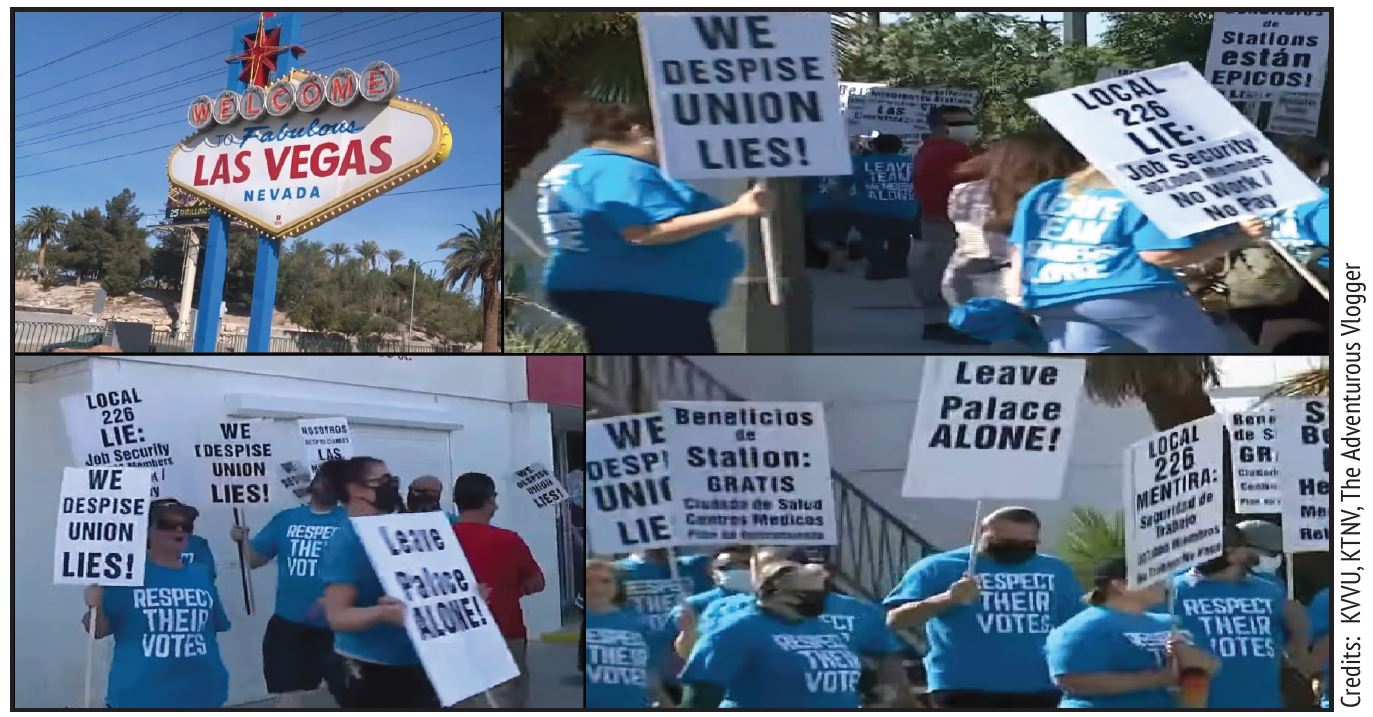
Red Rock Casino employees bearing the messages “We Despise Union Lies” and “Respect Their Votes” protested outside Culinary Union headquarters in Las Vegas after union bosses tried to block Red Rock Casino workers’ emphatic vote to remove the union.
LAS VEGAS, NV – A large majority of the workers at Red Rock Casino in Las Vegas, Nevada, voted “no” to unionization, but a federal district court judge later issued an order forcing their employer to bargain with union officials anyway.
The Casino appealed the judge’s order to the U.S. Court of Appeals for the Ninth Circuit. National Right to Work Legal Defense Foundation attorneys assisted Red Rock food service employee Raynell Teske for free in filing her legal brief at the Ninth Circuit, arguing the judge was wrong to impose a union monopoly on the workers after the union had already lost an election.
Judge Overrides Workers’ Election Choice
In December 2019, the National Labor Relations Board (NLRB) administered a secret-ballot election on whether to unionize Red Rock. A majority of those voting rejected union officials’ effort to become their monopoly bargaining “representatives.”
Nevertheless, NLRB Region 28 Director Cornele Overstreet sought a federal court injunction demanding the union be imposed over the workers’ objections. On July 20, 2021, notoriously partisan Judge Gloria Navarro, appointed by Barack Obama, granted the NLRB Director’s request. She fired off a rare “Gissel” order forcing Red Rock to bargain with union officials despite the employees’ vote against unionization. The judge based her order on union officials’ claim that a majority of workers had signed union authorization cards before the vote. Teske’s legal brief argues that those “card check” signatures are unreliable, and not reason enough to conclude the union ever had majority support. After all, the level of union support was tested by the secret-ballot election and the results were clear: union officials received only 40% support from the eligible employees’ votes. As the Supreme Court has long recognized, secret ballots are a far more reliable way of gauging worker support for a union, because workers are often pressured, harassed, or misled by union organizers into signing cards.
Union Handbook Admits: ‘Card Check’ Is Unreliable
Unions themselves know that “card check” signatures do not reliably indicate worker support. The AFL-CIO admitted in its 1989 organizing handbook that it needed at least 75% card check support before having even a 50-50 chance of winning a secret-ballot election. An earlier guidebook acknowledged that some workers sign cards just to “get the union off my back.” Teske’s brief argues the union’s possession of so-called “cards” does not give union officials permission to take over, especially after they lost a secret-ballot election.
Brief: A Judge’s Order Shouldn’t Overturn Workers’ Clear Choice
The Foundation-aided brief urges that the “Gissel” order be overturned and says that imposing the union’s monopoly power despite the workers’ vote against it treats workers “like children” who did not understand what they were doing when they voted against union affiliation.
“Ms. Teske and her coworkers chose to reject unionization at the ballot box, but Judge Navarro decided to use her power to overturn the election,” said National Right to Work Foundation Vice President and Legal Director Raymond LaJeunesse. “Time and time again, we see workers pressured, misled and even bribed to sign union cards, which is why ‘Card Check’ is widely accepted as unreliable, especially compared to an NLRB-supervised secret-ballot election.”
“The Court of Appeals should promptly overturn Judge Navarro’s coercive order, and restore the actual choice workers made at the ballot box. Federal judges and NLRB bureaucrats cannot be allowed to override workers’ choices,” added LaJeunesse.
Ohio Municipal Employee Challenges Deceitful Unconstitutional Dues Deductions
The following article is from the National Right to Work Legal Defense Foundation’s bi-monthly Foundation Action Newsletter, March/April 2021 edition. To view other editions or to sign up for a free subscription, click here.
IUOE bosses’ scheme renames forced-fee payments clearly outlawed in Janus decision
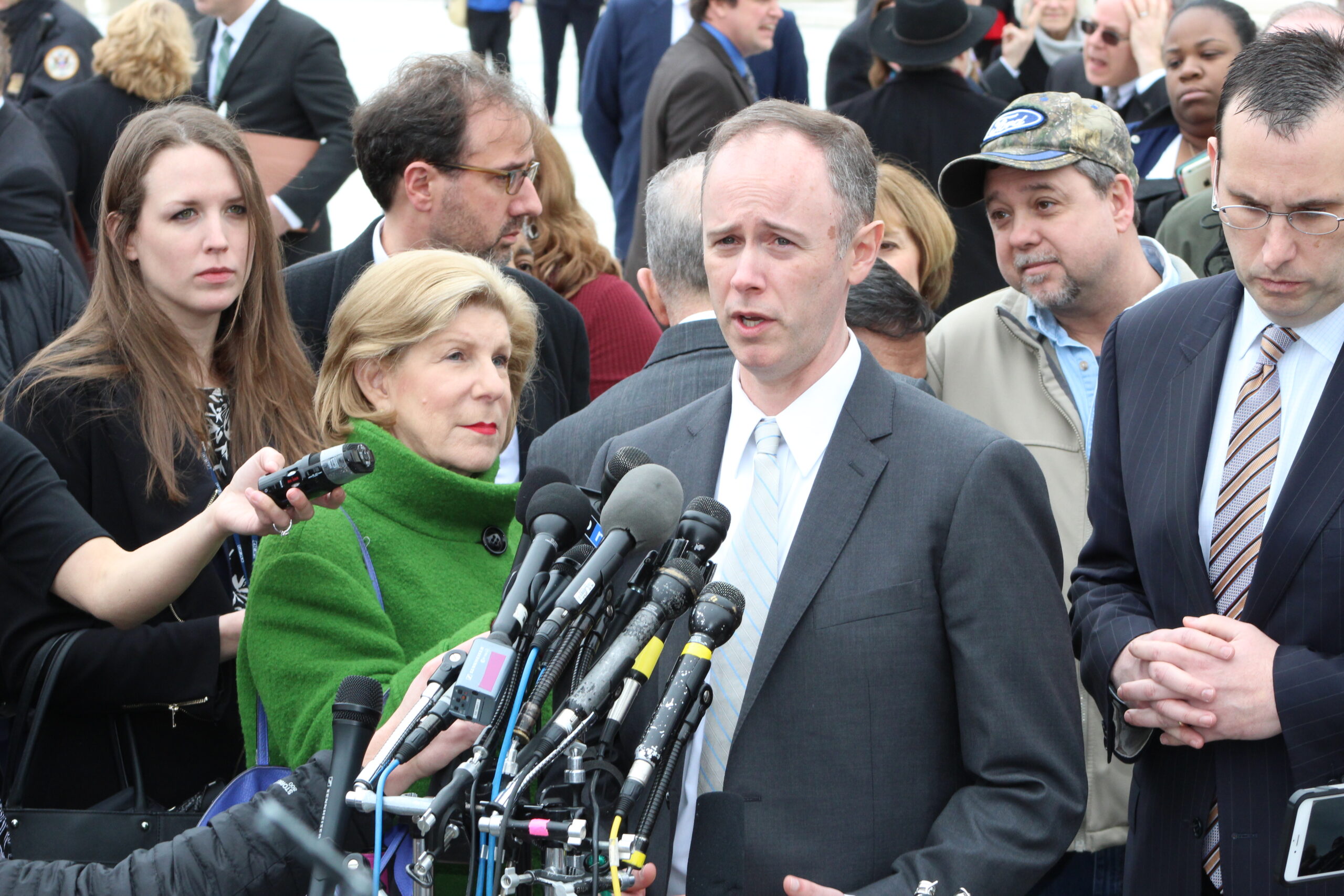
Veteran Foundation staff attorney William Messenger successfully argued Janus over two years ago, but union bosses are still concocting schemes to circumvent it. Timothy Crane is now fighting a particularly flagrant example.
CINCINNATI, OH – With free legal aid from National Right to Work Foundation staff attorneys, City of Hamilton employee Timothy Crane is suing International Union of Operating Engineers (IUOE) Local 20 union officials and the City of Hamilton for seizing a compulsory fee from his paycheck in violation of his First Amendment rights.
His complaint, filed in the U.S. District Court for the Southern District of Ohio, contends that union bosses are infringing on his rights under the Janus v. AFSCME decision by forcing him to pay a so-called “agreement administration fee” equal to more than 90 percent of full union dues as a condition of his employment.
In the 2018 Foundation-won Janus decision, the High Court ruled that no public worker can be forced to pay union dues or fees as a condition of getting or keeping a job. The Court also held that union dues or fees can only be deducted from a public employee’s paycheck if that employee clearly and affirmatively waives his or her right not to pay. Justice Samuel Alito wrote for the Court majority that “such a waiver cannot be presumed” by union or state officials.
Even After City Employee Exercised His Janus Rights, Union Honchos Seized Fees
Crane sent letters to IUOE union officials in both August and September of 2020, attempting to exercise his First Amendment Janus right to end dues deductions from his paycheck. After sending these two letters, however, he discovered that an “agreement administration fee” was now being taken from his pay by the City at the behest of IUOE union bosses.
Crane’s complaint contends that this is just a so-called “agency fee” — compulsory union payments charged to employees who refrain from formal union membership that were definitively outlawed by the Janus v. AFSCME decision — masquerading under a different name. The suit urges the District Court to declare it unconstitutional for IUOE Local 20 and the City of Hamilton to force him to pay this compulsory union fee. Crane’s lawsuit also seeks a refund of all money that the union has illegally taken from his paycheck under the unconstitutional arrangement.
Chain of Foundation-backed Janus Victories for Ohio Workers Likely to Continue
Since Janus was handed down by the Supreme Court, Foundation staff attorneys have already won favorable settlements in four cases for Buckeye State public workers who have challenged illegal union-created restrictions on the exercise of Janus First Amendment rights. In a July 2020 settlement in a class-action lawsuit filed by four state workers, nearly 30,000 Ohio public employees were freed from an “escape-period” scheme imposed by Ohio Civil Service Employees Association (OCSEA) union chiefs, which limited to just a handful of days every few years the time in which a public employee could exercise his or her Janus rights.
“IUOE bosses, who may have thought they were going to trick employees into funding their agenda against their will with this blatantly unconstitutional scheme, have now been caught red-handed,” commented National Right to Work Foundation Vice President and Legal Director Raymond LaJeunesse. “Rank-and-file workers like Mr. Crane now see that IUOE officials are far more interested in keeping hard-earned employee cash flowing into their coffers than in respecting the First Amendment rights of the workers they claim to represent.”
LaJeunesse continued: “The string of Foundation victories for independent-minded Buckeye State employees who just want to exercise their First Amendment rights is not going to end here.”
Foundation Battles Union Restrictions on First Amendment Rights at Ninth Circuit
The following article is from the National Right to Work Legal Defense Foundation’s bi-monthly Foundation Action Newsletter, January/February 2021 edition. To view other editions or to sign up for a free subscription, click here.
Cases challenge coercive, anti-Janus “escape periods” concocted by union bosses
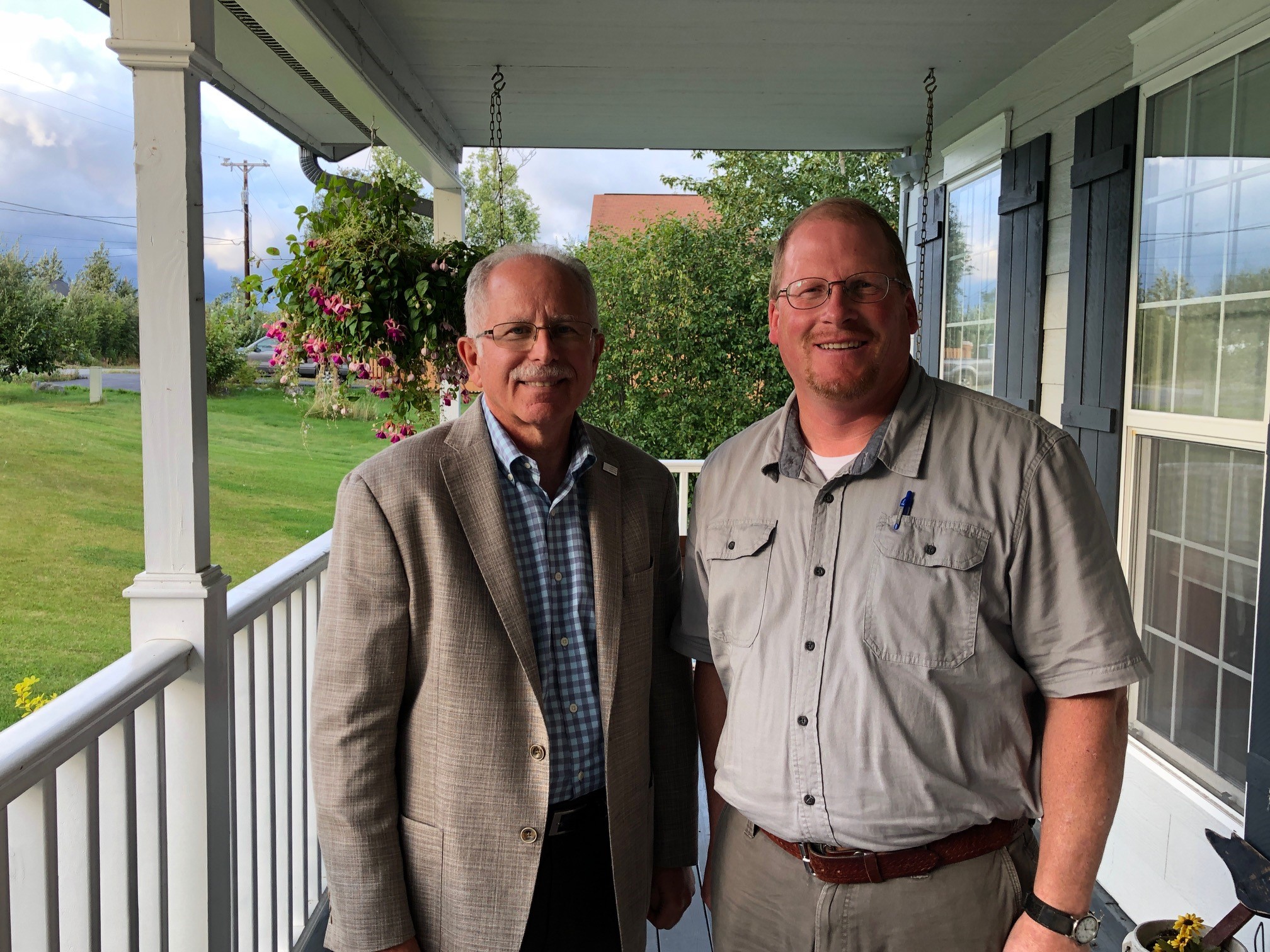
Christopher Woods (right), seen here with Mark Janus, is taking up the latter’s fight by challenging an ASEA union boss scheme that traps workers in union payments even after they have dissociated from the union.
SAN FRANSCISO, CA – The 2014 National Right to Work Foundation victory for Pam Harris in the Harris v. Quinn Supreme Court case established that union bosses violate the First Amendment when they skim dues from homecare providers’ state subsidies without their consent. Now, seven California homecare providers have just appealed to the Ninth Circuit Court of Appeals their federal lawsuit against Service Employee International Union (SEIU) Local 2015 officials for continuing to skim dues in violation of their rights.
According to their suit, SEIU honchos enforced a phony “escape period” on the homecare providers, illegally limiting the time in which they could stop the deductions. The providers’ suit says this contravenes the U.S. Supreme Court’s ruling in Janus v. AFSCME. The Court not only held that the government cannot force individuals to subsidize union activities as a condition of employment, but also that government agencies can only deduct union payments after receiving a clear and knowing waiver of their First Amendment right not to make such payments.
Dues-Skim Scam: SEIU Took Dues Without Informing Providers of Rights
Although the plaintiffs, Delores Polk, Heather Herrick, Lien Loi, Peter Loi, Susan McKay, Jolene Montoya and Scott Ungar, are not public employees, they were designated as such solely for the purpose of monopoly unionization. Then that was used as justification for the State of California to skim union dues from their payments at the behest of SEIU officials. The seven participate in the In-Home Support Services (IHSS) program, which allots Medicaid funds to those who provide home-based aid to people with disabilities.
Polk and the other plaintiffs recount in the lawsuit that SEIU union bosses began taking cuts of their Medicaid subsidies after confusing phone calls or mandatory orientation sessions. After the plaintiffs contacted the SEIU attempting to exercise their right to stop the flow of dues, SEIU operatives informed them that they could only opt out of union dues during short union-created “escape periods” of 10-30 days once per year.
The lawsuit also points out that the federal law governing IHSS forbids diverting any part of Medicaid payments to “any other party” besides the providers. In fact, in rulemaking urged by National Right to Work Foundation comments, the federal agency that administers Medicaid confirmed that skimming such payments for unions violates the Medicaid statute passed by Congress.
The seven plaintiffs now seek a ruling that both the taking of union dues without their knowing consent and the policy restricting the providers from ending the dues deductions are unconstitutional. The providers also seek refunds of all money that they and any other IHSS program participants had taken from their payments through the illegal scheme.
Alaska Union Bosses Confine Prison Employee in Unconstitutional Deductions
Also at the Ninth Circuit Court of Appeals, Alaska vocational instructor Christopher Woods recently filed an appeal in his case challenging an “escape period” scheme to block him and other Alaska state employees from exercising their First Amendment rights recognized in Janus.
In a November 2019 email, Woods, who has worked as a vocational instructor at Goose Creek Correctional Center since 2013, informed Alaska State Employees’ Association (ASEA) officials he was exercising his Janus right to stop all union dues deductions. Rather than respect his rights, union officials rejected his request and told Woods that he could only “opt out” and not be a union member with written notice to this office during a 10-day period each year.
Woods persisted on December 2, 2019, submitting to both ASEA officials and the payroll office of the Corrections Department another email asking to cut off dues. Although the payroll office confirmed to both Woods and the ASEA that it had received the request, an ASEA official responded by merely telling the payroll office that she was “still communicating with [Woods] on the matter,” the complaint says. Woods reports in his lawsuit that he has “not received any further communications” from either the ASEA or the payroll office, and that full dues are still being seized from his paychecks.
Foundation String of Triumphs Against Janus Restrictions Unlikely to End
“‘Escape periods’ are shameless union boss-concocted schemes that only exist to keep dues money rolling into their coffers after employees have clearly communicated that they do not wish to support the union,” observed National Right to Work Vice President and Legal Director Raymond LaJeunesse. “Although these arrangements are egregious in any context, trapping homecare providers in dues-skim schemes which deprive them of money they receive for taking care of the disabled is particularly unconscionable, and additionally breaches federal law which prohibits those funds from going anywhere other than to the people giving care.
“Whether it’s the landmark victories in Harris and Janus or the eight recent lawsuits in which Foundation staff attorneys have knocked down ‘escape period’ policies and secured refunds of illegal dues for workers, the Foundation has a track record of success in these cases. Union bosses shouldn’t hold their breath in the hopes of keeping seized dues,” LaJeunesse added.
Workers Win Over $30K After Challenging Teamsters Forced-Dues Scheme
The following article is from the National Right to Work Legal Defense Foundation’s bi-monthly Foundation Action Newsletter, July/August 2020 edition. To view other editions or to sign up for a free subscription, click here.
Cases demonstrate Teamsters union bosses’ widespread use of illegal coercive tactics
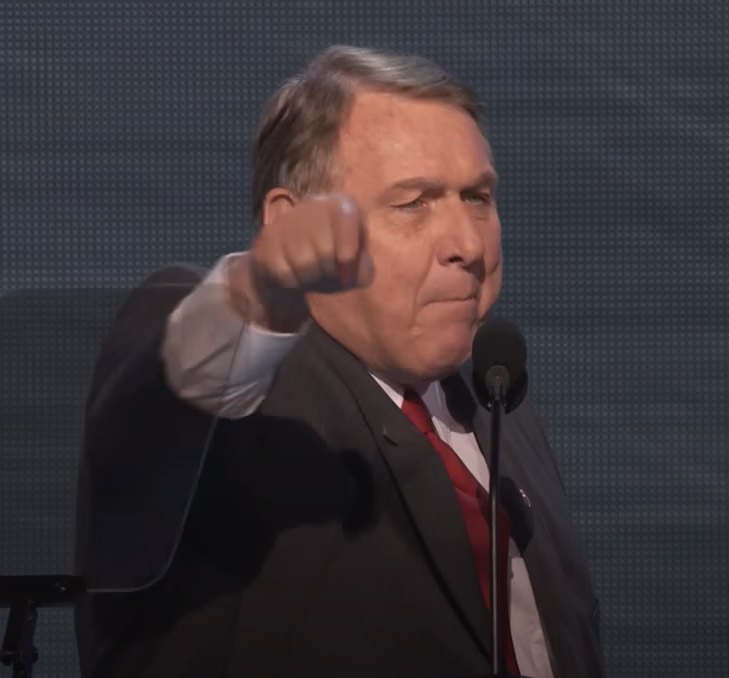
Notorious union boss James Hoffa heads the Teamsters union, which is subjecting workers nationwide and across industries to illegal schemes.
MINNEAPOLIS, MN – With free legal aid from National Right to Work Foundation staff attorneys, workers have won multiple settlements after Teamsters union bosses refused to respect their legal rights not to support a union as a condition of employment.
In one settlement, Minnesota employees James Connolly and Charles Winter won $30,000 in back pay from their former employer after they were illegally fired for choosing not to formally join the Teamsters Local 120 union.
Meanwhile, Milwaukee factory employee Tyler Lewis secured a settlement with Teamsters “General” Local Union No. 200. Union officials had denied his right under Wisconsin’s Right to Work Law and the National Labor Relations Act (NLRA) to not financially subsidize a union.
Two Minnesota Employees Obtain $30,000 in Back Pay
Connolly and Winter each filed unfair labor practice charges against both the Teamsters and their former employer, building materials company OMG Midwest, after they were unlawfully fired.
The two workers charged that company and union officials falsely told them several times that union membership was required as a condition of employment. Both men charged that the misinformation about membership and their firings violated Section 7 of the NLRA, which protects the “right to refrain from any or all” union activities.
In addition to winning $30,000 in back pay from their former employer, the settlement stipulates that OMG Midwest take additional action. The company must “remove all references to the termination” from the two employees’ personnel files, post notices at OMG’s facility in Belle Plaine, Minnesota, and distribute those notices individually to all employees. The notices will explain that workers cannot be forced to join a union as a condition of employment.
In a later settlement, Teamsters bosses were ordered to refrain from telling “employees or applicants that union membership is a condition of employment” and to inform employees “of their right to be non-members.” Additionally, the Teamsters will reimburse any employee who worked at OMG Midwest who chooses to become a non-member for the difference between full union dues and the portion payable by non-member objectors under the Foundation-won Supreme Court decision in CWA v. Beck.
“It is good news that Mr. Connolly and Mr. Winter have won these settlements which require their former employer and Teamsters union bosses to make reparations for violating longstanding worker protections. But such instances of abuse will continue unless Minnesota legislators pass Right to Work protections for their state’s private sector employees,” commented National Right to Work Foundation Vice President and Legal Director Raymond LaJeunesse. “This case demonstrates, yet again, why Teamsters bosses have a well-earned reputation for using coercive tactics against workers who refuse to toe the union line.”
Milwaukee Worker Receives Refund of Union Dues in Foundation-Won Settlement
Under the terms of the settlement for Lewis, Teamsters Local 200 officials agreed to repay union dues, plus interest, seized from Lewis’ paycheck after he resigned his union membership and revoked his dues deduction authorization.
After he was hired to work at Snap-on Logistics Company, a union official told Lewis that he must become a union member and authorize the deduction of union dues from his paycheck. That union demand violated longstanding law dating back to 1963.
In September 2019, Lewis resigned from the union and revoked his authorization of dues deductions. But union bosses refused to honor Lewis’ request to stop union dues deductions and continued to seize dues from his paycheck.
In response, Lewis filed an unfair labor practice charge with the NLRB with the assistance of Foundation staff attorneys. The favorable settlement secured for Lewis resolves his charge. Lewis’ charge against the Teamsters pointed out that the monopoly bargaining contract was signed after the effective date of Wisconsin’s Right to Work Law. Therefore, the so-called “union security” clause in the contract was illegal and he should never have been forced to pay any amount to the union.
“This settlement for Mr. Lewis is yet another victory for the rights of all Wisconsin workers. However, it should not take federal labor charges for union bosses to acknowledge the basic rights of employees in the Badger State,” said LaJeunesse.
NLRB Cases Challenge Coercive ‘Neutrality Agreements’ Used to Impose Forced Unionism
The following article is from the National Right to Work Legal Defense Foundation’s bi-monthly Foundation Action Newsletter, March/April 2020 edition. To view other editions or to sign up for a free subscription, click here.
Housekeepers demand NLRB block unionization resulting from back-room “Card Check” deals
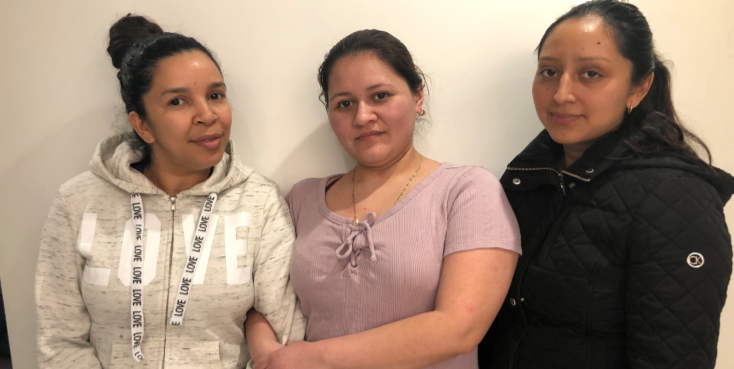
From left, housekeepers Lady Laura Javier, Cindy J. Alarcon Vasquez, and Yesica Perez Barrios are charging hotel officials and union bosses with illegally corralling workers into union ranks with a corrupted “Card Check” recognition.
SEATTLE, WA – Housekeeper Gladys Bryant was granted an appeal by the National Labor Relations Board (NLRB) General Counsel in her case challenging the use of a so-called “neutrality agreement” between UNITE HERE union officials and her employer to impose a union on the hotel’s workers.
Meanwhile, four Boston housekeepers have filed similar NLRB charges against their employer Yotel Boston and UNITE HERE Local 26, alleging that union officials violated federal law by imposing union representation on workers through a coercive “Card Check” drive with their employer’s assistance.
General Counsel Finds That UNITE HERE “Card Check” Unionization Was Tainted
Bryant filed the unfair labor practice charges after the UNITE HERE Local 8 union was installed at the Embassy Suites hotel in May 2018 through an oft-abused “Card Check” drive which bypassed the NLRB’s secret ballot election process.
As part of its so-called “neutrality agreement,” Embassy Suites agreed to give union organizers access to the hotel to meet and solicit employees. The agreement also provided union officials with a list of all employees’ names, jobs, and contact information to assist the union in collecting authorization cards from employees.
After NLRB Region 19 officials declined to prosecute the union or employer for violations of the National Labor Relations Act (NLRA), Bryant appealed the case to the NLRB General Counsel in January 2019. The NLRB General Counsel agreed with Bryant’s Foundation attorneys that Embassy Suites provided UNITE HERE’s organizing campaign with more than “ministerial aid” and thus violated the NLRA.
The NLRB has long held that an employer taints employees’ efforts to remove a union if it gives the employees support such as providing a list of bargaining unit employees or use of company resources. Bryant’s appeal successfully argued that the “ministerial aid” standard must also apply when an employer aids union officials’ efforts to gain monopoly bargaining power over workers.
Boston Housekeepers Argue Union “Card Check” Must Be Overturned
Faced with a similar situation, Boston-area housekeepers Cindy J. Alarcon Vasquez, Lady Laura Javier, Yesica Perez Barrios, and Danela Guzman filed unfair labor practice charges with the NLRB. With free legal aid from the National Right to Work Foundation, the housekeepers argue that UNITE HERE union officials violated federal law by imposing union representation on workers through a coercive “Card Check” drive with the assistance of their employer, Yotel Boston.
As in the Seattle case, they charge that Yotel Boston company officials provided UNITE HERE’s organizing campaign with more than “ministerial aid” and therefore illegally tainted the union’s installation as the employees’ exclusive representative in the workplace. The housekeepers charge union officials with violating the NLRA by requesting and accepting the illegal assistance, and the hotel for providing it.
“It is long past time that the NLRB put an end to this biased double standard that allows union bosses to abuse workers’ rights,” said National Right to Work Foundation Vice President and Legal Director Ray LaJeunesse. “The General Counsel is correct to finally recognize that what qualifies as more than ‘ministerial assistance and support,’ and thus violates the National Labor Relations Act, cannot depend on whether the employer is helping outside union organizers impose unionization on workers or assisting workers in exercising their right to remove an unwanted union.”
“These cases represent another breakthrough in the Foundation’s challenges to the pro-forced unionism skew at the NLRB,” added LaJeunesse.
Electrician Files Discrimination Lawsuit Challenging Forced Union Fees
The following article is from the National Right to Work Legal Defense Foundation’s bi-monthly Foundation Action Newsletter, January/February 2020 edition. To view other editions or to sign up for a free subscription, click here.
Boston College and SEIU officials ignored reasonable request to accommodate religious beliefs
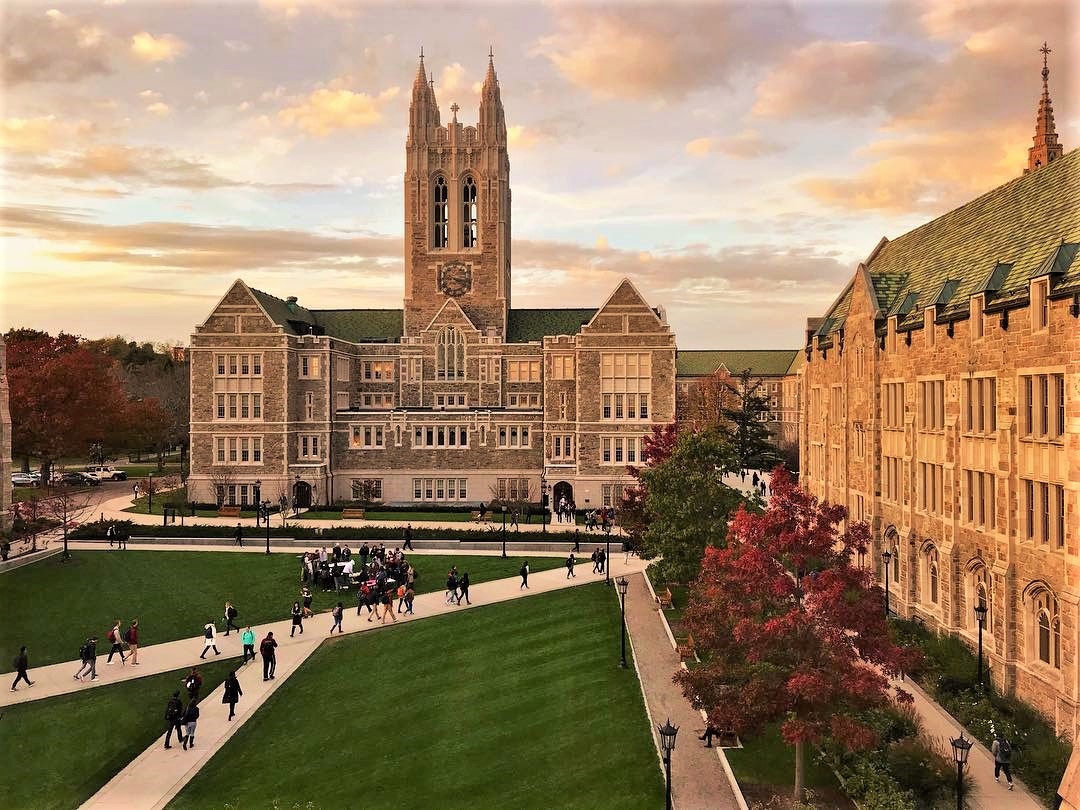 Boston College officials seized union fees from electrician Ardeshir Ansari’s paycheck at the behest of SEIU bosses, even after he had informed them that such fees violate his religious beliefs.
BOSTON, MA – In November, National Right to Work Foundation staff attorneys filed a federal Title VII religious discrimination lawsuit for a Boston College electrician whose rights were violated by the Service Employees International Union (SEIU) in illegally demanding union fees. The lawsuit also names his employer, Boston College, for its role in the discrimination.
Ardeshir Ansari objects to supporting the union based on deeply held religious beliefs. Under the local SEIU’s monopoly bargaining agreement at Boston College, however, he was told that he must join or financially support the SEIU or be fired. To avoid being fired, Ansari unwillingly paid fees to the union in violation of his sincere religious beliefs.
On October 1, 2018, Ansari sent a letter to Boston College and the SEIU, informing them his religious beliefs conflict with joining or financially supporting the union. He asked that his union fees be diverted to charity instead of being sent to the union, an established remedy for such a conflict.
Instead of responding, the college continued to take a cut of his paycheck and send it to SEIU officials in violation of his sincerely held religious beliefs.
In response, Ansari filed charges with the Equal Employment Opportunity Commission (EEOC) against college and union officials. The EEOC then determined that both Boston College and the SEIU had violated Title VII.
Last September, the EEOC gave Ansari a right-to-sue letter, which authorized him to file a lawsuit under Title VII of the Civil Rights Act of 1964. That federal law prohibits employers and unions from discriminating against an individual based on his or her religious beliefs.
In November, Foundation staff attorneys filed a lawsuit for Ansari against Boston College and the SEIU for illegally discriminating against him by failing to reasonably accommodate his religious beliefs, violating his rights under Title VII.
The lawsuit demands that college and SEIU local officials pay all fees deducted from Ansari’s paycheck to a charity mutually agreed upon and seeks damages for the emotional distress he suffered while his rights were violated for more than a year.
EEOC Found Religious Discrimination by SEIU
Moreover, the Title VII lawsuit asks the court to prevent the college from continuing to discriminate against his religious beliefs and that the union be required to inform workers that those with religious objections to the payment of union fees are entitled by law to pay those fees to a charity instead.
“Workers with sincere religious objections to joining or funding a union are legally protected from being forced to violate their conscience,” said National Right to Work Foundation Vice President and Legal Director Ray LaJeunesse. “No one should ever be forced to choose between keeping a job to provide for their family and violating their deeply held religious beliefs by supporting a union.”
“Right to Work laws protect workers like Mr. Ansari from this kind of discrimination. Under those laws, workers can stop paying union fees and resign union membership for any reason and thus avoid illegal religious discrimination,” added LaJeunesse.
Featured Article: “The Future Looks Bright for the Right to Work Movement”
The Regulatory Review has ranked the essay entitled “The Future Looks Bright for the Right to Work Movement” by National Right to Work Foundation Vice President and Legal Director Raymond J. LaJeunesse, Jr. as one of the publication’s top essays in 2019.
The essay highlights successes in the ongoing fight against forced unionism through legal and legislative reform:
Thomas Jefferson famously said that it is “sinful and tyrannical” for government “to compel a man to furnish contributions of money for the propagation of opinions which he disbelieves and abhors.” That principle is consistent with the guarantees of freedom of speech and association enshrined in the U.S. Constitution’s First Amendment. Yet, some federal and state labor laws in this country have long authorized requirements that workers pay union dues as a condition of employment, requirements known as the “union shop” or “agency shop.” Increasingly, however, legislatures and courts are recognizing that workers have a constitutional right to work without being forced to subsidize a union.
Among recent achievements for the Right to Work movement are five new state Right to Work laws passed since 2012 and the landmark Foundation-won Janus v. AFSCME Supreme Court decision in June 2018.
The complete essay is available to read online here.
Foundation Winning Protections Against Forced Unionism at Trump NLRB
The following article is from the National Right to Work Legal Defense Foundation’s bi-monthly Foundation Action Newsletter, September/October 2019 edition. To view other editions or to sign up for a free subscription, click here.
Series of victories adds protections against illegal forced dues, being trapped in union ranks
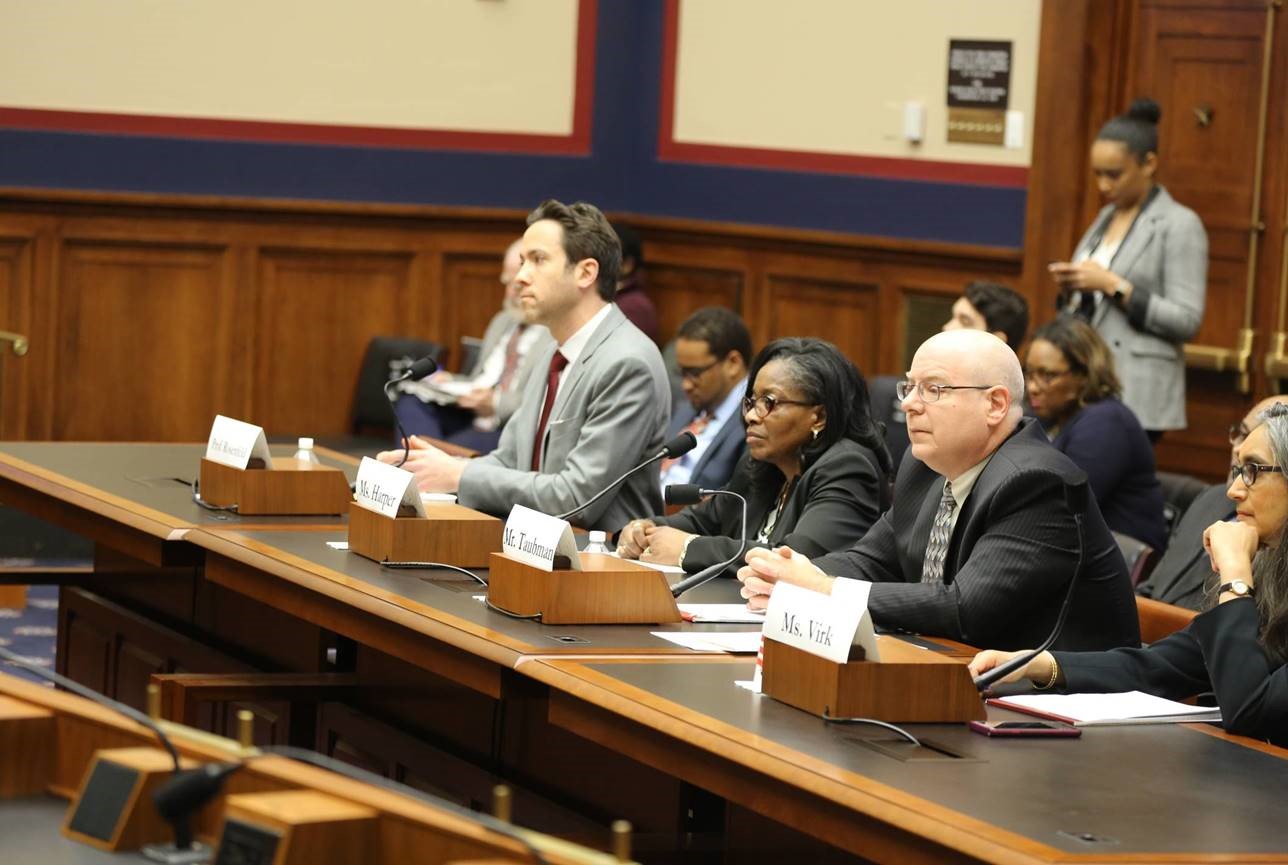
Staff attorney Glenn Taubman testified before Congress in July that existing NLRB rules wrongly favor union bosses over workers.
WASHINGTON, D.C. – In a series of recent victories, the National Labor Relations Board (NLRB) ruled in favor of workers challenging coercive union official practices, with free legal aid provided by the National Right to Work Foundation. The rulings are a stark departure from the Obama NLRB, which regularly stymied the rights of independent-minded employees opposed to associating with union bosses.
Foundation Wins Appeals in Dues Checkoff Cases
In separate cases brought by Foundation staff attorneys for Kacy Warner, a hospital worker, and Shelby Krocker, a Kroger grocery employee, the NLRB General Counsel ruled for the workers and ordered Regional Directors to prosecute union officials’ actions related to language in union dues checkoff forms.
The General Counsel’s decision to sustain Warner’s appeal concerning the checkoff authorized even more additions to the charges, saying the National Nurses Organizing Committee (NNOC) union violated the NLRA by “maintaining confusing and ambiguous dual-purpose authorization forms that unlawfully restrained employees in the exercise of their Section 7 rights.”
The General Counsel noted that the union’s forms failed to tell workers they can revoke authorizations for dues deductions after the union’s contract expires, failed to give workers adequate time to revoke authorizations, unlawfully required workers to use certified mail to send revocation requests, and failed to give “any indication to employees that payroll deduction authorization is voluntary.”
This came just a week after the General Counsel sustained another Foundation-led appeal for Krocker, who charged United Food and Commercial Workers (UFCW) union officials with illegally forcing her to sign a dues checkoff authorization. In both cases, the NLRB General Counsel authorized even more charges against union officials for misleading and confusing language regarding union dues deductions.
NLRB Regions Instructed to Prosecute Beck Violations
Also in July, the NLRB Division of Advice and General Counsel instructed regional directors to issue complaints against unions when union officials fail to inform employees of the amount of reduced union fees they can pay by objecting under the Communication Workers of America v. Beck U.S. Supreme Court decision.
The memos instruct NLRB Regional Directors to more stringently enforce workers’ Beck rights which protect workers from being forced to fund nonchargeable union activities such as union political activities. A memo issued to the Director of NLRB Region 32 read in part that “it is difficult for an employee to make an informed decision about whether to become a Beck objector without knowing the amount of savings that would result from the decision.”
“The Foundation is proud to have represented the California employee whose charge against the UFCW resulted in this Advice Memo, as well as necessitating this heightened disclosure standard by winning the Beck decision at the Supreme Court and the Penrod decision at the D.C. Circuit Court of Appeals,” National Right to Work Foundation Vice President and Legal Director Ray LaJeunesse said. Foundation staff attorneys are currently litigating several additional cases to secure and expand workers’ protections under Beck.
Ruling Aids Workers Trapped in Union Ranks They Oppose
In another Foundation victory for independent-minded workers in July, the NLRB issued a decision that limits union officials’ ability to game the NLRB system to trap workers in monopoly union ranks. The ruling allows employers to withdraw recognition from a union when a majority of its workers sign statements opposing unionization.
Foundation staff attorneys represented two workers, Brenda Lynch and Anna Marie Grant, who spearheaded the collection of signatures from a majority of workers opposed to union representation. Their employer complied with their wishes and sent the union bosses packing. After United Auto Workers (UAW) union officials sought to foist the union back onto the workers despite their clear opposition, Foundation staff attorneys persuaded the NLRB to uphold the UAW’s ouster.
“Instead of union lawyers playing legal games for months or even years to block the removal of a union that lacks majority support, the Board majority takes the common sense approach of asking union officials to prove their claim of support in a secret ballot vote of the workers,” said LaJeunesse.
Airline Workers Contest Union ‘Opt-Out’ Requirement for Political Dues
The following article is from the National Right to Work Legal Defense Foundation’s bi-monthly Foundation Action Newsletter, July/August 2019 edition. To view other editions or to sign up for a free subscription, click here.
Union bosses bullied and illegally threatened to discipline employee who defied strike demands

United Airlines fleet service employee Arthur Baisley (left) and JetBlue pilot Christian Popp (right) are challenging union boss “opt-out” rules that make nonmembers pay for union political spending without their consent.
AUSTIN, TX – United Airlines fleet service employee Arthur Baisley and JetBlue Airlines pilot Christian Popp have filed federal lawsuits against the International Association of Machinists (IAM) and Air Line Pilots Association (ALPA) unions, respectively, challenging union officials’ “opt-out” requirements designed to make non-members pay for union political activities without their consent.
Austin, TX-based Baisley and Fort Lauderdale, FL-based Popp filed their lawsuits with free legal aid from the National Right to Work Foundation. Their Foundation staff attorneys argue that the “opt-out” schemes perpetrated by IAM and ALPA bosses violate workers’ rights under the Railway Labor Act (RLA) and the First Amendment under the standard laid out in the landmark 2018 Supreme Court decision Janus v. AFSCME.
“No employee or private citizen should be trapped in a deliberately-complex system that funnels their money into political speech of which they disapprove. Unfortunately, that is exactly what IAM and ALPA union officials are doing to non-member workers across America,” commented National Right to Work Foundation Vice President and Legal Director Ray LaJeunesse.
The lawsuits contend that under Janus and the 2012 Knox v. SEIU Supreme Court case – both of which were argued and won by Foundation staff attorneys – no union dues or fees can be charged for union political activities without a worker’s affirmative consent.
Popp and Baisley, despite working in the Right to Work states of Florida and Texas, must still pay fees to their respective unions as the RLA preempts state law and permits forced dues. But, even in the absence of Right to Work protections, established Supreme Court precedent forbids unions from putting those compulsory fees towards ideological activities like lobbying or politics.
According to the lawsuits, the processes that IAM and ALPA union bosses require independent-minded workers to go through simply to exercise their constitutional right not to fund “nonchargable” activities are convoluted and typically involve having to “decipher” the opt-out requirements of the union.
Even worse, after Baisley submitted a letter to IAM agents in November 2018 objecting to funding all union political activities, the union officials only accepted his objection for 2019, and told Baisley he would be required to renew his objection to full dues and fees the next year or else be charged for full union dues.
The two complaints challenge these union boss-created policies on the grounds that they “require employees to opt-out of paying union fees that they have no legal obligation to pay” and thus violate workers’ First Amendment rights.
The complaints also allege that the “opt-out” requirements violate the RLA, which governs labor in the air and rail industries and “protects the right of employees to ‘join, organize, or assist in organizing’ a union of their choice as well as the right to refrain from any of those activities.”
Both suits are class-action, and seek court orders requiring union officials to ask for affirmative employee consent for any dues charged for political or ideological purposes in the future.
“These lawsuits show that although Janus’ most direct impact was to secure the First Amendment rights of public employees not to be required to fund Big Labor, the implications don’t stop there,” observed LaJeunesse. “Because the Janus decision made clear workers must opt-in to all political and ideological activity, Foundation staff attorneys are able to cite it in defense of airline workers covered by the Railway Labor Act.”
Final Briefs Filed at Appeals Court in Continuation of Janus v. AFSCME
The following article is from the National Right to Work Legal Defense Foundation’s bi-monthly Foundation Action Newsletter, September/October 2019 edition. To view other editions or to sign up for a free subscription, click here.
Foundation seeks first-in-nation appellate court ruling to order non-member dues refunded
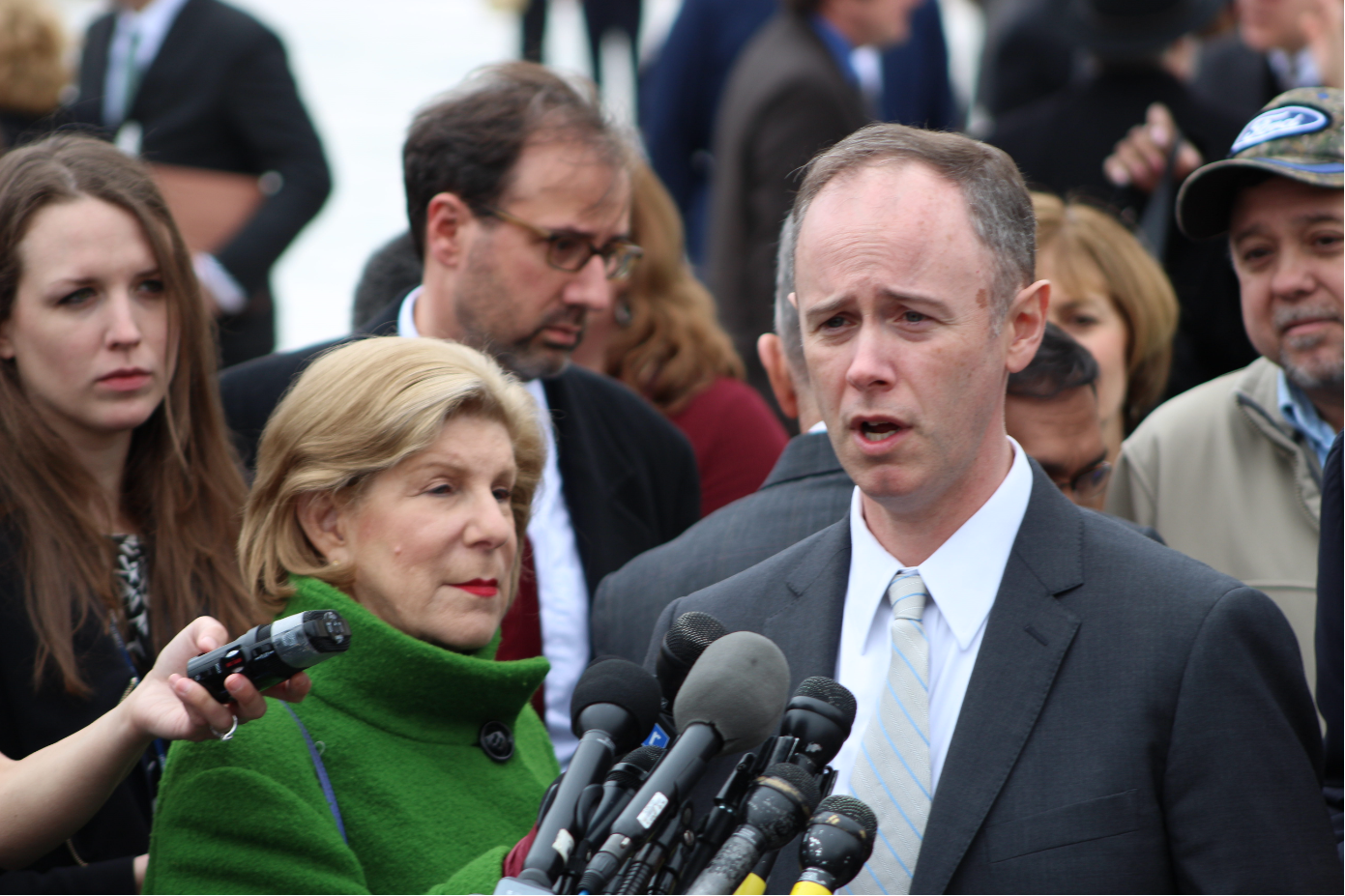
Veteran Foundation staff attorney William Messenger, seen here speaking to reporters after Supreme Court oral arguments in Janus, leads the Foundation’s Janus enforcement task force.
CHICAGO, IL – Although Janus v. AFSCME secured a landmark victory at the U.S. Supreme Court for government employees’ First Amendment rights, Mark Janus’ case is not over because AFSCME union bosses have refused to return the funds taken from him in violation of the First Amendment.
Janus’ attorneys from National Right to Work Foundation and Illinois-based Liberty Justice Center have completed briefing with the Seventh Circuit Court of Appeals on the issue of whether union officials can keep money they seized from non-members in violation of their constitutional rights. The case is likely to mark the first time an appellate court will rule on the issue, potentially establishing a precedent that could result in the return of hundreds of millions of dollars seized by union bosses in violation of the Janus precedent.
Janus Secured Workers’ First Amendment Rights
Mark Janus was an Illinois child support specialist whose case was successfully argued at the Supreme Court by National Right to Work Foundation staff attorney William Messenger.
The Supreme Court’s June 27, 2018, decision in Janus’ favor found that any union fees taken from workers like Mark Janus – who was not a member of AFSCME – without the workers’ affirmative and knowing consent violate the First Amendment. Justice Samuel Alito wrote for the majority that compulsory fees “[violate] the free speech rights of non-members by compelling them to subsidize private speech on matters of substantial public concern.”
The Supreme Court sent the case back to the lower courts to determine, among other things, whether Janus is entitled to all the union fees he was forced to pay since March 23, 2013.
Janus’ appeal comes after a district court judge ruled that union officials are not required to refund forced fees seized from non-member workers prior to the Janus decision.
“Just like a thief would not be allowed to keep the money he stole, union bosses must be forced to return funds unlawfully seized from workers,” said National Right to Work Foundation Vice President and Legal Director Ray LaJeunesse. “It would be a massive injustice to deny workers victimized by Big Labor the refunds to which the Supreme Court made clear they are entitled.”
Seventh Circuit Likely First Appeals Court to Rule on Non-member Refunds
Janus will likely be the first case in which an appellate court will evaluate the so-called “good faith” defense that union lawyers have asserted in response to worker lawsuits seeking refunds, arguing that union officials should be allowed to keep funds seized prior to the Janus decision.
This contention has generally succeeded in lower courts despite the Supreme Court asserting that union bosses have been “on notice” for years that mandatory fees likely would not comply with the heightened level of First Amendment scrutiny articulated in the Supreme Court’s earlier Knox v. SEIU decision, also won by Foundation staff attorneys.
Mark Janus is asking the Seventh Circuit to rule that he is entitled to refunds of approximately $3,000 in fees he was forced to pay since March 23, 2013, as the statute of limitations permits. In addition, the case has significant implications for dozens of other cases being litigated around the country for hundreds of thousands of other workers seeking the return of forced fees seized unlawfully by union officials.
Janus Refund Efforts Continue Nationwide
Foundation staff attorneys are currently litigating over a dozen such cases that collectively seek over $120 million in refunds for non-members forced to pay union fees before Janus. Other ongoing lawsuits and potential cases could result in half a billion dollars or more returned to government workers from union treasuries.
“The Janus case is a milestone of worker freedom, but union bosses continue to block workers from exercising their rights and deny workers refunds for dues and fees seized against their wishes,” said LaJeunesse. “We hope the Seventh Circuit Court of Appeals will follow the clear logic of the Supreme Court’s decision in Janus and establish that union bosses cannot profit from violating workers’ First Amendment rights.”





