
IAFF Local 3631 Settles Case for Denying Retirement Benefits to Nonmember Firefighter
Union bosses attempted to withhold benefits from employee who exercised First Amendment rights under Janus Supreme Court precedent
Irvine, CA (August 24, 2026) – Peter Crary, a Fire Apparatus Engineer who has served his community for over 20 years with the Orange County Fire Authority (OCFA), has prevailed in his dispute with International Association of Fire Fighters (IAFF) Local 3631 union bosses, and OCFA officials. IAFF Local 3631 bosses moved to settle after the California Public Employment Relations Board (PERB) issued a complaint against the union for violating Crary’s rights. Crary’s settlement was secured with free legal aid from National Right to Work Foundation staff attorneys.
Crary filed charges with the PERB against IAFF Local 3631 in late 2025 after union bosses threatened him, stating that as a nonmember, he would be denied access to his retiree healthcare (an IAFF Local 3631 medical benefit trust fund which he contributed to through his wages) unless he rejoined the union and paid back dues for the entire period during which he was a nonmember. The charges detail that forcing union membership and dues payment as a condition for healthcare access is arbitrary and discriminatory, interferes with protected rights, and constitutes a breach of the union’s duty of fair representation.
Charges were also filed against OCFA, noting that while OCFA does not administer IAFF Local 3631’s medical benefit trust fund, as a public agency, its compliance with IAFF Local 3631’s eligibility restrictions based on union membership is a violation of employees’ protected right to refrain from union membership.
Having examined the facts of the case, the PERB issued complaints against IAFF Local 3631 union bosses and OCFA officials, finding that Crary provided sufficient evidence to allege a violation of his rights under the Meyers-Milias-Brown Act and move forward with a hearing to establish the violation. To avoid further litigation, IAFF Local 3631 and OCFA have now settled the case with Crary.
Under the settlement, IAFF Local 3631 union bosses are withdrawing and rescinding the union’s policy denying retirement benefits to nonmembers unless they rejoin and pay dues to the union. Additionally, OCFA officials are required to issue a public notice to all OCFA workers informing them that the policy targeting nonmembers has been withdrawn and rescinded.
“I am glad that my complaint and the Foundation’s assistance with reaching a settlement agreement rescinded a policy that I believe coerced firefighters into paying thousands of dollars to rejoin the union in order to avoid losing health insurance in retirement,” stated Crary.
Thanks to the 2018 Foundation-won U.S. Supreme Court Janus v. AFSCME case, Crary and all public employees in California can no longer be required to join or pay dues or fees to a union. Despite the Supreme Court’s decision, as this case shows, California government union bosses have sought to undermine employees’ rights, including by discriminating against those who choose to exercise their First Amendment rights under Janus.
“We are pleased to have been able to assist Mr. Crary in defending his Janus rights against union bosses who just cannot accept that union affiliation and financial support must be voluntary for all public employees,” said National Right to Work Legal Defense Foundation President Mark Mix. “Rather than simply attempt to attract the voluntary support of current and retired employees, government union bosses continue to attempt to bully and discriminate against those who choose to exercise their First Amendment rights.
“The Foundation is proud to have secured the Janus victory at the Supreme Court and will continue to assist individuals like Mr. Crary to enforce their rights under Janus,” added Mix.
St. HOPE Charter School Teachers Win Effort to Remove Union Officials From Power
Having failed to stop decertification vote requested by majority of teachers, Sacramento City Teachers Association union bosses concede defeat and leave
Sacramento, CA (March 5, 2026) – Following an effort in which a majority of teachers demanded a vote to remove the union, charter school educators at St. HOPE Public Schools have successfully ousted Sacramento City Teachers Association (SCTA) union officials from the school system.
Rather than face a union decertification vote that a federal labor board had scheduled to take place on March 11, SCTA union bosses instead disclaimed interest in maintaining their exclusive representation powers over the St. HOPE educators. Now, over 50 teachers from PS7 Elementary School, PS7 Middle School, and Sacramento Charter High School are free of the unwanted union’s control.
St. HOPE teacher Beth Simonton led the removal effort, submitting a petition to the National Labor Relations Board (NLRB) in January requesting a vote to remove the union. The NLRB is the agency responsible for enforcing private sector labor law, a task that includes administering votes to install (or “certify”) and remove (or “decertify”) unions. Private organizations like St. HOPE, even if they operate public charter schools, are often subject to federal labor law as opposed to state labor laws.
Simonton’s petition, which she submitted in January with free legal aid from National Right to Work Foundation staff attorneys, contained signatures from the majority of her colleagues – well over the threshold needed under federal law to trigger a union decertification vote. On February 25, NLRB Region 20 rejected arguments by the union and ordered a union decertification election to take place among the St. HOPE educators.
Then, only days before the scheduled election, SCTA union officials sent correspondence announcing that they were ending their monopoly bargaining control over the facility, likely in an attempt to avoid an embarrassing lopsided loss at the ballot box. St. HOPE teachers are now free of SCTA union bosses’ power to dictate their contract terms and work rules.
“I’m truly grateful that my colleagues and I were able to band together and send SCTA union officials on their way,” commented Simonton. “So much of their activity at St. HOPE involved pitting teachers against each other and finding ways to bend the rules so they could maintain their control. They did not represent the interest of the educators at St. HOPE, and we look forward to being independent from the union. We are FAMILY!”
NLRB Order: CA Charter Schools Aren’t Exempt From Federal Labor Law
As litigation over the scheduled vote went on, NLRB Region 20 notably rejected arguments from SCTA union lawyers that the St. HOPE system is a “political subdivision” subject to the California Public Employment Relations Board (PERB) and not the NLRB. Union officials prefer operating under the PERB, where rules are rigged against workers seeking decertification, effectively letting union legal tactics trap employees in union ranks for years even when a majority is on record as wanting the union removed.
In rejecting the union’s argument, NLRB officials turned to the U.S. Supreme Court’s ruling in Natural Gas Utility District of Hawkins County v. NLRB, under which an employer is a “political subdivision” only if it was directly created by the state, or if it is administered by individuals who are accountable to the public or public officials.
Applying this standard, NLRB Region 20 found that a private individual founded St. HOPE, and that public officials have little, if any, control over St. HOPE’s board of directors. For those reasons, the Regional Director ruled that “[St. HOPE] is an employer within the meaning of Section 2(2) of the [National Labor Relations Act] and is not exempt under the test set forth in Hawkins County.”
While SCTA union officials fled St. HOPE Public Schools before the NLRB-ordered vote could take place, NLRB Region 20’s ruling could be significant going forward for employees of other California charter schools who wish to decertify unions in their workplaces. Foundation attorneys have helped charter school employees in a number of other states in efforts at the NLRB to remove unwanted unions, including in Missouri and New York.
CA Charter School Teachers Have More Options to Escape Unions
“Ms. Simonton and her fellow St. HOPE educators should be commended for their success in breaking free from SCTA union officials,” commented National Right to Work Foundation President Mark Mix. “But their effort – which also included attempts years ago to vote SCTA out – exposes how focused California labor law is on solidifying union boss power, even in the face of clear evidence that workers want a union gone.
“Bureaucrats on the California PERB blocked the St. HOPE teachers from ousting the union for years on end, simply because SCTA union bosses filed unsubstantiated charges of employer misconduct,” Mix added. “These charades forced Simonton and her coworkers to resort to an entirely different agency in the hopes of finally making their voices heard.
“No workers should have to face challenges like this simply to vote a union out,” Mix continued. “But, following St. HOPE educators’ success, charter school educators across the Golden State should know they have more options for seeking a union decertification election, and should not hesitate in contacting Foundation attorneys if they want to exercise this important right.”
National Labor Relations Board Schedules Vote for St. HOPE Charter School Teachers Seeking to Remove SCTA Union
Despite union’s legal attempt to block vote, NLRB schedules election for March 11 in response to majority-backed petition from teachers to decertify union
Sacramento, CA (March 2, 2026) – In response to a petition from the majority of St. HOPE Public Schools educators requesting such a vote, a federal labor board has ordered an election to remove Sacramento City Teachers Association (SCTA) union officials from the school system to take place on Wednesday, March 11. The vote will take place among over 50 teachers from PS7 Elementary School, PS7 Middle School, and Sacramento Charter High School.
In January, St. HOPE educator Beth Simonton submitted a petition to the National Labor Relations Board (NLRB), asking the federal agency to administer a vote to end SCTA union bosses’ exclusive representation powers over her and her colleagues. The NLRB is the agency responsible for enforcing private sector labor law, a task that includes administering votes to install (or “certify”) and remove (or “decertify”) unions. Private organizations like St. HOPE that operate public charter schools are generally subject to federal labor law.
Simonton’s petition, which she submitted with free legal aid from National Right to Work Foundation staff attorneys, contained signatures from the majority of her colleagues – well over the threshold needed under federal law to trigger a union decertification vote. Following a hearing conducted January 26-28, NLRB Region 20 issued an order on February 25 ordering an election to be held.
“SCTA union officials have been extremely divisive and have not had a positive impact on teachers, students, or the St. HOPE community as a whole,” commented Simonton. “They’ve spent much more time trying to demonize school leadership than simply standing up for our interests. I’m proud to represent the majority of educators at St. HOPE who are standing up and saying ‘enough is enough.’”
NLRB Rejects Union Argument That St. HOPE is Exempt From Federal Labor Law
NLRB Region 20’s election order notably rejected arguments from SCTA union lawyers that the St. HOPE system is actually a “political subdivision” under the jurisdiction of California’s Public Employment Relations Board (PERB) and not subject to the NLRB. The U.S. Supreme Court ruled in Natural Gas Utility District of Hawkins County v. NLRB that an employer qualifies as such a “political subdivision” only if it was directly created by the state, or if it is administered by individuals who are accountable to the public or public officials.
The election order points out that a private individual founded St. HOPE and that public officials have little, if any, control over St. HOPE’s board of directors. “I find that [St. HOPE] is an employer within the meaning of Section 2(2) of the [National Labor Relations Act] and is not exempt under the test set forth in Hawkins County,” the NLRB Regional Director’s decision reads. “Accordingly, I am directing an election among the employees in the agreed upon appropriate unit.”
The Foundation has aided numerous charter school employees over the years in opposing unwanted union hierarchies. Elsewhere in California, charter school teachers at Gompers Preparatory Academy in San Diego sought Foundation aid in obtaining a vote to remove San Diego Education Association (SDEA) union officials from the school. After two such efforts to remove the union (one in 2019 and another in 2023) and much litigation over SDEA union bosses’ delay tactics, the educators finally voted the SDEA out in 2023.
“We at the Foundation are proud to assist St. HOPE educators in finally getting a chance to exercise their right to vote SCTA union officials out of power at their schools,” commented National Right to Work Foundation President Mark Mix. “But it’s ridiculous that it took a herculean effort and several years for St. HOPE teachers just to get to this point. Biased bureaucrats at the California PERB blocked them from having a union removal vote for several years based on dubious allegations of employer misconduct – and St. HOPE educators are hardly the only workers in California that PERB has subjected to such stonewalling.
“We hope that Ms. Simonton’s effort is not only the first step in St. HOPE educators freeing themselves from SCTA union chiefs, but also the first step toward freeing California educators from the oppressive California labor bureaucracy,” Mix added.
Hudson Valley Farmworker Challenges PERB Official’s Dismissal of Employee Petition Seeking Removal of UFW Union Officials
Porpiglia Farms workers have been restrained for almost a year from voting union out of farm, new brief challenges suspect union “blocking charges”
Marlboro, NY (August 25, 2025) – Ricardo Bell, an agricultural worker at Porpiglia Farms in the Hudson Valley, is urging New York’s Public Employment Relations Board (PERB) in Albany to overturn a lower board official’s refusal to process a petition he and his coworkers backed seeking a union removal vote. Bell and his colleagues petitioned the PERB to hold a vote to remove United Farm Workers (UFW) union officials from power at Porpiglia Farms, and are receiving free legal aid in their effort from the National Right to Work Legal Defense Foundation.
The PERB is the New York state agency responsible for enforcing labor law in the agricultural sector, a task that includes administering votes to install (“certify”) and remove (“decertify”) unions. Despite the fact he submitted a petition containing enough of his colleagues’ signatures to trigger a union decertification vote, Bell’s latest filing reports that the PERB’s Acting Director of Private Employment Practices and Representation refused to process his petition on the basis of four unproven claims of wrongdoing that UFW union officials filed against Porpiglia Farms management.
At both state and federal labor boards, union officials often file such allegations (usually called “blocking charges”) to stop workers from exercising their right to vote a union out of power at a workplace – even without evidence showing any connection between the employer’s alleged conduct and workers’ desire for an election. Because New York lacks Right to Work protections for its private sector workers, union bosses have the power to enforce contracts that require workers like Bell and his colleagues to pay union dues or fees as a condition of keeping their jobs. In contrast, in 26 states with Right to Work laws, union membership and all union financial support are strictly voluntary.
Farmworker Argues PERB Shouldn’t Let Union Bosses Block Union Removal Election
Bell’s latest filing consists of exceptions to the PERB Acting Director of Private Employment Practices’ decision denying his request to process the petition. It states that the decision is unfounded because nothing in New York’s agricultural labor law or in the PERB’s policy authorizes the use of blocking charges to stop an employee-requested decertification election.
The brief argues that the PERB’s policy “is punitive, punishing the employees for conduct they cannot control… Employees should be free to choose their representative. Blocking charge delays prevent employees from exercising that right to choose.”
Bell’s brief also contends that the Acting Director’s decision violated a basic standard that PERB itself stated in an earlier case involving Bell and his coworkers. In that case – another union decertification attempt that was dismissed on different grounds – the PERB issued a decision explaining that not all charges of employer misconduct justify barring employees from exercising their right to vote out a union, and that if a blocking charge policy were to be applied, union officials must allege conduct that actually harms employees’ ability to choose for or against a union. Now the Acting Director’s dismissal of Bell’s newest decertification petition flies in the face of that standard, Bell’s brief explains, because it “failed to analyze the facts of the four charges” and makes no attempt to show how they might have affected the employees.
PERB Never Gave Employee Opportunity to Respond to Dubious Union Charges
Bell’s brief further points out that the Acting Director dismissed his union decertification petition without holding any formal fact-finding proceedings, and that the PERB agents provided Bell with the union’s blocking charges very late in the game – meaning he was deprived of any meaningful chance to challenge the allegations that blocked his election.
“Whether at the state or federal level, so-called ‘blocking charge’ policies do the exact same thing: Give union bosses the opportunity to stop the workers they claim to ‘represent’ from exercising their right to have an election they have properly requested,” commented National Right to Work Foundation President Mark Mix. “In non-Right to Work states like New York, these delays often mean that union officials can continue to siphon dues money from employees who have already expressed substantial interest in voting them out.
“Mr. Bell and his coworkers’ attempts to vote out the aggressive, politics-obsessed UFW union have been stalled for over a year now, which shows, clearly, how New York’s agricultural labor laws squash workers’ free choice simply to empower union bosses,” Mix added.
Bell and another New York farm employee, Jean Estrame, are also seeking to intervene in a federal lawsuit challenging New York State’s agricultural labor law (the so-called Farm Laborers’ Fair Labor Practices Act, FLFLPA) because it lets union officials bypass traditional union certification votes and sweep to power using the coercive “card check” unionization method.
New York Farmworkers Seek to Challenge ‘Card Check’ & Uproot UFW Union Bosses
The following article is from the National Right to Work Legal Defense Foundation’s bi-monthly Foundation Action Newsletter, January/February 2025 edition. To view other editions of Foundation Action or to sign up for a free subscription, click here.
Farmworkers fight union argument that New York labor law lets union bosses trap workers forever

Porpiglia Farms workers, who were targeted by an aggressive UFW ‘card check’ campaign against the farmworkers, are banding together to vote the union out and ensure that union officials reap what they have sown.
MARLBORO, NY – In 2020, the New York State Assembly passed a Big Labor-backed law that granted union officials sweeping new powers to impose their monopoly bargaining control over the state’s farmworkers. Since New York is one of 24 states that lacks a Right to Work law, the law authorizes union bosses to force farmworkers to pay union dues or else be fired.
But that’s not all: New York labor law went even further by mandating “card check” organizing, in which union officials deny workers a secret ballot union vote and instead claim majority support by submitting cards ostensibly showing worker support. These cards are often collected through pressure tactics, intimidation, or even threats.
But even that dramatic increase in power over the agricultural sector and agricultural workers is not enough for United Farm Workers (UFW) union officials.
UFW tyrants are advancing the cynical argument that, under New York law, workers can be forced into union ranks but can never escape forced unionism. They argue this to counter a recent National Right to Work Foundation-backed union decertification case for employees of Porpiglia Farms, an apple farm in the Hudson Valley of New York.
NY Fruit Farmworkers Seek Union Ouster After ‘Card Check’
Porpiglia employee Ricardo Bell submitted a petition last year in which he and his coworkers asked the New York Public Employment Relations Board (PERB) to hold a vote at the orchard on whether to remove the UFW. (Despite its name, PERB is responsible for enforcing labor law in both New York’s public and agricultural sectors.)
In late 2024, Foundation attorneys filed a brief for Bell countering union officials’ absurd argument that one card check drive should lock employees in a union forever. Additionally, more Foundation-backed decertification cases are sprouting up in both New York and other Big Labor-dominated states for farmworkers who are rejecting UFW officials’ card check schemes.
Brief Challenges Theory That Workers Have No Right to Remove Incumbent Union
Bell filed his decertification petition with Foundation legal aid after UFW union officials seized power at his workplace through a hasty card check unionization drive. His newest filing attacks union bosses’ contention that once a union is certified as the monopoly union “representative” of a work unit, there can be no option to remove it.
“[New York labor law] does not indicate that employees have a single chance at self-organization,” the brief says. “If that were the case, the very action of choosing a representative under [New York labor law] would deprive employees of the ability to exercise [their rights] in perpetuity….”
Foundation-Backed Workers Battle UFW ‘Card Checks’ Across Country
Since Bell’s filing, Foundation attorneys have also assisted in a union decertification effort for workers at Cherry Lawn Fruit Farms near Rochester, NY, who were targeted by a similar UFW card check campaign. These two groups of New York farmworkers join Foundation-backed employees of Wonderful Nurseries in California in challenging the UFW’s tactics.
Wonderful Nurseries workers still have multiple unfair labor practice charges pending against UFW bosses for deceptive behavior during an early 2024 card check drive. The charges detail UFW agents lying about the true purpose of cards that they collected from workers, and harassing workers who now back an effort to vote the union out.
“The aggressive and often demeaning tactics that UFW union officials use to seize control over agricultural workers show clearly why ‘card check’ is a bad idea in the agricultural sector, the public sector, and in any sector,” commented National Right to Work Foundation Vice President and Legal Director William Messenger. “UFW officials are arguing that workers should have little or no chance at all to challenge a union’s ascent to power by this process.
“The idea that workers have no ability to eject a union once it is installed in power further demonstrates that this is not about workers’ choices at all, only about union bosses’ power over workers, even when workers overwhelmingly want nothing to do with union bosses’ so-called ‘representation,’” added Messenger.
Chicago 911 Operators Notch Another Janus Victory Over IBEW
The following article is from the National Right to Work Legal Defense Foundation’s bi-monthly Foundation Action Newsletter, January/February 2025 edition. To view other editions of Foundation Action or to sign up for a free subscription, click here.
Foundation attorneys stopped deceptive cycle that kept illegal dues flowing for months

Patricia Whittaker heard ridiculous excuses from IBEW union officials about how they couldn’t honor her Janus rights. But after teaming up with Foundation attorneys, she’s cut off dues to IBEW bosses.
CHICAGO, IL – Another 911 operator employed by the City of Chicago has successfully defended her First Amendment rights under the National Right to Work Foundation-won Janus v. AFSCME Supreme Court decision. Late last year, Operator Patricia Whittaker sought free Foundation legal aid after facing months of stonewalling from International Brotherhood of Electrical Workers (IBEW) Local 21 union officials, who refused to stop taking dues from her paycheck against her will.
Whittaker fought these dues seizures by invoking her First Amendment rights under Janus. Foundation attorneys argued and won the Janus case before the Supreme Court in 2018. The Supreme Court agreed with Foundation attorneys and ruled that union officials could not force public sector employees to pay union dues or fees as a condition of employment, and that union officials must obtain affirmative employee consent before deducting union dues from any public worker’s paycheck.
In October, following unfair labor practice filings by Foundation attorneys at the Illinois Public Employment Relations Board (PERB), IBEW union bosses abandoned their unconstitutional dues demands — and other outrageous behavior they had subjected Whittaker to.
IBEW Union Outrageously Claimed They Had No Power to Stop Dues Deductions
Whittaker faced much more than just illegal dues deductions during her ordeal. IBEW officials engaged in a deceptive cycle in which Whittaker was told to resolve the matter with her employer, while the employer directed her back to the union, resulting in continued dues deductions for over 10 months. In doing so, the charges maintained, union officials misrepresented the law by making it appear as if they were the “good guys” by remitting dues deducted by the City of Chicago through checks back to her and claimed that only the employer — not the union — had the power to end dues deductions.
This isn’t the first time IBEW 21 union officials have been caught imposing illegal dues practices on Chicago 911 employees. In June 2024, Rhonda Younkins also triumphed in her months-long legal battle to exercise her First Amendment right to stop all union dues payments to IBEW Local 21. IBEW Local 21 union officials stopped their violation of Younkins’ Janus rights only after Foundation attorneys filed charges at PERB on Younkins’ behalf.
Independent-Minded Workers Continue to Defend Freedom with Janus
The Janus decision’s impact continues to grow. Immediately following the ruling, nearly a half a million public employees stopped paying union dues, with many others following in subsequent years as litigation backed by Foundation attorneys continues to defend their rights.
“The behavior of IBEW Local 21 union officials highlight just how crucial it is for public employees to be aware of, and assert, their Janus rights,” said National Right to Work Foundation President Mark Mix.
“While we at the Foundation are proud to help more workers protect their hard-earned money from funding union bosses and union agendas they don’t support, it is unacceptable that it takes aggressive legal action just to force union officials to respect workers’ constitutional freedoms.”
Victory: San Diego Charter School Educators Vote Out Teacher Union Bosses
The following article is from the National Right to Work Legal Defense Foundation’s bi-monthly Foundation Action Newsletter, September/October 2023 edition. To view other editions of Foundation Action or to sign up for a free subscription, click here.
SDEA officials stonewalled vote at charter school for years with “blocking charges” and pressure from elected officials
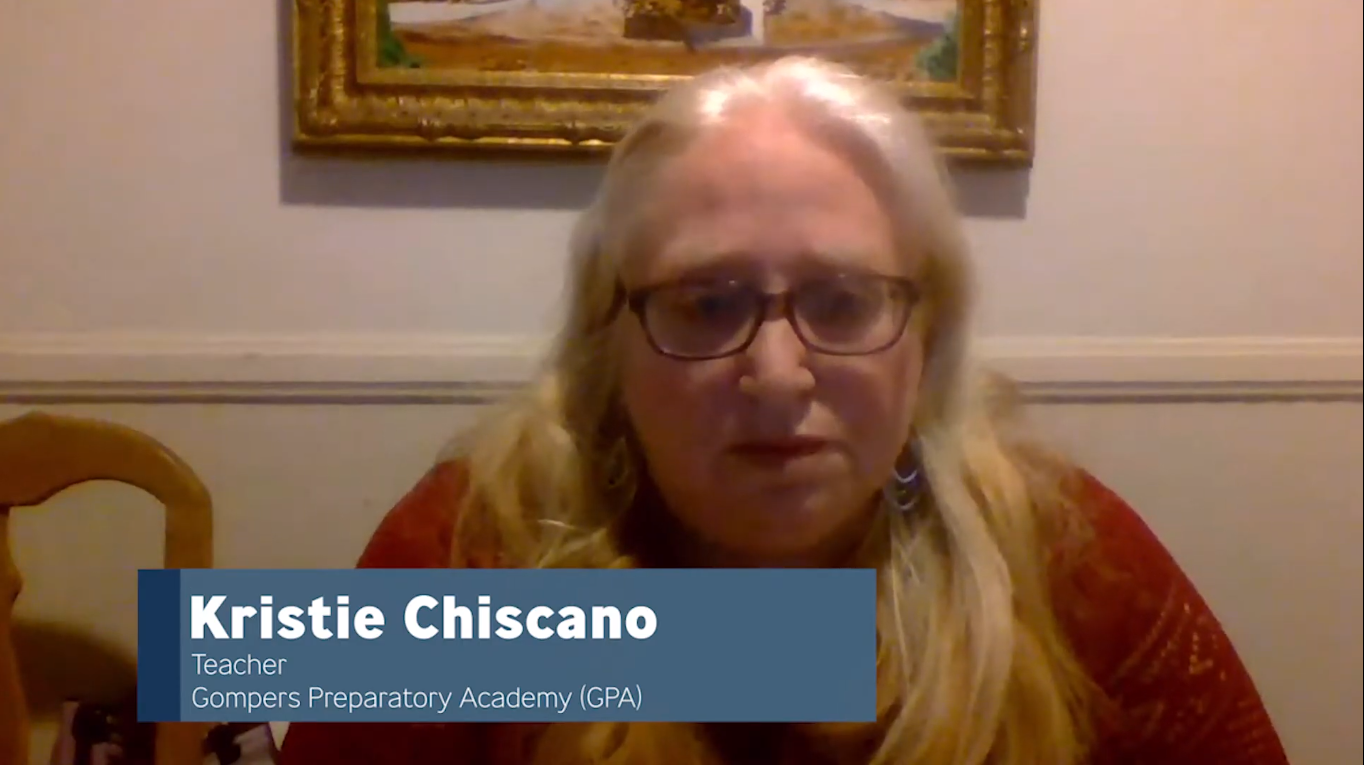
Kristie Chiscano kick-started the first effort at Gompers to remove the SDEA union. She witnessed firsthand that union control was ruining the independent nature of the charter school.
SAN DIEGO, CA – When San Diego Education Association (SDEA) union officials rose to power in 2019 at Gompers Preparatory Academy (GPA), educators and parents were rightfully concerned about what impact it would have on students’ progress and well-being.
Gompers had made an impressive transition to being a union-free charter school in 2005 after years of being plagued by unresponsive union bureaucracies, violence, high teacher turnover, and poor academic achievement. Teachers who feared that union monopoly control would allow such problems to creep back into Gompers quickly began an effort to vote out the union.
“I chose to work at a school that didn’t have a union, and now they’ve come in and they’re running everything about my contract and my work,” Kristie Chiscano, then a Gompers chemistry teacher and proponent of the decertification effort, said at the time.
While union stall tactics derailed Gompers educators’ 2019 effort to oust the union, Gompers educators didn’t give up. A majority of Gompers teachers backed another petition asking the California Public Employment Relations Board (PERB) for a vote to remove the union in 2023. Now, after years of legal maneuvers from union officials, Gompers educators have successfully ousted the SDEA with free legal aid from the National Right to Work Foundation.
SDEA Officials Used Spurious Charges to Block Earlier Teacher Effort
“There is definitely a lot more joy that’s going to be in classrooms now, instead of a burden with the union,” Cynthia Ornelas, a sixth grade Gompers teacher, told KPBS. “The union was making decisions for us, oh my goodness! We never knew what they were deciding because they didn’t communicate with teachers.”
Gompers teachers’ first effort to eliminate the SDEA union stemmed from an October 2019 petition that had the backing of a significant number of teachers, more than required by state law. However, SDEA union bosses averted the election by filing so-called “blocking charges” containing allegations of employer misconduct.
Union officials often manipulate “blocking charges” at the PERB and other state and federal labor relations agencies to stifle worker attempts to eliminate unpopular union “representation.”
As Foundation attorneys defended Gompers educators’ first petition, they also challenged a regulation requiring PERB agents and attorneys to accept union bosses’ “blocking charge” allegations as true. This regulation almost guarantees union defeat of any worker attempt to vote a union out.
Despite the PERB never holding a hearing into whether SDEA union bosses’ claims had any merit or whether they were related to the workers’ dissatisfaction with the union, PERB officials denied a decertification election to Gompers educators in October 2020.
Aside from legal maneuvers, union officials used intimidation and pressure to avoid being voted out. Chiscano and another Gompers educator filed charges maintaining that SDEA agents targeted them on social media for opposing the union hierarchy. California law makes it illegal for union officials to intimidate or retaliate against employees who exercise their right to refrain from union membership. Union-label California legislator Lorena Gonzalez, then an assemblywoman and now a top California AFL-CIO official, even wrote a screed to Gompers management that attacked the National Right to Work Foundation for simply providing legal aid to Gompers educators.
Teachers’ Long Struggle Exposes Massive Power of CA Public Sector Unions
Gompers educators submitted the March 2023 petition at the earliest time permitted by California labor regulations, which immunize union officials from employee-led decertification efforts for all but a tiny window while union contracts are active. Now, nearly four years after their original effort began, Gompers educators are finally free from union control.
“Gompers educators witnessed that SDEA union officials were not acting in the best interests of the students or the school community at large, and they fought courageously to bring back the independent environment that made Gompers a success,” commented National Right to Work Foundation President Mark Mix. “However, Gompers teachers shouldn’t have had to fight as long or as hard as they did simply to exercise their rights. No special interest group in California, or in America, should wield this kind of power over teachers and the public education system.
San Diego Gompers Preparatory Academy Educators Begin New Effort to Oust SDEA Union Bosses from School
Union bosses stymied last attempt with unproven allegations and pressure from elected officials, majority of teachers now back new effort
San Diego, CA (March 13, 2023) – Teachers at Gompers Preparatory Academy, a public charter school in the Chollas View neighborhood of San Diego, have banded together again to exercise their right to vote San Diego Education Association (SDEA) union bosses out of power at the school.
With free legal aid from National Right to Work Legal Defense Foundation staff attorneys, Gompers computer teacher Sean Bentz just submitted a petition to the California Public Employment Relations Board (PERB), requesting the agency hold a vote among his colleagues on whether to oust the union. The petition contains signatures of a majority of the teachers under the SDEA union’s control.
Bentz’s petition marks the second time in just over three years that Gompers educators have attempted to boot the SDEA union from the school. Gompers chemistry teacher Dr. Kristie Chiscano submitted a decertification petition with Foundation legal aid in October 2019. Despite this petition also having the backing of the requisite number of teachers to spur a decertification vote, SDEA union bosses attempted to avert the election by filing so-called “blocking charges” containing allegations of employer misconduct.
Union officials often manipulate “blocking charges” at the PERB and other state and federal labor relations agencies to stifle worker attempts to eliminate unpopular union “representation.” Despite the PERB never holding a hearing into whether SDEA union bosses’ claims had any merit or whether they were related to the workers’ dissatisfaction with the union, PERB officials denied a decertification election to Chiscano and her colleagues in October 2020.
State Labor Agency’s Rule Aided Union in Blocking Vote
Chiscano’s case defending the first petition to remove SDEA union agents from the school also sought to overturn PERB Regulation 32752, which requires PERB agents and attorneys to accept union bosses’ “blocking charge” allegations as true – a stipulation almost guaranteeing union defeat of any worker attempt to vote a union out.
The initial union decertification effort took place not long after SDEA officials gained power at the school in January 2019 via “card check,” a process that bypasses the traditional secret-ballot vote system to install a union. Gompers made an impressive transition to being a union-free charter school in 2005 after years of being plagued by unresponsive union bureaucracies, violence, and poor academic achievement, so many teachers and parents viewed the reinstallation of union power at the school with suspicion. Some accused SDEA agents of actively sowing division at the school, including by supporting anti-charter school legislation and needlessly disparaging the school’s leadership.
“I chose to work at a school that didn’t have a union and now they’ve come in and they’re running everything about my contract and my work,” Chiscano said at the time.
Union Agents Targeted Teachers Who Led Effort to Vote Out Union
Even worse, shortly after the PERB’s ruling halting the original decertification effort, Chiscano and another Gompers educator filed charges maintaining that SDEA agents targeted them on social media for opposing the union hierarchy. California law makes it illegal for union officials to intimidate or retaliate against employees who exercise their right to refrain from union membership.
Union boss-aligned state legislators even chimed in to pressure Gompers management to give in to union demands. In a letter to Gompers management, then-Assemblywoman Lorena Gonzalez attacked the National Right to Work Foundation simply for providing legal aid to Gompers educators as they sought to exercise their right to hold a decertification election. Gonzalez was best known during her tenure for authoring AB5, a California law that drastically reduced opportunities for freelance workers and independent contractors across the state.
Teachers’ Union Decertification Efforts Expose Massive Power of California Public Sector Unions
Sean Bentz filed the new decertification petition renewing the fight to oust the union at the earliest time permitted by California labor regulations, which immunize union officials from employee-led decertification efforts for all but a tiny window while union contracts are active. But the new decertification attempt will likely face the same roadblocks of “blocking charges” as the old one.
“The new decertification effort at Gompers Preparatory Academy pits concerned educators against California’s most entrenched special interest – public sector union bosses,” commented National Right to Work Foundation President Mark Mix. “In their last endeavor, Gompers teachers, who simply wanted to exercise their right to vote on whether SDEA union bosses deserved to remain in power, faced specious allegations meant to block the vote, union attacks on social media, and even pressure from union-label politicians.”
“Foundation attorneys will proudly fight alongside Gompers teachers to vindicate their rights, but ultimately this effort should expose how California’s labor laws prioritize union bosses’ desire for control over schools and other public services far above the rights of the employees who provide these services,” Mix added.
Sacramento Employee Hits Union with Charge for Ignoring Janus Rights
The following article is from the National Right to Work Legal Defense Foundation’s bi-monthly Foundation Action Newsletter, January/February 2020 edition. To view other editions or to sign up for a free subscription, click here.
More than a year after Court decision, union bosses still tell workers forced fees are legal
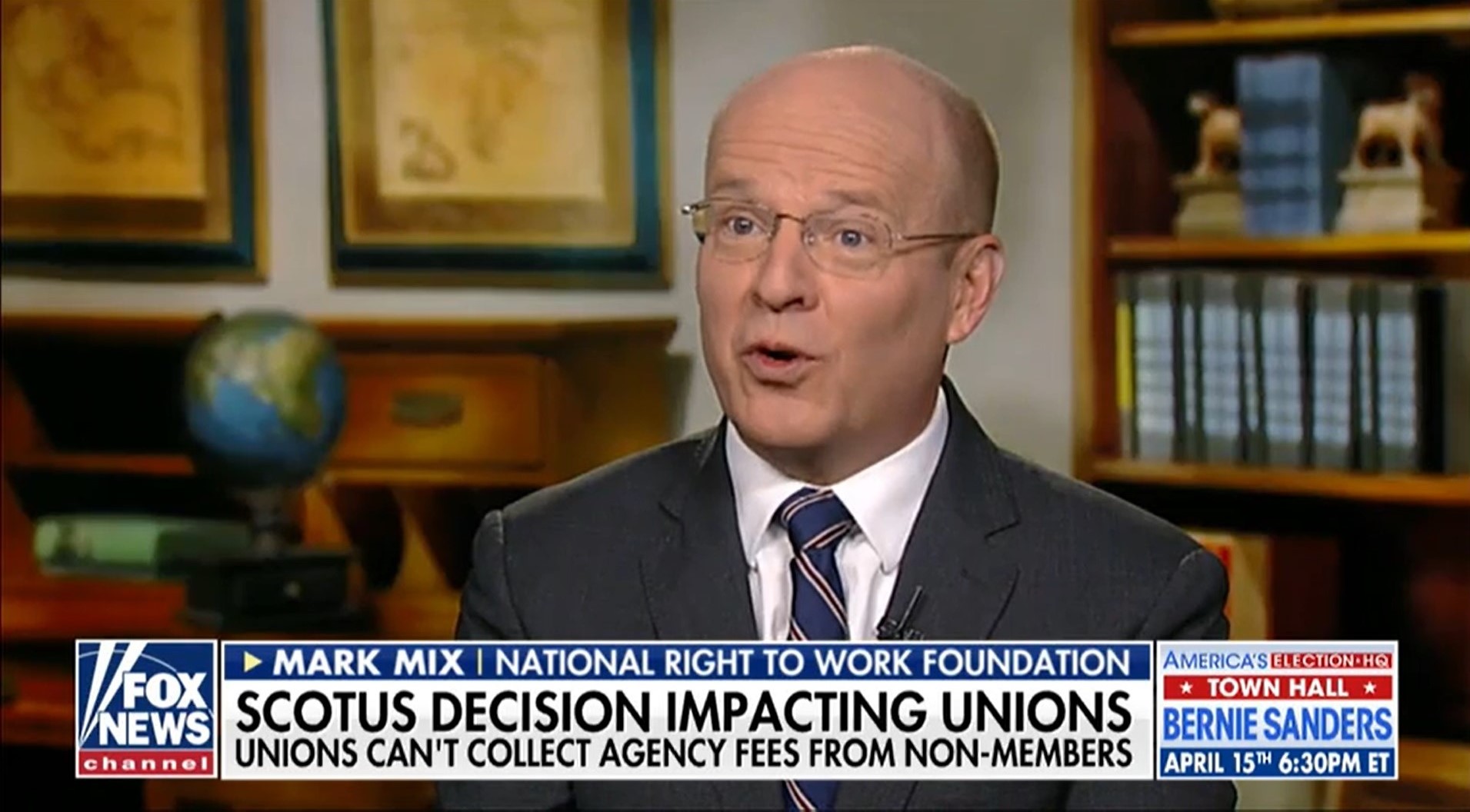
In the Foundation-won Janus v. AFSCME decision, the Supreme Court recognized the right of all American public sector workers to refrain from subsidizing unions, but California IUOE bosses are acting as if those rights don’t exist.
SACRAMENTO, CA – Ethan Morris works for Sacramento County as a wastewater treatment employee. With free legal aid from the National Right to Work Legal Defense Foundation, he has hit the International Union of Operating Engineers (IUOE) Stationary Engineers union bosses at his workplace with charges that their misstatements of his requirement to pay union fees breach California law by disregarding workers’ First Amendment rights under the Foundation-won Janus v. AFSCME Supreme Court decision.
California’s Public Employment Relations Board (PERB), the agency in charge of determining whether unions like IUOE have violated California’s public sector labor laws, will now investigate Morris’ charge.
California Union Bosses Blatantly Lie About Legality of Forced Dues
Morris has never been a member of IUOE Stationary Engineers. He recounts in his charge that he received a notice from an IUOE financial secretary in July 2019 which claimed that “employees who do not join the Union must pay a . . . fee” to the union as a condition of employment, and that these mandatory fees are “legal and enforceable in California” through direct deductions from non-member employees’ paychecks.
Morris’ charge says the union’s fee demands ignore government employees’ First Amendment rights under the 2018 Foundation-won Janus v. AFSCME Supreme Court decision. In Janus, a majority of the Court recognized that union dues or fees cannot be mandatory for public employees and may only be deducted from government workers’ paychecks if they have given “affirmative and knowing” waivers of their First Amendment right not to subsidize a union.
Morris maintains that by ignoring Janus, IUOE Stationary Engineers bosses infringed his rights under California’s Meyers-Milias-Brown Act (MMBA). That statute provides Golden State workers “the right to refuse to join or participate in the activities of employee organizations” and prohibits unions from “coerc[ing] or discriminat[ing] against” employees for exercising that right.
IUOE Officials Broke California Labor Law by Defying Janus
Morris demands that union officials rectify the situation by stopping the illegal fee demands and posting a PERB-approved notice informing his coworkers of their right to refrain from union activities and acknowledging that compulsory fee demands violate that right.
“Ethan Morris discovered his First Amendment Janus rights independently, and in doing so was able to catch IUOE Stationary Engineers bosses in a red-handed lie about the right of public sector workers in America to abstain from financially supporting a union,” observed National Right to Work Foundation President Mark Mix. “For every worker who rebuffs illegal union threats, there are almost certainly thousands of workers who unknowingly sign away their rights.
“State governments must step up and proactively protect employees’ Janus rights, including making sure that every worker knows those rights and not deducting any union dues or fees absent a worker’s knowing and voluntary waiver of his or her rights,” Mix added.
Taking the lead on protecting public workers’ Janus rights is Alaska, where last September Gov. Mike Dunleavy issued an executive order requiring all state agencies to stop the deduction of union dues from any worker who had not submitted a form affirmatively waiving his or her right under Janus not to fund any union activities.





