
L’Oréal Employee Hits Union with Federal Charges for Illegal Dues Deductions, Threats for Seeking to Oust Union
According to charge, union agent threatened: “The union is like a big mafia…something bad is going to happen to you”
Piscataway, NJ (December 6, 2023) – Piscataway L’Oréal USA employee Ana Maria Hoyos Lopez has slammed the Retail, Wholesale, and Department Store Union (RWDSU/UFCW) Local 262 with federal charges, which assert that RWDSU made illegal threats against her for opposing the union. She filed the charges at Region 22 of the National Labor Relations Board (NLRB) with free legal aid from National Right to Work Foundation staff attorneys.
In September, Hoyos Lopez submitted a petition to the NLRB in which she and her coworkers requested a vote to remove the union (or “decertification vote”). She asserts in her charges that union agents targeted her as she was circulating the petition. In particular, Hoyos Lopez stated that a L’Oréal employee told her on September 6, 2023, that “the union is like a big mafia” and “something bad is going to happen to you if the union leaves.”
Hoyos Lopez’s charges also recount a September 22 union meeting in which union officials, including the RWDSU Local 262 President and shop steward, shouted her and other employees down after they brought up shortcomings in the union’s performance. The union officials demanded the pro-decertification employees leave the union’s meeting.
Even after Hoyos Lopez and other employees voluntarily departed the meeting, the charges state, the union president “chased after” Hoyos Lopez and threatened to call the police on her if she did not completely leave the public park in which the meeting took place. The charges also state that union officials approached pro-decertification L’Oreal employee Jarry Moreno at the same meeting and told him to convince Hoyos Lopez to withdraw the petition.
Hoyos Lopez’s charges indicate that she experienced more illegal activity than just intimidation from union agents. RWDSU union officials also refused to honor or respond to emails she sent resigning her union membership and opting out of dues payments for union political expenses. New Jersey lacks Right to Work protections for its private sector employees, and thus allows union officials and management to enforce contracts in which workers are forced to pay union fees as a condition of getting or keeping a job. However, the Foundation-won CWA v. Beck Supreme Court decision guards workers from being forced to pay any dues that go toward union politics or other expenses unrelated to the union’s bargaining functions.
“As such, RWDSU/UFCW Local 262 must honor [Hoyos Lopez’s] resignation request, and given there is no collective bargaining agreement in place, cease all further deductions from [her] paycheck,” the charges state.
Illegal Union Threats Continue After Contested Election
The election to decertify RWDSU, which took place October 19 and 20, is currently the subject of objections from Hoyos Lopez. The objections assert that union officials unlawfully interfered with the election through their intimidating actions during the September 22 meeting, as well as through campaign misrepresentations and racially-charged tactics.
Hoyos Lopez’s federal charges, which she filed after submitting her election objections, state that employees she believed were acting on behalf of the union targeted her after she attempted to defend the integrity of the election. On November 27, “a L’Oréal contractor…intimidated [Hoyos Lopez]” and told her that “people say you have to leave because you have problems with the union.”
The charges argue that all of these actions by RWDSU union officials and alleged union agents are clear violations of Hoyos Lopez’s rights under Section 7 of the National Labor Relations Act (NLRA), the federal law the NLRB is charged with enforcing. Section 7 protects workers’ right to refrain from union activities.
“It appears abundantly clear that RWDSU union officials at the L’Oréal USA plant leveraged threats, intimidation, and a host of other divisive tactics in order to demonize any worker who went against their agenda,” commented National Right to Work Foundation President Mark Mix. “The union’s focus was clearly on maintaining their forced-dues power over L’Oréal employees, even at the expense of steamrolling the rights of the workers they claim to ‘represent’ – they were deprived of a fair election, and couldn’t even voice legitimate concerns about the union without fear of retaliation.”
“Foundation staff attorneys will continue to fight for Ms. Hoyos Lopez and her coworkers until they can exercise their right to vote on whether RWDSU bosses deserve to stay in a free and uncoerced environment,” Mix added.
Piscataway L’Oreal Employees Demand Vote to Remove RWDSU Union Officials from Facility
RWDSU rejected twice by Alabama Amazon workers; union may soon also lose power over large unit of beauty company employees
Piscataway, NJ (September 19, 2023) – Employees of L’Oreal USA Products’ facility in Piscataway, NJ, have just filed a petition requesting a vote to remove Retail, Wholesale and Department Store Union (RWDSU-UFCW) Local 262 officials from power at their workplace. L’Oreal employee Ana Maria Hoyos Lopez submitted the petition to National Labor Relations Board (NLRB) Region 22 in Newark with free legal representation from National Right to Work Foundation staff attorneys.
Hoyos Lopez’s petition contains signatures from the required number of her coworkers to prompt the NLRB to hold a union decertification vote at the Piscataway facility. The work unit under the control of the RWDSU union is large (over 100 employees) and includes production workers, maintenance workers, truck drivers, and warehouse workers.
Because New Jersey lacks Right to Work protections for its private sector workers, RWDSU union officials have the power to force Hoyos Lopez and her coworkers to pay union fees as a condition of keeping their jobs. In contrast, in states with Right to Work laws, union bosses can’t enter agreements with employers that force employees to fork over a portion of their paychecks to the union just to get or keep a job.
“RWDSU union officials have spent a lot of time campaigning around our workplace, but they have not been standing up for me and my coworkers,” commented Hoyos Lopez. “My coworkers and I deserve a chance to exercise our right to vote the union out, and I’m confident we will decide to kick them out.”
Biden NLRB Planning New Restrictions on Workers’ Right to Vote Out Unwanted Union Officials
Hoyos Lopez and her colleagues’ effort comes as the Biden NLRB in Washington, D.C., is attempting to make it more difficult for employees to obtain votes to remove unwanted unions, while giving union officials more tools to gain power in a workplace without even a vote. The NLRB will soon issue a final rule overturning the Election Protection Rule, a Foundation-backed 2020 reform which made commonsense improvements to the decertification process.
The Election Protection Rule’s repeal, among other things, will grant union officials greater power to use so-called “blocking charges” to stop union decertification elections from happening. “Blocking charges” are often unverified allegations of employer misconduct that frequently have no relation or connection to workers’ desire to oust a union.
The repeal will also likely block workers from seeking a union decertification vote for a year after union bosses attempt to install themselves in a workplace via “card check.” The card check process lets union officials bypass the NLRB’s traditional secret ballot vote procedures and instead allege majority support by collecting union authorization cards directly from workers – often using coercive or intimidating tactics.
“It’s not particularly surprising that L’Oreal employees are seeking to oust RWDSU union bosses, who seem to have a penchant for ignoring workers’ will,” commented National Right to Work Foundation President Mark Mix. “RWDSU is still trying to impose itself on workers at the large Amazon facility in Bessemer, Alabama, despite those workers voting not once, but twice to reject the union’s presence.”
“Unfortunately, the Biden NLRB is trying to make it easier for union officials who seek to undermine worker votes to cling onto power, but Foundation attorneys will continue to defend Ms. Hoyos Lopez and any other employee who seeks to exercise their individual right to vote out unwanted union officials,” Mix added.
Piscataway L’Oreal Employee Says RWDSU Union Boss Threats and Misinformation Undermined Vote to Oust Union
Worker’s objections to election assert that union bosses threatened employees critical of union and sowed racial division; new election sought
Piscataway, NJ (November 6, 2023) – Ana Maria Hoyos Lopez, an employee of L’Oreal USA Products, is asking for a rerun election based on charges that Retail, Wholesale and Department Store Union (RWDSU-UFCW) Local 262 officials interfered in a vote she and her coworkers requested to remove the union. In election objections filed with National Labor Relations Board (NLRB) Region 22 in Newark, Hoyos Lopez maintains that union officials threatened workers who voiced objections to union officials’ performance, misrepresented facts about the employer’s healthcare plans, used racially-charged tactics, and perpetrated other coercive conduct in the weeks leading up to the election.
Hoyos Lopez is receiving free legal representation from National Right to Work Legal Defense Foundation staff attorneys. In September, also with Foundation aid, she filed a petition which contained enough signatures from her coworkers to prompt the NLRB to hold a vote to remove the union (a “decertification election”) at her workplace. The vote took place at L’Oreal USA’s Piscataway facility through October 19 and October 20.
Objections Assert RWDSU Union Officials Yelled at, Chased Employees Who Expressed Concerns with Union, Made Racial Appeals
Hoyos Lopez’s objections focus on a September 22 meeting that union bosses held to push workers to vote for the union. According to the filing, during the meeting, Hoyos Lopez and some other employees brought up problems with the union’s performance, including lack of communication between the employees and union officials, and the poor quality of the union contract. In response, “[t]he pro-decertification employees were yelled down, the president of the Union shouted expletives at them in a threatening and coercive manner, and union officials demanded that they leave the meeting.”
During the same meeting, the objections state, Hoyos Lopez attempted to film the threatening actions of union officials, but a union official accosted her further and “proceeded to chase after Petitioner despite the fact that she had already left the pavilion” at the public park the meeting was occurring at.
“Outside the pavilion [a union official] demanded that Petitioner leave the park entirely, and threatened to call the cops on her if they did not comply,” the objections state. During the same meeting, union officials also asked Hoyos Lopez to withdraw her petition or asked other employees to request she do so.
Hoyos Lopez also asserts in the objections that, in the weeks leading up to the election, union officials “misrepresented the difference in health insurance policies offered by the Union compared to those offered by the Employer,” interfered with the laboratory conditions of the election by speaking to employees as they were in line to vote, and sent text messages that “intrusively asked employees on which day they would be voting.”
The final objection states that RWDSU-UFCW bosses engaged in racial tactics to swing the vote in favor of the union. Union officials told employees that white managers in the U.S. are racist and don’t want to promote Hispanics, and that employees “should vote for the Union to defend their rights.”
“This appeal to racial and ethnic prejudice is coercive and despicable, and is grounds to set aside the election,” the objections conclude.
As RWDSU Union Bosses Shut Down Employee Vote, Biden NLRB Seeks Less Worker Freedom
Hoyos Lopez’s objections will now be investigated and a rerun election will occur if the NLRB determines union officials’ actions were objectionable and interfered with employees’ free choice in the election.
“If RWDSU union officials truly believed they would win an election among L’Oreal employees, they would not engage in such acts of coercion, including threatening the employees they claim to ‘represent,’ misrepresenting facts prior to the vote, and shamelessly sowing division,” commented National Right to Work Foundation President Mark Mix. “We will continue to fight for Ms. Hoyos Lopez and her coworkers to get a fair opportunity to freely choose whether RWDSU bosses should remain in their workplace.”
“Unfortunately, instead of beefing up protections on worker-requested elections, the Biden NLRB is seeking big policy changes that will make it easier for union officials to gain power without a vote,” added Mix.
NJ Medieval Times Employees Appeal to National Labor Relations Board in Ongoing Joust with Union Officials
Majority of Lyndhurst Medieval Times cast members signed petition asking Labor Board for election to remove union, but union is stalling vote
Newark, NJ (September 21, 2023) – Artemisia Morley, a cast member at the Lyndhurst, NJ, location of Medieval Times, has submitted a Request for Review to the National Labor Relations Board (NLRB) in Washington, D.C., defending her and her coworkers’ right to vote unwanted officials of the American Guild of Variety Artists (AGVA) union out of the workplace. Morley is receiving free legal representation from National Right to Work Legal Defense Foundation staff attorneys.
Morley’s Request for Review challenges NLRB Region 22’s hurried dismissal of a petition she filed on behalf of her coworkers seeking an election to remove the AGVA union (also known as a “decertification election”). Her petition contained the signatures of a strong majority of her coworkers, but the Regional Director dismissed it “without any hearing, and without citing any evidence that there was a ‘causal nexus’ between the Employees’ disaffection from the Union” and unproven allegations that union officials had levied against the employer.
Because New Jersey lacks Right to Work protections for its private sector workers, AGVA union officials have the power to force Morley and her coworkers to pay union fees as a condition of keeping their jobs. In contrast, in states with Right to Work laws, union bosses can’t enter agreements with employers that force employees to fork over a portion of their paychecks to the union just to get or keep a job.
“Secretive” and “Self-Interested” AGVA Union Officials Tried to Stifle Worker-Requested Vote
The Request for Review notes that AGVA union officials were “secretive, self-interested, and divisive,” and “regularly advocated that the [Medieval Times] employees go on strike, something that had no support among the unit employees.” After waiting out the statutory one-year bar on union elections that follows a union’s certification, Morley filed the petition requesting a union decertification vote.
According to the Request for Review, instead of processing the petition as NLRB rules dictate, NLRB Region 22 issued a complaint against the employer and dismissed Morley’s petition based on unproven “blocking charges” AGVA union officials filed against Medieval Times management. The Request for Review argues that the hasty dismissal violated NLRB election rules, the Administrative Procedure Act, and well-established NLRB precedent requiring a hearing to demonstrate whether union allegations of employer misconduct actually caused employee discontent with the union.
“None of the alleged unfair labor practice allegations…concern the Employees’ collection of the decertification signatures or the Employer’s domination of the Union. Thus…an election should be held and the votes immediately counted,” the Request for Review contends. “Even if the Board determined the allegations warranted consideration under [NLRB rules], its plain terms prohibit dismissing a petition prior to an election.”
Case May Be Used to Push Radical Agenda of Biden-Appointed NLRB General Counsel
In 2020, the NLRB adopted Foundation-backed reforms that made it less difficult for workers to eliminate an unwanted union. One reform pared back union officials’ ability to use “blocking charges” to stop worker-requested decertification elections from happening. The reform instead created a process in which charges surrounding an election are litigated after employees have gotten to exercise their right to vote. Instead of applying this rule, NLRB Region 22 dismissed Morley and her coworkers’ requested election.
The Request for Review notes that NLRB Region 22’s complaint, which incorporated AGVA union officials’ unproven allegations against the employer, does not appear designed to help workers “but rather to twist the law and facts beyond recognition in order to aid the current [NLRB] General Counsel’s ideological crusade to overturn decades of settled Board law about bargaining obligations and employer free speech.” Biden-appointed NLRB General Counsel Jennifer Abruzzo, a former union lawyer, has thrown her weight behind other recent cases to uproot longstanding NLRB precedent, often to give more power to union bosses at the expense of workers’ freedom.
“Aided by regional NLRB officials, AGVA union officials seem determined to send the individual rights of Medieval Times workers back to the Dark Ages,” commented National Right to Work Foundation President Mark Mix. “NLRB election rules clearly forbid union officials from using completely unproven charges of employer misconduct to derail workers’ ability to have a vote on whether they want continued union representation.”
“Federal labor law is supposed to protect the fundamental right of workers to freely decide who will speak for them in workplace matters, and Foundation staff attorneys will fight for Morley and her coworkers as AGVA bosses try to turn this commonsense principle on its head,” Mix added.
National Right to Work Foundation Issues Special Legal Notice to Rutgers Professors Impacted by Union Officials’ Strike Order
Rutgers employees can legally attend work regardless of union boss demands to strike
New Brunswick, NJ (April 13, 2023) – Today, the National Right to Work Legal Defense Foundation has issued a special legal notice to professors and other employees of Rutgers University. The notice was issued to inform Rutgers employees of their individual rights during the union official-ordered strike currently taking place.
The legal notice is available at the Foundation’s website: https://www.nrtw.org/legal-notice/legal-notice-rutgers04122023/.
On the morning of Monday, April 10, union officials from three Rutgers unions ordered a strike against the university. The officials were from the Rutgers Adjunct Faculty Union (RAFU); Rutgers American Association of University Professors, American Federation of Teachers (AAUP-AFT); and Rutgers American Association of University Professors, Biomedical and Health Sciences of New Jersey (AAUP-BHSNJ).
The legal notice explains that, despite the lack of Right to Work protections in the state of New Jersey, non-union public sector workers still have rights under the First Amendment to abstain from union financial support. These rights are bolstered by the 2018 Foundation-won Janus v. AFSCME Supreme Court ruling.
“The United States Supreme Court has held that nonmembers of a public-sector union have a First Amendment right not to pay any union fees or dues, unless they have freely waived their First Amendment rights,” the notice reads. “A union has the burden of proving employees waived their First Amendment rights by ‘clear and compelling’ evidence.”
In regards to union members, the Foundation’s notice informs workers that they maintain the right to resign from union membership at any time. The notice also suggests, if employees wish to continue working during the strike and avoid union discipline such as fines, that current union members resign their union membership at least one full day before returning to work.
“It is Foundation attorneys’ best legal opinion that public sector employees have the right to resign their membership in a union at any time. At least two federal district courts have reached that conclusion,” mentions the notice. “If you are now a union member and want to work during the strike, you should seriously consider resigning your union membership at least one day, if not more, BEFORE you return to work during the strike.”
“By initiating a strike that affects thousands of Rutgers employees, these union bosses are not only threatening the education of students, but are also potentially upending the livelihoods of countless families,” commented National Right to Work Legal Defense Foundation President Mark Mix. “Rutgers professors should know that they have the right to reject union boss strike orders and can continue working.”
“Unfortunately union misinformation and intimidation tactics are all too common during union boss-ordered strikes, which is why rank-and-file Rutgers employees must be on alert and should immediately contact the Foundation for free legal aid if they believe union officials may be violating their legal rights,” added Mix.
Workers Nationwide Continue Efforts to Oust Steelworkers Officials
The following article is from the National Right to Work Legal Defense Foundation’s bi-monthly Foundation Action Newsletter, January/February 2023 edition. To view other editions of Foundation Action or to sign up for a free subscription, click here.
Successful ousters in Louisiana and New Jersey emphasize importance of protecting worker votes

Michael Cobourn and his coworkers were forced to pay union dues while USW union bosses seemed to be loafing it at their workplace. With Foundation aid, they ousted the union.
WASHINGTON, DC – In the space of just a month, National Right to Work Legal Defense Foundation staff attorneys successfully aided groups of workers in New Jersey and Louisiana in voting out United Steelworkers (USW) union officials they opposed. The National Labor Relations Board (NLRB) certified both votes.
In Louisiana, Ryne Fox led his coworkers at GEO Specialty Chemicals to a decisive victory over USW officials, while Michael Cobourn did the same with his fellow workers at Gold Bond Building Products in New Jersey.
Both cases demonstrated the struggles workers face when seeking to “decertify” union officials whom they no longer want in power. In Louisiana, Fox had to time the filing of his coworkers’ petition seeking a decertification vote to fall within a tiny window of days imposed by the “contract bar,” a union boss-friendly NLRB policy that protects union officials from being voted out of a workplace for up to three years after union bosses and management finalize a contract.
Cobourn and his colleagues, in addition to having to deal with the “contract bar,” work in the non-Right to Work state of New Jersey — meaning they were forced to pay money to the union just to keep their jobs during the entire time they were forbidden by the “contract bar” from ejecting the union. In contrast, Right to Work states protect private sector workers from being fired merely for refusal to pay dues or fees to union officials of whom they disapprove. “My coworkers and I were paying money to the Steelworkers union constantly, yet the union didn’t seem to be doing anything for us,” commented Mr. Cobourn.
Although the efforts in Cobourn’s and Fox’s workplaces are evidence that Steelworkers union officials nationwide place their own interests above the workers they claim to “represent,” the most heinous example of such behavior is ongoing in Franklin, Pennsylvania.
There, Foundation-assisted metal workers at Latrobe Specialty Metals/Carpenter Technology are holding their own in defending their decertification petition against Steelworkers officials’ claims that the “contract bar” should invalidate the petition.
PA Workers Score Victory in Fight Against Election-Blocking Steelworkers Chiefs
While invoking the “contract bar” alone is anti-worker, Steelworkers officials in Pennsylvania claimed that a contract they unilaterally “ratified” this past summer after workers had voted against it twice should trigger the “contract bar.” Steelworkers officials had even told workers that the contract would only be “activated” if workers voted for it. But once they got wind of the workers’ decertification push, the officials “ratified” the unpopular contract secretly so they could, as one union official outrageously said during a hearing, “protect the integrity of the union.
Foundation staff attorneys representing the employee who submitted the petition, Kerry Hunsberger, have so far beaten back union officials’ attack on worker free choice. On November 18, 2021, an NLRB Regional Director rejected union bosses’ attempt to block the vote and ordered that an election proceed.
‘Contract Bar’ Encourages Union Officials to Impose Unpopular Contracts
“Workers across the country are increasingly exercising their right to vote out union officials they oppose, and we at the Foundation are happy to aid them,” commented National Right to Work Foundation President Mark Mix. “However, we’re also acutely aware of the obstacles that stand in the way of this freedom, and one of those, which Steelworkers officials seem to have no reservations about exploiting, is the ‘contract bar.’”
“The unjustified ‘contract bar’ is always wrong because it prevents workers from voting out unions they oppose when they want. But even worse, this NLRB-invented doctrine actually incentivizes union officials to rush and impose unpopular, self-serving contracts for the very purpose of insulating the union’s forced representation powers from a vote of the workers union officials claim to ‘represent,’” Mix added.
NJ, Chicago Educators Push for Supreme Court Review of Anti-Janus Schemes
The following article is from the National Right to Work Legal Defense Foundation’s bi-monthly Foundation Action Newsletter, July/August 2021 edition. To view other editions of Foundation Action or to sign up for a free subscription, click here.
Two petitions ask High Court to hear challenges to union boss-concocted ‘escape periods’

Plaintiff and Chicago Public Schools teacher Ifeoma Nkemdi called CTU union militants’ retaliation against her “a dishonor to the profession of education.” Her lawsuit seeks to force CTU bosses to respect her Janus rights.
WASHINGTON, DC – Staff attorneys from the National Right to Work Legal Defense Foundation have just submitted petitions for writ of certiorari in two class-action civil rights cases seeking to enforce workers’ First Amendment rights. In both cases, public educators are fighting union boss-created restrictions on their First Amendment right to refrain from funding unwanted union hierarchies in their workplaces.
One petition was filed for Chicago Public Schools educators Joanne Troesch and Ifeoma Nkemdi, whose lawsuit against the Chicago Teachers Union (CTU) and the Chicago Board of Education challenges an “escape period” scheme that blocks workers from exercising, outside the month of August, their right to terminate dues deductions from their paychecks.
A second petition was filed in a lawsuit brought by New Jersey teachers Susan Fischer and Jeanette Speck, who are suing the New Jersey Education Association (NJEA) union for enforcing a similar annual window that restricts employees in the exercise of their Janus rights to just 10 days annually, less than 3% of the year.
Constraints Clearly Violate Janus Mandate of Affirmative Consent to Dues
Both lawsuits argue that these union dues “escape periods” run afoul of the U.S. Supreme Court’s landmark ruling in Janus v. AFSCME, which was argued and won by Foundation staff attorneys in 2018. In Janus, the court ruled that no public worker can be forced to pay union dues or fees as a condition of keeping their job.
The Court further held that union bosses contravene the First Amendment if they seize any money from an employee’s paycheck without their affirmative consent and a knowing waiver of that employee’s First Amendment rights. Both petitions say public sector union officials’ “escape period” schemes breach this requirement.
Union Honchos Snubbed Exercise of Janus Rights, Kept Taking Money
Fischer and Speck, who both work in Ocean Township, NJ, attempted to exercise their Janus rights in July 2018, just a month after the High Court handed down the Janus decision. But Township officials told the teachers they could only stop payments and withdraw their memberships during an annual 10-day window. Unbeknownst to the teachers, union partisans in the New Jersey legislature had actually established that “escape period” by law in May 2018 in an apparent attempt to defang the pending Janus decision.
In Chicago, Troesch and Nkemdi’s complaint explains, both educators “did not know they had a constitutional right not to financially support” the union hierarchy until the fall of 2019, when they discovered their Janus rights while looking for information on how to continue working during a strike that CTU bosses ordered that October. They sent letters the same month to CTU officials to exercise their Janus right to resign union membership and cut off all dues deductions.
Both educators received no response until November of that year, when CTU officials confirmed receipt of the letters but said that they would continue to seize dues from the teachers’ paychecks “until September 1, 2020,” as per the union’s “escape period” scheme.
Teachers Urge Dissolution of ‘Escape Periods,’ Refunds for Them and Coworkers
Both lawsuits demand that union and government officials cease enforcing “escape periods,” properly apprise the educators’ coworkers of their right to end dues deductions any time, and allow any bargaining unit member to reclaim dues that have already been seized from them under such arrangements. Additionally, both cases seek to overturn state laws that codify “escape periods.”
“‘Escape periods’ like those forced on Troesch, Nkemdi, Fischer and Speck serve no purpose other than to keep shoveling into union coffers the hard-earned cash of public servants who oppose union officials’ so-called ‘representation,’ even after those employees have clearly exercised their First Amendment right to object to such payments,” commented National Right to Work Foundation Vice President and Legal Director Raymond LaJeunesse. “With opposition to these schemes growing among public employees, the Supreme Court should quickly take up this issue and clarify that Janus does not permit union bosses to profit from curtailing workers’ constitutional rights.”
Multiple Units Oust Teamsters Bosses Thanks to Foundation-Backed NLRB Rule
The following article is from the National Right to Work Legal Defense Foundation’s bi-monthly Foundation Action Newsletter, May/June 2021 edition. To view other editions of Foundation Action or to sign up for a free subscription, click here.
Unpopular Teamsters officials voted out of California, New Jersey workplaces
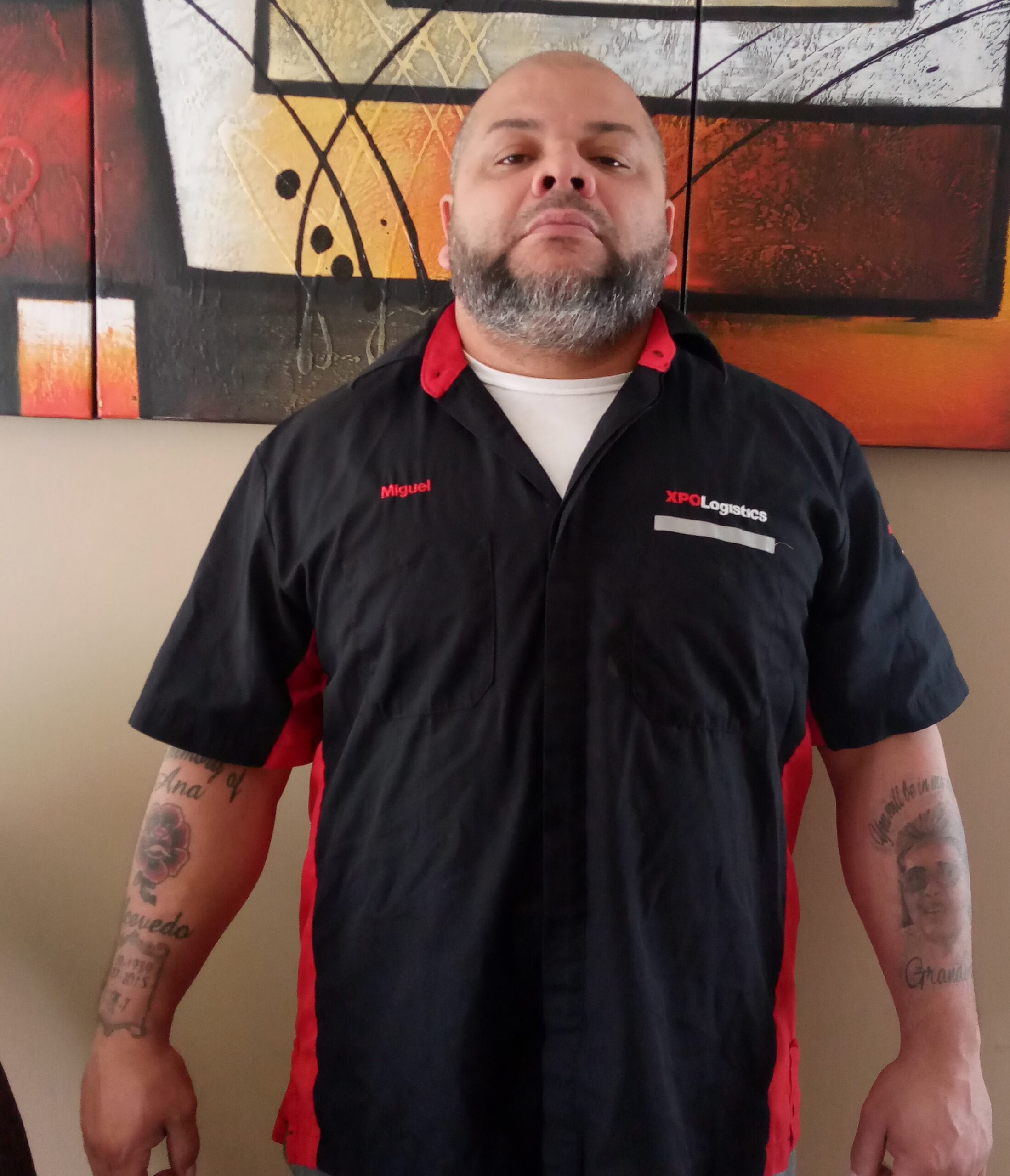
Reforms urged by Foundation staff attorneys eased Miguel Valle and his coworkers’ near-unanimous effort to vote out unpopular Teamsters officials, who tried to use “blocking charges,” ultimately to no avail.
WASHINGTON, DC – Workers in California and New Jersey who were previously subject to Teamsters bosses’ monopoly bargaining authority have freed themselves from unwanted union control.
The workers received free legal aid from Foundation staff attorneys, and benefited from rule changes at the National Labor Relations Board (NLRB) in Washington pushed for by the Foundation.
In California, Eliseo Haro, an employee at Los Angeles-based KWK Trucking, Inc., submitted a decertification petition with the NLRB because he and his coworkers were being ignored by Teamsters bosses. As Haro puts it, “The union never came in to talk to us, or negotiate a contract, or represent us. They disappeared.”
Haro’s petition was signed by nearly 80 percent of the workers in the 119-employee bargaining unit and called for an NLRB-supervised decertification election, in which KWK employees could vote out the unpopular union officials.
Rather than face an overwhelming defeat in the decertification election, Teamsters bosses chose to walk away. The union disclaimed interest in the unit, and NLRB Region 21 revoked Local 986’s certification as the workers’ monopoly bargaining agent.
New Jersey Decertification Effort Succeeds Despite Union Stall Tactics
In Cinnaminson, New Jersey, Teamsters officials did not immediately leave when a decertification petition was filed by Miguel Valle and his coworkers at a branch of XPO Logistics. Instead, Teamsters lawyers used nearly two months of unnecessary court proceedings to delay the election.
They demanded the vote be held in person at the Teamsters union hall. Foundation attorneys argued that the union lawyers’ requests were merely an effort to delay the vote. Ultimately, as expected, the NLRB’s Regional Director ruled that the election would be conducted by mail.
When Valle and his coworkers finally had their election, they voted 16-2 to remove Teamsters bosses from their workplace.
Foundation-Backed Rule Changes Reduce Needless Election Delays
For workers, just getting a decertification election is often difficult. In some cases, union bosses have created multi-year delays to stymie decertification efforts, trapping workers under union monopoly “representation” and often forced-dues payments they oppose, while they wait for a vote.
Union officials frequently attempt to delay or block decertification votes by filing “blocking charges,” unfair labor practice charges that can be used to hold up an election, even when they have nothing to do with the employees’ dissatisfaction with the union.
Union officials’ ability to use this tactic to block or delay votes has been limited by recent NLRB rulemaking, finalized in 2020. Under the NLRB’s new policy, which draws on comments filed by the National Right to Work Foundation, union charges cannot indefinitely stall employee votes, and in most instances votes occur without delay.
Additionally, as the Foundation advocated in its comments, instead of ballots being impounded for months or even years while “blocking charges” are resolved, the NLRB modified its original proposed rule so that in most cases ballots are tallied and the results are announced after employees vote.
“Union bosses can stick around for years, even when they face overwhelming opposition from rank-and-file workers, because of the legal barriers that protect union officials from decertification votes,” said National Right to Work Foundation Vice President and Legal Director Raymond LaJeunesse.
“Thanks to Foundation-backed reforms to the NLRB’s ‘blocking charge’ policy, union officials’ ability to trap workers in union ranks through legal trickery despite overwhelming opposition has been significantly curtailed.”
UGSOA Union Officials Hit With Another Federal Charge for Seizing Forced Union Fees in Violation of Security Guards’ Rights
NLRB Charge: Union bosses illegally failed to disclose financials and restricted workers’ rights to opt out of union political spending
Newark, NJ (October 5, 2020) – With free legal aid from the National Right to Work Legal Defense Foundation, William J. Sona is taking his case against the United Government Security Officers of America (UGSOA) union Local 171 to the National Labor Relations Board (NLRB).
The Paragon Systems employee’s federal unfair labor practice charge states that union officials illegally failed to provide a mandated independent audit justifying union fees, and imposed unlawful restrictions on workers seeking to challenge the calculation of the fees workers must pay as a condition of employment.
Because Sona is employed in New Jersey, a forced-unionism state, he can legally be fired for refusing to pay union fees. However, these forced fees cannot be used for union political activities or lobbying. Union officials must comply with certain legal requirements to justify the amount they can force workers to pay as a condition of employment.
Under the precedent established in the Right to Work Foundation-won Beck Supreme Court case and subsequent California Saw NLRB precedent, unions must provide verification of chargeable expenses through an independent audit, provide escrow if workers dispute charges, and provide an independent system for workers to challenge the fees.
Sona’s case against UGSOA charges that union officials failed to comply with any of these requirements. Additionally the charge states union officials illegally required Beck objectors like Sona to file two separate objections to funding union political activity—one to Local 171 and one to the International.
Union officials at UGSOA have a history of illegally seizing dues from workers. Previously, UGSOA union bosses illegally demanded union dues from nonmember workers while there was no contract in effect between the union and the employer.
With free legal aid from the National Right to Work Legal Defense Foundation, Sona and five other Paragon employees won $4,000 in illegally seized back dues. That case was settled in 2019 and formally adopted by the NLRB in August of 2020, but Sona’s new charge says union officials have not stopped violating the law.
“Union brass at UGSOA have demonstrated again that they will violate the rights of the very workers they claim to ‘represent’ just to stuff their pockets with more forced dues,” commented National Right to Work Foundation President Mark Mix.
“They use their special government-granted privileges to force workers to pay up or be fired, and then refuse to provide the information needed to confirm that at least these forced fees are not being illegally funneled into union lobbying and campaign expenses. If union bureaucrats are afraid of transparency, there’s probably a reason for that.”





