
NJ, Chicago Educators Push for Supreme Court Review of Anti-Janus Schemes
The following article is from the National Right to Work Legal Defense Foundation’s bi-monthly Foundation Action Newsletter, July/August 2021 edition. To view other editions of Foundation Action or to sign up for a free subscription, click here.
Two petitions ask High Court to hear challenges to union boss-concocted ‘escape periods’

Plaintiff and Chicago Public Schools teacher Ifeoma Nkemdi called CTU union militants’ retaliation against her “a dishonor to the profession of education.” Her lawsuit seeks to force CTU bosses to respect her Janus rights.
WASHINGTON, DC – Staff attorneys from the National Right to Work Legal Defense Foundation have just submitted petitions for writ of certiorari in two class-action civil rights cases seeking to enforce workers’ First Amendment rights. In both cases, public educators are fighting union boss-created restrictions on their First Amendment right to refrain from funding unwanted union hierarchies in their workplaces.
One petition was filed for Chicago Public Schools educators Joanne Troesch and Ifeoma Nkemdi, whose lawsuit against the Chicago Teachers Union (CTU) and the Chicago Board of Education challenges an “escape period” scheme that blocks workers from exercising, outside the month of August, their right to terminate dues deductions from their paychecks.
A second petition was filed in a lawsuit brought by New Jersey teachers Susan Fischer and Jeanette Speck, who are suing the New Jersey Education Association (NJEA) union for enforcing a similar annual window that restricts employees in the exercise of their Janus rights to just 10 days annually, less than 3% of the year.
Constraints Clearly Violate Janus Mandate of Affirmative Consent to Dues
Both lawsuits argue that these union dues “escape periods” run afoul of the U.S. Supreme Court’s landmark ruling in Janus v. AFSCME, which was argued and won by Foundation staff attorneys in 2018. In Janus, the court ruled that no public worker can be forced to pay union dues or fees as a condition of keeping their job.
The Court further held that union bosses contravene the First Amendment if they seize any money from an employee’s paycheck without their affirmative consent and a knowing waiver of that employee’s First Amendment rights. Both petitions say public sector union officials’ “escape period” schemes breach this requirement.
Union Honchos Snubbed Exercise of Janus Rights, Kept Taking Money
Fischer and Speck, who both work in Ocean Township, NJ, attempted to exercise their Janus rights in July 2018, just a month after the High Court handed down the Janus decision. But Township officials told the teachers they could only stop payments and withdraw their memberships during an annual 10-day window. Unbeknownst to the teachers, union partisans in the New Jersey legislature had actually established that “escape period” by law in May 2018 in an apparent attempt to defang the pending Janus decision.
In Chicago, Troesch and Nkemdi’s complaint explains, both educators “did not know they had a constitutional right not to financially support” the union hierarchy until the fall of 2019, when they discovered their Janus rights while looking for information on how to continue working during a strike that CTU bosses ordered that October. They sent letters the same month to CTU officials to exercise their Janus right to resign union membership and cut off all dues deductions.
Both educators received no response until November of that year, when CTU officials confirmed receipt of the letters but said that they would continue to seize dues from the teachers’ paychecks “until September 1, 2020,” as per the union’s “escape period” scheme.
Teachers Urge Dissolution of ‘Escape Periods,’ Refunds for Them and Coworkers
Both lawsuits demand that union and government officials cease enforcing “escape periods,” properly apprise the educators’ coworkers of their right to end dues deductions any time, and allow any bargaining unit member to reclaim dues that have already been seized from them under such arrangements. Additionally, both cases seek to overturn state laws that codify “escape periods.”
“‘Escape periods’ like those forced on Troesch, Nkemdi, Fischer and Speck serve no purpose other than to keep shoveling into union coffers the hard-earned cash of public servants who oppose union officials’ so-called ‘representation,’ even after those employees have clearly exercised their First Amendment right to object to such payments,” commented National Right to Work Foundation Vice President and Legal Director Raymond LaJeunesse. “With opposition to these schemes growing among public employees, the Supreme Court should quickly take up this issue and clarify that Janus does not permit union bosses to profit from curtailing workers’ constitutional rights.”
Multiple Units Oust Teamsters Bosses Thanks to Foundation-Backed NLRB Rule
The following article is from the National Right to Work Legal Defense Foundation’s bi-monthly Foundation Action Newsletter, May/June 2021 edition. To view other editions of Foundation Action or to sign up for a free subscription, click here.
Unpopular Teamsters officials voted out of California, New Jersey workplaces
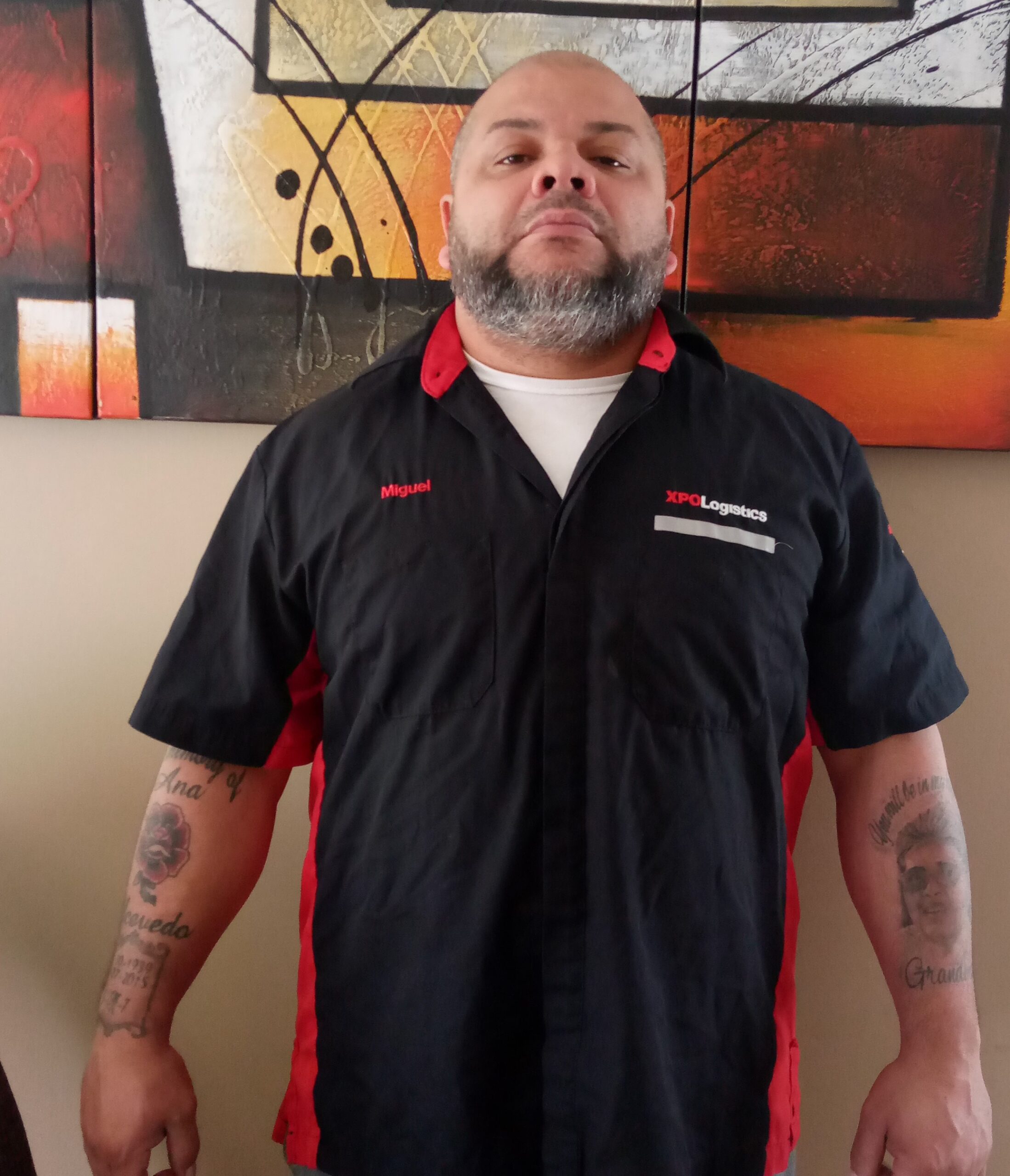
Reforms urged by Foundation staff attorneys eased Miguel Valle and his coworkers’ near-unanimous effort to vote out unpopular Teamsters officials, who tried to use “blocking charges,” ultimately to no avail.
WASHINGTON, DC – Workers in California and New Jersey who were previously subject to Teamsters bosses’ monopoly bargaining authority have freed themselves from unwanted union control.
The workers received free legal aid from Foundation staff attorneys, and benefited from rule changes at the National Labor Relations Board (NLRB) in Washington pushed for by the Foundation.
In California, Eliseo Haro, an employee at Los Angeles-based KWK Trucking, Inc., submitted a decertification petition with the NLRB because he and his coworkers were being ignored by Teamsters bosses. As Haro puts it, “The union never came in to talk to us, or negotiate a contract, or represent us. They disappeared.”
Haro’s petition was signed by nearly 80 percent of the workers in the 119-employee bargaining unit and called for an NLRB-supervised decertification election, in which KWK employees could vote out the unpopular union officials.
Rather than face an overwhelming defeat in the decertification election, Teamsters bosses chose to walk away. The union disclaimed interest in the unit, and NLRB Region 21 revoked Local 986’s certification as the workers’ monopoly bargaining agent.
New Jersey Decertification Effort Succeeds Despite Union Stall Tactics
In Cinnaminson, New Jersey, Teamsters officials did not immediately leave when a decertification petition was filed by Miguel Valle and his coworkers at a branch of XPO Logistics. Instead, Teamsters lawyers used nearly two months of unnecessary court proceedings to delay the election.
They demanded the vote be held in person at the Teamsters union hall. Foundation attorneys argued that the union lawyers’ requests were merely an effort to delay the vote. Ultimately, as expected, the NLRB’s Regional Director ruled that the election would be conducted by mail.
When Valle and his coworkers finally had their election, they voted 16-2 to remove Teamsters bosses from their workplace.
Foundation-Backed Rule Changes Reduce Needless Election Delays
For workers, just getting a decertification election is often difficult. In some cases, union bosses have created multi-year delays to stymie decertification efforts, trapping workers under union monopoly “representation” and often forced-dues payments they oppose, while they wait for a vote.
Union officials frequently attempt to delay or block decertification votes by filing “blocking charges,” unfair labor practice charges that can be used to hold up an election, even when they have nothing to do with the employees’ dissatisfaction with the union.
Union officials’ ability to use this tactic to block or delay votes has been limited by recent NLRB rulemaking, finalized in 2020. Under the NLRB’s new policy, which draws on comments filed by the National Right to Work Foundation, union charges cannot indefinitely stall employee votes, and in most instances votes occur without delay.
Additionally, as the Foundation advocated in its comments, instead of ballots being impounded for months or even years while “blocking charges” are resolved, the NLRB modified its original proposed rule so that in most cases ballots are tallied and the results are announced after employees vote.
“Union bosses can stick around for years, even when they face overwhelming opposition from rank-and-file workers, because of the legal barriers that protect union officials from decertification votes,” said National Right to Work Foundation Vice President and Legal Director Raymond LaJeunesse.
“Thanks to Foundation-backed reforms to the NLRB’s ‘blocking charge’ policy, union officials’ ability to trap workers in union ranks through legal trickery despite overwhelming opposition has been significantly curtailed.”
UGSOA Union Officials Hit With Another Federal Charge for Seizing Forced Union Fees in Violation of Security Guards’ Rights
NLRB Charge: Union bosses illegally failed to disclose financials and restricted workers’ rights to opt out of union political spending
Newark, NJ (October 5, 2020) – With free legal aid from the National Right to Work Legal Defense Foundation, William J. Sona is taking his case against the United Government Security Officers of America (UGSOA) union Local 171 to the National Labor Relations Board (NLRB).
The Paragon Systems employee’s federal unfair labor practice charge states that union officials illegally failed to provide a mandated independent audit justifying union fees, and imposed unlawful restrictions on workers seeking to challenge the calculation of the fees workers must pay as a condition of employment.
Because Sona is employed in New Jersey, a forced-unionism state, he can legally be fired for refusing to pay union fees. However, these forced fees cannot be used for union political activities or lobbying. Union officials must comply with certain legal requirements to justify the amount they can force workers to pay as a condition of employment.
Under the precedent established in the Right to Work Foundation-won Beck Supreme Court case and subsequent California Saw NLRB precedent, unions must provide verification of chargeable expenses through an independent audit, provide escrow if workers dispute charges, and provide an independent system for workers to challenge the fees.
Sona’s case against UGSOA charges that union officials failed to comply with any of these requirements. Additionally the charge states union officials illegally required Beck objectors like Sona to file two separate objections to funding union political activity—one to Local 171 and one to the International.
Union officials at UGSOA have a history of illegally seizing dues from workers. Previously, UGSOA union bosses illegally demanded union dues from nonmember workers while there was no contract in effect between the union and the employer.
With free legal aid from the National Right to Work Legal Defense Foundation, Sona and five other Paragon employees won $4,000 in illegally seized back dues. That case was settled in 2019 and formally adopted by the NLRB in August of 2020, but Sona’s new charge says union officials have not stopped violating the law.
“Union brass at UGSOA have demonstrated again that they will violate the rights of the very workers they claim to ‘represent’ just to stuff their pockets with more forced dues,” commented National Right to Work Foundation President Mark Mix.
“They use their special government-granted privileges to force workers to pay up or be fired, and then refuse to provide the information needed to confirm that at least these forced fees are not being illegally funneled into union lobbying and campaign expenses. If union bureaucrats are afraid of transparency, there’s probably a reason for that.”
Newark Courthouse Security Guards Win Settlement Forcing Union Bosses to Refund Illegal Dues and Stop Retaliatory Lawsuit
Union bosses filed collection suit illegally demanding dues payments from nonmember employee for period when there was no union contract in effect
Newark, NJ (December 11, 2019) – With free legal aid from the National Right to Work Legal Defense Foundation, Newark, New Jersey-based security guards Andrei Bobev and William Sona have won a settlement against United Government Security Officers of America (UGSOA) union bosses, whom they charged with illegally demanding union dues from them while there was no contract in effect between the employer and union. The settlement was approved by the National Labor Relations Board (NLRB) Region 22 in Newark.
As part of the settlement, UGSOA officials are required to refund to Sona and six coworkers more than $4,000 in dues and fees that were taken from them illegally, and notify Bobev that they will not continue a civil lawsuit they filed against him to force him to pay illegal union dues after he refused to do so. Bobev and Sona are not members of the UGSOA.
Bobev first sought the aid of Foundation staff attorneys after Paragon Systems took over the federal contract for security services at the U.S. Courthouse in Newark. USGOA bosses, who under the old contractor had monopoly bargaining power over the security guards at the courthouse, demanded that employees continue to pay them dues and fees even though a contract had not yet been finalized between the union and Paragon. Bobbev declined to pay the illegally-demanded dues, and filed federal charges with the NLRB against UGSOA officials with National Right to Work Foundation legal aid.
NLRB Region 22 officials dismissed Bobev’s charges, and UGSOA officials shortly after retaliated against him with a civil lawsuit in an attempt to force him into paying the illegal dues. However, the NLRB General Counsel in Washington reversed Region 22’s dismissal and instructed regional officials to prosecute Bobev’s charge.
Sona and other nonmembers were misled by union officials and started paying illegal dues and fees while there was no monopoly bargaining contract in effect between Paragon and the UGSOA union. With the current settlement, he and six of his fellow security guards will receive back all the money that they paid to UGSOA bosses during that period, plus interest.
UGSOA officials are also required by the settlement to post notices at union headquarters and at all of Paragon Systems’ Newark locations. The notices declare that union bosses “will not threaten to cause [the] employer to discharge [employees] for failure to pay dues and/or service fees” when there is no monopoly bargaining contract in effect, and “will not threaten to enforce [the union’s] by-laws and constitution against non-members by threatening to institute civil proceedings” to force them to pay dues or fees.
“Although this settlement finally provides Mr. Bobev, Mr. Sona, and their coworkers with remedies for illegal union boss actions, it is outrageous that UGSOA officials believed they could enforce their coercive bylaws on workers without having legal power over any one of them in the absence of a contract,” commented National Right to Work Foundation President Mark Mix. “A Right to Work law would stop coercive union boss activity in New Jersey by giving workers the right to voluntarily choose whether or not to join or financially support a union.”





