
Foundation Battles Union Restrictions on First Amendment Rights at Ninth Circuit
The following article is from the National Right to Work Legal Defense Foundation’s bi-monthly Foundation Action Newsletter, January/February 2021 edition. To view other editions or to sign up for a free subscription, click here.
Cases challenge coercive, anti-Janus “escape periods” concocted by union bosses
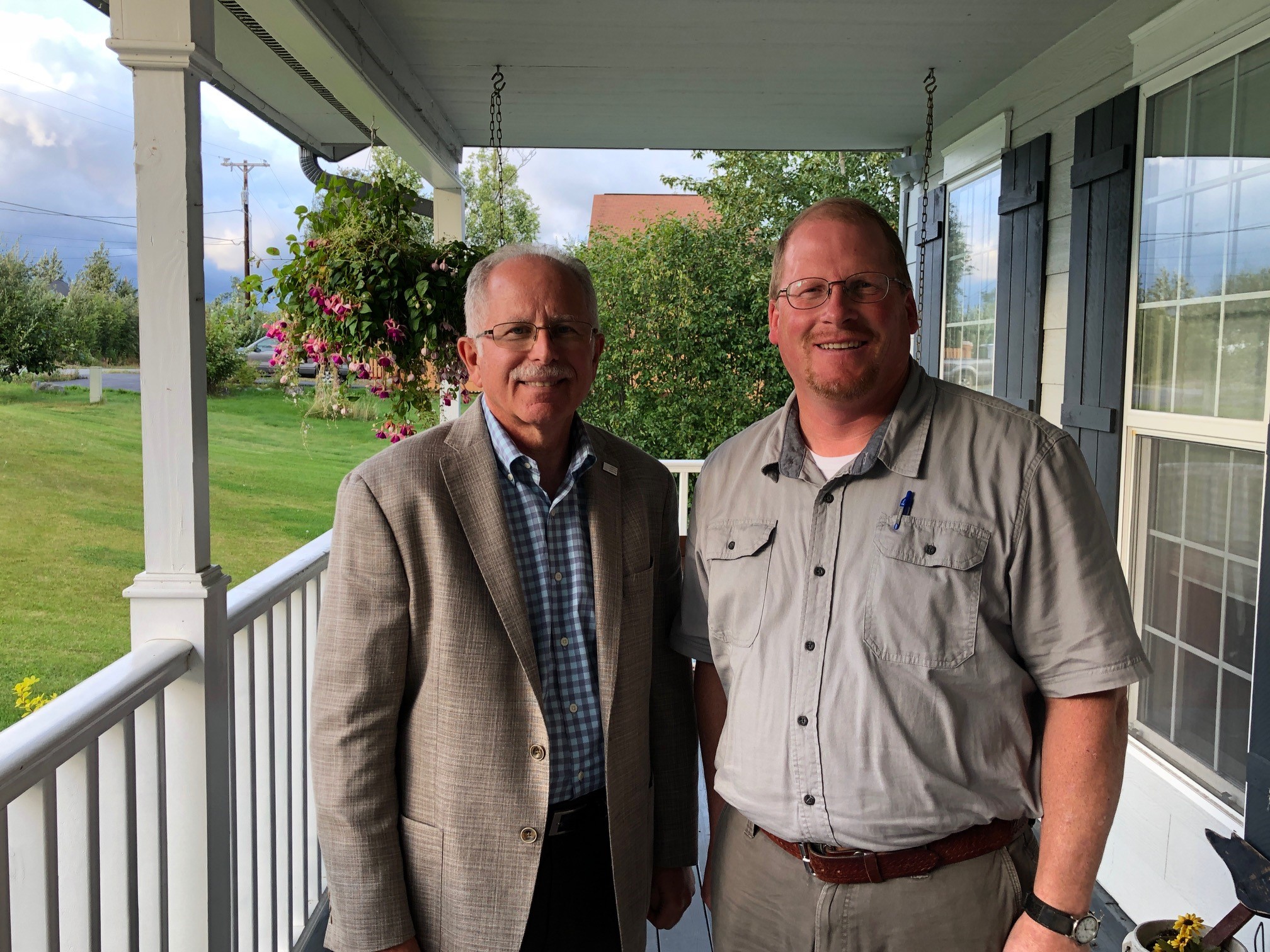
Christopher Woods (right), seen here with Mark Janus, is taking up the latter’s fight by challenging an ASEA union boss scheme that traps workers in union payments even after they have dissociated from the union.
SAN FRANSCISO, CA – The 2014 National Right to Work Foundation victory for Pam Harris in the Harris v. Quinn Supreme Court case established that union bosses violate the First Amendment when they skim dues from homecare providers’ state subsidies without their consent. Now, seven California homecare providers have just appealed to the Ninth Circuit Court of Appeals their federal lawsuit against Service Employee International Union (SEIU) Local 2015 officials for continuing to skim dues in violation of their rights.
According to their suit, SEIU honchos enforced a phony “escape period” on the homecare providers, illegally limiting the time in which they could stop the deductions. The providers’ suit says this contravenes the U.S. Supreme Court’s ruling in Janus v. AFSCME. The Court not only held that the government cannot force individuals to subsidize union activities as a condition of employment, but also that government agencies can only deduct union payments after receiving a clear and knowing waiver of their First Amendment right not to make such payments.
Dues-Skim Scam: SEIU Took Dues Without Informing Providers of Rights
Although the plaintiffs, Delores Polk, Heather Herrick, Lien Loi, Peter Loi, Susan McKay, Jolene Montoya and Scott Ungar, are not public employees, they were designated as such solely for the purpose of monopoly unionization. Then that was used as justification for the State of California to skim union dues from their payments at the behest of SEIU officials. The seven participate in the In-Home Support Services (IHSS) program, which allots Medicaid funds to those who provide home-based aid to people with disabilities.
Polk and the other plaintiffs recount in the lawsuit that SEIU union bosses began taking cuts of their Medicaid subsidies after confusing phone calls or mandatory orientation sessions. After the plaintiffs contacted the SEIU attempting to exercise their right to stop the flow of dues, SEIU operatives informed them that they could only opt out of union dues during short union-created “escape periods” of 10-30 days once per year.
The lawsuit also points out that the federal law governing IHSS forbids diverting any part of Medicaid payments to “any other party” besides the providers. In fact, in rulemaking urged by National Right to Work Foundation comments, the federal agency that administers Medicaid confirmed that skimming such payments for unions violates the Medicaid statute passed by Congress.
The seven plaintiffs now seek a ruling that both the taking of union dues without their knowing consent and the policy restricting the providers from ending the dues deductions are unconstitutional. The providers also seek refunds of all money that they and any other IHSS program participants had taken from their payments through the illegal scheme.
Alaska Union Bosses Confine Prison Employee in Unconstitutional Deductions
Also at the Ninth Circuit Court of Appeals, Alaska vocational instructor Christopher Woods recently filed an appeal in his case challenging an “escape period” scheme to block him and other Alaska state employees from exercising their First Amendment rights recognized in Janus.
In a November 2019 email, Woods, who has worked as a vocational instructor at Goose Creek Correctional Center since 2013, informed Alaska State Employees’ Association (ASEA) officials he was exercising his Janus right to stop all union dues deductions. Rather than respect his rights, union officials rejected his request and told Woods that he could only “opt out” and not be a union member with written notice to this office during a 10-day period each year.
Woods persisted on December 2, 2019, submitting to both ASEA officials and the payroll office of the Corrections Department another email asking to cut off dues. Although the payroll office confirmed to both Woods and the ASEA that it had received the request, an ASEA official responded by merely telling the payroll office that she was “still communicating with [Woods] on the matter,” the complaint says. Woods reports in his lawsuit that he has “not received any further communications” from either the ASEA or the payroll office, and that full dues are still being seized from his paychecks.
Foundation String of Triumphs Against Janus Restrictions Unlikely to End
“‘Escape periods’ are shameless union boss-concocted schemes that only exist to keep dues money rolling into their coffers after employees have clearly communicated that they do not wish to support the union,” observed National Right to Work Vice President and Legal Director Raymond LaJeunesse. “Although these arrangements are egregious in any context, trapping homecare providers in dues-skim schemes which deprive them of money they receive for taking care of the disabled is particularly unconscionable, and additionally breaches federal law which prohibits those funds from going anywhere other than to the people giving care.
“Whether it’s the landmark victories in Harris and Janus or the eight recent lawsuits in which Foundation staff attorneys have knocked down ‘escape period’ policies and secured refunds of illegal dues for workers, the Foundation has a track record of success in these cases. Union bosses shouldn’t hold their breath in the hopes of keeping seized dues,” LaJeunesse added.
More Workers Ask Supreme Court to Refund Unconstitutional Forced Dues
The following article is from the National Right to Work Legal Defense Foundation’s bi-monthly Foundation Action Newsletter, January/February 2021 edition. To view other editions or to sign up for a free subscription, click here.
Four Foundation-backed cert petitions now filed at High Court with millions at stake
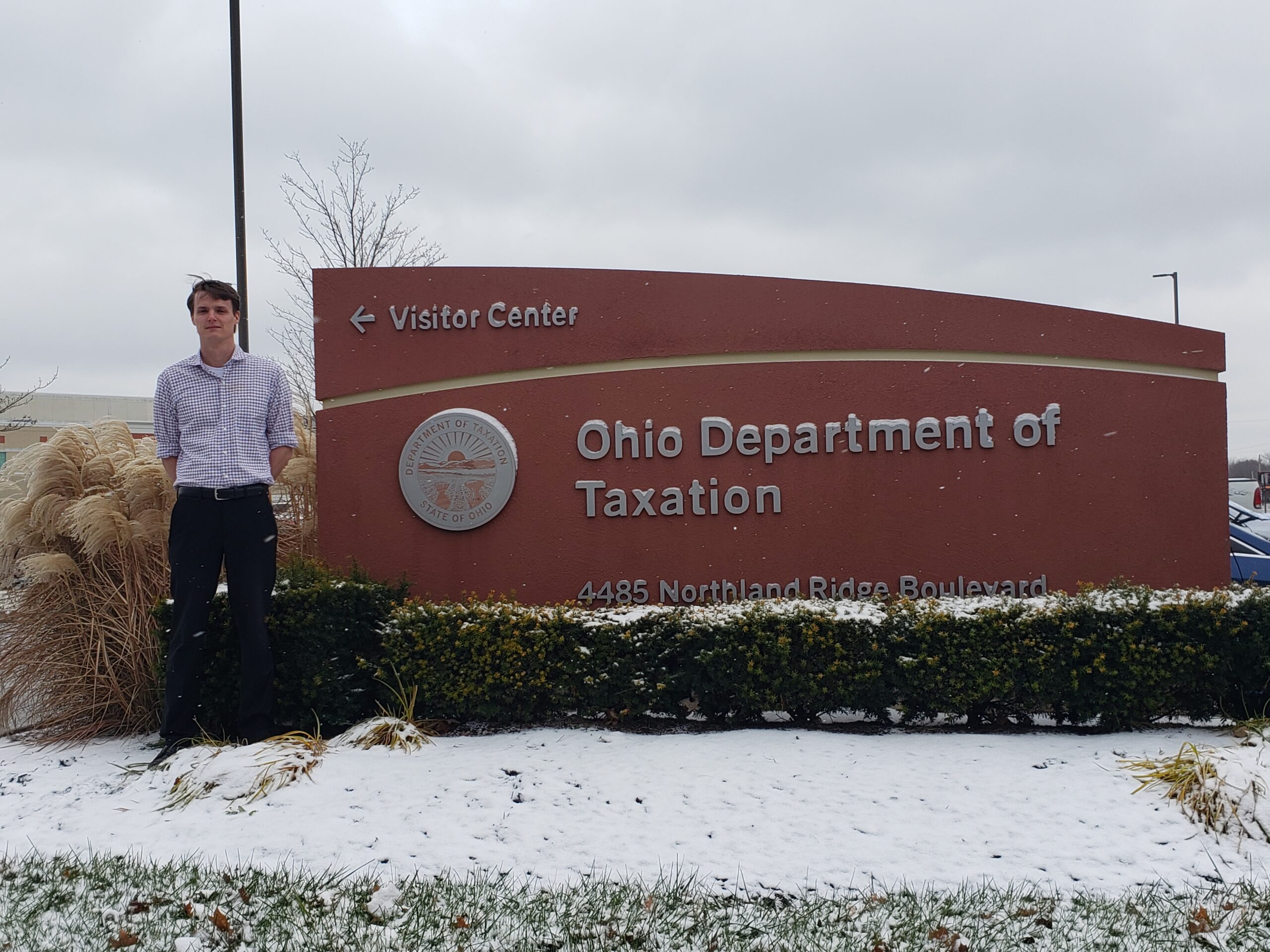
Foundation staff attorneys asked the Supreme Court to hear Nathaniel Ogle’s case, which seeks refunds for him and his coworkers of forced union dues that were seized from their paychecks in violation of the First Amendment.
WASHINGTON, DC – Across the nation, public employees continue to seek free legal aid from National Right to Work Foundation staff attorneys, to fight for their First Amendment rights recognized in the landmark Janus v. AFSCME Supreme Court ruling. Janus was argued and won by Foundation staff attorneys.
Janus affirmed that public employees cannot be required to subsidize union activities as a condition of employment and that union payments can only be deducted with an employee’s freely given consent.
Despite this clear ruling, union bosses have almost without exception refused to return money seized from workers in violation of the First Amendment. In response, Foundation staff attorneys are now assisting workers in more than a dozen cases seeking to force union officials to return illegal forced fees to tens of thousands of employees, with four such cases now pending at the U.S. Supreme Court.
Union Officials Refuse to Refund Illegally Seized Dues Post-Janus
In November, attorneys for Connecticut Department of Energy and Environmental Protection employees Kiernan Wholean and James Grillo filed a petition for writ of certiorari with the Supreme Court. It is asking the Justices to hear their case, seeking back years of union dues that they and their coworkers were forced to pay to Service Employees International Union (SEIU) union bosses in violation of the First Amendment. Their petition follows one filed in October for Ohio Department of Taxation employee Nathaniel Ogle, whose case seeks to require AFSCME union bosses to similarly return forced fees seized in violation of the Janus standard from potentially thousands of Ohio government employees.
With these two new cert petitions, there are now seven pending before the Supreme Court on this issue, four of which were filed for workers by Foundation staff attorneys. That includes the continuation of the original Janus case brought by Mark Janus.
If the Supreme Court decides to hear any one of these cases, a favorable ruling would create another groundbreaking precedent, potentially prompting the return in Foundation cases alone of over $130 million to employees fighting to get back money taken in contravention of their Janus rights.
Wholean and Grillo, who are not members of SEIU,
originally filed their case in 2018 in the U.S. District Court for the District of Connecticut shortly before the High Court decided Janus. The State ceased deducting dues from their paychecks for SEIU following a letter to the State Comptroller from a National Right to Work Foundation attorney, which threatened legal action for any dues deductions from non-members that continued after Janus.
However, SEIU union officials continue to refuse to refund dues that they took from Wholean, Grillo and other non-members in violation of the Janus First Amendment standard before the decision, even though they knew the employees never consented to pay.
Ogle filed his case at the District Court for the Southern District of Ohio just after Janus was decided. Like Wholean and Grillo, he was never a member of the union but had mandatory union fees deducted from his paychecks. The Ohio affiliate of the national AFSCME union has around 30,000 public employees across the Buckeye State under its bargaining monopoly. If a class is eventually certified in Ogle’s case, it could potentially include thousands of workers.
Foundation Attorneys: High Court Must Reject Union Attempts to Dodge Janus
Lower courts in these and other lawsuits have accepted union lawyers’ so-called “good faith” contentions for letting union bosses keep the dues collected in violation of the non-members’ constitutional rights. This is at odds with the Supreme Court’s Janus ruling, which did not proscribe retroactive relief. Indeed, it observed that union officials have been “on notice” for years that mandatory fees likely would not comply with the High Court’s heightened level of First Amendment scrutiny, articulated in the 2012 Supreme Court decision in the Foundation’s Knox v. SEIU case.
Foundation staff attorneys point out in the petitions before the Supreme Court that a “good faith” defense has never existed under Section 1983 of the Civil Rights Act of 1871, the statute under which these lawsuits are brought. Section 1983 specifically imposes liability on those who violate the constitutional rights of others while acting “under color of ” existing law.
Not all judges, however, have been convinced by union officials’ dubious “good faith” argument for keeping the unconstitutionally seized payments. In Wenzig, another Foundation-backed case, a majority of a Third Circuit panel denied the existence of such a defense. In a supplemental brief, Foundation attorneys cited the confusion among lower courts as a significant reason the court should hear the continuation of Janus.
“With seven petitions on this issue now pending with the High Court and more to be filed soon, it is time the Supreme Court hears this issue and ends the denial of justice for tens of thousands of non-member government employees whose First Amendment rights were violated,” commented National Right to Work Foundation President Mark Mix. “Section 1983 of the Civil Rights Act, the federal statute under which all these cases were filed, was specifically intended to allow individuals to remedy the deprivation of their rights when it occurs under color of law. It’s outrageous that union bosses have thus far been allowed to keep money seized in violation of the First Amendment because it was authorized by then-existing but unconstitutional law.
“That result is especially specious because, as the Supreme Court recognized in Janus, union bosses have been ‘on notice’ since 2012 that forcing government employees to pay union fees was likely unconstitutional,” Mix added.
Airline Workers Ask Appeals Courts to Invalidate Union Dues Opt-Out Schemes
The following article is from the National Right to Work Legal Defense Foundation’s bi-monthly Foundation Action Newsletter, November/December 2020 edition. To view other editions or to sign up for a free subscription, click here.
Cases challenge requirement that workers opt out of union political spending or else pay full dues

Just “plane” wrong: United Airlines fleet service employee Arthur Baisley (left) and JetBlue Airways pilot Christian Popp (right) are fighting to end schemes that deduct union political expenses out of workers’ paychecks without their consent.
NEW ORLEANS, LA – With free legal representation from National Right to Work Legal Defense Foundation staff attorneys, two airline workers have filed cases challenging union boss policies that require workers to opt out in order to exercise their First Amendment right not to fund union political activities, as recognized in the Foundation-argued 2018 Janus v. AFSCME Supreme Court decision.
The two federal class-action lawsuits were brought for United Airlines fleet service employee Arthur Baisley and JetBlue Airways pilot Christian Popp. They are currently pending in the U.S. Courts of Appeals for the Fifth and Eleventh Circuits respectively.
Workers Challenge Compelled Political Speech
Baisley’s case against the International Association of Machinists (IAM) union has been fully briefed and is tentatively set for oral argument the week of November 30. Meanwhile, the opening brief for Popp’s case against the Air Line Pilots Association (ALPA) union was filed in early October.
The lawsuits contend that under Janus and the 2012 Knox v. SEIU Supreme Court cases — both argued and won by Foundation staff attorneys — no union dues or fees can be charged for union political activities without a worker’s affirmative consent.
Despite this, union officials at the IAM and ALPA enforce complicated opt-out policies that require workers to object to funding union political activities or else pay full union dues. Foundation staff attorneys argue that the Janus decision’s opt-in requirement applies to airline and railroad employees covered by the Railway Labor Act (RLA), taken together with longstanding precedent protecting private sector workers from being required to pay for union political and ideological activities.
Mr. Baisley and Mr. Popp both work in Right to Work states (Texas and Florida, respectively), but the RLA preempts state law. Consequently, they can be forced to pay union dues or fees or be fired. Even under the RLA, however, union bosses cannot legally force workers to pay for political activities.
Cases Could Expand Janus Protections to Private Sector
The lawsuits argue IAM and ALPA’s opt-out policies are designed to trap unwilling participants into full dues in violation of their First Amendment rights. This forces workers to subsidize union political activities against their will, including the part of full dues that union officials use to support their radical political agenda and handpicked candidates for office.
“IAM and ALPA union officials have demonstrated a blatant disregard for the rights of the very workers they claim to represent by creating complicated obstacles for independent-minded workers who want to exercise their right not to fund union ideological activities,” said National Right to Work Foundation Vice President Patrick Semmens. “Although Janus’ biggest impact was to secure the First Amendment rights of all public employees across the nation not to be required to fund Big Labor, these cases demonstrate that Janus’ implications can also protect the rights of private sector workers.”
Cases Seeking Millions in Refunds of Forced Fees under Janus Move Forward
The following article is from the National Right to Work Legal Defense Foundation’s bi-monthly Foundation Action Newsletter, November/December 2020 edition. To view other editions or to sign up for a free subscription, click here.
Split Appeals Court decision bolsters petition for Supreme Court to take up issue
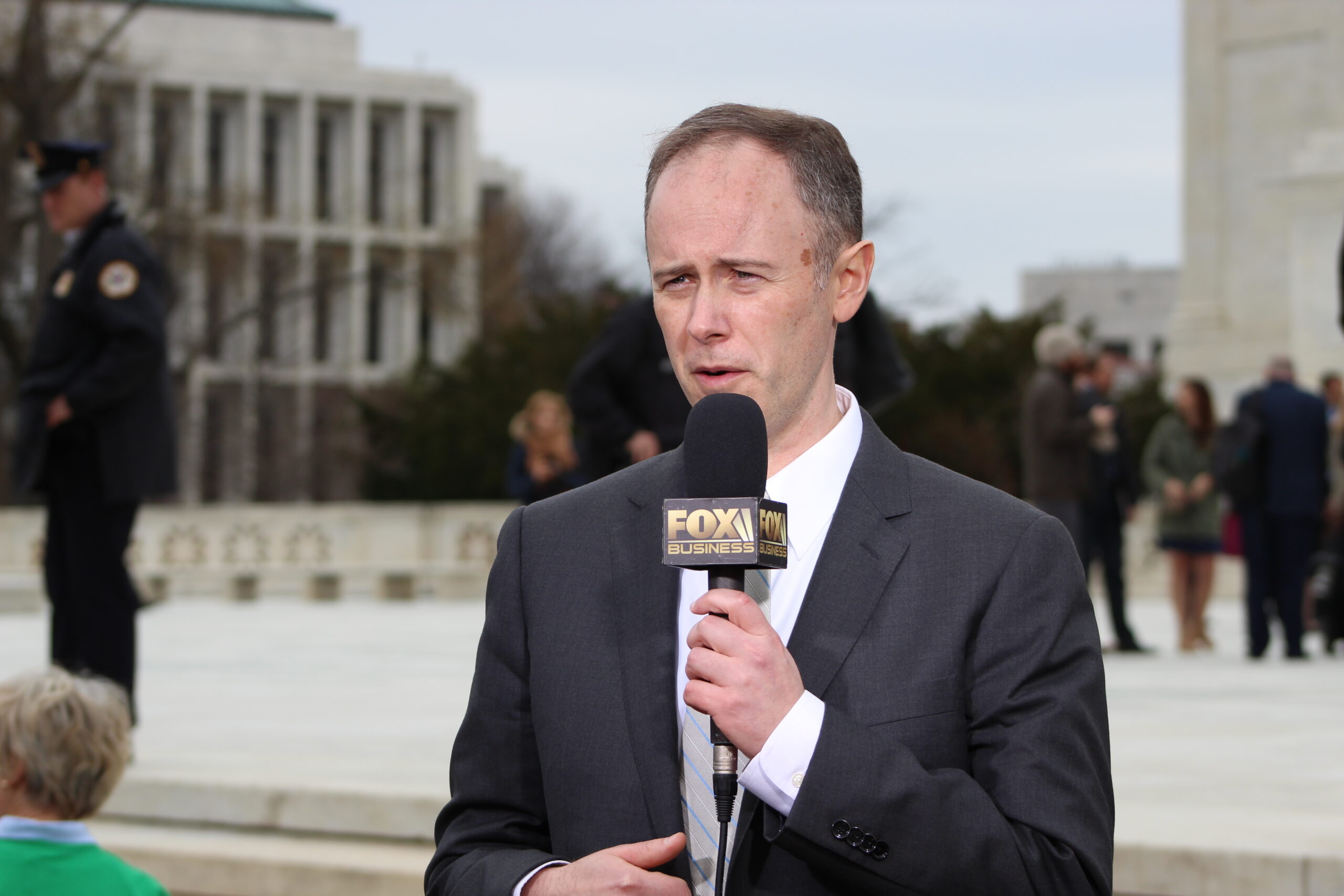
Veteran Foundation staff attorney William Messenger made history when he argued and won the Janus case before the High Court in 2018. He still represents Janus and others demanding forced-fee refunds.
PHILADELPHIA, PA – A National Right to Work Foundation-backed class-action lawsuit for Pennsylvania state employees seeking refunds of unconstitutionally seized union fees resulted in a split decision from the U.S. Third Circuit Court of Appeals in August. This ruling cast serious doubt on a favorite union boss argument used to avoid refunding dues seized in violation of workers’ First Amendment rights.
The employees were defending their rights under the landmark 2018 Foundation-won Janus v. AFSCME Supreme Court ruling. In Janus, the Court sided with former Illinois child support specialist Mark Janus and agreed with Foundation staff attorneys that requiring any public sector worker to pay union dues or fees as a condition of employment is a First Amendment violation. The Court also ruled that union dues can only be taken from public servants with their affirmative and knowing consent.
The plaintiffs in Wenzig v. Service Employees International Union (SEIU) Local 668 are seeking a ruling that SEIU officials must refund dues taken from employee paychecks in contravention of this standard before the Janus ruling came down. Union bosses used, as they have done in almost all similar cases, a dubious “good faith” argument to justify not refunding the dues to the victimized workers. In the split decision, two of the three judges rejected the so-called “good faith” theory.
Supreme Court Asked to End Lower Court Confusion on Janus Refunds
Foundation staff attorneys cited the growing confusion among federal judges on forced-union-fee refunds as a vital reason the Supreme Court should hear the continuation of Janus v. AFSCME. In a supplemental brief, Foundation attorneys wrote that Wenzig “supports granting review here because a majority of the Third Circuit panel rejected the good faith defense recognized by the Seventh Circuit here and by the Second, Sixth, and Ninth Circuits.”
“The Court should finally resolve this important issue and hold there is no good faith defense to Section 1983,” the brief adds. Section 1983 is the federal law requiring that those who deprive people of their constitutional rights “under color of any statute . . . shall be liable to the party injured.”
This September, Foundation staff attorneys also filed the final reply brief supporting the Supreme Court petition in Casanova v. International Association of Machinists (IAM), Local 701, another case seeking review from the High Court. It also cites the Third Circuit’s split decision. Plaintiff Benito Casanova, a Chicago Transit Authority employee, seeks to get back money that IAM bosses took from his paycheck and the paychecks of his colleagues in violation of their First Amendment rights prior to the Janus decision.
Foundation Leading Worker Efforts to Reclaim Fees Seized Against Janus
The workers in these cases and many others are collectively fighting for millions of dollars in pilfered money to be returned to them. Foundation attorneys currently represent these public servants in nearly 20 similar cases, together pursuing about $130 million in refunds to workers.
“Given the clarity of the Janus First Amendment standard, it’s bewildering that federal judges have not yet widely discredited union boss arguments that serve only to deny public sector workers refunds of money that the High Court itself ruled should have never been taken from them in the first place,” observed National Right to Work Foundation President Mark Mix. “The High Court must swiftly disabuse lower courts of their misunderstandings and provide justice to workers who have been waiting years for their hard-earned money to be returned.”
Ohio Public Workers Axe Illegal Restrictions on Janus Rights for Almost 30,000
The following article is from the National Right to Work Legal Defense Foundation’s bi-monthly Foundation Action Newsletter, September/October 2020 edition. To view other editions or to sign up for a free subscription, click here.
Foundation-backed lawsuit ends AFSCME bosses unlawful “escape period” scheme
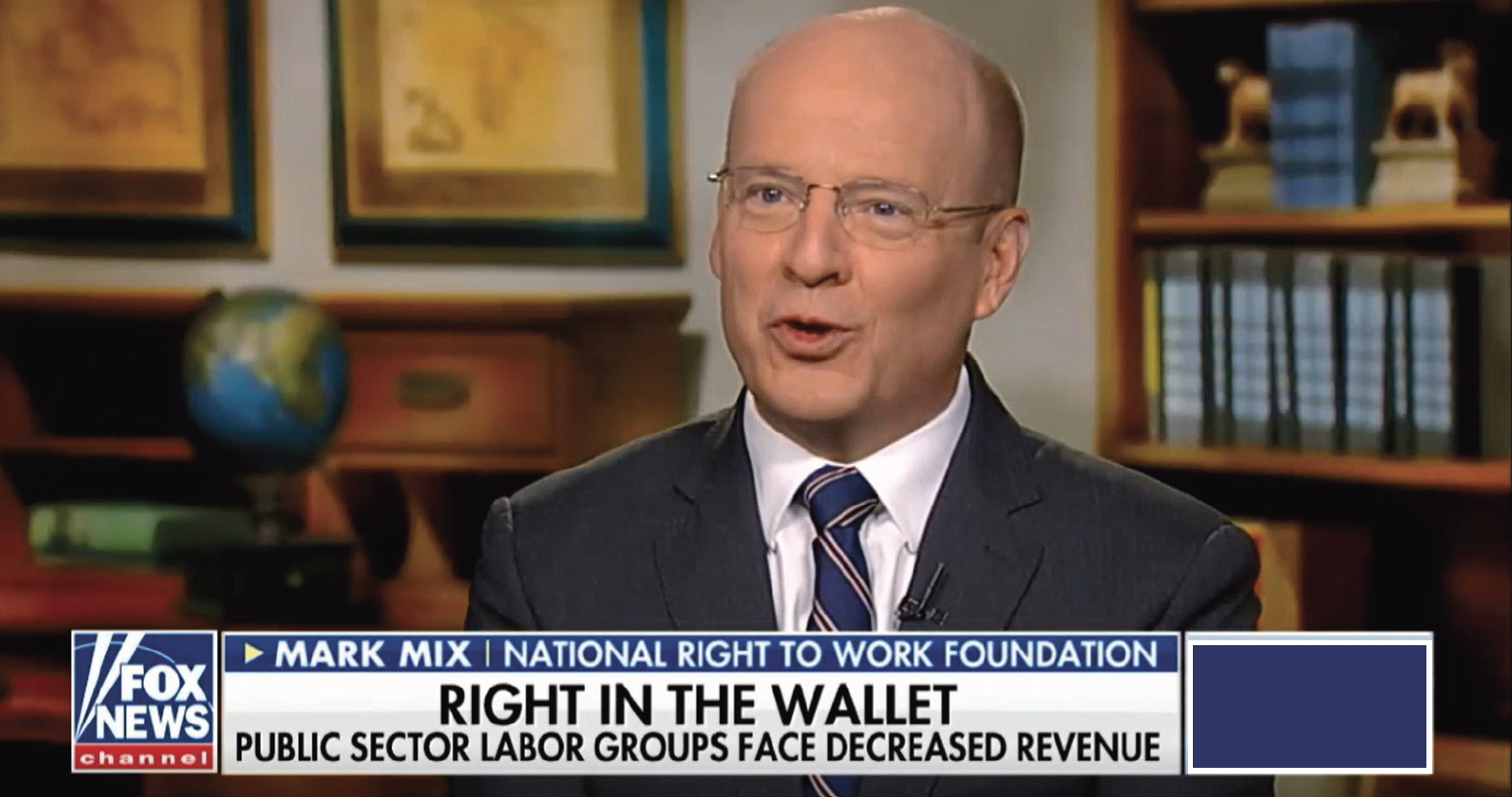
Two years after Foundation staff attorneys won Janus, public sector workers continue to cast off the shackles of forced union dues. In Allen, the plaintiffs successfully defended the Janus rights of thousands of Ohio public workers.
COLUMBUS, OH – A lawsuit by four Ohio public employees has secured the end of an illegal dues deduction scheme used by Ohio Civil Service Employees’ Association (OCSEA/AFSCME Council 11) union bosses to block an estimated 28,000 workers from exercising their First Amendment right to stop union dues payments. The workers obtained free legal representation from National Right to Work Foundation staff attorneys in challenging the policy.
The class-action suit, Allen v. AFSCME, challenged OCSEA’s so-called “maintenance of membership” policy, which trapped workers in forced-dues payments except for a brief “escape period” once every three years at the expiration of the union monopoly contract. The workers argued this policy violated their First Amendment rights under the Janus v. AFSCME Supreme Court decision.
In Janus, the High Court struck down mandatory union fees for public sector workers as an infringement of their First Amendment rights, and ruled that the government can only deduct union dues or fees with an individual’s affirmative consent.
After Freeing Workers, Foundation Attorneys Warn of Future Union Boss Tricks
As a result of the lawsuit, OCSEA officials and the State of Ohio have rescinded the “maintenance of membership” restriction on when state workers can exercise their First Amendment right to cut off union dues deductions.
They must also honor requests to stop dues deductions from any employees who signed the AFSCME dues authorization form at issue in the lawsuit. Finally, AFSCME bosses repaid dues seized illegally under the scheme to the plaintiffs and more than 150 other employees who tried to cut off union dues deductions after Janus was decided.
Knowing that union bosses don’t easily give up in their crusades to coerce workers into paying dues, however, Foundation staff attorneys issued a legal notice shortly after the case wrapped up, warning workers that OCSEA union bosses may soon solicit them to sign new dues deduction forms which are not covered by the litigation. The new forms will “purport to restrict” when employees can stop dues, it warns.
In light of that, the notice reminds workers that under Janus, no Ohio public employee can be forced to sign a union dues deduction form as a condition of employment, no matter what union agents may tell them.
Just Latest in String of Ohio Worker Victories over “Escape Periods”
Allen is not the only case in which Ohio public employees have, with National Right to Work Foundation legal aid, successfully challenged union boss attempts to limit their rights.
Seven other Ohio public employees won the first-in-the-nation victory against unconstitutional “escape periods” with Foundation aid in January 2019, after they filed a class-action federal lawsuit challenging a similar policy created by AFSCME Council 8 bosses. They won a settlement ending the restrictions for themselves and their coworkers. That win was followed by two other Ohio public workers, Connie Pennington and Donna Fizer, successfully ending “escape period” restrictions with Foundation assistance later in 2019.
“Although this chain of victories for Buckeye State public employees is certainly encouraging, the widespread nature of these schemes shows there remains much work to do to force union bosses to end their unconstitutional restrictions on public employees’ First Amendment Janus rights,” observed National Right to Work Foundation President Mark Mix. “Foundation litigation has already freed hundreds of thousands of public employees from forced union dues, but likely millions more remain trapped and unable to exercise their rights. That is why Foundation litigators will continue to file these cases.”
Two Cert Petitions Seeking Refunds of Union Dues Seized in Violation of First Amendment Janus Rights Now Fully Briefed at SCOTUS
Chicago transit worker’s suit, Mark Janus’ petition and two other cases seeking refunds all now scheduled to be considered at High Court’s October 9 conference
Washington, DC (September 25, 2020) – Staff attorneys at the National Right to Work Legal Defense Foundation have just filed their reply brief with the US Supreme Court in the class-action case Casanova v. International Association of Machinists, Local 701. Thus, the petition asking the Supreme Court to hear the case is now fully briefed. The case will now be considered at the Court’s October 9 conference.
The plaintiff, Benito Casanova, a Chicago Transit Authority worker, is seeking a refund of union fees that were seized from his paycheck and the paychecks of similarly situated coworkers in violation of the First Amendment, as the landmark 2018 Janus v. AFSCME Supreme Court decision recognized.
In Janus, which was argued and won by National Right to Work Foundation staff attorneys, the High Court ruled that requiring public sector workers to pay union dues as a condition of getting or keeping a job violates the First Amendment. The Court also held that union dues can only be deducted from the paycheck of a public worker with his or her affirmative consent. Casanova wants the Court to rule that International Association of Machinists (IAM) union bosses must return money deducted from nonmember workers’ paychecks from 2016 through 2018, in accordance with Illinois’ two-year statute of limitations.
This is now the second Foundation-backed case seeking such a refund that is currently waiting on a certiorari petition from the Court. The other is the continuation of the Janus case itself, in which the original plaintiff, former Illinois child support specialist Mark Janus, is asking the High Court to hear his case which demands a return of unconstitutional union dues from 2013 (two years before his case began) to the day the Janus decision was handed down in 2018. Janus continues to be litigated by Foundation staff attorneys in partnership with attorneys from the Liberty Justice Center, an Illinois nonprofit.
Union bosses have been using a so-called “good faith” defense at lower courts to avoid returning forced fees that were unconstitutionally seized from public employees’ paychecks. In a recent supplemental brief in Janus, Foundation attorneys point out that two of three judges on a panel of the Third Circuit Court of Appeals recently opined that such a defense is invalid, while other federal judges have upheld it. This, they argue, makes it especially vital that the Court hear the case to clear up the confusion among lower courts and ultimately reject this spurious argument allowing union officials to profit from violating workers’ constitutional rights.
Both Foundation-supported cases have been scheduled for the Court’s conference on October 9. Two other class-action cases dealing with the same issue, Danielson and Mooney, have been scheduled for the same conference. Foundation staff attorneys are actively litigating about 20 of these cases which collectively seek the return of an estimated $130 million or more in forced union fees seized from workers in violation of the First Amendment.
“The Supreme Court pointed out in the Janus decision two years ago that public sector union bosses had unjustly gained a ‘considerable windfall’ by violating the First Amendment rights of public servants who wanted to disassociate with unions,” commented National Right to Work President Mark Mix. “We are proud to stand with Mr. Janus, Mr. Casanova, and scores of other public sector workers across the country as they seek to reclaim their hard-earned dollars that union bosses refuse to return despite the Supreme Court’s clear ruling in Janus.”
“The so-called ‘good faith’ defense, which permits union bosses to continue ignoring an established Supreme Court precedent, has already been rejected by two federal judges. It is vital that the Supreme Court take up this issue to disabuse all lower courts of this flawed argument, and to ensure that the victims of union officials’ First Amendment violations finally get some justice,” Mix added.
In the News: “Foundation Sues to Give Public Employees Their Right Not to Pay Union Dues”
The National Right to Work Foundation-won Janus v. AFSCME U.S. Supreme Court decision allows public employees to stop paying dues or fees to a union at any time they choose. Janus affirmed that the First Amendment protects government workers from supporting a union against their wishes.
But ever since the Janus decision in June 2018, many union bosses have refused to comply with the High Court’s decision. So Foundation staff attorneys have filed dozens of cases across the country to enforce the Janus decision and compel union bosses to respect the First Amendment rights of the workers they claim to “represent.”
Journalist Mark Tapscott recently reported on a number of these cases for The Epoch Times, including a newly filed case for a police officer serving on the front lines in Las Vegas:
Las Vegas Police Officer Melodie DePierro is the latest in a growing line of public sector employees suing in federal court to demand recognition of their rights under a 2018 Supreme Court decision.
DePierro’s action was filed in the U.S. District Court for Nevada against the Las Vegas Metropolitan Police Department (LVMPD) and the local Police Protective Association (PPA) union.
In Janus v American Federation of State, County and Municipal Employees (AFSCME) decided by a 5-4 vote in June 2018, the high court ruled that public sector employees cannot be forced to pay union dues in the form of agency fees without being given a chance to consent or refuse the deduction.
DePierro noted in her suit that the department’s monopoly bargaining agreement with the union only allowed a 20-day window of opportunity to request agency fee refunds and that she had never agreed to the deduction in the first place.
Right-to-Work advocates cheered Janus as a landmark decision that would prompt millions of employees at all levels of government to demand an end to hundreds of millions of dollars in agency fees that helped fund partisan union political activities with which they disagreed.
…
“Instead of respecting her First Amendment Janus rights, PPA union bosses have decided to keep imposing an unconstitutional policy on her just to keep her hard-earned money rolling into their coffers,” NRTWLDF President Mark Mix said in a statement announcing the suit.
“The High Court made perfectly clear in Janus that affirmative consent from employees is required for any dues deductions to occur. Yet PPA union bosses are clearly violating that standard here,” Mix said.
…
A week before the DePierro filing, NRTWLDF attorneys issued a special notice to more than 28,000 Ohio state employees advising them of their right not to pay agency fees. The notice was part of a settlement of the foundation’s suit against the state government and the Ohio Civil Service Employees Association, AFSCME Local 11 (OCSEA).
Other Janus suits currently working their way through the courts include NRTWLDF actions against the Chicago Teachers Union, the Alaska State Employees Association (ASEA), the United Teachers of Los Angeles (UTLA), California Service Employees International Union (SEIU), the University Professional and Technical Employees (UPTE) union and the University of California, and the Township of Ocean Education Association (TOEA), New Jersey Education Association (NJEA) and the National Education Association (NEA) unions. The latter suit has reached a federal appeals court.
Read the entire article online at The Epoch Times here.
Legal Victory: West Virginia Supreme Court Unanimously Upholds Right to Work
The following article is from the National Right to Work Legal Defense Foundation’s bi-monthly Foundation Action Newsletter, July/August 2020 edition. To view other editions or to sign up for a free subscription, click here.
Foundation attorneys filed 10 legal briefs defending Right to Work from union boss legal attack
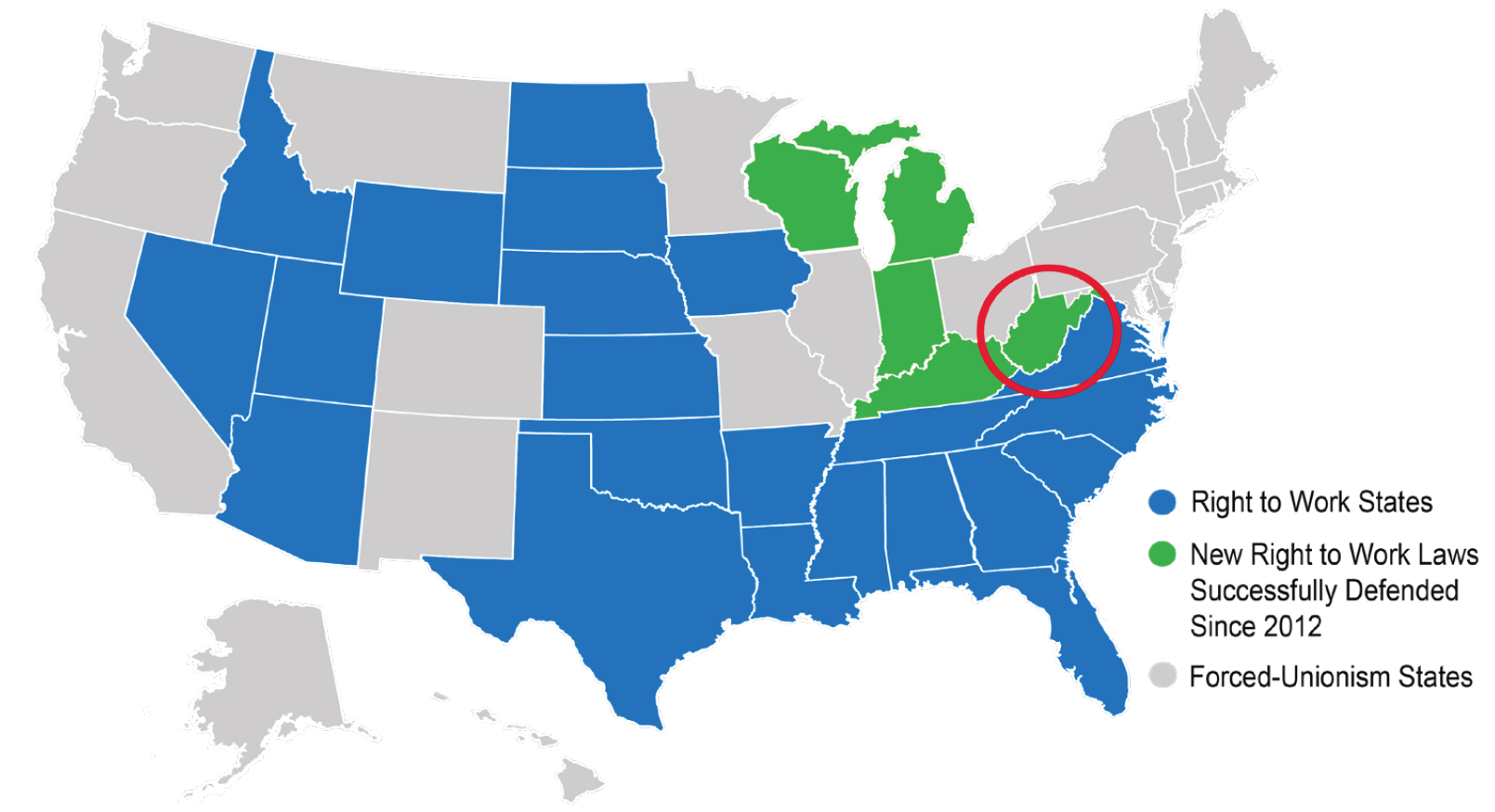
The Foundation added West Virginia to the list of states where it has successfully helped defend Right to Work since 2012. Now the state’s motto, “Montani Semper Liberi” (“Mountaineers are Always Free”) applies to the state’s workers.
CHARLESTON, WV – The West Virginia Supreme Court closed the book on a case brought by union lawyers seeking to overturn the state’s popular Right to Work Law, which protects Mountain State workers from being forced to pay dues or fees to a union as a condition of employment. Foundation staff attorneys filed 10 briefs in defense of Right to Work, including briefs submitted for pro-Right to Work employees who wanted the freedom to cut off financial support for unions in their workplace.
Ultimately, the West Virginia Supreme Court rejected outrageous arguments from union lawyers that union hierarchies have a legal “right” to a portion of a worker’s paycheck because that worker is also forced to accept their so-called “representation.” In their ruling, the justices repeatedly cited the landmark 2018 Foundation-won Janus v. AFSCME decision in which the U.S. Supreme Court ruled that requiring public sector employees to pay union dues as a condition of employment is a First Amendment violation.
In the decision, Justice Evan Jenkins wrote for the majority that West Virginia’s Right to Work Law “does not violate constitutional rights of association, property, or liberty” and that states are “expressly authorized under federal law” to prohibit union bosses from requiring dues or fees as a condition of employment. Justice Jenkins also maintained that Janus provides strong support for the law.
The West Virginia Legislature passed Right to Work over then-Governor Earl Ray Tomblin’s veto in February 2016, making West Virginia the 26th Right to Work state. The Foundation immediately offered free legal assistance to employees who had questions about exercising their rights.
Foundation Attorneys Spring into Action as Soon as Protections Enacted
The Foundation also created a special task force to defend the West Virginia law, which began applying to collective bargaining agreements that were entered into, modified, renewed or extended after July 1, 2016.
On June 27, 2016, lawyers for several state unions brought a case (later renamed West Virginia AFL-CIO, et al. v. Governor James C. Justice, et al.) in an attempt to overturn the popular law. Polling consistently shows that Americans overwhelmingly back Right to Work laws. A poll of union households even found that 80 percent of union members supported the Right to Work principle that union membership and dues payment should be voluntary and not required as a condition of employment.
Despite decades of precedent upholding such laws, Judge Jennifer Bailey of the Kanawha County Circuit Court issued a February 2017 order at the behest of union lawyers, granting a preliminary injunction that purported to block the law. The union lawyers’ primary arguments in this case for why the Right to Work protections for workers should be overturned had already been rejected by a Federal Court of Appeals and the Indiana Supreme Court. They also ran counter to nearly 70 years of legal precedent, including U.S. Supreme Court decisions, upholding the constitutionality of state Right to Work laws.
Foundation staff attorneys filed legal briefs for Reginald Gibbs, who worked as a lead slot machine technician with the Greenbrier Hotel in White Sulphur Springs, West Virginia, and Donna Harper, who worked as a laundry aide and nursing assistant at the Genesis HealthCare Tygart Center in Fairmont, West Virginia. Harper’s brief explained that because she had exercised her right under the Right to Work protections to refrain from subsidizing the Teamsters union at her workplace, killing those protections would result in her being fired.
Union Boss Attacks on Right to Work in Other States Successfully Turned Back
“The West Virginia Supreme Court’s unanimous decision to safeguard the right to freely choose whether or not one will financially support a union marks a great victory for Mountain State employees,” observed National Right to Work Foundation President Mark Mix. “Workers who disapprove of union boss activities can rest assured that they cannot be terminated for refusing to tender dues to a union, and those who want to support union activities may do so uninhibited.”
In addition to West Virginia, Foundation staff attorneys have successfully pursued legal action in recent years to defend and enforce new Right to Work laws in Indiana, Michigan, Wisconsin and Kentucky, all of which have passed Right to Work protections for employees since 2012.
National Right to Work Foundation Issues Special Legal Notice for State of Ohio Employees Freed from Illegal OCSEA Union Dues Scheme
Notice explains that workers under OCSEA union power can freely cut off union dues deductions, warns employees against signing away their rights
Columbus, OH (August 6, 2020) – National Right to Work Foundation staff attorneys today issued a special legal notice to State of Ohio employees regarding their First Amendment rights under the Janus v. AFSCME US Supreme Court case. The notice comes after an estimated 28,000 State of Ohio workers were freed of restrictions in exercising those rights as a result of a lawsuit against the Ohio Civil Service Employees Association (OCSEA, AFSCME Council 11) union brought by a group of State of Ohio employees with free legal representation from the National Right to Work Legal Defense Foundation.
The class-action lawsuit Allen v. AFSCME challenged OCSEA’s “maintenance of membership” policy that blocked workers from exercising their right to end union dues deductions except for a brief “escape period” once every three years at the expiration of the union monopoly bargaining contract.
Right to Work attorneys argued that the restriction was unconstitutional under the 2018 Janus v. AFSCME Supreme Court decision, which was argued and won by Foundation staff attorneys. In Janus, the Court struck down mandatory union fees for public sector workers as an infringement of their First Amendment rights. It also ruled that the government can only deduct union dues or fees with an individual’s affirmative consent, including a knowing waiver of their First Amendment right not to fund union activities.
As a result of this lawsuit’s settlement, union officials have given up their attempts to enforce the coercive policy based on union-designed “dues deduction” cards, which Foundation staff attorneys argued failed to meet the standard laid out in Janus. This means approximately 28,000 workers are now free to stop dues at any time.
The full notice is available at https://www.nrtw.org/ohio-janus/.
The notice explains the simple process by which state employees can exercise their right to end dues deductions, complete with sample resignation letters. It also warns employees that OCSEA union bosses may solicit them to sign new dues deduction forms which are not covered by the terms of the settlement. In light of that, the notice reminds workers that under Janus no State of Ohio worker can be forced to sign a union dues deduction form as a condition of employment, no matter what union agents may tell them.
“OCSEA intends to solicit employees to sign new membership and dues deduction cards that purport to restrict when employees can stop the deduction of union dues from their wages,” the notice reads.
“All State of Ohio public workers must be aware that they cannot be forced into abandoning their First Amendment right to refrain from subsidizing an unwanted union hierarchy just to keep their jobs,” commented National Right to Work Foundation President Mark Mix. “Any State of Ohio public servant who is falsely told that they must sign a union dues deduction form should contact the Foundation for free legal assistance in defending their Janus rights.”
The recent settlement is not the only time Ohio public employees have with National Right to Work Foundation legal aid successfully challenged union boss attempts to limit their rights.
Seven other Ohio public employees won the first-in-the-nation victory against unconstitutional “escape periods” with Foundation aid in January 2019, after they filed a class-action federal lawsuit challenging a similar policy created by AFSCME Council 8 bosses. They won a settlement ending the restrictions for themselves and their coworkers. That win was followed by two other Ohio public workers, Connie Pennington and Donna Fizer, successfully ending “escape period” restrictions with Foundation assistance in 2019.
University of California Workers Challenge Restrictions on Janus Rights
The following article is from the National Right to Work Legal Defense Foundation’s bi-monthly Foundation Action Newsletter, May/June 2020 edition. To view other editions or to sign up for a free subscription, click here.
Class-action lawsuit targets state and union for illegally blocking dues revocations
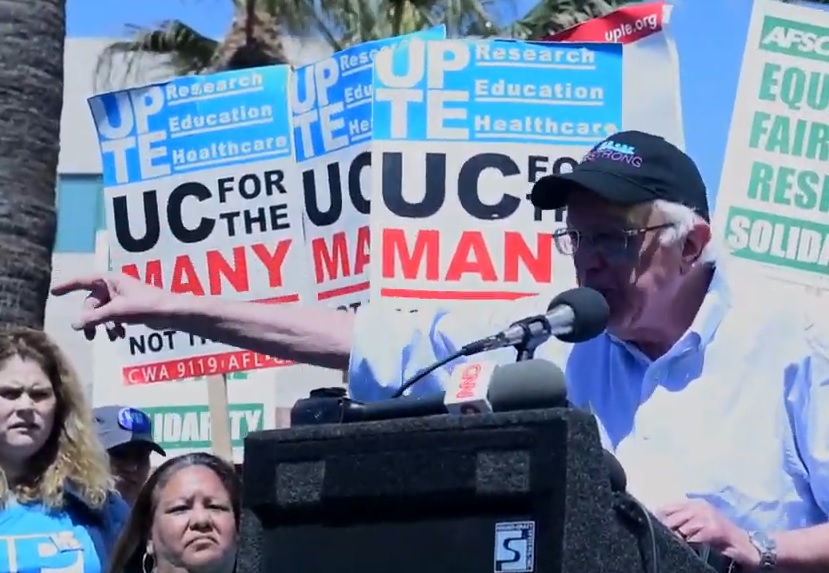
Former presidential candidate and self-described socialist Bernie Sanders gained the endorsement of UPTE union bosses, who are saddling employees with arbitrary restrictions on their First Amendment rights.
SAN DIEGO, CA – In March, UC San Diego Health Service Desk Analysts Pablo Labarrere and Sam Doroudi filed a federal class-action lawsuit against the University Professional and Technical Employees (UPTE) union and the University of California for seizing dues from their paychecks in violation of their First Amendment rights.
With free legal aid from National Right to Work Legal Defense Foundation staff attorneys, Labarrere and Doroudi contend that the dues seized from them and their colleagues are unconstitutional under the 2018 Foundation-won Janus v. AFSCME Supreme Court decision. In Janus, the Court ruled that deducting union dues from any public sector worker’s paycheck without his or her affirmative and knowing consent breaches the First Amendment of the U.S. Constitution.
The class-action lawsuit names University of California President Janet Napolitano as a defendant for the university system’s role in perpetrating this scheme. It also names California Attorney General Xavier Becerra as a defendant for the state’s enforcement of the illegal union dues policy.
UPTE Bosses Enforce Phony Restrictions on Janus Rights
According to the lawsuit, UC San Diego Health officials made all new employees “believe that it was a condition of employment to either join the union as full members or pay forced fees as non-members” during a mandatory orientation session. New employees were given and told to sign “dues deduction authorization cards” which provided that union officials would continuously collect dues from each employee’s paycheck unless a revocation letter was sent in a 30-day window before the annual anniversary of signing the card.
According to the lawsuit, the authorization cards did not explain, as Janus requires, that public sector employees “have a First Amendment right not to subsidize the union and its speech” and that signing the card would waive those rights. Labarrere and Doroudi eventually discovered their First Amendment Janus rights independently and sent letters to UPTE officials in December 2019 demanding that dues deductions be cut off. UPTE agents rejected both requests and continued to seize dues from Labarrere’s and Doroudi’s paychecks, ostensibly because they did not submit their requests within the “escape period” created by the union bosses.
The lawsuit contends that UPTE bosses are violating Labarrere’s and Doroudi’s First Amendment Janus rights by continuing to take dues from their paychecks without ever having received their “affirmative authorization and knowing waiver” of those rights. It also argues that the 30-day “escape period” illegally restricts Labarrere and Doroudi in the exercise of their Janus rights.
The class-action lawsuit additionally seeks to stop UPTE bosses and the University of California system from enforcing the scheme against any other workers, and require UPTE officials to return all dues and fees to any employees in the workplace that had their First Amendment rights violated because of the policy.
Workers Continue to Abolish “Escape Periods” With Foundation Legal Aid
Since the Janus decision, Foundation staff attorneys have litigated at least 14 cases around the country for thousands of workers whose First Amendment Janus rights have been infringed upon with union-created “escape periods.” Six of these cases have already been settled favorably for the plaintiff employees, providing relief and refunds for them and hundreds of their coworkers, while eliminating the restrictions for tens of thousands more.
In one of those cases, Michael McCain, a math professor at a community college in Ventura County, California, fought an illegal “escape period” foisted on his workplace by American Federation of Teachers (AFT) union officials, by filing a federal lawsuit in the District Court for the Central District of California. Ultimately, instead of facing Foundation staff attorneys in court, AFT officials settled the case and paid refunds to all workers who had dues seized because of the illegal policy.
“The Supreme Court made it absolutely clear in Janus that union officials violate public workers’ First Amendment rights when they seize union dues without their consent,” observed National Right to Work Foundation Vice President Patrick Semmens. “Yet over a year and a half after the decision, California union bosses — with the assistance of state officials — continue to subject the state’s public servants to schemes that violate these rights, all to fill union coffers with more illegal dues.”





