
Foundation-Backed Workers Fighting for Freedom from Unwanted Union Bosses
The following article is from the National Right to Work Legal Defense Foundation’s bi-monthly Foundation Action Newsletter, November/December 2023 edition. To view other editions of Foundation Action or to sign up for a free subscription, click here.
Victories come as Biden NLRB advances rule to block worker decertification votes
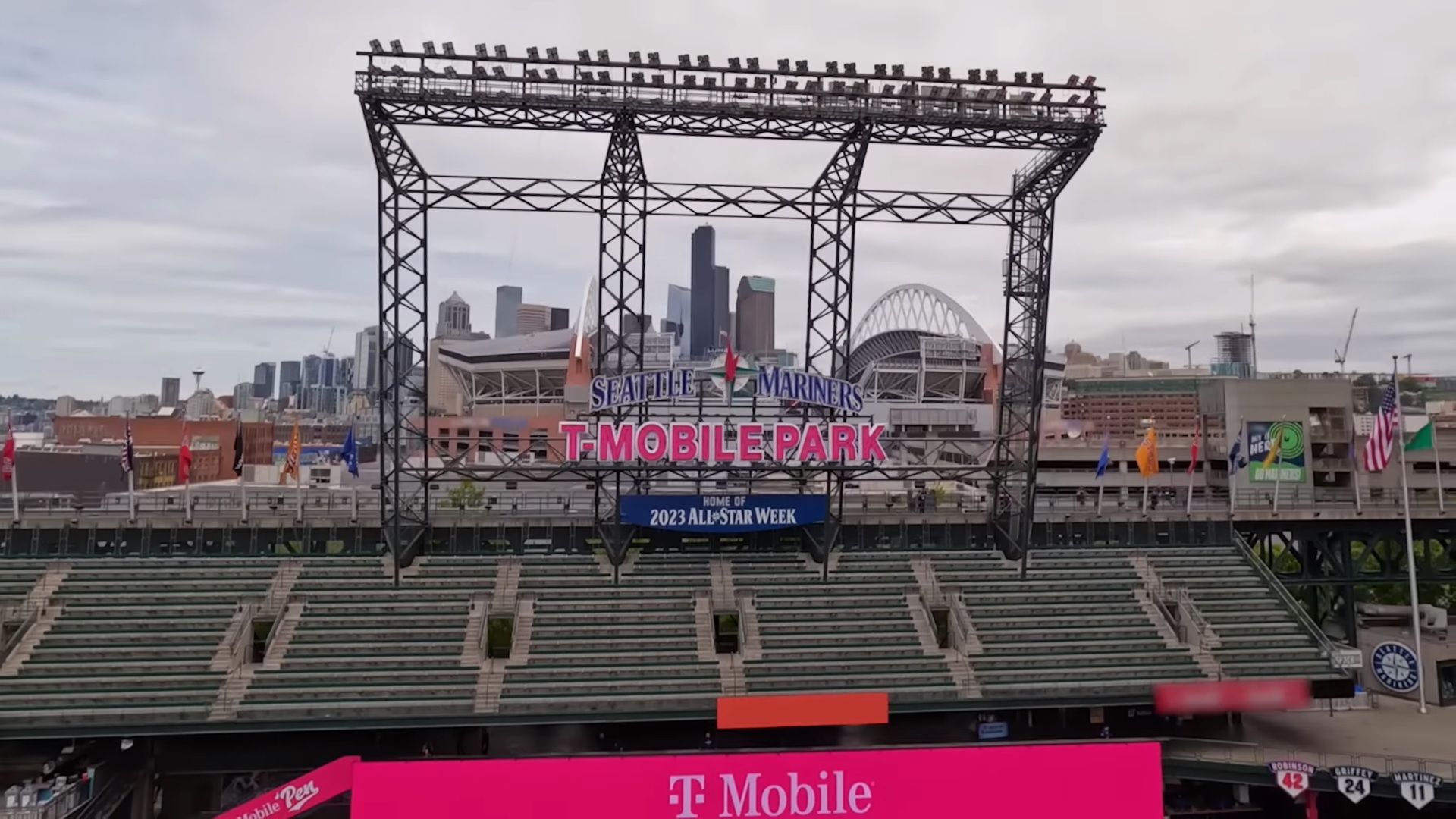
Seattle Mariners pro shop employees slammed UFCW union bosses out of T-Mobile Park by taking advantage of Foundation-backed rules that make union decertification votes easier. But the Biden NLRB is attacking those reforms.
WASHINGTON, DC – With National Right to Work Foundation staff attorneys aiding workers across the country in exercising their right to vote out union officials they don’t want, President Biden’s National Labor Relations Board (NLRB) is moving to undermine such efforts. The Biden NLRB is also fast-tracking policies that let union bosses sweep to power without even giving workers any chance to vote.
The Biden NLRB is pulling out all the stops to mandate the so-called “card check” process while eliminating workers’ ability to ask for a secret ballot vote. Card check lets union officials bypass the traditional union election process and pressure workers into signing union authorization cards that are later counted as “votes” for the union. Workers often report threats, intimidation, unwanted home visits, and union deception about the true meaning of the cards as part of a card check campaign.
The latest attack on workers’ election rights is the Biden NLRB’s pending rule to overturn Foundation backed-reforms to the election process adopted by the NLRB in 2020. The 2020 reforms, known as the Election Protection Rule, give workers a window of opportunity to petition for a secret ballot vote after a union imposes itself on workers without a secret ballot election. Foundation staff attorneys first established this protection in the 2007 Dana Corp case, and workers all over America used it until the Obama NLRB overturned Dana in 2010.
Seattle Mariners Employees Overwhelmingly Vote to Reverse UFCW Card Check
Since the 2020 Foundation-backed reforms reinstated the Dana process, workers have again used it to demand secret ballot elections to challenge union “representation” imposed through coercive card checks. In just the past few months, Foundation attorneys have assisted multiple groups of workers in exercising this freedom, and will continue to do so even in the face of Biden NLRB opposition.
This year, employees of the Seattle Mariners’ MLB pro shop obtained free Foundation legal aid to defend their effort to remove the United Food and Commercial Workers (UFCW) union, which had previously been installed through card check.
Regional NLRB officials granted the workers’ petition for a vote to remove the union based on the Election Protection Rule. But union lawyers argued on appeal that the Mariners employees’ election should be thrown out because of the so-called “voluntary recognition bar,” a pre-Election Protection Rule restriction that blocked workers from having a vote for up to a year or more after a card check.
The union’s appeal was dismissed based on the Election Protection Rule, and Mariners pro shop employees voted to send the UFCW packing by well over 80 percent.
California Paramedics Fight with Foundation Aid to Resuscitate Election Rights
Also on the West Coast, Michael Radan and his fellow paramedics and EMTs with the Manteca District Volunteer Ambulance Service in Groveland, CA; and Sonora, CA, petitioned for a secret ballot union decertification election shortly after Steelworkers union officials had swept themselves into the workplace via card check.
In August, Radan and his fellow paramedics and EMTs voted to remove the union. While Foundation attorneys are now defending Radan and his coworkers’ decision from election objections
levied by Steelworkers union bosses, the Election Protection Rule’s safeguards at least permitted the employees to vote.
As Decertifications Increase, Biden NLRB Makes Worker Free Choice Last Priority
Before the Rule, union officials could often use unproven or unrelated allegations of employer wrongdoing (also called “blocking charges”) to halt an election before ballots were even cast.
“That workers petition for secret ballot votes after union bosses make specious claims of majority support via card check shows that a card check isn’t truly reflective of workers’ will. The AFL-CIO’s own organizing manuals admit that workers often sign cards just to get union organizers ‘off their backs,’” commented National Right to Work Foundation President Mark Mix.
“All of this points to why the Election Protection Rule is so important — Big Labor should not have the power to subordinate workers’ free choice to union bosses’ thirst for power and dues revenue,” Mix added. “But as the Biden NLRB seeks to confer ever greater powers on union bosses, Foundation staff attorneys will continue to defend workers opposed to unionization, including by challenging the Biden NLRB in federal court.”
Seattle Mariners Employee Fights Biden Labor Board Cemex Decision Upending Right to Vote in Secret on Union ‘Representation’
In amicus brief at Ninth Circuit, employee shows how controversial Labor Board decision undermines rank-and-file workers’ freedom of choice
San Francisco, CA (February 12, 2024) – Tami Kecherson, a retail employee for the Seattle Mariners of Major League Baseball, has filed an amicus brief in Cemex Construction Materials Pacific LLC v. National Labor Relations Board (NLRB), a federal case currently before the Ninth Circuit Court of Appeals in San Francisco, CA.
The case is a challenge to the Biden NLRB’s radical overhaul of federal labor law that grants union bosses the power to bypass a traditional secret ballot election when trying to gain monopoly bargaining power over a workplace. Kecherson is receiving free legal aid from the National Right to Work Legal Defense Foundation.
Controversial NLRB Decision Lets Union Bosses Quash Secret Ballot Elections
The NLRB issued a decision in Cemex in August 2023 which requires employers to either grant a union’s demand for recognition based on “card check,” or immediately petition for a secret ballot election. Card check is a process that uses “authorization cards” collected by union organizers as a substitute for votes in a secret ballot election. The card check process lacks the security of a secret ballot union vote, and exposes workers to coercion and intimidation as union officials seek to collect authorization cards. Even AFL-CIO organizing guides admit card check drives aren’t representative of how workers would vote in elections, and that many workers sign cards just to “get the union off my back.”
Under Cemex, an employer who declines to recognize a union is required to quickly ask the NLRB to hold a secret ballot election. But the NLRB doesn’t have to grant that request. A union can easily prompt the NLRB to cancel an employee vote (or even overturn an election that doesn’t go in the union’s favor) by filing charges against the company and showing the employer committed an unfair labor practice during the “critical period” leading up to the election.
Seattle Mariners Employee Defends Workers’ Right to Secret Ballot Elections
Kecherson and her coworkers from the Seattle Mariners’ retail shops were the targets of a card check organizing drive by United Food and Commercial Workers (UFCW) union officials in October 2022. Kecherson filed a petition at the NLRB challenging the card check-based imposition of the union and demanding a secret ballot election to test if the union had the support it claimed.
In May 2023, the NLRB Regional Director in Seattle ordered an election over the objections of UFCW union bosses, noting UFCW union officials had not properly informed employees of their right to file for such an election. Kecherson and her colleagues eventually voted by a margin of 50 to 9 to remove the UFCW union.
Kecherson and her colleagues were able to request such a vote under the auspices of the Election Protection Rule (EPR), a set of Foundation-supported reforms that the NLRB adopted in 2020. The EPR gives workers a 45-day opportunity to request a secret ballot vote to challenge a union’s card check-based claims of majority support after the completion of such a campaign. The process by which workers can challenge card check drives was established by Foundation attorneys in the Dana Corp. NLRB case. Though this 2007 decision was overturned in 2010 by the Obama NLRB, “Dana elections” were codified in the EPR – but may soon be nixed due to Biden NLRB rulemaking.
As Kecherson’s amicus brief states, the situation in her workplace (where 85% of workers voted to reject the union despite the union’s claims of majority support via cards) demonstrates how the Cemex decision wrongly promotes union-solicited authorization cards as a reliable alternative to secret ballot votes. “In short, Local 3000’s ostensible claim to majority employee support, which was based on authorization cards the union collected from the employees, was totally refuted when tested in the crucible of a secret ballot election,” Kecherson’s brief says. “Yet under Cemex, the NLRB will routinely impose compulsory union representation on employees based on card checks and without a secret-ballot election.”
“In Cemex, the Biden NLRB is promoting union boss power to the detriment of employee free choice, a right that is supposed be at the center of the National Labor Relations Act,” commented National Right to Work Foundation President Mark Mix. “Ms. Kecherson’s story, where she and her colleagues overwhelmingly voted against the union despite union boss claims of majority support, is just the latest demonstration of what countless NLRB decisions, the U.S. Supreme Court, and even unions have admitted: Card check is unreliable and inferior to secret ballot elections where union organizers cannot see how each individual voted.”
“To defend the rights of rank-and-file workers like Tami Kecherson, the court must reject the NLRB’s biased and cynical Cemex framework that undermines the NLRA’s clear statutory preference for secret ballot votes,” added Mix.
National Right to Work Foundation Highlights Michigan Workers’ Legal Options as Right to Work Repeal Looms
Legal notices: Though forced dues will again be legal in the private sector, Michigan workers can still reject union boss demands to join union and fund union political activities
Lansing, MI (February 9, 2024) – The National Right to Work Legal Defense Foundation has issued special legal notices to public and private sector workers in Michigan, which explains what rights workers still have to resist union boss demands as the repeal of the state’s Right to Work law takes effect.
In March 2023, the Michigan Legislature voted against the will of over 70% of Michiganders and repealed the state’s protections against being forced to pay union dues or fees as a condition of employment. The repeal formally takes effect on February 12, 2024.
The legal notices are available at the Foundation’s website: https://www.nrtw.org/michigan-private-sector-notice/ (for private sector workers) https://www.nrtw.org/michigan-public-sector-notice/ (for public sector workers).
MI Public Sector Workers Can Still Refrain from Union Membership and Dues Payment
By repealing Michigan’s Right to Work law, Michigan politicians granted union officials the power to compel private sector workers to pay money to a union to keep their jobs. The legal notice explains that, despite this massive expansion of government-granted power for Michigan union bosses, private sector workers still have rights under federal law to refrain from formal union membership and to refuse to pay for union political or ideological expenditures, among other rights.
“[U]nder the National Labor Relations Act (NLRA) workers subject to these forced fee arrangements cannot lawfully be compelled to be actual union members or pay full union dues to keep their jobs,” the notice reads.
As for public sector workers, the legal notice informs Michiganders that even though Michigan’s politicians have undone the state’s statutory protection against being forced to pay union bosses as a condition of employment, the repeal “does not—and cannot—strip [public sector] workers of their constitutional right” to refrain from funding union activities. The Supreme Court recognized public employees’ First Amendment right to abstain from union financial support in the 2018 Foundation-won Janus v. AFSCME ruling.
MI Union Bosses Still Can’t Force Private Sector Workers to Become Formal Members or Directly Support Union Politics
The notices inform Michigan private sector employees that, under the U.S. Supreme Court’s decision in Pattern Makers v. NLRB, independent-minded workers have a right to refrain from formal union membership. The Foundation-won CWA v. Beck Supreme Court ruling further holds that the most that union bosses can force nonmember workers to pay is a fee equal to “what the union can prove is its costs of collective bargaining, contract administration, and grievance adjustment with their employer.” This fee cannot include union expenses for political and ideological activities.
“Unions often fail to meet their legal obligation to inform workers of their right not to be a union member and to object to paying full union dues,” the notice reads. “In fact, unions oftentimes mislead workers to believe that they must join the union to keep their jobs.”
MI Private Sector Workers Have Right to Vote Out Unpopular Union Bosses
Private sector employees also have the right to petition for National Labor Relations Board-supervised “decertification elections,” which can strip union officials of their coercive powers of monopoly control over a work unit entirely.
Foundation attorneys assist hundreds of workers every year in exercising their legal right to obtain a vote to decertify unions of which they disapprove.
“Union boss allies in the Michigan Legislature foisted this repeal on workers for one reason: To enlarge the coffers of their favorite special interest,” commented National Right to Work Foundation President Mark Mix. “Instead of letting Michigan workers continue to enjoy the right to freely choose whether or not union officials have earned a cut of their hard-earned pay, Michigan legislators have granted union bosses a power that strips away basic free speech and association rights.”
“The truth is, even with this great expansion of their powers, Michigan union bosses will still try to look for ways to expand their powers beyond the law and compel more workers to associate with them,” Mix added. “That’s why it’s important for Michiganders to know their rights in this new legal landscape; they should also know that Foundation attorneys stand ready to defend the rights of any Michigan worker opposing union coercion.”
National Right to Work Foundation Issues Notice to VW Chattanooga Employees: UAW Officials May Try to Grab Power Without Vote
Notice informs VW Team Members of their rights in light of threat posed by new NLRB rule for bypassing or overturning a secret ballot election
Chattanooga, TN (February 9, 2024) – The National Right to Work Legal Defense Foundation has released a special legal notice to thousands of autoworkers at Volkswagen’s production plant in Chattanooga, TN. The notice comes as officials of the United Auto Workers (UAW) union are making their third attempt to unionize the facility, despite workers voting down the union in both 2014 and 2019. The full notice is available at https://www.nrtw.org/vw/.
The Foundation’s legal notice informs autoworkers that, due to the National Labor Relations Board’s (NLRB) recent decision in Cemex Construction Materials Pacific, UAW officials can impose the union’s monopoly representation on employees through the so-called “card check” process and bypass the NLRB’s traditional secret ballot vote procedure. A card check drive lacks the security of a secret ballot vote and allows union officials to extract union authorization cards directly from workers, often through misleading or coercive tactics.
“Employees unionized under a card check are not allowed to vote on union representation in a secret-ballot election,” the notice reads. “However, prior to Cemex, employers could refuse to impose union representation on their workers based on a card check. That is why, in the past, Volkswagen employees were allowed to vote on (and reject) UAW representation.”
Union Could Skip Election Entirely or Nullify Unfavorable Election with “Authorization Cards”
The notice explains that Cemex upends the union election process. Now, if UAW union officials claim they have collected authorization cards from the majority of workers in the unit (news reports indicate UAW officials are already claiming this) the union can be granted bargaining power over every worker at the plant without a secret ballot election.
While VW management could request a secret ballot vote in such a circumstance, the NLRB doesn’t have to grant that request. Under the new Cemex standard, it is shockingly easy for the UAW to prompt the NLRB to cancel a vote, or alternatively, to overturn an employee election that doesn’t go in the union’s favor.
As the notice points out: “The UAW is already laying the groundwork for cancelling or nullifying a secret ballot election by filing unfair labor practice charges against Volkswagen.”
Foundation Notice: VW Workers Must Be Vigilant Against Underhanded UAW Tactics
“Volkswagen employees who do not want to be subject to UAW representation must be vigilant about their rights,” the notice reads. “If the UAW can collect authorization cards from a bare majority of Volkswagen workers, the UAW can impose itself on Volkswagen employees quickly and without them being able to vote on whether they actually want union representation.”
The notice reminds Volkswagen workers that they have the right not to sign a union authorization card, and a right to revoke authorization cards they’ve signed. It also advises workers of their right to campaign against the union and to circulate petitions against union representation.
Finally, the notice informs employees that they can contact National Right to Work Foundation staff attorneys for more information on their rights or for free legal aid in exercising them. The Foundation extends this help to workers especially if they are threatened or forced to accept unwanted union representation, or if they witness union agents misleading or coercing employees to sign union authorization cards.
In 2013, Foundation attorneys represented eight VW Chattanooga employees. The workers filed charges against the UAW for collecting cards using coercive and misleading tactics, and Foundation attorneys later defended the workers’ vote to reject the UAW after union officials sought to challenge the results of the 2014 vote.
“UAW union officials have returned to VW Chattanooga and appear to be laying the groundwork to bypass a secret ballot vote like the ones union officials lost during previous unionization attempts at the plant,” commented National Right to Work Foundation President Mark Mix. “The new NLRB Cemex card check unionization scheme is untested in federal court, but it appears that UAW officials may seek to make VW Chattanooga workers a ‘guinea pig’ for testing if union officials and NLRB partisans can impose the union on workers without a secret ballot vote.”
“If the UAW is to be believed, UAW officials already secured a sufficient number of union authorization cards to formally ask the NLRB to hold a secret ballot election at VW Chattanooga,” Mix continued. “So VW team members need to understand that additional cards are not needed to request an election, but can be used to bypass a secret ballot vote like the ones held in 2014 and 2019.”
Ontario Trucking Employee Who Revealed Union Boss Salaries Hits Teamsters Union with Federal Charge After Job Threats
Worker on Teamsters officials’ threats: “We will not be deterred by their bullying tactics and baseless accusations against myself and others.”
Ontario, CA (February 6, 2024) – John Cwiek, an employee of Los Angeles-based transportation company Dependable Highway Express, has just hit the Teamsters Local 63 union with federal charges. Cwiek maintains that Teamsters union officials retaliated against him for revealing truthful but unfavorable information about the union to his coworkers. He is receiving free legal representation from National Right to Work Legal Defense Foundation staff attorneys.
Cwiek sent letters to his coworkers in January containing details about union boss salaries – information Cwiek pulled from Teamsters LM-2 filings. LM-2s are public documents filed by unions and maintained for public access by the U.S. Department of Labor. In retaliation for Cwiek sending the letters, a union official appeared at Cwiek’s workplace the next day, made accusations against him, and threatened that Cwiek wouldn’t be working at Dependable Highway Express by the next contract period.
The federal statute that governs private sector labor relations, the National Labor Relations Act (NLRA), protects both employee speech critical of unions and union officials and protects employees’ right to refrain from any or all union activities if they so choose.
“[Teamsters Local 63] violated Section 8(b)(1)(A) of the Act when its agents appeared at the worksite, interrogated Charging Party regarding his protected activities, and threatened Charging Party’s employment and by making false and defamatory accusations against him in retaliation for engaging in protected activities,” reads Cwiek’s charge.
“I am deeply troubled by the blatant retaliatory actions taken by officials at Teamsters Local 63 in response to expressing the views of myself and several other hard-working drivers at Dependable Highway Express,” Cwiek commented. “We will not be deterred by their bullying tactics and the baseless accusations they levy against myself and others. I hope that the actions of the officials from Teamsters Local 63 serve as a clear example to my colleagues that the union cannot dispute the facts of their incompetence in representing us, so they must resort to intimidation and slanderous accusations. We will remain steadfast in our pursuit of a better future for ourselves and our families.”
Ontario Trucking Employee’s Charges Latest in String of Challenges to Teamster Power in SoCal
National Right to Work Foundation staff attorneys have recently aided other trucking industry employees in Southern California oppose unwanted Teamsters union influence. In October 2021, XPO Logistics employee Ozvaldo Gutierrez and his coworkers forced Teamsters Local 63 officials out of a Fashion District-area XPO facility. Teamsters Local 848 union officials were similarly ousted by Angel Herrera and his colleagues at an Airgas facility in Ventura, CA, in September 2021. In both cases, union officials departed the workplaces before employees had an opportunity to vote them out through the NLRB’s “decertification election” process – likely to avoid embarrassing election results.
Long Beach-area Savage Services employee Nelson Medina also won a Foundation-backed settlement in February 2022 ordering Teamsters Local 848 union officials to pay back thousands of dollars in illegal dues they seized from about 60 of his coworkers who objected to union membership and to funding the union’s political activity.
“Trucking workers across Southern California continue to express displeasure with union officials’ combative and illegal behavior, which makes it all the more unfortunate that California private sector workers aren’t covered by a Right to Work law,” commented National Right to Work Foundation President Mark Mix. “In non-Right to Work California, union bosses can enforce contracts that force workers to pay dues or fees as a condition of keeping their jobs, meaning workers like Mr. Cwiek can be forced to fund the same union hierarchy that violates their rights.”
“While Foundation staff attorneys will fight to defend Mr. Cwiek’s rights under federal labor law, all American workers should have the Right to Work freedom to decide for themselves whether union bosses have earned their financial support,” Mix added.
Warehouse Workers and Drivers at Keurig Dr. Pepper Facilities Across Wisconsin Vote Out Teamsters Union
Unit of over 70 employees from Keurig Dr. Pepper locations in Eau Claire, Oshkosh, and Tomah will now be free from unwanted union “representation”
Wisconsin (January 30, 2024) – Workers from Keurig Dr. Pepper facilities across the Badger State have exercised their right to remove unwanted Teamsters Local 200 union officials from power at their workplaces. The ouster follows the National Labor Relations Board’s (NLRB) January 26 certification of an election in which nearly 60% of participating drivers and warehouse workers from facilities in Oshkosh, Eau Claire, and Tomah voted to end the union’s bargaining power.
Oshkosh-based Keurig Dr. Pepper driver Ray Cotts spearheaded the effort to remove the union by submitting a union decertification petition to the NLRB in November 2023 with free legal aid from the National Right to Work Legal Defense Foundation. His petition contained more than enough employee signatures to trigger a union decertification vote under NLRB rules. The NLRB held the election beginning December 22, 2023, and counted ballots on January 16.
Wisconsin is a Right to Work state, meaning union officials cannot impose contracts that force workers to pay union dues just to get or keep a job. However, even in Right to Work states, union officials in a unionized workplace are empowered by federal law to impose a union contract on all employees in a work unit, including those who oppose the union. A successful decertification vote strips union officials of that power.
Employees Across U.S. Seeking Freedom from Union Control
Across the country, workers are increasingly attempting to exercise their right to vote out union officials they disapprove of. According to NLRB data, since 2020 decertification petitions filings have gone up by over 40 percent. Despite this trend, the Biden NLRB is attempting to make it substantially more difficult for workers to decertify unions, and could soon issue a final rule invalidating the Election Protection Rule, a policy which contains multiple important safeguards regarding employees’ right to decertify unions they oppose.
The Biden NLRB’s proposed rule, among other things, will give union bosses the power to use “blocking charges,” or unproven allegations of employer misconduct, to prevent workers from voting to decertify a union. The proposed rule will also strip workers of the ability to file for a secret ballot election after a union installs itself via “card check,” a coercive process that bypasses the NLRB’s standard election process and instead permits union bosses to collect cards from workers (often through strong-arm tactics) that are counted as “votes” for the union.
“We are proud to help Mr. Cotts, his coworkers, and a growing number of employees around the country exercise their right to vote out union officials that don’t serve their interests,” commented National Right to Work Foundation President Mark Mix. “It’s concerning, however, to see the Biden NLRB marching forward its scheme to grant union officials more power to trap workers under union control, while cutting back on employees’ rights to resist union influence.”
“The 23 flavors in Dr. Pepper may always be a mystery, but the Biden NLRB’s forced-unionism agenda is clear for everyone to see. At every turn this Board has sought to rewrite the law to give the Administration’s union political allies more coercive power while limiting the rights of independent-minded workers opposed to union affiliation,” Mix added.
Texas Starbucks Employee Challenges Federal Labor Board Structure as Unconstitutional in New Federal Lawsuit
Regional NLRB blocked employee and his coworkers from voting out union, new lawsuit now second pending worker-backed challenge to agency’s authority
Fort Worth, TX (January 24, 2024) – Reed Busler, an employee at the “Military Highway” Starbucks in Shavano Park, TX, is hitting the National Labor Relations Board (NLRB) with a federal lawsuit arguing the federal agency’s structure violates the separation of powers. The lawsuit, filed in the U.S. District Court for the Northern District of Texas, argues that the agency violates Article II of the Constitution by insulating NLRB Board Members from at-will removal by the President.
Busler’s lawsuit stems from an NLRB Regional Director’s dismissal of a petition he filed on behalf of his coworkers seeking an election to remove the Starbucks Workers United (SBWU) union from power at the coffee shop. Busler is receiving free legal aid in both proceedings from National Right to Work Legal Defense Foundation staff attorneys.
The National Labor Relations Act (NLRA), the law that established the NLRB, restricts a president’s ability to remove Board members except for neglect of duty or malfeasance. Busler’s complaint contends that these restraints violate “the fundamental separation of powers principle that the President must be free to remove executive officers at will,” as dictated by Supreme Court cases like Seila Law LLC v. CFPB (2020) and Collins v. Yellen (2021).
“Board Members are principal officers wielding substantial executive power. This includes the power to promulgate binding rules, to enforce the law through adjudicating unfair labor practice disputes and issuing remedies, to issue subpoenas, and to enforce the law through adjudicating representation proceedings,” reads the complaint. “By adjudicating Busler’s petition notwithstanding its unconstitutional structure, the Board is violating his right to have his petition adjudicated by politically accountable officials.”
Regional NLRB Trapped Workers in Union Despite Reports of Abrasive Behavior
Busler submitted his union decertification petition on November 16, 2023. The petition contained signatures from enough of his coworkers to trigger a vote to remove the union under NLRB rules. However, the NLRB Regional Director still blocked the vote based on unfair labor practice charges SBWU union officials filed against Starbucks, despite there being no proven connection between those allegations and Busler’s decertification petition.
The NLRB’s refusal to hold a union decertification vote means that Busler and his coworkers are still trapped under the “representation” of the SBWU union, despite numerous reports of SBWU agents’ combative and abrasive behavior at the store. In other filings in the NLRB case, Busler and his colleagues reported that SBWU officials ordered a divisive strike in which “[union] supporters outside the store were loud, boisterous, and were screaming at customers” and “would sometimes yell at other employees or tell partners that if they did not support Workers United they would be personally ostracized by other partners.”
“Moreover, I believe the other employees who signed my decertification petition did not do so because they were coerced or duped by anything Starbucks allegedly did wrong, but because the Union was a divisive force in our store and has now ignored our location for several months,” Busler stated in an NLRB filing.
Lawsuit Seeks to Stop NLRB from Exercising Unconstitutional Power Over Workers’ Case
Busler’s federal lawsuit seeks a declaration from the District Court that the structure of the NLRB as it currently exists is unconstitutional, and an injunction halting the NLRB from proceeding with his decertification case until his federal lawsuit is resolved. Busler now joins Buffalo, NY-based Starbucks worker Ariana Cortes in challenging the structure of the NLRB with free Foundation legal aid.
“The National Labor Relations Board should not be a union boss-friendly kangaroo court run by powerful bureaucrats who exercise unaccountable power in violation of the Constitution,” commented National Right to Work Foundation President Mark Mix. “Mr. Busler seeks to remove a union he and his colleagues oppose, and he is entitled to pursue that statutory right before an agency whose structure complies with the Constitution.”
Second Group of Philly Ultimo Coffee Employees Successfully Remove Unwanted “Workers United” Union
Employees submitted nearly unanimous petition seeking union decertification vote, become fourth recent group of Philly coffee workers to kick out unwanted union
Philadelphia, PA (January 18, 2024) – Ultimo Coffee employee Jacob Johnston and his coworkers have successfully removed unwanted “Workers United” (WU) union officials from the Southwest Center City location of the coffee shop. Johnston and his coworkers’ effort, which comes on the heels of WU’s ouster by employees at Ultimo’s Germantown-area shop, received free legal aid from the National Right to Work Foundation.
Johnston initiated the effort by filing a petition earlier this week asking the National Labor Relations Board (NLRB) to hold a vote to remove the union among his colleagues. The petition contained signatures from nearly all the employees (“full-time and regular part-time Baristas, Bakers, Coffee Quality Managers, Inventory Coordinators/Baristas, and Trainers”) at the shop, greatly exceeding the required threshold to trigger a union decertification vote under federal law. However, before the NLRB could schedule a vote, union officials instead filed a “disclaimer of interest” in continuing their control of the store, likely to avoid an embarrassing loss at the ballot box. Pending the NLRB’s approval of the disclaimer, Johnston and his colleagues are free of the union.
Because Pennsylvania lacks Right to Work protections for its private sector workers, WU union bosses could compel Johnston and his coworkers to pay union dues and fees as a condition of keeping their jobs. In Right to Work states, in contrast, union membership and all union financial support are strictly voluntary. However, in both Right to Work and non-Right to Work states, union officials are empowered by federal law to impose union representation on all employees in a work unit, including those who oppose the union. A successful decertification vote strips union officials of that monopoly power.
“Workers United union officials have had over a year in power in our workplace, and in that time have made it increasingly clear that our interests are not aligned,” commented Johnston. “That’s why we’re joining other Ultimo employees in exercising our right to remove this union.”
Coffee Employees Across Philly and U.S. Seeking Freedom from Union Control
Johnston and his colleagues join Starbucks workers and other coffee employees across the country in banding together to oust the WU union (also referred to as “Starbucks Workers United,” or SBWU), which has targeted coffee shops nationwide for unionization. WU’s unionization activities are funded and directed in significant part by the large Service Employees International Union (SEIU).
Within the last year, Starbucks employees in Manhattan, NY; two Buffalo, NY locations; Pittsburgh, PA; Bloomington, MN; Salt Lake City, UT; Greenville, SC; Oklahoma City, OK; and San Antonio, TX, have all sought free Foundation legal aid in navigating NLRB processes to decertify the WU union. Workers from a Center City Starbucks in Philadelphia are also pursuing a decertification petition against WU with Foundation legal assistance.
Coffee employees in the Philadelphia area have scored a string of recent victories in removing unpopular union officials. In May 2023, workers at Guava and Java’s location at Philadelphia International Airport successfully voted to oust UNITE HERE union officials, and a few months later Good Karma Café employees cast ballots to remove the WU union. This month, Ultimo Coffee barista Samuel Tarasenko and his colleagues successfully forced WU out of the coffee shop’s Germantown-area location.
Many workers targeted by this campaign are demanding decertification votes roughly one year after a WU union was installed at their store, which is the earliest possible opportunity afforded by federal law to do so.
WU Officials Using Legal Maneuvers to Stop Coffee Employees from Removing Union
Unfortunately, union officials have many ways to manipulate federal labor law to prevent workers from voting them out, including by filing unverified charges. Currently, WU union officials are attempting to block Starbucks workers nationwide (including at the Center City Starbucks in Philadelphia) from exercising their right to decertify the union by filing a blizzard of charges against company management.
“The ‘Workers United’ union’s aggressive unionization campaign may have generated plenty of headlines, but the growing number of decertification efforts by coffee workers in Philadelphia and around the country demonstrates that many rank-and-file workers have come to the conclusion that remaining unionized is contrary to their best interests,” commented National Right to Work Foundation President Mark Mix. “While it’s encouraging that some coffee shop employees have been successful after fighting for their right to remove WU union bosses, others are being trapped by union legal tactics which only demonstrate further that the union is more concerned with maintaining power than respecting worker rights.”
“Workers who encounter coercive maneuvers from WU union officials should contact Foundation attorneys for free legal aid in defending their free choice rights,” Mix added.
Brooklyn Electrical Workers Win Year-Long Legal Battle to Remove Unwanted Union from Workplace
After Horsepower Electric employees voted to remove IUJAT union, Labor Board refused to count ballots for months based on empty union charges of misconduct
New York, NY (January 10, 2024) – Following a year-long legal battle, Brooklyn-based Horsepower Electric employee Shloime Spira and his colleagues are finally free of unwanted IUJAT (International Union of Journeymen and Allied Trades) representation. IUJAT union officials worked with the NLRB to manipulate the legal process with unproven claims against Horsepower Electric management to avoid the results of the workers’ union decertification vote. However, union officials have now chosen to renounce their so-called “representation” of the unit instead of facing a likely losing vote tally.
Spira received free legal aid from the National Right to Work Legal Defense Foundation in defending his coworkers’ right under federal law to remove the union, both before the National Labor Relations Board (NLRB) and the Federal Court for the Eastern District of New York. On December 31, 2023, IUJAT union officials’ “disclaimer of interest” became effective, and the union is no longer in the workplace. As a result, a federal case to demand the NLRB stop delaying the decertification effort has been voluntarily dismissed as moot.
“While my colleagues and I are pleased with this result, it’s simply ridiculous that the NLRB sat on our ballots for so long over union charges that were apparently meritless,” Spira commented. “The NLRB is supposed to protect employees’ right to choose whether or not they want a union, not delay that process indefinitely to maintain union officials’ power.”
NLRB Bureaucrats Sat On Case to Delay Counting Worker Votes, Necessitating Lawsuit
Spira first submitted a petition to the NLRB seeking an employee vote to remove the union in December 2022. Under NLRB rules, a petition requesting a union decertification vote must contain the signatures of at least 30 percent of the employees in a work unit to trigger a vote, a threshold which Spira’s petition met. The election took place in March 2023, but the NLRB ruled that the ballots could not be tallied because it had issued a complaint against Horsepower Electric based on allegations of employer misconduct (or “blocking charges”) filed by IUJAT union officials.
Union “blocking charges” contain claims of employer misconduct that are usually unverified and often have no connection to employees’ desire to vote out the union. NLRB officials inexplicably refused to hold a hearing or otherwise advance the “blocking charge” case for months, effectively using it as a pretense for delaying the vote count.
This delay meant Spira and his colleagues were trapped under the power of IUJAT union bosses without knowing the results of their vote. Because New York lacks Right to Work protections that make union affiliation and financial support strictly voluntary, IUJAT union bosses continued to collect forced dues from the workers, paid under threat of termination, while the vote count was indefinitely delayed.
No Witnesses Could Back Up Union’s Allegations Meant to Stymie Election
Pressure increased on the NLRB after the agency faced a federal lawsuit in the Eastern District of New York alleging due process violations. To defend his and his coworkers’ right to have their votes counted, Spira joined Horsepower Electric’s suit in the District Court and also intervened in the NLRB case to challenge the “blocking charges.”
Faced with this threat of federal litigation, including a “show cause” order from the judge in the federal case against the NLRB, Board officials finally moved forward on the NLRB “blocking charge” case and scheduled a hearing to take place on December 5, 2023. This was nearly a year after Spira had requested the vote to remove the union.
Spira’s legal team traveled to New York to defend his rights against the union’s allegations in the NLRB case. Minutes before the hearing was scheduled to begin before an NLRB Administrative Law Judge, NLRB lawyers conceded they could produce no witnesses to testify in favor of the union’s charges against Horsepower Electric. Soon after, the NLRB formally dropped its complaint against Horsepower Electric, thus clearing the way for the ballots to be counted.
Finally, on December 12, 2023, IUJAT union officials issued a disclaimer of interest effectively announcing they were departing the workplace. This was presumably done to avoid a vote count the union figured it would lose. The NLRB case ended on January 2, 2024, and the District Court declared the federal case dismissed on January 5, 2024.
“That union officials were so easily able to manipulate NLRB processes to block Mr. Spira and his colleagues from exercising their basic right to choose whether they want union representation shows that the agency is desperately in need of reform,” commented National Right to Work Foundation President Mark Mix. “It is outrageous that it took a federal court case to force the NLRB to admit that it had no evidence to back up union officials’ allegations that were being used to trap workers in a union they opposed.”
“Worker free choice is supposed to be the center of the National Labor Relations Act, but as this case shows, too often the Board has contorted the law into a shield to insulate union bosses from workers’ choices,” added Mix. “The Biden Labor Board is taking this bias to more and more extreme levels every day, granting union officials sweeping new powers to coerce workers into union ranks, while systematically undermining the rights of workers opposed to union affiliation.”
Philadelphia Ultimo Coffee Workers Win Bid to Remove So-Called “Workers United” Union
Ultimo employees are third recent group of coffee shop workers in Philly to kick out an unwanted union, as Center City Starbucks workers await vote to remove SBWU
Philadelphia, PA (January 8, 2024) – Following Ultimo Coffee employee Samuel Tarasenko’s submission of a petition seeking an employee vote to remove the union, “Workers United” (WU) union officials filed paperwork announcing they will give up control of the Germantown-area coffee shop. Pending certification of the union’s disclaimer of interest, Tarasenko and his fellow Ultimo employees will be free of the control of the WU union.
Tarasenko’s petition, which he filed with free legal aid from the National Right to Work Legal Defense Foundation, contained signatures from a majority of employees at his workplace, more than enough to trigger a vote under NLRB rules. Because Pennsylvania lacks Right to Work protections for its private sector workers, SBWU union bosses can compel Tarasenko and his coworkers to pay union dues as a condition of keeping their jobs. In Right to Work states, in contrast, union membership and all union financial support are strictly voluntary.
However, in both Right to Work and non-Right to Work states, union officials in a unionized workplace are empowered by federal law to impose a union contract on all employees in a work unit, including those who oppose the union. A successful decertification vote strips union officials of that power. However, WU union officials, likely fearing a losing vote tally, disclaimed interest in the unit of Ultimo employees before a vote could occur.
Coffee Employees Across Philly and U.S. Seeking Freedom from Union Control
Tarasenko and his colleagues join Starbucks workers and other coffee employees across the country in banding together to vote out WU union officials, who have targeted coffee shops nationwide for unionization. This year, Starbucks employees in Manhattan, NY; two Buffalo, NY locations; Pittsburgh, PA; Bloomington, MN; Salt Lake City, UT; Greenville, SC; Oklahoma City, OK; and San Antonio, TX, have all sought free Foundation legal aid in filing or defending decertification petitions at the NLRB.
In Philadelphia, workers at Guava and Java’s location at Philadelphia International Airport successfully voted in May 2023 to oust UNITE HERE union officials, and a few months later Good Karma Café employees voted out WU union officials. Tarasenko and his colleagues are now the third recent group of Philadelphia coffee employees to successfully remove union representation with Foundation aid. Currently, workers from a Center City Starbucks are pursuing a decertification petition with Foundation legal assistance, also against the Starbucks Workers United (SBWU) union.
This growing wave of decertification attempts is occurring after WU union agents engaged in a multi-year, aggressive unionization campaign against Starbucks employees. As part of the campaign, WU (an affiliate of the large Service Employees International Union) spent over $2 million to target the coffee chain with paid union agents – including “salts” who obtained jobs at Starbucks locations with the covert mission of installing union power. After achieving this goal, many “salts” abandoned the stores.
Many workers targeted by this campaign are demanding decertification votes roughly one year after a WU union was installed at their store, which is the earliest possible opportunity afforded by federal law to do so.
WU Officials Using Legal Maneuvers to Stop Coffee Employees from Removing Union
Unfortunately, union officials have many ways to manipulate federal labor law to prevent workers from voting them out, including by filing unverified charges. Currently, WU union officials are attempting to block Starbucks workers nationwide (including at the Center City Starbucks in Philadelphia) from exercising their right to decertify the union by filing charges against company management.
“While we’re happy that Mr. Tarasenko and his coworkers successfully sent the WU union packing, it’s unfortunate that many others in Philadelphia and across the country are unable to exercise this right due to union legal tactics,” commented National Right to Work Foundation President Mark Mix. “That WU union officials spent millions to extend their power over Starbucks and other coffee employees and are now stopping those same employees from exercising their rights indicates their campaign is about union power, not workers’ concerns.”
“Workers who encounter coercive maneuvers from WU union officials should contact Foundation attorneys for free legal aid in defending their free choice rights,” Mix added.





