
Video: Chicago Teacher Stands Up to Union Bullying
Ifeoma Nkemdi teaches second grade at Newberry Math and Science Academy in Chicago. She exercised her right to opt out of the Chicago Teachers Union (CTU) and continue teaching her students during a CTU strike in 2019.
Union agitators berated Nkemdi for returning to her classroom and confronted her as she entered the school. In the video below, Nkemdi says “They specifically waited for me. They were supposed to be in front of the school. They all went to the back to wait for me to enter the school, began using their cell phones to record me and berate me and call me names.”
Nkemdi wasn’t alone. She describes how another teacher who had opted out of the union was “beat up by her coworkers.” She says union officials refused to condemn the violence, arguing “they didn’t send a letter out to the teachers saying ‘this is inappropriate behavior…this is not what we do.’ And because I didn’t see that I knew I made the right decision [to opt out].”
Nkemdi did not back down in the face of union bullies. She and fellow Chicago educator Joanne Troesch filed a class action lawsuit against the CTU and the Chicago Board of Education. The suit challenges the “escape period” created by the union, which only allows teachers to stop dues deductions in the month of August.
When Troesch and Nkemdi sent letters to the union resigning their memberships in October 2019, union officials informed them that dues deductions would continue “until September 1, 2020.” Her lawsuit says this is a clear violation of the Supreme Court’s holding in the Foundation-won Janus v. AFSCME case that dues cannot be taken from public employees without their clear and affirmative consent.
CTU officials did not inform Troesch or Nkemdi that they had the right to stop their dues payments. Troesch and Nkemdi learned about their Janus rights only after doing their own research.
At every turn, the CTU made it difficult for these school employees to exercise their rights. They were never informed of their rights, were forced to wait almost a year for their request to end dues deductions to be met, and were subject to harassment and ridicule by union militants.
Nkemdi finds the behavior of the CTU disheartening. “I just felt it was such a dishonor to the profession of education,” she explained. “This extreme bullying because I didn’t agree…and they did it in front of students.”
You can listen to Ifeoma Nkemdi tell her story below:
Chicago Transit Worker Joins Mark Janus at Supreme Court in Demanding Refunds
The following article is from the National Right to Work Legal Defense Foundation’s bi-monthly Foundation Action Newsletter, September/October 2020 edition. To view other editions or to sign up for a free subscription, click here.
Workers from Ohio, Connecticut also primed to ask High Court to weigh in on issue
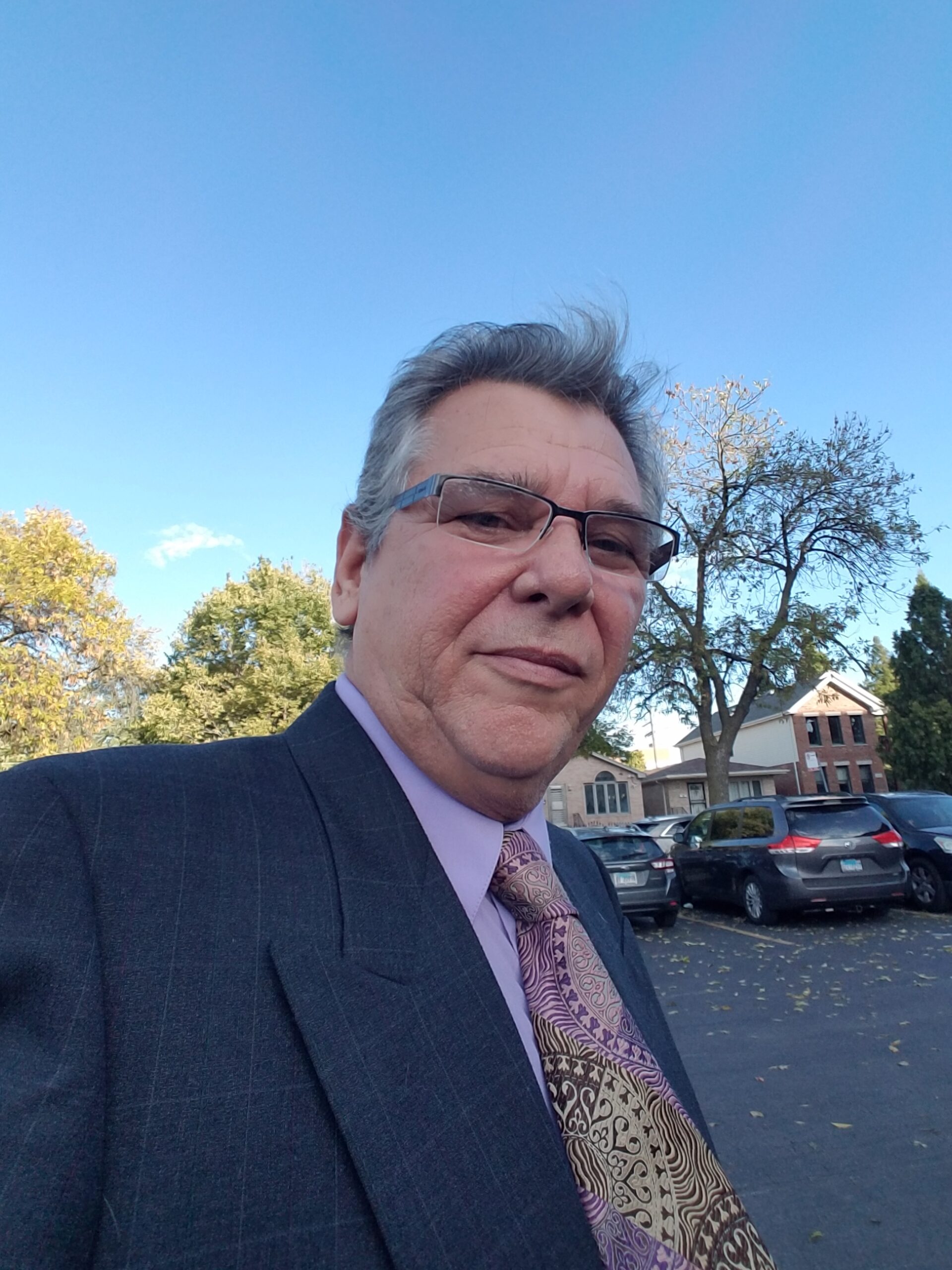
Chicago transit worker Benito Casanova is one of a growing number of workers who, with Foundation aid, are pursuing a Supreme Court ruling that will make union bosses return years of unconstitutional fees.
CHICAGO, IL – With free legal aid from National Right to Work Foundation staff attorneys, Chicago Transit Authority worker Benito Casanova has submitted a petition for writ of certiorari to the U.S. Supreme Court in his class-action lawsuit against the International Association of Machinists (IAM) Local 701 union.
Casanova’s case seeks a ruling that will make IAM officials return union fees that they forced Casanova and other workers to pay in violation of their First Amendment rights as recognized in the 2018 Foundation-won Janus v. AFSCME Supreme Court decision. In Janus, the Court ruled that no public sector worker can be forced to pay union dues or fees as a condition of employment, and that union fees can only be deducted from worker paychecks with their affirmative consent.
Janus lead plaintiff Mark Janus, a former Illinois child support specialist, is also awaiting the Supreme Court’s decision on whether to grant a writ of certiorari in the continuation of his case, which seeks a similar refund. Federal courts (including the Seventh Circuit Court of Appeals,
which ruled against both Janus and Casanova and prompted their petitions to the High Court) have so far allowed union officials to keep forced fees seized against workers’ First Amendment rights as recognized in the Janus decision.
The issue was always expected to end up at the High Court, especially with so many cases and so much money on the line. Foundation attorneys represent Casanova, Janus, and other public workers in about 20 cases, seeking the return of an estimated $130 million or more in unconstitutionally seized dues.
Foundation-Backed Petitions Defending Janus Rights Pile Up at High Court
In addition to Casanova’s case, two other class-action cases are now at the stage where Foundation staff attorneys can ask the Supreme Court to hear those cases, or, should the court agree to hear Janus or Casanova, to hold them pending a Supreme Court ruling.
One of the cases concerns Ohio Tax Department Employee Nathaniel Ogle, who seeks the return of millions in forced union fees taken by Ohio AFSCME union bosses from a large class of state employees. In the other case, Connecticut state environmental workers James Grillo and Kiernan Wholean seek the return of potentially millions of forced fees seized by Service Employees International Union (SEIU) bosses from another large class.
“In the 2018 Janus decision, the Supreme Court majority recognized that it is ‘hard to estimate how many billions of dollars have been taken from non-members and transferred to public sector unions in violation of the Constitution,” commented National Right to Work Foundation Vice President and Legal Director Raymond LaJeunesse. “Mr. Casanova and many other public workers throughout the country just want their illegally seized wages to be returned, so it is critical that the Supreme Court take up this issue.”
UAW Bosses Abandon Case Seeking to Overturn Civil Service Commission Rule Protecting Workers’ First Amendment Janus Rights
Policy requires state employees to opt in to union dues deductions annually to ensure dues are collected with voluntary waiver of First Amendment rights
Lansing, MI (October 15, 2020) – A Michigan Civil Service Commission (MiCSC) policy which helps safeguard the First Amendment rights of the state’s workers under the landmark 2018 Janus v. AFSCME Supreme Court decision survives after United Auto Workers (UAW) union bosses abandoned their lawsuit seeking to overturn the rule in federal court.
The rule, which was adopted by MiCSC in October following detailed comments from National Right to Work Foundation staff attorneys, requires Michigan state agencies to annually obtain the consent of state employees before deducting any union dues from their wages. The rule reminds state employees of their constitutional right to refuse such payments and ensures that the state deducts no union dues unless workers’ first waive their right not to pay.
National Right to Work Foundation President Mark Mix commented on the development:
“The Civil Service Commission rule’s endurance is a victory for Michigan state employees, who will now have their First Amendment right to refuse to subsidize union activities respected and safeguarded. That union officials so quickly dropped their attempts to scuttle the rule speaks to the strength of the legal case for it, namely that the Supreme Court clearly delineated in Janus v. AFSCME that union dues can only be taken from public employees’ paychecks with their affirmative and knowing consent.
“Given this example, public officials in other states should enact similar measures to protect their workers, because union bosses across the country continue to manipulate state laws and internal union policies to keep workers trapped in union payments against their will in violation of their First Amendment rights.”
UAW officials’ abandonment of their lawsuit comes after the U.S. District Court for the Eastern District of Michigan rejected their request for a preliminary injunction against the rule earlier this month. Judge George Caram Steeh ruled that union lawyers not only failed to show that the rule was causing “irreparable harm” but that a recent Sixth Circuit Court of Appeals suit foreclosed union bosses’ ability to file one of the two claims in their suit in the first place.
The District Court’s decision denying the injunction cited arguments first presented in an amicus brief from National Right to Work Foundation and Mackinac Center Legal Foundation staff attorneys, which the judge said was “timely and helpful.”
Other states that are taking steps to shore up their public employees’ Janus rights include Alaska, where Gov. Mike Dunleavy signed an executive order creating similar protections for state employees in September 2019. Also, Texas Attorney General Ken Paxton and Indiana Attorney General Curtis Hill both issued legal opinions earlier this year urging public employers to notify employees that they have a First Amendment right to refuse to fund a union unless they opt-in to such payments.
Seattle Building Services Worker Wins Settlement against SEIU6 Officials for Illegal Dues Deductions and Deceiving Workers about their Rights
Charges were filed after SEIU failed to provide accurate information about its financials and workers’ constitutional right to object to forced dues
Seattle, WA (October 15, 2020) – With free legal aid from the National Right to Work Legal Defense Foundation, Pacific Building Services employee Daniel Dalison has won a settlement in his case against Service Employees International Union (SEIU6) Property Services NW and his employer, Pacific Building Services. Dalison filed charges earlier in the year challenging union officials’ deceptive membership forms that misinform workers about their rights, and for illegally deducting dues from his paycheck.
Because Washington State has not yet enacted Right to Work protections for private sector workers to make union payments voluntary, workers can still be forced to pay union fees as a condition of keeping their job. However, thanks to the Foundation-won CWA v. Beck Supreme Court decision, those who object to formal union membership cannot be charged for union politics and lobbying, and can only be compelled to pay fees directly related to bargaining. Beck also requires that unions provide independent audits of their expenses before taking forced fees from nonmembers.
Dalison’s NLRB unfair labor practice charges stated that SEIU6’s welcome packet incorrectly informed him that he could exercise his Beck right to object to full union dues only during a 31- day window after his hire date. Dalison’s charge also explains that the membership form is an illegal “dual purpose” form, which, if signed, triggers automatic dues seizures from an employee’s paycheck despite “actually say[ing] nothing about dues authorization.” Federal law provides that employers cannot deduct union dues or fees directly from employees’ paychecks unless they have affirmative consent from them, regardless of their membership status.
After receiving the information packet from his employer, Dalison sent the union letters “stating that he did not want union membership” and wished only to pay the required reduced fees to keep his job. He also asked the union to furnish an independent audit of its expenses and a copy of the monopoly bargaining contract between it and Pacific Building Services. The charge says that the union responded with a letter claiming “he must have misunderstood his options” and that its records showed he was a member and required to pay full dues.
Under the settlement, SEIU officials are required to return the portion of Dalison’s dues taken in violation of Beck, and provide him the financial audit and copy of the monopoly bargaining contract he requested. They also agreed to revise their welcome packet to include information about employees’ Beck rights, not to use a single form for both union membership and dues deduction authorization, and not to falsely claim that employees can only exercise their rights under Beck during a 31-day window. The terms of the settlement will be posted publicly to make other Pacific Building Services employees aware of their rights.
Earlier this year Dalison charged officials of SEIU 1199NW for violating employee rights at Swedish Medical Center, where he has also worked. Those charges related that, in addition to not allowing workers to exercise their Beck rights, SEIU 1199NW bosses ordered workers to provide photo identification any time they asked to see their own paperwork regarding membership and dues check off authorizations. Those charges are still pending at NLRB Region 19.
“Unfortunately, Washington State SEIU bosses are repeat offenders when it comes to violating workers’ rights just to collect additional union dues and fees,” said National Right to Work Foundation President Mark Mix. “Although this victory for Daniel Dalison is a welcome development, his cases show why Washington State workers need Right to Work protections that ensure all union financial support is voluntary so unions cannot so easily play fast and loose with their forced dues powers.”
Mark Janus Files Brief Defending WA Workers’ Right to Stop Union Dues Under Landmark Janus v. AFSCME Supreme Court Decision
Union scheme currently being challenged at Ninth Circuit blocks government workers from exercising First Amendment rights outside brief 10-day period
San Francisco, CA (October 13, 2020) – Mark Janus, the lead plaintiff in the landmark 2018 Janus v. AFSCME Supreme Court decision, has just submitted an amicus brief in Belgau v. Inslee. This is a class-action case in which a group of Washington State employees are challenging a union boss-created arrangement that limits employees’ ability to exercise their First Amendment Janus right to refrain from subsidizing a union to only 10 days per year.
The brief was submitted for Janus by staff attorneys with the National Right to Work Legal Defense Foundation and the Liberty Justice Center. Janus, a former Illinois child support specialist, was represented at the Supreme Court by attorneys from both organizations, with Foundation attorney Bill Messenger presenting oral argument.
In Janus, the Supreme Court ruled that compelling public workers to pay union dues as a condition of employment violates their First Amendment rights. The Court also held that union dues can only be taken from the paychecks of public workers if they clearly and affirmatively waive their right not to pay, with Justice Samuel Alito writing in the Court’s decision that “such a waiver cannot be presumed.”
In the Belgau case, lead plaintiff Melissa Belgau and six other Washington State employees have sued Washington Governor Jay Inslee and the Washington Federation of State Employees (WFSE) union for enforcing an unconstitutional “escape period” scheme. The plaintiffs all resigned their memberships and requested to cut off dues just a couple months after Janus was decided, but dues continued to be seized from their paychecks afterwards under the restrictive policy.
Their lawsuit demands that the state and union officials cease blocking workers from exercising their First Amendment right not to financially support the union, and that the union refund all dues seized from any worker who sought to end dues deductions after the Janus decision, but was denied under the policy. A three-judge panel of the Ninth Circuit Court of Appeals ruled against the workers in September, but their attorneys have since petitioned for an en banc rehearing of the case before the Ninth Circuit Court of Appeals.
Janus’ amicus brief emphasizes that an en banc hearing is necessary because the three-judge panel “gut[ted] the Supreme Court’s holding” by finding that it is “constitutional for a state and a union” to keep seizing payments “for union speech from objecting, nonmember employees” until an arbitrary 10-day period. The brief contends that the Constitution does not allow “states and public-sector unions” to “prohibit employees from exercising their First Amendment right to not subsidize union speech for 355-56 days of every year.”
Staff attorneys from the National Right to Work Foundation and Liberty Justice Center are currently litigating more than thirty Janus-related cases, including seven jointly. That includes the continuation of Mark Janus’ own case which is seeking its second writ of certiorari from the Supreme Court. In his case Janus is now pursuing a ruling that will make AFSCME union bosses refund forced fees seized from him in violation of the First Amendment, which would create a precedent that could require union officials to refund hundreds of millions of dollars from nonmember public employees across the country.
“It is shocking that despite the U.S. Supreme Court’s ruling in Janus, government employers and private political organizations, unions, continue to place limitations on Americans’ constitutional rights,” said Jeffrey Schwab, senior attorney at the Liberty Justice Center. “All government workers must be able to exercise their First Amendment right not to pay a union.”
“Mark Janus and his attorneys defended the First Amendment rights of public employees at the US Supreme Court and are now protecting those same freedoms by helping to challenge this egregious limitation on workers’ Janus rights,” added National Right to Work Foundation President Mark Mix. “It is outrageous to claim any government or public sector union boss policy can limit a worker’s constitutional rights to just 10 days each year.”
Oklahoma Sysco Employees Boot Unpopular Teamsters Bosses from Warehouse
The following article is from the National Right to Work Legal Defense Foundation’s bi-monthly Foundation Action Newsletter, September/October 2020 edition. To view other editions or to sign up for a free subscription, click here.
Union officials too afraid of results to hold a vote after majority of workers sign petition against union
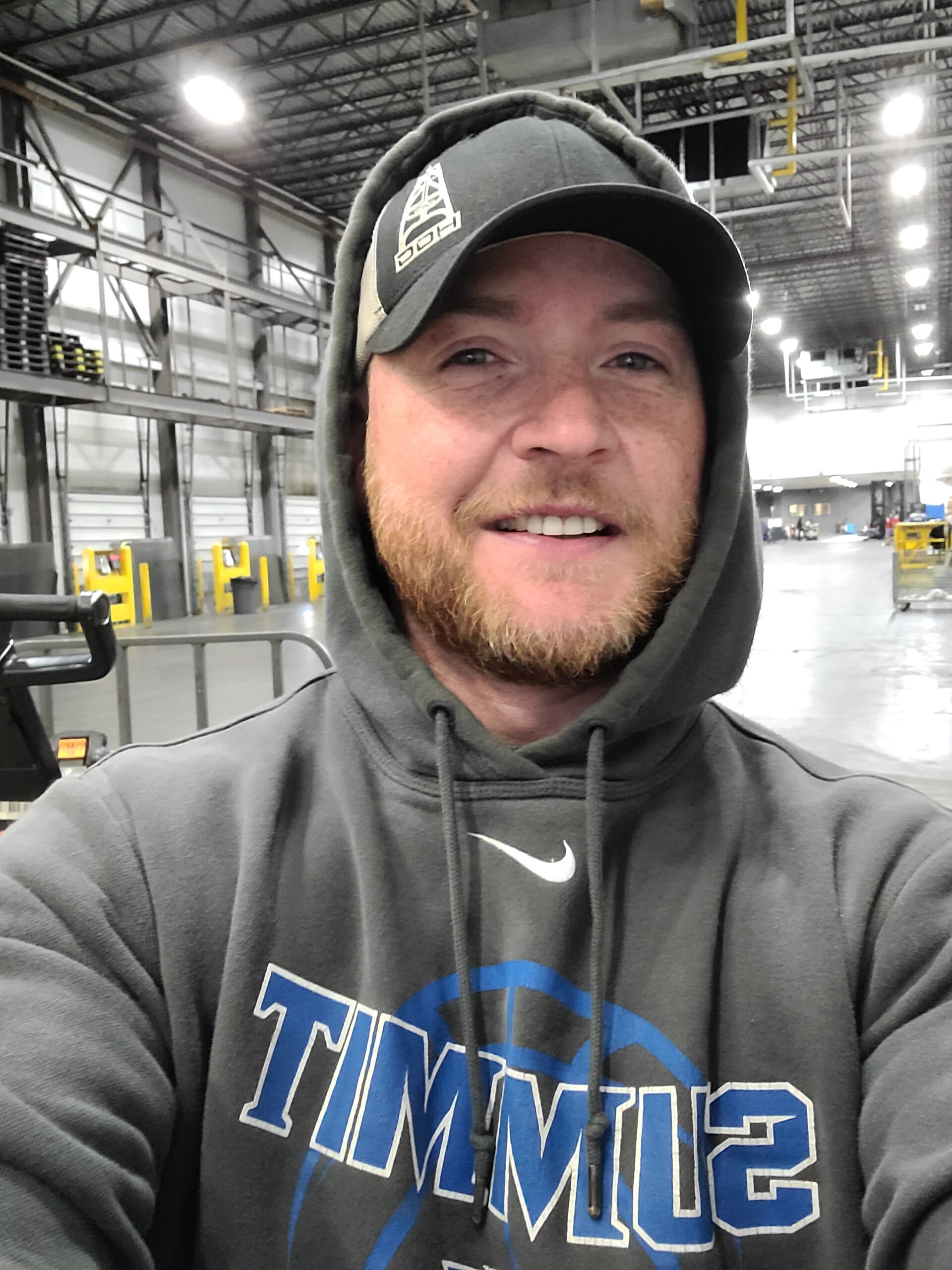
Sysco employee Henry Weilmuenster and a majority of his colleagues backed two petitions which sought to eject unpopular Teamsters officials from their warehouse.
OKLAHOMA CITY, OK – With free legal aid from National Right to Work Foundation staff attorneys, Sysco Oklahoma warehouse employee Henry Weilmuenster and his coworkers have successfully removed an unwanted Teamsters union from their workplace.
Weilmuenster and his coworkers achieved their victory by taking advantage of the rights won by Foundation staff attorneys in the National Labor Relations Board’s (NLRB) 2019 Johnson Controls decision. In Johnson Controls, the NLRB ruled that an employer can withdraw recognition from a union if it receives a majority-backed employee petition opposing the
union within 90 days of a monopoly bargaining contract expiring. Union officials then have a 45-day window to contest such a withdrawal of recognition, but only by requesting a secret-ballot vote among the employees in the workplace on whether the union should stay.
In December 2019, Weilmuenster submitted both a petition to the NLRB for a secret-ballot vote to remove the union and a petition to Sysco asking that it withdraw recognition of the Teamsters union at the first available opportunity. Both requests were supported by a majority of his coworkers.
Though NLRB Region 14 officials in January blocked Weilmuenster and his coworkers’ request for a decertification vote in response to dubious “blocking charges” from Teamsters officials, Sysco ultimately withdrew recognition from the Teamsters union based on the showing of majority employee support for withdrawal in Weilmuenster’s petition. Under Johnson Controls, Teamsters honchos had a 45-day window to file for a secret-ballot election to reinstall the union, but did not do so — apparently because they feared an election loss. After that, the union was gone for good.
“This case demonstrates why Johnson Controls is so important,” commented National Right to Work Foundation Vice President Patrick Semmens. “Union bosses should not be allowed to maintain monopoly power over workers through legal maneuvering when there is clear evidence that a majority of workers want the union out of their workplace.”
Foundation Defends New Rules Protecting Right to Remove Unwanted Unions
The following article is from the National Right to Work Legal Defense Foundation’s bi-monthly Foundation Action Newsletter, September/October 2020 edition. To view other editions or to sign up for a free subscription, click here.
AFL-CIO kingpins suing to overturn NLRB rules slashing barriers to decertification votes

Over the past few years, the Foundation has provided free legal aid to workers
across the country who were blocked by pro-union boss NLRB rules from voting
out an unwanted union. Above are just a handful of them.
WASHINGTON, DC – The National Labor Relations Board’s (NLRB) new rules, designed to safeguard the right of workers to remove an unwanted union hierarchy in their workplace, went into effect on July 31. The policies, which were finalized in April, closely followed comments submitted by National Right to Work Foundation staff attorneys and petitions sent by thousands of Foundation supporters.
The policies specifically curtailed the non-statutory “blocking charge” and “voluntary recognition bar” policies used to trap workers in unions they oppose, and also eliminated a scheme used by union bosses in the construction industry to impose unionization without any evidence of worker support.
Less than a month before the reforms went into effect, union lawyers with the AFL-CIO filed a lawsuit against the NLRB in an attempt to reimpose these coercive restrictions on workers. Foundation attorneys are primed to defend the reforms and counter the wild claims AFL-CIO legal operatives make in the lawsuit.
New Rules Designed to Shield Workers from Unwanted Unions
The new rules are meant to eliminate virtually all union “blocking charges,” which are filed by union bosses to prevent rank-and-file employees from exercising their right to vote to remove a union.
Under the NLRB’s new policy, union charges cannot indefinitely stall the employees’ vote from taking place, and in most instances the vote will occur without delay. Additionally, as the Foundation advocated in comments, the NLRB modified its original proposed rule so that after employees vote, the ballots will be tallied and the vote announced in most cases instead of being impounded for months or even years while “blocking charges” are resolved.
The NLRB also reversed an Obama-era ruling imposing the so-called “voluntary recognition bar” policy. Under that policy, workers were blocked for up to a year from requesting a secret-ballot election to challenge a union which was installed as their monopoly bargaining agent through an abuse-prone “Card Check” drive, which bypasses the NLRB-supervised secret-ballot election process. In reversing the Obama NLRB, the current Labor Board reinstated a precedent won by Foundation staff attorneys for workers in the 2007 Dana Corp NLRB decision.
Under the Dana Corp. system, employees subject to “Card Check” drives and so-called “voluntary recognition” can promptly file for a secret-ballot election to contest the installation of a monopoly representative at their workplace.
Foundation Prepares to Counter Dubious Claims of AFL-CIO Suit Against NLRB
Unwilling to lose their power to block workers’ efforts to vote them out, the AFL-CIO filed suit against the rules even before they went into effect. The union boss lawsuit alleges, among other things, that the NLRB was misusing the rulemaking process by advancing these protections for independent-minded workers, even though union bosses widely cheered Obama NLRB efforts to use rulemaking to expand union boss power.
Foundation staff attorneys quickly began preparing to counter the AFL-CIO’s lawsuit aiming to reverse these reforms.
“Anyone who is familiar with the tactics of union bosses knows that they will fight tooth and nail to keep government-granted privileges in place that allow them to force their one-size-fits-all ‘representation’ on workers, even when a majority oppose their presence,” observed National Right to Work Foundation Vice President Patrick Semmens. “Foundation supporters should be proud that their advocacy helped obtain these new protections for workers opposed to unionization, but as the union boss lawsuit shows, the Foundation’s litigation program will continue to be critical to defending the rights of independent-minded workers.”
Ohio Public Employee Asks Supreme Court to Hear Class Action Lawsuit Seeking Return of Forced Union Dues
Lawsuit joins others pending at the Supreme Court seeking refunds of forced union fees seized from nonmembers in violation of Janus v. AFSCME
Washington, DC (October 9, 2020) – Yesterday, National Right to Work Legal Defense Foundation staff attorneys filed a petition for certiorari, asking the United States Supreme Court to hear the case of Nathaniel Ogle. Ogle is an employee of the Ohio Department of Taxation who, despite never being a member, still had mandatory union fees deducted from his paycheck by officials of the Ohio affiliate of the American Federation of State County and Municipal Employees (AFSCME) union.
In 2018, the Supreme Court ruled in Janus v AFSCME that it is unconstitutional to require public sector employees like Ogle to subsidize union activities. Soon after, Ogle filed his class action lawsuit seeking a return of fees seized before the Janus decision from himself and potentially thousands of other state employees.
AFSCME officials have thus far relied on the so-called “good faith” defense to avoid paying back money they took from nonmembers before the ruling in violation of the First Amendment as Janus recognized. However, in the Janus decision, not only did the Supreme Court not rule out retroactive relief, it also observed that union officials have been “on notice” for years that mandatory fees likely would not comply with the High Court’s heightened level of First Amendment scrutiny articulated in the 2012 Knox v. SEIU Supreme Court decision.
Foundation staff attorneys argue that in addition to there being no valid basis for the “good faith” defense under existing law, AFSCME officials also understood the dubious constitutionality of what they were doing when they extracted payments from nonmembers but still went forward with their legally suspect collection of forced union fees.
Ogle’s case was dismissed by the district court in July of 2019. A three judge panel of the U.S. Sixth Circuit Court of Appeals later held that the union could avoid paying back its victims, despite the Supreme Court’s assertion that unions had been “on notice,” leading to today’s petition for a writ of certiorari.
Ogle is the fifth dues repayment case the Court is being asked to consider. The other four, including Foundation-backed cases Casanova v. IAM and the Janus case itself, are fully briefed and scheduled to be considered at the Court’s October 9th conference. Foundation staff attorneys are actively litigating about 20 of these cases which collectively seek the return of an estimated $130 million or more in forced union fees seized from workers in violation of the First Amendment.
In a recent supplemental brief in Janus, Mark Janus’ attorneys from the National Right to Work Foundation and Illinois-based Liberty Justice Center point out that two of three judges on a panel of the Third Circuit Court of Appeals recently opined that the “good faith” defense is invalid, while other federal judges have upheld it. This, they argue, makes it especially vital that the Court hear the case to clear up the confusion among lower courts and ultimately reject this spurious argument allowing union officials to profit from violating workers’ constitutional rights.
“The so-called ‘good faith’ defense, which permits union bosses to continue to ignore an established Supreme Court precedent, has already been rejected by two federal judges. It is vital that the Supreme Court take up this issue to disabuse all lower courts of this flawed argument, and to ensure that the victims of union officials’ First Amendment violations finally get some justice,” National Right to Work President Mark Mix said. “The Court already ruled in Janus that public workers cannot be forced to pay union dues. It is past time for the victims of these First Amendment violations, including Mr. Ogle and his coworkers, to receive justice.”
Interview: Mark Mix Discusses Two Foundation Cases Pending at the US Supreme Court
Recently National Right to Work Foundation President Mark Mix spoke to WISN’s Vicki McKenna about two cases that could have major implications for public sector workers if the Supreme Court decides to hear them. Janus v. AFSCME and Casanova v. International Association of Machinists both deal with employees seeking refunds of dues unconstitutionally seized before the 2018 Janus decision.
When Janus v. AFSCME was originally decided, the court held that public sector workers can’t be forced to support a union as a condition of their employment, and that nonmembers can’t have dues deducted from their paychecks without their consent. As Mix said in the interview, “When you rule on the first amendment there’s a legal concept called black letter law, which means ‘as if it was the law from the beginning’. These workers ought to be able to go back and get their money back through the statute of limitations.”
He also pointed out that the Supreme Court specifically recognized in Janus that unions have known since the 2012 Foundation-won Knox v. SEIU case that mandatory union fees for public sector employees likely did not comply with the First Amendment.
In the majority opinion in Janus, Justice Alito wrote:
public-sector unions have been on notice for years regarding this Court’s misgivings about Abood. In Knox, decided in 2012, we described Abood as a First Amendment “anomaly.” 567 U. S., at 311. Two years later in Harris, we were asked to overrule Abood, and while we found it unnecessary to take that step, we cataloged Abood’s many weaknesses. In 2015, we granted a petition for certiorari asking us to review a decision that sustained an agency-fee arrangement under Abood. Friedrichs v. California Teachers Assn., 576 U. S.___. After exhaustive briefing and argument on the question whether Abood should be overruled, we affirmed the decision below by an equally divided vote. 578 U. S. ___(2016) (per curiam). During this period of time, any public sector union seeking an agency-fee provision in a collective bargaining agreement must have understood that the constitutionality of such a provision was uncertain.
If the Supreme Court takes one of these cases and rules in favor of the workers seeking refunds, it would set a precedent that would result in the return of hundreds of millions of dollars in dues for workers around the country.
You can listen to the entire interview below:
UGSOA Union Officials Hit With Another Federal Charge for Seizing Forced Union Fees in Violation of Security Guards’ Rights
NLRB Charge: Union bosses illegally failed to disclose financials and restricted workers’ rights to opt out of union political spending
Newark, NJ (October 5, 2020) – With free legal aid from the National Right to Work Legal Defense Foundation, William J. Sona is taking his case against the United Government Security Officers of America (UGSOA) union Local 171 to the National Labor Relations Board (NLRB).
The Paragon Systems employee’s federal unfair labor practice charge states that union officials illegally failed to provide a mandated independent audit justifying union fees, and imposed unlawful restrictions on workers seeking to challenge the calculation of the fees workers must pay as a condition of employment.
Because Sona is employed in New Jersey, a forced-unionism state, he can legally be fired for refusing to pay union fees. However, these forced fees cannot be used for union political activities or lobbying. Union officials must comply with certain legal requirements to justify the amount they can force workers to pay as a condition of employment.
Under the precedent established in the Right to Work Foundation-won Beck Supreme Court case and subsequent California Saw NLRB precedent, unions must provide verification of chargeable expenses through an independent audit, provide escrow if workers dispute charges, and provide an independent system for workers to challenge the fees.
Sona’s case against UGSOA charges that union officials failed to comply with any of these requirements. Additionally the charge states union officials illegally required Beck objectors like Sona to file two separate objections to funding union political activity—one to Local 171 and one to the International.
Union officials at UGSOA have a history of illegally seizing dues from workers. Previously, UGSOA union bosses illegally demanded union dues from nonmember workers while there was no contract in effect between the union and the employer.
With free legal aid from the National Right to Work Legal Defense Foundation, Sona and five other Paragon employees won $4,000 in illegally seized back dues. That case was settled in 2019 and formally adopted by the NLRB in August of 2020, but Sona’s new charge says union officials have not stopped violating the law.
“Union brass at UGSOA have demonstrated again that they will violate the rights of the very workers they claim to ‘represent’ just to stuff their pockets with more forced dues,” commented National Right to Work Foundation President Mark Mix.
“They use their special government-granted privileges to force workers to pay up or be fired, and then refuse to provide the information needed to confirm that at least these forced fees are not being illegally funneled into union lobbying and campaign expenses. If union bureaucrats are afraid of transparency, there’s probably a reason for that.”





