
Austin Worker Files Federal Constitutional Challenge Against Biden-Harris Labor Board
National Labor Relations Board facing numerous worker-brought lawsuits citing unconstitutional structure
Fort Worth, TX (November 2, 2024) – Dallas Mudd, an employee of Aunt Bertha (d/b/a FindHelp), has launched a federal lawsuit against the National Labor Relations Board (NLRB) on the grounds that the agency’s structure violates the U.S. Constitution. National Right to Work Legal Defense Foundation staff attorneys representing Mudd filed the suit in the U.S. District Court for the Northern District of Texas. The lawsuit joins a string of cases challenging the NLRB’s structure on separation of powers principles.
Mudd’s case comes on the heels of his own employer’s suit against the NLRB. In that case, a federal district court judge ruled in favor of FindHelp and granted an injunction to halt proceedings against the company.
Mudd filed a decertificiation petition with the NLRB back in September, requesting a vote to remove the Office & Professional Employees International Union (OPEIU) from his workplace. Instead of allowing the vote to proceed, NLRB officials blocked the election, leaving the workers indefinitely trapped in a union they oppose. Mudd is appealing that decision to the full Board in Washington DC.
Mudd’s federal lawsuit argues he is entitled to have his appeal adjudicated before a federal agency that is accountable to the president. The case joins four other constitutional challenges to the NLRB’s structure from Foundation-backed rank-and-file workers, including the first-ever such lawsuit challenging NLRB Board Member removal protections, which is currently being briefed at the DC Circuit Court of Appeals by Foundation attorneys representing Buffalo, NY-based Starbucks employees Ariana Cortes and Logan Karam.
Mudd’s lawsuit points to recent Supreme Court rulings, including Seila Law LLC v. CFPB and Collins v. Yellen, which emphasized that the President has direct authority to remove executive officials who exercise significant authority. Mudd argues that the NLRB’s structure, as defined by the National Labor Relations Act (NLRA), places unlawful limitations on the president’s power to oust NLRB officials who exercise significant executive authority.
The complaint, filed in the U.S. District Court for the Northern District of Texas, joins a similar suit at the same court from Reed Busler. Similar to Mudd, Busler, a Starbucks employee, filed a petition asking the NLRB to hold a vote to remove the incumbent Starbucks Workers United (SBWU) union, only to have the vote blocked by NLRB officials. In all the cases the employees argue they are entitled to have their cases heard by Board officials who are not exercising powers in violation of the Constitution.
“Independent-minded workers should not be forced to depend on biased agencies staffed by bureaucrats, that exercise power in violation of the Constitution, just to free themselves of unwanted union affiliation,” said National Right to Work Foundation President Mark Mix. “The Constitution does not permit a powerful federal agency to operate as the judge, jury, and executioner without oversight, and these legal challenges seek to ensure that the Labor Board functions within the law, for the sake of all workers.”
Hundreds of AT&T Employees Across California and Texas Petition for Votes to Remove Union Installed Through Coercive “Card Check”
Union bosses bypassed secret ballot election with abuse-prone process, but hundreds of workers in each unit now back election to remove union
Texas & California (August 1, 2024) – Hundreds of In-Home Experts from AT&T Mobility locations across Texas and California have just signed onto petitions seeking elections to remove Communications Workers of America (CWA) union officials from power over their workplaces.
Matthew Gonzales, an In-Home Expert for AT&T Mobility, filed a “union decertification petition” with the National Labor Relations Board (NLRB) on behalf of his coworkers across 13 AT&T Mobility locations in Southern California. Samantha Cain, a Texas-based In-Home Expert, did the same for her colleagues across at least eight locations in Eastern and Southern Texas. Both Gonzales and Cain received free legal aid from National Right to Work Foundation staff attorneys in filing the petitions.
The NLRB is the federal agency responsible for enforcing federal labor law, which includes administering votes to certify and decertify unions. Gonzales and Cain each collected employee signatures on their respective petitions far exceeding the 30% threshold needed to trigger a decertification vote under NLRB rules. Both filed the decertification petitions in July in order to challenge so-called “card check” unionization campaigns that CWA union bosses foisted on their coworkers.
Under card check, union officials can bypass the secret ballot election process, which is the most secure and reliable way to determine if employees want to unionize. During a card check drive, union officials can make face-to-face demands of employees as they seek to collect union authorization cards from a majority of the workplace. This makes the process a breeding ground for coercive and intimidating tactics.
Because Texas has Right to Work protections, union officials can’t force private sector workers like Cain and her coworkers to join or pay money to a union as a condition of getting or keeping a job. That isn’t the case in California. The state’s lack of a Right to Work law lets union officials demand that workers pay union dues or fees just to stay employed. However, in both states, union officials in a unionized workplace enjoy monopoly bargaining privileges, which allow them to contract and speak for every worker in the unit – even those that voted against the union or otherwise oppose its presence.
If the AT&T Mobility In-Home Experts win both decertification elections, well over 800 workers will be free from CWA union officials’ monopoly bargaining power. They will join over 100 In-Home Experts from across Tennessee, who successfully challenged a card check in a similar effort against CWA officials in March. In all three efforts, CWA union officials have tried to “merge” units of AT&T In-Home Experts into a larger unit comprised of thousands of employees, which would effectively trap workers in the union because petitioning for a decertification vote in such a large unit would be virtually impossible.
Biden-Harris NLRB Will Soon Block Workers from Challenging Dubious Union “Card Check” Drives
CWA union officials have already used their card check “victory” to claim monopoly bargaining power over both the California In-Home Experts and Texas In-Home Experts. However, Foundation-backed 2020 reforms to the NLRB’s election rules give both sets of workers an opportunity to challenge the CWA union’s ascent to power.
Collectively referred to as the “Election Protection Rule,” the reforms permit employees to submit decertification petitions within a 45-day window after the finalization of a card check. The Election Protection Rule also prevents union officials from manipulating charges they file alleging employer misconduct to block workers from casting ballots in a decertification election, among other things.
Unfortunately, the Biden-Harris NLRB in Washington, DC, issued a final rule last Friday that will undo the Election Protection Rule and make it much harder for rank-and-file workers to exercise their right to vote out union officials they oppose. While the rule change will not take effect in time to stop the AT&T Mobility employees from having the decertification votes they requested, it will likely quash or substantially delay similar efforts in the future.
“If Ms. Cain and Mr. Gonzales had filed their decertification petitions just a few weeks later, hundreds of AT&T Mobility workers across Texas and California would be summarily denied their right to vote out union officials who seized power over them in a hasty and coercive manner,” commented National Right to Work Foundation President Mark Mix. “This is yet another example of the Biden-Harris Administration’s effort to heap legal privileges on its union boss political allies, all at the expense of workers who just want to exercise their free choice when it comes to deciding who should speak for them in the workplace.
“American workers don’t deserve to be stripped of this freedom, and those who are prevented from voting out unwanted union bosses due to this cynical rule change should not hesitate to contact the Foundation to explore their legal options,” Mix added.
Texas Starbucks Employee Challenges Federal Labor Board Structure as Unconstitutional in New Federal Lawsuit
Regional NLRB blocked employee and his coworkers from voting out union, new lawsuit now second pending worker-backed challenge to agency’s authority
Fort Worth, TX (January 24, 2024) – Reed Busler, an employee at the “Military Highway” Starbucks in Shavano Park, TX, is hitting the National Labor Relations Board (NLRB) with a federal lawsuit arguing the federal agency’s structure violates the separation of powers. The lawsuit, filed in the U.S. District Court for the Northern District of Texas, argues that the agency violates Article II of the Constitution by insulating NLRB Board Members from at-will removal by the President.
Busler’s lawsuit stems from an NLRB Regional Director’s dismissal of a petition he filed on behalf of his coworkers seeking an election to remove the Starbucks Workers United (SBWU) union from power at the coffee shop. Busler is receiving free legal aid in both proceedings from National Right to Work Legal Defense Foundation staff attorneys.
The National Labor Relations Act (NLRA), the law that established the NLRB, restricts a president’s ability to remove Board members except for neglect of duty or malfeasance. Busler’s complaint contends that these restraints violate “the fundamental separation of powers principle that the President must be free to remove executive officers at will,” as dictated by Supreme Court cases like Seila Law LLC v. CFPB (2020) and Collins v. Yellen (2021).
“Board Members are principal officers wielding substantial executive power. This includes the power to promulgate binding rules, to enforce the law through adjudicating unfair labor practice disputes and issuing remedies, to issue subpoenas, and to enforce the law through adjudicating representation proceedings,” reads the complaint. “By adjudicating Busler’s petition notwithstanding its unconstitutional structure, the Board is violating his right to have his petition adjudicated by politically accountable officials.”
Regional NLRB Trapped Workers in Union Despite Reports of Abrasive Behavior
Busler submitted his union decertification petition on November 16, 2023. The petition contained signatures from enough of his coworkers to trigger a vote to remove the union under NLRB rules. However, the NLRB Regional Director still blocked the vote based on unfair labor practice charges SBWU union officials filed against Starbucks, despite there being no proven connection between those allegations and Busler’s decertification petition.
The NLRB’s refusal to hold a union decertification vote means that Busler and his coworkers are still trapped under the “representation” of the SBWU union, despite numerous reports of SBWU agents’ combative and abrasive behavior at the store. In other filings in the NLRB case, Busler and his colleagues reported that SBWU officials ordered a divisive strike in which “[union] supporters outside the store were loud, boisterous, and were screaming at customers” and “would sometimes yell at other employees or tell partners that if they did not support Workers United they would be personally ostracized by other partners.”
“Moreover, I believe the other employees who signed my decertification petition did not do so because they were coerced or duped by anything Starbucks allegedly did wrong, but because the Union was a divisive force in our store and has now ignored our location for several months,” Busler stated in an NLRB filing.
Lawsuit Seeks to Stop NLRB from Exercising Unconstitutional Power Over Workers’ Case
Busler’s federal lawsuit seeks a declaration from the District Court that the structure of the NLRB as it currently exists is unconstitutional, and an injunction halting the NLRB from proceeding with his decertification case until his federal lawsuit is resolved. Busler now joins Buffalo, NY-based Starbucks worker Ariana Cortes in challenging the structure of the NLRB with free Foundation legal aid.
“The National Labor Relations Board should not be a union boss-friendly kangaroo court run by powerful bureaucrats who exercise unaccountable power in violation of the Constitution,” commented National Right to Work Foundation President Mark Mix. “Mr. Busler seeks to remove a union he and his colleagues oppose, and he is entitled to pursue that statutory right before an agency whose structure complies with the Constitution.”
Foundation: Texas Taxpayers Shouldn’t Be Forced to Fund Union Activities
The following article is from the National Right to Work Legal Defense Foundation’s bi-monthly Foundation Action Newsletter, May/June 2023 edition. To view other editions of Foundation Action or to sign up for a free subscription, click here.
Brief says Janus explains why Texas Supreme Court must invalidate ‘official time’ scam
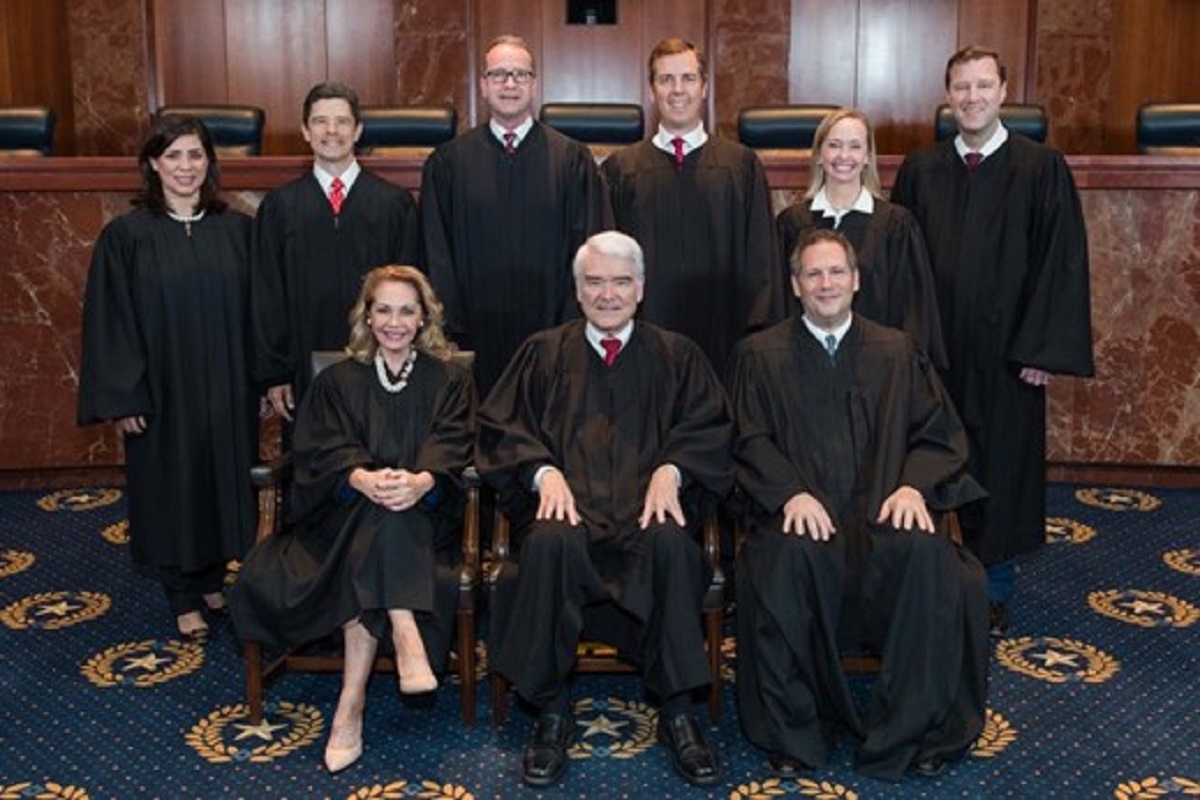
Don’t Mess with Taxes: The Foundation urged the Texas Supreme Court (above) in recent legal briefs to quash the City of Austin’s scheme funneling taxpayer money to union ideological activities.
AUSTIN, TX – Union officials spend billions of dollars to influence the political system every election cycle. This is why they are so desperate for forced-dues power — it gives them a guaranteed stream of revenue to sustain their agendas, regardless of whether workers support the union hierarchy’s aims.
But workers are increasingly taking advantage of their rights under Right to Work laws and the landmark National Right to Work Foundation-won Janus v. AFSCME U.S. Supreme Court decision to refrain from financially supporting union bosses of whom they do not approve.
Union bosses in Austin, TX, have apparently worked around this dilemma by shifting the burden for funding the union agenda to taxpayers. Through a so-called “official time” scheme, City of Austin employees who are union officials receive compensation from the public purse for conducting union business on the clock.
‘Official Time’ Boosts Inherently Political Government Union Agenda
Foundation attorneys recently filed a brief in the Texas Supreme Court case Roger Borgelt v. City of Austin, arguing that the Foundation-won Janus decision definitively shows why Austin’s scheme violates the Texas Constitution’s prohibitions against payouts of public funds to serve private interests (known as the “Gift Clauses”). The High Court ruled in Janus that forcing public sector workers to fund any union activities as a condition of employment violates the First Amendment, and that union dues can only be deducted from a public sector worker’s paycheck with his or her freely given consent.
An “official time” scheme, which instead forces taxpayers into funding those same union activities, “conflicts with the Supreme Court’s reasons for holding in Janus that it violates the First Amendment to require public employees to subsidize union activities,” says the Foundation’s brief.
The Foundation points out in its brief the Court’s Janus holding that all public sector union undertakings “constitute speech and petitioning on matters of political…concern,” and that by funneling taxpayer money into such speech “the City is effectively paying individuals to lobby the City for a private advocacy organization and its members.”
“The notion that this political advocacy predominantly serves a public purpose, as opposed to predominantly benefiting the private organization, is untenable,” the brief reads.
The brief also refutes an assertion from a lower Texas court that “official time” payments made by the city are actually part of union officials’ compensation for their normal job duties. This defies Janus’ reasoning that public employees who are also union officials “do not act as government agents pursuing their official job duties when they act as union officials.”
“For example, in granting paid leave to employee Bob Nicks to act as the Union’s president, the City is not paying Mr. Nicks for his services as a firefighter or as a public servant,” the brief explains. “The City is paying Mr. Nicks for his services as an agent of a private organization.”
The brief also reveals the disturbing implications of the union-backed argument that taxpayer subsidies for “official time” are needed to maintain harmonious relations between the city and the union: “If respondents contend that Union officials would disrupt City services if they did not receive [‘official time’], that would make the benefit akin to the City paying protection money” to union officials, reads the brief.
Union Bosses Should Not Get Public Funds to Pursue Union Interests
“The Texas Supreme Court should recognize that union officials are not entitled to a slice of taxpayer funds to ‘bargain’ against public interests,” commented National Right to Work Foundation Vice President and Legal Director Raymond LaJeunesse. “Texas’ Gift Clauses forbid the payout of public funds for activities that don’t have a tangible public benefit, and it’s hard to think of an arrangement that violates the Clauses more plainly than letting union bosses pursue private union business on the taxpayer dime.”
“Although Janus now protects public employees around the country from being forced to fund union activities and speech against their will, unfortunately many states and municipalities across the country permit union bosses to subsidize those same inherently political activities using direct payment of tax dollars,” LaJeunesse added.
“If union bosses cannot convince rank-and-file workers to voluntarily fund such activities as Janus requires, they should re-examine their priorities, not seek to force taxpayers to pay for what public employees will not.”
Busted: Kroger Worker’s Card Illegally Altered to ‘Authorize’ Forced Dues
The following article is from the National Right to Work Legal Defense Foundation’s bi-monthly Foundation Action Newsletter, May/June 2023 edition. To view other editions of Foundation Action or to sign up for a free subscription, click here.
Employee’s UFCW union card indicating objection to financial support changed without her knowledge

Jessica Haefner clearly exercised her rights under Texas’ Right to Work law. Foundation attorneys will get to the bottom of who faked her consent to dues deductions and restore her rights.
HOUSTON, TX – Supermarket clerk Jessica Haefner began her job at a suburban Houston Kroger store in August 2022. She attended a mandatory meeting for new employees run by United Food and Commercial Workers (UFCW) local union agents. Despite the union’s hard-sell at the meeting, she knew her rights under Texas’ Right to Work law: Union bosses couldn’t force her to pay any dues or fees to the union to keep her job.
During the meeting, Haefner followed a union representative’s instructions to indicate on a union form that she did not want to be a part of the union or pay dues or fees. But she was shocked to discover just weeks later not only that union dues were coming out of her paycheck, but also that the union form she was required to sign had been altered to indicate she consented to those deductions.
Haefner, with free legal representation from National Right to Work Foundation staff attorneys, slammed UFCW officials and Kroger with federal charges at the National Labor Relations Board (NLRB). The charges state that UFCW bosses’ and Kroger’s actions violate her rights under Section 7 of the National Labor Relations Act (NLRA), which guarantees American private sector workers’ right to abstain from any and all union activities.
“I was lied to . . . and my rights were not only violated as an employee but as an American citizen,” said Haefner.
Employee’s Dues Form Was Altered, Forced Dues Deductions Began
According to Haefner’s charges, a UFCW agent passed out a union membership application and a dues checkoff on a single form that he claimed was mandatory for meeting attendees to complete. Another piece of onboarding literature stated that Kroger management had the “opinion that you should participate and be active in the Union.”
When Haefner asked how she could exercise her right to refrain from joining the union or paying union dues, the union agent instructed Haefner to write “$0” in the field marked “union dues” on the form.
Haefner followed these instructions. But after discovering later that union dues were indeed coming out of her paycheck, Haefner quickly obtained a copy of the form on which Kroger and UFCW officials based their dues deductions. She saw that someone had changed the dues deduction amount in the field she marked “$0” to a dollar amount to induce dues deductions from her paycheck.
UFCW Chiefs Illegally Seizing Dues from Grocery Workers Across Country
UFCW’s violation of Haefner’s rights is not an isolated incident. In Pennsylvania, Foundation staff attorneys are also representing Giant Eagle supermarket cashier Josiah Leonatti, who charges UFCW Local 1776KS union officials with refusing to accommodate his religious objections to union membership (see page 3). King Soopers grocery employees from Colorado are also receiving free legal aid from Foundation staff attorneys in opposing illegal UFCW strike fines, some of which are as high as about $4,000 per worker.
“Jessica Haefner knew her rights under Texas’ popular Right to Work law and actively asserted them, yet UFCW union officials still brazenly took her money against her will,” commented National Right to Work Foundation President Mark Mix.
“As cases brought for workers with free Foundation legal aid show, UFCW bosses have a long and documented history of violating workers’ rights, whether through thousands of dollars in illegal strike fines, illegal religious discrimination, threatening teenagers’ jobs, and now by altering a worker’s dues authorization,” Mix added.
Houston-Area Kroger Employee Slams UFCW Union with Federal Charges for Seizing Union Dues Using Altered Union Card
Employee objected to union membership and financial support during orientation meeting; union taking dues under guise of altered form
Houston, TX (February 21, 2023) – Cypress-area Kroger employee Jessica Haefner has just hit the United Food and Commercial Workers (UFCW) union at her workplace and her employer with federal charges. Haefner maintains that union and Kroger officials are unlawfully seizing union dues from her paycheck based on an altered union membership form that ostensibly indicates her consent to union dues deductions, even though she followed instructions on how to exercise her right to refrain from union membership and support. Haefner filed the charges at the National Labor Relations Board (NLRB) with free legal representation from National Right to Work Foundation staff attorneys.
Haefner’s charges state that UFCW Local 455 union officials’ actions violate her and her coworkers’ rights under Section 7 of the National Labor Relations Act (NLRA), which guarantees American private sector workers’ right to abstain from any and all union activities. The NLRB is the federal agency responsible for enforcing the NLRA.
Texas’ Right to Work protections also prohibit union officials from forcing private sector workers like Haefner to join or pay dues to a union as a condition of getting or keeping a job. In contrast, states lacking Right to Work laws permit the firing of private sector workers for refusal to pay money to a union hierarchy.
Union Form Was Altered
On August 22, 2022, Haefner attended a mandatory orientation meeting during which she was required to listen to a UFCW agent, her charges state. The UFCW agent passed out a union membership application and a dues checkoff on a single form that he claimed was mandatory for attendees to complete. Another piece of onboarding literature stated that Kroger management had the “opinion that you should participate and be active in the Union.”
When Haefner asked about how she could exercise her right to refrain from joining the union or paying union dues, the union agent instructed Haefner to write “$0” in the field marked “union dues” on the form. Texas’ Right to Work law protects Haefner’s right to abstain from union membership and dues payment.
Haefner followed these instructions, but later found out that union dues were coming out of her wages, her charges say. Haefner quickly obtained a copy of the form that Kroger and UFCW officials based their dues deductions on, and discovered that the “$0” she had written in the union dues field had been replaced with an amount of several dollars to induce dues deductions from her paycheck.
UFCW Bosses Across Country Illegally Snubbing Worker Requests to Abstain from Union Activity
UFCW’s violation of Haefner’s rights is not an isolated incident. In Pennsylvania, Foundation staff attorneys are also representing Giant Eagle supermarket cashier Josiah Leonatti, who charges UFCW Local 1776KS union officials with refusing to accommodate his religious objections to union membership. His charges say union officials tried to subject him to an illegal “religion test” before they considered granting him an accommodation.
“UFCW union officials seem to adhere to a nationwide policy of prioritizing dues revenue over employees’ free association rights,” commented National Right to Work Foundation President Mark Mix. “Foundation attorneys have already witnessed that UFCW bosses are willing to discriminate against religious employees in the pursuit of more dues deductions, and in Ms. Haefner’s case their malfeasance may be as bad as flat out altering employee forms to deduct dues.”
“As cases brought for workers with free Foundation legal aid show, UFCW bosses have a long and documented history of violating workers’ rights, whether through thousands of dollars in illegal strike fines, illegal religious discrimination, threatening teenagers’ jobs, and now by altering a worker’s dues authorization,” Mix added.
Foundation Client Wins $5.1 Million Verdict After Union Boss-Instigated Firing
The following article is from the National Right to Work Legal Defense Foundation’s bi-monthly Foundation Action Newsletter, September/October 2022 edition. To view other editions of Foundation Action or to sign up for a free subscription, click here.
Trial exposed emails advocating ‘targeted assassinations’ of union critics
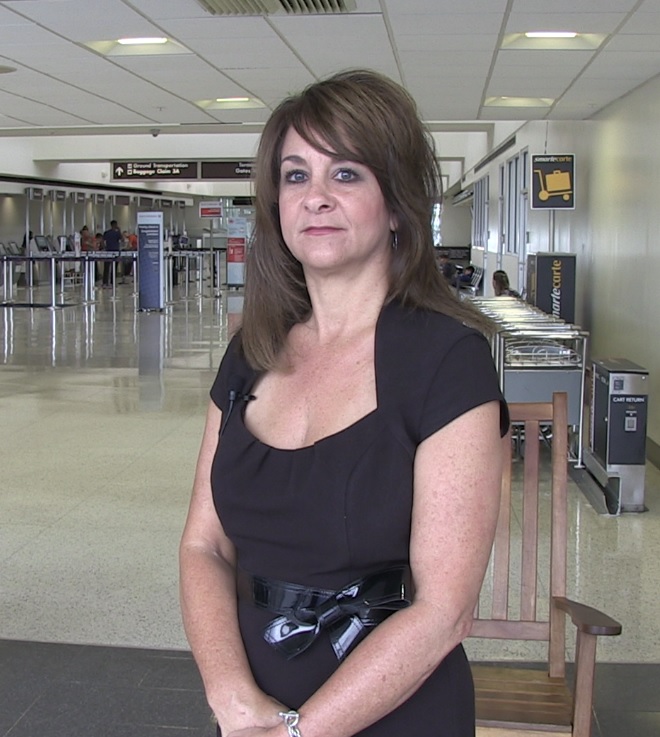
Charlene Carter on her Foundation-won trial victory: “I am so humbled and thankful for today’s decision and for everyone who’s supported me these past five years.”
DALLAS, TX – Ex-Southwest Airlines flight attendant Charlene Carter prevailed in a federal jury trial in her lawsuit against the Transportation Workers Union of America (TWU) Local 556 union and Southwest. She charged both the company and union with illegally firing her for opposing the political activities of the union hierarchy, and with discriminating against her religious beliefs. Carter received free legal representation from National Right to Work Legal Defense Foundation staff attorneys.
A jury in the U.S. District Court for the Northern District of Texas awarded Carter $5.1 million in combined compensatory and punitive damages against TWU and Southwest for their respective roles in her unlawful termination.
“Today is a victory for freedom of speech and religious beliefs. Flight attendants should have a voice and nobody should be able to retaliate against any employee for engaging in protected speech against her union,” said Carter reacting to the victory.
Flight Attendant Called Out Union Officials for Their Political Activities
Carter resigned from union membership in 2013 but was still forced to pay fees to TWU Local 556 as a condition of her employment. The Railway Labor Act (RLA), the federal law that governs labor relations in the air and rail industries, permits the firing of employees for refusal to pay dues and preempts the protections that state Right to Work laws provide.
However, the RLA does protect employees’ rights to remain nonmembers of the union, to speak out against the union and its “leadership,” and to advocate for changing the union’s current “leadership.”
In January 2017, Carter, a pro-life Christian, learned that then-TWU Local 556 President Audrey Stone and other Local 556 officials used union dues to attend a political rally in Washington, D.C., which was sponsored by activist groups she deeply opposed, including Planned Parenthood.
Carter, a vocal critic of Stone and the union, sent private Facebook messages to Stone challenging the union’s support for political positions that were contrary to Carter’s beliefs, and expressing support for a recall effort that would remove Stone from power. Carter also sent Stone a message emphasizing her commitment to a National Right to Work law after the union had sent an email to employees telling them to oppose Right to Work.
After a meeting at which Southwest officials confronted Carter about her posts protesting union officials’ positions, the company fired Carter. In 2017 Carter filed her federal lawsuit, challenging the firing as a clear violation of her rights under two federal laws. She maintained that she lost her job because of her religious beliefs, standing up to TWU Local 556 officials, and criticizing the union’s political activities and how it spent employees’ dues and fees.
Ultimately, concluding an 8-day July trial, the federal jury agreed with Carter and her Foundation staff attorneys. In its verdict, the jury found in favor of Carter on all counts of the lawsuit, while awarding Carter $950,000 in damages against the TWU union local and more than $4 million in damages against Southwest.
Union Zealot Advocated ‘Targeted Assassinations’ of Union Dissidents
In email communications unearthed and introduced at trial by Foundation staff attorneys, TWU union militants advocated for “targeted assassinations” of union dissidents and mocked Carter for being unable to stop her money from going toward union-backed causes she opposed.
Carter’s Foundation-backed lawsuit also revealed ugly examples of the hostility TWU officials and activists had for workers like Carter who spoke out against the incumbent union hierarchy. Foundation staff attorneys are preparing to counter already-announced appeals by both Southwest and TWU.
“This long-awaited verdict vindicates Ms. Carter’s fundamental right to dissent from the causes and ideas that TWU union officials support while forcing workers to bankroll that agenda,” commented National Right to Work Foundation President Mark Mix. “Verdicts like this show not only that one brave worker standing up to union bullies can make a difference, but also send a message to union bosses that their unlawful tactics will not go unpunished or unchallenged.”
Flight Attendant Fired Over Religious Beliefs at Behest of TWU Union and Southwest Airlines Wins Reinstatement
TWU union and Southwest retaliated against employee for speaking out against political stances and activities of union leadership that violated her religious beliefs
Dallas, TX (December 7, 2022) – With free legal aid from National Right to Work Foundation attorneys, former Southwest Airlines flight attendant Charlene Carter has again triumphed in her federal lawsuit charging Transport Workers Union (TWU) officials and Southwest with illegally firing her over her religious beliefs and opposition to the union’s political activity.
The U.S. District Court for the Northern District of Texas this week ordered Southwest and the union to give Carter the maximum amount of compensatory and punitive damages permitted under federal law, plus back-pay, and other forms of relief that a jury originally awarded following Carter’s victory in a July trial.
“Bags fly free with Southwest,” begins the decision. “But free speech didn’t fly at all with Southwest in this case.”
The Court rejected union and airline arguments and also ordered that Carter should be fully reinstated as a flight attendant at Southwest, writing that “Southwest may ‘wanna get away’ from Carter because she might continue to express her beliefs, but the jury found that Southwest unlawfully terminated Carter for her protected expressions.” If only “front pay,” or what she would be making in wages until she finds a new job, is awarded, the Court reasoned, “the Court would complete Southwest’s unlawful scheme” of firing dissenting employees.
Following the District Court’s decision, National Right to Work Foundation President Mark Mix issued the following statement regarding Carter’s victory:
“Southwest and TWU union officials made Ms. Carter pay an unconscionable price just because she decided to speak out against the political activities of union officials in accordance with her deeply held religious beliefs. This decision vindicates Ms. Carter’s rights – but it’s also a stark reminder of the retribution that union officials will mete out against employees who refuse to toe the union line.
“Ms. Carter’s victory should prompt nationwide scrutiny of union bosses’ coercive, government-granted powers over workers, especially in the airline and rail industries. Even after her victory, she and her colleagues at Southwest and other airlines under union control are forced, as per the Railway Labor Act, to pay money to union officials just to keep their jobs.”
Flight Attendant Called Out Union Officials for Their Political Activities
As a Southwest employee, Carter joined TWU Local 556 in September 1996. A pro-life Christian, she resigned her membership in September 2013 after learning that her union dues were being used to promote causes that violate her conscience and have nothing to do with her workplace.
Carter resigned from union membership, but was still forced to pay fees to TWU Local 556 as a condition of her employment. State Right to Work laws do not protect her and her fellow flight attendants from forced union fees because airline and railway employees are covered by the federal Railway Labor Act (RLA). The RLA allows union officials to have a worker fired for refusing to pay union dues or fees. But it does protect the rights of nonmembers of the union who are forced to associate with a union, including the rights to criticize the union and its leadership, and advocate for changing the union’s current leadership.
In January 2017, Carter learned that Audrey Stone, the union president, and other TWU Local 556 officials used union money to attend the “Women’s March on Washington D.C.,” which was sponsored by political groups she opposed, including Planned Parenthood.
Carter, a vocal critic of Stone and the union, took to social media to challenge Stone’s leadership and to express support for a recall effort that would remove Stone from power. Carter also sent Stone a message affirming her commitment to both the recall effort and a National Right to Work law after the union had sent an email to employees telling them to oppose Right to Work.
After Carter sent Stone that email, Southwest managers notified Carter that they needed to have a mandatory meeting as soon as possible about “Facebook posts they had seen.” During this meeting, Southwest presented Carter screenshots of her pro-life posts and messages and questioned why she made them.
Carter explained her religious beliefs and opposition to the union’s political activities. Carter said that, by participating in the Women’s March, President Stone and TWU Local 556 members purported to represent all Southwest flight attendants. Southwest authorities told Carter that President Stone claimed to be harassed by Carter’s messages. A week after this meeting, Southwest fired Carter.
Flight Attendant Sues Southwest and TWU for Illegal Firing
In 2017, Carter filed her federal lawsuit with help from Foundation staff attorneys to challenge the firing as an abuse of her rights, alleging she lost her job because of her religious beliefs, standing up to TWU Local 556 officials, and criticizing the union’s political activities and how it spent employees’ dues and fees.
This week’s decision, in addition to awarding reinstatement, back-pay, prejudgment interest, and damages to Carter, also hits the TWU union and Southwest with injunctions forbidding them from discriminating against flight attendants for their religious beliefs and from failing to accommodate religious objectors. The decision also explicitly prohibits Southwest and the union from discriminating against Carter for exercising her rights under the RLA. Carter may, under the RLA, object to the forced payment of the part of dues used for political and other lawfully nonchargeable union expenses, pursuant to the National Right to Work Foundation’s U.S. Supreme Court victory in Ellis v. Railway Clerks (1984).
Another recent order in the case sanctions Southwest and union attorneys for failing to obey a court order requiring them to make a witness available for a deposition. Southwest and the TWU union are required to pay Carter more than $25,000 in fees and costs. The Court will later award Carter additional fees and costs as a result of the final judgment in her favor.
Foundation Assists Workers in Kicking Out Unwanted Union Bosses
The following article is from the National Right to Work Legal Defense Foundation’s bi-monthly Foundation Action Newsletter, September/October 2021 edition. To view other editions of Foundation Action or to sign up for a free subscription, click here.
Worker decertification efforts target SEIU, Teamsters union officials
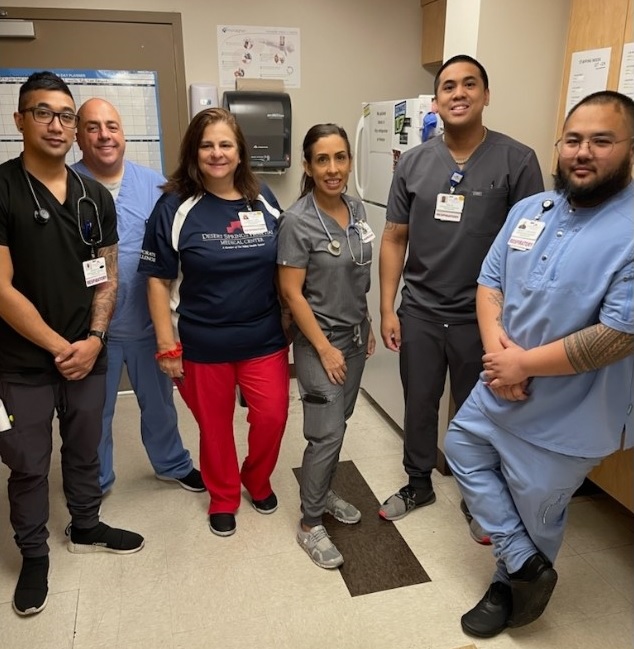
Desert Springs “Decert”: Tammy Tarantino (third from left) and her fellow healthcare workers at Desert Springs Medical Center booted SEIU union bosses from their workplace with Foundation aid, voting by a 3-1 margin for decertification.
CHICAGO, IL – Workers in three different states recently waged successful campaigns to remove the union bosses who controlled their workplaces. In each instance workers utilized free legal assistance from National Right to Work Legal Defense Foundation staff attorneys to navigate the overly-complicated process for getting a vote to remove an unwanted union.
The National Labor Relations Act (NLRA) — which is enforced by the National Labor Relations Board (NLRB) — gives workers the right to hold a decertification vote to end union officials’ monopoly bargaining power over workers. In theory, under the NLRA, workers who collect signatures from 30 percent of a workplace can hold a decertification vote at any time, provided there has not been a unionization vote there in the previous 12 months.
However, because of complicated NLRB doctrines compounded by union legal tactics, obtaining a vote to decertify a union can often be a challenge. That’s why workers in workplaces across the country turn to the Foundation for free legal aid as they seek to hold such a vote.
Workers’ ability to exercise their right to vote out an unwanted union is especially important in states without Right to Work protections, where union bosses can use their monopoly bargaining powers to force every worker to pay union dues or fees or else be fired.
But workers’ right to decertify a union is still critical in Right to Work states, because even without forced union payments, federal law gives union bosses the power to impose their so-called “representation” and resulting union monopoly contracts on members and non-members alike at unionized workplaces. Only once a union is decertified are workers free to represent themselves and communicate with their employer directly.
Foundation Helps Workers Navigate Tricky Legal Process
Highlighting recent activity, three separate workplaces have waged successful decertification efforts.
Petitioner Tim Mangia led the charge at Chicago’s Rush University Medical Center, where he and his fellow maintenance workers voted to remove Teamsters union bosses by a better than 3-1 margin. Separately, in Del Rio and Eagle Pass, Texas, salesmen for Frito-Lay also voted to free themselves from unwanted Teamsters union “representation” following free assistance from Foundation legal staff.
Meanwhile, Tammy Tarantino and her fellow technical employees at the Desert Springs Hospital Medical Center in Las Vegas successfully removed a Service Employees International Union (SEIU) local from their workplace with Foundation help.
Reforms: Union Bosses Can’t Use Bogus Charges to Block Decertification Elections
These cases proceeded without significant delays from union “blocking charges,” the often spurious charges against employers filed by union lawyers seeking to delay a decertification vote. Under old NLRB rules, such charges would have to be resolved before workers’ decertification votes could proceed, delaying the vote for months or even years.
Thanks to NLRB rulemaking advocated by the Foundation and backed by thousands of Foundation supporters, votes now virtually always proceed first with the results quickly announced, so that elections cannot be delayed nearly indefinitely by unsubstantiated union boss claims.
In the Las Vegas medical workers’ case, the new “blocking charge” rules allowed Tammy Tarantino continued from page 2 to have a vote, despite attempts by union lawyers to use charges against the hospital to delay the election. Without being able to rely on the “blocking charge” policy to maintain their power over the workplace, SEIU officials soon found themselves voted out with just 13 of 64 eligible voters voting for the union.
“While we look forward to the day when every individual worker has the freedom to decide whether to pay union dues or be represented by a union, it is especially egregious when union bosses are in power without even the support of a bare majority of rank-and-file workers,” said National Right to Work Foundation Vice President Patrick Semmens. “The National Right to Work Foundation is proud to help workers exercise their right to throw off the yoke of unwanted union so-called ‘representation.’”





