
Workers Win Over $30K After Challenging Teamsters Forced-Dues Scheme
The following article is from the National Right to Work Legal Defense Foundation’s bi-monthly Foundation Action Newsletter, July/August 2020 edition. To view other editions or to sign up for a free subscription, click here.
Cases demonstrate Teamsters union bosses’ widespread use of illegal coercive tactics
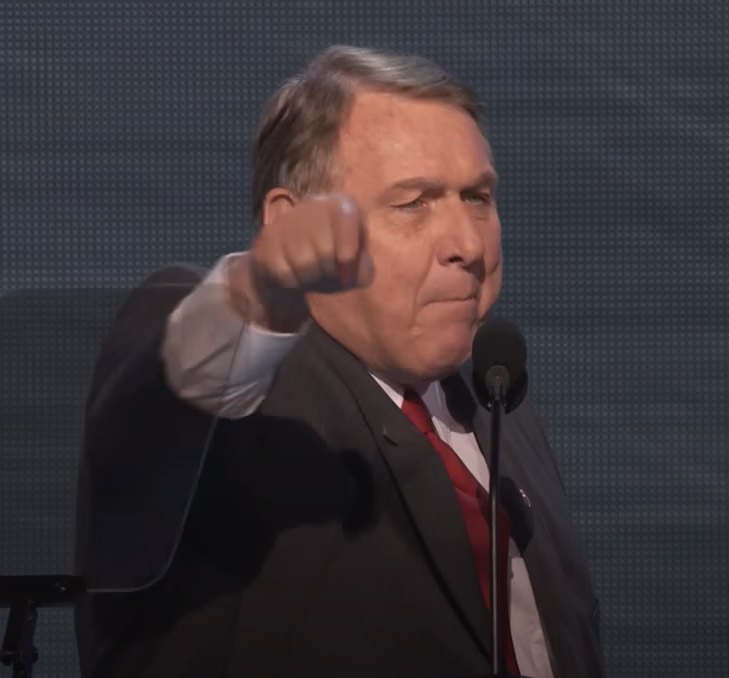
Notorious union boss James Hoffa heads the Teamsters union, which is subjecting workers nationwide and across industries to illegal schemes.
MINNEAPOLIS, MN – With free legal aid from National Right to Work Foundation staff attorneys, workers have won multiple settlements after Teamsters union bosses refused to respect their legal rights not to support a union as a condition of employment.
In one settlement, Minnesota employees James Connolly and Charles Winter won $30,000 in back pay from their former employer after they were illegally fired for choosing not to formally join the Teamsters Local 120 union.
Meanwhile, Milwaukee factory employee Tyler Lewis secured a settlement with Teamsters “General” Local Union No. 200. Union officials had denied his right under Wisconsin’s Right to Work Law and the National Labor Relations Act (NLRA) to not financially subsidize a union.
Two Minnesota Employees Obtain $30,000 in Back Pay
Connolly and Winter each filed unfair labor practice charges against both the Teamsters and their former employer, building materials company OMG Midwest, after they were unlawfully fired.
The two workers charged that company and union officials falsely told them several times that union membership was required as a condition of employment. Both men charged that the misinformation about membership and their firings violated Section 7 of the NLRA, which protects the “right to refrain from any or all” union activities.
In addition to winning $30,000 in back pay from their former employer, the settlement stipulates that OMG Midwest take additional action. The company must “remove all references to the termination” from the two employees’ personnel files, post notices at OMG’s facility in Belle Plaine, Minnesota, and distribute those notices individually to all employees. The notices will explain that workers cannot be forced to join a union as a condition of employment.
In a later settlement, Teamsters bosses were ordered to refrain from telling “employees or applicants that union membership is a condition of employment” and to inform employees “of their right to be non-members.” Additionally, the Teamsters will reimburse any employee who worked at OMG Midwest who chooses to become a non-member for the difference between full union dues and the portion payable by non-member objectors under the Foundation-won Supreme Court decision in CWA v. Beck.
“It is good news that Mr. Connolly and Mr. Winter have won these settlements which require their former employer and Teamsters union bosses to make reparations for violating longstanding worker protections. But such instances of abuse will continue unless Minnesota legislators pass Right to Work protections for their state’s private sector employees,” commented National Right to Work Foundation Vice President and Legal Director Raymond LaJeunesse. “This case demonstrates, yet again, why Teamsters bosses have a well-earned reputation for using coercive tactics against workers who refuse to toe the union line.”
Milwaukee Worker Receives Refund of Union Dues in Foundation-Won Settlement
Under the terms of the settlement for Lewis, Teamsters Local 200 officials agreed to repay union dues, plus interest, seized from Lewis’ paycheck after he resigned his union membership and revoked his dues deduction authorization.
After he was hired to work at Snap-on Logistics Company, a union official told Lewis that he must become a union member and authorize the deduction of union dues from his paycheck. That union demand violated longstanding law dating back to 1963.
In September 2019, Lewis resigned from the union and revoked his authorization of dues deductions. But union bosses refused to honor Lewis’ request to stop union dues deductions and continued to seize dues from his paycheck.
In response, Lewis filed an unfair labor practice charge with the NLRB with the assistance of Foundation staff attorneys. The favorable settlement secured for Lewis resolves his charge. Lewis’ charge against the Teamsters pointed out that the monopoly bargaining contract was signed after the effective date of Wisconsin’s Right to Work Law. Therefore, the so-called “union security” clause in the contract was illegal and he should never have been forced to pay any amount to the union.
“This settlement for Mr. Lewis is yet another victory for the rights of all Wisconsin workers. However, it should not take federal labor charges for union bosses to acknowledge the basic rights of employees in the Badger State,” said LaJeunesse.
Foundation Staff Attorneys Appeal NLRB Settlement that Fails to Compensate Victims of Union Discrimination Scheme
Tygart Center settlement failed to provide a complete remedy to employees for its discriminatory practice of paying more per hour to union stewards
Fairmont, WV (May 26, 2020) – National Right to Work Legal Defense Foundation staff attorneys have appealed a forced settlement agreement between the National Labor Relations Board (NLRB) and Tygart Center imposed on healthcare worker Donna Harper. Harper objects to the imposed settlement because it fails to provide a complete remedy for her and other workers who were discriminated against under the union bargaining agreement between Tygart Center and Teamsters Local 175.
In the settlement, Tygart Center agrees to stop enforcing an unlawful contract provision under which Teamsters union stewards have been paid more per hour than other employees. However, as Foundation attorneys argue in their appeal to NLRB General Counsel Peter Robb, the settlement does not require Tygart Center to compensate the employees who were denied the additional pay per hour as a result of the discrimination.
“The Employer and Union unlawfully discriminated in favor of Union stewards, granting them an increased wage in the [union contract] while denying that wage to all others,” one portion of the appeal reads. “This action denied a benefit to every employee who was not a Union steward.”
Foundation staff attorneys also filed an amicus brief for Harper with the West Virginia Supreme Court to defend the state’s Right to Work law against a protracted lawsuit brought by several unions attempting to overturn the law and restore union officials’ power to have workers fired for refusing to pay union dues or fees.
The West Virginia Supreme Court on April 21 of this year unanimously upheld the constitutionality of West Virginia’s Right to Work law, which has been in effect during that litigation due to earlier orders issued by that court.
“Union bosses in West Virginia want nothing more than to coerce workers into paying dues either by misleading workers by wrongly telling them they must pay union dues or by trying unsuccessfully to overturn the state’s Right to Work law in court,” commented National Right to Work Foundation President Mark Mix. “Foundation staff attorneys are ensuring that employers and union bosses in the Mountain State do not get away with illegal deals to fill union coffers or unlawfully discriminate against employees who choose to exercise their rights to not engage in union activity.”
Milwaukee Worker Wins Refund of Union Dues in Settlement of Case Against Teamsters Union
Teamsters Local 200 union officials agree to repay money siphoned from factory workers’ pay after he exercised rights under Wisconsin Right to Work law
Milwaukee, WI (April 27, 2020) – With free legal aid from the National Right to Work Legal Defense Foundation, an employee at a Milwaukee factory has secured a settlement with Teamsters “General” Local Union No. 200. Union officials denied his right under Wisconsin’s Right to Work law and the National Labor Relations Act to cut off union financial support.
Under the terms of the settlement, Teamsters Local 200 officials will repay Tyler Lewis union dues, plus interest, seized from his paycheck after he resigned his union membership and revoked his dues deduction authorization (“checkoff”).
Lewis works for Snap-on Logistics Company. After he was hired, a union official told him that he must become a union member and sign a checkoff authorizing the deduction of union dues from his paycheck. That union demand violated longstanding law going back to 1963.
In September 2019, Lewis resigned from the union and revoked his checkoff. Local 200 union officials refused to honor Lewis’s request to stop union dues deductions and continued to deduct them from his paycheck, despite Wisconsin’s Right to Work law making union payments strictly voluntary.
Consequently, Lewis filed an unfair labor charge with the National Labor Relations Board with the help of National Right to Work Foundation staff attorneys. The favorable settlement for Lewis resolves his charge.
“This settlement for Mr. Lewis is yet another victory for the rights of all Wisconsin workers, although it should not take federal labor charges for union bosses to acknowledge the basic rights of employees in the Badger State,” said National Right to Work Foundation President Mark Mix. “Clearly Wisconsin’s Right to Work law mandates that union membership and dues payment must be strictly voluntary, but union bosses regularly attempt to trap workers in forced fee ‘agreements,’ rather than respect workers’ rights and vie to win their uncoerced support.”
“This case demonstrates, yet again, why Teamsters union bosses have a well-earned reputation for using coercive tactics against workers who refuse to toe the union line,” Mix added.
Paramedic Files Appeal after NLRB Disregards Illegal Union Retaliation
The following article is from the National Right to Work Legal Defense Foundation’s bi-monthly Foundation Action Newsletter, January/February 2020 edition. To view other editions or to sign up for a free subscription, click here.
Appeal to NLRB General Counsel comes just months after Region 14 was reversed in similar case

Paramedic Jarod Aubuchon is appealing his case against Teamsters officials after they punished him for informing his coworkers of their rights to resign union membership and pay reduced dues.
St. LOUIS, MO – Jarod Aubuchon, a St. Louis-area paramedic who charged Teamsters Local 610 union officials with illegal retaliation after he tried to inform his coworkers of their right to pay reduced union dues, is filing an appeal in his case to the National Labor Relations Board (NLRB) General Counsel in Washington, D.C. He is represented free of charge by National Right to Work Legal Defense Foundation staff attorneys.
Aubuchon’s appeal comes after the October 2019 dismissal of his case by NLRB Region 14 officials in St. Louis. Region 14 was reversed by the NLRB General Counsel in a similar union retaliation case this summer, which was also brought by Foundation staff attorneys.
Union Officials Vow Punishments after Worker Posted Rights Notices
Aubuchon discovered the right of private sector workers under the Foundation-won CWA v. Beck Supreme Court decision to resign union membership and pay a reduced portion of union dues. Because Missouri is not a Right to Work state, private sector workers can still be compelled to pay part of union dues as a condition of employment.
Beck, won by Foundation staff attorneys in 1988, guarantees that employees who are not union members can only be required to pay fees to a union for expenses that are directly germane to bargaining, such as contract administration.
Armed with this new knowledge, Aubuchon posted flyers in common areas of his workplace informing his coworkers of their Beck rights. According to his charge, Teamsters agents responded by tearing down these notices and later demanding that his employer, Medic One, discipline him for the postings. Actions by union officials that cause an employer to discriminate against workers on such grounds are prohibited by the National Labor Relations Act (NLRA).
Aubuchon resigned his own union membership and asserted his Beck rights. Aubuchon’s charge states that neither his resignation nor his Beck rights have been acknowledged by Teamsters bosses, and full dues are still being seized from his paychecks.
Employee Appeals to NLRB General Counsel with Free Foundation Legal Aid
After NLRB Region 14 officials rejected his case, Aubuchon petitioned the NLRB General Counsel to overturn the decision and order remedies for the retaliation he experienced from Teamsters officials.
“They spend union money on political activism without consideration of its members,” Aubuchon said of Teamsters officials to the St. Louis Record after his appeal was filed. “We have a right to not have our money used in that manner and in the end I hope employees are better educated on their rights and how to exercise them.”
In July 2019, the General Counsel reversed Region 14 officials’ dismissal of a similar case brought by Foundation staff attorneys for Kansas City-area hospital worker Kacy Warner. Warner charged officials of the National Nurses Organizing Committee (NNOC) union with illegally interfering with a petition she was circulating for a vote to remove the union. That included tearing down flyers she had hung in bathrooms and other common areas in her workplace informing employees of the petition. In her case the NLRB General Counsel reversed Region 14’s dismissal and ordered region officials to prosecute the charge.
Region 14 officials were also overturned by the full Labor Board in October 2019 after the Region dismissed a petition for a vote to remove the union from St. Elmo, Illinois-based ConAgra Foods worker Robert Gentry’s workplace. United Food and Commercial Workers (UFCW) union bosses had attempted multiple times to stop workers at the plant from exercising the right to vote out the union.
“The NLRB is charged with enforcing workers’ rights under the National Labor Relations Act, yet there is a disturbing pattern of Region 14 failing to enforce the rights of rank-and-file workers when doing so advances the interests of union bosses,” commented National Right to Work Foundation Vice President Patrick Semmens. “It should not take an appeal to Washington, D.C., for workers to have their rights fully protected against union boss abuses.”
Special Legal Notice for West Virginia Employees of AHF Products Issues by National Right to Work Foundation Staff Attorneys
Beverly, WV (March 16, 2020) – Amid reports of a strike called by Teamsters union officials, and due to requests for legal assistance that often accompany such union-instigated work stoppages, National Right to Work Legal Foundation staff attorneys have issued a special legal notice to workers at the AHF Products plant in Beverly, West Virginia.
The special legal notice outlines workers’ rights that union officials won’t share with them, and specifies what steps workers should take if they wish to exercise their right to work during the strike:
Teamster union officials have ordered AHF Products workers at the company’s Beverly, West Virginia plant to abandon their jobs and go on strike.
The situation raises serious concerns for workers who believe there is much to lose from engaging in a union-ordered strike.
Employees have the right under federal labor law to rebuff union officials’ strike demands, but it is important for you to be informed before you do so.
IF YOU WOULD LIKE TO CONTINUE WORKING OR RETURN TO WORK DURING A STRIKE READ ALL OF THIS SPECIAL NOTICE BEFORE CROSSING A PICKET LINE TO WORK – IT MIGHT SAVE YOU THOUSANDS OF DOLLARS!
Read the complete legal notice here.
Milwaukee Worker Files Federal Charges Against Teamsters Union for Violating His Rights under State and Federal Law
NLRB Charge: Despite Right to Work law, union bosses coerced worker into becoming a union member and then blocked attempts to cut off dues payments
Milwaukee, WI (March 3, 2020) – With free legal aid from National Right to Work Legal Defense Foundation staff attorneys, an employee at a Milwaukee factory has filed federal charges against Teamsters “General” Local Union No. 200 for violating his rights under the National Labor Relations Act (NLRA) and Wisconsin’s Right to Work law.
Tyler Lewis, employed by Snap-on Logistics Company, filed an unfair labor practice charge with the National Labor Relations Board (NLRB) after union officials told him that he must become a union member and pay membership dues as a condition of employment in violation of longstanding federal law.
Teamsters union officials further refused to allow Lewis to stop union dues from being seized from his paycheck even after he learned of his rights and resigned his union membership in September 2019. Moreover, union officials continue to deduct dues from his paycheck and refuse to refund Lewis any of the dues unlawfully seized from him.
Forcing workers to pay union dues or fees as a condition of employment is prohibited under Wisconsin’s Right to Work law, which went into effect in March 2015. However, union officials continued to accept and retain union dues seized from Lewis because they claimed he could only cut off union dues deductions during a narrow union-created “window period.” Even as they made that claim, they failed to provide Lewis with specific dates when his request would be accepted under their rules.
As his charge details, the union monopoly bargaining agreement in Lewis’ workplace, which was signed after the state Right to Work law went into effect, contained language prohibited by the Right to Work law that workers must pay union dues or fees as a condition of employment. Moreover, even if the agreement was actually in place prior to the law’s effective date, Lewis’ Foundation-provided attorneys state in the filing that the passage of the Right to Work law invalidated the union’s claim that Lewis’ right to stop dues payments was limited to a brief union window period.
“Once again, Teamsters union bosses are using coercive tactics to force workers they claim to ‘represent’ to pay union dues and fees against their wishes,” said National Right to Work Foundation President Mark Mix. “Wisconsin’s Right to Work law should mean union membership and dues payment are strictly voluntary, but rather than respect workers’ rights and work to win their uncoerced support, union bosses are again attempting to trap workers in forced dues in violation of federal law.”
Healthcare Worker Sues Teamsters Union and Healthcare Facility for Violating West Virginia Right to Work Law
Former Tygart Center employee says union officials and employer violated her legal rights by demanding she join the union and pay union dues and fees to keep her job
Fairmont, WV (December 24, 2019) – With free legal aid from the National Right to Work Legal Defense Foundation, healthcare worker Donna Harper filed a lawsuit against Teamsters Local 175 and the Tygart Center for violating her rights under the State of West Virginia’s Right to Work law.
West Virginia’s Right to Work law prohibits requiring workers to pay union dues or fees just to get or keep a job. In defiance of West Virginia’s Right to Work law, Tygart Center and Teamsters union officials entered into a collective bargaining agreement that required employees to pay union dues and fees as a condition of employment.
When Harper was hired, Tygart Center officials informed Harper that she must become a union member and pay union dues as a condition of employment in violation of her legal rights. Tygart Center officials deducted full union membership dues and fees from Harper’s paycheck and remitted this money to Teamsters union officials.
In March 2019, Harper successfully exercised her legal rights by resigning her union membership. Even then union officials continued taking union dues from her paycheck. Union officials also never fully refunded the union dues unlawfully seized from her wages.
Foundation staff attorneys filed the suit against the Tygart Center and the Teamsters union for Harper in Marion County Circuit Court. Harper worked at the Tygart Center from February 2018 until September 2019 as a Laundry Aide and as a Certified Nursing Assistant.
Foundation staff attorneys also filed an amicus brief for Harper with the West Virginia Supreme Court defending the state Right to Work law against a protracted lawsuit brought by several unions seeking to overturn the law and restore union officials’ power to have workers fired for refusing to pay union dues or fees. That case is scheduled for oral arguments in the Supreme Court on January 15. That court has already rejected the unions’ arguments once, overturning a preliminary injunction against the Right to Work law.
“Teamsters union bosses demonstrated a blatant disregard for the law by illegally demanding Ms. Harper and her coworkers pay union dues and fees just to get or keep their jobs,” said National Right to Work Foundation President Mark Mix. “Contrary to Big Labor’s wishes, West Virginia’s Right to Work law is in full effect, meaning all union dues for workers covered by the law must be completely voluntary.”
National Right to Work Foundation In the Wall Street Journal: “Trapped by the Teamsters”
Recently the Wall Street Journal published a piece by National Right to Work Legal Defense Foundation President Mark Mix titled “Trapped by the Teamsters.”
The op-ed describes the numerous NLRB policies, doctrines and “bars” workers across the country face when merely attempting to hold a vote to oust Teamsters bosses and other union officials as their monopoly bargaining so-called “representative.” The article illustrates these coercive policies through recent examples faced by workers who have turned to the Foundation for free legal aid:
A majority of workers at a Wisconsin trucking company experienced this over the past two years. First, they were blocked from removing their union by the so-called voluntary-recognition bar. This stops workers from decertifying a union for up to a year after the union is installed through “card check”—a procedure that avoids the need for a secret ballot and makes workers vulnerable to union intimidation.
Then, after waiting a year for that bar to expire, the Wisconsin workers found they had been merged by Teamsters officials into a multicompany nationwide bargaining unit of about 24,000 workers. Suddenly the petition to oust the local union was 7,000 signatures short—for a workplace with fewer than 10 union workers. Last month the NLRB declined the Wisconsin workers’ appeal, though a majority of voting board members signaled they would revisit the “merger doctrine” policy in the future.
Other workers face other hurdles: The “settlement bar” blocks a decertification vote because of an NLRB settlement to which the workers weren’t a party; the “successor bar” blocks a vote for up to a year after a company is acquired; the “contract bar” blocks a vote for up to three years after a union contract is forged; and a “blocking charge” blocks a vote while union allegations against a company are pending. None of these are required by law.
The NLRB is addressing the voluntary-recognition bar and blocking charges through the current rule-making process, but the other policies are similarly destructive of workers’ legal right to vote out a union that lacks majority backing. Congress should act to protect workers from being trapped in union ranks they oppose, but in the meantime the NLRB has the authority to eliminate these barriers.
Union officials unable to win the support of a majority of the workers they purport to represent shouldn’t maintain power solely because of bureaucratic rules. Instead, whenever enough workers file a petition to remove a union they oppose, the NLRB should simply let them vote.
Read the whole piece here.
Alaska School Bus Drivers Win Three Year Battle to Kick Unpopular Teamsters Union Bosses Out of Their Workplace
Multi-year legal fight to remove union opposed by majority of workers shows need for reform of NLRB rules that allow unions to block workers’ from holding decertification votes
Anchorage, AK (December 9, 2019) – A group of Alaskan school bus drivers have just prevailed in their years-long effort to remove an unpopular Teamsters union from their workplace. The union’s ouster comes after National Right to Work Legal Defense Foundation staff attorneys provided free legal aid to Elizabeth Chase, the bus driver leading the charge to hold a decertification election so workers could vote out the union.
After workers sought for almost three years to remove the union, Teamsters Local 959 union officials finally stopped fighting the workers’ efforts by filing a disclaimer of interest with the National Labor Relations Board (NLRB) Region 19 in Seattle. The disclaimer came after the Region dismissed the union’s latest unfair labor practice charge following Chase’s fifth request for review to the full NLRB in Washington, DC, contesting the Regional Director’s continued block of a decertification vote at the behest of Teamsters bosses.
Chase is an employee of Apple Bus Company near Anchorage, Alaska. In July 2017, she submitted a decertification petition to NLRB Region 19 asking for a secret ballot election to remove the Teamsters as the monopoly bargaining representative in her workplace. Under the National Labor Relations Act (NLRA), if a decertification petition garners signatures from at least 30 percent of the employees in a bargaining unit, the NLRB is supposed to conduct a secret-ballot election to determine whether a majority of the employees wish to decertify the union. Chase’s initial petition was signed by more than 50 percent of the workers in the bargaining unit, far more than necessary to trigger a decertification vote.
The NLRB Regional Director blocked the decertification vote later that year, citing the Obama Labor Board-backed “successor bar,” which prohibits workers from removing an unwanted union simply because the ownership of an employer has changed hands. That “successor bar” is not mandated by the NLRA, which the NLRB is charged with enforcing.
Despite that setback, Chase and her coworkers continued their efforts to remove the Teamsters from their workplace, filing another decertification petition in 2018. This time, Teamsters officials moved to prevent the vote by filing successive “blocking charges” with the Regional Director, alleging unfair labor practices by Apple Bus. The Regional Director repeatedly allowed union officials to block a vote despite Chase’s pointing out that the Region failed to “explain specifically what causal connection(s) exist” between the petition and the union bosses’ allegations that made it necessary to stop the vote. All told, Chase requested five times that the full NLRB in Washington, DC, reverse the Regional Director’s decisions and let the vote proceed.
The NLRA, the federal law that the NLRB is tasked with enforcing, grants all workers the right to remove an unpopular union. Most restrictions manipulated by union bosses to halt decertification votes (such as the “successor bar” and “blocking charges”) are not established in its text but have been read into it by Big Labor-friendly Board Members under the Clinton and Obama administrations. Foundation staff attorneys have been fighting for workers for decades to eliminate these unfair, non-statutory limitations on workers’ rights to hold a vote to remove a union that has lost most workers’ support.
The NLRB is currently accepting comments on reforming the “blocking charge” doctrine and another non-statutory bar to decertification elections, the “voluntary recognition” bar. In comments to the Labor Board, Chase’s Apple Bus coworker Donald Johnson blasted the union’s ability to game the NLRB’s system to delay a decertification vote for years as “the most unfair and anti-democratic event I have been involved with in my entire life.” The window for submitting comments to the NLRB ends on January 9, 2020. Foundation attorneys have prepared comments they will file urging the Board to end both the “blocking charge” policy and “voluntary recognition” bar.
“The NLRB is tasked with protecting the right of employees to remove a union that is opposed by a majority of workers, but as this case shows us that right is undermined by non-statutory NLRB policies that allow workers to be trapped in union ranks for years at a time without even a decertification vote,” observed National Right to Work Foundation President Mark Mix. “Though Ms. Chase and her coworkers are finally free from the coercive reign of a plainly unpopular Teamsters union, the NLRB must act quickly to roll back the undemocratic election bars and blocking charge policies that undermined their rights for almost three years.”
Teamsters Officials Misled Pepsi Employee About His Rights, Attempted to Have Him Fired for Asking About Leaving Union
Albany-area worker filed unfair labor practice charge against Teamsters at National Labor Relations Board with free legal aid from the National Right to Work Foundation
Latham, NY (October 30, 2019) — National Right to Work Legal Defense Foundation staff attorneys filed an unfair labor practice charge on behalf of an employee of a Pepsi plant, against a local Teamsters union after union officials wrongly told him he would have to join the union as a condition of employment, tried to get him fired and would not allow him to exercise his legal right to resign from the union.
Vince Zasonski works for a Pepsi-Cola production plant in Lathan, New York where Teamsters Local 294 have a bargaining agreement which includes a union security clause, making union payments mandatory. In the summer of 2018, Zasonski, who did not voluntarily join the union, wanted to leave union membership, but a union official told him that because New York is not a Right to Work state, he would have to stay in the union.
In that statement, which came after Zasonski inquired about resigning from the union, the union fundamentally misstated workers’ rights under the National Labor Relations Act and longstanding legal precedents. While New York workers lack Right to Work protections that make all union payments strictly voluntary, Empire State workers still have the right to resign their formal membership and pay only the portion of union dues allowed under the Supreme Court’s Communications Workers of America v. Beck decision, which said unions cannot force workers to pay for activities unrelated to bargaining such as union political and lobbying activities.
The official then tried to get Zasonski fired for seeking to resign his union membership. In August of 2019, Zasonski wrote to union officials to resign his union membership and assert his Beck rights.
Union officials, however, still have not responded to his letter or recognized his legal rights. The unfair labor practice charge Zasonski filed with the free legal aid from National Right to Work Foundation staff attorneys states that union officials never explained that he could resign from the union or that he could assert his Beck rights, nor did they provide him with a breakdown of fees according to the Beck standard or reduce Zasonski’s dues as he asked.
The union continues to unlawfully take a cut of Zasonski’s paycheck as if he were a full member of the union despite his attempts to resign membership and exercise his rights not to pay dues that support union political activities in violation of his rights.
“Lying to employees about their right to resign from union membership and their ability to stop paying full dues shows what lengths greedy union bosses will go to pad union coffers, even if it means violating the rights of the very workers they claim to represent,” said National Right to Work Foundation President Mark Mix. “This case shows why every worker in America needs the protection of a Right to Work law that makes union membership and financial support strictly voluntary.”





