
Chicago-area Firefighters Kick Out Unwanted SEIU Officials
SEIU officials back down, depart Carpentersville facility after worker exposed false claims SEIU made to disenfranchise firefighters opposed to union
Chicago, IL (April 7, 2022) – With free legal representation from National Right to Work Legal Defense Foundation attorneys, Nick Salzmann and his fellow Village of Carpentersville firefighters have forced unwanted Service Employees International Union (SEIU) Local 73 officials out of their workplace.
Salzmann filed a petition in September 2021 backed by the vast majority of his coworkers seeking a vote whether to remove the SEIU union. After the Illinois Labor Relations Board (ILRB) executive director blocked the vote based on specious accusations union officials made of Village of Carpentersville officials, Salzmann filed an appeal that revealed union officials had actually staged the scenario in which the alleged misbehavior arose.
Rather than respond to that appeal, in March, SEIU union officials filed paperwork relinquishing power over Salzmann and his coworkers.
Carpentersville Firefighter’s Appeal Revealed Plot by SEIU Union Bosses to Maintain Control
The ILRB is the Illinois state agency responsible for adjudicating workplace disputes among union officials, Illinois government agencies, and Illinois public employees. SEIU union officials’ so-called “blocking charges,” which they filed against Village of Carpentersville officials in an attempt to delay Salzmann and his coworkers’ requested election, claimed that Carpentersville officials were not following proper bargaining procedures.
However, Salzmann’s appeal showed that in reality it was union officials who disrupted the bargaining process. His appeal maintained that “the union walked away from the bargaining table twice when the Employer could not guarantee that the decertification process would not proceed.”
SEIU bosses’ departures from the bargaining table are a sign union officials were trying to coerce Carpentersville officials into assisting the union in quashing the employee-led decertification effort.
As further evidence of the scheme, Salzmann’s appeal stated that “the Union amended the charges, changing from an ‘impacts and effect’ charge to a ‘failure to bargain’ charge,” suggesting that union lawyers couldn’t demonstrate any connection between Salzmann and his coworkers’ desire to eliminate the union and anything Carpentersville officials did, and had to rely on the (union-caused) bargaining stoppages as their sole allegation against Carpentersville officials.
According to the appeal, approximately 80% of the firefighters favored decertifying the union.
Finally, Salzmann’s appeal contended that the SEIU bosses’ actions disturbed the “laboratory conditions” that should be present for any decertification election. It stated that the “Union’s efforts to compel [the firefighters] to abandon their claim, including telling them they had proceeded improperly in their effort,” along with the union bosses’ willful departures from the bargaining table “caused the factual scenario” that led to the union’s charge.
Foundation President: ILRB Rules Allowed Election Interference by Union Officials
“We’re pleased Nick Salzmann and his coworkers were finally able to oust unpopular SEIU officials from their facility,” commented National Right to Work Foundation President Mark Mix. “However, it’s astonishing that ILRB officials initially blocked Salzmann’s request for a vote to remove the union based on a patently false narrative peddled by SEIU union bosses.”
“Salzmann and his coworkers’ travail is one more reason why government union bosses should not have the power to force workers under their so-called ‘representation’ at all,” Mix added. “No public employee should be ever be required to associate with a private organization like a union just to work for their own government.”
Foundation Assists Workers in Kicking Out Unwanted Union Bosses
The following article is from the National Right to Work Legal Defense Foundation’s bi-monthly Foundation Action Newsletter, September/October 2021 edition. To view other editions of Foundation Action or to sign up for a free subscription, click here.
Worker decertification efforts target SEIU, Teamsters union officials
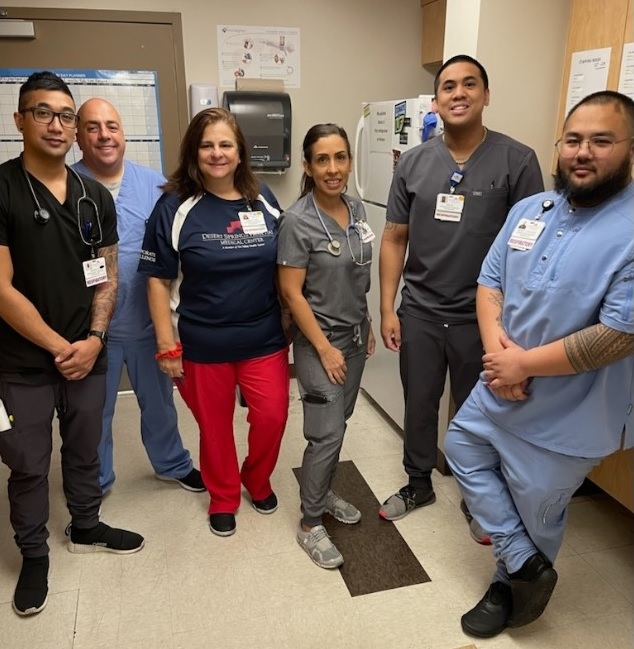
Desert Springs “Decert”: Tammy Tarantino (third from left) and her fellow healthcare workers at Desert Springs Medical Center booted SEIU union bosses from their workplace with Foundation aid, voting by a 3-1 margin for decertification.
CHICAGO, IL – Workers in three different states recently waged successful campaigns to remove the union bosses who controlled their workplaces. In each instance workers utilized free legal assistance from National Right to Work Legal Defense Foundation staff attorneys to navigate the overly-complicated process for getting a vote to remove an unwanted union.
The National Labor Relations Act (NLRA) — which is enforced by the National Labor Relations Board (NLRB) — gives workers the right to hold a decertification vote to end union officials’ monopoly bargaining power over workers. In theory, under the NLRA, workers who collect signatures from 30 percent of a workplace can hold a decertification vote at any time, provided there has not been a unionization vote there in the previous 12 months.
However, because of complicated NLRB doctrines compounded by union legal tactics, obtaining a vote to decertify a union can often be a challenge. That’s why workers in workplaces across the country turn to the Foundation for free legal aid as they seek to hold such a vote.
Workers’ ability to exercise their right to vote out an unwanted union is especially important in states without Right to Work protections, where union bosses can use their monopoly bargaining powers to force every worker to pay union dues or fees or else be fired.
But workers’ right to decertify a union is still critical in Right to Work states, because even without forced union payments, federal law gives union bosses the power to impose their so-called “representation” and resulting union monopoly contracts on members and non-members alike at unionized workplaces. Only once a union is decertified are workers free to represent themselves and communicate with their employer directly.
Foundation Helps Workers Navigate Tricky Legal Process
Highlighting recent activity, three separate workplaces have waged successful decertification efforts.
Petitioner Tim Mangia led the charge at Chicago’s Rush University Medical Center, where he and his fellow maintenance workers voted to remove Teamsters union bosses by a better than 3-1 margin. Separately, in Del Rio and Eagle Pass, Texas, salesmen for Frito-Lay also voted to free themselves from unwanted Teamsters union “representation” following free assistance from Foundation legal staff.
Meanwhile, Tammy Tarantino and her fellow technical employees at the Desert Springs Hospital Medical Center in Las Vegas successfully removed a Service Employees International Union (SEIU) local from their workplace with Foundation help.
Reforms: Union Bosses Can’t Use Bogus Charges to Block Decertification Elections
These cases proceeded without significant delays from union “blocking charges,” the often spurious charges against employers filed by union lawyers seeking to delay a decertification vote. Under old NLRB rules, such charges would have to be resolved before workers’ decertification votes could proceed, delaying the vote for months or even years.
Thanks to NLRB rulemaking advocated by the Foundation and backed by thousands of Foundation supporters, votes now virtually always proceed first with the results quickly announced, so that elections cannot be delayed nearly indefinitely by unsubstantiated union boss claims.
In the Las Vegas medical workers’ case, the new “blocking charge” rules allowed Tammy Tarantino continued from page 2 to have a vote, despite attempts by union lawyers to use charges against the hospital to delay the election. Without being able to rely on the “blocking charge” policy to maintain their power over the workplace, SEIU officials soon found themselves voted out with just 13 of 64 eligible voters voting for the union.
“While we look forward to the day when every individual worker has the freedom to decide whether to pay union dues or be represented by a union, it is especially egregious when union bosses are in power without even the support of a bare majority of rank-and-file workers,” said National Right to Work Foundation Vice President Patrick Semmens. “The National Right to Work Foundation is proud to help workers exercise their right to throw off the yoke of unwanted union so-called ‘representation.’”
Foundation Battles Union Restrictions on First Amendment Rights at Ninth Circuit
The following article is from the National Right to Work Legal Defense Foundation’s bi-monthly Foundation Action Newsletter, January/February 2021 edition. To view other editions or to sign up for a free subscription, click here.
Cases challenge coercive, anti-Janus “escape periods” concocted by union bosses
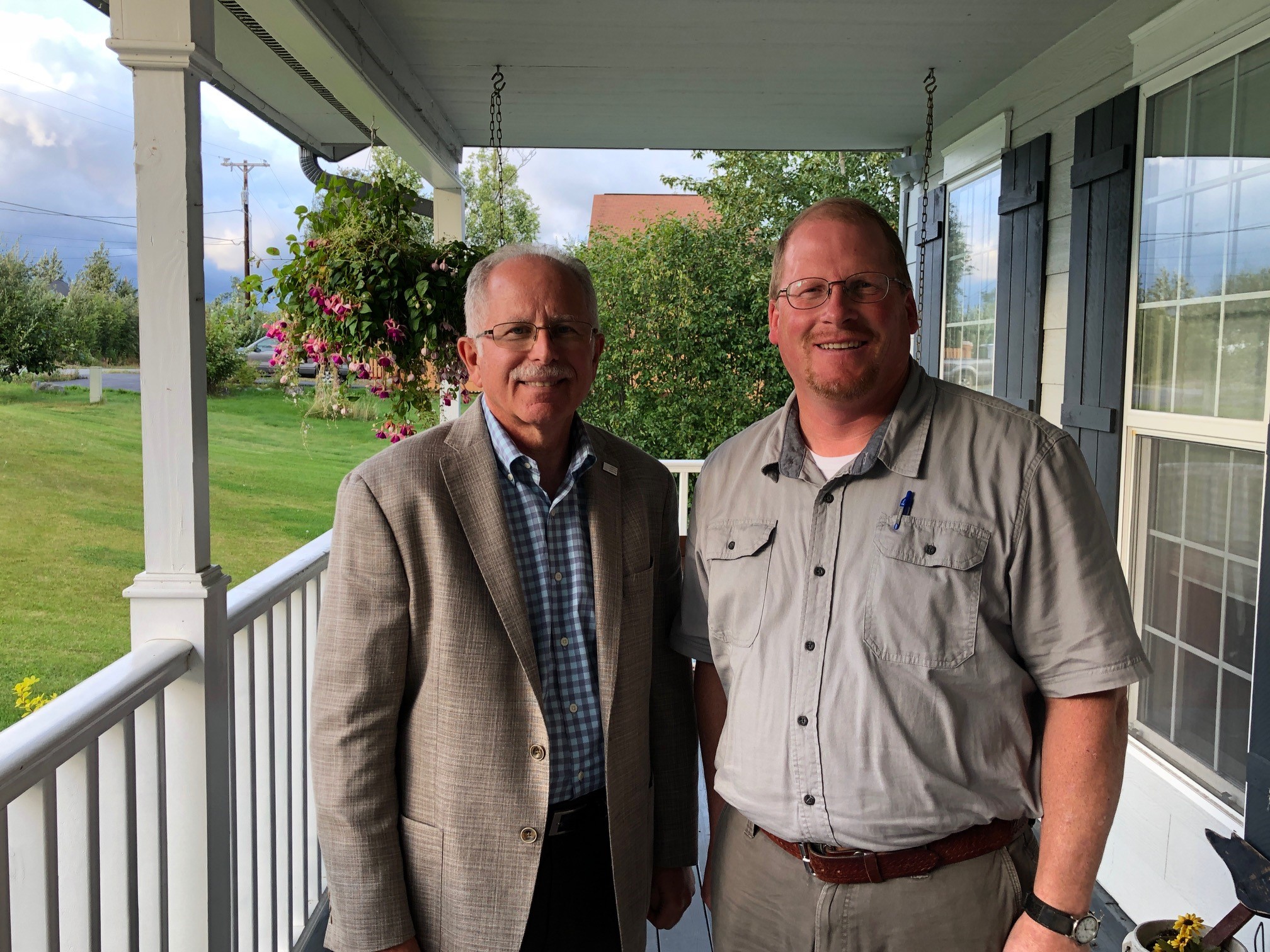
Christopher Woods (right), seen here with Mark Janus, is taking up the latter’s fight by challenging an ASEA union boss scheme that traps workers in union payments even after they have dissociated from the union.
SAN FRANSCISO, CA – The 2014 National Right to Work Foundation victory for Pam Harris in the Harris v. Quinn Supreme Court case established that union bosses violate the First Amendment when they skim dues from homecare providers’ state subsidies without their consent. Now, seven California homecare providers have just appealed to the Ninth Circuit Court of Appeals their federal lawsuit against Service Employee International Union (SEIU) Local 2015 officials for continuing to skim dues in violation of their rights.
According to their suit, SEIU honchos enforced a phony “escape period” on the homecare providers, illegally limiting the time in which they could stop the deductions. The providers’ suit says this contravenes the U.S. Supreme Court’s ruling in Janus v. AFSCME. The Court not only held that the government cannot force individuals to subsidize union activities as a condition of employment, but also that government agencies can only deduct union payments after receiving a clear and knowing waiver of their First Amendment right not to make such payments.
Dues-Skim Scam: SEIU Took Dues Without Informing Providers of Rights
Although the plaintiffs, Delores Polk, Heather Herrick, Lien Loi, Peter Loi, Susan McKay, Jolene Montoya and Scott Ungar, are not public employees, they were designated as such solely for the purpose of monopoly unionization. Then that was used as justification for the State of California to skim union dues from their payments at the behest of SEIU officials. The seven participate in the In-Home Support Services (IHSS) program, which allots Medicaid funds to those who provide home-based aid to people with disabilities.
Polk and the other plaintiffs recount in the lawsuit that SEIU union bosses began taking cuts of their Medicaid subsidies after confusing phone calls or mandatory orientation sessions. After the plaintiffs contacted the SEIU attempting to exercise their right to stop the flow of dues, SEIU operatives informed them that they could only opt out of union dues during short union-created “escape periods” of 10-30 days once per year.
The lawsuit also points out that the federal law governing IHSS forbids diverting any part of Medicaid payments to “any other party” besides the providers. In fact, in rulemaking urged by National Right to Work Foundation comments, the federal agency that administers Medicaid confirmed that skimming such payments for unions violates the Medicaid statute passed by Congress.
The seven plaintiffs now seek a ruling that both the taking of union dues without their knowing consent and the policy restricting the providers from ending the dues deductions are unconstitutional. The providers also seek refunds of all money that they and any other IHSS program participants had taken from their payments through the illegal scheme.
Alaska Union Bosses Confine Prison Employee in Unconstitutional Deductions
Also at the Ninth Circuit Court of Appeals, Alaska vocational instructor Christopher Woods recently filed an appeal in his case challenging an “escape period” scheme to block him and other Alaska state employees from exercising their First Amendment rights recognized in Janus.
In a November 2019 email, Woods, who has worked as a vocational instructor at Goose Creek Correctional Center since 2013, informed Alaska State Employees’ Association (ASEA) officials he was exercising his Janus right to stop all union dues deductions. Rather than respect his rights, union officials rejected his request and told Woods that he could only “opt out” and not be a union member with written notice to this office during a 10-day period each year.
Woods persisted on December 2, 2019, submitting to both ASEA officials and the payroll office of the Corrections Department another email asking to cut off dues. Although the payroll office confirmed to both Woods and the ASEA that it had received the request, an ASEA official responded by merely telling the payroll office that she was “still communicating with [Woods] on the matter,” the complaint says. Woods reports in his lawsuit that he has “not received any further communications” from either the ASEA or the payroll office, and that full dues are still being seized from his paychecks.
Foundation String of Triumphs Against Janus Restrictions Unlikely to End
“‘Escape periods’ are shameless union boss-concocted schemes that only exist to keep dues money rolling into their coffers after employees have clearly communicated that they do not wish to support the union,” observed National Right to Work Vice President and Legal Director Raymond LaJeunesse. “Although these arrangements are egregious in any context, trapping homecare providers in dues-skim schemes which deprive them of money they receive for taking care of the disabled is particularly unconscionable, and additionally breaches federal law which prohibits those funds from going anywhere other than to the people giving care.
“Whether it’s the landmark victories in Harris and Janus or the eight recent lawsuits in which Foundation staff attorneys have knocked down ‘escape period’ policies and secured refunds of illegal dues for workers, the Foundation has a track record of success in these cases. Union bosses shouldn’t hold their breath in the hopes of keeping seized dues,” LaJeunesse added.
Military Base Employee Charges Union Bosses with Religious Discrimination
Union officials interrogated employee about her beliefs instead of providing federally-mandated exemption

Dorothy Frame opposes funding the LIUNA union due to its stance on abortion. Instead of providing her an accommodation, union bosses questioned her religious beliefs.
CLARKSVILLE, TN – Dorothy Frame, a J&J Worldwide Service Employee, works at Fort Campbell, a military installation on the Kentucky-Tennessee border. In July 2019, she sent Laborers Local Union 576 (LIUNA) bosses at her workplace a letter requesting a “religious accommodation of her objection to joining or financially supporting the union.”
In her letter requesting the exemption in accordance with federal law regarding workplace discrimination, Frame explained that, as a Catholic, she opposes the union’s stance on abortion. Instead of providing her with an accommodation in accordance with federal law, LIUNA bosses rejected her request and demanded in a letter the following month that she “provide a theological defense.”
Now, with free legal aid from National Right to Work Legal Defense Foundation staff attorneys, she has filed a charge with the Equal Employment Opportunity Commission (EEOC) on the grounds that LIUNA officials illegally discriminated against her because of her religious beliefs.
EEOC Asked to Investigate Union Boss Religious Discrimination
Frame’s charge notes that under her Catholic faith she believes abortion is “the unjustified destruction of a human life,” a belief that is rooted in “her understanding of Catholic teaching, scripture, and God’s will.” Because of those sincere beliefs and her knowledge that the union “funds and supports abortion,” her charge states that for her “it would be sinful to join or financially support the union.”
Frame had been a LIUNA member for four years before requesting an accommodation. According to the charge, she converted to Catholicism in 2017 and discovered the conflict between her sincerely held religious beliefs and union officials’ position on abortion “shortly before she wrote her accommodation request.”
Although Kentucky and Tennessee both have Right to Work laws which ensure that union membership and financial support are strictly voluntary, Fort Campbell’s status as an “exclusive federal enclave” overrides those state laws. Thus, the monopoly bargaining contract between J&J Worldwide Service and the LIUNA union requires Frame to pay union dues or fees as a condition of employment.
Union Boss Questions Priest’s Letter Supporting Religious Accommodation Request
LIUNA bosses rebuffed Frame’s request in August 2019, sending her a letter in which a union lawyer told Frame she would need to “provide a theological defense” of her beliefs to meet LIUNA union officials’ supposed standard for a “legitimate justification” for her accommodation request. Frame then provided a letter from her parish priest supporting her religious opposition to abortion, but, according to her charge, “the Union lawyer rejected this evidence based on his supposedly superior religious views.”
Frame’s Foundation-provided attorney also provided evidence to LIUNA officials that abortion violates the teachings of the Catholic Church. But her charge notes that union officials never responded to this additional evidence and continued to take money from her paycheck in violation of her sincere religious beliefs. Her charge alleges this violates her rights under Title VII of the Civil Rights Act of 1964, which prohibits discriminating against an individual based on his or her religious beliefs. If the EEOC finds merit in her charges, Frame could be given a “right to sue” letter, which authorizes her to file a federal lawsuit against LIUNA officials to vindicate her rights.
Foundation staff attorneys regularly aid workers who have a religious objection to supporting a labor union. They recently helped Boston College electrician Ardeshir Ansari secure such an accommodation from his employer and the union, Service Employees’ International Union 32BJ.
“It is outrageous that LIUNA bosses are forcing Ms. Frame to choose between keeping her job and violating her sincere religious beliefs,” commented Raymond LaJeunesse, Vice President and Legal Director of the National Right to Work Foundation. “Although such religious discrimination is a blatant violation of federal law, union boss demands in this case serve as a reminder why no worker in America should be forced to subsidize union activities they oppose, no matter whether their opposition is religious-based or for any other reason.”
Foundation Asks Supreme Court to Hear Janus Case Again, Seeking Return of Forced Fees
The following article is from the National Right to Work Legal Defense Foundation’s bi-monthly Foundation Action Newsletter, May/June 2020 edition. To view other editions or to sign up for a free subscription, click here.
Case could set precedent for hundreds of millions of dollars in refunds to Big Labor’s victims
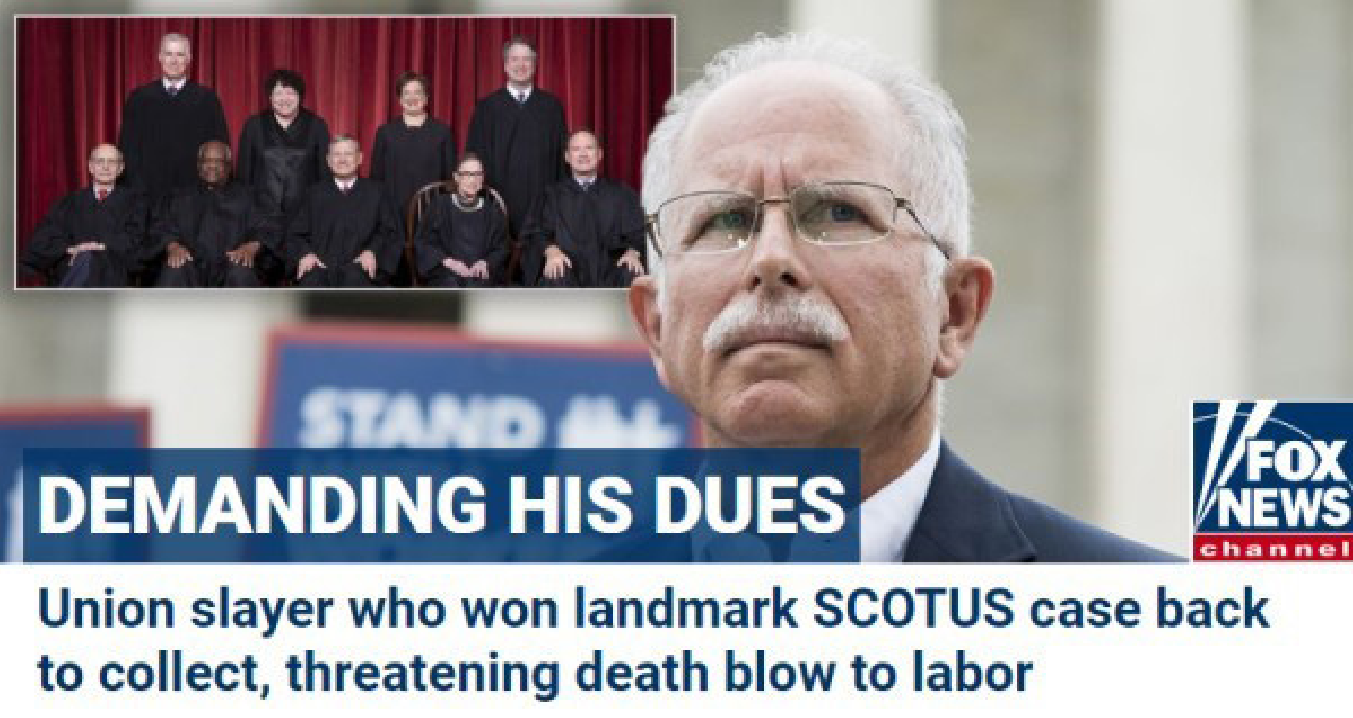
Mark Janus’ second Foundation-backed appeal to the Supreme Court landed the top spot on Fox News’ website. If Janus prevails again, hundreds of millions of dollars in unconstitutional union dues could be returned to public sector employees.
WASHINGTON, DC – Mark Janus is returning to the U.S. Supreme Court, this time asking the Justices to hear the continuation of Janus v. American Federation of State, County, and Municipal Employees (AFSCME), Council 31. Janus seeks repayment of the thousands of dollars in fees the union took from his paycheck in violation of his First Amendment rights. Another Supreme Court victory for Janus could set a precedent resulting in the return of hundreds of millions of dollars seized by union officials in violation of workers’ constitutional rights.
The original Janus v. AFSCME was argued successfully before the Supreme Court by veteran National Right to Work Foundation staff attorney William Messenger. In a landmark victory, the Court sided with Janus on June 27, 2018, and declared it illegal to force public employees to subsidize a union as a condition of employment. The Court recognized that compelling public workers to pay fees to a union violates their First Amendment rights.
Illinois Child Support Public Servant Intervenes in Lawsuit with Foundation Aid
As a result of Janus, more than five million public sector employees across the country are no longer required to pay union dues or fees to keep their jobs. However, Janus’ case continues as he seeks the return of the fees that AFSCME seized from his paycheck without his permission from June 27, 2018, to March 23, 2013, representing the two-year statute of limitations from the date his case started in March 2015 through the Supreme Court’s 2018 decision in his favor.
The Janus case began in February 2015, when then-newly elected Illinois Governor Bruce Rauner issued an executive order prohibiting state agencies from requiring employees who had abstained from formal union membership to pay union fees, based on a Right to Work Foundation U.S. Supreme Court victory in 2014 in another Illinois case. Rauner also filed a federal lawsuit seeking a declaratory judgment that forced union fees violate the First Amendment rights of public workers.
Staff attorneys from the Foundation, in partnership with the Illinois-based Liberty Justice Center, filed a motion for Mark Janus and two other plaintiffs to intervene in the case in March 2015, and have represented Janus ever since. The U.S. District Court for the Northern District of Illinois granted Janus’ motion to file a complaint in intervention, which allowed the suit to move forward even after the court ruled that Rauner lacked standing to pursue the lawsuit.
The Supreme Court permitted union bosses to impose forced union fees on public workers in the 1977 Abood v. Detroit Board of Education decision. However, before the Janus victory, Foundation staff attorneys secured several victories for workers which called the constitutionality of forced fees into question. In 2012, the court ruled in Knox v. SEIU that union officials must obtain affirmative consent from workers before using workers’ forced union fees for special assessments or risk infringing on their First Amendment rights. In 2014, the court ruled in Harris v. Quinn that requiring home healthcare providers who receive a subsidy from the government to pay union dues is a First Amendment violation.
Following Janus’ groundbreaking win at the Supreme Court in June 2018, Foundation attorneys continued his case in Illinois federal courts, arguing that the Supreme Court’s ruling is retroactive and that AFSCME should be required to return dues they seized unconstitutionally before the decision. In this and similar cases, union bosses have made a so-called “good faith” argument to defend their seizing of dues before Janus was issued. The U.S. Seventh Circuit Court of Appeals in Chicago ruled in 2019 that AFSCME could keep the unconstitutional dues, prompting Janus’ petition to the Supreme Court.
Hundreds of Millions of Dollars Potentially At Stake
“The Supreme Court agreed that the union taking money from non-members was wrong but the union still has the money it illegally garnished from my paycheck,” commented Janus. “It’s time for AFSCME to give me back the money they wrongfully took.”
Foundation staff attorneys are currently fighting for thousands of workers in about 20 cases which seek refunds of dues seized unconstitutionally before Janus was decided. While Janus is seeking the return of $3,000 of his own money, a favorable decision for him would set a precedent that could result in the return of over $120 million to public servants just in Foundation-backed cases. Other cases brought by workers could bring that total to hundreds of millions of dollars.
Workers Already Winning Refunds of Illegal Dues with Foundation Legal Aid
“The Supreme Court has already sided with the Foundation arguments for Mark Janus and ruled that forcing public employees to fund union activities violates the First Amendment,” said National Right to Work Foundation Vice President and Legal Director Raymond LaJeunesse. “The Supreme Court should take this case again to ensure that public sector union bosses are not permitted to profit from their widespread violation of workers’ First Amendment rights.”
Foundation staff attorneys in July 2018 secured the nation’s first-ever refund of dues seized unconstitutionally before Janus for Debora Nearman, an Oregon state wildlife employee. SEIU bosses were forced to settle and give back to Nearman over $3,000 in illegal fees they had seized from her over two years, during which they had sponsored an aggressive political campaign against her own husband, who ran successfully for the Oregon Legislature in 2016.
Electrician Files Discrimination Lawsuit Challenging Forced Union Fees
The following article is from the National Right to Work Legal Defense Foundation’s bi-monthly Foundation Action Newsletter, January/February 2020 edition. To view other editions or to sign up for a free subscription, click here.
Boston College and SEIU officials ignored reasonable request to accommodate religious beliefs
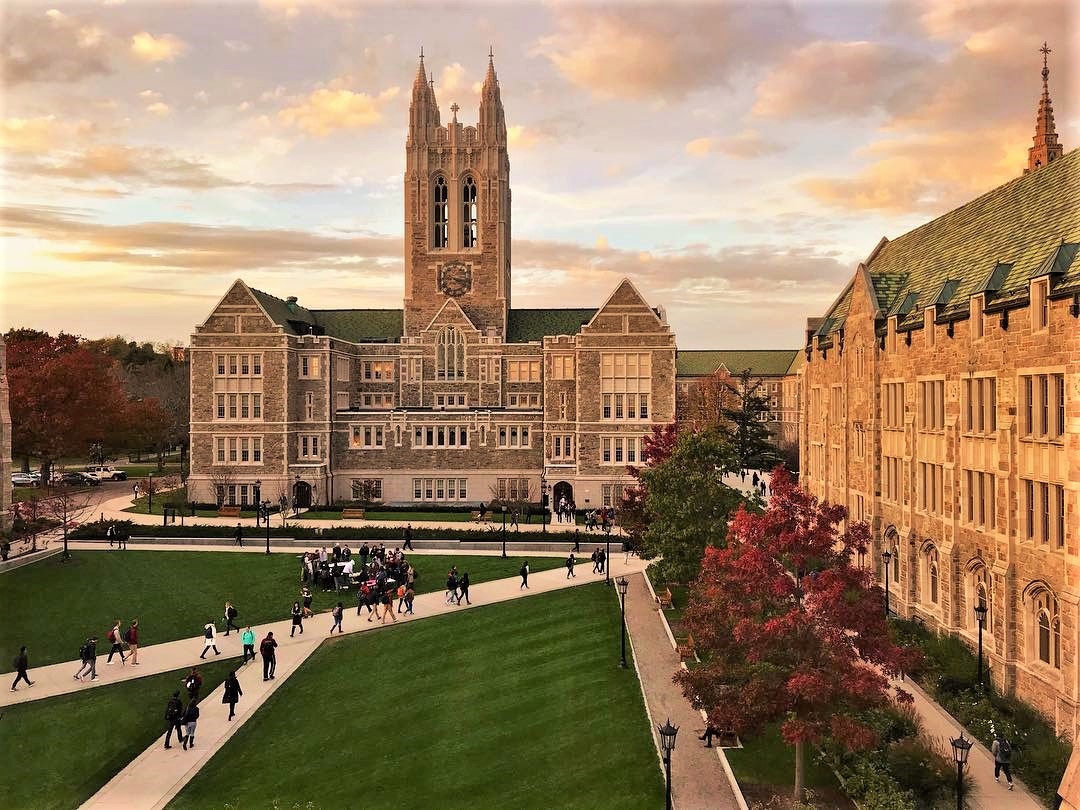 Boston College officials seized union fees from electrician Ardeshir Ansari’s paycheck at the behest of SEIU bosses, even after he had informed them that such fees violate his religious beliefs.
BOSTON, MA – In November, National Right to Work Foundation staff attorneys filed a federal Title VII religious discrimination lawsuit for a Boston College electrician whose rights were violated by the Service Employees International Union (SEIU) in illegally demanding union fees. The lawsuit also names his employer, Boston College, for its role in the discrimination.
Ardeshir Ansari objects to supporting the union based on deeply held religious beliefs. Under the local SEIU’s monopoly bargaining agreement at Boston College, however, he was told that he must join or financially support the SEIU or be fired. To avoid being fired, Ansari unwillingly paid fees to the union in violation of his sincere religious beliefs.
On October 1, 2018, Ansari sent a letter to Boston College and the SEIU, informing them his religious beliefs conflict with joining or financially supporting the union. He asked that his union fees be diverted to charity instead of being sent to the union, an established remedy for such a conflict.
Instead of responding, the college continued to take a cut of his paycheck and send it to SEIU officials in violation of his sincerely held religious beliefs.
In response, Ansari filed charges with the Equal Employment Opportunity Commission (EEOC) against college and union officials. The EEOC then determined that both Boston College and the SEIU had violated Title VII.
Last September, the EEOC gave Ansari a right-to-sue letter, which authorized him to file a lawsuit under Title VII of the Civil Rights Act of 1964. That federal law prohibits employers and unions from discriminating against an individual based on his or her religious beliefs.
In November, Foundation staff attorneys filed a lawsuit for Ansari against Boston College and the SEIU for illegally discriminating against him by failing to reasonably accommodate his religious beliefs, violating his rights under Title VII.
The lawsuit demands that college and SEIU local officials pay all fees deducted from Ansari’s paycheck to a charity mutually agreed upon and seeks damages for the emotional distress he suffered while his rights were violated for more than a year.
EEOC Found Religious Discrimination by SEIU
Moreover, the Title VII lawsuit asks the court to prevent the college from continuing to discriminate against his religious beliefs and that the union be required to inform workers that those with religious objections to the payment of union fees are entitled by law to pay those fees to a charity instead.
“Workers with sincere religious objections to joining or funding a union are legally protected from being forced to violate their conscience,” said National Right to Work Foundation Vice President and Legal Director Ray LaJeunesse. “No one should ever be forced to choose between keeping a job to provide for their family and violating their deeply held religious beliefs by supporting a union.”
“Right to Work laws protect workers like Mr. Ansari from this kind of discrimination. Under those laws, workers can stop paying union fees and resign union membership for any reason and thus avoid illegal religious discrimination,” added LaJeunesse.
Boston College Electrician Hits SEIU Union, College with Lawsuit for Religious Discrimination in Forced Union Fees Requirement
Instead of accommodating employee’s religious beliefs as required by federal law, SEIU union officials and college administrators repeatedly ignored and violated his rights
Boston, MA (November 20, 2019) — Ardeshir Ansari, an electrician who works for Boston College filed a Title VII religious discrimination lawsuit today against the college and Service Employees International Union 32BJ, District 615 (SEIU) with free legal assistance from National Right to Work Legal Defense staff attorneys.
Ardeshir Ansari objects to supporting the union based on deeply held religious beliefs. Under the local SEIU’s monopoly bargaining agreement at Boston College, however, he was told that he must join or financially support the SEIU or be fired. To avoid being fired, Ansari paid fees to the union, despite his sincere religious beliefs. Ansari is invoking Title VII of the Civil Rights Act of 1964, which prohibits discriminating against an individual based on his or her religious beliefs.
On October 1st last year, Ansari sent a letter to Boston College and the SEIU informing them of how his religious beliefs conflict with joining or financially supporting the union. He asked that his union fees be diverted to charity instead of being sent to the union, which is a long-established remedy for such a conflict. Instead of responding, the college continued to take a cut of his paycheck and send it to SEIU officials in violation of his sincerely held religious beliefs.
In January this year Ansari filed charges with the Equal Employment Opportunity Commission (EEOC) against the college and union officials, and the EEOC determined this summer that both Boston College and the SEIU had violated Title VII. In September, the EEOC gave Ansari a right-to-sue letter, which authorized him to file a lawsuit under Title VII against the college and the union.
Consequently, Foundation staff attorneys today filed a lawsuit on Ansari’s behalf against Boston College and the SEIU for illegally discriminating against Ansari for failing to reasonably accommodate his religious beliefs in violation of his rights under Title VII of the Civil Rights Act. The lawsuit further alleges that because Boston College made paycheck deductions for the SEIU despite Ansari’s notice of religious objections, and because Ansari would have been fired if he did not pay the fees, their actions constitute quid pro quo religious harassment.
The lawsuit asks that the college and SEIU local pay all fees deducted from Ansari’s paycheck to a charity mutually agreed upon and pay Ansari for damages for the emotional distress he has suffered while his rights have been violated for more than a year. It also asks the court to prevent the college from continuing to discriminate against his religious beliefs and asks that the union be required to inform workers that those with religious objections to the payment of union fees are entitled to pay those fees to a charity instead.
“Workers who have sincere religious objections to joining or funding a union are legally protected from being forced to violate their conscience,” said National Right to Work President Mark Mix. “No one should ever be forced to choose between keeping a job to provide for their family and violating their deeply held religious beliefs by supporting a union.”
“Ultimately, a Right to Work law that makes all union payments voluntary is the best solution to this type of illegal discrimination. That way, all workers who object to funding union activities are free to cut off such payments whether or not the nature of their opposition to the union is faith-based,” added Mix.
Worker Advocate Files Amicus Brief in Support of Personal Care Providers Seeking Refund of Illegally Seized Union Dues
National Right to Work Foundation brief filed with 9th Circuit Court of Appeals says union bosses should not keep dues seized in scheme ruled unconstitutional by U.S. Supreme Court in Foundation-won Harris case
San Francisco CA (January 11, 2017) – The National Right to Work Legal Defense Foundation has filed an amicus curiae brief with the Ninth Circuit Court of Appeals in Hoffman, Routh, Eby, Olson v. Inslee in support of homecare workers in the state of Washington seeking a return of illegally seized union fees. The providers bringing the case are among the thousands of personal care provers in Washington State who had union dues illegally confiscated from them in a mandatory union dues scheme later ruled unconstitutional by the United States Supreme Court.
The United States Supreme Court outlined these rights in Harris v. Quinn, argued and won by Foundation staff attorneys in 2014. Harris held that the collection of forced union dues from home-based caregivers violated their First Amendment rights. The ruling struck down the scheme in Illinois, but the precedent established rendered similar schemes in other states, including Washington, unconstitutional.
In the amicus brief, Foundation attorneys argue that under Harris v. Quinn the Service Employees International Union (SEIU) has no lawful authority to take the provider’s money and that now SEIU officials have no more right to keep the money than any individual or business that illegally confiscates money from a victim against their will.
“It is outrageous that forced dues seized under a scheme struck down by the Supreme Court in Harris v. Quinn have not yet been returned to the victims of the SEIU’s unconstitutional forced dues scheme,” said National Right to Work Foundation President Mark Mix. “SEIU bosses have no more right to these providers’ money than a thief has to keep the money stolen during an armed robbery.”
Public Employees in Three States File Federal Lawsuits to End Public Sector Forced Union Dues
National Right to Work Foundation cases follow up on Supreme Court split on constitutionality of mandatory union fees for government employees
Springfield, VA (January 18, 2017) – Government employees – including Pennsylvania teachers, California medical center employees, and New York school employees – across the nation are filing three new federal court cases challenging the constitutionality of public sector union officials’ forced dues powers. These cases, being filed today with free legal aid from the National Right to Work Foundation, argue that state requirements that the plaintiffs pay mandatory union fees as a condition of government employment violate the First Amendment.
Nearly 40 years ago, the Supreme Court ruled in that public-sector workers could be compelled as a condition of employment to pay union fees. However, in two recent National Right to Work Foundation-won Supreme Court decisions, Knox v. SEIU (2012) and Harris v. Quinn (2014), the High Court suggested it was ready to revisit a 1978 precedent in Abood v. Detroit Board of Education case, expressing skepticism about the constitutionality of public sector union officials’ forced-dues privileges.
Assisted by staff attorneys from the National Right to Work Foundation, two California Santa Clara Valley Medical Center pharmacists – Jeffery Lum and Andrew Li –are filing suit against SEIU officials in the U.S. District Court for the Northern District of California in San Jose assisted by Foundation staff attorneys.
Three school workers in New York state have filed suit against the electrical workers union and Governor Cuomo in the U.S. District Court for the Northern District of New York in Utica.
In Pennsylvania, the Foundation is working with the Fairness Center on behalf of four schoolteachers from three school districts that have filed suit against the Pennsylvania State Education Association union in the U.S. District Court for the Middle District of Pennsylvania in Harrisburg.
A similar challenge came before the Supreme Court last year, in Freidrichs v. CTA. While the Court ended up tied 4-4 in Friedrichs after the death of Justice Scalia, these three new cases join the growing number of lawsuits that challenge forced dues and fees in the public sector. Foundation staff attorneys have previously filed cases on the issue in Illinois, Kentucky, Massachusetts, and Connecticut.
“It takes a lot of courage to stand up for freedom,” said Rebecca Freidrichs, lead plaintiff in Freidrichs v. CTA. “I’m so proud of and cheering for these four courageous Pennsylvania teachers, three brave New York school employees, and two more Californians who are standing up for our hard fought liberties and bringing these cases – it is my prayer they will be victorious so all Americans can have their First Amendment rights restored.”
Mark Mix, president of the National Right to Work Foundation issued the following statement on the three new cases:
“It is wrong that public employees are forced by the state government to pay fees and dues to a third party, a union, in order to keep their job as school teachers and public servants. For too long, the rights of public employees have been trampled by states that require them to pay dues to a labor union just to get or keep a government job.
“Over eighty percent of Americans support the right of all employees to work without being forced to pay tribute to union officials. Many public sector employees oppose the one-size-fits-all union monopoly bargaining contract, which makes it even more shameful that the government turns around and then forces these public servants to pay union officials for so-called representation they never wanted in the first place.”





