
California Trucking Company Workers Win Freedom from Unwanted Teamsters Local 665 Union Officials
Rather than face vote to strip union officials of their forced representation powers, Teamsters officials concede defeat
Santa Rosa, CA (March 9, 2023) – Valdivia Trucking Co. workers in California are finally free of unwanted Teamsters Local 665 union officials after three months of delays created by the union officials. The workers’ bid to remove the union recently became official when, rather than face a decertification vote of Valdivia workers whether to strip the union of its power, the union preemptively “disclaimed” interest in representation and walked away from the workers.
Valdivia Trucking worker John Murdick received free legal aid from the National Right to Work Legal Defense Foundation while filing for a decertification vote. His decertification petition filed with the National Labor Relations Board (NLRB) included the signatures of a significant majority of the workers at the facility.
The workers’ petition was filed on December 16, 2022, and quickly resulted in a stipulated election agreement for a decertification vote on January 6. However, the vote was delayed by preexisting “blocking charges” the union filed with the NLRB. This is a union tactic often used to delay workers’ decertification elections, because union officials fear if the vote goes forward the union may lose.
As a result of these blocking charges against the employer the vote was delayed three months, until March, when the blocking charges were finally closed. This permitted the vote to proceed. It was at that point the union officials notified the company’s lawyers and the NLRB that it disclaimed interest in “representing” the Valdivia Trucking employees. That gave the workers the outcome they sought, albeit delayed by nearly three months.
The NLRB’s union decertification process is prone to union boss-created roadblocks. Foundation-backed reforms the NLRB adopted in 2020 made it somewhat easier for workers to remove unwanted union officials. However, the Biden NLRB is attempting to roll back these protections and make it much harder to decertify a union.
For example, the 2020 reforms blocked union officials from resubmitting overlapping charges, which often contain unverified and unrelated allegations of employer actions, designed to delay the process further. Had these reforms not been in place, the three-month delay for these workers could have been extended indefinitely.
Worker interest in removing unwanted unions is growing nationwide, with National Right to Work Legal Defense Foundation staff attorneys fielding numerous requests for free legal assistance in decertification cases, like the one brought by Murdick and his coworkers.
The process to decertify a union should be simple. Federal law provides that workers can hold decertification votes in most instances as long as they have a petition with the signatures of at least 30% of workers in a bargaining unit. However, rules created by NLRB bureaucrats combined with legal tactics deployed by union lawyers often mean workers face legal hurdles in just getting the opportunity to hold a vote whether to remove an unwanted union.
The NLRB’s own data show that, currently, a unionized private sector worker is more than twice as likely to be involved in a decertification effort as a nonunion worker is to be involved in a unionization campaign.
“The Valdivia Trucking decertification situation shows how union officials often use underhanded tactics to remain in power and collect dues from hard-working people as long as possible, even though they know a majority of workers oppose their so-called representation,” observed Mark Mix, President of the National Right to Work Foundation.
“Although we are extremely satisfied that the Valdivia workers have exercised their legal right to be union-free, we cannot neglect the importance the 2020 Foundation-backed reforms played in this case,” Mix continues. “If the Biden-appointed NLRB is able to roll back these reforms, as they are attempting to do, workers like those at Valdivia may be trapped in union ranks they oppose for many months and even years.”
Houston-Area Kroger Employee Slams UFCW Union with Federal Charges for Seizing Union Dues Using Altered Union Card
Employee objected to union membership and financial support during orientation meeting; union taking dues under guise of altered form
Houston, TX (February 21, 2023) – Cypress-area Kroger employee Jessica Haefner has just hit the United Food and Commercial Workers (UFCW) union at her workplace and her employer with federal charges. Haefner maintains that union and Kroger officials are unlawfully seizing union dues from her paycheck based on an altered union membership form that ostensibly indicates her consent to union dues deductions, even though she followed instructions on how to exercise her right to refrain from union membership and support. Haefner filed the charges at the National Labor Relations Board (NLRB) with free legal representation from National Right to Work Foundation staff attorneys.
Haefner’s charges state that UFCW Local 455 union officials’ actions violate her and her coworkers’ rights under Section 7 of the National Labor Relations Act (NLRA), which guarantees American private sector workers’ right to abstain from any and all union activities. The NLRB is the federal agency responsible for enforcing the NLRA.
Texas’ Right to Work protections also prohibit union officials from forcing private sector workers like Haefner to join or pay dues to a union as a condition of getting or keeping a job. In contrast, states lacking Right to Work laws permit the firing of private sector workers for refusal to pay money to a union hierarchy.
Union Form Was Altered
On August 22, 2022, Haefner attended a mandatory orientation meeting during which she was required to listen to a UFCW agent, her charges state. The UFCW agent passed out a union membership application and a dues checkoff on a single form that he claimed was mandatory for attendees to complete. Another piece of onboarding literature stated that Kroger management had the “opinion that you should participate and be active in the Union.”
When Haefner asked about how she could exercise her right to refrain from joining the union or paying union dues, the union agent instructed Haefner to write “$0” in the field marked “union dues” on the form. Texas’ Right to Work law protects Haefner’s right to abstain from union membership and dues payment.
Haefner followed these instructions, but later found out that union dues were coming out of her wages, her charges say. Haefner quickly obtained a copy of the form that Kroger and UFCW officials based their dues deductions on, and discovered that the “$0” she had written in the union dues field had been replaced with an amount of several dollars to induce dues deductions from her paycheck.
UFCW Bosses Across Country Illegally Snubbing Worker Requests to Abstain from Union Activity
UFCW’s violation of Haefner’s rights is not an isolated incident. In Pennsylvania, Foundation staff attorneys are also representing Giant Eagle supermarket cashier Josiah Leonatti, who charges UFCW Local 1776KS union officials with refusing to accommodate his religious objections to union membership. His charges say union officials tried to subject him to an illegal “religion test” before they considered granting him an accommodation.
“UFCW union officials seem to adhere to a nationwide policy of prioritizing dues revenue over employees’ free association rights,” commented National Right to Work Foundation President Mark Mix. “Foundation attorneys have already witnessed that UFCW bosses are willing to discriminate against religious employees in the pursuit of more dues deductions, and in Ms. Haefner’s case their malfeasance may be as bad as flat out altering employee forms to deduct dues.”
“As cases brought for workers with free Foundation legal aid show, UFCW bosses have a long and documented history of violating workers’ rights, whether through thousands of dollars in illegal strike fines, illegal religious discrimination, threatening teenagers’ jobs, and now by altering a worker’s dues authorization,” Mix added.
Workers Win Cash Back in Case Challenging Illegal Discrimination for Non-Union Status
The following article is from the National Right to Work Legal Defense Foundation’s bi-monthly Foundation Action Newsletter, November/December 2022 edition. To view other editions of Foundation Action or to sign up for a free subscription, click here.
Machinists union scheme sought to deny non-union workers’ bonuses because they opposed union association
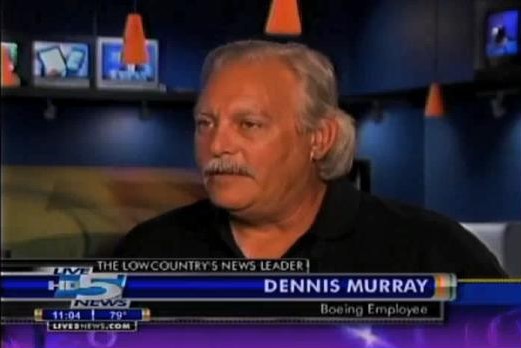
IAM bosses regularly discriminate against dissident workers. In 2011, Foundation-assisted South Carolina Boeing employee Dennis Murray recounted how IAM officials tried to shutter his plant because workers there had voted the IAM out.
RIDGWAY, PA – Twelve nonunion factory employees at Clarion Sintered Metals, Inc., have each received $1,000 in back pay bonuses after being illegally discriminated against by International Association of Machinists and Aerospace Workers (IAM) Local 2448 and their employer. With free legal aid from the National Right to Work Foundation, factory worker James Cobaugh filed federal charges against Clarion and IAM as he sought justice for himself and other non-member workers subject to unlawful discrimination.
Mr. Cobaugh’s charges against the union and his employer were filed on April 22, 2022, with the National Labor Relations Board (NLRB). The charges came after the union and Clarion Sintered Metals gave $1,000 bonuses to union members, but denied them to workers who exercised their legal right not to join the union. Rather than face prosecution by the NLRB, both the union and employer have now agreed to settle the case.
In addition to the non-union employees receiving the bonuses they were previously denied as a result of the illegal discrimination, both the IAM and Clarion Sintered Metals are required to post notices that inform workers of their right to refrain from joining a union. The notices also state union officials will not maintain or enforce such discriminatory agreements going forward.
Machinists Union Bosses Already Forced Non-Union Workers to Pay Dues
Because Pennsylvania lacks Right to Work protections for private sector employees, unions can force workers to pay up to 100% of union dues as a condition of keeping their jobs. This means that Mr. Cobaugh, although not a formal IAM union member, can be forced to pay up to 100% of IAM’s union dues to keep his job at Clarion Sintered Metals.
Even in Right to Work states, under federal law union bosses are granted the power to impose “representation” on individual workers against their will, including forcing non-member workers under union monopoly contracts they oppose. By stripping workers of their right to bargain for their own terms and conditions of employment, individual workers by law are prohibited from negotiating for themselves with their employers for better conditions.
Forced Union Monopoly ‘Representation’ Long Used to Discriminate
Union officials frequently use these government-granted powers to harm certain workers, for example those workers who, based on their productivity, would otherwise earn performance bonuses or higher compensation. Although union officials can impose one-size-fits-all monopoly contracts that favor some workers over others, there are some limits on how union monopoly powers can be used to discriminate.
The U.S. Supreme Court imposed these limits after union officials wielded their powers to negotiate and enforce racially discriminatory contracts (Steele v. Louisville & N.R. Co. et al.). Explicitly discriminating against workers who exercise their legally protected right to not formally join a union and not be subject to internal union rules, as the IAM officials did in this case, has also long been illegal.
“This situation highlights how workers less knowledgeable of their legal rights are susceptible to blatantly illegal tactics of power-hungry union bosses,” commented National Right to Work Foundation Vice President Patrick Semmens. “Mr. Cobaugh courageously stood up to the union’s unlawful actions, not only for himself, but also for the other non-member workers subjected to this illegal discrimination.”
Foundation Attorneys & PA Metal Workers Fight Steelworkers Union Contract Deception
The following article is from the National Right to Work Legal Defense Foundation’s bi-monthly Foundation Action Newsletter, November/December 2022 edition. To view other editions of Foundation Action or to sign up for a free subscription, click here.
Union bosses lied to metal workers and covertly signed forced-dues contract to keep grip on power
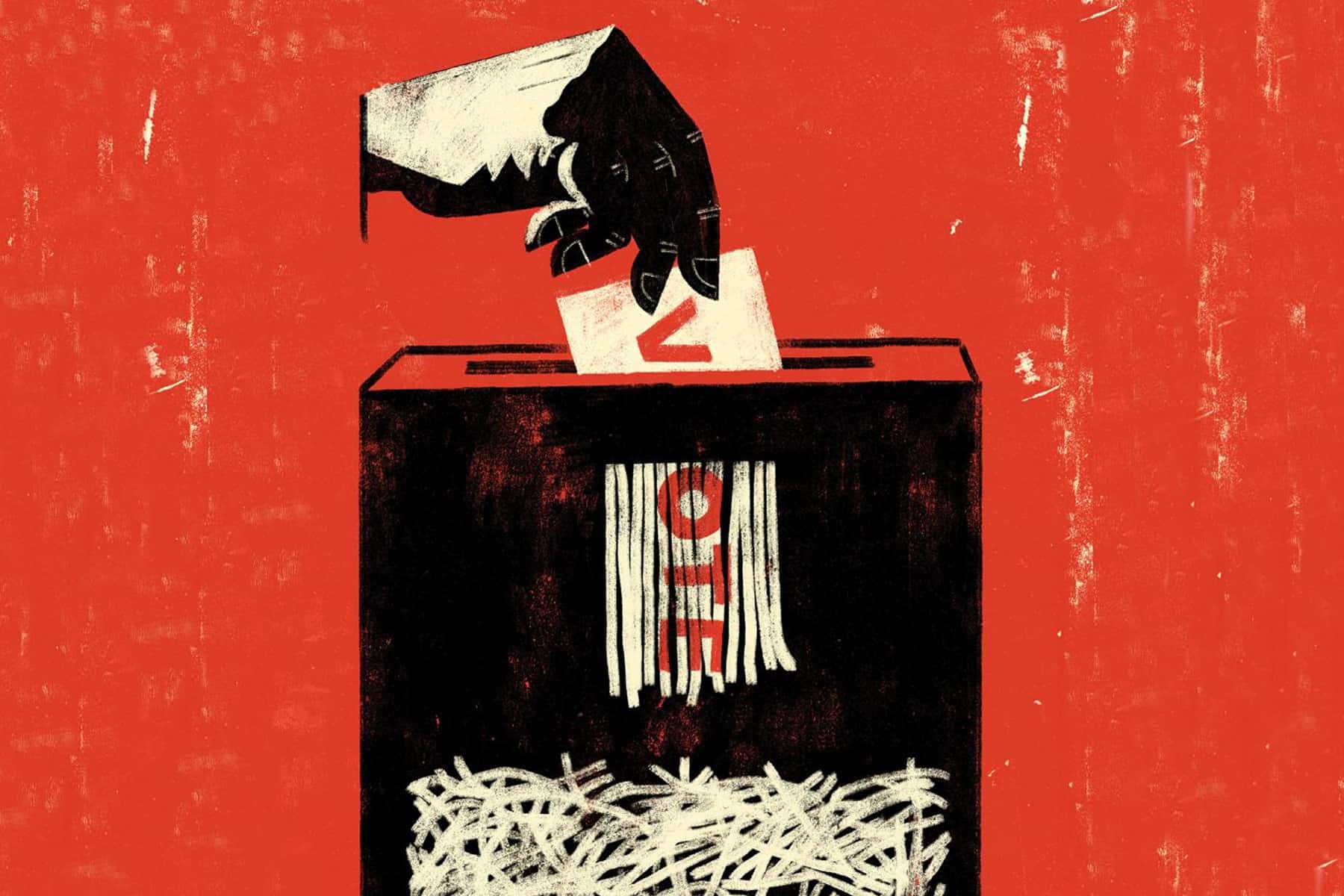
In NLRB documents, Steelworkers union officials openly defended their deception of employees, calling such behavior “irrelevant” to whether they should remain in power.
FRANKLIN, PA – Workers under the thumb of union bosses have many reasons to oppose the union’s “representation.” It could be they oppose a bad contract the union negotiated, or maybe it is the union’s divisive political activity for candidates they oppose. Whatever the reason, workers have a right under federal labor law to vote to free themselves of such unwanted union “representation.”
But federal labor law also has no shortage of workarounds for union bosses bent on clinging to their monopoly bargaining power over workers. Kerry Hunsberger and her coworkers at Latrobe Specialty Steel’s Franklin, PA, facility are currently defending their right to throw out unpopular Steelworkers union officials, after the union chiefs secretly signed a contract workers had voted down twice.
Steelworkers Officials Tried to Dodge Employee Accountability
Steelworkers chiefs did so to activate a so-called “contract bar” and remain in power at the plant when they knew a decertification election was coming. Steelworkers officials held two ratification votes to make workers think they had control over whether the contract went into effect. But in reality, union officials have no legal obligation under the National Labor Relations Act (NLRA), the federal statute that governs private sector labor relations, to even conduct such a ratification vote, much less heed the workers’ actual vote tally.
The pro-union boss National Labor Relations Board (NLRB) created out of whole cloth the “contract bar” policy. It immunizes union officials from employee-backed attempts to vote out a union for up to three years after union bosses and management finalize a contract — even a contract that isn’t supported by a majority of workers.
Hunsberger’s petition asking the NLRB to hold a vote to remove the union contains the requisite number of signatures under NLRB rules, but union officials argue the “contract bar” should block the election anyway.
Union Bosses Ignored Two Votes by Workers Rejecting Forced-Dues Contract
The Latrobe Specialty Steel workers first voted July 25 on the contract drawn up by Steelworkers union officials. The workers soundly rejected the contract, and Hunsberger began collecting employee signatures for a decertification petition shortly afterwards.
According to documents and transcripts filed with the NLRB, when Steelworkers union officials discovered a decertification petition was circulating, they secretly and hurriedly signed the unpopular contract on July 28, without telling the employees or the employer, in an attempt to activate the “contract bar” rule and avoid being voted out.
The slapdash contract lacked basic In NLRB documents, Steelworkers union officials openly defended their deception of employees, calling such behavior “irrelevant” to whether they should remain in power. elements, like start and end dates. Even though the union now claims this contract was immediately in effect on July 28, union officials held a new employee ratification vote on August 1, encouraging workers to “ratify” the contract. But the union bosses never told the workers their “vote” was a meaningless sham because union officials had already signed the forced-dues contract in secret.
Hunsberger’s decertification petition was filed at 2:00 PM on August 1, just hours before the sham contract vote occurred. As with the previous vote, the workers rejected the contract by a lopsided margin. But later that night, at around 9:00 PM, union officials suddenly announced to the employer that the contract was already in effect and the employee ratification “vote” was irrelevant because of the union bosses’ covert signing on July 28.
In sworn testimony, one union boss admitted that Steelworkers union bosses execute contracts despite employees voting them down, and that union officials deceived the Latrobe workers and ignored their votes in this case “to protect the integrity of the union.” Apparently the Steelworkers bosses’ lust for monopoly bargaining power and compulsory union payments takes precedence over the actual wishes of the rank-and-file workers union officials purport to “represent.”
‘Contract Bar’ Encourages Unions to Force Through Unpopular Contracts
“Steelworkers union bosses drew up a contract that my coworkers and I hated, so naturally we wanted them out of our workplace and out of our pocketbooks. But to add insult to injury, they apparently didn’t even think they owed us a duty of honesty,” said Hunsberger.
“This entire ordeal has been incredibly frustrating and we are grateful for the help of the National Right to Work Foundation in defending our right to vote the union out.”
Kerry Hunsberger’s Foundationbacked brief defending her and her coworkers’ rights states that the Steelworkers’ contract ploy is “nothing more than a smokescreen, concocted by a desperate and unpopular union to entrench itself and bar employee free choice” under federal law.
“The ‘contract bar’ arbitrarily blocks, often for years, workers’ statutory right under federal law to vote out union officials they oppose. Worse, it encourages union officials to cynically impose a contract at all costs, especially when union bosses know rank-and-file workers would see such a contract as a reason to get rid of so-called union ‘representation,’” commented National Right to Work Foundation Vice President Patrick Semmens. “This case presents an easy choice for the NLRB: defend the rights of rank-and-file workers, or side with Steelworkers union officials, who repeatedly misled those workers and disregarded their votes simply to protect union power. The case also demonstrates that there is no such thing as ‘union democracy’ in America.”
Foundation Defends Grocery Employees Against Illegal Union Strike Fine Threats
The following article is from the National Right to Work Legal Defense Foundation’s bi-monthly Foundation Action Newsletter, November/December 2022 edition. To view other editions of Foundation Action or to sign up for a free subscription, click here.
Facing Foundation attorneys, UFCW union officials are dropping illegal fines

UFCW union officials threatened to fine King Soopers employee Nick Hall almost $1,000 just because he kept at his job during a strike. Foundation litigation ended the demands.
DENVER, CO – Grocery store workers at King Soopers are continuing to win their legal battles against United Food and Commercial Workers (UFCW) Local 7 union officials’ illegal attempts to fine workers for exercising their right to work during a January UFCW strike action. While the union remains under investigation by the National Labor Relations Board (NLRB) for a series of charges filed by workers with free legal aid from the National Right to Work Legal Defense Foundation, several workers have already successfully challenged thousands of dollars in union fines.
Workers Slam Union With Federal Charges After Threats
Two King Soopers workers, Nick Hall and Marcelo Ruybal, filed federal charges against UFCW in response to union officials illegally threatening to fine workers who chose to exercise their right to work during a strike. UFCW union bosses ordered an estimated 8,000 King Soopers workers out of work in January, but as a Foundation legal notice informed workers at the time, employees have the legal right to rebuff union boss strike orders, and non-member employees cannot be legally fined by the union.
Union bosses threatened Hall and Ruybal with fines of $812 and $3,800 respectively. This happened despite the fact that, as the workers noted in their NLRB charges, the fines were illegal because the workers were not voluntary union members, and therefore not legally subject to internal union fines for working during the UFCW boss-ordered 10-day strike. Some 30 NLRB charges are still being investigated by NLRB Region 27, based in Denver.
Foundation Legal Aid Prompts UFCW Bosses to Drop Fine Threats
In Hall’s case, the union backed down, rescinding the union’s illegal fine threat in a letter dated July 27, essentially acknowledging that it broke federal law. Other workers have also successfully challenged union boss fine threats following the January strike.
With free legal representation from Foundation staff attorneys, worker Yen Chan challenged the union’s authority to issue a $3,552.48 fine, with union officials backing down rather than pursuing the fine and facing further legal action. Other King Soopers workers also successfully challenged thousands of dollars in UFCW strike fines using information provided by National Right to Work Legal Defense Foundation staff attorneys.
“Union officials backed down quickly after being caught blatantly disregarding the law in Nick Hall’s case. But it shouldn’t take the support of National Right to Work Foundation staff attorneys just to force union bullies to abide by federal law,” commented National Right to Work Foundation President Mark Mix. “King Soopers workers are continuing to beat back illegal fines levied by UFCW union officials, even as union officials are still under investigation by the NLRB for unfair labor practice charges.”
Kentucky Worker Hits Steelworkers Union with Complaint for Violation of Right to Work Law
The following article is from the National Right to Work Legal Defense Foundation’s bi-monthly Foundation Action Newsletter, September/October 2022 edition. To view other editions of Foundation Action or to sign up for a free subscription, click here.
Steelworkers union bosses seized illegal dues despite passage of Right to Work law in 2017

The sun has long set on forced union dues in Right to Work Kentucky, but Melva Hernandez reports in her Foundation-backed complaint that union officials are ignoring Right to Work and continue to seize money from her wages illegally.
FRANKFORT, KY – Despite Kentucky’s enactment of a Right to Work law in 2017, some union bosses still act as if Kentucky’s popular law, which safeguards an employee’s right to refrain from formal union membership and dues payment, doesn’t even exist.
Melva Hernandez, who just finished a stint at paper bag manufacturer Duro Hilex Poly in Erlanger, KY, says that Steelworkers union officials forced her into union membership and dues payments when she began working at the facility in 2011. Kentucky’s Right to Work protections didn’t exist at that time to protect her from such coercive demands.
As August 2021 rolled around, however, Hernandez exercised her right to revoke her membership and union dues deduction authorization, thinking that the recently enacted law would permit her dissociation from the union.
Instead, Steelworkers union chiefs illegally rejected her request, scolded her for exercising her rights, and to date have not returned the money they seized from her paycheck in complete violation of Kentucky’s Right to Work law.
Officials Ignored Right to Work, Sought to Control Employee Speech
With free legal representation from National Right to Work Legal Defense Foundation staff attorneys, Hernandez submitted a complaint this June to Kentucky Labor Cabinet Secretary Jamie Link, asking him to prosecute the union for flouting Right to Work. Because the dues seizures and other conduct the union perpetrated are also illegal under federal law, she has also filed federal charges at National Labor Relations Board (NLRB) Region 9 in Cincinnati.
Hernandez’s complaint to the Kentucky Labor Cabinet recounts that she first submitted a letter to union officials in August 2021, exercising her right to end her union membership and all dues deductions to the union. A union agent rejected her request, alleging that it would only be accepted within a so-called “escape period” of days created by union officials. The complaint says Hernandez resubmitted her request in April 2022 on a date falling within the “escape period,” only to be redirected by union agents to Steelworkers Local 832 President Tara Purnhagen.
After Hernandez tendered her resignation to Purnhagen, “Ms. Purnhagen scolded and harassed me, accusing me of trying to convince my fellow co-workers to drop their union memberships,” Hernandez’s complaint says. Purnhagen also forbade Hernandez from discussing with her coworkers reasons to refrain from union membership.
KY Labor Secretary Appointed by RTW Opponent Beshear
“As of today’s filing, the company and the union have not reimbursed me for the money seized in union dues in violation of Kentucky law,” the complaint says.
The Kentucky Labor Cabinet Secretary is responsible under state law for investigating and prosecuting violations of Kentucky’s Right to Work protections. However, the current secretary, Jamie Link, was appointed by Gov. Andy Beshear, a noted union boss political ally and opponent of Right to Work protections. Teacher union bosses alone pumped well over $1 million into pro-Beshear super PACs last election cycle. It remains to be seen whether Link will shirk his duty to enforce the Right to Work law.
“Steelworkers union officials behave as if Kentucky’s Right to Work protections don’t exist, enforcing contracts that blatantly contradict the law and demanding illegal dues from rank-and-file workers like Ms. Hernandez in clear violation of their rights,” commented National Right to Work Foundation Vice President and Legal Director Raymond LaJeunesse. “Secretary Link must prosecute this blatant disregard for workers’ rights under Kentucky law and show that no one is above the law, including politically connected union bosses.”
Foundation Helps Healthcare Workers Remove Unwanted Unions
The following article is from the National Right to Work Legal Defense Foundation’s bi-monthly Foundation Action Newsletter, September/October 2022 edition. To view other editions of Foundation Action or to sign up for a free subscription, click here.
Evidence of union boss “serious financial malpractice” exposed as workers seek to vote out SEIU

Nurse Brittany Burgess (front, center) led her fellow Mayo Clinic nurses in decertifying the Minnesota Nurses Association (MNA) union. She’s “extremely grateful” for Foundation support.
DETROIT, MI – Workers across America are increasingly fed up with union bosses’ self-serving so-called “representation.” National Right to Work Foundation legal aid requests are spiking from workers seeking assistance in filing decertification petitions to end union monopoly bargaining control in their workplaces. In 2021 alone, Foundation attorneys provided legal assistance in 54 National Labor Relations Board (NLRB) decertification efforts, which together sought to end union boss control of more than 7,000 workers.
This increased demand has continued in 2022, with healthcare workers in particular seeking the Foundation’s legal aid in exercising their legal right to free themselves from union ranks. In one such ongoing case, Foundation staff attorneys assisted Crystal Harper, an employee at Detroit’s Sinai-Grace Hospital, who along with coworkers battled to oust SEIU Healthcare Michigan union officials.
Harper’s initial petition was rejected after an NLRB regional official dubiously dismissed the petition on the grounds that “Midnight, February 8th” in the union monopoly contract was actually unambiguously a reference to the minute after 11:59 p.m. on May 7. This questionable interpretation of union officials’ sloppily written contract meant that the petition filed on the 8th was actually late under the controversial NLRB-created “contract bar” policy.
Undeterred, that decision was appealed and a second petition for a decertification vote was filed in May after the contract bar had expired and a vote was scheduled. Meanwhile, “substantiated allegations of serious financial malpractice” have come to light involving the SEIU local that were so glaring even SEIU International President Mary Kay Henry couldn’t ignore them, as she was pushed to use the SEIU’s “trusteeship” procedures to oust local officials and take full control of the local.
As a result, in June, Foundation President Mark Mix formally asked the Department of Labor and Department of Justice to investigate the serious allegations of financial and other wrongdoing by SEIU local officials. The letter calling for the federal investigation noted that “any internal SEIU International investigation will be insufficient [given the] long history of union officials attempting to ignore or downplay corruption in their own ranks.”
Foundation Counters Union Legal Tricks to Block Vote
Elsewhere in Michigan, lab technicians at Ascension Providence Rochester Hospital have finally won their effort to be free of unwanted so-called “representation” by union officials of the Office and Professional Employees International Union (OPEIU) Local 40.
During the protracted process, Foundation staff attorneys successfully fought off OPEIU union lawyers’ efforts to block the vote which cited the pending sale of the facility by Ascension to LabCorp as grounds for rejecting the workers’ request for an election. Union lawyers had urged the NLRB regional office to block a vote whether to remove the union on the grounds of an upcoming “cessation of operations” by the employer, a policy previously applied only to certification elections.
In briefs to the NLRB, Foundation staff attorneys countered that union attempts to block the vote were unjustified as a matter of law. Foundation attorneys also noted that the attempt to block the vote was likely a cynical attempt to keep power over the bargaining unit. If the sale ultimately went through, the union would have likely sought to block a decertification vote citing the NLRB-created “successor bar” that insulates union officials from decertification votes after a workplace’s change in ownership.
The Board ultimately rejected the union lawyers’ arguments and scheduled a decertification vote by mail-in ballot. However, rather than go forward with a vote they seemingly knew they were going to lose, OPEIU officials instead disclaimed interest in the unit, finally giving the workers the freedom from unwanted union representation they sought.
Meanwhile in Minnesota, multiple groups of healthcare workers are seeking decertification votes with Foundation legal aid. At the Mayo Clinic Health System in Mankato, Minnesota, approximately 500 nurses filed a petition for a vote to remove the Minnesota Nurses Association (MNA) union, while two separate units of Cuyuna of the lawsuit, Regional Medical Center healthcare workers located at facilities in Crosby, Baxter, Longville, and Breezy Point, Minnesota, filed for decertification votes to free themselves from the SEIU.
Hundreds of Minnesota Nurses Petition to Be Union Free
“I’m extremely grateful to have the free legal assistance of the National Right to Work Foundation in fighting for our right to hold a vote to remove the union,” commented Mayo Clinic Mankato nurse Brittany Burgess. “I can’t wait until the day when we are all finally free of the MNA.”
One likely reason for the increased decertification activity is Foundation-advocated reforms that were adopted by the NLRB in 2020 to curtail union officials’ abuse of so-called “blocking charges,” which they use to delay or block workers from exercising their right to decertify a union. However, with the Biden-appointed NLRB majority recently announcing it was starting rulemaking to overturn those reforms, Foundation staff attorneys are now gearing up to challenge the Biden Board’s attempt to give union bosses more power to trap workers in union ranks they oppose.
“Foundation staff attorneys will continue to assist workers in exercising their rights under federal law to hold decertification elections to remove so-called ‘representation’ opposed by most workers,” commented National Right to Work Foundation Vice President and Legal Director Raymond LaJeunesse. “The Biden NLRB is clearly prioritizing union boss power to the detriment of the rights of rank-and-file workers. Look no further than the fact that just as the Board seeks to expand the ability of union officials to impose unionization on workers through coercive ‘Card Checks’ without even secret-ballot votes, it simultaneously plans to make it easier for union lawyers to block workers from holding votes to remove a union.”
ATU Union Facing Prosecution After Agent Physically Assaults Bus Driver
The following article is from the National Right to Work Legal Defense Foundation’s bi-monthly Foundation Action Newsletter, September/October 2022 edition. To view other editions of Foundation Action or to sign up for a free subscription, click here.
Bus driver targeted by union militants for opposing incumbent union officials
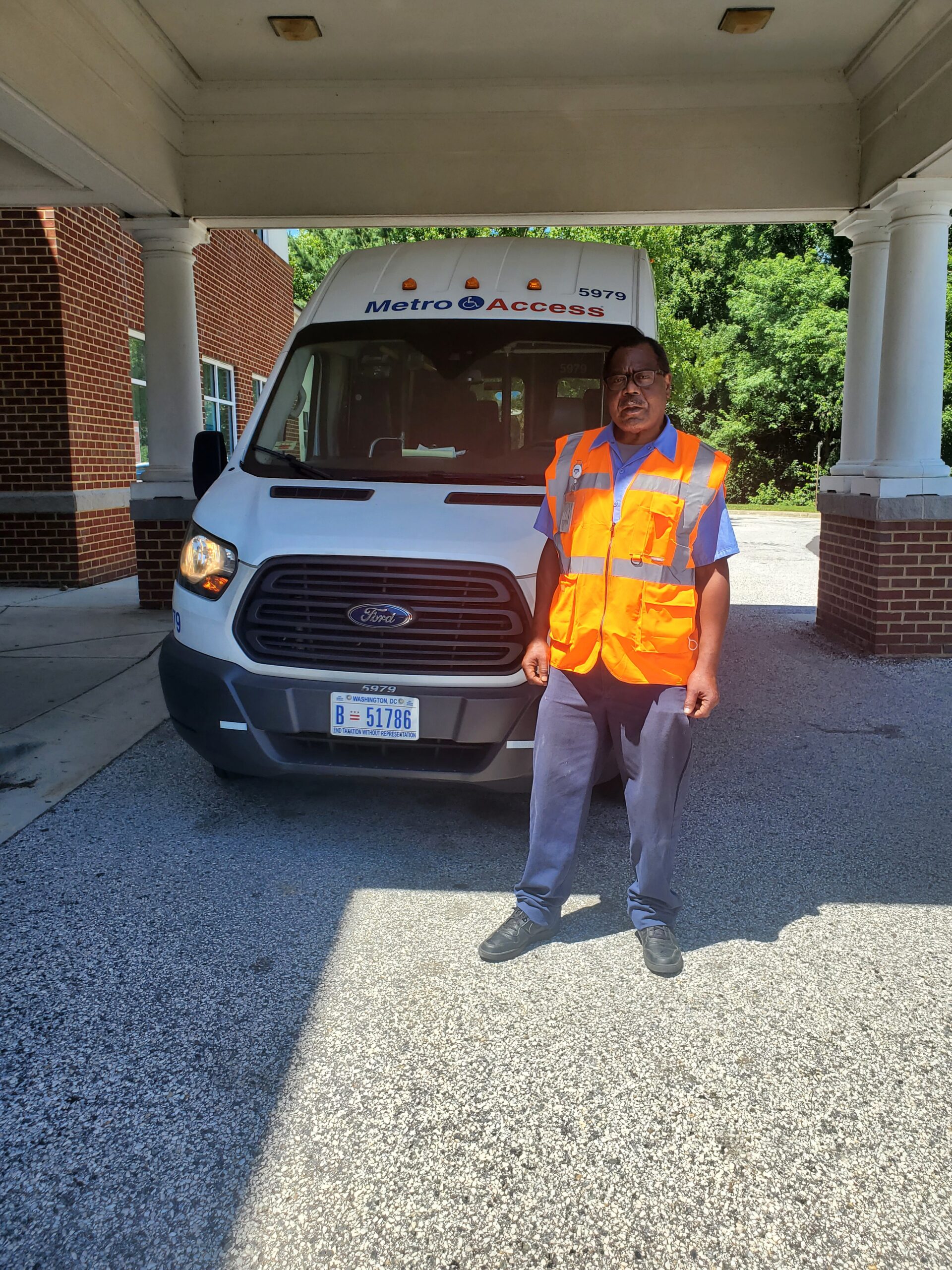
Driven by Justice: Thomas McLamb did not let ATU union agents get away with upending his career just because he opposed their agenda. The union is now facing prosecution for its abuses.
WASHINGTON, DC – Transdev bus driver Thomas McLamb thought that Amalgamated Transit Union (ATU) union bosses at his workplace were mishandling finances and not serving the workers’ interests. In 2015, he led a campaign to vote the union out, and in October 2021 he ran for union office in the hopes of unseating officials he found ineffective.
In response, union agents kicked off a vicious retaliation campaign to punish McLamb for peacefully resisting ATU union bosses’ agenda. This included a union steward physically assaulting McLamb and another union official arranging McLamb’s illegal firing.
McLamb sought out free legal assistance from the National Right to Work Foundation and hit ATU union officials with federal charges for illegal retaliation. He also charged Transdev for the company’s role in his firing. McLamb’s opposition to the ATU union is activity protected by the National Labor Relations Act (NLRA), which guarantees workers’ right to “refrain from any or all of ” union activities. McLamb’s charges say that ATU and Transdev officials illegally violated his rights under the NLRA.
Following an investigation, the National Labor Relations Board (NLRB) issued a formal complaint against the ATU union, confirming all McLamb’s charges and scheduling a trial against ATU for its campaign of illegal retaliation. As this edition of Foundation Action went to press, a trial over the union’s misconduct had concluded. McLamb is now awaiting a decision from an NLRB Administrative Law Judge (ALJ).
Union President Encouraged Followers to Assault Dissident Workers
In a statement filed in November 2021, McLamb said that the ATU Local 689 president, Raymond Jackson, had told other union officers to “slap” employees who were opposing his agenda. Shortly after, McLamb’s statement reported, a union shop steward assaulted him. Both incidents occurred while McLamb was campaigning against the incumbent officers to serve on Local 689’s board.
The NLRB’s complaint and notice of hearing in the case echoed McLamb’s charge. It stated that “[o]n November 11, 2021 . . . [union steward] Tiyaka Boone, at the Employer’s Hubbard Road facility, in the presence of employees, physically assaulted the Charging Party.”
McLamb reported in another federal charge that, shortly after this incident, ATU official Alma Williams demanded that Transdev management fire him. The NLRB’s complaint confirms this accusation: “On November 11, 2021, Respondent, by Alma Williams, at the Employer’s Hubbard Road facility, requested that the Employer discharge the Charging Party.”
On November 16, Transdev gave McLamb a letter stating that he had been placed on “Administrative Leave without pay” pending the outcome of an investigation.
For its part, Transdev backed down and settled immediately, reinstating McLamb and paying him full back wages for the period of his suspension. The ATU union, however, remains defiant.
“The union should not be run as the personal fiefdom of union bosses who do everything they can to insulate themselves from accountability, yet that’s how ATU officials have treated it, complete with threats and violence against me for calling out union officials’ shortcomings,” McLamb told The Washington Free Beacon shortly after a trial was scheduled in his case.
Case Highlights Need for Right to Work Protections
“No American employee should have to go to work thinking that they could be fired, mugged, or slandered merely for exercising their right to oppose union officials. The NLRB’s issuance of a complaint against the ATU in Mr. McLamb’s case is a small but significant step toward justice,” commented National Right to Work Foundation Vice President Patrick Semmens. “However, due to Maryland’s lack of Right to Work protections for its private sector employees, Mr. McLamb is still required to sacrifice part of every paycheck to the same union hierarchy that is now facing prosecution for instigating violence against him.”
“Although we’re happy that the scales are finally tipping in Mr. McLamb’s favor, it’s unfortunately the reality in the 23 non-Right to Work states that workers are forced to pay fees to union hierarchies that act against their interests, sometimes even violently so.”
Teamsters Union Officials Flee Albany XPO Logistics Workplace After Vast Majority of Workers Seek Vote to Remove Them
XPO Logistics employees in California and New Jersey have also recently ousted Teamsters officials
Albany, NY (December 13, 2022) – XPO Logistics truck driver William Chard and his coworkers are free from the control of unpopular Teamsters Local 294 union officials, following Chard’s filing of a worker-backed petition earlier this month requesting a vote to remove the union. Chard received free legal aid from the National Right to Work Foundation in filing the petition for his coworkers.
Chard submitted the petition, which 65 percent of his coworkers signed, at National Labor Relations Board (NLRB) Region 3 in Buffalo. The NLRB is the federal agency responsible for enforcing federal private-sector labor law and will generally conduct a “decertification vote” among workers when at least 30 percent of them express interest in ousting a union. However, likely unwilling to face a ballot-box rejection by the workers they claimed to “represent,” Teamsters bosses filed paperwork with the NLRB just days later disclaiming interest in Chard’s work unit.
Although the NLRB’s decertification process is still prone to union boss-created roadblocks, Foundation-backed reforms the NLRB adopted in 2020 have made it somewhat easier for workers to remove unwanted union officials.
Before the reforms, for example, union officials could stop workers who had requested a decertification vote from casting ballots by filing so-called “blocking charges,” which often contain unverified and unrelated allegations of employer misconduct. The rule changes improved the process so employees can usually at least have a chance to vote before any allegations surrounding the election are handled.
Because New York lacks Right to Work protections for its private sector employees, Teamsters union officials had the power to force Chard and his colleagues to pay dues or fees to the union hierarchy just to stay employed. In contrast, in Right to Work states, union membership and all union financial support are the choice of each individual worker and can’t be required as a condition of employment.
Foundation Aids XPO Logistics Employees from Coast-to-Coast in Kicking Out Teamsters Officials
Chard and his coworkers’ successful decertification is not the first in which Foundation staff attorneys have assisted XPO Logistics drivers in booting Teamsters officials out of their workplaces. In March 2021, Miguel Valle and his colleagues at XPO Logistics’ facility in Cinnaminson, NJ, voted 90 percent in favor of removing Teamsters Local 107 officials.
And that October, Los Angeles-based XPO Logistics employee Ozvaldo Gutierrez and his coworkers submitted a petition requesting a decertification vote to remove Teamsters Local 63 union bosses. Just as Local 294 officials did in Chard’s situation, Local 63 officials abandoned the Southern California facility before the NLRB scheduled an election.
Currently, the NLRB’s own data show that a unionized private sector worker is more than twice as likely to be involved in a decertification effort as the average nonunion worker is to be involved in a unionization campaign, with one analysis finding decertification petitions up 42 percent this year.
“Officials of the Teamsters union – a union that has spent a large portion of its history under federal supervision – have a well-earned reputation for prioritizing power and control over the needs of rank-and-file workers,” commented National Right to Work Foundation President Mark Mix. “Foundation attorneys were happy to assist Mr. Chard and his fellow drivers in exercising their right to throw out a Teamsters union that didn’t serve their interests, just as they’ve been happy to assist other XPO Logistics workers around the country in doing the same.”
“However, even as workers across a number of industries are exercising this right at a rising rate, the Biden NLRB has announced rulemaking to roll back the Foundation-backed reforms that make decertifying unpopular unions easier,” Mix added. “The Foundation will oppose this move to hamper workers’ free choice rights, and will also continue to aid workers nationwide in voting out unions they oppose.”





