
UC Irvine Lab Assistant Beats CWA Bosses in Suit Fighting Anti-Janus Schemes
The following article is from the National Right to Work Legal Defense Foundation’s bi-monthly Foundation Action Newsletter, January/February 2022 edition. To view other editions of Foundation Action or to sign up for a free subscription, click here.
Settlement secures full dues refund, ends phony photo ID restriction on Janus rights
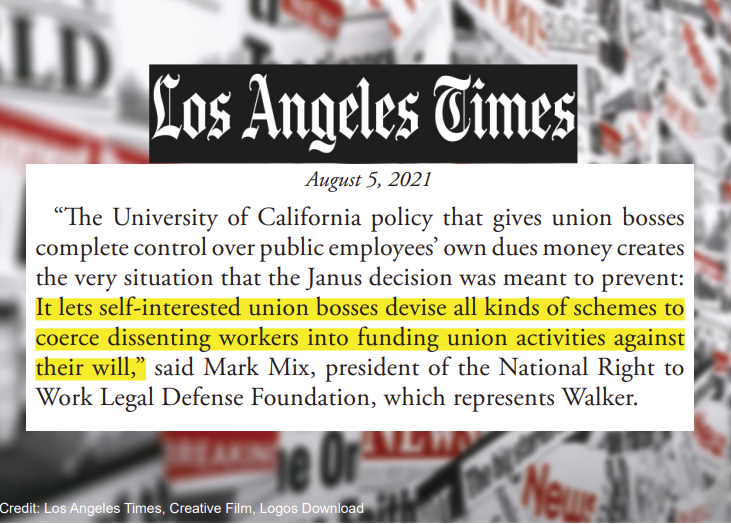
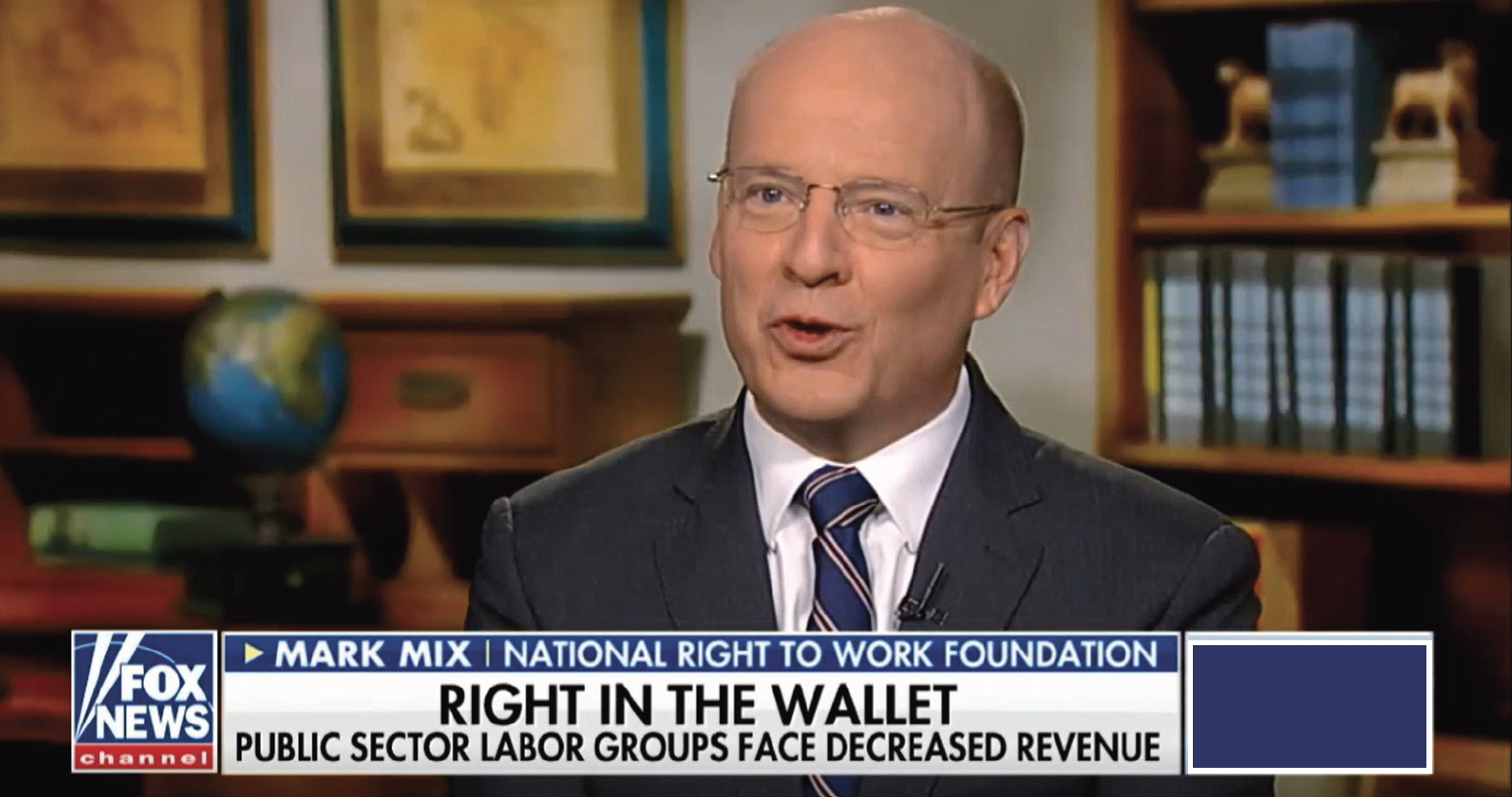
Foundation President Mark Mix was quoted in a Los Angeles Times report on the filing of Amber Walker’s lawsuit, emphasizing how UC’s pro-union boss policies were designed to infringe on workers’ right to decide freely on union support.
IRVINE, CA – Just a few months after University of California Irvine lab assistant Amber Walker slammed them with a federal lawsuit, University Professional and Technical Employees (UPTE-CWA) union officials have already backed off of defending schemes created to stop university employees from exercising their First Amendment right to stop union dues takings.
In November, National Right to Work Foundation staff attorneys won a settlement against UPTE officials requiring them to abandon their arrangement that required employees to provide a photo ID just to cut off unwanted union financial support. The settlement also made UPTE officials return to Walker dues they had seized from her wages under the scheme.
The lawsuit, filed by Foundation staff attorneys in August, challenged the use of a California statute that makes public employers completely subservient to union officials on dues issues. Union officials set up a system to stymie public employees’ right to stop dues payments that, according to Walker’s lawsuit, violated both due process and the First Amendment.
Lawsuit: Union Bosses Layered Two Schemes to Block Janus Rights
Walker sought to safeguard her First Amendment rights recognized by the U.S. Supreme Court in the landmark Foundation-won Janus v. AFSCME decision. In Janus, the Court declared that forcing public sector workers to fund unions as a condition of employment violates the First Amendment. The Justices also ruled that union dues can only be taken from a public employee with an affirmative and knowing waiver of that employee’s First Amendment right not to pay.
“Before pursuing a lawsuit against UPTE, I tried to voice my concerns to many different officials in the union organization,” Walker told a Los Angeles Times reporter. “Many just ignored my plea and one official even raised their voice and rudely hung up the phone in my face . . . I believe it should not have taken a lawsuit to make UPTE respect my constitutional rights.”
Walker’s lawsuit explained that she sent UPTE union bosses a letter in January 2021 exercising her right to end her union membership and all union dues deductions from her wages. Walker submitted this message within a short union created “escape period” imposed to limit when workers can revoke dues deductions. The union bosses still rebuffed her request, telling her she needed to mail them a copy of a photo ID to effectuate her revocation. The photo ID requirement, clearly adopted to frustrate workers’ attempts to exercise their constitutional rights, is mentioned nowhere on the dues deduction card Walker had signed to initiate dues payments.
By the time UPTE officials had informed Walker that her request to cut off dues was rejected for lack of photo ID, the “window period” they enforce had already elapsed. Had Walker not filed a lawsuit with free Foundation legal aid, UPTE officials likely would have continued siphoning money from her paycheck for at least another year until the arrival of the next “window period.”
Rather than face Foundation staff attorneys in court, UPTE bosses backed down and chose to settle the lawsuit. The settlement requires UPTE officials to stop taking money from Walker’s paycheck and to refund any deductions they took after her initial attempt to exercise her Janus rights. They must also desist from enforcing the photo ID requirement.
The Foundation is aiding other public sector workers across the country in defending their First Amendment right to refuse union financial support.
Fight to Eliminate Pernicious Restrictions on Janus Continues at High Court
In October, Foundation staff attorneys filed two joint petitions urging the Supreme Court to take cases brought for Alaska, Oregon, and California public servants who are battling restrictive “escape period” schemes union bosses manipulated to stop them from opting out of supporting unwanted union activities (See Page 2).
“We at the Foundation are glad to have helped Ms. Walker reclaim dues that were illegally siphoned from her wages by UPTE union bosses, but hardworking public servants like Ms. Walker should not be forced to file federal lawsuits just to exercise their basic First Amendment rights of free association,” commented National Right to Work Foundation Vice President Patrick Semmens. “The fact that UPTE bosses backed so quickly off defending their own suspect behavior indicates that they apparently knew their schemes would not stand up to any serious constitutional scrutiny.”
Busted: Teacher Union Bosses Caught Illegally Seizing Dues from California Charter School Educator
Faced with potential legal action from National Right to Work Foundation staff attorneys, CTA union officials quickly backed down
LOS ANGELES, CA (March 1, 2022) – With free legal aid from the National Right to Work Legal Defense Foundation, a former teacher at Camino Nuevo Charter Academy in Los Angeles, California has received a refund of illegally seized union dues. The refund came after Foundation staff attorneys sent a letter to officials with the Camino Nuevo Teachers Association (CNTA), an affiliate of California Teachers Association (CTA), threatening legal action for violating the teacher’s First Amendment rights.
In the Foundation-argued Janus v. AFSCME U.S. Supreme Court case, the Court recognized that forcing public sector workers to pay union dues or fees as a condition of employment violates the First Amendment. The Justices also ruled that public employees must opt in with affirmative consent to any union payments before money can be taken from their paycheck.
Natalie Bahl, who was a teacher at Camino Nuevo Charter Academy up until recently, attempted to exercise her rights under the Janus decision. Ms. Bahl notified the union of her decision in a mass email to several union officials, which reportedly also prompted other teachers to make similar requests. Her email was sent before the union-designated “window period” closed for teachers to revoke their authorization for deducting union dues.
Despite the timely request, Ms. Bahl realized a few months later that union dues were still being deducted from her paycheck. When she asked union officials about it, they suddenly claimed she missed her window period for dues revocation.
At that point, Ms. Bahl reached out to National Right to Work Legal Defense Foundation staff attorneys who sent a letter demanding a refund of union dues collected in violation of the Janus precedent. Rather than face a potential federal civil rights lawsuit, CNTA union officials refunded all dues taken from Bahl from the time of her request until she left the school’s employment to further pursue her own education.
Since winning the 2018 Janus Supreme Court decision, Foundation staff attorneys have filed dozens of cases across the country for public employees seeking to enforce their First Amendment rights under the Janus decision.
“Even when public employees comply with arbitrary and unilaterally imposed union policies designed to stifle their First Amendment rights, union officials brazenly ignore Janus in order to fill their coffers with union dues seized from unwilling employees,” said National Right to Work Foundation President Mark Mix. “Teachers and other public-sector workers have Janus rights under the First Amendment and should immediately contact the Foundation for free legal assistance if they believe their rights have been violated.”
University of California Lab Assistant Challenges California’s Anti-Janus Law
The following article is from the National Right to Work Legal Defense Foundation’s bi-monthly Foundation Action Newsletter, September/October 2021 edition. To view other editions of Foundation Action or to sign up for a free subscription, click here.
Employee wanted to stop dues but law let union bosses demand photo ID
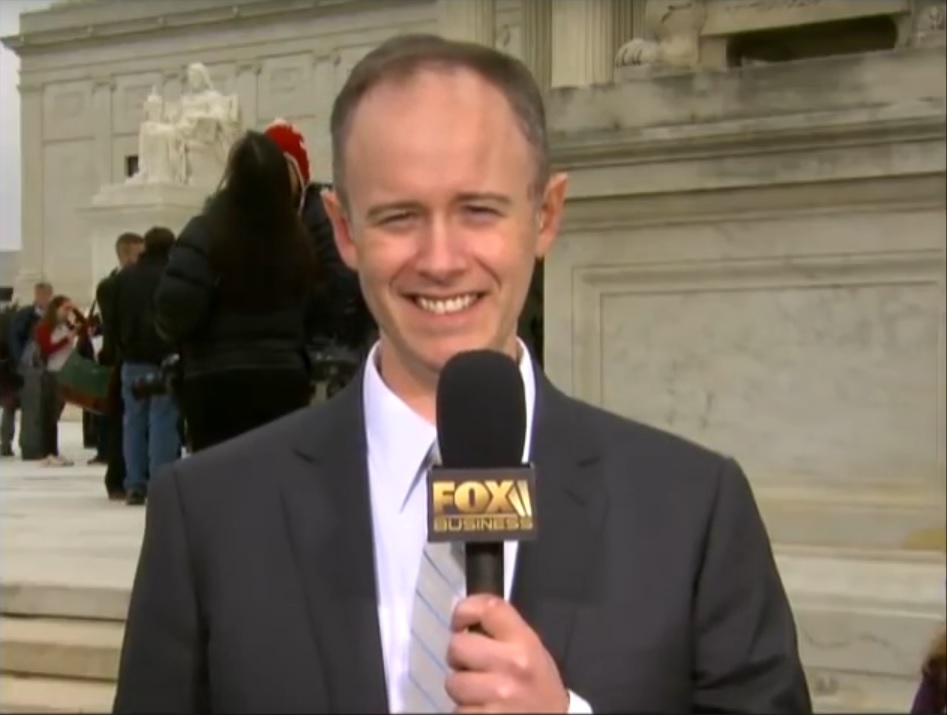
Foundation staff attorney William Messenger scored a huge win for worker freedom in Janus. He’s now on Amber Walker’s legal team.
IRVINE, CA – California has long been at the forefront when it comes to promoting forced union dues. So when it became clear the Supreme Court would likely side with National Right to Work Foundation staff attorneys in the 2018 Janus v. AFSCME case, union boss allies in the California legislature quickly got to work passing laws to undermine public employees’ First Amendment rights. Among the most pernicious of the series of California’s anti-Janus laws is one that gives government union bosses unilateral control over which workers have dues money seized from their paychecks, even over the objections of those workers.
Now, with free legal representation from National Right to Work Foundation staff attorneys, University of California Irvine lab assistant Amber Walker is challenging the law in the U.S. District Court for the Central District of California, suing both the University of California system and University Professional and Technical Employees (Communications Workers of America, UPTE-CWA 9119) union officials.
Her case contends that the California statute, which makes public employers completely subservient to union officials on dues issues, let union bosses demand she provide a photo ID just to exercise her First Amendment right to stop union financial support. Her Foundation-provided staff attorneys argue that the California statute violates both due process and First Amendment guarantees.
In the Foundation-argued Janus v. AFSCME Supreme Court case, the Court declared that forcing public sector workers to fund unions as a condition of employment violates the First Amendment. The Justices also ruled that union dues can only be taken from a public employee with an affirmative and knowing waiver of that employee’s First Amendment right not to pay.
“The University is leaving me helpless against these union officials who just seem to want to take my money despite the fact that I clearly don’t want to be part of the union,” Walker told a Los Angeles Times reporter. “The Janus decision said that I should have a choice when it comes to supporting a union, but UPTE has been denying me my rights and the university is letting the union get away with it.”
Statute Prevents Workers from Telling University Admin to Stop Illegal Takings
Walker’s lawsuit explains that she sent CWA union bosses a letter in June 2021 exercising her right to end her union membership and all union dues deductions from her wages. Although Walker submitted this message within a short annual “escape period” that CWA officials impose to limit when workers can revoke dues deductions, they still rebuffed her request, telling her she needed to mail them a copy of a photo ID to effectuate her revocation.
The photo ID requirement, seemingly adopted purely to frustrate workers’ attempts to exercise their constitutional rights, is mentioned nowhere on the dues deduction card Walker had previously signed to initiate dues payments.
Lawsuit: Union Officials Should Not Control Workers’ First Amendment Rights
UC Irvine and CWA officials are still seizing cash from Walker’s paycheck, and will likely continue to do so for at least another year as the CWA’s arbitrary and short annual “window period” elapsed by the time CWA officials notified Walker that her attempt to stop dues was rejected for lack of photo ID.
The university administration can’t stop dues payments for Walker because of the California statute that gives union officials total control over union dues deductions.
Foundation staff attorneys state in Walker’s complaint that, because of the California statute, CWA officials were able to trample Walker’s desire to keep her own money and were allowed to infringe on her First Amendment Janus rights.
Walker seeks refunds of the dues taken from her and other university workers under CWA’s photo ID scheme. She also seeks to stop the State of California from enforcing the state law outsourcing the process for stopping and starting union dues deductions to self-interested union officials.
UPTE Bosses Designed Scheme Knowing CA Law Would Protect Them
“California CWA union bosses clearly value illegally filling their coffers with Ms. Walker’s money over respecting her First Amendment and due process rights,” commented National Right to Work Foundation Vice President and Legal Director Raymond LaJeunesse. “They created this photo ID requirement out of thin air to block workers from exercising their Janus rights, safe in the knowledge that California’s union dues policies would stifle any chance a public worker has of getting his or her employer to stop seizing dues money for the union.”
“By giving union bosses total control over how and when workers can exercise their First Amendment Janus right to stop dues payments, California is allowing the fox to guard the henhouse to the detriment of public employees’ constitutional rights,” added LaJeunesse.
Sixteen States Back Foundation’s Petition to High Court in Chicago Educator Case
The following article is from the National Right to Work Legal Defense Foundation’s bi-monthly Foundation Action Newsletter, September/October 2021 edition. To view other editions of Foundation Action or to sign up for a free subscription, click here.
Amicus brief: Unions “refuse to stop collecting dues despite unequivocal employee demands”
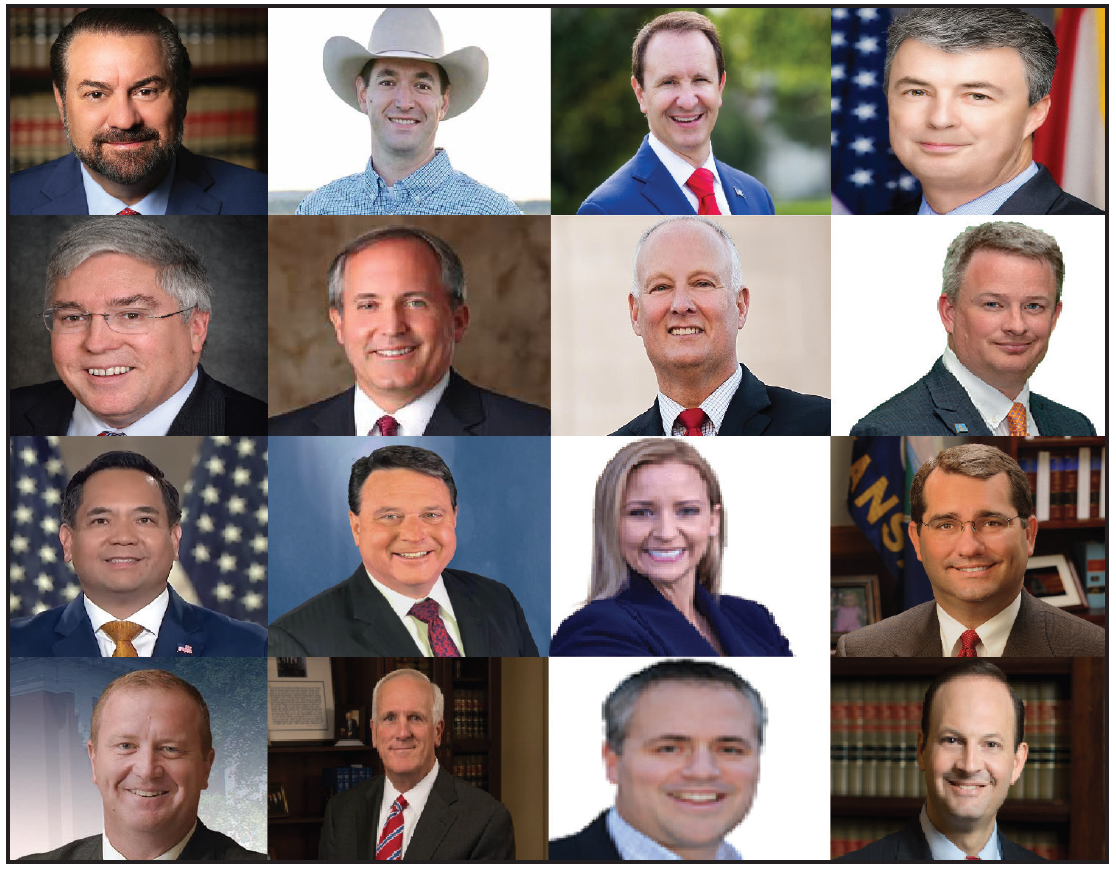
“Janus has been ignored,” wrote sixteen attorneys general in their amicus brief supporting Ifeoma Nkemdi and Joanne Troesch’s petition pressing the Supreme Court to hear their case and declare “escape periods” a First Amendment violation.
WASHINGTON, DC – In July, sixteen attorneys general threw the support of their states behind Chicago Public Schools educators Ifeoma Nkemdi and Joanne Troesch, who are urging the U.S. Supreme Court to hear their case defending their First Amendment right to cut off union financial support as recognized in the Foundation-won Janus v. AFSCME decision.
In an amicus brief encouraging the High Court to hear the case, attorneys general from Alaska, Alabama, Arizona, Arkansas, Indiana, Kansas, Louisiana, Missouri, Montana, Nebraska, South Carolina, South Dakota, Tennessee, Texas, Utah, and West Virginia argue that “escape period” restrictions like the one that Chicago Teachers Union (CTU) bosses foisted on Troesch and Nkemdi are a widespread threat to public employees’ rights under the Janus Supreme Court decision.
In 2018, the Supreme Court ruled in Janus v. AFSCME that public employees’ First Amendment rights are violated when they are forced to fund a union as a condition of employment. The Court also held that union dues can only be taken from a public employee with an affirmative and knowing waiver of that employee’s First Amendment right not to pay.
Unions Are Seizing Money from ‘Tens of Thousands’ Unconstitutionally, Brief Says
The CTU-concocted “escape period” Nkemdi and Troesch are challenging blocks employees from exercising their First Amendment Janus right to end union financial support except during one month per year. The educators’ petition for writ of certiorari presses the High Court to hear their case to affirm that Janus does not permit union bosses to profit from schemes that constrict workers’ constitutional right to refrain from subsidizing a union.
The states’ amicus brief emphasizes how glaringly union officials have flouted Janus with restrictions, as well as how widespread the schemes are: “Janus has been ignored. Across the country public-sector unions have resisted Janus’s instructions and devised new ways to compel state employees to subsidize union speech. Unions place onerous terms on dues forms that prohibit state employees from opting out of paying dues except during narrow (and undisclosed) windows during the year.”
The brief continues: “Unions refuse to inform state employees that they have a First Amendment right not to pay union dues. And unions refuse to stop collecting dues despite unequivocal employee demands. The result is that tens of thousands of state employees across the country are having dues deducted to subsidize union speech without any evidence that they waived their First Amendment rights . . . .”
Nkemdi and Troesch’s case “implicates these precise concerns” and the Court must hear it, the brief maintains.
In addition to the states’ brief, policy groups Goldwater Institute, Cato Institute, Freedom Foundation, and Liberty Justice Center filed amicus briefs backing the case.
Justices May Already Be Showing Interest in Foundation-Backed Case
In late July, the Supreme Court ordered lawyers for CTU and the Chicago Board of Education to file a response brief to Troesch and Nkemdi’s petition, a signal that some Justices may be interested in taking up the case.
Also pending at the High Court is Foundation attorneys’ anti- “escape-period” case for Susan Fischer and Jeanette Speck, two New Jersey teachers. Both that case and Troesch and Nkemdi’s case are expected to be fully briefed in October, after which the Justices will decide whether to take them.
“As union bosses continue to use deceptive ‘escape period’ arrangements to keep worker money flowing unconstitutionally into their coffers, support continues to roll in from across the country for Troesch and Nkemdi, who are sticking up for independent-minded public servants who simply want to serve their communities without being forced to fund union activities,” observed National Right to Work Foundation President Mark Mix. “The High Court must weigh in to affirm that public workers’ First Amendment rights cannot be confined to union officials’ arbitrary schedules.”
TX Airline Employee Urges High Court to Take Up Forced-Dues-for-Politics Challenge
The following article is from the National Right to Work Legal Defense Foundation’s bi-monthly Foundation Action Newsletter, July/August 2021 edition. To view other editions of Foundation Action or to sign up for a free subscription, click here.
IAM bosses automatically seize money for politics if workers miss tiny ‘escape window’ to opt out

IAM officials left Arthur Baisley just a small annual “escape window” to opt out of automatic dues deductions taken for union politics. Will the High Court hear his case against this scheme?
WASHINGTON, DC – Arthur Baisley, a United Airlines employee in Texas, filed a petition for writ of certiorari asking the U.S. Supreme Court to hear his case in which he is battling International Association of Machinists (IAM) union bosses. They are seizing dues for union political expenditures from him and his coworkers in violation of the First Amendment and the Railway Labor Act (RLA).
Baisley filed the cert petition this May with free legal aid from the National Right to Work Foundation. Baisley’s lawsuit challenges a union requirement that employees who choose not to join the union must opt out of funding the union’s political and ideological activities during a brief annual “escape window,” or else have money automatically seized from their paychecks for those purposes against their will.
Worker Contends Janus Standard Should Nullify ‘Opt-Out’ Language
Baisley’s attorneys argue the “opt-out” arrangement violates workers’ rights found in the RLA, and the First Amendment under the standard laid out in the landmark 2018 Supreme Court Janus v. AFSCME decision, won by Foundation staff attorneys. The RLA is a federal law that governs labor relations in the railway and airline industries.
In Janus, the High Court ruled that no public worker can be coerced into paying union dues or fees as a condition of getting or keeping a job. The Court also held that union dues or fees can only be deducted from a public employee’s paycheck with his or her affirmative consent and a knowing waiver of his or her constitutional right not to pay.
Baisley’s staff attorneys extend this logic and argue that, under Janus and other Supreme Court precedents, union bosses infringe on the First Amendment rights of private sector employees under the RLA by forcing them to pay for union boss political or ideological activities without their consent. The union boss “opt-out” scheme offends this principle by forcing workers to object to dues for politics within a small “escape window” and seizing those dues as a condition of employment if they don’t opt out.
IAM Officials’ Scheme Seizes Forced-Dues-for-Politics from Non-Members
Baisley is not a member of the IAM, but is still forced to pay some union fees despite being based in the Right to Work state of Texas. The RLA preempts state Right to Work protections which make union membership and all union financial support strictly voluntary. However, under long-standing law established in Foundation-supported cases, even without Right to Work protections non-members cannot, as a condition of keeping their jobs, be required to pay fees for anything beyond the union’s expenses directly related to bargaining.
Baisley’s petition details the convoluted union boss-created process that workers must navigate just to prevent money from being taken from their paychecks in violation of their First Amendment rights. In Baisley’s situation, even though he sent a letter to IAM agents in November 2018 objecting to funding all union political activities, union officials only accepted his objection for 2019, and told Baisley he had to renew his objection the next year or else be charged full union dues.
IAM Union Officials Contravened Both Janus and Long-Standing Federal Law
In addition to running afoul of the Janus First Amendment standard, Foundation staff attorneys also assert that the complicated “opt-out” scheme contravenes the RLA, which protects the right of employees under its jurisdiction to “join, organize, or assist in organizing” a union of their choice, as well as the right to abstain from all union activities.
“The sordid goal of these kinds of union ‘opt-out’ requirements is clear: trap unsuspecting workers into subsidizing union bosses’ radical political agenda without their consent and in violation of their rights,” said National Right to Work Foundation Vice President Patrick Semmens. “The Supreme Court ruled in the Foundation-won Janus case that union officials must first seek the affirmative approval of public sector workers before charging them for union politics, and this case simply seeks to ensure that Mr. Baisley and all employees subject to the RLA enjoy those same basic protections.”
Cuyahoga County Probation Officer Hits Union with Federal Lawsuit for Years of Unconstitutional Dues Seizures
Union officials took full union dues from nonmember officer without consent, then ignored requests to return illegally-seized money
Cleveland, OH (August 25, 2021) – Cuyahoga County probation officer Kimberlee Warren is suing the Fraternal Order of Police (FOP) union in her workplace, charging union officials with breaching her First Amendment right as a public employee to refuse to support union activities. She is receiving free legal representation from National Right to Work Legal Defense Foundation staff attorneys, in partnership with attorneys with the Ohio-based Buckeye Institute.
Foundation staff attorneys contend that FOP union officials ignored her constitutional rights recognized in the landmark 2018 Janus v. AFSCME U.S. Supreme Court decision, which was argued and won by Right to Work Foundation staff attorneys.
In Janus, the Justices declared it a First Amendment violation to force any public sector employee to pay union dues or fees as a condition of keeping his or her job. The Court also ruled that public employers and unions cannot take union dues or fees from a public sector employee unless they obtain that employee’s affirmative consent.
The federal lawsuit says that Warren was not a member of the FOP union before the Janus decision in June 2018, but FOP union bosses collected union dues from her wages without her consent. According to the complaint, this continued until around December 2020, when Warren notified union officials that they were violating her First Amendment rights by taking the money and demanded that the union stop the coerced deductions and return all money that they had taken from her paycheck since the Janus decision.
When the deductions ended, FOP chiefs refused to give back the money that they had already seized from Warren in violation of her First Amendment rights. They claimed the deductions had appeared on her check stub and thus any responsibility to cease the deductions fell on her – even though to her knowledge they had never obtained permission to opt her into membership or to take cash from her paycheck in the first place.
According to the lawsuit, Warren also asked FOP bosses to provide any dues deduction authorization document she might have signed. FOP officials rebuffed this request as well.
The High Court ruled in Janus that, because all activities public sector unions undertake involve lobbying the government and thus are political speech, forcing a public employee to pay any union dues or fees as a condition of keeping his or her job is forced political speech the First Amendment forbids.
Union bosses were permitted by state law before the Janus ruling to seize from nonmember workers’ paychecks only the part of dues they claimed went toward “representational” activities. FOP union officials took this amount from Warren prior to Janus. However, they furtively designated her as a member following the decision, and began taking full dues, deducting even more money from her wages than they did before Janus despite the complete lack of any consent.
Warren is now suing the FOP union in the U.S. District Court for the Northern District of Ohio. Her lawsuit seeks the return of all dues that FOP union officials garnished from her paycheck since the Janus decision was handed down. It also seeks punitive damages because FOP showed “reckless, callous” indifference toward her First Amendment rights by snubbing her refund requests.
Warren’s lawsuit comes as other Foundation-backed lawsuits for employees defending their First Amendment Janus rights seek writs of certiorari from the Supreme Court. This includes cases brought for Chicago and New Jersey public educators which challenge “window periods” that severely limit when they and their fellow educators can exercise their First Amendment right to stop union dues deductions, sometimes to periods as short as ten days per year. In a California federal court, Foundation staff attorneys are also aiding a University of California Irvine lab assistant in fighting an anti-Janus state law that gives union bosses full control over whether employers can stop sending an employee’s money to the union after that employee exercises his or her Janus rights.
“All over the country, union officials are stopping at nothing to ensure they can continue ignoring workers’ First Amendment Janus rights and continue siphoning money from the paychecks of dissenting employees,” commented National Right to Work Foundation President Mark Mix. “After Janus was handed down, FOP union officials in Warren’s workplace could have come to her to attempt to get her to support the union voluntarily, but tellingly instead they began surreptitiously siphoning full dues out of her paycheck without her consent in direct contravention of the Supreme Court.”
“Despite her repeated requests, FOP bosses have continued to trample Warren’s Janus rights, and Foundation staff attorneys are fighting to stop this gross injustice against her and punish FOP bosses for their brazen behavior,” Mix added.
More Workers Ask Supreme Court to Refund Unconstitutional Forced Dues
The following article is from the National Right to Work Legal Defense Foundation’s bi-monthly Foundation Action Newsletter, January/February 2021 edition. To view other editions or to sign up for a free subscription, click here.
Four Foundation-backed cert petitions now filed at High Court with millions at stake
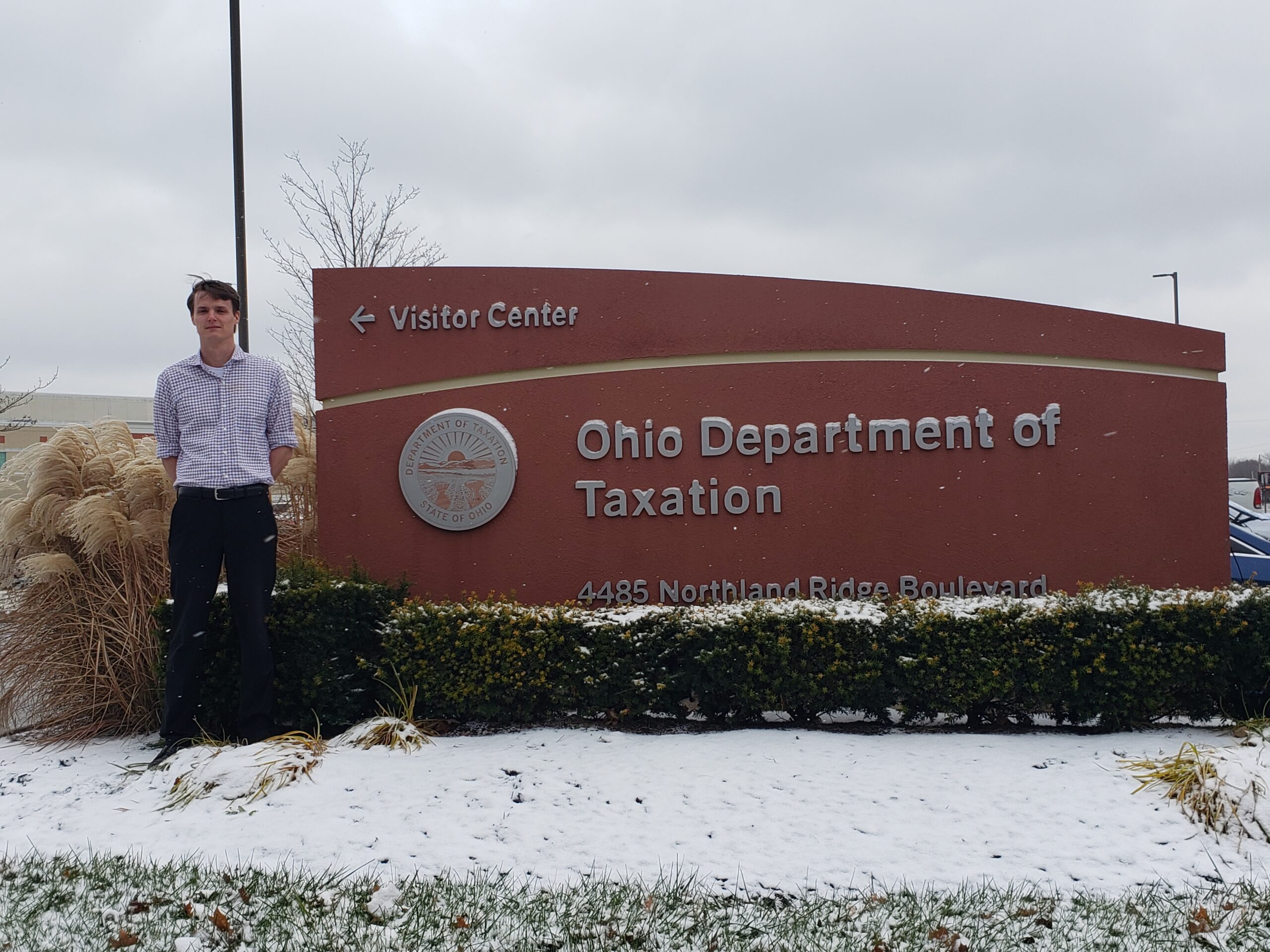
Foundation staff attorneys asked the Supreme Court to hear Nathaniel Ogle’s case, which seeks refunds for him and his coworkers of forced union dues that were seized from their paychecks in violation of the First Amendment.
WASHINGTON, DC – Across the nation, public employees continue to seek free legal aid from National Right to Work Foundation staff attorneys, to fight for their First Amendment rights recognized in the landmark Janus v. AFSCME Supreme Court ruling. Janus was argued and won by Foundation staff attorneys.
Janus affirmed that public employees cannot be required to subsidize union activities as a condition of employment and that union payments can only be deducted with an employee’s freely given consent.
Despite this clear ruling, union bosses have almost without exception refused to return money seized from workers in violation of the First Amendment. In response, Foundation staff attorneys are now assisting workers in more than a dozen cases seeking to force union officials to return illegal forced fees to tens of thousands of employees, with four such cases now pending at the U.S. Supreme Court.
Union Officials Refuse to Refund Illegally Seized Dues Post-Janus
In November, attorneys for Connecticut Department of Energy and Environmental Protection employees Kiernan Wholean and James Grillo filed a petition for writ of certiorari with the Supreme Court. It is asking the Justices to hear their case, seeking back years of union dues that they and their coworkers were forced to pay to Service Employees International Union (SEIU) union bosses in violation of the First Amendment. Their petition follows one filed in October for Ohio Department of Taxation employee Nathaniel Ogle, whose case seeks to require AFSCME union bosses to similarly return forced fees seized in violation of the Janus standard from potentially thousands of Ohio government employees.
With these two new cert petitions, there are now seven pending before the Supreme Court on this issue, four of which were filed for workers by Foundation staff attorneys. That includes the continuation of the original Janus case brought by Mark Janus.
If the Supreme Court decides to hear any one of these cases, a favorable ruling would create another groundbreaking precedent, potentially prompting the return in Foundation cases alone of over $130 million to employees fighting to get back money taken in contravention of their Janus rights.
Wholean and Grillo, who are not members of SEIU,
originally filed their case in 2018 in the U.S. District Court for the District of Connecticut shortly before the High Court decided Janus. The State ceased deducting dues from their paychecks for SEIU following a letter to the State Comptroller from a National Right to Work Foundation attorney, which threatened legal action for any dues deductions from non-members that continued after Janus.
However, SEIU union officials continue to refuse to refund dues that they took from Wholean, Grillo and other non-members in violation of the Janus First Amendment standard before the decision, even though they knew the employees never consented to pay.
Ogle filed his case at the District Court for the Southern District of Ohio just after Janus was decided. Like Wholean and Grillo, he was never a member of the union but had mandatory union fees deducted from his paychecks. The Ohio affiliate of the national AFSCME union has around 30,000 public employees across the Buckeye State under its bargaining monopoly. If a class is eventually certified in Ogle’s case, it could potentially include thousands of workers.
Foundation Attorneys: High Court Must Reject Union Attempts to Dodge Janus
Lower courts in these and other lawsuits have accepted union lawyers’ so-called “good faith” contentions for letting union bosses keep the dues collected in violation of the non-members’ constitutional rights. This is at odds with the Supreme Court’s Janus ruling, which did not proscribe retroactive relief. Indeed, it observed that union officials have been “on notice” for years that mandatory fees likely would not comply with the High Court’s heightened level of First Amendment scrutiny, articulated in the 2012 Supreme Court decision in the Foundation’s Knox v. SEIU case.
Foundation staff attorneys point out in the petitions before the Supreme Court that a “good faith” defense has never existed under Section 1983 of the Civil Rights Act of 1871, the statute under which these lawsuits are brought. Section 1983 specifically imposes liability on those who violate the constitutional rights of others while acting “under color of ” existing law.
Not all judges, however, have been convinced by union officials’ dubious “good faith” argument for keeping the unconstitutionally seized payments. In Wenzig, another Foundation-backed case, a majority of a Third Circuit panel denied the existence of such a defense. In a supplemental brief, Foundation attorneys cited the confusion among lower courts as a significant reason the court should hear the continuation of Janus.
“With seven petitions on this issue now pending with the High Court and more to be filed soon, it is time the Supreme Court hears this issue and ends the denial of justice for tens of thousands of non-member government employees whose First Amendment rights were violated,” commented National Right to Work Foundation President Mark Mix. “Section 1983 of the Civil Rights Act, the federal statute under which all these cases were filed, was specifically intended to allow individuals to remedy the deprivation of their rights when it occurs under color of law. It’s outrageous that union bosses have thus far been allowed to keep money seized in violation of the First Amendment because it was authorized by then-existing but unconstitutional law.
“That result is especially specious because, as the Supreme Court recognized in Janus, union bosses have been ‘on notice’ since 2012 that forcing government employees to pay union fees was likely unconstitutional,” Mix added.
Ohio Public Workers Axe Illegal Restrictions on Janus Rights for Almost 30,000
The following article is from the National Right to Work Legal Defense Foundation’s bi-monthly Foundation Action Newsletter, September/October 2020 edition. To view other editions or to sign up for a free subscription, click here.
Foundation-backed lawsuit ends AFSCME bosses unlawful “escape period” scheme
Two years after Foundation staff attorneys won Janus, public sector workers continue to cast off the shackles of forced union dues. In Allen, the plaintiffs successfully defended the Janus rights of thousands of Ohio public workers.
COLUMBUS, OH – A lawsuit by four Ohio public employees has secured the end of an illegal dues deduction scheme used by Ohio Civil Service Employees’ Association (OCSEA/AFSCME Council 11) union bosses to block an estimated 28,000 workers from exercising their First Amendment right to stop union dues payments. The workers obtained free legal representation from National Right to Work Foundation staff attorneys in challenging the policy.
The class-action suit, Allen v. AFSCME, challenged OCSEA’s so-called “maintenance of membership” policy, which trapped workers in forced-dues payments except for a brief “escape period” once every three years at the expiration of the union monopoly contract. The workers argued this policy violated their First Amendment rights under the Janus v. AFSCME Supreme Court decision.
In Janus, the High Court struck down mandatory union fees for public sector workers as an infringement of their First Amendment rights, and ruled that the government can only deduct union dues or fees with an individual’s affirmative consent.
After Freeing Workers, Foundation Attorneys Warn of Future Union Boss Tricks
As a result of the lawsuit, OCSEA officials and the State of Ohio have rescinded the “maintenance of membership” restriction on when state workers can exercise their First Amendment right to cut off union dues deductions.
They must also honor requests to stop dues deductions from any employees who signed the AFSCME dues authorization form at issue in the lawsuit. Finally, AFSCME bosses repaid dues seized illegally under the scheme to the plaintiffs and more than 150 other employees who tried to cut off union dues deductions after Janus was decided.
Knowing that union bosses don’t easily give up in their crusades to coerce workers into paying dues, however, Foundation staff attorneys issued a legal notice shortly after the case wrapped up, warning workers that OCSEA union bosses may soon solicit them to sign new dues deduction forms which are not covered by the litigation. The new forms will “purport to restrict” when employees can stop dues, it warns.
In light of that, the notice reminds workers that under Janus, no Ohio public employee can be forced to sign a union dues deduction form as a condition of employment, no matter what union agents may tell them.
Just Latest in String of Ohio Worker Victories over “Escape Periods”
Allen is not the only case in which Ohio public employees have, with National Right to Work Foundation legal aid, successfully challenged union boss attempts to limit their rights.
Seven other Ohio public employees won the first-in-the-nation victory against unconstitutional “escape periods” with Foundation aid in January 2019, after they filed a class-action federal lawsuit challenging a similar policy created by AFSCME Council 8 bosses. They won a settlement ending the restrictions for themselves and their coworkers. That win was followed by two other Ohio public workers, Connie Pennington and Donna Fizer, successfully ending “escape period” restrictions with Foundation assistance later in 2019.
“Although this chain of victories for Buckeye State public employees is certainly encouraging, the widespread nature of these schemes shows there remains much work to do to force union bosses to end their unconstitutional restrictions on public employees’ First Amendment Janus rights,” observed National Right to Work Foundation President Mark Mix. “Foundation litigation has already freed hundreds of thousands of public employees from forced union dues, but likely millions more remain trapped and unable to exercise their rights. That is why Foundation litigators will continue to file these cases.”
Two Cert Petitions Seeking Refunds of Union Dues Seized in Violation of First Amendment Janus Rights Now Fully Briefed at SCOTUS
Chicago transit worker’s suit, Mark Janus’ petition and two other cases seeking refunds all now scheduled to be considered at High Court’s October 9 conference
Washington, DC (September 25, 2020) – Staff attorneys at the National Right to Work Legal Defense Foundation have just filed their reply brief with the US Supreme Court in the class-action case Casanova v. International Association of Machinists, Local 701. Thus, the petition asking the Supreme Court to hear the case is now fully briefed. The case will now be considered at the Court’s October 9 conference.
The plaintiff, Benito Casanova, a Chicago Transit Authority worker, is seeking a refund of union fees that were seized from his paycheck and the paychecks of similarly situated coworkers in violation of the First Amendment, as the landmark 2018 Janus v. AFSCME Supreme Court decision recognized.
In Janus, which was argued and won by National Right to Work Foundation staff attorneys, the High Court ruled that requiring public sector workers to pay union dues as a condition of getting or keeping a job violates the First Amendment. The Court also held that union dues can only be deducted from the paycheck of a public worker with his or her affirmative consent. Casanova wants the Court to rule that International Association of Machinists (IAM) union bosses must return money deducted from nonmember workers’ paychecks from 2016 through 2018, in accordance with Illinois’ two-year statute of limitations.
This is now the second Foundation-backed case seeking such a refund that is currently waiting on a certiorari petition from the Court. The other is the continuation of the Janus case itself, in which the original plaintiff, former Illinois child support specialist Mark Janus, is asking the High Court to hear his case which demands a return of unconstitutional union dues from 2013 (two years before his case began) to the day the Janus decision was handed down in 2018. Janus continues to be litigated by Foundation staff attorneys in partnership with attorneys from the Liberty Justice Center, an Illinois nonprofit.
Union bosses have been using a so-called “good faith” defense at lower courts to avoid returning forced fees that were unconstitutionally seized from public employees’ paychecks. In a recent supplemental brief in Janus, Foundation attorneys point out that two of three judges on a panel of the Third Circuit Court of Appeals recently opined that such a defense is invalid, while other federal judges have upheld it. This, they argue, makes it especially vital that the Court hear the case to clear up the confusion among lower courts and ultimately reject this spurious argument allowing union officials to profit from violating workers’ constitutional rights.
Both Foundation-supported cases have been scheduled for the Court’s conference on October 9. Two other class-action cases dealing with the same issue, Danielson and Mooney, have been scheduled for the same conference. Foundation staff attorneys are actively litigating about 20 of these cases which collectively seek the return of an estimated $130 million or more in forced union fees seized from workers in violation of the First Amendment.
“The Supreme Court pointed out in the Janus decision two years ago that public sector union bosses had unjustly gained a ‘considerable windfall’ by violating the First Amendment rights of public servants who wanted to disassociate with unions,” commented National Right to Work President Mark Mix. “We are proud to stand with Mr. Janus, Mr. Casanova, and scores of other public sector workers across the country as they seek to reclaim their hard-earned dollars that union bosses refuse to return despite the Supreme Court’s clear ruling in Janus.”
“The so-called ‘good faith’ defense, which permits union bosses to continue ignoring an established Supreme Court precedent, has already been rejected by two federal judges. It is vital that the Supreme Court take up this issue to disabuse all lower courts of this flawed argument, and to ensure that the victims of union officials’ First Amendment violations finally get some justice,” Mix added.
Airline Workers Ask Appeals Courts to Invalidate Union Dues Opt-Out Schemes as Violation of First Amendment
Cases challenge union officials’ requirement that workers repeatedly opt-out of union political spending or else be trapped in full forced dues
Springfield, VA (September 14, 2020) – With free legal representation from National Right to Work Legal Defense Foundation staff attorneys, two airline workers are challenging union officials’ opt-out policies that require workers to “opt-out” in order to exercise their First Amendment right not to fund union political activities, as recognized in the Supreme Court’s 2018 Janus v. AFSCME decision.
The two federal class action lawsuits were brought for United Airlines fleet service employee Arthur Baisley and JetBlue Airlines pilot Christian Popp, and are currently pending in the US Courts of Appeals for the Fifth Circuit and Eleventh Circuit respectively. Baisley’s case against the International Association of Machinists (IAM) union has been fully briefed and is pending before the Fifth Circuit. Meanwhile, the opening brief for Popp’s case against the Air Line Pilot Association (ALPA) union is due in early October.
The lawsuits contend that under Janus and the 2012 Knox v. SEIU Supreme Court cases – both of which were argued and won by Foundation staff attorneys – no union dues or fees can be charged for union political activities without a worker’s affirmative consent.
Despite this, union officials at the IAM and ALPA enforce complicated opt-out policies that require workers to object to funding union political activities or pay full union dues. National Right to Work Foundation staff attorneys argue that the Janus decision’s opt-in requirement applies to airline and railroad employees covered by the Railway Labor Act (RLA) taken together with longstanding precedent protecting private sector workers from being required to pay for political and ideological union activities.
Mr. Baisley and Mr. Popp both live in Right to Work states (Texas and Florida, respectively), but the RLA preempts state law, meaning that they can still be forced to pay union dues or fees or be fired. Even under the RLA, however, union bosses cannot force workers to pay for political activities. These lawsuits point out that the RLA protects the rights of employees “to join, organize, or assist in organizing a union… [as well as their right to] refrain from any of those activities,”—a rule that union officials have violated.
“IAM and ALPA union officials have demonstrated a blatant disregard for the rights of the very workers they claim to represent by creating deliberately complicated obstacles for independent-minded workers who want to exercise their right not to fund union ideological activities,” said National Right to Work Foundation President Mark Mix. “Although Janus’ biggest impact was to secure the First Amendment rights of all public employees across the nation not to be required to fund Big Labor, these cases demonstrate that Janus’ implications also protect private sector employees.”





