
Security Guard Wins Groundbreaking ‘Janus’ Religious Accommodation
The following article is from the National Right to Work Legal Defense Foundation’s bi-monthly Foundation Action Newsletter, July/August 2024 edition. To view other editions of Foundation Action or to sign up for a free subscription, click here.
À la Janus, religious objector to union affiliation is free from all forced payments
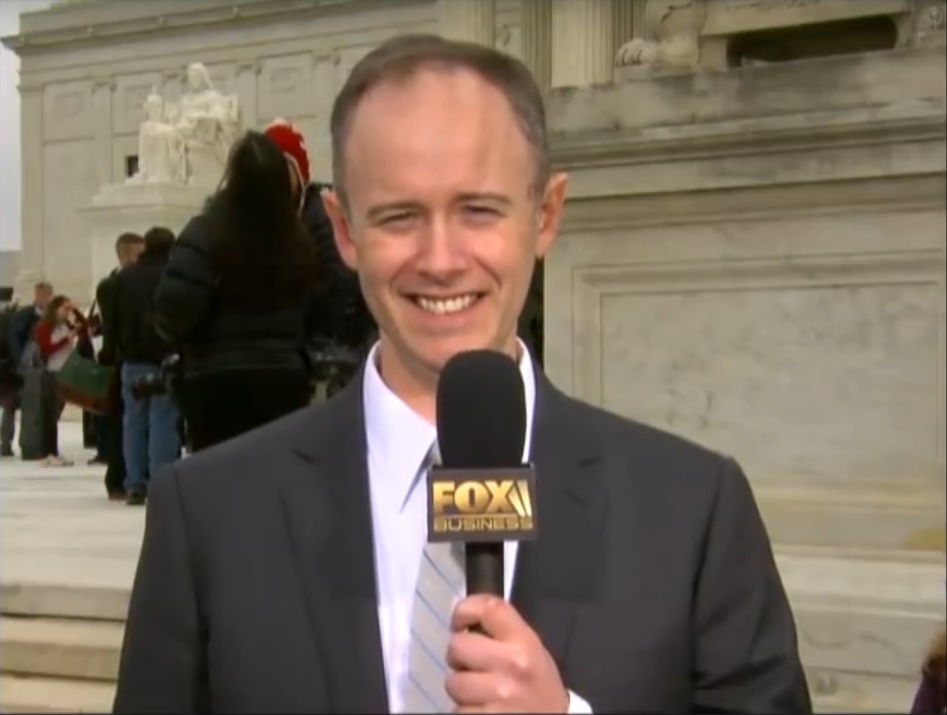
The landmark Janus SCOTUS case, argued by Foundation Legal Director William Messenger, profoundly strengthened public employees’ First Amendment rights. But it appears the impact of the case is just beginning.
SAN FRANCISCO, CA – National Right to Work Foundation staff attorneys have been trailblazers in scoring legal protections for independent-minded workers who oppose joining or paying dues to a union on religious grounds. Over the years, Foundation attorneys have helped workers from a variety of faiths secure religious accommodations to forced-dues payment.
Earlier this year, Foundation attorneys achieved a breakthrough in this area of the law. In their case for Thomas Ross, a San Francisco-based employee of security company Allied Universal who sought a faith-based exemption from paying dues to a Service Employees International Union (SEIU) affiliate, Foundation attorneys won an unprecedented settlement. It not only frees Ross from any requirement to pay dues or fees to the union, but also frees him from any obligation to pay an amount equivalent to dues to a charity, which has been the dominant form of accommodation in the past for religious objectors.
Union Demanded Religious Worker Violate Faith, Breaking Federal Laws
Ross is a Christian who opposes union affiliation on religious grounds. Ross informed both the SEIU union and Allied Universal when he was hired in 2020 that his religious beliefs disallowed union membership and that he needed an accommodation. In addition to ignoring that request, in 2022 his employer told him that union membership was mandatory and “demanded that [he] sign a payroll deduction, join the [union], and pay union dues,” according to filings in his case.
Ross fought back by filing federal discrimination charges against the union and Allied Universal at the Equal Employment Opportunity Commission (EEOC), as well as by filing unfair labor practice charges at the National Labor Relations Board (NLRB). Title VII of the Civil Rights Act of 1964 requires unions and employers to accommodate religious objections to union payments. Additionally, the National Labor Relations Act (NLRA) prohibits mandatory union membership, even in non-Right to Work states like California.
Ross’ Foundation-backed legal battle against SEIU and Allied Universal continued into 2023, when Foundation attorneys appealed a specious NLRB decision which attempted to dispose of the issue as a mere administrative error on the employer’s part. Finally, in 2024, the SEIU and Allied Universal backed down and settled the case, conceding a full religious accommodation to Ross.
The terms of the settlement state that Allied Universal and SEIU “will not enforce the collective bargaining agreement’s union membership and fee provisions against Ross . . . [and] will not force Ross to pay any union fees while he is employed by Allied Universal.”
In an article in the Baylor Law Review following the settlement, Foundation attorneys Bruce Cameron and Blaine Hutchison argue that, in light of the Foundation’s landmark 2018 Supreme Court victory in Janus v. AFSCME, religious accommodations like Ross’ should be the standard for future cases involving religious objectors to union membership and dues payment. In Janus, the Supreme Court ruled that the First Amendment prohibits forcing public sector employees to join or pay dues to a union as a condition of employment.
Janus Shows Right Way to Accommodate Religious Employees
The article points out that the Supreme Court in Janus knocked down the so-called “free-rider” and “labor-peace” arguments that union lawyers typically use to justify forcing religious objectors to pay dues money to a charity. In Janus, the article explains, “The Court showed that nonmembers need not pay fees to compensate the union or to prevent labor unrest.”
The payment-to-charity scheme simply “punishes individuals for following their faith,” the article says. “Janus shows the proper solution: religious objectors need not pay any forced union fees.”
“Mr. Ross fought bravely with help from Foundation attorneys, and has opened up a new horizon for religious employees across the country,” commented National Right to Work Foundation President Mark Mix. “The idea that union officials can force religious objectors to make any kind of payment clearly runs counter to America’s core ideals of freedom of religion and freedom of association, and it’s high time that courts recognize more robust protections for those rights.
“However, it’s important to recognize that, regardless of whether an employee’s objection to union affiliation is religious in nature or not, no American worker should ever be forced to subsidize union activities they oppose,” Mix added.
IBEW Union Bosses Back Down after Attempting to Trap Chicago 911 Operator in Forced Dues in Violation of First Amendment
Facing state prosecution for violating City employee’s rights under 2018 Janus US Supreme Court ruling, IBEW stops dues seizure & issues refund
Chicago, IL (July 1, 2024) –Rhonda Younkins, a 911 operator employed by the City of Chicago, has just prevailed in her months long legal effort to exercise her right under the First Amendment to stop all union dues payments to IBEW Local 21 union officials. Younkins had repeatedly attempted to end dues payments, as is her right under the 2018 Janus v. AFSCME Supreme Court decision, only to have IBEW union officials ignore her or make other demands.
After Ms. Younkins’ requests to stop dues were repeatedly rebuffed by union officials, she contacted the National Right to Work Legal Defense Foundation, whose attorneys won and argued the Janus case at the U.S. Supreme Court. Foundation staff attorneys filed charges against IBEW Local 21 on Ms. Younkins behalf at the Illinois Labor Relations Board (ILRB), which oversees labor law for government employees in Illinois.
When it became clear that ILRB officials would be issuing a complaint against IBEW 21 for violating Younkins’ legal rights, union officials backed down by agreeing to stop dues collections. They also agreed to refund past dues.
“I decided to leave IBEW 21 because for some time now I believed that IBEW 21 was not acting in the best interest of its members,” stated Younkins. “Be it a new job title that senior employees were deliberately misinformed about, to breach of contract on my employer’s part, to having to navigate the police and court alone after being threatened at work, IBEW 21 was either ineffective or absent.”
Regarding her extended legal ordeal to force union officials to respect her legal rights, Younkins commented: “Verbal communication is ill advised when dealing with IBEW 21’s [officials], it’s best to get everything in writing, even then you may still get double talk and word salad. Faith and trust in IBEW 21 were lost a long time ago.”
Younkins’ long sought victory occurred just as the 6th anniversary of the Janus v. AFSCME Supreme Court victory approached. That case, won by the National Right to Work Legal Defense Foundation staff attorneys in June 2018, affirmed that public employees like Younkins have a First Amendment right not to fund union activities.
Prior to Janus, millions of government workers in Illinois and elsewhere were required as a condition of employment to pay dues or fees to union officials. Immediately after the ruling, an estimated 450,000 public employees immediately stopped payment to unions, and since then Foundation-backed litigation has helped defend the rights of tens of thousands of other government employees.
“Six years ago, the Janus U.S. Supreme Court landmark victory affirmed the rights of public employees like Rhonda Younkins to funding the activities of union officials they oppose,” stated Foundation President Mark Mix. “Unfortunately, this situation demonstrates how union officials continue to resist Janus and refuse to accept that individual public employees are now free to decide whether or not a union boss deserves their financial support.”
“It shouldn’t take months of back and forth, not to mention a state labor board charge, just to force union officials to comply with the First Amendment,” added Mix. “This case against the IBEW shows why our Foundation exists, and we encourage others seeking to exercise their Janus rights to contact Foundation staff attorneys for free legal aid right away.”
Foundation: Under Janus, Union Boss “Release Time” Violates AZ Constitution
The following article is from the National Right to Work Legal Defense Foundation’s bi-monthly Foundation Action Newsletter, March/April 2024 edition. To view other editions of Foundation Action or to sign up for a free subscription, click here.
So-called “official time” scheme puts tax dollars toward union politics, says Foundation brief
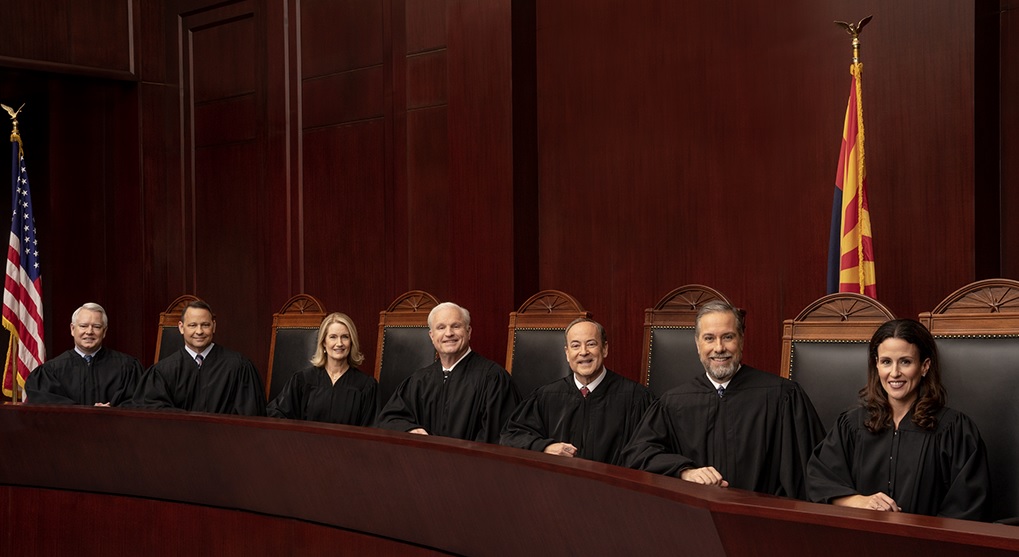
Foundation attorneys argue before the Arizona Supreme Court (above) and Texas Supreme Court that Janus’ ban on forcing public workers to fund union activities shows why state constitutions forbid the same coercion applied to taxpayers.
PHOENIX, AZ – The National Right to Work Foundation-won Janus v. AFSCME Supreme Court decision provided massive new protections for American public employees’ free association rights. In 2018, the Court recognized for the first time that forcing a public employee to pay union dues just to keep his or her job is a First Amendment violation.
The Janus decision, buoyed by National Right to Work Foundation follow-up enforcement actions, means today well over half a million public employees are free of mandatory union payments. Yet, the implications of Janus go even beyond the billions of dollars in previously mandatory dues payments that union bosses can no longer force workers to pay.
Underpinning the Janus ruling was Foundation attorneys’ core argument that all public sector union activities involve influencing the government, and are therefore inherently political speech. Because of this, Foundation staff attorneys now argue that applying Janus to the practice known as union “official time” or “release time” — where government union officials are paid tax money to conduct union business instead of government work — shows how the scheme violates multiple state constitutions.
Foundation Attorneys Bring Janus Expertise to Public Employee Lawsuit
In Arizona for example, Phoenix city employees Mark Gilmore and Mark Harder sued Phoenix mayor Kate Gallego in 2023 for engaging in a scheme that redirects taxpayer funds intended for public employees’ compensation toward political advocacy conducted by American Federation of State, County and Municipal Employees (AFSCME) Field II agents.
That case, Gilmore v. Gallego, is now before the Arizona Supreme Court, where Foundation attorneys filed a legal brief arguing that this so-called “release time” scheme violates Arizona’s Gift Clause, which forbids the government from paying out benefits to private parties that serve no public purpose.
The brief points out that, in Janus, the Supreme Court found that all government union bargaining is a form of lobbying designed to influence public policy for the benefit of the union. That means taxpayer subsidies of such union activities inherently violate the Arizona Constitution’s Gift Clause.
Phoenix’s Arrangement Pays Union Bosses to Lobby City
Phoenix’s “release time” scheme funnels taxpayer money into four full-time positions for union officials for the purpose of conducting union business, creates a bank of over 3,000 paid hours to be used by other union official employees for union purposes, and provides multiple other perks for union agents.
The policies unions lobby for “often are matters of substantial public concern, such as how much money the government expends on wages and benefits,” the Foundation’s brief reads. With its release time policy, the City is effectively paying individuals to lobby the City for a private advocacy organization and its members. The notion that this political advocacy serves a public purpose is untenable.”
Foundation attorneys are backing a similar lawsuit at the Texas Supreme Court. In Roger Borgelt v. City of Austin, Texas taxpayers are fighting a scheme that City of Austin officials are using to direct taxpayer dollars to Austin Firefighters Association union officials to conduct union business.
“Union bosses, who will often screech about ‘corporate welfare,’ are more than happy to arrange so-called ‘release time’ schemes in which taxpayer dollars are funneled toward supporting their massive lobbying efforts,” stated National Right to Work Foundation Vice President and Legal Director William Messenger. “Janus made it plain and simple that compelling public sector employees to fund union activities constitutes forced political speech, and courts everywhere have an obligation to declare such compulsion illegal when foisted on taxpayers.”
Puerto Rico Union Bosses Try to Dodge Consequences of Janus Lawsuit
The following article is from the National Right to Work Legal Defense Foundation’s bi-monthly Foundation Action Newsletter, January/February 2024 edition. To view other editions of Foundation Action or to sign up for a free subscription, click here.
Worker still battling scofflaw union officials who tried to saddle him with restraining order

PRASA employee Reynaldo Cruz didn’t back down after UIA union officials tried to foist a specious restraining order on him. He isn’t backing down in the face of UIA union officials’ Janus violations either.
SAN JUAN, PR – When Reynaldo Cruz, an employee of the Puerto Rican Aqueduct and Sewer Authority (PRASA), made a Facebook post referring to a chapter president of the Authentic Independent Union of Water and Sewer Authority Employees (UIA) as “lazy,” the chapter president tried to hit him with a restraining order.
“A UIA union official targeted me with a restraining order for daring to speak out against the union, which is my free speech right,” commented Cruz. “That’s ridiculous coming
from union officials who claim to ‘represent’ me and my coworkers.”
National Right to Work Foundation staff attorneys in October 2023 defeated the UIA official’s specious argument that the court should issue a restraining order against Cruz because he
would have had to “stalk” him to know of his laziness. But Cruz’s battle against the UIA union is far from over.
District Court Refuses to Crack Down on Obvious Janus Violations
Cruz is currently challenging a decision by the District Court of Puerto Rico in his years-long case to reclaim dues money that UIA union officials took unconstitutionally from his paycheck.
The District Court made the puzzling move of dismissing Cruz’s suit as “moot” after UIA officials deposited money due to Cruz with the Clerk of the District Court of Puerto Rico. In his motion to alter and amend the judgment, Cruz argues that because the court has not decided any of his underlying claims or entered a judgment in his favor, he has no entitlement to and cannot seek or obtain that money. Cruz is also appealing the District Court’s dismissal of his suit to the First Circuit Court of Appeals in Boston, MA.
“Until the Court enters a declaratory judgment for Cruz, Cruz’s injury-in-fact will persist because Cruz has not received monetary relief and the Court has not entered judgment for Cruz entitling him to the UIA deposit,” Cruz’s motion reads.
Cruz argues in his suit that various provisions of the Puerto Rico Labor Relations Act, which UIA union bosses relied upon to take money from his paycheck, violate the First Amendment. In 2018, the Supreme Court ruled in the landmark Foundation-won Janus v. AFSCME case that public employees have a First Amendment right to opt-out of dues payments to
an unwanted union, and that public employees must waive this right before any dues are deducted from their paychecks.
Cruz’s Janus lawsuit began in 2017, after UIA officials responded to his request to end his union membership and stop dues payments by telling him that he could only cut ties with the union if he left his current job. In addition to naming the UIA, Cruz’s lawsuit also names the Governor of Puerto Rico in his official capacity as Cruz is also challenging the constitutionality of Puerto Rico’s laws authorizing mandatory dues and so-called “maintenance of membership” agreements.
The Janus case was decided as Cruz’s case was ongoing. The Justices definitively ruled that requiring public sector employees to pay union dues as a condition of employment violates their First Amendment free association rights.
The Puerto Rico District Court issued its ruling on October 17, 2023. In addition to not entering a judgment for Cruz deciding his entitlement to the unconstitutionally seized money, the Court also didn’t reach a conclusion on the constitutionality of the Puerto Rico law authorizing mandatory dues payment and membership, nor did it require the UIA union to abandon anti-Janus contract provisions.
Union Bosses Must Be Made to Comply with Janus
“The ruling in Mr. Cruz’s case poses serious issues for public employees across Puerto Rico and across the country,” commented National Right to Work Foundation Vice President Patrick Semmens. “If allowed to stand, it creates a precedent in which workers get no relief when union bosses seize money unconstitutionally from their hard-earned pay, and in which laws that authorize such illegal dues deductions are allowed to stand despite Janus unambiguously prohibiting them.
“Foundation staff attorneys will continue to fight for Mr. Cruz until his rights are vindicated and he gets a judgment awarding him the money he is constitutionally entitled to,” Semmens added.
Foundation Asks Supreme Court to Take on Widespread Janus Violations
The following article is from the National Right to Work Legal Defense Foundation’s bi-monthly Foundation Action Newsletter, November/December 2023 edition. To view other editions of Foundation Action or to sign up for a free subscription, click here.
Brief: Pending case should be used to underscore need to obtain workers’ consent to dues
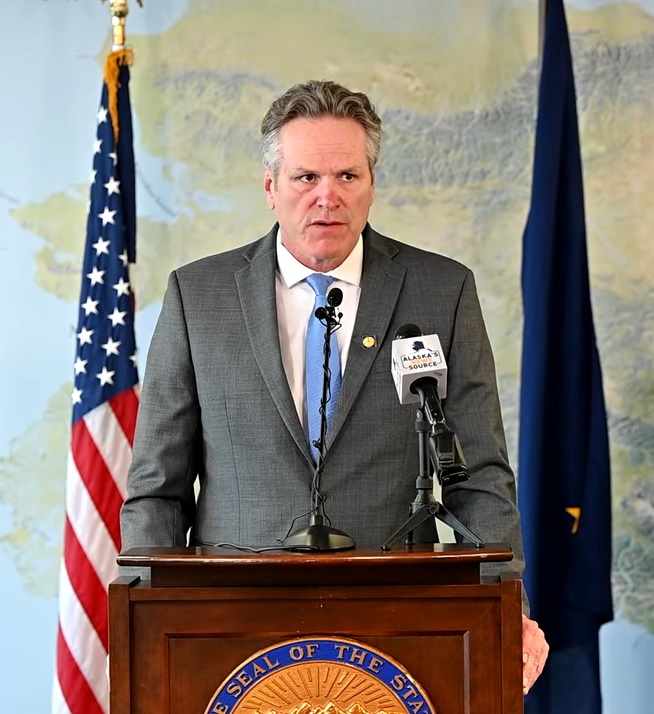
In 2019, Alaska Gov. Mike Dunleavy took proactive steps to protect Janus, but dues-hungry ASEA union bosses fought his actions all the way up to the Supreme Court.
WASHINGTON, DC – The National Right to Work Foundation’s victory in the 2018 Janus v. AFSCME Supreme Court case set a monumental First Amendment precedent. In Janus, the Justices recognized that no public sector worker can be forced to pay union dues as a condition of employment, and that unions cannot deduct union dues from a public sector worker’s wages unless that worker waives his or her Janus rights.
Now the Foundation is asking the U.S. Supreme Court to, five years after Janus was issued, take another case to clarify and fortify the Janus precedent against numerous misinterpretations by greedy union officials, union-backed state politicians, and, most worryingly, some lower court judges.
Alaska Takes Lead on Janus Rights Only to Face Union Boss Resistance
The Foundation’s brief asks the Supreme Court to weigh in on an Alaska lawsuit that started when union officials sought to nullify Alaska state officials’ attempt to fully protect the First Amendment rights of public employees. Union officials challenged the state’s arrangement which ensured that the state didn’t deduct dues from any public employee who had not knowingly waived their rights under Janus.
After the Janus decision, Alaska Gov. Mike Dunleavy issued an executive order requiring the state to obtain proof of consent from workers each year to deduct union dues from their paychecks. The requirement was designed to prevent union bosses from deducting dues money from the wages of a worker who didn’t fully understand their legal rights under Janus. Many workers, for example, may have authorized dues deductions years before the Supreme Court recognized that mandatory payments to unions as a condition of government employment violate the Constitution.
Unwilling to comply with even this modest check on their power to deduct union dues directly from government employees’ paychecks, Alaska State Employees Association (ASEA) officials battled the State of Alaska in state court. Eventually, ASEA union lawyers were able to get the state’s highest court to block the arrangement. But the Supreme Court has the ability to fix the Alaska State Supreme Court’s misinterpretation of Janus.
Following the State of Alaska’s petition asking the U.S. Supreme Court to hear arguments in the case, Foundation attorneys filed a legal brief of their own, urging the Justices to uphold Alaska’s safeguards on Janus and correct the misinterpretations of Janus made by an increasing number of courts and state governments around the country.
Brief: States and Courts Are Ignoring Janus, Need to Be Reined In
The Foundation’s argument notes that, after the Janus decision, at least seventeen states either changed their laws to require government employers to enforce union boss-invented restrictions on when employees can stop union dues deductions, or enforced dues deduction restrictions already on the books. Both lead to unacceptable restraints on public sector workers’ Janus rights, the amicus brief argues.
The amicus brief further contends that lower courts, especially the Ninth Circuit Court of Appeals with jurisdiction over Alaska, have misinterpreted Janus by not mandating government employers notify public workers of their Janus rights before taking union dues from their paychecks. For a waiver of one’s rights to be effective, a person must know what those rights are — just as police officers “Mirandize” suspects they arrest by informing them of their “right to remain silent.”
Union Bosses Value Dues-Funded Politicking Over Public Servants’ Rights
The amicus brief also points out that the Ninth Circuit has issued decisions that free public employers from any obligation to prove that union bosses obtained authentic consent from workers before dues are taken from their wages — opening the door for forged or fake dues deduction cards.
“Unless the Court grants review and breathes new life into Janus’ waiver requirement, unions and their government allies will continue to severely restrict the right of millions of employees to stop subsidizing union speech,” the amicus brief concludes.
“Public sector union bosses, who prize their own dues-funded political influence far above the individual rights of the employees they claim to ‘represent,’ have tried everything in their power to dodge the Janus ruling and keep siphoning money from workers,” commented National Right to Work Foundation Vice President Patrick Semmens. “The Supreme Court
has an opportunity in the State of Alaska’s case to set the record straight and ensure that workers’ free association rights can’t simply be molded according to their own schemes.”
Full Foundation Action September/October 2023 Newsletter Now Online
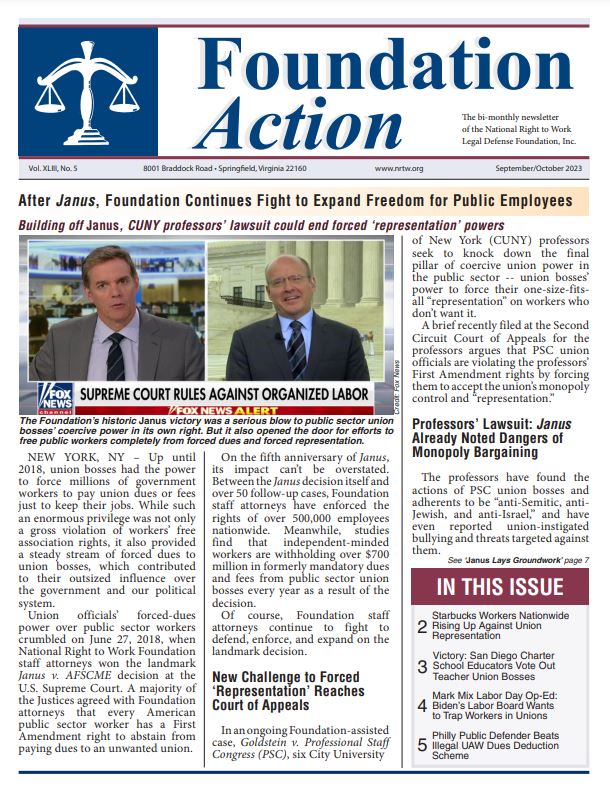 All articles from the September/October issue of Foundation Action are now online.
In this issue:
- After Janus, Foundation Continues Fight to Expand Freedom for Public Employees
- Starbucks Workers Nationwide Rising Up Against Union Representation
- Victory: San Diego Charter School Educators Vote Out Teacher Union Bosses
- Mark Mix Labor Day Op-Ed: Biden’s Labor Board Wants to Trap Workers in Unions
- Philly Public Defender Beats Illegal UAW Dues Deduction Scheme
Recent articles can be found here. To sign up for a free copy of the newsletter via mail please see the form at the bottom of this page.
Right to Work Foundation Brief: 2018 Janus Decision Means Union “Release Time” Violates AZ Constitution’s Gift Clause
Brief supports challenge pending at Arizona Supreme Court against Phoenix’s scheme to subsidize inherently political union activities with tax dollars
Phoenix, AZ (December 14, 2023) – The National Right to Work Foundation has just filed an amicus brief in Mark Gilmore v. Kate Gallego, a case currently pending before the Arizona Supreme Court. In the case, Phoenix city employees Mark Gilmore and Mark Harder are suing Phoenix Mayor Kate Gallego for engaging in a scheme that redirects taxpayer funds intended for public employees’ compensation toward political advocacy conducted by American Federation of State, County and Municipal Employees (AFSCME) Field II agents on so-called “release time.”
Specifically, the plaintiffs’ lawsuit argues the Arizona Constitution prohibits the use of taxpayer dollars to fund four full-time positions for union officials for the purpose of conducting union business, in addition to a bank of over 3,000 paid hours to be used by other union officials for union purposes, and multiple other perks for union agents.
The Foundation’s brief argues that the release time scheme violates Arizona’s Gift Clause, which forbids government transactions that bestow benefits on private entities while serving no public purpose. The brief points out that the U.S. Supreme Court’s ruling in the Foundation-won Janus v. AFSCME case demonstrates that, under the First Amendment, all government union activities are a form of lobbying designed to influence public policy for the benefit of the union. That means taxpayer subsidies of such activities inherently violate the Arizona Constitution’s Gift Clause.
Brief: “Release Time” Funnels Tax Dollars Unconstitutionally to Union Bosses
The policies unions lobby for “often are matters of substantial public concern, such as how much money the government expends on wages and benefits,” the brief reads. “With its release time policy, the City is effectively paying individuals to lobby the City for a private advocacy organization and its members. The notion that this political advocacy serves a public purpose is untenable.”
In the Janus decision, the U.S. Supreme Court ruled that forcing public sector workers to fund any union activities as a condition of employment constitutes forced political speech barred by the First Amendment.
The Foundation’s brief also deconstructs a proposition that the City of Phoenix’s ability to impose one-size-fits-all union contracts on entire swaths of employees somehow counts as a “public benefit” that the City receives in exchange for enforcing the release time scheme. Foundation attorneys instead argue that the municipal labor code already imposes this obligation on both the union and the City, and thus isn’t a benefit that union bosses are giving the City.
“Given the code already requires the City and AFSCME to impose uniform terms of employment on unit employees, union member and nonmember alike, it necessarily follows that the City did not need to provide AFSCME agents with release time to comply with its pre-existing legal obligations,” the brief contends.
“Union bosses, who will often screech about ‘corporate welfare,’ are more than happy to arrange so-called ‘release time’ schemes in which taxpayer dollars are funneled toward supporting their massive lobbying efforts,” stated National Right to Work Foundation President Mark Mix. “Janus made it plain and simple that compelling public sector employees to fund union activities constitutes forced political speech, and the Arizona Supreme Court has an obligation to declare unlawful compulsion foisted on taxpayers.”
After Janus, Foundation Continues Fight to Expand Freedom for Public Employees
The following article is from the National Right to Work Legal Defense Foundation’s bi-monthly Foundation Action Newsletter, September/October 2023 edition. To view other editions of Foundation Action or to sign up for a free subscription, click here.
Building off Janus, CUNY professors’ lawsuit could end forced ‘representation’ powers
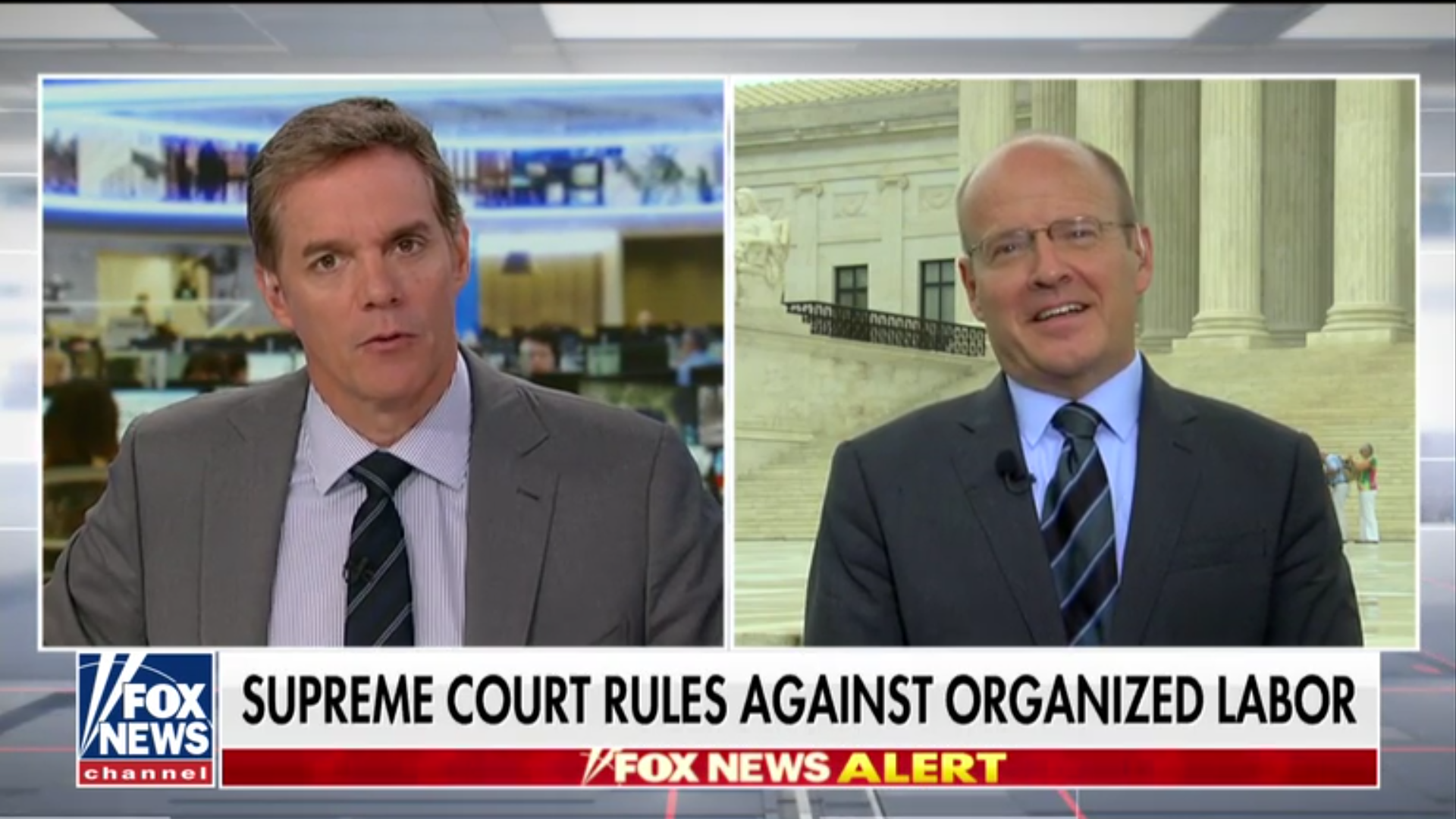
The Foundation’s historic Janus victory was a serious blow to public sector union bosses’ coercive power in its own right. But it also opened the door for efforts to free public workers completely from forced dues and forced representation.
NEW YORK, NY – Up until 2018, union bosses had the power to force millions of government workers to pay union dues or fees just to keep their jobs. While such an enormous privilege was not only a gross violation of workers’ free association rights, it also provided a steady stream of forced dues to union bosses, which contributed to their outsized influence over the government and our political system.
Union officials’ forced-dues power over public sector workers crumbled on June 27, 2018, when National Right to Work Foundation staff attorneys won the landmark Janus v. AFSCME decision at the U.S. Supreme Court. A majority of the Justices agreed with Foundation attorneys that every American public sector worker has a First Amendment right to abstain from paying dues to an unwanted union.
On the fifth anniversary of Janus, its impact can’t be overstated. Between the Janus decision itself and over 50 follow-up cases, Foundation staff attorneys have enforced the rights of over 500,000 employees nationwide. Meanwhile, studies find that independent-minded workers are withholding over $700 million in formerly mandatory dues and fees from public sector union bosses every year as a result of the decision.
Of course, Foundation staff attorneys continue to fight to defend, enforce, and expand on the landmark decision.
New Challenge to Forced ‘Representation’ Reaches Court of Appeals
In an ongoing Foundation-assisted case, Goldstein v. Professional Staff Congress (PSC), six City University of New York (CUNY) professors seek to knock down the final pillar of coercive union power in the public sector — union bosses’ power to force their one-size-fits=all “representation” on workers who don’t want it.
A brief recently filed at the Second Circuit Court of Appeals for the professors argues that PSC union officials are violating the professors’ First Amendment rights by forcing them to accept the union’s monopoly control and “representation.”
Professors’ Lawsuit: Janus Already Noted Dangers of Monopoly Bargaining
The professors have found the actions of PSC union bosses and adherents to be “anti-Semitic, anti-Jewish, and anti-Israel,” and have even reported union-instigated bullying and threats targeted against them.
The professors’ opening brief at the Second Circuit maintains that the Supreme Court already acknowledged in the Janus decision that public sector monopoly bargaining is “a significant impingement on associational freedoms,” and argues that New York State’s Taylor Law authorizes such bargaining in violation of workers’ rights.
“If the First Amendment prohibits anything, it prohibits the government from dictating who speaks for citizens in their relations with the government,” reads the brief.
The case, which will likely head to the U.S. Supreme Court no matter how the Circuit Court rules, could set a nationwide precedent forbidding public sector monopoly bargaining, just as Janus prohibits forced dues in all public sector workplaces. The combination of both Foundation-won precedents would guard public workers nationwide from both forced dues and forced representation.
Foundation Brief Defends State Law to Fortify Janus
The Janus victory also motivated freedom-loving state legislators to take extra measures to ensure workers’ First Amendment rights under Janus are being enforced.
In Indiana, a reform now forbids public employers from using taxpayer-funded government payroll systems to deduct union dues without a worker’s explicit consent. Public employers must obtain yearly consent from workers who wish to have union dues taken from their paychecks, and must also ensure that workers have notice of their constitutional right not to fund union activities. Unsurprisingly, dues-hungry Anderson Federation of Teachers (AFT) union officials sued the state to block these commonsense protections.
Foundation attorneys joined the fight recently to defend Indiana’s laws. A Foundation brief in the Seventh Circuit Court of Appeals urges the court to overturn a lower court’s injunction of these reforms, citing Seventh Circuit precedent.
Foundation attorneys helped successfully defend a similar law in West Virginia in 2021, which the West Virginia Supreme Court upheld on the basis that union bosses “have no constitutional entitlement to employees’ money or to the employer’s administration of union dues deduction schemes.”
Federal Courts Must End Union Monopolies
“Janus was a great triumph for American public workers’ freedom, but it was only a step toward the ultimate goal of freeing public workers from all unwanted union coercion,” commented National Right to Work Foundation Vice President Patrick Semmens. “No American worker should be forced to associate with union officials and union members that openly oppose their interests, including through attacks on their culture and religion as the plaintiffs in Goldstein have harrowingly experienced.”
“It’s encouraging to see that states like Indiana have stepped up to protect workers’ Janus rights,” Semmens added. “But ultimately, after recognizing in Janus and older precedents that union monopoly bargaining abridges workers’ free association rights, it’s high time for federal courts to end this enormous government-granted power for union bosses once and for all.”
Foundation Defends Michigan Workers with Forced Dues Looming
The following article is from the National Right to Work Legal Defense Foundation’s bi-monthly Foundation Action Newsletter, July/August 2023 edition. To view other editions of Foundation Action or to sign up for a free subscription, click here.
With Right to Work repeal law passed, workers seek to escape mandatory payments

Michigan legislators’ unpopular decision to repeal the state’s Right to Work law helped prompt Mary Soltysiak and her coworkers’ move to vote out the IAM union.
LANSING, MI – Despite poll after poll showing 70 percent of Michiganders wanted Michigan’s decade-old Right to Work law left in place, Gov. Gretchen Whitmer and union cronies in the Michigan Legislature voted to strip Wolverine State workers of their right to refrain from funding unwanted union bosses in March. In response, the Foundation sprang into action, issuing a Special Legal Notice to Michigan workers advising them of their legal options as the state transitions to a forced-dues regime. The notice reminded workers that, despite what union bosses may claim, the state’s Right to Work law remains in effect until 90 days after the legislative session ends later this year — and also what they can do in advance of forced dues being legal again. Unsurprisingly, given Right to Work’s popularity even among union households, Michigan workers are stepping up and taking action to defend their rights against coercive unionism.
Michigan Workers Battle Forced-Dues Schemes Ahead of Repeal
For example, Foundation attorneys are currently assisting Grand Rapids-area Kroger employee Roger Cornett’s challenge to an illegal dues scheme perpetrated by United Food and Commercial Workers (UFCW) union officials. Cornett hit UFCW bosses with federal charges this May, accusing them of ignoring a letter in which he exercised his right to cut off dues deductions from his paycheck. Cornett’s charges also maintained that UFCW bosses sought to seize money from him using a form that blatantly violates existing federal law. Cornett’s charge says the form is illegal because of its “dual purpose” nature, meaning just one signature confusingly locks a worker into both membership and dues deductions. Federal law requires any authorization for union dues deductions to be voluntary and separate from a union membership application. UFCW bosses’ contempt for longstanding federal protections in Cornett’s case likely indicates how aggressively union officials will pursue forced dues under a non-Right to Work regime. The Foundation’s legal notice also counsels workers that they can avoid forced-dues arrangements entirely by petitioning the NLRB to hold “decertification elections” at their workplaces, in which workers can vote unpopular unions out.
Legal Notice Counsels Workers of Right to Vote Out Unwanted Unions
Mary Soltysiak, who opposes forced dues, heard news of the upcoming repeal and filed a petition to decertify the International Association of Machinists and Aerospace Workers (IAM) District Lodge 60/Local Lodge 475 union with free legal aid from Foundation staff attorneys. Soltysiak and her colleagues work at Terryberry, a manufacturing firm in Grand Rapids, MI.
Soltysiak stated that she and some of her colleagues “contacted [a Foundation attorney] and filled out paperwork to get out of paying union dues around the year 2018 because of the Right to Work . . . law.”
“The union has done nothing but hurt my paycheck and my vacation hours,” Soltysiak added.
Soltysiak and her coworkers achieved victory this May, when the NLRB certified their majority vote ousting the IAM union. Hopefully, their success portends the future success of the growing number of workers in Michigan and across the country looking to decertify the unions in their workplaces.
Foundation Also Defending Public Sector Right to Work Protections
As noted in the Foundation’s legal notice, the Michigan Right to Work repeal does not affect public sector Michigan employees. Under the Foundation-won Janus v. AFSCME Supreme Court decision, no public worker in America can be forced to subsidize a union as a condition of employment. But, as the repeal is looming, Michigan public sector union officials are nonetheless seeking to undermine public employees’ freedom to refrain from union support through so-called “fee-for-grievance” schemes.
This April, the Foundation submitted a brief in the Michigan Supreme Court case Technical, Professional and Officeworkers Association of Michigan (TPOAM) v. Renner, in which TPOAM officials are trying to enforce a “fee-for-grievance” policy against Saginaw County employee Daniel Renner. Under it, union bosses strip nonmember public employees of any power to file grievances themselves, and instead mandate that they pay fees sometimes exceeding yearly union dues to use the union’s grievance system.
Michigan legislators’ unpopular decision to repeal the state’s Right to Work law helped prompt Mary Soltysiak and her coworkers’ move to vote out the IAM union.
In the brief, Foundation staff attorneys refute the union’s claims for this newfound power, stating that “fee-for-grievance” schemes were never authorized by the Michigan Legislature and are inconsistent with federal law.
Foundation Attorneys Will Defend Worker Freedom in Michigan
“Michigan union officials and their allies in the state legislature have contempt for workers’ individual rights that knows no bounds,” commented National Right to Work Foundation Vice President and Legal Director William Messenger. “That was made clear by the repeal of the popular Right to Work law, and the attempt to undermine Right to Work protections for public sector employees which are safeguarded by the First Amendment under the Foundation’s Janus U.S. Supreme Court victory.”
“Michigan workers have a long road ahead to restore their rights against union coercion, but Foundation attorneys are fighting alongside these workers, and will continue to fight until no Michigan worker can be forced to pay union bosses they disapprove of just to keep a job,” Messenger added.





