
Foundation Asks Supreme Court to Take on Widespread Janus Violations
The following article is from the National Right to Work Legal Defense Foundation’s bi-monthly Foundation Action Newsletter, November/December 2023 edition. To view other editions of Foundation Action or to sign up for a free subscription, click here.
Brief: Pending case should be used to underscore need to obtain workers’ consent to dues
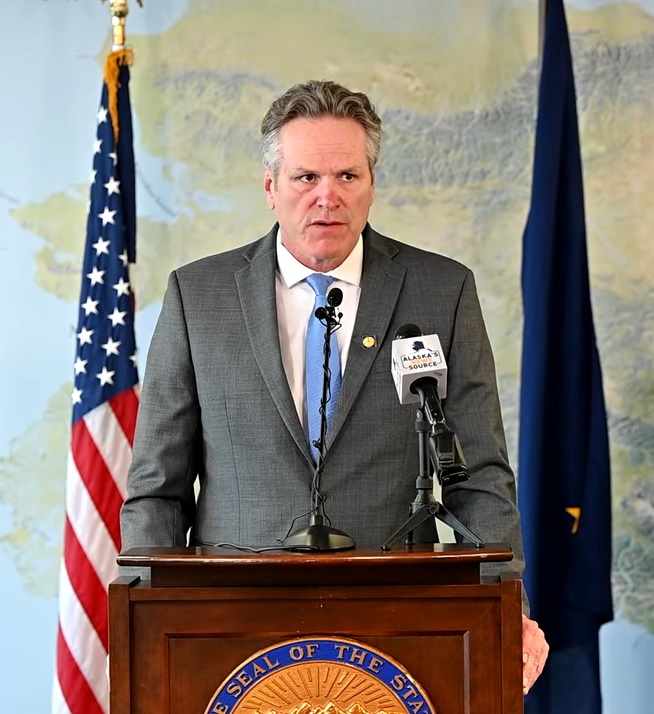
In 2019, Alaska Gov. Mike Dunleavy took proactive steps to protect Janus, but dues-hungry ASEA union bosses fought his actions all the way up to the Supreme Court.
WASHINGTON, DC – The National Right to Work Foundation’s victory in the 2018 Janus v. AFSCME Supreme Court case set a monumental First Amendment precedent. In Janus, the Justices recognized that no public sector worker can be forced to pay union dues as a condition of employment, and that unions cannot deduct union dues from a public sector worker’s wages unless that worker waives his or her Janus rights.
Now the Foundation is asking the U.S. Supreme Court to, five years after Janus was issued, take another case to clarify and fortify the Janus precedent against numerous misinterpretations by greedy union officials, union-backed state politicians, and, most worryingly, some lower court judges.
Alaska Takes Lead on Janus Rights Only to Face Union Boss Resistance
The Foundation’s brief asks the Supreme Court to weigh in on an Alaska lawsuit that started when union officials sought to nullify Alaska state officials’ attempt to fully protect the First Amendment rights of public employees. Union officials challenged the state’s arrangement which ensured that the state didn’t deduct dues from any public employee who had not knowingly waived their rights under Janus.
After the Janus decision, Alaska Gov. Mike Dunleavy issued an executive order requiring the state to obtain proof of consent from workers each year to deduct union dues from their paychecks. The requirement was designed to prevent union bosses from deducting dues money from the wages of a worker who didn’t fully understand their legal rights under Janus. Many workers, for example, may have authorized dues deductions years before the Supreme Court recognized that mandatory payments to unions as a condition of government employment violate the Constitution.
Unwilling to comply with even this modest check on their power to deduct union dues directly from government employees’ paychecks, Alaska State Employees Association (ASEA) officials battled the State of Alaska in state court. Eventually, ASEA union lawyers were able to get the state’s highest court to block the arrangement. But the Supreme Court has the ability to fix the Alaska State Supreme Court’s misinterpretation of Janus.
Following the State of Alaska’s petition asking the U.S. Supreme Court to hear arguments in the case, Foundation attorneys filed a legal brief of their own, urging the Justices to uphold Alaska’s safeguards on Janus and correct the misinterpretations of Janus made by an increasing number of courts and state governments around the country.
Brief: States and Courts Are Ignoring Janus, Need to Be Reined In
The Foundation’s argument notes that, after the Janus decision, at least seventeen states either changed their laws to require government employers to enforce union boss-invented restrictions on when employees can stop union dues deductions, or enforced dues deduction restrictions already on the books. Both lead to unacceptable restraints on public sector workers’ Janus rights, the amicus brief argues.
The amicus brief further contends that lower courts, especially the Ninth Circuit Court of Appeals with jurisdiction over Alaska, have misinterpreted Janus by not mandating government employers notify public workers of their Janus rights before taking union dues from their paychecks. For a waiver of one’s rights to be effective, a person must know what those rights are — just as police officers “Mirandize” suspects they arrest by informing them of their “right to remain silent.”
Union Bosses Value Dues-Funded Politicking Over Public Servants’ Rights
The amicus brief also points out that the Ninth Circuit has issued decisions that free public employers from any obligation to prove that union bosses obtained authentic consent from workers before dues are taken from their wages — opening the door for forged or fake dues deduction cards.
“Unless the Court grants review and breathes new life into Janus’ waiver requirement, unions and their government allies will continue to severely restrict the right of millions of employees to stop subsidizing union speech,” the amicus brief concludes.
“Public sector union bosses, who prize their own dues-funded political influence far above the individual rights of the employees they claim to ‘represent,’ have tried everything in their power to dodge the Janus ruling and keep siphoning money from workers,” commented National Right to Work Foundation Vice President Patrick Semmens. “The Supreme Court
has an opportunity in the State of Alaska’s case to set the record straight and ensure that workers’ free association rights can’t simply be molded according to their own schemes.”
National Right to Work Foundation Files SCOTUS Brief Defending Alaska’s Protections Against Forced Union Dues
Alaska facing ASEA union lawsuit over arrangement which requires union bosses to obtain affirmative consent from employees before deducting dues
Washington, DC (September 29, 2023) – Today, the National Right to Work Legal Defense Foundation filed an amicus brief with the U.S. Supreme Court in the case Alaska v. Alaska State Employees Association. The brief supports the State of Alaska’s attempt to safeguard public sector workers’ First Amendment right to refrain from paying dues to a union they disapprove of. This right was first recognized in the Janus v. AFSCME Supreme Court decision, which was successfully argued at the High Court by Foundation Legal Director William Messenger.
In the 2018 Janus decision, the Supreme Court held that the First Amendment protects public sector employees from being forced to pay union dues as a condition of getting or keeping a job. The High Court further recognized that unions must obtain a worker’s freely given waiver of his or her Janus rights before deducting union dues or fees from his or her paycheck.
In an attempt to ensure his state wasn’t violating its employees’ constitutional rights, Alaska Gov. Mike Dunleavy issued an executive order to protect workers’ Janus rights: The order requires the state to obtain consent from workers each year to deduct union dues from their paychecks. This arrangement ensures that the “freely given consent” element of Janus is satisfied, while also preventing union bosses from continuing to deduct money from a worker’s wages based on a “yes” given years ago.
However, Alaska State Employees Association (ASEA) union bosses sued the State of Alaska over its Janus protections, and were able to get the state’s highest court to block the arrangement. Even worse, as Foundation staff attorneys point out in the amicus brief, “five Circuit Courts have now held that states and unions can constitutionally seize payments for union speech from dissenting employees without proof they waived their constitutional rights.”
Amicus Brief: Lower Courts and States Are Letting Unions Seize Dues Without Workers’ Consent
The Foundation’s amicus brief maintains that, after the Janus decision, at least seventeen states either “amended their dues deduction laws…to require government employers to enforce restrictions on when employees can stop payroll deductions of union dues,” or “enforced restrictions on stopping payroll deductions under preexisting state laws.” Both lead to unacceptable restraints on public sector workers’ Janus rights, the amicus brief argues.
The amicus brief further contends that lower courts, especially the Ninth Circuit, have misinterpreted Janus to not require public employers to notify public workers of their Janus rights before collecting dues, which dips below the “waiver” standard mandated by the decision. Additionally, the amicus brief points out that the Ninth Circuit has issued decisions that free public employers from any obligation to prove that union bosses obtained authentic consent from workers before dues are taken from their wages.
“Unless the Court grants review and breathes new life into Janus’ waiver requirement, unions and their government allies will continue to severely restrict the right of millions of employees to stop subsidizing union speech,” the amicus brief concludes. “The Court should not tolerate this resistance to its holding in Janus.”
“Public sector union bosses, who prize their own dues-funded political influence far above the individual rights of the employees they claim to ‘represent,’ have tried everything in their power to dodge the Janus ruling and keep siphoning money from workers,” commented National Right to Work Foundation Vice President Patrick Semmens. “The Supreme Court has an opportunity in the State of Alaska’s case to set the record straight and ensure that workers’ free association rights can’t simply be molded according to their own schemes.”
Foundation Op-Ed: ‘Public Employees Never Waived Their 1st Amendment Rights’
Recently, Newsmax published an op-ed by National Right to Work Foundation President Mark Mix, highlighting a case from Alaska pending at the U.S. Supreme Court. In the case the State of Alaska seeks protect the First Amendment rights of public employees under the Foundation-won 2018 Janus v. AFSCME decision, by requiring an affirmative waiver before state agencies deduct any union dues:
If you’ve ever watched a television show featuring law enforcement, you probably know these words by heart, “You have the right to remain silent. Anything you say can and will be used against you in a court of law…”
Such a “Miranda” warning ends the following way, “Do you understand the rights I have just read to you? With these rights in mind, do you wish to speak to me?”
Police “Mirandize” suspects because, although a citizen can waive a constitutional right they have, the government cannot assume that such a right has been waived.
Miranda warnings protect citizens’ Fifth Amendment rights, but the principle applies to any constitutional right. (See Miranda v. Arizona, 384 U.S. 436 1966).
The State of Alaska has recently asked the U.S. Supreme Court to hear a case about Alaska Gov. Mike Dunleavy’s attempt to apply this principle to protect the First Amendment rights of state employees.
Five years ago, National Right to Work Legal Defense Foundation staff attorneys argued and won the landmark Janus v. AFSCME case at the U.S. Supreme Court.
That decision established that the First Amendment prohibits government unions from requiring that public employees pay union dues and fees without their explicit and informed consent.
In the wake of Janus, the State of Alaska was among the first jurisdictions to proactively enforce the decision.
Citing Janus, Gov. Dunleavy issued an executive order directing state officials not to deduct union dues from the paychecks of public employees, unless the state has clear evidence that a worker has knowingly waived their First Amendment Janus rights.
Dunleavy set up a system that required such proof be submitted annually as a condition of the state continuing to deduct union dues.
The state cannot assume state employees want to waive their rights indefinitely: Talking to a police officer voluntarily years ago is not evidence of waiving Fifth Amendment rights in perpetuity.
Despite the straightforward justification, not to mention the fact that Dunleavy’s order doesn’t prevent a single worker from having dues deducted voluntarily, government union bosses in Alaska were livid…
Find the rest of the op-ed online on the website of Newsmax here.
Alaskan Factory Workers Overwhelmingly Vote to Remove Unwanted Union Monopoly ‘Representation’
Spenard Building Supply employees vote 17-6 to oust Pacific Northwest Regional Counsel of Carpenters union officials
Chugiak, AK (May 4, 2023) – Workers at the Spenard Building Supply factory recently voted to remove the Pacific Northwest Regional Counsel of Carpenters union by an overwhelming majority. A petition filed by Scot Breuer with the National Labor Relations Board Region 19 (NLRB) led to this successful vote. Breuer received free legal aid from the National Right to Work Legal Defense Foundation.
Scot Breuer filed a decertification petition with the NLRB on March 31, 2023, which was supported by a significant number of his coworkers. Under federal labor law, workers can trigger a decertification vote with the support of 30% or more of workers in a unionized workplace. The NLRB should then promptly schedule a secret ballot election to determine whether a majority of workers want to end union officials’ power to impose a contract, including forced dues, on workers. On April 12, 2023, the NLRB issued an election notice to all parties involved that stipulated an election date for May 2.
During the election on May 2, Spenard Building Supply employees made their position on the union clear when over two-thirds of the workers voted to remove the union from their workplace, with the official tally of 17-6. Barring any objections by union officials that seek to overturn the vote, the workers will be officially free of the union in one week.
The Spenard Building Supply election is just one example of workers looking to leave union control. Currently, the NLRB’s own data shows a unionized private sector worker is far more likely to be involved in a decertification effort as their nonunion counterpart is to be involved in a unionization campaign. NLRB statistics also show a 20% increase in decertification petitions last year versus 2021.
Unfortunately, the NLRB’s union decertification process is prone to union boss-created roadblocks. Foundation-backed NLRB reforms from 2020 have made it somewhat easier for workers to remove unwanted union officials, such as the “Election Protection Rule” that prevents union bosses from filing trumped-up “blocking charges” meant to delay or stop decertification elections entirely.
Prior to these Foundation-backed reforms, workers often had their decertification votes delayed by unproven union blocking charges, giving union bosses the power to trap workers in union ranks they oppose nearly indefinitely. Under the Foundation-backed reforms most votes take place promptly, with union blocking claims adjudicated later, after the votes have been counted. However, the Biden-appointed NLRB is currently engaging in rulemaking to roll back these protections and make it much harder for workers to decertify a union.
“We are extremely pleased to help these Alaskan workers exercise their right to remove a union they want nothing to do with. With over two-thirds of the votes being cast in favor of removing the union, this case is a clear example as to workers’ growing dissatisfaction with compulsory unionism,” stated Mark Mix, President of the National Right to Work Legal Defense Foundation. “Unfortunately, as the NLRB moves to roll back reforms that gave workers at Spenard a speedy victory, workers will again find it increasingly difficult to exercise their rights and decertify unwanted unions even when opposition to the union’s so-called ‘representation’ is overwhelming.”
Case Closed: Nurse Prevails in 11-Year Legal Fight Over Forced Dues
The following article is from the National Right to Work Legal Defense Foundation’s bi-monthly Foundation Action Newsletter, January/February 2022 edition. To view other editions of Foundation Action or to sign up for a free subscription, click here.
100 Rhode Island hospital employees win refund of dues illegally seized for union lobbying

After over a decade of battling power-hungry UNAP union bosses in court, Jeanette Geary has secured not only refunds of dues seized for union politics, but a First Circuit decision clarifying non-members can never be charged for union lobbying.
WARWICK, RI – Jeanette Geary finally achieved a total victory in her 11-year legal battle against union bosses. She and 99 other current and former nurses at Kent Hospital in Rhode Island received refunds of forced dues that were illegally used to support union lobbying in state legislatures. Foundation attorneys represented Geary throughout her fight.
Geary’s journey began when she grew frustrated with United Nurses and Allied Professionals (UNAP) union bosses in her workplace. “I realized what the union was doing,” Geary explained. “The union leadership had no interest in nurses or our professional work. Their only interest was collection of dues and fees.”
Geary resigned her union membership, but union dues were still extracted from her paycheck because Rhode Island is a forced unionism state that lacks Right to Work protections. However, thanks to the Foundation-won CWA v. Beck Supreme Court decision, nonmember workers can only be forced to pay fees for union activities “germane” to union monopoly bargaining. They cannot be forced to pay the portion of dues that funds activities like union lobbying.
Nurse Harassed for Standing Up to Union Bosses
Geary demanded a breakdown of the union’s expenditures, but union bosses refused to give her a legally required independent auditor’s verification of how they calculated non-members’ reduced forced fees. Like many who speak up against union bosses, Geary became a target for union harassment. “They laughed at me. They had their workplace reps ridicule me on the job and tell me I could file grievances that would be thrown away and said so with a big smile,” Geary recalled.
In 2009, Geary filed federal charges against union officials. The trial revealed UNAP officials were charging non-member nurses for lobbying in state legislatures. Despite the Supreme Court’s clear mandate in Beck that non-members’ money could not be used to fund political causes, union lawyers argued the lobbying was “germane” to the union’s monopoly bargaining.
Thanks to delays caused by President Obama’s illegal recess appointments to the National Labor Relations Board (NLRB), Geary had to file two petitions with the U.S.
Court of Appeals in Washington, D.C., and didn’t get a final NLRB ruling for nearly a decade. Finally, in March 2019, the NLRB ruled 3-1 that union officials cannot charge non-members for lobbying of any kind. It also ruled that union officials must provide independent verification that the union expenses they force non-members to pay have been audited.
Union Bosses Ridiculously Claimed Some Union Lobbying Wasn’t Political
Union officials still wouldn’t abandon their argument that nonmembers could be forced to pay for some union lobbying as a condition of employment. Union lawyers appealed the NLRB’s decision to the U.S. Court of Appeals for the First Circuit. A three-judge panel that included retired Supreme Court Justice David Souter ruled unanimously in Geary’s favor, saying “we see no convincing argument that legislative lobbying is not a ‘political’ activity.”
Union officials made a last-ditch attempt to overturn the decision, requesting an en banc hearing by the entire Court of Appeals, but that request was denied. In September 2021, union bosses finally paid back, with interest, thousands of dollars taken from Geary and 99 other current and former Kent Hospital nurses who were not union members but were charged for the union’s lobbying, bringing the decade-long case to a close.
“Jeanette Geary faced workplace ridicule for her decision to stand up to union bosses, yet she persevered for eleven years,” said National Right to Work Foundation Vice President and Legal Director Raymond LaJeunesse. “In the process, she won important legal precedents that will protect thousands of other workers from having their money illegally used to fund union politics.”
Sixteen States Back Foundation’s Petition to High Court in Chicago Educator Case
The following article is from the National Right to Work Legal Defense Foundation’s bi-monthly Foundation Action Newsletter, September/October 2021 edition. To view other editions of Foundation Action or to sign up for a free subscription, click here.
Amicus brief: Unions “refuse to stop collecting dues despite unequivocal employee demands”
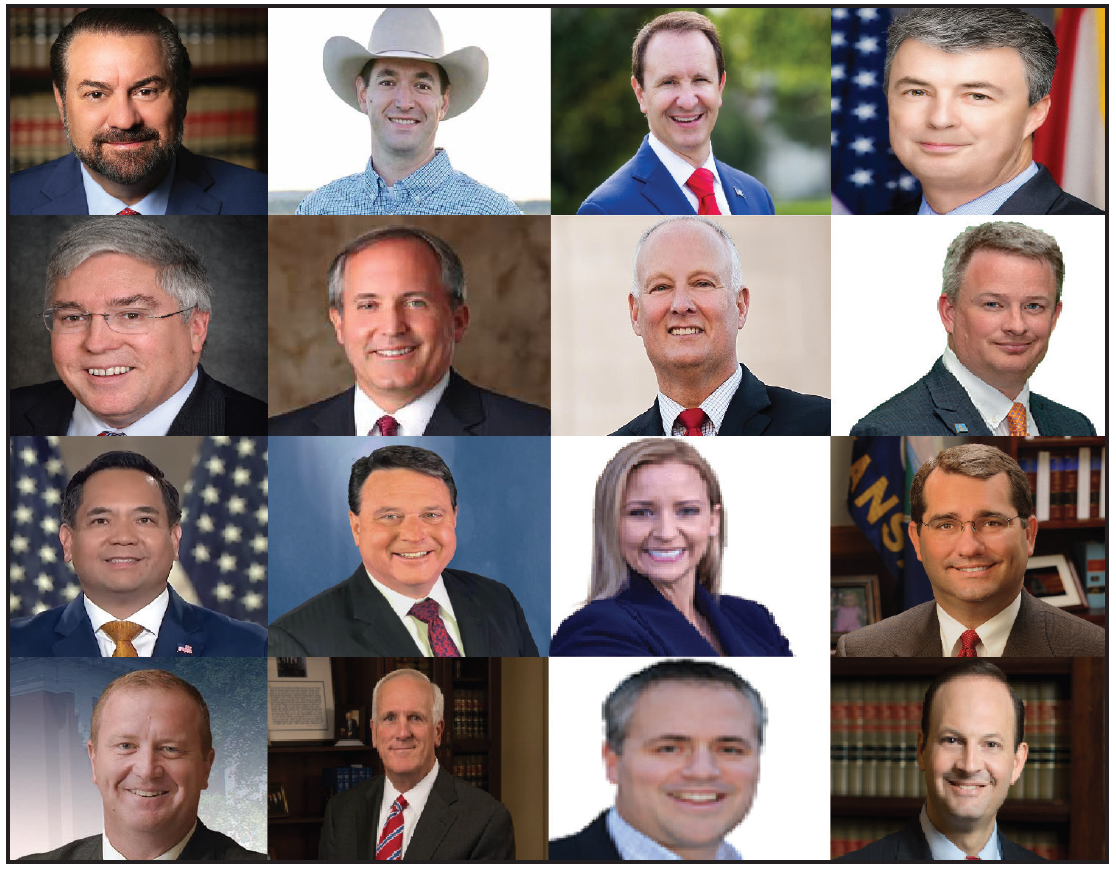
“Janus has been ignored,” wrote sixteen attorneys general in their amicus brief supporting Ifeoma Nkemdi and Joanne Troesch’s petition pressing the Supreme Court to hear their case and declare “escape periods” a First Amendment violation.
WASHINGTON, DC – In July, sixteen attorneys general threw the support of their states behind Chicago Public Schools educators Ifeoma Nkemdi and Joanne Troesch, who are urging the U.S. Supreme Court to hear their case defending their First Amendment right to cut off union financial support as recognized in the Foundation-won Janus v. AFSCME decision.
In an amicus brief encouraging the High Court to hear the case, attorneys general from Alaska, Alabama, Arizona, Arkansas, Indiana, Kansas, Louisiana, Missouri, Montana, Nebraska, South Carolina, South Dakota, Tennessee, Texas, Utah, and West Virginia argue that “escape period” restrictions like the one that Chicago Teachers Union (CTU) bosses foisted on Troesch and Nkemdi are a widespread threat to public employees’ rights under the Janus Supreme Court decision.
In 2018, the Supreme Court ruled in Janus v. AFSCME that public employees’ First Amendment rights are violated when they are forced to fund a union as a condition of employment. The Court also held that union dues can only be taken from a public employee with an affirmative and knowing waiver of that employee’s First Amendment right not to pay.
Unions Are Seizing Money from ‘Tens of Thousands’ Unconstitutionally, Brief Says
The CTU-concocted “escape period” Nkemdi and Troesch are challenging blocks employees from exercising their First Amendment Janus right to end union financial support except during one month per year. The educators’ petition for writ of certiorari presses the High Court to hear their case to affirm that Janus does not permit union bosses to profit from schemes that constrict workers’ constitutional right to refrain from subsidizing a union.
The states’ amicus brief emphasizes how glaringly union officials have flouted Janus with restrictions, as well as how widespread the schemes are: “Janus has been ignored. Across the country public-sector unions have resisted Janus’s instructions and devised new ways to compel state employees to subsidize union speech. Unions place onerous terms on dues forms that prohibit state employees from opting out of paying dues except during narrow (and undisclosed) windows during the year.”
The brief continues: “Unions refuse to inform state employees that they have a First Amendment right not to pay union dues. And unions refuse to stop collecting dues despite unequivocal employee demands. The result is that tens of thousands of state employees across the country are having dues deducted to subsidize union speech without any evidence that they waived their First Amendment rights . . . .”
Nkemdi and Troesch’s case “implicates these precise concerns” and the Court must hear it, the brief maintains.
In addition to the states’ brief, policy groups Goldwater Institute, Cato Institute, Freedom Foundation, and Liberty Justice Center filed amicus briefs backing the case.
Justices May Already Be Showing Interest in Foundation-Backed Case
In late July, the Supreme Court ordered lawyers for CTU and the Chicago Board of Education to file a response brief to Troesch and Nkemdi’s petition, a signal that some Justices may be interested in taking up the case.
Also pending at the High Court is Foundation attorneys’ anti- “escape-period” case for Susan Fischer and Jeanette Speck, two New Jersey teachers. Both that case and Troesch and Nkemdi’s case are expected to be fully briefed in October, after which the Justices will decide whether to take them.
“As union bosses continue to use deceptive ‘escape period’ arrangements to keep worker money flowing unconstitutionally into their coffers, support continues to roll in from across the country for Troesch and Nkemdi, who are sticking up for independent-minded public servants who simply want to serve their communities without being forced to fund union activities,” observed National Right to Work Foundation President Mark Mix. “The High Court must weigh in to affirm that public workers’ First Amendment rights cannot be confined to union officials’ arbitrary schedules.”
Wall Street Journal: Texas AG Seeks to Enforce Government Employees’ First Amendment Rights Under Janus v AFSCME
The Editorial Board at The Wall Street Journal published a column on May 31, 2020, detailing efforts in Texas to enforce the landmark Janus v AFSCME U.S. Supreme Court decision argued and won by National Right to Work Foundation staff attorneys:
The Attorney General of Texas, Ken Paxton, plans to release an advisory opinion soon that could help free public employees who are fed up with their union. In 2018 in Janus v. Afscme, the Supreme Court said that union fees couldn’t be deducted from the paycheck of a government worker who didn’t ‘affirmatively consent.’
“The question is what flows from this logic. Last fall Alaska Governor Michael Dunleavy, citing Janus, signed an order to let state workers quit the union anytime, instead of only during 10 enchanted days once each year. Union members also would have to refresh their consent forms periodically.
The move by Attorney General Paxton came after Foundation President Mark Mix and staff attorney William Messenger — who argued the Janus case at the Supreme Court — called on states like Texas to emulate Alaska. They wrote that “state officials, along with federal agencies, should follow Alaska’s example” in an op-ed for The Wall Street Journal last August.
In addition, Mix and Messenger highlighted how Janus requires that government workers must voluntarily waive their First Amendment rights before union dues or fees can be deducted from their paycheck through a voluntary waiver:
Fourteen months ago the Supreme Court held that the First Amendment protects government employees from being forced to subsidize unions. Janus v. Afscme affirmed that some five million state and local workers have the legal right to stop such payments.
Another aspect of Janus, however, has been overshadowed. The decision requires that the government obtain proof that workers voluntarily, knowingly and intelligently waived their First Amendment rights not to subsidize union speech before deducting union dues or fees from their paychecks. “To be effective, the waiver must be freely given and shown by ‘clear and compelling’ evidence,” Justice Samuel Alito wrote. “Unless employees clearly and affirmatively consent before any money is taken from them, this standard cannot be met.”
Yet the federal government and many states and localities continue to deduct union dues without evidence that workers waived their speech rights, usually based on pre-Janus authorization forms that come nowhere close to demonstrating a waiver. Labor Department figures suggest unconstitutional deductions could be coming out of the paychecks of as many as 7.2 million government employees nationwide. The fix is simple: Governments must cease transferring wages to unions until they amend their dues-deduction policies to comply with Janus.
Sacramento Employee Hits Union with Charge for Ignoring Janus Rights
The following article is from the National Right to Work Legal Defense Foundation’s bi-monthly Foundation Action Newsletter, January/February 2020 edition. To view other editions or to sign up for a free subscription, click here.
More than a year after Court decision, union bosses still tell workers forced fees are legal
In the Foundation-won Janus v. AFSCME decision, the Supreme Court recognized the right of all American public sector workers to refrain from subsidizing unions, but California IUOE bosses are acting as if those rights don’t exist.
SACRAMENTO, CA – Ethan Morris works for Sacramento County as a wastewater treatment employee. With free legal aid from the National Right to Work Legal Defense Foundation, he has hit the International Union of Operating Engineers (IUOE) Stationary Engineers union bosses at his workplace with charges that their misstatements of his requirement to pay union fees breach California law by disregarding workers’ First Amendment rights under the Foundation-won Janus v. AFSCME Supreme Court decision.
California’s Public Employment Relations Board (PERB), the agency in charge of determining whether unions like IUOE have violated California’s public sector labor laws, will now investigate Morris’ charge.
California Union Bosses Blatantly Lie About Legality of Forced Dues
Morris has never been a member of IUOE Stationary Engineers. He recounts in his charge that he received a notice from an IUOE financial secretary in July 2019 which claimed that “employees who do not join the Union must pay a . . . fee” to the union as a condition of employment, and that these mandatory fees are “legal and enforceable in California” through direct deductions from non-member employees’ paychecks.
Morris’ charge says the union’s fee demands ignore government employees’ First Amendment rights under the 2018 Foundation-won Janus v. AFSCME Supreme Court decision. In Janus, a majority of the Court recognized that union dues or fees cannot be mandatory for public employees and may only be deducted from government workers’ paychecks if they have given “affirmative and knowing” waivers of their First Amendment right not to subsidize a union.
Morris maintains that by ignoring Janus, IUOE Stationary Engineers bosses infringed his rights under California’s Meyers-Milias-Brown Act (MMBA). That statute provides Golden State workers “the right to refuse to join or participate in the activities of employee organizations” and prohibits unions from “coerc[ing] or discriminat[ing] against” employees for exercising that right.
IUOE Officials Broke California Labor Law by Defying Janus
Morris demands that union officials rectify the situation by stopping the illegal fee demands and posting a PERB-approved notice informing his coworkers of their right to refrain from union activities and acknowledging that compulsory fee demands violate that right.
“Ethan Morris discovered his First Amendment Janus rights independently, and in doing so was able to catch IUOE Stationary Engineers bosses in a red-handed lie about the right of public sector workers in America to abstain from financially supporting a union,” observed National Right to Work Foundation President Mark Mix. “For every worker who rebuffs illegal union threats, there are almost certainly thousands of workers who unknowingly sign away their rights.
“State governments must step up and proactively protect employees’ Janus rights, including making sure that every worker knows those rights and not deducting any union dues or fees absent a worker’s knowing and voluntary waiver of his or her rights,” Mix added.
Taking the lead on protecting public workers’ Janus rights is Alaska, where last September Gov. Mike Dunleavy issued an executive order requiring all state agencies to stop the deduction of union dues from any worker who had not submitted a form affirmatively waiving his or her right under Janus not to fund any union activities.
Foundation Urges Federal and State Governments to Protect First Amendment Rights
The following article is from the National Right to Work Legal Defense Foundation’s bi-monthly Foundation Action Newsletter, November/December 2019 edition. To view other editions or to sign up for a free subscription, click here.
Alaska first state to require First Amendment Janus rights waiver before deducting union dues
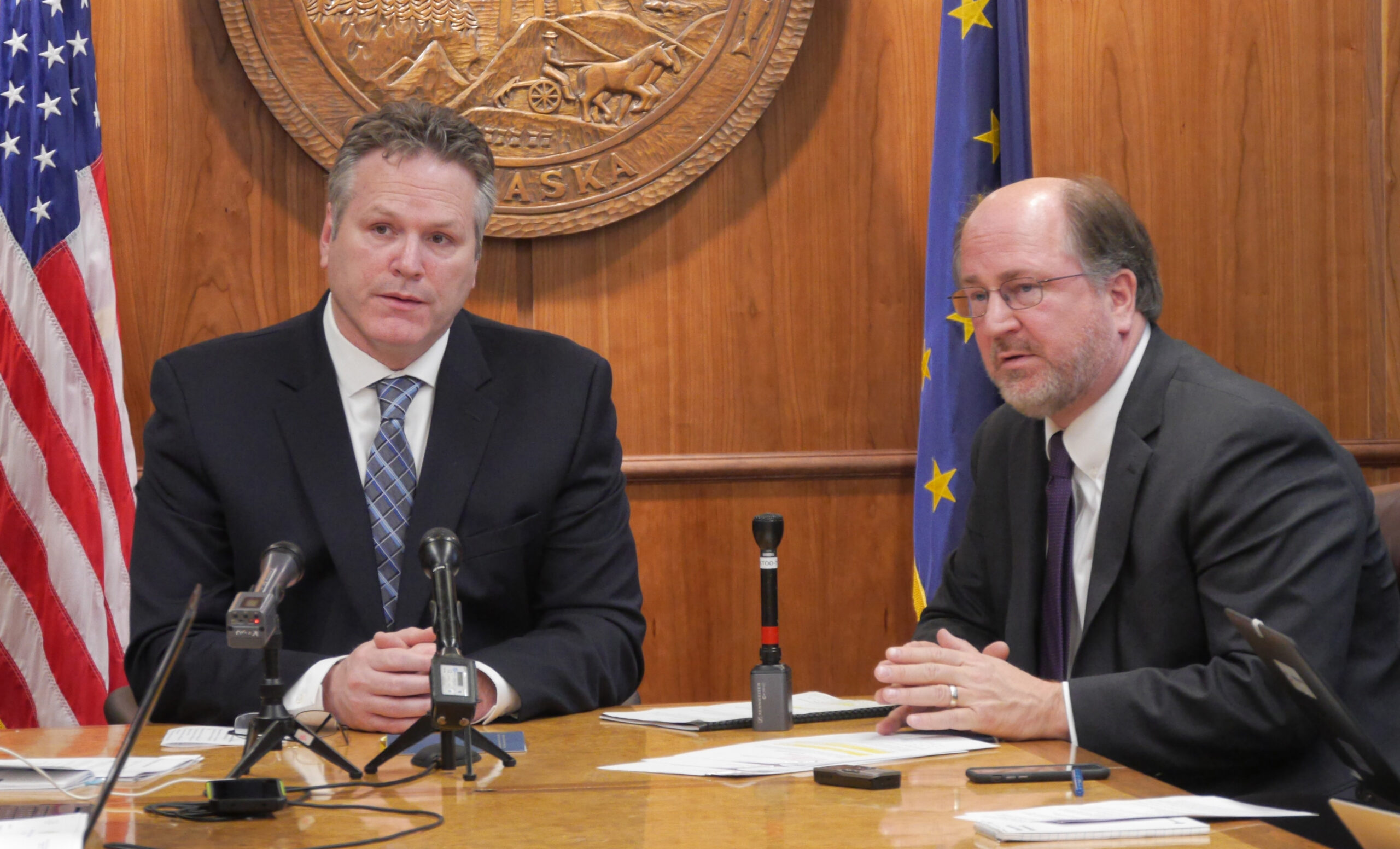 Alaska Gov. Mike Dunleavy (left), following an opinion from Attorney General Kevin Clarkson, ordered all Alaska state agencies to protect state employees’ First Amendment rights under Janus.
ANCHORAGE, AK – In late September, Alaska Governor Mike Dunleavy signed an executive order to protect the First Amendment rights of state employees established in last year’s Janus v. AFSCME Supreme Court decision. The order calls for the State of Alaska to stop deducting union dues from the paycheck of any worker who hasn’t filed a form with the state affirmatively waiving his or her First Amendment right under Janus not to fund any union activities.
The move follows a letter last year sent by National Right to Work Foundation Legal Director Raymond LaJeunesse to state comptrollers in Alaska and other states, urging them to modify dues deduction policies to comply with the Janus decision.
Foundation Comments Detail Need to End Dues Deductions Uncompliant with Janus
The Foundation also recently filed comments with the Federal Labor Relations Authority (FLRA) regarding the need for the federal government to take steps to protect the First Amendment rights of employees recognized in the Foundation-won Janus decision. The Foundation’s comments were submitted after the U.S. Office of Personnel Management (OPM) asked the FLRA to solicit public comments on how to proceed with union dues deductions in light of the Supreme Court’s Janus decision last year.
In that case, the High Court held that requiring public employees to pay union dues or fees without their consent violates the employees’ First Amendment rights “by compelling them to subsidize private speech on matters of substantial public concern.” Justice Samuel Alito’s opinion for the court further ruled that no union dues or fees could be taken from a public employee “unless the employee affirmatively consents to pay” using a “freely given” waiver of his or her First Amendment rights.
Consistent with that standard, the Foundation’s comments urge the FLRA to issue guidance to agencies that they “must cease deducting union dues from the wages of employees who signed a dues deduction form that does not satisfy the [Janus] standard.” According to Department of Labor statistics, nearly one million federal employees — 26.4% of all federal workers — are union members, many of them likely having dues deducted from their paychecks despite never having knowingly waived their First Amendment right not to subsidize union activities.
The Foundation comments make clear that these dues deductions should cease in the wake of Janus. To comply with Janus, workers wanting to voluntarily pay union dues can either provide the government with a valid waiver of their rights or pay dues on their own without using taxpayer-funded payroll systems to forward the money to union officials.
The Foundation’s comments to the FLRA further argue that, even where workers provide a valid authorization for dues deductions that meets the Janus standard, the government shouldn’t block them from revoking that authorization if the request is submitted at any time at least a year after the Janus-compliant authorization was obtained.
Foundation Comments Push to End Union-Created “Window Period” Scheme
Unfortunately, agencies and union officials often prohibit federal employees from stopping the seizure of union dues from their wages except during short annual escape periods. The comments filed by the National Right to Work Foundation say that this practice does not comply with Janus either.
“The Janus precedent is very clear about this: Without affirmative and knowing waivers from public workers, government entities cannot collect union dues without violating a worker’s First Amendment rights,” commented National Right to Work Foundation President Mark Mix.
“Currently, the government seizes union dues from almost one million federal employees in violation of the Janus decision’s First Amendment standard. Federal agencies are obligated to protect workers’ constitutional rights in this rulemaking process.”
Since the Janus decision last year, Foundation staff attorneys have been fighting to ensure public workers’ First Amendment rights are protected, litigating more than 30 cases in federal courts across the country to enforce the landmark ruling.
Alaska School Bus Drivers Win Three Year Battle to Kick Unpopular Teamsters Union Bosses Out of Their Workplace
Multi-year legal fight to remove union opposed by majority of workers shows need for reform of NLRB rules that allow unions to block workers’ from holding decertification votes
Anchorage, AK (December 9, 2019) – A group of Alaskan school bus drivers have just prevailed in their years-long effort to remove an unpopular Teamsters union from their workplace. The union’s ouster comes after National Right to Work Legal Defense Foundation staff attorneys provided free legal aid to Elizabeth Chase, the bus driver leading the charge to hold a decertification election so workers could vote out the union.
After workers sought for almost three years to remove the union, Teamsters Local 959 union officials finally stopped fighting the workers’ efforts by filing a disclaimer of interest with the National Labor Relations Board (NLRB) Region 19 in Seattle. The disclaimer came after the Region dismissed the union’s latest unfair labor practice charge following Chase’s fifth request for review to the full NLRB in Washington, DC, contesting the Regional Director’s continued block of a decertification vote at the behest of Teamsters bosses.
Chase is an employee of Apple Bus Company near Anchorage, Alaska. In July 2017, she submitted a decertification petition to NLRB Region 19 asking for a secret ballot election to remove the Teamsters as the monopoly bargaining representative in her workplace. Under the National Labor Relations Act (NLRA), if a decertification petition garners signatures from at least 30 percent of the employees in a bargaining unit, the NLRB is supposed to conduct a secret-ballot election to determine whether a majority of the employees wish to decertify the union. Chase’s initial petition was signed by more than 50 percent of the workers in the bargaining unit, far more than necessary to trigger a decertification vote.
The NLRB Regional Director blocked the decertification vote later that year, citing the Obama Labor Board-backed “successor bar,” which prohibits workers from removing an unwanted union simply because the ownership of an employer has changed hands. That “successor bar” is not mandated by the NLRA, which the NLRB is charged with enforcing.
Despite that setback, Chase and her coworkers continued their efforts to remove the Teamsters from their workplace, filing another decertification petition in 2018. This time, Teamsters officials moved to prevent the vote by filing successive “blocking charges” with the Regional Director, alleging unfair labor practices by Apple Bus. The Regional Director repeatedly allowed union officials to block a vote despite Chase’s pointing out that the Region failed to “explain specifically what causal connection(s) exist” between the petition and the union bosses’ allegations that made it necessary to stop the vote. All told, Chase requested five times that the full NLRB in Washington, DC, reverse the Regional Director’s decisions and let the vote proceed.
The NLRA, the federal law that the NLRB is tasked with enforcing, grants all workers the right to remove an unpopular union. Most restrictions manipulated by union bosses to halt decertification votes (such as the “successor bar” and “blocking charges”) are not established in its text but have been read into it by Big Labor-friendly Board Members under the Clinton and Obama administrations. Foundation staff attorneys have been fighting for workers for decades to eliminate these unfair, non-statutory limitations on workers’ rights to hold a vote to remove a union that has lost most workers’ support.
The NLRB is currently accepting comments on reforming the “blocking charge” doctrine and another non-statutory bar to decertification elections, the “voluntary recognition” bar. In comments to the Labor Board, Chase’s Apple Bus coworker Donald Johnson blasted the union’s ability to game the NLRB’s system to delay a decertification vote for years as “the most unfair and anti-democratic event I have been involved with in my entire life.” The window for submitting comments to the NLRB ends on January 9, 2020. Foundation attorneys have prepared comments they will file urging the Board to end both the “blocking charge” policy and “voluntary recognition” bar.
“The NLRB is tasked with protecting the right of employees to remove a union that is opposed by a majority of workers, but as this case shows us that right is undermined by non-statutory NLRB policies that allow workers to be trapped in union ranks for years at a time without even a decertification vote,” observed National Right to Work Foundation President Mark Mix. “Though Ms. Chase and her coworkers are finally free from the coercive reign of a plainly unpopular Teamsters union, the NLRB must act quickly to roll back the undemocratic election bars and blocking charge policies that undermined their rights for almost three years.”





