
Ascension St. Agnes Nurse Slams NNOC Union With Federal Charges After Union Restricts Workplace Vote
Nurse contends that union is discriminating against nonmember nurses and violating duty of fair representation
Baltimore, MD (April 16, 2025) – A nurse at Ascension Health’s St. Agnes Hospital has hit the National Nurses Organizing Committee (NNOC) union with federal charges, maintaining that union officials are discriminating against nonmembers as a vote on workplace issues approaches. The nurse, Jen Delaney, filed the unfair labor practice charge at the National Labor Relations Board (NLRB) with free legal aid from National Right to Work Legal Defense Foundation staff attorneys.
The NLRB is the federal agency responsible for enforcing federal labor law and adjudicating disputes between employers, union officials, and individual employees. Delaney details in her charges that NNOC union officials are forbidding nurses who are not formal union members, like herself, from voting on a “partial deal” that is part of a wider contract negotiation. The union is restricting the voting pool despite the fact that the union monopoly contract will impose conditions on all nurses at the facility, members and nonmembers alike.
Delaney is arguing that NNOC union officials are violating the “duty of fair representation,” a legal mandate that requires union officials not to discriminate in its bargaining functions, including on the basis of union membership. The duty originates from a 1944 Supreme Court case, Steele v. Louisville & Nashville Railway Co., in which the Court recognized that rail union bosses were manipulating their powers over the workplace to discriminate against African-American railway workers.
Because Maryland lacks Right to Work protections for its private sector workers, NNOC union officials can impose working conditions on the nurses that require them to pay union dues or fees just to keep their jobs. In contrast, in Right to Work jurisdictions like nearby Virginia and West Virginia, union membership and all union financial support are the choice of each individual worker.
“NNOC union officials have been extremely abrasive to any nurse who isn’t gung-ho for the union’s agenda,” commented Delaney. “It wasn’t long ago that my coworkers and I backed an effort to try to vote this union out, and this new development shows exactly why. NNOC union bosses are freezing out nurses from the voting process who are unwilling to sign a membership form that states it is ‘voluntary,’ yet they require signatures to vote, even though that vote is going to have very significant consequences for all of us at St. Agnes.”
Federal Charges Follow Nurses’ Attempt to Vote Union Out
Delaney led an effort to “decertify” (or remove) the NNOC union earlier this year. Delaney and her coworkers reported that union officials made taking care of patients more difficult and that the union generally served as a divisive force in the workplace.
“NNOC union officials are clearly not interested in ‘representing’ all nurses at St. Agnes, and have instead actively discriminated against nurses who are critical of the union’s priorities and who have exercised their legally-protected right to reject formal union membership,” commented National Right to Work Foundation President Mark Mix. “While this is a violation of the duty of fair representation, it exposes a more fundamental problem with federal labor law: Union officials shouldn’t have the power to foist their ‘representation’ on workers who have disaffiliated with the union to begin with, and certainly shouldn’t have the ability to force those same dissenting workers to subsidize a union they don’t want and never asked for.”
Massachusetts Trader Joe’s Employees Battle Divisive Union Organizing Campaign
Trader Joe’s workers demand vote to oust union, blast union bosses in Congress and media

Trader Joe’s employees Les Stratford (left) and Michael Alcorn want to restore the fun and independent work environment that existed in the store before union officials sowed discord.
HADLEY, MA – Union bosses and Big Labor-allied media cheered when the Hadley, MA, branch of supermarket chain Trader Joe’s became the first unionized location in the country in 2022. But what all their celebration concealed was the fact that union officials had swept to power at the location through a deeply deceptive campaign that demonized both the company and many employees. Now many of the Hadley-based Trader Joe’s employees are fighting to kick the union out.
“Officials of this union have sowed division and smeared both our workplace and anyone who dissents from the union’s agenda pretty much from the time the campaign began to unionize the store,” Trader Joe’s employee Les Stratford told Supermarket News about the situation.
Michael Alcorn, another Hadley Trader Joe’s worker who simply wanted to have a conversation with his coworkers about the ramifications of unionizing, said that union militants “weren’t going to have a meeting with us…immediately it was like ‘you either accept the union, or you don’t, and we’re not going to talk about it all together because if you don’t accept it, we don’t trust you.’”
Now, with free legal aid from the National Right to Work Foundation, Stratford, Alcorn, and many other Hadley Trader Joe’s employees are backing an effort to vote the union out of power at the store. Stratford in August submitted a union decertification petition asking the National Labor Relations Board (NLRB) to hold an election among his coworkers on whether to remove the union, which contained well over the support needed to trigger a decertification vote under NLRB rules.
Because Massachusetts lacks Right to Work protections for its private sector workers, the union has the legal privilege to enforce contracts that require Trader Joe’s employees to pay dues or fees as a condition of keeping their jobs.
In Right to Work states, in contrast, union membership and financial support are strictly voluntary. A vote by the majority of Hadley Trader Joe’s employees against the union would free them from both the union’s forced-dues and monopoly bargaining powers.
Trader Joe’s Employee Exposes Union Tactics on Capitol Hill
In May, Alcorn brought the concerns many of the Hadley Trader Joe’s employees had directly into the halls of Congress when he was called by the U.S. House Committee on Education and the Workforce to testify about coercive tactics union bosses use to gain power and stay in power.
In addition to describing the union’s vilification of any skeptical employee, he noted that union organizers tried to foist union control of the workplace through “card check” — a process that bypasses the NLRB’s secret ballot election system and lets union officials aggressively solicit “cards” that are later counted as votes for the union.
Union organizers also “made inaccurate and incomplete press releases, creating false narratives about our workplace to promote their own agenda and personal vendettas,” Alcorn said.
Workers Need More Freedom to Oust Abrasive Union Bosses
The Hadley Trader Joe’s workers’ efforts come as the Biden-Harris NLRB announced a final rule which will make it much harder for rank-and-file workers to exercise their right to vote out union officials they oppose. The final rule, among other things, lets union officials prevent decertification votes from going forward by filing unverified “blocking charges” alleging employer interference.
While the Trader Joe’s employees’ petition will be unaffected by the rule change, the new policy will likely quash or substantially delay similar efforts in the future. “The situation at the Hadley, MA, Trader Joe’s store shows exactly why workers’ right to vote to remove a union they oppose must be protected,” commented National Right to Work Foundation Legal Director and Vice President William Messenger.
“During a union campaign, union officials often employ aggressive tactics and ‘us vs. them’ or hate-the-boss rhetoric that cause division and prioritize union bosses’ agenda over workers’ freedoms and individual choices.
“That the Biden-Harris Administration stripped workers of what few rights they had to challenge union officials that perpetrate these acts shows they are on the side of Big Labor, not individual workers,” Messenger added.
DC-Area ‘Union Kitchen’ Employees Vote 24-1 to Remove UFCW Union
The following article is from the National Right to Work Legal Defense Foundation’s bi-monthly Foundation Action Newsletter, March/April 2024 edition. To view other editions of Foundation Action or to sign up for a free subscription, click here.
Foundation now defending workers against union attempt to overturn employee vote
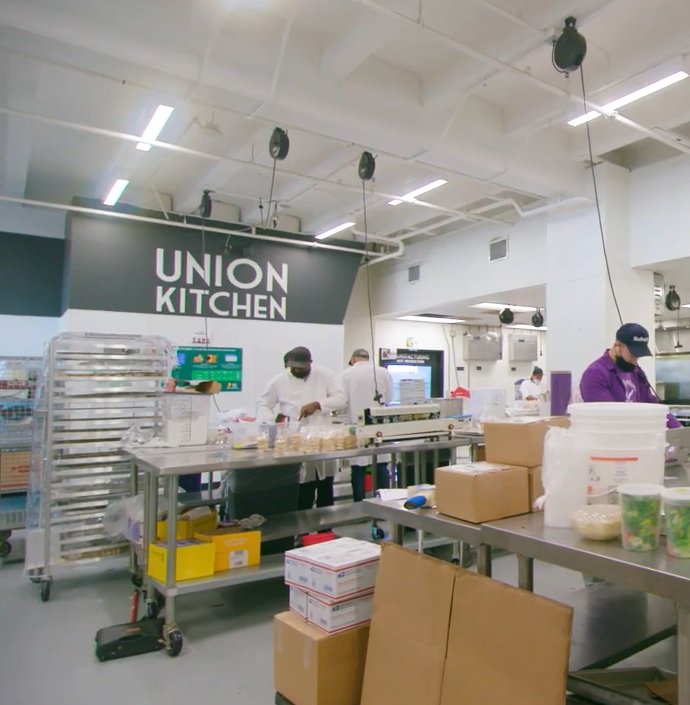
Union Kitchen, a unique grocery concept that helps local DC entrepreneurs get their food products to market, was the target of a dangerous UFCW picket scheme.
WASHINGTON, DC – Ashley Silva, an employee at independent DC-area food store Union Kitchen, could sense in July 2023 that her coworkers had had enough of the United Food and Commercial Workers (UFCW) union in their workplace.
UFCW union officials had been ordering contentious boycotts and pickets on the stores, and some of the demonstrations even required police intervention after union picketers blocked store exits.
“The vast majority of the workers at Union Kitchen are sick and tired of the UFCW’s picketing, harassment of employees, and constant disruptions of our day-to-day work life,” Silva said at the time.
Despite Searing Worker Rejection, UFCW Bosses Trying to Cling to Power
With free legal aid from the National Right to Work Foundation, Silva filed a decertification petition with the National Labor Relations Board (NLRB), asking the federal agency to hold a vote among the employees of Union Kitchen’s five stores on whether the union should be ousted. The vast majority of her coworkers signed the petition.
UFCW union officials levied allegations against Union Kitchen management in an attempt to stop the vote from happening. Despite some delays, Silva and her coworkers cast ballots in October 2023, and a January 2024 vote count revealed that she and her colleagues had voted against the union 24-1.
The union challenged eight employee ballots, meaning the full tally of votes against the union is most likely 32-1.
Once the NLRB certifies this election result, Silva and her coworkers will be free of the union. However, in an attempt to stop this, UFCW officials continue to press the “blocking charges” against Union Kitchen management that they filed at the NLRB before the vote, and have also piled on objections to the election that contain the same basic accusations as the blocking charges.
Blocking charges are often unverified or unrelated charges of employer misconduct that union officials can manipulate to stall a ballot count or a certification of results in a union decertification case.
If the NLRB issues a complaint against an employer based on a union’s “blocking charges,” the decertification process is halted.
Foundation Will Fight UFCW Bid to Overturn Vote
Foundation staff attorneys are defending Silva and her colleagues’ victory at the ballot box from UFCW union officials’ bald-faced attempts to oppose their will.
“We’re happy that Ms. Silva and her coworkers were finally able to exercise their right to vote out a union they oppose,” commented National Right to Work Foundation Vice President Patrick Semmens. “It’s unfortunate, though hardly surprising, that despite such an overwhelming rejection UFCW union officials won’t take a hint and stop attempting to impose their unwanted so-called ‘representation’ on Union Kitchen employees.
“The Foundation is proud to defend Silva and her coworkers against these union tactics as they seek freedom from coercive unionism,” Semmens concluded.
Somerset, NJ, Nissan Employees Overwhelmingly Vote Out UAW Union Bosses
Nearly 70% of distribution center employees voted against UAW, vote proceeded despite last-minute contract ratification by union officials and management
Somerset, NJ (April 30, 2024) – During a secret ballot election last week, workers at Nissan North America’s parts distribution center in Somerset, NJ, voted to oust United Auto Workers (UAW) union officials from power at their facility. The workers who participated in the April 24 union decertification election voted by nearly 70% to remove the union. Nissan employee Michael Oliver spearheaded the union removal effort with free legal aid from the National Right to Work Legal Defense Foundation.
Oliver kick-started the effort by filing a union decertification petition on April 1 with the National Labor Relations Board (NLRB), the federal agency responsible for enforcing federal labor law, which includes administering elections to install (or “certify”) and remove (or “decertify”) unions. Oliver’s petition contained support from enough of his coworkers to trigger a decertification vote under NLRB rules.
Because New Jersey lacks Right to Work protections for its private sector workers, UAW officials maintained contracts with Nissan management that require Oliver and his coworkers to pay union dues as a condition of keeping their jobs. In Right to Work states, in contrast, union membership and all union financial support are strictly voluntary.
However, in both Right to Work and non-Right to Work states, union officials in a unionized workplace are empowered by federal law to impose a union contract on all employees in the work unit, including those who oppose the union. A successful decertification vote strips union officials of both their forced-dues and monopoly bargaining powers.
If union officials file no objections to the election by midnight on April 30, NLRB officials will certify the vote and Somerset Nissan employees will be officially free of the union.
UAW Union Officials Rushed New Contract in Likely Attempt to Prevent Removal Vote
After Oliver’s April 1 submission of the decertification petition, UAW union officials announced on April 18 that they had ratified a new union contract with Nissan management. The last contract had expired.
While the NLRB’s dubious “contract bar” generally allows union bosses to quash worker-filed decertification efforts for up to three years while a union contract is in effect, the contract bar didn’t stop Oliver and his coworkers’ requested election, because union officials weren’t able to reach a monopoly bargaining agreement with Nissan before Oliver filed his decertification petition. The contract bar does not appear in the National Labor Relations Act (NLRA), the federal law the NLRB is charged with enforcing, and is instead the product of union boss-friendly Board decisions.
Had union officials been able to ratify the contract just a few days earlier, the UAW likely would have succeeded in trapping the workers in union “representation” and forced-dues payments, despite a wide majority wanting to be free of the UAW.
Workers Across Country Growing Dissatisfied with UAW Agenda
Across the country, workers are choosing to affiliate with unions in record-low numbers, according to the most recent Gallup poll on the subject. In 2023, the UAW’s membership fell to its lowest level since 2009. Nonetheless, the UAW’s top bosses are engaged in a multi-million-dollar campaign to expand their influence across nonunion auto facilities, particularly in the South.
Workers are also increasingly attempting to exercise their right to vote out union officials they disapprove of. According to NLRB data, since 2020 decertification petition filings have gone up by over 40%. To resist this trend, the Biden NLRB is attempting to make it substantially more difficult for workers to decertify unions, and could soon issue a final rule invalidating the Election Protection Rule. The Election Protection Rule is a policy which contains multiple important safeguards regarding employees’ right to decertify unions they oppose.
“Mr. Oliver and his fellow Nissan employees are another example that workers who see the UAW up close and personal end up disliking the union’s so-called ‘representation,’” commented National Right to Work Foundation President Mark Mix.
“While these Nissan workers were able to get a vote to eliminate the UAW from their workplace, too often we hear from workers who are frustrated to learn they may have to wait years before even being able to seek a vote to remove unwanted union monopoly representation,” Mix added. “The vast scores of auto industry workers now within the crosshairs of the UAW’s sweeping organizing plan should remember that union officials often prioritize their own power over workers’ interests, and that biased NLRB standards like the ‘contract bar’ may make it very difficult to remove a union after it has been installed.”
Ontario, CA-Based Dependable Highway Express Employees Force Out Teamsters Local 63 Union Officials
Tension escalated between workers and union after Teamsters officials threatened termination of worker who revealed union boss salaries
Ontario, CA (April 2, 2024) – Following a majority-backed petition to remove the Teamsters union, employees at Los Angeles-based transportation company Dependable Highway Express have successfully ousted Teamsters Local 63 union officials from their workplace. John Cwiek, the employee who led his coworkers in the effort to remove the union, received free legal aid from the National Right to Work Legal Defense Foundation.
Cwiek filed a union decertification petition in March, asking the National Labor Relations Board (NLRB) to hold a vote at his workplace to determine if the Teamsters union should continue its control over Dependable Highway Express employees. The NLRB is the federal agency responsible for enforcing federal labor law, which includes administering elections to install (or “certify”) and remove (or “decertify”) unions.
Cwiek’s petition contained signatures from a nearly 2-1 majority of employees at Dependable Highway Express’ Ontario location, far more than the 30% needed to trigger a vote under NLRB rules. However, before the NLRB could hold a decertification vote, Teamsters officials filed a “disclaimer of interest” announcing they were ending their “representation” of the work unit.
Because California lacks Right to Work protections for its private sector workers, Teamsters union officials had the power to force Cwiek and his colleagues to pay fees to the union as a condition of keeping their jobs. In Right to Work states, in contrast, union membership and all union financial support are strictly voluntary. Following the disclaimer, Cwiek and his coworkers are now free of the union’s forced-dues demands and its control over their working conditions.
Ontario Trucking Employee Faced Retaliation for Revealing Union Boss Salaries
Prior to their ouster, Teamsters union officials stirred tension in the workplace by threatening Cwiek, who in January sent letters to his coworkers containing publicly-available Department of Labor data on Teamsters bosses’ salaries. In retaliation for Cwiek sending the letters, a union official appeared at Cwiek’s workplace the next day, made accusations against him, and threatened that Cwiek wouldn’t be working at Dependable Highway Express by the next contract period.
These types of threats are illegal under the National Labor Relations Act (NLRA), which protects employee speech critical of union officials, and protects employees’ right to refrain from union activities if they so choose. With Foundation aid, Cwiek separately filed federal charges against Teamsters Local 63 in February over this behavior. That charge was dropped in light of the union’s disclaimer of interest, and Cwiek remains employed at Dependable Highway Express.
“I am deeply troubled by the blatant retaliatory actions taken by officials at Teamsters Local 63 in response to expressing the views of myself and several other hard-working drivers at Dependable Highway Express,” Cwiek commented at the time. “We will not be deterred by their bullying tactics and the baseless accusations they levy against myself and others.
“I hope that the actions of the officials from Teamsters Local 63 serve as a clear example to my colleagues that the union cannot dispute the facts of their incompetence in representing us, so they must resort to intimidation and slanderous accusations,” Cwiek added. “We will remain steadfast in our pursuit of a better future for ourselves and our families.”
SoCal Teamsters Officials Have Penchant for Threatening Workers
National Right to Work Foundation staff attorneys are currently helping other transportation industry employees in Southern California oppose unwanted Teamsters union influence. The NLRB recently issued a complaint against Teamsters Local 848 union officials at Savage Services’ Long Beach facility, where employee Victor Avila filed federal charges against union bosses for threatening him and his coworkers with violence for not supporting the union. The complaint begins the NLRB’s formal prosecution of the union for its malfeasance.
“Mr. Cwiek’s battle and the struggles of other transportation workers across Southern California show exactly why Right to Work protections are so necessary,” commented National Right to Work Foundation President Mark Mix. “While it’s illegal to threaten workers for opposing the union or merely revealing truthful information, workers should never be forced to pay a union hierarchy that perpetrates such threats. On a more fundamental level, however, the choice should be completely with individual workers as to whether union officials have earned a cut of their hard-earned paychecks.”
Albany Starbucks Employees Seek Vote to Kick Out SBWU Union
“This isn’t what we signed up for” says NY worker who joins Starbucks partners across the country in demanding union ousters
Albany, NY (March 1, 2024) – A partner of the Stuyvesant Plaza Starbucks in Albany has filed a petition with National Labor Relations Board (NLRB) Region 3, asking the federal agency to hold a vote at her workplace to remove (or “decertify”) the Starbucks Workers United (SBWU) union. The employee, Rayghan Dowey, received free legal aid from the National Right to Work Legal Defense Foundation in submitting her petition.
“This isn’t what we signed up for, a new team has started to come in [to the Stuyvesant Plaza Starbucks] and we want to make sure that the voice that was once heard is still being heard two years later,” commented Dowey regarding the union. “We want to bring the inclusivity, community, and culture back. The culture we once had, that we were promised to get back, we never got to see.”
Dowey’s petition contains signatures from enough coworkers at her store to trigger a decertification vote under NLRB rules. Because New York lacks Right to Work protections for its private sector workers, SBWU union bosses can enter into contracts that compel Dowey and her coworkers to pay union dues as a condition of keeping their jobs. In Right to Work states, in contrast, union membership and all union financial support are strictly voluntary.
However, in both Right to Work and non-Right to Work states, union officials in a unionized workplace are empowered by federal law to impose a union contract on all employees in a work unit, including those who oppose the union. A successful decertification vote strips union officials of that power.
Amid Growing Requests to Remove SBWU, Starbucks Workers Also Challenge NLRB Authority
Dowey and her colleagues join Starbucks partners and other coffee company employees across the country in banding together to vote out SBWU union officials. In the past year, Starbucks employees in Manhattan, NY; two Buffalo, NY locations; Pittsburgh, PA; Bloomington, MN; Salt Lake City, UT; Greenville, SC; Oklahoma City, OK; San Antonio, TX; and Philadelphia, PA, have all sought free Foundation legal aid in filing or defending decertification petitions at the NLRB. Foundation attorneys have helped employees at independent Philadelphia coffee shops Good Karma Café and Ultimo Coffee successfully oust Workers United union officials, who are affiliated with SBWU.
Many employees of Starbucks or other coffee establishments are requesting decertification votes from the NLRB roughly one year after union bosses attained power in their workplaces, which is the earliest opportunity afforded by federal law to do so. Starbucks employees in particular were the targets of a multi-year, aggressive unionization campaign by SBWU, in which the union spent millions on paid union agents – including “salts” who obtained jobs at Starbucks locations with the covert mission of installing union power.
However, rather than respect the choice of workers opposed to the union, SBWU union officials are attempting to prevent Starbucks workers nationwide from exercising their right to decertify the union with charges against Starbucks management that are currently holding up the elections. Currently, Foundation staff attorneys are representing workers in about a dozen Starbucks stores seeking decertification votes.
NLRB Request for Review: Region Violating Starbucks Workers’ Rights by Blocking Vote
In fact, Foundation attorneys just filed a request for review with the National Labor Relations Board in Washington, DC, for Indya Fiessinger, a Starbucks employee at a Salt Lake City-area location who filed a petition for a decertification vote. The brief argues an NLRB Regional Director incorrectly applied federal law to block the decertification election requested by the workers at the store, and refused to even hold a hearing on the matter.
Foundation attorneys are also representing Buffalo, NY, and San Antonio, TX, Starbucks workers in challenging the NLRB as an unconstitutionally-structured federal agency. In two federal lawsuits now at the district court level, Starbucks employees argue that NLRB bureaucrats’ removal protections shield them from accountability in violation of separation of powers doctrines in the Constitution.
“Despite the wave of Starbucks workers who want to exercise their right to free themselves from unwanted union representation, SBWU union officials are twisting the law to trap workers under the union’s influence against their will,” commented National Right to Work Foundation President Mark Mix. “Federal labor law should protect workers who want to exercise their free choice rights, not power-hungry union bosses, and Foundation attorneys are proud to represent Ms. Dowey and other Starbucks workers who oppose SBWU officials’ coercive reign.”
Foundation Attorneys & PA Metal Workers Fight Steelworkers Union Contract Deception
The following article is from the National Right to Work Legal Defense Foundation’s bi-monthly Foundation Action Newsletter, November/December 2022 edition. To view other editions of Foundation Action or to sign up for a free subscription, click here.
Union bosses lied to metal workers and covertly signed forced-dues contract to keep grip on power
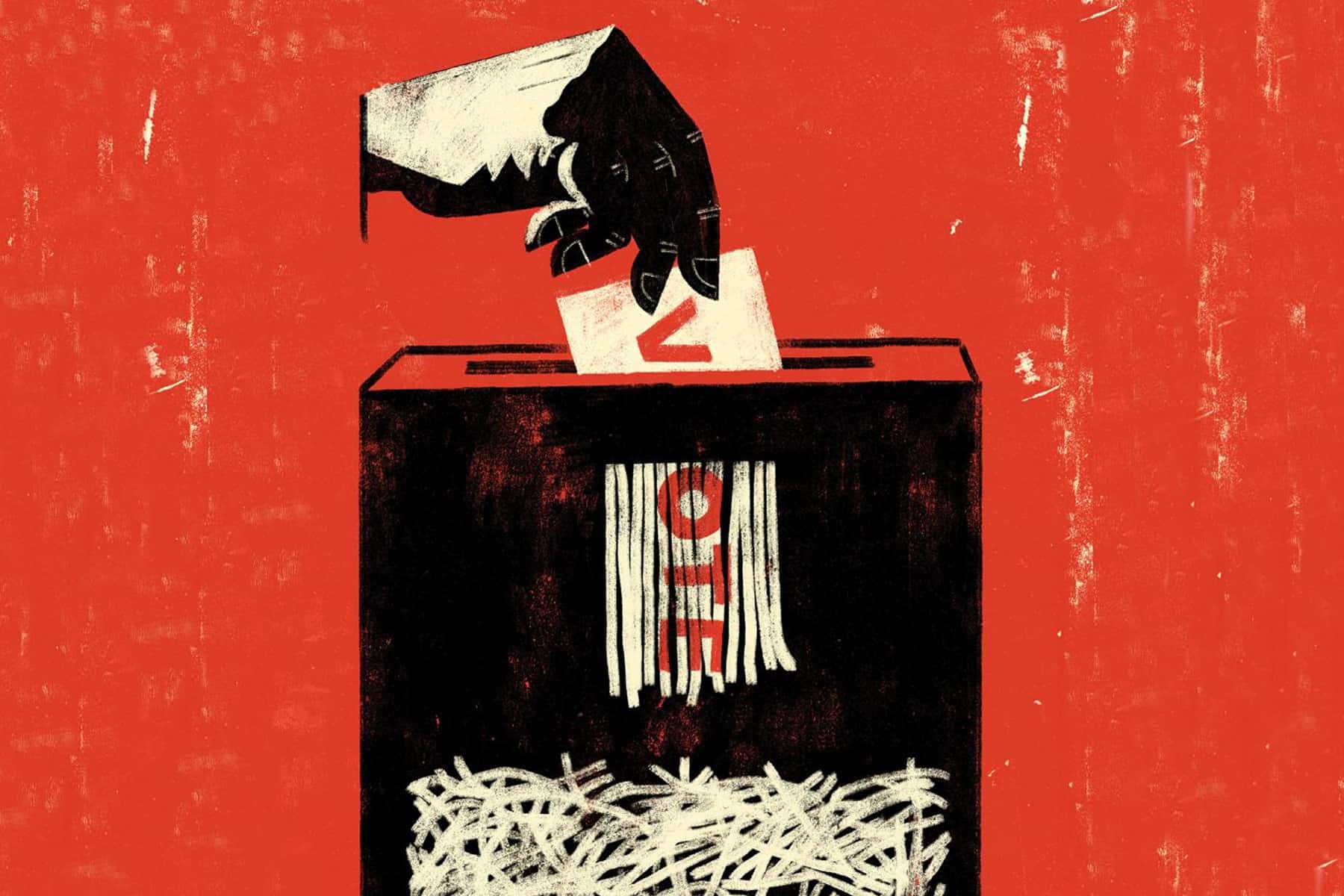
In NLRB documents, Steelworkers union officials openly defended their deception of employees, calling such behavior “irrelevant” to whether they should remain in power.
FRANKLIN, PA – Workers under the thumb of union bosses have many reasons to oppose the union’s “representation.” It could be they oppose a bad contract the union negotiated, or maybe it is the union’s divisive political activity for candidates they oppose. Whatever the reason, workers have a right under federal labor law to vote to free themselves of such unwanted union “representation.”
But federal labor law also has no shortage of workarounds for union bosses bent on clinging to their monopoly bargaining power over workers. Kerry Hunsberger and her coworkers at Latrobe Specialty Steel’s Franklin, PA, facility are currently defending their right to throw out unpopular Steelworkers union officials, after the union chiefs secretly signed a contract workers had voted down twice.
Steelworkers Officials Tried to Dodge Employee Accountability
Steelworkers chiefs did so to activate a so-called “contract bar” and remain in power at the plant when they knew a decertification election was coming. Steelworkers officials held two ratification votes to make workers think they had control over whether the contract went into effect. But in reality, union officials have no legal obligation under the National Labor Relations Act (NLRA), the federal statute that governs private sector labor relations, to even conduct such a ratification vote, much less heed the workers’ actual vote tally.
The pro-union boss National Labor Relations Board (NLRB) created out of whole cloth the “contract bar” policy. It immunizes union officials from employee-backed attempts to vote out a union for up to three years after union bosses and management finalize a contract — even a contract that isn’t supported by a majority of workers.
Hunsberger’s petition asking the NLRB to hold a vote to remove the union contains the requisite number of signatures under NLRB rules, but union officials argue the “contract bar” should block the election anyway.
Union Bosses Ignored Two Votes by Workers Rejecting Forced-Dues Contract
The Latrobe Specialty Steel workers first voted July 25 on the contract drawn up by Steelworkers union officials. The workers soundly rejected the contract, and Hunsberger began collecting employee signatures for a decertification petition shortly afterwards.
According to documents and transcripts filed with the NLRB, when Steelworkers union officials discovered a decertification petition was circulating, they secretly and hurriedly signed the unpopular contract on July 28, without telling the employees or the employer, in an attempt to activate the “contract bar” rule and avoid being voted out.
The slapdash contract lacked basic In NLRB documents, Steelworkers union officials openly defended their deception of employees, calling such behavior “irrelevant” to whether they should remain in power. elements, like start and end dates. Even though the union now claims this contract was immediately in effect on July 28, union officials held a new employee ratification vote on August 1, encouraging workers to “ratify” the contract. But the union bosses never told the workers their “vote” was a meaningless sham because union officials had already signed the forced-dues contract in secret.
Hunsberger’s decertification petition was filed at 2:00 PM on August 1, just hours before the sham contract vote occurred. As with the previous vote, the workers rejected the contract by a lopsided margin. But later that night, at around 9:00 PM, union officials suddenly announced to the employer that the contract was already in effect and the employee ratification “vote” was irrelevant because of the union bosses’ covert signing on July 28.
In sworn testimony, one union boss admitted that Steelworkers union bosses execute contracts despite employees voting them down, and that union officials deceived the Latrobe workers and ignored their votes in this case “to protect the integrity of the union.” Apparently the Steelworkers bosses’ lust for monopoly bargaining power and compulsory union payments takes precedence over the actual wishes of the rank-and-file workers union officials purport to “represent.”
‘Contract Bar’ Encourages Unions to Force Through Unpopular Contracts
“Steelworkers union bosses drew up a contract that my coworkers and I hated, so naturally we wanted them out of our workplace and out of our pocketbooks. But to add insult to injury, they apparently didn’t even think they owed us a duty of honesty,” said Hunsberger.
“This entire ordeal has been incredibly frustrating and we are grateful for the help of the National Right to Work Foundation in defending our right to vote the union out.”
Kerry Hunsberger’s Foundationbacked brief defending her and her coworkers’ rights states that the Steelworkers’ contract ploy is “nothing more than a smokescreen, concocted by a desperate and unpopular union to entrench itself and bar employee free choice” under federal law.
“The ‘contract bar’ arbitrarily blocks, often for years, workers’ statutory right under federal law to vote out union officials they oppose. Worse, it encourages union officials to cynically impose a contract at all costs, especially when union bosses know rank-and-file workers would see such a contract as a reason to get rid of so-called union ‘representation,’” commented National Right to Work Foundation Vice President Patrick Semmens. “This case presents an easy choice for the NLRB: defend the rights of rank-and-file workers, or side with Steelworkers union officials, who repeatedly misled those workers and disregarded their votes simply to protect union power. The case also demonstrates that there is no such thing as ‘union democracy’ in America.”
Teamsters Union Officials Flee Albany XPO Logistics Workplace After Vast Majority of Workers Seek Vote to Remove Them
XPO Logistics employees in California and New Jersey have also recently ousted Teamsters officials
Albany, NY (December 13, 2022) – XPO Logistics truck driver William Chard and his coworkers are free from the control of unpopular Teamsters Local 294 union officials, following Chard’s filing of a worker-backed petition earlier this month requesting a vote to remove the union. Chard received free legal aid from the National Right to Work Foundation in filing the petition for his coworkers.
Chard submitted the petition, which 65 percent of his coworkers signed, at National Labor Relations Board (NLRB) Region 3 in Buffalo. The NLRB is the federal agency responsible for enforcing federal private-sector labor law and will generally conduct a “decertification vote” among workers when at least 30 percent of them express interest in ousting a union. However, likely unwilling to face a ballot-box rejection by the workers they claimed to “represent,” Teamsters bosses filed paperwork with the NLRB just days later disclaiming interest in Chard’s work unit.
Although the NLRB’s decertification process is still prone to union boss-created roadblocks, Foundation-backed reforms the NLRB adopted in 2020 have made it somewhat easier for workers to remove unwanted union officials.
Before the reforms, for example, union officials could stop workers who had requested a decertification vote from casting ballots by filing so-called “blocking charges,” which often contain unverified and unrelated allegations of employer misconduct. The rule changes improved the process so employees can usually at least have a chance to vote before any allegations surrounding the election are handled.
Because New York lacks Right to Work protections for its private sector employees, Teamsters union officials had the power to force Chard and his colleagues to pay dues or fees to the union hierarchy just to stay employed. In contrast, in Right to Work states, union membership and all union financial support are the choice of each individual worker and can’t be required as a condition of employment.
Foundation Aids XPO Logistics Employees from Coast-to-Coast in Kicking Out Teamsters Officials
Chard and his coworkers’ successful decertification is not the first in which Foundation staff attorneys have assisted XPO Logistics drivers in booting Teamsters officials out of their workplaces. In March 2021, Miguel Valle and his colleagues at XPO Logistics’ facility in Cinnaminson, NJ, voted 90 percent in favor of removing Teamsters Local 107 officials.
And that October, Los Angeles-based XPO Logistics employee Ozvaldo Gutierrez and his coworkers submitted a petition requesting a decertification vote to remove Teamsters Local 63 union bosses. Just as Local 294 officials did in Chard’s situation, Local 63 officials abandoned the Southern California facility before the NLRB scheduled an election.
Currently, the NLRB’s own data show that a unionized private sector worker is more than twice as likely to be involved in a decertification effort as the average nonunion worker is to be involved in a unionization campaign, with one analysis finding decertification petitions up 42 percent this year.
“Officials of the Teamsters union – a union that has spent a large portion of its history under federal supervision – have a well-earned reputation for prioritizing power and control over the needs of rank-and-file workers,” commented National Right to Work Foundation President Mark Mix. “Foundation attorneys were happy to assist Mr. Chard and his fellow drivers in exercising their right to throw out a Teamsters union that didn’t serve their interests, just as they’ve been happy to assist other XPO Logistics workers around the country in doing the same.”
“However, even as workers across a number of industries are exercising this right at a rising rate, the Biden NLRB has announced rulemaking to roll back the Foundation-backed reforms that make decertifying unpopular unions easier,” Mix added. “The Foundation will oppose this move to hamper workers’ free choice rights, and will also continue to aid workers nationwide in voting out unions they oppose.”
Maine Medical Center Nurses Secure Vote to Remove Unwanted Maine State Nurses Association Union Officials’ ‘Representation’
More than 500 workers petitioned for union “decertification election” seeking a vote as soon as allowed following imposition of unwanted union
Portland, ME (July 21, 2022) – Maine Medical Center nurses will soon vote in an election that could send Maine State Nurses Association (MSNA-NNU, an affiliate of National Nurses United) union officials packing from the hospital. This follows Nurse Davin Brooks’ submission of a petition containing signatures of more than 500 of his colleagues.
Brooks and his fellow nurses are receiving free legal assistance from the National Right to Work Legal Defense Foundation. The petition comes as Foundation staff attorneys are increasingly assisting healthcare workers in obtaining votes to remove unwanted unions, including in Michigan, Minnesota, New York, and Massachusetts.
The NLRB is the federal agency responsible for enforcing federal private-sector labor law, a duty which includes conducting votes to both certify and decertify unions. Foundation staff attorneys recommended reforms the NLRB adopted in 2020 that significantly eased processes by which workers can request a vote to remove an unwanted union. Those reforms included limiting union officials’ ability to manipulate often-unverified allegations of employer wrongdoing to stop an employee-requested union decertification vote.
Union Installed Through Dubious Mail-Ballot Process, Employees Soon Wanted Ouster
MSNA union officials were originally installed at Maine Medical Center in Portland in May 2021, after the NLRB conducted a mail-ballot union certification vote among the hospital employees. Mail-ballot NLRB elections, which before COVID were very rare and only held where in-person votes were not feasible, have lower turnout rates than standard in-person elections. Studies show mail-ballot elections benefit union organizers in part due to that lower turnout. Conducting such votes through the mail also has resulted in post office errors that disenfranchise workers, and ballot harvesting by union organizers that undermines the privacy of workers’ votes.
Since the union was installed last year, MSNA union officials and Maine Medical Center management have been unable to finalize a contract. Brooks filed the decertification petition signed by his coworkers in June, the soonest allowed by the NLRB’s “election bar” which prevents more than one such election within a year. The election is scheduled for August 17 and 18, and will be held in person at multiple Maine Medical Center locations.
“Maine Medical Center employees are more than reasonable in their desire to oust MSNA union officials, who came to power at the facility through a questionable mail-ballot vote and have failed to produce a contract in over a year,” commented National Right to Work Foundation President Mark Mix. “No healthcare worker should be subject to the monopoly control of a union that they don’t believe serves their interests. We are proud to aid Mr. Brooks and his coworkers in exercising their right to free themselves of union officials that clearly made promises to nurses on which the union could not actually deliver.”





