
National Right to Work Foundation Files SCOTUS Brief Defending Alaska’s Protections Against Forced Union Dues
Alaska facing ASEA union lawsuit over arrangement which requires union bosses to obtain affirmative consent from employees before deducting dues
Washington, DC (September 29, 2023) – Today, the National Right to Work Legal Defense Foundation filed an amicus brief with the U.S. Supreme Court in the case Alaska v. Alaska State Employees Association. The brief supports the State of Alaska’s attempt to safeguard public sector workers’ First Amendment right to refrain from paying dues to a union they disapprove of. This right was first recognized in the Janus v. AFSCME Supreme Court decision, which was successfully argued at the High Court by Foundation Legal Director William Messenger.
In the 2018 Janus decision, the Supreme Court held that the First Amendment protects public sector employees from being forced to pay union dues as a condition of getting or keeping a job. The High Court further recognized that unions must obtain a worker’s freely given waiver of his or her Janus rights before deducting union dues or fees from his or her paycheck.
In an attempt to ensure his state wasn’t violating its employees’ constitutional rights, Alaska Gov. Mike Dunleavy issued an executive order to protect workers’ Janus rights: The order requires the state to obtain consent from workers each year to deduct union dues from their paychecks. This arrangement ensures that the “freely given consent” element of Janus is satisfied, while also preventing union bosses from continuing to deduct money from a worker’s wages based on a “yes” given years ago.
However, Alaska State Employees Association (ASEA) union bosses sued the State of Alaska over its Janus protections, and were able to get the state’s highest court to block the arrangement. Even worse, as Foundation staff attorneys point out in the amicus brief, “five Circuit Courts have now held that states and unions can constitutionally seize payments for union speech from dissenting employees without proof they waived their constitutional rights.”
Amicus Brief: Lower Courts and States Are Letting Unions Seize Dues Without Workers’ Consent
The Foundation’s amicus brief maintains that, after the Janus decision, at least seventeen states either “amended their dues deduction laws…to require government employers to enforce restrictions on when employees can stop payroll deductions of union dues,” or “enforced restrictions on stopping payroll deductions under preexisting state laws.” Both lead to unacceptable restraints on public sector workers’ Janus rights, the amicus brief argues.
The amicus brief further contends that lower courts, especially the Ninth Circuit, have misinterpreted Janus to not require public employers to notify public workers of their Janus rights before collecting dues, which dips below the “waiver” standard mandated by the decision. Additionally, the amicus brief points out that the Ninth Circuit has issued decisions that free public employers from any obligation to prove that union bosses obtained authentic consent from workers before dues are taken from their wages.
“Unless the Court grants review and breathes new life into Janus’ waiver requirement, unions and their government allies will continue to severely restrict the right of millions of employees to stop subsidizing union speech,” the amicus brief concludes. “The Court should not tolerate this resistance to its holding in Janus.”
“Public sector union bosses, who prize their own dues-funded political influence far above the individual rights of the employees they claim to ‘represent,’ have tried everything in their power to dodge the Janus ruling and keep siphoning money from workers,” commented National Right to Work Foundation Vice President Patrick Semmens. “The Supreme Court has an opportunity in the State of Alaska’s case to set the record straight and ensure that workers’ free association rights can’t simply be molded according to their own schemes.”
Sacramento Employee Hits Union with Charge for Ignoring Janus Rights
The following article is from the National Right to Work Legal Defense Foundation’s bi-monthly Foundation Action Newsletter, January/February 2020 edition. To view other editions or to sign up for a free subscription, click here.
More than a year after Court decision, union bosses still tell workers forced fees are legal
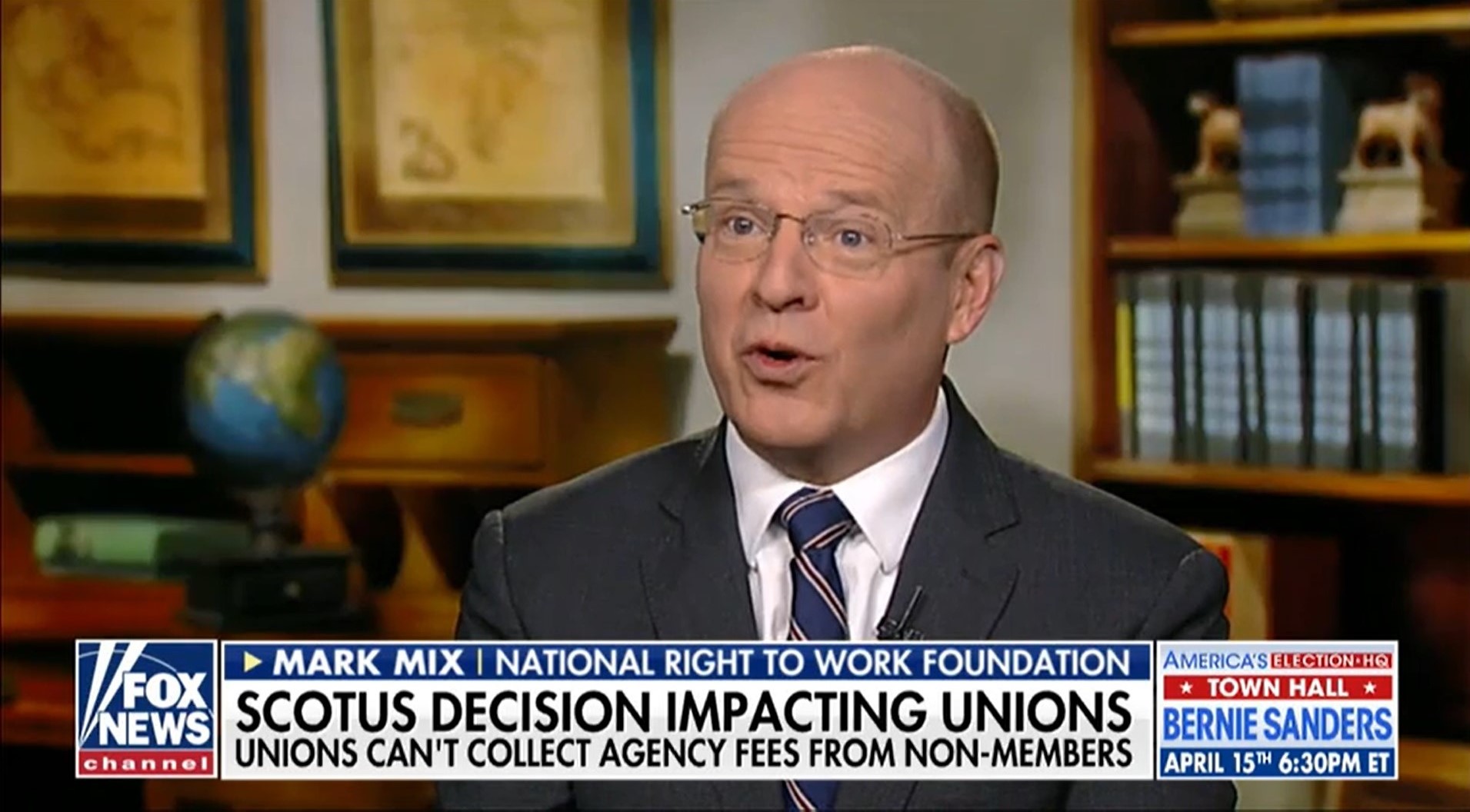
In the Foundation-won Janus v. AFSCME decision, the Supreme Court recognized the right of all American public sector workers to refrain from subsidizing unions, but California IUOE bosses are acting as if those rights don’t exist.
SACRAMENTO, CA – Ethan Morris works for Sacramento County as a wastewater treatment employee. With free legal aid from the National Right to Work Legal Defense Foundation, he has hit the International Union of Operating Engineers (IUOE) Stationary Engineers union bosses at his workplace with charges that their misstatements of his requirement to pay union fees breach California law by disregarding workers’ First Amendment rights under the Foundation-won Janus v. AFSCME Supreme Court decision.
California’s Public Employment Relations Board (PERB), the agency in charge of determining whether unions like IUOE have violated California’s public sector labor laws, will now investigate Morris’ charge.
California Union Bosses Blatantly Lie About Legality of Forced Dues
Morris has never been a member of IUOE Stationary Engineers. He recounts in his charge that he received a notice from an IUOE financial secretary in July 2019 which claimed that “employees who do not join the Union must pay a . . . fee” to the union as a condition of employment, and that these mandatory fees are “legal and enforceable in California” through direct deductions from non-member employees’ paychecks.
Morris’ charge says the union’s fee demands ignore government employees’ First Amendment rights under the 2018 Foundation-won Janus v. AFSCME Supreme Court decision. In Janus, a majority of the Court recognized that union dues or fees cannot be mandatory for public employees and may only be deducted from government workers’ paychecks if they have given “affirmative and knowing” waivers of their First Amendment right not to subsidize a union.
Morris maintains that by ignoring Janus, IUOE Stationary Engineers bosses infringed his rights under California’s Meyers-Milias-Brown Act (MMBA). That statute provides Golden State workers “the right to refuse to join or participate in the activities of employee organizations” and prohibits unions from “coerc[ing] or discriminat[ing] against” employees for exercising that right.
IUOE Officials Broke California Labor Law by Defying Janus
Morris demands that union officials rectify the situation by stopping the illegal fee demands and posting a PERB-approved notice informing his coworkers of their right to refrain from union activities and acknowledging that compulsory fee demands violate that right.
“Ethan Morris discovered his First Amendment Janus rights independently, and in doing so was able to catch IUOE Stationary Engineers bosses in a red-handed lie about the right of public sector workers in America to abstain from financially supporting a union,” observed National Right to Work Foundation President Mark Mix. “For every worker who rebuffs illegal union threats, there are almost certainly thousands of workers who unknowingly sign away their rights.
“State governments must step up and proactively protect employees’ Janus rights, including making sure that every worker knows those rights and not deducting any union dues or fees absent a worker’s knowing and voluntary waiver of his or her rights,” Mix added.
Taking the lead on protecting public workers’ Janus rights is Alaska, where last September Gov. Mike Dunleavy issued an executive order requiring all state agencies to stop the deduction of union dues from any worker who had not submitted a form affirmatively waiving his or her right under Janus not to fund any union activities.
Foundation Urges Federal and State Governments to Protect First Amendment Rights
The following article is from the National Right to Work Legal Defense Foundation’s bi-monthly Foundation Action Newsletter, November/December 2019 edition. To view other editions or to sign up for a free subscription, click here.
Alaska first state to require First Amendment Janus rights waiver before deducting union dues
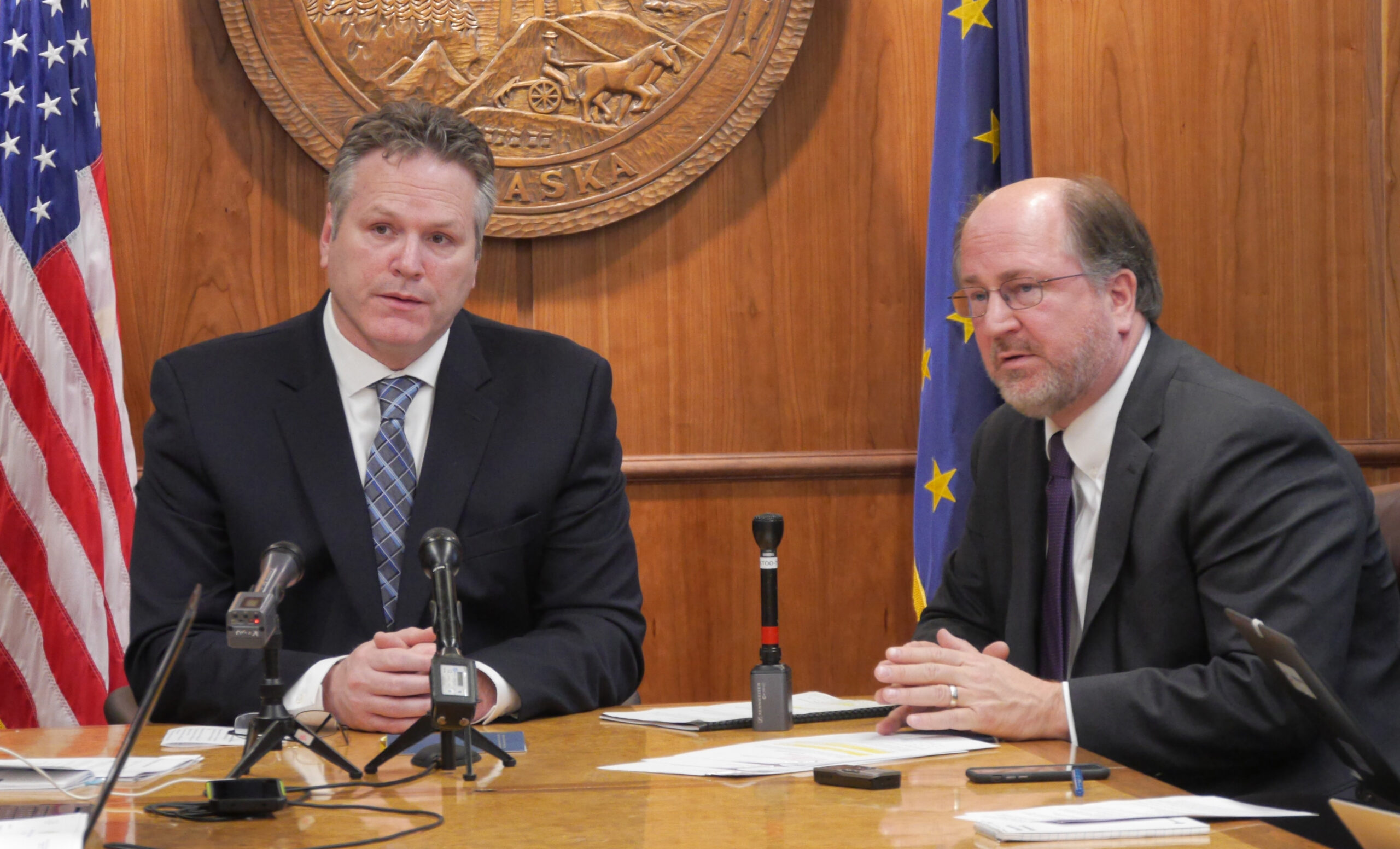 Alaska Gov. Mike Dunleavy (left), following an opinion from Attorney General Kevin Clarkson, ordered all Alaska state agencies to protect state employees’ First Amendment rights under Janus.
ANCHORAGE, AK – In late September, Alaska Governor Mike Dunleavy signed an executive order to protect the First Amendment rights of state employees established in last year’s Janus v. AFSCME Supreme Court decision. The order calls for the State of Alaska to stop deducting union dues from the paycheck of any worker who hasn’t filed a form with the state affirmatively waiving his or her First Amendment right under Janus not to fund any union activities.
The move follows a letter last year sent by National Right to Work Foundation Legal Director Raymond LaJeunesse to state comptrollers in Alaska and other states, urging them to modify dues deduction policies to comply with the Janus decision.
Foundation Comments Detail Need to End Dues Deductions Uncompliant with Janus
The Foundation also recently filed comments with the Federal Labor Relations Authority (FLRA) regarding the need for the federal government to take steps to protect the First Amendment rights of employees recognized in the Foundation-won Janus decision. The Foundation’s comments were submitted after the U.S. Office of Personnel Management (OPM) asked the FLRA to solicit public comments on how to proceed with union dues deductions in light of the Supreme Court’s Janus decision last year.
In that case, the High Court held that requiring public employees to pay union dues or fees without their consent violates the employees’ First Amendment rights “by compelling them to subsidize private speech on matters of substantial public concern.” Justice Samuel Alito’s opinion for the court further ruled that no union dues or fees could be taken from a public employee “unless the employee affirmatively consents to pay” using a “freely given” waiver of his or her First Amendment rights.
Consistent with that standard, the Foundation’s comments urge the FLRA to issue guidance to agencies that they “must cease deducting union dues from the wages of employees who signed a dues deduction form that does not satisfy the [Janus] standard.” According to Department of Labor statistics, nearly one million federal employees — 26.4% of all federal workers — are union members, many of them likely having dues deducted from their paychecks despite never having knowingly waived their First Amendment right not to subsidize union activities.
The Foundation comments make clear that these dues deductions should cease in the wake of Janus. To comply with Janus, workers wanting to voluntarily pay union dues can either provide the government with a valid waiver of their rights or pay dues on their own without using taxpayer-funded payroll systems to forward the money to union officials.
The Foundation’s comments to the FLRA further argue that, even where workers provide a valid authorization for dues deductions that meets the Janus standard, the government shouldn’t block them from revoking that authorization if the request is submitted at any time at least a year after the Janus-compliant authorization was obtained.
Foundation Comments Push to End Union-Created “Window Period” Scheme
Unfortunately, agencies and union officials often prohibit federal employees from stopping the seizure of union dues from their wages except during short annual escape periods. The comments filed by the National Right to Work Foundation say that this practice does not comply with Janus either.
“The Janus precedent is very clear about this: Without affirmative and knowing waivers from public workers, government entities cannot collect union dues without violating a worker’s First Amendment rights,” commented National Right to Work Foundation President Mark Mix.
“Currently, the government seizes union dues from almost one million federal employees in violation of the Janus decision’s First Amendment standard. Federal agencies are obligated to protect workers’ constitutional rights in this rulemaking process.”
Since the Janus decision last year, Foundation staff attorneys have been fighting to ensure public workers’ First Amendment rights are protected, litigating more than 30 cases in federal courts across the country to enforce the landmark ruling.





