
Hundreds of Sunoco Logistics Drivers Across TX, OK, LA, and NM Free Themselves From Steelworkers Union
Majority of drivers across large work unit backed petition to send USW union bosses packing
Washington, DC (May 20, 2025) – Crude oil drivers for Sunoco Logistics Partners (also known as Energy Transfer) have successfully forced unpopular United Steelworkers (USW) union bosses out of their work unit. The victory for workers comes after Jay Fifer, a driver for the oil transportation company, gathered signatures from the majority of his coworkers on a petition demanding that Sunoco Logistics officials end their recognition of the USW union as the majority “representative” of the drivers.
The National Labor Relations Board (NLRB) acknowledged Sunoco Logistics’ withdrawal of recognition from the USW union on May 12. As the result of Fifer and his coworkers’ effort, over 420 drivers from around 30 Sunoco Logistics facilities across Texas, Oklahoma, Louisiana, and New Mexico are free of the union’s control.
“I’m glad that my coworkers and I were able to band together to force this Steelworkers union out,” commented Fifer. “The union was not a positive force in our workplace, and we are better off without it. I am lucky to live in the Right to Work state of Texas where I could at least choose to stop sending my money to this union while it was still in power, but unfortunately the same can’t be said for all of my fellow drivers.”
The NLRB is the agency charged with enforcing federal labor law in the private sector, which includes administering votes to install (or “certify”) and remove (or “decertify”) unions. Thanks to the 2019 Foundation-won Johnson Controls NLRB decision, workers who want to remove unwanted union officials can also do so by submitting a majority-backed petition asking their employer to stop recognizing the union. If there is a dispute about the petition, the NLRB can administer a secret-ballot vote to test the employees’ opposition to the union.
Fifer lives in Texas, a Right to Work state barring union bosses from enforcing contracts that require employees to pay dues or fees to union officials as a condition of keeping their jobs. Oklahoma and Louisiana are also Right to Work states, but Sunoco Logistics drivers in New Mexico do not have the benefit of Right to Work protections and can be forced to sacrifice part of their paychecks to union bosses or be fired. However, in both Right to Work and non-Right to Work states, federal law lets union officials impose their monopoly “representation” on all workers in a work unit, regardless of whether they support the union or not.
Rank-and-File Oil Truck Drivers Gathered Hundreds of Signatures in Favor of Removing USW
Fifer’s effort to remove the USW union kicked off when he began collecting signatures on a petition asking the NLRB to administer a union removal (or “decertification”) vote at his workplace. Fifer easily met the 30% signature threshold needed to trigger such an election under NLRB rules. However, soon after the NLRB scheduled a decertification vote to take place over a range of dates in May, Fifer’s petition gained even more traction and soon garnered support from a majority of the work unit.
Fifer opted to submit his petition to his employer, who withdrew recognition from the USW union in accordance with the Johnson Controls decision. USW union officials are now stripped of their monopoly bargaining power and can no longer enforce bargaining obligations against Sunoco Logistics.
Foundation staff attorneys have helped several groups of workers exercise their right to remove unwanted USW unions within the last few years, including healthcare workers in Minnesota, metal workers in Pennsylvania, chemical employees in Louisiana, building products employees in New Jersey, and more. Across the country, workers’ desire to exercise their right to vote out unpopular union bosses is increasing: Worker-filed petitions seeking union decertification votes are up more than 50% from 2020, according to NLRB data.
“Rank-and-file workers across the country like Mr. Fifer and his fellow drivers don’t enjoy the same structural and legal advantages that union officials do under American labor law. That makes it all the more impressive that he and his colleagues were able to gather signatures across a huge work unit and break free of the Steelworkers union’s control,” commented National Right to Work Foundation President Mark Mix. “American workers’ increasing interest in escaping union ‘representation’ should serve as a reminder to the Trump Administration that it should pursue labor policy that enhances workers’ freedom to escape unwanted union affiliation.”
Energy Transfer Drivers Across Texas, Oklahoma, and Louisiana Demand Vote to Remove Steelworkers Union From Power
Hundreds of employees of oil and gas transportation company could be free from union’s grip if vote goes forward
Washington, DC (April 21, 2025) – Drivers for Energy Transfer, an oil and gas transportation company with nearly 30 facilities across Texas, Oklahoma, and Louisiana, are petitioning a federal labor board for a vote to end United Steelworkers (USW) union officials’ bargaining control over their work unit.
Driver Jay Fifer, who is based at Energy Transfer’s workplace in Hearne, TX (near College Station, TX), submitted the petition to the National Labor Relations Board (NLRB) this week with free legal aid from the National Right to Work Legal Defense Foundation. If Fifer and his coworkers’ requested vote is successful, over 420 Energy Transfer drivers will be free of USW union officials’ control.
The NLRB is the agency charged with enforcing federal labor law in the private sector, which includes administering votes to install (or “certify”) and remove (or “decertify”) unions. Fifer’s petition contains signatures from his coworkers well in excess of the percentage required by the NLRB to trigger a union decertification vote within his work unit. The NLRB will now review Fifer’s petition.
Right to Work laws in Texas, Oklahoma, and Louisiana prohibit USW union officials from enforcing contracts that require Energy Transfer drivers to pay union dues or fees just to get or keep a job. In contrast, in non-Right to Work states, union officials can force workers to pay dues or fees on pain of termination. However, in both Right to Work and non-Right to Work jurisdictions, USW union officials can still impose monopoly bargaining contracts over every employee in a work unit, whether or not they voted for or support the union. As Fifer’s case demonstrates, union-controlled work units can often span hundreds of workers in different cities or even across state lines.
“Support among us drivers for this Steelworkers union is very low where I work. My colleagues at other locations have said similar things as well. It’s not fair for Steelworkers officials to dictate major things about our work lives when very few drivers at all are union members,” commented Fifer. “I filed this petition because I firmly believe that the overwhelming majority of my coworkers don’t think this union represents us, and we hope the NLRB lets us exercise that right without any delays.”
Workers Across Country Increasingly Seeking Exit from Union Control
Foundation staff attorneys have helped several groups of workers oust unwanted USW unions within the last few years, including healthcare workers in Minnesota, metal workers in Pennsylvania, chemical employees in Louisiana, building products employees in New Jersey, and more. Across the country, workers’ desire to exercise their right to vote out unpopular union bosses is increasing: Worker-filed petitions seeking union decertification votes are up more than 50% from 2020, according to NLRB data.
“American workers should not have to accept the ‘representation’ of a union that lacks worker support in the workplace, and more and more workers are standing up to free themselves,” commented National Right to Work Foundation President Mark Mix. “That’s why it’s important that they be able to freely exercise their right to vote to remove a union, a right that unfortunately was consistently under attack under the previous Administration’s National Labor Relations Board.
“As President Trump seeks new appointees for the NLRB, he should remember that workers all over the country like Mr. Fifer and his colleagues believe they are better off free from union influence, and those workers deserve to have their voices and will respected,” Mix added.
AT&T Workers Nationwide Win Challenges to Unionization Imposed Through Card Check
The following article is from the National Right to Work Legal Defense Foundation’s bi-monthly Foundation Action Newsletter, November/December 2024 edition. To view other editions of Foundation Action or to sign up for a free subscription, click here.
Victories by AT&T workers in five states preceded Biden-Harris NLRB rule change to block secret ballot votes

See You, CWA: Marquita Jones (left), Samantha Cain (middle), and Matthew Gonzalez rallied their fellow AT&T workers to escape unwanted CWA unions.
WASHINGTON, DC – While the Biden-Harris National Labor Relations Board (NLRB) sought to upend NLRB rules designed to protect workers’ ability to vote out unwanted unions, AT&T workers across the country won a series of victories highlighting the importance of allowing workers to challenge coercive union card check unionization with secret ballot votes. The decertification victories all relied on the National Right to Work Foundation-backed 2020 NLRB “Election Protection Rule” (EPR), which was formally eliminated by the Biden-Harris Labor Board in September.
In five separate cases covering well over 1,000 workers, AT&T Mobility employees have successfully overturned Communications Workers of America (CWA) unionization imposed through the notorious “card check” process.
Under card check, union organizers bypass the secret ballot election process and instead collect cards face-to-face from employees that are then counted as “votes” for the union. Without the privacy of a secret ballot vote, many workers report being pressured, bullied, or threatened into signing, which is among the reasons why card check has long been recognized as inherently unreliable and abuse-prone.
Foundation-Backed 2020 Rule Let Over 1,000 AT&T Workers Nix Union Card Checks
The 2020 Election Protection Rule reformed several rules that union officials manipulate to trap workers under monopoly “representation,” including by giving employees a way to challenge card check unionization with a secret ballot election. Foundation staff attorneys assisted AT&T employees in five states to do that in advance of the Biden-Harris Labor Board’s cynical repeal of the rule.
First, in Tennessee, AT&T employee Denis Hodzic filed a petition signed by two-thirds of his coworkers in the unit seeking a secret-ballot vote to remove the CWA union, after CWA agents installed themselves over 100 AT&T In-Home Experts by card check. Initially CWA union officials argued the election should be permanently blocked because the union had already merged the workers into a larger bargaining unit with thousands of other AT&T workers.
CWA Bosses Capitulated to AT&T Workers
However, citing the Election Protection Rule, which gives workers at least 45 days to challenge a card check with a decertification petition, Foundation staff attorneys were able to win a ruling with the NLRB allowing the vote to proceed. At that point CWA officials chose not to even contest the vote, instead filing paperwork with the NLRB freeing the employees from CWA ranks apparently to avoid an overwhelming final vote against the union.
“The Election Protection Rule was essential for us to rely on as we went through the process of seeking resolution to our tricky situation,” Hodzic said of his situation. “The 45-day petition window needs to remain regardless of which group holds the majority position in Washington.”
Since then, with legal aid, around 1,000 additional AT&T Mobility employees in California, Louisiana, Mississippi, and Texas have all also successfully removed the CWA union following installation through card check. In all four states, once the decertification vote became inevitable, CWA officials simply conceded defeat rather than wait for the results of a formal decertification vote.
NLRB Repeal of Election Protection Rule Traps Workers in Union Ranks
Despite these efforts from independent-minded employees, the Biden-Harris NLRB formally repealed the Election Protection Rule in September, dramatically expanding union bosses’ ability to block employee-requested decertification votes.
As a result, now, when workers in Hodzic’s situation attempt to challenge a card check with a secret ballot decertification, the NLRB will automatically block their vote for up to one year after a card check, which opens the door to countless other union delay tactics.
“If these AT&T employees had filed their five decertification petitions after September 30th, they would have been trapped in a union they oppose for years and likely forever,” commented National Right to Work Foundation Vice President Patrick Semmens.
“This is yet another example of the Biden-Harris NLRB steamrolling the rights of independent-minded employees, so union bosses can expand their forced dues ranks. “Despite this setback for employee freedom, Foundation staff attorneys remain committed to helping workers trapped in union ranks they oppose,” added Semmens. “That includes helping them navigate the increasingly rigged NLRB system.”
Workers Nationwide Continue Efforts to Oust Steelworkers Officials
The following article is from the National Right to Work Legal Defense Foundation’s bi-monthly Foundation Action Newsletter, January/February 2023 edition. To view other editions of Foundation Action or to sign up for a free subscription, click here.
Successful ousters in Louisiana and New Jersey emphasize importance of protecting worker votes
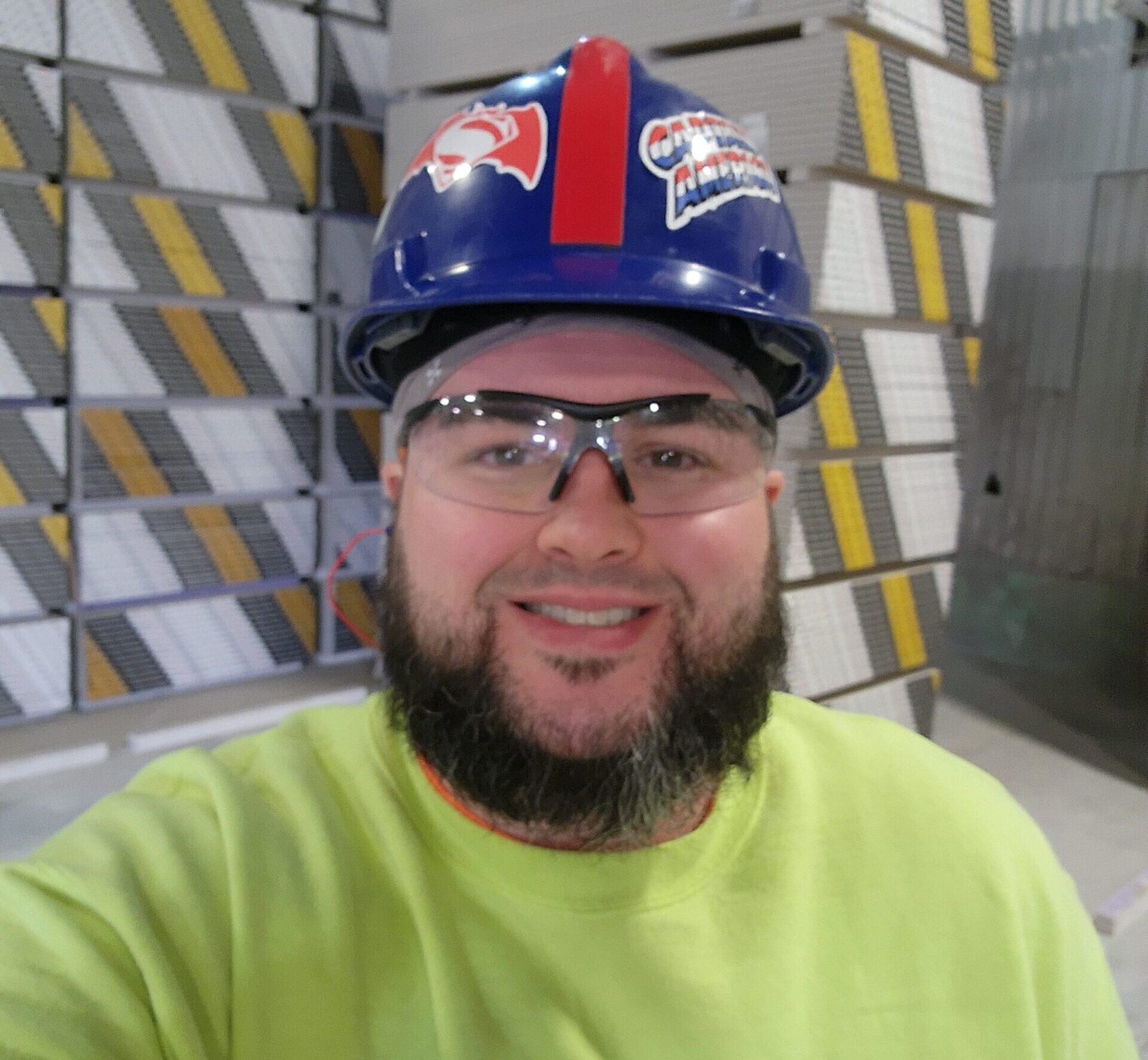
Michael Cobourn and his coworkers were forced to pay union dues while USW union bosses seemed to be loafing it at their workplace. With Foundation aid, they ousted the union.
WASHINGTON, DC – In the space of just a month, National Right to Work Legal Defense Foundation staff attorneys successfully aided groups of workers in New Jersey and Louisiana in voting out United Steelworkers (USW) union officials they opposed. The National Labor Relations Board (NLRB) certified both votes.
In Louisiana, Ryne Fox led his coworkers at GEO Specialty Chemicals to a decisive victory over USW officials, while Michael Cobourn did the same with his fellow workers at Gold Bond Building Products in New Jersey.
Both cases demonstrated the struggles workers face when seeking to “decertify” union officials whom they no longer want in power. In Louisiana, Fox had to time the filing of his coworkers’ petition seeking a decertification vote to fall within a tiny window of days imposed by the “contract bar,” a union boss-friendly NLRB policy that protects union officials from being voted out of a workplace for up to three years after union bosses and management finalize a contract.
Cobourn and his colleagues, in addition to having to deal with the “contract bar,” work in the non-Right to Work state of New Jersey — meaning they were forced to pay money to the union just to keep their jobs during the entire time they were forbidden by the “contract bar” from ejecting the union. In contrast, Right to Work states protect private sector workers from being fired merely for refusal to pay dues or fees to union officials of whom they disapprove. “My coworkers and I were paying money to the Steelworkers union constantly, yet the union didn’t seem to be doing anything for us,” commented Mr. Cobourn.
Although the efforts in Cobourn’s and Fox’s workplaces are evidence that Steelworkers union officials nationwide place their own interests above the workers they claim to “represent,” the most heinous example of such behavior is ongoing in Franklin, Pennsylvania.
There, Foundation-assisted metal workers at Latrobe Specialty Metals/Carpenter Technology are holding their own in defending their decertification petition against Steelworkers officials’ claims that the “contract bar” should invalidate the petition.
PA Workers Score Victory in Fight Against Election-Blocking Steelworkers Chiefs
While invoking the “contract bar” alone is anti-worker, Steelworkers officials in Pennsylvania claimed that a contract they unilaterally “ratified” this past summer after workers had voted against it twice should trigger the “contract bar.” Steelworkers officials had even told workers that the contract would only be “activated” if workers voted for it. But once they got wind of the workers’ decertification push, the officials “ratified” the unpopular contract secretly so they could, as one union official outrageously said during a hearing, “protect the integrity of the union.
Foundation staff attorneys representing the employee who submitted the petition, Kerry Hunsberger, have so far beaten back union officials’ attack on worker free choice. On November 18, 2021, an NLRB Regional Director rejected union bosses’ attempt to block the vote and ordered that an election proceed.
‘Contract Bar’ Encourages Union Officials to Impose Unpopular Contracts
“Workers across the country are increasingly exercising their right to vote out union officials they oppose, and we at the Foundation are happy to aid them,” commented National Right to Work Foundation President Mark Mix. “However, we’re also acutely aware of the obstacles that stand in the way of this freedom, and one of those, which Steelworkers officials seem to have no reservations about exploiting, is the ‘contract bar.’”
“The unjustified ‘contract bar’ is always wrong because it prevents workers from voting out unions they oppose when they want. But even worse, this NLRB-invented doctrine actually incentivizes union officials to rush and impose unpopular, self-serving contracts for the very purpose of insulating the union’s forced representation powers from a vote of the workers union officials claim to ‘represent,’” Mix added.
Western Louisiana Chemical Workers Vote Out Unpopular Steelworkers Union Bosses
Several more efforts by employees are ongoing across the country to vote out union officials
DeRidder, LA (October 31, 2022) – GEO Specialty Chemicals employee Ryne Fox and his coworkers have just voted unwanted United Steelworkers (USW) Local 13-725 union bosses out of power at their workplace. The vote, in which 75% of the work unit voted to remove the union, came after Fox filed a petition for a “decertification vote” with free legal assistance from National Right to Work Legal Defense Foundation staff attorneys.
Fox filed the “decertification petition” on September 24, 2022, asking the National Labor Relations Board (NLRB) to hold a vote among employees on whether the union should be removed. Because of a union boss-friendly NLRB policy known as the so-called “contract bar,” Fox timed the filing of the petition to coincide with the expiration of USW officials’ contract with GEO management. The non-statutory “contract bar” arbitrarily immunizes union officials from being voted out of a workplace during the life of a union contract, typically lasting one to three years.
Though many non-statutory NLRB policies like the “contract bar” still exist which prevent workers from voting out union bosses they oppose, Foundation-supported reforms adopted by the NLRB in 2020 have made the decertification process easier. The reforms pared back union officials’ ability to block decertification votes by filing so-called “blocking charges,” which often contain unrelated and unverified accusations of employer wrongdoing. Now, employees usually have a chance to at least cast ballots before any allegations surrounding the election are resolved.
Foundation Also Aiding Pennsylvania Employees in Ousting Corrupt, Unaccountable Steelworkers Officials
Fox and his coworkers’ endeavor is the third Foundation-assisted employee effort to vote out USW union officials in just the past couple months. Just last week, New Jersey building materials employee Michael Cobourn and his coworkers at Gold Bond Building Products in Burlington, NJ, voted out USW bosses by a nearly 70-30 margin. In Pennsylvania, Foundation attorneys are currently helping Carpenter Technologies/Latrobe Specialty Steel employee Kerry Hunsberger and her coworkers in their bid to decertify USW officials who blatantly ignored two votes by workers rejecting contracts union officials had negotiated.
In the situation at Hunsberger’s workplace, USW officials sought to trigger the “contract bar” and avoid an attempt by employees to vote the union out by secretly “ratifying” a contract that workers had voted against. USW bosses even held a second contract vote after the unpopular contract took effect. Union officials misled the workers, who unsurprisingly voted the contract down again, to believe their second vote would count, even though it was meaningless because the contract had already been “ratified.”
“Workers across the country are increasingly exercising their right to vote out union officials they oppose, and we at the Foundation are happy to aid workers in defending this essential element of free association,” commented National Right to Work Foundation President Mark Mix. “However, we’re also acutely aware of the obstacles that stand in the way of this freedom, and one of those, which Steelworkers officials seem to have no reservations about exploiting, is the ‘contract bar.’”
“The unjustified ‘contract bar’ is always wrong because it prevents workers from voting out unions they oppose when they want to. But even worse, this NLRB-invented doctrine actually incentivizes union officials to rush ahead and impose unpopular, self-serving contracts for the very purpose of insulating the union’s forced representation powers from a vote of the workers they claim to ‘represent,’” Mix added.
Sixteen States Back Foundation’s Petition to High Court in Chicago Educator Case
The following article is from the National Right to Work Legal Defense Foundation’s bi-monthly Foundation Action Newsletter, September/October 2021 edition. To view other editions of Foundation Action or to sign up for a free subscription, click here.
Amicus brief: Unions “refuse to stop collecting dues despite unequivocal employee demands”
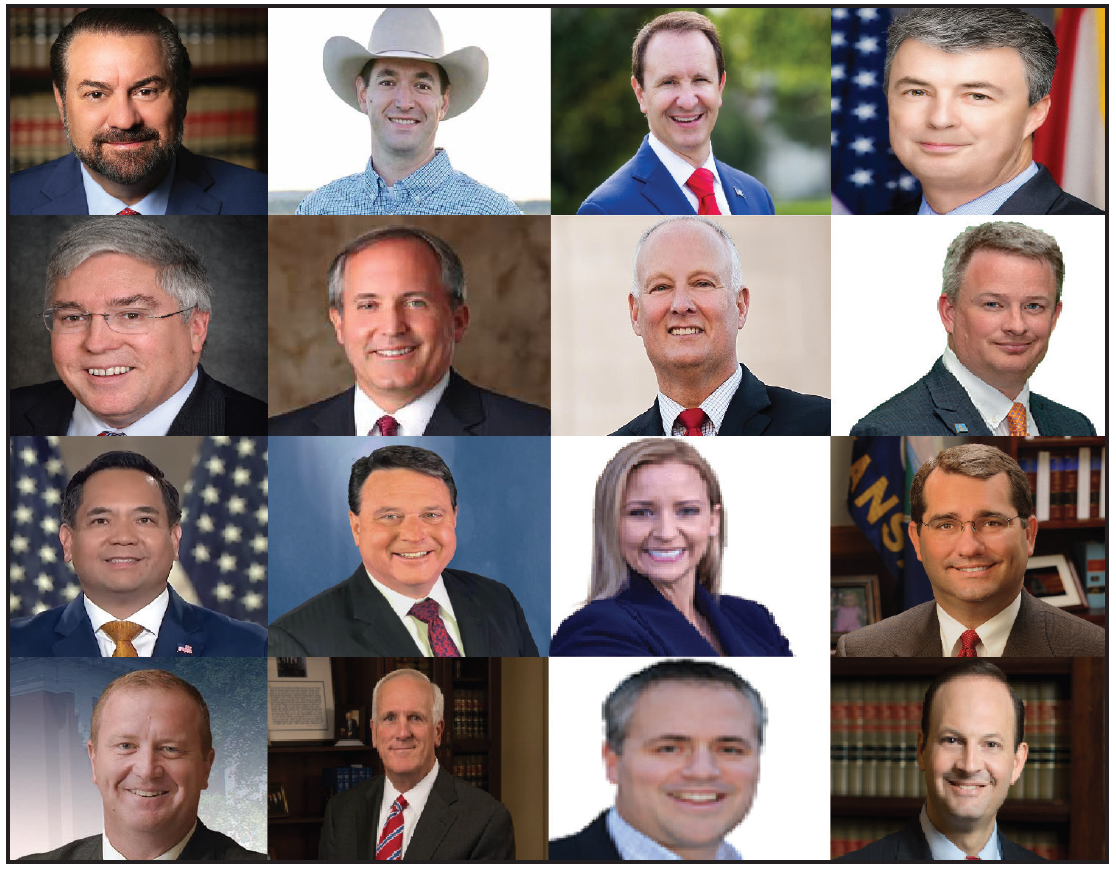
“Janus has been ignored,” wrote sixteen attorneys general in their amicus brief supporting Ifeoma Nkemdi and Joanne Troesch’s petition pressing the Supreme Court to hear their case and declare “escape periods” a First Amendment violation.
WASHINGTON, DC – In July, sixteen attorneys general threw the support of their states behind Chicago Public Schools educators Ifeoma Nkemdi and Joanne Troesch, who are urging the U.S. Supreme Court to hear their case defending their First Amendment right to cut off union financial support as recognized in the Foundation-won Janus v. AFSCME decision.
In an amicus brief encouraging the High Court to hear the case, attorneys general from Alaska, Alabama, Arizona, Arkansas, Indiana, Kansas, Louisiana, Missouri, Montana, Nebraska, South Carolina, South Dakota, Tennessee, Texas, Utah, and West Virginia argue that “escape period” restrictions like the one that Chicago Teachers Union (CTU) bosses foisted on Troesch and Nkemdi are a widespread threat to public employees’ rights under the Janus Supreme Court decision.
In 2018, the Supreme Court ruled in Janus v. AFSCME that public employees’ First Amendment rights are violated when they are forced to fund a union as a condition of employment. The Court also held that union dues can only be taken from a public employee with an affirmative and knowing waiver of that employee’s First Amendment right not to pay.
Unions Are Seizing Money from ‘Tens of Thousands’ Unconstitutionally, Brief Says
The CTU-concocted “escape period” Nkemdi and Troesch are challenging blocks employees from exercising their First Amendment Janus right to end union financial support except during one month per year. The educators’ petition for writ of certiorari presses the High Court to hear their case to affirm that Janus does not permit union bosses to profit from schemes that constrict workers’ constitutional right to refrain from subsidizing a union.
The states’ amicus brief emphasizes how glaringly union officials have flouted Janus with restrictions, as well as how widespread the schemes are: “Janus has been ignored. Across the country public-sector unions have resisted Janus’s instructions and devised new ways to compel state employees to subsidize union speech. Unions place onerous terms on dues forms that prohibit state employees from opting out of paying dues except during narrow (and undisclosed) windows during the year.”
The brief continues: “Unions refuse to inform state employees that they have a First Amendment right not to pay union dues. And unions refuse to stop collecting dues despite unequivocal employee demands. The result is that tens of thousands of state employees across the country are having dues deducted to subsidize union speech without any evidence that they waived their First Amendment rights . . . .”
Nkemdi and Troesch’s case “implicates these precise concerns” and the Court must hear it, the brief maintains.
In addition to the states’ brief, policy groups Goldwater Institute, Cato Institute, Freedom Foundation, and Liberty Justice Center filed amicus briefs backing the case.
Justices May Already Be Showing Interest in Foundation-Backed Case
In late July, the Supreme Court ordered lawyers for CTU and the Chicago Board of Education to file a response brief to Troesch and Nkemdi’s petition, a signal that some Justices may be interested in taking up the case.
Also pending at the High Court is Foundation attorneys’ anti- “escape-period” case for Susan Fischer and Jeanette Speck, two New Jersey teachers. Both that case and Troesch and Nkemdi’s case are expected to be fully briefed in October, after which the Justices will decide whether to take them.
“As union bosses continue to use deceptive ‘escape period’ arrangements to keep worker money flowing unconstitutionally into their coffers, support continues to roll in from across the country for Troesch and Nkemdi, who are sticking up for independent-minded public servants who simply want to serve their communities without being forced to fund union activities,” observed National Right to Work Foundation President Mark Mix. “The High Court must weigh in to affirm that public workers’ First Amendment rights cannot be confined to union officials’ arbitrary schedules.”





