
Full Foundation Action September/October 2023 Newsletter Now Online
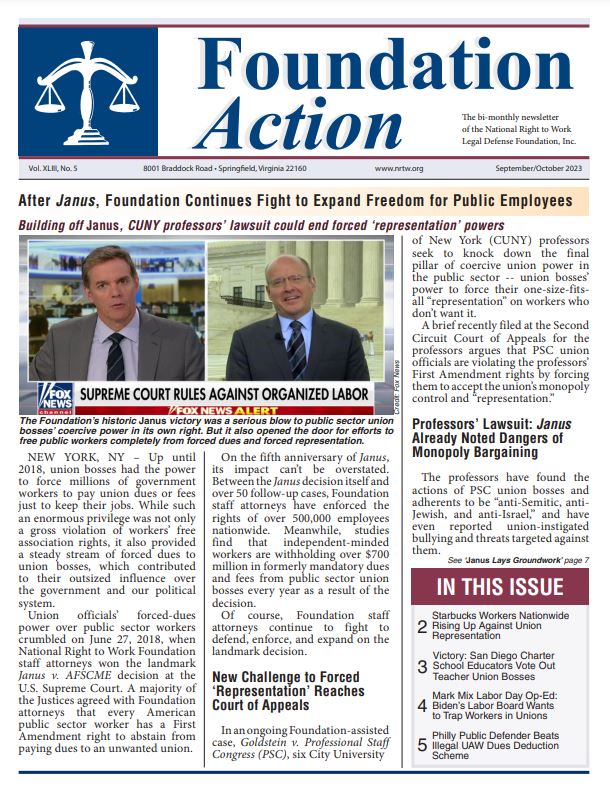 All articles from the September/October issue of Foundation Action are now online.
In this issue:
- After Janus, Foundation Continues Fight to Expand Freedom for Public Employees
- Starbucks Workers Nationwide Rising Up Against Union Representation
- Victory: San Diego Charter School Educators Vote Out Teacher Union Bosses
- Mark Mix Labor Day Op-Ed: Biden’s Labor Board Wants to Trap Workers in Unions
- Philly Public Defender Beats Illegal UAW Dues Deduction Scheme
Recent articles can be found here. To sign up for a free copy of the newsletter via mail please see the form at the bottom of this page.
After Janus, Foundation Continues Fight to Expand Freedom for Public Employees
The following article is from the National Right to Work Legal Defense Foundation’s bi-monthly Foundation Action Newsletter, September/October 2023 edition. To view other editions of Foundation Action or to sign up for a free subscription, click here.
Building off Janus, CUNY professors’ lawsuit could end forced ‘representation’ powers
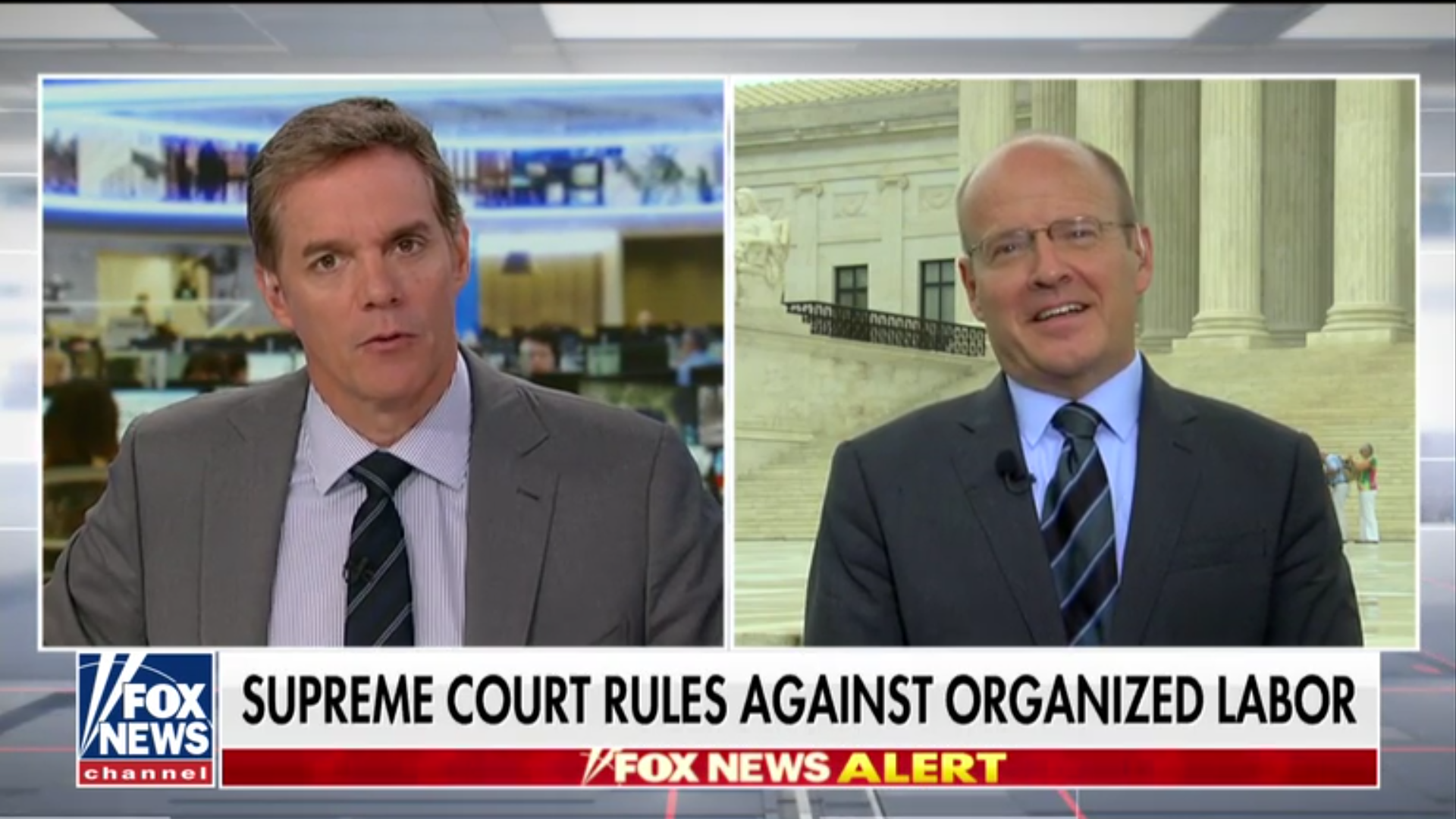
The Foundation’s historic Janus victory was a serious blow to public sector union bosses’ coercive power in its own right. But it also opened the door for efforts to free public workers completely from forced dues and forced representation.
NEW YORK, NY – Up until 2018, union bosses had the power to force millions of government workers to pay union dues or fees just to keep their jobs. While such an enormous privilege was not only a gross violation of workers’ free association rights, it also provided a steady stream of forced dues to union bosses, which contributed to their outsized influence over the government and our political system.
Union officials’ forced-dues power over public sector workers crumbled on June 27, 2018, when National Right to Work Foundation staff attorneys won the landmark Janus v. AFSCME decision at the U.S. Supreme Court. A majority of the Justices agreed with Foundation attorneys that every American public sector worker has a First Amendment right to abstain from paying dues to an unwanted union.
On the fifth anniversary of Janus, its impact can’t be overstated. Between the Janus decision itself and over 50 follow-up cases, Foundation staff attorneys have enforced the rights of over 500,000 employees nationwide. Meanwhile, studies find that independent-minded workers are withholding over $700 million in formerly mandatory dues and fees from public sector union bosses every year as a result of the decision.
Of course, Foundation staff attorneys continue to fight to defend, enforce, and expand on the landmark decision.
New Challenge to Forced ‘Representation’ Reaches Court of Appeals
In an ongoing Foundation-assisted case, Goldstein v. Professional Staff Congress (PSC), six City University of New York (CUNY) professors seek to knock down the final pillar of coercive union power in the public sector — union bosses’ power to force their one-size-fits=all “representation” on workers who don’t want it.
A brief recently filed at the Second Circuit Court of Appeals for the professors argues that PSC union officials are violating the professors’ First Amendment rights by forcing them to accept the union’s monopoly control and “representation.”
Professors’ Lawsuit: Janus Already Noted Dangers of Monopoly Bargaining
The professors have found the actions of PSC union bosses and adherents to be “anti-Semitic, anti-Jewish, and anti-Israel,” and have even reported union-instigated bullying and threats targeted against them.
The professors’ opening brief at the Second Circuit maintains that the Supreme Court already acknowledged in the Janus decision that public sector monopoly bargaining is “a significant impingement on associational freedoms,” and argues that New York State’s Taylor Law authorizes such bargaining in violation of workers’ rights.
“If the First Amendment prohibits anything, it prohibits the government from dictating who speaks for citizens in their relations with the government,” reads the brief.
The case, which will likely head to the U.S. Supreme Court no matter how the Circuit Court rules, could set a nationwide precedent forbidding public sector monopoly bargaining, just as Janus prohibits forced dues in all public sector workplaces. The combination of both Foundation-won precedents would guard public workers nationwide from both forced dues and forced representation.
Foundation Brief Defends State Law to Fortify Janus
The Janus victory also motivated freedom-loving state legislators to take extra measures to ensure workers’ First Amendment rights under Janus are being enforced.
In Indiana, a reform now forbids public employers from using taxpayer-funded government payroll systems to deduct union dues without a worker’s explicit consent. Public employers must obtain yearly consent from workers who wish to have union dues taken from their paychecks, and must also ensure that workers have notice of their constitutional right not to fund union activities. Unsurprisingly, dues-hungry Anderson Federation of Teachers (AFT) union officials sued the state to block these commonsense protections.
Foundation attorneys joined the fight recently to defend Indiana’s laws. A Foundation brief in the Seventh Circuit Court of Appeals urges the court to overturn a lower court’s injunction of these reforms, citing Seventh Circuit precedent.
Foundation attorneys helped successfully defend a similar law in West Virginia in 2021, which the West Virginia Supreme Court upheld on the basis that union bosses “have no constitutional entitlement to employees’ money or to the employer’s administration of union dues deduction schemes.”
Federal Courts Must End Union Monopolies
“Janus was a great triumph for American public workers’ freedom, but it was only a step toward the ultimate goal of freeing public workers from all unwanted union coercion,” commented National Right to Work Foundation Vice President Patrick Semmens. “No American worker should be forced to associate with union officials and union members that openly oppose their interests, including through attacks on their culture and religion as the plaintiffs in Goldstein have harrowingly experienced.”
“It’s encouraging to see that states like Indiana have stepped up to protect workers’ Janus rights,” Semmens added. “But ultimately, after recognizing in Janus and older precedents that union monopoly bargaining abridges workers’ free association rights, it’s high time for federal courts to end this enormous government-granted power for union bosses once and for all.”
Ohio Public Workers Axe Illegal Restrictions on Janus Rights for Almost 30,000
The following article is from the National Right to Work Legal Defense Foundation’s bi-monthly Foundation Action Newsletter, September/October 2020 edition. To view other editions or to sign up for a free subscription, click here.
Foundation-backed lawsuit ends AFSCME bosses unlawful “escape period” scheme
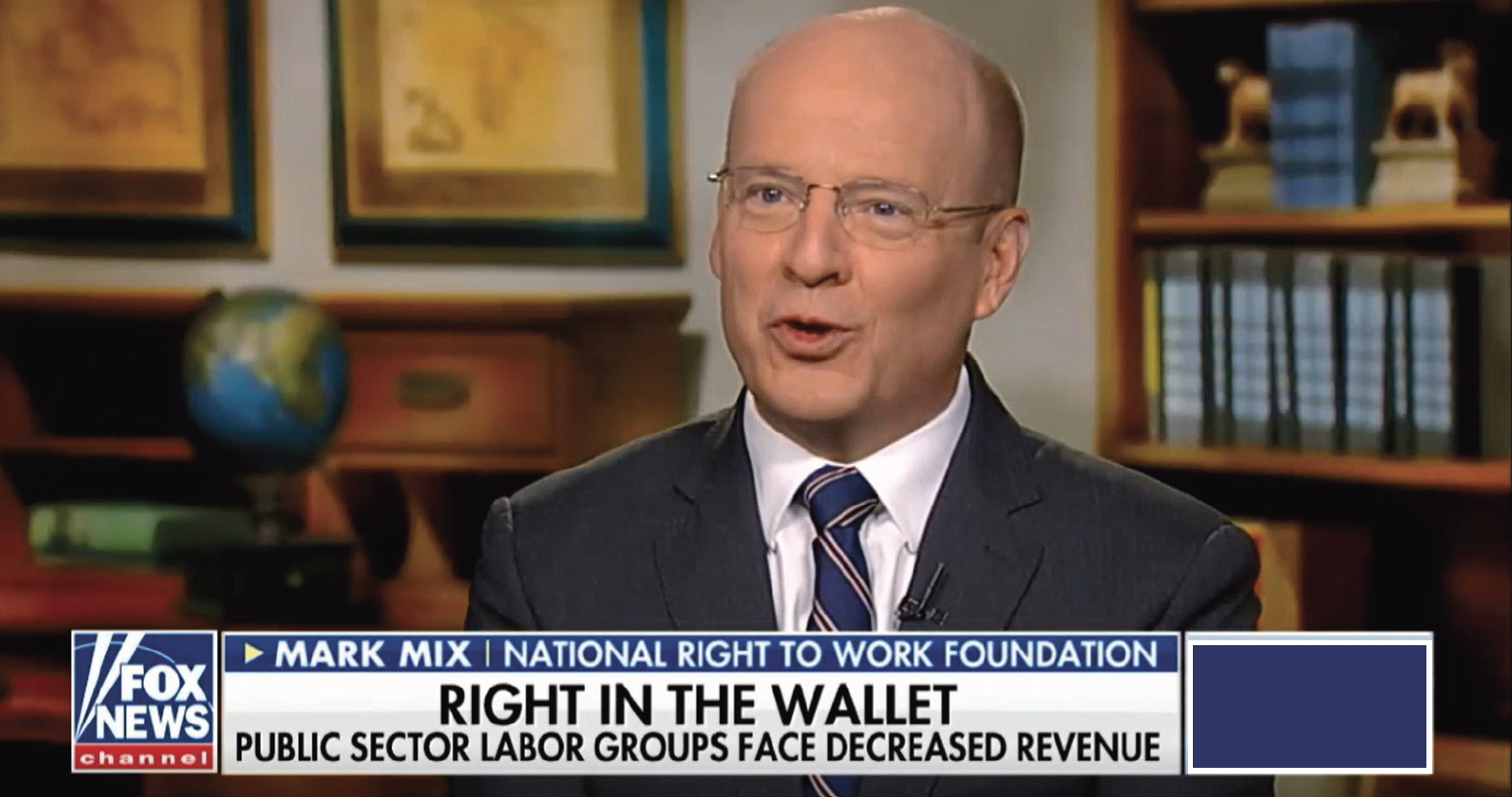
Two years after Foundation staff attorneys won Janus, public sector workers continue to cast off the shackles of forced union dues. In Allen, the plaintiffs successfully defended the Janus rights of thousands of Ohio public workers.
COLUMBUS, OH – A lawsuit by four Ohio public employees has secured the end of an illegal dues deduction scheme used by Ohio Civil Service Employees’ Association (OCSEA/AFSCME Council 11) union bosses to block an estimated 28,000 workers from exercising their First Amendment right to stop union dues payments. The workers obtained free legal representation from National Right to Work Foundation staff attorneys in challenging the policy.
The class-action suit, Allen v. AFSCME, challenged OCSEA’s so-called “maintenance of membership” policy, which trapped workers in forced-dues payments except for a brief “escape period” once every three years at the expiration of the union monopoly contract. The workers argued this policy violated their First Amendment rights under the Janus v. AFSCME Supreme Court decision.
In Janus, the High Court struck down mandatory union fees for public sector workers as an infringement of their First Amendment rights, and ruled that the government can only deduct union dues or fees with an individual’s affirmative consent.
After Freeing Workers, Foundation Attorneys Warn of Future Union Boss Tricks
As a result of the lawsuit, OCSEA officials and the State of Ohio have rescinded the “maintenance of membership” restriction on when state workers can exercise their First Amendment right to cut off union dues deductions.
They must also honor requests to stop dues deductions from any employees who signed the AFSCME dues authorization form at issue in the lawsuit. Finally, AFSCME bosses repaid dues seized illegally under the scheme to the plaintiffs and more than 150 other employees who tried to cut off union dues deductions after Janus was decided.
Knowing that union bosses don’t easily give up in their crusades to coerce workers into paying dues, however, Foundation staff attorneys issued a legal notice shortly after the case wrapped up, warning workers that OCSEA union bosses may soon solicit them to sign new dues deduction forms which are not covered by the litigation. The new forms will “purport to restrict” when employees can stop dues, it warns.
In light of that, the notice reminds workers that under Janus, no Ohio public employee can be forced to sign a union dues deduction form as a condition of employment, no matter what union agents may tell them.
Just Latest in String of Ohio Worker Victories over “Escape Periods”
Allen is not the only case in which Ohio public employees have, with National Right to Work Foundation legal aid, successfully challenged union boss attempts to limit their rights.
Seven other Ohio public employees won the first-in-the-nation victory against unconstitutional “escape periods” with Foundation aid in January 2019, after they filed a class-action federal lawsuit challenging a similar policy created by AFSCME Council 8 bosses. They won a settlement ending the restrictions for themselves and their coworkers. That win was followed by two other Ohio public workers, Connie Pennington and Donna Fizer, successfully ending “escape period” restrictions with Foundation assistance later in 2019.
“Although this chain of victories for Buckeye State public employees is certainly encouraging, the widespread nature of these schemes shows there remains much work to do to force union bosses to end their unconstitutional restrictions on public employees’ First Amendment Janus rights,” observed National Right to Work Foundation President Mark Mix. “Foundation litigation has already freed hundreds of thousands of public employees from forced union dues, but likely millions more remain trapped and unable to exercise their rights. That is why Foundation litigators will continue to file these cases.”





