
Cincinnati-Area Kroger Worker Secures Victory Against Illegal Union Dues Deductions
The following article is from the National Right to Work Legal Defense Foundation’s bi-monthly Foundation Action Newsletter, May/June 2025 edition. To view other editions of Foundation Action or to sign up for a free subscription, click here.
After legal win, grocery employee based near Cincinnati finds job in nearby Right to Work Kentucky to escape forced dues

Northern Kentucky (foreground) might be just across the Ohio River from Cincinnati, OH, but the difference in worker freedom is stark. Without Right to Work, forced dues abuses are rampant compared to Right to Work Kentucky.
CINCINNATI, OH – In a win for employee freedom, James Carroll, a Kroger employee based near Cincinnati, has secured victory in his federal case against United Food and Commercial Workers (UFCW) Local 75 and Kroger. The win comes after Carroll challenged the union and his employer for unlawfully deducting union dues from his paycheck and threatening him with termination for refusing to sign an illegal dues deduction form.
Carroll, with free legal support from the National Right to Work Legal Defense Foundation, filed charges with the National Labor Relations Board (NLRB) Region 9 in Cincinnati. His case exposed the UFCW’s use of an unlawful “dual-purpose” membership form, which combines union membership and dues deduction authorization into a single signature. Under established Supreme Court legal precedents, workers have the right to refrain from formal union membership, and any dues deduction authorizations must be voluntary and separate from membership agreements.
In order to avoid further prosecution, Kroger and UFCW entered into a settlement that requires them to reimburse Carroll for the illegally seized dues and publicly post a notice informing other employees of their rights.
But Carroll didn’t stop there. To protect himself from future union coercion, he secured a transfer to a Kroger store in Right to Work Kentucky. Unlike Ohio, where workers can be forced to pay union fees even as non-members, Kentucky’s Right to Work law ensures that all union payments are voluntary, shielding Carroll from further threats that he pay up or face termination.
This case challenging the UFCW’s forced dues abuse of grocery employees isn’t an isolated incident. In 2023, Houston-area Kroger employee Jessica Haefner, also aided by Foundation attorneys, filed charges against UFCW for using a dual-purpose form and altering her response to falsely indicate consent for dues deductions.
More recently, in 2024, Portland grocery worker Reegin Schaffer won a case against UFCW after union officials ignored her resignation request during a strike and retaliated by attempting to fine her for working.
Another Worker Flees to the Freedom of Right to Work
“We are pleased with this legal win for Mr. Carroll, and that he is now completely free of union bosses’ forced-dues demands in Right to Work Kentucky,” commented National Right to Work Foundation Vice President and Legal Director William Messenger.
“Unfortunately most workers employed in forced dues states don’t have the option to commute to a job in a Right to Work state, which is why workers everywhere need the protection of Right to Work laws.”
Dartmouth, MIT, Vanderbilt Graduate Students Challenge Forced Unionism
The following article is from the National Right to Work Legal Defense Foundation’s bi-monthly Foundation Action Newsletter, January/February 2025 edition. To view other editions of Foundation Action or to sign up for a free subscription, click here.
Foundation-backed students defend rights as union bosses seek more power at universities

Ben Logsdon is a Ph.D. student in mathematics at Dartmouth College. But it doesn’t take a genius to realize that union officials’ refusals to accommodate his religious objections just don’t add up.
HANOVER, NH – Just weeks after National Right to Work Foundation staff attorneys triumphed in anti-discrimination cases for Jewish Massachusetts Institute of Technology (MIT) graduate students who sought to stop forced dues payments to a radically anti-Israel union, union officials began creating other problems for university students.
In nearby New Hampshire, Dartmouth graduate student Benjamin Logsdon sought free Foundation legal aid against Graduate Organized Laborers of Dartmouth (GOLD-UE) union officials. The GOLD union — which is an affiliate of the same United Electrical (UE) union involved in the Foundation’s MIT cases — is forcing Logsdon to accept the union’s monopoly “representation” powers against his will, even after he voiced his religious objections to the union’s radical stances on the conflict against Israel.
Grad Students Exposed to Union Coercion & Privacy Violations
Meanwhile, several graduate students at Vanderbilt University in Nashville, TN, are pushing back against an attempt by Vanderbilt Graduate Workers United (VGWU, an affiliate of United Auto Workers) union bosses to impose union control over them and their colleagues. Specifically, three students are seeking to intervene in a federal case in which VGWU union officials are illegally demanding the university hand over the students’ private information to aid in their unionization campaign. Foundation staff attorneys filed motions for intervention for these students in October 2024.
Foundation attorneys are arguing that union officials severely violate students’ rights in both of these cases. However, the reason that union officials are in power on college campuses at all traces back to flawed rulings from the National Labor Relations Board (NLRB) under both the Obama Administration and Biden Administration. These rulings subject graduate students to pro-Big Labor provisions of the National Labor Relations Act (NLRA), which create issues for students’ freedom both inside and outside the classroom.
Logsdon, a Christian Ph.D. student in mathematics at Dartmouth, slammed the GOLD union with federal anti-discrimination charges in September 2024 at the Equal Employment Opportunity Commission (EEOC). According to those charges, shortly after the GOLD union finalized its first monopoly bargaining contract with the Dartmouth administration, he sent a letter to United Electrical General Secretary-Treasurer Andrew Dinkelaker explaining that he objected to being affiliated with GOLD on religious grounds and needed an accommodation.
“I sought to be removed from the UE and GOLD-UE bargaining unit as a reasonable accommodation,” Logsdon’s Foundation-backed charges say.
Dinkelaker refused to offer Logsdon an accommodation that “satisf[ied] [his] religious conscience or beliefs,” according to the charges, which violated his rights under Title VII of the Civil Rights Act of 1964.
Courts have recognized a variety of Title VII religious accommodations over the years for men and women who have religious objections to union affiliation, including paying an amount equivalent to union dues to a charity instead of union bosses. However, Logsdon seeks a different accommodation: to remove himself from union bosses’ control entirely.
At Vanderbilt, three students who identify themselves in legal documents as “John Doe 1,” “John Doe 2,” and “Jane Doe 1” are contending in their Foundation-backed motions for intervention that the Family Educational Rights and Privacy Act (FERPA) forbids the Vanderbilt administration from disclosing their personal information to any third parties without their permission, including the VGWU union.
At the union’s behest, NLRB Region 10 has already hit the Vanderbilt administration with a pair of subpoenas demanding personal student info, while ignoring objections from several students expressing concern at the disclosure.
So far Vanderbilt has resisted the NLRB’s subpoenas, and fortunately a federal court has temporarily allowed the university to refuse to comply with them.
The Foundation-backed students’ motions to intervene argue that the subpoenas “are an attempt to violate FERPA’s protections, privileging union interests over the graduate students[’] privacy rights.” It also points out that FERPA allows students to seek “protective action” if a university receives a subpoena seeking their personal information, as in this case.
The Vanderbilt students and their Foundation attorneys are demanding an opportunity to properly defend their privacy interests under FERPA. Foundation attorneys have already filed Requests for Review asking the NLRB in Washington, DC, to weigh in on the matter.
Union Monopoly Power Has No Place at Universities
“Graduate students around the country are discovering that union bosses don’t respect their individual rights and would rather use students as pawns to force their demands on a university administration, or advance an extreme political agenda,” commented National Right to Work Foundation Vice President and Legal Director William Messenger.
“Union monopoly bargaining is a system particularly ill-suited to an academic environment. Indeed, it is wrong for anyone to have a union monopoly imposed on them against their will and then be forced to pay union dues under threat of termination.”
Genesys Nurse Hits Hospital, Teamsters Union with Additional Federal Charges for Illegal Dues Deductions
New charges latest example of how union bosses are violating workers’ rights following repeal of Michigan Right to Work law
Flint, MI (August 20, 2024) – Madrina Wells, a nurse at Ascension Genesys Hospital in Grand Blanc Township, MI, has filed additional federal unfair labor practice charges against the Teamsters Local 332 union and her employer for illegally deducting union dues out of her paycheck in violation of federal law. Madrina filed the two new unfair labor practice charges with the National Labor Relations Board (NLRB) with free legal aid from National Right to Work Foundation staff attorneys.
Last month, Wells and her coworker filed federal unfair labor practice charges against the Teamsters Local 332 union, where they maintained that union bosses threatened to fire them and other nurses if they didn’t sign forms authorizing union officials to deduct dues straight out of their paychecks. The charges for Wells and her coworker Lynette Doyle, were also filed at the NLRB with National Right to Work Foundation legal aid. NLRB agents will now investigate Wells’ multiple charges in addition to the charge filed by Doyle.
The new charges from Wells are the most recent in a flurry of Foundation-backed cases for Michigan workers who are seeking to challenge or escape union bosses’ coercive power in the wake of Michigan’s repeal of its Right to Work law. Since the repeal became effective this February, union bosses have had the legal power to require workers to pay union dues or fees as a condition of employment. In states with Right to Work protections, union membership and all union financial support are strictly voluntary.
However, even in states like Michigan that lack Right to Work protections and allow for forced-fee requirements, longstanding federal law prohibits union bosses from requiring workers to authorize the direct deduction of union dues from their paychecks. The Foundation-won Communications Workers of America v. Beck Supreme Court decision additionally forbids union bosses in non-Right to Work states from forcing workers to pay money for any activities beyond the union’s bargaining functions, such as political expenditures.
“I already had issues with Teamsters bosses’ illegally demanding money from me when Right to Work was in force,” commented Madrina Wells. “Back then, I at least knew that I was defending my right to pay nothing at all to Teamsters bosses I disapprove of. It’s ridiculous that rather than comply with my rights, Teamsters Local 332, now with the assistance of my employer, have violated Federal law once again by deducting dues from my paycheck without my consent.”
Without Right to Work, Michigan Workers Increasingly Having to Take Legal Action Against Union Boss Forced Dues Abuses
In a party-line 2023 vote, Michigan legislators repealed Right to Work at the behest of union special interests, ending workers’ ability to decide for themselves whether or not union officials deserve their dues money. The imposition of union bosses’ power to force employees to “pay up or be fired” came despite polling showing Michiganders, including those in union households, overwhelmingly opposed the elimination of workers’ Right to Work protections.
After the repeal became effective this February, workers from across the Great Lakes State sought help from National Right to Work Foundation staff attorneys in escaping union bosses’ forced-dues demands. The total cases that our attorneys have filed for Michigan workers in 2024 is already more than double the 2023 number.
“Emboldened by the partisan repeal of Right to Work, Michigan union bosses are showing once again that their greed for forced dues is more important than the rights of the very workers they claim to ‘represent,’” observed National Right to Work Foundation President Mark Mix. “Michigan workers are standing up to defend what rights they still have against union coercion, and the Foundation is proud to assist them.”
“Ultimately though, this flood of legal aid requests from Michigan workers challenging forced dues abuses shows why Michigan workers need the protection of Right to Work, so that union financial support is fully voluntary once again,” added Mix.
National Right to Work Foundation Highlights Michigan Workers’ Legal Options as Right to Work Repeal Looms
Legal notices: Though forced dues will again be legal in the private sector, Michigan workers can still reject union boss demands to join union and fund union political activities
Lansing, MI (February 9, 2024) – The National Right to Work Legal Defense Foundation has issued special legal notices to public and private sector workers in Michigan, which explains what rights workers still have to resist union boss demands as the repeal of the state’s Right to Work law takes effect.
In March 2023, the Michigan Legislature voted against the will of over 70% of Michiganders and repealed the state’s protections against being forced to pay union dues or fees as a condition of employment. The repeal formally takes effect on February 12, 2024.
The legal notices are available at the Foundation’s website: https://www.nrtw.org/michigan-private-sector-notice/ (for private sector workers) https://www.nrtw.org/michigan-public-sector-notice/ (for public sector workers).
MI Public Sector Workers Can Still Refrain from Union Membership and Dues Payment
By repealing Michigan’s Right to Work law, Michigan politicians granted union officials the power to compel private sector workers to pay money to a union to keep their jobs. The legal notice explains that, despite this massive expansion of government-granted power for Michigan union bosses, private sector workers still have rights under federal law to refrain from formal union membership and to refuse to pay for union political or ideological expenditures, among other rights.
“[U]nder the National Labor Relations Act (NLRA) workers subject to these forced fee arrangements cannot lawfully be compelled to be actual union members or pay full union dues to keep their jobs,” the notice reads.
As for public sector workers, the legal notice informs Michiganders that even though Michigan’s politicians have undone the state’s statutory protection against being forced to pay union bosses as a condition of employment, the repeal “does not—and cannot—strip [public sector] workers of their constitutional right” to refrain from funding union activities. The Supreme Court recognized public employees’ First Amendment right to abstain from union financial support in the 2018 Foundation-won Janus v. AFSCME ruling.
MI Union Bosses Still Can’t Force Private Sector Workers to Become Formal Members or Directly Support Union Politics
The notices inform Michigan private sector employees that, under the U.S. Supreme Court’s decision in Pattern Makers v. NLRB, independent-minded workers have a right to refrain from formal union membership. The Foundation-won CWA v. Beck Supreme Court ruling further holds that the most that union bosses can force nonmember workers to pay is a fee equal to “what the union can prove is its costs of collective bargaining, contract administration, and grievance adjustment with their employer.” This fee cannot include union expenses for political and ideological activities.
“Unions often fail to meet their legal obligation to inform workers of their right not to be a union member and to object to paying full union dues,” the notice reads. “In fact, unions oftentimes mislead workers to believe that they must join the union to keep their jobs.”
MI Private Sector Workers Have Right to Vote Out Unpopular Union Bosses
Private sector employees also have the right to petition for National Labor Relations Board-supervised “decertification elections,” which can strip union officials of their coercive powers of monopoly control over a work unit entirely.
Foundation attorneys assist hundreds of workers every year in exercising their legal right to obtain a vote to decertify unions of which they disapprove.
“Union boss allies in the Michigan Legislature foisted this repeal on workers for one reason: To enlarge the coffers of their favorite special interest,” commented National Right to Work Foundation President Mark Mix. “Instead of letting Michigan workers continue to enjoy the right to freely choose whether or not union officials have earned a cut of their hard-earned pay, Michigan legislators have granted union bosses a power that strips away basic free speech and association rights.”
“The truth is, even with this great expansion of their powers, Michigan union bosses will still try to look for ways to expand their powers beyond the law and compel more workers to associate with them,” Mix added. “That’s why it’s important for Michiganders to know their rights in this new legal landscape; they should also know that Foundation attorneys stand ready to defend the rights of any Michigan worker opposing union coercion.”
Foundation Defends Michigan Workers with Forced Dues Looming
The following article is from the National Right to Work Legal Defense Foundation’s bi-monthly Foundation Action Newsletter, July/August 2023 edition. To view other editions of Foundation Action or to sign up for a free subscription, click here.
With Right to Work repeal law passed, workers seek to escape mandatory payments
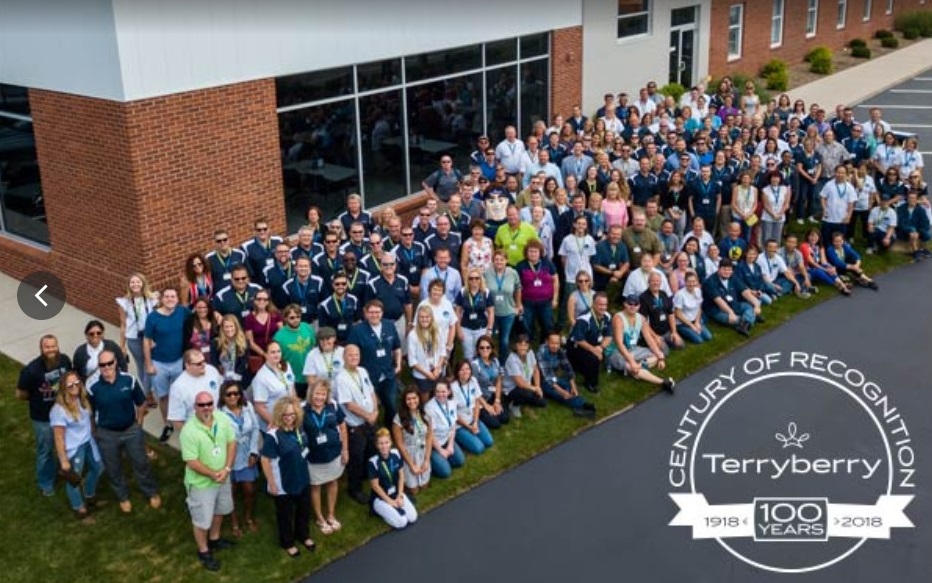
Michigan legislators’ unpopular decision to repeal the state’s Right to Work law helped prompt Mary Soltysiak and her coworkers’ move to vote out the IAM union.
LANSING, MI – Despite poll after poll showing 70 percent of Michiganders wanted Michigan’s decade-old Right to Work law left in place, Gov. Gretchen Whitmer and union cronies in the Michigan Legislature voted to strip Wolverine State workers of their right to refrain from funding unwanted union bosses in March. In response, the Foundation sprang into action, issuing a Special Legal Notice to Michigan workers advising them of their legal options as the state transitions to a forced-dues regime. The notice reminded workers that, despite what union bosses may claim, the state’s Right to Work law remains in effect until 90 days after the legislative session ends later this year — and also what they can do in advance of forced dues being legal again. Unsurprisingly, given Right to Work’s popularity even among union households, Michigan workers are stepping up and taking action to defend their rights against coercive unionism.
Michigan Workers Battle Forced-Dues Schemes Ahead of Repeal
For example, Foundation attorneys are currently assisting Grand Rapids-area Kroger employee Roger Cornett’s challenge to an illegal dues scheme perpetrated by United Food and Commercial Workers (UFCW) union officials. Cornett hit UFCW bosses with federal charges this May, accusing them of ignoring a letter in which he exercised his right to cut off dues deductions from his paycheck. Cornett’s charges also maintained that UFCW bosses sought to seize money from him using a form that blatantly violates existing federal law. Cornett’s charge says the form is illegal because of its “dual purpose” nature, meaning just one signature confusingly locks a worker into both membership and dues deductions. Federal law requires any authorization for union dues deductions to be voluntary and separate from a union membership application. UFCW bosses’ contempt for longstanding federal protections in Cornett’s case likely indicates how aggressively union officials will pursue forced dues under a non-Right to Work regime. The Foundation’s legal notice also counsels workers that they can avoid forced-dues arrangements entirely by petitioning the NLRB to hold “decertification elections” at their workplaces, in which workers can vote unpopular unions out.
Legal Notice Counsels Workers of Right to Vote Out Unwanted Unions
Mary Soltysiak, who opposes forced dues, heard news of the upcoming repeal and filed a petition to decertify the International Association of Machinists and Aerospace Workers (IAM) District Lodge 60/Local Lodge 475 union with free legal aid from Foundation staff attorneys. Soltysiak and her colleagues work at Terryberry, a manufacturing firm in Grand Rapids, MI.
Soltysiak stated that she and some of her colleagues “contacted [a Foundation attorney] and filled out paperwork to get out of paying union dues around the year 2018 because of the Right to Work . . . law.”
“The union has done nothing but hurt my paycheck and my vacation hours,” Soltysiak added.
Soltysiak and her coworkers achieved victory this May, when the NLRB certified their majority vote ousting the IAM union. Hopefully, their success portends the future success of the growing number of workers in Michigan and across the country looking to decertify the unions in their workplaces.
Foundation Also Defending Public Sector Right to Work Protections
As noted in the Foundation’s legal notice, the Michigan Right to Work repeal does not affect public sector Michigan employees. Under the Foundation-won Janus v. AFSCME Supreme Court decision, no public worker in America can be forced to subsidize a union as a condition of employment. But, as the repeal is looming, Michigan public sector union officials are nonetheless seeking to undermine public employees’ freedom to refrain from union support through so-called “fee-for-grievance” schemes.
This April, the Foundation submitted a brief in the Michigan Supreme Court case Technical, Professional and Officeworkers Association of Michigan (TPOAM) v. Renner, in which TPOAM officials are trying to enforce a “fee-for-grievance” policy against Saginaw County employee Daniel Renner. Under it, union bosses strip nonmember public employees of any power to file grievances themselves, and instead mandate that they pay fees sometimes exceeding yearly union dues to use the union’s grievance system.
Michigan legislators’ unpopular decision to repeal the state’s Right to Work law helped prompt Mary Soltysiak and her coworkers’ move to vote out the IAM union.
In the brief, Foundation staff attorneys refute the union’s claims for this newfound power, stating that “fee-for-grievance” schemes were never authorized by the Michigan Legislature and are inconsistent with federal law.
Foundation Attorneys Will Defend Worker Freedom in Michigan
“Michigan union officials and their allies in the state legislature have contempt for workers’ individual rights that knows no bounds,” commented National Right to Work Foundation Vice President and Legal Director William Messenger. “That was made clear by the repeal of the popular Right to Work law, and the attempt to undermine Right to Work protections for public sector employees which are safeguarded by the First Amendment under the Foundation’s Janus U.S. Supreme Court victory.”
“Michigan workers have a long road ahead to restore their rights against union coercion, but Foundation attorneys are fighting alongside these workers, and will continue to fight until no Michigan worker can be forced to pay union bosses they disapprove of just to keep a job,” Messenger added.
Busted: Kroger Worker’s Card Illegally Altered to ‘Authorize’ Forced Dues
The following article is from the National Right to Work Legal Defense Foundation’s bi-monthly Foundation Action Newsletter, May/June 2023 edition. To view other editions of Foundation Action or to sign up for a free subscription, click here.
Employee’s UFCW union card indicating objection to financial support changed without her knowledge

Jessica Haefner clearly exercised her rights under Texas’ Right to Work law. Foundation attorneys will get to the bottom of who faked her consent to dues deductions and restore her rights.
HOUSTON, TX – Supermarket clerk Jessica Haefner began her job at a suburban Houston Kroger store in August 2022. She attended a mandatory meeting for new employees run by United Food and Commercial Workers (UFCW) local union agents. Despite the union’s hard-sell at the meeting, she knew her rights under Texas’ Right to Work law: Union bosses couldn’t force her to pay any dues or fees to the union to keep her job.
During the meeting, Haefner followed a union representative’s instructions to indicate on a union form that she did not want to be a part of the union or pay dues or fees. But she was shocked to discover just weeks later not only that union dues were coming out of her paycheck, but also that the union form she was required to sign had been altered to indicate she consented to those deductions.
Haefner, with free legal representation from National Right to Work Foundation staff attorneys, slammed UFCW officials and Kroger with federal charges at the National Labor Relations Board (NLRB). The charges state that UFCW bosses’ and Kroger’s actions violate her rights under Section 7 of the National Labor Relations Act (NLRA), which guarantees American private sector workers’ right to abstain from any and all union activities.
“I was lied to . . . and my rights were not only violated as an employee but as an American citizen,” said Haefner.
Employee’s Dues Form Was Altered, Forced Dues Deductions Began
According to Haefner’s charges, a UFCW agent passed out a union membership application and a dues checkoff on a single form that he claimed was mandatory for meeting attendees to complete. Another piece of onboarding literature stated that Kroger management had the “opinion that you should participate and be active in the Union.”
When Haefner asked how she could exercise her right to refrain from joining the union or paying union dues, the union agent instructed Haefner to write “$0” in the field marked “union dues” on the form.
Haefner followed these instructions. But after discovering later that union dues were indeed coming out of her paycheck, Haefner quickly obtained a copy of the form on which Kroger and UFCW officials based their dues deductions. She saw that someone had changed the dues deduction amount in the field she marked “$0” to a dollar amount to induce dues deductions from her paycheck.
UFCW Chiefs Illegally Seizing Dues from Grocery Workers Across Country
UFCW’s violation of Haefner’s rights is not an isolated incident. In Pennsylvania, Foundation staff attorneys are also representing Giant Eagle supermarket cashier Josiah Leonatti, who charges UFCW Local 1776KS union officials with refusing to accommodate his religious objections to union membership (see page 3). King Soopers grocery employees from Colorado are also receiving free legal aid from Foundation staff attorneys in opposing illegal UFCW strike fines, some of which are as high as about $4,000 per worker.
“Jessica Haefner knew her rights under Texas’ popular Right to Work law and actively asserted them, yet UFCW union officials still brazenly took her money against her will,” commented National Right to Work Foundation President Mark Mix.
“As cases brought for workers with free Foundation legal aid show, UFCW bosses have a long and documented history of violating workers’ rights, whether through thousands of dollars in illegal strike fines, illegal religious discrimination, threatening teenagers’ jobs, and now by altering a worker’s dues authorization,” Mix added.
Teen Supermarket Cashier Fired for Refusing to Join and Fund UFCW Union
The following article is from the National Right to Work Legal Defense Foundation’s bi-monthly Foundation Action Newsletter, May/June 2023 edition. To view other editions of Foundation Action or to sign up for a free subscription, click here.
Union officials required teen to violate his religious beliefs or be fired

Josiah Leonatti may be young, but he’s not afraid to stand up to UFCW bosses, who got him fired over objecting to union membership and dues on religious grounds.
PITTSBURGH, PA – Josiah Leonatti, a high schooler, was fired last year for his religious beliefs. Giant Eagle and the United Food and Commercial Workers (UFCW) union compel employees, like Leonatti, to either join or fund the union to keep their jobs. The problem for Leonatti is that he cannot do so without compromising his religious beliefs.
When Leonatti was hired, he never expected that union bosses would force him to choose between his job and his religious convictions. But the union officials did just that.
With free legal aid from National Right to Work Foundation staff attorneys, Leonatti hit UFCW union officials and Giant Eagle in January with federal discrimination charges. Although Giant Eagle rehired Leonatti to limit liability, neither Giant Eagle nor the union agreed to accommodate his religious beliefs. So Leonatti faces discharge, again, unless he funds the union.
Moreover, the union demands that Leonatti submit to an illegal “religion test.” Before the company and union will consider accommodation, they demand that Leonatti answer irrelevant and inappropriate questions to determine whether his religious beliefs are valid.
UFCW Bosses Tried to Get Teen Fired After He Voiced Religious Objections
Foundation attorneys filed charges for Leonatti against the union at both the Equal Employment Opportunity Commission (EEOC) and the National Labor Relations Board (NLRB) based on federal law. Foundation attorneys also filed charges against Leonatti’s employer, Giant Eagle.
Federal law requires unions and employers to accommodate employees who have religious objections to joining or paying dues to a union. And federal law also prohibits forced union membership regardless of a worker’s reason for not wanting to affiliate with a union.
Leonatti’s charges report that he attended employee training last year as a cashier trainee. There, a store manager told new hires that they “must sign papers to join the United Food And Commercial Workers.” According to the NLRB charges, “No other options were even hinted at.”
After reviewing the papers with his family, Leonatti’s charges explain, he mailed a letter to UFCW officials detailing his sincere religious objections to joining and supporting the union. He also presented the same letter in person at training.
Rather than accommodate his religious beliefs as required by law, a company official “dismissed [Leonatti] from training and sent [him] home.” The same official later called Leonatti and told him that union membership is compulsory at Giant Eagle, and admitted the grocery store had terminated him over his refusal to join.
UFCW officials responded to Leonatti’s letter by mail on November 10, 2022, rejecting the written explanation of his religious objection and demanding he “complete its religious examination” before they even considered granting him an accommodation. Even if he passed this “test,” the charges say, union officials threatened that he would still have to pay an amount equal to full UFCW union dues to a charity approved by union bosses. Giant Eagle has not offered a religious accommodation to Leonatti, and the union has not retracted its threats or agreed to accommodate him.
Teen’s Firing Shows Need for Pennsylvania Right to Work Protections
Leonatti’s EEOC charges seek to compel the UFCW union and Giant Eagle to provide him a legally required religious accommodation. In addition, the NLRB charges state that relief must include unitwide notice and corporate training regarding workers’ right to refrain from union membership, among other remedies.
“Union bosses’ attempt to coerce a high school student to violate his religious beliefs is unconscionable and illegal,” commented National Right to Work Foundation Vice President Patrick Semmens. “We’re proud to support Mr. Leonatti as he defends his rights and beliefs. This should serve as a stark reminder that all Americans deserve Right to Work protections.”
“If Pennsylvania were a Right to Work state, Leonatti wouldn’t be forced to present his religious objections to expectedly hostile union chiefs,” Semmens added. “In a Right to Work state, he and other dissenting employees would have a statutorily protected right to cut off dues payments for any reason. All employees deserve the right to choose whether to fund a union.”
Virginia, Kentucky Workers Slam Union Officials with Charges for Illegal Dues Deductions
The following article is from the National Right to Work Legal Defense Foundation’s bi-monthly Foundation Action Newsletter, January/February 2023 edition. To view other editions of Foundation Action or to sign up for a free subscription, click here.
Union bosses seized full dues over employees’ clear objections, despite state Right to Work laws

“[I]t is time union officials accept that ‘no means no,’” said Buitoni employee Steven Ricketts, who is fighting to stop all dues as provided by Virginia’s Right to Work law.
DANVILLE, VA – For workers under the protection of Right to Work laws, union membership and financial support are supposed to be strictly voluntary. However, as recent cases brought with Foundation legal aid for workers in Kentucky and Virginia demonstrate, even in the 27 states that currently have Right to Work laws, union bosses will often attempt to illegally seize dues over workers’ objections.
“Living in Right to Work Virginia, it is outrageous that we need to take legal action just to stop union dues from being seized against our will,” commented Steven Ricketts, one of two employees at Buitoni Food Company who recently filed charges against United Steelworkers (USW) Local 9555. “I don’t want my money supporting the United Steelworkers union, and it is time union officials accept that ‘no means no’ when a worker resigns from the union and revokes their dues authorization.”
Ricketts and fellow employee Donald Hale each hand-delivered letters to both USW union officials and to their employer, formally resigning their union memberships and revoking their dues check-off authorizations.
Steelworkers Bosses Ignore 75-Year-Old Virginia Right to Work Law
After the workers’ letters were delivered, dues deductions briefly stopped only to quickly resume. In the case of Ricketts, Buitoni Food Company not only restarted union dues deductions but also deducted double the dues amount in a subsequent paycheck. Deductions from Mr. Hale’s paycheck also resumed without his authorization after a short period.
Mr. Ricketts sent an email to the company’s human resources department after the dues seizures restarted and was told to contact union officials about it. Each employee sent another letter to the United Steelworkers union, specifically requesting copies of their dues check-off authorizations. However, money continues to be deducted without their consent and without the union officials producing copies of the authorizations that are legally required before any such deductions can occur.
Eventually the workers filed unfair labor practice charges against both the USW and their employer for their respective roles in the unauthorized union dues deductions.
Regarding the Foundationbacked charges, Hale noted: “I’m grateful for the National Right to Work Foundation assistance in enforcing my legal rights, but it really shouldn’t take a federal case to cease the collection of union dues.”
Meanwhile in neighboring Kentucky, Shiphrah Green, who works at Ford’s Louisville Assembly Plant, filed similar charges with the National Labor Relations Board (NLRB) against the United Automobile Workers (UAW) Local 862 union, as well as the UAW international union and Ford, for illegal union dues deductions.
Kentucky Autoworker Hits UAW Union with Federal Charges
Green notified both Ford and UAW union officials in April 2022 that she was resigning her union membership and cutting off all union dues deductions from her wages, as is her right under Kentucky’s Right to Work law. Instead of honoring her request, Green instead received an email from UAW Local 862’s president notifying her that Green needed to be shown the allegedly “correct” method to leave the union.
During a subsequent meeting with union officials at the UAW union hall, UAW officials subjected Green to interrogation about why she wanted to leave the union, and also demanded she sign a letter listing “benefits” Green would supposedly forgo if she went through with exiting the union. Longstanding NLRB precedent makes such restrictions on resignation illegal, as was the UAW Local 862 president’s coercive statement to Green that “if it were up to me, you’d lose your job for leaving the union.”
Despite Green’s resignation and requests to cut off union dues, UAW and Ford did not stop dues deductions. While Green continued trying to get Ford management to end the dues deductions, her efforts proved futile, as Ford officials gave her several confusing responses and even told her that she could only cease dues deductions in February 2023, even though the previously authorized dues deduction document could be revoked at will.
Finally, after getting the runaround from both Ford and the UAW, Green filed charges with the NLRB in October using free legal aid from the National Right to Work Foundation. As this issue went to print, Labor Board regional officials were conducting an investigation to see if Ford and the union should be prosecuted for illegal dues seizures.
Foundation Attorneys Play Essential Role in Limiting Union Boss Power
“As thousands of Foundation cases have demonstrated — whether in Right to Work states or forceddues jurisdictions, or whether litigated for government employees or private sector workers — limits on union bosses’ power to seize money from workers mean little if they aren’t enforced,” commented National Right to Work Foundation Vice President Patrick Semmens.
“Virginia has had a Right to Work law on the books for over 75 years, while Kentucky’s Right to Work law is barely over five years old, but in both commonwealths, union bosses are illegally seizing union dues,” added Semmens. “These cases show why defending and enforcing workers’ Right to Work protections has been and will remain a top priority of the Foundation.”
Houston-Area Kroger Employee Slams UFCW Union with Federal Charges for Seizing Union Dues Using Altered Union Card
Employee objected to union membership and financial support during orientation meeting; union taking dues under guise of altered form
Houston, TX (February 21, 2023) – Cypress-area Kroger employee Jessica Haefner has just hit the United Food and Commercial Workers (UFCW) union at her workplace and her employer with federal charges. Haefner maintains that union and Kroger officials are unlawfully seizing union dues from her paycheck based on an altered union membership form that ostensibly indicates her consent to union dues deductions, even though she followed instructions on how to exercise her right to refrain from union membership and support. Haefner filed the charges at the National Labor Relations Board (NLRB) with free legal representation from National Right to Work Foundation staff attorneys.
Haefner’s charges state that UFCW Local 455 union officials’ actions violate her and her coworkers’ rights under Section 7 of the National Labor Relations Act (NLRA), which guarantees American private sector workers’ right to abstain from any and all union activities. The NLRB is the federal agency responsible for enforcing the NLRA.
Texas’ Right to Work protections also prohibit union officials from forcing private sector workers like Haefner to join or pay dues to a union as a condition of getting or keeping a job. In contrast, states lacking Right to Work laws permit the firing of private sector workers for refusal to pay money to a union hierarchy.
Union Form Was Altered
On August 22, 2022, Haefner attended a mandatory orientation meeting during which she was required to listen to a UFCW agent, her charges state. The UFCW agent passed out a union membership application and a dues checkoff on a single form that he claimed was mandatory for attendees to complete. Another piece of onboarding literature stated that Kroger management had the “opinion that you should participate and be active in the Union.”
When Haefner asked about how she could exercise her right to refrain from joining the union or paying union dues, the union agent instructed Haefner to write “$0” in the field marked “union dues” on the form. Texas’ Right to Work law protects Haefner’s right to abstain from union membership and dues payment.
Haefner followed these instructions, but later found out that union dues were coming out of her wages, her charges say. Haefner quickly obtained a copy of the form that Kroger and UFCW officials based their dues deductions on, and discovered that the “$0” she had written in the union dues field had been replaced with an amount of several dollars to induce dues deductions from her paycheck.
UFCW Bosses Across Country Illegally Snubbing Worker Requests to Abstain from Union Activity
UFCW’s violation of Haefner’s rights is not an isolated incident. In Pennsylvania, Foundation staff attorneys are also representing Giant Eagle supermarket cashier Josiah Leonatti, who charges UFCW Local 1776KS union officials with refusing to accommodate his religious objections to union membership. His charges say union officials tried to subject him to an illegal “religion test” before they considered granting him an accommodation.
“UFCW union officials seem to adhere to a nationwide policy of prioritizing dues revenue over employees’ free association rights,” commented National Right to Work Foundation President Mark Mix. “Foundation attorneys have already witnessed that UFCW bosses are willing to discriminate against religious employees in the pursuit of more dues deductions, and in Ms. Haefner’s case their malfeasance may be as bad as flat out altering employee forms to deduct dues.”
“As cases brought for workers with free Foundation legal aid show, UFCW bosses have a long and documented history of violating workers’ rights, whether through thousands of dollars in illegal strike fines, illegal religious discrimination, threatening teenagers’ jobs, and now by altering a worker’s dues authorization,” Mix added.
Workers Win Cash Back in Case Challenging Illegal Discrimination for Non-Union Status
The following article is from the National Right to Work Legal Defense Foundation’s bi-monthly Foundation Action Newsletter, November/December 2022 edition. To view other editions of Foundation Action or to sign up for a free subscription, click here.
Machinists union scheme sought to deny non-union workers’ bonuses because they opposed union association
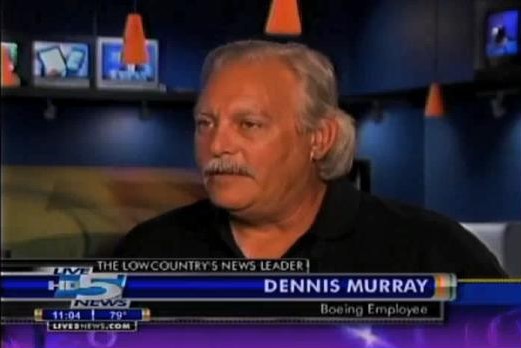
IAM bosses regularly discriminate against dissident workers. In 2011, Foundation-assisted South Carolina Boeing employee Dennis Murray recounted how IAM officials tried to shutter his plant because workers there had voted the IAM out.
RIDGWAY, PA – Twelve nonunion factory employees at Clarion Sintered Metals, Inc., have each received $1,000 in back pay bonuses after being illegally discriminated against by International Association of Machinists and Aerospace Workers (IAM) Local 2448 and their employer. With free legal aid from the National Right to Work Foundation, factory worker James Cobaugh filed federal charges against Clarion and IAM as he sought justice for himself and other non-member workers subject to unlawful discrimination.
Mr. Cobaugh’s charges against the union and his employer were filed on April 22, 2022, with the National Labor Relations Board (NLRB). The charges came after the union and Clarion Sintered Metals gave $1,000 bonuses to union members, but denied them to workers who exercised their legal right not to join the union. Rather than face prosecution by the NLRB, both the union and employer have now agreed to settle the case.
In addition to the non-union employees receiving the bonuses they were previously denied as a result of the illegal discrimination, both the IAM and Clarion Sintered Metals are required to post notices that inform workers of their right to refrain from joining a union. The notices also state union officials will not maintain or enforce such discriminatory agreements going forward.
Machinists Union Bosses Already Forced Non-Union Workers to Pay Dues
Because Pennsylvania lacks Right to Work protections for private sector employees, unions can force workers to pay up to 100% of union dues as a condition of keeping their jobs. This means that Mr. Cobaugh, although not a formal IAM union member, can be forced to pay up to 100% of IAM’s union dues to keep his job at Clarion Sintered Metals.
Even in Right to Work states, under federal law union bosses are granted the power to impose “representation” on individual workers against their will, including forcing non-member workers under union monopoly contracts they oppose. By stripping workers of their right to bargain for their own terms and conditions of employment, individual workers by law are prohibited from negotiating for themselves with their employers for better conditions.
Forced Union Monopoly ‘Representation’ Long Used to Discriminate
Union officials frequently use these government-granted powers to harm certain workers, for example those workers who, based on their productivity, would otherwise earn performance bonuses or higher compensation. Although union officials can impose one-size-fits-all monopoly contracts that favor some workers over others, there are some limits on how union monopoly powers can be used to discriminate.
The U.S. Supreme Court imposed these limits after union officials wielded their powers to negotiate and enforce racially discriminatory contracts (Steele v. Louisville & N.R. Co. et al.). Explicitly discriminating against workers who exercise their legally protected right to not formally join a union and not be subject to internal union rules, as the IAM officials did in this case, has also long been illegal.
“This situation highlights how workers less knowledgeable of their legal rights are susceptible to blatantly illegal tactics of power-hungry union bosses,” commented National Right to Work Foundation Vice President Patrick Semmens. “Mr. Cobaugh courageously stood up to the union’s unlawful actions, not only for himself, but also for the other non-member workers subjected to this illegal discrimination.”





