
Illinois Security Officer Defends Janus Rights Amidst Union Discrimination
The following article is from the National Right to Work Legal Defense Foundation’s bi-monthly Foundation Action Newsletter, March/April 2023 edition. To view other editions of Foundation Action or to sign up for a free subscription, click here.
Union officials sought to coerce membership by preventing non-members from defending their jobs
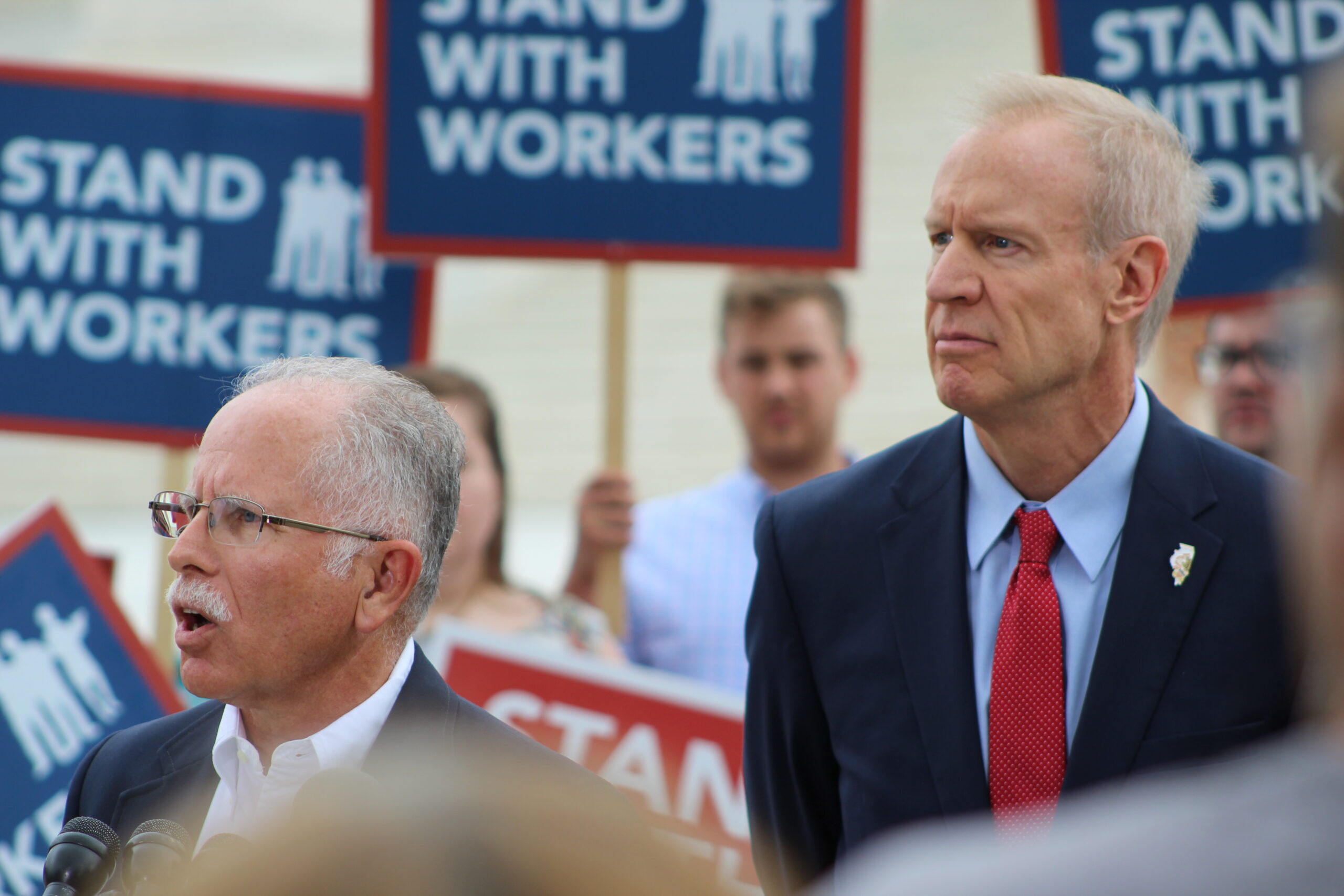
Foundation attorneys aided Illinois public employee Mark Janus with former Illinois Governor Bruce Rauner (right) in his landmark First Amendment victory. But Foundation attorneys often must fight to enforce Janus rights, as in Chris Logan’s case.
CHICAGO, IL – The National Right to Work Foundation’s landmark Supreme Court victory in Janus v. AFSCME was a milestone for public sector workers. For the first time, the Court recognized that every American public sector worker had the constitutional right to cut off dues to a union they oppose.
Even with this important First Amendment protection, however, union bosses unfortunately still wield an enormous amount of power over workers who have ended their affiliation with the union. Because of laws that authorize monopoly union “representation” in the public sector, union officials still have significant control over independent-minded employees’ working conditions, pay, benefits, and more.
City of Chicago aviation security officer Chris Logan discovered just how painful Illinois Council of Police (ICOP) union bosses could make life for him after he exercised his Janus rights. In 2020, following a dispute about his job performance, Logan took action to protect his job under the terms of his employment contract, only to have union bosses exploit the opportunity to attack Logan. The union would not allow Logan to file a grievance to protect his job unless he joined the union.
Officer Challenges Discriminatory Grievance Scheme with Foundation Aid
“ICOP union officials basically tried to force me to join and pay dues to the union by making it impossible for me to defend my job otherwise,” commented Logan. “I exercised my Janus rights and left the union because I didn’t think that ICOP officials were good ‘representatives’ of me or my coworkers.”
“Instead of trying to win back my support voluntarily, union bosses used their power to deprive me of all options when I tried to defend my job — I couldn’t even file or arbitrate a grievance myself,” Logan added. “In my mind, that simply confirms I made the right decision when I left this union.”
However, with free legal representation from National Right to Work Legal Defense Foundation staff attorneys, Logan won a decision from the Illinois Labor Relations Board (ILRB) in late 2022 that decisively declared ICOP officials’ “members only” grievance scheme illegally discriminatory against non-members.
Logan first exercised his Janus rights in October 2019, telling the union by letter that he no longer wished to pay union dues. Throughout 2020, Logan faced allegations about his job — possibly instigated by union militants. Per the union monopoly agreement he was subjected to, he tried to get union officials to fulfill their role, as monopoly “representatives” of the workplace, to file grievances challenging the City of Chicago’s disciplinary actions against him.
Union officials who maintain “monopoly bargaining power” in a workplace can legally impose their control over every worker, even those who have disaffiliated with the union. Because of this privilege, however, they are also legally obligated not to discriminate against non-members when it comes to grievances or other matters. However, as Logan discovered, union officials regularly ignore this “duty of fair representation.”
Union Officials Completely Ignored ‘Fair Representation’ Legal Obligation
ICOP union officials summarily rejected all of Logan’s requests to file grievances, and even told him that he could not file grievances himself. At one point, after an ICOP union official sent Logan an email falsely claiming the union had no legal obligation to participate because Logan had exercised his Janus rights, the ICOP lawyer chimed in to tell Logan, “I concur. Good luck.” The union stated it would not file grievances for Logan simply because he was a non-member.
Logan filed unfair labor practice charges against ICOP and the City of Chicago in August 2020, maintaining that the union’s actions were illegal. An ILRB Administrative Law Judge agreed with Logan’s charges in May 2022, declaring that ICOP “violated [Illinois labor law] when its agents restrained or coerced the Charging Party in the exercise of rights . . . by threatening to deny the Charging Party equal representation in the disciplinary and grievance matters.” The ILRB later adopted this ruling, leading to Logan’s Foundation-won victory when union officials did not attempt to appeal the decision to Illinois state court.
Monopoly Bargaining Powers Open Door to Corruption
“Union bosses maintain unilateral control over workers under a ‘monopoly bargaining’ regime,” commented National Right to Work Foundation Vice President and Legal Director Raymond LaJeunesse. “For public sector workers across the country, Janus is the only check they can use against this power, and even then they could face retaliation for doing so.”
“Cases like Mr. Logan’s, where union bosses used their bargaining powers to discriminate against a worker who exercised Janus rights, ought to make our elected leaders reconsider how much privilege our laws grant unions,” LaJeunesse added.
General Motors Worker Forces UAW Bosses to Stop Seizing Dues for Politics
Illegal seizures came after multi-billion-dollar Big Labor political spending

A massive UAW embezzlement scandal didn’t stop UAW officials from ignoring at least two attempts by Roger Clemons to exercise his right to stop subsidizing union political activity.
ROCHESTER, NY – Even after a sweeping federal corruption probe that has resulted in jail sentences for at least 12 union executives, it seems some United Auto Workers (UAW) officials haven’t learned their lesson regarding misuse of worker funds.
Rochester General Motors employee Roger Clemons this January won a settlement forcing UAW officials at his plant to stop illegally funneling money from his paycheck into union politics. Clemons filed federal charges in September 2021 against UAW Local 1097 and the UAW’s international branch, after union agents ignored his requests to opt-out of funding the union’s political agenda. He received free legal representation from National Right to Work Foundation staff attorneys.
A Foundation-won settlement required UAW international and local officials to give back to Clemons all money that was deducted from his paycheck in violation of the Foundation-won CWA v. Beck Supreme Court decision. Beck forbids union officials from forcing workers under their control to fund union politics.
Because New York State lacks Right to Work protections for its private sector workers, union officials can legally force workers to pay a reduced amount of union dues under threat of termination. In Right to Work states, union membership and all union financial support are strictly voluntary.
UAW Chiefs Repeatedly Violated Worker’s Beck Rights
Clemons stated in his September 2021 charge against UAW Local 1097 officials that UAW officials had a history of flouting his Beck rights, failing to reduce his union dues even after he ended his union membership and became a “Beck objector” in October 2019. “Only after Mr. Clemons filed an [earlier] unfair labor practice charge . . . did the union comply with the requirements of the law,” the charge noted, detailing that union officials finally sent him rebate checks in June and July 2020 for excess dues they took from his paycheck.
However, UAW officials continued to create obstacles for Mr. Clemons’ Beck rights. The September 2021 charge asserted that despite Clemons renewing his Beck objection in October 2020, he then did not receive “a single rebate check or a reduction in the dues deducted from his wages” for almost a year.
Clemons also charged General Motors for its role in enforcing the illegal dues deductions.
The settlement now forbids UAW officials from “accept[ing] dues or fees which have been deducted from the paycheck of Roger Clemons, or any other Beck objector, which are in excess of the amount we can lawfully charge to Beck objectors.” UAW officials also have returned dues that they seized from Clemons above the reduced Beck amount.
Union officials devote enormous sums to political activity. A report the National Institute for Labor Relations Research (NILRR) released in 2021 revealed that union officials’ own Department of Labor filings show over $2 billion in political spending during the 2020 election cycle, primarily from dues-stocked union general treasuries. Another study found that actual union spending on political and lobbying activities likely topped $12 billion during the 2020 cycle.
Union Bosses Likely to Splash Cash on 2022 Midterm Elections and Beyond
“Rank-and-file workers should know they have a right to refuse to fund union politics, especially with union political spending in 2020 having approached record numbers and midterm elections coming up,” commented National Right to Work Foundation Vice President and Legal Director Raymond LaJeunesse. “Workers under UAW control, like Mr. Clemons, have special reason to be on guard, given the UAW’s perennial interest in politics, and because several UAW officials now find themselves behind bars for embezzlement and corruption.”
Atlantic Aviation Employees Win Freedom from Unwanted Union
Incompetent Machinists union bosses fly away to avoid worker vote
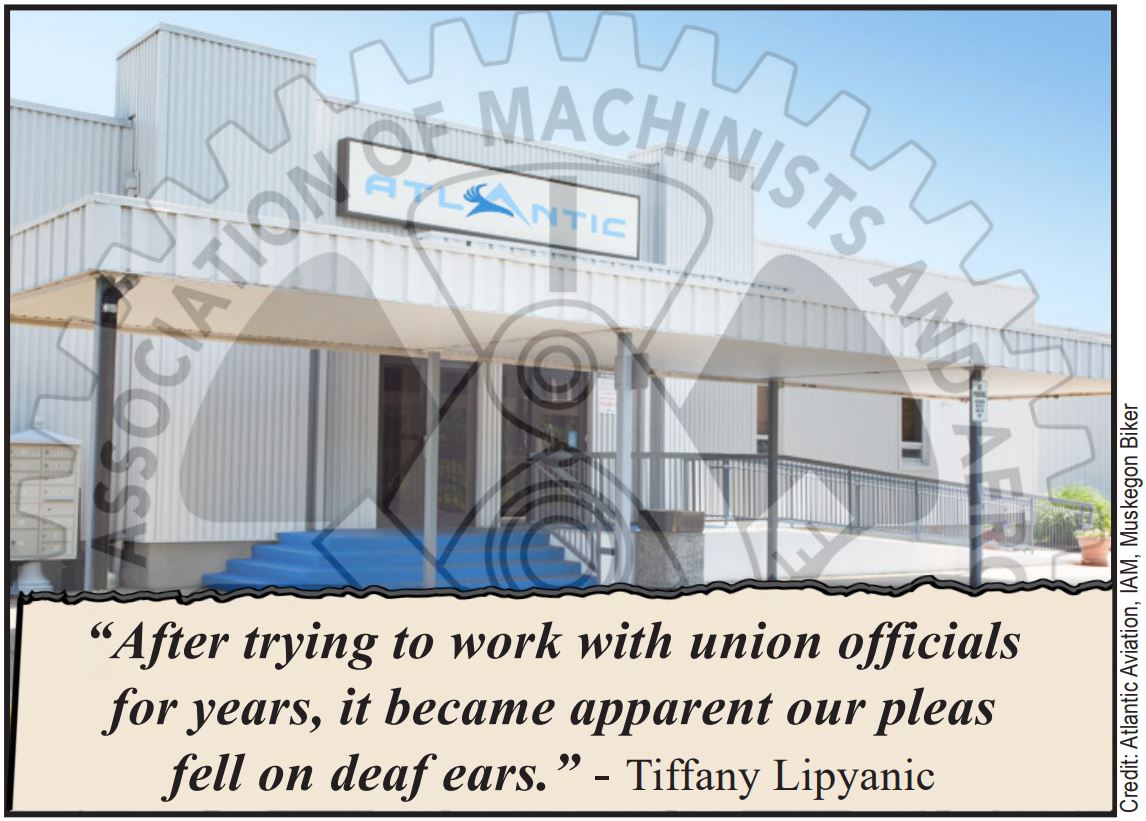
IAM union officials loafed around at Tiffany Lipyanic’s workplace for years, all the while siphoning dues from her and her coworkers. She’s thankful to the Foundation for aid in navigating the complex process to vote them out.
PHILADEPHIA, PA – Atlantic Aviation PNE, Inc. employees have freed themselves from unwanted union monopoly “representation” after filing a decertification election request with the National Labor Relations Board (NLRB). Tiffany Lipyanic, a line service technician, filed the petition to end the union’s monopoly bargaining powers for all workers at the Atlantic Aviation facility at Philadelphia Northeast Airport. International Association of Machinists (IAM) union officials then abandoned their “representation” rather than face an overwhelming vote against the union.
‘We Were Paying Union Officials and Got Nothing in Return’
Lipyanic and her colleagues received free legal assistance from National Right to Work Foundation staff attorneys in filing their petition for a vote to oust union officials. The petition, filed on February 15 by tire service and customer service representatives, was signed by more than twice the number needed to trigger an NLRB-supervised “decertification” secret-ballot election, after which union officials lose monopoly bargaining power if a majority of workers vote to remove them.
Rather than proceed to a vote, IAM District Lodge 142 and Local Lodge 1776 officials filed documents with the NLRB disclaiming their monopoly bargaining powers on February 28.
“After trying to work with union officials for years, it became apparent our pleas fell on deaf ears. We were paying union officials and got nothing in return, so we’re glad to finally be free of them,” Lipyanic commented. “Having the National Right to Work Foundation’s assistance gave us confidence in our journey to finally free ourselves from union bureaucrats that took our money and disregarded us at every turn.”
Foundation-Backed Rules Aid Workers in Removing Unpopular Union Bosses
This is the latest in a series of successful worker efforts to oust unwanted union officials aided by National Right to Work Foundation staff attorneys. Just since the beginning of 2021, Foundation attorneys provided legal assistance in well over 50 NLRB decertification efforts, which together sought to end union boss control of over 7,000 workers.
Recent Foundation efforts to break down union boss-created legal barriers to unseating unwanted union officials have allowed more workers to free themselves from unwanted union ranks. In 2020, following detailed formal comments submitted by Foundation attorneys, the NLRB adopted rules eviscerating union bosses’ ability to stop a decertification effort with “blocking charges,” i.e., accusations made against an employer that are often unverified and have no connection to workers’ desire to kick out unwanted union officials.
“Under the protection of a Right to Work law each individual worker can decide whether or not to join or financially support a labor union. Unfortunately, current law empowers union bosses in many states to use their monopoly bargaining status to force workers to pay up or be fired,” commented National Right to Work Foundation Vice President and Legal Director Raymond LaJeunesse.
“The Foundation is glad to have helped the workers at Atlantic Aviation exercise their right to free themselves of a union they oppose. But to better protect all workers’ freedom of association, Right to Work laws should be on the books in all states,” LaJeunesse added.
Foundation Battles Union Restrictions on First Amendment Rights at Ninth Circuit
The following article is from the National Right to Work Legal Defense Foundation’s bi-monthly Foundation Action Newsletter, January/February 2021 edition. To view other editions or to sign up for a free subscription, click here.
Cases challenge coercive, anti-Janus “escape periods” concocted by union bosses
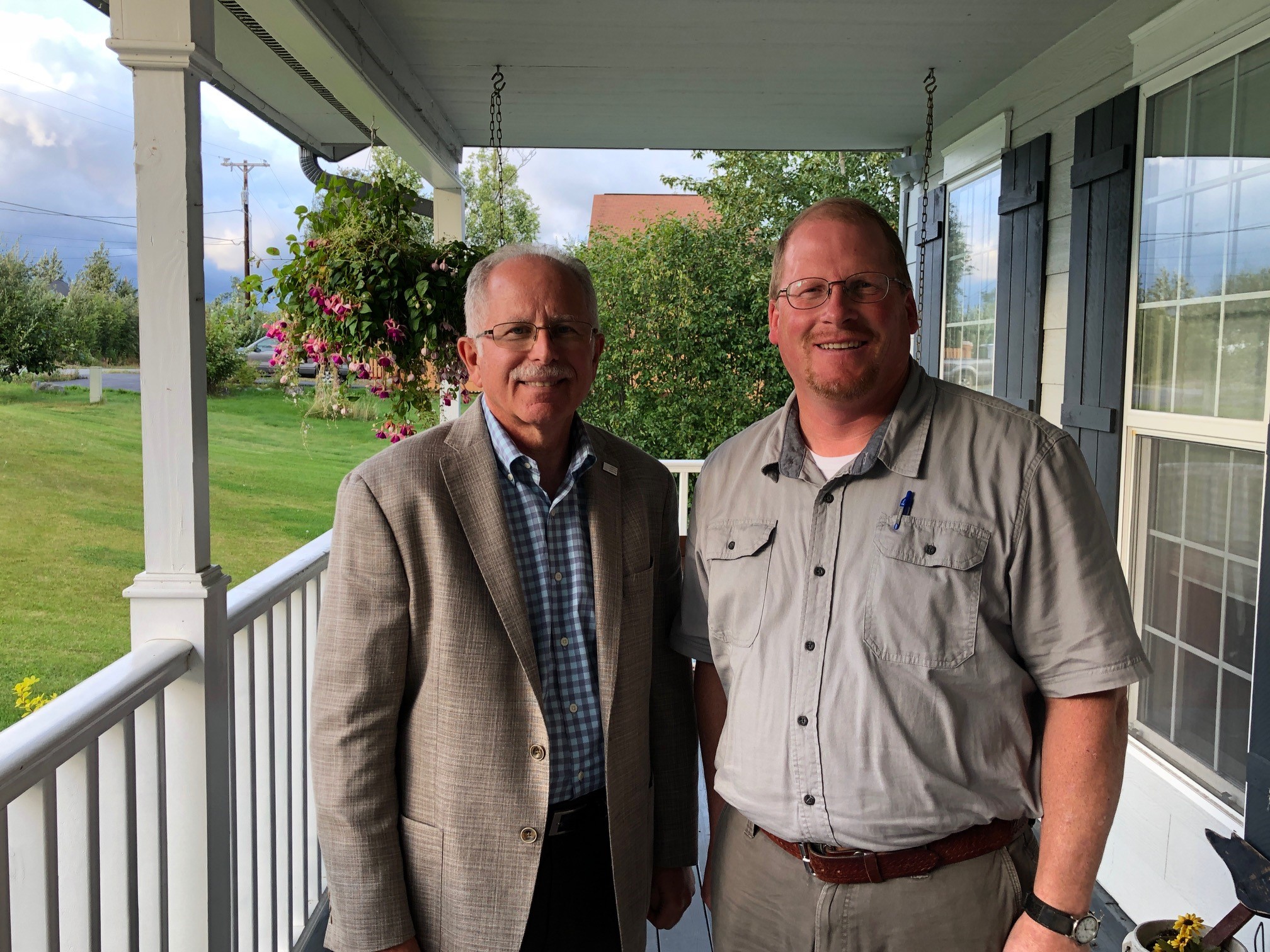
Christopher Woods (right), seen here with Mark Janus, is taking up the latter’s fight by challenging an ASEA union boss scheme that traps workers in union payments even after they have dissociated from the union.
SAN FRANSCISO, CA – The 2014 National Right to Work Foundation victory for Pam Harris in the Harris v. Quinn Supreme Court case established that union bosses violate the First Amendment when they skim dues from homecare providers’ state subsidies without their consent. Now, seven California homecare providers have just appealed to the Ninth Circuit Court of Appeals their federal lawsuit against Service Employee International Union (SEIU) Local 2015 officials for continuing to skim dues in violation of their rights.
According to their suit, SEIU honchos enforced a phony “escape period” on the homecare providers, illegally limiting the time in which they could stop the deductions. The providers’ suit says this contravenes the U.S. Supreme Court’s ruling in Janus v. AFSCME. The Court not only held that the government cannot force individuals to subsidize union activities as a condition of employment, but also that government agencies can only deduct union payments after receiving a clear and knowing waiver of their First Amendment right not to make such payments.
Dues-Skim Scam: SEIU Took Dues Without Informing Providers of Rights
Although the plaintiffs, Delores Polk, Heather Herrick, Lien Loi, Peter Loi, Susan McKay, Jolene Montoya and Scott Ungar, are not public employees, they were designated as such solely for the purpose of monopoly unionization. Then that was used as justification for the State of California to skim union dues from their payments at the behest of SEIU officials. The seven participate in the In-Home Support Services (IHSS) program, which allots Medicaid funds to those who provide home-based aid to people with disabilities.
Polk and the other plaintiffs recount in the lawsuit that SEIU union bosses began taking cuts of their Medicaid subsidies after confusing phone calls or mandatory orientation sessions. After the plaintiffs contacted the SEIU attempting to exercise their right to stop the flow of dues, SEIU operatives informed them that they could only opt out of union dues during short union-created “escape periods” of 10-30 days once per year.
The lawsuit also points out that the federal law governing IHSS forbids diverting any part of Medicaid payments to “any other party” besides the providers. In fact, in rulemaking urged by National Right to Work Foundation comments, the federal agency that administers Medicaid confirmed that skimming such payments for unions violates the Medicaid statute passed by Congress.
The seven plaintiffs now seek a ruling that both the taking of union dues without their knowing consent and the policy restricting the providers from ending the dues deductions are unconstitutional. The providers also seek refunds of all money that they and any other IHSS program participants had taken from their payments through the illegal scheme.
Alaska Union Bosses Confine Prison Employee in Unconstitutional Deductions
Also at the Ninth Circuit Court of Appeals, Alaska vocational instructor Christopher Woods recently filed an appeal in his case challenging an “escape period” scheme to block him and other Alaska state employees from exercising their First Amendment rights recognized in Janus.
In a November 2019 email, Woods, who has worked as a vocational instructor at Goose Creek Correctional Center since 2013, informed Alaska State Employees’ Association (ASEA) officials he was exercising his Janus right to stop all union dues deductions. Rather than respect his rights, union officials rejected his request and told Woods that he could only “opt out” and not be a union member with written notice to this office during a 10-day period each year.
Woods persisted on December 2, 2019, submitting to both ASEA officials and the payroll office of the Corrections Department another email asking to cut off dues. Although the payroll office confirmed to both Woods and the ASEA that it had received the request, an ASEA official responded by merely telling the payroll office that she was “still communicating with [Woods] on the matter,” the complaint says. Woods reports in his lawsuit that he has “not received any further communications” from either the ASEA or the payroll office, and that full dues are still being seized from his paychecks.
Foundation String of Triumphs Against Janus Restrictions Unlikely to End
“‘Escape periods’ are shameless union boss-concocted schemes that only exist to keep dues money rolling into their coffers after employees have clearly communicated that they do not wish to support the union,” observed National Right to Work Vice President and Legal Director Raymond LaJeunesse. “Although these arrangements are egregious in any context, trapping homecare providers in dues-skim schemes which deprive them of money they receive for taking care of the disabled is particularly unconscionable, and additionally breaches federal law which prohibits those funds from going anywhere other than to the people giving care.
“Whether it’s the landmark victories in Harris and Janus or the eight recent lawsuits in which Foundation staff attorneys have knocked down ‘escape period’ policies and secured refunds of illegal dues for workers, the Foundation has a track record of success in these cases. Union bosses shouldn’t hold their breath in the hopes of keeping seized dues,” LaJeunesse added.
Foundation Asks Supreme Court to Hear Janus Case Again, Seeking Return of Forced Fees
The following article is from the National Right to Work Legal Defense Foundation’s bi-monthly Foundation Action Newsletter, May/June 2020 edition. To view other editions or to sign up for a free subscription, click here.
Case could set precedent for hundreds of millions of dollars in refunds to Big Labor’s victims
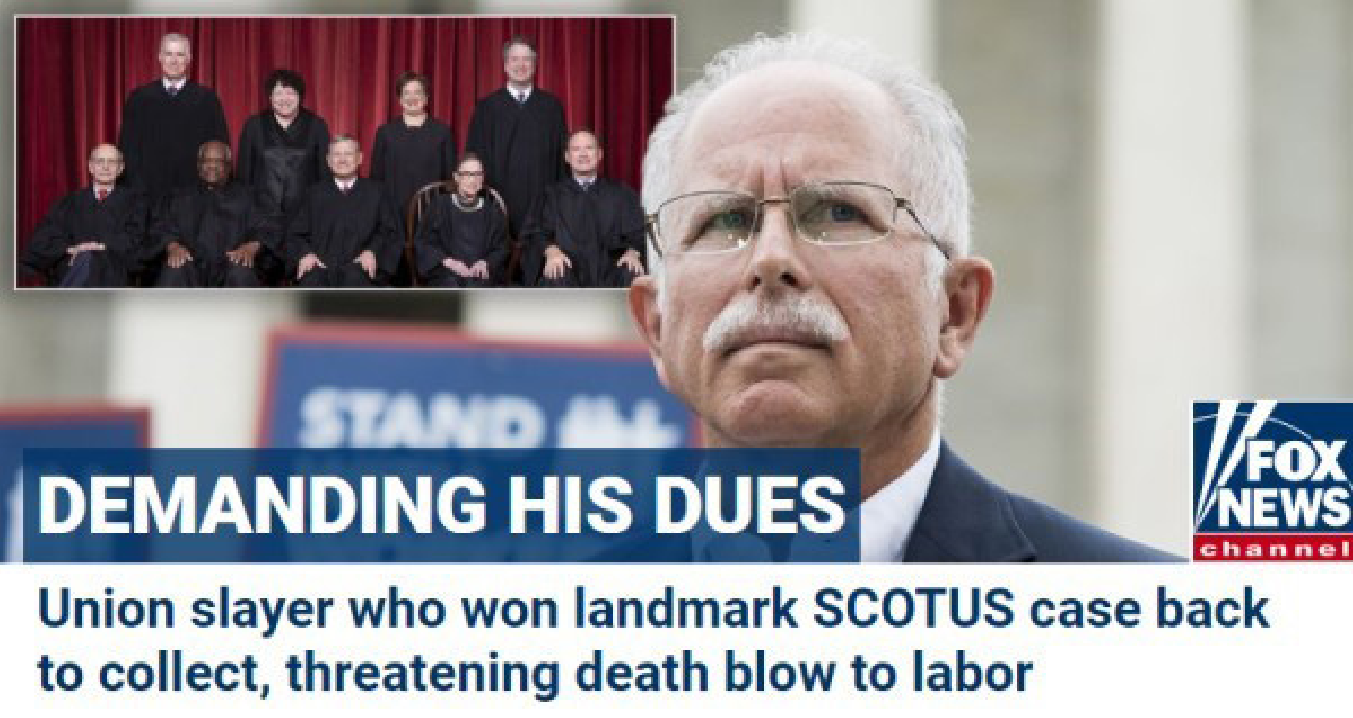
Mark Janus’ second Foundation-backed appeal to the Supreme Court landed the top spot on Fox News’ website. If Janus prevails again, hundreds of millions of dollars in unconstitutional union dues could be returned to public sector employees.
WASHINGTON, DC – Mark Janus is returning to the U.S. Supreme Court, this time asking the Justices to hear the continuation of Janus v. American Federation of State, County, and Municipal Employees (AFSCME), Council 31. Janus seeks repayment of the thousands of dollars in fees the union took from his paycheck in violation of his First Amendment rights. Another Supreme Court victory for Janus could set a precedent resulting in the return of hundreds of millions of dollars seized by union officials in violation of workers’ constitutional rights.
The original Janus v. AFSCME was argued successfully before the Supreme Court by veteran National Right to Work Foundation staff attorney William Messenger. In a landmark victory, the Court sided with Janus on June 27, 2018, and declared it illegal to force public employees to subsidize a union as a condition of employment. The Court recognized that compelling public workers to pay fees to a union violates their First Amendment rights.
Illinois Child Support Public Servant Intervenes in Lawsuit with Foundation Aid
As a result of Janus, more than five million public sector employees across the country are no longer required to pay union dues or fees to keep their jobs. However, Janus’ case continues as he seeks the return of the fees that AFSCME seized from his paycheck without his permission from June 27, 2018, to March 23, 2013, representing the two-year statute of limitations from the date his case started in March 2015 through the Supreme Court’s 2018 decision in his favor.
The Janus case began in February 2015, when then-newly elected Illinois Governor Bruce Rauner issued an executive order prohibiting state agencies from requiring employees who had abstained from formal union membership to pay union fees, based on a Right to Work Foundation U.S. Supreme Court victory in 2014 in another Illinois case. Rauner also filed a federal lawsuit seeking a declaratory judgment that forced union fees violate the First Amendment rights of public workers.
Staff attorneys from the Foundation, in partnership with the Illinois-based Liberty Justice Center, filed a motion for Mark Janus and two other plaintiffs to intervene in the case in March 2015, and have represented Janus ever since. The U.S. District Court for the Northern District of Illinois granted Janus’ motion to file a complaint in intervention, which allowed the suit to move forward even after the court ruled that Rauner lacked standing to pursue the lawsuit.
The Supreme Court permitted union bosses to impose forced union fees on public workers in the 1977 Abood v. Detroit Board of Education decision. However, before the Janus victory, Foundation staff attorneys secured several victories for workers which called the constitutionality of forced fees into question. In 2012, the court ruled in Knox v. SEIU that union officials must obtain affirmative consent from workers before using workers’ forced union fees for special assessments or risk infringing on their First Amendment rights. In 2014, the court ruled in Harris v. Quinn that requiring home healthcare providers who receive a subsidy from the government to pay union dues is a First Amendment violation.
Following Janus’ groundbreaking win at the Supreme Court in June 2018, Foundation attorneys continued his case in Illinois federal courts, arguing that the Supreme Court’s ruling is retroactive and that AFSCME should be required to return dues they seized unconstitutionally before the decision. In this and similar cases, union bosses have made a so-called “good faith” argument to defend their seizing of dues before Janus was issued. The U.S. Seventh Circuit Court of Appeals in Chicago ruled in 2019 that AFSCME could keep the unconstitutional dues, prompting Janus’ petition to the Supreme Court.
Hundreds of Millions of Dollars Potentially At Stake
“The Supreme Court agreed that the union taking money from non-members was wrong but the union still has the money it illegally garnished from my paycheck,” commented Janus. “It’s time for AFSCME to give me back the money they wrongfully took.”
Foundation staff attorneys are currently fighting for thousands of workers in about 20 cases which seek refunds of dues seized unconstitutionally before Janus was decided. While Janus is seeking the return of $3,000 of his own money, a favorable decision for him would set a precedent that could result in the return of over $120 million to public servants just in Foundation-backed cases. Other cases brought by workers could bring that total to hundreds of millions of dollars.
Workers Already Winning Refunds of Illegal Dues with Foundation Legal Aid
“The Supreme Court has already sided with the Foundation arguments for Mark Janus and ruled that forcing public employees to fund union activities violates the First Amendment,” said National Right to Work Foundation Vice President and Legal Director Raymond LaJeunesse. “The Supreme Court should take this case again to ensure that public sector union bosses are not permitted to profit from their widespread violation of workers’ First Amendment rights.”
Foundation staff attorneys in July 2018 secured the nation’s first-ever refund of dues seized unconstitutionally before Janus for Debora Nearman, an Oregon state wildlife employee. SEIU bosses were forced to settle and give back to Nearman over $3,000 in illegal fees they had seized from her over two years, during which they had sponsored an aggressive political campaign against her own husband, who ran successfully for the Oregon Legislature in 2016.
Electrician Files Discrimination Lawsuit Challenging Forced Union Fees
The following article is from the National Right to Work Legal Defense Foundation’s bi-monthly Foundation Action Newsletter, January/February 2020 edition. To view other editions or to sign up for a free subscription, click here.
Boston College and SEIU officials ignored reasonable request to accommodate religious beliefs
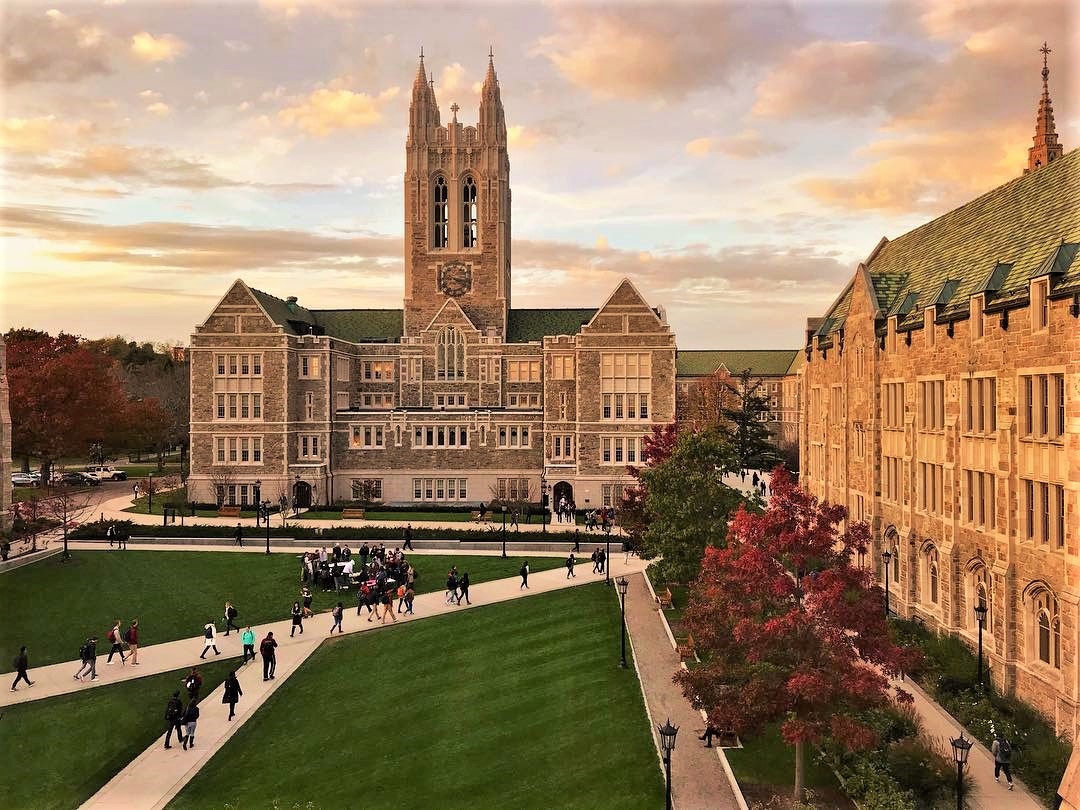 Boston College officials seized union fees from electrician Ardeshir Ansari’s paycheck at the behest of SEIU bosses, even after he had informed them that such fees violate his religious beliefs.
BOSTON, MA – In November, National Right to Work Foundation staff attorneys filed a federal Title VII religious discrimination lawsuit for a Boston College electrician whose rights were violated by the Service Employees International Union (SEIU) in illegally demanding union fees. The lawsuit also names his employer, Boston College, for its role in the discrimination.
Ardeshir Ansari objects to supporting the union based on deeply held religious beliefs. Under the local SEIU’s monopoly bargaining agreement at Boston College, however, he was told that he must join or financially support the SEIU or be fired. To avoid being fired, Ansari unwillingly paid fees to the union in violation of his sincere religious beliefs.
On October 1, 2018, Ansari sent a letter to Boston College and the SEIU, informing them his religious beliefs conflict with joining or financially supporting the union. He asked that his union fees be diverted to charity instead of being sent to the union, an established remedy for such a conflict.
Instead of responding, the college continued to take a cut of his paycheck and send it to SEIU officials in violation of his sincerely held religious beliefs.
In response, Ansari filed charges with the Equal Employment Opportunity Commission (EEOC) against college and union officials. The EEOC then determined that both Boston College and the SEIU had violated Title VII.
Last September, the EEOC gave Ansari a right-to-sue letter, which authorized him to file a lawsuit under Title VII of the Civil Rights Act of 1964. That federal law prohibits employers and unions from discriminating against an individual based on his or her religious beliefs.
In November, Foundation staff attorneys filed a lawsuit for Ansari against Boston College and the SEIU for illegally discriminating against him by failing to reasonably accommodate his religious beliefs, violating his rights under Title VII.
The lawsuit demands that college and SEIU local officials pay all fees deducted from Ansari’s paycheck to a charity mutually agreed upon and seeks damages for the emotional distress he suffered while his rights were violated for more than a year.
EEOC Found Religious Discrimination by SEIU
Moreover, the Title VII lawsuit asks the court to prevent the college from continuing to discriminate against his religious beliefs and that the union be required to inform workers that those with religious objections to the payment of union fees are entitled by law to pay those fees to a charity instead.
“Workers with sincere religious objections to joining or funding a union are legally protected from being forced to violate their conscience,” said National Right to Work Foundation Vice President and Legal Director Ray LaJeunesse. “No one should ever be forced to choose between keeping a job to provide for their family and violating their deeply held religious beliefs by supporting a union.”
“Right to Work laws protect workers like Mr. Ansari from this kind of discrimination. Under those laws, workers can stop paying union fees and resign union membership for any reason and thus avoid illegal religious discrimination,” added LaJeunesse.
Featured Article: “The Future Looks Bright for the Right to Work Movement”
The Regulatory Review has ranked the essay entitled “The Future Looks Bright for the Right to Work Movement” by National Right to Work Foundation Vice President and Legal Director Raymond J. LaJeunesse, Jr. as one of the publication’s top essays in 2019.
The essay highlights successes in the ongoing fight against forced unionism through legal and legislative reform:
Thomas Jefferson famously said that it is “sinful and tyrannical” for government “to compel a man to furnish contributions of money for the propagation of opinions which he disbelieves and abhors.” That principle is consistent with the guarantees of freedom of speech and association enshrined in the U.S. Constitution’s First Amendment. Yet, some federal and state labor laws in this country have long authorized requirements that workers pay union dues as a condition of employment, requirements known as the “union shop” or “agency shop.” Increasingly, however, legislatures and courts are recognizing that workers have a constitutional right to work without being forced to subsidize a union.
Among recent achievements for the Right to Work movement are five new state Right to Work laws passed since 2012 and the landmark Foundation-won Janus v. AFSCME Supreme Court decision in June 2018.
The complete essay is available to read online here.





