
Philly-Area Manufacturing Employees Triumph Over UAW Intimidation Campaign
The following article is from the National Right to Work Legal Defense Foundation’s bi-monthly Foundation Action Newsletter, January/February 2025 edition. To view other editions of Foundation Action or to sign up for a free subscription, click here.
UAW bosses now required to attend federal training after trying to fire non-striking workers
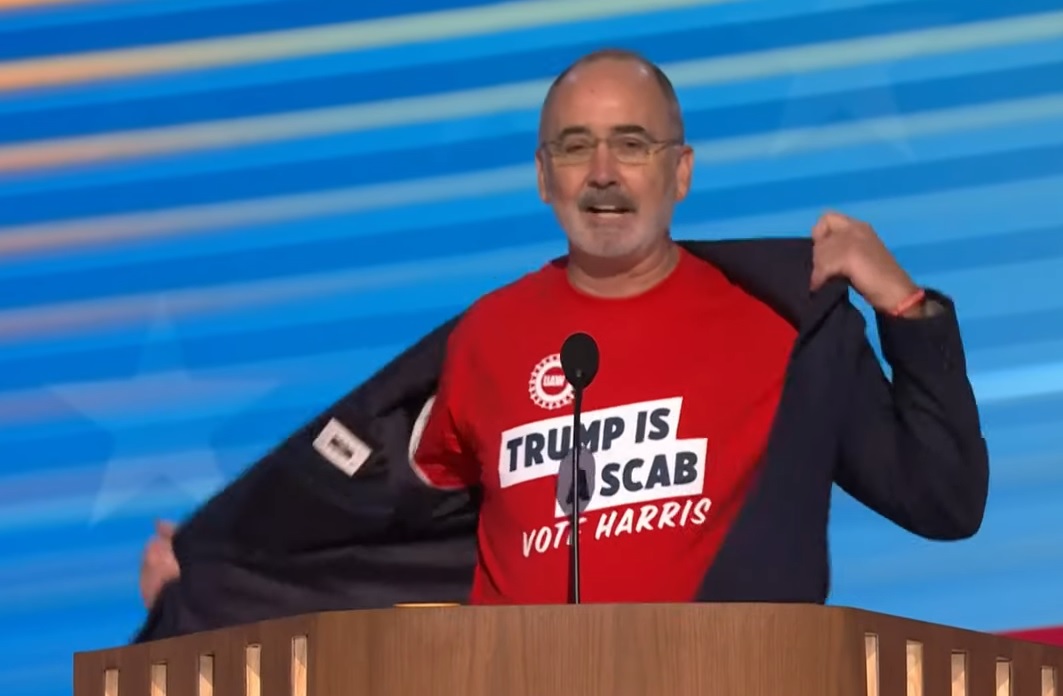
Despite an active federal corruption investigation, UAW President Shawn Fain and his underlings continue to push a radical political agenda using workers’ dues money while ignoring the rights of the rank-and-file employees union bosses claim to “represent.”
PHILADELPHIA, PA – It’s not particularly difficult to see why United Auto Workers (UAW) union officials are having trouble convincing workers that the union has their best interests in mind.
The union’s upper echelon is still reeling from a federal probe that hit about a dozen top union bosses with prison sentences for embezzling workers’ dues, and to this day it appears that UAW President Shawn Fain — a so-called “reformer” — is being scrutinized by federal monitors for manipulating his position to secure personal benefits.
But the corruption within the UAW goes far beyond the union’s top executives. Throughout 2024, National Right to Work Foundation-backed workers for auto accessory manufacturer Dometic fought illegal UAW demands that they strike or be fired.
UAW Union Used Mass Texts, Social Media to Bully Workers
In March 2024, seven Philadelphia-area Dometic employees filed unfair labor practice charges against the UAW Local 644 union, detailing that UAW bosses had ordered a strike and threatened to get fired anyone who decided to keep working.
Despite the employees’ resignation of their union memberships, UAW officials began internal proceedings against each of them soon after the strike began. Federal labor law forbids unions from imposing internal discipline on those who abstain from union membership.
The Dometic workers didn’t back down. With free Foundation legal aid, all the workers won settlements in October 2024 that fully vindicated their rights. UAW officials must now make postings correctly informing workers of their right to abstain from union activities, and the settlement even requires union chiefs to undergo mandatory training on the limits of “a union’s right to impose internal discipline,” among other topics.
As the workers’ legal battle dragged on, the Dometic workers continued to expose ugly details of the UAW’s intimidation campaign surrounding the strike. In April 2024, Dometic employee Mario Coccie filed a second round of charges against UAW Local 644 for a mass text message that threatened all Dometic employees — not just those who had filed charges against the union — with termination if they didn’t strike.
“The information in this text reveals union officials’ real intentions, which is to hurt anyone willing to stand up for themselves,” said Coccie at the time. “What is happening in this case is completely unjust.”
UAW officials also refused to respect Coccie and his coworkers’ rights under the Foundation-won CWA v. Beck Supreme Court decision, which prohibits union officials from requiring workers to pay for the union’s political expenditures just to keep their jobs. Because Pennsylvania lacks Right to Work protections for its private sector workers, UAW bosses can force workers to pay union fees as a condition of employment, but must abide by Beck.
Legal Privileges Enable UAW Corruption
In addition to the notice postings and required training, the Foundation-won settlement orders union officials to delete social media posts threatening workers who refused to strike.
“We’re proud to have helped Mario Coccie and his coworkers vindicate their rights,” commented National Right to Work Foundation Vice President Patrick Semmens. “But it has become all too clear that union corruption — which can take the form of anything from stealing millions in worker dues to intimidating workers to join a picket line — is only made easier when union bosses are granted more legal privileges.
“Policymakers need to protect workers’ freedom to cut off funding for union bosses who don’t serve their interests, and to fully abstain from union activities that individual employees do not see as in their own best interest,” Semmens added.
PHL Guava & Java Employees Overcome ‘Widespread Union Intimidation Campaign,’ Vote Out UNITE HERE Union
Guava & Java workers in the Philadelphia Airport vote overwhelmingly to remove union despite reported intimidation campaign by union agents
Philadelphia, PA (May 22, 2023) – Workers at the Guava & Java store in the Philadelphia Airport have voted to remove the UNITE HERE Local 274 union by an overwhelming majority. The vote follows a petition submitted by Guava & Java employee Shaneisha Brown with the National Labor Relations Board (NLRB). Brown is receiving free legal aid from the National Right to Work Legal Defense Foundation.
Brown filed the petition with the NLRB on March 30, 2023, with a significant number of her coworkers’ support. After the petition was filed and verified, the NLRB scheduled the election to be held on May 11.
With an overwhelming majority of 32-9, the workers at Guava & Java voted to remove UNITE HERE Local 274 from their workplace. In doing so, they overcame a union campaign that, according to employee reports, included electioneering tactics that violated longstanding NLRB rules. The union filed no objections to the result by the May 18 deadline, and the workers are now officially union-free.
The workers at Guava & Java are the latest of many workers to be dissatisfied with union coercion. Currently, the NLRB’s data shows a unionized private sector worker is far more likely to be involved in a decertification effort than their nonunion counterpart is to be involved in a unionization campaign. NLRB statistics also show a 20% increase in decertification petitions last year versus 2021.
“We are extremely pleased to assist the Guava & Java workers in exercising their rights to remove an unwanted union from their workplace,” stated Mark Mix, President of the National Right to Work Legal Defense Foundation. “We are appalled, however, by the reports of heavy-handed union tactics on election day. The Foundation will continue to assist workers who wish to decertify unwanted unions, no matter what prohibited conduct union officials may attempt to engage in while trying to dissuade employees from voting out a union they oppose. We encourage all employees at the Philadelphia International Airport who have questions about decertification elections to contact the Foundation.”
Trucking Company Employees Force Out Teamsters Union Bosses in Virginia, Similar Ouster Could Soon Come in New Jersey
Efforts come in the face of anti-Right to Work push by Teamsters bosses and Teamster-backed Biden-Harris Labor Board rule change to disenfranchise workers
Washington, DC (November 1, 2024) – In two recent efforts by trucking employees across the Eastern Seaboard to free their workplaces from Teamsters union officials, a group of Virginia workers has successfully forced out Teamsters Local 322, while a similar effort by Philadelphia-area workers against Teamsters Local 500 continues.
Nelson Chilson, a truck driver for NAPA Transportation in Richmond, VA, submitted a petition earlier this month in which the majority of his coworkers asked the National Labor Relations Board (NLRB) to hold a vote to remove Teamsters Local 322 union bosses. Just days earlier, a group of Philadelphia-area Penske Logistics truckers led by Shawn Shute also filed a petition demanding the same kind of NLRB election to oust Teamsters Local 500. Both Chilson and Shute are receiving free legal aid from National Right to Work Legal Defense Foundation staff attorneys.
The NLRB is the federal agency responsible for enforcing federal labor law, which includes administering elections to install (or “certify”) and remove (or “decertify”) unions. Both Chilson’s and Shute’s decertification petitions contain employee signatures well in excess of the threshold needed to trigger a decertification vote under the National Labor Relations Act (NLRA).
All truck drivers from each facility are eligible to vote in each union decertification election. However, in Chilson’s workplace it appears that Teamsters Local 332 officials are attempting to flee the workplace ahead of a worker vote, as they’ve filed a “disclaimer of interest” renouncing their desire to continue their power over the Virginia workers, perhaps to avoid a ballot-box embarrassment.
As for the Philly-area Penske Logistics workers, their continued effort is higher stakes because they are based in New Jersey, a state that lacks Right to Work protections. In such states, union officials can enforce contracts that require workers to pay dues or fees as a condition of getting or keeping a job. In contrast, in Right to Work states like Virginia, union membership and dues payment are strictly voluntary.
However, in both Right to Work and non-Right to Work jurisdictions, union bosses can use their monopoly bargaining privileges to subject all workers in a unionized facility to one-size fits-all contracts – even those who voted against the union or otherwise oppose it. A successful decertification election ends union officials’ forced-dues and monopoly bargaining powers in a workplace.
Pro-Union Boss Shifts in NLRB Policy Will Disenfranchise Workers
Despite an over 50% increase in the number of decertification petitions filed annually over the last four years, Biden-Harris NLRB bureaucrats recently repealed key reforms (known collectively as the “Election Protection Rule”) that made it easier for workers to request decertification elections. Now, union officials can manipulate often-unproven allegations against management (also known as “blocking charges”) to stop workers from exercising their right to vote out a union, and can also stop workers from requesting decertification elections to challenge a union’s ascent to power via “card check,” an unsecure process that bypasses the traditional secret-ballot vote process.
The policy shift comes as Teamsters union officials push a vehemently anti-Right to Work political agenda, despite nearly 80% of current union members expressing support for the idea that workers should never be forced to join or pay dues to a union as a condition of employment, according to a recent Rasmussen Media Group poll.
“Despite union boss rhetoric touting ‘solidarity,’ there has never been more evidence that union officials – Teamsters officials especially – are pushing an agenda out of touch with the rank-and-file,” commented National Right to Work Foundation President Mark Mix. “Whether it’s continued worker attempts to decertify Teamsters unions, the Teamsters hierarchy ignoring the rank-and-file’s preferences regarding policies and candidates, or worker-filed unfair labor practice charges against Teamsters militants, employees are growing wise to the fact that the chiefs of their union may prize power and influence far above their individual rights.
“The Foundation’s cases for Mr. Shute and Mr. Chilson are just a couple examples of workers declaring their independence from unwanted union officials, and Foundation attorneys will stand with them and many other workers even in the face of opposition from both union chiefs and hostile federal bureaucrats,” Mix added.
Philly-Area Dometic Workers Win Case Against UAW for Illegal Threats During Union-Boss Ordered Strike
UAW officials unlawfully threatened to fire workers that didn’t go on strike, must now attend mandatory training on workers’ rights
Philadelphia, PA (October 16, 2024) – Seven employees of auto accessory manufacturer Dometic’s Philadelphia-area plant have triumphed over United Auto Workers (UAW) union officials in a federal case against the union for threatening illegal discipline on workers during a strike.
The favorable settlement for the Dometic workers forces UAW union officials to provide remedies not only for the illegal threats, but also for blocking workers from exercising their right to resign their memberships in the union and unlawfully demanding full union dues. The employees, Eric Angell, Robert Haldeman, Mario Coccie, Nancy Powelson, Joseph Buchak, Md Rasidul Islam, and James Nold received free legal aid from the National Right to Work Legal Defense Foundation.
The seven employees originally filed federal Unfair Labor Practice charges at the National Labor Relations Board (NLRB) against the union following a September 2023 strike order issued by UAW officials at their workplace. The order was accompanied by statements, text messages, and even social media posts from union officials stating that employees would be disciplined or even fired if they continued to do their jobs.
The NLRB is the federal agency responsible for enforcing the National Labor Relations Act (NLRA), the federal law that governs private sector labor relations in the United States. Under the NLRA, American private sector workers have a right to refrain from union activity, and the U.S. Supreme Court recognized in General Motors v. NLRB the right of employees to resign union membership during a strike and continue working.
The Foundation-won settlement fully vindicates Dometic workers’ rights. It requires notices to be posted both at union offices and at Dometic’s Royersford, PA, plant detailing employees’ rights, including their right to refrain from joining a union or participating in union activities. Such information must also be shared with employees by text message. The settlement additionally requires UAW bosses to delete a Facebook post threatening workers who continued to work during the strike with being fired. Finally, the settlement orders mandatory training for union officials on a number of topics, including “a union’s right to impose internal discipline.”
Illegal Strike Threats Just Tip of Iceberg for Union Malfeasance at Dometic
All seven workers reported in their original federal charges, against the UAW, that they were informed during a September 8, 2023, union meeting that a strike would begin the following week, and any employee who refused to participate would be subject to internal union charges, fined, and ultimately terminated. The next month, each worker resigned their membership, and UAW union officials notified them that the union had started internal proceedings against them. Under federal law, union officials have no right to impose discipline on those who aren’t union members.
The charges also recounted that union officials failed to follow processes laid out by the Foundation-won CWA v. Beck Supreme Court decision. Under Beck, workers under union monopoly bargaining control who have abstained from formal membership can only be required to pay the amount of dues that the union claims goes towards bargaining, and are also entitled to receive financial information on how the union calculates the compulsory fee they charge to nonmembers as a condition of employment.
Because Pennsylvania lacks Right to Work protections for its private sector employees, union officials can impose contracts that force workers who have refrained from formal union membership to pay fees to the union or lose their jobs. However, as per Beck, this fee must exclude any money that funds a union’s political or lobbying activities, and can only include bargaining-related expenses. Beck also requires union officials to provide financial disclosures to workers who send a Beck notice.
UAW Bosses Again Caught Red-Handed Violating Employee Rights
“The UAW hierarchy, which is still under federal monitoring following a massive embezzlement probe that already resulted in a dozen union bosses’ convictions, has given workers plenty of reasons to doubt whether union officials truly have their best interests in mind,” commented National Right to Work Foundation President Mark Mix. “That was on display again at the Pennsylvania Dometic plant, where UAW officials resorted to patently illegal methods to force workers out on strike.”
“We’re proud to have helped these employees vindicate their rights, however, blatantly illegal threats like this are unfortunately common during union boss-instigated strikes,” added Mix. “That’s worth remembering as the UAW’s radical top boss Shawn Fain continues his fevered 2028 dreams of a Marxist-inspired May Day General Strike which, if it actually were to happen, would almost certainly be backed up with similar illegal threats against rank-and-file workers.”
Healthcare Employees in PA, MN Oust Unions with Foundation Aid
The following article is from the National Right to Work Legal Defense Foundation’s bi-monthly Foundation Action Newsletter, March/April 2024 edition. To view other editions of Foundation Action or to sign up for a free subscription, click here.
Over 270 workers now free of AFSCME at Philly hospital; Steelworkers union booted in MN
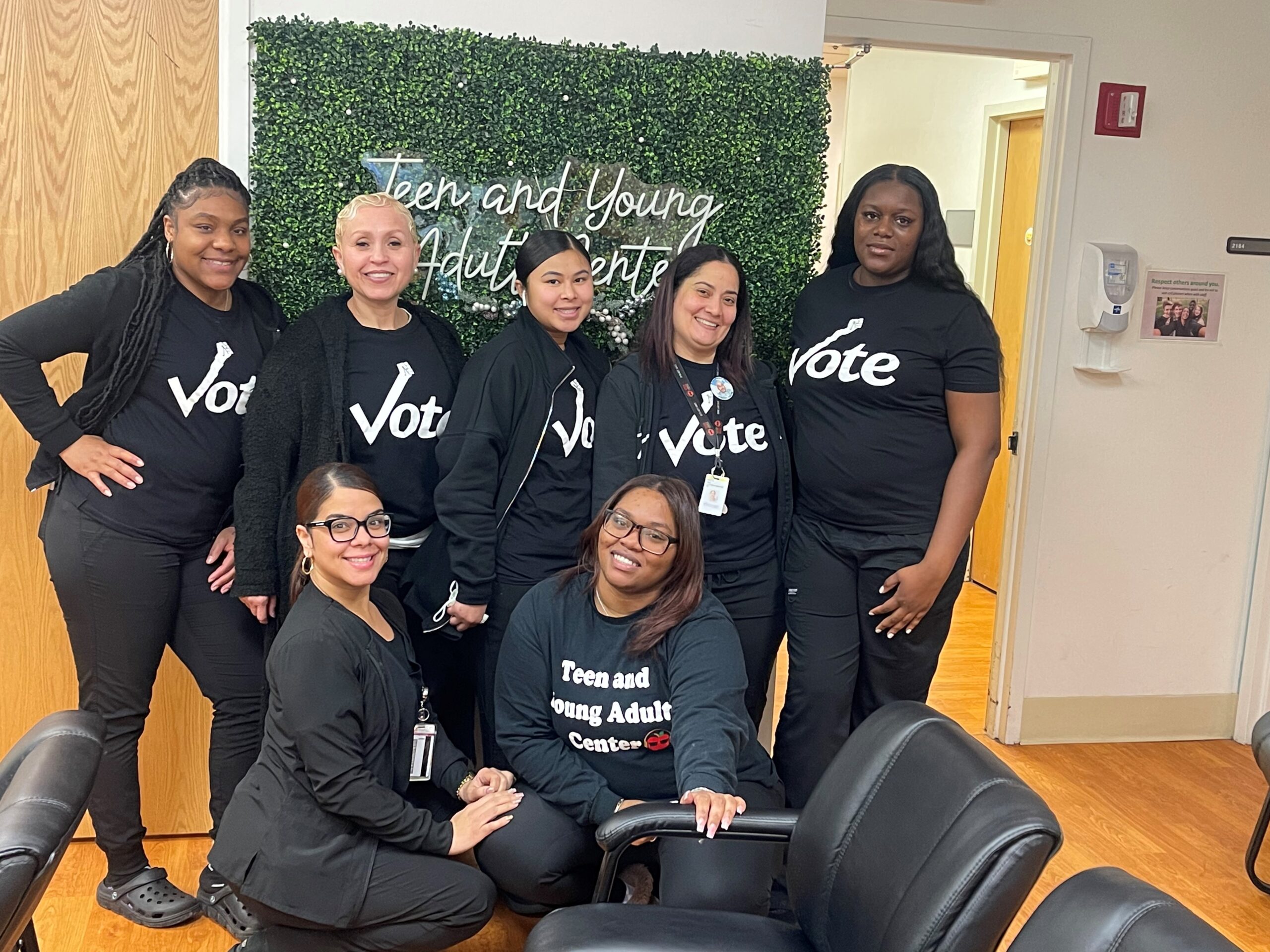
After being told by a union official that “the union isn’t going anywhere,” outpatient service coordinator Shidiah Jackson (back right) and her coworkers led a successful effort to kick the AFSCME union out of St. Christopher Hospital.
PHILADELPHIA, PA – In December 2023, National Right to Work Foundation-supported workers added two new victories to the growing string of successful union decertification efforts around the country.
In Philadelphia, a 270+ worker unit comprised of medical assistants, office coordinators, medical secretaries, and many other support employees voted by a nearly 60% margin to remove the American Federation of State, County and Municipal Employees (AFSCME) union from St. Christopher’s Hospital for Children.
Outpatient service coordinator Shidiah Jackson led the union decertification effort with free legal advice from the Foundation.
In Austin, MN, patient care specialist Erin Krulish and other support workers at the Austin Mayo Clinic location forced Steelworkers union officials out of their facility. That ouster follows multiple recent union removals involving other Minnesota healthcare employees, including nurses at Mankato Mayo Clinic, support staff at Mankato Mayo Clinic, and nurses at St. James Mayo Clinic, all of whom received free Foundation legal aid.
Both Krulish and Jackson kick-started these efforts by submitting decertification petitions to the National Labor Relations Board (NLRB). Each petition contained enough signatures from employees interested in having a union removal vote to prompt the NLRB to hold such a vote.
Healthcare Professionals Free of Monopoly Bargaining and Forced Dues
Both Pennsylvania and Minnesota lack Right to Work protections for their private sector workers, meaning that union officials had the power to enter into contracts with management that would force Krulish, Jackson, and their coworkers to pay union dues or fees just to keep their jobs. In contrast, in Right to Work states, union membership and all union financial support are strictly voluntary.
Steelworkers Officials Depart MN Clinic to Avoid Likely Embarrassing Vote
If a majority of workers vote against a union in a decertification vote or otherwise force a union out, the union loses not only its ability to demand forced dues from employees, but also its monopoly bargaining power.
Such power permits union officials to dictate the contract provisions of all employees in a unit, even those who oppose or voted against the union’s presence in the first place.
The effort by Krulish and her coworkers at Mayo Clinic Austin to remove the Steelworkers union was unique in that they had already stripped union officials of their forced dues power through a “deauthorization election,” which can be petitioned for in the same way as a decertification election. In December 2022, Krulish and her fellow employees voted 49-17 to revoke the union’s power to compel them to pay dues.
Deauthorization is the only way employees in non-Right to Work states can stop a union from seizing dues from workers as a condition of employment, outside of completely decertifying the union.
Krulish and her coworkers resorted to this option because the NLRB’s questionable “contract bar” doctrine prevented them from kicking the union out in December 2022, simply because the union’s contract was still active.
After experiencing a big loss in the deauthorization election, Steelworkers officials likely knew another devastating defeat was coming after Krulish filed her decertification petition. They departed the hospital before the election could take place.
Philly Workers Reject One-Size-Fits-All Union Bureaucracy
In an interview with The Philadelphia Inquirer, Jackson related that she had no contact with the union until she tried to ask for a raise she felt she had earned, at which point hospital administrators said her salary and benefits were a union matter. When she voiced her displeasure with the situation to the union and asked what the union actually did for her, a union official suggested her views didn’t matter anyway because “the union isn’t going anywhere.”
“OK, we’ll see about that,” she told the union agent, according to the Inquirer. Soon after, she proceeded with her decertification effort, which ultimately resulted in the overwhelming vote among her colleagues for ending the union’s so-called “representation.”
“It seems that American medical employees are discovering that union officials’ one-size-fits-all ‘representation’ doesn’t always work to their benefit, nor does it help them take better care of their patients,” commented National Right to Work Foundation President Mark Mix. “It’s easy to see why healthcare workers would want to avoid compulsory dues payments, or being ordered to strike and abandon their patients during a busy time.
“Those in the healthcare industry should know that they have a right to petition the NLRB for a vote to remove a union, and that National Right to Work Foundation staff attorneys can assist them through this daunting process,” Mix added.
Karma Catches Up to SEIU Officials as Philly Coffee Shop Workers Oust Union
The following article is from the National Right to Work Legal Defense Foundation’s bi-monthly Foundation Action Newsletter, November/December 2023 edition. To view other editions of Foundation Action or to sign up for a free subscription, click here.
Good Karma Café coffee shop employees vote out SEIU officials also opposed by many Starbucks workers
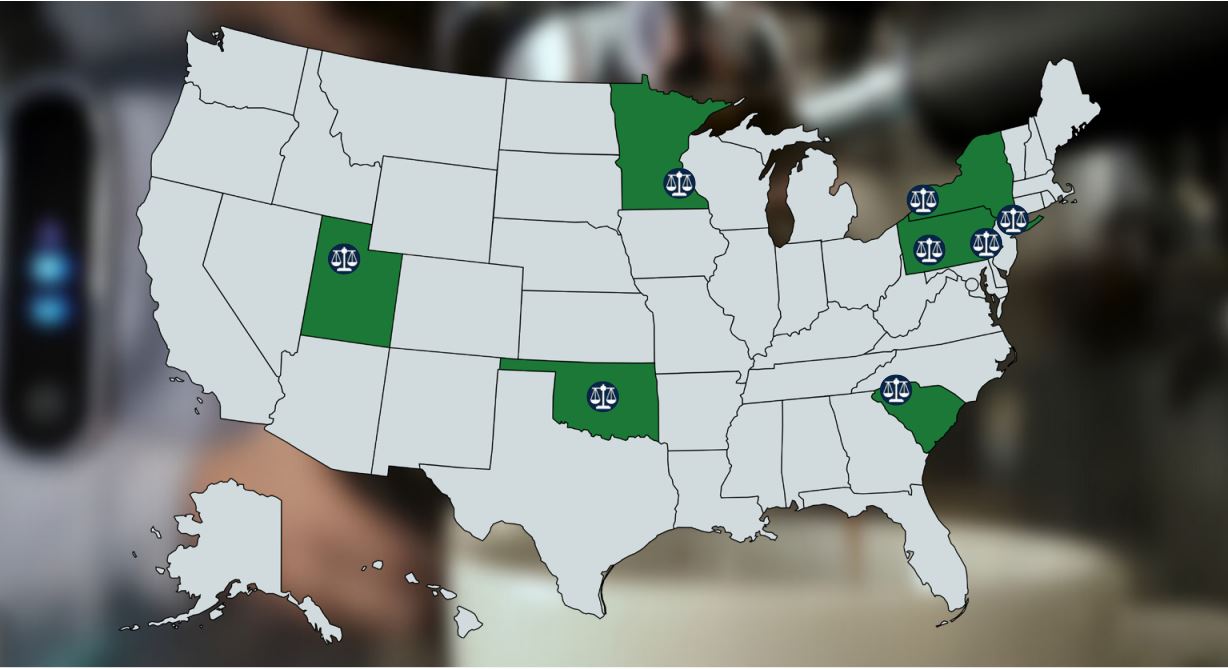
SEIU officials’ aggressive campaign targeting coffee shop employees across the country for union control is fast unravelling, as workers nationwide are now exercising their right to vote unions out, often with Foundation aid.
PHILADELPHIA, PA – Workers United (WU), the same union that runs Starbucks Workers United (SBWU) unions across the country, has been the subject of considerable media attention for its top-down organizing campaign against Starbucks. Little do people know that WU’s puppet masters at the Service Employees International Union (SEIU) have expended millions of dollars in hiring union activists to agitate for union control at these shops — including “salts,” paid union agents that pose as normal employees but often quit soon after they’ve achieved their actual goal of installing the union.
However, aggressive and deceptive WU union tactics did not stop Marco Camponeschi and his coworkers at two locations of Good Karma Café in Philadelphia from voting out the union with free legal aid from the National Right to Work Legal Defense Foundation.
Camponeschi submitted a petition in August asking the National Labor Relations Board (NLRB) Region 4 in Philadelphia to hold a vote to remove the union. The petition contained signatures from enough of his colleagues to prompt the election, and this September, the Good Karma employees voted to send WU officials packing.
Signs of SEIU “Salt” Tactics in Philly
“After the Workers United union was installed, there was a lot of employee turnover, and we soon found ourselves very short-staffed,” Camponeschi commented before the vote. Employee turnover after a union’s installation often indicates “salts” may have been present.
Pennsylvania, because of its lack of Right to Work protections for its private sector employees, permits union officials to make deals with employers that require workers to pay union dues just to stay employed. So by nixing the union, Camponeschi and his coworkers ended both forced union representation and the threat of forced dues. In states with Right to Work laws, in contrast, union membership and all union financial support are strictly voluntary and the choice of each individual worker.
Coffee Workers Leading Nationwide Charge to Boot Out Unwanted Unions
Since the beginning of this year, Starbucks employees in Manhattan, NY; Buffalo, NY; Pittsburgh, PA; Bloomington, MN; Salt Lake City, UT; Oklahoma City, OK; and Greenville, SC, have all sought free Foundation legal aid in pursuing decertification efforts against Workers United union bosses at the NLRB.
Outside of coffee shops, union decertification efforts are becoming much more common. Currently, the NLRB’s data shows a unionized private sector worker is far more likely to be involved in a decertification effort than their nonunion counterpart is to be involved in a unionization campaign. NLRB statistics also show that the number of worker-filed decertification petitions has increased each of the last three years.
“Workers United union officials seem to have a penchant for trying to expand their control over employees without regard for the employees’ interests,” commented National Right to Work Foundation Vice President and Legal Director William Messenger. “So it’s unsurprising that coffee employees nationwide are banding together to vote Workers United out.
“While we’re glad the Good Karma employees were able to successfully exercise their right to oust the unwanted union, it should be noted that NLRB officials across the country are blocking Starbucks employees from exercising that same right at the behest of Workers United union officials,” Messenger added. “Workers should be allowed to vote out unwanted unions, and the NLRB should not stifle that right based on union officials’ whims. That’s especially important as the Biden NLRB seeks to make several rule changes which will make it harder for workers to vote out union officials.”
Philly-Area Dometic Employees Slam UAW Union with Federal Charges for Illegal Threats Linked to Strike
Union steward threatened to fine and terminate any employee who chose to work during strike, seized money illegally from workers
Philadelphia, PA (March 11, 2024) – Seven employees of auto accessory manufacturer Dometic’s Philadelphia-area factory have filed federal charges against the United Auto Workers (UAW) Local 644 union, maintaining that union officials ignored their requests to resign union membership during a strike, and are now unlawfully imposing internal union discipline on them. The workers, Nancy Powelson, Eric Angell, Joseph Buchak, Mario Coccie, Md Rasidul Islam, James Nold, and Robert Haldeman, filed their charges at National Labor Relations Board (NLRB) Region 4 with free legal aid from the National Right to Work Legal Defense Foundation.
The NLRB is the federal agency responsible for enforcing the National Labor Relations Act (NLRA), the federal law that governs private sector labor relations in the United States. Under the NLRA, American private sector workers have a right to refrain from union activity, and the U.S. Supreme Court recognized in General Motors v. NLRB the right of employees to resign union membership during a strike.
All seven workers report in their unfair labor practice charges that a union steward told each of them during a September 8, 2023, meeting that a strike would begin the following week and any employee who crossed the picket line during the strike would be subject to internal union charges, fined, and ultimately terminated.
In October, each of the seven employees exercised their right to resign union membership, and returned to work shortly after doing so. However, on December 10, 2023, UAW union officials notified each worker that the union had started proceedings against them and their presence would soon be required at an internal union trial.
“The Union’s act of summoning Charging Party to attend an internal Union trial for post-resignation conduct interferes, restrains and coerces Charging Party in the exercise of…[NLRA] Section 7 rights, in violation of Teamsters Local 492 (United Parcel Service)…and Section 8(b)(1),” the employees’ charges explain.
After Threatening Illegal Discipline, Union Bosses Seized Money Illegally from Workers
According to the employees’ charges, UAW union bosses’ illegal behavior continued into the new year. Between October 2023 and January 2024, each worker invoked their right under the Foundation-won CWA v. Beck Supreme Court decision, asking the UAW to reduce their dues payments to only the amount that the union claims goes toward bargaining.
Because Pennsylvania lacks Right to Work protections for its private sector employees, union officials can impose contracts that force workers who have refrained from formal union membership to pay fees to the union as a condition of employment. However, as per Beck, this fee must exclude any money that funds a union’s political or lobbying activities, and can only include bargaining-related expenses. Beck also requires union officials to provide financial disclosures to workers who send a Beck notice.
Each charge states that “the [u]nion failed to respond or provide the required [Beck] financial disclosures for itself and its affiliated unions,” which is a violation of the NLRA.
UAW Union Officials Seek to Expand Power Despite Controversies
“The UAW is a repeat offender when it comes to union officials prioritizing their own power over the freedoms and well-being of workers,” commented National Right to Work Foundation President Mark Mix. “While we’re happy to help these Pennsylvania employees of Dometic, it’s likely the case that many more workers under UAW control across the country face similar illegal threats and rights violations.
“The UAW, which was also entangled in a years-long federal probe for embezzling workers’ money as recently as 2022, is currently spending millions to attempt to expand their monopoly bargaining power over additional workers,” Mix added. “Workers targeted by UAW officials for unionization have plenty of reasons to be skeptical of the union hierarchy’s motives and should seek Foundation aid in learning about and defending their rights.”
Second Group of Philly Ultimo Coffee Employees Successfully Remove Unwanted “Workers United” Union
Employees submitted nearly unanimous petition seeking union decertification vote, become fourth recent group of Philly coffee workers to kick out unwanted union
Philadelphia, PA (January 18, 2024) – Ultimo Coffee employee Jacob Johnston and his coworkers have successfully removed unwanted “Workers United” (WU) union officials from the Southwest Center City location of the coffee shop. Johnston and his coworkers’ effort, which comes on the heels of WU’s ouster by employees at Ultimo’s Germantown-area shop, received free legal aid from the National Right to Work Foundation.
Johnston initiated the effort by filing a petition earlier this week asking the National Labor Relations Board (NLRB) to hold a vote to remove the union among his colleagues. The petition contained signatures from nearly all the employees (“full-time and regular part-time Baristas, Bakers, Coffee Quality Managers, Inventory Coordinators/Baristas, and Trainers”) at the shop, greatly exceeding the required threshold to trigger a union decertification vote under federal law. However, before the NLRB could schedule a vote, union officials instead filed a “disclaimer of interest” in continuing their control of the store, likely to avoid an embarrassing loss at the ballot box. Pending the NLRB’s approval of the disclaimer, Johnston and his colleagues are free of the union.
Because Pennsylvania lacks Right to Work protections for its private sector workers, WU union bosses could compel Johnston and his coworkers to pay union dues and fees as a condition of keeping their jobs. In Right to Work states, in contrast, union membership and all union financial support are strictly voluntary. However, in both Right to Work and non-Right to Work states, union officials are empowered by federal law to impose union representation on all employees in a work unit, including those who oppose the union. A successful decertification vote strips union officials of that monopoly power.
“Workers United union officials have had over a year in power in our workplace, and in that time have made it increasingly clear that our interests are not aligned,” commented Johnston. “That’s why we’re joining other Ultimo employees in exercising our right to remove this union.”
Coffee Employees Across Philly and U.S. Seeking Freedom from Union Control
Johnston and his colleagues join Starbucks workers and other coffee employees across the country in banding together to oust the WU union (also referred to as “Starbucks Workers United,” or SBWU), which has targeted coffee shops nationwide for unionization. WU’s unionization activities are funded and directed in significant part by the large Service Employees International Union (SEIU).
Within the last year, Starbucks employees in Manhattan, NY; two Buffalo, NY locations; Pittsburgh, PA; Bloomington, MN; Salt Lake City, UT; Greenville, SC; Oklahoma City, OK; and San Antonio, TX, have all sought free Foundation legal aid in navigating NLRB processes to decertify the WU union. Workers from a Center City Starbucks in Philadelphia are also pursuing a decertification petition against WU with Foundation legal assistance.
Coffee employees in the Philadelphia area have scored a string of recent victories in removing unpopular union officials. In May 2023, workers at Guava and Java’s location at Philadelphia International Airport successfully voted to oust UNITE HERE union officials, and a few months later Good Karma Café employees cast ballots to remove the WU union. This month, Ultimo Coffee barista Samuel Tarasenko and his colleagues successfully forced WU out of the coffee shop’s Germantown-area location.
Many workers targeted by this campaign are demanding decertification votes roughly one year after a WU union was installed at their store, which is the earliest possible opportunity afforded by federal law to do so.
WU Officials Using Legal Maneuvers to Stop Coffee Employees from Removing Union
Unfortunately, union officials have many ways to manipulate federal labor law to prevent workers from voting them out, including by filing unverified charges. Currently, WU union officials are attempting to block Starbucks workers nationwide (including at the Center City Starbucks in Philadelphia) from exercising their right to decertify the union by filing a blizzard of charges against company management.
“The ‘Workers United’ union’s aggressive unionization campaign may have generated plenty of headlines, but the growing number of decertification efforts by coffee workers in Philadelphia and around the country demonstrates that many rank-and-file workers have come to the conclusion that remaining unionized is contrary to their best interests,” commented National Right to Work Foundation President Mark Mix. “While it’s encouraging that some coffee shop employees have been successful after fighting for their right to remove WU union bosses, others are being trapped by union legal tactics which only demonstrate further that the union is more concerned with maintaining power than respecting worker rights.”
“Workers who encounter coercive maneuvers from WU union officials should contact Foundation attorneys for free legal aid in defending their free choice rights,” Mix added.
Support Staff at St. Christopher’s Hospital for Children Vote to Eject AFSCME Union Officials
Large unit of over 270 medical assistants, office coordinators, and others will now be free of union control
Philadelphia, PA (December 20, 2023) – Support staff at St. Christopher’s Hospital for Children in Philadelphia have successfully voted American Federation of State, County, and Municipal Employees (AFSCME) union officials out of power at their facility. The victory follows hospital employee Shidiah Jackson’s submission of a petition to the National Labor Relations Board (NLRB), which contained signatures from enough of her coworkers to trigger a union decertification vote under NLRB rules.
National Right to Work Foundation staff attorneys provided Jackson with free legal advice during the decertification process. The approximately 277-person work unit contains medical assistants, office coordinators, medical secretaries, and many other support employees, and the tally of ballots showed nearly 60% of those participating in favor of ousting AFSCME. The vote occurred on November 30, and the NLRB certified the results of the election earlier this month.
The NLRB is the federal agency responsible for enforcing federal labor law, which includes administering elections to install or remove unions. Under NLRB rules, a union decertification petition must contain the signatures of at least 30% of the employees at a workplace to trigger a decertification election.
If a majority of workers vote against a union in a decertification vote, the union is removed from the workplace and loses its monopoly bargaining power. Such power permits union officials to dictate the contract provisions of all employees in a unit, even those who oppose or voted against the union.
Because Pennsylvania lacks Right to Work protections for its private sector workers, AFSCME union bosses had the power to enter into contracts with hospital management that forced Jackson and her coworkers to pay union dues or fees just to keep their jobs. In contrast, in Right to Work states, union membership and all union financial support are strictly voluntary.
Healthcare Employees Across the U.S. Reject Union Control
“AFSCME union officials were taking money from many employees’ paychecks but didn’t advocate effectively for me or my colleagues,” Jackson commented. “I’m glad that we were able to exercise our right to remove the AFSCME, and I think we will be able to serve the hospital’s medical staff and patients better with the union gone.”
In Minnesota, support staff at Mayo Clinic in Austin are currently seeking to boot Steelworkers union officials from their facility as well. Foundation staff attorneys earlier this month filed an NLRB union decertification petition for patient care specialist Erin Krulish, which contains signatures from a majority of other support staff at the clinic. Krulish’s effort is the latest in a string of Foundation-backed union decertification efforts in the Gopher State, with nurses and support staff at Mankato’s Mayo Clinic and St. James Mayo Clinic nurses all voting successfully to remove unions in 2022 alone.
“It seems that American medical employees are discovering that union officials’ one-size-fits-all ‘representation’ doesn’t always work to their benefit, nor does it help them take better care of their patients,” commented National Right to Work Foundation President Mark Mix. “It’s easy to see why healthcare workers would want to avoid compulsory dues payments, or being ordered to strike and abandon their patients during a busy time.”
“Those in the healthcare industry should know that they have a right to petition the NLRB for a vote to remove a union, and that National Right to Work Foundation staff attorneys can assist them through this daunting process,” Mix added.
Philadelphia Ultimo Coffee Workers Win Bid to Remove So-Called “Workers United” Union
Ultimo employees are third recent group of coffee shop workers in Philly to kick out an unwanted union, as Center City Starbucks workers await vote to remove SBWU
Philadelphia, PA (January 8, 2024) – Following Ultimo Coffee employee Samuel Tarasenko’s submission of a petition seeking an employee vote to remove the union, “Workers United” (WU) union officials filed paperwork announcing they will give up control of the Germantown-area coffee shop. Pending certification of the union’s disclaimer of interest, Tarasenko and his fellow Ultimo employees will be free of the control of the WU union.
Tarasenko’s petition, which he filed with free legal aid from the National Right to Work Legal Defense Foundation, contained signatures from a majority of employees at his workplace, more than enough to trigger a vote under NLRB rules. Because Pennsylvania lacks Right to Work protections for its private sector workers, SBWU union bosses can compel Tarasenko and his coworkers to pay union dues as a condition of keeping their jobs. In Right to Work states, in contrast, union membership and all union financial support are strictly voluntary.
However, in both Right to Work and non-Right to Work states, union officials in a unionized workplace are empowered by federal law to impose a union contract on all employees in a work unit, including those who oppose the union. A successful decertification vote strips union officials of that power. However, WU union officials, likely fearing a losing vote tally, disclaimed interest in the unit of Ultimo employees before a vote could occur.
Coffee Employees Across Philly and U.S. Seeking Freedom from Union Control
Tarasenko and his colleagues join Starbucks workers and other coffee employees across the country in banding together to vote out WU union officials, who have targeted coffee shops nationwide for unionization. This year, Starbucks employees in Manhattan, NY; two Buffalo, NY locations; Pittsburgh, PA; Bloomington, MN; Salt Lake City, UT; Greenville, SC; Oklahoma City, OK; and San Antonio, TX, have all sought free Foundation legal aid in filing or defending decertification petitions at the NLRB.
In Philadelphia, workers at Guava and Java’s location at Philadelphia International Airport successfully voted in May 2023 to oust UNITE HERE union officials, and a few months later Good Karma Café employees voted out WU union officials. Tarasenko and his colleagues are now the third recent group of Philadelphia coffee employees to successfully remove union representation with Foundation aid. Currently, workers from a Center City Starbucks are pursuing a decertification petition with Foundation legal assistance, also against the Starbucks Workers United (SBWU) union.
This growing wave of decertification attempts is occurring after WU union agents engaged in a multi-year, aggressive unionization campaign against Starbucks employees. As part of the campaign, WU (an affiliate of the large Service Employees International Union) spent over $2 million to target the coffee chain with paid union agents – including “salts” who obtained jobs at Starbucks locations with the covert mission of installing union power. After achieving this goal, many “salts” abandoned the stores.
Many workers targeted by this campaign are demanding decertification votes roughly one year after a WU union was installed at their store, which is the earliest possible opportunity afforded by federal law to do so.
WU Officials Using Legal Maneuvers to Stop Coffee Employees from Removing Union
Unfortunately, union officials have many ways to manipulate federal labor law to prevent workers from voting them out, including by filing unverified charges. Currently, WU union officials are attempting to block Starbucks workers nationwide (including at the Center City Starbucks in Philadelphia) from exercising their right to decertify the union by filing charges against company management.
“While we’re happy that Mr. Tarasenko and his coworkers successfully sent the WU union packing, it’s unfortunate that many others in Philadelphia and across the country are unable to exercise this right due to union legal tactics,” commented National Right to Work Foundation President Mark Mix. “That WU union officials spent millions to extend their power over Starbucks and other coffee employees and are now stopping those same employees from exercising their rights indicates their campaign is about union power, not workers’ concerns.”
“Workers who encounter coercive maneuvers from WU union officials should contact Foundation attorneys for free legal aid in defending their free choice rights,” Mix added.





