
Lucas County Employees Win Back Unconstitutionally Seized Money from AFSCME Union
Employees exercised constitutional right to stop funding union activities, but union-imposed restriction blocked exercise of right for over 90 percent of year
Toledo, OH (April 4, 2023) – Three Lucas County Job and Family Services (JFS) employees have emerged victorious in their federal civil rights lawsuit against the American Federation of State, County, and Municipal Employees (AFSCME) Ohio Council 8 union. The employees, Penny Wilson, Theresa Fannin, and Kozait Elkhatib, charged AFSCME union bosses in December 2022 with seizing money from their paychecks in violation of the First Amendment.
Wilson, Fannin, and Elkhatib received free legal assistance from the National Right to Work Legal Defense Foundation and The Buckeye Institute. They asserted their constitutional rights recognized in the landmark 2018 Foundation-won Janus v. AFSCME U.S. Supreme Court decision. In Janus, the Court declared it a First Amendment violation to force public sector workers to pay union dues or fees as a condition of employment. The Court also ruled that union officials can only deduct money from the paycheck of a public sector employee who has voluntarily waived his or her Janus rights.
Now, as part of a settlement, AFSCME Ohio Council 8 must return illegally seized money to each woman, and the union bosses are forbidden from having Lucas County deduct union dues from any of their paychecks going forward. The settlement fully vindicates the employees’ First Amendment Janus rights.
Lucas County Employees Weren’t Informed of First Amendment Right to Abstain from Union Dues
Officials from AFSCME Council 8 and Lucas County JFS enforced a policy against the women which permitted the taking of union dues directly from their wages. According to the policy, employees who wish to stop subsidizing the union have only a handful of days per year in which to do so – an “escape period” that effectively forbids the exercise of their First Amendment Janus rights for more than 90 percent of the year.
AFSCME union officials never informed Wilson, Fannin, and Elkhatib of this restriction. Union officials also never told the women that they had a First Amendment right under Janus to abstain from dues deductions, or that union dues could only be taken from them if they waived that right.
The employees discovered their Janus rights independently. Each attempted to exercise those rights twice by sending letters to AFSCME union officials stating that they were ending their union memberships and terminating dues deductions. AFSCME union officials denied all three women’s requests, stating that union dues deductions would continue because the letters missed the narrow “escape period” the union imposed.
“Plaintiffs did not knowingly, intelligently, or voluntarily waive their First Amendment rights…The restrictions on stopping government dues deductions…are unenforceable as against public policy because the restriction significantly impinges on employees’ First Amendment rights,” read the federal complaint.
Employees Often Must Seek Return of Dues Seized Without Consent
Wilson, Fannin, and Elkhatib’s win is the latest in a chain of successful Foundation-backed lawsuits defending Ohio public servants’ Janus rights. In 2020, for example, Foundation attorneys challenged a so-called “maintenance of membership” requirement that AFSCME Ohio Council 11 used to lock public employees out of their Janus rights for three years at a time. Rather than face off against Foundation attorneys, Council 11’s union officials backed down and settled the case. As a result, Foundation attorneys freed almost 30,000 Ohio public employees from the onerous arrangement.
“Once again Foundation-backed Ohio public employees have successfully defended their Janus rights against the schemes of AFSCME union officials, who were more concerned with accumulating dues money than respecting the First Amendment,” commented National Right to Work Foundation President Mark Mix. “America’s public workers should not have to file federal lawsuits to defend their Janus rights. Instead, before taking dues, union officials should inform workers about their Janus rights and honor those rights.”
“It’s heartening that the union has agreed to resolve this dispute by honoring their former members’ wishes; it’s disappointing that a lawsuit was required to reach that common-sense result,” said Jay R. Carson, senior litigator at The Buckeye Institute.
Cleveland Probation Officer Challenges Years of Janus-Breaching Dues Seizures
The following article is from the National Right to Work Legal Defense Foundation’s bi-monthly Foundation Action Newsletter, November/December 2021 edition. To view other editions of Foundation Action or to sign up for a free subscription, click here.
Union officials covertly began seizing full dues after Janus decision, refuse to return money

CLEVELAND, OH – Cuyahoga County probation officer Kimberlee Warren is suing the Fraternal Order of Police Ohio Labor Council (FOP) union, charging union officials with breaching her First Amendment right as a public employee to refuse to support union activities. She is receiving free legal representation from National Right to Work Legal Defense Foundation staff attorneys.
Foundation staff attorneys contend that FOP union officials ignored her constitutional rights recognized in the Foundation-won 2018 Janus v. AFSCME U.S. Supreme Court decision. In Janus, the Justices declared it a First Amendment violation to force any public sector employee to pay union dues or fees as a condition of keeping his or her job. The Court also ruled that public employers and unions cannot take union dues or fees from a public sector employee unless they obtain that employee’s affirmative consent.
Warren was not an FOP union member, even before the Janus decision. However, her federal lawsuit details that astoundingly union officials furtively opted her into formal membership and full dues deductions from her paycheck after the Janus decision was issued, an event which should have prompted union officials to cease seizing all money from her.
FOP Union Bosses Brazenly Increased Forced-Dues Deductions After Janus
FOP union chiefs continued these surreptitious deductions until December 2020, Warren’s lawsuit notes, when she notified union officials that they were violating her First Amendment rights by taking the money and demanded that the union stop the coerced deductions and return all money that they had taken from her paycheck since the Janus decision.
When the deductions ended, FOP chiefs refused to give back the money that they had already seized from Warren in violation of her First Amendment rights. They claimed the deductions had appeared on her check stub and thus any responsibility to end the deductions fell on her — even though to her knowledge they had never obtained permission to opt her into membership or to take cash from her paycheck to begin with.
According to the lawsuit, Warren also asked FOP bosses to provide any dues deduction authorization document she might have signed. FOP officials rebuffed this request as well.
Union bosses were authorized by state law before the Janus ruling to seize from non-member workers’ paychecks only the part of dues they claim go toward “representational” activities. FOP union officials took this amount from Warren prior to Janus. However, their forcing her into membership afterward means they started taking full dues from her wages, even more money than they did before Janus despite the complete lack of consent.
Warren’s lawsuit seeks the return of all dues that FOP union officials garnished from her paycheck since the Janus decision was handed down.
Probation Officer Seeks Punitive Damages for Unchecked Janus Abuses
Her lawsuit also seeks punitive damages because FOP showed “reckless, callous” indifference toward her First Amendment rights by snubbing her refund requests.
“All over the country, union officials are stopping at nothing to ensure they can continue ignoring workers’ First Amendment Janus rights and continue siphoning money from the paychecks of dissenting employees,” commented National Right to Work Foundation President Mark Mix. “After Janus was handed down, FOP union officials in Warren’s workplace could have asked her to support the union voluntarily, but instead, tellingly, they began surreptitiously siphoning full dues out of her paycheck without her consent in direct contravention of the Supreme Court’s ruling.”
Cuyahoga County Probation Officer Hits Union with Federal Lawsuit for Years of Unconstitutional Dues Seizures
Union officials took full union dues from nonmember officer without consent, then ignored requests to return illegally-seized money
Cleveland, OH (August 25, 2021) – Cuyahoga County probation officer Kimberlee Warren is suing the Fraternal Order of Police (FOP) union in her workplace, charging union officials with breaching her First Amendment right as a public employee to refuse to support union activities. She is receiving free legal representation from National Right to Work Legal Defense Foundation staff attorneys, in partnership with attorneys with the Ohio-based Buckeye Institute.
Foundation staff attorneys contend that FOP union officials ignored her constitutional rights recognized in the landmark 2018 Janus v. AFSCME U.S. Supreme Court decision, which was argued and won by Right to Work Foundation staff attorneys.
In Janus, the Justices declared it a First Amendment violation to force any public sector employee to pay union dues or fees as a condition of keeping his or her job. The Court also ruled that public employers and unions cannot take union dues or fees from a public sector employee unless they obtain that employee’s affirmative consent.
The federal lawsuit says that Warren was not a member of the FOP union before the Janus decision in June 2018, but FOP union bosses collected union dues from her wages without her consent. According to the complaint, this continued until around December 2020, when Warren notified union officials that they were violating her First Amendment rights by taking the money and demanded that the union stop the coerced deductions and return all money that they had taken from her paycheck since the Janus decision.
When the deductions ended, FOP chiefs refused to give back the money that they had already seized from Warren in violation of her First Amendment rights. They claimed the deductions had appeared on her check stub and thus any responsibility to cease the deductions fell on her – even though to her knowledge they had never obtained permission to opt her into membership or to take cash from her paycheck in the first place.
According to the lawsuit, Warren also asked FOP bosses to provide any dues deduction authorization document she might have signed. FOP officials rebuffed this request as well.
The High Court ruled in Janus that, because all activities public sector unions undertake involve lobbying the government and thus are political speech, forcing a public employee to pay any union dues or fees as a condition of keeping his or her job is forced political speech the First Amendment forbids.
Union bosses were permitted by state law before the Janus ruling to seize from nonmember workers’ paychecks only the part of dues they claimed went toward “representational” activities. FOP union officials took this amount from Warren prior to Janus. However, they furtively designated her as a member following the decision, and began taking full dues, deducting even more money from her wages than they did before Janus despite the complete lack of any consent.
Warren is now suing the FOP union in the U.S. District Court for the Northern District of Ohio. Her lawsuit seeks the return of all dues that FOP union officials garnished from her paycheck since the Janus decision was handed down. It also seeks punitive damages because FOP showed “reckless, callous” indifference toward her First Amendment rights by snubbing her refund requests.
Warren’s lawsuit comes as other Foundation-backed lawsuits for employees defending their First Amendment Janus rights seek writs of certiorari from the Supreme Court. This includes cases brought for Chicago and New Jersey public educators which challenge “window periods” that severely limit when they and their fellow educators can exercise their First Amendment right to stop union dues deductions, sometimes to periods as short as ten days per year. In a California federal court, Foundation staff attorneys are also aiding a University of California Irvine lab assistant in fighting an anti-Janus state law that gives union bosses full control over whether employers can stop sending an employee’s money to the union after that employee exercises his or her Janus rights.
“All over the country, union officials are stopping at nothing to ensure they can continue ignoring workers’ First Amendment Janus rights and continue siphoning money from the paychecks of dissenting employees,” commented National Right to Work Foundation President Mark Mix. “After Janus was handed down, FOP union officials in Warren’s workplace could have come to her to attempt to get her to support the union voluntarily, but tellingly instead they began surreptitiously siphoning full dues out of her paycheck without her consent in direct contravention of the Supreme Court.”
“Despite her repeated requests, FOP bosses have continued to trample Warren’s Janus rights, and Foundation staff attorneys are fighting to stop this gross injustice against her and punish FOP bosses for their brazen behavior,” Mix added.
Ohio Municipal Employee Challenges Deceitful Unconstitutional Dues Deductions
The following article is from the National Right to Work Legal Defense Foundation’s bi-monthly Foundation Action Newsletter, March/April 2021 edition. To view other editions or to sign up for a free subscription, click here.
IUOE bosses’ scheme renames forced-fee payments clearly outlawed in Janus decision
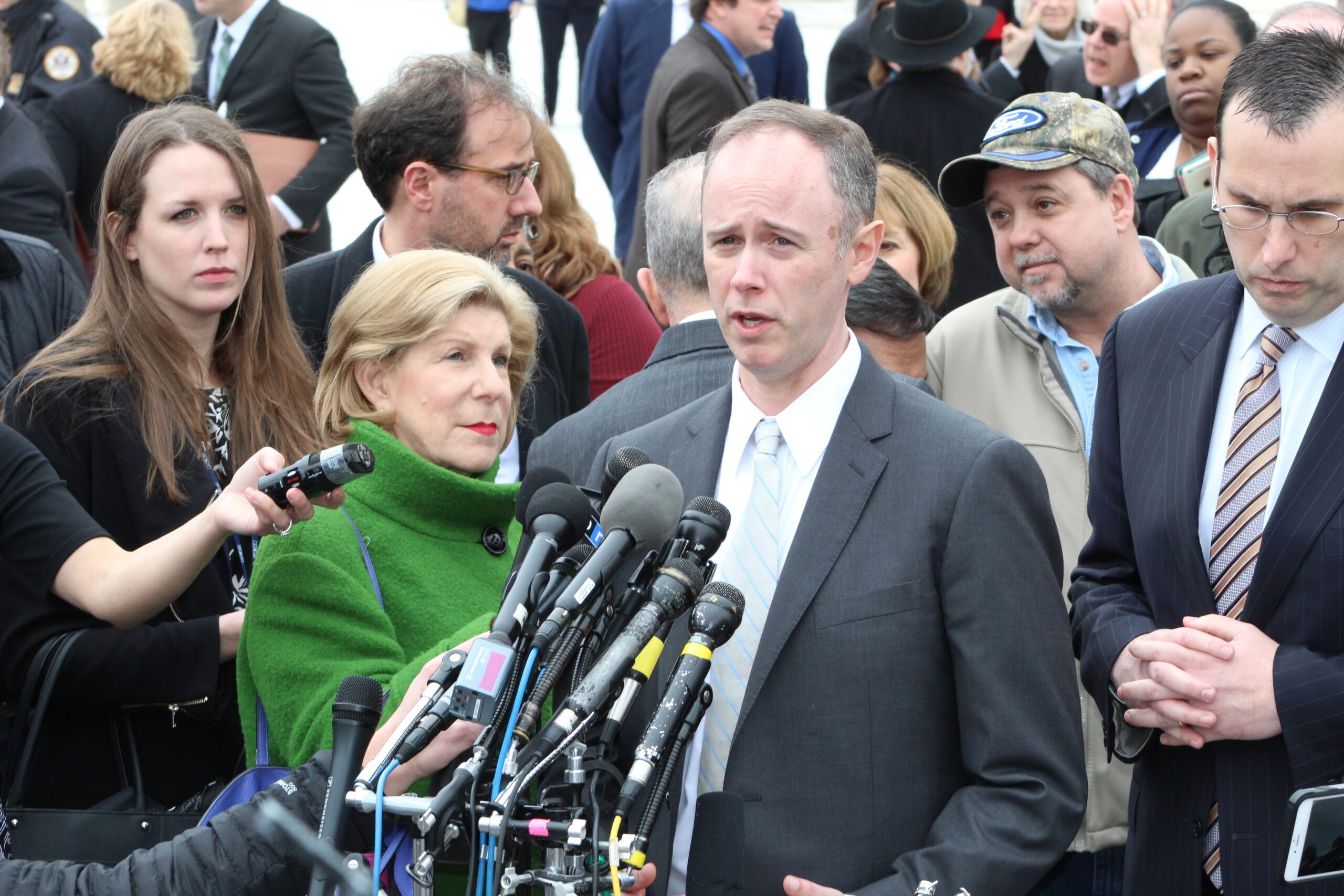
Veteran Foundation staff attorney William Messenger successfully argued Janus over two years ago, but union bosses are still concocting schemes to circumvent it. Timothy Crane is now fighting a particularly flagrant example.
CINCINNATI, OH – With free legal aid from National Right to Work Foundation staff attorneys, City of Hamilton employee Timothy Crane is suing International Union of Operating Engineers (IUOE) Local 20 union officials and the City of Hamilton for seizing a compulsory fee from his paycheck in violation of his First Amendment rights.
His complaint, filed in the U.S. District Court for the Southern District of Ohio, contends that union bosses are infringing on his rights under the Janus v. AFSCME decision by forcing him to pay a so-called “agreement administration fee” equal to more than 90 percent of full union dues as a condition of his employment.
In the 2018 Foundation-won Janus decision, the High Court ruled that no public worker can be forced to pay union dues or fees as a condition of getting or keeping a job. The Court also held that union dues or fees can only be deducted from a public employee’s paycheck if that employee clearly and affirmatively waives his or her right not to pay. Justice Samuel Alito wrote for the Court majority that “such a waiver cannot be presumed” by union or state officials.
Even After City Employee Exercised His Janus Rights, Union Honchos Seized Fees
Crane sent letters to IUOE union officials in both August and September of 2020, attempting to exercise his First Amendment Janus right to end dues deductions from his paycheck. After sending these two letters, however, he discovered that an “agreement administration fee” was now being taken from his pay by the City at the behest of IUOE union bosses.
Crane’s complaint contends that this is just a so-called “agency fee” — compulsory union payments charged to employees who refrain from formal union membership that were definitively outlawed by the Janus v. AFSCME decision — masquerading under a different name. The suit urges the District Court to declare it unconstitutional for IUOE Local 20 and the City of Hamilton to force him to pay this compulsory union fee. Crane’s lawsuit also seeks a refund of all money that the union has illegally taken from his paycheck under the unconstitutional arrangement.
Chain of Foundation-backed Janus Victories for Ohio Workers Likely to Continue
Since Janus was handed down by the Supreme Court, Foundation staff attorneys have already won favorable settlements in four cases for Buckeye State public workers who have challenged illegal union-created restrictions on the exercise of Janus First Amendment rights. In a July 2020 settlement in a class-action lawsuit filed by four state workers, nearly 30,000 Ohio public employees were freed from an “escape-period” scheme imposed by Ohio Civil Service Employees Association (OCSEA) union chiefs, which limited to just a handful of days every few years the time in which a public employee could exercise his or her Janus rights.
“IUOE bosses, who may have thought they were going to trick employees into funding their agenda against their will with this blatantly unconstitutional scheme, have now been caught red-handed,” commented National Right to Work Foundation Vice President and Legal Director Raymond LaJeunesse. “Rank-and-file workers like Mr. Crane now see that IUOE officials are far more interested in keeping hard-earned employee cash flowing into their coffers than in respecting the First Amendment rights of the workers they claim to represent.”
LaJeunesse continued: “The string of Foundation victories for independent-minded Buckeye State employees who just want to exercise their First Amendment rights is not going to end here.”
More Workers Ask Supreme Court to Refund Unconstitutional Forced Dues
The following article is from the National Right to Work Legal Defense Foundation’s bi-monthly Foundation Action Newsletter, January/February 2021 edition. To view other editions or to sign up for a free subscription, click here.
Four Foundation-backed cert petitions now filed at High Court with millions at stake
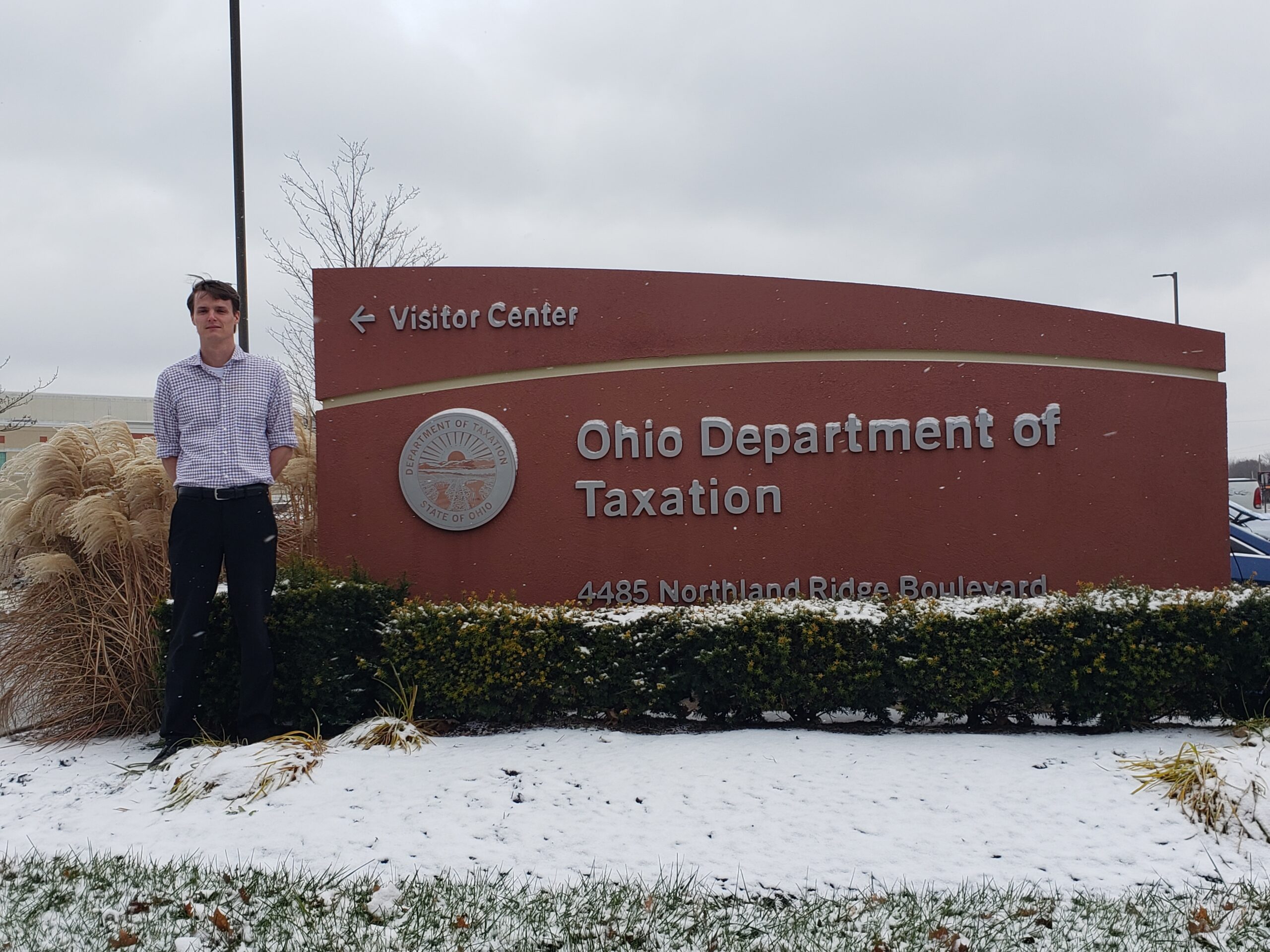
Foundation staff attorneys asked the Supreme Court to hear Nathaniel Ogle’s case, which seeks refunds for him and his coworkers of forced union dues that were seized from their paychecks in violation of the First Amendment.
WASHINGTON, DC – Across the nation, public employees continue to seek free legal aid from National Right to Work Foundation staff attorneys, to fight for their First Amendment rights recognized in the landmark Janus v. AFSCME Supreme Court ruling. Janus was argued and won by Foundation staff attorneys.
Janus affirmed that public employees cannot be required to subsidize union activities as a condition of employment and that union payments can only be deducted with an employee’s freely given consent.
Despite this clear ruling, union bosses have almost without exception refused to return money seized from workers in violation of the First Amendment. In response, Foundation staff attorneys are now assisting workers in more than a dozen cases seeking to force union officials to return illegal forced fees to tens of thousands of employees, with four such cases now pending at the U.S. Supreme Court.
Union Officials Refuse to Refund Illegally Seized Dues Post-Janus
In November, attorneys for Connecticut Department of Energy and Environmental Protection employees Kiernan Wholean and James Grillo filed a petition for writ of certiorari with the Supreme Court. It is asking the Justices to hear their case, seeking back years of union dues that they and their coworkers were forced to pay to Service Employees International Union (SEIU) union bosses in violation of the First Amendment. Their petition follows one filed in October for Ohio Department of Taxation employee Nathaniel Ogle, whose case seeks to require AFSCME union bosses to similarly return forced fees seized in violation of the Janus standard from potentially thousands of Ohio government employees.
With these two new cert petitions, there are now seven pending before the Supreme Court on this issue, four of which were filed for workers by Foundation staff attorneys. That includes the continuation of the original Janus case brought by Mark Janus.
If the Supreme Court decides to hear any one of these cases, a favorable ruling would create another groundbreaking precedent, potentially prompting the return in Foundation cases alone of over $130 million to employees fighting to get back money taken in contravention of their Janus rights.
Wholean and Grillo, who are not members of SEIU,
originally filed their case in 2018 in the U.S. District Court for the District of Connecticut shortly before the High Court decided Janus. The State ceased deducting dues from their paychecks for SEIU following a letter to the State Comptroller from a National Right to Work Foundation attorney, which threatened legal action for any dues deductions from non-members that continued after Janus.
However, SEIU union officials continue to refuse to refund dues that they took from Wholean, Grillo and other non-members in violation of the Janus First Amendment standard before the decision, even though they knew the employees never consented to pay.
Ogle filed his case at the District Court for the Southern District of Ohio just after Janus was decided. Like Wholean and Grillo, he was never a member of the union but had mandatory union fees deducted from his paychecks. The Ohio affiliate of the national AFSCME union has around 30,000 public employees across the Buckeye State under its bargaining monopoly. If a class is eventually certified in Ogle’s case, it could potentially include thousands of workers.
Foundation Attorneys: High Court Must Reject Union Attempts to Dodge Janus
Lower courts in these and other lawsuits have accepted union lawyers’ so-called “good faith” contentions for letting union bosses keep the dues collected in violation of the non-members’ constitutional rights. This is at odds with the Supreme Court’s Janus ruling, which did not proscribe retroactive relief. Indeed, it observed that union officials have been “on notice” for years that mandatory fees likely would not comply with the High Court’s heightened level of First Amendment scrutiny, articulated in the 2012 Supreme Court decision in the Foundation’s Knox v. SEIU case.
Foundation staff attorneys point out in the petitions before the Supreme Court that a “good faith” defense has never existed under Section 1983 of the Civil Rights Act of 1871, the statute under which these lawsuits are brought. Section 1983 specifically imposes liability on those who violate the constitutional rights of others while acting “under color of ” existing law.
Not all judges, however, have been convinced by union officials’ dubious “good faith” argument for keeping the unconstitutionally seized payments. In Wenzig, another Foundation-backed case, a majority of a Third Circuit panel denied the existence of such a defense. In a supplemental brief, Foundation attorneys cited the confusion among lower courts as a significant reason the court should hear the continuation of Janus.
“With seven petitions on this issue now pending with the High Court and more to be filed soon, it is time the Supreme Court hears this issue and ends the denial of justice for tens of thousands of non-member government employees whose First Amendment rights were violated,” commented National Right to Work Foundation President Mark Mix. “Section 1983 of the Civil Rights Act, the federal statute under which all these cases were filed, was specifically intended to allow individuals to remedy the deprivation of their rights when it occurs under color of law. It’s outrageous that union bosses have thus far been allowed to keep money seized in violation of the First Amendment because it was authorized by then-existing but unconstitutional law.
“That result is especially specious because, as the Supreme Court recognized in Janus, union bosses have been ‘on notice’ since 2012 that forcing government employees to pay union fees was likely unconstitutional,” Mix added.
Ohio Public Workers Axe Illegal Restrictions on Janus Rights for Almost 30,000
The following article is from the National Right to Work Legal Defense Foundation’s bi-monthly Foundation Action Newsletter, September/October 2020 edition. To view other editions or to sign up for a free subscription, click here.
Foundation-backed lawsuit ends AFSCME bosses unlawful “escape period” scheme
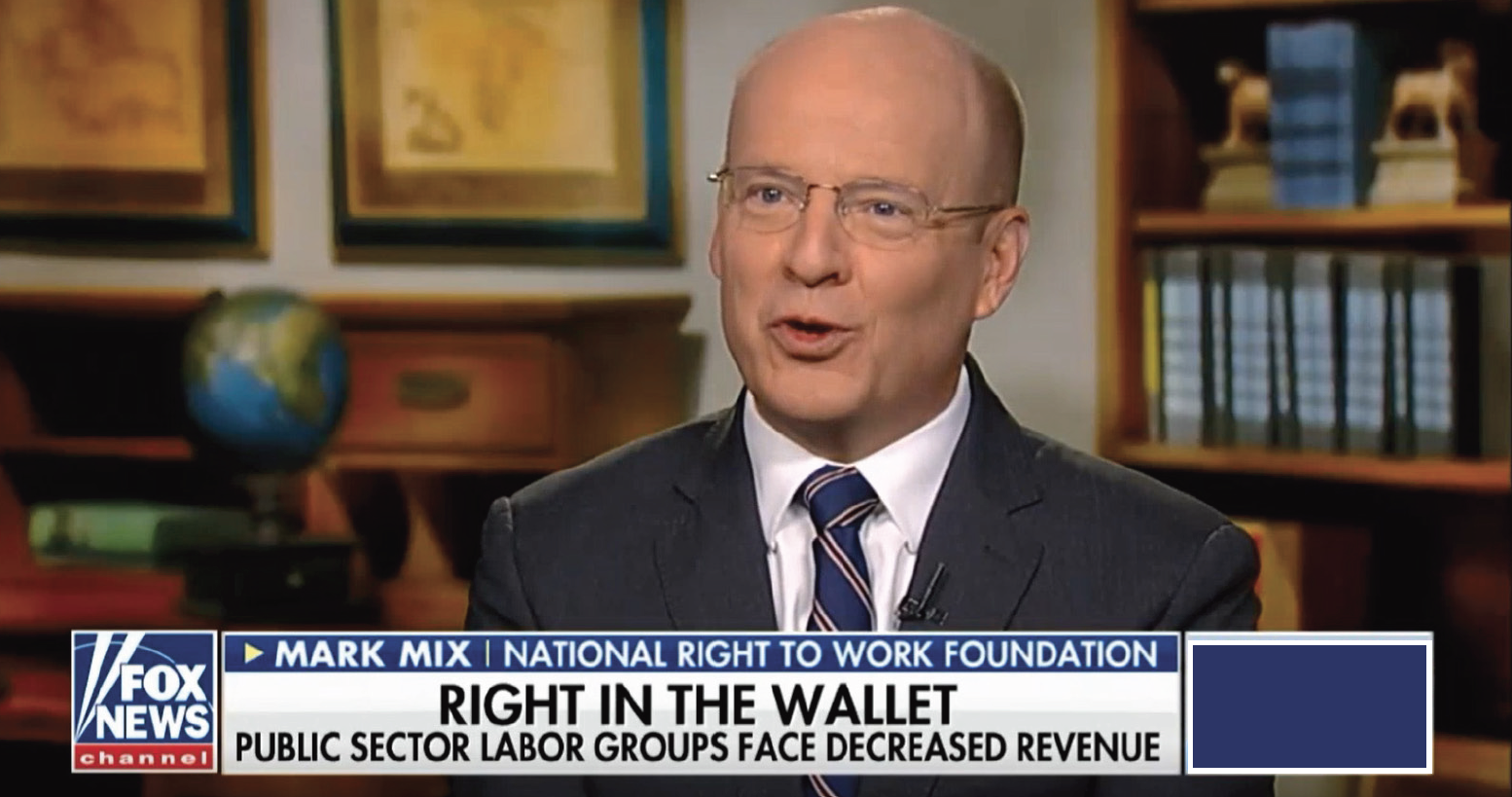
Two years after Foundation staff attorneys won Janus, public sector workers continue to cast off the shackles of forced union dues. In Allen, the plaintiffs successfully defended the Janus rights of thousands of Ohio public workers.
COLUMBUS, OH – A lawsuit by four Ohio public employees has secured the end of an illegal dues deduction scheme used by Ohio Civil Service Employees’ Association (OCSEA/AFSCME Council 11) union bosses to block an estimated 28,000 workers from exercising their First Amendment right to stop union dues payments. The workers obtained free legal representation from National Right to Work Foundation staff attorneys in challenging the policy.
The class-action suit, Allen v. AFSCME, challenged OCSEA’s so-called “maintenance of membership” policy, which trapped workers in forced-dues payments except for a brief “escape period” once every three years at the expiration of the union monopoly contract. The workers argued this policy violated their First Amendment rights under the Janus v. AFSCME Supreme Court decision.
In Janus, the High Court struck down mandatory union fees for public sector workers as an infringement of their First Amendment rights, and ruled that the government can only deduct union dues or fees with an individual’s affirmative consent.
After Freeing Workers, Foundation Attorneys Warn of Future Union Boss Tricks
As a result of the lawsuit, OCSEA officials and the State of Ohio have rescinded the “maintenance of membership” restriction on when state workers can exercise their First Amendment right to cut off union dues deductions.
They must also honor requests to stop dues deductions from any employees who signed the AFSCME dues authorization form at issue in the lawsuit. Finally, AFSCME bosses repaid dues seized illegally under the scheme to the plaintiffs and more than 150 other employees who tried to cut off union dues deductions after Janus was decided.
Knowing that union bosses don’t easily give up in their crusades to coerce workers into paying dues, however, Foundation staff attorneys issued a legal notice shortly after the case wrapped up, warning workers that OCSEA union bosses may soon solicit them to sign new dues deduction forms which are not covered by the litigation. The new forms will “purport to restrict” when employees can stop dues, it warns.
In light of that, the notice reminds workers that under Janus, no Ohio public employee can be forced to sign a union dues deduction form as a condition of employment, no matter what union agents may tell them.
Just Latest in String of Ohio Worker Victories over “Escape Periods”
Allen is not the only case in which Ohio public employees have, with National Right to Work Foundation legal aid, successfully challenged union boss attempts to limit their rights.
Seven other Ohio public employees won the first-in-the-nation victory against unconstitutional “escape periods” with Foundation aid in January 2019, after they filed a class-action federal lawsuit challenging a similar policy created by AFSCME Council 8 bosses. They won a settlement ending the restrictions for themselves and their coworkers. That win was followed by two other Ohio public workers, Connie Pennington and Donna Fizer, successfully ending “escape period” restrictions with Foundation assistance later in 2019.
“Although this chain of victories for Buckeye State public employees is certainly encouraging, the widespread nature of these schemes shows there remains much work to do to force union bosses to end their unconstitutional restrictions on public employees’ First Amendment Janus rights,” observed National Right to Work Foundation President Mark Mix. “Foundation litigation has already freed hundreds of thousands of public employees from forced union dues, but likely millions more remain trapped and unable to exercise their rights. That is why Foundation litigators will continue to file these cases.”
National Right to Work Foundation Issues Special Legal Notice for State of Ohio Employees Freed from Illegal OCSEA Union Dues Scheme
Notice explains that workers under OCSEA union power can freely cut off union dues deductions, warns employees against signing away their rights
Columbus, OH (August 6, 2020) – National Right to Work Foundation staff attorneys today issued a special legal notice to State of Ohio employees regarding their First Amendment rights under the Janus v. AFSCME US Supreme Court case. The notice comes after an estimated 28,000 State of Ohio workers were freed of restrictions in exercising those rights as a result of a lawsuit against the Ohio Civil Service Employees Association (OCSEA, AFSCME Council 11) union brought by a group of State of Ohio employees with free legal representation from the National Right to Work Legal Defense Foundation.
The class-action lawsuit Allen v. AFSCME challenged OCSEA’s “maintenance of membership” policy that blocked workers from exercising their right to end union dues deductions except for a brief “escape period” once every three years at the expiration of the union monopoly bargaining contract.
Right to Work attorneys argued that the restriction was unconstitutional under the 2018 Janus v. AFSCME Supreme Court decision, which was argued and won by Foundation staff attorneys. In Janus, the Court struck down mandatory union fees for public sector workers as an infringement of their First Amendment rights. It also ruled that the government can only deduct union dues or fees with an individual’s affirmative consent, including a knowing waiver of their First Amendment right not to fund union activities.
As a result of this lawsuit’s settlement, union officials have given up their attempts to enforce the coercive policy based on union-designed “dues deduction” cards, which Foundation staff attorneys argued failed to meet the standard laid out in Janus. This means approximately 28,000 workers are now free to stop dues at any time.
The full notice is available at https://www.nrtw.org/ohio-janus/.
The notice explains the simple process by which state employees can exercise their right to end dues deductions, complete with sample resignation letters. It also warns employees that OCSEA union bosses may solicit them to sign new dues deduction forms which are not covered by the terms of the settlement. In light of that, the notice reminds workers that under Janus no State of Ohio worker can be forced to sign a union dues deduction form as a condition of employment, no matter what union agents may tell them.
“OCSEA intends to solicit employees to sign new membership and dues deduction cards that purport to restrict when employees can stop the deduction of union dues from their wages,” the notice reads.
“All State of Ohio public workers must be aware that they cannot be forced into abandoning their First Amendment right to refrain from subsidizing an unwanted union hierarchy just to keep their jobs,” commented National Right to Work Foundation President Mark Mix. “Any State of Ohio public servant who is falsely told that they must sign a union dues deduction form should contact the Foundation for free legal assistance in defending their Janus rights.”
The recent settlement is not the only time Ohio public employees have with National Right to Work Foundation legal aid successfully challenged union boss attempts to limit their rights.
Seven other Ohio public employees won the first-in-the-nation victory against unconstitutional “escape periods” with Foundation aid in January 2019, after they filed a class-action federal lawsuit challenging a similar policy created by AFSCME Council 8 bosses. They won a settlement ending the restrictions for themselves and their coworkers. That win was followed by two other Ohio public workers, Connie Pennington and Donna Fizer, successfully ending “escape period” restrictions with Foundation assistance in 2019.
Ohio Public Employee Files Appeal in Class-Action Lawsuit Seeking Return of Forced Union Fees Seized in Violation of First Amendment
Lawsuit seeks refunds of forced union fees seized from nonmembers by AFSCME union bosses before Supreme Court’s Janus v. AFSCME decision
Columbus, Ohio (July 25, 2019) – Today, National Right to Work Legal Defense Foundation staff attorneys filed an appeal in the class-action lawsuit against an Ohio affiliate of the American Federation of State County and Municipal Employees (AFSCME) union brought by Ohio Department of Taxation employee Nathaniel Ogle. The suit seeks the return of back dues seized by AFSCME union bosses before the Supreme Court’s 2018 Foundation-won Janus decision.
Ogle’s Foundation-provided attorneys filed the appeal to the U.S. Sixth Circuit Court of Appeals in his lawsuit against the Ohio Civil Service Employees Association (OCSEA) union seeking the return of forced fees seized in recent years from potentially thousands of state employees who were not union members but forced to subsidize union activities in violation of their First Amendment rights. The OCSEA has monopoly bargaining power over more than 30,000 Ohio government employees.
On July 17, a federal district court granted union officials’ motion to dismiss the case despite acknowledging that “It is undisputed that OCSEA’s prior practice of collecting mandatory fair share fees violated Ogle’s First Amendment rights.”
In Janus, the Supreme Court not only struck down forced dues for public employees but made it clear that any dues taken without a government employee’s explicit consent violate the First Amendment.
Ogle’s appeal is one of several to have reached a federal court of appeals challenging the so-called “good faith” defense that union lawyers have asserted in response to worker petitions for refunds, arguing that union officials should be allowed to keep funds seized prior to the Janus decision. The Supreme Court never suggested that Janus only requires prospective relief for affected workers. Indeed, the High Court has noted in Janus that union officials have been “on notice” for years that mandatory fees likely would not comply with the High Court’s heightened level of First Amendment scrutiny articulated in the 2012 Knox v. SEIU Supreme Court decision, won by National Right to Work Foundation staff attorneys.
“This case and dozens of others filed by Foundation staff attorneys to enforce the Supreme Court’s Janus decision demonstrate that union bosses will never willingly respect the rights of workers who are opposed to union affiliation and dues payments,” National Right to Work President Mark Mix said. “In this case and others being litigated with Foundation legal aid, workers seek the return of just a few years’ worth of unconstitutionally seized forced union fees as the statutes of limitations permit, which represents just a fraction of the fees union bosses have illegally collected from workers for decades.”





