
Milwaukee Worker Wins Refund of Union Dues in Settlement of Case Against Teamsters Union
Teamsters Local 200 union officials agree to repay money siphoned from factory workers’ pay after he exercised rights under Wisconsin Right to Work law
Milwaukee, WI (April 27, 2020) – With free legal aid from the National Right to Work Legal Defense Foundation, an employee at a Milwaukee factory has secured a settlement with Teamsters “General” Local Union No. 200. Union officials denied his right under Wisconsin’s Right to Work law and the National Labor Relations Act to cut off union financial support.
Under the terms of the settlement, Teamsters Local 200 officials will repay Tyler Lewis union dues, plus interest, seized from his paycheck after he resigned his union membership and revoked his dues deduction authorization (“checkoff”).
Lewis works for Snap-on Logistics Company. After he was hired, a union official told him that he must become a union member and sign a checkoff authorizing the deduction of union dues from his paycheck. That union demand violated longstanding law going back to 1963.
In September 2019, Lewis resigned from the union and revoked his checkoff. Local 200 union officials refused to honor Lewis’s request to stop union dues deductions and continued to deduct them from his paycheck, despite Wisconsin’s Right to Work law making union payments strictly voluntary.
Consequently, Lewis filed an unfair labor charge with the National Labor Relations Board with the help of National Right to Work Foundation staff attorneys. The favorable settlement for Lewis resolves his charge.
“This settlement for Mr. Lewis is yet another victory for the rights of all Wisconsin workers, although it should not take federal labor charges for union bosses to acknowledge the basic rights of employees in the Badger State,” said National Right to Work Foundation President Mark Mix. “Clearly Wisconsin’s Right to Work law mandates that union membership and dues payment must be strictly voluntary, but union bosses regularly attempt to trap workers in forced fee ‘agreements,’ rather than respect workers’ rights and vie to win their uncoerced support.”
“This case demonstrates, yet again, why Teamsters union bosses have a well-earned reputation for using coercive tactics against workers who refuse to toe the union line,” Mix added.
Right to Work Foundation Asks NLRB to Enforce Cannabis Industry Workers’ Rights against State Schemes to Force them into Union Ranks
Several states are attempting to use industry licensing as a pretense to impose forced union dues on workers in violation of federal labor law
Washington, DC (March 19, 2020) – Today the National Right to Work Legal Defense Foundation called on National Labor Relations Board (NLRB) General Counsel Peter Robb to take action to protect workers subjected to forced unionism schemes interfering with workers’ rights under the National Labor Relations Act (NLRA) through state licensing requirements showing up in states.
A letter from Foundation Vice President and Legal Director Raymond LaJeunesse, Jr. seeks to bring the General Counsel’s attention to a “disturbing trend in state licensing regulation that, if left unchecked, will cause permanent damage to employees’ fundamental Section 7 rights under the National Labor Relations Act.”
The letter highlights how several states have already enacted schemes that infringe on the rights of employees in the medicinal cannabis industry. In New Jersey, for example, the law requires “a private sector employer to enter into a union bargaining agreement within 200 days of commencing operations” or forfeit their license to do business. Such a requirement does not allow employees to decide whether or not they would like to be represented by a union, a clear violation of their rights under the NLRA.
Other states like California and New York require cannabis employers to enter into so-called “labor peace agreements” (LPAs) as a condition of maintaining their license. These agreements violate workers’ privacy and also threaten their right to freely choose whether or not to join a union. In other states, including Pennsylvania and Illinois, state officials will give more “points” to cannabis license applicants who have LPAs, which is effectively preferential treatment for those businesses which have already chosen a union for their employees to work under. The states enacting these schemes have acted at the behest of several national labor unions, with the United Food and Commercial Workers being on the forefront of these forced unionism efforts.
The letter calls on the NLRB to act against these state and local governments whose regulations infringe on the rights of employees to join or not join labor organizations, and lays out the clear legal arguments that support challenging laws that violate the limited employee rights under the NLRA. It points out that such schemes are “directly contrary to the NLRA’s core principle that ‘under Section 9(a), the rule is that the employees pick the union; the union does not pick the employees.’”
In 2019, New Jersey amended its medicinal cannabis laws, requiring license applicants to sign “labor peace agreements.” According to the amended law, applicants must maintain and comply with an LPA as a condition of keeping their license. In addition, these private sector employers are forced to sign monopoly bargaining agreements within 200 days of opening, and if they do not, they lose the right to do business in the state. Essentially, the letter points out, “the state pressures employees to sign up for unionization solely to keep their employers afloat.”
Furthermore, the Foundation points out how New Jersey indirectly imposes monopoly representation on workers by giving priority to license applicants that already have agreements with union officials or who promise to use their “best efforts to utilize union labor in the construction or retrofit of the facilities associated with the permitted entity.”
The letter also points out that the NLRB has the clear authority to take action against such state activity that threatens the rights guaranteed to workers by the NLRA.
“The NLRB is tasked with protecting the rights of workers across the nation, including their right not to be coerced into union ranks. Our letter to NLRB General Counsel Peter Robb shows the pressing need for the agency to step in and take action against states and local governments who have passed laws that infringe on the rights of workers by mandating these businesses hand over their workers to union forced dues ranks,” said National Right to Work Foundation President Mark Mix.
“Absent swift action from the NLRB to challenge these state laws that fly in the face of the National Labor Relations Act, you can be certain that Big Labor allied politicians across the country will soon seek to force workers in other states or industries into union forced dues ranks under the auspices of occupational licensing.”
Milwaukee Worker Files Federal Charges Against Teamsters Union for Violating His Rights under State and Federal Law
NLRB Charge: Despite Right to Work law, union bosses coerced worker into becoming a union member and then blocked attempts to cut off dues payments
Milwaukee, WI (March 3, 2020) – With free legal aid from National Right to Work Legal Defense Foundation staff attorneys, an employee at a Milwaukee factory has filed federal charges against Teamsters “General” Local Union No. 200 for violating his rights under the National Labor Relations Act (NLRA) and Wisconsin’s Right to Work law.
Tyler Lewis, employed by Snap-on Logistics Company, filed an unfair labor practice charge with the National Labor Relations Board (NLRB) after union officials told him that he must become a union member and pay membership dues as a condition of employment in violation of longstanding federal law.
Teamsters union officials further refused to allow Lewis to stop union dues from being seized from his paycheck even after he learned of his rights and resigned his union membership in September 2019. Moreover, union officials continue to deduct dues from his paycheck and refuse to refund Lewis any of the dues unlawfully seized from him.
Forcing workers to pay union dues or fees as a condition of employment is prohibited under Wisconsin’s Right to Work law, which went into effect in March 2015. However, union officials continued to accept and retain union dues seized from Lewis because they claimed he could only cut off union dues deductions during a narrow union-created “window period.” Even as they made that claim, they failed to provide Lewis with specific dates when his request would be accepted under their rules.
As his charge details, the union monopoly bargaining agreement in Lewis’ workplace, which was signed after the state Right to Work law went into effect, contained language prohibited by the Right to Work law that workers must pay union dues or fees as a condition of employment. Moreover, even if the agreement was actually in place prior to the law’s effective date, Lewis’ Foundation-provided attorneys state in the filing that the passage of the Right to Work law invalidated the union’s claim that Lewis’ right to stop dues payments was limited to a brief union window period.
“Once again, Teamsters union bosses are using coercive tactics to force workers they claim to ‘represent’ to pay union dues and fees against their wishes,” said National Right to Work Foundation President Mark Mix. “Wisconsin’s Right to Work law should mean union membership and dues payment are strictly voluntary, but rather than respect workers’ rights and work to win their uncoerced support, union bosses are again attempting to trap workers in forced dues in violation of federal law.”
SAG-AFTRA Union Officials Slammed with Federal Labor Charges After Threatening Unlawful Union ‘Discipline’ against 12-Year-Old Girl
Union officials violate girl’s legal rights by initiating proceedings against her for filming a nonunion commercial, even though she was not a union member
Los Angeles, CA (January 28, 2020) – With free legal aid from National Right to Work Legal Defense Foundation staff attorneys, 12-year-old actress Aundrea Smith filed unfair labor practice charges against the Screen Actors Guild – American Federation of Television and Radio Artists (SAG-AFTRA) union for violating her legal rights under federal labor law.
Smith filed charges with the National Labor Relations Board (NLRB) after union officials initiated internal union proceedings and threatened to impose union “discipline” – likely a fine – on Smith for filming a nonunion commercial, even though she was not a union member at the time. The National Labor Relations Act (NLRA) prohibits union officials from imposing union “discipline” on nonmembers.
Smith did join SAG-AFTRA in April 2019, one month after filming the commercial, but subsequently resigned her union membership upon learning of her rights under the NLRA in August 2019. The NLRA provides that an individual cannot be forced to join a union just to get or keep a job and guarantees individuals the absolute right to resign their union membership whenever they choose.
Earlier this month, Communication Workers of America (CWA) union officials were forced to settle a similar case with Florida worker Jared Brewer, who is employed by AT&T. Union officials refused to acknowledge Brewer’s union membership resignation while on military leave. Then union officials unlawfully attempted to impose union “discipline” on Brewer for returning to work during a work stoppage, even though he had already resigned as a union member.
“The NLRB must intervene to halt this blatant and unlawful abuse of power by SAG-AFTRA union officials against this young actress,” said National Right to Work Foundation President Mark Mix. “We’re proud to stand with Aundrea who is standing up for her rights against this shameful bullying by union bosses.”
AT&T Employee Wins Settlement from CWA Union after Facing Union Retaliation for Exercising Legal Rights
Union officials refused to allow worker to resign his union membership while on military leave and attempted to fine him in violation of federal labor law
Jacksonville, FL (January 24, 2020) – AT&T employee Jared Brewer has won a favorable settlement from Communication Workers of America (CWA) Local 3106 union with free legal aid from the National Right to Work Legal Defense Foundation after union officials violated his legal rights under federal law.
To end the case, union officials rescinded their threat to subject Brewer to internal union “discipline” and fine him for exercising his legal rights under the National Labor Relations Act (NLRA). They also were required to notify other workers of their legal rights by posting notices on the union’s bulletin boards at 22 AT&T Jacksonville facilities.
Brewer was on military leave when union officials called a strike in August 2019. He sent an email to them in which he resigned his union membership. Even though the NLRA guarantees employees the right to resign their union membership at any time, union officials refused to honor Brewer’s request. One union representative falsely claimed that his resignation letter was “untimely.”
After sending a certified letter containing the same resignation language, Brewer returned to work. Despite his resignation, union officials told Brewer in an October letter that they were bringing charges against him in an internal union “trial” for working during the union-initiated work stoppage. Brewer did not attend the November 7 “trial” because he had already resigned his union membership and, therefore, could not legally be subject to union disciplinary procedures.
Union officials notified Brewer on November 15 that the union found him guilty at its “trial” and imposed a monetary fine of more. They threatened him with legal action if he did not pay the fine within 21 days.
In response, Brewer filed an unfair labor practice charge with the National Labor Relations Board with free legal aid from Foundation staff attorneys. Brewer charged that union officials violated his legal rights under the NLRA by disciplining and fining him as a nonmember, and by denying his resignation. Union officials are prohibited from requiring formal union membership as a condition of employment by both Florida’s Right to Work law and the NLRA, and under the NLRA workers are free to resign their union membership at any time.
Brewer’s unfair labor practice charges drove union officials to settle. This requires union officials to honor Brewer’s resignation and rescind the fine and union “discipline” against him. Union officials also must post for 60 days in its union hall and numerous AT&T facilities a notice in which the union promises not to “restrain or coerce” workers from exercising their legal rights to resign and work during strikes.
“Faced with legal action from National Right to Work Foundation staff attorneys, CWA union officials backed down from their blatant violations of longstanding labor law and were forced to settle with Mr. Brewer,” said National Right to Work Foundation President Mark Mix. “Federal labor law is crystal clear: Workers have an absolute right to resign their union membership if they choose, and once a worker has exercised that right they cannot be subject to fines levied by any internal union boss kangaroo court.”
Alaska School Bus Drivers Win Three Year Battle to Kick Unpopular Teamsters Union Bosses Out of Their Workplace
Multi-year legal fight to remove union opposed by majority of workers shows need for reform of NLRB rules that allow unions to block workers’ from holding decertification votes
Anchorage, AK (December 9, 2019) – A group of Alaskan school bus drivers have just prevailed in their years-long effort to remove an unpopular Teamsters union from their workplace. The union’s ouster comes after National Right to Work Legal Defense Foundation staff attorneys provided free legal aid to Elizabeth Chase, the bus driver leading the charge to hold a decertification election so workers could vote out the union.
After workers sought for almost three years to remove the union, Teamsters Local 959 union officials finally stopped fighting the workers’ efforts by filing a disclaimer of interest with the National Labor Relations Board (NLRB) Region 19 in Seattle. The disclaimer came after the Region dismissed the union’s latest unfair labor practice charge following Chase’s fifth request for review to the full NLRB in Washington, DC, contesting the Regional Director’s continued block of a decertification vote at the behest of Teamsters bosses.
Chase is an employee of Apple Bus Company near Anchorage, Alaska. In July 2017, she submitted a decertification petition to NLRB Region 19 asking for a secret ballot election to remove the Teamsters as the monopoly bargaining representative in her workplace. Under the National Labor Relations Act (NLRA), if a decertification petition garners signatures from at least 30 percent of the employees in a bargaining unit, the NLRB is supposed to conduct a secret-ballot election to determine whether a majority of the employees wish to decertify the union. Chase’s initial petition was signed by more than 50 percent of the workers in the bargaining unit, far more than necessary to trigger a decertification vote.
The NLRB Regional Director blocked the decertification vote later that year, citing the Obama Labor Board-backed “successor bar,” which prohibits workers from removing an unwanted union simply because the ownership of an employer has changed hands. That “successor bar” is not mandated by the NLRA, which the NLRB is charged with enforcing.
Despite that setback, Chase and her coworkers continued their efforts to remove the Teamsters from their workplace, filing another decertification petition in 2018. This time, Teamsters officials moved to prevent the vote by filing successive “blocking charges” with the Regional Director, alleging unfair labor practices by Apple Bus. The Regional Director repeatedly allowed union officials to block a vote despite Chase’s pointing out that the Region failed to “explain specifically what causal connection(s) exist” between the petition and the union bosses’ allegations that made it necessary to stop the vote. All told, Chase requested five times that the full NLRB in Washington, DC, reverse the Regional Director’s decisions and let the vote proceed.
The NLRA, the federal law that the NLRB is tasked with enforcing, grants all workers the right to remove an unpopular union. Most restrictions manipulated by union bosses to halt decertification votes (such as the “successor bar” and “blocking charges”) are not established in its text but have been read into it by Big Labor-friendly Board Members under the Clinton and Obama administrations. Foundation staff attorneys have been fighting for workers for decades to eliminate these unfair, non-statutory limitations on workers’ rights to hold a vote to remove a union that has lost most workers’ support.
The NLRB is currently accepting comments on reforming the “blocking charge” doctrine and another non-statutory bar to decertification elections, the “voluntary recognition” bar. In comments to the Labor Board, Chase’s Apple Bus coworker Donald Johnson blasted the union’s ability to game the NLRB’s system to delay a decertification vote for years as “the most unfair and anti-democratic event I have been involved with in my entire life.” The window for submitting comments to the NLRB ends on January 9, 2020. Foundation attorneys have prepared comments they will file urging the Board to end both the “blocking charge” policy and “voluntary recognition” bar.
“The NLRB is tasked with protecting the right of employees to remove a union that is opposed by a majority of workers, but as this case shows us that right is undermined by non-statutory NLRB policies that allow workers to be trapped in union ranks for years at a time without even a decertification vote,” observed National Right to Work Foundation President Mark Mix. “Though Ms. Chase and her coworkers are finally free from the coercive reign of a plainly unpopular Teamsters union, the NLRB must act quickly to roll back the undemocratic election bars and blocking charge policies that undermined their rights for almost three years.”
Foundation Winning Protections Against Forced Unionism at Trump NLRB
The following article is from the National Right to Work Legal Defense Foundation’s bi-monthly Foundation Action Newsletter, September/October 2019 edition. To view other editions or to sign up for a free subscription, click here.
Series of victories adds protections against illegal forced dues, being trapped in union ranks
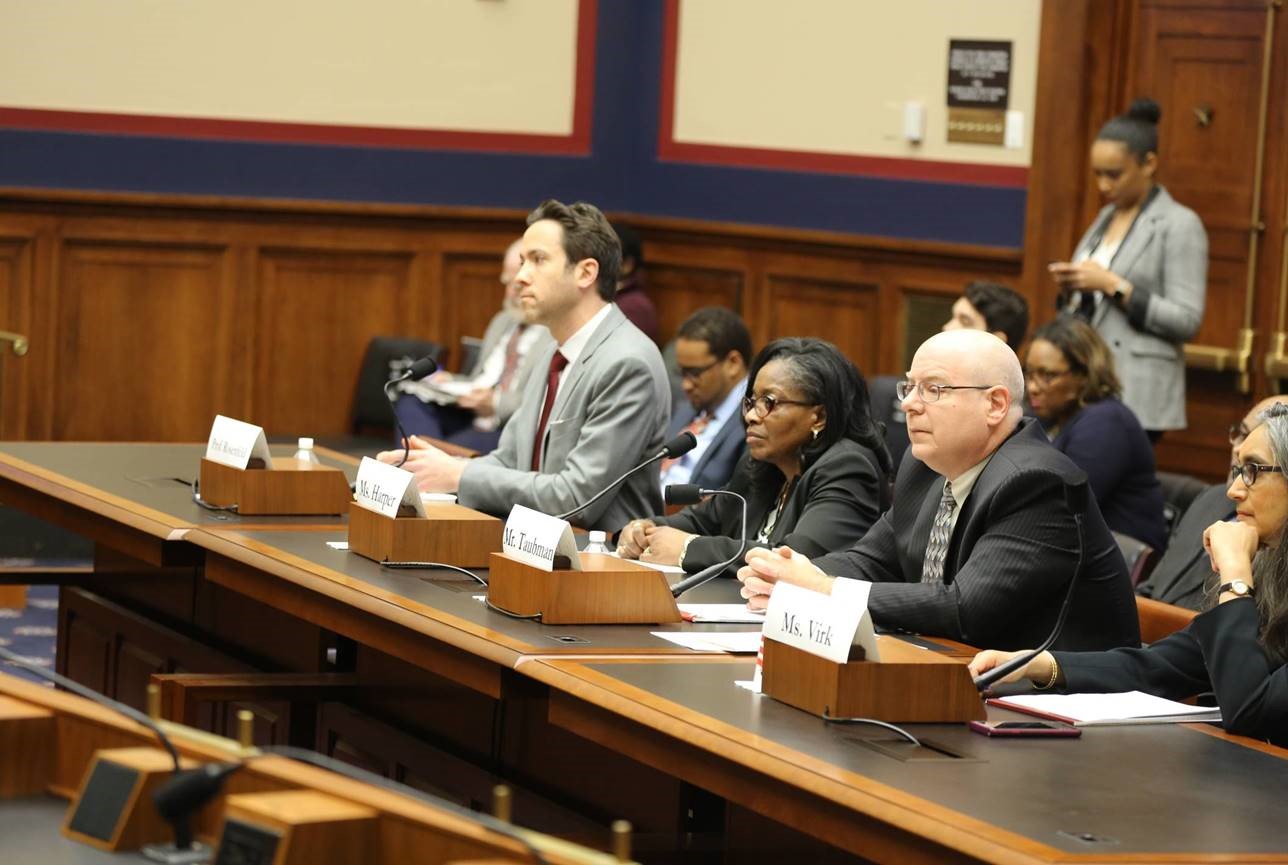
Staff attorney Glenn Taubman testified before Congress in July that existing NLRB rules wrongly favor union bosses over workers.
WASHINGTON, D.C. – In a series of recent victories, the National Labor Relations Board (NLRB) ruled in favor of workers challenging coercive union official practices, with free legal aid provided by the National Right to Work Foundation. The rulings are a stark departure from the Obama NLRB, which regularly stymied the rights of independent-minded employees opposed to associating with union bosses.
Foundation Wins Appeals in Dues Checkoff Cases
In separate cases brought by Foundation staff attorneys for Kacy Warner, a hospital worker, and Shelby Krocker, a Kroger grocery employee, the NLRB General Counsel ruled for the workers and ordered Regional Directors to prosecute union officials’ actions related to language in union dues checkoff forms.
The General Counsel’s decision to sustain Warner’s appeal concerning the checkoff authorized even more additions to the charges, saying the National Nurses Organizing Committee (NNOC) union violated the NLRA by “maintaining confusing and ambiguous dual-purpose authorization forms that unlawfully restrained employees in the exercise of their Section 7 rights.”
The General Counsel noted that the union’s forms failed to tell workers they can revoke authorizations for dues deductions after the union’s contract expires, failed to give workers adequate time to revoke authorizations, unlawfully required workers to use certified mail to send revocation requests, and failed to give “any indication to employees that payroll deduction authorization is voluntary.”
This came just a week after the General Counsel sustained another Foundation-led appeal for Krocker, who charged United Food and Commercial Workers (UFCW) union officials with illegally forcing her to sign a dues checkoff authorization. In both cases, the NLRB General Counsel authorized even more charges against union officials for misleading and confusing language regarding union dues deductions.
NLRB Regions Instructed to Prosecute Beck Violations
Also in July, the NLRB Division of Advice and General Counsel instructed regional directors to issue complaints against unions when union officials fail to inform employees of the amount of reduced union fees they can pay by objecting under the Communication Workers of America v. Beck U.S. Supreme Court decision.
The memos instruct NLRB Regional Directors to more stringently enforce workers’ Beck rights which protect workers from being forced to fund nonchargeable union activities such as union political activities. A memo issued to the Director of NLRB Region 32 read in part that “it is difficult for an employee to make an informed decision about whether to become a Beck objector without knowing the amount of savings that would result from the decision.”
“The Foundation is proud to have represented the California employee whose charge against the UFCW resulted in this Advice Memo, as well as necessitating this heightened disclosure standard by winning the Beck decision at the Supreme Court and the Penrod decision at the D.C. Circuit Court of Appeals,” National Right to Work Foundation Vice President and Legal Director Ray LaJeunesse said. Foundation staff attorneys are currently litigating several additional cases to secure and expand workers’ protections under Beck.
Ruling Aids Workers Trapped in Union Ranks They Oppose
In another Foundation victory for independent-minded workers in July, the NLRB issued a decision that limits union officials’ ability to game the NLRB system to trap workers in monopoly union ranks. The ruling allows employers to withdraw recognition from a union when a majority of its workers sign statements opposing unionization.
Foundation staff attorneys represented two workers, Brenda Lynch and Anna Marie Grant, who spearheaded the collection of signatures from a majority of workers opposed to union representation. Their employer complied with their wishes and sent the union bosses packing. After United Auto Workers (UAW) union officials sought to foist the union back onto the workers despite their clear opposition, Foundation staff attorneys persuaded the NLRB to uphold the UAW’s ouster.
“Instead of union lawyers playing legal games for months or even years to block the removal of a union that lacks majority support, the Board majority takes the common sense approach of asking union officials to prove their claim of support in a secret ballot vote of the workers,” said LaJeunesse.





