
Penske Leasing Workers Free Themselves from Teamsters’ ‘Representation’
Dallas area workers increasingly demanding individual freedom from unions
Dallas, TX (December 22, 2025) – Employees of Penske Truck Leasing’s facility in the Redbird neighborhood of Dallas have freed themselves from the control of Teamsters Local 745 union officials. A majority of workers, with assistance from National Right to Work Foundation staff attorneys, filed a petition requesting decertification of the local union with the National Labor Relations Board (NLRB) on November 14, 2025.
The NLRB is the federal agency responsible for enforcing federal labor law, a task that includes administering votes to install (or “certify”) and remove (or “decertify”) unions in workplaces. By law, the NLRB should administer a decertification election if employees submit a petition in which at least 30% of workers demand such an election (this petition far exceeded that threshold).
The decertification election was scheduled for December 18, but on the day of the election, union officials formally disclaimed interest in continuing as the workers’ “representative,” removing the need for an election. Teamsters bosses presumably knew they would have lost the vote overwhelmingly, and preemptively conceded defeat.
Texas Employees Free from Union’s Twin Coercive Powers
Texas is a Right to Work state, meaning that Teamsters union officials cannot enforce union contracts that require workers to pay union dues or fees to keep their jobs. In non-Right to Work states, union bosses can have workers fired solely for refusing to financially support union officials’ activities.
However, in both Right to Work and non-Right to Work states, union officials can wield exclusive “representation” power over every employee in a workplace, unless the union is decertified. The workers at Penske’s Redbird facility are now free of both of these powers granted to union bosses by the government.
“I support decertifying the Teamsters union because the union isn’t benefiting us the way it should,” commented Penske employee Epifanio Hernandez in early December, shortly after his petition for decertification was filed. “The union rules aren’t beneficial to everyone, and instead of helping us progress, they end up holding many of us back. We deserve the freedom to exercise our own rights, speak for ourselves, and make decisions that reflect what we actually want — not what the union decides for us.”
Teamsters Union Continues Streak of Decertification
In just the last year, Foundation staff attorneys have helped several groups of employees free themselves from unwanted union “representation” by the Teamsters. These include two other cases in Dallas, where both delivery drivers for Restaurant Technologies, Inc. and employees at FCC Environmental Services recently booted Teamsters Local 745 bosses from their workplaces, the same union as in this case.
Foundation staff attorneys have also noticed a marked rise in requests from workers seeking legal assistance in Teamsters decertification cases. Recent NLRB statistics also suggest no union faces more decertification petitions than the Teamsters.
“More and more, American workers across the country are deciding they are better off without Teamsters union bosses who prioritize their own interests over that of the workers they claim to ‘represent,’” commented National Right to Work Foundation President Mark Mix. “We’re proud to support the growing number of workers engaged in the transportation and trucking industries who are demanding freedom from coercive unionism.”
Texas Workers at Multiple Workplaces Latest to Successfully Free Themselves from Unwanted Teamsters Union ‘Representation’
Dallas-based workers at two companies petitioned the NLRB for decertification elections to remove Teamsters Local 745 bosses
Dallas, TX (October 3, 2025) – Two successful union decertification efforts have freed workers from the control of International Brotherhood of Teamsters Local 745 Union bosses in Dallas, Texas. Both Dallas-based delivery drivers for Restaurant Technologies, Inc. and employees at FCC Environmental Services in Dallas filed decertification petitions at the National Labor Relations Board (NLRB) with free legal aid from National Right to Work Foundation staff attorneys.
The NLRB is the federal agency responsible for enforcing the National Labor Relations Act (NLRA) and adjudicating disputes between employers, unions, and individual employees. When employees are dissatisfied with union officials and want to remove the union from their workplace, they may file a “decertification” petition with the NLRB.
Union bosses often try to block elections with charges of unfair labor practices, and vigorously campaign to keep workers under their control. In both of these cases, workers ultimately were able to remove the union.
Teamsters Local 745 Can’t Win Decertification Efforts
Local Teamsters officers tried to block a decertification election at FCC Environmental Services last year, filing numerous charges of unfair labor practices, but despite these stalling attempts, the employees were successful in their effort to remove the union. The union ultimately withdrew all of their objections but one, which the NLRB Regional Director dismissed as it had no bearing on the election itself in which a majority opposed union affiliation.
Meanwhile, Local 745 officials couldn’t even put up a fight against delivery drivers for Restaurant Technologies, Inc. After workers filed a decertification petition at the NLRB in April, a decertification election was set for September. Only three days before the election was scheduled to take place, union officials themselves decided not to contest it, and instead disclaimed any further interest in representing the employees, who are now free from their control.
Workers Fleeing Teamsters Union Nationwide
These successful decertification efforts are part of a larger trend across the country. For four years, the Foundation has seen increasing demand for assistance from groups of workers seeking votes to remove unions. This trend has disproportionately affected the Teamsters Union, as NLRB statistics for the past 12 months show that one of every five decertification cases involved the Teamsters union.
“More and more, American workers across the country are deciding they are better off without Teamsters union bosses who prioritize their own interests over that of the workers they claim to ‘represent,’” commented National Right to Work Foundation President Mark Mix. “These successful decertification efforts demonstrate what happens when courageous and independent-minded workers assert their rights.”
“Union bosses often do not speak for the workers under their so-called ‘representation,’ and statistics show that over 90% of employees have never had a chance to vote on the union that purports to represent them,” Mix added. “That one in five decertification petitions filed last year involved the Teamsters only drives home the point that workers are increasingly rejecting the union’s coercive agenda.”
Austin Worker Files Federal Constitutional Challenge Against Biden-Harris Labor Board
National Labor Relations Board facing numerous worker-brought lawsuits citing unconstitutional structure
Fort Worth, TX (November 2, 2024) – Dallas Mudd, an employee of Aunt Bertha (d/b/a FindHelp), has launched a federal lawsuit against the National Labor Relations Board (NLRB) on the grounds that the agency’s structure violates the U.S. Constitution. National Right to Work Legal Defense Foundation staff attorneys representing Mudd filed the suit in the U.S. District Court for the Northern District of Texas. The lawsuit joins a string of cases challenging the NLRB’s structure on separation of powers principles.
Mudd’s case comes on the heels of his own employer’s suit against the NLRB. In that case, a federal district court judge ruled in favor of FindHelp and granted an injunction to halt proceedings against the company.
Mudd filed a decertificiation petition with the NLRB back in September, requesting a vote to remove the Office & Professional Employees International Union (OPEIU) from his workplace. Instead of allowing the vote to proceed, NLRB officials blocked the election, leaving the workers indefinitely trapped in a union they oppose. Mudd is appealing that decision to the full Board in Washington DC.
Mudd’s federal lawsuit argues he is entitled to have his appeal adjudicated before a federal agency that is accountable to the president. The case joins four other constitutional challenges to the NLRB’s structure from Foundation-backed rank-and-file workers, including the first-ever such lawsuit challenging NLRB Board Member removal protections, which is currently being briefed at the DC Circuit Court of Appeals by Foundation attorneys representing Buffalo, NY-based Starbucks employees Ariana Cortes and Logan Karam.
Mudd’s lawsuit points to recent Supreme Court rulings, including Seila Law LLC v. CFPB and Collins v. Yellen, which emphasized that the President has direct authority to remove executive officials who exercise significant authority. Mudd argues that the NLRB’s structure, as defined by the National Labor Relations Act (NLRA), places unlawful limitations on the president’s power to oust NLRB officials who exercise significant executive authority.
The complaint, filed in the U.S. District Court for the Northern District of Texas, joins a similar suit at the same court from Reed Busler. Similar to Mudd, Busler, a Starbucks employee, filed a petition asking the NLRB to hold a vote to remove the incumbent Starbucks Workers United (SBWU) union, only to have the vote blocked by NLRB officials. In all the cases the employees argue they are entitled to have their cases heard by Board officials who are not exercising powers in violation of the Constitution.
“Independent-minded workers should not be forced to depend on biased agencies staffed by bureaucrats, that exercise power in violation of the Constitution, just to free themselves of unwanted union affiliation,” said National Right to Work Foundation President Mark Mix. “The Constitution does not permit a powerful federal agency to operate as the judge, jury, and executioner without oversight, and these legal challenges seek to ensure that the Labor Board functions within the law, for the sake of all workers.”
Foundation Client Wins $5.1 Million Verdict After Union Boss-Instigated Firing
The following article is from the National Right to Work Legal Defense Foundation’s bi-monthly Foundation Action Newsletter, September/October 2022 edition. To view other editions of Foundation Action or to sign up for a free subscription, click here.
Trial exposed emails advocating ‘targeted assassinations’ of union critics
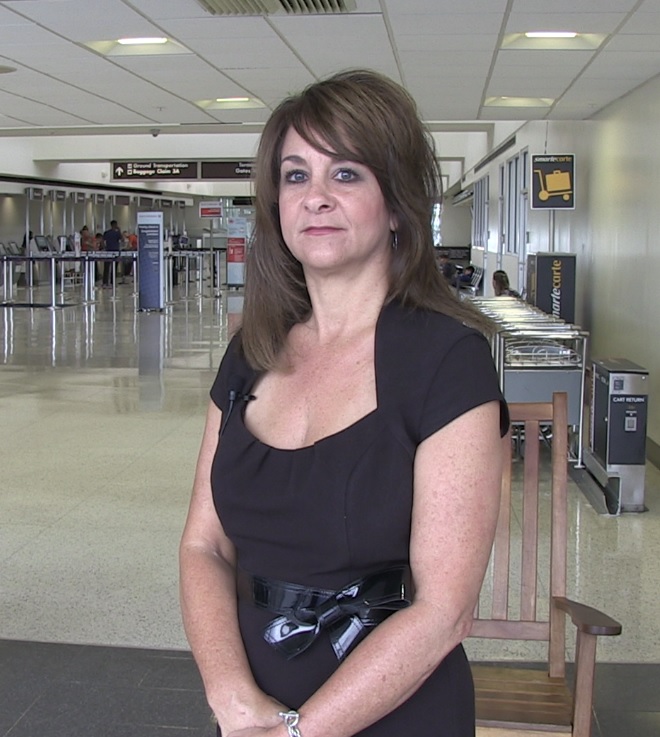
Charlene Carter on her Foundation-won trial victory: “I am so humbled and thankful for today’s decision and for everyone who’s supported me these past five years.”
DALLAS, TX – Ex-Southwest Airlines flight attendant Charlene Carter prevailed in a federal jury trial in her lawsuit against the Transportation Workers Union of America (TWU) Local 556 union and Southwest. She charged both the company and union with illegally firing her for opposing the political activities of the union hierarchy, and with discriminating against her religious beliefs. Carter received free legal representation from National Right to Work Legal Defense Foundation staff attorneys.
A jury in the U.S. District Court for the Northern District of Texas awarded Carter $5.1 million in combined compensatory and punitive damages against TWU and Southwest for their respective roles in her unlawful termination.
“Today is a victory for freedom of speech and religious beliefs. Flight attendants should have a voice and nobody should be able to retaliate against any employee for engaging in protected speech against her union,” said Carter reacting to the victory.
Flight Attendant Called Out Union Officials for Their Political Activities
Carter resigned from union membership in 2013 but was still forced to pay fees to TWU Local 556 as a condition of her employment. The Railway Labor Act (RLA), the federal law that governs labor relations in the air and rail industries, permits the firing of employees for refusal to pay dues and preempts the protections that state Right to Work laws provide.
However, the RLA does protect employees’ rights to remain nonmembers of the union, to speak out against the union and its “leadership,” and to advocate for changing the union’s current “leadership.”
In January 2017, Carter, a pro-life Christian, learned that then-TWU Local 556 President Audrey Stone and other Local 556 officials used union dues to attend a political rally in Washington, D.C., which was sponsored by activist groups she deeply opposed, including Planned Parenthood.
Carter, a vocal critic of Stone and the union, sent private Facebook messages to Stone challenging the union’s support for political positions that were contrary to Carter’s beliefs, and expressing support for a recall effort that would remove Stone from power. Carter also sent Stone a message emphasizing her commitment to a National Right to Work law after the union had sent an email to employees telling them to oppose Right to Work.
After a meeting at which Southwest officials confronted Carter about her posts protesting union officials’ positions, the company fired Carter. In 2017 Carter filed her federal lawsuit, challenging the firing as a clear violation of her rights under two federal laws. She maintained that she lost her job because of her religious beliefs, standing up to TWU Local 556 officials, and criticizing the union’s political activities and how it spent employees’ dues and fees.
Ultimately, concluding an 8-day July trial, the federal jury agreed with Carter and her Foundation staff attorneys. In its verdict, the jury found in favor of Carter on all counts of the lawsuit, while awarding Carter $950,000 in damages against the TWU union local and more than $4 million in damages against Southwest.
Union Zealot Advocated ‘Targeted Assassinations’ of Union Dissidents
In email communications unearthed and introduced at trial by Foundation staff attorneys, TWU union militants advocated for “targeted assassinations” of union dissidents and mocked Carter for being unable to stop her money from going toward union-backed causes she opposed.
Carter’s Foundation-backed lawsuit also revealed ugly examples of the hostility TWU officials and activists had for workers like Carter who spoke out against the incumbent union hierarchy. Foundation staff attorneys are preparing to counter already-announced appeals by both Southwest and TWU.
“This long-awaited verdict vindicates Ms. Carter’s fundamental right to dissent from the causes and ideas that TWU union officials support while forcing workers to bankroll that agenda,” commented National Right to Work Foundation President Mark Mix. “Verdicts like this show not only that one brave worker standing up to union bullies can make a difference, but also send a message to union bosses that their unlawful tactics will not go unpunished or unchallenged.”





