
Foundation Assists Workers in Kicking Out Unwanted Union Bosses
The following article is from the National Right to Work Legal Defense Foundation’s bi-monthly Foundation Action Newsletter, September/October 2021 edition. To view other editions of Foundation Action or to sign up for a free subscription, click here.
Worker decertification efforts target SEIU, Teamsters union officials

Desert Springs “Decert”: Tammy Tarantino (third from left) and her fellow healthcare workers at Desert Springs Medical Center booted SEIU union bosses from their workplace with Foundation aid, voting by a 3-1 margin for decertification.
CHICAGO, IL – Workers in three different states recently waged successful campaigns to remove the union bosses who controlled their workplaces. In each instance workers utilized free legal assistance from National Right to Work Legal Defense Foundation staff attorneys to navigate the overly-complicated process for getting a vote to remove an unwanted union.
The National Labor Relations Act (NLRA) — which is enforced by the National Labor Relations Board (NLRB) — gives workers the right to hold a decertification vote to end union officials’ monopoly bargaining power over workers. In theory, under the NLRA, workers who collect signatures from 30 percent of a workplace can hold a decertification vote at any time, provided there has not been a unionization vote there in the previous 12 months.
However, because of complicated NLRB doctrines compounded by union legal tactics, obtaining a vote to decertify a union can often be a challenge. That’s why workers in workplaces across the country turn to the Foundation for free legal aid as they seek to hold such a vote.
Workers’ ability to exercise their right to vote out an unwanted union is especially important in states without Right to Work protections, where union bosses can use their monopoly bargaining powers to force every worker to pay union dues or fees or else be fired.
But workers’ right to decertify a union is still critical in Right to Work states, because even without forced union payments, federal law gives union bosses the power to impose their so-called “representation” and resulting union monopoly contracts on members and non-members alike at unionized workplaces. Only once a union is decertified are workers free to represent themselves and communicate with their employer directly.
Foundation Helps Workers Navigate Tricky Legal Process
Highlighting recent activity, three separate workplaces have waged successful decertification efforts.
Petitioner Tim Mangia led the charge at Chicago’s Rush University Medical Center, where he and his fellow maintenance workers voted to remove Teamsters union bosses by a better than 3-1 margin. Separately, in Del Rio and Eagle Pass, Texas, salesmen for Frito-Lay also voted to free themselves from unwanted Teamsters union “representation” following free assistance from Foundation legal staff.
Meanwhile, Tammy Tarantino and her fellow technical employees at the Desert Springs Hospital Medical Center in Las Vegas successfully removed a Service Employees International Union (SEIU) local from their workplace with Foundation help.
Reforms: Union Bosses Can’t Use Bogus Charges to Block Decertification Elections
These cases proceeded without significant delays from union “blocking charges,” the often spurious charges against employers filed by union lawyers seeking to delay a decertification vote. Under old NLRB rules, such charges would have to be resolved before workers’ decertification votes could proceed, delaying the vote for months or even years.
Thanks to NLRB rulemaking advocated by the Foundation and backed by thousands of Foundation supporters, votes now virtually always proceed first with the results quickly announced, so that elections cannot be delayed nearly indefinitely by unsubstantiated union boss claims.
In the Las Vegas medical workers’ case, the new “blocking charge” rules allowed Tammy Tarantino continued from page 2 to have a vote, despite attempts by union lawyers to use charges against the hospital to delay the election. Without being able to rely on the “blocking charge” policy to maintain their power over the workplace, SEIU officials soon found themselves voted out with just 13 of 64 eligible voters voting for the union.
“While we look forward to the day when every individual worker has the freedom to decide whether to pay union dues or be represented by a union, it is especially egregious when union bosses are in power without even the support of a bare majority of rank-and-file workers,” said National Right to Work Foundation Vice President Patrick Semmens. “The National Right to Work Foundation is proud to help workers exercise their right to throw off the yoke of unwanted union so-called ‘representation.’”
NLRB Blocks Attempt to Oust Union, Despite Unanimous Call for Union’s Removal
The following article is from the National Right to Work Legal Defense Foundation’s bi-monthly Foundation Action Newsletter, May/June 2021 edition. To view other editions of Foundation Action or to sign up for a free subscription, click here.
Every employee signed a petition for vote to remove Carpenters Union from their workplace

Foundation staff attorneys are defending Neises Concrete Construction Corp. workers’ unanimous call to free themselves from the coercive reign of IKORCC union bosses.
CROWN POINT, IN – Mike Halkias and his coworkers at Neises Construction Corp. in Crown Point, Indiana, are subject to monopoly “representation” by officials of the Indiana/Kentucky/Ohio Regional Council of Carpenters (IKORCC) union.
Every bargaining unit member exercised the right under Indiana’s Right to Work Law to decline formal union membership and to refuse to pay any union dues or fees, but union officials still have the authority under federal law to “negotiate” with Neises for the employees despite their objections to that representation.
NLRB Officials Snub Workers’ Unanimous Petition, Demand Union Bargaining
With free legal aid from the National Right to Work Legal Defense Foundation, Halkias submitted a decertification petition to Region 13 of the National Labor Relations Board (NLRB), signed by every member of his unit, to remove IKORCC union officials from their workplace.
Despite unanimous agreement by the unit’s workers to hold a vote to oust IKORCC bosses, NLRB Region 13 officials rejected the decertification petition. The Regional Director is demanding that the Indiana employer bargain with IKORCC, even though none of its employees want the union to “represent” them.
Union Bosses Won’t Give Up Monopoly Bargaining Power over Non-members
So far union officials have stymied the vote through “blocking charges,” unfair labor practice charges filed by union lawyers that, before they are resolved, prevent a vote from taking place. Union officials claim the vote cannot proceed until the company negotiates “in good faith” with the union.
That demand comes even though federal law makes it illegal for an employer to engage in bargaining with a union that it knows lacks the support of at least a bare majority of workers. The NLRB regional official’s order dismissing the employees’ petition did not even acknowledge that every employee in Mr. Halkias’ bargaining unit has shown a desire to be independent from the union by resigning union membership and asking for a decertification vote.
Foundation Attorneys Bring Fight to National Board
The Foundation staff attorneys who represent Halkias have appealed to the NLRB in Washington to overturn the rejection of the decertification petition and to allow the workers to vote so they can be rid of the union whose so-called “representation” they all oppose. “It is outrageous that in a workplace where every single worker wants nothing to do with a union, federal law still forces workers to accept the so-called ‘representation’ of union bosses,” said National Right to Work Foundation Vice President Patrick Semmens.
“The fact that this appeal is even necessary demonstrates how rigged federal law is against independent-minded workers who seek to exercise their right not to associate with a union.”
“This case is a reminder that, even in Right to Work states that protect workers from being forced to fund a union they don’t support, federal law still forces workers under union monopoly control even when those employees oppose the union and believe they would be better off without it.”
Multiple Units Oust Teamsters Bosses Thanks to Foundation-Backed NLRB Rule
The following article is from the National Right to Work Legal Defense Foundation’s bi-monthly Foundation Action Newsletter, May/June 2021 edition. To view other editions of Foundation Action or to sign up for a free subscription, click here.
Unpopular Teamsters officials voted out of California, New Jersey workplaces
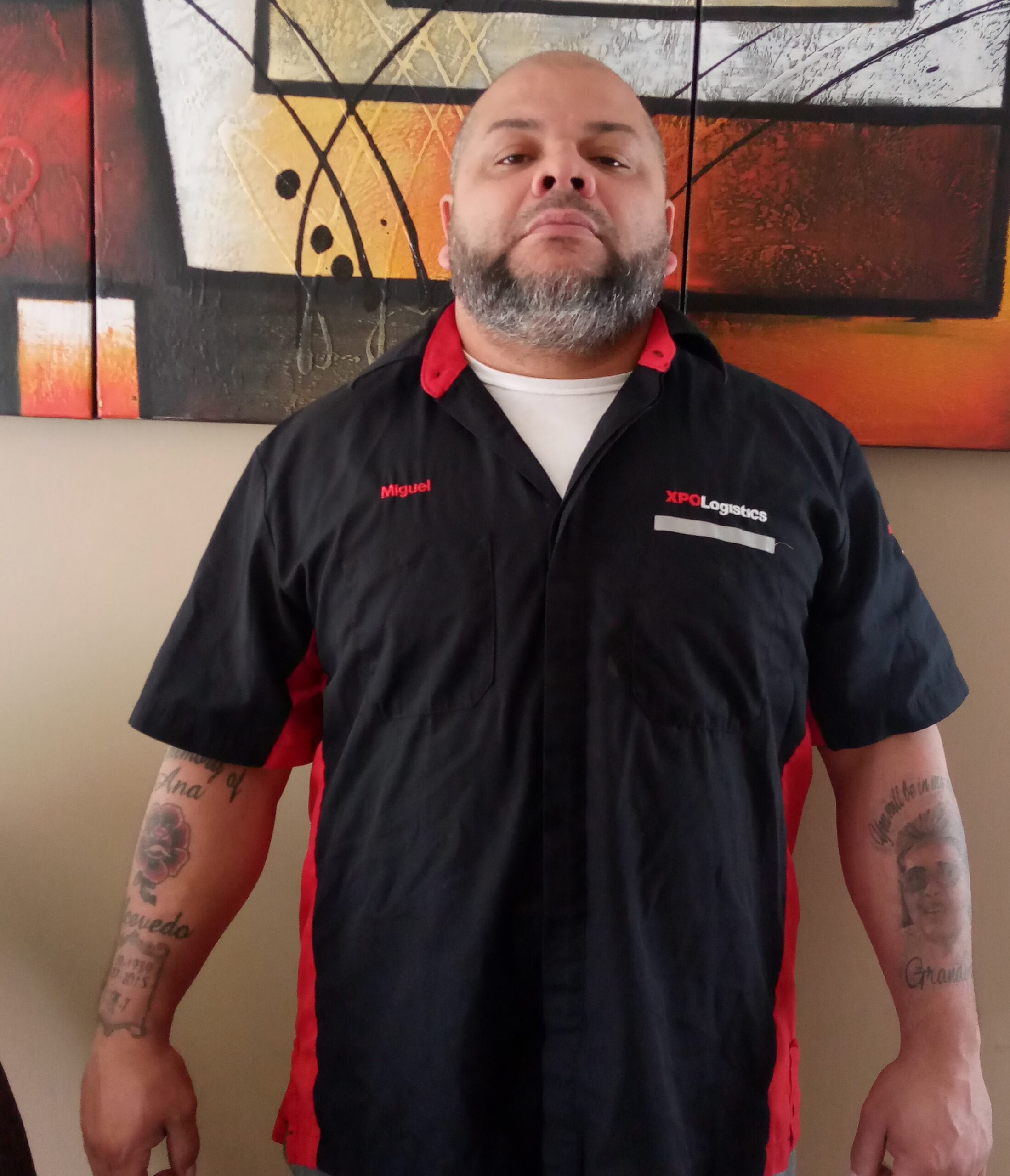
Reforms urged by Foundation staff attorneys eased Miguel Valle and his coworkers’ near-unanimous effort to vote out unpopular Teamsters officials, who tried to use “blocking charges,” ultimately to no avail.
WASHINGTON, DC – Workers in California and New Jersey who were previously subject to Teamsters bosses’ monopoly bargaining authority have freed themselves from unwanted union control.
The workers received free legal aid from Foundation staff attorneys, and benefited from rule changes at the National Labor Relations Board (NLRB) in Washington pushed for by the Foundation.
In California, Eliseo Haro, an employee at Los Angeles-based KWK Trucking, Inc., submitted a decertification petition with the NLRB because he and his coworkers were being ignored by Teamsters bosses. As Haro puts it, “The union never came in to talk to us, or negotiate a contract, or represent us. They disappeared.”
Haro’s petition was signed by nearly 80 percent of the workers in the 119-employee bargaining unit and called for an NLRB-supervised decertification election, in which KWK employees could vote out the unpopular union officials.
Rather than face an overwhelming defeat in the decertification election, Teamsters bosses chose to walk away. The union disclaimed interest in the unit, and NLRB Region 21 revoked Local 986’s certification as the workers’ monopoly bargaining agent.
New Jersey Decertification Effort Succeeds Despite Union Stall Tactics
In Cinnaminson, New Jersey, Teamsters officials did not immediately leave when a decertification petition was filed by Miguel Valle and his coworkers at a branch of XPO Logistics. Instead, Teamsters lawyers used nearly two months of unnecessary court proceedings to delay the election.
They demanded the vote be held in person at the Teamsters union hall. Foundation attorneys argued that the union lawyers’ requests were merely an effort to delay the vote. Ultimately, as expected, the NLRB’s Regional Director ruled that the election would be conducted by mail.
When Valle and his coworkers finally had their election, they voted 16-2 to remove Teamsters bosses from their workplace.
Foundation-Backed Rule Changes Reduce Needless Election Delays
For workers, just getting a decertification election is often difficult. In some cases, union bosses have created multi-year delays to stymie decertification efforts, trapping workers under union monopoly “representation” and often forced-dues payments they oppose, while they wait for a vote.
Union officials frequently attempt to delay or block decertification votes by filing “blocking charges,” unfair labor practice charges that can be used to hold up an election, even when they have nothing to do with the employees’ dissatisfaction with the union.
Union officials’ ability to use this tactic to block or delay votes has been limited by recent NLRB rulemaking, finalized in 2020. Under the NLRB’s new policy, which draws on comments filed by the National Right to Work Foundation, union charges cannot indefinitely stall employee votes, and in most instances votes occur without delay.
Additionally, as the Foundation advocated in its comments, instead of ballots being impounded for months or even years while “blocking charges” are resolved, the NLRB modified its original proposed rule so that in most cases ballots are tallied and the results are announced after employees vote.
“Union bosses can stick around for years, even when they face overwhelming opposition from rank-and-file workers, because of the legal barriers that protect union officials from decertification votes,” said National Right to Work Foundation Vice President and Legal Director Raymond LaJeunesse.
“Thanks to Foundation-backed reforms to the NLRB’s ‘blocking charge’ policy, union officials’ ability to trap workers in union ranks through legal trickery despite overwhelming opposition has been significantly curtailed.”





