
Reed & Perrine Lawn Products Workers Escape Union After Fighting Frivolous Union Delay Tactics
After workers requested union removal vote in 2024, union bosses blocked the vote for a year and a half using specious allegations
Manalapan Township, NJ (April 22, 2026) – After a year-and-a-half delay caused by frivolous union legal tactics, employees at Reed & Perrine Lawn Products (a division of The Andersons, Nasdaq: ANDE) have finally succeeded in removing United Food and Commercial Workers (UFCW) Local 152 union officials from power at their workplace. Reed & Perrine employee Christine Bradach kicked off the effort among her coworkers to remove the UFCW union in November 2024 when she filed a decertification petition at the National Labor Relations Board (NLRB). Bradach received free legal aid from National Right to Work Foundation staff attorneys in filing her petition.
The NLRB is the federal agency responsible for enforcing private sector labor law, a task that includes administering elections to install (or “certify”) and remove (or “decertify”) unions. Bradach’s petition contained employee signatures well in excess of the threshold required to prompt the NLRB to hold a decertification election. Bradach’s work unit includes production department and shipping department employees at Reed & Perrine Lawn Products.
Almost immediately after Bradach had filed her petition, UFCW union bosses filed so-called “blocking charges” to stop the vote from happening. Blocking charges are unproven allegations of employer misconduct that union officials file in order to delay or derail an employee-requested union decertification election. Blocking charges often have little or nothing to do with employees’ reasons for wanting to vote out a union, yet NLRB officials will frequently delay decertification elections for months or years without even holding a hearing into the charges’ veracity or connection to employee dissatisfaction.
In Bradach’s case, NLRB Region 22 blocked Bradach and her coworkers’ requested vote based on UFCW officials’ blocking charges. Almost a year and a half later, UFCW union officials withdrew the blocking charges – presumably because the NLRB communicated that it would finally dismiss them for having no merit. Immediately after NLRB Region 22 announced it would finally take up Bradach’s petition, UFCW Local 152 officials announced they were “disclaiming interest” in continuing their control over the facility – in other words, leaving the facility immediately to avoid an employee vote that would have likely ended in a lopsided loss for the union.
UFCW Union Officials Continued to Take Dues While Blocking Removal Vote
New Jersey lacks Right to Work protections for its private sector employees. This means UFCW union officials had the power to enforce contracts that required Reed & Perrine employees to pay money to the union or be fired. In contrast, in states that have Right to Work laws, union membership and all union financial support are strictly voluntary.
“My colleagues and I had had it with the UFCW, but they stuck around in the workplace after we made it clear we no longer wanted the union,” commented Bradach. “It’s a farce for them to claim they ‘represented’ us, especially when they were actively trying to block us from just having a vote on whether we wanted to continue with the union. My colleagues and I are glad we’re finally free.”
Trump NLRB Urged to Eliminate ‘Blocking Charge’ Policy
The Foundation has pressed the NLRB for years to end its non-statutory blocking charge policy. The Foundation has instead advocated for a return to the Election Protection Rule, which prevented many aspects of blocking charge-related gamesmanship before the Biden NLRB overturned it in 2022. Under the Election Protection Rule, allegations of misconduct related to a union decertification election could not block employees from exercising their right to vote. In most cases, the Rule permitted the immediate release of the vote tally as opposed to ordering ballots to be impounded during litigation over blocking charges.
“As Ms. Bradach’s case shows all too well, the ‘blocking charge’ policy just incentivizes union officials to act cynically and opportunistically while the rights of the workers they claim to ‘represent’ suffer,” commented National Right to Work Foundation President Mark Mix. “An approach that is more protective of workers’ rights is found in the Election Protection Rule, which mandates that allegations over interference be dealt with after employees have had a chance to exercise their right to vote.
“The Trump NLRB should work quickly to protect workers’ freedom of choice from restrictive and unreasonable doctrines like the ‘blocking charge’ policy, which serve only to empower union special interests to the detriment of the rights of rank-and-file workers,” added Mix.
Workers in North Carolina and California Ask Federal Labor Board to Nix Policy Letting Union Bosses Block Elections
With new quorum, National Labor Relations Board can eliminate “blocking charge” policy used to stop union removal elections
Washington, DC (January 6, 2026) – Workers in North Carolina and California are pushing the National Labor Relations Board (NLRB) to strike down its “blocking charge” policy, which is preventing them from removing unwanted union officials from their workplaces.
The workers, which include miners employed by The Quartz Corp. in Spruce Pine, NC, and Fresno, CA-based construction materials workers for CalPortland, both backed petitions in late 2025 asking the NLRB to administer votes to remove (or “decertify”) unions from their workplaces. Despite both petitions containing enough signatures to trigger union decertification elections, regional NLRB officials blocked both votes pursuant to the NLRB’s current blocking charge policy. This Biden-era policy permits union officials to stymie the union decertification process simply by filing unproven or unrelated “unfair labor practice” charges at the NLRB alleging employer misconduct.
Quartz Corp. employee Blake Davis and CalPortland worker Darrell Dunlap have both submitted Requests for Review to the NLRB in Washington, DC. These filings ask the Board to overturn the blocking charge policy and let their coworkers’ requested votes to remove the United Mine Workers and Teamsters unions (respectively) go forward. Davis and Dunlap are both receiving free legal aid from National Right to Work Foundation staff attorneys. While vacancies on the NLRB have caused a backlog of cases, the U.S. Senate recently approved two new presidential appointees to the NLRB, meaning the Board now has a “quorum” and can hear these and other cases.
“Blocking Charge” Policy Inconsistent With Federal Labor Law
Dunlap’s Request for Review argues that the NLRB’s blocking charge policy directly conflicts with the text of the National Labor Relations Act (NLRA), the federal law that the NLRB is responsible for enforcing. “Allowing a self-interested party to unilaterally block elections conflicts with [the NLRA], which requires the Board to hold an election” if employees submit a valid decertification petition, Dunlap’s brief says. “The blocking charge policy does not just contravene a clear Congressional command, but also offends the entire structure and purpose of the Act: employee free choice.”
Dunlap’s brief also maintains that the blocking charge rule violates the Administrative Procedure Act (APA) because it is arbitrary and fails to accomplish even its own stated goals. For example, the Request for Review says, NLRB bureaucrats impose the policy without considering key data showing the blocking charge policy has caused substantial delays in the union election process. Furthermore, the Board has argued that the rule is required to stop “coercive elections” from happening – even though its only mechanism for doing this is giving self-interested union bosses massive power to block elections or let them proceed.
Davis’ Request for Review makes many similar arguments, but adds that even if the Board were to uphold the blocking charge policy, regional NLRB officials egregiously misapplied it in his case. As his brief points out, even before he and his colleagues had submitted the union decertification petition, “the union filed a barrage of [unfair labor practice charges],” some of which were just speculation about employer activity aiding the union removal process. Even so, the regional NLRB appears to have blocked Davis and his coworkers’ requested election based on the mere quantity of the union’s charges, without explaining which allegation justified blocking. “By failing to distinguish between allegations that might warrant blocking and those that plainly would not, the Region reduced the rule to a numbers game,” the Request for Review says.
Trump NLRB Can Undo ‘Blocking Charge’ Policy and Empower Independent-Minded Workers
The National Right to Work Foundation has long advocated for the NLRB to return to the Election Protection Rule, which prevented many aspects of blocking charge-related gamesmanship before the Biden NLRB overturned it in 2022. Under the Election Protection Rule, allegations of misconduct related to a union decertification election could not block employees from exercising their right to vote, and in most cases permitted the immediate release of the vote tally as opposed to ordering ballots to be impounded during litigation over blocking charges.
“The NLRB’s ‘blocking charge’ policy serves only to let union officials stop the workers they claim to ‘represent’ from making a free choice about whether a union in their workplace is right for them,” commented National Right to Work Foundation President Mark Mix. “Mr. Dunlap and Mr. Davis speak for countless workers across the country who are trapped under union boss dictates and forced-dues payments because of this rule.
“If President Trump’s new NLRB appointees are serious about putting American workers back in control of their own livelihoods, reversing this union boss power giveaway is an excellent place to start,” Mix added.
National Right to Work Foundation Attorney to Appear Before U.S. House in Hearing on Labor Board Reforms
Aaron Solem will call for demise of coercive Biden-era policies
Washington, DC (June 11, 2025) – In a hearing today, veteran National Right to Work Foundation Staff Attorney Aaron Solem will testify before the U.S. House Committee on Education and the Workforce’s Subcommittee on Health, Employment, Labor, and Pensions. He will discuss the reforms needed to reverse the ways the National Labor Relations Board (NLRB), especially under the Biden Administration, rigged the rules to promote union boss power at the expense of the rights of independent-minded workers.
During a hearing titled “Restoring Balance: Ensuring Fairness and Transparency at the NLRB,” Solem will discuss how current NLRB rules allow union officials to corral and keep workers in union ranks without a vote, and let union officials force workers to subsidize union ideological activities. Solem, who has a thirteen-year career of defending workers from union coercion before the courts and administrative agencies like the NLRB, will be urging several reforms to protect workers’ individual rights.
Solem will appear as an expert witness at the hearing chaired by Georgia Congressman Rick Allen. Also appearing on the witness stand will be Jennifer Abruzzo, a former high-ranking lawyer for the Communications Workers of America (CWA) union and ex-General Counsel of the Biden NLRB, who during her time at the agency pushed to make it more difficult for workers to escape union control.
“These are anti-employee policies because they cancel worker choices and replace them with decisions made by unions and the government,” Solem’s written testimony reads. “President Trump won reelection because he was the candidate who listened to employees. The Board should follow in those footsteps by pursuing a truly pro-employee agenda. This agenda would put power in the hands of workers—not unions or employers—— to decide whether they want to be represented by a labor union.”
Biden-Era NLRB Policies Stripped Workers of Right to Exit & Defund Unwanted Unions
Solem’s written testimony breaks down several policies advanced by the Biden NLRB that strip workers of their right to vote themselves free of unwanted union influence. Among these are the “blocking charge” policy, which “allows unions to unilaterally block [union] decertification elections just by filing a charge against an employer, no matter how meritless it may be,” and the so-called “voluntary recognition bar,” which prevents workers from requesting an election to remove a union after union officials gain power through the unreliable “card check” method. Card check abandons the security of a secret-ballot union vote and instead relies on union authorization cards collected by union officials from workers – often through coercive tactics.
Solem also urges the NLRB to “follow Supreme Court precedent and require non-member employees to opt-in to paying for union political expenditures.” As it currently stands, employees who are not union members must “jump through several procedural hoops” to pay a reduced amount of union dues that excludes expenses for union political activities they may staunchly disagree with. The right to pay this reduced amount is enshrined in the Foundation-won CWA v. Beck Supreme Court decision, but current NLRB policies don’t sufficiently protect it.
Freedom vs. Coercion for Workers on Display
“At this hearing, House members will see two starkly differing visions for American workers,” commented National Right to Work Foundation President Mark Mix. “Aaron Solem will advocate for a future where workers can decide for themselves whether or not a union in their workplace is right for them, while Jennifer Abruzzo will double down on granting union officials sweeping coercive powers to impose their will on working people.
“American workers, who are affiliating with unions at near-record-low numbers and overwhelmingly support voluntary and not forced unionism, deserve to have an NLRB where their individual rights are protected and not ceded to union officials and their political cronies,” Mix added. “The incoming Trump NLRB should relegate the cynical, top-down, forced-unionism approach of Jennifer Abruzzo and the Biden NLRB to the dustbin of history, and empower workers by protecting their individual freedoms.”
Chicago-Area Chemical Plant Worker Asks National Labor Board to End Policy Letting Union Bosses Trap Workers in Unions
Employees submitted valid petition requesting vote to remove Teamsters union, but union bosses manipulated unproven charges against employer to block vote
Chicago, IL (May 8, 2025) – An employee of Rowell Chemical Corporation, a chemical plant based in Willow Springs, is asking the National Labor Relations Board (NLRB) to overturn a regional labor board’s decision blocking a vote to remove the Teamsters Local 710 union. The worker, Jeffrey Johnston, is receiving free legal aid from the National Right to Work Legal Defense Foundation.
The NLRB, based in Washington, D.C., is the federal agency responsible for administering elections to install (or “certify”) and remove (or “decertify”) unions, as well as adjudicating disputes between employers, union officials, and individual employees. Johnston’s Request for Review argues that regional NLRB officials blocked his and his coworkers’ requested union removal vote based on dubious “blocking charges” Teamsters union officials filed against Rowell management.
Union officials often file blocking charges to delay or cancel union decertification votes, despite the fact that their charges are often unproven and have little, if any, connection to the reasons workers cite for wanting to get rid of a union. The NLRB in 2020 adopted Foundation-backed reforms that gave workers a chance to vote before the agency handled litigation related to the election, but the Biden NLRB adopted a new rule in 2024 that lets union officials manipulate blocking charges to stop election proceedings completely.
Request for Review: NLRB “Blocking Charge” Policy Violates Multiple Federal Laws
Johnston’s Request for Review contends that the NLRB should eliminate the Biden-era rule permitting blocking charges and schedule a union decertification election for him and his coworkers as soon as possible. Johnston argues that holding up an election pursuant to blocking charges violates the text of the National Labor Relations Act (NLRA), the statute that the NLRB is supposed to enforce, which states that a decertification election should occur if there is a question concerning representation. Johnston also argues that the Biden-era rule violates the Administrative Procedure Act (APA) on multiple grounds.
At the very least, Johnston’s Request for Review maintains, the NLRB should hold a hearing into whether the employer misconduct alleged by Teamsters union officials actually has a connection to Johnston and his coworkers’ desire to kick the union out. The regional NLRB did not order such a hearing and simply blocked the vote.
“My coworkers and I requested a vote to remove this union almost two months ago and somehow the NLRB is letting Teamsters bosses throw around specious charges to stop us from doing so,” commented Johnston. “My coworkers and I have spent two years under Teamsters control, and I believe that the vast majority of us agree that the Teamsters don’t represent our interests. It’s not fair that union bosses and the NLRB can trump our free choice.”
“The NLRB, through its ‘blocking charge’ rule has let union officials stifle the rights of the very workers they claim to ‘represent’ in violation of the statute the NLRB is supposed to enforce,” commented National Right to Work Foundation President Mark Mix. “Mr. Johnston speaks for workers across the country in challenging this NLRB-invented policy, which is completely antithetical to the idea expressed in federal labor law that employees should choose the union, not the other way around.”
Victory: San Diego Charter School Educators Vote Out Teacher Union Bosses
The following article is from the National Right to Work Legal Defense Foundation’s bi-monthly Foundation Action Newsletter, September/October 2023 edition. To view other editions of Foundation Action or to sign up for a free subscription, click here.
SDEA officials stonewalled vote at charter school for years with “blocking charges” and pressure from elected officials
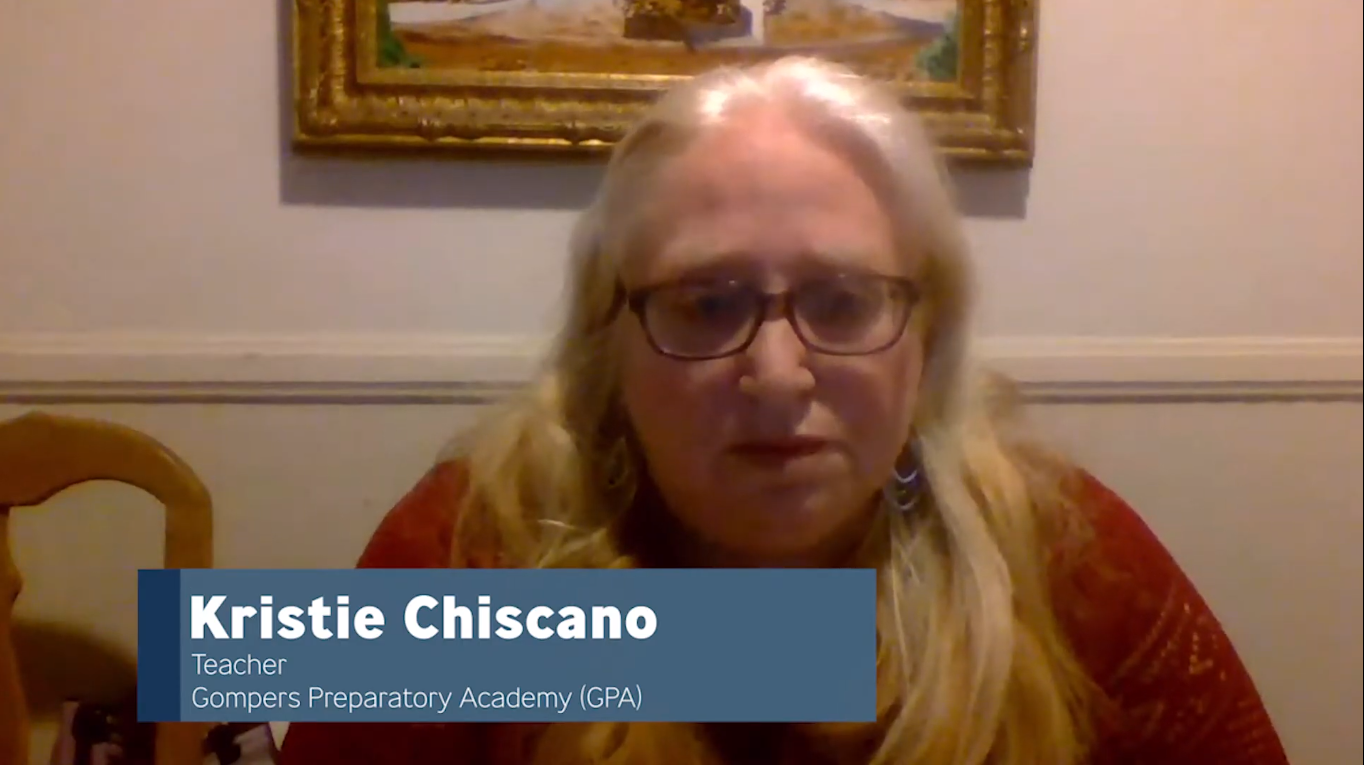
Kristie Chiscano kick-started the first effort at Gompers to remove the SDEA union. She witnessed firsthand that union control was ruining the independent nature of the charter school.
SAN DIEGO, CA – When San Diego Education Association (SDEA) union officials rose to power in 2019 at Gompers Preparatory Academy (GPA), educators and parents were rightfully concerned about what impact it would have on students’ progress and well-being.
Gompers had made an impressive transition to being a union-free charter school in 2005 after years of being plagued by unresponsive union bureaucracies, violence, high teacher turnover, and poor academic achievement. Teachers who feared that union monopoly control would allow such problems to creep back into Gompers quickly began an effort to vote out the union.
“I chose to work at a school that didn’t have a union, and now they’ve come in and they’re running everything about my contract and my work,” Kristie Chiscano, then a Gompers chemistry teacher and proponent of the decertification effort, said at the time.
While union stall tactics derailed Gompers educators’ 2019 effort to oust the union, Gompers educators didn’t give up. A majority of Gompers teachers backed another petition asking the California Public Employment Relations Board (PERB) for a vote to remove the union in 2023. Now, after years of legal maneuvers from union officials, Gompers educators have successfully ousted the SDEA with free legal aid from the National Right to Work Foundation.
SDEA Officials Used Spurious Charges to Block Earlier Teacher Effort
“There is definitely a lot more joy that’s going to be in classrooms now, instead of a burden with the union,” Cynthia Ornelas, a sixth grade Gompers teacher, told KPBS. “The union was making decisions for us, oh my goodness! We never knew what they were deciding because they didn’t communicate with teachers.”
Gompers teachers’ first effort to eliminate the SDEA union stemmed from an October 2019 petition that had the backing of a significant number of teachers, more than required by state law. However, SDEA union bosses averted the election by filing so-called “blocking charges” containing allegations of employer misconduct.
Union officials often manipulate “blocking charges” at the PERB and other state and federal labor relations agencies to stifle worker attempts to eliminate unpopular union “representation.”
As Foundation attorneys defended Gompers educators’ first petition, they also challenged a regulation requiring PERB agents and attorneys to accept union bosses’ “blocking charge” allegations as true. This regulation almost guarantees union defeat of any worker attempt to vote a union out.
Despite the PERB never holding a hearing into whether SDEA union bosses’ claims had any merit or whether they were related to the workers’ dissatisfaction with the union, PERB officials denied a decertification election to Gompers educators in October 2020.
Aside from legal maneuvers, union officials used intimidation and pressure to avoid being voted out. Chiscano and another Gompers educator filed charges maintaining that SDEA agents targeted them on social media for opposing the union hierarchy. California law makes it illegal for union officials to intimidate or retaliate against employees who exercise their right to refrain from union membership. Union-label California legislator Lorena Gonzalez, then an assemblywoman and now a top California AFL-CIO official, even wrote a screed to Gompers management that attacked the National Right to Work Foundation for simply providing legal aid to Gompers educators.
Teachers’ Long Struggle Exposes Massive Power of CA Public Sector Unions
Gompers educators submitted the March 2023 petition at the earliest time permitted by California labor regulations, which immunize union officials from employee-led decertification efforts for all but a tiny window while union contracts are active. Now, nearly four years after their original effort began, Gompers educators are finally free from union control.
“Gompers educators witnessed that SDEA union officials were not acting in the best interests of the students or the school community at large, and they fought courageously to bring back the independent environment that made Gompers a success,” commented National Right to Work Foundation President Mark Mix. “However, Gompers teachers shouldn’t have had to fight as long or as hard as they did simply to exercise their rights. No special interest group in California, or in America, should wield this kind of power over teachers and the public education system.
Passaic, NJ, Woodworking Employees Win Two-Year Legal Battle to Oust Unwanted Carpenters Union Officials
Patella employees’ ordeal shows how union officials trap workers in unions they oppose, yet Biden NLRB is moving to make union decertification even harder
Passaic, NJ (September 8, 2023) – Following the third attempt by employees of Passaic-based woodworking firm Patella to obtain a vote to remove them, Carpenters Local 252 union officials have backed down and abandoned the facility. The union’s disclaimer of interest, received last week by National Labor Relations Board (NLRB) Region 22, caps off a years-long legal battle between Patella employees and recalcitrant Carpenters union officials. The workers ousted the union with free legal aid from staff attorneys at the National Right to Work Legal Defense Foundation.
Patella employee Steve Urso led the effort to vote out the union, which began in July 2021 with the filing of a petition requesting an NLRB-administered vote to decertify the Carpenters union. Union officials used unverified allegations of employer misconduct, also known as “blocking charges,” to derail attempts by Urso and his colleagues to oust the union. Urso filed the most recent decertification petition near the end of August 2023, and instead of seeking to continue their control over the clearly dissatisfied Patella workers, Carpenters union officials finally moved to leave the facility.
Because New Jersey lacks Right to Work protections for its private sector workers, Carpenters union officials had the power to force Urso and his coworkers to pay at least some union dues as a condition of keeping their jobs. In contrast, in states with Right to Work laws, union bosses can’t enter agreements with employers that force employees to fork over a portion of their paychecks to the union just to get or keep a job.
Carpenters Union Used Unproven Allegations Against Management to Block Employees from Voting
“Carpenters union bosses completely ignored our wishes for years, and apparently thought violating our rights and continuing to collect dues was better than simply letting us vote on whether we thought they deserved to stay,” Urso commented. “It’s extremely unfair that Carpenters officials were able to manipulate NLRB rules and processes for as long as they did to keep us trapped under union ‘representation’ that we opposed, but we didn’t give up and we’re glad we’re finally out.”
After Urso submitted the first employee-backed decertification petition in July 2021, an election did occur, but the ballots were never tallied after Carpenters officials filed “blocking charges” against the employer. Carpenters union bosses stopped a vote from occurring at all after Urso’s second attempt, again using “blocking charges.” Patella management settled the charges in February, but afterward Carpenters union officials did not request any bargaining sessions with the employer.
The Carpenters union’s disclaimer of interest followed Urso’s third petition. Now that the NLRB has certified the disclaimer, Urso and his colleagues are finally free of the unwanted union.
Biden NLRB Seeks to Empower Union Officials While Undermining Workers Who Seek Votes
Urso and his colleagues’ hard-fought victory comes as the Biden NLRB in Washington, D.C., is attempting to make it even more difficult for workers to obtain votes to remove unwanted unions, while giving union officials more tools to gain power in a workplace without a vote. The NLRB will soon issue a final rule overturning the Election Protection Rule, a Foundation-backed 2020 reform which made commonsense improvements to the decertification process.
The Rule’s repeal will grant union officials even greater power to use “blocking charges” to stop union decertification elections from happening. The repeal will also block workers from seeking a union decertification vote for a year after union bosses attempt to impose unionization by “card check.”
The card check process lets union officials bypass the NLRB’s traditional secret ballot vote procedures and instead allege majority support by collecting union authorization cards directly from workers – often using coercive or intimidating tactics. Foundation attorneys are currently aiding a group of paramedics and EMTs in Sonora and Groveland, California, who were unionized by card check only to vote to remove Steelworkers union bosses a few months later.
“Instead of defending the individual rights of workers across the country who are seeking to vote out union officials they oppose, the Biden NLRB is instead trying to make it harder than ever for workers to obtain an election,” commented National Right to Work Foundation President Mark Mix. “As Mr. Urso, his colleagues, and countless other workers can attest, the NLRB process for workers to remove a union they oppose is already far too difficult.”
“The Biden NLRB’s continued moves to stifle worker decertification efforts demonstrate yet again that they and their union boss allies are focused on gaining greater control over workers and their pocketbooks – not on employees’ freedom of association,” added Mix.
Chicago-area Firefighters Kick Out Unwanted SEIU Officials
SEIU officials back down, depart Carpentersville facility after worker exposed false claims SEIU made to disenfranchise firefighters opposed to union
Chicago, IL (April 7, 2022) – With free legal representation from National Right to Work Legal Defense Foundation attorneys, Nick Salzmann and his fellow Village of Carpentersville firefighters have forced unwanted Service Employees International Union (SEIU) Local 73 officials out of their workplace.
Salzmann filed a petition in September 2021 backed by the vast majority of his coworkers seeking a vote whether to remove the SEIU union. After the Illinois Labor Relations Board (ILRB) executive director blocked the vote based on specious accusations union officials made of Village of Carpentersville officials, Salzmann filed an appeal that revealed union officials had actually staged the scenario in which the alleged misbehavior arose.
Rather than respond to that appeal, in March, SEIU union officials filed paperwork relinquishing power over Salzmann and his coworkers.
Carpentersville Firefighter’s Appeal Revealed Plot by SEIU Union Bosses to Maintain Control
The ILRB is the Illinois state agency responsible for adjudicating workplace disputes among union officials, Illinois government agencies, and Illinois public employees. SEIU union officials’ so-called “blocking charges,” which they filed against Village of Carpentersville officials in an attempt to delay Salzmann and his coworkers’ requested election, claimed that Carpentersville officials were not following proper bargaining procedures.
However, Salzmann’s appeal showed that in reality it was union officials who disrupted the bargaining process. His appeal maintained that “the union walked away from the bargaining table twice when the Employer could not guarantee that the decertification process would not proceed.”
SEIU bosses’ departures from the bargaining table are a sign union officials were trying to coerce Carpentersville officials into assisting the union in quashing the employee-led decertification effort.
As further evidence of the scheme, Salzmann’s appeal stated that “the Union amended the charges, changing from an ‘impacts and effect’ charge to a ‘failure to bargain’ charge,” suggesting that union lawyers couldn’t demonstrate any connection between Salzmann and his coworkers’ desire to eliminate the union and anything Carpentersville officials did, and had to rely on the (union-caused) bargaining stoppages as their sole allegation against Carpentersville officials.
According to the appeal, approximately 80% of the firefighters favored decertifying the union.
Finally, Salzmann’s appeal contended that the SEIU bosses’ actions disturbed the “laboratory conditions” that should be present for any decertification election. It stated that the “Union’s efforts to compel [the firefighters] to abandon their claim, including telling them they had proceeded improperly in their effort,” along with the union bosses’ willful departures from the bargaining table “caused the factual scenario” that led to the union’s charge.
Foundation President: ILRB Rules Allowed Election Interference by Union Officials
“We’re pleased Nick Salzmann and his coworkers were finally able to oust unpopular SEIU officials from their facility,” commented National Right to Work Foundation President Mark Mix. “However, it’s astonishing that ILRB officials initially blocked Salzmann’s request for a vote to remove the union based on a patently false narrative peddled by SEIU union bosses.”
“Salzmann and his coworkers’ travail is one more reason why government union bosses should not have the power to force workers under their so-called ‘representation’ at all,” Mix added. “No public employee should be ever be required to associate with a private organization like a union just to work for their own government.”





