
Comfort Systems USA Pipefitters and Welders Win Two-Year Battle to Escape Steamfitters Local 52 Union
Union officials made dubious charges concerning pipefitter who collected worker signatures opposing union, but charges were dropped just before hearing
Montgomery, AL (July 15, 2025) – Brandon Davis and his fellow pipefitters and welders at Montgomery-based HVAC company Comfort Systems USA Mid-South have successfully removed Steamfitters Local 52 union bosses from their workplace. Davis, who spearheaded the nearly two-year struggle to oust the union, received free legal aid from National Right to Work Legal Defense Foundation staff attorneys.
Davis’ effort kicked off in March 2023, when he filed a petition backed by his coworkers asking the National Labor Relations Board (NLRB) to hold a workplace vote to remove (or “decertify”) the union. The NLRB is the federal agency in charge of enforcing federal labor law, a task that includes adjudicating labor disputes and administering elections to install or remove unions.
While Davis’ petition contained more than enough employee signatures under federal law to trigger a union decertification election, he had a backup plan: To avoid any attempts by union officials to use litigation to hold up or cancel the election, he also submitted a copy of his petition to his employer. Under the 2001 Levitz Furniture Co. NLRB precedent, employers can legally withdraw recognition from union bosses as the “exclusive representative” of their employees upon receiving a petition that shows the union does not enjoy majority support among workers – which Davis’ petition did.
Because Davis and his coworkers work in the Right to Work state of Alabama, state law barred Steamfitters union officials from enforcing contracts that required union membership or dues payments as a condition of employment. However, in Right to Work states and non-Right to Work states alike, union officials still have the ability to impose their “exclusive representation” on every worker in a unionized facility, even those who vote against or otherwise oppose the union.
Steamfitters Union Bosses Sought Order Compelling Workers Under Union Control
Comfort Systems stopped recognizing the Steamfitters union in March 2023 based on Davis’ petition. Unfortunately, Steamfitters union officials still tried to trap Davis and his coworkers under their control. Steamfitters union bosses filed a number of unfair labor practice charges against Comfort Systems management in an attempt to elicit an order from the NLRB that would force the company to submit to bargaining with the union – despite the petition showing that the union no longer enjoyed majority support from the workers. One union boss charge even accused Davis of being a manager or being put up to seeking an election, alleging his collection of worker signatures was part of an illegal company plot.
In February 2025, NLRB Region 15 issued a complaint finding merit to the union’s unfair labor practice charges, including the claim that Davis was a member or agent of management. Davis’ Foundation attorneys quickly sought to intervene in the case between the Steamfitters union and Comfort Systems to rebut the union’s allegations. “Should Mr. Davis be denied Intervenor status, an unfavorable determination in this case could destroy the impact of the decertification petition he prepared, i.e., the lawful withdrawal of recognition by his Employer,” read the motion to intervene.
Under pressure from Davis and his Foundation-provided legal team, the NLRB abandoned the allegations that threatened to reimpose the union and agreed to settle all others just three days before a hearing was scheduled to take place. With no remaining challenges to the company’s withdrawal of recognition, Davis and his colleagues are finally free of the Steamfitters union’s control.
“We’re proud to help Mr. Davis and his fellow Comfort Systems employees escape the clutches of Steamfitters union bosses who weren’t standing up for the employees’ interests, but their legal battle should have never lasted this long,” commented National Right to Work Foundation President Mark Mix. “As the Trump Administration selects new NLRB members, it should seek members who will eliminate policies that let union officials seize forced ‘representation’ powers over workers on the basis of unproven allegations. The Board should instead plan to defend equally workers’ right to associate or disassociate with a union as they please.”
Mark Mix Op-ed: “When Alabama workers fought for years to escape the UAW ‘Roach Motel’”
The following article is from the National Right to Work Legal Defense Foundation’s bi-monthly Foundation Action Newsletter, September/October 2024 edition. To view other editions of Foundation Action or to sign up for a free subscription, click here.

To inform Alabama Mercedes-Benz workers of their rights and the availability of free legal aid as United Auto Workers (UAW) union bosses targeted them with an aggressive unionization campaign, Foundation staff got this opinion piece from Mark Mix published in The Center Square this May. The workers ended up voting against installing the UAW at their workplace.
May 16, 2024 | Mark Mix, president of the National Right to Work Foundation
Although the upcoming vote of Alabama Mercedes-Benz employees over whether or not to affiliate with officials from the Detroit-based United Autoworkers union has been billed as a historic first for the state, in fact it isn’t.
Based in Hamilton, Ala., workers at NTN-Bower, which manufactures roller bearings used in vehicle wheels, were subject to UAW representation from 1976 until the workers kicked the union out in 2015 after a protracted legal fight.
In Hamilton, UAW bosses ordered a divisive, prolonged strike at the plant. When some employees decided to defy union orders and exercise their right to return to work despite the strike, they faced aggressive harassment from UAW partisans, including tacks dropped to flatten tires and even racial slurs.
“Someone had to stand up for families like mine who simply couldn’t risk going on strike,” said Ginger Estes, who would go on to lead a petition to “decertify,” or remove, the UAW. “It didn’t take me long to see firsthand how the UAW was putting the plant at risk.
“The union’s leaders were willing to gamble with the livelihoods of hundreds of workers and were actively protecting lazy and incompetent employees who made the rest of us look bad.”
When workers began collecting decertification petitions at NTN-Bower, the harassment ramped up again.
Estes, whose husband and son also worked at the plant, took the threats personally. “During my signature-gathering process, I frequently had harassing phone calls made to my house and even had three of our family dogs die under mysterious circumstances.”
Eventually, Estes and her coworkers collected enough signatures to get the National Labor Relations Board to schedule a decertification election. However, workers soon found out that UAW officials weren’t willing to accept the results when a majority voted to reject the union.
UAW lawyers got the NLRB to overturn the first election’s result. When a rerun election occurred, a majority again voted against keeping the union, but UAW lawyers got that vote thrown out too. In a third election the UAW supposedly “won,” but that vote was disallowed due to obvious vote fraud, as more votes were cast than there were actual eligible voters.
In the fourth election, the UAW got the vote against them overturned. In the fifth and final vote, the largest majority yet voted to remove the UAW. This time, with free representation from National Right to Work Foundation attorneys, UAW lawyers were unable to overturn the result.
It took multiple years and five votes for the Alabamians at NTN-Bower to finally overcome UAW tactics designed to disenfranchise them. In the process, they saw how union officials had mistreated workers who questioned the union.
Unfortunately, their story is hardly unique.
Take the recent case of employees at a Nissan North America, Inc. parts distribution center in Somerset, New Jersey. After the previous contract expired, workers expressed frustration with how UAW officials openly ignored their voice and treated rank-and-file workers with contempt.
“UAW union officials were far more concerned with hoarding power in the workplace than communicating with or listening to workers,” observed Nissan employee Michael Oliver, who led the effort to remove the UAW. “They kept us completely in the dark about contract negotiations and treated anyone in the workplace who opposed their agenda or questioned their leadership with a huge amount of arrogance, contempt and even intimidation.”
At the election held last month, 70% of workers voted to remove the union, but the vote almost didn’t happen. UAW officials rushed to impose a contract, seemingly in an attempt to halt the decertification vote for years and/or influence its outcome.
Fortunately, the UAW’s tactics failed. The Nissan workers saw the UAW contract and voted overwhelmingly to send union officials packing.
When workers contact the National Right to Work Foundation for legal assistance with decertification, they frequently report that union organizers told workers that “if you don’t like the union, then you can always vote us out later.”
As experiences of workers at NTN-Bower and Nissan demonstrate, union officials often use underhanded legal tactics to disenfranchise the very workers they claim to “represent.”
That’s why, following her multi-year battle with UAW bosses, Alabama NTN-Bower employee Ginger Estes concluded: “The UAW will make lots of promises to workers during its campaign that it’s under no obligation to keep. But like a roach motel, once you check in to the UAW, it’s difficult if not impossible to check out.”
Foundation-Backed Workers Push Back Against UAW Bosses’ Coercive Tactics
The following article is from the National Right to Work Legal Defense Foundation’s bi-monthly Foundation Action Newsletter, July/August 2024 edition. To view other editions of Foundation Action or to sign up for a free subscription, click here.
New Jersey ouster of UAW comes as union bosses wage aggressive nationwide campaign
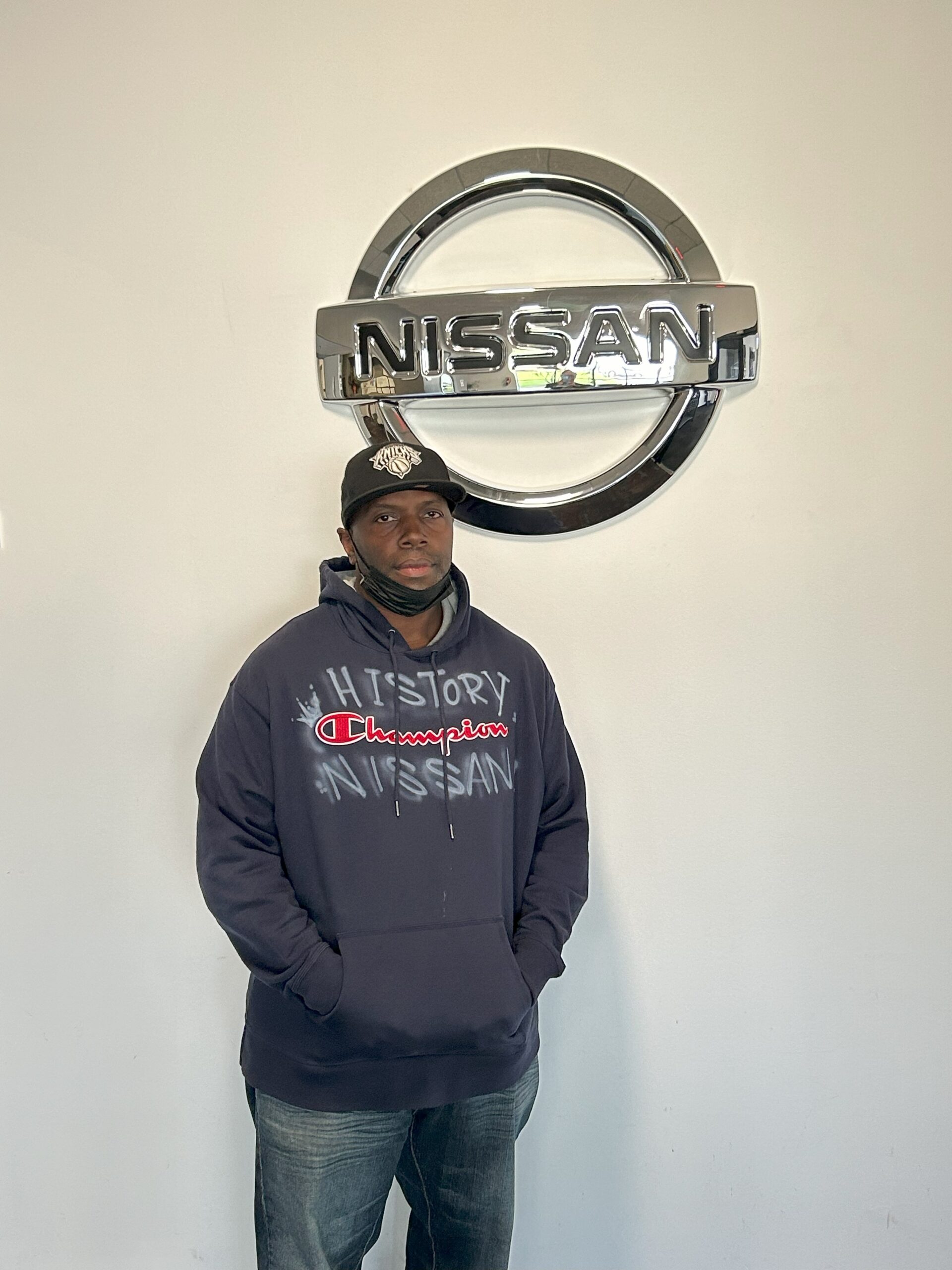
Fain’s Bane: Michael Oliver and his Nissan parts distribution coworkers ousted UAW officials even after they’d tried to force a new contract on the workplace. UAW President Shawn Fain had no response after Oliver’s victory.
SOMERSET, NJ – United Auto Workers (UAW) union bosses this April and May continued marching forward their multi-million-dollar campaign to get auto workers from traditionally nonunion plants under their control. They’ve met with only mixed success — most recently a union election at Mercedes-Benz’s large plant in Vance, Alabama, saw nearly 600 more workers vote against UAW control than for it.
Meanwhile, National Right to Work Foundation staff attorneys helped a large group of New Jersey employees oust the UAW after they’d seen the union’s agenda up close. Michael Oliver and his coworkers successfully exercised their right to vote UAW bosses out of a Nissan parts distribution plant in Somerset, New Jersey. Nearly 70% of the workers who participated in the “decertification vote” at the Nissan facility voted to send the Detroit-based union packing.
“UAW union officials were far more concerned with hoarding power in the workplace than communicating with or listening to workers,” Oliver told The Detroit News of his and his colleagues’ effort. “They kept us completely in the dark about contract negotiations, and treated anyone in the workplace who opposed their agenda or questioned their leadership with a huge amount of arrogance, contempt, and even intimidation.”
Oliver submitted a decertification petition to the National Labor Relations Board (NLRB) in early April, asking the federal agency to hold a vote at his workplace to remove the union. The petition contained signatures from enough of his coworkers to trigger a vote under NLRB rules. The vote took place on April 24.
Even in the midst of widespread worker opposition, UAW officials tried (albeit unsuccessfully) to manipulate NLRB processes in order to remain in power at the Nissan parts distribution plant. Shortly after Oliver submitted the decertification petition, UAW union officials announced that they had ratified a new union contract with Nissan management.
The NLRB’s dubious “contract bar” allows union bosses in many cases to quash decertification efforts for generally up to three years while a union contract is in effect. However, the contract bar didn’t stop Oliver and his coworkers’ requested election, because union officials weren’t able to reach a monopoly bargaining agreement with Nissan before Oliver filed his petition.
Shawn Fain Lost for Words After Nissan Workers Oust UAW Union
Oliver and his coworkers’ endeavor caught UAW President Shawn Fain off-guard. Fain told The Detroit News “I don’t have a response, because that kind of happened under the radar” and claimed that the company somehow played an illicit role in influencing the workers to kick out the union. However, there’s no evidence to support that claim, and UAW officials filed no objections to the election despite having ample time to do so.
Philly-Area Dometic Workers Fight Illegal UAW Strike Threats
Meanwhile, UAW chieftains at the Philadelphia-area plant of auto accessory manufacturer Dometic are facing new worker-filed federal charges for sending a mass text to employees illegally threatening their employment if they exercise their right to continue working during a strike.
These new charges come after several Dometic employees already hit the UAW with charges accusing the union of imposing unlawful disciplinary procedures on them simply because they resigned membership in the union.
Mario Coccie, the Dometic worker who filed the latest round of federal charges against the UAW with free Foundation legal aid, was also in the group of workers who initially charged the union with illegally penalizing workers who resign membership. “The information in this text reveals union officials’ real intentions, which is to hurt anyone willing to stand up for themselves,” commented Coccie. “What is happening in this case is completely unjust.”
“With UAW union bosses spending millions of dollars to expand their influence to nonunion facilities around the country, it’s important to remember that workers who have experienced UAW officials’ ‘representation’ often end up resenting it,” commented National Right to Work Foundation Vice President and Legal Director William Messenger. “Nissan employees in New Jersey and Dometic workers in Pennsylvania are prime examples of this, and their situations demonstrate above all that workers must have more leeway in disaffiliating with or completely voting out union bosses whose agendas harm the workers.”
NYC Car Wash Workers Kick Out Unwanted RWDSU Union Officials
The following article is from the National Right to Work Legal Defense Foundation’s bi-monthly Foundation Action Newsletter, January/February 2022 edition. To view other editions of Foundation Action or to sign up for a free subscription, click here.
Union bosses rejected by Alabama Amazon workers now ousted by car wash employees
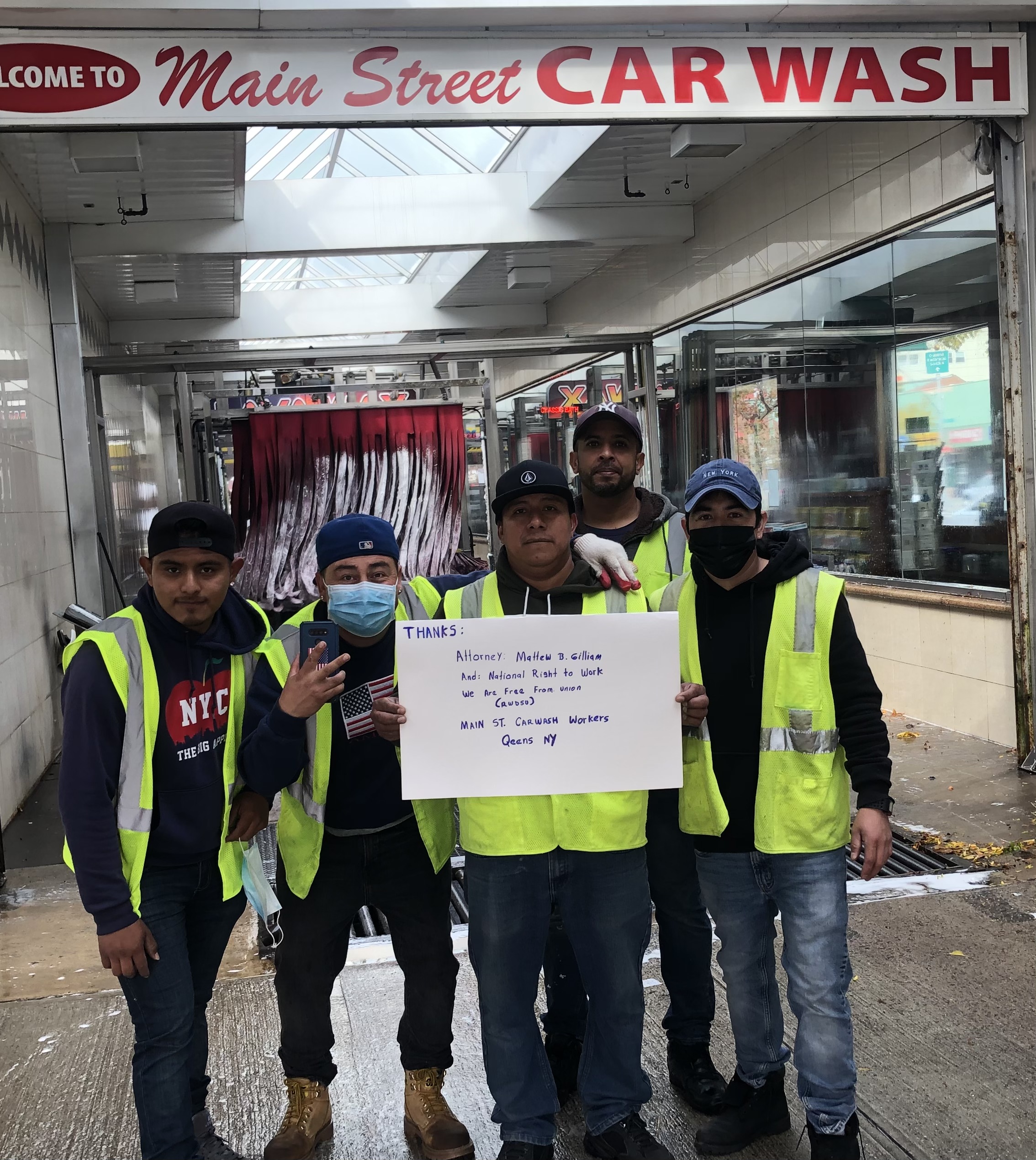
Main Street Car Wash worker Ervin Par (center) and his colleagues in NYC thank their National Right to Work Foundation attorney for helping them secure a vote to remove unwanted RWDSU union bosses from their workplace.
NEW YORK, NY – In 2018, Ervin Par, an employee of Main Street Car Wash in Queens, NY, explained why he and his coworkers overwhelmingly wanted Retail, Wholesale, and Department Store Union (RWDSU) officials out of their workplace: “They just come and collect their fees, but I don’t see an economic benefit from the union.”
“Among my colleagues, there’s a majority that doesn’t want the union,” Par told Reason magazine in an interview at the time. Now, after a three-year effort to vote out RWDSU officials, Par and his coworkers have finally succeeded with free legal aid from National Right to Work Foundation staff attorneys.
Soon after Par submitted an October petition signed by enough of his coworkers to prompt the National Labor Relations Board (NLRB) to conduct an employee vote whether to eject the union, RWDSU officials filed paperwork ending their control over the facility. Notably, RWDSU union officials fled Main Street Car Wash before the NLRB had conducted the union decertification election for Par and his coworkers — likely in an attempt to avoid an embarrassing, overwhelming rejection in the vote.
Car Wash Employees Endured Years of Forced Dues, Union “Blocking Charges”
Par also rallied his coworkers in 2018 to oust the union, but their valid petition for a decertification election was thwarted by “blocking charges” from RWDSU officials. Because Par and his colleagues work in non-Right to Work New York, the delays meant that they were forced to pay dues to an unpopular union for almost three more years just to keep their jobs. In contrast, in Right to Work states all union financial support is strictly voluntary.
Par and his coworkers’ desire for freedom from union control is not uncommon. According to reports, in 2018 Main Street Car Wash was one of only six car washes in New York City still under union monopoly control, a number that had been declining following other union departures due to lack of employee support.
RWDSU Bosses Oppose Will of Rank-and-File Workers Across Country
The RWDSU is notably the same union that Bessemer, AL, Amazon employees rejected decisively during a highly publicized April 2021 union election. Despite that election loss, RWDSU officials are still trying to install themselves at the Bessemer facility. Litigation continues over whether RWDSU lawyers will nullify the workers’ vote in which barely 12% of eligible voters supported union bosses’ monopoly “representation.”
Atlanta, GA-area employees of water treatment company Ecolab have also recently received free Foundation legal assistance in their attempt to remove RWDSU officials.
“Mr. Par and his coworkers persevered for almost three years to end RWDSU union officials’ grip on power in their workplace,” commented National Right to Work Foundation Vice President Patrick Semmens. “Although we’re glad the employees have finally been able to exercise their right to remove RWDSU, union officials should not have been able to manipulate the rules to stifle the decertification effort for so long.”
“RWDSU union officials have a penchant for challenging the will of the very employees they claim to ‘represent.’” Semmens added. “Workers across the country who seek to remove unwanted RWDSU presence in their workplace should contact the Foundation for free legal aid in exercising their rights.”
Sixteen States Back Foundation’s Petition to High Court in Chicago Educator Case
The following article is from the National Right to Work Legal Defense Foundation’s bi-monthly Foundation Action Newsletter, September/October 2021 edition. To view other editions of Foundation Action or to sign up for a free subscription, click here.
Amicus brief: Unions “refuse to stop collecting dues despite unequivocal employee demands”
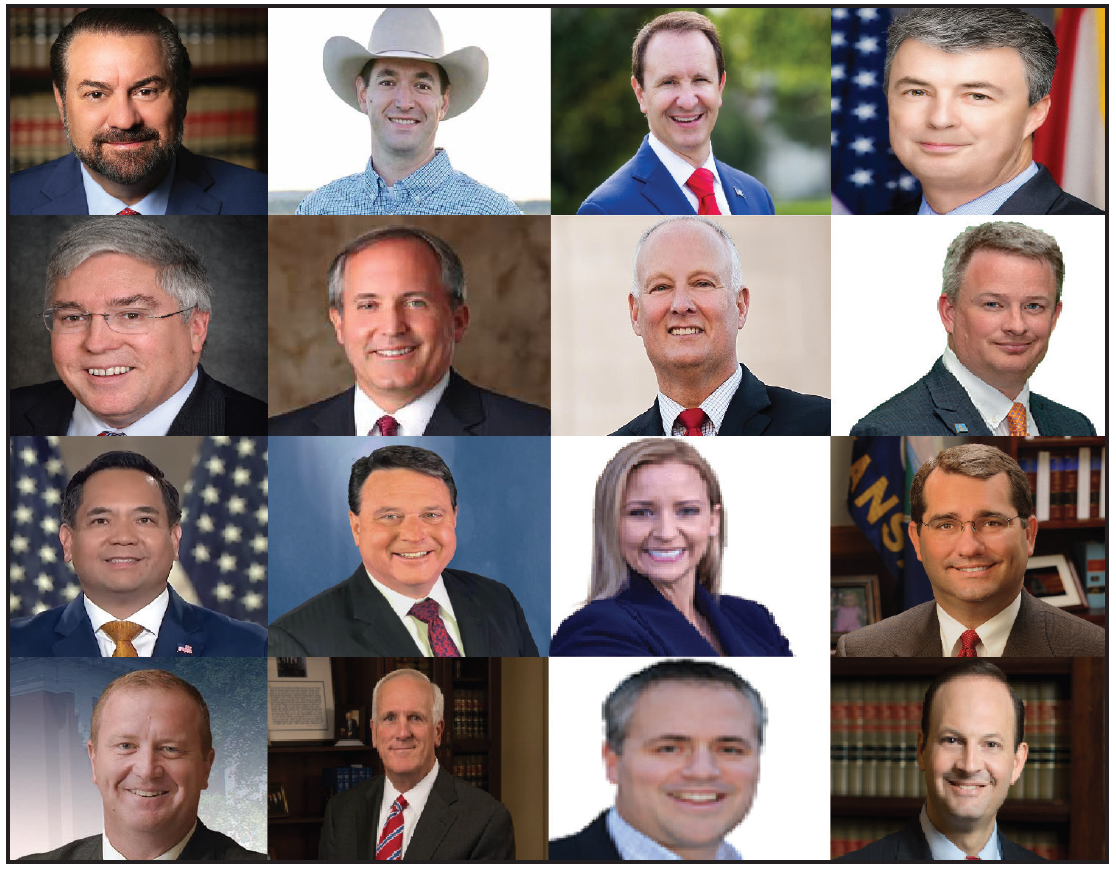
“Janus has been ignored,” wrote sixteen attorneys general in their amicus brief supporting Ifeoma Nkemdi and Joanne Troesch’s petition pressing the Supreme Court to hear their case and declare “escape periods” a First Amendment violation.
WASHINGTON, DC – In July, sixteen attorneys general threw the support of their states behind Chicago Public Schools educators Ifeoma Nkemdi and Joanne Troesch, who are urging the U.S. Supreme Court to hear their case defending their First Amendment right to cut off union financial support as recognized in the Foundation-won Janus v. AFSCME decision.
In an amicus brief encouraging the High Court to hear the case, attorneys general from Alaska, Alabama, Arizona, Arkansas, Indiana, Kansas, Louisiana, Missouri, Montana, Nebraska, South Carolina, South Dakota, Tennessee, Texas, Utah, and West Virginia argue that “escape period” restrictions like the one that Chicago Teachers Union (CTU) bosses foisted on Troesch and Nkemdi are a widespread threat to public employees’ rights under the Janus Supreme Court decision.
In 2018, the Supreme Court ruled in Janus v. AFSCME that public employees’ First Amendment rights are violated when they are forced to fund a union as a condition of employment. The Court also held that union dues can only be taken from a public employee with an affirmative and knowing waiver of that employee’s First Amendment right not to pay.
Unions Are Seizing Money from ‘Tens of Thousands’ Unconstitutionally, Brief Says
The CTU-concocted “escape period” Nkemdi and Troesch are challenging blocks employees from exercising their First Amendment Janus right to end union financial support except during one month per year. The educators’ petition for writ of certiorari presses the High Court to hear their case to affirm that Janus does not permit union bosses to profit from schemes that constrict workers’ constitutional right to refrain from subsidizing a union.
The states’ amicus brief emphasizes how glaringly union officials have flouted Janus with restrictions, as well as how widespread the schemes are: “Janus has been ignored. Across the country public-sector unions have resisted Janus’s instructions and devised new ways to compel state employees to subsidize union speech. Unions place onerous terms on dues forms that prohibit state employees from opting out of paying dues except during narrow (and undisclosed) windows during the year.”
The brief continues: “Unions refuse to inform state employees that they have a First Amendment right not to pay union dues. And unions refuse to stop collecting dues despite unequivocal employee demands. The result is that tens of thousands of state employees across the country are having dues deducted to subsidize union speech without any evidence that they waived their First Amendment rights . . . .”
Nkemdi and Troesch’s case “implicates these precise concerns” and the Court must hear it, the brief maintains.
In addition to the states’ brief, policy groups Goldwater Institute, Cato Institute, Freedom Foundation, and Liberty Justice Center filed amicus briefs backing the case.
Justices May Already Be Showing Interest in Foundation-Backed Case
In late July, the Supreme Court ordered lawyers for CTU and the Chicago Board of Education to file a response brief to Troesch and Nkemdi’s petition, a signal that some Justices may be interested in taking up the case.
Also pending at the High Court is Foundation attorneys’ anti- “escape-period” case for Susan Fischer and Jeanette Speck, two New Jersey teachers. Both that case and Troesch and Nkemdi’s case are expected to be fully briefed in October, after which the Justices will decide whether to take them.
“As union bosses continue to use deceptive ‘escape period’ arrangements to keep worker money flowing unconstitutionally into their coffers, support continues to roll in from across the country for Troesch and Nkemdi, who are sticking up for independent-minded public servants who simply want to serve their communities without being forced to fund union activities,” observed National Right to Work Foundation President Mark Mix. “The High Court must weigh in to affirm that public workers’ First Amendment rights cannot be confined to union officials’ arbitrary schedules.”





