
Workers Nationwide Continue Efforts to Oust Steelworkers Officials
The following article is from the National Right to Work Legal Defense Foundation’s bi-monthly Foundation Action Newsletter, January/February 2023 edition. To view other editions of Foundation Action or to sign up for a free subscription, click here.
Successful ousters in Louisiana and New Jersey emphasize importance of protecting worker votes
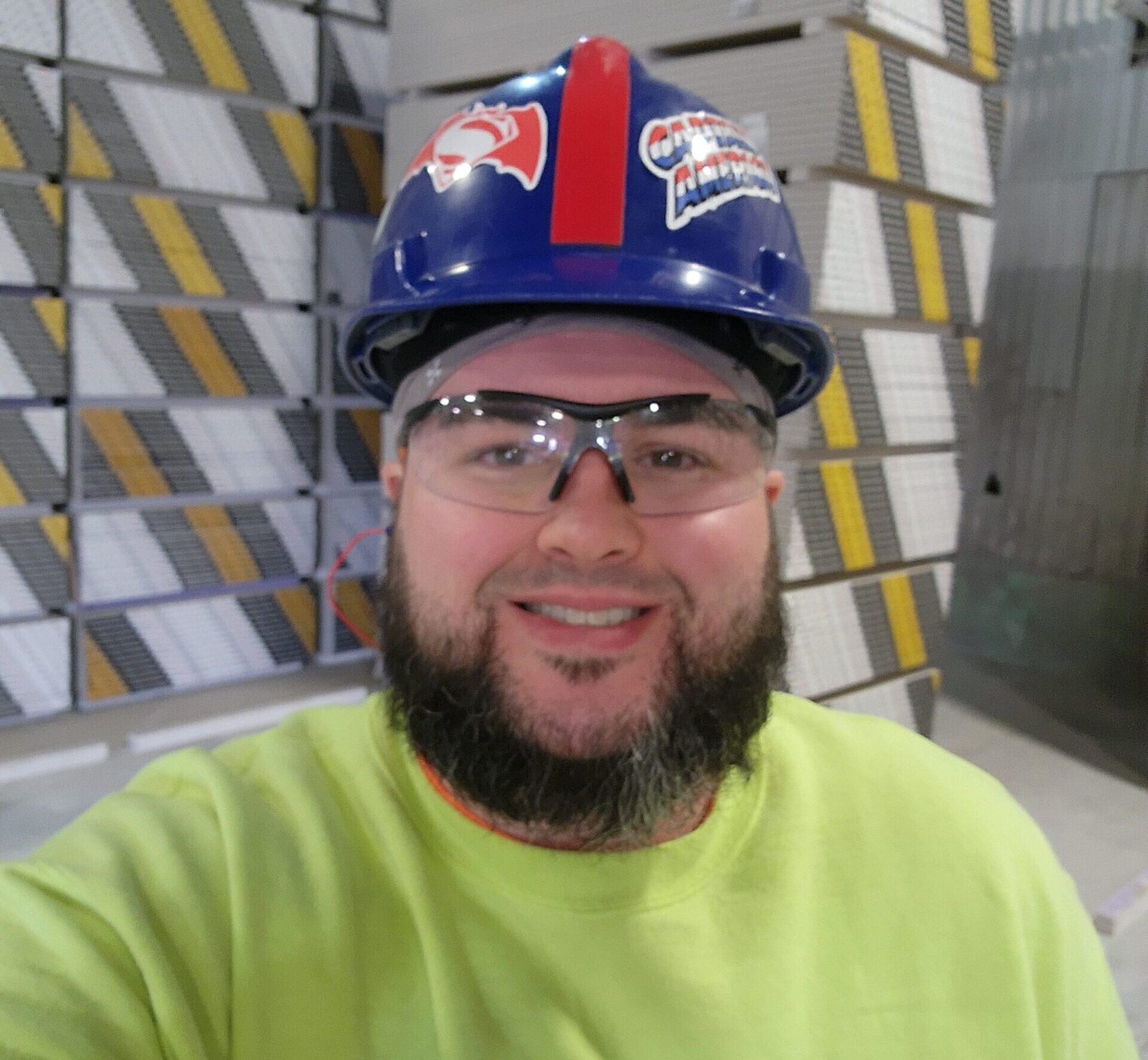
Michael Cobourn and his coworkers were forced to pay union dues while USW union bosses seemed to be loafing it at their workplace. With Foundation aid, they ousted the union.
WASHINGTON, DC – In the space of just a month, National Right to Work Legal Defense Foundation staff attorneys successfully aided groups of workers in New Jersey and Louisiana in voting out United Steelworkers (USW) union officials they opposed. The National Labor Relations Board (NLRB) certified both votes.
In Louisiana, Ryne Fox led his coworkers at GEO Specialty Chemicals to a decisive victory over USW officials, while Michael Cobourn did the same with his fellow workers at Gold Bond Building Products in New Jersey.
Both cases demonstrated the struggles workers face when seeking to “decertify” union officials whom they no longer want in power. In Louisiana, Fox had to time the filing of his coworkers’ petition seeking a decertification vote to fall within a tiny window of days imposed by the “contract bar,” a union boss-friendly NLRB policy that protects union officials from being voted out of a workplace for up to three years after union bosses and management finalize a contract.
Cobourn and his colleagues, in addition to having to deal with the “contract bar,” work in the non-Right to Work state of New Jersey — meaning they were forced to pay money to the union just to keep their jobs during the entire time they were forbidden by the “contract bar” from ejecting the union. In contrast, Right to Work states protect private sector workers from being fired merely for refusal to pay dues or fees to union officials of whom they disapprove. “My coworkers and I were paying money to the Steelworkers union constantly, yet the union didn’t seem to be doing anything for us,” commented Mr. Cobourn.
Although the efforts in Cobourn’s and Fox’s workplaces are evidence that Steelworkers union officials nationwide place their own interests above the workers they claim to “represent,” the most heinous example of such behavior is ongoing in Franklin, Pennsylvania.
There, Foundation-assisted metal workers at Latrobe Specialty Metals/Carpenter Technology are holding their own in defending their decertification petition against Steelworkers officials’ claims that the “contract bar” should invalidate the petition.
PA Workers Score Victory in Fight Against Election-Blocking Steelworkers Chiefs
While invoking the “contract bar” alone is anti-worker, Steelworkers officials in Pennsylvania claimed that a contract they unilaterally “ratified” this past summer after workers had voted against it twice should trigger the “contract bar.” Steelworkers officials had even told workers that the contract would only be “activated” if workers voted for it. But once they got wind of the workers’ decertification push, the officials “ratified” the unpopular contract secretly so they could, as one union official outrageously said during a hearing, “protect the integrity of the union.
Foundation staff attorneys representing the employee who submitted the petition, Kerry Hunsberger, have so far beaten back union officials’ attack on worker free choice. On November 18, 2021, an NLRB Regional Director rejected union bosses’ attempt to block the vote and ordered that an election proceed.
‘Contract Bar’ Encourages Union Officials to Impose Unpopular Contracts
“Workers across the country are increasingly exercising their right to vote out union officials they oppose, and we at the Foundation are happy to aid them,” commented National Right to Work Foundation President Mark Mix. “However, we’re also acutely aware of the obstacles that stand in the way of this freedom, and one of those, which Steelworkers officials seem to have no reservations about exploiting, is the ‘contract bar.’”
“The unjustified ‘contract bar’ is always wrong because it prevents workers from voting out unions they oppose when they want. But even worse, this NLRB-invented doctrine actually incentivizes union officials to rush and impose unpopular, self-serving contracts for the very purpose of insulating the union’s forced representation powers from a vote of the workers union officials claim to ‘represent,’” Mix added.
New Jersey Energy Workers Win Bid to Remove Unwanted Union
So-called ‘SMART’ Local 137 union officials disclaim representation rather than face a decertification vote of rank-and-file workers
Fairlawn, NJ (March 23, 2023) – Calmac Corp employee Carlos Flores and his coworkers have won their effort to free themselves of the Sheet Metal, Air, Rail, and Transportation (“SMART”) Local 137 union. The worker’s decertification effort recently became official when the SMART Local 137 union officials preemptively “disclaimed” interest in representing the Calmac Corp workers, rather than face a vote on whether to remove the union.
Flores, during the course of the decertification effort, received free legal aid from National Right to Work Legal Defense Foundation attorneys. The decertification petition, filed with the National Labor Relations Board (NLRB), included the signatures of a significant portion of his coworkers.
The Calmac Corp employee petition was filed on March 7, 2023. The petition was quickly followed by a letter from union officials, disclaiming interest in “representing” Calmac Corp workers. Luckily for the Calmac workers, the entire decertification process was completed rather quickly. However, this is not always the case for many workers around the nation who are also working to remove overbearing unions.
For example, the NLRB’s union decertification process is prone to union boss-created roadblocks. That includes “blocking charges”, or charges union officials levy against employers in an attempt to postpone or de-legitimize decertification efforts. These charges often have little to no basis and are used specifically to delay decertification petitions.
Foundation-backed reforms the NLRB adopted in 2020 made it somewhat easier for workers to remove unwanted union officials, and made it harder for unions to file blocking charges. However, the Biden NLRB is attempting to roll back these protections and make it much more difficult to decertify a union.
Worker interest in removing unwanted unions is growing nationwide, with National Right to Work Legal Defense Foundation staff attorneys fielding numerous requests for free legal assistance in decertification cases, with Flores and his coworkers just being one of these cases.
The NLRB’s own data show that, currently, a unionized private sector worker is more than twice as likely to be involved in a decertification effort as a nonunion worker is to be involved in a unionization campaign.
“While we are extremely satisfied Calmac Corp workers were able to exercise their right to be union-free, had the 2020 Foundation-backed reforms to the NLRB not been in place this could have been a different story with union officials dragging out the process even though they clearly knew any vote would go against the union,” observed Mark Mix, President of the National Right to Work Foundation.
“Should the Biden-appointed NLRB Members be successful in their goal to roll back these reforms, workers like those at Calmac Corp could face enormous hurdles in their decertification efforts and be trapped within union ranks for months or even years,” Mix continued.
Federal Charge: Union Official Threatened Violence Against Concrete Workers Seeking to Vote Out Union
Delaware GFP Mobile Mix Supply driver attacked for opposing the IUOE Local 542 Union
Wilmington, DE (March 20, 2023) – GFP Mobile Mix employee Tanner Bradigan has filed federal charges against the International Union of Operating Engineers (IUOE) Local 542 after union officials threatened violent retribution against workers who refused to support the union and later led an effort to remove it. Bradigan and his coworkers are receiving free legal aid from the National Right to Work Legal Defense Foundation in this and a related case.
On March 8, 2023, Foundation attorneys filed an unfair labor practice charge with the National Labor Relations Board (NLRB) for Bradigan against the union. In the charges, Bradigan stated that IUOE union officials threatened to physically attack every worker who opposed union control in a December union meeting.
According to the charge, some of the Mobile Mix workers, including Bradigan, went to the union meeting in an attempt to learn more about what union officials were claiming it could obtain for employees at the bargaining table. When they stated that they would not be supporting the union, IUOE union officials became aggressive and began screaming at Bradigan and his coworkers, threatening to fight anyone who refused to support the union.
Vance Pennington, Bradigan’s coworker, later submitted a petition on February 2 to the NLRB requesting a decertification election whether to formally remove the union from their workplace. Their petition included the signatures of more than the enough workers in the bargaining unit to trigger the decertification election.
Threatening opponents of the union with violence isn’t the only tactic IUOE union officials have deployed in their attempt to counter the decertification effort, however. IUOE officials have so far been able to stop the vote from taking place using so-called “blocking charges,” a commonly used union tactic meant to delay or shut down decertification petitions entirely.
Foundation staff attorneys recently responded to the union’s allegations by submitting five affidavits from Mobile Mix workers corroborating that the petition for dismissal was completely unrelated to the allegations in the union’s blocking charges against GFP Mobile Mix, but rather legitimate grievances, like the union official’s threats of violence.
The supply drivers at Mobile Mix are not the only workers who are attempting to remove an unwanted union. The NLRB’s own data show that, today, a unionized private sector worker is more than twice as likely to be involved in a decertification effort as a nonunion worker is to be involved in a unionization campaign.
Unfortunately, the NLRB’s union decertification process is prone to Board-created roadblocks, with the Mobile Mix workers’ situation being just the latest example. However, Foundation-backed NLRB reforms from 2020 have made it somewhat easier for workers to remove unwanted union officials.
Without these Foundation-backed reforms, workers could have their decertification votes delayed virtually automatically by any unproven union blocking charges, giving union bosses the power to trap workers in union ranks they oppose nearly indefinitely. Under the Foundation-backed reforms most votes will take place promptly, with union blocking claims adjudicated later after the votes have been counted.
“The Foundation will not stop fighting for the workers of Mobile Mix regardless of the malicious union tactics at play in this case,” stated Mark Mix, President of the National Right to Work Legal Defense Foundation. “Workers should never fear retaliation from union bosses for exercising their rights—physical or otherwise.”
“The very fact that IUOE bosses will physically threaten workers who oppose them shows these workers have ample reason, independent of whatever claims union lawyers have made in blocking charges, for wanting to end this union’s so-called ‘representation,’” added Mix.
Blockbuster Foundation Case Successfully Ends Discriminatory Film Union Scheme
The following article is from the National Right to Work Legal Defense Foundation’s bi-monthly Foundation Action Newsletter, January/February 2023 edition. To view other editions of Foundation Action or to sign up for a free subscription, click here.
Faced with prosecution, IATSE union bosses will stop ‘bumping’ non-members off film shoots
That’s a wrap: Movie electrician James Harker’s settlement ended an entrenched system of discrimination against non-members, perpetrated by IATSE union bosses.
NEW YORK, NY – James Harker, a New York-based movie production electrician, has a resume filled with big-name films that take place in the Big Apple, including Elf, Spider-Man 3, Men in Black II, and, recently, Steven Spielberg’s 2021 West Side Story.
But, while helping these and many other silver screen stories come to life, he witnessed a much more sinister plot unfolding among his fellow production workers. Production staff who were not International Alliance of Theatrical Stage Employees (IATSE) union members would often get “bumped” off of their positions on film shoots if union members became available and wanted those jobs, merely because the non-members lacked union membership.
Labor Board Agrees Film Production Union Committed Host of Violations
Many of his colleagues turned a blind eye to this so-called “bumping.” Though it was obviously discriminatory, it was an entrenched industry practice, and many were too afraid to challenge union bosses’ facilitation of the scheme. But in March 2021, Harker decided it was time to stand up, and he began a case that would soon end the practice.
Harker filed federal charges against the union in March 2021 and January 2022. In May 2022, National Labor Relations Board (NLRB) Region 29 in Brooklyn issued a complaint finding that many of the activities described in Harker’s charges were indeed violations of federal law. Harker then requested and received Foundation attorneys’ free legal aid.
The complaint was the NLRB’s first step toward prosecuting IATSE Local 52 not only for “bumping,” but also for forbidding production companies to hire non-members without permission from top union bosses, for forcing non-members to go through the union to apply for jobs, for requiring union members with hiring authority to exhaust all union member hiring options before hiring non-members, and for perpetrating other violations of federal labor law.
Following the complaint, rather than face National Right to Work Foundation staff attorneys who were providing Harker with free legal aid at trial, IATSE Local 52 union officials backed down and settled the case in October 2022 to avoid further prosecution.
Settlement Spells Final Act for Discrimination Against Non-members
The settlement orders IATSE Local 52 to comply with a number of requirements, including that union bosses will no longer “require nonmember . . . employees to obtain work through the Union,” “will not interfere with employers and their agents hiring nonmembers without first obtaining approval from the Union,” and “will not require employers to allow members to bump nonmembers off of productions because of the nonmembers’ lack of membership with the Union.”
The settlement also required IATSE union officials to attend mandatory training on employee rights and hiring procedures, and to distribute the NLRB notice broadly to members and non-members.
“IATSE union officials’ scheme to keep non-member production workers off the job is a classic example of union officials prioritizing power and control over workers’ individual rights,” commented National Right to Work Foundation Vice President and Legal Director Raymond LaJeunesse. “The Foundation was proud to back Mr. Harker, who recognized the patent injustice of this arrangement.”
“Film crew members who have exercised their right not to affiliate with a union should know that they can’t be required to go through union officials to look for work, and can’t be ‘bumped’ off a job just so a union member can get it,” LaJeunesse added. “Unfortunately, Foundation attorneys’ experience is that these types of unlawful schemes are pervasive in the entertainment industry, where near-total union boss control combined with the fear of union retaliation keeps most workers too scared to defend their rights.
California Security Employee Appeals NLRB Discrimination Ruling Minimizing Blatantly Illegal Force Union Demands
Labor Board wrongly claimed illegal union membership threats against San Francisco Allied Universal employee were mere clerical errors
San Francisco, CA (March 17, 2023) – Allied Universal employee Thomas Ross filed an appeal after National Labor Relations Board (NLRB) officials tried to end his discrimination cases against his employer and Service Employees International Union (SEIU) on the grounds that they are moot. Ross is receiving free legal aid from the National Right to Work Legal Defense Foundation in his several cases against the union and employer.
On November 10, 2022, Thomas Ross hit union officials affiliated with the Service Employees International Union (SEIU) and his employer Allied Universal, with two sets of federal charges for forcing him to join and financially support the union after he told both parties his religious beliefs forbid union support. One set of charges was filed with the NLRB for violating his rights under federal labor law, and the other was filed with the Equal Employment Opportunity Commission (EEOC), where the charges are still pending, for illegal religious discrimination under federal civil rights law.
California, where Ross is employed, lacks Right to Work protections for its private sector workers, allowing union officials the power to force workers to pay them fees or be fired. In Right to Work states, in contrast, no worker can be fired for refusal to financially support a union.
However, under federal law, employees with religious objections cannot be compelled to pay union fees, even in non-Right to Work States. Further, under the National Labor Relations Act, which the NLRB is charged with enforcing, formal union membership cannot be mandatory, nor can dues be deducted from a worker’s paycheck without explicit authorization.
Despite this, Allied Universal demanded Ross join the union and also illegally seized dues from his paycheck without Ross’ consent, which it then sent to SEIU officials. After Ross filed the charges, Allied Universal refunded Ross’s illegally seized dues and claimed that the deduction was simply an “administrative error”. This led the NRLB to dismiss the case on the basis of the supposed “error” being resolved.
Foundation Attorneys and Ross have ample evidence to demonstrate the dues seizure was not a mere clerical error. In the appeal filed with the NLRB on March 13, 2023, Foundation attorneys highlighted that “it was established company policy that all employees are required to sign the checkoff and membership forms to work at Allied’s ‘union-only’ locations.”
The appeal also showcases several threats made to Ross by Allied Universal, even after receiving written notice of his religious objection. The correspondence in the case “show[s] employer agents reiterating several times that Mr. Ross must sign the membership forms in order to work at a ‘union site,’ or he can find a new job.”
“The Foundation is proud to assist Mr. Ross in his brave fight against religious discrimination and union boss coercion in his workplace,” stated Mark Mix, President of the National Right to Work Foundation. “Apparently at the behest of the SEIU, Allied Universal repeatedly and blatantly violated Mr. Ross’ legal rights. The NLRB should not sweep those under the rug as supposed ‘clerical errors’ because the clear violations of longstanding law financially benefitted union officials.”
“Additionally, it’s important to note that regardless of whether an individual employee’s objection to union affiliation and dues payment is religious in nature or not, ultimately no worker should be forced to pay dues to a union under threat of losing their livelihood,” Mix added.
National Right to Work Foundation Opposes NLRB Push to Mandate Abusive ‘Card Check’ Unionization Process
Amicus brief in Starbucks case says NLRB General Counsel’s plan will expose workers to coercive union tactics and contradicts SCOTUS precedent
Washington, DC (March 16, 2023) – The National Right to Work Legal Defense Foundation has just submitted an amicus brief at the National Labor Relations Board (NLRB) in a case involving SEIU union organizers’ attempt to impose unionization on workers at Starbucks without a secret ballot vote. The Foundation’s brief, attached to the motion, defends workers at Starbucks and workplaces nationwide from Biden-appointed NLRB General Counsel Jennifer Abruzzo’s attempt to effectively mandate coercive “card check” organizing campaigns.
In card check campaigns, professional union organizers can pressure workers into signing cards that are then used at “votes” for unionization in lieu of an NLRB-supervised secret ballot vote.
In the ongoing Starbucks case, former union lawyer Abruzzo is attempting to resurrect the long-discredited Joy Silk NLRB theory, which would force union monopoly control on workers who have not had an opportunity to vote in secret on whether they want a union in the workplace. SEIU officials attempted to impose union control on Starbucks baristas using the so-called “card check” process, in which union agents can bypass the traditional secret ballot method of gaining power in a workplace and can obtain union “authorization cards” directly from workers – often using coercive or misleading tactics.
Card check schemes are recognized by court and NLRB precedents and even AFL-CIO organizing handbooks as inaccurate gauges of true employee support for union control. Despite this, the Joy Silk theory that NLRB General Counsel Abruzzo seeks to revive forbids employers from challenging the results of a card check unionization.
Employers can contest the results of a card check by asking the NLRB to conduct a secret ballot union vote among the employees. Conversely, under Joy Silk, the NLRB has the power to force both workers and employers under union control if an employer objects to the results of a card check.
“Now, the General Counsel seeks to upend five decades of settled law to resurrect Joy Silk,” says the amicus brief. “She seeks a regime of instant unionization through compulsory bargaining orders issued to any employer that refuses to recognize a union based on authorization cards, even though such cards were most assuredly not collected through ‘laboratory conditions.’”
Joy Silk Prioritizes Union Power Over Employees’ Will and Conflicts with Court Precedent
The Foundation’s brief argues that card check unionization drives are “notoriously unreliable” for determining whether a majority of employees in a workplace want a union. Because card check schemes lack NLRB oversight and do not permit employees to vote in private, the brief argues, the door is open for union agents to deploy many kinds of pressure tactics, including soliciting ballots, electioneering, keeping lists of employees who have or have not signed cards, and more.
As opposed to employees in a secret ballot election who vote quickly and privately, “[t]his is not true for an employee caught in the maw of a year-long card check campaign, who may be solicited repeatedly and, perhaps coercively, month after month until he or she signs,” the brief says. If General Counsel Abruzzo brings back Joy Silk, that would allow union bosses to “bypass secret ballot elections at will and secure a compulsory bargaining order virtually anytime they are able to collect a bare majority of authorization cards.”
The amicus brief also maintains that the Joy Silk standard is at odds with a large number of court precedents, including from the D.C. Circuit Court (where many NLRB decisions are appealed), other circuit courts, and the U.S. Supreme Court twice. All of these courts have declared at one time or another that “authorization cards are inferior to secret ballot elections,” the brief says.
General Counsel Abruzzo Seeks to Compel Workers into Union Ranks Despite More Than 90% of American Workers Rejecting Unionization
“NLRB General Counsel Abruzzo – a former CWA union official – continues to show her extremist views when it comes to overturning precedent in the pursuit of greater coercive powers for her former colleagues in Big Labor’s upper echelon,” commented National Right to Work Foundation President Mark Mix. “Inevitably, this comes at the expense of the rights of independent-minded American workers, who want the right to choose whether or not they wish to associate with a union, free from the well-documented coercive tactics union organizers deploy during card check drives.”
“Big Labor advocates previously at least understood that a sweeping change to federal labor law, like eliminating secret ballot elections to mandate ‘card check,’ would at least require an act of Congress,” Mix added. “But with the Card Check Forced Unionism Bill dying in 2010 due to bipartisan opposition, and the so-called ‘PRO-Act’ blocked in the last and current Congress, the Biden Administration is apparently moving forward to radically rewrite federal labor law by bureaucratic fiat.”
Foundation to High Court: Time to End Union Boss Vandalism Exemptions
The following article is from the National Right to Work Legal Defense Foundation’s bi-monthly Foundation Action Newsletter, January/February 2023 edition. To view other editions of Foundation Action or to sign up for a free subscription, click here.
Case asks if Teamsters are immune from liability for property destruction during strike
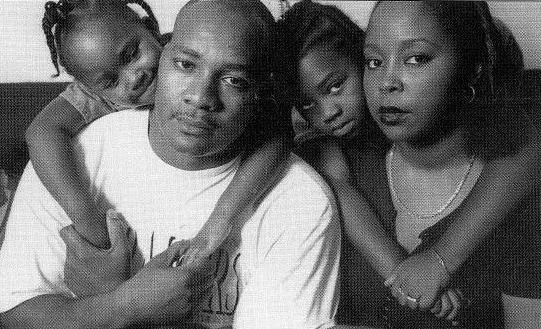
Rod Carter sought Foundation help after he was stabbed and beaten by Teamsters militants in 1997. The Foundation still fights union violence and opposes union bosses’ attempts to dodge property damage lawsuits.
WASHINGTON, DC – Unions and union officials already have an enormous number of special privileges under the law enjoyed by no other private organization or individual. Yet those special powers — including forcing workers under monopoly “representation” and union dues payments they oppose — haven’t stopped union lawyers from arguing for even more special exemptions.
In a case now before the U.S. Supreme Court, the Justices are set to decide whether the Washington State Supreme Court was correct when it granted Teamsters union officials immunity from lawsuits filed under state law. The lawsuit in this case concerned vandalism and property damage against an employer that occurred during a union boss-ordered strike.
Union Chiefs Want Blank Check to Target Workers with Property Damage
In Glacier Northwest Inc. v. International Brotherhood of Teamsters Local 174, a construction company sued the Teamsters union over property damage deliberately caused as part of a strike, only to see the Washington Supreme Court overturn the lower court and agree with union bosses’ argument that unions were exempt from such lawsuits.
With the issue now before the nation’s highest court, the National Right to Work Foundation filed a brief in the case arguing that creating such a carve-out is wrong under the law. The Foundation brief says this exemption is dangerous not only to businesses but first and foremost to independent-minded workers, and that union officials’ abundance of government-granted powers should be pared back, not extended. Oral arguments are set for January 10, 2023.
The Foundation explains in the amicus brief that “states’ interest in protecting life, limb, and private property must be respected under principles of federalism” because federal courts usually don’t offer relief for crimes like vandalism and property damage, making state courts the only place where lawsuits can be filed for such behavior. Far from being a concern only for employers who face union strike efforts, the Foundation argues, employees are often targeted by hostile or violent strike behavior and state courts often are the only forum in which they can receive justice.
“For example, in Clegg v. Powers, employees sought damages in state court for union violence and property damage during a strike,” the brief says. “Cases like Clegg demonstrate that the Court should limit” unions’ ability to dodge being sued in state court, it continues.
Foundation: Union Officials’ Special Legal Privileges Shouldn’t Be Expanded
The Foundation’s brief then points out that the Teamsters bosses’ attempt to gain this new legal privilege should be shut down given “the extraordinary privileges and exemptions already granted to unions” by Congress and courts all over the country.
These include, but are not limited to, an exemption from federal law prohibiting extortionate violence, the power to force employees in non-Right to Work states to pay union dues or fees just to stay employed, and the privilege to foist monopoly “representation” over workers against their will — powers no other private entity or individual has.
“This Court should treat unions like all other citizens or entities, clarifying that they can be liable for damages in state courts under ‘the common law rule that a man is held to intend the foreseeable consequences of his conduct,’” the brief concludes.
Unions Shouldn’t Get More Rights Than Regular Citizens
“Union officials’ theory that they should be off the hook in state court for damaging or vandalizing property is outrageous on its face. The law already has plenty of carve-outs and privileges for union hierarchies that no other private organization or citizen gets to enjoy, least of all the workers union bosses claim to ‘represent,'”” commented National Right to Work Foundation Vice President Patrick Semmens.
“Union officials regularly force millions of workers to pay union fees or be fired, and force their ‘representation’ on millions of workers who bitterly oppose it. The Supreme Court should reject this new ploy seeking another union-only exemption to regular laws, and begin to scrutinize and ultimately roll back the many existing union boss special powers.”
San Diego Gompers Preparatory Academy Educators Begin New Effort to Oust SDEA Union Bosses from School
Union bosses stymied last attempt with unproven allegations and pressure from elected officials, majority of teachers now back new effort
San Diego, CA (March 13, 2023) – Teachers at Gompers Preparatory Academy, a public charter school in the Chollas View neighborhood of San Diego, have banded together again to exercise their right to vote San Diego Education Association (SDEA) union bosses out of power at the school.
With free legal aid from National Right to Work Legal Defense Foundation staff attorneys, Gompers computer teacher Sean Bentz just submitted a petition to the California Public Employment Relations Board (PERB), requesting the agency hold a vote among his colleagues on whether to oust the union. The petition contains signatures of a majority of the teachers under the SDEA union’s control.
Bentz’s petition marks the second time in just over three years that Gompers educators have attempted to boot the SDEA union from the school. Gompers chemistry teacher Dr. Kristie Chiscano submitted a decertification petition with Foundation legal aid in October 2019. Despite this petition also having the backing of the requisite number of teachers to spur a decertification vote, SDEA union bosses attempted to avert the election by filing so-called “blocking charges” containing allegations of employer misconduct.
Union officials often manipulate “blocking charges” at the PERB and other state and federal labor relations agencies to stifle worker attempts to eliminate unpopular union “representation.” Despite the PERB never holding a hearing into whether SDEA union bosses’ claims had any merit or whether they were related to the workers’ dissatisfaction with the union, PERB officials denied a decertification election to Chiscano and her colleagues in October 2020.
State Labor Agency’s Rule Aided Union in Blocking Vote
Chiscano’s case defending the first petition to remove SDEA union agents from the school also sought to overturn PERB Regulation 32752, which requires PERB agents and attorneys to accept union bosses’ “blocking charge” allegations as true – a stipulation almost guaranteeing union defeat of any worker attempt to vote a union out.
The initial union decertification effort took place not long after SDEA officials gained power at the school in January 2019 via “card check,” a process that bypasses the traditional secret-ballot vote system to install a union. Gompers made an impressive transition to being a union-free charter school in 2005 after years of being plagued by unresponsive union bureaucracies, violence, and poor academic achievement, so many teachers and parents viewed the reinstallation of union power at the school with suspicion. Some accused SDEA agents of actively sowing division at the school, including by supporting anti-charter school legislation and needlessly disparaging the school’s leadership.
“I chose to work at a school that didn’t have a union and now they’ve come in and they’re running everything about my contract and my work,” Chiscano said at the time.
Union Agents Targeted Teachers Who Led Effort to Vote Out Union
Even worse, shortly after the PERB’s ruling halting the original decertification effort, Chiscano and another Gompers educator filed charges maintaining that SDEA agents targeted them on social media for opposing the union hierarchy. California law makes it illegal for union officials to intimidate or retaliate against employees who exercise their right to refrain from union membership.
Union boss-aligned state legislators even chimed in to pressure Gompers management to give in to union demands. In a letter to Gompers management, then-Assemblywoman Lorena Gonzalez attacked the National Right to Work Foundation simply for providing legal aid to Gompers educators as they sought to exercise their right to hold a decertification election. Gonzalez was best known during her tenure for authoring AB5, a California law that drastically reduced opportunities for freelance workers and independent contractors across the state.
Teachers’ Union Decertification Efforts Expose Massive Power of California Public Sector Unions
Sean Bentz filed the new decertification petition renewing the fight to oust the union at the earliest time permitted by California labor regulations, which immunize union officials from employee-led decertification efforts for all but a tiny window while union contracts are active. But the new decertification attempt will likely face the same roadblocks of “blocking charges” as the old one.
“The new decertification effort at Gompers Preparatory Academy pits concerned educators against California’s most entrenched special interest – public sector union bosses,” commented National Right to Work Foundation President Mark Mix. “In their last endeavor, Gompers teachers, who simply wanted to exercise their right to vote on whether SDEA union bosses deserved to remain in power, faced specious allegations meant to block the vote, union attacks on social media, and even pressure from union-label politicians.”
“Foundation attorneys will proudly fight alongside Gompers teachers to vindicate their rights, but ultimately this effort should expose how California’s labor laws prioritize union bosses’ desire for control over schools and other public services far above the rights of the employees who provide these services,” Mix added.
Pipefitters Union Hit with Federal Charge for Illegal Retaliatory Fine against Non-Union Las Vegas Worker
For participating as an observer in an NLRB union election, the heating and plumbing worker faces $4,999 in punitive union boss initiated fines
Las Vegas, NV (March 10, 2022) – An employee in Las Vegas, Nevada, has filed federal charges against the United Association of Journeymen and Apprentices of the Plumbing and Pipe Fitting Industry (UA) union Local 525, in response to union officials illegally threatening to fine him. The employee, David Webb, chose to exercise his right to work during a National Labor Relations Board (NLRB)-sanctioned election. The case was filed at the National Labor Relations Board Region 28 by National Right to Work Legal Defense Foundation staff attorneys to challenge his retaliatory fines by the union officials.
Webb, a Universal Plumbing and Heating Inc. employee, has not been a union member since 2017. Despite this, UA union officials initiated internal union disciplinary charges against him, resulting in an attempt to levy a fine of $4,999 against him for exercising his right to participate in a NLRB-sanctioned election, including as an official election observer.
Although union bosses often initiate internal union discipline against voluntary union members, longstanding precedent protects workers who are not union members from being subjected to such retaliatory fines. Further, workers can never legally be fined by union officials for exercising their protected rights under federal labor law, including participating in an NLRB-supervised election to decide whether or not union officials become the monopoly bargaining “representative” of workers in a given workplace.
Nevada is a Right to Work state, meaning workers cannot legally be required to join or pay dues or fees to a union as a condition of keeping their jobs. However, even in Right to Work states, union officials who have obtained monopoly bargaining control in a workplace are granted the power to impose one-size-fits-all union contracts on all workers, including those who opt out of union membership and would prefer to negotiate their own terms of employment. In the election that triggered the illegal retaliatory fine against Webb, workers voted against granting UA union bosses such monopoly bargaining powers.
“Fining a nonmember worker for poll-watching is not only absurd but blatantly illegal,” commented National Right to Work Foundation President Mark Mix. “If UA union bosses want to know why workers are declining formal union membership and also voting against bringing so-called union ‘representation’ into their workplace, they should look at their own conduct and how they abuse the rights of rank-and-file workers.”
“Other workers nationwide facing similar backlash from union officials should know they can reach out to Foundation staff attorneys for free legal assistance in challenging union bosses,” added Mix.





