
Medstar EMT Hits United Food & Commercial Workers Union with Federal Charges for Illegal Dues Deductions
Growing list of charges exposes how union bosses are violating workers’ rights following repeal of Michigan Right to Work law
Detroit, MI (September 10, 2024) – Nicholas Lenning, an EMT with Medstar Ambulance in Clinton Township, Michigan, has filed federal unfair labor practice charges against United Food and Commercial Workers (UFCW) Union Local 876 for illegally deducting union dues out of his paycheck in violation of federal law. Lennings filed the new unfair labor practice charges with the National Labor Relations Board (NLRB) with free legal aid from National Right to Work Legal Defense Foundation staff attorneys.
Lenning filed the federal unfair labor practice charges against UFCW Local 876 after union officials deducted dues from his paycheck without having a signed dues authorization card, and without providing him with notice regarding his rights under the Supreme Court’s Communication Workers of America v. Beck precedent, which was argued and won by attorneys for the Right to Work Foundation.
Lenning’s charge notes that in nearly three years as an employee of Medstar Ambulance, Lenning was never a union member, never signed a membership card and never signed a dues authorization card. The charge further details how, despite lacking his consent, UFCW officials began deducting dues in March 2024, at times appearing to seize extra funds for back union dues. The deductions started shortly after Michigan’s Right to Work law was formally repealed in early February. Lenning even emailed union stewards requesting information about his rights under Beck, but never received any response from the union. NLRB agents will now investigate Lenning’s charges against UFCW officials.
The charges from Lenning are the most recent in a flurry of Foundation-backed cases for Michigan workers who are seeking to challenge or escape union bosses’ coercive power in the wake of Michigan’s repeal of its Right to Work law. Since the repeal became effective this February, union bosses have had the legal power to require workers to pay union dues or fees as a condition of employment. In states with Right to Work protections, union membership and all union financial support are strictly voluntary.
However, even in states like Michigan that lack Right to Work protections and allow for forced-fee requirements, longstanding federal law prohibits union bosses from requiring workers to authorize the direct deduction of union dues from their paychecks. The Communications Workers of America v. Beck Supreme Court decision additionally forbids union bosses in non-Right to Work states from forcing workers to pay money for any activities beyond the union’s bargaining functions, such as political lobbying, and organizing.
Without Right to Work, Michigan Workers Increasingly Taking Legal Action Against Union Boss Forced Dues Abuses
In March 2023, a bare majority of Michigan legislators voted along partisan lines to repeal Right to Work at the behest of union special interests, ending workers’ ability to decide for themselves whether or not union officials deserve their dues money. The imposition of union bosses’ power to force employees to “pay up or be fired” came despite polling showing Michiganders, including those in union households, overwhelmingly opposed the elimination of workers’ Right to Work protections.
After the repeal became effective this February, workers from across the Great Lakes State sought help from National Right to Work Foundation staff attorneys in escaping union bosses’ forced-dues demands. The total cases that Foundation attorneys have filed for Michigan workers in 2024 is already well more than double the number for all of 2023.
“As this case and others demonstrate, within days of Michigan workers being stripped of their Right to Work protections, union bosses were attempting to use the repeal as cover to justify forced dues collections, even in violation of longstanding federal law,” commented National Right to Work Foundation President Mark Mix. “The flood of legal aid requests Foundation staff attorneys are fielding from Michigan workers since the repeal of Right to Work shows once again that union bosses’ greed for forced dues will lead them to callously and blatantly violate the rights of the very workers they claim to ‘represent.’”
“Without the clear legal line that Right to Work provides by ensuring that all union membership and financial support are strictly voluntary, there unfortunately is little reason to think these types of abuses of workers’ legal rights will not continue to spread across the Great Lake State,” added Mix.
Michigan Meijer Employee Hits Supermarket with Federal Charges for Forcing Him to Join UFCW Union or Be Fired
Charges come as more workers challenge union bosses’ forced-dues power in wake of Michigan Right to Work repeal
Sault Ste. Marie, MI (June 11, 2024) – Joseph Arnold, an employee at the 3 Mile Road branch of Meijer in Sault Ste. Marie, has just slammed the supermarket’s management with federal charges for threatening to fire him if he didn’t complete a United Food and Commercial Workers (UFCW) union membership form. Arnold filed the charges at Region 7 of the National Labor Relations Board (NLRB) with free legal aid from National Right to Work Foundation staff attorneys.
The NLRB is the federal agency responsible for enforcing federal labor law in the private sector. Under federal law and U.S. Supreme Court decisions like General Motors v. NLRB, neither union officials nor employers can compel workers to maintain formal union membership as a condition of getting or keeping a job.
This applies even in non-Right to Work states like Michigan, where union bosses have legal privileges to enforce contracts that require workers to pay union dues or fees as a condition of employment. Employees in non-Right to Work states who choose to abstain from formal union membership also have the right under the Foundation-won Communications Workers of America v. Beck Supreme Court decision to object to paying union fees for anything unrelated to the union’s bargaining functions, such as political activities.
In contrast, in Right to Work states like neighboring Indiana and Wisconsin, all union financial support is strictly voluntary.
With the demand that Arnold sign a UFCW membership form or else be fired, Meijer officials appear to be imposing both full union membership and full union dues payments on him. Other workers have reported receiving similar demands to join or be fired.
Workers Across Michigan Challenge Forced-Dues Schemes
“Even though Michigan isn’t a Right to Work state anymore, that doesn’t give my employer agency to dictate my options,” commented Arnold. “Through ignorance or intent, Meijer threatening my job because I don’t want to associate with the union is unacceptable. If Meijer truly respects our rights they would present us with all options, as it is the job of the union to advocate my interests with my employer, not the job of my employer to advocate the interests of the union with me.”
Since the state’s Right to Work law was repealed earlier this year, Foundation attorneys have handled a flurry of cases for Michigan workers seeking to end coercive union influence in their workplaces. One such case involves illegal UFCW practices at a Kroger in Milford, Michigan, where employee Roger Cornett has levied federal charges against both the union and the store for jointly enforcing a scheme that forces employees to contribute to the union’s Political Action Committee (PAC) to stay employed.
Elsewhere in Michigan, Grand Rapids-area security guard James Reamsma is currently defending his and his coworkers’ recent “deauthorization vote” to nullify the forced-dues power of a United Government Security Officers of America (UGSOA) union. The UGSOA currently holds monopoly bargaining power over security guards posted at government buildings across Western Michigan, including in Sault Ste. Marie. Even though more of Reamsma’s colleagues voted for the deauthorization of the UGSOA than against it, litigation continues over the results. Reamsma’s case is one of many where Michigan workers are seeking to end union bosses’ power to compel payment of union dues or fees, and return to voluntary dues payments, as was protected under Michigan’s popular Right to Work law.
“Based on the cases that Foundation attorneys have already fielded in the short time that Michigan’s Right to Work law has been repealed, it’s clear that Michigan workers need more protection from coercive union power, not less,” commented National Right to Work Foundation President Mark Mix. “Union officials and complicit employers will often push the boundaries of what’s legal in an attempt to extend union power over workers regardless of whether they want or asked for the union.”
DC-Area ‘Union Kitchen’ Employees Vote 24-1 to Remove UFCW Union
The following article is from the National Right to Work Legal Defense Foundation’s bi-monthly Foundation Action Newsletter, March/April 2024 edition. To view other editions of Foundation Action or to sign up for a free subscription, click here.
Foundation now defending workers against union attempt to overturn employee vote
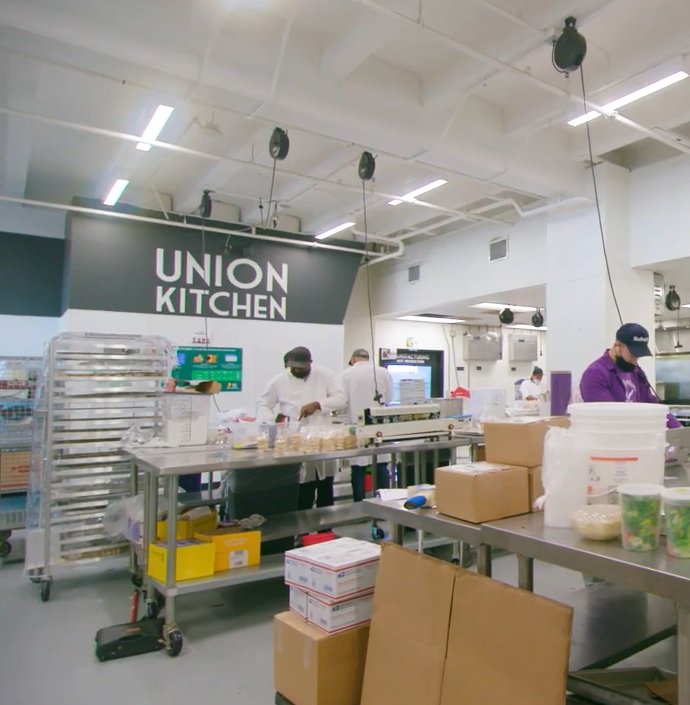
Union Kitchen, a unique grocery concept that helps local DC entrepreneurs get their food products to market, was the target of a dangerous UFCW picket scheme.
WASHINGTON, DC – Ashley Silva, an employee at independent DC-area food store Union Kitchen, could sense in July 2023 that her coworkers had had enough of the United Food and Commercial Workers (UFCW) union in their workplace.
UFCW union officials had been ordering contentious boycotts and pickets on the stores, and some of the demonstrations even required police intervention after union picketers blocked store exits.
“The vast majority of the workers at Union Kitchen are sick and tired of the UFCW’s picketing, harassment of employees, and constant disruptions of our day-to-day work life,” Silva said at the time.
Despite Searing Worker Rejection, UFCW Bosses Trying to Cling to Power
With free legal aid from the National Right to Work Foundation, Silva filed a decertification petition with the National Labor Relations Board (NLRB), asking the federal agency to hold a vote among the employees of Union Kitchen’s five stores on whether the union should be ousted. The vast majority of her coworkers signed the petition.
UFCW union officials levied allegations against Union Kitchen management in an attempt to stop the vote from happening. Despite some delays, Silva and her coworkers cast ballots in October 2023, and a January 2024 vote count revealed that she and her colleagues had voted against the union 24-1.
The union challenged eight employee ballots, meaning the full tally of votes against the union is most likely 32-1.
Once the NLRB certifies this election result, Silva and her coworkers will be free of the union. However, in an attempt to stop this, UFCW officials continue to press the “blocking charges” against Union Kitchen management that they filed at the NLRB before the vote, and have also piled on objections to the election that contain the same basic accusations as the blocking charges.
Blocking charges are often unverified or unrelated charges of employer misconduct that union officials can manipulate to stall a ballot count or a certification of results in a union decertification case.
If the NLRB issues a complaint against an employer based on a union’s “blocking charges,” the decertification process is halted.
Foundation Will Fight UFCW Bid to Overturn Vote
Foundation staff attorneys are defending Silva and her colleagues’ victory at the ballot box from UFCW union officials’ bald-faced attempts to oppose their will.
“We’re happy that Ms. Silva and her coworkers were finally able to exercise their right to vote out a union they oppose,” commented National Right to Work Foundation Vice President Patrick Semmens. “It’s unfortunate, though hardly surprising, that despite such an overwhelming rejection UFCW union officials won’t take a hint and stop attempting to impose their unwanted so-called ‘representation’ on Union Kitchen employees.
“The Foundation is proud to defend Silva and her coworkers against these union tactics as they seek freedom from coercive unionism,” Semmens concluded.
MI Kroger Employee Hits UFCW Union, Kroger with Federal Charges for Illegally Requiring Dues Payments, PAC Contributions
Worker contends that union lacks valid contract and thus can’t demand any money from workers, despite recent MI Right to Work repeal
Detroit, MI (April 16, 2024) – An employee of Kroger’s supermarket in the Prospect Hill Shopping Center in Milford, MI, has just hit United Food and Commercial Workers (UFCW) Local 876 union officials and Kroger management with federal charges. The employee, Roger Cornett, charges that Kroger declared it would fire him unless he signed a union membership form, and authorized union dues deductions and contributions to the union’s Political Action Committee (PAC) from his paycheck. Cornett notably points out that UFCW lacks a legal basis to demand money from any worker.
Cornett’s charges are now pending with the National Labor Relations Board (NLRB), the federal agency responsible for governing private sector labor relations. Cornett’s charge recounts that, despite his requesting a copy, neither union officials nor Kroger produced a copy of a union contract containing a so-called “union security clause,” more accurately called a “forced-dues clause.”
Under longstanding federal law, even in a state without Right to Work protections, union officials can only enforce a contract requiring employees to pay dues as a condition of employment if the contract contains a forced-dues clause. To be valid, federal law requires that such clauses have a 30-day grace period before union bosses’ “pay-up-or-be-fired” demands can be enforced.
Since Kroger and UFCW cannot produce a contract that contains such a clause, union demands for dues money should be illegal. This is true notwithstanding Michigan’s repeal of its Right to Work law, a provision that made union membership and union financial support strictly voluntary.
Under federal law, no employee can be required to authorize payroll deductions of union dues or to pay money to a union PAC used to fund union boss-backed political candidates. Additionally, the National Labor Relations Act (NLRA) and U.S. Supreme Court cases like General Motors v. NLRB safeguard the right of workers to abstain from formal union membership, while the Foundation-won CWA v. Beck Supreme Court decision forbids union officials from forcing nonmember workers to pay money for any expenses outside the union’s core bargaining functions, which includes political expenses.
UFCW Union Unleashed Pressure Campaign on Nonmember Workers After Right to Work Repeal
Michigan’s Right to Work law, which prevented union officials from having workers fired for refusing to join or pay dues to a union, was officially repealed on February 13, 2024. According to Cornett’s charges, in February he asked if there was an updated version of the union contract that would require him and other nonmembers to pay dues as a condition of employment in light of the repeal. Neither UFCW nor Kroger provided Cornett with such a contract in response to his request.
Union officials threatened Cornett and other workers that it was a condition of employment for them to become union members, authorize direct deductions of union dues from their pay, and “sign all or part of the three-part Union membership application and checkoff form,” the latter of which included a page authorizing deductions for the union’s PAC.
Worker Faced Termination After Being Threatened to Contribute to Union PAC
Cornett’s charges state that he received a letter from management on February 28 “informing him that…Kroger terminated [him] for failure to become a member of the Union.” This termination took place within the statutorily-required 30-day grace period before forced-dues contracts can be enforced against union nonmembers – meaning the firing would be illegal even if the union had a valid contract that allowed it to require dues payments as a condition of employment.
Cornett says in his charges that he signed the three-part form in order to keep his job. His charges state that the union’s threats and pressuring of employees “violate the [NLRA], and threaten, restrain, and discriminate against Charging Party and similarly situated employees in the exercise of their Section 7 right to refrain from [union activity].”
“Here we have yet another example of union bosses browbeating the very Michigan workers they claim to ‘represent’ as soon as Right to Work protections are gone,” commented National Right to Work Foundation President Mark Mix. “Security guards at government buildings across Western Michigan are already banding together to oppose forced-dues demands from UGSOA union officials, and we now see UFCW union officials trying to squeeze dues money out of Kroger employees using coercive tactics that are forbidden even in a non-Right to Work environment.
“Especially concerning is Cornett’s charge that he was forced to sign his money away for the union’s PAC, a demand that blatantly violates several federal laws while paying no regard for workers’ free choice,” continued Mix. “Foundation staff attorneys will get to the bottom of this and defend Mr. Cornett’s rights.”
Ohio Kroger Employee Slams UFCW and Kroger with Federal Charges for Illegally Seizing Money from Paycheck
Union officials threatened that employee would be fired for not signing illegal dues deduction authorization form, Kroger still taking dues from employee’s paycheck
Fairfield, OH (March 20, 2024) – An employee of Kroger’s location in the Fairfield Center Mall Shopping Center has hit the United Food and Commercial Workers (UFCW) Local 75 union with federal charges, stating that union officials threatened him with termination for refusing to sign an illegal union membership form. Kroger is also the subject of a charge for illegally transferring dues money from the employee’s paycheck to the union.
The worker, James Carroll, submitted his charges at Region 9 of the National Labor Relations Board (NLRB) in Cincinnati with free legal aid from the National Right to Work Foundation.
Carroll’s charges explain that the form UFCW union bosses forced him to sign is an illegal “dual purpose” membership form, which seeks only one employee signature for authorization of both union membership and dues deductions. Federal labor law requires that any authorization for union dues deductions be voluntary and separate from a union membership application. Additionally, Supreme Court precedents like General Motors v. NLRB recognize the right of workers to refrain from union membership.
However, because Ohio lacks Right to Work protections for its private sector workers, UFCW union officials have the power to impose contracts that force Carroll and his coworkers to pay union dues or fees as a condition of keeping a job, even if they are nonmembers. However, union officials must always seek employees’ explicit consent before instructing an employer to deduct union dues directly from a worker’s paycheck, and forced-dues amounts can never include money that goes toward a union’s political activity, as per the Foundation-won CWA v. Beck Supreme Court decision. In Right to Work states, union dues payment is strictly voluntary.
At UFCW officials’ behest, Kroger has continued to seize full union dues from Carroll’s paycheck despite his lack of consent. Because Kroger management is complicit in assisting union agents in enforcing their illegal scheme, Carroll has also filed federal charges against Kroger.
On Illegal Dues Practices, Kroger and UFCW Are Repeat Offenders
This isn’t the first time Foundation attorneys have aided Kroger employees facing illegal dual-purpose membership forms pushed by UFCW union bosses. In February 2023, Houston, TX-area Kroger worker Jessica Haefner filed federal charges against the UFCW for presenting her with such a dual-purpose form, and for altering her writing on the form to show she consented to union dues deductions when she was actually trying to exercise her right under Texas’ Right to Work law to abstain from dues payment.
In 2023, Foundation attorneys also assisted a Pittsburgh-area teen file federal discrimination charges against a UFCW local after union officials illegally refused to consider his religious objections to paying union dues.
“Federal law protects the right of workers to make free choices about formal union membership, and gives workers in non-Right to Work states like Ohio some ability to avoid paying for union politics and other union expenditures. But union bosses bent on obtaining greater control over workers and their pocketbooks pose real-life obstacles to exercising these rights, as do complicit employers like Kroger,” commented National Right to Work Foundation President Mark Mix. “We’re proud to help Mr. Carroll defend his rights, but ultimately Ohio workers need the protection of a Right to Work law.”
Piscataway L’Oreal Employee Says RWDSU Union Boss Threats and Misinformation Undermined Vote to Oust Union
Worker’s objections to election assert that union bosses threatened employees critical of union and sowed racial division; new election sought
Piscataway, NJ (November 6, 2023) – Ana Maria Hoyos Lopez, an employee of L’Oreal USA Products, is asking for a rerun election based on charges that Retail, Wholesale and Department Store Union (RWDSU-UFCW) Local 262 officials interfered in a vote she and her coworkers requested to remove the union. In election objections filed with National Labor Relations Board (NLRB) Region 22 in Newark, Hoyos Lopez maintains that union officials threatened workers who voiced objections to union officials’ performance, misrepresented facts about the employer’s healthcare plans, used racially-charged tactics, and perpetrated other coercive conduct in the weeks leading up to the election.
Hoyos Lopez is receiving free legal representation from National Right to Work Legal Defense Foundation staff attorneys. In September, also with Foundation aid, she filed a petition which contained enough signatures from her coworkers to prompt the NLRB to hold a vote to remove the union (a “decertification election”) at her workplace. The vote took place at L’Oreal USA’s Piscataway facility through October 19 and October 20.
Objections Assert RWDSU Union Officials Yelled at, Chased Employees Who Expressed Concerns with Union, Made Racial Appeals
Hoyos Lopez’s objections focus on a September 22 meeting that union bosses held to push workers to vote for the union. According to the filing, during the meeting, Hoyos Lopez and some other employees brought up problems with the union’s performance, including lack of communication between the employees and union officials, and the poor quality of the union contract. In response, “[t]he pro-decertification employees were yelled down, the president of the Union shouted expletives at them in a threatening and coercive manner, and union officials demanded that they leave the meeting.”
During the same meeting, the objections state, Hoyos Lopez attempted to film the threatening actions of union officials, but a union official accosted her further and “proceeded to chase after Petitioner despite the fact that she had already left the pavilion” at the public park the meeting was occurring at.
“Outside the pavilion [a union official] demanded that Petitioner leave the park entirely, and threatened to call the cops on her if they did not comply,” the objections state. During the same meeting, union officials also asked Hoyos Lopez to withdraw her petition or asked other employees to request she do so.
Hoyos Lopez also asserts in the objections that, in the weeks leading up to the election, union officials “misrepresented the difference in health insurance policies offered by the Union compared to those offered by the Employer,” interfered with the laboratory conditions of the election by speaking to employees as they were in line to vote, and sent text messages that “intrusively asked employees on which day they would be voting.”
The final objection states that RWDSU-UFCW bosses engaged in racial tactics to swing the vote in favor of the union. Union officials told employees that white managers in the U.S. are racist and don’t want to promote Hispanics, and that employees “should vote for the Union to defend their rights.”
“This appeal to racial and ethnic prejudice is coercive and despicable, and is grounds to set aside the election,” the objections conclude.
As RWDSU Union Bosses Shut Down Employee Vote, Biden NLRB Seeks Less Worker Freedom
Hoyos Lopez’s objections will now be investigated and a rerun election will occur if the NLRB determines union officials’ actions were objectionable and interfered with employees’ free choice in the election.
“If RWDSU union officials truly believed they would win an election among L’Oreal employees, they would not engage in such acts of coercion, including threatening the employees they claim to ‘represent,’ misrepresenting facts prior to the vote, and shamelessly sowing division,” commented National Right to Work Foundation President Mark Mix. “We will continue to fight for Ms. Hoyos Lopez and her coworkers to get a fair opportunity to freely choose whether RWDSU bosses should remain in their workplace.”
“Unfortunately, instead of beefing up protections on worker-requested elections, the Biden NLRB is seeking big policy changes that will make it easier for union officials to gain power without a vote,” added Mix.
Foundation Defends Michigan Workers with Forced Dues Looming
The following article is from the National Right to Work Legal Defense Foundation’s bi-monthly Foundation Action Newsletter, July/August 2023 edition. To view other editions of Foundation Action or to sign up for a free subscription, click here.
With Right to Work repeal law passed, workers seek to escape mandatory payments
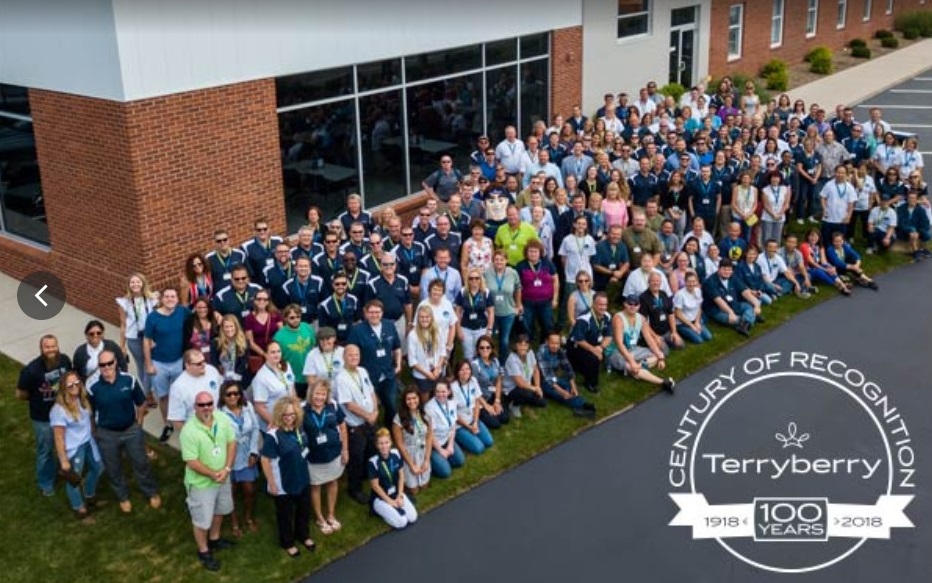
Michigan legislators’ unpopular decision to repeal the state’s Right to Work law helped prompt Mary Soltysiak and her coworkers’ move to vote out the IAM union.
LANSING, MI – Despite poll after poll showing 70 percent of Michiganders wanted Michigan’s decade-old Right to Work law left in place, Gov. Gretchen Whitmer and union cronies in the Michigan Legislature voted to strip Wolverine State workers of their right to refrain from funding unwanted union bosses in March. In response, the Foundation sprang into action, issuing a Special Legal Notice to Michigan workers advising them of their legal options as the state transitions to a forced-dues regime. The notice reminded workers that, despite what union bosses may claim, the state’s Right to Work law remains in effect until 90 days after the legislative session ends later this year — and also what they can do in advance of forced dues being legal again. Unsurprisingly, given Right to Work’s popularity even among union households, Michigan workers are stepping up and taking action to defend their rights against coercive unionism.
Michigan Workers Battle Forced-Dues Schemes Ahead of Repeal
For example, Foundation attorneys are currently assisting Grand Rapids-area Kroger employee Roger Cornett’s challenge to an illegal dues scheme perpetrated by United Food and Commercial Workers (UFCW) union officials. Cornett hit UFCW bosses with federal charges this May, accusing them of ignoring a letter in which he exercised his right to cut off dues deductions from his paycheck. Cornett’s charges also maintained that UFCW bosses sought to seize money from him using a form that blatantly violates existing federal law. Cornett’s charge says the form is illegal because of its “dual purpose” nature, meaning just one signature confusingly locks a worker into both membership and dues deductions. Federal law requires any authorization for union dues deductions to be voluntary and separate from a union membership application. UFCW bosses’ contempt for longstanding federal protections in Cornett’s case likely indicates how aggressively union officials will pursue forced dues under a non-Right to Work regime. The Foundation’s legal notice also counsels workers that they can avoid forced-dues arrangements entirely by petitioning the NLRB to hold “decertification elections” at their workplaces, in which workers can vote unpopular unions out.
Legal Notice Counsels Workers of Right to Vote Out Unwanted Unions
Mary Soltysiak, who opposes forced dues, heard news of the upcoming repeal and filed a petition to decertify the International Association of Machinists and Aerospace Workers (IAM) District Lodge 60/Local Lodge 475 union with free legal aid from Foundation staff attorneys. Soltysiak and her colleagues work at Terryberry, a manufacturing firm in Grand Rapids, MI.
Soltysiak stated that she and some of her colleagues “contacted [a Foundation attorney] and filled out paperwork to get out of paying union dues around the year 2018 because of the Right to Work . . . law.”
“The union has done nothing but hurt my paycheck and my vacation hours,” Soltysiak added.
Soltysiak and her coworkers achieved victory this May, when the NLRB certified their majority vote ousting the IAM union. Hopefully, their success portends the future success of the growing number of workers in Michigan and across the country looking to decertify the unions in their workplaces.
Foundation Also Defending Public Sector Right to Work Protections
As noted in the Foundation’s legal notice, the Michigan Right to Work repeal does not affect public sector Michigan employees. Under the Foundation-won Janus v. AFSCME Supreme Court decision, no public worker in America can be forced to subsidize a union as a condition of employment. But, as the repeal is looming, Michigan public sector union officials are nonetheless seeking to undermine public employees’ freedom to refrain from union support through so-called “fee-for-grievance” schemes.
This April, the Foundation submitted a brief in the Michigan Supreme Court case Technical, Professional and Officeworkers Association of Michigan (TPOAM) v. Renner, in which TPOAM officials are trying to enforce a “fee-for-grievance” policy against Saginaw County employee Daniel Renner. Under it, union bosses strip nonmember public employees of any power to file grievances themselves, and instead mandate that they pay fees sometimes exceeding yearly union dues to use the union’s grievance system.
Michigan legislators’ unpopular decision to repeal the state’s Right to Work law helped prompt Mary Soltysiak and her coworkers’ move to vote out the IAM union.
In the brief, Foundation staff attorneys refute the union’s claims for this newfound power, stating that “fee-for-grievance” schemes were never authorized by the Michigan Legislature and are inconsistent with federal law.
Foundation Attorneys Will Defend Worker Freedom in Michigan
“Michigan union officials and their allies in the state legislature have contempt for workers’ individual rights that knows no bounds,” commented National Right to Work Foundation Vice President and Legal Director William Messenger. “That was made clear by the repeal of the popular Right to Work law, and the attempt to undermine Right to Work protections for public sector employees which are safeguarded by the First Amendment under the Foundation’s Janus U.S. Supreme Court victory.”
“Michigan workers have a long road ahead to restore their rights against union coercion, but Foundation attorneys are fighting alongside these workers, and will continue to fight until no Michigan worker can be forced to pay union bosses they disapprove of just to keep a job,” Messenger added.
It’s Official: Oregon Masami Foods Workers’ Vote to Oust UFCW Union Officials is Certified
Despite union legal tactics delaying the certification of an NLRB decertification election, Masami Foods workers are free of unwanted union
Klamath Falls, OR (August 3, 2023) – A vote by workers at Masami Foods in Klamath Falls to remove United Food and Commercial Workers (UFCW) Local 555 union officials’ forced representation powers has been certified. A petition filed by employee Scott Child with the National Labor Relations Board Region 19 (NLRB) led to this successful vote. Child received free legal aid from the National Right to Work Legal Defense Foundation.
Child and his coworkers at Masami Foods filed for a decertification vote on March 2, 2023. Under federal labor law, workers can trigger such a decertification vote with the support of at least 30% of workers in a unionized workplace. The NLRB then scheduled a vote for May 11, 2023.
On May 11, Masami employees made their position on the union clear, voting 54-25 to remove the union from their workplace. However, UFCW union officials had previously filed a number of “blocking charges,” presumably to delay the NLRB’s certification of the results. As a result of these blocking charges, the vote certification was delayed until August 1, 2023, when the NLRB Regional Director certified the election results.
The case is an example of how the NLRB’s union decertification process is prone to union boss-created roadblocks. Foundation-backed reforms the NLRB adopted in 2020 made it somewhat easier for workers to remove unwanted union officials. However, the Biden NLRB is attempting to roll back these protections and make it much harder to decertify a union.
For example, the 2020 reforms blocked union officials from resubmitting overlapping charges, which often contain unverified and unrelated allegations of employer actions and delay the process further. Had these reforms not been in place, the three-month delay for these workers could have been extended much longer, possibly effectively indefinitely.
The Masami Foods decertification is another example of a growing movement among workers to remove incumbent unions from their workplace. Currently, the NLRB’s data shows a unionized private sector worker is far more likely to be involved in a decertification effort as their nonunion counterpart is to be involved in a unionization campaign. NLRB statistics also show a 20% increase in decertification petitions last year versus 2021.
“We are honored to have been able to help the Masami Foods workers exercise their rights under federal law to remove a union they clearly, overwhelmingly, oppose,” stated Mark Mix, President of the National Right to Work Legal Defense Foundation. “While the outcome is favorable, the union-instigated delays in certifying the results of the decertification vote highlight the lengths UFCW officials are willing to go to in order to maintain control over workers, even those who clearly want nothing to do with them.”
“The blocking charge tactics used by UFCW union officials in this case demonstrate how wrong it would be if and when the Biden NLRB reverses the Election Protection Rules that cut back on such ‘blocking charge’ abuses,” continued Mix. “Without those modest 2020 reforms, these workers would almost certainly still be trapped in union ranks they oppose with no end in sight.”
Busted: Kroger Worker’s Card Illegally Altered to ‘Authorize’ Forced Dues
The following article is from the National Right to Work Legal Defense Foundation’s bi-monthly Foundation Action Newsletter, May/June 2023 edition. To view other editions of Foundation Action or to sign up for a free subscription, click here.
Employee’s UFCW union card indicating objection to financial support changed without her knowledge

Jessica Haefner clearly exercised her rights under Texas’ Right to Work law. Foundation attorneys will get to the bottom of who faked her consent to dues deductions and restore her rights.
HOUSTON, TX – Supermarket clerk Jessica Haefner began her job at a suburban Houston Kroger store in August 2022. She attended a mandatory meeting for new employees run by United Food and Commercial Workers (UFCW) local union agents. Despite the union’s hard-sell at the meeting, she knew her rights under Texas’ Right to Work law: Union bosses couldn’t force her to pay any dues or fees to the union to keep her job.
During the meeting, Haefner followed a union representative’s instructions to indicate on a union form that she did not want to be a part of the union or pay dues or fees. But she was shocked to discover just weeks later not only that union dues were coming out of her paycheck, but also that the union form she was required to sign had been altered to indicate she consented to those deductions.
Haefner, with free legal representation from National Right to Work Foundation staff attorneys, slammed UFCW officials and Kroger with federal charges at the National Labor Relations Board (NLRB). The charges state that UFCW bosses’ and Kroger’s actions violate her rights under Section 7 of the National Labor Relations Act (NLRA), which guarantees American private sector workers’ right to abstain from any and all union activities.
“I was lied to . . . and my rights were not only violated as an employee but as an American citizen,” said Haefner.
Employee’s Dues Form Was Altered, Forced Dues Deductions Began
According to Haefner’s charges, a UFCW agent passed out a union membership application and a dues checkoff on a single form that he claimed was mandatory for meeting attendees to complete. Another piece of onboarding literature stated that Kroger management had the “opinion that you should participate and be active in the Union.”
When Haefner asked how she could exercise her right to refrain from joining the union or paying union dues, the union agent instructed Haefner to write “$0” in the field marked “union dues” on the form.
Haefner followed these instructions. But after discovering later that union dues were indeed coming out of her paycheck, Haefner quickly obtained a copy of the form on which Kroger and UFCW officials based their dues deductions. She saw that someone had changed the dues deduction amount in the field she marked “$0” to a dollar amount to induce dues deductions from her paycheck.
UFCW Chiefs Illegally Seizing Dues from Grocery Workers Across Country
UFCW’s violation of Haefner’s rights is not an isolated incident. In Pennsylvania, Foundation staff attorneys are also representing Giant Eagle supermarket cashier Josiah Leonatti, who charges UFCW Local 1776KS union officials with refusing to accommodate his religious objections to union membership (see page 3). King Soopers grocery employees from Colorado are also receiving free legal aid from Foundation staff attorneys in opposing illegal UFCW strike fines, some of which are as high as about $4,000 per worker.
“Jessica Haefner knew her rights under Texas’ popular Right to Work law and actively asserted them, yet UFCW union officials still brazenly took her money against her will,” commented National Right to Work Foundation President Mark Mix.
“As cases brought for workers with free Foundation legal aid show, UFCW bosses have a long and documented history of violating workers’ rights, whether through thousands of dollars in illegal strike fines, illegal religious discrimination, threatening teenagers’ jobs, and now by altering a worker’s dues authorization,” Mix added.
Seattle Mariners Retail Employees Vote Out UFCW Union, Defeat Union Boss Attempt to Block Election Using “Card Check”
UFCW Local 3000 swept out in “double header” as Mariners and Storyville Coffee workers both successfully remove unwanted union
Seattle, WA (July 26, 2023) – Seattle Mariners employees have successfully voted 50-9 to remove United Food and Commercial Workers (UFCW) Local 3000 union officials from power at the Mariners’ retail stores in T-Mobile Park and the Westlake area of Seattle. The news follows the National Labor Relations Board’s denial of a union attempt to overturn the election. The employees received free legal aid in their effort from the National Right to Work Legal Defense Foundation.
The Mariners’ retail workers filed a petition in April asking National Labor Relations Board (NLRB) Region 19 to hold a vote on whether the union should be removed. The petition followed UFCW union officials’ imposition of union power over the retail shop employees via an October 2022 “card check” drive. “Card check” is a coercive and abuse-prone scheme in which union officials can bypass the secret ballot union election process, and instead attempt to obtain a majority of union authorization cards by demanding them directly from workers.
Over the objection of UFCW union officials, the NLRB Regional Director in May ordered a union decertification election at the request of the Seattle Mariners’ retail employees. Union bosses subsequently filed a Request for Review at the NLRB in Washington, D.C., seeking to halt the election. They argued that a so-called “voluntary recognition bar” should be imposed to block the Mariners’ employees from exercising their right to vote on the union’s removal. However, the NLRB denied the union’s Request for Review on July 25. After NLRB Region 19 certifies the 50-9 vote result, the Seattle Mariners’ retail employees will finally be free from the unwanted UFCW union.
Foundation-Backed Election Protection Rule Safeguards Employees’ Rights
The retail workers were able to challenge union officials’ card check drive thanks to the Election Protection Rule (EPR), a reform to the election rules enacted by the NLRB in 2020 following Foundation advocacy. While union officials pre-EPR were able to manipulate the so-called “voluntary recognition bar” to block employees from voting out a union for at least a year after an employer recognized a union’s supposed card check victory, the EPR granted employees a 45-day window in which to petition for a secret ballot election to challenge the card check result.
The NLRB Regional Director’s May decision noted that, even though the Mariners’ employees filed the petition outside the 45-day window, the “bar” following the card check recognition would still not apply because neither the union nor the employer had followed the proper procedure to ensure that the retail employees were informed of their right to challenge the card check drive. “There is thus no bar to an election in the instant matter,” the decision read.
The process by which workers can challenge card check drives by requesting secret ballot elections was originally established by Foundation attorneys in the Dana Corp. NLRB case. Though this decision was later overturned by the Obama NLRB, “Dana elections” were codified in the EPR.
Predictably, the wildly pro-Big Labor Biden NLRB has announced rulemaking to eliminate the Election Protection Rule, as well as rulemaking to impose harsh penalties on employers that challenge card check drives. Such changes would let unions seize power virtually automatically after a card check drive, with no opportunity for employees to have a secret ballot vote instead.
Seattle Storyville Coffee Employees Also Remove UFCW 3000 Union
Just hours after the NLRB denied UFCW Local 3000 officials’ Request for Review in the Seattle Mariners case, employees of Storyville Coffee Company in Seattle received word that UFCW Local 3000 officials had filed paperwork to end their control at the shop. Storyville employees, led by Paris Hunt, also petitioned for a union decertification vote with free Foundation legal aid. Apparently fearing another loss at the ballot box, UFCW Local 3000 officials pulled out as opposed to facing the will of the workers in an election.
“While the Seattle Mariners’ retail employees were able to shut down UFCW bosses’ scheme to force them under union control without even a vote, workers’ right to get a secret ballot vote is now under severe threat from the Biden NLRB, which is eager to empower the Administration’s union boss allies,” commented National Right to Work Foundation President Mark Mix. “NLRB officials should look to the Mariners’ employees as real-life examples of workers whose rights would be stripped away if the Election Protection Rule is done away with at Big Labor’s behest.”
“No worker should be trapped under the ‘representation’ of a union they oppose, and at the very least every employee should have a right to cast a private ballot before union bosses gain power in their workplace,” Mix added.





