
NY Starbucks Barista Asks Federal Labor Board to Restore Employees’ Right to Vote Out SBWU Union Officials
SBWU union bosses prevented worker-requested union removal vote by filing unverified charges, never demonstrated link to worker effort
Niskayuna, NY (September 12, 2025) – Starbucks barista Nadia Kuban is asking the National Labor Relations Board (NLRB) in Washington, DC, to overturn federal policies that are preventing her colleagues from having a vote to remove unwanted Starbucks Workers United (SBWU) union officials from their workplace. Kuban is receiving free legal aid from the National Right to Work Legal Defense Foundation.
The NLRB is the federal agency responsible for enforcing federal labor law, a task that includes administering elections to install (or “certify”) and remove (or “decertify”) unions. Kuban’s effort to remove SBWU from the Niskayuna Starbucks began in February, when she submitted a petition backed by her colleagues asking the NLRB to hold a decertification vote at their store. Despite Kuban’s petition containing enough employee signatures to trigger a vote under NLRB rules, regional NLRB officials dismissed her petition and denied her colleagues their right to vote on the union’s continued control.
Kuban’s latest NLRB filing challenges the dismissal of her decertification petition. Regional NLRB officials issued the dismissal due to alleged unfair labor practice charges that SBWU bosses filed against the Starbucks Corporation at the national level. Her Request for Review argues that the NLRB violated employees’ due process rights by tossing her petition without a hearing into whether the allegations had anything to do with workers’ desire to oust the union at her location. It also contends that the NLRB’s Rieth-Riley precedent – which lets union bosses manipulate such allegations (also known as “blocking charges”) to derail worker-requested decertification votes entirely – is inconsistent with federal law.
Starbucks Employee Challenges NLRB Policy That Lets Union Bosses Block Votes
The NLRB’s Rieth-Riley decision in 2022 permits the agency to make so-called “merit-determination” dismissals of decertification petitions. Such dismissals let NLRB officials stop union decertification elections entirely – and invalidate already-cast ballots – based on union boss-filed “blocking charges” that haven’t even been litigated yet. Kuban’s brief explains that the ruling is at odds with federal labor law, which mandates that the NLRB conduct an election if employees submit a valid decertification petition.
“This is inconsistent with the plain language of [National Labor Relations Act] Section 9(c), which states what the NLRB ‘shall’ do, a nondiscretionary term,” the brief says. “The Board…should overturn Rieth-Riley’s merit-determination [ruling]….”
The Request for Review also explains that even under existing NLRB cases – including Rieth-Riley – the dismissal of Kuban’s decertification petition is not justified. NLRB case law doesn’t allow the dismissal of employees’ decertification petitions unless there is an outright refusal by an employer to negotiate with union officials, the brief says, which is not the case in Kuban’s situation. Furthermore, the NLRB’s Saint Gobain decision, won by Foundation staff attorneys, holds that “an evidentiary hearing is required when a union alleges that an employer’s unfair labor practice caused disaffection with the union.” Kuban never got such a hearing in her case, meaning she “has been significantly disadvantaged in defending her petition, to the point of being denied due process of law,” the brief says.
Trump NLRB Can Use Case to Defend Workers’ Freedom
Earlier this year, Rayalan Kent, a Foundation-backed asphalt worker in Michigan whose union decertification effort was stifled in the Rieth-Riley case, submitted a brief to the Sixth Circuit Court of Appeals. This brief defended his employer (Rieth-Riley Construction Company) in a case over its refusal to negotiate with International Union of Operating Engineers (IUOE) officials. IUOE bosses had dredged up years-old unfair labor practice charges to cancel the counting of Kent and his coworkers’ already-cast election ballots in 2022. Kent is now urging the Sixth Circuit to use the current case against his employer to undo the disastrous “merit-determination” doctrine, and order the NLRB to finally count his colleagues’ ballots.
“The NLRB’s so-called ‘merit-determination’ dismissal policy serves no purpose other than letting union officials block workers’ right to make a free decision on whether they want union monopoly ‘representation’ in their workplace,” commented National Right to Work Foundation President Mark Mix. “Ms. Kuban speaks for countless independent-minded workers across the country in seeking to eliminate this unfair policy. Upon confirmation, President Trump’s new appointees to the NLRB should prioritize cases like hers, and defend workers’ freedoms from union bosses’ attempts to gain more control over their working lives and pocketbooks.”
Foundation-Backed Starbucks Baristas Support Trump’s Firing of Biden NLRB Member
The following article is from the National Right to Work Legal Defense Foundation’s bi-monthly Foundation Action Newsletter, May/June 2025 edition. To view other editions of Foundation Action or to sign up for a free subscription, click here.
Starbucks employees’ challenge to agency power boosted by firing of Biden Board Member
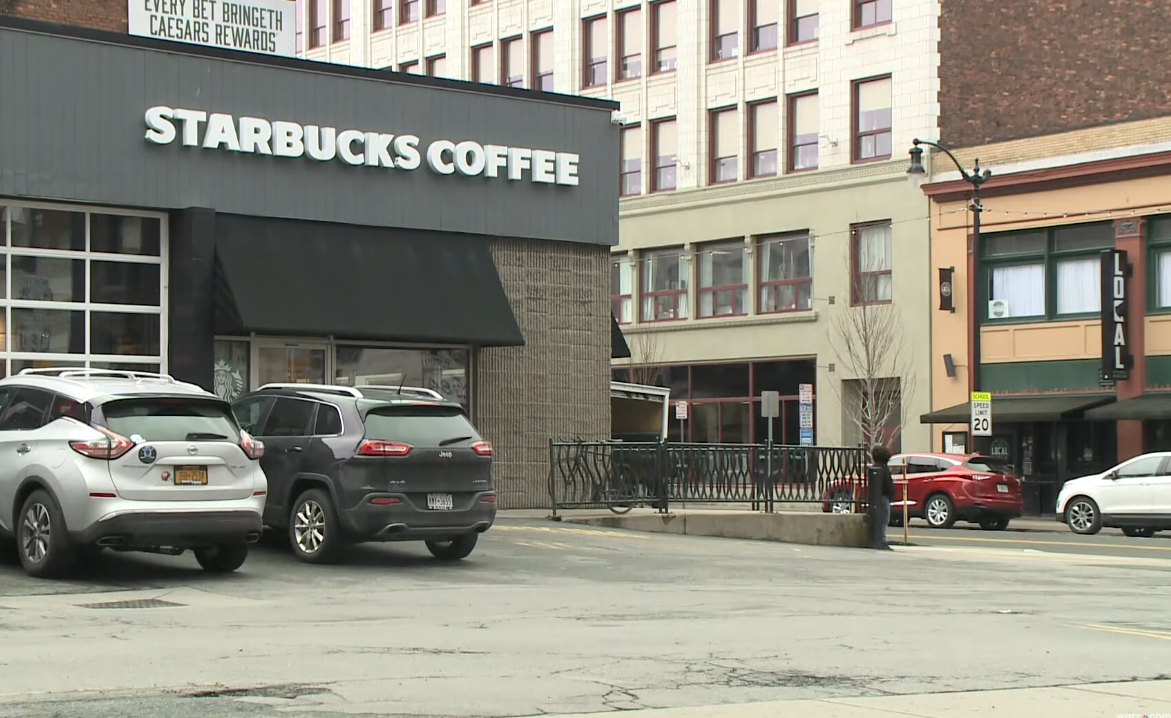
It may not look like much, but this Starbucks store in downtown Buffalo, NY, is the place where barista Ariana Cortes started her trailblazing legal battle against both the SBWU union and a hostile NLRB bureaucracy.
WASHINGTON, DC – President Trump isn’t the only person seeking reform in the federal government. Several National Right to Work Foundation-backed workers have advanced lawsuits in federal courts challenging the constitutionality of a federal agency.
Two upstate New York Starbucks baristas (Ariana Cortes and Logan Karam), represented by Foundation staff attorneys, filed the first case in the nation challenging NLRB members’ removal protections. Their case advanced a revolutionary argument that the National Labor Relations Act’s (NLRA) removal protections for NLRB members — which protect them from presidential removal during their entire terms except in very rare cases — let them exercise executive power in violation of separation of powers doctrines in Article II of the Constitution.
This power is plain to see — unelected NLRB members have the power to decide who can vote in union elections, adjudicate disputes between employers and unions, impose one-size-fits-all union “representation” on employees who don’t want it, and much more. Showdown Over Removal of Biden Appointee Headed for SCOTUS President Trump utilized the same arguments when he announced he was ousting Biden-appointed NLRB member Gwynne Wilcox (a former SEIU union lawyer) for issuing radical decisions that “vastly exceeded the bounds” of federal law.
Wilcox’s lawyers sued Trump over the removal, arguing — wrongly — that NLRB members’ removal protections are valid and prevent the President from doing virtually anything to stop NLRB members who have gone rogue. The case between President Trump and Gwynne Wilcox has now joined Cortes and Karam’s suit in being considered by the D.C. Circuit Court of Appeals.
As this issue goes to print, the Supreme Court has ordered Wilcox off the NLRB while it decides whether Wilcox should remain off the NLRB while the case is ongoing. Foundation attorneys submitted a legal brief on behalf of Cortes and Karam backing the President’s contentions. Cortes and Karam’s brief focuses on how the Board’s powers to enforce federal labor law, lack of technical expertise, and the partisan nature of its membership are not characteristics of a federal agency where removal protections might be appropriate under Supreme Court caselaw.
The brief also argues that reinstating Wilcox would cause chaos because it would let her participate in deciding cases before the NLRB while her continued presence on the Board is still the subject of litigation.
“Cortes and Karam have a vital interest in the outcome of this case, and not only because it concerns the constitutionality of [NLRB member removal protections],” the brief says. “Cortes and Karam do not want an individual the President properly removed from the Board because of her unsound rulings — Gwynne Wilcox — to decide their pending NLRB cases.”
Because of the weighty constitutional matters at stake, many have already predicted that this question will likely receive final consideration from the U.S. Supreme Court. Cortes and Karam’s lawsuit is fully briefed at the D.C. Circuit Court, and a hearing is scheduled for May. Their case was spurred by NLRB bureaucrats’ decision to block the baristas and their coworkers from exercising their right to vote to decertify (or remove) Starbucks Workers United (SBWU) union officials.
NLRB Region 3 rejected petitions in which a sufficient number of coworkers from both Cortes’ and Karam’s upstate New York Starbucks locations requested such elections. Regional NLRB officials cited unfair labor practice accusations made by SBWU union officials against the Starbucks Corporation as the reason for barring the votes. Notably, there was no established link between these allegations and the employees’ decertification requests.
Starbucks Baristas’ Battle Promotes Liberty for Workers Across Country
“Ms. Cortes and Mr. Karam spoke up on behalf of untold numbers of independent-minded workers nationwide when they filed their federal lawsuit challenging the NLRB’s constitutionality,” commented National Right to Work Foundation Vice President Patrick Semmens.
“The NLRB regularly stops workers from exercising their rights to push back against union influence for any reason union bosses dream up. Board members’ ability to do this without fearing any accountability to the elected President has effectively turned the agency into a fourth branch of government.
“We hope the Starbucks baristas’ lawsuit, boosted by the President’s efforts to reform the government, eventually results in lasting change to the Board that protects worker freedom,” Semmens added.
Following Foundation Legal Arguments, Trump Fires Biden-Appointed NLRB Bureaucrats
The following article is from the National Right to Work Legal Defense Foundation’s bi-monthly Foundation Action Newsletter, March/April 2025 edition. To view other editions of Foundation Action or to sign up for a free subscription, click here.
Foundation constitutional lawsuit first to argue presidents can remove Board members

President Trump appears intent on ending union bosses’ reign at the NLRB. One of his first actions was to axe Jennifer Abruzzo and Gwynne Wilcox, both ex-union bosses who constantly sought to beef up their cronies’ powers over employees.
WASHINGTON, DC – Joe Biden, a career lackey of Big Labor union bosses, spared no moment of his administration ensuring that his cronies at the top of America’s largest unions gained power at the expense of independent-minded workers.
Only minutes after being inaugurated in 2021, he began setting the stage for a Big Labor takeover of the federal government: He immediately fired Peter Robb, the general counsel for the National Labor Relations Board (NLRB) during Donald Trump’s first term. With Robb gone, Biden’s acting general counsel quickly quashed multiple National Right to Work Foundation-backed cases that would have otherwise received full NLRB consideration. When Biden filled the general counsel position, he picked Jennifer Abruzzo — a radical ex-Communications Workers of America (CWA) lawyer who was confirmed only because then-Vice President Kamala Harris broke a party-line deadlock in the Senate.
And Biden wasn’t finished. He filled two vacancies on the Board itself with Gwynne Wilcox and David Prouty — who had both worked for the radical Service Employees International Union (SEIU).
Biden’s crusade against worker freedom arguably culminated in the disastrous Cemex Construction Materials Pacific NLRB decision, which gave union officials the power to seize monopoly bargaining power in a workplace without winning a secret-ballot election among employees. The Biden Board also repealed key Foundation-backed reforms that (among other things) stopped union bosses from using so-called “blocking charges” alleging employer malfeasance to stop workers from voting in union removal elections they had requested.
Sudden End of Radical Biden Majority Creates Opportunities for Foundation Litigation
But, just a week after re-ascending to the White House, President Trump took immediate action to undo the damage to worker freedom caused by the historically-radical Biden NLRB. In late January, Trump took the crucial step of giving both Abruzzo and Wilcox the boot. That, combined with the fact that the Senate did not confirm Biden NLRB Chairman Lauren McFerran for another term, means Trump has the opportunity to appoint a pro-freedom majority to the Board before it considers any other cases.
“We hope that this signals the opening of a new chapter at the NLRB, where the agency will fulfill its statutory mandate to protect workers’ right to associate with unions if they choose, but will equally defend their right to refrain from all union activity,” commented National Right to Work Foundation President Mark Mix.
Trump Admin, Others Follow Foundation Lead in Arguing for Structural Board Change
By removing Wilcox, the Trump Administration is relying on arguments made in the Foundation’s groundbreaking cases challenging the structure of the NLRB. Foundation-backed Starbucks employees Ariana Cortes and Logan Karam filed the first-ever federal suit arguing that, as per the Constitution’s separation of powers principles, the president should be able to remove them at-will.
Cortes and Karam’s suit is currently pending at the D.C. Circuit Court of Appeals. Big Labor backers argue that board members like Wilcox have statutory protections that make them removable only in certain circumstances. But Board member protections are constitutionally questionable.
“President Trump made an excellent and decisive move to protect the freedom of American workers. Abruzzo’s and Wilcox’s track records were devastating for independent-minded employees,” observed Mix.
“We’re also encouraged by the Trump Administration’s apparent reliance on National Right to Work Foundation-backed workers’ cases to affirm the idea that NLRB members — like Wilcox — should be removable by the president at will. “The Foundation still has considerable legal work to do to reverse the damage done by the Biden NLRB, and removing a union partisan like Wilcox from the Board is just the first step towards restoring the rights and freedoms of workers opposed to union affiliation,” added Mix.
Starbucks Employee’s Constitutional Challenge to Labor Board Structure Fully Briefed at DC Circuit Court of Appeals
Trump recently removed a Biden NLRB appointee relying on constitutional arguments first raised by NY Starbucks workers’ lawsuit against the NLRB
Washington D.C. (February 24, 2025) – New York Starbucks employees Ariana Cortes and Logan Karam have filed the final brief with the D.C. Circuit Court of Appeals in their landmark lawsuit asserting that the structure of the National Labor Relations Board (NLRB) violates the U.S. Constitution.
The case, which is being litigated by National Right to Work Foundation staff attorneys, is especially notable after the Trump Administration asserted the very same legal arguments in its efforts to reform the NLRB. President Trump on January 28 fired NLRB Board Member Gwynne Wilcox, criticizing the same removal protections that Cortes and Karam’s first-in-the-nation lawsuit targeted for violating the Constitution.
The Foundation lawsuit, initially filed by Cortes, and later joined by Karam, states that the National Labor Relations Act of 1935 (NLRA) violates Article II of the Constitution by shielding NLRB Board Members from being removed at the discretion of the president. The appeal challenges a District Court decision that dismissed the lawsuit on the grounds that the plaintiffs lack legal standing. That decision did not address the underlying claim regarding whether the Labor Board’s structure complies with the requirements of the Constitution.
With the case now fully briefed, oral arguments are expected soon. A ruling in favor of Cortes and Karam could help cement making the Board more accountable to independent-minded employees and their rights.
Case Filed After NLRB Denied Starbucks Employees Right to Vote Out Unwanted Union
On April 28, 2023, Cortes submitted a petition, supported by a majority of her colleagues, asking the NLRB to hold a decertification election at her Buffalo-area “Del-Chip” Starbucks store to remove Starbucks Workers United (SBWU) union officials’ bargaining powers over workers. However, NLRB Region 3 rejected Cortes’ petition, citing unfair labor practice accusations made by SBWU union officials against the Starbucks Corporation. Notably, there was no established link between these allegations and the employees’ decertification request.
Similarly, Karam filed a decertification petition seeking a vote to remove the union at his Buffalo-area Starbucks store. Like Cortes’ petition, NLRB officials refuse to allow the vote to take place, citing claims made by SBWU officials. As a result the workers remain trapped under union “representation” they oppose.
“This case demonstrates the direct harm caused to workers rights by unaccountable and biased NLRB bureaucrats that have stifled attempts to remove unwanted union representation,” commented National Right to Work Foundation President Mark Mix. “NLRB officials may not like it, but federal labor law is not exempt from the requirements of the highest law in the land, the Constitution.”
“We are proud that the very legal arguments first made by Foundation attorneys in this case have now been utilized by President Trump to rein in the biased Biden NLRB,” added Mix. “The NLRB’s refusal to process these workers’ decertification petitions, paired with its unchecked authority, exemplifies why reform is overdue.”
Starbucks Barista Asks Labor Board to Overturn Regional Official’s Decision to Continue Blocking Vote to Remove Union
With original case cited as grounds for blocking vote settled, worker pushes for decertification election to oust SBWU
Oklahoma City, OK (November 20, 2024) – Starbucks employee Amy Smith has filed a Request for Review with the National Labor Relations Board (NLRB) in Washington, D.C., asking the agency to review a regional NLRB order tossing her petition seeking an election to remove the Starbucks Workers United (SBWU) union from her Oklahoma City store. Amy Smith, who works at the Nichols Hills Starbucks location, is receiving free legal representation from National Right to Work Legal Defense Foundation staff attorneys.
Smith’s appeal challenges the regional NLRB’s refusal to reinstate her decertification petition, which it is still stonewalling despite the resolution of SBWU union officials’ charges against Starbucks that were ostensibly the justification for blocking the workers’ petition for a vote to remove the union. Smith argues that the decision is inconsistent not only with the Board’s past reasons for holding up the petition, but also with workers’ right under federal labor law to promptly have an election to remove a union they do not want.
Starbucks Employee Challenges Labor Board’s Unreasonable Stalling
In October 2023, Smith filed a petition asking the NLRB to hold a decertification election so she could vote to remove SBWU from her workplace. Her petition had enough of her coworkers’ signatures to meet the 30% threshold necessary to trigger a decertification vote. However, at SBWU union officials’ request, the NLRB dismissed the petitions “subject to reinstatement” until the unfair labor practice case Starbucks Corporation (01-CA-305952) was resolved. That case has now been settled, and the NLRB closed the case.
Last month, Smith had asked the NLRB Regional Directors in Region 14 (covering Oklahoma City) to reinstate her petition so the NLRB can promptly schedule a secret ballot election to determine whether a majority of workers want to end union officials’ monopoly power at her store. However, instead of reinstating Smith’s petition, regional NLRB officials instead came up with a different unfair labor practice case against Starbucks to scuttle the election again, without even giving Smith a hearing to defend her petition.
“This standard has proved not only to contradict the plain text of [federal labor law], but has failed to appropriately account for the Board’s statutory mandate to conduct an election,” the Request for Review says.
Growing Momentum for Decertification
Oklahoma is a Right to Work state, meaning union payments must be voluntary and cannot be required as a condition of employment. However, under federal law, SBWU officials’ monopoly bargaining powers still allow them to impose a union contract on all employees at the store, even those who are not union members and who oppose SBWU’s so-called “representation.” A successful decertification vote would strip union officials of that extraordinary monopoly bargaining power.
The growing movement among Starbucks partners to eject unwanted union officials from their stores is part of a larger trend, with an over 50% increase in the number of decertification petitions filed annually over the last four years. Already, National Right to Work Foundation staff attorneys have assisted Starbucks employees in over a dozen stores seeking votes to remove the SBWU union. However, union officials have so far manipulated federal labor law to block any decertification votes from being held.
“Employees like Amy Smith should have the fundamental right to decide who represents them in the workplace, free from unnecessary delays and bureaucratic roadblocks,” commented Mark Mix, president of the National Right to Work Foundation. “The NLRB’s refusal to allow a timely vote is a clear disregard for the principles of employee free choice. We are committed to defending workers’ rights to hold unions accountable and ensuring that workers’ voices are heard.”
Starbucks Employees File Brief with Appeals Court in Case Challenging Constitutionality of Labor Board Structure
NY Starbucks workers are challenging NLRB that refuses to hold votes to remove unwanted SBWU union
Washington D.C. (October 16 2024) – New York Starbucks employees Ariana Cortes and Logan Karam have filed the opening brief with the D.C. Circuit Court of Appeals in their groundbreaking lawsuit challenging the structure of the National Labor Relations Board (NLRB) as unconstitutional. The lawsuit, initially filed by Cortes, and later joined by Karam, follows NLRB officials’ refusal to process their respective petitions requesting a vote to remove Starbucks Workers United (SBWU) union officials from their workplace.
The lawsuit states that the National Labor Relations Act of 1935 (NLRA) violates Article II of the Constitution by shielding NLRB Board Members from being removed at the discretion of the president. The appeal challenges a District Court decision that dismissed the lawsuit on the grounds that the plaintiffs lack legal standing. That decision did not address the underlying claim regarding whether the Labor Board’s structure complies with the requirements of the Constitution.
The brief, filed with free legal aid from the National Right to Work Legal Defense Foundation, thoroughly refutes the District Courts decision that Cortes and Karams lack standing to challenge the constitutionality of the Board, and also argues why the Court should side with the plaintiffs on the merits of their constitutional challenge against the NLRB.
Starbucks Employees Are Being Denied Their Right to Vote
On April 28, 2023, Cortes submitted a petition, supported by a majority of her colleagues, asking the NLRB to hold a decertification election at her Buffalo-area “Del-Chip” Starbucks store to remove SBWU union officials’ bargaining powers over workers. However, NLRB Region 3 rejected Cortes’ petition, citing unfair labor practice accusations made by SBWU union officials against the Starbucks Corporation. Notably, there was no established link between these allegations and the employees’ decertification request.
Similarly, Karam filed a decertification petition seeking a vote to remove the union at his Buffalo-area Starbucks store. Like Cortes’ petition, NLRB officials refuse to allow the vote to take place, citing claims made by SBWU officials. As a result the workers remain trapped under union “representation” they oppose.
“The lower court’s decision was wrong in finding that Cortes’ and Karam’s case lacked standing, as both have business before the NLRB right now and also did at the time their lawsuit was filed,” commented National Right to Work Foundation President Mark Mix. “We’re hopeful that the D.C. Court of Appeals will agree, and sides with these workers who are entitled to have their decertification case adjudicated by a Labor Board whose structure complies with the Constitution.”
“Despite the wishes of Big Labor and the NLRB who appear intent on squashing the rights of workers opposed to unionization and exercising unfettered power, federal labor law is not exempt from the requirements of the highest law of the land,” added Mix.
Starbucks Baristas Ask Labor Board to Allow Election to Remove SBWU Union to Proceed
Case cited as excuse for blocking workers’ vote recently ended
OKLAHOMA AND UTAH (October 9,2024)– Starbucks employees in Oklahoma City and Salt Lake City filed requests with the National Labor Relations Board (NLRB), asking the agency to proceed with holding an election at their respective stores to remove Starbucks Workers United (SBWU) union officials from the workplace. Both employees, Amy Smith (OK) and Indya Fiessinger (UT), are receiving free legal representation from National Right to Work Legal Defense Foundation staff attorneys.
Both employees filed petitions last year asking the NLRB to hold decertification elections so they could vote to remove SBWU from their workplace. However, at SBWU union officials’ request, the NLRB dismissed the petitions “subject to reinstatement” when the unfair labor practice case, Starbucks Corporation (01-CA-305952), was resolved. That case has now been closed and resolved.
With that case now resolved, the Starbucks petitioners ask the NLRB Regional Directors in Region 14 (covering Oklahoma City) and Region 27 (covering Salt Lake City) to reinstate their respective petitions so the NLRB can promptly schedule a secret ballot election to determine whether a majority of workers want to end union officials’ monopoly power at each store.
Smith submitted her decertification petition to the NLRB on October 4, 2023, while Fiessinger requested her vote to remove SBWU officials on July 25, 2023. Both petitions had enough employees’ signatures to meet the 30% necessary to trigger a decertification vote.
Oklahoma and Utah are both Right to Work states, meaning union payments must be voluntary and cannot be required as a condition of employment. However, under federal law, SBWU officials’ monopoly bargaining powers still allow them to impose a union contract on all employees at the store, even those who are not union members and who oppose SBWU’s so-called “representation.” A successful decertification vote would strip union officials of that extraordinary monopoly bargaining power.
The growing movement among Starbucks partners to eject unwanted union officials from their stores is part of a larger trend, with a 40% increase in worker decertification petitions from 2020 to 2023. Already, National Right to Work Foundation staff attorneys have assisted Starbucks employees in over a dozen stores seeking votes to remove the SBWU union, however union officials have so far manipulated federal labor law to block any decertification votes from being held.
“These workers have waited over a year to finally have their decertification vote to decide whether or not they want the union in their workplace, and with the blocking charge now fully resolved, the NLRB should promptly schedule these elections,” commented Mark Mix, President of the National Right to Work Foundation. “Majority support is supposed to be fundamental to federal labor law, otherwise the NLRB is just protecting incumbent union bosses to the detriment of actual rank-and-file workers’ wishes. It is past time for these votes to be allowed to take place.”
Starbucks Employee Takes Case Challenging Federal Labor Board Structure as Unconstitutional to Court of Appeals
NY Starbucks workers are challenging NLRB that refuses to let them hold decertification votes to remove unwanted SBWU union
Washington D.C. (June 10, 2024) – Ariana Cortes and fellow plaintiff Logan Karam, two Starbucks employees from New York, are taking their groundbreaking lawsuit against the National Labor Relations Board (NLRB) to the D.C. Circuit Court of Appeals. The lawsuit, initially filed by Cortes, and later joined by Karam, follows NLRB officials’ refusal to process their respective petitions requesting a vote to remove Starbucks Workers United (SBWU) union officials from their workplace.
The lawsuit, filed with free legal aid from the National Right to Work Legal Defense Foundation, argues that the NLRA violates Article II of the Constitution by shielding NLRB Board Members from being removed at the discretion of the President. The appeal challenges the District Court decision that dismissed the lawsuit on the grounds that the plaintiffs lack legal standing. That decision did not address the underlying claim regarding whether the Labor Board’s structure complies with the requirements of the Constitution.
Multiple Starbucks Employees Are Suing the NLRB
On April 28, 2023, Cortes submitted a petition, supported by a majority of her colleagues, asking the NLRB to hold a decertification election at her workplace to remove SBWU union officials’ bargaining powers over workers at the store. However, NLRB Region 3 rejected Cortes’ petition, citing unfair labor practice accusations made by SBWU union officials against Starbucks. Notably, there was no established link between these allegations and the employees’ decertification request.
Similarly, Karam filed a decertification petition seeking a vote to remove the union at his Buffalo-area Starbucks store. Like Cortes’s petition, NLRB officials refuse to allow the vote to take place, citing claims made by SBWU officials. As a result the workers remain trapped under union “representation” they oppose.
Their lawsuit is not the only instance where Starbucks employees are challenging the constitutionality of the NLRB with free legal representation by National Right to Work Foundation staff attorneys. Reed Busler, an employee at the “Military Highway” Starbucks in Shavano Park, TX, brought a similar federal lawsuit against the NLRB in January, contending that the agency’s structure violates the separation of powers. Busler’s petition seeking a vote to remove the SBWU remains pending before the NLRB.
“Workers should never be trapped in union ranks they oppose, and they certainly shouldn’t be trapped on the whims of powerful bureaucrats who exercise unaccountable power in violation of the U.S. Constitution,” stated Mark Mix, President of the National Right to Work Foundation. “Despite the wishes of Big Labor and the NLRB who appear intent on squashing free speech and exercising unfettered power, federal labor law is not exempt from the requirements of the highest law of the land.”
Buffalo Starbucks Barista Counters NLRB’s Move to Trap Workers in Union
The following article is from the National Right to Work Legal Defense Foundation’s bi-monthly Foundation Action Newsletter, January/February 2024 edition. To view other editions of Foundation Action or to sign up for a free subscription, click here.
Appeals Court brief defends workers’ right to oppose and decertify union
As Mark Mix explained on Newsmax TV, SBWU officials spent millions to infiltrate Starbucks with covert union agitators. That led to some of the first unionized Starbucks stores in Buffalo, NY, but now Buffalo baristas are trying to oust SBWU.
BUFFALO, NY – Although the National Labor Relations Board (NLRB) is charged with neutrally enforcing federal labor law, it has a notorious reputation for strengthening union officials’ power while diminishing the rights of workers opposed to union representation. Even with this biased history, the Biden Labor Board has already established itself as the most radically pro-forced unionism board in history.
The NLRB’s ideological bias is most apparent in its massive campaign to impose coercive unionism on Starbucks workers, while repeatedly blocking and undermining Starbucks employees’ attempts to remove unwanted union representation. While agency officials have approved hundreds of petitions for votes to bring the Starbucks Workers United (SBWU) union in, it has not let any of the roughly 20 worker-backed petitions seeking votes to remove the union advance to an election.
NLRB Cites Workers’ Desire to Oust Union as Reason to Impose Union
The NLRB’s anti-worker tactics have reached a new frontier. The NLRB is now citing a petition to remove the union as a reason why the union should not be removed and should serve as the basis for an injunction against Starbucks. NLRB lawyers are asking the Second Circuit Court of Appeals to overturn a District Court ruling and issue an injunction that would force Starbucks to engage in bargaining talks with the union, despite the fact that the decertification petition proves that a majority of employees at a Buffalo, NY, Starbucks want to throw the union out.
The decertification petition in question was collected by Starbucks barista Ariana Cortes. Cortes sought a vote to remove SBWU from her workplace, but the NLRB has refused to conduct the election. National Right to Work Legal Defense Foundation staff attorneys represent Cortes and Starbucks employees in nine other locations where workers are seeking votes to remove the SBWU. Now staff attorneys have filed a legal brief for Cortes and fellow Buffalo Starbucks employee Logan Karam in the Second Circuit Court of Appeals, countering the NLRB’s latest outrageous maneuver.
Cortes’ brief attacks the NLRB’s strategy as condescending toward workers. It argues the NLRB’s view that Cortes’ decertification must be stopped to protect workers is rooted in the wrongful idea that workers cannot think for themselves and lack independent reasons for wanting to get rid of a union.
Foundation Brief: NLRB Denies Workers’ Agency, Free Choice
“In reality, Cortes collected her petition because of the Union’s anti-employee behavior,” the brief says.
Foundation attorneys also contend in Cortes’ brief that what the NLRB is seeking from the Second Circuit — a 10(j) injunction under the National Labor Relations Act (NLRA) that will force Starbucks managers into working with SBWU union bosses to craft a monopoly bargaining contract — is extreme. Such injunctions can only be ordered when the harm done to workers in their absence would be “irreparable.” Foundation attorneys argue Cortes’ and other employees’ attempts to decertify do not make any injuries suffered by the union “irreparable.”
Dangerous Precedent Set If Court Grants Injunction That Undermines Right to Remove Unwanted Unions
If the Second Circuit grants the NLRB’s request for an injunction on behalf of SBWU union bosses, it would be the first time that a federal court has ordered a Starbucks store to engage in bargaining with union bosses on the basis of an employee’s decertification petition.
“The NLRB is digging an even deeper grave for employees trying to exercise their rights to remove an unwanted union from their workplace,” commented National Right to Work Foundation President Mark Mix. “The Board’s attempt to twist the limited employee rights to throw out a union into a reason to force a union upon employees is a new low.
“Ariana Cortes and Logan Karam are taking a courageous stand to ensure their coworkers aren’t disenfranchised and trapped under a union hierarchy they oppose, and we’re proud to support them,” Mix added.





