
New Campaign Exposes UNITE HERE’s Anti-Worker Tactics
National Right to Work Foundation offers free legal aid to hotel industry employees nationwide
Washington, DC (May 1, 2025) – The National Right to Work Legal Defense Foundation is launching a nationwide campaign offering free legal aid to hotel workers in the wake of widespread abuse by UNITE HERE officials.
The groundbreaking new campaign, featuring the mini-documentary “The Reality of Union Bullying by UNITE HERE,” shows the reality of deceptive promises and intimidating behavior from one of America’s most powerful unions, as well as the steps workers are taking to safeguard their rights from union bosses. “They’re supposed to protect us, but they just take our money and our voice,” says Erika, a San Francisco hotel worker who has been forced to pay dues for years. “The only time UNITE HERE would talk to us was when we would get paid.”
Erika is not alone. Across the country, Maria, a Chicago Hilton worker, has faced the same intimidating behavior as UNITE HERE officials attempt to muscle into her workplace. The video detailing these heartbreaking experiences has already gone viral, amassing well over a million views.
“I hope this video and my story helps inspire others,” Maria said of the video and campaign. “My message to other hotel employees is: Don’t let UNITE HERE bully you. The National Right to Work Foundation helped me stand up for my rights and they can help you too.”
Foundation staff attorneys have in recent years aided many hospitality workers in fighting coercion from the UNITE HERE union, including at hotels and resorts in Los Angeles, California; Las Vegas, Nevada; Washington, D.C.; Boston, Massachusetts; Seattle, Washington; Orlando, Florida; and elsewhere. Employees helped have included housekeepers, concierges, foodservice staff and providers, casino maintenance workers, Disney crew members, and others.
“UNITE HERE officials have engaged in practices that undermine the very workforce they claim to want to protect,” said Foundation President Mark Mix. “Maria and Erika have bravely stood up for their friends and coworkers in the face of intimidation and coercion. The National Right to Work Foundation is proud to have provided them with free legal aid.”
“We’ve heard from many workers and we know there are many more out there who need help – they should know they have resources,” continued Mix. “Foundation staff attorneys are prepared to assist any hotel employees facing UNITE HERE’s abusive tactics.”
To learn more about free legal aid, visit hotelworkersrights.com.
The full video can be seen here.
Seattle Mariners Employee Fights Biden Labor Board Cemex Decision Upending Right to Vote in Secret on Union ‘Representation’
In amicus brief at Ninth Circuit, employee shows how controversial Labor Board decision undermines rank-and-file workers’ freedom of choice
San Francisco, CA (February 12, 2024) – Tami Kecherson, a retail employee for the Seattle Mariners of Major League Baseball, has filed an amicus brief in Cemex Construction Materials Pacific LLC v. National Labor Relations Board (NLRB), a federal case currently before the Ninth Circuit Court of Appeals in San Francisco, CA.
The case is a challenge to the Biden NLRB’s radical overhaul of federal labor law that grants union bosses the power to bypass a traditional secret ballot election when trying to gain monopoly bargaining power over a workplace. Kecherson is receiving free legal aid from the National Right to Work Legal Defense Foundation.
Controversial NLRB Decision Lets Union Bosses Quash Secret Ballot Elections
The NLRB issued a decision in Cemex in August 2023 which requires employers to either grant a union’s demand for recognition based on “card check,” or immediately petition for a secret ballot election. Card check is a process that uses “authorization cards” collected by union organizers as a substitute for votes in a secret ballot election. The card check process lacks the security of a secret ballot union vote, and exposes workers to coercion and intimidation as union officials seek to collect authorization cards. Even AFL-CIO organizing guides admit card check drives aren’t representative of how workers would vote in elections, and that many workers sign cards just to “get the union off my back.”
Under Cemex, an employer who declines to recognize a union is required to quickly ask the NLRB to hold a secret ballot election. But the NLRB doesn’t have to grant that request. A union can easily prompt the NLRB to cancel an employee vote (or even overturn an election that doesn’t go in the union’s favor) by filing charges against the company and showing the employer committed an unfair labor practice during the “critical period” leading up to the election.
Seattle Mariners Employee Defends Workers’ Right to Secret Ballot Elections
Kecherson and her coworkers from the Seattle Mariners’ retail shops were the targets of a card check organizing drive by United Food and Commercial Workers (UFCW) union officials in October 2022. Kecherson filed a petition at the NLRB challenging the card check-based imposition of the union and demanding a secret ballot election to test if the union had the support it claimed.
In May 2023, the NLRB Regional Director in Seattle ordered an election over the objections of UFCW union bosses, noting UFCW union officials had not properly informed employees of their right to file for such an election. Kecherson and her colleagues eventually voted by a margin of 50 to 9 to remove the UFCW union.
Kecherson and her colleagues were able to request such a vote under the auspices of the Election Protection Rule (EPR), a set of Foundation-supported reforms that the NLRB adopted in 2020. The EPR gives workers a 45-day opportunity to request a secret ballot vote to challenge a union’s card check-based claims of majority support after the completion of such a campaign. The process by which workers can challenge card check drives was established by Foundation attorneys in the Dana Corp. NLRB case. Though this 2007 decision was overturned in 2010 by the Obama NLRB, “Dana elections” were codified in the EPR – but may soon be nixed due to Biden NLRB rulemaking.
As Kecherson’s amicus brief states, the situation in her workplace (where 85% of workers voted to reject the union despite the union’s claims of majority support via cards) demonstrates how the Cemex decision wrongly promotes union-solicited authorization cards as a reliable alternative to secret ballot votes. “In short, Local 3000’s ostensible claim to majority employee support, which was based on authorization cards the union collected from the employees, was totally refuted when tested in the crucible of a secret ballot election,” Kecherson’s brief says. “Yet under Cemex, the NLRB will routinely impose compulsory union representation on employees based on card checks and without a secret-ballot election.”
“In Cemex, the Biden NLRB is promoting union boss power to the detriment of employee free choice, a right that is supposed be at the center of the National Labor Relations Act,” commented National Right to Work Foundation President Mark Mix. “Ms. Kecherson’s story, where she and her colleagues overwhelmingly voted against the union despite union boss claims of majority support, is just the latest demonstration of what countless NLRB decisions, the U.S. Supreme Court, and even unions have admitted: Card check is unreliable and inferior to secret ballot elections where union organizers cannot see how each individual voted.”
“To defend the rights of rank-and-file workers like Tami Kecherson, the court must reject the NLRB’s biased and cynical Cemex framework that undermines the NLRA’s clear statutory preference for secret ballot votes,” added Mix.
San Francisco Security Officer Battles Illegal SEIU Union Boss Discrimination
The following article is from the National Right to Work Legal Defense Foundation’s bi-monthly Foundation Action Newsletter, March/April 2023 edition. To view other editions of Foundation Action or to sign up for a free subscription, click here.
Case builds on Foundation wins for workers with religious objections to union affiliation
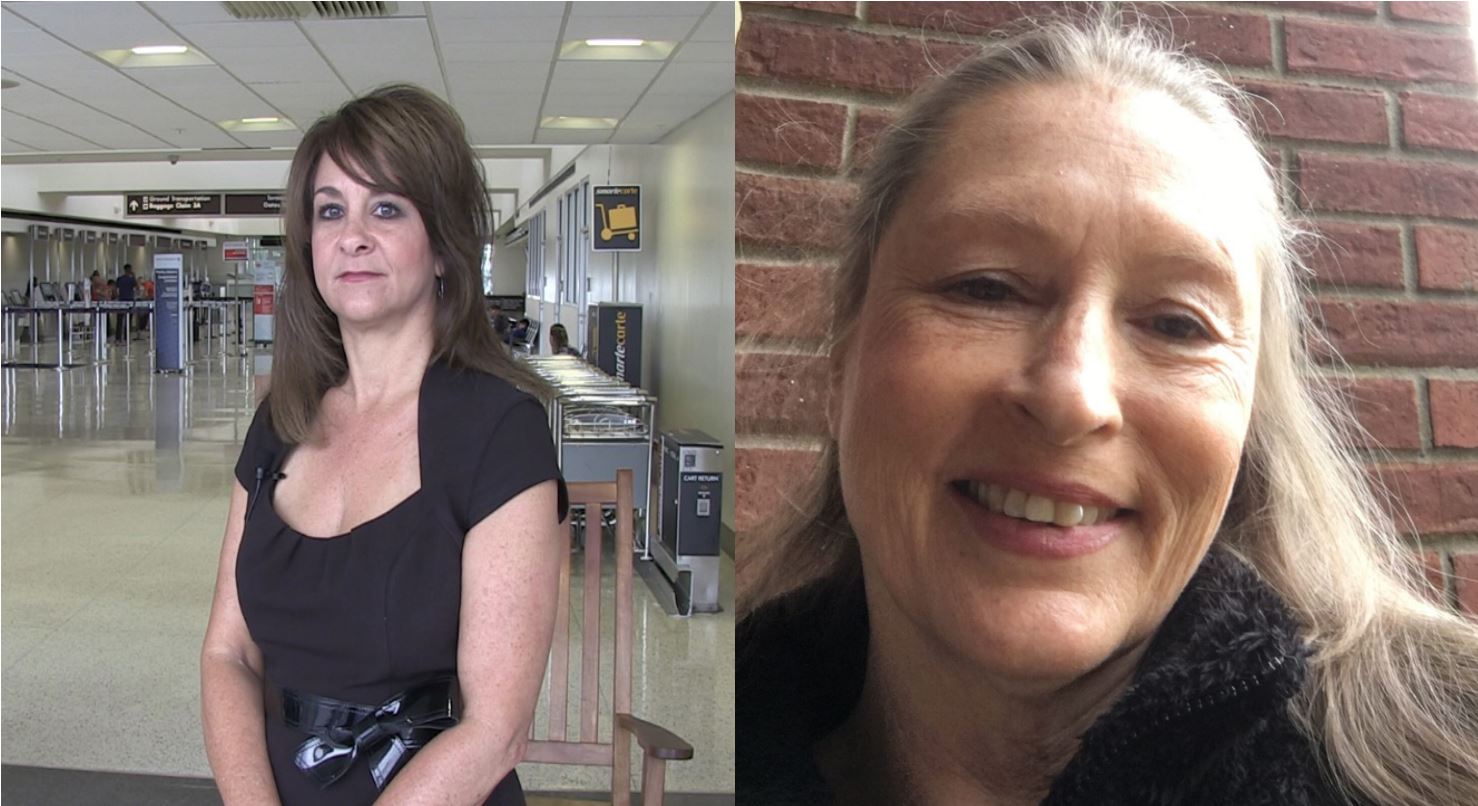
Last year was a banner year for workers of faith who sought free Foundation legal aid. Charlene Carter (left) and Dorothy Frame (right) both prevailed after facing discrimination for opposing union politics on religious grounds.
SAN FRANCISCO, CA – States like California that lack Right to Work laws grant immense powers to union bosses within their borders: They can legally have any employee fired under their monopoly control who refuses to pay dues to the union hierarchy.
However, thanks to the continuing successes of National Right to Work Foundation attorneys’ cutting-edge legal actions, employees with sincere religious objections to union affiliation are entitled to a religious accommodation under Title VII of the Civil Rights Act of 1964 that permits them to stop funding a union. That applies even when other workers who do not have religious conflicts can be forced to pay up or be fired.
But Service Employees International Union (SEIU) bosses in San Francisco apparently can’t be bothered with obeying the law.
SEIU Chiefs Ignored Legal Requirement to Accommodate Employee
Thomas Ross, a San Francisco-area security officer employed by Allied Universal Security Services, is receiving free legal representation from Foundation attorneys in his case charging the SEIU and his employer with forcing him to join and financially support the union — after he told both parties his religious beliefs forbid union support.
Ross is a Christian and opposes union affiliation on religious grounds. Under U.S. civil rights law, unions and employers are required to accommodate religious objections to union payments. Additionally, the National Labor Relations Act (NLRA) prohibits unions and employers from forcing employees to join a union.
Because the SEIU union’s and Allied Universal’s demands violate both statutes, Ross filed two sets of federal charges with Foundation aid. The charges will be investigated by the Equal Employment Opportunity Commission (EEOC) and National Labor Relations Board (NLRB).
According to his EEOC discrimination charges, Ross informed both the SEIU union and Allied Universal when he was hired in 2020 that his religious beliefs forbid union membership. He also asked for a religious accommodation.
Union Bosses Issued Blatantly Illegal Compulsory Membership Demand
Not only did both SEIU and Allied Universal ignore Ross’ request, but in July 2022, “Allied Universal . . . demanded that [he] sign a payroll deduction, join the union, and pay union dues.”
On August 31, 2022, Ross reminded Allied Universal of his religious objection to paying union dues, but on September 15, 2022, Ross’ “employer stated that union membership was compulsory and deducted union fees” from his paycheck without his consent. That is a clear violation of longstanding law, even for workers not seeking a religious accommodation.
Workers nationwide frequently turn to the National Right to Work Foundation for free legal aid when union chiefs snub their requests for religious accommodations or otherwise discriminate against them based on their religious beliefs. Last year, Foundation attorneys scored extraordinary victories for workers who faced union malfeasance after they resisted union affiliation on religious grounds.
Foundation Attorneys Notched Big Wins for Religious Freedom in 2022
In July 2022, Foundation staff attorneys won a multi-million-dollar jury verdict for Southwest flight attendant Charlene Carter, who had been ridiculed and later fired for voicing her religious opposition to the Transport Workers Union’s (TWU) political positions. Foundation attorneys also later won a federal court judgment for Carter, in which the judge ordered that Carter be reinstated and given the maximum amount of compensatory and punitive damages permitted by federal law.
“Bags fly free with Southwest,” began the decision. “But free speech didn’t fly at all with Southwest in this case.”
In March 2022, also with Foundation aid, Fort Campbell custodial worker Dorothy Frame won a settlement gaining a religious accommodation after Laborers International Union (LIUNA) officials unlawfully questioned her religious belief that she could not support the union’s political activities.
“The Foundation is proud to help working men and women who courageously stand up for their beliefs even in the midst of union coercion,” commented National Right to Work Foundation Vice President and Legal Director Raymond LaJeunesse. “However, it’s important to recognize that, regardless of whether an employee’s objection to union affiliation is religious or not, no American worker should ever be forced to subsidize union activities they oppose.”
SF Security Officer Slams SEIU Union and Allied Universal with Federal Charges for Discrimination & Unfair Labor Practices
Despite informing both management and union of religious objections to union membership and financial support, employer seized money from worker’s paycheck for union
San Francisco, CA (November 10, 2022) – Thomas Ross, a San Francisco-based security officer employed by Allied Universal, has hit union officials affiliated with the Service Employees International Union (SEIU) and his employer with two sets of federal charges for forcing him to join and financially support the union after he told both parties his religious beliefs forbid union support. He is receiving free legal aid from National Right to Work Foundation staff attorneys.
Ross filed both federal discrimination charges, which will now be investigated by the Equal Employment Opportunity Commission (EEOC), and unfair labor practice charges, which will be handled by the National Labor Relations Board (NLRB).
Ross is a Christian and opposes union affiliation on religious grounds. Title VII of the Civil Rights Act of 1964 prohibits unions and employers from discriminating against employees on the basis of religion. Title VII thus forbids forcing individuals to fund or support a union, the activities of which conflict with their religion. It also requires unions and employers to accommodate religious objections to union payments. Yet, according to Ross’ discrimination charges, SEIU union bosses flatly denied a request he made for such an accommodation.
Ross’ unfair labor practice charges, filed at NLRB Region 20, state that SEIU bosses and Allied Universal officials breached basic federal law by telling him that union membership is mandatory. The National Labor Relations Act (NLRA) protects private sector workers’ right to abstain from any or all union activities, and forced union membership is prohibited regardless of an individual worker’s reason for not wanting to affiliate with a union.
California’s lack of Right to Work protections for its private sector workers means that union officials are granted the power to force workers to pay them fees or be fired in workplaces where they maintain power. However, under federal law, employees with religious objections cannot be compelled to pay such fees. In Right to Work states, in contrast, no worker can be fired for refusal to financially support a union.
Union’s Discriminatory Demands Violate Both Title VII and Basic Federal Labor Law
According to his discrimination charges, Ross informed both the SEIU union and Allied Universal when he was hired in 2020 that his religious beliefs disallowed union membership and that he needed an accommodation. In addition to ignoring that request, his charges state that on July 20, 2022, “Allied Universal…demanded that I sign a payroll deduction, join the unions, and pay union dues.”
On August 31, 2022, Ross reminded Allied Universal of his religious objection to paying union dues, but on September 15, 2022, Ross’ “employer stated that union membership was compulsory and deducted union fees” from his paycheck without his consent.
Ross’ unfair labor practice charges state that those deductions violate the NLRA, because that statute prohibits the deduction of union dues and fees unless the employee has signed a written authorization. Ross’ discrimination charges argue that both his employer and the union have also violated his rights “under Title VII of the Civil Rights Act of 1964” and parallel state non-discrimination laws.
Foundation Attorneys Regularly Win Cases for Workers Facing Religious Discrimination
Workers nationwide frequently turn to the National Right to Work Foundation for free legal aid when union chiefs snub their requests for religious accommodations or otherwise discriminate against them based on their religious beliefs.
This past July, Foundation staff attorneys scored a multi-million-dollar jury verdict for former Southwest flight attendant Charlene Carter, whom Transport Workers Union (TWU) officials subjected to ridicule based on her religious opposition to union activities. This March, also with Foundation aid, Fort Campbell custodial worker Dorothy Frame won a settlement gaining a religious accommodation after Laborers’ (LIUNA) union officials unlawfully questioned her religious belief that she could not support financially the union’s political activities.
“The Foundation is proud to help working men and women who courageously stand up for their beliefs even in the midst of union coercion,” commented National Right to Work Foundation President Mark Mix. “However, it’s important to recognize that, regardless of whether an employee’s objection to union affiliation is religious in nature or not, no American worker should ever be forced to subsidize union activities they oppose.”
Worker Advocate Files Amicus Brief in Support of Personal Care Providers Seeking Refund of Illegally Seized Union Dues
National Right to Work Foundation brief filed with 9th Circuit Court of Appeals says union bosses should not keep dues seized in scheme ruled unconstitutional by U.S. Supreme Court in Foundation-won Harris case
San Francisco CA (January 11, 2017) – The National Right to Work Legal Defense Foundation has filed an amicus curiae brief with the Ninth Circuit Court of Appeals in Hoffman, Routh, Eby, Olson v. Inslee in support of homecare workers in the state of Washington seeking a return of illegally seized union fees. The providers bringing the case are among the thousands of personal care provers in Washington State who had union dues illegally confiscated from them in a mandatory union dues scheme later ruled unconstitutional by the United States Supreme Court.
The United States Supreme Court outlined these rights in Harris v. Quinn, argued and won by Foundation staff attorneys in 2014. Harris held that the collection of forced union dues from home-based caregivers violated their First Amendment rights. The ruling struck down the scheme in Illinois, but the precedent established rendered similar schemes in other states, including Washington, unconstitutional.
In the amicus brief, Foundation attorneys argue that under Harris v. Quinn the Service Employees International Union (SEIU) has no lawful authority to take the provider’s money and that now SEIU officials have no more right to keep the money than any individual or business that illegally confiscates money from a victim against their will.
“It is outrageous that forced dues seized under a scheme struck down by the Supreme Court in Harris v. Quinn have not yet been returned to the victims of the SEIU’s unconstitutional forced dues scheme,” said National Right to Work Foundation President Mark Mix. “SEIU bosses have no more right to these providers’ money than a thief has to keep the money stolen during an armed robbery.”





