
With Foundation Aid, Mayo Clinic Nurses Defeat Forced Union Dues Requirement
The following article is from the National Right to Work Legal Defense Foundation’s bi-monthly Foundation Action Newsletter, March/April 2023 edition. To view other editions of Foundation Action or to sign up for a free subscription, click here.
Nurses’ ultimate goal is to end Steelworkers union bosses’ so-called ‘representation’ completely

Austin, MN, Mayo nurse Erin Krulish and her coworkers hope to soon join Mankato, MN, Mayo nurses (above) in removing unwanted union “representation” from their facility.
AUSTIN, MN – Nurses at the Mayo Clinic Health System in Austin, Minnesota, recently voted overwhelmingly in a deauthorization election to end the power of United Steelworkers (USW) union officials to require nurses to pay up or be fired. The workers filed the deauthorization petition with National Labor Relations Board (NLRB) Region 18 with free legal representation from National Right to Work Legal Defense Foundation staff attorneys.
“We are so happy with the way the election turned out,” Mayo Clinic Austin nurse Erin Krulish commented. “I think it really shows that all of us came together to show the union that we don’t want to keep paying them when they are doing nothing for us.”
Krulish filed the deauthorization petition for her coworkers seeking to end the so-called “union security clause” that authorizes USW union bosses to have nurses fired for refusing to financially support union activities. The request seeking the vote to end United Steelworkers union officials’ forced-dues powers at Mayo Clinic Austin was signed by 49 of the 66 workers, well over the number required to trigger the NLRB-supervised election.
Ending Forced Dues Comes as Nurses Wait for Vote to Formally Remove Union
Minnesota is not a Right to Work state, meaning all workers in a unionized workplace can be required to pay dues or fees to a union as a condition of keeping their jobs. However, federal law does allow workers to hold deauthorization votes to end union officials’ legal authority to force workers to “pay up or be fired,” although winning such a vote can often be an uphill battle as independent workers have to take on professional forced-dues-funded union organizers.
The overwhelming 49-17 vote against mandatory union payments came as the nurses wait for the opportunity to end USW officials’ so-called “representation” at the facility completely, a process known as decertification. “We plan to decertify come next December when our contract is up and we are ready for another fight!” Krulish said following the deauthorization victory.
Currently, the non-statutory NLRB-invented “contract bar” doctrine blocks workers from holding a decertification vote to remove a union’s monopoly representation powers for up to three years when a union boss-imposed contract is in effect. Consequently, a deauthorization vote, which isn’t limited by the contract bar, was the nurses’ only option. If the nurses at the Austin Mayo Clinic do decertify as they plan, they will join Minnesota nurses at Mayo Clinic Mankato and Mayo Clinic St. James who voted to oust union officials from their hospitals in the last six months.
“No worker anywhere should be forced under so-called union ‘representation’ they oppose,” commented National Right to Work Foundation President Mark Mix. “So while we’re pleased Ms. Krulish and her coworkers were victorious against the Steelworkers union, this case also shows why it is past time to end the NLRB-sanctioned ‘contract bar’ which traps workers in union ranks they oppose for years at a time.”
“Ultimately, Minnesota needs a state Right to Work law to ensure that every individual worker has the freedom to decide whether or not to financially support a union, even those who can’t overcome the hurdles required to successfully navigate the complicated deauthorization process,” added Mix.
Foundation to High Court: Time to End Union Boss Vandalism Exemptions
The following article is from the National Right to Work Legal Defense Foundation’s bi-monthly Foundation Action Newsletter, January/February 2023 edition. To view other editions of Foundation Action or to sign up for a free subscription, click here.
Case asks if Teamsters are immune from liability for property destruction during strike
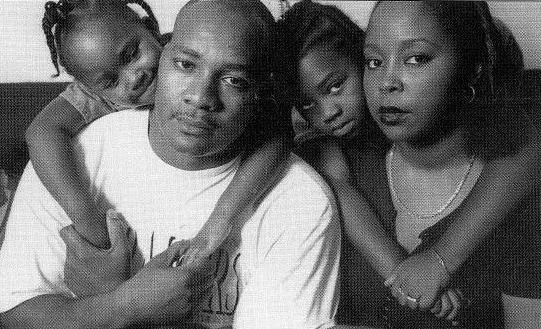
Rod Carter sought Foundation help after he was stabbed and beaten by Teamsters militants in 1997. The Foundation still fights union violence and opposes union bosses’ attempts to dodge property damage lawsuits.
WASHINGTON, DC – Unions and union officials already have an enormous number of special privileges under the law enjoyed by no other private organization or individual. Yet those special powers — including forcing workers under monopoly “representation” and union dues payments they oppose — haven’t stopped union lawyers from arguing for even more special exemptions.
In a case now before the U.S. Supreme Court, the Justices are set to decide whether the Washington State Supreme Court was correct when it granted Teamsters union officials immunity from lawsuits filed under state law. The lawsuit in this case concerned vandalism and property damage against an employer that occurred during a union boss-ordered strike.
Union Chiefs Want Blank Check to Target Workers with Property Damage
In Glacier Northwest Inc. v. International Brotherhood of Teamsters Local 174, a construction company sued the Teamsters union over property damage deliberately caused as part of a strike, only to see the Washington Supreme Court overturn the lower court and agree with union bosses’ argument that unions were exempt from such lawsuits.
With the issue now before the nation’s highest court, the National Right to Work Foundation filed a brief in the case arguing that creating such a carve-out is wrong under the law. The Foundation brief says this exemption is dangerous not only to businesses but first and foremost to independent-minded workers, and that union officials’ abundance of government-granted powers should be pared back, not extended. Oral arguments are set for January 10, 2023.
The Foundation explains in the amicus brief that “states’ interest in protecting life, limb, and private property must be respected under principles of federalism” because federal courts usually don’t offer relief for crimes like vandalism and property damage, making state courts the only place where lawsuits can be filed for such behavior. Far from being a concern only for employers who face union strike efforts, the Foundation argues, employees are often targeted by hostile or violent strike behavior and state courts often are the only forum in which they can receive justice.
“For example, in Clegg v. Powers, employees sought damages in state court for union violence and property damage during a strike,” the brief says. “Cases like Clegg demonstrate that the Court should limit” unions’ ability to dodge being sued in state court, it continues.
Foundation: Union Officials’ Special Legal Privileges Shouldn’t Be Expanded
The Foundation’s brief then points out that the Teamsters bosses’ attempt to gain this new legal privilege should be shut down given “the extraordinary privileges and exemptions already granted to unions” by Congress and courts all over the country.
These include, but are not limited to, an exemption from federal law prohibiting extortionate violence, the power to force employees in non-Right to Work states to pay union dues or fees just to stay employed, and the privilege to foist monopoly “representation” over workers against their will — powers no other private entity or individual has.
“This Court should treat unions like all other citizens or entities, clarifying that they can be liable for damages in state courts under ‘the common law rule that a man is held to intend the foreseeable consequences of his conduct,’” the brief concludes.
Unions Shouldn’t Get More Rights Than Regular Citizens
“Union officials’ theory that they should be off the hook in state court for damaging or vandalizing property is outrageous on its face. The law already has plenty of carve-outs and privileges for union hierarchies that no other private organization or citizen gets to enjoy, least of all the workers union bosses claim to ‘represent,'”” commented National Right to Work Foundation Vice President Patrick Semmens.
“Union officials regularly force millions of workers to pay union fees or be fired, and force their ‘representation’ on millions of workers who bitterly oppose it. The Supreme Court should reject this new ploy seeking another union-only exemption to regular laws, and begin to scrutinize and ultimately roll back the many existing union boss special powers.”
Workers Win Cash Back in Case Challenging Illegal Discrimination for Non-Union Status
The following article is from the National Right to Work Legal Defense Foundation’s bi-monthly Foundation Action Newsletter, November/December 2022 edition. To view other editions of Foundation Action or to sign up for a free subscription, click here.
Machinists union scheme sought to deny non-union workers’ bonuses because they opposed union association
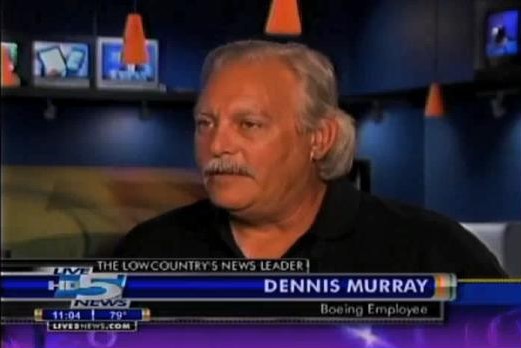
IAM bosses regularly discriminate against dissident workers. In 2011, Foundation-assisted South Carolina Boeing employee Dennis Murray recounted how IAM officials tried to shutter his plant because workers there had voted the IAM out.
RIDGWAY, PA – Twelve nonunion factory employees at Clarion Sintered Metals, Inc., have each received $1,000 in back pay bonuses after being illegally discriminated against by International Association of Machinists and Aerospace Workers (IAM) Local 2448 and their employer. With free legal aid from the National Right to Work Foundation, factory worker James Cobaugh filed federal charges against Clarion and IAM as he sought justice for himself and other non-member workers subject to unlawful discrimination.
Mr. Cobaugh’s charges against the union and his employer were filed on April 22, 2022, with the National Labor Relations Board (NLRB). The charges came after the union and Clarion Sintered Metals gave $1,000 bonuses to union members, but denied them to workers who exercised their legal right not to join the union. Rather than face prosecution by the NLRB, both the union and employer have now agreed to settle the case.
In addition to the non-union employees receiving the bonuses they were previously denied as a result of the illegal discrimination, both the IAM and Clarion Sintered Metals are required to post notices that inform workers of their right to refrain from joining a union. The notices also state union officials will not maintain or enforce such discriminatory agreements going forward.
Machinists Union Bosses Already Forced Non-Union Workers to Pay Dues
Because Pennsylvania lacks Right to Work protections for private sector employees, unions can force workers to pay up to 100% of union dues as a condition of keeping their jobs. This means that Mr. Cobaugh, although not a formal IAM union member, can be forced to pay up to 100% of IAM’s union dues to keep his job at Clarion Sintered Metals.
Even in Right to Work states, under federal law union bosses are granted the power to impose “representation” on individual workers against their will, including forcing non-member workers under union monopoly contracts they oppose. By stripping workers of their right to bargain for their own terms and conditions of employment, individual workers by law are prohibited from negotiating for themselves with their employers for better conditions.
Forced Union Monopoly ‘Representation’ Long Used to Discriminate
Union officials frequently use these government-granted powers to harm certain workers, for example those workers who, based on their productivity, would otherwise earn performance bonuses or higher compensation. Although union officials can impose one-size-fits-all monopoly contracts that favor some workers over others, there are some limits on how union monopoly powers can be used to discriminate.
The U.S. Supreme Court imposed these limits after union officials wielded their powers to negotiate and enforce racially discriminatory contracts (Steele v. Louisville & N.R. Co. et al.). Explicitly discriminating against workers who exercise their legally protected right to not formally join a union and not be subject to internal union rules, as the IAM officials did in this case, has also long been illegal.
“This situation highlights how workers less knowledgeable of their legal rights are susceptible to blatantly illegal tactics of power-hungry union bosses,” commented National Right to Work Foundation Vice President Patrick Semmens. “Mr. Cobaugh courageously stood up to the union’s unlawful actions, not only for himself, but also for the other non-member workers subjected to this illegal discrimination.”





