
UAW Faces Prosecution For Illegal Firing of Worker Who Objected to Funding Union Boss Political Activities
Without Right to Work to ensure dues payments are voluntary, Michigan employees are having to take legal action to defend their legal rights against Big Labor
Grand Rapids, MI (February 19, 2026) – A recent legal action by National Right to Work Foundation staff attorneys on behalf of a Grand Rapids-based General Electric (GE) Aviation worker demonstrates United Auto Workers (UAW) union bosses’ greed for dues money and disregard for workers’ individual rights in the Great Lakes State.
Richard Howard, a GE Aviation Systems employee, recently scored a victory in his Foundation-backed case challenging UAW Local 330 officials’ demands that he be terminated for declining to join the union and pay full union dues by direct paycheck deduction. The National Labor Relations Board (NLRB), the federal agency responsible for enforcing private sector labor law, has just issued a complaint against the UAW and GE Aviation to formally prosecute them for their behavior.
According to unfair labor practice charges Howard filed at the NLRB, GE management fired Howard at UAW chiefs’ behest when he refused to sign a UAW membership and dues “checkoff” form that would have given UAW bosses direct access to his paycheck. Howard’s charges noted that UAW officials also violated his rights under the Foundation-won CWA v. Beck Supreme Court decision. Under Beck, union officials cannot force workers who have opted out of union membership to pay dues for the union’s “nonchargeable” expenses, which include political and ideological activities.
Michigan legislators repealed the state’s popular Right to Work protections in a party-line vote in 2023. Michigan’s Right to Work law prevented union bosses from enforcing contracts that require workers to pay union dues or fees as a condition of keeping their jobs. After the repeal, union officials can force the firing of workers for refusal to pay money to the union, although this union privilege is somewhat limited by Beck. In addition, federal law forbids forcing workers to authorize the deduction of union dues directly from their paychecks.
Howard’s charges alleged that union officials never informed him of or granted him his Beck rights, even after he had specifically objected to paying dues for politics and other nonchargeable expenses on several grounds. The UAW’s unlawful demands came immediately after the repeal of Michigan’s Right to Work law took effect.
Grand Rapids UAW Bosses Face Prosecution For Getting GE Aviation Worker Fired
At the end of January, the NLRB issued a complaint prosecuting UAW bosses for making these illegal demands, and for forcing GE management to terminate Howard’s employment. The complaint, which will soon go before an NLRB Administrative Law Judge (ALJ), asks that the ALJ order UAW Local 330 to “make [Howard] whole for any loss of earnings and other benefits suffered as the result of his discharge” and return any dues taken from his paycheck illegally for nonchargeable expenses, among other forms of relief. The complaint also prosecutes GE Aviation Systems for its role in Howard’s illegal firing.
“Mr. Howard’s case is Exhibit 1 for why workers need more – not less – protection from union boss coercion,” commented National Right to Work Foundation President Mark Mix. “UAW officials apparently view Michigan’s lack of Right to Work as a license to make any demands they want of workers – including unlawful demands to fund the UAW’s radical politics. The bottom line is that Michigan workers deserve protection from being forced to subsidize unwanted union bosses, whether they oppose them for political reasons, corruption-related reasons, or any other reason. Michigan’s Right to Work law provided that protection, and the decision to repeal it was a sop to union special interests, plain and simple.
“Workers like Rick Howard are now paying the price,” Mix added.
Grand Rapids GE Worker Slams UAW Union Officials with Federal Charges After Being Terminated for Refusing Membership
In months following repeal of Michigan Right to Work law, workers across the state are standing up to oppose union coercion
Grand Rapids, MI (July 30, 2024) – Richard Howard, an employee at General Electric (GE) Aviation Systems’ Grand Rapids facility, has slammed his employer and United Auto Workers (UAW) Local 330 union officials with two sets of federal charges. He maintains that union officials illegally instigated his termination after he refused to become a formal union member.
Howard’s charges come as Michigan workers increasingly seek to challenge union bosses’ legal powers in the wake of Michigan’s repeal of its Right to Work law. The repeal, which became effective this February, re-granted union officials the privilege to demand workers pay union dues or fees just to keep a job. So far this year, Foundation staff attorneys have already filed more than twice as many cases to defend Michigan workers’ rights than through all of 2023.
Howard filed his federal Unfair Labor Practice charges at Region 7 of the National Labor Relations Board (NLRB) in Detroit with free legal aid from the National Right to Work Legal Defense Foundation. Because Howard’s reasons for wanting to dissociate from the union stemmed from his Christian beliefs, something he had made clear when objecting to demands that he sign a union card, he also filed anti-discrimination charges against the UAW and GE with the Equal Employment Opportunity Commission (EEOC).
Howard’s charges state that, after the Right to Work repeal became effective, both GE and UAW agents told Howard and his colleagues that “they had 60 days to become Union members, sign dues checkoffs, and pay full dues to the Union.” Howard knew that union membership couldn’t be compulsory even in a non-Right to Work environment, but many conversations he had with officials of the union and GE about other options proved fruitless.
The NLRB is the agency responsible for enforcing federal labor law in the private sector. Even in states like Michigan that lack Right to Work protections, and allow for forced-fee requirements, longstanding federal law under cases like General Motors v. NLRB prevents union bosses from requiring workers to become formal union members. The Foundation-won Communications Workers of America v. Beck Supreme Court decision additionally forbids union bosses in non-Right to Work states from forcing workers who refrain from union membership to pay money for any activities beyond the union’s bargaining functions, such as political expenditures.
For religious objectors to union activity, Title VII of the Civil Rights Act of 1964 requires union officials to attempt to accommodate such workers. While Title VII accommodations take different forms from case to case, they generally eliminate any obligation the worker has to pay dues money directly to the union. One common accommodation is permitting a worker to pay an amount equivalent to dues or fees to a charity.
“I have repeatedly voiced my objections to the UAW and everything they stand for, including my religious objections to the union’s political activity. My rights may be limited due to the repeal of Michigan’s Right to Work law, but the union has acted like they don’t exist at all,” Howard said. “It is shameful that rather than respect my religious freedom and other workplace rights, the union instigated my firing.”
GE, UAW Wrongly Told Worker Membership Was Required
Howard’s charges describe how union and company officials stonewalled him when he asked about what options he had to opt out of the union: “Everyone he spoke to in both the Employer’s management and the Union told him that he was required to sign the union membership and dues deduction authorization card or he would be terminated and that he had no other options.” Even offers by Howard to pay a reduced amount of union dues as a nonmember (as per Beck) or pay money to a charity as a religious objector were rebuffed.
Finally, during an April meeting Howard had with GE and UAW agents, both parties threatened that he would be fired if he did not sign a union membership form and dues deduction authorization form within six days. Six days after the meeting, GE terminated Howard, and UAW union officials refused to file a grievance for him challenging the termination.
Worker Seeks Federal Injunction After Unlawful Union-Instigated Firing
Howard’s NLRB charges argue that the employer’s and union’s threats to fire him and the firing itself violated his right under Section 7 of the National Labor Relations Act (NLRA) to refrain from union activity. The charges also contend that UAW officials never informed him in writing of exactly what his obligations were before demanding his firing, a violation of the NLRB’s Philadelphia Sheraton Corp. precedent. The NLRB charges finally request that the NLRB seek a federal court order telling GE and UAW to immediately cease the illegal activity, something known as a “10(j) injunction”.
Howard’s EEOC charges state that both UAW and GE officials have failed to accommodate him or even consider his religious objection (as required by Title VII) and have ignored or shot down every attempt by him to seek an accommodation.
“The flurry of new cases that Foundation staff attorneys are litigating for Michigan workers shows that, post-Right to Work repeal, union bosses aren’t stopping at re-imposing their forced-dues legal power on workers. They seem to view the repeal as a license to force workers to associate with them in any way possible,” stated National Right to Work Foundation President Mark Mix. “As these recent cases demonstrate, Michigan workers deserve more freedom from union boss coercion – not less – and Michigan workers aren’t going to let their freedoms go without a fight.
“Workers may have any number of reasons for wanting to withhold their money from a union – religious reasons, financial reasons, or just because they believe union officials aren’t doing a good job,” Mix added. “That’s why the voluntarism of Right to Work is so important, and why every American worker deserves such protections.”
Michigan Security Guard Slams Union with Federal Charges for Illegal Dues Seizures, Transparency Issues
Union officials fail to provide required information on how dues money is spent, already face vote which could stop forced-dues spigot
Grand Rapids, MI (May 8, 2024) – James Reamsma, a security guard whose posts include the Gerald R. Ford Federal Building and other government sites in the Grand Rapids area, has hit the United Government Security Officers of America (UGSOA) union with federal unfair labor practice charges maintaining that UGSOA union officials are seizing dues money from his paycheck without providing required disclosures on how the union spends worker cash. Reamsma filed the charges at Region 7 of the National Labor Relations Board (NLRB) in Detroit.
Reamsma is also leading his fellow security guards at Triple Canopy Inc. in an effort to vote away the UGSOA’s power to compel guards to pay dues or fees to the union in what is known as a “deauthorization election.” He is receiving free legal aid in both actions from the National Right to Work Legal Defense Foundation.
Reamsma’s charges seek to enforce his rights under the Communications Workers of America v. Beck Supreme Court decision, which was won by Right to Work Foundation attorneys. The Court held in Beck that union officials cannot force workers who have abstained from union membership to pay union dues or fees for expenses not directly germane to contract negotiations, such as union political activities. Workers who exercise their Beck rights are also entitled to an independent audit of the union’s finances, a breakdown of how union officials spend forced contributions, and an opportunity to challenge how the union calculates its reduced “Beck fee.”
Beck rights are only relevant in non-Right to Work jurisdictions like Michigan, where union officials have the legal privilege to force private sector workers to pay dues or fees as a condition of getting or keeping a job. In contrast, in Right to Work states like neighboring Indiana and Wisconsin, union membership and all union financial support are strictly voluntary. Michigan had Right to Work protections until a 2023 repeal rammed through by union partisans on the Michigan Legislature became effective earlier this year.
Union Dubiously Claims No Dues Money Goes to Politics
According to Reamsma’s charge, he submitted a notice to UGSOA union agents in March that requested the union reduce his dues payments in accordance with Beck and provide him with the required financial information. In response, union officials claimed that the amount of dues chargeable to nonmembers was equal to 100% of full union dues. Reamsma’s charge states that UGSOA “failed to provide the required financial disclosures for itself and its affiliated unions, and a chance to object to its alleged reduced fee.”
The charge also notes that, despite Reamsma notifying union officials in April that he prefers to pay union dues by check, UGSOA ignored this request and has continued to take money directly from his paycheck by payroll deduction. Federal labor law forbids union officials from using direct deduction to collect union dues or fees without worker consent.
Foundation attorneys argue in the charge that the union’s continued seizing of dues money from Reamsma’s paycheck “restrain[s] and coerce[s] Charging Party in the exercise of his Section 7 rights” under the National Labor Relations Act (NLRA). The NLRA protects the right of workers to refrain from union activities.
Guards May Vote to End Forced Dues
The NLRB has scheduled May 17 to count the votes in Reamsma’s deauthorization election, which is currently taking place by mail. If a majority of his colleagues vote to deauthorize the union, it will no longer have the legal power to coerce Reamsma and his colleagues to pay dues or fees as a condition of employment. Michigan’s non-Right to Work environment forces workers to either deauthorize a union or vote it out of a workplace completely (via a similar process known as “decertification”) if they want to end union officials’ forced-dues power.
“UGSOA union officials appear to be withholding vital information about how they spend worker money from the very security guards they claim to ‘represent,’” commented National Right to Work Foundation President Mark Mix. “If union bosses won’t respect basic worker rights regarding the collection and spending of dues money, Triple Canopy security guards should rightly be skeptical of whether UGSOA deserves the privilege to force them to pay dues or fees at all.
“While it’s illegal everywhere to force workers to pay for union political expenditures they oppose, the choice to financially back a union at all should rest solely with each individual worker, which is why Right to Work protections are so important,” Mix added.
Foundation Defends Michigan Workers with Forced Dues Looming
The following article is from the National Right to Work Legal Defense Foundation’s bi-monthly Foundation Action Newsletter, July/August 2023 edition. To view other editions of Foundation Action or to sign up for a free subscription, click here.
With Right to Work repeal law passed, workers seek to escape mandatory payments
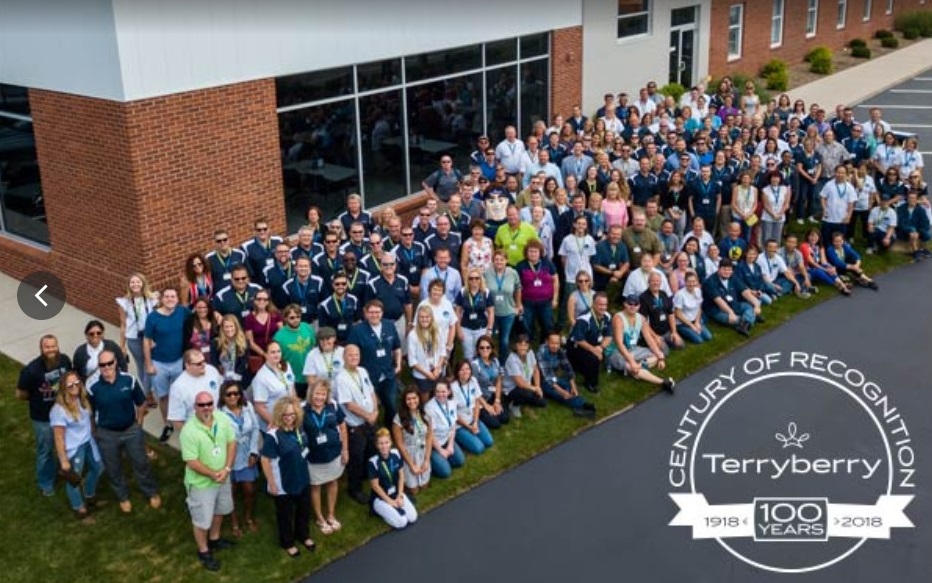
Michigan legislators’ unpopular decision to repeal the state’s Right to Work law helped prompt Mary Soltysiak and her coworkers’ move to vote out the IAM union.
LANSING, MI – Despite poll after poll showing 70 percent of Michiganders wanted Michigan’s decade-old Right to Work law left in place, Gov. Gretchen Whitmer and union cronies in the Michigan Legislature voted to strip Wolverine State workers of their right to refrain from funding unwanted union bosses in March. In response, the Foundation sprang into action, issuing a Special Legal Notice to Michigan workers advising them of their legal options as the state transitions to a forced-dues regime. The notice reminded workers that, despite what union bosses may claim, the state’s Right to Work law remains in effect until 90 days after the legislative session ends later this year — and also what they can do in advance of forced dues being legal again. Unsurprisingly, given Right to Work’s popularity even among union households, Michigan workers are stepping up and taking action to defend their rights against coercive unionism.
Michigan Workers Battle Forced-Dues Schemes Ahead of Repeal
For example, Foundation attorneys are currently assisting Grand Rapids-area Kroger employee Roger Cornett’s challenge to an illegal dues scheme perpetrated by United Food and Commercial Workers (UFCW) union officials. Cornett hit UFCW bosses with federal charges this May, accusing them of ignoring a letter in which he exercised his right to cut off dues deductions from his paycheck. Cornett’s charges also maintained that UFCW bosses sought to seize money from him using a form that blatantly violates existing federal law. Cornett’s charge says the form is illegal because of its “dual purpose” nature, meaning just one signature confusingly locks a worker into both membership and dues deductions. Federal law requires any authorization for union dues deductions to be voluntary and separate from a union membership application. UFCW bosses’ contempt for longstanding federal protections in Cornett’s case likely indicates how aggressively union officials will pursue forced dues under a non-Right to Work regime. The Foundation’s legal notice also counsels workers that they can avoid forced-dues arrangements entirely by petitioning the NLRB to hold “decertification elections” at their workplaces, in which workers can vote unpopular unions out.
Legal Notice Counsels Workers of Right to Vote Out Unwanted Unions
Mary Soltysiak, who opposes forced dues, heard news of the upcoming repeal and filed a petition to decertify the International Association of Machinists and Aerospace Workers (IAM) District Lodge 60/Local Lodge 475 union with free legal aid from Foundation staff attorneys. Soltysiak and her colleagues work at Terryberry, a manufacturing firm in Grand Rapids, MI.
Soltysiak stated that she and some of her colleagues “contacted [a Foundation attorney] and filled out paperwork to get out of paying union dues around the year 2018 because of the Right to Work . . . law.”
“The union has done nothing but hurt my paycheck and my vacation hours,” Soltysiak added.
Soltysiak and her coworkers achieved victory this May, when the NLRB certified their majority vote ousting the IAM union. Hopefully, their success portends the future success of the growing number of workers in Michigan and across the country looking to decertify the unions in their workplaces.
Foundation Also Defending Public Sector Right to Work Protections
As noted in the Foundation’s legal notice, the Michigan Right to Work repeal does not affect public sector Michigan employees. Under the Foundation-won Janus v. AFSCME Supreme Court decision, no public worker in America can be forced to subsidize a union as a condition of employment. But, as the repeal is looming, Michigan public sector union officials are nonetheless seeking to undermine public employees’ freedom to refrain from union support through so-called “fee-for-grievance” schemes.
This April, the Foundation submitted a brief in the Michigan Supreme Court case Technical, Professional and Officeworkers Association of Michigan (TPOAM) v. Renner, in which TPOAM officials are trying to enforce a “fee-for-grievance” policy against Saginaw County employee Daniel Renner. Under it, union bosses strip nonmember public employees of any power to file grievances themselves, and instead mandate that they pay fees sometimes exceeding yearly union dues to use the union’s grievance system.
Michigan legislators’ unpopular decision to repeal the state’s Right to Work law helped prompt Mary Soltysiak and her coworkers’ move to vote out the IAM union.
In the brief, Foundation staff attorneys refute the union’s claims for this newfound power, stating that “fee-for-grievance” schemes were never authorized by the Michigan Legislature and are inconsistent with federal law.
Foundation Attorneys Will Defend Worker Freedom in Michigan
“Michigan union officials and their allies in the state legislature have contempt for workers’ individual rights that knows no bounds,” commented National Right to Work Foundation Vice President and Legal Director William Messenger. “That was made clear by the repeal of the popular Right to Work law, and the attempt to undermine Right to Work protections for public sector employees which are safeguarded by the First Amendment under the Foundation’s Janus U.S. Supreme Court victory.”
“Michigan workers have a long road ahead to restore their rights against union coercion, but Foundation attorneys are fighting alongside these workers, and will continue to fight until no Michigan worker can be forced to pay union bosses they disapprove of just to keep a job,” Messenger added.





