
4 May 2026

Georgia Republic Services Driver Challenges Federal Labor Board Policy Blocking Vote to Remove Teamsters Union

Posted in News Releases

Majority of Calhoun-based drivers demanded vote to oust Teamsters union, but federal labor board denied election due to so-called ‘contract bar’

Calhoun, GA (May 4, 2026) – Brian Wilson, a truck driver for waste hauling company Republic Services, is asking a federal labor board to overturn a policy that is blocking him and his coworkers from exercising their right to vote out Teamsters Local 728 union officials they oppose. Wilson is defending a petition that he submitted on behalf of his coworkers last month, which demanded the National Labor Relations Board (NLRB) administer an election to remove Teamsters union bosses from power at their workplace. Wilson is receiving free legal aid from National Right to Work Foundation staff attorneys in his legal effort.

The NLRB is the federal agency responsible for enforcing federal labor law, a task that includes administering elections to install (or “certify”) and remove (or “decertify”) unions. Wilson’s petition, which he submitted on April 2, showed that the majority of his colleagues wanted to have a vote to remove the Teamsters.

However, Teamsters union officials immediately blocked the vote by arguing that the so-called “contract bar” – an NLRB-invented policy that appears nowhere in the text of federal labor law – prevented Wilson and his colleagues from voting. The contract bar prevents workers from exercising their right to vote out an unwanted union for up to three years after union bosses and management finalize a union contract.

Wilson’s Request for Review contends, first, that the contract bar shouldn’t even apply in his workplace, as the Teamsters union contract lacks an effective date, which the law requires in order to enforce a contract bar. Wilson’s Request for Review also attacks the contract bar head-on, pointing out that it is antithetical to federal labor law’s purported goal to give workers free choice in deciding whether they want a union in their workplace or not. If the NLRB allows the contract bar to stand, Wilson and his coworkers’ requested vote will be delayed until at least 2028.

‘Contract Bar’ Curtails Workers’ Free Choice Rights, Can Lead to the Destruction of Ballots

“The contract bar…should be dispensed with because it entrenches unions that lack majority employee support, thereby undermining the cornerstone of the [National Labor Relations] Act— employees’ Sections 7 and 9 right to choose or reject union representation,” the legal filing states.

Georgia is a Right to Work state, meaning state law prohibits union officials from enforcing contracts that require workers to pay money to the union as a condition of employment. In non-Right to Work states, in contrast, union officials can get workers fired for refusal to pay dues or fees to the union hierarchy. However, in both Right to Work and non-Right to Work states, union officials can use their government-granted exclusive “representation” powers to dictate terms of employment for every employee in a workplace, even those who oppose the union.

Foundation staff attorneys have assisted many groups of workers across the country in efforts to overturn the contract bar – including in cases where enforcement of the bar required the destruction of hundreds of worker ballots. In a case similar to Wilson’s that began in 2020, Foundation attorneys defended Delaware-based Mountaire Farms poultry workers’ right to vote United Food and Commercial Workers (UFCW) union bosses out of their workplace. While the workers – hundreds of whom had requested a union decertification vote – finally voted the union out in 2022, the NLRB invoked the contract bar and greatly delayed that election at UFCW officials’ behest. The contract bar was even used to invalidate an earlier election that the Mountaire workers had participated in, effectively destroying hundreds of already-cast ballots.

“As Mr. Wilson’s case and the cases of many other workers have shown, the ‘contract bar’ simply gives union officials an arbitrary way to stay in power over a workplace where they face obvious employee opposition,” National Right to Work Foundation President Mark Mix commented. “Federal labor law is supposed to protect worker free choice over entrenching union boss control, and Mr. Wilson’s case exposes the contract bar as nothing but a government-granted privilege for union officials.

“If the Trump NLRB is serious about standing up for workers and putting workers back in control of their own livelihoods, ending the unreasonable restrictions of the contract bar is a great place to start,” Mix added.

15 Sep 2025

Louisiana Poultry Employee Submits Second Petition Seeking Vote to Oust UFCW Union

Posted in News Releases

Workers’ first petition stalled by non-statutory NLRB ‘contract bar’ protecting unions’ control over workers

Hammond, LA (September 15, 2025) – Coty Hally, an employee of Wayne Sanderson Farms’ Hammond processing facility, has just filed a second petition with the National Labor Relations Board (NLRB) seeking a union “decertification” election to remove United Food and Commercial Workers (UFCW) Local 455 union officials from the workplace. Hally’s earlier petition in June of this year was dismissed by an NLRB Regional Director, which ruled that under its non-statutory “contract bar” policy no employee-requested decertification votes may occur for up to three years after a union contract is imposed. This occurred despite Hally having never seen the contract extension agreement that barred his petition.

Hally’s current petition, filed outside the contract bar’s arbitrary restriction, is supported by over 50% of his facility’s 550-person unit. The unit includes all production and maintenance employees, including truck drivers, at the poultry facility in Hammond, LA. Hally received free legal aid in filing both petitions from National Right to Work Foundation staff attorneys.

Concurrent with his two filed petitions, Hally also submitted a Request for Review to the NLRB, arguing that the agency should eliminate the three-year contract bar entirely, as it has no basis in the National Labor Relations Act (NLRA).

The NLRB is the federal agency responsible for enforcing the NLRA and adjudicating disputes between employers, unions, and individual employees. Under the text of the NLRA, the NLRB can only reject a worker’s petition for an election if another election has already taken place in the past 12 months. Hally’s Request for Review points out that the contract bar is nowhere to be found in the text of the NLRA. It explains that the doctrine was instead made up by unelected NLRB bureaucrats, who overstepped their legal authority by adopting policies that are detrimental to the rights of workers the Board is tasked with defending.

The contract bar has prevented Hally and his coworkers from having an NLRB-supervised secret ballot election for months, protecting union officials from being held accountable by workers that do not recognize them as their “representatives.” The NLRB’s contract bar places undue burdens on workers’ right to free choice.

“A system that necessitates the filing of two separate petitions, signed by a majority of a workplace, seeking to remove one union is not only a broken system, but one that actively works against the best interests of employees,” commented National Right to Work Foundation President Mark Mix. “Big Labor is not content with the special privileges granted to them by the law. Union bosses have also seen to it that they get a protected status from a federal agency that ought to be neutral and uncompromised.

“The NLRB needs to re-establish its impartiality in dealing with the disputes of American workers by doing away with the ‘contract bar’ and other non-statutory ‘bars’ that only serve to protect incumbent union bosses’ power over workplaces where they are opposed by most workers,” Mix added.

23 Jul 2025

Louisiana Poultry Employee Challenges Federal Labor Policy Preventing Coworkers From Voting Out UFCW Union

Posted in News Releases

Worker submitted petition in which over half of his colleagues demanded vote to remove union, but so-called ‘contract bar’ kept union in power

Hammond, LA (July 23, 2025) – Coty Hally, an employee of Wayne Sanderson Farms’ poultry facility in Hammond, LA, is asking the National Labor Relations Board (NLRB) in Washington, DC, to grant him and his coworkers a chance to vote United Food and Commercial Workers (UFCW) Local 455 union officials out of their workplace.

Hally is challenging a decision from an NLRB Regional Director that blocked the Wayne Sanderson workers from exercising their right to vote on the basis of the so-called “contract bar,” a non-statutory NLRB policy which immunizes union officials from removal (or “decertification”) efforts for the first three years of a union contract. Hally is receiving free legal aid in his case from National Right to Work Foundation staff attorneys.

Hally’s Request for Review argues the NLRB, the federal agency responsible for adjudicating disputes under federal labor law, should eliminate the “contract bar” entirely. “The contract-bar is a Board created limitation on employee statutory rights to seek an election and determine their own representative,” Hally’s Request for Review says. “It is not found in the text of the National Labor Relations Act [NLRA]…and it conflicts with the Act’s core purpose.”

“UFCW union officials have been dragging their feet and have not been negotiating good contracts for me and my coworkers,” Hally commented. “This union doesn’t represent us, and it’s ridiculous that the UFCW is manipulating this one dated NLRB policy to keep us trapped in the union, even though most of us have expressed interest in voting the union out. My colleagues and I – not union officials – should be deciding whether the union stays or goes.”

‘Contract Bar’ Policy Absent From Labor Statutes, Burdens Employee Free Choice

Hally’s Request for Review notes that he submitted a petition earlier this month in which over 50% of his 550-person unit demanded a vote to oust the UFCW. Normally NLRB rules only require a 30% “showing of interest” in order to trigger a union decertification vote, but even with this stronger support, “Region 15 dismissed Hally’s petition consistent with the Board’s contract-bar doctrine,” the Request for Review says.

In addition to pointing out that the contract bar policy appears nowhere in the NLRA and was instead the invention of biased NLRB decisions, Hally’s Request for Review contends the policy stifles worker freedom. “This bar contradicts the Act’s well-established ‘bedrock principles of employee free choice and majority rule’…because it grants monopoly bargaining status…even in the face of objective evidence proving the union has lost majority support,” the Request for Review says.

On top of that, NLRB decisions interpreting the “contract bar” rule have only made the rule more burdensome on employees’ free choice rights. A particularly egregious example mentioned in Hally’s Request for Review is the fact that even informal and unpublicized documents exchanged between management and union bosses without workers’ knowledge can be sufficient to trigger the “contract bar” and block employees from exercising their right to decertify.

Hally and his coworkers are not the first group of employees to challenge the contract bar policy with Foundation legal assistance. In 2020 through 2021, Foundation attorneys represented Delaware-based Mountaire Farms poultry employee Oscar Cruz Sosa in defending a vote by his coworkers to remove UFCW union officials. UFCW bosses tried to get the ballots thrown out on a contract bar-related technicality. While the NLRB granted UFCW officials’ outrageous request, Cruz Sosa and his colleagues eventually voted 356-80 to remove the UFCW union once the union contract had expired in their workplace.

“If union bosses are truly doing right by the workers they claim to ‘represent,’ they should have no problem letting workers exercise their right to vote on the union’s control,” commented National Right to Work Foundation President Mark Mix. “Unfortunately, union officials hungry for dues and power still enjoy many legal privileges that let them override workers’ will and rights, not the least of which is the pernicious ‘contract bar.’

“If the Trump Administration’s incoming NLRB members are serious about reversing the dysfunctional policies of the Biden Administration, restoring worker freedom, and defending the rights of workers, they will see the injustice in cases like Mr. Hally’s and Mr. Cruz Sosa’s and move to eliminate the ‘contract bar’ right away,” Mix added.

6 Mar 2025

Long Island Health Employee Challenges Federal Labor Board Policy After Board Blocks Her and Coworkers from Voting Out SEIU Union

Posted in News Releases

NLRB Regional Office used technicality to cancel election that workers requested and was previously agreed to by union and company

Long Island, NY (March 6, 2025) – Laura Gallo, a senior patient representative at Sun River Health, is asking the National Labor Relations Board (NLRB) to overturn a regional NLRB official’s decision blocking her and her coworkers from having a vote to remove officials of the 1199SEIU United Healthcare Workers East union from their workplace. Gallo is receiving free legal aid from National Right to Work Foundation staff attorneys.

Gallo submitted a petition in August 2024 seeking an election to decertify the union. She followed instructions from NLRB agents in ensuring she submitted enough signatures from her coworkers to trigger the vote. However, after the NLRB accepted her petition and the company, union, and Gallo herself had come to an agreement on the election logistics, NLRB Region 29’s Director abruptly announced she was dismissing Gallo’s petition.

This decision – which may have been prompted by backchannel communications between the union and NLRB that Gallo was not party to – was not fully explained until February 13, 2025. In an order, the Regional Director claimed that the union was actually immune to employee-requested decertification attempts because of a non-statutory NLRB policy known as the “contract bar,” which only gives workers a small window to submit decertification petitions while a union contract is in place. The Regional Director issued this order despite the fact that Gallo did file her petition within the contract bar window. However, the order explained that because Gallo had submitted one tranche of signatures in support of her petition just days after this window expired, her petition would be dismissed under the NLRB’s Excel II precedent.

Gallo is now arguing in a Request for Review that the NLRB in Washington, D.C., should overturn this decision and let her and her coworkers’ requested vote go forward. Among other contentions, Gallo’s Request for Review maintains that the NLRB should throw out the Excel II precedent, which prevents decertification petitions from being processed (even when filed on time) when the signatures in support of the petition are not received within the contract bar’s window period.

Long Island Healthcare Worker Painstakingly Gathered Employee Support for Union Ouster Vote Across Large Work Unit – But NLRB Blocked Effort on Technicality

The Request for Review emphasizes that Gallo started the decertification process pro se (without a lawyer) and had to collect signatures from a large work unit which spanned hundreds of workers from Sun River facilities across Long Island. This, the Request for Review explains, “illustrates why the Board’s harsh, one size fits all, rule in Excel II discriminates against petitioners new to NLRB processes who otherwise act diligently and promptly comply with guidance from Board agents.” Gallo points out in her filing that even the Board agents she was working with to file her petition may have been unaware of this restriction.

“Petitioners, and particularly pro se petitioners, should receive the benefit of the doubt when confronted with large and unwieldy bargaining units when it is difficult to estimate the total number of unit members and collect sufficient valid signatures,” the Request for Review argues.

“Contract Bar” Lets Union Officials Insulate Themselves From Workers’ Free Choice

Foundation staff attorneys have aided many workers over the years that union officials have trapped in union ranks using the contract bar gambit. In March 2024, Foundation attorneys helped nurses from multiple locations of Palo Alto (CA) Medical Foundation escape from unwanted International Federation of Professional and Technical Engineers (IFPTE) union officials who tried to argue that a contract bar should have canceled the nurses’ effort. In late 2021, hundreds of poultry workers at Mountaire Farms in Delaware were finally able to vote themselves free from United Food and Commercial Workers (UFCW) union officials after the union had kept them trapped for almost two years pursuant to a contract bar. Foundation attorneys provided them substantial legal aid at the outset of their effort.

“Ms. Gallo’s case pulls back the curtain to show how stacked NLRB policies are against individual workers,” commented National Right to Work Foundation President Mark Mix. “Using a filing time technicality to snatch away the only opportunity hundreds of Sun River employees will have in years to exercise their right to vote on whether 1199SEIU union officials deserve to remain in control over them is outrageous by itself. But the root of these arbitrary time restrictions is the ‘contract bar’ – a policy which lets union bosses and employers unilaterally enforce contracts that block workers from voting the union out. It’s hard to think of a clearer example of a standard that prioritizes union bosses’ power over workers’ choice.

“President Trump’s new appointees to the NLRB must look to the stories of workers like Ms. Gallo as glaring evidence of why the ‘contract bar’ and similar restrictions need to be removed,” Mix added.

30 Jan 2023

Northwestern Pennsylvania Metal Employees Finally Free from “Representation” of Unpopular Steelworkers Union Bosses

Posted in News Releases

Steelworkers bosses backed down from pursuing final objection to worker vote against union, attempt to trap workers under unpopular contract already failed

Venango County, PA (January 30, 2023) – With free legal aid from the National Right to Work Legal Defense Foundation, Kerry Hunsberger and her coworkers at Latrobe Specialty Metals Company have successfully freed themselves from the unwanted “representation” of United Steelworkers (USW) union officials. Hunsberger and her coworkers voted to remove USW officials from their facility in December, following USW officials’ claim that no vote should occur because union officials secretly “ratified” a union contract that workers had overwhelmingly voted down twice.

USW officials outrageously argued before the National Labor Relations Board (NLRB) that their covert signing of a tentative contract triggered a non-statutory policy known as the “contract bar” that prevented Hunsberger and her coworkers from voting the union out. However, Hunsberger’s Foundation-provided attorneys successfully defeated this union maneuver in November, which cleared the way for the vote to proceed. The “contract bar” is a non-statutory NLRB policy that arbitrarily immunizes unions from being “decertified” for up to three years after union officials and management conclude a contract.

A November decision of the NLRB regional director rejected the “contract bar” arguments, pointing out that the contract union officials sought to enforce lacked basic elements like start and end dates and thus doesn’t qualify as a contract sufficient to bar an election. Despite that ruling, union officials raised another objection after a majority of Latrobe Specialty Metals workers voted to remove the union, dubiously arguing that Latrobe Specialty Metals’ refusal to enforce the incomplete contract during the election period should invalidate the decertification vote.

However, Steelworkers bosses withdrew their objection on January 12, presumably because they recognized the unlikelihood that such an objection would reverse their election defeat. Union officials presented no additional objections by a January 27 filing deadline, meaning Hunsberger and her coworkers’ rejection of the USW union stands and has been certified by the NLRB.

USW Union Official Signed Unpopular Contract in Secret to Avoid Being Voted Out by Workers

In July 2022, Latrobe Specialty Metals workers first voted on a contract drawn up by Steelworkers union officials. The workers soundly rejected the contract, and Hunsberger began collecting employee signatures for a “decertification petition” shortly afterwards.

According to documents and transcripts filed with the NLRB, when Steelworkers union officials discovered a decertification petition was circulating, their representative secretly and unilaterally signed the disfavored contract on July 28, without telling the employees or the employer, in an attempt to trigger the “contract bar” rule and avoid the union being voted out.

In their haste to enact the employee-rejected contract to trigger the “contract bar,” union officials didn’t finalize critical details of the contract, like the start and end dates. Even though the union claims this contract was supposedly in effect on July 28, union officials held a new employee ratification vote on August 1, encouraging workers to ratify the contract but not telling them their “vote” was a meaningless sham because the union agent had already signed the contract and the union claimed it was in effect.

Hunsberger submitted a valid decertification petition on August 1, just hours before the sham ratification vote occurred. As with the previous vote, the workers again lopsidedly rejected the contract. But later that night, a union official suddenly announced to the employer that the contract was already in effect and the ratification vote was not required or necessary because of the covert signing on July 28.

According to the hearing transcript, one union boss admitted that the Steelworkers union regularly executes contracts despite employees voting them down, and that he did so in this case and ignored the employees’ vote against the contract “to protect the integrity of the union.” Apparently Steelworkers bosses’ lust for monopoly bargaining power and compulsory dues payments regularly takes precedence over the wishes of even a majority of the workers they claim to represent.

The Steelworkers Union’s post-hearing filings stated that union officials “executed the contract on July 28 to … pre-empt the decertification petition circulating at the facility” and that the August 1 “vote was only taken as a courtesy to employees [and] was an attempt to obtain their blessing of the contract that the [union] had already executed.” This is an effective admission that the union official “ratified” the contract to manipulate the “contract bar,” which would have shielded the union bosses from any employee attempts to remove the union.

In the same brief, union bosses doubled down on their deceptive practices, stating that “the Union’s representations to employees here are irrelevant… and the union was within its discretion to take a vote of its members and was not obligated to abide by the results of such a vote” (emphasis added).

NLRB Denied Cynical Union “Contract Bar” Maneuver, But Didn’t Address Union Deception

Foundation attorneys defended Hunsberger and her coworkers’ right to vote out the union from the USW officials’ shady “contract bar” claims. While the NLRB regional director eventually ordered the decertification election to proceed, her decision was narrow and singled out the contract’s lack of dates as the only reason the “contract bar” couldn’t be enforced. She did not address the most egregious of the USW union officials’ anti-worker tactics, particularly their misrepresentation that the employees’ votes on the contract would actually matter.

“Foundation attorneys were proud to fight for Ms. Hunsberger and her coworkers, who displayed remarkable perseverance in defending their right to vote out a union that they don’t believe serves their interests,” commented National Right to Work Foundation President Mark Mix. “However, this victory exposes glaring flaws in American labor law.”

“If USW officials had merely added valid dates to their unpopular contract, the NLRB would have likely enforced the deceptive union scheme to trap workers in union ranks against their will for three more years, as the ‘contract bar’ permits,” added Mix. “And these workers would have been forced to pay dues for those three years or be fired, as Pennsylvania is not a Right to Work state.”

“This is yet another demonstration that the ‘contract bar’ destroys union accountability, as union bosses can rush to ‘ratify’ unpopular contracts in secret, safe in the knowledge that a three-year shield from being voted out awaits them,” Mix added.

27 Mar 2023

Workers Nationwide Continue Efforts to Oust Steelworkers Officials

The following article is from the National Right to Work Legal Defense Foundation’s bi-monthly Foundation Action Newsletter, January/February 2023 edition. To view other editions of Foundation Action or to sign up for a free subscription, click here.

Successful ousters in Louisiana and New Jersey emphasize importance of protecting worker votes
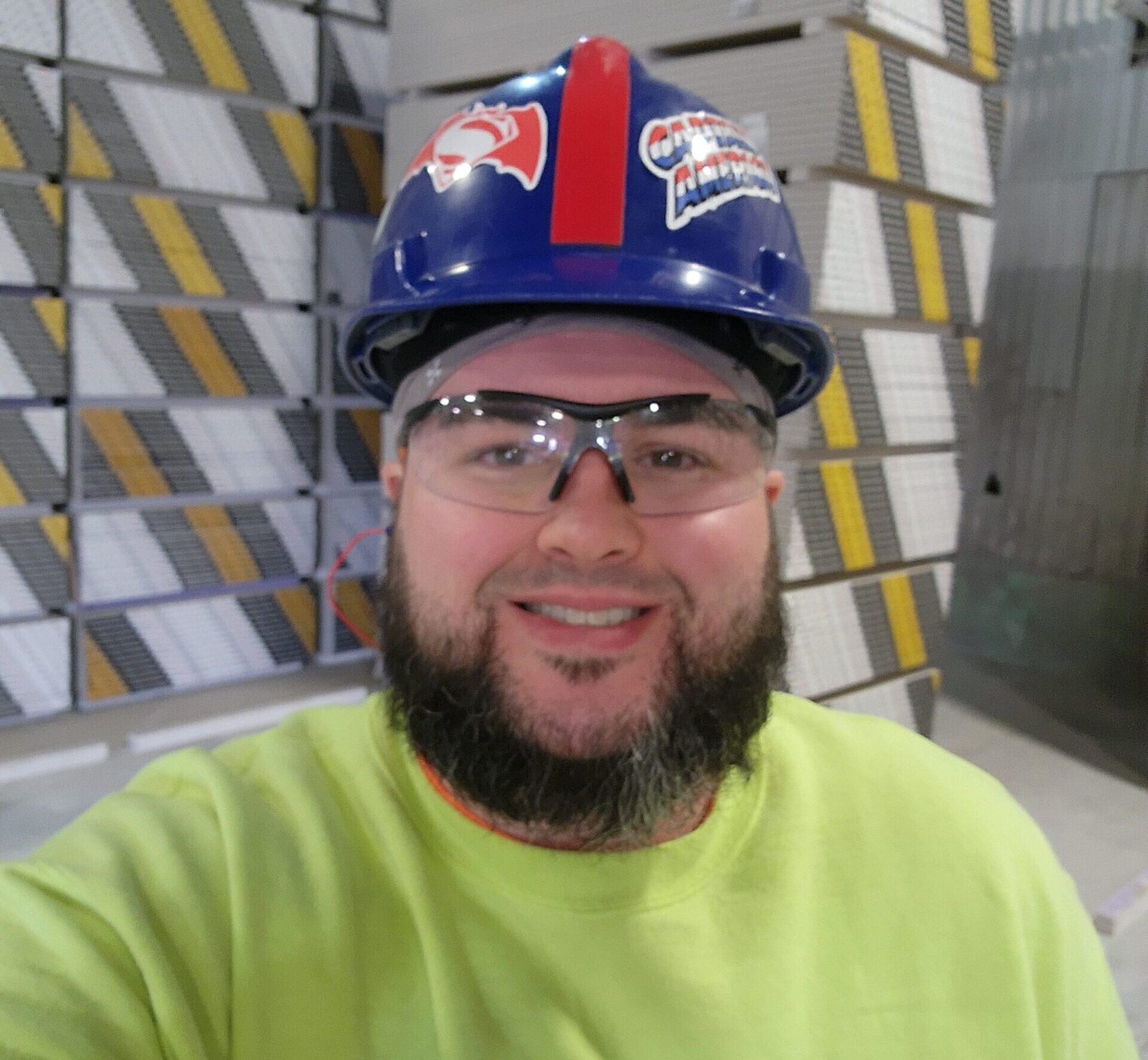
Michael Cobourn and his coworkers were forced to pay union dues while USW union bosses seemed to be loafing it at their workplace. With Foundation aid, they ousted the union.

Michael Cobourn and his coworkers were forced to pay union dues while USW union bosses seemed to be loafing it at their workplace. With Foundation aid, they ousted the union.

WASHINGTON, DC – In the space of just a month, National Right to Work Legal Defense Foundation staff attorneys successfully aided groups of workers in New Jersey and Louisiana in voting out United Steelworkers (USW) union officials they opposed. The National Labor Relations Board (NLRB) certified both votes.

In Louisiana, Ryne Fox led his coworkers at GEO Specialty Chemicals to a decisive victory over USW officials, while Michael Cobourn did the same with his fellow workers at Gold Bond Building Products in New Jersey.

Both cases demonstrated the struggles workers face when seeking to “decertify” union officials whom they no longer want in power. In Louisiana, Fox had to time the filing of his coworkers’ petition seeking a decertification vote to fall within a tiny window of days imposed by the “contract bar,” a union boss-friendly NLRB policy that protects union officials from being voted out of a workplace for up to three years after union bosses and management finalize a contract.

Cobourn and his colleagues, in addition to having to deal with the “contract bar,” work in the non-Right to Work state of New Jersey — meaning they were forced to pay money to the union just to keep their jobs during the entire time they were forbidden by the “contract bar” from ejecting the union. In contrast, Right to Work states protect private sector workers from being fired merely for refusal to pay dues or fees to union officials of whom they disapprove. “My coworkers and I were paying money to the Steelworkers union constantly, yet the union didn’t seem to be doing anything for us,” commented Mr. Cobourn.

Although the efforts in Cobourn’s and Fox’s workplaces are evidence that Steelworkers union officials nationwide place their own interests above the workers they claim to “represent,” the most heinous example of such behavior is ongoing in Franklin, Pennsylvania.

There, Foundation-assisted metal workers at Latrobe Specialty Metals/Carpenter Technology are holding their own in defending their decertification petition against Steelworkers officials’ claims that the “contract bar” should invalidate the petition.

PA Workers Score Victory in Fight Against Election-Blocking Steelworkers Chiefs

While invoking the “contract bar” alone is anti-worker, Steelworkers officials in Pennsylvania claimed that a contract they unilaterally “ratified” this past summer after workers had voted against it twice should trigger the “contract bar.” Steelworkers officials had even told workers that the contract would only be “activated” if workers voted for it. But once they got wind of the workers’ decertification push, the officials “ratified” the unpopular contract secretly so they could, as one union official outrageously said during a hearing, “protect the integrity of the union.

Foundation staff attorneys representing the employee who submitted the petition, Kerry Hunsberger, have so far beaten back union officials’ attack on worker free choice. On November 18, 2021, an NLRB Regional Director rejected union bosses’ attempt to block the vote and ordered that an election proceed.

‘Contract Bar’ Encourages Union Officials to Impose Unpopular Contracts

“Workers across the country are increasingly exercising their right to vote out union officials they oppose, and we at the Foundation are happy to aid them,” commented National Right to Work Foundation President Mark Mix. “However, we’re also acutely aware of the obstacles that stand in the way of this freedom, and one of those, which Steelworkers officials seem to have no reservations about exploiting, is the ‘contract bar.’”

“The unjustified ‘contract bar’ is always wrong because it prevents workers from voting out unions they oppose when they want. But even worse, this NLRB-invented doctrine actually incentivizes union officials to rush and impose unpopular, self-serving contracts for the very purpose of insulating the union’s forced representation powers from a vote of the workers union officials claim to ‘represent,’” Mix added.

9 Feb 2023

Foundation Attorneys & PA Metal Workers Fight Steelworkers Union Contract Deception

The following article is from the National Right to Work Legal Defense Foundation’s bi-monthly Foundation Action Newsletter, November/December 2022 edition. To view other editions of Foundation Action or to sign up for a free subscription, click here.

Union bosses lied to metal workers and covertly signed forced-dues contract to keep grip on power
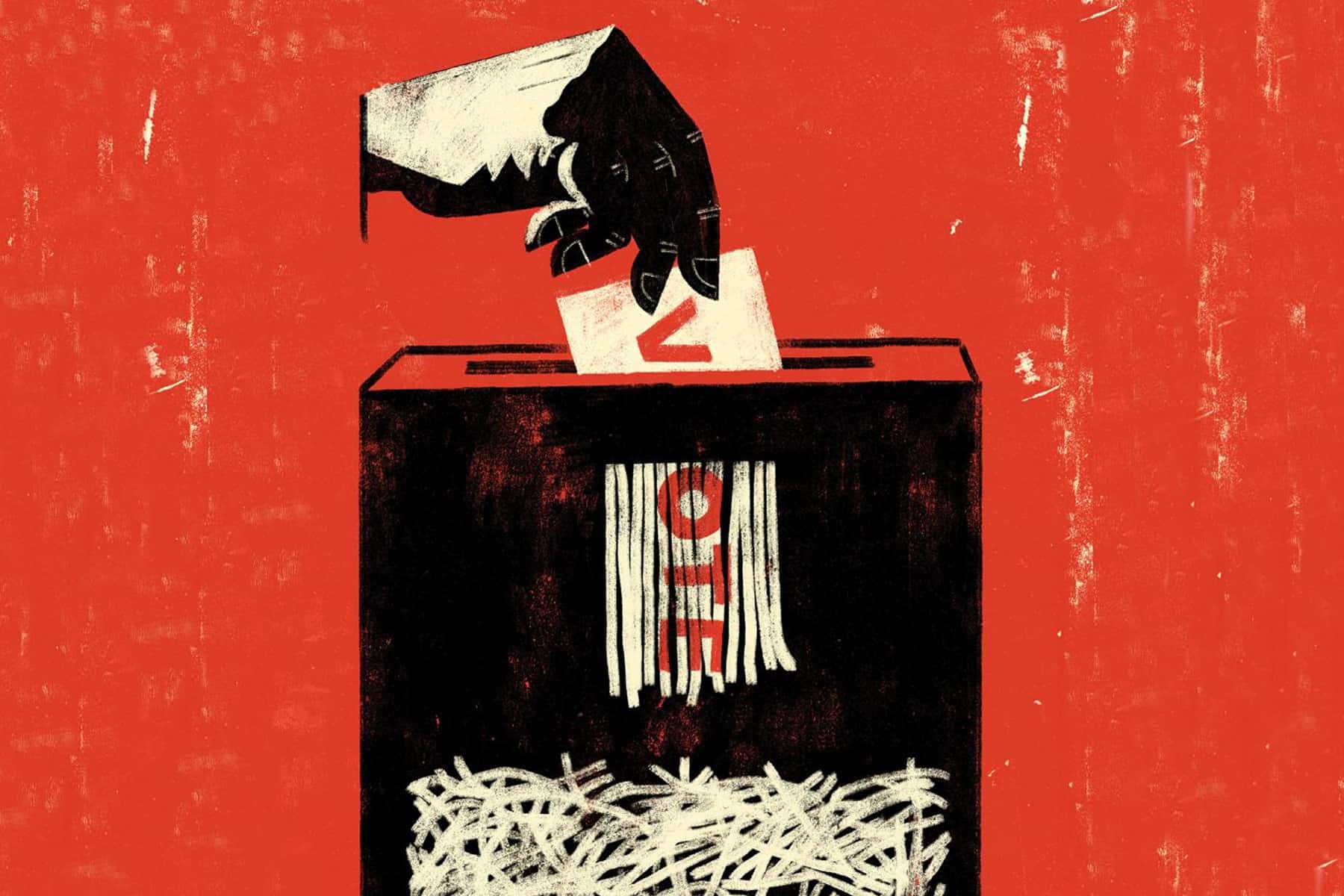
Metal workers have the right under federal labor law to vote out unwanted union representation

In NLRB documents, Steelworkers union officials openly defended their deception of employees, calling such behavior “irrelevant” to whether they should remain in power.

FRANKLIN, PA – Workers under the thumb of union bosses have many reasons to oppose the union’s “representation.” It could be they oppose a bad contract the union negotiated, or maybe it is the union’s divisive political activity for candidates they oppose. Whatever the reason, workers have a right under federal labor law to vote to free themselves of such unwanted union “representation.”

But federal labor law also has no shortage of workarounds for union bosses bent on clinging to their monopoly bargaining power over workers. Kerry Hunsberger and her coworkers at Latrobe Specialty Steel’s Franklin, PA, facility are currently defending their right to throw out unpopular Steelworkers union officials, after the union chiefs secretly signed a contract workers had voted down twice.

Steelworkers Officials Tried to Dodge Employee Accountability

Steelworkers chiefs did so to activate a so-called “contract bar” and remain in power at the plant when they knew a decertification election was coming. Steelworkers officials held two ratification votes to make workers think they had control over whether the contract went into effect. But in reality, union officials have no legal obligation under the National Labor Relations Act (NLRA), the federal statute that governs private sector labor relations, to even conduct such a ratification vote, much less heed the workers’ actual vote tally.

The pro-union boss National Labor Relations Board (NLRB) created out of whole cloth the “contract bar” policy. It immunizes union officials from employee-backed attempts to vote out a union for up to three years after union bosses and management finalize a contract — even a contract that isn’t supported by a majority of workers.

Hunsberger’s petition asking the NLRB to hold a vote to remove the union contains the requisite number of signatures under NLRB rules, but union officials argue the “contract bar” should block the election anyway.

Union Bosses Ignored Two Votes by Workers Rejecting Forced-Dues Contract

The Latrobe Specialty Steel workers first voted July 25 on the contract drawn up by Steelworkers union officials. The workers soundly rejected the contract, and Hunsberger began collecting employee signatures for a decertification petition shortly afterwards.

According to documents and transcripts filed with the NLRB, when Steelworkers union officials discovered a decertification petition was circulating, they secretly and hurriedly signed the unpopular contract on July 28, without telling the employees or the employer, in an attempt to activate the “contract bar” rule and avoid being voted out.

The slapdash contract lacked basic In NLRB documents, Steelworkers union officials openly defended their deception of employees, calling such behavior “irrelevant” to whether they should remain in power. elements, like start and end dates. Even though the union now claims this contract was immediately in effect on July 28, union officials held a new employee ratification vote on August 1, encouraging workers to “ratify” the contract. But the union bosses never told the workers their “vote” was a meaningless sham because union officials had already signed the forced-dues contract in secret.

Hunsberger’s decertification petition was filed at 2:00 PM on August 1, just hours before the sham contract vote occurred. As with the previous vote, the workers rejected the contract by a lopsided margin. But later that night, at around 9:00 PM, union officials suddenly announced to the employer that the contract was already in effect and the employee ratification “vote” was irrelevant because of the union bosses’ covert signing on July 28.

In sworn testimony, one union boss admitted that Steelworkers union bosses execute contracts despite employees voting them down, and that union officials deceived the Latrobe workers and ignored their votes in this case “to protect the integrity of the union.” Apparently the Steelworkers bosses’ lust for monopoly bargaining power and compulsory union payments takes precedence over the actual wishes of the rank-and-file workers union officials purport to “represent.”

‘Contract Bar’ Encourages Unions to Force Through Unpopular Contracts

“Steelworkers union bosses drew up a contract that my coworkers and I hated, so naturally we wanted them out of our workplace and out of our pocketbooks. But to add insult to injury, they apparently didn’t even think they owed us a duty of honesty,” said Hunsberger.

“This entire ordeal has been incredibly frustrating and we are grateful for the help of the National Right to Work Foundation in defending our right to vote the union out.”

Kerry Hunsberger’s Foundationbacked brief defending her and her coworkers’ rights states that the Steelworkers’ contract ploy is “nothing more than a smokescreen, concocted by a desperate and unpopular union to entrench itself and bar employee free choice” under federal law.

“The ‘contract bar’ arbitrarily blocks, often for years, workers’ statutory right under federal law to vote out union officials they oppose. Worse, it encourages union officials to cynically impose a contract at all costs, especially when union bosses know rank-and-file workers would see such a contract as a reason to get rid of so-called union ‘representation,’” commented National Right to Work Foundation Vice President Patrick Semmens. “This case presents an easy choice for the NLRB: defend the rights of rank-and-file workers, or side with Steelworkers union officials, who repeatedly misled those workers and disregarded their votes simply to protect union power. The case also demonstrates that there is no such thing as ‘union democracy’ in America.”

29 May 2022

After 18 Months, Mountaire Farms Workers Finally Oust Union

The following article is from the National Right to Work Legal Defense Foundation’s bi-monthly Foundation Action Newsletter, March/April 2022 edition. To view other editions of Foundation Action or to sign up for a free subscription, click here.

Overwhelming vote against UFCW follows NLRB shredding of first ballots
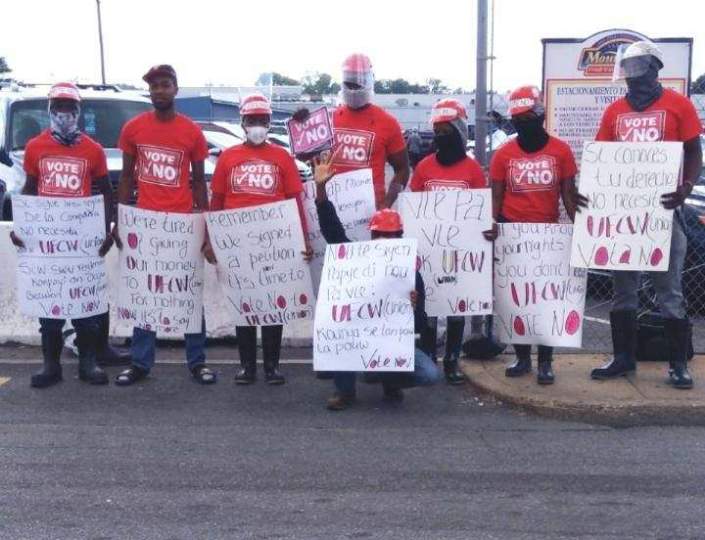
Mountaire Farms Workers

Employees at Mountaire Farms in Delaware fought “contract bar” delays from tyrannical UFCW union officials for almost two years. Finally, they’ve overwhelmingly voted out the union.

SELBYVILLE, DE – Almost two years after their initial attempt, Mountaire Farms poultry employees in Delaware have decisively voted to remove United Food and Commercial Workers (UFCW) union officials from their workplace. The drawn-out ordeal demonstrates how the “contract bar,” a controversial National Labor Relations Board (NLRB) policy, unjustly traps workers in union ranks they oppose.

Under the National Labor Relations Act (NLRA), the federal statute the NLRB implements, workers possess an enumerated statutory right to remove an unwanted union through a decertification election. However, the NLRB has invented out of whole cloth a “contract bar.” The “contract bar” halts workers’ right to hold a decertification election to remove a union they oppose for up to three years after union officials and a company finalize a monopoly bargaining contract.

NLRB Chucks Workers’ Votes Citing ‘Contract Bar’

Mountaire Farms workers voted in an NLRB-supervised decertification election in June 2020, but UFCW lawyers appealed the case to the full Labor Board in Washington, D.C., and were able to get the ballots impounded. After a divided NLRB ruled for the union bosses in April 2021, hundreds of cast ballots were destroyed without being counted.

The June 2020 vote was requested by Mountaire employee Oscar Cruz Sosa, who received free legal representation from National Right to Work Legal Defense Foundation staff attorneys. Cruz Sosa had the support of hundreds of his coworkers when he submitted his petition to the NLRB requesting a vote.

Initially, an NLRB regional official rejected union arguments that the decertification effort was blocked due to the “contract bar,” and the election was held. However, UFCW union lawyers appealed that decision to the full Board, which impounded the ballots while the appeal was considered.

Cruz Sosa’s Foundation attorneys urged the Board to reject the UFCW’s attempt to impose the “contract bar.” More importantly, they urged the Board to eliminate the bar completely because it is not found in the text of the NLRA, and serves only to protect unpopular union bosses from worker accountability. As the brief filed by Foundation staff attorneys pointed out, the only “bar” in the text of the NLRA states that workers must wait one year after an election before holding another vote, making the threeyear “contract bar” particularly egregious.

Nevertheless, in an April 2021 ruling, a divided Board sided with union lawyers, upheld the “contract bar,” and threw out the ballots cast by workers at the 800-employee facility. As a result, the employees were forced to wait almost another year, all the while subjected to forced union dues, for the “contract bar” to expire so they could restart the process for a decertification election.

Finally, without the barrier of the NLRB’s “contract bar” policy the workers submitted another petition to hold a vote to remove the UFCW in October 2021.

Landslide Vote Against Union Highlights Injustice of Anti-Worker ‘Contract Bar’ Policy

In the subsequent vote that concluded in December 2021, the workers overwhelmingly rejected the union with 356 of 436 votes counted for removing the union. The workers are finally free of unwanted union “representation,” nearly two full years after they started their effort to remove the union, which was highly unpopular among rank-and-file Mountaire Farms employees.

“The overwhelming final vote tally emphasizes the injustice of the decision to continue the Board-invented ‘contract bar,’ which resulted in the destruction of hundreds of ballots. From the outset it was clear how little support UFCW officials really had,” observed National Right to Work Foundation Vice President and Legal Director Raymond LaJeunesse. “This case is yet another example of how the NLRB has twisted the law to protect union boss power at the expense of the statutory rights of rank-and-file employees.”

“We’re under no illusions that the Biden NLRB, stacked with former union officials, will end this longstanding impediment to workers’ right to free themselves of an unwanted union. But this saga demonstrates why the injustice that is the non-statutory ‘contract bar’ must be ended by a future Board,” LaJeunesse added.

23 Nov 2020

Push to Remove UFCW Union Could End Pro-Union Boss “Contract Bar” Policy

The following article is from the National Right to Work Legal Defense Foundation’s bi-monthly Foundation Action Newsletter, September/October 2020 edition. To view other editions or to sign up for a free subscription, click here.

Non-statutory NLRB policy hinders workers’ right to vote out an unwanted union

Employees at the Selbyville, DE, Mountaire Farms plant rally to vote out unpopular UFCW honchos from their workplace, as union lawyers scramble to block the workers’ votes from being counted.

WASHINGTON, DC – The National Labor Relations Board (NLRB) has announced that it will review the so-called “contract bar” doctrine, which prevents employees from exercising their right to vote an unpopular union out of their workplace for up to three years if union officials and their employer have finalized a monopoly bargaining contract.

This is the latest development in a case by a Selbyville, Delaware-based Mountaire Farms poultry employee, Oscar Cruz Sosa, against the United Food and Commercial Workers (UFCW) Local 27 union. Cruz Sosa submitted a petition in February for a vote on whether Local 27 should be removed as monopoly bargaining agent in his workplace. The petition was signed by hundreds of his coworkers, more than the percentage required to trigger such a vote.

Worker Obtains Foundation Help after Union Attempts to Block Vote

After he submitted the petition, UFCW bosses immediately claimed that the “contract bar” should block Cruz Sosa and his coworkers from even having an election, because the monopoly bargaining agreement between Mountaire and the union had been signed less than three years earlier.

Cruz Sosa then obtained free legal assistance from National Right to Work Foundation staff attorneys in defending his and his coworkers’ right to vote. With Foundation aid, he also hit UFCW agents with federal unfair labor practice charges for imposing an illegal forced-dues clause on the workplace and threatening him after he submitted the petition.

When the NLRB Regional Director in Baltimore heard the election case, he ruled that the union contract contains an unlawful forced-dues clause that mandates workers immediately pay union dues upon hiring or be fired. Under NLRB precedent, an illegal forced-dues clause means the “contract bar” cannot apply, allowing the vote to proceed.

UFCW’s Desperate Attempt to Block Vote Triggers NLRB Review of “Contract Bar”

Despite the longstanding precedent supporting the Regional Director’s ruling, UFCW union lawyers filed a Request for Review, asking the full NLRB to reverse the Regional Director and halt the election.

In response, Cruz Sosa’s Foundation staff attorneys opposed the union’s efforts to block the vote. They also argued that, if the Board were to grant the union’s Request for Review, it should also reconsider the entire “contract bar” policy, which has no statutory basis in the NLRA. The Foundation’s legal brief noted that the “contract bar” runs counter to the rights of workers under the NLRA, which explicitly include the right to vote out a union a majority of workers oppose.

Just hours after the voting process in the decertification election had begun, the NLRB issued its order granting the union’s Request for Review, while also accepting the Foundation’s request to reconsider the entire “contract bar” doctrine. The order noted “that it is appropriate for the Board to undertake in this case a general review of its ‘contract bar’ doctrine.”

Given the precedential import of this case, the NLRB solicited amicus briefs on whether the “contract bar” should be allowed to stand. UFCW officials, still desperate to throw a wrench in Cruz Sosa and his coworkers’ effort to vote them out, demanded that the NLRB rescind its request for amicus briefs in the case, but that effort was quickly rebuffed.

“We urge the NLRB to swiftly overturn this outrageous non-statutory policy, which lets union bosses undermine for up to three years the free choice of workers that is supposed to be at the center of federal labor law,” commented National Right to Work Foundation Vice President and Legal Director Raymond LaJeunesse. “The very premise of the NLRB-created ‘contract bar,’ that union bosses should be insulated from worker decertification efforts, is completely backwards.”

LaJeunesse added: “Union officials across the country use all types of tactics to get workers into unions but rely on government power and legal tricks to prevent them from getting out.”

19 Aug 2020

Delaware Poultry Worker Charges UFCW Brass with Illegal Dues Deductions, Threats

The following article is from the National Right to Work Legal Defense Foundation’s bi-monthly Foundation Action Newsletter, July/August 2020 edition. To view other editions or to sign up for a free subscription, click here.

Foundation attorneys assist worker leading effort to oust unpopular union
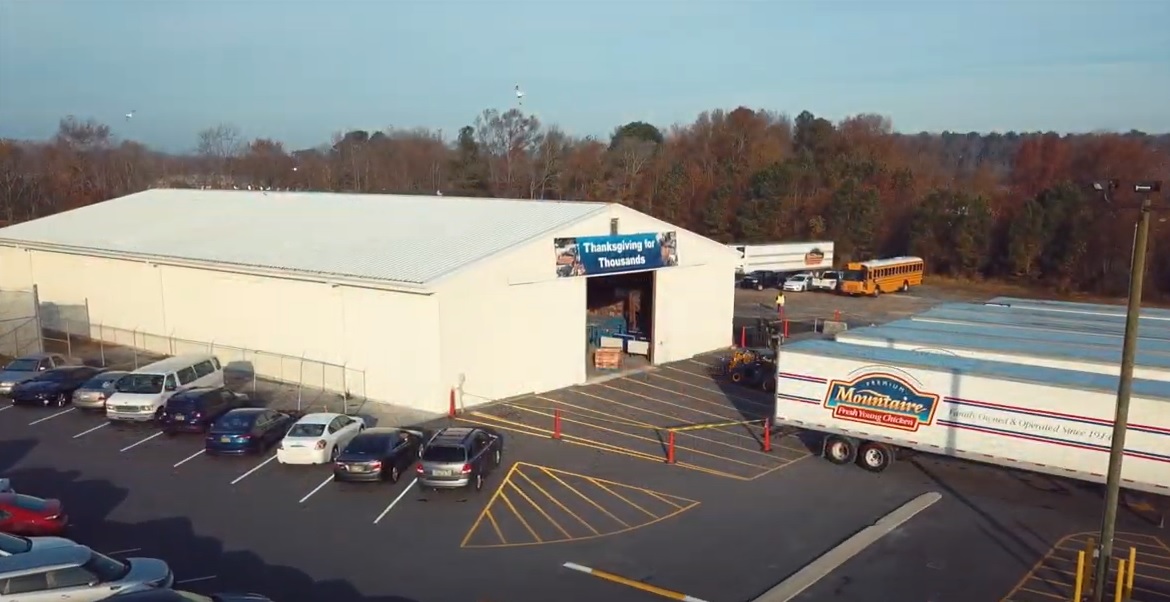
Mountaire Farms Selbyville Delaware

Employees at the Selbyville, DE, Mountaire Farms plant were subjected to an illegal forced-dues clause by UFCW union bosses, who for months have also tried to block their right to vote on whether union officials deserve to stay.

SELBYVILLE, DE – With free legal aid from National Right to Work Foundation staff attorneys, Mountaire Farms employee Oscar Cruz Sosa hit United Food and Commercial Workers (UFCW) Local 27 union bosses with federal unfair labor practice charges. The charges assert that union officials violated his and his coworkers’ rights by enforcing an illegal forced-dues provision in the monopoly bargaining contract, and that union bosses threatened him for spearheading a petition for a vote to remove the union.

Cruz Sosa’s charges come after the National Labor Relations Board (NLRB) Region 5 Director in Baltimore rejected union arguments that the decertification election Cruz Sosa and his coworkers requested should be blocked. Under a controversial NLRB-created policy known as the “contract bar,” employees’ statutory right to hold a decertification vote to remove a union can be blocked for up to three years when a union contract is in place.

However, under longstanding precedent the “contract bar” to decertification does not apply when the monopoly bargaining contract in place contains an unlawful forced-dues clause.

Worker Deflects Union Legal Attack by Exposing Illegal Forced-Dues Clause

Prior to this charge, the NLRB Region 5 Director found that the contract between Mountaire Farms and UFCW union officials illegally required workers to immediately pay union dues upon being hired, instead of providing new hires a 30-day grace period the federal labor statute and longstanding precedent require. Because Delaware lacks Right to Work protections for its employees, Cruz Sosa and his coworkers can be required to pay union fees to keep their jobs.

The NLRB Region 5 Director thus ruled that the vote Cruz Sosa and his coworkers requested should proceed, and scheduled the vote to decertify the union. Cruz Sosa’s unfair labor practice charge, citing that decision’s finding that the forced-dues clause is unlawful, asks the NLRB to order union officials to refund all dues and fees seized from him and his coworkers under the auspices of that illegal clause.

Even after they were unable to block the election with the “contract bar,” UFCW union officials did not give up. In fact, union lawyers have initiated at least three other “blocking charges” against the employer in a last-ditch effort to block the vote, another common tactic used by union bosses to halt or delay workers’ attempts to vote them out.

UFCW union officials’ attempts to stifle the decertification effort didn’t end there. They also asked that any vote be delayed and changed to a“mail-in” vote, even though it had already been scheduled to take place in person on the premises where the workers work every day. In the responses to the union attempts to scuttle the planned vote, Cruz Sosa’s Foundation-provided attorneys argued that the vote should go forward as scheduled, because on-site elections are the NLRB’s preferred method for conducting elections, and the on-site vote was announced to workers weeks ago.

Cruz Sosa also alleged that a UFCW agent came to his house uninvited back in March. The agent warned him “that the decertification process being undertaken was ‘illegal’” and that a court battle was coming, according to his charge filed at NLRB Region 5.

Union Agents Threaten Worker after He Attempts to Exercise Rights

Cruz Sosa’s charge states that this was “threatening” and “coercive behavior” and a clear attempt to restrain him and his coworkers in the exercise of their right under the National Labor Relations Act to vote out an unwanted union.

“The threats and dues deductions in this case show how union bosses regularly trample workers’ rights in order to keep forced dues rolling into their coffers,” observed National Right to Work Foundation Vice President Patrick Semmens. “We hope that NLRB Region 5 will immediately prosecute the union for these violations, and ultimately order the union to refund all dues and fees collected from Mountaire Farms workers under the unlawful forced-dues clause.”

Semmens continued: “While UFCW officials were caught red-handed in this case, these types of forced union dues abuses will continue until Delaware workers have the protection of a Right to Work law, which ensures that all union membership and financial support are strictly voluntary.”


