
California and Georgia Truck Drivers Petition for Votes to Remove Teamsters Union Bosses
Efforts come in the face of Teamsters-backed Biden-Harris Labor Board rule designed to disenfranchise workers
California and Georgia (December 9, 2024) – Two sets of trucking employees have filed petitions seeking elections to remove International Brotherhood of Teamsters (Teamsters) union officials from power in their workplaces. Stockton, CA-based PepsiCo driver Edward Kilgore and Georgia-based BFI Waste Services driver James Shiflett submitted decertification petitions to the National Labor Relations Board (NLRB) with free legal aid from National Right to Work Legal Defense Foundation staff attorneys.
Edward Kilgore, a truck driver for PepsiCo Beverages North America in Stockton, CA, submitted a petition in December, in which the majority of his coworkers asked the National Labor Relations Board (NLRB) to hold a vote to remove Teamsters Local 439 union bosses. Soon after, a group of Georgia-area BFI Waste Services, LLC truckers led by James Shiflett also filed a petition demanding the same kind of NLRB election to oust Teamsters Local 728. The NLRB is the federal agency responsible for enforcing federal labor law, which includes administering elections to install (or “certify”) and remove (or “decertify”) unions.
Both Kilgore’s and Shiflett’s decertification petitions contain employee signatures well in excess of the threshold needed to trigger a decertification vote under the National Labor Relations Act (NLRA). If a majority of Kilgore’s and Shiflett’s coworkers vote against retaining the Teamsters union officials, they will lose their monopoly bargaining powers in the workplace.
For the California workers, their continued effort is especially critical because they are based in a state that lacks Right to Work protections. In such states, union officials can impose union contracts that require workers to pay dues or fees as a condition of getting or keeping a job. In contrast, in Right to Work states like Georgia, union membership and dues payment are strictly voluntary.
However, in both Right to Work and non-Right to Work jurisdictions, union bosses can use their monopoly bargaining privileges to subject all workers in a unionized facility to one-size fits-all contracts – even those workers who voted against the union or otherwise oppose it. A successful decertification election ends union officials’ forced-dues and monopoly bargaining powers in a workplace.
“My coworkers and I are not just opposed to Teamsters officials so-called ‘representation’ but especially offended that currently the union has the power to enter into a contract that forces us to fund the very union we oppose,” said Edward Kilgore, who filed the petition against Teamsters Local 439. “This is about giving workers the power to make their own decisions.”
Pro-Union Boss Shifts in NLRB Policy Disenfranchise Workers
Despite an over 50% increase in the number of decertification petitions filed annually over the last four years, Biden-Harris NLRB bureaucrats recently repealed key reforms (known collectively as the “Election Protection Rule”) that made it easier for workers to request decertification elections. Under the Teamsters-backed change, union officials can manipulate often-unproven allegations against management (also known as “blocking charges”) to stop workers from exercising their right to vote out a union, and can also stop workers from requesting decertification elections to challenge a union’s ascent to power via “card check,” an unsecure process that bypasses the traditional secret-ballot vote process.
“Workers across the country are rejecting union officials top-down agendas both inside and outside the workplace,” commented National Right to Work Foundation President Mark Mix. “While Teamsters bosses like Sean O’Brien are advocating for more power over rank-and-file workers, including by advocating for the elimination of Right to Work protections nationwide, America’s working men and women are increasingly seeking to vote out union officials that don’t serve their interests.”
Austin Worker Files Federal Constitutional Challenge Against Biden-Harris Labor Board
National Labor Relations Board facing numerous worker-brought lawsuits citing unconstitutional structure
Fort Worth, TX (November 2, 2024) – Dallas Mudd, an employee of Aunt Bertha (d/b/a FindHelp), has launched a federal lawsuit against the National Labor Relations Board (NLRB) on the grounds that the agency’s structure violates the U.S. Constitution. National Right to Work Legal Defense Foundation staff attorneys representing Mudd filed the suit in the U.S. District Court for the Northern District of Texas. The lawsuit joins a string of cases challenging the NLRB’s structure on separation of powers principles.
Mudd’s case comes on the heels of his own employer’s suit against the NLRB. In that case, a federal district court judge ruled in favor of FindHelp and granted an injunction to halt proceedings against the company.
Mudd filed a decertificiation petition with the NLRB back in September, requesting a vote to remove the Office & Professional Employees International Union (OPEIU) from his workplace. Instead of allowing the vote to proceed, NLRB officials blocked the election, leaving the workers indefinitely trapped in a union they oppose. Mudd is appealing that decision to the full Board in Washington DC.
Mudd’s federal lawsuit argues he is entitled to have his appeal adjudicated before a federal agency that is accountable to the president. The case joins four other constitutional challenges to the NLRB’s structure from Foundation-backed rank-and-file workers, including the first-ever such lawsuit challenging NLRB Board Member removal protections, which is currently being briefed at the DC Circuit Court of Appeals by Foundation attorneys representing Buffalo, NY-based Starbucks employees Ariana Cortes and Logan Karam.
Mudd’s lawsuit points to recent Supreme Court rulings, including Seila Law LLC v. CFPB and Collins v. Yellen, which emphasized that the President has direct authority to remove executive officials who exercise significant authority. Mudd argues that the NLRB’s structure, as defined by the National Labor Relations Act (NLRA), places unlawful limitations on the president’s power to oust NLRB officials who exercise significant executive authority.
The complaint, filed in the U.S. District Court for the Northern District of Texas, joins a similar suit at the same court from Reed Busler. Similar to Mudd, Busler, a Starbucks employee, filed a petition asking the NLRB to hold a vote to remove the incumbent Starbucks Workers United (SBWU) union, only to have the vote blocked by NLRB officials. In all the cases the employees argue they are entitled to have their cases heard by Board officials who are not exercising powers in violation of the Constitution.
“Independent-minded workers should not be forced to depend on biased agencies staffed by bureaucrats, that exercise power in violation of the Constitution, just to free themselves of unwanted union affiliation,” said National Right to Work Foundation President Mark Mix. “The Constitution does not permit a powerful federal agency to operate as the judge, jury, and executioner without oversight, and these legal challenges seek to ensure that the Labor Board functions within the law, for the sake of all workers.”
Hundreds of AT&T Employees Across California and Texas Petition for Votes to Remove Union Installed Through Coercive “Card Check”
Union bosses bypassed secret ballot election with abuse-prone process, but hundreds of workers in each unit now back election to remove union
Texas & California (August 1, 2024) – Hundreds of In-Home Experts from AT&T Mobility locations across Texas and California have just signed onto petitions seeking elections to remove Communications Workers of America (CWA) union officials from power over their workplaces.
Matthew Gonzales, an In-Home Expert for AT&T Mobility, filed a “union decertification petition” with the National Labor Relations Board (NLRB) on behalf of his coworkers across 13 AT&T Mobility locations in Southern California. Samantha Cain, a Texas-based In-Home Expert, did the same for her colleagues across at least eight locations in Eastern and Southern Texas. Both Gonzales and Cain received free legal aid from National Right to Work Foundation staff attorneys in filing the petitions.
The NLRB is the federal agency responsible for enforcing federal labor law, which includes administering votes to certify and decertify unions. Gonzales and Cain each collected employee signatures on their respective petitions far exceeding the 30% threshold needed to trigger a decertification vote under NLRB rules. Both filed the decertification petitions in July in order to challenge so-called “card check” unionization campaigns that CWA union bosses foisted on their coworkers.
Under card check, union officials can bypass the secret ballot election process, which is the most secure and reliable way to determine if employees want to unionize. During a card check drive, union officials can make face-to-face demands of employees as they seek to collect union authorization cards from a majority of the workplace. This makes the process a breeding ground for coercive and intimidating tactics.
Because Texas has Right to Work protections, union officials can’t force private sector workers like Cain and her coworkers to join or pay money to a union as a condition of getting or keeping a job. That isn’t the case in California. The state’s lack of a Right to Work law lets union officials demand that workers pay union dues or fees just to stay employed. However, in both states, union officials in a unionized workplace enjoy monopoly bargaining privileges, which allow them to contract and speak for every worker in the unit – even those that voted against the union or otherwise oppose its presence.
If the AT&T Mobility In-Home Experts win both decertification elections, well over 800 workers will be free from CWA union officials’ monopoly bargaining power. They will join over 100 In-Home Experts from across Tennessee, who successfully challenged a card check in a similar effort against CWA officials in March. In all three efforts, CWA union officials have tried to “merge” units of AT&T In-Home Experts into a larger unit comprised of thousands of employees, which would effectively trap workers in the union because petitioning for a decertification vote in such a large unit would be virtually impossible.
Biden-Harris NLRB Will Soon Block Workers from Challenging Dubious Union “Card Check” Drives
CWA union officials have already used their card check “victory” to claim monopoly bargaining power over both the California In-Home Experts and Texas In-Home Experts. However, Foundation-backed 2020 reforms to the NLRB’s election rules give both sets of workers an opportunity to challenge the CWA union’s ascent to power.
Collectively referred to as the “Election Protection Rule,” the reforms permit employees to submit decertification petitions within a 45-day window after the finalization of a card check. The Election Protection Rule also prevents union officials from manipulating charges they file alleging employer misconduct to block workers from casting ballots in a decertification election, among other things.
Unfortunately, the Biden-Harris NLRB in Washington, DC, issued a final rule last Friday that will undo the Election Protection Rule and make it much harder for rank-and-file workers to exercise their right to vote out union officials they oppose. While the rule change will not take effect in time to stop the AT&T Mobility employees from having the decertification votes they requested, it will likely quash or substantially delay similar efforts in the future.
“If Ms. Cain and Mr. Gonzales had filed their decertification petitions just a few weeks later, hundreds of AT&T Mobility workers across Texas and California would be summarily denied their right to vote out union officials who seized power over them in a hasty and coercive manner,” commented National Right to Work Foundation President Mark Mix. “This is yet another example of the Biden-Harris Administration’s effort to heap legal privileges on its union boss political allies, all at the expense of workers who just want to exercise their free choice when it comes to deciding who should speak for them in the workplace.
“American workers don’t deserve to be stripped of this freedom, and those who are prevented from voting out unwanted union bosses due to this cynical rule change should not hesitate to contact the Foundation to explore their legal options,” Mix added.
Foundation to Justices: Workers Opposing Unions Isn’t ‘Harm’ to be Eliminated
The following article is from the National Right to Work Legal Defense Foundation’s bi-monthly Foundation Action Newsletter, May/June 2024 edition. To view other editions of Foundation Action or to sign up for a free subscription, click here.
Brief in Starbucks-related SCOTUS case counters Labor Board attempts to impose union control
With the Supreme Court reviewing the standard used when the NLRB seeks injunctions that cement unions in power, the Foundation told the High Court such injunctions should not be allowed to infringe on workers’ legitimate right, under federal labor law and the Constitution, to oppose unionization.
WASHINGTON, DC – “Heads I win, tails you lose”: That’s how a brief filed by National Right to Work Foundation staff attorneys with the U.S. Supreme Court describes the Biden National Labor Relations Board’s (NLRB) argument that worker opposition to a union should count as a reason to impose union bosses’ demands on a workplace. The Supreme Court agreed to hear a case on this issue in January, with arguments scheduled for late April.
“Evidence that employees support a union is taken to mean they want to support the union,” the brief says. “Evidence that employees oppose a union is taken to mean their employer must have wrongfully caused the employees not to support the union. All evidence conveniently leads to the conclusion desired by current NLRB leadership: employees should support unions.”
The Foundation’s brief before the High Court in Starbucks v. McKinney discusses how NLRB officials use this radical assumption to urge federal courts to hit employers with “10(j) injunctions” that coerce the employers to give into certain union-demanded behavior. As Foundation attorneys explain, the NLRB often tells courts that worker discontent with a union is a “harm” that the courts should rectify with a 10(j) injunction.
Foundation in Starbucks Case: Worker Opposition to a Union is a Basic Right
Foundation staff attorneys push back on this theory in their legal brief, arguing that an employee’s decision to not support a union is not a “harm,” but a “legitimate choice [they] have a right to make” under both the National Labor Relations Act (NLRA) and the First Amendment to the Constitution.
Union bosses and their allies in the NLRB want the U.S. Supreme Court to establish a rule in Starbucks v. McKinney that permits injunctions against employers if their alleged conduct could potentially coerce workers into not supporting a union. Foundation attorneys instead argue that “the Court must require the NLRB to prove employees were unlawfully coerced not to support a union because, absent such proof, employees have every right to make that choice” (emphasis added).
Starbucks Workers Challenging NLRB Constitutionality
In addition to fighting cynical attempts by Biden NLRB bureaucrats to turn worker opposition to unions into a reason to beef up union officials’ coercive power, Foundation attorneys are assisting two groups of Starbucks workers with federal lawsuits challenging the constitutionality of the Biden NLRB as a whole.
The newest effort comes from San Antonio, TX-area Starbucks employee Reed Busler and his coworkers. They submitted a petition to the NLRB containing enough employee signatures to prompt a vote to “decertify,” or remove, the SBWU union. But an NLRB Regional Director blocked the vote based on union allegations of employer misconduct that have no proven connection to Busler and his colleagues’ effort to vote out the union. Busler himself noted in an NLRB filing that the move to decertify started “because the Union was a divisive force in our store” and ignored workers.
Busler has filed a federal lawsuit against the NLRB arguing its structure violates the Constitution’s separation of powers doctrine because NLRB Board Members are insulated from at-will removal. The lawsuit seeks an injunction that halts the NLRB from proceeding with his decertification case until his federal lawsuit is resolved.
“Starbucks is becoming ‘ground zero’ for several key battles over worker freedom,” commented National Right to Work Foundation Vice President Patrick Semmens. “Underlying a large portion of the drama is the NLRB’s flawed theory that workers’ exercise of their right to oppose unions is an evil to be eradicated, which unions and their allies in the NLRB bureaucracy are trying to use to force down their agenda on workplaces across the country.
“An even bigger issue, however, is the fact that the NLRB has for decades operated as a kangaroo court run by powerful bureaucrats who exercise unaccountable power in violation of the Constitution,” Semmens added. “American employees shouldn’t be forced to fight for their rights in such a pro-union boss environment.”
Sofitel Lafayette Square Employees Have Successfully Obtained Secret Ballot Vote to Remove Unite Here Union from Hotel
Hotel employees’ petition seeks to challenge union’s installation without a vote through abuse-prone “card check” process
Washington, DC (May 28, 2024) – After Unite Here union officials imposed union control over hotel employees without a secret ballot vote, workers at Sofitel Washington DC Lafayette Square have successfully obtained an election to remove the union. Sofitel employee Mwandu Chibwe submitted on May 15 a petition asking the National Labor Relations Board (NLRB) to hold a decertification election at her workplace. Ms. Chibwe is receiving free legal aid from the National Right to Work Legal Defense Foundation.
The NLRB is the federal agency responsible for enforcing federal labor law, which includes administering elections to install (or “certify”) and remove (or “decertify”) unions. Ms. Chibwe’s decertification petition contains well over the threshold of employee signatures needed to trigger a decertification vote under NLRB rules. The agency has now scheduled a vote to take place at her workplace on June 6, 2024.
Unite Here Local 25 union officials gained power in Ms. Chibwe’s workplace in March through a process called “card check,” which bypasses workers’ right to have an NLRB-administered secret ballot election and instead grants monopoly bargaining power to union officials on the basis of union-solicited “authorization cards.” During a card check drive, union officials can confront workers directly and demand they sign cards, a process that is often rife with threats and misinformation from union officials. Even AFL-CIO organizing manuals admit that workers often sign authorization cards during a card check drive to “get the union off my back.”
Because the District of Columbia lacks Right to Work protections for its private sector workers, Unite Here union officials have the legal privilege to enforce contracts that require employees to pay dues or fees as a condition of getting or keeping a job. In Right to Work states, in contrast, union membership and financial support are strictly voluntary. A successful decertification vote strips union officials of their monopoly bargaining and forced-dues powers.
Biden Administration Attacking Reforms That Give Workers Opportunity to Vote Out Unions
“I believe that the majority of my fellow employees actually oppose this union and don’t want union bosses trying to speak for them,” Ms. Chibwe commented. “While I wish Unite Here had just respected our right to vote from the beginning, I’m glad we’re getting a chance to vote now.”
Ms. Chibwe and her colleagues were able to obtain an election to remove the union under the auspices of the Election Protection Rule (EPR), a set of Foundation-backed reforms that safeguards workers’ right to have secret ballot votes in the face of various coercive union tactics. The EPR gives workers 45 days after the conclusion of a card check campaign to challenge the union’s claims of majority support by filing petitions for union decertification elections. This process was pioneered by Foundation staff attorneys in the 2007 Dana Corp. NLRB decision; though the Obama NLRB overturned that decision, “Dana elections” were reestablished with the EPR.
The EPR also limits union officials’ ability to delay or stop worker-requested union decertification votes by filing so-called “blocking charges” alleging employer misconduct.
The NLRB adopted the EPR in 2020. However, the Biden NLRB is in the process of rulemaking to eliminate the EPR, as part of its broader agenda to give union bosses more tools to corral workers into unions despite polling showing most American workers are “not interested at all” in joining a union.
“Lafayette Square Sofitel employees successfully petitioned for a vote on whether to remove Unite Here officials, and they did so just steps away from the residence of the man whose administration is trying to strip them of that right – Joe Biden,” commented National Right to Work Foundation President Mark Mix. “We’re proud that Ms. Chibwe and her colleagues will get their requested union decertification vote. But it’s outrageous that the Biden NLRB will soon condemn workers to a future where they can be forced into union-controlled ranks with little or no opportunity to vote in secret or otherwise challenge union bosses’ power grabs, and then become subject to forced-dues obligations and other union demands.”
Foundation Brief Exposes ILA Union Scheme to Destroy 270 Nonunion Port Jobs
Note: After this article was originally published, the Supreme Court declined to hear the case. The following article is from the National Right to Work Legal Defense Foundation’s bi-monthly Foundation Action Newsletter, January/February 2024 edition. To view other editions of Foundation Action or to sign up for a free subscription, click here.
Biden NLRB gutted union boycott prohibition under guise of ‘work preservation’

Despite employing hundreds of both union and nonunion employees and being a big boon to the Palmetto State’s economy, ILA union bosses want to shut down Charleston’s Leatherman Terminal until they gain a monopoly on jobs at the port.
CHARLESTON, SC – Charleston’s Hugh K. Leatherman shipping terminal represents the State of South Carolina’s roughly $1 billion investment to expand the state’s shipping sector. The terminal sports five massive ship-to-shore cranes, which rank among the tallest on the East Coast. Nonunion crane operators — state employees who have handled such work since Leatherman opened in 2021 and for years before that at other port facilities — work alongside unionized private sector employees to keep the port running.
But union bosses of the International Longshoremen’s Association (ILA) think that the port should be effectively shut down until they get control over all jobs at the facility — even the crane jobs that the union’s members have never performed. They’ve backed up that coercive vision by suing any cargo carrier that docks at Leatherman until the union gains control of
all crane lift equipment jobs at the facility. In December 2022, the Biden National Labor Relations Board (NLRB) outrageously ruled 2-1 against a challenge by the South Carolina Ports Authority (SCPA), holding that ILA union bosses’ secondary boycott scheme was lawful. Then the U.S. Court of Appeals, also by a 2-1 vote, affirmed that disastrous ruling.
Foundation Highlights Workers’ Plight After Disastrous Decision
As the U.S. Supreme Court now decides whether to hear the case, National Right to Work Foundation staff attorneys filed a legal brief with the High Court highlighting how the Biden NLRB’s rejection of longstanding precedent will let 270 nonunion state employees at Leatherman be put out of work. That’s despite them having done nothing wrong when performing crane work exactly as they have for years.
“In short, the decisions below, if affirmed, will cause grievous harm to 270 non-union Ports Authority workers and their families,” the brief reads. “The Foundation submits this brief to provide a voice for the otherwise voiceless non-union Ports Authority workers, so the Court has a clear view of the stakes involved for the workers and their families if the decisions below stand.”
Job-Destroying ILA Union Gambit Breaks Federal Law
The brief states that the ILA union’s scheme, if allowed to continue, would require South Carolina to both fire the nonunion state employees of the port, and then turn control of crane jobs over to a private company with an ILA union contract. That’s because South Carolina protects its public sector employees by banning union monopoly bargaining.
If the union’s gambit succeeds, the devastating effects for current employees would go beyond just getting fired. The brief reveals that, even if terminated state workers were to seek new employment at Leatherman with the private company under the union’s control, the ILA would likely give hiring priority to its existing unionized workers above the former state workers under the union seniority provisions and hiring hall referral rules contained in the contract.
“Crane and lift operators who have spent years as non-union Ports Authority employees will likely find themselves at the bottom of any ILA hiring hall list behind the union’s 2,000 current members,” the brief notes.
Additionally, the brief points out that the ILA union’s scheme violates the prohibition on secondary boycotts in the National Labor Relations Act (NLRA), the federal law the NLRB is responsible for enforcing. Secondary boycotts involve union agents targeting a neutral employer (in this case, cargo carriers) in order to win a labor dispute that the neutral employer isn’t even party to.
Finally, the brief notes, by granting the ILA control over the jobs of state employees who have never chosen to affiliate with the ILA, the NLRB is undermining the NLRA’s fundamental premise of employee free choice — the rule that “the employees pick the union; the union does not pick the employees.”
Supreme Court Must Intervene to Defend Worker Rights
“ILA union officials have a well-earned reputation for valuing power over the well-being of workers,” commented National Right to Work Foundation Vice President and Legal Director William Messenger. “While pursuing monopolistic schemes like this that upend the livelihoods of innocent nonunion workers, union agents were also organizing deals in which mob-linked longshoremen from New York and New Jersey could get paid for 27 hours of ‘work’ per day.
“The ILA union’s gambit here should be deemed no less illegal than their interactions with mob members, and the Biden NLRB’s greenlighting such a scheme effectively invites other union bosses to try unlawful secondary boycotts that end with workers and businesses suffering needless harm,” Messenger added.
Tire Wholesaler Employees Force RWDSU Union Out of 15 Locations
The following article is from the National Right to Work Legal Defense Foundation’s bi-monthly Foundation Action Newsletter, January/February 2024 edition. To view other editions of Foundation Action or to sign up for a free subscription, click here.
RWDSU union officials abandon 500+ employee unit ahead of vote at tire wholesaler
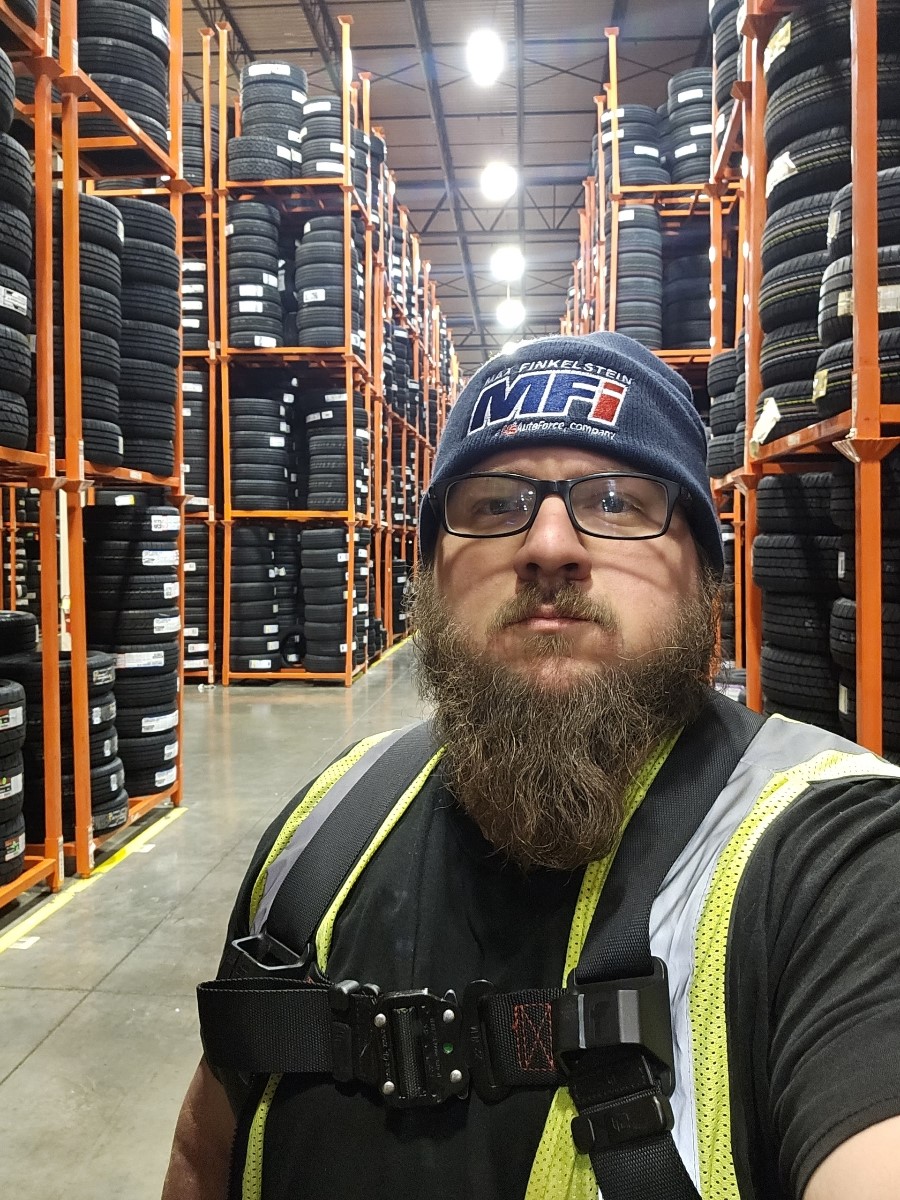
Tire-d of the RWDSU: Chris Dorney submitted a huge number of signatures from his coworkers at tire wholesaler Max Finkelstein when petitioning the NLRB for a vote to remove the RWDSU union.
WINCHESTER, VA – The Biden National Labor Relations Board (NLRB), which includes among its members two former union bosses from the Service Employees International Union (SEIU), is pursuing an agenda that hasn’t exactly been making it easy for workers to vote out a union they don’t want. But that hasn’t stopped workers across the country from going to extraordinary lengths to kick out unions that don’t serve their interests.
In October 2023, Chris Dorney, a Winchester, VA-based employee of tire wholesaler Max Finkelstein, kick-started a cross-country effort to vote the Retail, Wholesale and Department Store Union (RWDSU) out of 15 warehouse facilities across the eastern United States. This work unit included more than 500 employees across Virginia, Maryland, Massachusetts, Pennsylvania, New York, New Jersey, Vermont, Maine, and Connecticut.
Virginia Worker Mustered Strong Showing on Petition for Union Ouster Vote at Tire Wholesaler
With free legal aid from the National Right to Work Foundation, Dorney submitted a petition to the NLRB containing more than enough employee signatures to trigger a vote to remove the union from the large unit.
While Dorney and his fellow Virginia employees enjoyed the Right to Work freedom to opt-out of dues payments to the union, the same couldn’t be said for any of the other employees, all of whom hail from states where dues payments can be mandated as a condition of employment. But voting RWDSU bosses out of power entirely at the tire wholesaler would end the union’s forced-dues power.
“We warehouse workers and drivers at Max Finkelstein may be from many different facilities in many different states, but we are in agreement about one thing: RWDSU union officials don’t represent our interests,” Dorney said of the effort. “It’s our right under federal law to challenge RWDSU’s forced representation power.”
RWDSU Bosses Flee Unit as Union Officials Rack Up Losses Nationwide
However, before the vote could occur, RWDSU union officials disclaimed interest in continuing their monopoly representation powers over the unit, likely to avoid an embarrassing rejection by workers at the ballot box.
Unionized workers are increasingly requesting elections to remove unwanted unions — a potential reason for the Biden NLRB’s efforts to crack down on decertification votes. Additionally, union bosses are increasingly losing these contests. As of last year, filings for union decertification votes had shot up by over 40 percent since 2020. Of decertification elections that occurred, the number which resulted in union bosses losing went up by 72 percent.
“Mr. Dorney and his coworkers’ effort to kick out the RWDSU union, which spanned several states, 15 facilities, and hundreds of workers, is yet another example that workers often want to escape union officials’ one-size-fits-all agenda. It’s also a demonstration that workers will go to great lengths in order to exercise this right,” commented National Right to Work Foundation Vice President Patrick Semmens. “But the Biden NLRB, bent on empowering the President’s union boss political allies, plans to grant unions even more power to defeat workers’ will.”
Foundation Lawsuit: Biden NLRB Structure Violates the U.S. Constitution
The following article is from the National Right to Work Legal Defense Foundation’s bi-monthly Foundation Action Newsletter, November/December 2023 edition. To view other editions of Foundation Action or to sign up for a free subscription, click here.
Groundbreaking suit filed for Starbucks employee who was denied vote to oust unwanted union bosses
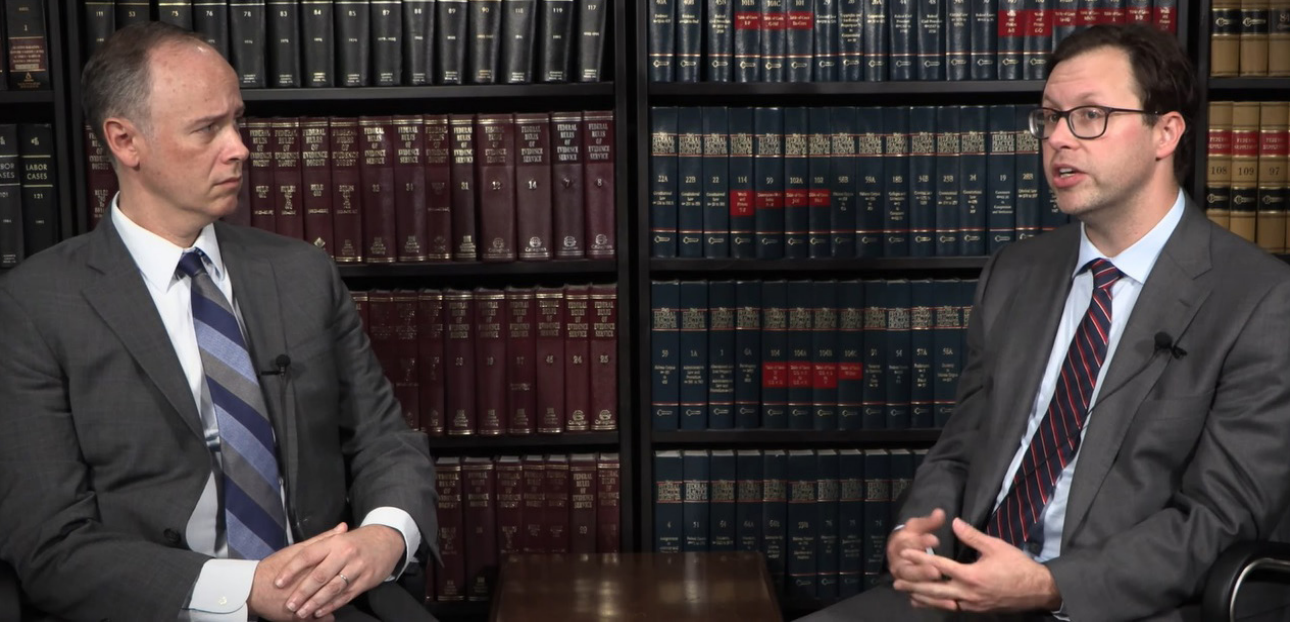
Starbucks employee Ariana Cortes’ Foundation attorney, Aaron Solem (right), is making a cutting-edge argument targeting the NLRB’s lack of accountability.
WASHINGTON, DC – The National Labor Relations Board (NLRB) is supposed to protect the right of workers to freely choose whether to associate with a union or not. The NLRB is also charged with holding unions and employers accountable when they violate worker rights. Too often, however, it has simply acted as an agency that generates policies to entrench union bosses’ power over workers while shielding union bosses from any kind of liability.
A new federal lawsuit from a National Right to Work Foundation-backed Starbucks employee, currently pending at the D.C. District Court, could upend the federal agency and result in a ruling that the current Labor Board’s structure violates the Constitution.
Employee Challenges NLRB Bureaucrats’ Protections from Presidential Removal
Ariana Cortes, a worker at the Buffalo, NY, “Del-Chip” Starbucks branch, hit the NLRB with the groundbreaking lawsuit in October, contending that the federal agency’s current structure violates the separation of powers mandated by the Constitution.
Cortes’ suit follows Foundation attorneys’ defense of her and her coworkers’ petition requesting a vote to remove Starbucks Workers United (SBWU) union officials from their workplace. Regional NLRB officials dismissed Cortes’ majority-backed petition based on SBWU allegations against Starbucks management that have no proven connection to Cortes and her coworkers’ desire for a union decertification vote.
Cortes’ lawsuit argues that because NLRB members cannot be removed at-will by the President, the NLRB’s structure violates Article II of the Constitution. Under Article II, the lawsuit contends, the President must have the power to remove officials that exercise substantial executive power.
Because the NLRB enforces federal labor law, manages union elections, and can issue legally binding rules and regulations, the lawsuit contends that the agency exercises substantial executive power. Therefore, it falls within the scope of the President’s power to remove officials at will. However, the National Labor Relations Act (NLRA), the law that established the NLRB, restricts the President’s ability to remove Board members except for neglect of duty or malfeasance.
“[T]hese restrictions are impermissible limitations on the President’s ability to remove Board members and violate the Constitution’s separation of powers. Thus, the Board, as currently constituted, is unconstitutional,” the complaint states.
Lawsuit: Unconstitutional NLRB Proceedings Must Stop
Cortes’ new federal lawsuit seeks a declaration from the District Court that the structure of the NLRB as it currently exists is unconstitutional.
“For too long the NLRB, especially the current Board, has operated as a union boss-friendly kangaroo court, complete with powerful bureaucrats who exercise unaccountable power in violation of the Constitution,” commented National Right to Work Foundation Vice President and Legal Director William Messenger. “The NLRB’s operation outside constitutional norms is easily exploited by Big Labor.”
“But as the story of Ms. Cortes shows, the NLRB’s unchecked power creates real harms for workers’ rights, especially when workers seek to free themselves from the control of union bosses they disagree with,” Messenger added.





