
Despite Arizona Dispensary Employees’ Landslide Vote to Remove UFCW, Union Bosses Seek to Overturn Election Result
Union officials ask Labor Board to disenfranchise workers who voted 14-1 to end union affiliation
Phoenix, AZ (May 14, 2026) – Employees of Curaleaf Camelback Dispensary overwhelmingly voted United Food and Commercial Workers (UFCW) Local 99 union bosses out of power at their workplace. Dispensary employee Jennifer Mooney, who filed a petition for her coworkers with the National Labor Relations Board (NLRB) last month, led the workers’ effort. The petition sought a “decertification” election to terminate the status of UFCW Local 99 as the workers’ exclusive “representative.”
The NLRB is the federal agency responsible for enforcing the National Labor Relations Act, a task that includes administering elections to install (or “certify”) and remove (or “decertify”) unions. The petition was filed with free legal aid from National Right to Work Foundation staff attorneys.
Mooney’s petition, filed April 3, 2026, requested an NLRB-administered secret-ballot election for the 25-member work unit, including all full- and part-time Store Associates employed at the Curaleaf Camelback Dispensary’s Phoenix location.
The workers’ election took place on May 1, when dispensary employees voted 14-1 to remove UFCW Local 99 as the employees’ representative. However, UFCW union bosses filed a last-minute request with the NLRB seeking to overturn the workers’ decisive vote against the union.
“My colleagues and I didn’t appreciate how UFCW officials ignored our interests and tried to force a contract that we didn’t like,” stated Mooney. “We are thankful to have the Foundation’s assistance in exercising our legal rights.”
Arizona is one of the 26 states with Right to Work protections, which safeguard workers by making union membership and dues payment strictly voluntary. However, even in Right to Work states, union bosses can impose exclusive bargaining control upon all workers in a workplace, meaning they can dictate working conditions even for employees who oppose the union. A worker decertification victory would remove the union’s monopoly bargaining powers over those workers.
Foundation attorneys have recently assisted with a string of worker efforts in the cannabis industry to push out unwanted unions, including in Massachusetts, Missouri, and Ohio. Late last year, Foundation attorneys also submitted an amicus brief to the Ninth Circuit Court of Appeals in the case Ctrl Alt Destroy v. Elliott, Case No. 25-2419, which may determine whether state laws that impose so-called “labor peace agreements” on the cannabis industry break federal law. The Foundation’s brief argues that California’s labor peace agreement scheme violates federal labor law by forcing cannabis industry employers to bargain with union officials – even when a majority of workers haven’t expressed that they want a union – in order to lawfully operate within the state.
“Once again, rather than respect the decision of workers who overwhelmingly want to be free of the UFCW at their workplace, union lawyers are attempting to overturn the vote of workers opposed to union affiliation,” commented National Right to Work Foundation President Mark Mix. “Unfortunately, many American workers who undertake to exercise their legal rights are often trapped by union officials who abuse the NLRB’s non-statutory, pro-Big Labor policies that keep workers in the unions’ rank-and-file for months or even years.
“Cannabis industry workers in particular are being targeted by Big Labor, which is using legislative efforts to impose union control in the cannabis industry, with little regard for workers’ right to have a free and fair election on union exclusive representation,” Mix added. “Foundation attorneys will always fight to ensure that workers can exercise their right to choose, free of impediments at both the state and federal levels.”
Phoenix CenturyLink Employee Wins Federal Case Charging CWA Union with Illegal Dues Seizures
CWA officials illegally refused worker’s membership resignation and request to stop dues deductions
Phoenix, AZ (April 6, 2023) – CenturyLink Communications employee Adrianna Delatorre has forced Communications Workers of America (CWA) Local 7019 union officials to back down in her federal case, in which she charged them with seizing dues money illegally from her wages. Delatorre, who filed charges against both the CWA union and her employer at the National Labor Relations Board (NLRB) in May 2022, received free legal representation from National Right to Work Legal Defense Foundation staff attorneys.
Delatorre asserted in her charges that CWA union bosses violated her rights under Section 7 of the National Labor Relations Act (NLRA) by rejecting her clear notice that she was resigning union membership and ending union dues deductions from her paycheck. The NLRA guarantees American private sector employees the right to “refrain from any or all” union activities, with some restrictions not applicable to Delatorre.
Delatorre’s right to cut off financial support to the CWA union she opposes is fully protected by Arizona’s Right to Work law, which prohibits union bosses from mandating union membership or any dues payment as a condition of getting or keeping a job. In contrast, in non-Right to Work states like Colorado or New Mexico, union officials have the power to force workers to pay union fees just to stay employed.
A Foundation-won settlement now requires CWA union officials to pay back to Delatorre all illegally-taken dues, and to refrain in the future from illegally rejecting employees’ requests to stop dues deductions.
CWA Union Blatantly Ignored Worker Request
Delatorre submitted letters to CWA union officials and CenturyLink management in March 2022, informing both that she was terminating her union membership and revoking any dues deduction authorization document. Both union and company officials denied this request and CenturyLink management continued to seize money from Delatorre’s pay at the union’s behest. Delatorre hit her employer and the union with federal unfair labor practice charges in May 2022.
Notably, the dues deduction authorization document (or “checkoff’) that Delatorre revoked did not specify any time limits on when employees could cut off dues, nor did it provide that dues deductions were handled separately from union membership. Delatorre’s Foundation-provided attorneys argued that, on those grounds, Delatorre’s demand to stop union financial support should have been effective as soon as she submitted her letter ending her membership.
CWA union officials have now backed down and settled the case. In addition to paying back to Delatorre all money unlawfully taken from her paycheck since the date she resigned her membership, CWA union officials must also post a notice in Delatorre’s CenturyLink Tower workplace stating that they will not “cause or attempt to cause an employer to deduct union dues from an employee’s paycheck without having a valid dues deduction authorization signed by the employee.” As part of the settlement, CenturyLink must also not “render unlawful assistance and support to the Union.”
Employee Defended Rights Under AZ Right to Work Law, but Union-Label DC Politicians Plan to Eliminate Right to Work Nationwide
“Foundation staff attorneys are proud to have helped Ms. Delatorre successfully defend her right under federal law and Arizona’s Right to Work law to refrain from sacrificing part of her hard-earned pay to CWA union officials,” commented National Right to Work Foundation President Mark Mix. “However, it’s important to remember that there are forces within the NLRB – including General Counsel Jennifer Abruzzo, previously a top CWA lawyer – and at other levels of the current Administration pushing for full implementation of the so-called ‘PRO’ Act’s provisions. The ‘PRO-Act’ would ultimately eliminate workers’ Right to Work protections by federal fiat, giving union officials the power to extort millions of additional workers for dues money under threat of termination.”
“Right to Work laws let workers like Ms. Delatorre withhold money from union hierarchies, which often pursue agendas completely out of touch with the rank-and-file the union bosses claim to ‘represent.’ This gives individual employees a way to hold union officials accountable for how they wield government-granted monopoly power over workers,” Mix added.
Sixteen States Back Foundation’s Petition to High Court in Chicago Educator Case
The following article is from the National Right to Work Legal Defense Foundation’s bi-monthly Foundation Action Newsletter, September/October 2021 edition. To view other editions of Foundation Action or to sign up for a free subscription, click here.
Amicus brief: Unions “refuse to stop collecting dues despite unequivocal employee demands”
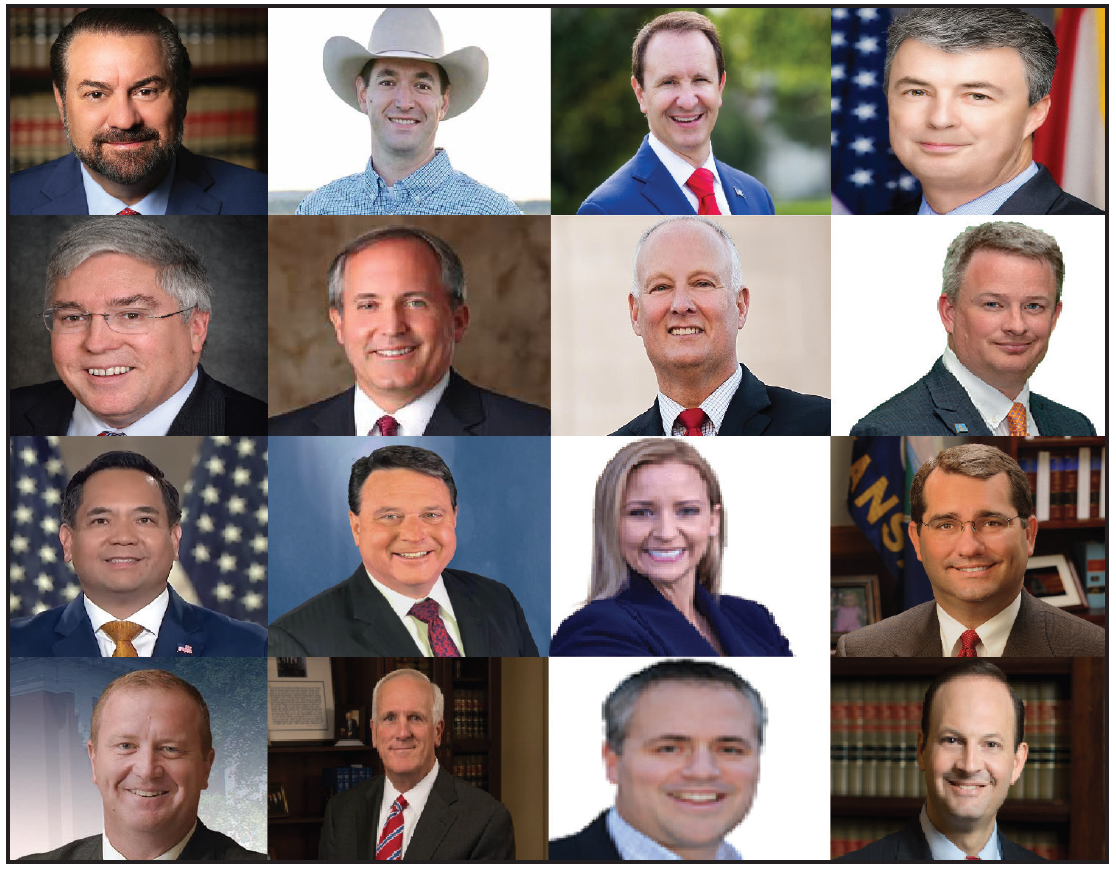
“Janus has been ignored,” wrote sixteen attorneys general in their amicus brief supporting Ifeoma Nkemdi and Joanne Troesch’s petition pressing the Supreme Court to hear their case and declare “escape periods” a First Amendment violation.
WASHINGTON, DC – In July, sixteen attorneys general threw the support of their states behind Chicago Public Schools educators Ifeoma Nkemdi and Joanne Troesch, who are urging the U.S. Supreme Court to hear their case defending their First Amendment right to cut off union financial support as recognized in the Foundation-won Janus v. AFSCME decision.
In an amicus brief encouraging the High Court to hear the case, attorneys general from Alaska, Alabama, Arizona, Arkansas, Indiana, Kansas, Louisiana, Missouri, Montana, Nebraska, South Carolina, South Dakota, Tennessee, Texas, Utah, and West Virginia argue that “escape period” restrictions like the one that Chicago Teachers Union (CTU) bosses foisted on Troesch and Nkemdi are a widespread threat to public employees’ rights under the Janus Supreme Court decision.
In 2018, the Supreme Court ruled in Janus v. AFSCME that public employees’ First Amendment rights are violated when they are forced to fund a union as a condition of employment. The Court also held that union dues can only be taken from a public employee with an affirmative and knowing waiver of that employee’s First Amendment right not to pay.
Unions Are Seizing Money from ‘Tens of Thousands’ Unconstitutionally, Brief Says
The CTU-concocted “escape period” Nkemdi and Troesch are challenging blocks employees from exercising their First Amendment Janus right to end union financial support except during one month per year. The educators’ petition for writ of certiorari presses the High Court to hear their case to affirm that Janus does not permit union bosses to profit from schemes that constrict workers’ constitutional right to refrain from subsidizing a union.
The states’ amicus brief emphasizes how glaringly union officials have flouted Janus with restrictions, as well as how widespread the schemes are: “Janus has been ignored. Across the country public-sector unions have resisted Janus’s instructions and devised new ways to compel state employees to subsidize union speech. Unions place onerous terms on dues forms that prohibit state employees from opting out of paying dues except during narrow (and undisclosed) windows during the year.”
The brief continues: “Unions refuse to inform state employees that they have a First Amendment right not to pay union dues. And unions refuse to stop collecting dues despite unequivocal employee demands. The result is that tens of thousands of state employees across the country are having dues deducted to subsidize union speech without any evidence that they waived their First Amendment rights . . . .”
Nkemdi and Troesch’s case “implicates these precise concerns” and the Court must hear it, the brief maintains.
In addition to the states’ brief, policy groups Goldwater Institute, Cato Institute, Freedom Foundation, and Liberty Justice Center filed amicus briefs backing the case.
Justices May Already Be Showing Interest in Foundation-Backed Case
In late July, the Supreme Court ordered lawyers for CTU and the Chicago Board of Education to file a response brief to Troesch and Nkemdi’s petition, a signal that some Justices may be interested in taking up the case.
Also pending at the High Court is Foundation attorneys’ anti- “escape-period” case for Susan Fischer and Jeanette Speck, two New Jersey teachers. Both that case and Troesch and Nkemdi’s case are expected to be fully briefed in October, after which the Justices will decide whether to take them.
“As union bosses continue to use deceptive ‘escape period’ arrangements to keep worker money flowing unconstitutionally into their coffers, support continues to roll in from across the country for Troesch and Nkemdi, who are sticking up for independent-minded public servants who simply want to serve their communities without being forced to fund union activities,” observed National Right to Work Foundation President Mark Mix. “The High Court must weigh in to affirm that public workers’ First Amendment rights cannot be confined to union officials’ arbitrary schedules.”
AZ Fry’s Grocery Employees Win Federal Court Decision Overturning NLRB Ruling on Dues Deductions during Strike
DC Circuit reverses NLRB ruling that allowed Arizona union bosses to deduct dues from non-member workers who revoked their deduction authorizations
Washington, DC (March 23, 2017) – Seven Phoenix-area Fry’s Food Stores employees have won a federal court decision in the DC Circuit Court of Appeals after United Food & Commercial Workers (UFCW) Local 99 union and company officials refused to honor their legal right to refrain from union dues payments.
With free legal assistance from National Right to Work Foundation staff attorneys, Shirley Jones of Mesa; Karen Medley and Elaine Brown of Apache Junction; Kimberly Stewart and Saloomeh Hardy of Queen Creek; and Tommy and Janette Fuentes of Florence – acting for almost 800 similarly situated employees – filed federal unfair labor practice charges in December 2009 that spurred the National Labor Relations Board (NLRB) to investigate and issue a statewide complaint against Fry’s Foods and UFCW Local 99 union officials.
In the midst of a well-publicized UFCW Local 99 union boss-ordered strike in November 2009, the employees and almost 800 of their co-workers resigned their UFCW union memberships and revoked their dues deduction authorizations – documents used by union officials to automatically withhold dues from employee paychecks – while the UFCW union did not have a monopoly bargaining contract in effect at their workplaces. The workers’ charges argued that, despite the employees’ efforts to halt the dues seizures, Fry’s officials illegally continued to deduct dues from their paychecks, and UFCW union officials illegally continued to accept the seized monies.
Under Arizona’s popular Right to Work law, no worker can be required to join or pay any money to a union. Further, the National Labor Relations Act provides that dues deduction authorizations cannot be irrevocable “beyond the termination date of the applicable collective bargaining agreement.”
After a long investigation, the Phoenix NLRB regional director issued a formal complaint against UFCW Local 99 union officials for enforcing illegal dues deduction authorizations that do not allow employees to revoke them during contract hiatus periods, contrary to federal law. However, an NLRB Administrative Law Judge (ALJ) ruled for the union officials and rubberstamped the scheme.
The NLRB originally affirmed the ALJ’s ruling, but that decision was invalidated by the U.S. Supreme Court’s holding in Noel Canning that the Board lacked a valid quorum after President Obama’s unconstitutional 2012 NLRB “recess appointments.” After Noel Canning, a Senate-confirmed NLRB issued another ruling backing the ALJ’s decision, and exonerating Fry’s Foods and Local 99 union bosses. National Right to Work Foundation staff attorneys then appealed the case to the DC Circuit Court of Appeals.
A three-judge panel of the Court of Appeals handed down its decision on March 21, vacating the NLRB ruling. All three judges rejected the NLRB lawyer’s arguments. Two judges sent the case back to the NLRB for a new decision because the Board did not explain how its decision could be squared with Board precedent that workers must have at least one opportunity to revoke their dues deduction authorizations when a contract expires. Judge Silberman dissented, arguing that the NLRB ruling should be reversed without a remand, because the “Board has engaged in a blatant attempt to rewrite a statute in which Congress spoke plainly” that employees have “a right to revoke at will upon termination of an agreement.”
“These workers have waited the better part of a decade for justice after UFCW bosses refused to respect their legal rights to resign from the union and stop payment of all dues during a union-instigated work stoppage,” said Mark Mix, President of the National Right to Work Foundation. “While it has taken a long time, this ruling is a step towards vindicating the hundreds of employees victimized first by UFCW union officials, then by an Obama NLRB that rubberstamped those abuses.”





