
Harris v. Quinn Supreme Court Update
Regular Freedom@Work readers may remember the case of Pam Harris, an Illinois woman who is challenging an SEIU scheme aimed at forcing her and other homecare providers into union ranks. For the past several years, Harris has received free legal assistance from Foundation staff attorneys.
In November 2011, Harris filed a a petition for a writ of certiorari at the Supreme Court, challenging the SEIU’s forced-unionism scheme on the grounds that it violates homecare providers’ freedom of association and freedom of speech. Last June, the Supreme Court asked for a brief on the issues presented from the Solicitor General, a move that could indicate heightened interest in the case. The Solicitor General’s brief was filed in early May. Harris’s Foundation-provided staff attorney submitted a reply shortly thereafter.
Although we hoped the Supreme Court would announce whether it would take the case this morning, it was not on today’s orders list, meaning the case will be conferenced again this Thursday. That makes this coming Monday (June 17th) the likely day the Court will announce whether or not it will take the case.
For more information on the case, including links to Harris’s petition and several amicus curiae briefs filed in support of her arguments, check out Scotusblog.
Updated Analysis: Right to Work States Still Enjoying Faster Growth, Residents Have Higher Purchasing Power
Tthe National Institute for Labor Relations Research has updated its fact sheet comparing various statistics in Right to Work states and forced-unionism states, and Right to Work states continue to enjoy more growth and purchasing power for citizens than their forced-unionism counterparts.
Over the past ten years, private sector employment opportunities in Right to Work states have grown by 6.4%, compared to just 0.4% job growth in states that allow forced unionism. Other economic indicators – from purchasing power to employee compensation – are equally stark. No matter how you slice the numbers, Right to Work states simply perform better than their forced-unionism neighbors.
The case for Right to Work laws has always rested on the importance of employee freedom, but it’s nice to know that protecting worker rights has other, more tangible benefits. Over the past several years, studies, surveys, and job reports have all confirmed that freedom in the workplace yields impressive economic results.
Click here for the full NILRR fact sheet.
FOUNDATION ACTION: Foundation Legal Director Warns Congress of NLRB’s Big Labor Bias
NOTE: This article is from the March-April issue of Foundation Action, our bi-monthly newsletter. You can sign up to receive a print edition of the newsletter here.
Foundation Legal Director Warns Congress of NLRB’s Big Labor Bias
Testimony highlights Board’s indifference to individual workers’ rights
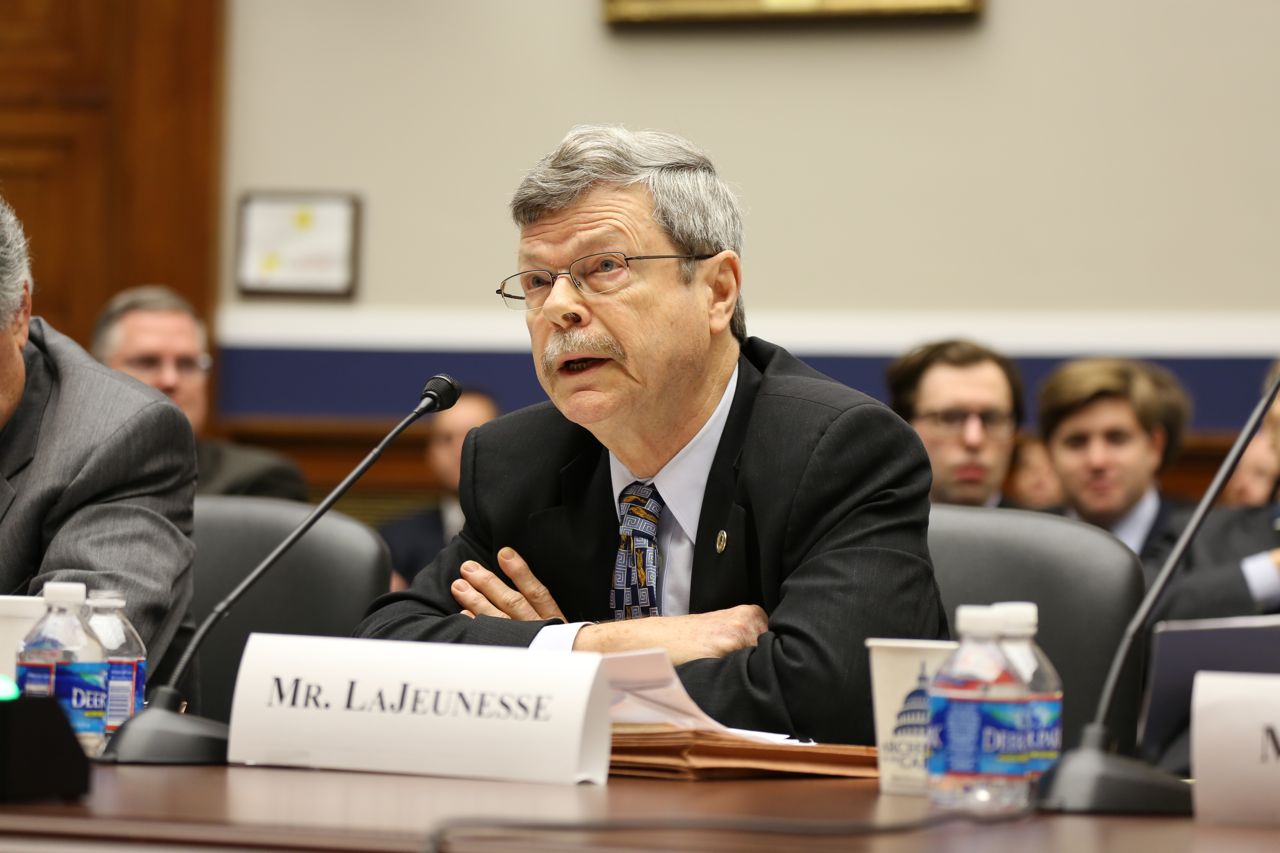 WASHINGTON, DC?- On February 13, Ray LaJeunesse, Vice President and Legal Director of the National Right to Work Foundation, testified before a subcommittee of the House Committee on Education and the Workforce about the need to more vigorously enforce employees’ rights to refrain from funding union politics.
LaJeunesse, who has over 40 years of experience on the Foundation’s legal staff and has argued four cases before the U.S. Supreme Court, repeatedly criticized the National Labor Relations Board (NLRB) for its lax enforcement of the rights of workers who wish to refrain from union affiliation. Under the Foundation-won Supreme Court precedent Communication Workers v. Beck, private sector employees have the right to refrain from paying for union activities unrelated to workplace bargaining, such as members-only events and union political activism. However, the Obama-era NLRB has shown little interest in helping employees assert their rights to opt out of paying for union politics.
NLRB throws up bureaucratic hurdles to employee rights
LaJeunesse pointed out that the Board has permitted union officials to install a number of bureaucratic hurdles that discourage independent-minded employees from asserting their Beck rights. LaJeunesse noted that many unions now require employees to annually renew their objections to union political spending during a designated “window period,” a practice that allows union officials to continue extracting full dues from nonunion employees if they miss an arbitrary filing deadline.
Moreover, the Board has recently held that nonunion employees can be charged for organizing activities and political lobbying for “goals that are germane to collective bargaining.” LaJeunesse noted that this elastic interpretation of the Supreme Court’s Beck standard undermines the ability of nonunion employees to refrain from funding ideological and organizing activities they may disagree with.
“In sum, the problem is systemic,” concluded LaJeunesse. “The Board has dismally failed to protect workers’ Beck rights. Indeed, the current Board seems bent on totally eviscerating those rights.”
Obama Appointees Kowtow to Big Labor
Unfortunately, the Board – a supposedly neutral arbiter of American labor law – has been stacked with pro-Big Labor appointees throughout the Obama Administration. Former NLRB Member Craig Becker actually worked for the SEIU and AFL-CIO before joining the Board and ruling on cases he was involved with as a union lawyer. Current NLRB Member Michael Griffin also worked as a union lawyer before joining the Board.
“As our Legal Director noted in his testimony before Congress, the Board has shown a total disregard for the rights of independent-minded employees,” said Mark Mix, President of the National Right to Work Foundation. “We hope this will serve as a wake-up call to citizens concerned about the Board’s pro-forced unionism bias.”
FOUNDATION ACTION: Teacher Wins Settlement after Union Violated Her Constitutional Rights
NOTE: This article is from the March-April issue of Foundation Action, our bi-monthly newsletter. You can sign up to receive a print edition of the newsletter here.
Case demonstrates why Wisconsin reforms were need to protect state workers
 GREENWOOD, WI – A former Greenwood, Wisconsin, teacher has won a settlement from a local teacher union and the school district for refusing to honor her constitutional rights and for failing to follow federal disclosure requirements.
Spanish teacher Amy Anaya taught in the School District of Greenwood for a year. When Anaya was first hired by the district in August 2011, Greenwood Education Association (GEA) union officials illegally told her that she “had to” sign the union’s membership form. When GEA union officials demanded Anaya join the union, she told them that she had no desire to become a union member.
Anaya told Foundation Action that her initial reason for not wanting to join the union was its support of causes she opposed. “[The union] also defended teachers that should have been more concerned about improving themselves than moving up the pay scale and getting more benefits,” said Anaya.
Beginning on September 9, 2011, union officials began collecting full union dues, or $31.35, from each of Anaya’s paychecks anyway. In December 2011, GEA union officials again demanded that Anaya join the union, and she again informed them that she was not interested in joining.
Union officials ignore worker protections
The U.S. Supreme Court has long recognized that a public sector worker has a First Amendment right to refrain from formal union membership at any time. Moreover, the U.S. Supreme Court ruled in the Foundation’s Chicago Teachers Union v. Hudson case that union officials who collect union fees as a condition of employment must first provide nonmember public sector workers with an independently-audited financial breakdown of all forced-dues union expenditures and the opportunity to object and challenge the amount of forced union fees before an impartial decisionmaker.
And with passage of Wisconsin Governor Scott Walker’s Act 10 public sector unionism reform in 2011, which contains a provision that gives most Wisconsin civil servants Right to Work protections, no Wisconsin teacher can be forced to pay any union dues or fees as a condition of employment.
Union officials failed to provide Anaya with her U.S. Supreme Court-mandated constitutional protections and the school district deducted full union dues from her paychecks for the entire school year. Moreover, the union brass negotiated a contract with the school district in an attempt to skirt Act 10’s provisions giving Greenwood teachers the Right to Work.
Complaint forces union officials to issue refund
With free legal assistance from National Right to Work Foundation staff attorneys, Anaya filed complaints against the school district and the union with the Wisconsin Employment Relations Commission in September 2012. Union lawyers then agreed to a settlement with Anaya under which the union refunded the illegally seized dues to avoid further litigation and possible state prosecution.
“Teacher union bosses and school officials ignored state law and U.S. Supreme Court precedent to illegally coerce Amy Anaya into full dues-paying union ranks against her will,” said Mark Mix, President of National Right to Work. “This case teaches all of us a lesson about just how important Act 10 is in protecting Wisconsin public employees from forced unionism abuses.”
Wisconsin union bosses are still attacking Act 10 in various state and federal courts, but largely to no avail.
In December, the U.S. Court of Appeals for the Seventh Circuit based in Chicago adopted arguments made by National Right to Work Foundation staff attorneys and upheld Act 10 as constitutional. Meanwhile, Wisconsin civil servants continue to defend Act 10 in other cases pending before state and federal courts with free legal assistance from Foundation staff attorneys, including a case pending before the Wisconsin Court of Appeals.
“Union bosses can’t tolerate any restrictions on their power over workers,” stated Mix. “And your National Right to Work Foundation continues to assist Wisconsin civil servants who are taking a stand against compulsory unionism in their workplaces.”
FOUNDATION ACTION: Union Officials Hit with Lawsuit for Violating Utah’s Right to Work Law
NOTE: This article is from the March-April issue of Foundation Action, our bi-monthly newsletter. You can sign up to receive a print edition of the newsletter here.
Union Officials Hit with Lawsuit for Violating Utah’s Right to Work Law
Workers sue company and union for illegally seizing nearly twelve thousand dollars in union dues
 SALT?LAKE?CITY, UT – In Utah, four railroad car repairmen have filed a lawsuit contending that their employer and a local union violated their rights under Utah’s popular Right to Work law and illegally coerced them into paying thousands of dollars in union dues.
With free legal assistance from National Right to Work Foundation staff attorneys, the four workers – Bryan Rees, James Rogers, Richard Simone, and Jason Wilson – sued Progress Rail, a wholly owned subsidiary of Caterpillar Inc., and the Brotherhood of Railway Carmen/International Association of Machinists (IAM) Local 6601 union in the Third Judicial District Court in Salt Lake County.
Union boss contract violates Utah’s Right to Work law
Utah’s popular Right to Work law, enacted in 1955, gives workers the unconditional right to refrain from union membership and dues payments. Despite the Right to Work law, IAM Local 6601 union brass negotiated a contract with Progress Rail in May 2006 that contained an illegal forced dues clause that requires all covered employees, including nonmembers, to pay union dues or fees as a condition of employment.
All four workers allege in the suit that when they started working at Progress Rail at various dates between December 2005 and August 2011, union officials informed them that union membership and full dues payments were a condition of their employment.
And as a result, union officials confiscated up to $12,000 in illegal union dues payments from the workers’ paychecks until October 2012, about two months after the workers found out about their rights under Utah’s Right to Work law.
The four workers are asking the court to bar the company and the union from enforcing the illegal forced dues clause in the contract and to order a refund of the illegally-seized union dues.
Case highlights national importance of Right to Work laws
“For years, IAM Local 6601 union bosses kept workers in the dark about their rights and took thousands of dollars of their hard-earned money in violation of Utah’s popular Right to Work law,” Mark Mix, President of the National Right to Work Foundation, told the Salt Lake Tribune. “The union’s careless disregard for these workers’ rights underscores the need for more states to pass Right to Work protections for their workers.”
Twenty-four states currently have Right to Work protections for employees. According to public polling, nearly 80 percent of Americans – and 80 percent of union members – support the Right to Work principle of voluntary unionism.
Moreover, Right to Work states consistently enjoy better economic performance than their forced unionism neighbors. Over the past decade, data collected by the Bureau of Economic Analysis reveal that Right to Work states outperform forced unionism states in terms of private sector job creation.
Not only are more jobs created in Right to Work states, but employees’ paychecks also go farther. A recent study from University of Colorado economist Barry Poulson found that households in Right to Work states have nearly $4,300 more in purchasing power than families in forced unionism states.
“Not only do Right to Work laws boost economic growth and create jobs, they also strike at the very heart of Big Labor’s government-granted power to compel workers to pay dues just to get or keep a job,” said Mix. “And the lawsuit in Utah goes to show just how important Right to Work protections are for workers who want nothing to do with forced-dues hungry union officials.”
FOUNDATION ACTION: Union Bosses Caught Diverting Charitable Donations to Union Coffers
NOTE: This article is from the March-April issue of Foundation Action, our bi-monthly newsletter. You can sign up to receive a print edition of the newsletter here.
BUSTED: Union Bosses Caught Diverting Charitable Donations to Union Coffers
Union scheme may have stiffed several charities, including the NYC Firefighters’ Burn Foundation
 NEW?YORK, NY?- With the help of National Right to Work Foundation staff attorneys, a Long Island teacher has won a favorable ruling against two unions at the New York State Supreme Court. Maureen Stavrakoglou originally filed suit against the two unions for refusing to tell her what they did with union dues that were supposed to have been redirected to charities.
Stavrakoglou is employed by the Brentwood School District, which requires all teachers to pay dues to the Brentwood Teachers Association (BTA) union and its state affiliate, the New York State United Teachers (NYSUT) union, as a condition of employment. Because New York lacks a Right to Work law, nonunion employees throughout the state can be forced to pay union dues to get or keep a job. However, teachers with sincere religious objections to supporting a union are entitled to request that their union dues be redirected to a mutually agreed upon charity.
After Stavrakoglou made known her objections to the NYSUT union’s ideological activities, the BTA and NYSUT unions entered into an agreement in 2005 that was to have all of her NYSUT dues redirected to charity. Stavrakoglou then asked union officials to redirect her dues for 2007-2008 to the Make a Wish Foundation. The BTA’s president assured Stavrakoglou that the dues would be sent to the charity she designated.
Unscrupulous union officials kept dues earmarked for charity
After coming to an agreement with the unions, Stavrakoglou subsequently designated a new charity each year as the recipient of her union dues. However, two of the charities she chose – The Cystic Fibrosis Foundation and the Now I Lay Me Down to Sleep Foundation – have no record of ever receiving a donation from the union under Stavrakoglou’s name. A third charity, The NYC Firefighters’ Burn Foundation, only received Stavrakoglou’s donation after she called union officials to inquire about the status of her dues. The donation was made over half a year after it was supposed to have been done.
“Maureen Stavrakoglou took union officials at their word, and they repaid that trust by deceiving her about where her union dues were going,” said Patrick Semmens, Vice President of the National Right to Work Foundation. “Their outrageous actions prevented Stavrakoglou from contributing her dues to several worthy charities.”?
Teacher wins ruling that safeguards her beliefs
Last August, Stavrakoglou filed a lawsuit seeking an account of how her union dues were spent and the immediate payment of any illegally-confiscated dues to the charities she designated. Although they admitted to failing to donate Stavrakoglou’s dues to several of the designated charities, union lawyers filed a motion to dismiss, promising that the unions would no longer keep any dues earmarked for charitable donations.
Fortunately for Stavrakoglou, the New York Supreme Court ruled that the union must provide evidence that her dues were sent to charitable organizations, and ordered the union to hold Stavrakoglou’s dues in escrow until such proof is established.
“We’re happy to report that Mrs. Stavrakoglou has received a favorable ruling and will finally have her religious beliefs respected,” continued Semmens. “However, teachers shouldn’t have to jump through a series of bureaucratic and legal hoops to stop paying dues to an organization they’d rather not join or support. They also shouldn’t have to trust unaccountable union officials not to mispend a chunk of their hard-earned paychecks. Instead, New York should enact a Right to Work law, which would make union membership and dues payments strictly voluntary and end this type of abuse once and for all.”
FOUNDATION ACTION: Foundation’s Brief Puts Illegitimate NLRB Appointees on the Spot
NOTE: This article is from the March-April issue of Foundation Action, our bi-monthly newsletter. You can sign up to receive a print edition of the newsletter here.
Foundation’s Brief Puts Illegitimate NLRB Appointeees on the Spot
Order sought would force NLRB to cease and desist as long as illegal "recess" appointees remain
WASHINGTON, DC – In late January 2013, the U.S. Court of Appeals for the District of Colu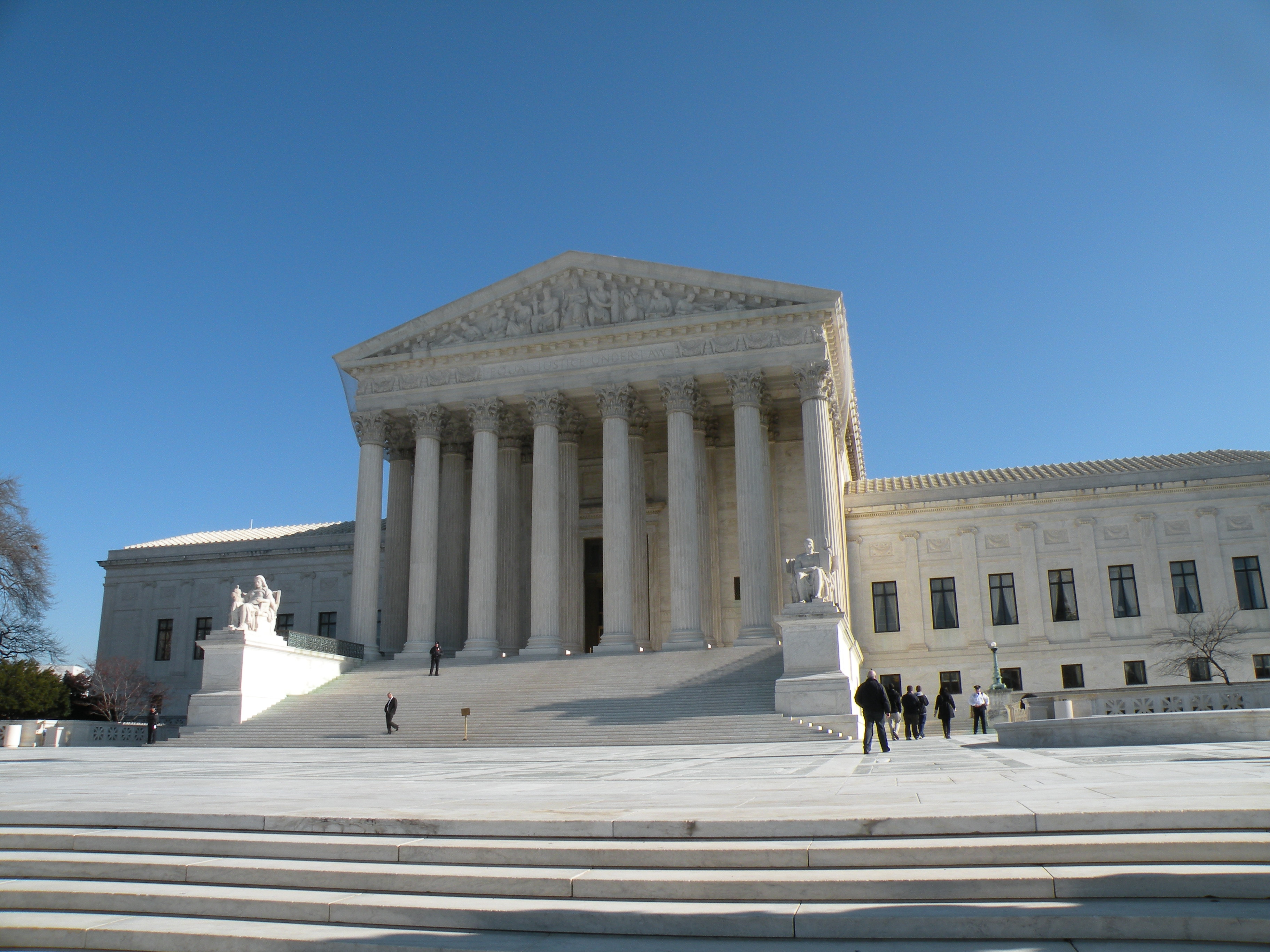 mbia struck down President Obama’s controversial “recess” appointments to the National Labor Relations Board (NLRB). Obama made those “recess” appointments on January 4, 2012, despite the fact that the U.S. Senate was not in recess.
Upon the court’s announcement striking down Obama’s “recess” appointments, NLRB Chairman Mark Pearce issued a statement that the rogue Board was going to continue to operate as normal despite the appeals court decision.
In response, Foundation staff attorneys filed a petition for a writ of mandamus (or prohibition) with the U.S. Court of Appeals for the District of Columbia Circuit asking the court to order the NLRB to suspend further action in a union political lobbying case in which the Board defied Foundation-won Supreme Court precedent and granted union bosses the power to charge nonmember workers for union political lobbying activities.
A mere 12 days after the petition was filed, the court ordered the NLRB to respond and justify its continuing operation.
“For the first time, the NLRB must justify why it is continuing to operate despite the court’s finding that President Obama’s ‘recess’ appointments are constitutionally invalid,” said Ray LaJeunesse, Foundation Legal Director. “And if the court shuts down the NLRB in this case, it will open the door for challenges in the other cases ruled on by Obama’s so-called ‘recess’ appointments.”
Worker protections at risk
As a result of the appeals court’s ruling, since at least January 3, 2012, the Board has lacked a quorum as required by a 2010 U.S. Supreme Court precedent – thus invalidating the Board’s more than 800 rulings and orders since that time.
One of those cases involves Jeanette Geary, a former Warwick, Rhode Island nurse at Kent Hospital, who filed federal charges against a local nursing union with the National Labor Relations Board (NLRB) in September 2009. The United Nurses and Allied Professionals (UNAP) union hierarchy was illegally forcing Geary and some of her coworkers, all nonmembers, into paying for the union bosses’ lobbying, including lobbying for legislation in neighboring Vermont.
The U.S. Supreme Court has long held that nonmember workers cannot be compelled to pay for union boss politics. The U.S. Supreme Court held in the National Right to Work Foundation-won Communications Workers v. Beck case that nonmember workers cannot be forced to pay for union activities unrelated to workplace bargaining, such as members-only events and union political lobbying.
However, in December 2012, the invalid NLRB expanded union bosses’ powers to charge nonmember workers for union lobbying by a vote of three to one – flying in the face of long-standing Supreme Court precedent. The Board then retained jurisdiction over the case pending further briefing on applying the ruling, forcing Foundation staff attorneys to file the petition that spurred the appeals court to demand an answer from the NLRB on the “recess” appointments issue.
Meanwhile, various federal appeals courts across the country are hearing similar challenges to the NLRB recess appointments. Foundation staff attorneys brought the issue before the U.S. Court of Appeals for the Seventh Circuit in Chicago and have another challenge pending in the U.S. Court of Appeals for the District of Columbia Circuit. Moreover, challenges from other organizations are pending before the U.S. Court of Appeals for both the Third and Fourth Circuits.
NLRB appeals loss to U.S. Supreme Court
The three judge panel on the appeals court that struck down President Obama’s “recess” appointments ruled that Obama violated Article II of the U.S. Constitution, which requires the President to obtain the advice and consent of the U.S. Senate for appointments to the most powerful positions in the executive branch, and Article 1, Section 5, Clause 4 of the Constitution, which clearly states that Congress decides when there is a recess.
The appeals court adopted arguments made in an amicus curiae (“friend of the court”) brief filed by National Right to Work Foundation staff attorneys for four workers who are receiving free legal assistance from the Foundation in cases pending before the Board.
After conferring with President Obama’s Department of Justice, the NLRB announced in mid-March that it will appeal the appeals court’s decision striking down Obama’s “recess” appointments to the U.S. Supreme Court. The NLRB’s appeal sets up a no-holds-barred fight over Obama’s “recess” appointments before the High Court.
“We hope the Supreme Court will take this opportunity to rein in the out-of-control NLRB and restore the balance of power the constitution intended,” stated Mark Mix, President of National Right to Work. “A favorable ruling could shut down the NLRB for the rest of Obama’s presidency, or at least flood it with a backlog of old cases the Board will have to reconsider, thus slowing its onslaught against workers’ rights.”
Video: Union bosses sell out police officers for forced dues
Seventeen Missouri police officers have filed a federal class-action lawsuit against a local police union, the Board of Police Commissions of Kansas City, and the mayor of Kansas City for violating their rights.
For more on the case and other developments in the Foundation’s free legal aid program, watch the video below.
The National Right to Work Foundation relies on voluntary contributions form its supporters to provide free legal aid. To make a tax-deductible contribution, please click here.
Latest Issue of Foundation Action Now Available Online
The latest issue of Foundation Action, the Right to Work Foundation’s bi-monthly newsletter, is now available on our website. Click here to download the .pdf or view the articles online. We’ve also put up the major articles from the January/February 2013 issue on our blog, which I’ve linked to below:
We also encourage you to sign up for a hard copy of Foundation Action (It’s free!). You can subscribe here.
FOUNDATION ACTION: Pennsylvania Construction Worker Digs Up Illegal Union PAC Scheme
NOTE: This article is from the most recent issue of Foundation Action, our bi-monthly newsletter. You can sign up to receive a print edition of the newsletter here.
Pennsylvania Construction Worker Digs Up Illegal Union PAC Scheme
Worker loses his job because he didn’t contribute to "voluntary" union political fund

SCOTTDALE,?PA?– A Pennsylvania-based construction company and a local union are facing federal charges for violating the rights of a former truck driver/laborer.
With free legal assistance from National Right to Work Foundation staff attorneys, Jeff Richmond of Meadow Bridge, West Virginia, filed federal unfair labor practice charges with the National Labor Relations Board (NLRB) regional office in Cincinnati against Penn Line Service, Inc. and Laborers International Union of North America (LIUNA) Local 453.
Told union membership and political contributions were required
In July 2012, when Penn Line Service hired Richmond, company management informed him that the job was a “union job.” Between July and October, the company confiscated, and the LIUNA union hierarchy accepted, full union dues from Richmond’s paychecks even though he had not joined the union nor given authorization for the company to take full union dues from his paychecks.
In October, Penn Line Service management gave Richmond and his coworkers a union membership and dues deductions authorization form. The form included a section for the employees to authorize “voluntary” contributions to LIUNA’s political action committee (PAC), the Laborers’ Political League, and the West Virginia Laborer’s District Council PAC.
Richmond signed up for union membership and dues payments because he was given the impression that union membership was required for him to keep his job. Richmond did not, however, authorize the “voluntary” PAC contributions. Shortly after, Richmond’s supervisor informed him that the union form was being returned for Richmond to fill out completely. The next day, Richmond notified his supervisor he would not sign up for the PAC contributions for moral reasons.
After making a phone call, the supervisor gave Richmond an ultimatum: fill out the form or the supervisor would take him home. Standing by his convictions, Richmond went home.
“Management took me home because I told them I wouldn’t sign the voluntary check off authorization for the [union’s PACs] for moral reasons,” Richmond said. “I didn’t feel that it was right for them to terminate someone because they wouldn’t sign a ‘voluntary’ check off.”
Federal law provides some recourse; more needed
Under federal law, no worker can be forced to formally join a union. Unfortunately, West Virginia does not have a Right to Work law, which means that workers who refrain from union membership can be forced to pay union dues or fees as a condition of employment.
However, the U.S. Supreme Court ruled in the Foundation-won Communications Workers v. Beck case that nonmembers have the right to opt out of paying for union activities unrelated to workplace bargaining, such as union boss politics, ideological causes, and members-only events.
Richmond’s charges allege that company and union officials violated his rights by telling him that the union PAC contributions were a condition of employment and terminating him from his job when he refused to pay up. The charge also alleges that company and union officials violated federal law when they failed to inform Richmond of his rights to refrain from union membership and full union dues before confiscating full union dues from his paychecks.
“Bulldozing someone into contributing to a PAC that violates their sincerely-held beliefs is downright unconscionable and also a clear violation of federal law,” said Mark Mix, President of the National Right to Work Foundation. “Company and union officials often collude to mislead workers into believing that full union dues payments, and in this case so-called ‘voluntary’ union PAC contributions, are a condition of employment while leaving workers unaware of their rights.”
“No worker should ever be forced to pay union dues or fees for a cause with which they disagree,” added Mix. “That is why West Virginia desperately needs to pass a Right to Work law making union membership and dues payments completely voluntary.”





